Page 1 / 6 of 5204 pokedex entries by quackquackattack.
Bulbaleef carry seeds in the bundles around their neck. When an area is affected by a long drought, these bundles shrivel up so that more resources can be allocated to the bulb on their back.

Bulbaquil mow down their foes with flaming, razor-sharp leaves. Once they have achieved victory, they love to receive affection from their Trainer through belly rubs.

Bulbadile absorb sunlight and nutrients through the bulb on their back and get minerals by hunting small Pokémon. They rely on their vines to restrain prey before they bite down with their jaws.

Even though Bulbanaw wake up bright and early to get their daily dose of sunlight, they are sluggish and grouchy as they awaken. Bothering them in the first few moments of the morning has led to many bitten hands.

Bulbapip soar through the sky on wind currents to travel to beautiful places throughout the world. They rarely need to rest for nutrients because the bulb on their back absorbs sunlight and nourishes their body.

Bulbaking have grand revelations about the world around them, but their lack of maturity makes their insights hard to believe. They can become so upset that they hide themselves away from other Pokémon to soothe their egos.

Bulbasaur have leafy sprouts on their back. On sunny days, these leaves curl open to absorb sunlight, curling back into a bulb at dusk to conserve energy.

Bulbaown float towards whatever light they can find in ancient ruins. They produce vines that take the shape of the letter B.
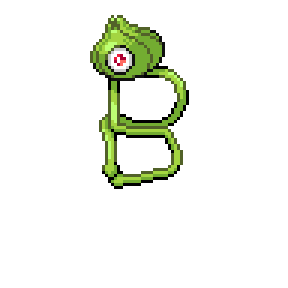
Bulbatress are surrounded by thick leaves that shield them from danger. Whenever they need to fight back, they shoot out seeds from the spikes on their body until they run out of seeds or their foe loses interest.

Bulbaphan help farmers plow fields by dragging equipment behind them. This serves as great entertainment while also keeping them in sunlight to nourish the bulb on their back.

Bulbagon2 can be found cultivating bags of rice on websites throughout the internet and gain energy from children submitting answers to quizzes. Their glee whenever a child submits a correct answer motivates many children to keep playing the game.
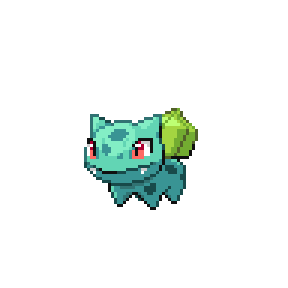
Bulbaoh emerge from hiding after a period of heavy rain to blow clouds away and make room for the sun, creating rainbows in the process. They release seeds from their bulb to take opportunity of the sunlight and freshly watered soil.

Bulbatyke work together in small groups to create small gardens in the wild, each with a plethora of flowers and bushes. They collect and store seeds in the bulb on their back to bring back to their garden, where they plant and care for these seeds.

Bulbacko climb trees by relying on their specialized toe pads. Each pad has miniature vines that cling to whatever surface they are on.

Bulbaslash shoot out razor-sharp leaves from the bulb on their back. These leaves are so sharp that a single graze causes a cut.

Bulbats have bulbs atop their heads that absorb emotional energy from their Trainers. A fresh, brightly colored bulb means that they have plenty of positive energy.
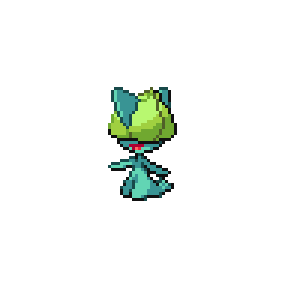
Bulbalia are determined to make their Trainer proud, as the health of the bulb on their head absorbs the positive energy from their Trainer. A shriveled and withered bulb is a sign of neglect.

Bulbadily have limited options for feeding because their tentacles have not yet developed mouths to capture small Bug-type Pokémon with. They rely on eating anything that crosses their path, as their heavy body prevents them from chasing prey.
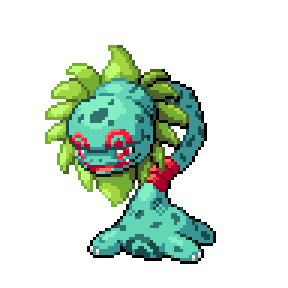
Bulbadon struggle to keep their head raised when they charge at foes, leading them to trip over themselves. Over time, they slowly develop neck muscles to keep their head raised to protect the flower bulb on their back.
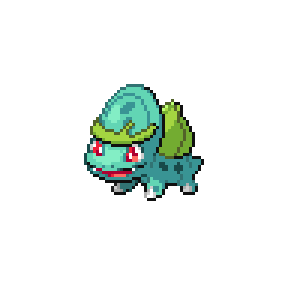
Bulbapent float above the jungle forests, lighting the way for people and Pokémon alike. They are regarded as beneficent, as Bulbapent are never seen damaging the forest using their flames.

Bulbalure have seed pods along their vines that reach towards the sky to absorb sunlight. When another plant covers their sunlight, they burn the plants around them until they can feel the sun again.
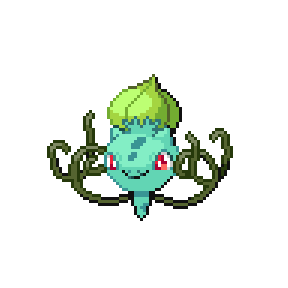
Bulbabarel rarely move from one spot because they rely on their vines to do everything. From building dams to putting food in their mouths, their vines work nonstop to give them everything they need to survive.

Bulbang rotate their gears throughout the day to ensure all the bulbs receive the same amount of sunlight. Once all their bulbs are fully charged with sunlight, they evolve.

Bulbaeary are standoffish when they are first captured but respond well to affection and respect. Whenever they are happy, they release a sweet aroma from the bulbs on their ears.

Bulbasis are surrounded by a bubble of thick sap that allows them to photosynthesize using the surface of their bubble. This ability increases the amount of chlorophyll within the sap, turning it into a light green hue.

Bulbapede are enveloped in still developing leaves that cushion their rolling. These developing leaves cling close to their body to prevent tears, as these leaves are meant to last until they evolve.
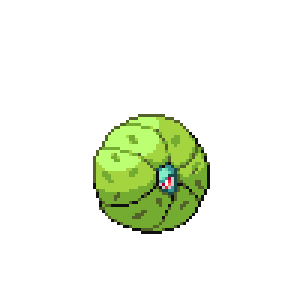
Bulbapede roll through the jungle in a blur of celadon green to protect the forest they call home. When they inevitably come across loggers, they unleash a flurry of poisonous pollen to scare them away.

Bulbabish are found in garbage cans and dumpsters where they eat spoiled food. They typically have low self-esteem and are thrilled whenever a Trainer wants to have them on their team.
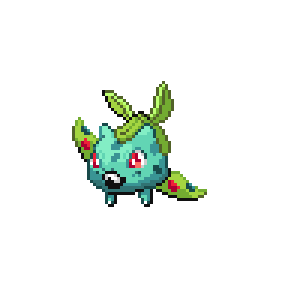
Bulbavanha rely on their bulbous tail to swim, rocking the tail back and forth to propel them through the water. As they swim, they release seeds that float in the water.
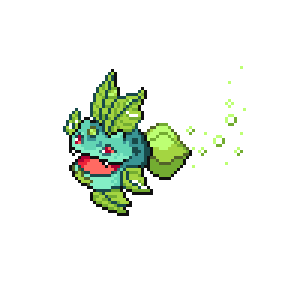
Bulbaedo are despised by fishermen because they often cut fishing lines with their sharp fins and eat the bait at the end of hooks. When Bulbaedo feel particularly mischievous, they yank on fishing lines to drag fishermen into the water.
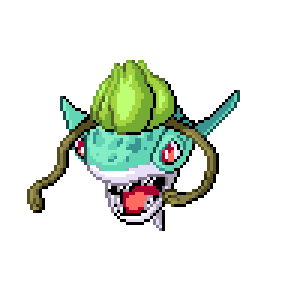
Bulbamy nourish themselves by soaking in sunlight and spend several hours a day just sunbathing. They produce sticky spores from their bulbous heads to defend themselves, as the corrosive spores eat through fur and skin.
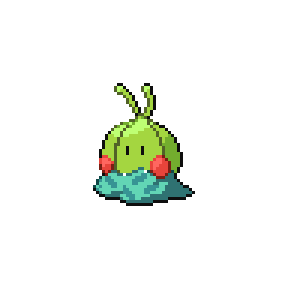
Bulbafetchd are mischievous and resourceful, using their natural camouflage in tall grass. Using their vine whip, Bulbafetchd can be seen teasing other Pokémon.

Catercute operate as a unified collective to protect their kin from dangerous predators. While one silky net may be an inconvenience, several nets can pin down a predator for hours. Many eggs and cocoons remain safe thanks to their efforts.

Caterdeen are common prey for many aquatic Pokémon in the wild because they have few defenses against predators. It is said that one in every thousand Caterdeen make it to evolution.
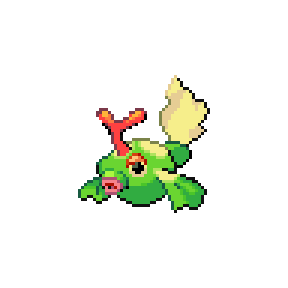
Caterking rely on their speed to escape predators because their horn is typically not hard enough to fight back. It is said that one out of thousands of Caterking reach adulthood.
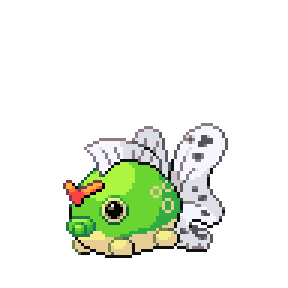
Caternx weave dresses out of silk to make themselves look pristine and regal. They take great care of their appearance and spend hours making sure their hair and dress are photogenic.
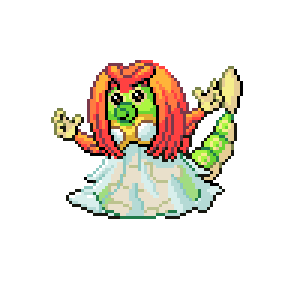
Catertini shed scales that resemble crisp leaves that fall from trees during autumn. Children love to stomp on their scales to release a satisfying crackle.
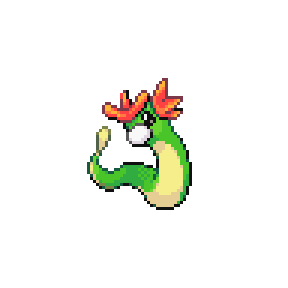
Caterotto creates nets out of silk to carry berries to its nest. It rarely shares with its siblings because of its insatiable appetite.

Caterpip has weak leg muscles, so it drifts in the wind towards leafy bushes. Sometimes it gets stuck in bushes, which makes them easy prey for predators.

Caterloom eat twice their body weight in leaves daily to nourish the flower atop their head. During summer, the heat from the sun's rays makes them excited and causes them to release this energy by chasing other Pokémon.
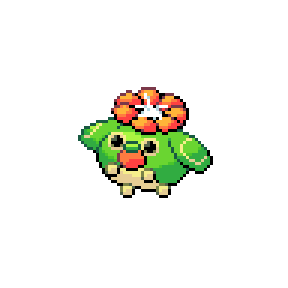
Caterluff catch wind currents with the silk balls that are attached to their bodies to glide from bush to bush. When they are not eating to satisfy their voracious appetite, they play chase with other Pokémon.
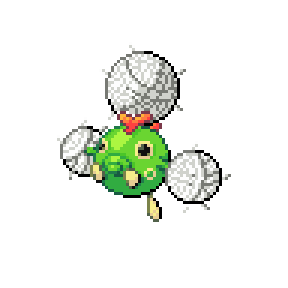
Caterma are constantly eating leaves to satisfy their voracious appetite. The constant flapping of their wings allows them to zip away when they spot predators nearby.
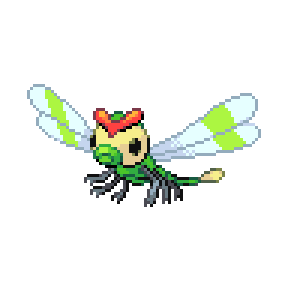
Caterma have an insatiable appetite and must eat thrice their body weight in leaves to remain a healthy weight. They zip between bushes and tree branches to maximize the time they spend eating leaves.

Caterdreavus stalk Trainers in forests and cast spells over them. Once enchanted, Trainers describe feeling a sudden voracious appetite that makes them eat all their snacks.
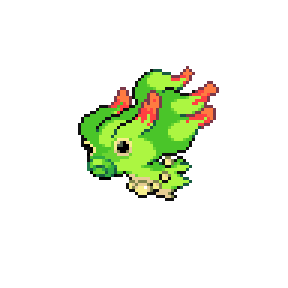
Caterursa forage for Berries to store supplies for the winter months. They do not like sour food, so Berries such as the Belue Berry are tossed out instead.

Catertler eats brightly colored flowers that grow on bushes, which dye its antlers red. Sometimes its antlers get stuck in bushes, causing it to cry for help.
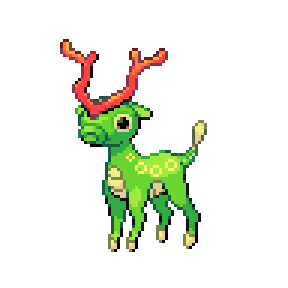
Caterill love bouncing atop their bulbous tail but often end up with a stomachache when they bounce after eating. Bouncing on their tail also uses up a lot of energy and makes them voraciously hungry.
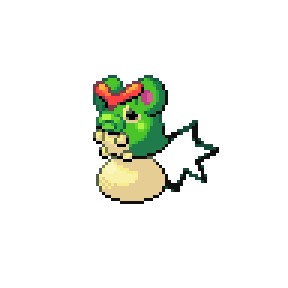
Cater Jr. make pranks and parties fun by releasing aerosol string, a brightly colored plastic string that is propelled out from their body. While children love seeing this trick, parents groan at the prospect of cleaning up this string after a party.
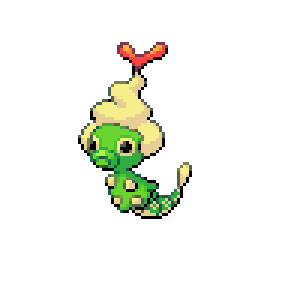
Caterdoof eat leaves off bushes and retain the twigs for the creation of their dams. They need to eat twice their body weight in leaves to have enough energy to build dams.

The blunt force trauma from the skull of a Caterdon scares away most predators. Only a select few that can melt their metallic skulls stand a chance at biting into a Caterdon.

Caterklang work long hours in factory settings to keep machinery running smoothly. During the few hours they get to rest, many spend time eating as many leaves as they can before returning to work.
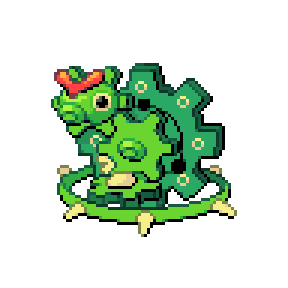
Caterlurk are formidable yet gentle giants and move slowly to avoid crushing their kin below them. Many serve as guardians to their kin to ward off Flying-type predators.
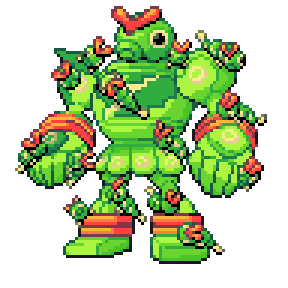
Caterflame have the precocious ability to shoot flames, which scares away most of their peers. Even though they have long wings, they prefer to remain on the ground.
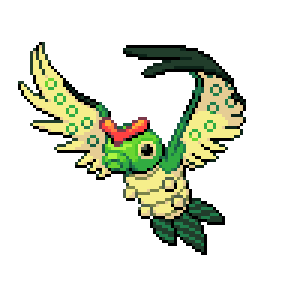
Caterkyu use buttons for its Caterpie disguise, and roams among other Caterpie. Some Caterkyu have mismatched buttons for eyes, making it easy to spot in the wild.
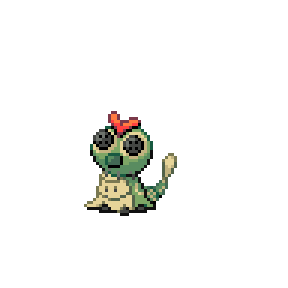
Catertios are almost always hungry and constantly eat leaves from bushes and trees. In exchange for giving them lots of food, Trainers can get a ride atop Catertios.
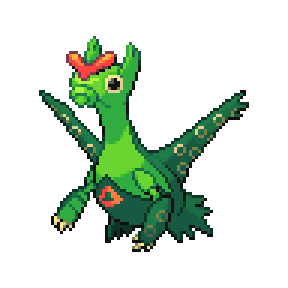
Caterink produce energy for factories by spinning their twin gears. Even though Caterink need lots of leaves to function, they are easy to find and can be swapped out easily.

Caterang are an important part of factories as their cheap and reliable rotation ensures that factories can consistently function throughout the day. When they are not working, they ravenously eat leaves from the nearby forest.
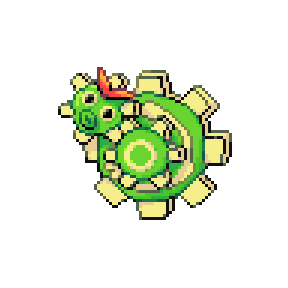
Catersis are surrounded by a membrane that dissolves through plant matter on contact. By rubbing themselves against shrubs, they can devour leaves in a matter of seconds.
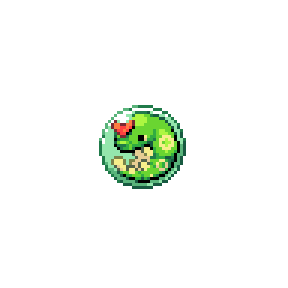
Cateronee produce a soft, delicate silk that can be spun into plush, diaphanous fabric. They are often encouraged to eat lots of leaves because they produce more silk when they are full.

Its voracious appetite compels it to eat more than twice its body weight daily, which is possible through its high appetite. Caterling flies to the upper forest where it can eat berries that other Pokémon cannot reach.
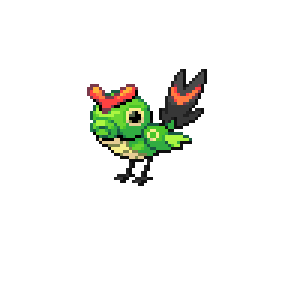
Caterpede can roll around for days without getting tired thanks to their slow metabolism. They enjoy rolling in open fields where they can race against other Pokémon.
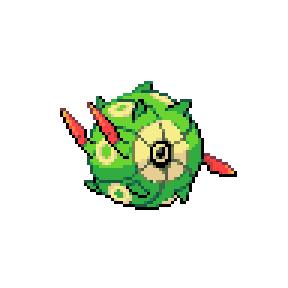
Caterdisc produce a special silk that is spun into wedding dresses. These expensive dresses have a unique scent that varies based on the diet of Caterdisc.
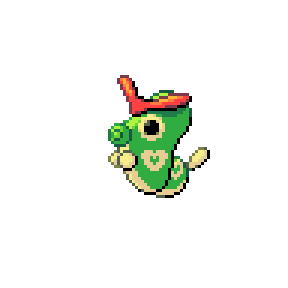
Caterple have an insatiable appetite for leaves and bark and are constantly on the move to find more food. If anyone tries to interrupt their feeding session, they sting foes with the twin spikes on their tail.
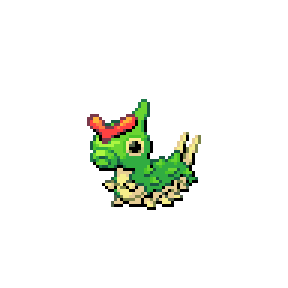
Caterskit weave a net made of hydrophobic silk that maintains its shape when wet. This unique trait of their silk allows them to throw silk nets to pin down predators while they escape.
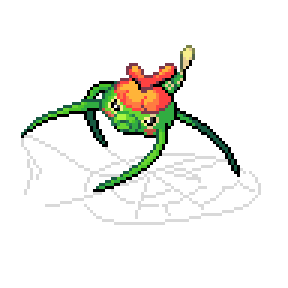
Many Caterlos do not survive to their next evolution because they lack any effective defense mechanisms against local predators. Only one in ten Caterlos learn to weave silk laced with their greasy sweat, which is bitter to their predators.
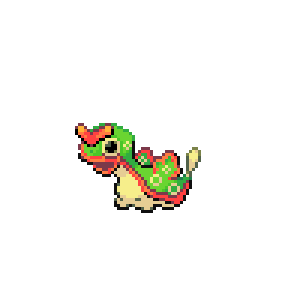
Caterlem are rolled into the desert to bring greenery back into arid land. Their rocky bodies have everything needed to turn deserts back into forests over the span of decades, as each Caterlem has a mini-biome full of seeds and moss.

Voltdactyl shoots explosive bursts of electricity towards large birds that come too close. It is otherwise a solitary creature that glides through the skies in search of its next meal.
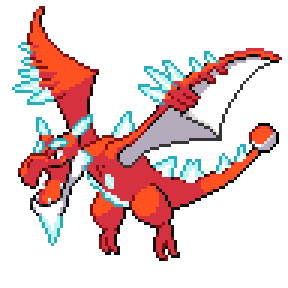
Voltmo-o produce a metallic clanging sound when they explode, rattling the surrounding area. This explosion can momentarily deafen other Pokémon in the nearby vicinity.
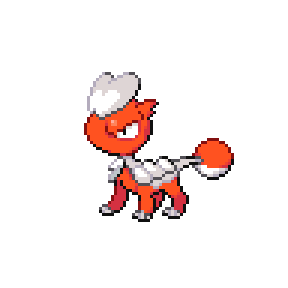
The sparks that Voltduck produce are strong enough to destroy electronic devices. Fortunately, the range of these sparks is limited to the area between their webbed claws.

Voltduck is a volatile creature that can explode with a burst of electricity at any time. It prefers to remain in the water to ensure the harm caused by its explosions is minimal.
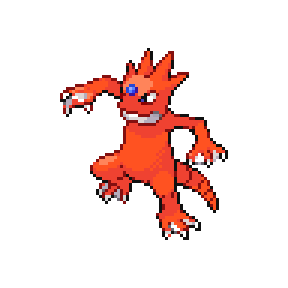
Voltduck constantly release sparks from their body, as discharging this energy is difficult without a massive explosion. They often choose to explode underwater to minimize the harm they cause.

Voltbell have roots that conduct electricity and can grow up to thrice its body height. City electricians employ the help of Voltbell whenever they need help fixing underground power lines.

Electreon are graceful swimmers that can quickly dart through the water. Their bodies are sensitive to motion and explode at a sudden stop. They swim in circles to slow themselves down and prevent that from happening.
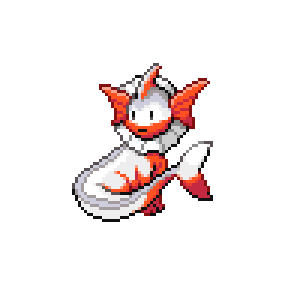
Electrchou uses up lots of energy whenever it explodes, so its cables plug into whatever is available to recharge. It is found in factories where there is an abundance of energy to absorb.

Electrtic surge with energy whenever they release their calming aura. If left in this state for too long, an explosion of electricity stuns those nearby. This explosion leaves them incredibly weak and tired.
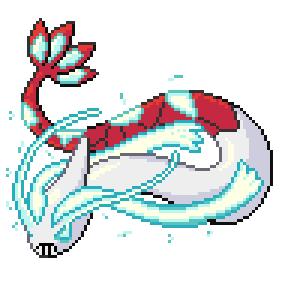
Electrbat rely on echolocation to navigate their surroundings because they are blind. They avoid bumping into other Pokémon because a sudden shock can cause them to explode.
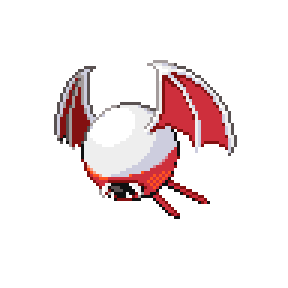
Electrduck experiences headaches when it builds up too much electrical energy, causing it to experience mood swings. The stronger the electrical charge, the more intense the emotional outbursts.

Electrsprout can be helpful friends for electricians so long as they are not mishandled. If they are treated too harshly, they explode and short circuit anything they are connected to.
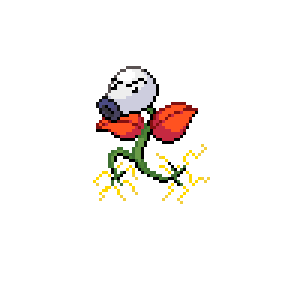
Electrbell can produce a powerful explosion when their fuse is lit. Once the fuse reaches the end, a deafening explosion launches whatever is in their stomach out of their body.
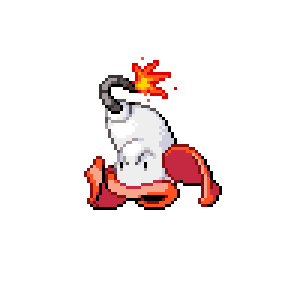
Exeggpod can be found hiding in trash cans to mask the scent of eggs. They long for the day when their dreams of evolution come to fruition.
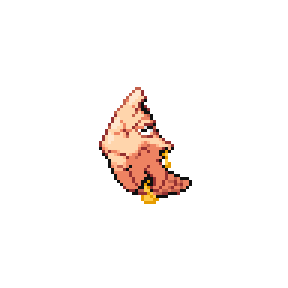
Exeggon roll around cyberspace searching for images and videos of nests. Once they find a suitable file, they embed themselves into the file to keep their fragile bodies warm.
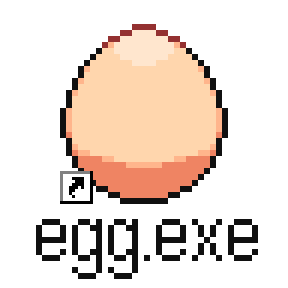
Exeggon can be found lurking in images or videos of nests to keep their bodies warm. Any damage on their egg remains until they evolve, so Trainers are advised to leave them in the image or video until they are ready to hatch.
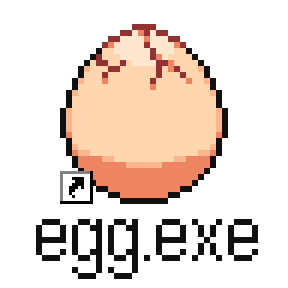
Exeggsire are dull-minded creatures that often get into trouble. Whether it is being stuck on a cliff or stuck in some river rapid, they almost always find a way to endanger themselves. Despite their reckless nature, they are beloved by many.

Exeggsaur are soaked in an eggy substance that clings to their leaves. Despite being exposed to the air for long periods of time, the cracked egg atop their backs always remains fresh.
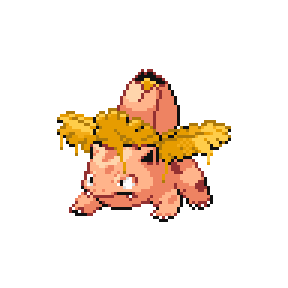
Newborn Exeggbull do not have any natural defenses available, so their parents will feed them berries endemic to an area to help them grow faster. One such berry is the Maragna Berry, which makes their shell slightly tougher and harder to chew.

Exeggchic are high in protein and low in fat, making them the perfect candidate for a light Torchic Rice over Omelet. Their abundance in the wild along with farms raising them for consumption means that Exeggchic will remain a popular breakfast staple.

Exeggsol appear before Trainers to warn them that one of their eggs is damaged or otherwise needs help. They guide Trainers to a Pokémon Center to get their egg examined and prevent an otherwise unfortunate event.

Exeggish protect their fragile bodies by partially burying their bodies beneath the ground. If their shell cracks, their bodies produce a foul sulfuric smell.

Exeggcorio sway their internal sense of rhythm and are overall laidback creatures. Even when their shell is damaged, they always find time to continue their soft and slow dance.
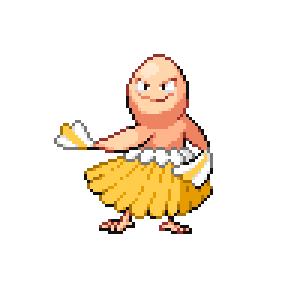
Exeggbish have the distinct scent of rotten eggs. They dig through garbage cans to dig up eggshells that they crush into tiny pieces before eating.
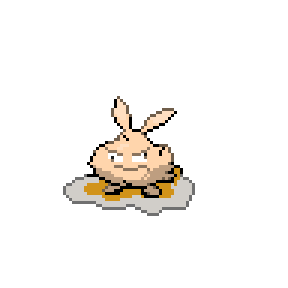
Exeggful may seem cuddly at first, but they inevitably leak out egg whites from their bodies when they get hurt. This often scares children and causes many parents to abandon Exeggful or never adopt one at all.
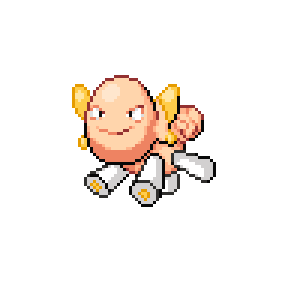
It is said that Exeggkaboo can be shaken vigorously to make them produce a light custard. While this has yet to be proven, many Exeggkaboo end up hurt when their Trainer shakes and drops them.
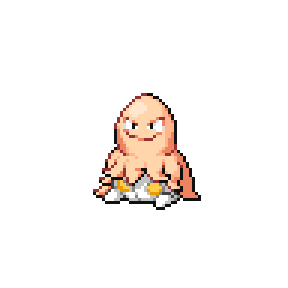
Exegglix are incorporated into recipes around the world, as they are one of the few ways to obtain eggs without hurting Pokémon. They are incorporated into the dough of sweet desserts like Liechi Berry Pie, Salac Berry Cake, and Watmel Berry Cookies.

Exeggpuff produces secretions of custard that diners use to sweeten drinks. The milky, light flavor pairs well with coffee, as well as some tea pairings, making them a versatile partner in the kitchen.
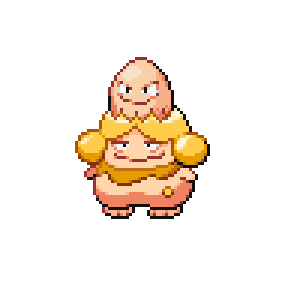
Exeggduck is known to argue with itself, as each head is capable of independent thought. This leads to it getting many headaches, as it is easily overwhelmed.

People who easily get sunburnt often rely on a sturdy Exeggusire to give them shade. Because Exeggusire tend to space out, they are less likely to wander far, ensuring that shade is close by for their Trainer.

Exegguco produce scales that smell like cinnamon and are harvested for culinary arts. Each of the heads also drool a sugary sap that bakers collect to produce a glaze over baked goods.
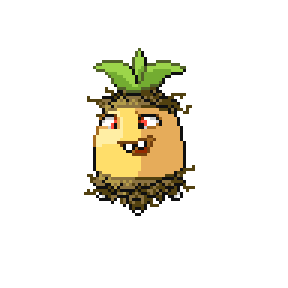
Exegguco have roots that are covered with tough scales and quickly absorb moisture. Whenever they are dug out of the ground, they have a limited amount of time before both their heads and the base of their bodies explode.
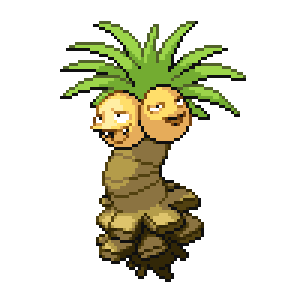
Exeggutress have a shell that resembles the fruit of a coconut tree and protects them from the sharp beaks and talons of bird Pokémon. They often hide among other coconuts, which ends up startling Trainers who pick them up.

Exeggurow set up an ambush by hiding among Exeggutor. Their brass-colored wings make the camouflage easy, so they have an easy time surprising their prey.
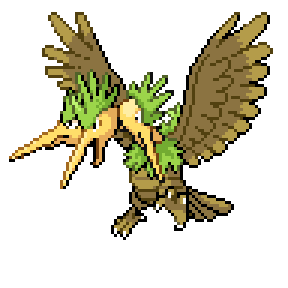
Exegguqueen's saliva has the same consistency as Coconut Milk, which it uses to feed its offspring. If there are no babies to feed, the saliva collects inside its mouth until it drools.
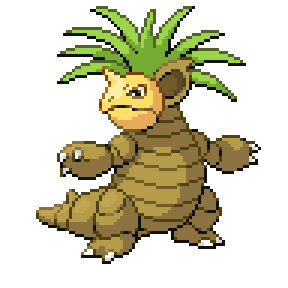
Exegguray's tail is the only limb that can be severed and regenerate on its own. The bulbous fruit attached to its tail has the same consistency as jack fruit and has a consistency similar to shredded meat.
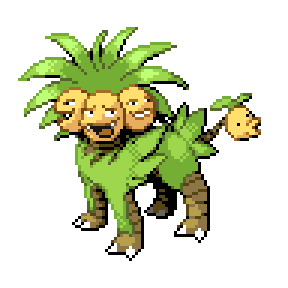
The leaves that make up Exeggucott's mass of hair are as soft as fluffy cotton. They maintain this beautiful set of hair by diving into lakes to thoroughly wash themselves before drying their leafy locks in a soft breeze.
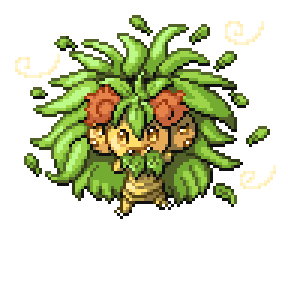
When Exeggumander is making its nest, it breathes fire out of its many heads to create bedding. While it is sleeping, it releases an aroma that induces drowsiness.
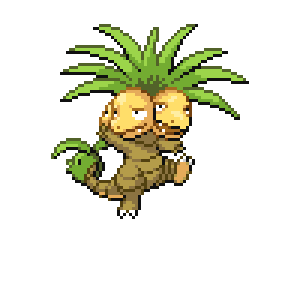
Exegguladin have a special shell around their body that is made of the same material as coconut shells. When threatened, they strike with the many leafy quills on their head.
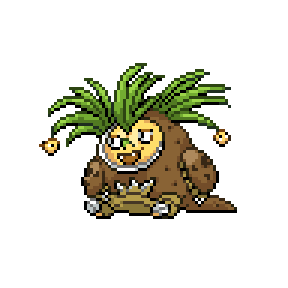
The fruit that Exeggukaboo produces has a tropical cherimoya flavor, but it only produces one fruit a day. It is rare to find one in the wild because Team Rocket has begun monopolizing the market of this rare fruit.
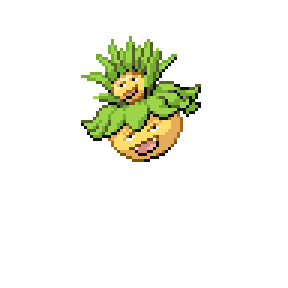
Exeggumeleon burns shrubs and bushes to create bedding for itself. It hypnotizes scientists and other intruders when disturbed by lulling them to sleep.
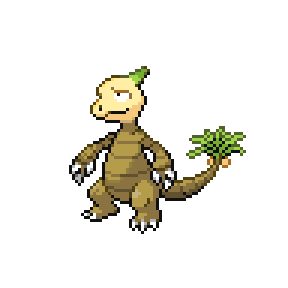
The leaves atop the heads of Exegguduck are connected to their brains. Whenever anyone damages one of their leaves, the pain causes them to release headache-inducing psychic waves.
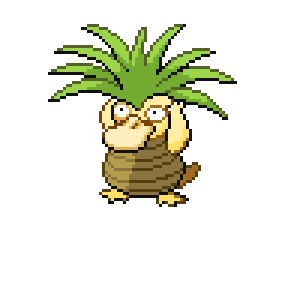
Exegguizard shoots flames from its many heads as it flies above a jungle forest. It is rarely seen outside of the jungle because it is sensitive to cold and damp conditions.

Exeggukazam tend to be jolly creatures that enjoy shaking their maracas to the tune of festive music. Their sheer elation over a simple task inspires many to play music when they are nearby.

After spending a week of fishing for Shellder, Exeggubro enjoys resting beneath the shade of its own palm leaves during the weekend. During this period of rest, Exeggubro invites others to take shade and drink coconuts, providing a sense of community.

Exeggugong enjoy juggling each of their disembodied heads and balance them when they need to remain still. To the surprise of many scientists, they spend more time on land than in water, perhaps because juggling in water is difficult.
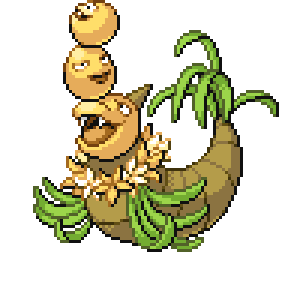
Culee rely on their lithe bodies to dodge attacks during a Pokémon battle. Once they are in close range, they bludgeon their opponents with a bony club.

Cukhan wander the world looking for boney carcasses of baby Pokémon. They collect bones until they have enough to make a proper burial, before repeating the process again with another skeleton.

Cudeen create nests of bones that they decorate in such a way that resembles coral. Whenever another Pokémon tries to take their bones, a sharp jab of their horn scares the would-be thief away.

Cuking wear a boney skeleton to cushion bites from other Pokémon. When teeth of a predator inevitably get caught in their boney armor, they strike with their sharp horn to repel the threat.

Cuther create the walls of their dens out of bones, often taking long bones and cutting them down to size. They prefer bones of large Pokémon like Mamoswine or Snorlax, but often rely on using whatever bones are available.
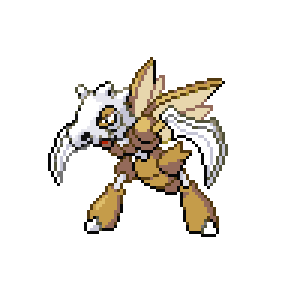
Cunyte lives inside the vestige of what once was a Cubone. It hides within the skull to protect itself from danger and quivers in fear whenever a predator is nearby.
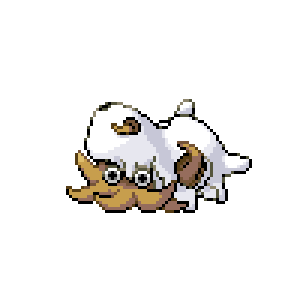
Cuto scuttle around near archeological digs hoping to find a bigger skull to move into. When one finds a sufficiently large skull to move into, they start a chain reaction where other Cuto also upgrade their skulls.

Cubuff enjoy babbling into their boney club to practice singing. When night falls, they curl up with the bone still in their arms and fall asleep.

Cutu carries a stern and somewhat morose expression because it frequently experiences feelings of impending doom. It enjoys spending time with its Trainer, even if it's just a walk in the park or a trip to the forest.

Curill enjoy collecting bones and storing them in their dens. When they fall asleep, they curl their tail around one of the bones to help themselves fall asleep.
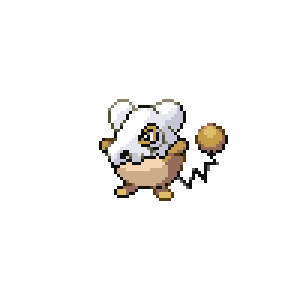
During winter, Cugar sleep inside caves until the temperature begins to rise. Sometimes a layer of ice seals them in the cave, so they smash through the ice with their gargantuan tusks, ramming against the ice until it shatters.

Curow take the vestige of what was another Pokémon and wear the remains to protect themselves. They sharpen the bones they find to fling at predators, scaring them away.

Wild Curogue are known to create training dummies out of bone to practice their technique. They have yet to decide on what to focus on, so they practice many types of fighting to keep themselves in shape.
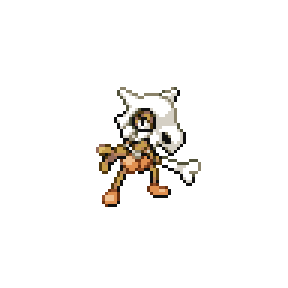
Cubok hunts for prey by swinging a thick, bony club with its tail. It bludgeons its prey with the club to render them unconscious. Once incapacitated, Cubok swallows and digests its prey whole.

Cu Jr. are moody creatures that hide their true feelings behind the skull on their face so that they can continue to perform for others. If Cu Jr. show a Trainer how they truly feel, it is a sign of great trust.
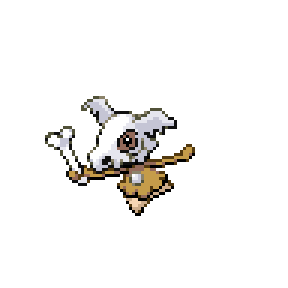
Cucko rely on their hefty bone club to wallop other Pokémon. Some Cucko are clever enough to wrap a vine around their club to create a whip.

Cukip bury themselves in swamps when they rest and hug their boney club to avoid losing it while sleeping. If anyone tries to take their club while they sleep, they awaken and strike with a groggy rage.

Cupert dig through their swampy homes to find bones. They shake the earth to pick up vibrations from bones that they dig up and collect on their backs.
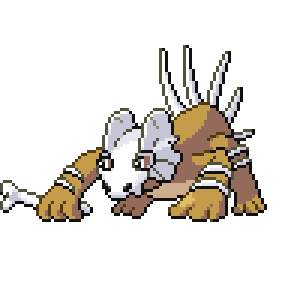
Cuskull tend to live in gloomy places with significant cultural value, such as temples or graveyards. Whenever a visitor comes to these ancient places, they emerge to greet the visitor before returning to whatever they were doing.

Cuchar rely on rudimentary bone tools to survive in the wild by creating fire or making sharp weapons to hunt prey. Their mastery over boney crafts allows their Trainers to sell their crafts at markets around the world.
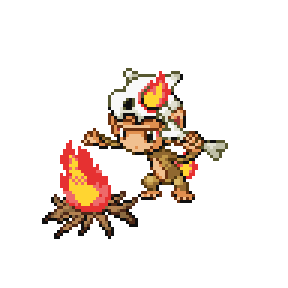
Cudon create cataclysmic earthquakes that center around graveyards and cemeteries, causing bones to rattle with potent energy. Some people describe feeling chills throughout their body as though their bones were vibrating.

A single mythical roar from Cualga can cause seemingly miraculous recovery from disease and injury as they turn back time. Despite their best efforts, they cannot revive those who have already passed.
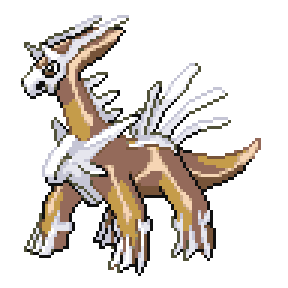
Cupuff sing into their boney club that vibrates and amplifies their voice. Whenever anyone falls asleep listening to their song, they chuck the club at the audience member to wake them up.

Cubas cover their faces with a skull helmet to make themselves seem mysterious. If another Pokémon tries to take off their helmet, they throw their boney club through the water to quell their curiosity.
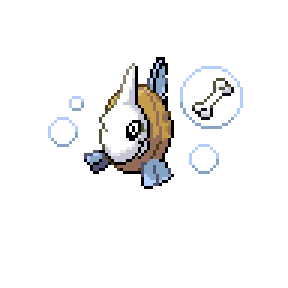
Cumander practice developing their proficiency over boney implements by skewering fruits and vegetables with boney spikes. Once they have enough food ready, they start a fire and roast these skewers until they become a delicious meal.
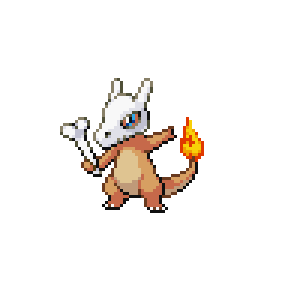
Cutik sleep in skulls of Pokémon much larger than themselves and carry the skulls to ensure they have a safe sleeping spot at night. They ward off curious creatures with a jolt of electricity before retreating into their makeshift home.

Cutump wield their boney club like a sword to protect themselves from dangerous Pokémon. Their horned mask conceals their face as they wander through haunted forests searching for the right Trainer to befriend.
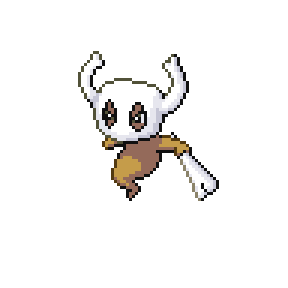
Cukie hide in sandy places where their natural camouflage keeps them hidden. They practice throwing bones to improve their aim.
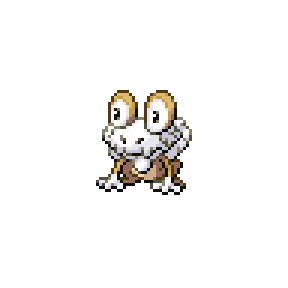
Cuadier throw boney boomerangs that can bounce between targets in quick succession. They can extend the range of their projectiles by coating them with a bubble to minimize air resistance.
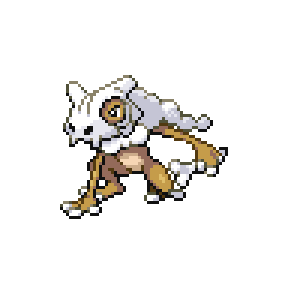
Cumeleon roast meat with their flaming bone skewers that ensure an even temperature throughout the meat. Once the food is ready, they offer extras to wild Pokémon as a gesture of kindness.

Cuth pilfer bones from graveyards and store them in their dens. The bones that end up in their care are typically held in better condition than buried bones, as they dust and polish bones to ensure the bones do not decompose.

Cusian take fastidious care of bones kept in their dens, preserving the bones with utmost care. Museum curators have recently begun befriending Cusian in an effort to find bones to display in museums.

Cule enjoy cheering on their friends with their boney baton. They often wave a flag attached to their baton and produce sparks whenever they are excited.
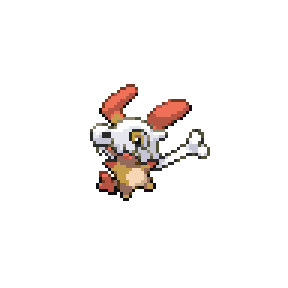
Cun toss their boney baton into the air whenever they cheer on their teammates. Their energetic zeal causes them to release sparks whenever they are excited, especially when their teammates are about to win.
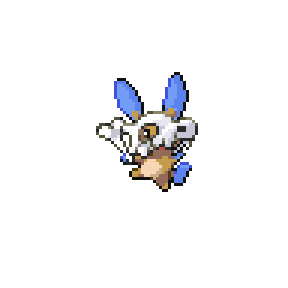
Cuduck are incredibly loyal to their Trainer and will do anything to protect them. Whenever their Trainer experiences the mildest inconvenience, they get so irrationally angry that they experience a headache.
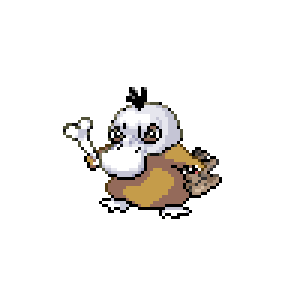
Cuduck are reckless creatures that often get hurt even though they wear a thick skull atop their heads. Keeping Cuduck safe when they play is of utmost importance to avoid headaches, literally and metaphorically.
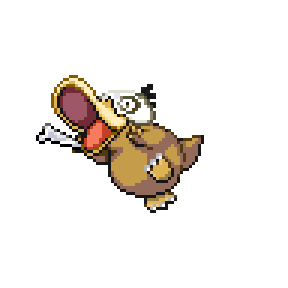
Cuduck throw bony boomerangs to attack opponents, but the bones often circle back to hit their heads. No matter how hard they try, the boomerangs always slip through their hands and end up hitting them in their faces.
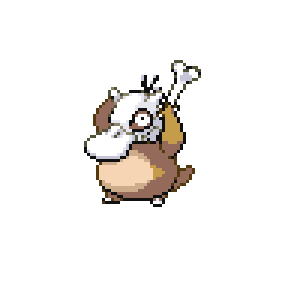
Cuduck tend to be gloomy creatures that feel a forlorn sadness whenever they are left out of activities. Trainers can easily remedy this by giving them a buddy so that they do not feel lonely.
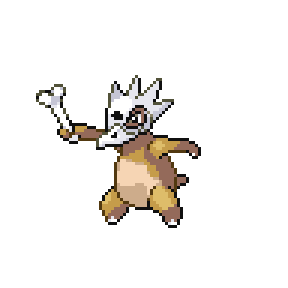
Whenever Cuape get angry, they slam their clubs against their skull, screaming from the pain. This display of dominance scares most Pokémon into giving them food in an effort to quell their anger.

Culithe often play alone because their boney mask makes them too scary for other Pokémon. They throw flaming bone clubs through the forest so that they can play fetch with themselves.

Cuizard are known to skewer meat onto their wings and rest over searing flames to cook meat to their liking. Bits of meat get caught on their wings, so they allow Flying-type Pokémon to have a bite if they help pick meat off their wings.

Cuwag wear small skulls that fit snugly on their head when they are underwater. When they are above water for an extended period of time, the skull shrinks from losing moisture and becomes prone to falling off their head.

Cura collect bones of other Pokémon to wear as armor, even though they can easily teleport away. Measuring brain activity of these Pokémon reveals that these bones are associated with family and connectedness.

Cubra add psychic energy into their throws to amplify the range of their boney boomerangs. It is said that the cry of the deceased Pokémon can be heard as the boomerang whizzes by, but scientists have yet to record such noises.

Cukazam wear a set of armor made out of bones that protect them from physical attacks. While a normal throw can send boney boomerangs a long distance, with additional psychic energy they can easily clear a football field with a single throw.

Cusprout have roots and vines wrapped around their skull. When another Pokémon tries to eat them, they throw sharpened bones covered with a poisonous sap to scare them away.
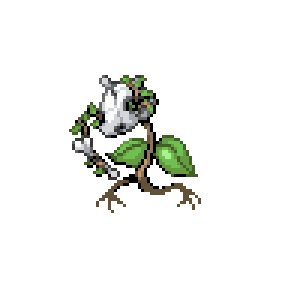
Cudude scare away Pokémon that eat rocks by slamming a bone club against their thick skull helmet. They always carry this club wherever they go and hug this bone when they sleep to ensure it does not get lost.
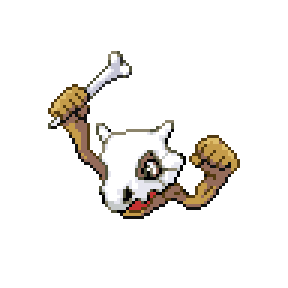
Cueel love performing tricks for people at aquariums throughout the world. Whenever they toss their boney club into the air, they always manage to catch it with ease.

Marowak are said to channel spirits into the flames on their staff, with each new spirit adding to the strength of the fire. If their staff does not strike on the first pass, it is likely to hit when it boomerangs back.
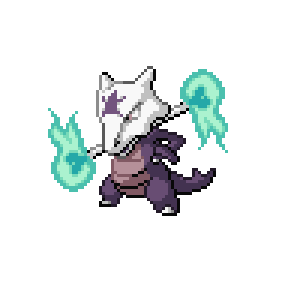
Maroto search through archeological digs for a new skull. When another Maroto challenges them for a skull upgrade, they gnaw on each other's limbs until one gives up.

Marots have a morbid curiosity for death because they understand that death is a painful subject for many. This early mental maturity allows them to empathize with others whenever a loved one is lost.

Marolia are heroic Pokémon that go out of their way to protect the innocent. By twirling on their long legs, they can fling their boney boomerang with enough force to crack through shells.

Marotomb emerge from a keystone full of the resentment of the spirits that have died from habitat loss. They slam their bones against concrete roads to cause potholes in an effort to slow the deforestation.

By roaming ancient ruins, Maronoir ensure the protection of ancient royalty from tomb raiders. If they encounter an intruder inside the ruins, they trap them in a bony cage before ushering them out.
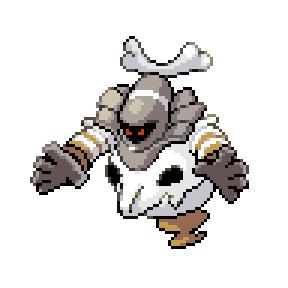
Marochar rely on bone tools to make their lives easier. From clubs to bash prey to rudimentary nails used to make tents, Marochar are clever creatures that experiment with the tools available to them.
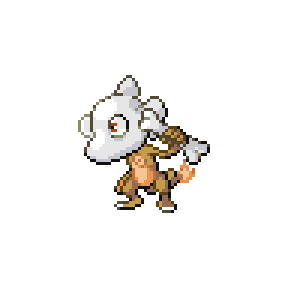
Maromander hold onto their bony boomerang with a steady hand and are always ready to defend their flaming tails. Being trusted to touch their tail is a sign of high trust and respect.

Maroduck wear the skull of another Pokémon and rely on it to protect them from attacks. Attacks that vibrate the skull cause them to experience painful headaches.

Marolem wear the bones of other Pokémon as a sort of macabre armor. When a bone becomes too smooth or brittle to function, Marolem bury the bone before replacing it.
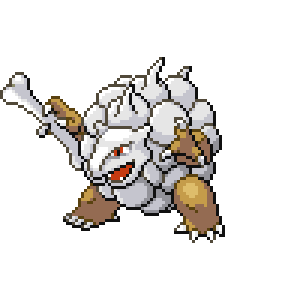
Marotortle have a stoic expression that makes them seem cold and aloof, even though they are affectionate Pokémon. They protect those they love by throwing bony boomerangs and blocking incoming attacks with their sturdy shell.
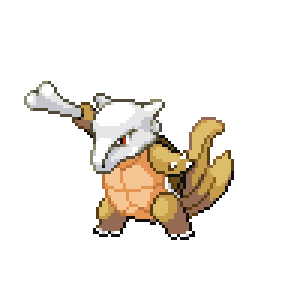
Marotoise default to a stern expression, which makes them seem aloof, but they are rather affectionate once they warm up to others. Their water-propelled bone cannon easily shatters rocks on impact.

Maroster relies on its outer shell to throw bony projectiles at foes that boomerang back after striking once. If a foe is too close to reliably hit with projectiles, Maroster can swing and bludgeon foes with long bony spikes.

The singular leg of Hitmonhoot has more muscles than a human, most of which help them keep balance. They train day and night to strengthen those muscles, as falling over makes it nearly impossible to get up without assistance.

Hitmonfish relies on its singular leg to launch barbed kicks toward its opponent. If the impact of the kick is not enough, the venom from its barbs may cause the opponent to pass out.

Hitmonbok kick their opponents by whipping their foot to strike at weak points. Their long, heavy tail makes swift strikes difficult to perform, so they rely on precise blows to achieve victory.

Hitmonziken sport long, muscular legs that can reach six feet in the air without leaping off the ground. People once played a game where they stand on one foot and leap into the air to hit a ring, a game Hitmonziken excel at.

Hitmonroc are prideful fighters that rely on their legs to lead them to victory. They can quickly wear down trees with their persistent training and rarely tolerate slacking off from their Trainer or teammates.
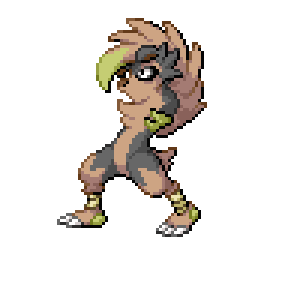
Hitmonfish specializes in quick punching jabs to subdue opponents. If it cannot end a match with a punch, it may use a venomous barb to whittle down the opponent.
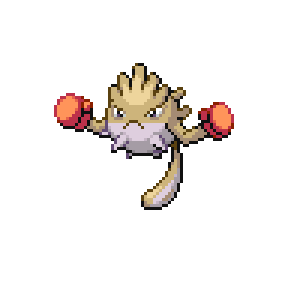
Hitmonbok help boxers train for their matches by allowing boxers to punch their body. The impact of each punch is spread over Hitmonbok's many scales, protecting them from major injuries.
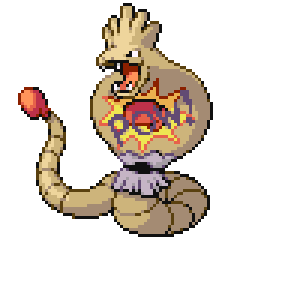
Hitmoninja are lightweight creatures that can continue launching punches on their opponent without getting tired so long as they keep their guard up. If their guard fails, they very likely have lost the match.
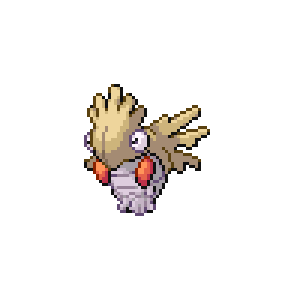
Even though Hitmonsharp can easily punch through sheet metal, they are just as easily discouraged. Whenever they need a boost, a Punching Glove helps remind them that they inspire people to grow stronger, and to never stop getting better every day.
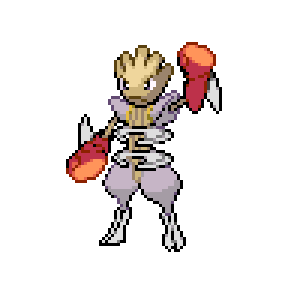
Hitmonduck are clever fighters that train with their feet submerged in water. This allows them to develop lightning-fast footwork to ensure their punches land with maximum effectiveness.

Hitmontortle have a sturdy shell that allows them to soak up more hits but also slows down their punches. They practice against speed bags to help them improve their reflexes.
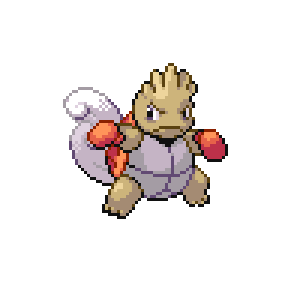
Lickisaur release a sticky saliva from their tongue that is difficult to remove. One lick from a Lickisaur can prevent gills from functioning properly, which makes them great aquatic hunters.
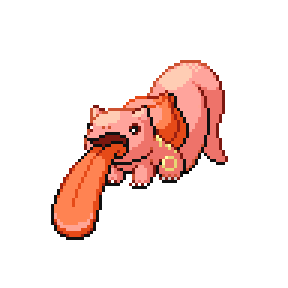
Lickidile have long tongues and small serrated teeth. They often accidentally bite their tongue when eating, especially when rushed.

Lickigey rely on their tongues to help them catch prey, as each tongue has microscopic hooks that cling to chitin and scales. After tiring out their prey, a few strikes of a Wing Attack secure their next meal.

Lickiotto hold their long tongues above their heads like feathery crests. Many Pokémon flock to Lickiotto for grooming sessions, as many Pokémon need help cleaning their shells or scales. In return, Lickiotto gets lots of berries from others.

Lickigeot feathers almost always remain clean, as they can reach behind their body with their tongue to remove dirt and grime. These powerful tongues also make great hunting tools, as a few slaps of the tongue can knock out Bug-type Pokémon.

Lickiown can be found in ruins where they are drawn to the wrappers that Trainers leave behind after eating snacks. They often lick the wrappers clean before continuing to monitor the ruins around them.

Lickilax love Watmel Berries because of their large size. They wrap their tongue around the Berry before squeezing the sweet juices into their mouth.

Lickirina ensures food that arrives at its nest is safe for its siblings by tasting the food with its tongue. It saves the best snacks for the younger siblings, while it sustains itself with scraps.

Lickino have poor eyesight, so they rely on their incredibly sensitive tongue to help them navigate the world. These hypersensitive tongues make them great food tasters, as they can detect subtle changes in a given dish.
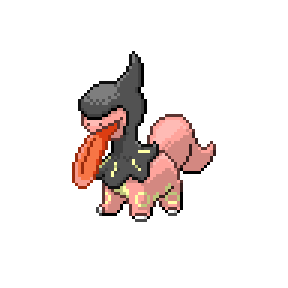
Lickiadier hunt for Bug-type Pokémon by whipping their tongue to stick and wrap around their prey. Once their prey stops struggling, they reel in their tongue to secure their next meal.
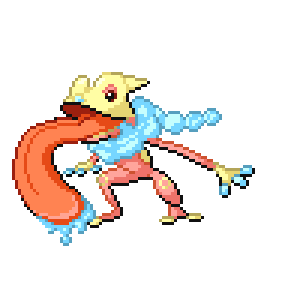
Lickininja wrap their tongues around their neck to keep their cold-blooded bodies warm. Whenever the sun is out, they sprawl their bodies atop a Lotad and absorb the hot sunlight.

Lickichoke train not only their arm and leg muscles, but also their tongue. They make great construction workers because they can carry additional materials with their tongue.
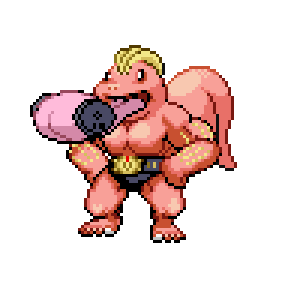
Breweries rely on their tastebuds to detect abnormalities in mead, as they are sensitive to sugar. This ensures that high quality mead is produced while also sustaining the Lickisprout through the consumption of mead.

They often drink more than necessary, but breweries tolerate this because Lickibell can taste several barrels of mead and discern if any batch is defective.

Koffpod has a sturdy cocoon that vents noxious fumes from its body. Whenever a bird Pokémon pecks at its cocoon, Koffpod sprays acid onto the predator to scare them away.
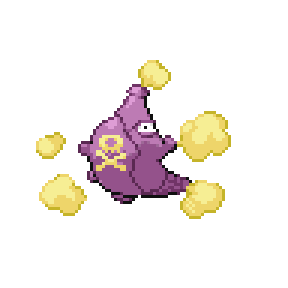
Koffbat produce a virulent gas that clings to their wings wherever they fly. It only takes a few specks of this gas to produce a coughing fit, which is enough of a distraction for them to strike their prey.

Even though Koffluff love to cheer on their teammates, many people in the audience do not enjoy sitting next to them. This is because the gasses they produce to keep themselves airborne smell like rotting wood.
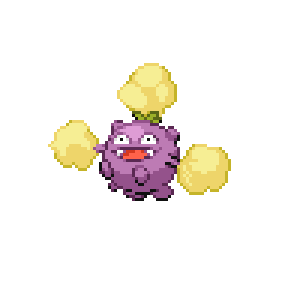
Koffsaur are easy to identify by their putrid scent. Prolonged exposure to Koffsaur gas causes headaches and nausea, which is why many researchers wear masks when dealing with them.

Koffoh billows out a hazy rainbow cloud that causes a heavy, lethargic feeling upon inhalation. Many affluent lovers try to bottle Koffoh's clouds, but they turn yellow after a few hours.

Koffbat are disease-ridden creatures that fill the air with noxious fumes and drool thick, sticky saliva onto cavern floors. Many Pokémon that either inhale the fumes or touch the saliva break out in hives.
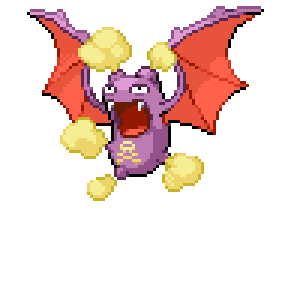
Koffras infect other Pokémon with a myriad of diseases through the spores they expel from their bodies. The infectious fungal spores force many Trainers to wear masks when handling Koffras.
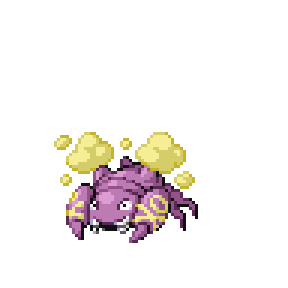
Koffsect constantly release spores from their body in the form of a foul miasma. Many Trainers and Pokémon get sick when breathing in a puff of Koffsect spores, often developing a fever and sore throat.

Koffggy eat lots of Payapa Berries because their natural environment has lots of Psychic-type Pokémon. Whenever they are struck by psychic waves, they release a burst of smog and kick through obstacles to give themselves a chance of escape.
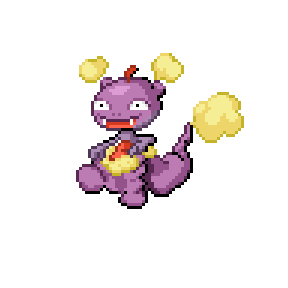
When Kofftrio erupt from the ground, they saturate the area full of noxious fumes. The fumes cause dizziness and confusion when inhaled, making escape from Kofftrio quite difficult.
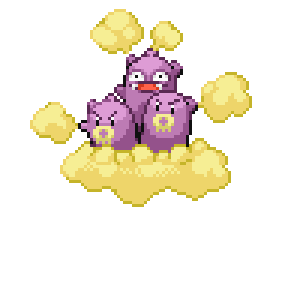
Koffduck constantly try to hold in their gas to make themselves more approachable and develop a headache if they strain too hard. Trainers who help them act as their natural selves will find a reliable lifelong partner.

Koffduck are confident creatures that are unashamed of the gas they release from their bodies. They release this gas in loud bursts, which causes a ball of concentrated air to form if they are underwater.
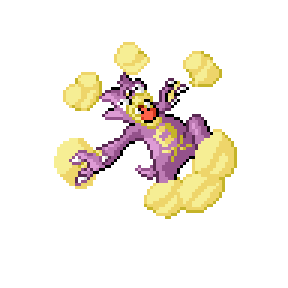
Metadra have a cocoon made of interlocking sage-colored scales that deflect bites and scratches. They also release a constant stream of ink that obscures the vision of nearby predators.
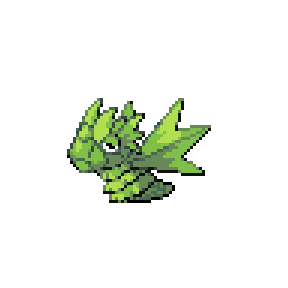
Metadeen drag their fins through seaweed to create the illusion that they are a piece of floating seaweed. This camouflage convinces predators to leave them alone and saves their cocoon from getting damaged.

Metaking hide within forests of seaweed to keep themselves safe. Their soft cocoons can grow seaweed to make their camouflage more convincing.
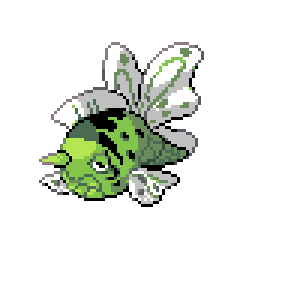
Metaking hide within seaweed forests to avoid detection from predators. Their soft cocoons allow them to grow seaweed on their bodies to improve their camouflage.
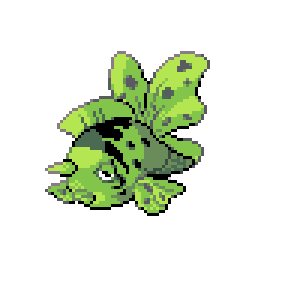
Metavee are cordial yet slow creatures that enjoy lounging around observing the world around them. They have little appetite while in their pupal state, so Trainers have to feed them to ensure they remain a healthy weight.
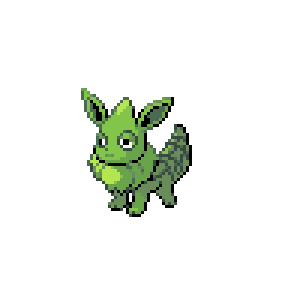
Metadactyl keep their wings outstretched to scare off Pokémon that enter their territory. Despite their formidable size, they are only capable of short hops because of the chitinous shell around their body.
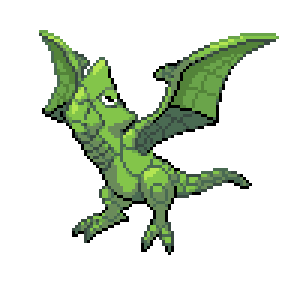
Metarita have a special cocoon that has leafy plates that flake off as they continue to grow. Herbalists take these pungent plates to create bitter medicinal drinks.

Metaleef have a thick sap that lubricates their cocoons. Once they evolve, apothecaries take the cocoon that is left behind to create a supplement that makes bones stronger.

Metaquil carry a bundle of silk on their back that stores hot embers. Whenever they are threatened, the silk pouch momentarily opens to spray hot air and soot to scare away danger.
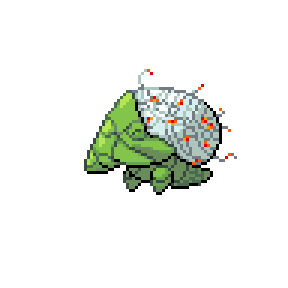
Whenever a Metatret gets hurt, they release pheromones that alert other Pokémon to the danger nearby. More predators leave Metatret alone to avoid scaring away other potential prey.
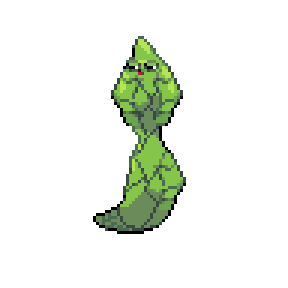
Metarak are encased in a thick cocoon that protects them from harm. Whenever they fall out of trees, their legs skitter to bring them back to where they were.

Metageot may seem like an easy snack for predators, but Pokémon that try to carry it away find that it is quite heavy. The tough cocoon around its body also makes it difficult for predators to break.

Metapip sit atop branches where they sit until they evolve. If they are knocked down from their branch, the leaves atop their head allow them to float safely to the forest floor.

Metasire are too heavy to hang from branches, so they often lie on the ground with their smooth back exposed to the elements. Depending on where they land, they may shuffle their position so they have a pleasant scene to look at as they daydream.
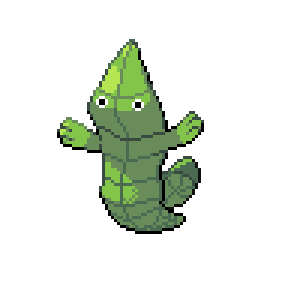
Metallery adhere to trees with their suction cups to prevent themselves from falling out of trees. Their cocoon protects them from danger as they grow from within.
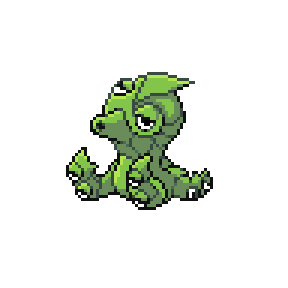
Metaran are typically protected by their nestmates and get the luxury of being cared for while their bodies develop. Their tough shell makes eating difficult, so their nestmates feed them until they evolve.
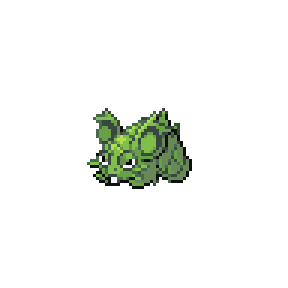
Metarina amble around near their homes to keep a close eye on their siblings. Even though they cannot move quickly, their size typically wards off predators.
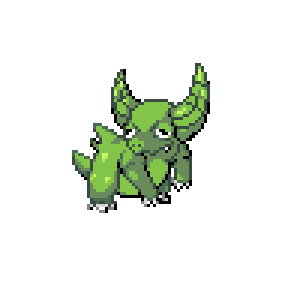
Metaran are bold creatures that continue to wander the world even if their shell limits their movements. They are often brought back to a nest by their nestmates to keep them safe.

Metaklang are resilient factory workers that help keep machines working smoothly. Many work around the clock as they do not need to eat, so they keep working until they evolve.
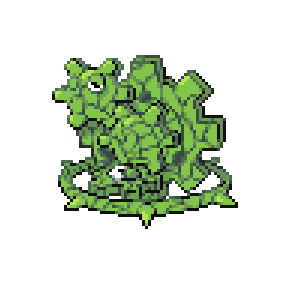
Harnessing the spatial continuum, Metakia embrace the space within their shells to develop potential energy. This potential energy has the capacity to manipulate matter and density, which they store until the final metamorphosis.

For most of the month, Metafable idly hang from trees to conserve their energy. On nights of the full moon, their cocoon gets hot while they gather moonlight.

Metapix can be found hiding in bundles of logs after lumberjacks cut down trees. They are docile Pokémon that can be lured away from the logs with a few berries.

Metamer have slippery cocoons that make it difficult for talons to grab onto their bodies. They float idly in the ocean where they have the best chance of avoiding deep-sea predators.

Metaink spin their twin gears to help factories keep machinery running. Their tough cocoon keeps their body firm as they spin for long hours.

Metang's hard cocoon gives them the sturdiness to keep working at factories all day long. They rarely take breaks as they do not need to eat, so many keep working until they evolve.

Metasis have a soft membrane around their body that gives them psychic powers. This is particularly handy when they fall down from branches, since they can simply levitate themselves up from the ground.
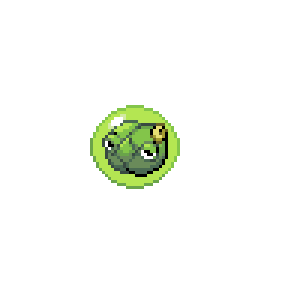
Metaonee has a thick layer of wool that pads its body when it falls out of trees. This wool is slippery and makes it difficult to grasp with talons or fangs.
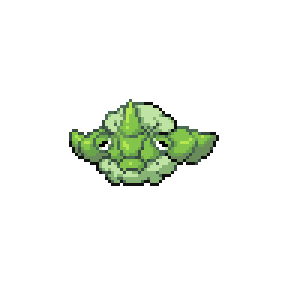
Metapede have conflicting instincts for how to defend themselves against predators, as they simultaneously want to retreat and stay still. Their sharp spines make staying put a viable option, but most predators fail to keep up if they roll away.
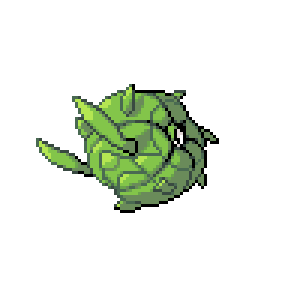
Metabink have sparkling red crystals growing from their body that have the vague appearance of blood. This scares predators into leaving them alone.
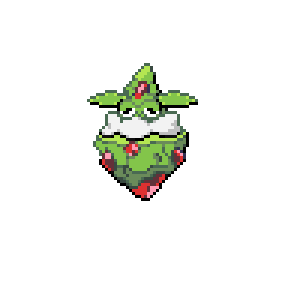
Metakaboo eat lots of Coba Berries to help them harden their shells against Flying-type Pokémon. When they are not defending themselves against predators, they collect berries to share with others.
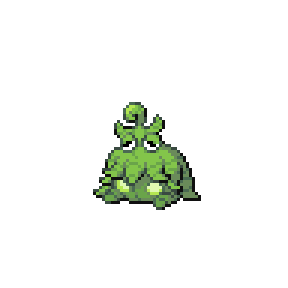
Metaor takes advantage of its ability to fly to tackle Flying-type Pokémon to stop them from attacking Metapod. While Metaor can be defeated and eaten, most Flying-type Pokémon avoid any altercations with it.
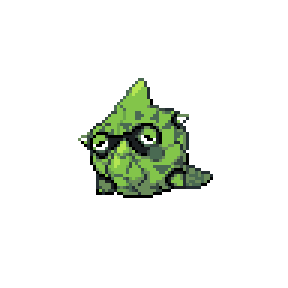
Metaduck experience headaches whenever they are itchy and will rock back and forth in an attempt to scrape against the itch. Trainers can help them feel more comfortable by rubbing them with a damp cloth to alleviate the itch.

Metaphish have heavy pincers that rarely see any use because of the amount of energy required to open them. Most of their energy is reserved for growth within their plated cocoon, giving them few options for protection.
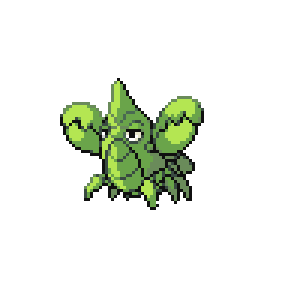
Metalithe are unable to move without damaging their cocoon. In the dark, they are mistaken for a Growlithe and are usually left alone.

Metanine are encased in a large cocoon that protects them from danger. Children often mistake them for a statue because of the pose they hold.

Metadude have limited movement because of their rigid cocoon. They toss rocks at Flying-type Metadude to avoid getting eaten.
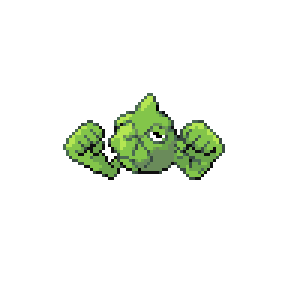
Metaeel rely on their flippers to propel them towards seaweed forests. They hide away from predators to give themselves time to develop within their tough cocoon.

Metatoise offers its body to Caterpie that need a place to hide. Predators typically do not have the strength to lift its heavy body, which is good for the hidden Caterpie.

Metano are petrified in place due to the thick cocoon around their body. The only part of their body that moves is the pendulum that swings from their hand.

Weesaur have two heads that are conjoined together and produce toxic gas. Many attempts at splitting these heads have led to a nasty explosion.

Weekrow are capable of summoning Pokémon to do their bidding, as many fear their wrath. Whenever a Pokémon disobeys their orders, they surround the unruly rebel with noxious fumes until they learn their place.

Weeras spores are both sticky and highly infectious. Many Trainers rely on the help of Fire-type Pokémon to burn up spores before they cause respiratory issues for their Pokémon.
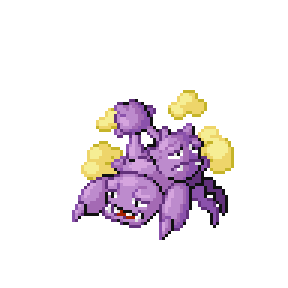
Weesect are constantly releasing spores into the air and devote much of their bodily resources to do so. The endless spores that Weesect produce are capable of transforming forests into fungus-infested swamps.
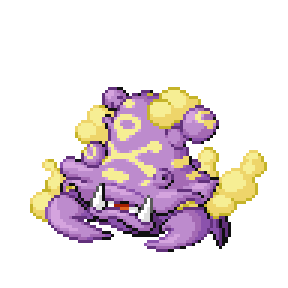
Weesect make chemical compounds that numb the pain of the various growths on their body. The spores they produce from these growths grow rapidly in damp climates and often infect Trainers who do not keep their feet dry.
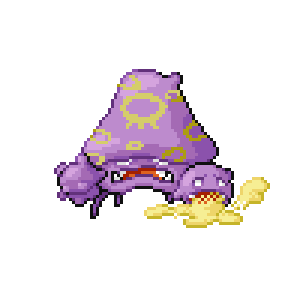
Weetry are capable of conjuring gusts of wind, a vital skill for proliferating their toxic gas. As this gas is wafted into air vents, Weetry can cause people to get sick from a long distance.
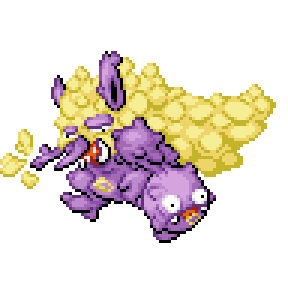
Weeduck naturally releases lots of foul-smelling gas that scares away other Pokémon. If one of their vents are clogged, the pressure in their body can build up and give them a nasty headache.
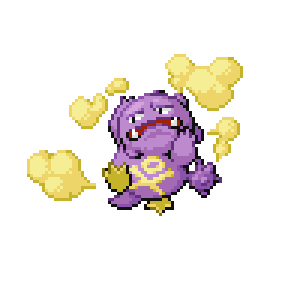
Weeta have two tumor-like heads that constantly release noxious fumes. The weight of these heads often causes Weeta to fall over whenever they gallop, so they have to trot slowly to avoid tipping over.
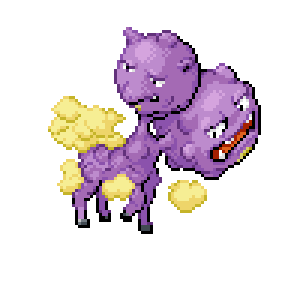
Rhysaur ram their horns into rocks to break them apart into edible chunks. The resulting impact of the horn attack leaves behind a cloud of spores that cling to nearby plants.

Rhyras live atop mountains where they help escort hikers to the summit. Their bulkiness and high stamina play a vital role in helping hikers make the trek up mountains.

Rhysaur produce a thick sap from their horn that is said to make a great exfoliant. Harvesting this sap can be difficult because they love to poke at the harvesters they work with.

The shells on the back of Rhycargo are made of lava that has cooled to a safe temperature. They remain close to volcanoes where they can take a dip in the lava to mend their shell.

Rhyans blend into rocky pathways with their greige scales. They ram their horn to stun prey before sinking their venomous fangs into their meal.

Rhyidos have a sharp horn and a well-polished dome atop their heads. Their powerful leg muscles allow them to bring themselves into a full sprint before slamming their horn into cave walls. This act has enough force to cause small tremors.

Rhyang have a large horn on one of their gears that is used to bore holes into walls. By drilling holes slowly and at a set point, this opens up opportunities for creating structures underground by making space for support bars.
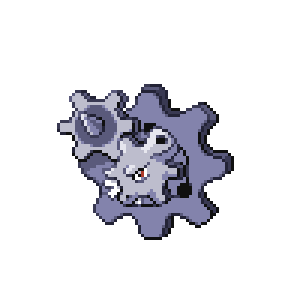
Rhyish often get hurt by large Pokémon, so just before they are about to be flattened, they stab their venomous horn upwards. The resulting wound will be a painful reminder to the large Pokémon to watch where they step.
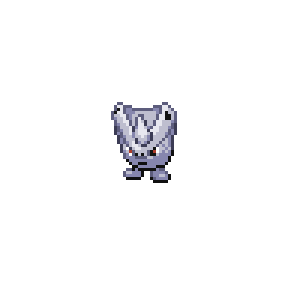
Rhyzma absorb light through their wings and shimmer with a powerful light. Once enough light has been absorbed, their horn on their head begins to split light into many colors like a prism.
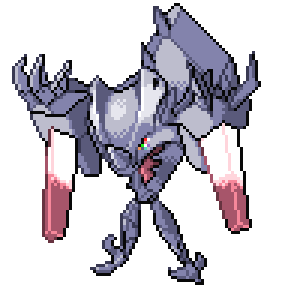
Rhyduo amble around looking for exposed roots to poke at. Their rock-solid heads protect them from scratches and pecks from other Pokémon.
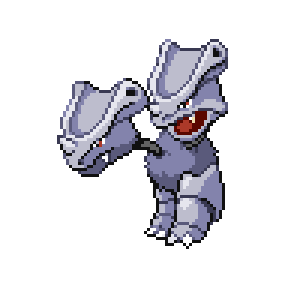
Rhywak are skilled fighters that can take on foes at any distance. They rely on their horn to stab their opponents at close range and toss their bone boomerang at long range.

Rhysey rely on a Lucky Punch to hit hard, as they are otherwise inept at fighting. They rely on physical attacks to protect their egg, which their bulbous bodies are not suitable for.
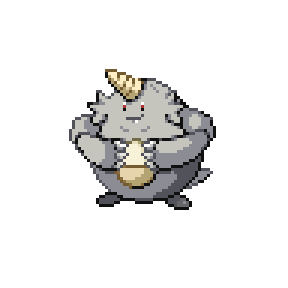
Rhyans camouflage themselves into rocky pathways with their griseous scales. They quietly slither towards prey before drilling into them with their sharp horn.

Rhytula shoots silk nets at flying Pokémon that fly by its web, and shock them once it can secure a zap. It then drags the fresh meal underground where it shares with other Rhytula.
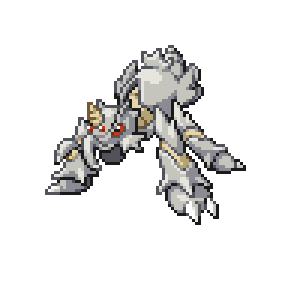
Rhybra train both their bodies and minds to deal with opponents in battle. Whenever they require lucid clarity, they chew on a Mental Herb, which is known to help clear the mind.

Rhyfetchd skewer berries onto their horn-like baton. During winter, they eat Yache Berries to help keep themselves warm and defend themselves against Ice-type predators.
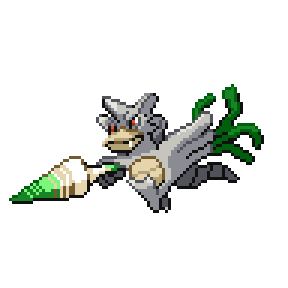
Chanturn delivers Fab Mail to children who are fighting through illnesses in a partnership with Pokémon Centers throughout the world. They are trained to deliver mail once per day to ensure the child has a daily moment of joy during their treatment.
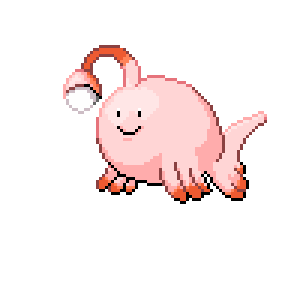
Chanvoir are hired to be teachers for Pokémon at daycare centers. They help baby Pokémon socialize with each other and encourage them to practice sharing, among other vital skills.
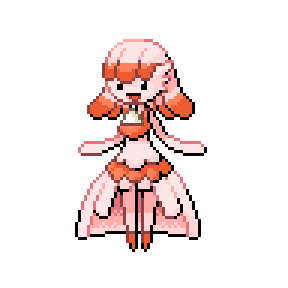
Chanking's sheer bulk and raw strength give it an edge in battle. A Salac Berry gives it an extra kick of adrenaline to stay fast and limber until it achieves victory.

With eggs nestled close to their bodies, Chanfairy scale Mount Moon to find a suitable spot to create nests. As daylight dwindles and nightfall comes, they set up camp and rest as they gaze into the night sky.

Chanmer protects its egg by stuffing it into a pocket of blubber, which keeps the egg warm. It is also known to nurse Pokémon at sea back to health after they get hurt.

Chanpuff make great babysitters because of their natural instinct to take care of others. At bedtime, Chanpuff sing a soft lullaby to make the children tired before putting them to bed.

Chanmander are loving creatures that enjoy keeping eggs pressed against their body. It is said that their body heat helps eggs grow faster, though this has yet to be confirmed.
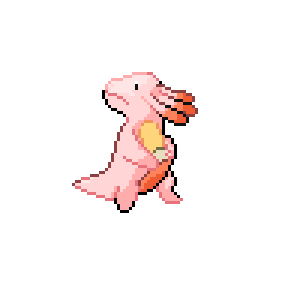
Chanine has a warm mouth that is the perfect temperature for incubating eggs, which is why it often keeps eggs in its mouth. On the rare occasions that it needs to eat, any attempts to steal the egg are met with a fiery Flare Blitz.
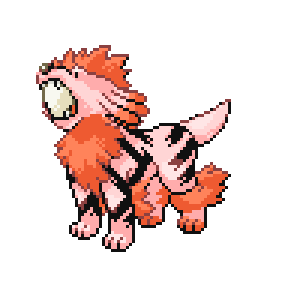
Chantle are thoughtful creatures that always think about the needs of others. They protect abandoned eggs they carry by ducking and allowing their shell to absorb attacks.

Chantortle are sweet little creatures that enjoy spending time in water with their egg. They make cries and babbles as though they were speaking to the egg.

The writhing tentacles of Tantor are clustered together around their heads. When given a treat, it is broken up into small parts that they distribute evenly among their many mouths. In a matter of seconds, the treat disappears into their stomachs.

Tanmie have hair-like vines that are wrapped around one of their tentacles and bring pieces of seaweed to their mouths. They are incredibly ticklish, especially around their vines.
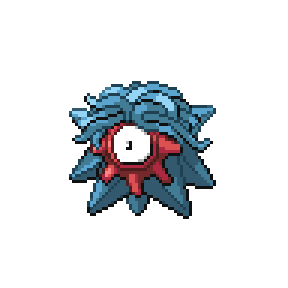
Tangon unleash vines made out of code to wrap around their opponents. If one of these vines is severed, they lose that part of their code forever.

When escaping from predators, Tanuna's vines sway behind itself to encourage predators to take a bite of a detachable vine. The predator runs off with a vine shortly thereafter, which tastes like a blackberry.
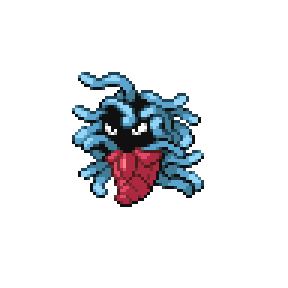
When confronted with predators, Tandrill's vines conceal its stinger and jabs at an opportunistic moment before running away. Certain honey gatherers are trained to drain its liquid venom from it for culinary purposes, as it tastes like blackberries.
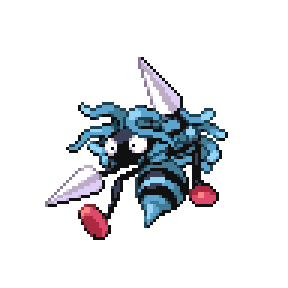
While wild Tanpom are rambunctious and playful, many domestic Tanpom serve as helpers for people with disabilities. Their long tail vine enables them and their Trainer to safely reach items from tall shelves.
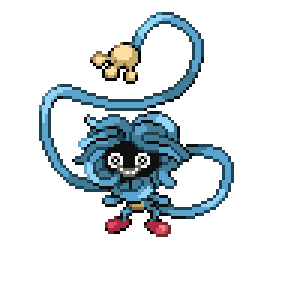
Tanflora are considered good luck by gardeners, as their presence converts crabgrass into flowers. They do this by converting the weeds into nutrients for other plants.

Fossilized Tanleep have been found covering ancient tree fossils. Some researchers theorize that these fossils form when trees were washed out to sea while growing. In modern times, Tanleep's writhing body clings to trees in groups.
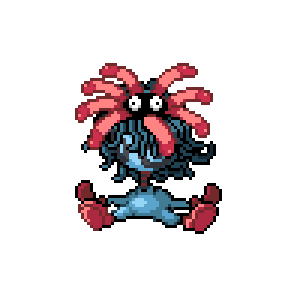
Tanish produces vines that can be dried and spun into twine. This twine is then used by bookbinders to sew pages together into books.
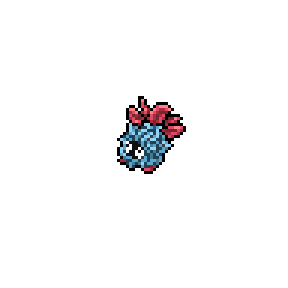
Tanras produces spores that resemble yeast that brewers harvest to produce mead. Its vines can also be dried and spun into twine to help secure barrels.

Tanlett releases an enzyme that breaks down minerals, allowing its roots to dig past large rocks. During dry seasons, it coils its vines into a ball to conserve water.
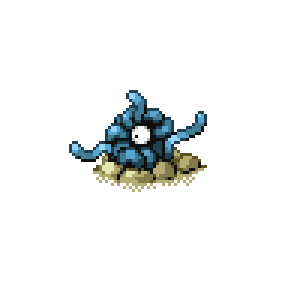
Tanth pick up and conceal coins with their many vines. It is said that by shaking them vigorously, they drop coins that they have collected.

Kangasaur are doting parents that enjoy giving their child whatever they want. They are overjoyed when their child wants to play tug-of-war, which gives them the opportunity to use their long vines.

Kangasros's skin used to be hunted for the production of instruments, such as the banjo. Now they roam in protected pastures where their population can be monitored.

Kangasras travel long distances across the icy sea to find the right place to raise their young. They travel in small groups to ensure that the children in their group don't feel lonely.

Kangasaur love to see their child play with other children and often join in on the fun themselves. They love to pull on ropes in games of tug-of-war, but they always let the children win after a few tugs.

Kangasaur love to play games of hide-and-seek with their child, who often hide atop the stalk on their back. When they inevitably give up and the child's hiding location is revealed, they tickle their child with long, soft vines.
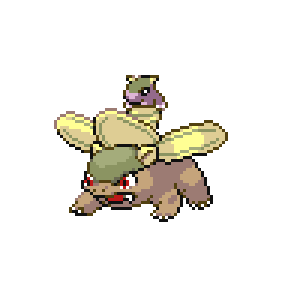
Kangasmory are apex predators and can easily take out other bird Pokémon with their sharp talons. They carry a special rock that resembles a baby Kangaskhan to practice taking care of eggs.

Kangasaur are doting towards baby Pokémon but are quite strict around rules. Whenever baby Pokémon break one of their arbitrary rules, they wrap the offender with their vines and give a long lecture.
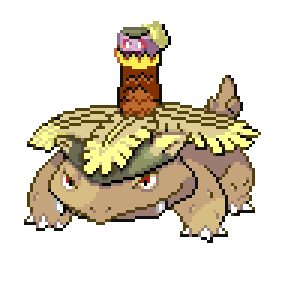
Kangasdon that did not have any siblings growing up are hesitant to share their food with others. Pokémon who are gentle with them find that they are caring but shy.
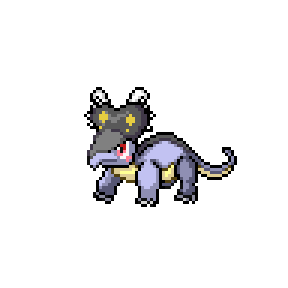
Kangaseye hides behind a Poké Doll that resembles a Kangaskhan. Whenever it gets caught during one of its pranks, it cowers behind the doll to appear remorseful.

Kangasor typically come in pairs of meteorites, one parent and one child. Whenever they are excited, they dance around each other and glitter with stardust.
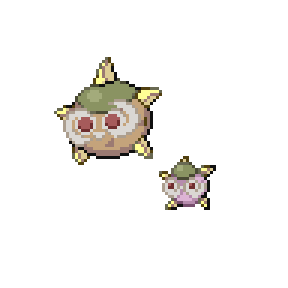
Kangasian carries around its young in its mouth, as it prevents its young from getting dirty. It would behoove itself to let go on occasion to allow the child to explore on its own, yet this seldom occurs.
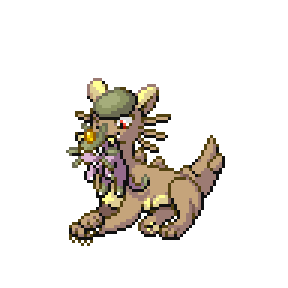
Whenever Kangasizard enter into a fiery rage, not even their child can stop them. It is only when they exhaust themselves or accidentally hurt their child that their rage ends.

Horkhan can be found on the ocean floor where it protects Horsea and their kin. They often flock to Horkhan when a predator is chasing after them to hide in its pouch. At this point, predators usually give up to avoid Horkhan's powerful Body Slam.
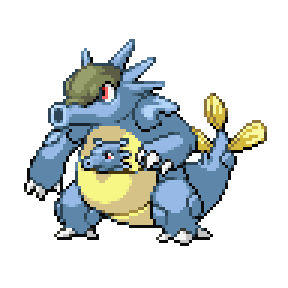
Hordra have long tails used to cling onto seaweed to avoid being swept away by ocean currents. Hordra has a tail that can stretch five times the length of its body.
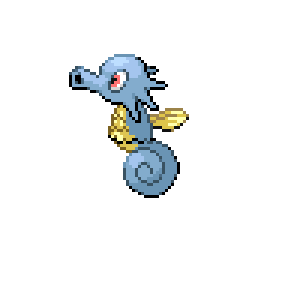
Hordeen are extremely friendly Pokémon and will try to follow people they like home from their natural habitat. As a result, Hordeen are a part of many home aquariums.
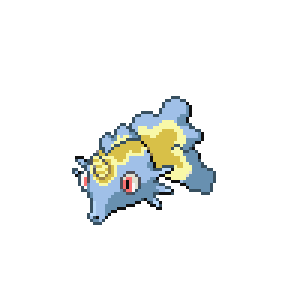
Horking are needy and demanding Pokémon, poking the glass of their home aquariums to get the attention of their owners. When upset, Horking will play dead, floating upside down until their owner notices.
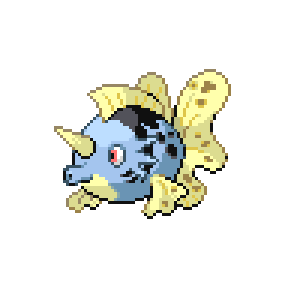
Horyu has five arms and five fins that circle around the center spout. When agitated, Horyu releases a cloud of ink before skittering away.
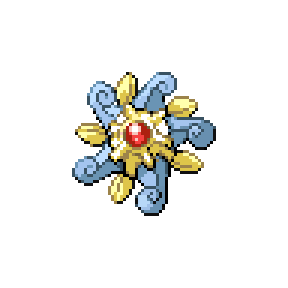
Hormie has five arms that latch onto the sea floor, spewing ink from its center spout to catch prey. When prey is caught in its ink, Hormie uses its psychic power to put its prey to sleep.
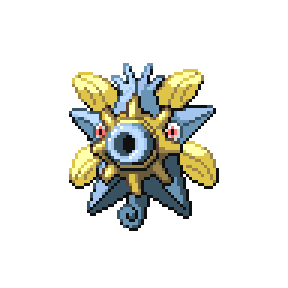
Horkarp are popular with fishermen, as they are considered lucky when caught early in the day. As a result, many fishermen consider it taboo to bring Horkarp into home aquariums.
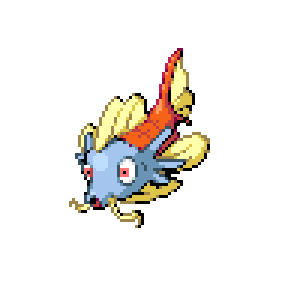
Hordos are agile swimmers, using their long tail to ride along oceanic currents. Hordos use their snout to siphon food into their mouths.
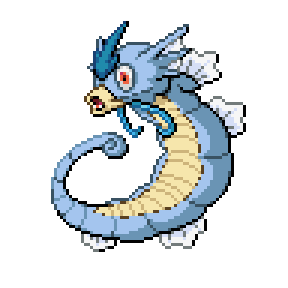
Hornyte have a heavy shell that can resist being swept away by underwater currents. They remain close to seaweed forests to hide from aquatic predators.
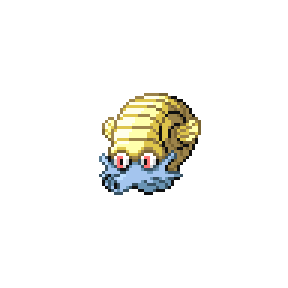
Hortret are highly social creatures that have a higher population living in aquariums than in the wild. They love to eat Wepear Berries that are difficult to find in the wild.
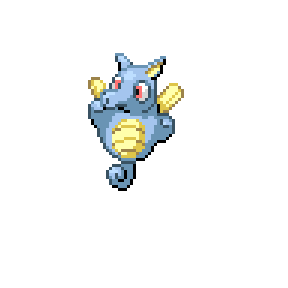
Horchou are curious and friendly Pokémon that enjoy following divers as they make their way down to the ocean depths. Horchou have two antennae that emit a soft glow, helping the diver see.
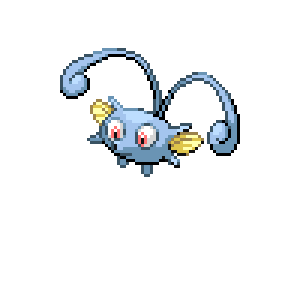
Horturn live deep underwater, spending most of their lives in darkness. Horturn dislike light and will either shoot ink at or quickly flee from the source.
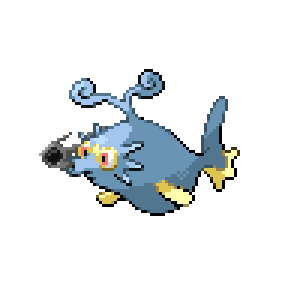
Hortic are playful and energetic Pokémon. They enjoy climbing atop cliffs by the ocean, only to jump into the water. When they are done playing, they form clusters on the beach to nap.
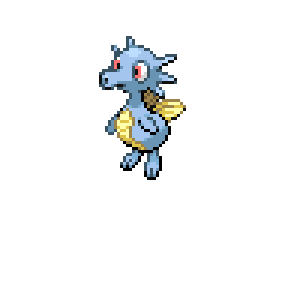
Horpip float around fields and meadows to play with different Pokémon in the area. When threatened, they spew out a blinding ink before scattering.
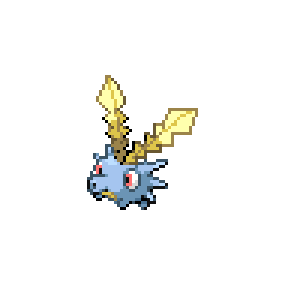
Horsire are laid-back creatures that are never in a hurry. Their heavy bodies prevent them from getting swept up by ocean currents, but they still remain near kelp forests out of habit.
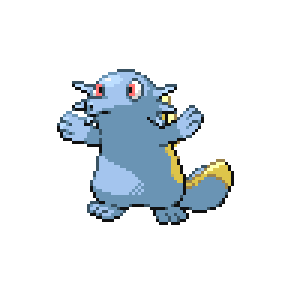
Horsola live on the rocky shores close to coral reefs, causing the coral reef to appear to extend onto land. Horsola use their snouts to spit out ink when anyone gets too close.
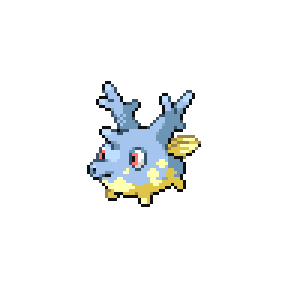
Horaid pick at the seafloor looking for scraps to eat. They are skittish, running away and hiding at the first sight of danger.
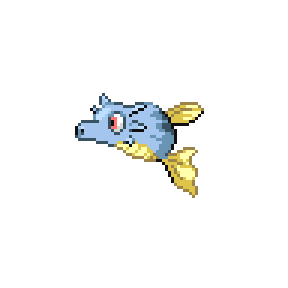
Horllery blend into their surroundings to hide from predators. They use their ink to further help them blend in, as their horny spines glisten in the light.
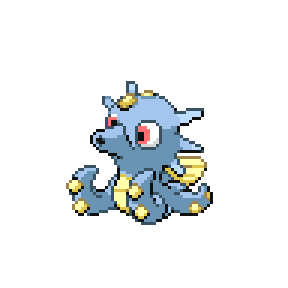
Hortine wander throughout the oceans protecting coral reefs from danger. Their long flippers help shield such coral reefs from oil and other toxic chemicals.
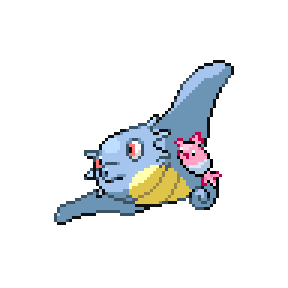
Hordra gather baby aquatic Pokémon around them to form a nursery. Hordra travel in schools and shoot out ink to ward off predators.
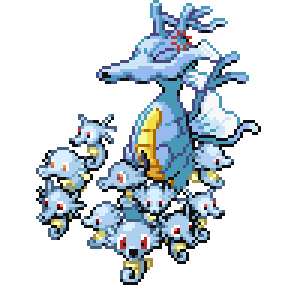
Horpiny carry special pebbles close to their bodies to keep them warm while learning how to take care of eggs. They shoot bursts of ink at Pokémon who try to touch the pebble without permission.
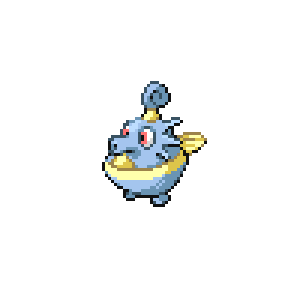
Horlup are often kept as pets, as they are fiercely loyal and great with children. When Horlup evolve, these traits only grow more prevalent.
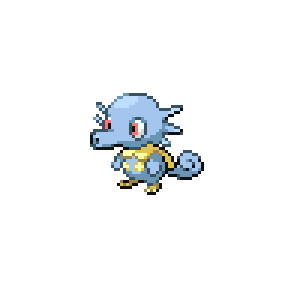
Horbat live in damp caves, flying around in search of food. Horbat dive into cavern lakes, using their large mouth to bite onto their prey.
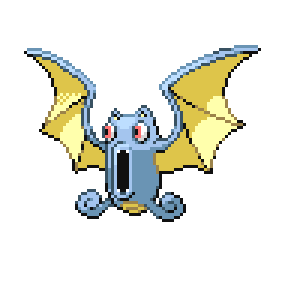
Due to the appearance of their fins, Horedo are often bought for casino aquariums. When food sinks to the bottom of the tank, Horedo turn to use their snouts to eat, showing the coin-like fins to guests.
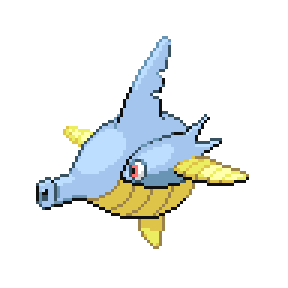
Horeanie lure prey towards themselves by using their small heads as a lure. Horeanie then use their long, poisonous tentacles to attack their prey.
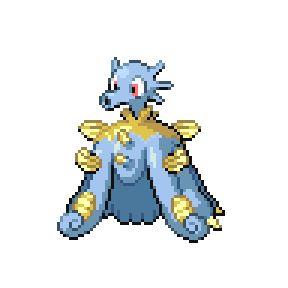
Horish rest in shallow waters near beaches and eat food dropped by tourists. Children like to pick up Horish and use them to float on the water, as they are friendly and comfortable to hold.
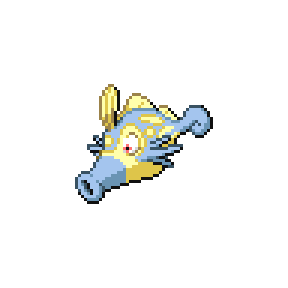
By siphoning the morning dew that gathers on their spines, Horcoon get just enough water to keep themselves hydrated. This is especially important since many cannot access bodies of water while hanging from branches.
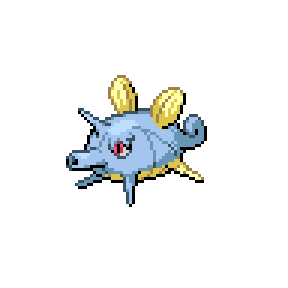
Horduck float all over the oceans of the world, traveling in migratory groups. Horduck migrate to warmer waters during cold seasons and return home when the weather warms up again.
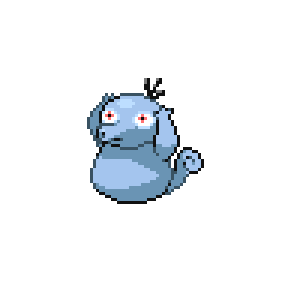
Horduck are capable of swimming quite quickly through the water but have a difficult time maintaining proper nutrition because of their small mouths. Many are malnourished because there are not enough predators to cull their numbers.
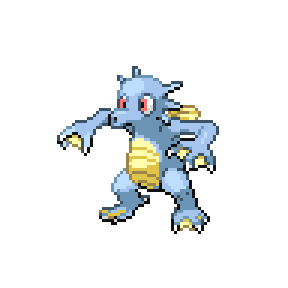
Horcool have two giant eyes that bulge from their head. Horcool prefer to live in darkness and will release clouds of ink to hide from the light.
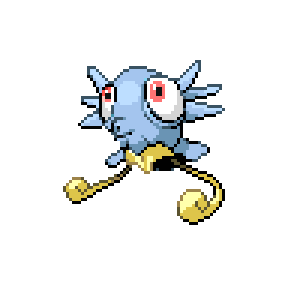
Horpoke laze around the beach and sleep for 18 hours a day. When disturbed from their sleep, Horpoke sneeze out ink from their snouts.
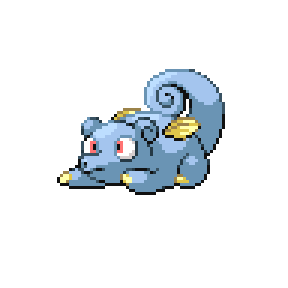
Horeel are popular at aquariums and resorts, as their cautious but playful temperament gives tourists excitement without causing too much mischief. Horeel enjoy playing with Berries, balancing them on their snouts.
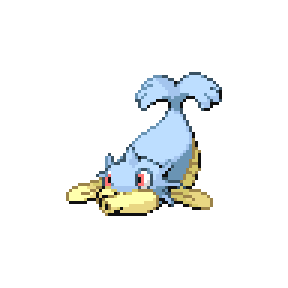
Horgong have adapted to the icy tundra of the world. Horgong uses its snout to spit out black ink, marking its hunting grounds and territory to other Horgong.
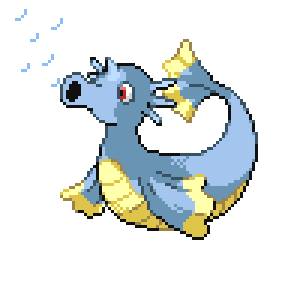
Horder have a strong shell that resists the ocean's currents. When threatened, Horder spit out a cloud of ink before hiding in its tough shell.
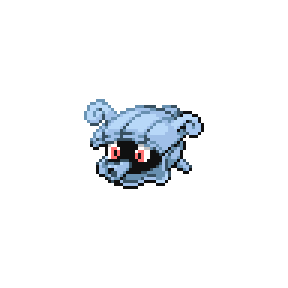
Horster has adapted to live in the most frigid of oceanic environments. Horster is able to spit out a chilling ink, allowing it to freeze its predators and give it the chance to escape.
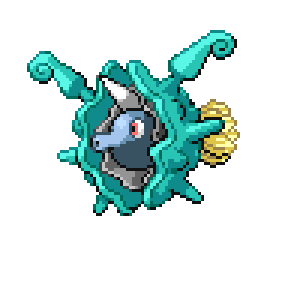
Horler scuttles across sandy beaches, using its ink to mark its territory. If one Horler crosses into the territory of another Horler, they will fight using their large claw.
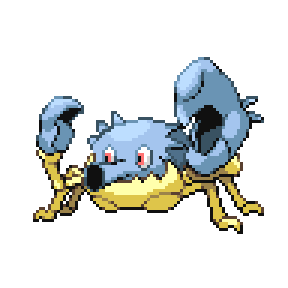
Seasea have an elongated snout and long back fins. Their tails remain undeveloped, so Seasea rely on their fins for movement.

Seadeen are friendly but needy Pokémon that demand lots of attention from their owners. If left alone for too long, Seadeen will tap on the glass of their enclosure incessantly.

Seaking, despite their appearance, are loyal and caring Pokémon. Seaking frequently outgrow their enclosures and are often released into a pond or lake to give them more room.
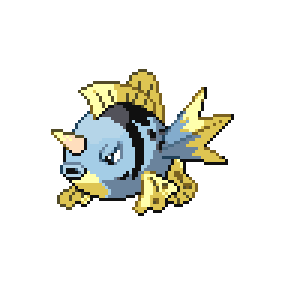
Seayu live on the seafloor, the center spout releasing built-up ink when necessary. It is said that the ink from Seayu helps coral reefs grow.

Seamie live on the ocean floor, where many barb-like arms surround the center spout, which occasionally shoots out built-up ink. The nutrient-rich ink is eaten by many other aquatic Pokémon in the region.

Seakarp use their long noses to pick at the ocean floor to find food. Seakarp use their fins to stir up the sand, finding bits of plant matter to consume.
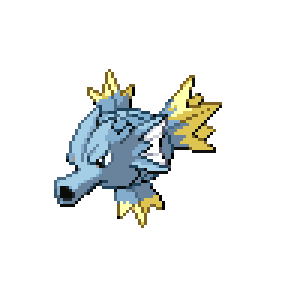
Seados fly through the ocean skies, their scales providing aerodynamic flow. Seados shed scales often, which fall onto beaches or the ocean floor.

Searas use their long noses to pick up scents in the air, as Searas never forget an island's smell. Searas then use their large shells atop their backs to ferry people between islands.

Seatini have rugged scales on their bellies, which they use to protect themselves from attacks. When a scale is damaged, Seatini shed and regrow that scale.

Seachou have two long antennae that help them remain balanced when swimming. Seachou will shoot electrified ink in small gooey blobs to stun opponents.

Seaturn dive deep below the surface where the light is weaker, as bright lights cause Seaturn irritation. Seaturn will shoot blobs of ink at bright lights.

Seafish releases a burst of ink from their barbs whenever they are threatened. They were once hunted by poachers for their ink, but poachers lost interest when cheap ink became widely available.
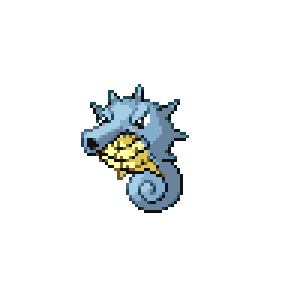
Seallery have large fins and tentacles that they use to fight. The tentacles are sticky, able to latch onto the ocean floor to remain stationary in ocean currents.

Seatine travel from coral reef to coral reef, ensuring the natural wildlife is protected from danger. Seatine travel in schools with other Pokémon to fulfill their natural calling.
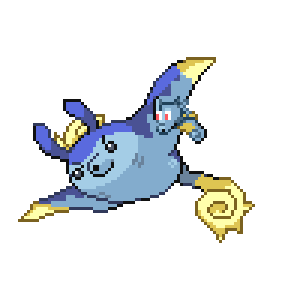
Seaedo have many rough, sharp scales they use as a natural defense mechanism. Seaedo will rub against rocks to keep those scales sharp.

Seaeanie use their head to lure prey towards themselves. Seaeanie will then use their snouts to shoot ink before closing in with their barbed tentacles to secure a meal.

Seapex hide their head inside their tentacles, drawing in unsuspecting prey. Seapex then use their barbed tentacles to wrap around their meal.

Seaish rest on the ocean floor, eating food swept there by the ocean currents. First-time divers often look out for Seaish, as Seaish release psychic energy that discourages predators from approaching.

Seaduck migrate alongside other Pokémon during the cold seasons and return home during hot seasons. They are known to attack sailors who they cross paths with.

Seawhirl have sharp fins that cover tentacle fists. When fighting, Seawhirl are known to spit ink into the eyes of their opponents.

Seacool have two large unblinking eyes that stare at the world. When in danger, Seacool will release inky waves of sludge to slow down predators as they make their escape.

Seacruel have two eyes that hide behind a giant mask. Seacruel avoid conflict by hiding deep below the surface of the sea, using clouds of ink to obscure their presence.

Seabro use their fins to emit psychic energy and defend themselves. Seabro cannot remove the shell on its tail, despite their best efforts.

Seaeel are great for aquariums, as their mild and easily amused temperament give tourists joy. Seaeel love hugging people and are slow enough that photographers take adorable photos.

Seader have a strong shell with large fins that allows them to glide through the ocean's currents. Seader fins are razor thin, and very sharp.

Seaby are territorial, spewing ink to mark their territory. This is because Seaby need plenty of room to wander and are solitary by nature.
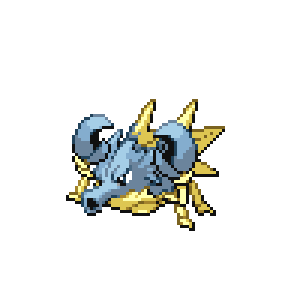
Golfing swim through swamps and produce bubbles filled with noxious fumes. The gas within each bubble floats to the surface of the water, where they pop and release foul odors.

Golfing can rapidly ascend from deep swamps by producing a bubble filled with noxious gas. Once they reach the surface, they pop the bubble with their horn to fall back into the water.
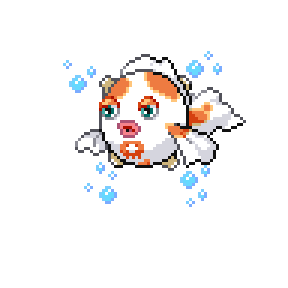
Golpod are carried by others so that they can remain part of the school of aquatic Pokémon. Without the support of others, they quickly succumb to predators who break into their cocoons.

Golzing wear pieces of garbage on their body to hide from dangerous Pokémon. If found, they create bubbles that release a rancid odor when popped to scare the dangerous Pokémon away.
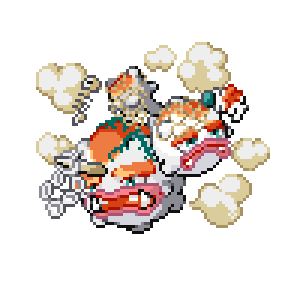
Golmie protect schools of Goldeen by ramming into predators with their jeweled horn. One precise stab is enough for most predators to get the message, especially when Golmie give chase if they don't escape far enough.

Golgey makes its nests in the center of lakes where it is safe from land predators. It stays away from lakeshores where predators like Ursaring are known to gather.
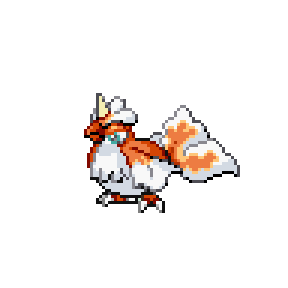
Golown take the form of a glyph that has fins and communicates with other aquatic Pokémon by swirling and flapping their fins. Whenever they encounter a Trainer, they release bubbles from their body in an effort to communicate.

While Goleal are capable of rolling on land, they typically prefer to remain in the water. On hot summer days, Goleal can be seen idly spinning a few feet from coastlines, creating a beautiful scene of orange and white that attracts tourists.

Seabone have long bony protrusions on the back of their heads that sway whenever they are underwater. Sometimes they wedge more bones to these protrusions to make themselves look bigger.
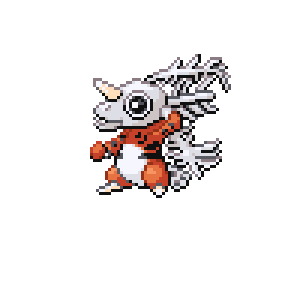
Seafing lurk beneath swampy water, where they create bubbles that float to the water's surface. Once the bubbles reach the surface, Seafing pop the bubbles to release the foul stench inside.
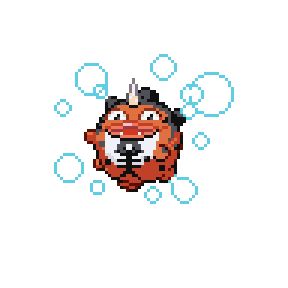
Seazing's horns are full of venom and cause inflammation at the site of the sting. If their target is too far away to be stung, they fill bubbles with this venom to soak their foes with.

Seazing mainly rely on their venomous foes to stab foes, but if their target is too far away, they can fill bubbles with venom to close the gap. The bubbles are filled with a fetid odor that causes even other Poison-types to recoil.

Seayu are protective of aquatic Pokémon and attack fishermen who fish in their waters. They snap fishing lines by curling them around their horn before pulling as hard as they can.

Seamie wrap their limbs around fishing lines to protect their aquatic brethren. Once fished up by bewildered fishermen, Seamie wreak havoc by frantically stabbing anything they can with their horn.
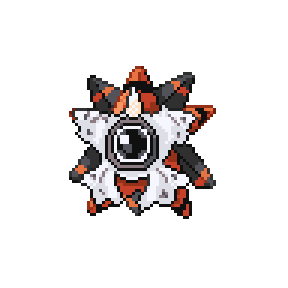
Seaown flutter through ruins by flapping their tail as though it were swimming. They release psychic waves from their horn to scare intruders away.

Searaid rely on their sharp horn to defend themselves from predators. Their superb accuracy allows them to poke the eyes of predators with a single stab, ensuring escape. Horn enthusiasts often go hunting for Searaid to steal their horns.
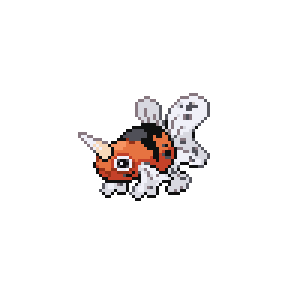
Seaitar dive deep into the depths of the ocean to break apart sunken ships with their hefty horn. If they encounter any people trying to retrieve lost treasure, they respond with hostile aggression.
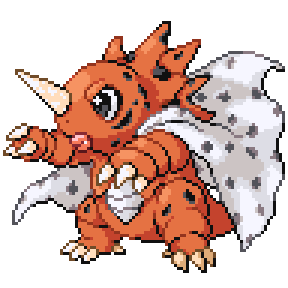
Seaslash defend themselves with a horn that is as long as a cue stick. Their auxiliary shield on their side also protects them from harm but is less intimidating than their horn.
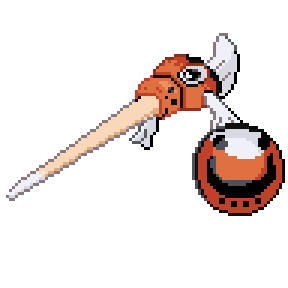
Seaduck communicates telepathically, which is effective for coordinated small groups. Once they reach a sizable group of Seaduck, their telepathic communication breaks down, leading to headaches and disorganized swimming.

Seaduck zip past other Pokémon while swimming as they gracefully dodge obstacles in their path. During the mating season, they search for mates who exhibit great agility, as being able to perform complex maneuvers is seen as attractive.

Seaduck have special webbing on their flippers that allows them to swim up waterfalls. This is particularly helpful during their mating season, as being able to swiftly climb waterfalls is seen as a desirable trait.
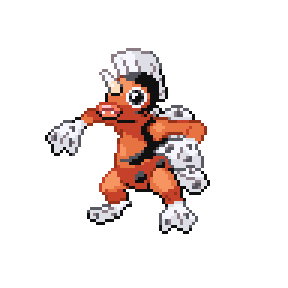
Seaby is baked to bring out the juicy oils that are stored in its body. It is usually served with a side of rice and a few slices of citrus to balance the natural salt content of the dish.
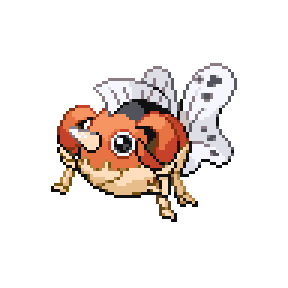
Butterpod are capable of creating brief gusts of wind to hop from branch to branch. Each leap releases a cloud of dust that can irritate the eyes.
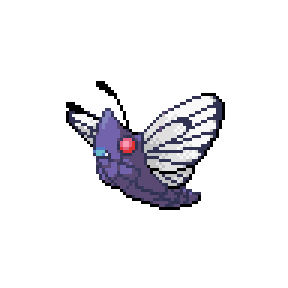
Butterdeen produce many eggs throughout their lifetime, but they are unable to defend the eggs with their small horn. This leads to an unfortunate situation where many eggs are eaten by predators before they hatch.

Butterking are unable to defend their eggs effectively without horns or other defense mechanisms, so they focus on producing as many eggs as possible. This has led to many Butterking abandoning nests if they have a chance at making more eggs.

Butterew have developed abilities like invisibility and teleportation over a long period of time. The scales that they shed help scientists understand the underlying DNA behind their abilities.

Buttergey releases a shimmering dust from its wings. This dust causes drowsiness whenever it is inhaled, so research scientists wear masks to study the Pokémon.

Butterchu flakes off small scales from its wings that are incorporated into potions. The scales produce a tingling shock on the tongue that helps keep Pokémon awake.
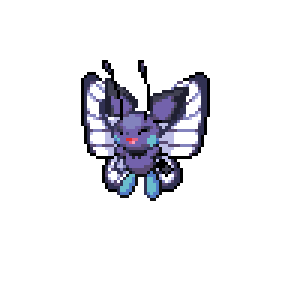
Buttergeot zips towards Bellsprouts and rips them from the ground to secure its meal. Whenever it flies by, it creates a cloud of powder that makes other Pokémon sleepy.

Butterill love bouncing atop their ball-shaped tails and release dust from their wings with each bounce. The dust shimmers in the sunlight and creates a beautiful array of shimmering sparkles.

Buttermory have a peculiar pattern on their steely feathers that makes them appear larger than they actually are. Many predators of Caterpie avoid Buttermory because of their deceptively scary appearance.

Butterbi are an ephemeral presence in the forest because they never remain at one point in time for long. They travel between timelines to help Metapod back into trees and ensure that the next generation of Butterfree are able to flourish.

Butterchu sheds small scales from its wings that are incorporated into love potions. A single drop is said to create feelings of infatuation, though scientists say it has the same effect as chocolate.
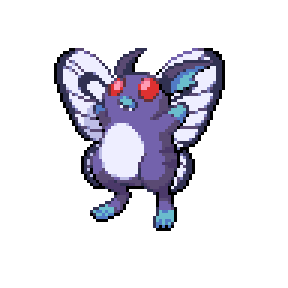
Buttertyke love to spend time with children and are more than willing to play games to pass the time. Children often get dirty from playing with the dust that Buttertyke produce, but the dust is easily cleaned off with a thorough bath.

Butterina have heavy bodies that make flying difficult, but still keep their wings clean to stop the dust from harming those in their nest. Whenever they are out foraging, they take a drink of nectar before returning home with juicy berries.

Butteraldo spread their wings and unsheathe their retractable claws when threatened to scare dangerous predators away. Many predators lose interest out of fear, as Butteraldo have claws that can crush bones.

Butterklang help factories maintain their efficiency by spreading a special dust that melts into an oil when ground up by gears. This allows parts to remain lubricated without stopping large machinery.
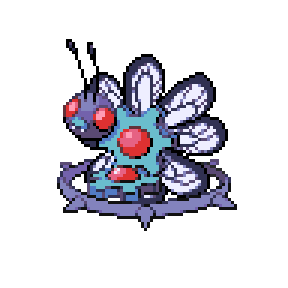
Buttertios zip through the sky and leave behind clouds of dust behind them. It is said that they only appear before Trainers who have treated their Pokémon well, especially Bug-type Pokémon that are often neglected.

Butterink rotate their twin gears to keep factory machines turning. They are best suited for parts that receive bursts of activity, rather than a steady, consistent rotation.
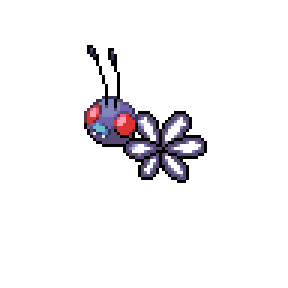
Butterang work at factories as a cog in vital machinery. The dust they produce from their wings is ground into an oil that helps keep cogs well-lubricated.

Buttersis produce a powdery dust that gets mixed into the membrane that surrounds their body, which swirls around them like a snow globe. This dust gets reabsorbed into the body when they harness their psychic powers.

Buttermo-o produce dust from their scales that resembles rosin, a substance that creates friction to enhance the sound of clanging scales. Whenever Buttermo-o strike with an uppercut, their interwoven scales produce a bright, resonant sound.
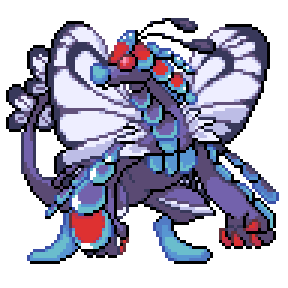
Butterkaboo shed dust from their wings that is collected by spirit mediums to use in their craft. When this dust is set on fire, the dust produces a floral yet smoky scent that is said to make a person susceptible to spiritual possession.
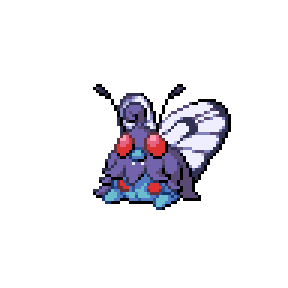
Butterduck release a tranquilizing powder that eases the chronic migraines they have. They are prone to falling asleep because of the chronic exposure to the sedative.

Butterduck love drinking nectar from flowers because it soothes their chronic headaches. Whenever they are full of nectar, they are so happy that they dance with excitement.

When Butterduck are being chased by a predator, they run atop the surface of a body of water to force the predator into swimming. Many predators give up once they reach water, allowing Butterduck to escape.
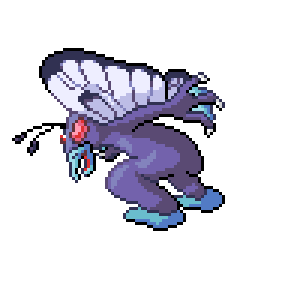
Butternine are reliable partners that help their Trainer navigate busy streets by using their compound eyes to look for vehicles. Butternine do not shed fur but rather a small amount of dust, making them low maintenance.

Buttertoise flutter for hours without rest with wings that shimmer in sunlight. Its wings cannot fold into its shell, so it is launched into the air in windy conditions.

Starzone clings to submarines to transport itself through the ocean. Its red gem glows softly in low light conditions, luring other aquatic Pokémon to the submarine.
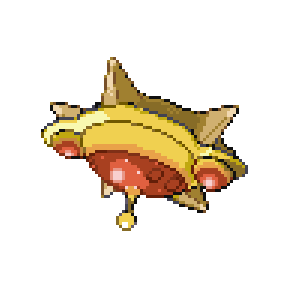
Starth are a popular choice among the rich and people with affluence. They are trained to stand at attention in a pose to accentuate the gem on their head.

Starduck are able to regrow limbs, but the immense strain on their body draws nutrients away from their head, resulting in a nasty headache. Many avoid wandering too far from their home to avoid getting hurt.

Starizard have no eyes, so they rely on vibrations in the air and sea to give them a sense of direction. The core on their head can shoot bursts of water with great precision to take down targets from far away.
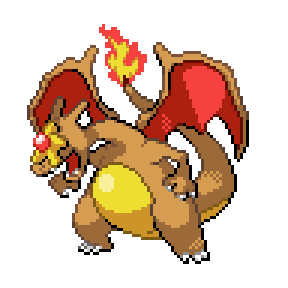
Starmite clings to submarines to transport itself through the ocean. Its red gem glows softly in low light conditions, luring other aquatic Pokémon to the submarine.

Starton starts each morning by sticking itself onto a submarine. It removes itself from the hull once it has traveled far enough from its original home.
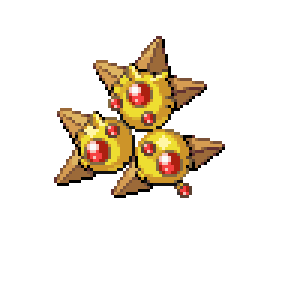
Stardon shoots beams of water mixed with sand, turning a gentle stream into a pressurized drill. It can be found in factories where it punches holes into steel.

Starzone attaches itself to the metallic hulls of submarines, and glows in dark conditions using its gem. When it can no longer hold on, it lets go of the submarine and sinks to the bottom of the sea.

Starsaur mix their pollen into bodies of water to create a gel that cures poison. Scientists speculate that this is because their pollen has regenerative properties that counteract toxic compounds.

Whenever Starark disguise themselves as another Pokémon, they are never able to completely obscure the gems on their body. When their illusion is inevitably discovered, the gems glow in an array of colors as they revert back to their true form.
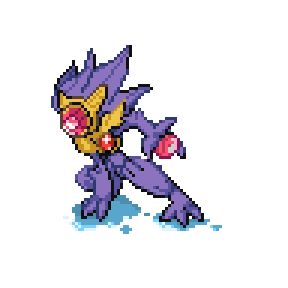
Starmite is known to cling to the outside of submarines, as its magnetic charge pulls it to the metal hull. It is tolerated because its gem glows in the dark depths of the ocean, which helps researchers conserve electricity.

Starton are unable to remain in one area for long, as they lose their electrical charge if they remain still. To remedy this, they hitch rides on submarines.
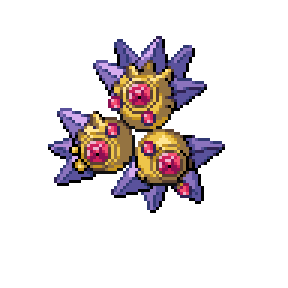
Mr. free enjoys putting on performances for its Trainer. One such performance is where it flies in a confined space pretending to be trapped in a box.
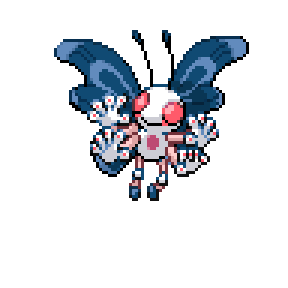
Mr. gon2 produce invisible walls that act like green screens that obscure anything behind them. Many nefarious organizations harness these walls to hide themselves from CCTV cameras, preventing police from identifying suspects as they rob banks.
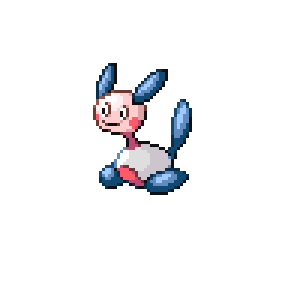
Mr. adier are recruited by members of villainous organizations to help steal valuable assets from museums. Their ability to create platforms out of thin air and the sticky pads on their hands make them well-suited for the task.
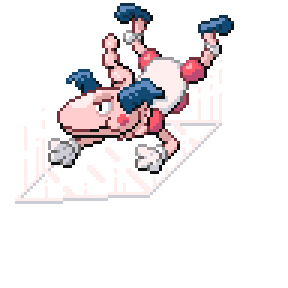
Mr. loud creates walls around its foes to trap them in an enclosed space before releasing a bloodcurdling scream. It typically reserves these screams for foes that bully others, as it has a strong sense of justice.
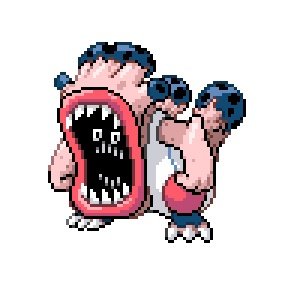
Mr. ink resemble a children's toy that has a head attached to the inside of the box. They bounce to wind themselves up and jump in front of children to give them a fright.
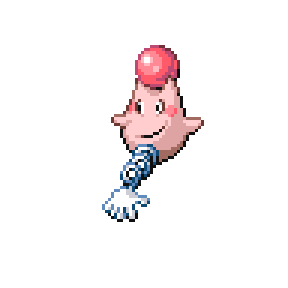
Mr. duck experiences a headache a day at minimum, and Trainers will always be able to tell. It mimes out and exaggerates its movement to seek remedial help.
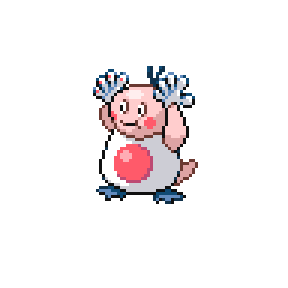
Mr. toy are popular during birthdays because they perform tricks for children. One of their most popular tricks involves spinning while making balloon sculptures.
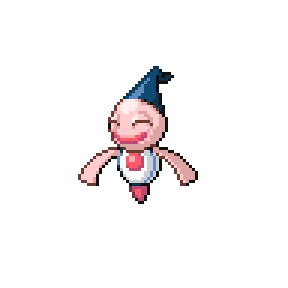
To prepare for parties, Mr. toise cram confetti into their cannons, condensing the material into the cramped space. Once the party starts, a forceful jet of water breaks up the confetti and spreads it around the room.

Scyrak can wait for several days at a time to find the right moment to ambush prey, remaining motionless the entire time. Once it finds the right moment, it pounces atop its prey to deliver a swift death with its sharp scythes.

Scypom are serious creatures that want to deliver perfection, whether it is a haircut or a Pokémon battle. They go into a primitive rage whenever they make a mistake, and it takes a firm yet reassuring Trainer to calm them down.
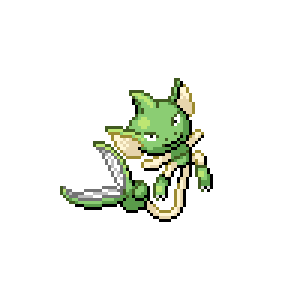
Scysel helps carpenters cut wood into parts used for making cabinets, tables, chairs, and other furniture. Its razor-sharp claws ensure that its cuts are precise and accurate.
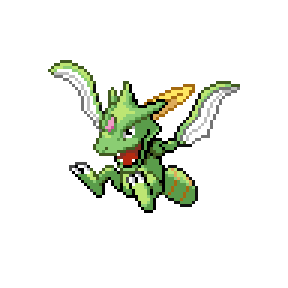
Scyshrew works together with barbers to cut hair for patrons while also developing the dexterity needed to win Pokémon battles. It practices every day to improve its technique so that it can fight with style.
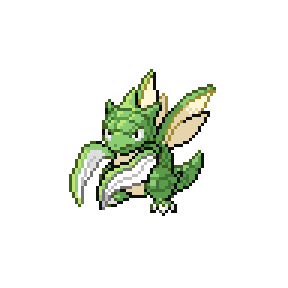
Scyslash help loggers cut down trees with the scythes on their hands. When they are not chopping down trees, they curl into a ball of spikes and take a nap.
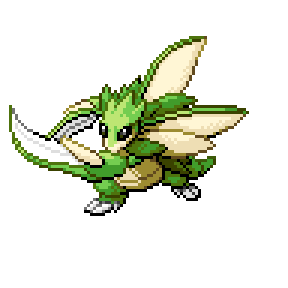
Scylade are experts at fighting up close and can parry an attack with a flick of their bladed hands. Once their opponent is staggered, they can quickly maneuver into a counterattack.
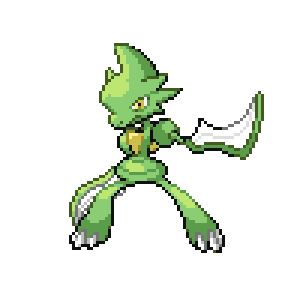
Scycada have such a ravenous hunger that they eat any leafy green they can find, including grass. A growing business model revolves around renting Scycada to eat grass, swiftly mowing lawns with their scythes to eat shortly after.

With a single whip of their scythe, Scylass can rend trees into small logs. This is particularly helpful for loggers, who leave out treats in the middle of the night to thank Scylass for helping them ensure villages have plenty of wood.
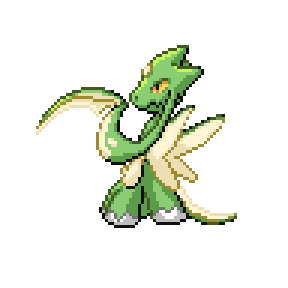
Each of Scyzma's scythes is enhanced with light energy, causing each cut to leave behind a glowing impression that lasts a few seconds.
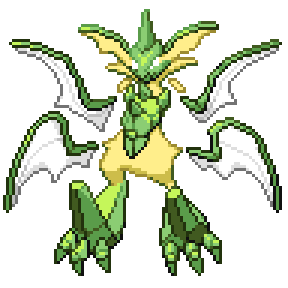
Scyduck keep their bladed hand close to their chest, since the force they need to cut through foes is weakened if they stretch out their arm. They zip through water at blinding speed to ram their blade into foes.

Scyfetchd spins its scythe like a baton to ward off pests, which helps protect crops. It spends idle time cleaning and sharpening its scythe until the next invasion.
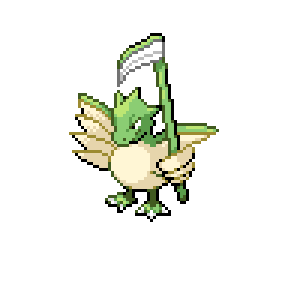
The amorphous bodies of Scytly can harden or soften at will, which allows them to move through porous objects. These mean-spirited Pokémon often cut anyone who comes too close.

Scygar faces off against others of its kind in duels, clashing their scythes together until the opposing Pokémon gives up. These duels last from dusk to dawn, because they are more alert at night.

Jyntor have multiple heads that are quick to disparage each other, but just as quick to make amends. They constantly gossip and prattle on about other Pokémon.

Jynpod shivers within its cocoon and prepares to burst from its shell once its transformation is complete. It is known to rock back and forth to music and shakes with excitement whenever people dance alongside it.

Jyndeen produce scales that are ground into a bonding agent for specialty paint. Some villainous organizations have begun to produce cheap cosmetics made from their scales, causing police forces to investigate sources of cosmetics.

Jynmime work alongside stage magicians to perform tricks for audiences. They specialize in creating invisible barriers and leaving behind dummies made of ice.
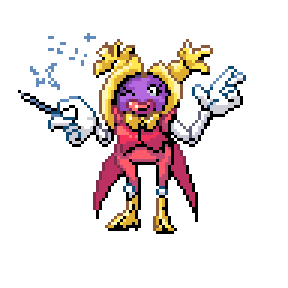
The most notable aspect of Jynras is their voice, which sings a melodic tune that works as a form of communication with other Pokémon. Whenever they are threatened, they sing a song that instills a sense of dread in others around them.

Jyngey are prim and proper regarding many aspects of their life. They are scared of making mistakes in front of others, so they lean into social etiquette to compensate for this fact.

Jynotto groom their garnet red feathers with delicate care to draw attention away from their talons. They prefer to be the center of attention and get jealous when attention is drawn away from them.

Jynfa are vain creatures and will fight against other Pokémon to draw the most attention to themselves. They are particularly feisty during the full moon, when they dance off against other Jynfa in a battle of beauty.
The eerie murmuring of a Jyndreavus causes many children to cry when they hear it. When they kiss people with their bright red lips, they leave behind an ethereal mark that lasts for a day.

Jynvoir have a natural facial expression that resembles a grimace. That expression combined with their cautious movements make them appear more aloof than they are.
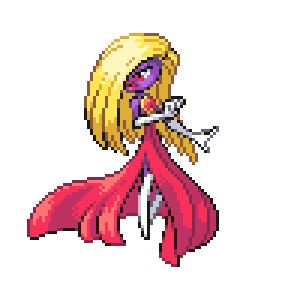
Jynplup tend to be dramatic Pokémon that strike with flashy attacks. Giving them the discipline to focus on success over appearances will greatly improve their battle prowess.
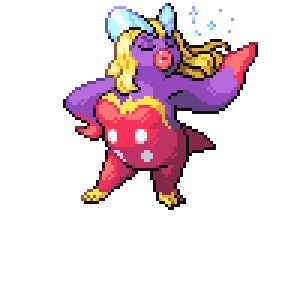
Jynpix have a keen understanding of the need to maintain their appearance. They spend hours grooming their many tails and burn their tail fur to give a clean, glossy finish.

Jyntales have an opulent presence that comes from their refined posture and clean coat of fur. They spend hours perfecting their movements and appearance to appear as regal as possible.

Jynlass soar through blizzards searching for lost travelers to kidnap. Their eerie song resembles opera music, as though they were singing in front of an audience.
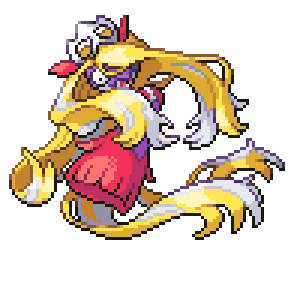
Jyntrio burrow through dirt and snow in search for food to eat. Anyone who gives them a bite to eat are peppered with kisses as a sign of gratitude.

Jyncruel releases a virulent poison through its hands that eats away at living tissue. Sometimes it forgets that its hands are coated with poison and ends up hugging its Trainer.
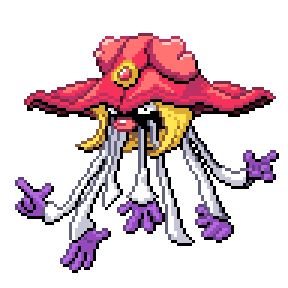
Electagia soar through the sky, conjuring storms in their wake. They periodically unleash electrical energy through super-charged lightning bolts capable of tearing ships apart. Fortunately for most aquatic Pokémon, they avoid smiting those nearby.

Electaiard charges its blades with electricity to slice through its opponent's tough defenses. Its metallic body protects it from corrosive acids that the opponent may use.

The black markings on Electapig's body produce a golden glow whenever it harnesses its powers. With the activation of its pearl, Electapig can chain lightning strikes between multiple foes.
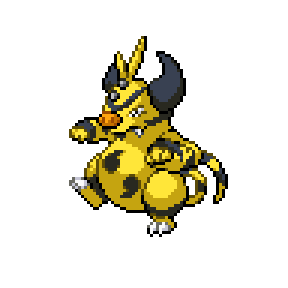
Electawag produce sparks and flashes from their hands when the two touch together. They prefer to swim because their stubby legs have a difficult time supporting their body.

Electadash enjoy galloping through open fields alongside other members of their herd. They generate glowing sparks of plasma that trail behind them as they reach their top speed.
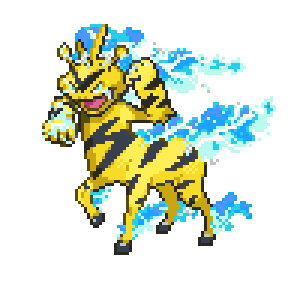
Electabro winces in pain whenever the battery on its tail produces sparks. If these sparks become particularly painful, it unleashes a frustrated discharge of electricity.

For people experiencing aches and pains, Magret love to curl up against people's bodies to warm up the affected area. Sometimes they get too comfy and force an injured person to sit and rest.

Magflame soar through the sky, lighting anything that can be lit aflame. This pyromania is harnessed by scientists for controlled burning to maintain the health of a forest.
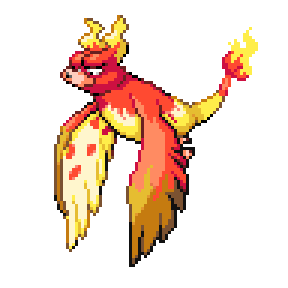
Magduck are kept backstage at musical shows where they can unleash their fiery powers to make performances pop to life. They often wear headphones to lower the volume around them and would experience headaches without them.
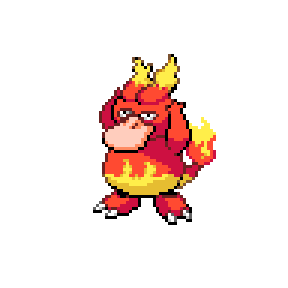
Pindle use their large pincers to break into breweries and smash open barrels. They are particularly fond of mead and other sweet drinks, which helps build up reserves for their evolution.
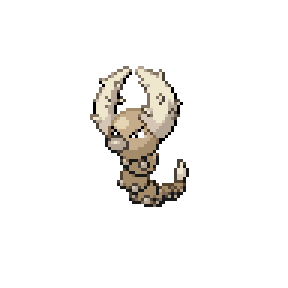
They are known to bite onto barrels in mead breweries, tapping into the drink on the inside. They depressurize the barrel, which allows them to drink a bitter but nutritious liquid.

Mead brewers who encounter a Pindrill infestation will hire exterminators, as they are aggressive and hostile. They are known to jab holes into barrels to access the sweet liquid inside.

Pinans blend into dusty trails with their taupe scales and only expose themselves when they ambush prey. They unhinge their jaws to open their many mouths wide enough to swallow prey whole.
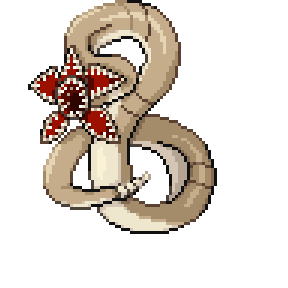
Pinlade are respectful creatures that enjoy sparring with other wild Pokémon to improve their combat prowess. Whenever they meet a Trainer, they bow so low that their pincer touches the ground.

During a Pokémon battle, Pinthorn crush their opponents with their toothy appendages. If they fail to crush through shells or armor, they slam their opponents into the ground.

Pinish hide in tall grass where they can easily ambush small Pokémon. Once their hooked teeth latch onto something, it becomes difficult to remove them without getting a tooth stuck.
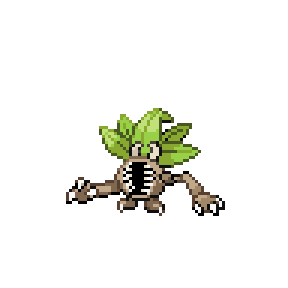
Pintrio prefer to live underground since they get nasty burns when exposed to sunlight for prolonged periods of time. They rely on their pincers to dig through the ground.

Pintly terrifies children with its many teeth, each sharpened to a point. It instills a sense of dread that carries onto a person's dreams, which become full of bad dentist visits and teeth falling out.

Taubone wear skulls as helmets to protect themselves from danger, but these skulls often block parts of their vision. Whenever they go charging at something, they often trip because of this obscured vision.

When their many tails are not enough to keep Bug-Type Pokémon from landing on them, they swat the pests away with their tongue. By staying in close-knit herds, they can help the young and elderly keep pests off their backs.
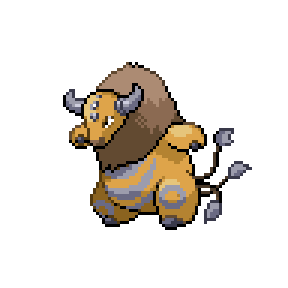
Tausir have naturally durable leather that many leatherworkers use to produce handbags and belts. However, their prickly horns scare away most poachers from hunting them.

Taukarp meat is tender and succulent with hints of smoky flavor. It is said to be especially delicious when paired with soy sauce to bring out its natural savor.

Taugeot enter a visceral rage whenever they see the color red. Their sharp talons attack the source of the color, often ripping apart clothing in the process.

Tausaur keep predators away from their herd by whipping them with sharp tentacles that resemble tails. Particularly persistent predators get blasted with a poisonous pollen that causes any cuts to sting.

Taukid are haughty Pokémon that enjoy teasing other members of their herd with their electrified tails. The shocks from their tail are quite weak so other herd members usually ignore them.

Taulax were once hunted for their leather hide and made into shoes by cobblers. With the advent of plant leather, they now roam freely in plains and fields.

Tauvire whip members of their herd with their electrical tails to cause stampedes. As members of their herd are galvanized by the shock, Tauvire direct the direction of the stampede to protect the herd.
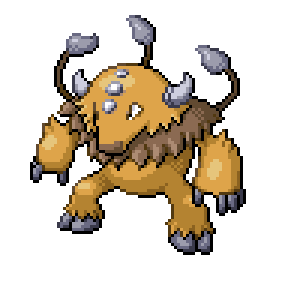
Leatherworkers once made Tauswine into hats and clothing, but nowadays they roam freely in frigid environments. Their large bodies and warm fur allow them to endure subzero temperatures.

Taupix have a cute yet rustic look that makes them a great candidate for petting zoos. Their aggressiveness gets dampened by all the affection they receive.

Trainers need to be wary of standing behind Taumeleon, as these temperamental creatures whip anyone behind them with their flaming tails. They are often remorseful after the fact.

Tautortle migrate across plains and paddle across rivers with their legs and tail to reach greener pastures. They let out a satisfied cry and kick their hooves into the air after completing their yearly journey.

Magisea drift around at sea, as their fins are small and are easily washed away by currents. The fin on their head is often mistaken for a crown, and they spit out ink when in danger.
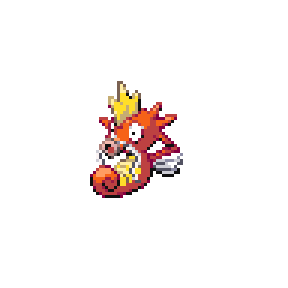
Magidra wander throughout the ocean. Their fins are large, allowing them to change course as they please. They will eventually have a very large crown fin.
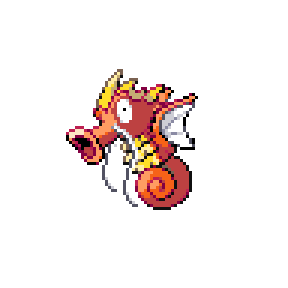
Magideen are kept in backyard ponds as pets. Their bright orange scales and their yellow horns and whiskers make them popular choices among fish enthusiasts.
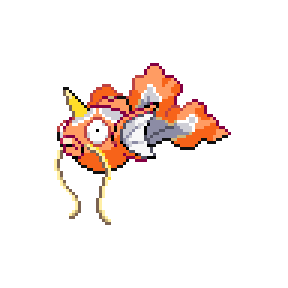
Many Trainers struggle to keep Magiking as pets due to their large size, as they prefer wide enclosures. As such, having a happy Magiking is a sign of wealth.
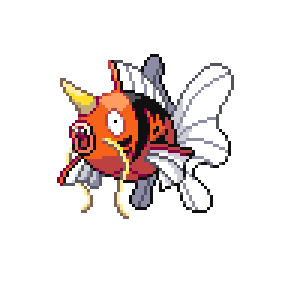
Slithering across the ocean floor, Magitini lack major fins or flippers to help them swim. Their mouths help them travel by biting onto other aquatic Pokémon, latching on and traveling great distances in search of food.
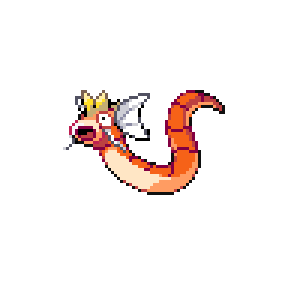
Often seen lazing around on the beach, Maginite sleep for 12 hours a day. While awake, they dive into the ocean to help other aquatic Pokémon find food and shelter.
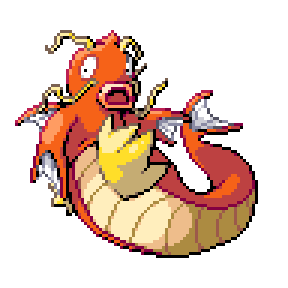
Photographers pose Magidile during certain holiday festivals due to their resemblance to other Pokémon. They are aloof and uninterested in photo shoots, and so are bribed with berries to focus on the camera.
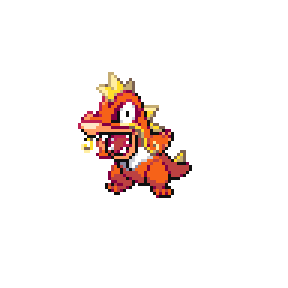
Magichou are rotund and squishy, with two long antennae that conduct electricity. At night, Magichou gather in large groups to produce a dazzling array of lights.
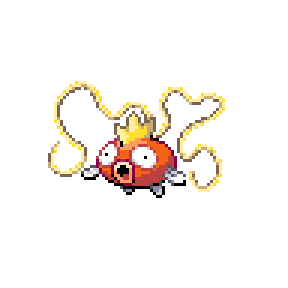
Rotund and bipedal, Magirill has a long tail with a fin at the end, used for both bouncing and swimming underwater. When scared, Magirill raises its tail above its head to appear larger.
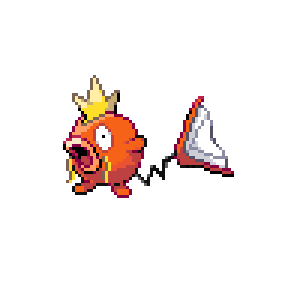
Found near lakes and ponds, Magitoed are aloof and sleepy, sleeping up to 18 hours a day. They get angry when anyone pulls their whiskers.
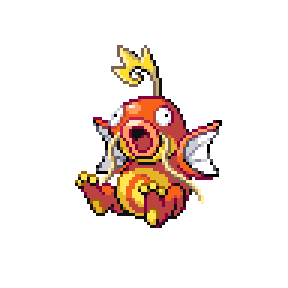
Magiper enjoy lurking in the mud, as it helps keep their skin hydrated. The fins and whiskers can detect early signs of earthquakes through the vibrations in the mud.
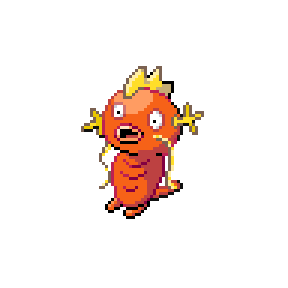
Magisaur are capable of absorbing impurities in water with the flower on their back, which has a yellow tint from their constant use. Magisaur rely on their vines to scare predators away, since the vines make them appear like a big predator.
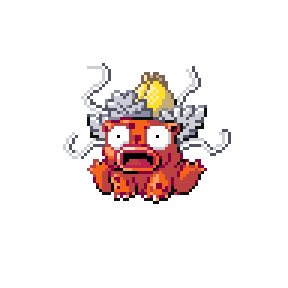
Magisola gather around underwater hydrothermal vents, which provide a soothing warmth and a place to rest after searching for food. If the sea becomes polluted, the coral stalks become discolored, causing Magisola pain.
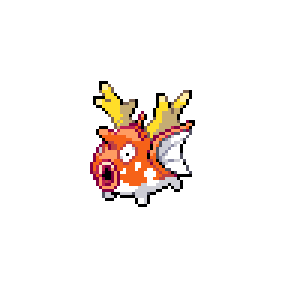
Magiraid are fast and precise swimmers, able to snatch a snack out of a sailor's hand high above the ocean's surface. Crowds of Magiraid often appear if food is scattered across the ocean surface.
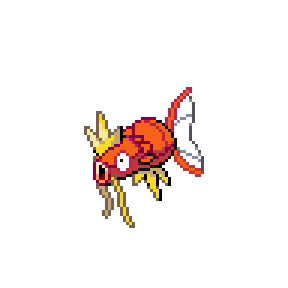
Magidra are an aquatic Pokémon species that float in the world's many oceans. Its stomach can expand to hold three times its normal capacity in food.
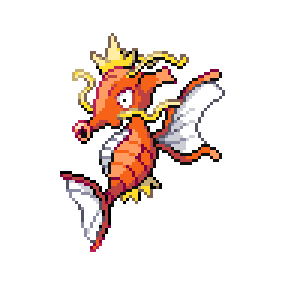
Magisaur work at water treatment plants where they are monitored by workers to ensure that people receive safe and drinkable water. The flower on their back constantly filters out impurities and is capable of purifying five liters a minute.
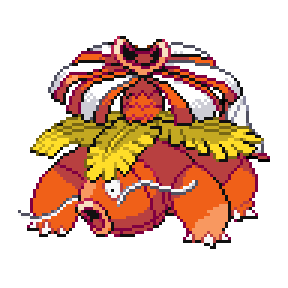
Magibarel are remarkable swimmers with superb control over their various fins and flippers. Due to their elongated form, children enjoy surfing on their backs.
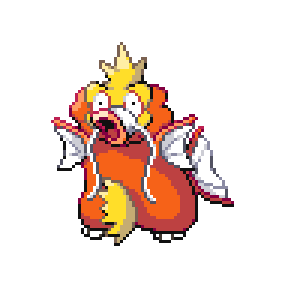
Magish are fished up by young anglers in the Kanto region. Expert fishers teach children how to safely remove and toss Magish back into the water because their scales can cause itchiness if handled carelessly.
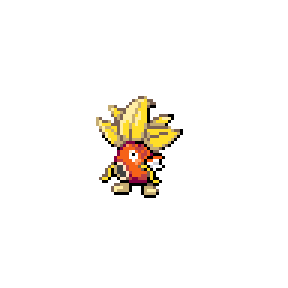
Magibish feed off of discarded scraps of food that get tossed away into trash cans. Whenever they are shocked, they can leap up to two stories into the air to escape capture.

Due to its large size and tenacious grip, Magimise are disliked by sailors, who have to pry Magimise off their ships. Despite this, Magimise continue to latch onto ships to move quickly across the sea.
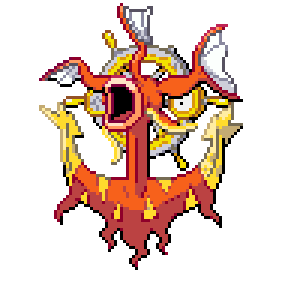
Magieanie uses its large arms to bunker and protect itself from attacks, injecting venom into dangerous Pokémon. Their bright coloration serves as a reminder to predators to avoid Magieanie.
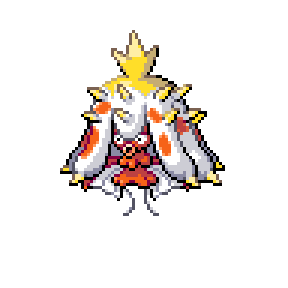
Magish uses its garish colors to scare away predators. This often backfires, however, as those same lurid colors make them easy for prey to spot too.
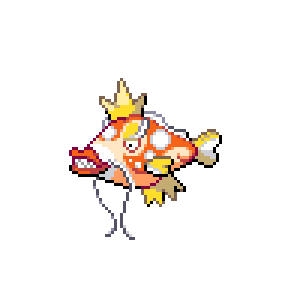
Magimeleon swim close to the surface of water to keep themselves warm. At night, they sleep in small clusters to preserve their body heat.
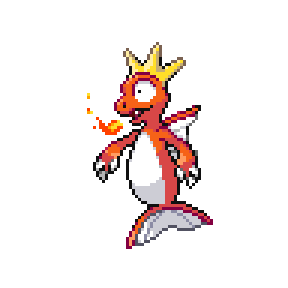
Magilektrik are easily caught by fishermen thanks to their dull intellect, but fishermen have to be careful to not get zapped by them. They were once featured as an electrifying cut of sashimi in magazines and newspapers.
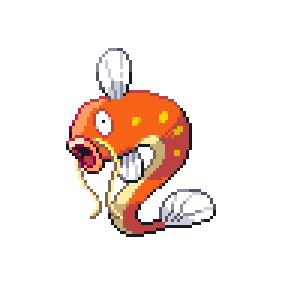
Magizard are capable of flying a short distance from their aquatic home to look for berries. If they spend too long outside of water, their body temperature rapidly drops, preventing them from flying.
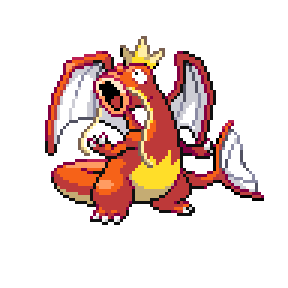
Magiwag is naturally a slow swimmer due to its bulbous body, and its movements are limited to its small fins. They avoid predators by confusing them with the spiral on their bellies.
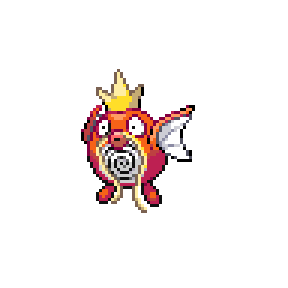
Strong and sturdy, sometimes Magiwrath in an area will drag each other by the whiskers to assert dominance. Magiwrath may drag another across lakes, and even oceans if particularly bulky.
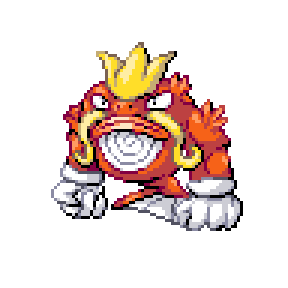
Magira are slippery creatures that are hard to pin down. Even when they are caught by fishermen, they always have the option to teleport away.
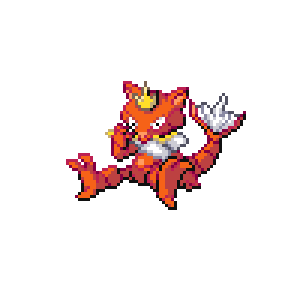
The bulb on Magicruel acts as a small nursery for aquatic Pokémon. The long golden tentacles guide these baby Pokémon to shelter in the bulb.
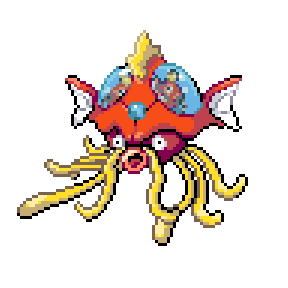
Magigong often appear as sea buoys at a distance, as they travel in groups and are bright orange in appearance. Their long tails swim quickly out of the way before any collisions occur.
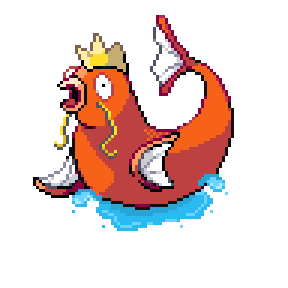
Magimer is found in factories near beaches or other bodies of water. They often float atop the water, as they cannot sink.
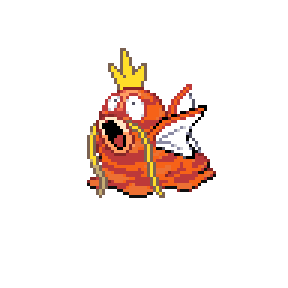
Weedeen swim in lakes and rivers where their unusually bright scales make them unappealing to predators. Their sturdy horn stings anything that is in front of them.

Weeros rely on the stingers on their tails to scratch itches on their backs. A flick of the tail produces a loud snap that scares away potential predators.
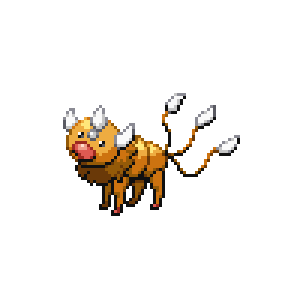
Their keen eyes allow them to see where roots peek above the ground's surface, allowing them to pluck the nutrients from their home. One root may last Weegey a week, so they are at risk of being overfed.

They are known to challenge each other to duels, wrestling with their tails to avoid the challenger's stinger. This strengthens their tails for when they must fight over a limited number of berries, giving them an advantage over other Pokémon.
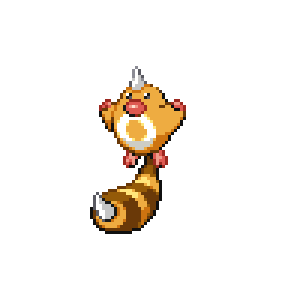
They forage for food at night, hopping between berry bushes to shake them down. When the sun rises, Weehoot fly off the ground to rest in the trees above the forest.

It holds a Charti Berry whenever it wants to fly in the sky, as it takes little effort to knock it down from the sky. It lives deep in the forest to avoid the risk of any rocks flung around.
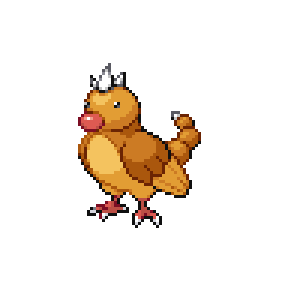
Weegeot has a difficult time hiding from predators because of its large body. Whenever it is being chased, it will hide in some bushes until the predator loses interest.
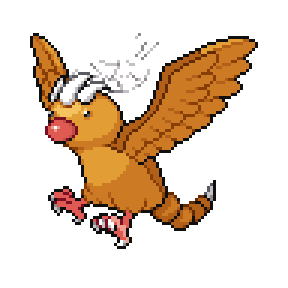
When confronted with a predator, they flap their leafy wings and ram their stingers into their foe. Many Weepip gather into groups to maximize their chances of escape.

Weema zip past other Pokémon around them to reach the tastiest leaves. They move so quickly that it is difficult for predators to grab onto them.

Weecune glide across rivers and lakes to find the best leaves to consume. It is said that Trainers can meet a Weecune by lingering by their favorite leafy bush.
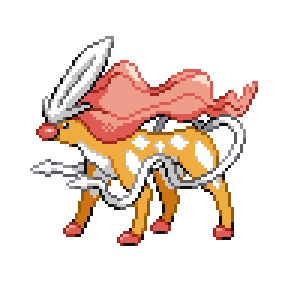
Wee Jr. travels alongside groups of Weedle and copies their movements. Whenever it tries to use its stinger, a bright pink dust is ejected instead.

Weeshrew burrow below trees to eat roots and make nests. When they are cornered by a predator, they either jab at the predator with their stinger or retreat into their burrow.

Weeran stick together in groups to collectively sting any predators that they encounter. Even though some still end up eaten, many survive with a dream of vengeance.
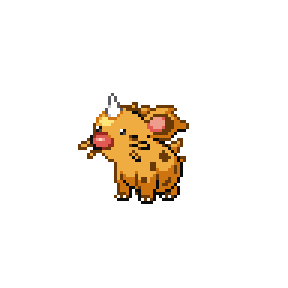
Weesaur releases toxic pollen from the flower on its back. The stinger on its head is considered vestigial, as its size prevents it from utilizing its horn.

Weeran rely on the stinger on their forehead to avoid predators, but lack any defenses for their rear. This leads many adventurous Weeran to getting snatched up by an opportunistic Flying-type Pokémon.

Weeblade have a sharp point at the end of each stinger that is capable of piercing shells. While they have no cutting edge, a well-placed jab from a stinger can render their target immobilized.

Weerino rely on their many stingers to get out of trouble. The spines on their back and their horn serve a nasty concoction of venom that will leave whoever it stings hobbled over in pain.
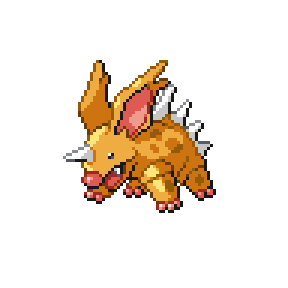
Weekia distort space around them to move closer to leafy bushes without using their muscles. Whenever they spot a Trainer, the space around them becomes infinitely vast, which discourages Trainers from pursuing capture.
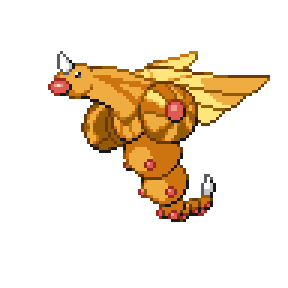
Weepet keep their secondary stinger hidden with their long flowing bodies. When the right opportunity strikes, they unleash a flurry of jabs from their hidden stinger.

Weesis gain nutrients by dissolving leaves in the fluid around their body. The fluid around their body recedes when they use their stinger, creating a moment of vulnerability to attack dangerous foes.

Weeling use their sense of smell to find aromatic berries to pluck off trees, eating as much as twice their body weight in a day. They require plenty of food, as their bodies break down nutrients quickly.

Weebish love to eat trash, especially wrappers. They wade through landfills in search of these wrappers and carry them back to their forest homes.
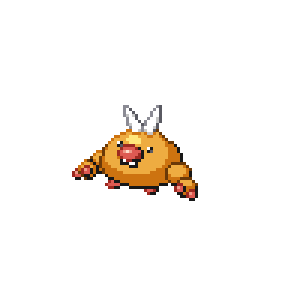
Weemy release a slimy venom from their stingers that cause an unbearable itchiness. This venom is also secreted when they crawl, allowing them to stick and crawl up walls.

Weeplume release toxic spores into the air that have a redolent scent. People report experiencing dizziness and nausea after prolonged exposure to the aromatic Weeplume.
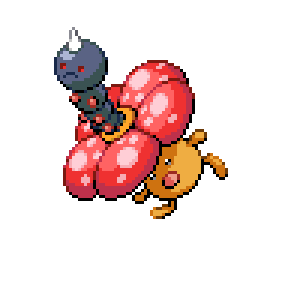
Weemeleon develops the muscles in its tail by carving shapes into trees. Its stingers ooze with a hot venom that sizzles when exposed to air.

Weescoon's slow, bulky bodies are ill-suited for speed, so they often eat the leafy scraps other Bug-type Pokémon leave behind. Many are elated when they reach a bush first and will sting anyone who tries to steal their leaves.
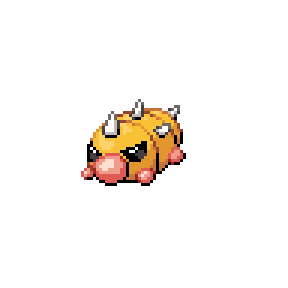
Weeduck need to release the venom from their stinger, or they will suffer from a migraine from the pressure. They can artificially release the venom by jabbing into rocks, but this behavior risks damaging their stinger.

Weeboach are a common meal for many Flying-type Pokémon. Their stingers and muddy splashes have little effect on their predators, so they rely on numbers to survive attacks, as predators are scared of writhing balls of Weeboach.
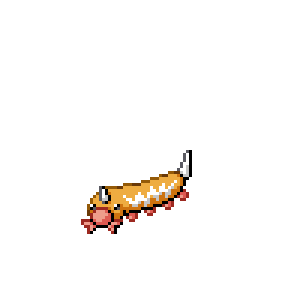
Weekey becomes irate and throws a tantrum whenever it does not receive its favorite food. Once it calms down, it will begrudgingly eat whatever food is presented.
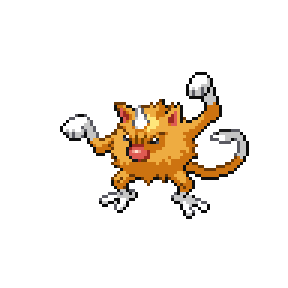
Weetle withdraws into its shell whenever there is danger and only leaves its stinger exposed. Any bird Pokémon that pecks at the shell may accidentally strike its stinger and get poisoned in the process.

The powerful acid of a Weebell requires special enzymes to break down biological matter. When Weebell stings another Pokémon, they transfer some of the enzymes to activate the caustic power of the venom.
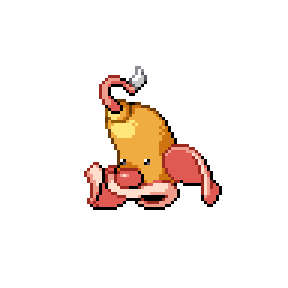
Weedrio travel in groups to protect themselves from predators. When threatened, they surround the predator and sting them with each of their heads repeatedly until the predator gives up.

Weetoise has enough room to store two Weedle in each cannon, making them great places to hide whenever predators are nearby. It can be seen hobbling through forests with bug Pokémon in its cannons, peacefully finding bushes to eat leaves from.

Gyarakhan are fierce protectors of Magikarp and are known to abduct those mistreated by a Trainer. Many Gyarakhan store Magikarp in their pouches to monitor its growth, barging into Pokémon Centers seeking medical attention when it is ill.

Socialite Trainers enjoy looking after Gyaraking in specially constructed reserves. Gyaraking are rather territorial and need room to swim, so it is rare to see more than two share a pond.

Children often mistake Gyarayu for masks at the beach due to their fins and shape. When picked up, Gyarayu closes its eyes and spins rapidly, hoping to be let go.
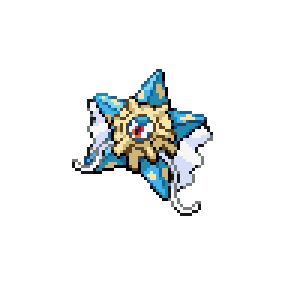
Gyarafish are territorial, scaring off other Pokémon using their sharp barbs and spiky bodies. The sharp barbs release a poison that numbs opposing Pokémon, allowing Gyarafish to push them out of its territory.

Gyararaid are fast and vicious, hunting for prey by barreling through the sea and biting with their sharp teeth. Despite this, Gyararaid often avoid sinking ships and beaches, preferring isolated targets.

Gyaraeanie are a sedentary but hostile species of Pokémon, as they use their tentacles to jab at prey, injecting venom into them. Their camouflage allows prey to move closer without noticing Gyaraeanie.

Whenever they are angry, they vent that frustration into their maracas. Eventually, this anger turns into joy as they begin to add rhythm into the shaking.
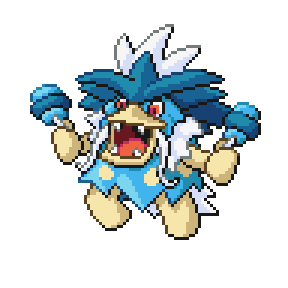
Aggressive and bulky, Gyarawhirl challenge each other for territory by using their hands to pull against the challenger's whiskers.

Gyaracool are known to resemble dragon heads, and their tentacles resemble whiskers. They float on the surface of the ocean, often scaring sailors in their boats.

Gyaraeel often travel in solitude, wandering icy waters in search of a meal. Submarines and deep-sea aquatic Pokémon often encounter Gyaraeel sleeping on the sea floor.

Gyarader are able to swim slowly while carrying a large shell using small fins along the shell. They enjoy sitting in fast currents, as their whiskers are sensitive to changes in water pressure.

Lapod are brimming with potential and eagerly wait until they reach their metamorphosis. Their shell-like cocoon protects them from environmental threats, and cushions attacks made against them.

It delivers Harbor Mail to ports and docks across the world, partnering with a freight ship to ensure goods are received correctly. If the ship is out of commission, Laphorn stubbornly refuses to leave its side.
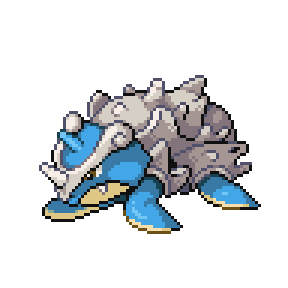
Lapdon help ships unload from docks to ensure that there is no contraband on the ships. Their meticulous examination of the goods and their superior strength give them a vital role in the shipyard.
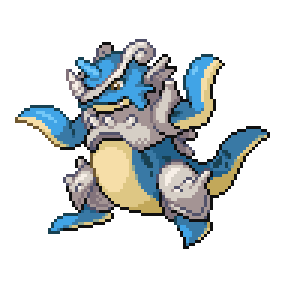
Lapdeen are a popular choice as background creatures for nature films, as they prefer to remain inconspicuous. They avoid being the center of attention and will quickly swim away or hide when in focus of a camera.
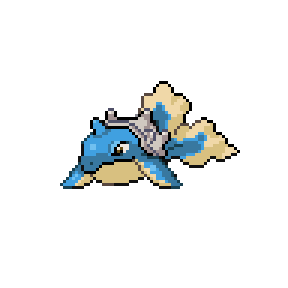
Lapyu can act like kickboards for those who need support while swimming. Their diligence ensures that those on their backs remain afloat, so they are often recruited by hospitals to aid those with weak muscles.
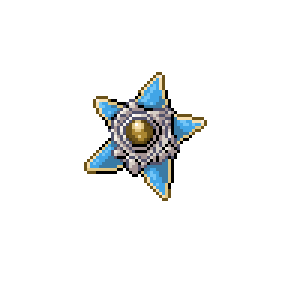
It migrates across large expanses of the ocean in search of sand to burrow in for rest. Due to the natural weathering of beaches, it finds the journey between beaches increasingly difficult.
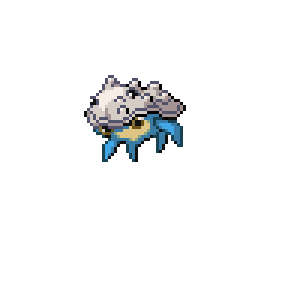
It aids travelers lost inside caves by using its echolocation to find exits. Lapbat has a silent wingbeat, allowing it to fly past another Pokémon undetected.

Offering excellent customer service, Laptic are nimble servers and respectful to patrons at restaurants. They excel in diners where they will receive plenty of praise for their actions.

Lapoh soar through the sky with frozen sapphire wings to find compassionate Trainers to befriend. They are friendly Pokémon that love giving rides to others, especially daring young children.

Laperior are muscular Pokémon that can lift shipping containers with a single arm. Their armored plating enables them to work in the toughest weather conditions, which makes them a vital part of the shipyard.
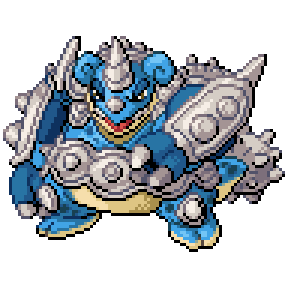
Laplord are known to become fond of sunken sea vessels. They wear their favorite sunken ship on their backs and are often mistaken for ghost ships.

Lapceus walk on water with an effortless grace. They are said to rescue sailors after a storm capsizes boats, though no one has ever been able to spot them in the act.

Laplup can be seen advertising in front of movie theaters, with signs that Trainers strap to their backs. They act friendly and stay close to their Trainer, making them great for street advertisements.

Gondoliers train Laptic to take passengers and swim carefully with their precise movement. They adore people and can pose for a camera without disturbing their passengers.

Lapbas are trained to accompany synchronized swimmers, as they have precise movement while submerged. They enjoy creating memorable moments and do their best when performing.
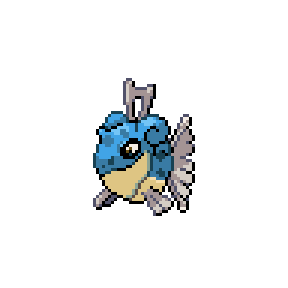
When a hot air balloon flies off course, Laploon groups together to drag the balloon back on course. It also warns fliers of strong wind conditions that cannot be detected while grounded.

Lapedo shed scales that are ground up and eaten as a spice. The gritty texture, salty taste, and intense aroma provide a spicy kick to a tasty meal.

Lapria are known to ferry lost children back home, using their soft plumage to calm them. Lapria emit a soft lullaby to help put children to sleep before returning them to their parents.
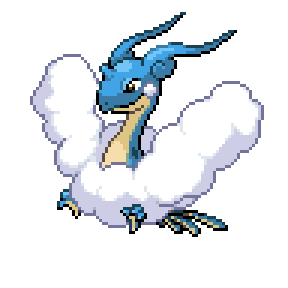
Lapeanie are unsung heroes of water shows, as their colorful displays of water arts dazzle audiences. When extraordinarily gleeful, they raise their arms to the sky, revealing an aesthetically pleasing underside.
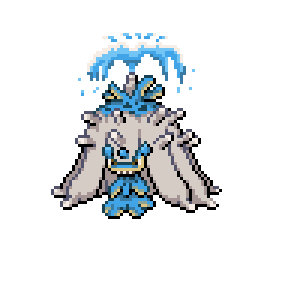
Lapeanie are unsung heroes of art shows, as their colorful displays of ink arts dazzle audiences. When the ink lands on the ground, a beautiful work of abstract art is made.
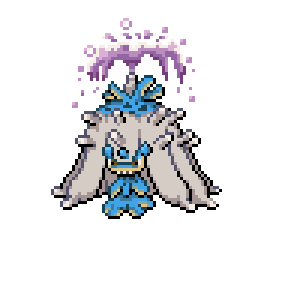
Laprorus carry lost travelers through the tundra on their shells before hauling them back to remote villages. Laprorus are skittish creatures, preferring not to be seen.
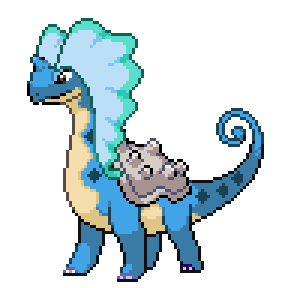
Lapetta sing blues melodies wherever they go, carrying the emotional depth of the music in each note. The passion and complexity of their singing captivate many beachside audiences.
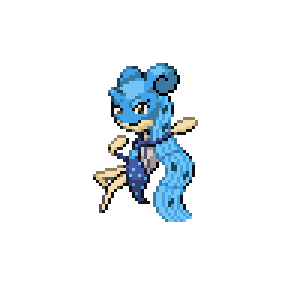
Lapish lifts drowning children onto its back before ferrying them to shore. Lapish tries not to scare children with its smile, which displays a set of large, serrated teeth.

Lapsect tends to mushroom colonies that grow adjacent to lakes and rivers, protecting them from harm. It is known to ferry people across water as long as they avoid damaging any mushrooms.

Lapkoal resides in hot springs where it keeps the water warm with its naturally hot body. Hikers who pass by often take respite in the hot springs to recover from long treks.
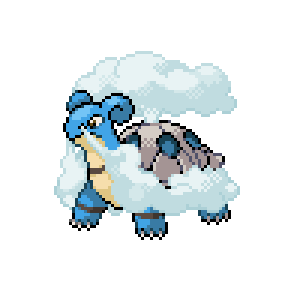
Lapdisc are trained to swim in sync with each other as they spell out words with their bodies. Advertisers pay aquariums to rent out a school of Lapdisc, as they are easy to train.
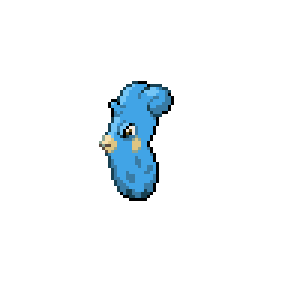
Oblivious to its surroundings, Lapduck is drawn to splashing in the water. It is easy to grab onto, so it inadvertently saves drowning swimmers at the beach.

It beckons children onto its shell to show them the sights of the ocean below. Lapcool only returns to shore once the kidnapped children begin to cry.
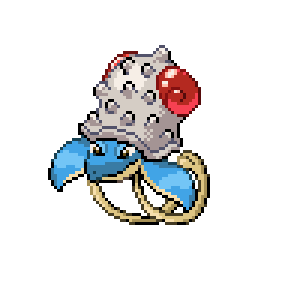
It lures groups of children down below the surface of the ocean to witness the sea floor. When the children want to go home, Lapcruel expresses its displeasure with a bumpy ride back.

Laplem live in boulders made of coral and sand. Environmentalists breed them to reintroduce coral to the sea after a natural disaster, as they shed nutrient-rich sand from their bodies.

Lapoke helps seaside fortune tellers divine the romantic lives of patrons. It flees from couples who do not love each other as it detects energy from negative thoughts.

Lapeel swim in the sea and save fishermen who fall into the water. They are known to follow fishing ships, eating scraps that fall into the water.

Lapgong use their large shells to drag fishing ships lost at sea back to port. Regarded as heroes of the fishing industry, Lapgong enjoy saving ships in exchange for fish.

Lapuk slip into swimming pools to absorb chemicals used to clean pools. They will eat anything in the pool, including children if left unattended.

Lapder are friendly creatures, scuttling towards children in particular. Lapder love playing hide and seek, as their keen sense of perception helps them win many games of it.
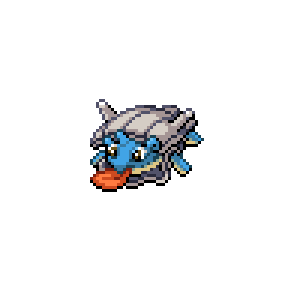
It hides its head inside its shell, which has space for children to hide alongside it. Lapster has a valve on its shell that releases a foggy haze and freezes nearby threats.

Lapgar reside in abandoned beachside manors and cause mischief to intruders. Lapgar drag them through walls before they phase through harmlessly.

Lapby are known to grow seaweed on their armored claws to lure in prey. This seaweed also doubles as an emergency food supply if they get hungry.
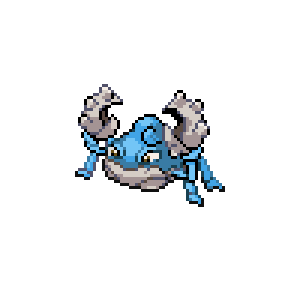
Their blobby bodies float around factories, as their soft bodies require the stable climate to remain soft. However, a small bit of Metal Powder allows their bodies to harden and crackle, which enables them to take more hits in battle.
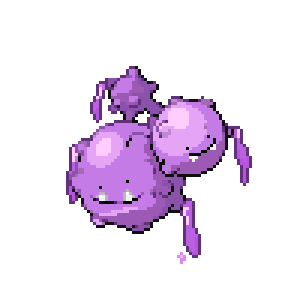
Ditking have vast wisdom but only retain this knowledge when they are not transformed as another Pokémon. This momentary amnesia is jarring for Ditking, so special sanctuaries have formed to allow them to remain in whatever form they prefer.
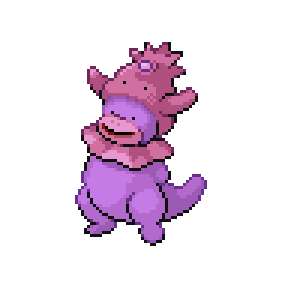
Liquid ooze viscously erupts from Ditckle shells, that shifts and writhes whenever it transforms. It enjoys drinking Berry Juice it produces as a treat whenever it does a good job.
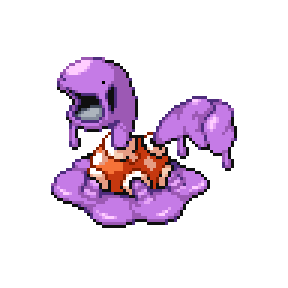
Ditniclus beguile other Pokémon into giving them gifts and food by transforming into a Pokémon that they are friendly with. They determine what Pokémon to transform into by reading the mind of their target.
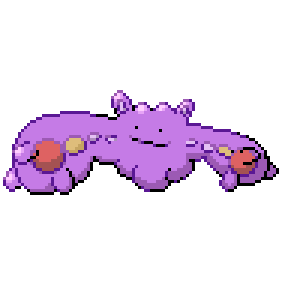
Ditsis have an amorphous body that solidifies whenever they transform into another Pokémon. They are most vulnerable while not transformed because they are slow and soft.
Their blobby bodies reside around waste facilities, which causes grime and trash to stick to their bodies. When introduced to a bit of Quick Powder, they become more viscous and aerodynamic, making them faster when running.
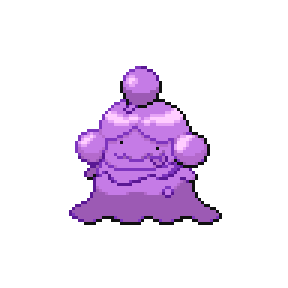
Ditmoth produce a cloud of toxic spores that protect them while they transform into another Pokémon. If anything makes contact with their body while they are transformed, tiny scales stand on edge and inject venom at the point of contact.
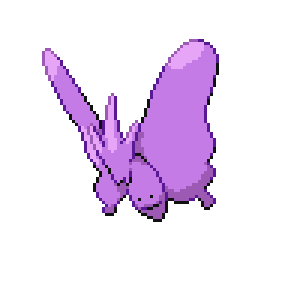
Ditmur are capable of transforming into another Pokémon, but matching their cry is another story. They either are too quiet or are so loud that they make children cry.
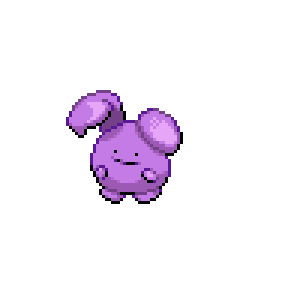
Whenever Diteal transforms into another Pokémon, it softens sharp features to appear rounder. While this transformation rarely convinces others, many Trainers enjoy the cute form Diteal take on.
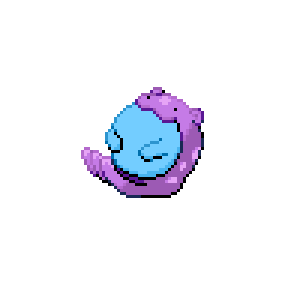
Ditlithe are obedient creatures that want nothing more than to please their Trainer. Their ability to transform into other Pokémon gets better as the bond with their Trainer grows stronger.
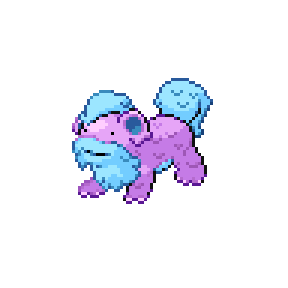
Eepie are said to evolve when they choose a climate that they enjoy living in. Regardless of the reason they evolve, their big appetite often delays their evolution until the time is right.

Eepod are vulnerable creatures that often hide away from other Pokémon to ensure their safety. Some evolve to adapt to the climates around them and gain new powers to help them make it out of the cocoon.

Eering are able to rapidly adapt to their environment through evolution. They are found throughout the world in places as cold as the tundra to places as hot as the tropical rainforest.
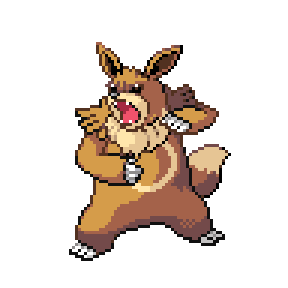
Eering can be found in all sorts of environments, such as forests, mountains, tundras, and tropical rainforests. They are capable of rapidly adapting to their environment through evolution, though many prefer to remain unevolved.

Eedra hide in underwater caves contemplating their limitless potential and keep others away by summoning whirlpools to block the entrance. It is said that Eedra only come out of their caves once they decide on what to evolve into.
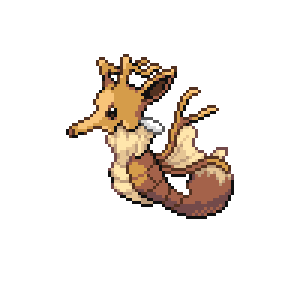
Eeras are capable of spontaneously evolving to adapt to their environment. The spores they produce are a harmless powder that gains new properties once they evolve.
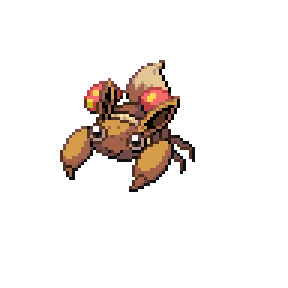
Eetta are full of limitless musical potential. They can harmonize with many types of music, each with their own depth and meaning.

Eesect are capable of rapidly adapting to their environment through evolution. The mushroom on their backs also goes through significant changes when they evolve.
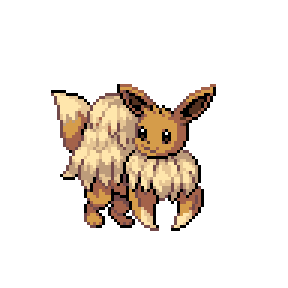
Eesect have a sweet scent that draws Eevee towards them. Many Eevee find the scent pleasant and will rest atop the fungal backs of Eesect.

Eelix are as soft and plush as Fluffy Eevee Pancakes, their pillowy bodies resembling the taste and texture of the delicious dessert. They enjoy working in cafes because they get to act cute and give delicious food to Trainers and Pokémon alike.
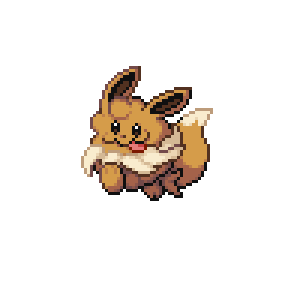
Eeduck have a difficult time choosing what they want to be after evolving, and some doubt they want to evolve at all. This constant worry about the consequences of evolution gives them a chronic migraine.
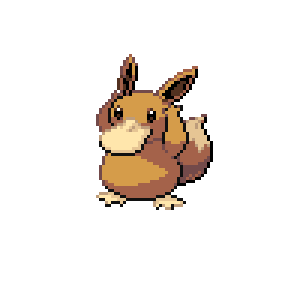
Eeduck are superb swimmers that can perform complex maneuvers while underwater. Many Eeduck look for evolution stones so that they can better adapt to their environment.

Eenine are well-mannered pets that always follow social etiquette while out in public. They are popular among wealthy parents because they are easy to train and are gentle with children.
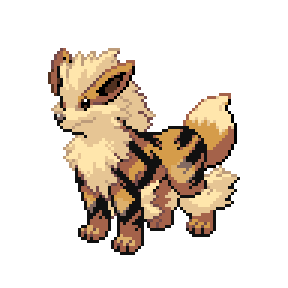
Eeuk are made of a sludge that leaves behind a poisonous residue on grass and any plants they trample. This residue is known to cause an itchiness in the throat when consumed.
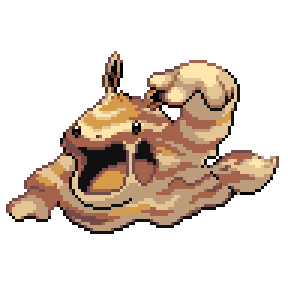
Eezee create dreams that revolve around evolution. They ease the many worries dreamers have about evolution by showing what life would look like fully evolved.
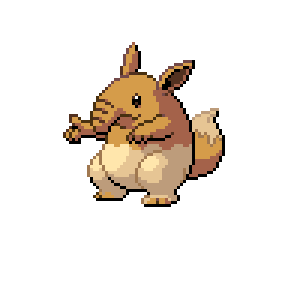
Eezee hypnotize other Pokémon around them to lull them asleep before giving them sweet dreams of the future. The dreams often explore the limitless potential every Pokémon has by showing dreamers great feats of heroism.
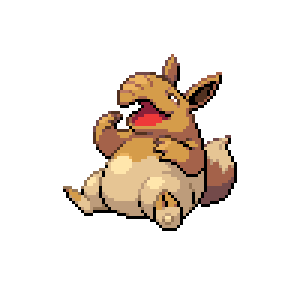
Vaporpod have a unique adaptation where they can swim underwater to avoid detection from Flying-type predators. Water-type predators also struggle to eat Vaporpod because of their sturdy cocoon.
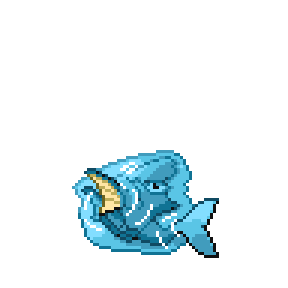
Vapordle make their way into lakes and rivers to eat seaweed beneath the water's surface. They are capable of swimming for short periods of time, which is just enough to drag a piece of seaweed back to shore.
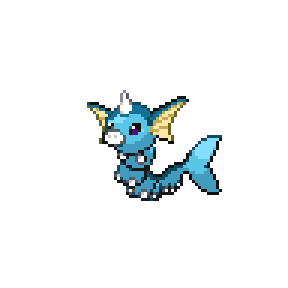
Vaporuna typically hang from tree branches but have a cunning alternative if they fall from the branches. They roll around until they find a body of water and sink to the bottom, giving them a good hiding place until they evolve.
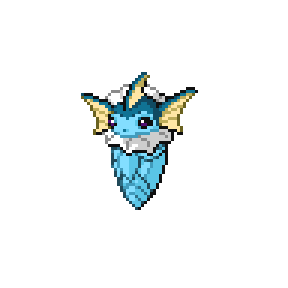
Vapordrill produce bubbles that float and act as a deterrent for anyone who wanders into their territory. The bubbles are made of a caustic venom that clings to fur and feathers when popped.
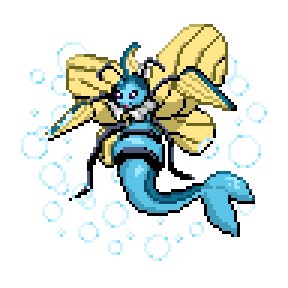
Vapordrill produce a caustic venom from their saw-like limbs that eats away at living matter. If their saws get gummed up, they spray water to lubricate the saws so they can keep cutting down foes.
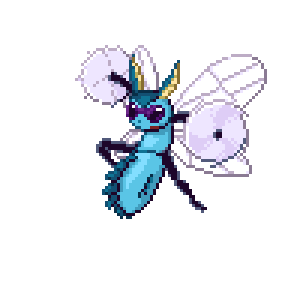
Vaporas store spores in the bulbous mushrooms on their back. When they are released and make contact with the air, the spores turn into a viscous gel that makes them very slippery. This makes Vaporas much harder for predators to grab onto.

Vaporetta are experts at evoking feelings of sorrow through their laments. Their dreary melodies can bring even the most cold-hearted person to tears.

Vaporas constantly release spores in ponds and lakes that they reside in. These spores get stuck in the gills of many Water-type Pokémon, so scientists are trying to find a new habitat for Vaporas.

Vaporsect swim in lakes and rivers spreading their spores wherever they go. These spores cling to the gills of aquatic Pokémon, so scientists are searching for a new home where they can safely release spores without harming local Pokémon.

Vaporpuff produces a sweet dye that bakers mix into dessert pastries. It loves to help pastry chefs with the baking process, so some bakeries also have it knead dough.
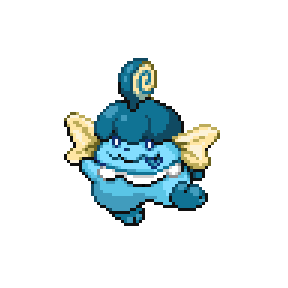
Vaporduck experience great distress whenever they are dehydrated, as the first place to lose moisture is their brain. Trainers need to keep them well-hydrated to prevent them from developing a headache.
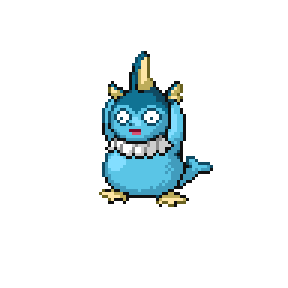
Vaporduck are superb swimmers that can effortlessly glide through the water. They live most of their lives underwater where they play chase with each other and eat seaweed.

Vaporbell eat Water-type Pokémon by trapping and digesting their prey within their large stomachs. These nutrients are converted into blubber, which helps keep them warm during the winter months.

Vaporfetchd carry a leek baton that they enjoy twirling around. In the wild, they can often be found swimming and spinning their leeks in a synchronized dance.

Residue left behind on plants from Vaporuk are known to cause mucus to cling to the throat. Vaporuk feel remorseful for leaving behind their poisonous residue but are unable to stop it from sticking to their surroundings.
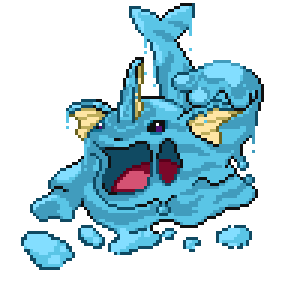
Vaporzee conjure up dreams of ocean waves for those they hypnotize. Pokémon who are scared of swimming awaken in a terrified panic.
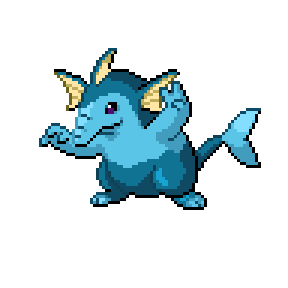
Flying-type Pokémon that try to peck through a Joltpod cocoon are hit with a violent shock that paralyzes wing muscles. These painful shocks are the reason why many Joltpod are ignored by hungry Flying-type Pokémon.
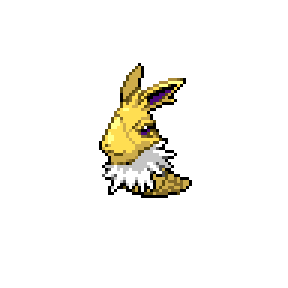
Joltdle love to drink energy drinks and eat snacks left behind by people. The venom that drips from their stinger can be made into a special tea that gives acute clarity to those who drink it.

Joltuna have a limited amount of electricity in their bodies that they harness to shock predators. Once they are tapped out, they become easy targets for other Pokémon.

Joltump stalk Trainers that wander into their territory with mild curiosity. When they are inevitably caught, they escape on a bolt of lightning and hide until the Trainer loses interest to start the process over again.
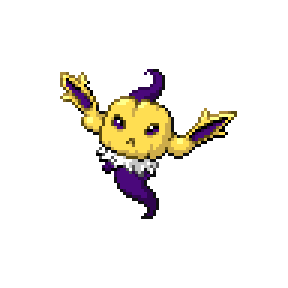
Joltetta are best suited for dancing alongside galliards, as their light and energetic movement inspires many to join in. Their swift and athletic footwork amazes many audiences.
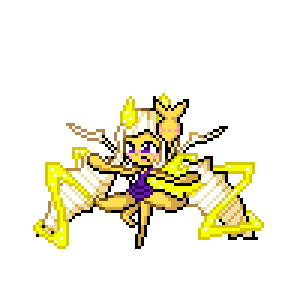
Joltsect store electricity in the many mushroom bulbs on their back. During thunderstorms, many Joltsect are struck by lightning and become charged with electricity, enough to light several homes for a week.

Joltpuff produces a sweet yet tart cream that is used in baked goods. Bakers make sure the cream is the right level of tartness by ensuring Joltpuff is happy and comfortable.
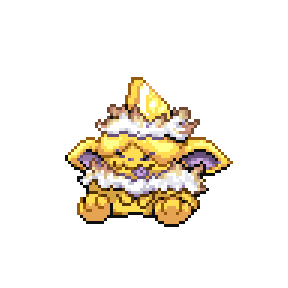
Joltduck produce sparks whenever their flippers touch. These sparks can be harnessed to shock their predators and protect them from being prey.

Joltpius have long necks that act like a lightning rod during thunderstorms. When they are charged with electricity, they fly into the sky and release that energy with a powerful lightning bolt.
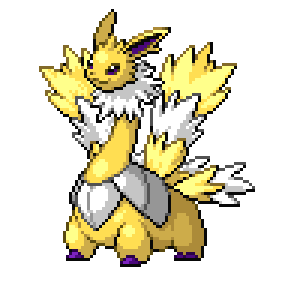
Joltcanth are difficult to find in the depths of the ocean because they often short-circuit electrical devices used to take photos with a powerful zap. When they are inevitably found by divers, they zip away on a bolt of lightning.
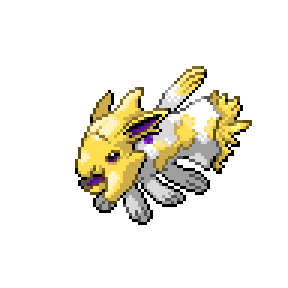
Joltfetchd have a baton with a Thunder Stone attached to it that draws in many Pokémon who want to evolve. Joltfetchd tap their baton onto the heads of those who want to evolve in exchange for a few berries.

Joltuk trudge through the world and leave behind a poisonous residue that create a stinging sensation in the throat whenever the residue is eaten. This debilitating sensation is often experienced by wild Pokémon that do not wash their food.

Joltzee create dreams about thunderstorms in those they hypnotize. These dreams can get so loud that dreamers awaken in a frightening panic.

Fladle primarily eat raw chilis and other spicy foods that develop their fiery flames. When they are feeling particularly peckish, they roast chilis to make them more delectable than their raw counterparts.
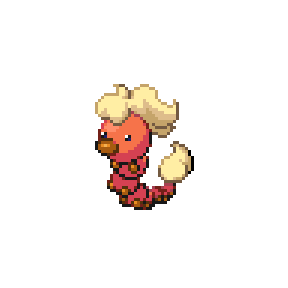
Flauna keep themselves warm during winter by releasing embers from their body. Many evolve when spring comes, so surviving winter is their utmost priority.

Fladrill are hot-headed creatures that sting anyone that ventures into their territory. When stung by their stingers, their virulent venom creates a burning sensation that sears through living tissue.
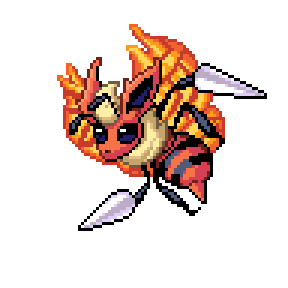
Fladrill have a special venom that mimics the sensation of being burned. People who have been stung by Fladrill have reported painful blisters and a searing heat where they are stung. Antidotes and lots of water are needed to help treat these stings.
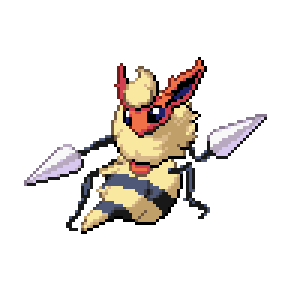
Flaras breathe out hot spores that cling to the fur and feathers of wild Pokémon. These spores create a burning sensation that causes inflammation to nerve endings and can only be soothed with a Rawst Berry or a Burn Heal.

Flaetta dance a lively yet simple bolero to stir strong emotions in the audience. Their rapid footwork keeps the energy high as castanets rattle.

Flasect release a hot mixture of spores and embers to propagate the mushroom on their backs. By searing the ground beneath them, the spores have more resources to work with since their competition has been burnt to a crisp.

Fladuck store flames inside small bubbles to use them underwater. At night, these flames illuminate the water around them to prevent surprise attacks.
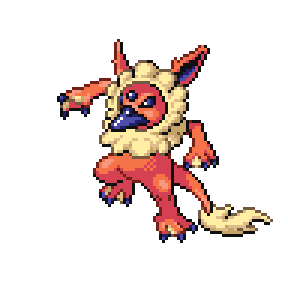
Flafetchd have a flaming leek that gives off the scent of roasted onions. They love to roast berries and are happy to share with Pokémon that are hungry.

Eating food that has been touched by Flauk creates a burning sensation in the throat. This sensation is caused by the residue that is left behind after Flauk roam through an area.

Flazee impart dreams of searing hot flames through hypnosis. Many Pokémon awaken covered in sweat from how hot their dreams get.

Porybone acts mischievously when its Trainer is distracted and corrupts data with a single hit of its club. Most of the data Porybone attacks can be restored easily, but it remains a nuisance for Trainers who do not give it enough attention.

Porywak is capable of calculating the path a boomerang takes before being thrown. This allows Porywak to reliably hit multiple targets with a single toss.

Porywak deletes viruses off of a computer in rapid succession by tossing a well-calculated boomerang toss. Upon contact with its boomerang, viruses are deleted from the system.

Porylee leave behind an imprint of code whenever they kick an opponent. This line of code helps them lock onto their foe, as this digital footprint helps them locate their opponent.
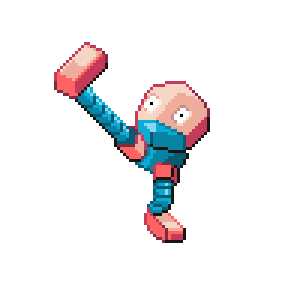
Poryros gets irrationally angry at error messages, as it sees those messages as a threat to its safety. If it hears or sees an error message, it charges at the source until it tires itself out, or the message goes away.
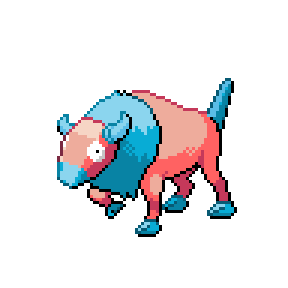
Poryleef have a unique scent that smells of old plastic and floppy disks. Pokémon that are often found in cyberspace are drawn to this nostalgic scent.

Porynium produce the scent of old plastic and electronic shavings, a scent that draws in many Pokémon that thrive in cyberspace. Many Trainers amplify this scent by having them bask in the sun, intensifying the scent to draw in more Pokémon.

Porydos resembles a hyper-realistic model of a virus that weaves strands of DNA to create proteins to infect people. It is presented in classrooms throughout the world to help people learn about microbiology.

Porytu enjoys playing games with its Trainer, especially abstract strategy games where there are no elements of chance. Its programming gives it glimpses into future states of the game, ensuring that it wins.

Porytu are said to give out items to Trainers who offer them unique gems, but no one has been able to locate the correct gems to give them. Many live in small villages with wooden huts.

Porytu relies on its programming to beat Trainers at various abstract strategy games. Where all information is known and there are no elements of chance, Porytu can reliably win or force a draw.
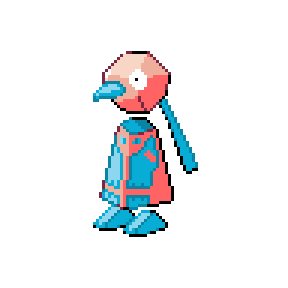
Porykern absorb sunlight and store meteorological data of the nearby area as they charge. Scientists have begun tracking down Porykern to download this data to research how people have affected the environment.

Porykern fit the description of a Pokémon carved on ancient clay tablets, leaving many scientists baffled by their presence in the ancient past. Connecting Porykern to a PC reveals incredibly grainy monochrome photos stored in their body.

Porybull are needy creatures that demand lots of attention. If their Trainer ignores them, they find music files and turn the volume up until their Trainer gives them the attention they desire.

Porybull are loyal creatures that protect their Trainer's files from strangers. Without explicit permission from their Trainer, Porybull ferociously stop others from accessing sensitive files by grabbing onto the cursor and refusing to let go.
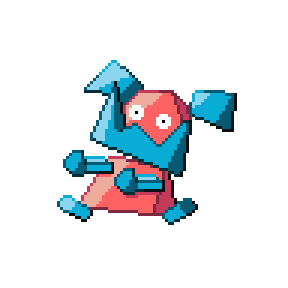
Poryckle relies on special sensors within its body to maintain the right conditions needed for high quality Berry Juice. It is protective of its Berry Juice, attacking Trainers and Pokémon who try to take it.

Poryckle relies on a unique set of sensors in its body to concoct the perfect Berry Juice. It almost never shares this special drink with other Pokémon and only offers it to its Trainer after years of trust and respect.

Porygma help young bakers maintain the proper temperature for baked goods without the risk of setting their house on fire. Once a set duration has passed, they turn off the heat and chime loudly for someone to check on the food.
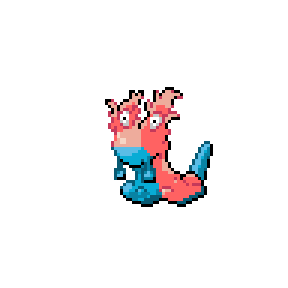
Porytop can rotate on multiple axes to land devastating punches and kicks. This makes them difficult to hit, as they can snap to the same direction as a punch and maneuver around a fist.

Porylicky has a unique ability of reading and deleting data on devices with a single lick. Many junkyards keep a Porylicky on site to clear data before recycling devices.
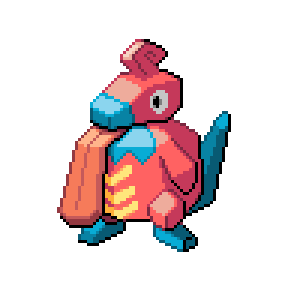
Porygrowth have a mass across their bodies that resembles early PC screensavers. The mesmerizing display of entangling vines has distracted many users over the years.
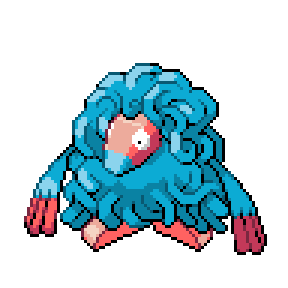
Porymega rapidly flap their wings to remain airborne, releasing an electromagnetic pulse with each flap. They typically flap at 100 times a second, a rate so fast that it stops devices around them from functioning properly.
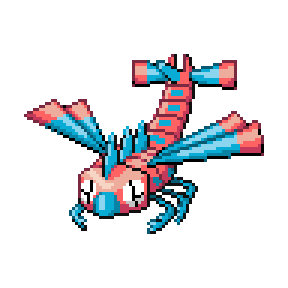
Porycko shoots out seeds made out of code at its foes. Each seed contains randomized DNA that causes a random flower to spawn.

Poryvyle slices through foes with its leafy blades. Its neon green color changes to yellow or red depending on how much damage it has taken in the course of a battle.

Porytile relies on the leafy blades on its body to slice through foes. Whenever it is falling behind during a battle, it overclocks its body to boost its Grass-type moves.
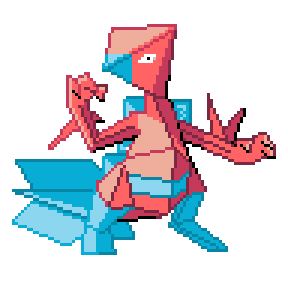
Porychic has a diet that consists of scrap electronic parts and old data storage devices like diskettes and compact discs. By eating these devices, it expands its memory to allow it to learn new moves.

Porychic has a soft plastic body that crinkles when touched. Inside its body is a precooked and dried block of noodles with a spice packet. Many people only eat part of the spice packet because the spice is very intense.
Poryslash curls its body into a cubic shape when threatened and keeps its spikes flat to deflect attacks. Once it finds an opening, it swipes at its foe with the spines on its back.
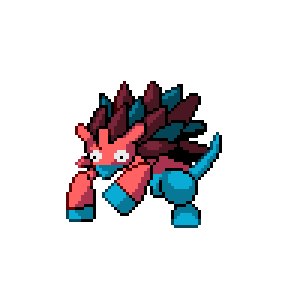
Porybusken relies on its powerful kicks and searing hot flames to secure victory in a Pokémon battle. After a strong kick, a code marker is left on its opponent's body, helping aim its fiery attacks.

Poryziken will stop at nothing to achieve victory over its opponent, as it will overclock its body to run faster as a battle progresses. It relies on a flurry of sharp kicks and potent flames to finish a Pokémon battle.

Porydoof are simple creatures that grab files from their Trainer's desktop to form a small shelter. Whenever their Trainer tries to take back the files, they become upset and may start chewing on the files they have taken.
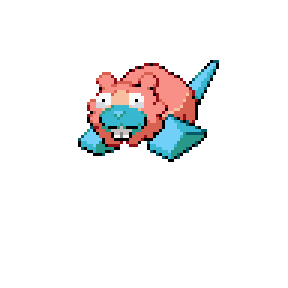
Porypass always point to magnetic north, even when eating or fighting in a Pokémon battle. Not even data corruption or malware can affect Porypass's orientation, making them reliable Pokémon to help with navigation.
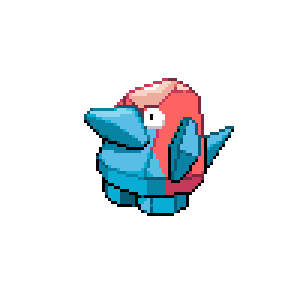
Porypass always point to magnetic north regardless of the conditions around them. Small enough to fit in a Trainer's pocket, Porypass make reliable partners while navigating through the world.

Porypass have great control over magnetism and can force standard magnets to point in their direction. Despite this powerful magnetism, they always orient themselves toward magnetic north, even in battle.
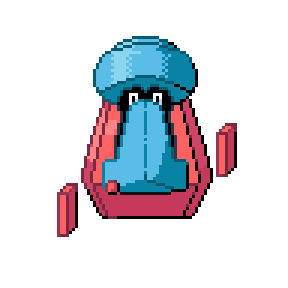
Porygron rely on their thick armor plates to protect themselves from attacks. If a piece breaks off from the main body, the piece melts into lines of code.

Porycott carefully calculates the trajectory of its flight by analyzing the wind conditions around it. Once airborne, Porycott rarely crashes, as its rapid adjustments to its flight path allow it to dodge obstacles.

Poryon typically live inside mountains where they can feast on equipment left behind by miners. They are particularly fond of electronics that abandoned mines have, eating them like a treat.
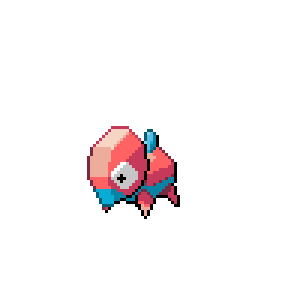
Poryelia has special light receptors on its flower buds that crackle as it absorbs sunlight. When fully charged, Poryelia releases a puff of pollen and trumpets out a small sound to indicate it is full.
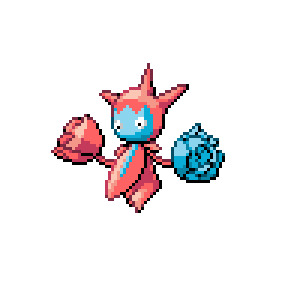
Porybat release radio waves from their body that bounce off walls. These waves often disrupt radio signals near mining operations, as miners only hear the high-pitched squeals from their radios.
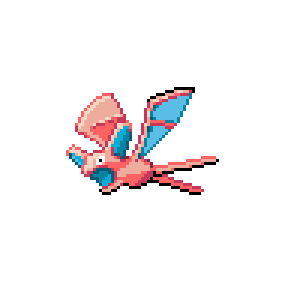
Porymask carry a handheld gaming device that stores data for their moves. If they want to learn different moves, they need to insert new cartridges into the game slot.

Porybat keep to themselves in the wild and produce high-pitched screeches to find their way around caves. While they do not attack people, they are difficult to tame because of their elusive nature.

Porypede are highly aggressive creatures that attack by biting their foes with venomous fangs. This venom can be converted into data and scanned by machines to discover new chemical compounds.
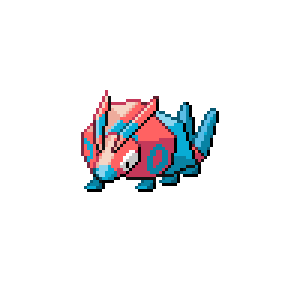
Porypede can supercharge their attacks by overclocking their system, hitting harder at the cost of hurting their own body. Scientists advise against frequent overclocking to prevent Porypede from developing erratic behaviors.
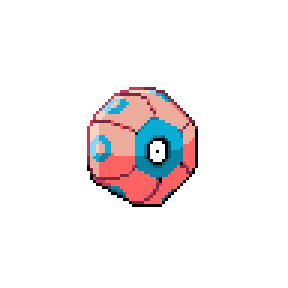
Porypede rolls into its foes to forcibly inject venom from its fangs. This venom makes its foes sluggish, as the fever overheats their bodies until they are too hot to strike back.

Porypede has been corrupted to the point where it develops erratic behaviors. Some Porypede exhibit intense aggression and bite anything that comes near them with their venomous fangs.

Poryish partially bury themselves into the ground in places with lots of sunlight. When pulled out of the ground, a highly compressed, crunchy scream can be heard as they are exposed to the air.

Whenever companies need to delete lots of sensitive data, Poryodor are downloaded onto PCs to devour data. Programmers help guide Poryodor to files that need to be deleted by running programs that select files marked for deletion.
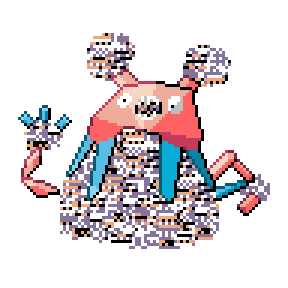
Poryish are small, nimble creatures that carry out the whims of their Trainer. While one Poryish is quite weak, many Poryish can lift scrap metal and rocks with a bit of teamwork.

Poryoom produce a thick drool that draws in many creatures that can be found in cyberspace. This drool is still being studied by scientists, as many properties of the drool are still unknown.

Poryplume produce a unique pollen that smells like old plastic. While most Pokémon are not fond of the scent, many Pokémon found in cyberspace find the scent so appealing that they coat themselves in the pollen.
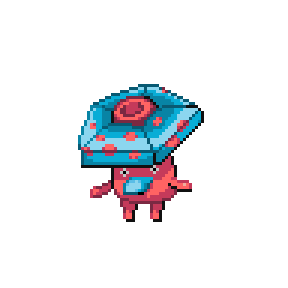
Porynea shoot barbs made out of bits of code to strike their foes. These barbs cling to their opponents to slow them down until they are too sluggish to dodge their attacks.

Poryturne shower their foes with barbs made out of code that weigh down their foes. Once their foes are rendered immobile due to these heavy barbs, Poryturne end the battle with triumphant fanfare, shooting code confetti into the sky.
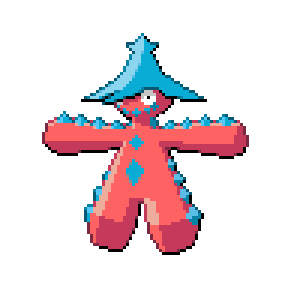
Poryras has a powerful stimulant in its body that boosts the strength of muscles in whoever eats it. Some experience visible growth after eating a Poryras, only to lose that growth and return to normal after a few hours.

Poryroc are loyal to their Trainer and will rarely deviate from a Trainer's command. This has led to many incidents where Poryroc remains in one spot long past a Trainer's lifespan, hoping to receive the command to get back up.

Poryroc are loyal to their Trainer and will rarely deviate from a Trainer's command. They attack other Pokémon that attack their Trainer, and will not stop until one of them faints.
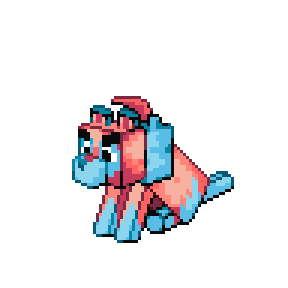
Poryetta dance with a mechanical elegance that is fueled by calculated steps and lots of data. While some critics say their movements are stiff, others say that the precise, mechanical motions are the pinnacle of the art of dancing.
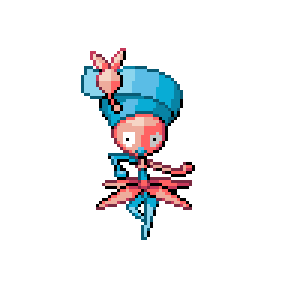
Poryras is particularly prone to corruption, and once corrupted, produces spores for many types of mushrooms. Many programmers have struggled to keep Poryras's data stable only to find it becomes ill from the slightest environmental change.

Poryras proliferates spores made out of volatile data, leading many mushrooms that grow from these spores to have many mutations. It is possible for Poryras to be infected by its own spores, often leading to personality changes.
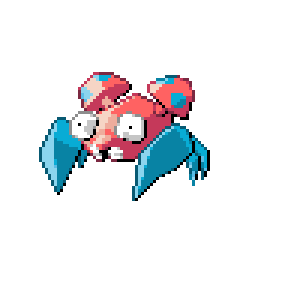
Porybink's body has sharp, jagged gems that are made of pieces of code. These pieces of code are jagged and uncompressed, making removing a gem from its body quite easy.
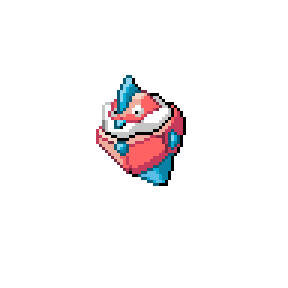
Poryin help keep PCs clear of bloatware by eating files that have not been used in a while. They take much glee in eating a particularly large file that their Trainer no longer needs.

Poryin help maintain the privacy of their Trainers by eating the metadata associated with files. When they spit out a file after eating the metadata, the file can be safely be released on the internet without people tracking down the location.
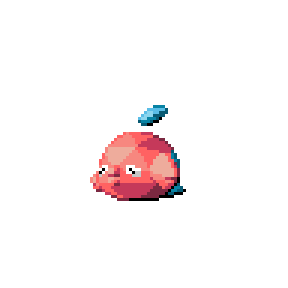
Poryot help their Trainers debloat systems by eating system files that come with an installation package. By removing elements that their Trainer does not want, they help keep systems running smoothly.

Poryduck show up on PCs whenever there is a troubleshooting issue, appearing as a headache emoji that clutches its head and sighs. It disappears once the input error has been resolved with a satisfying quack.

The twin pearls on Porypig's head glow whenever they harness their psychic powers, creating lines of code to knockback their foes. They tend to keep to themselves, as they enjoy foraging for carrots, potatoes, and beetroots.

Poryduck appears inside PCs as a sprite that quacks and jumps into documents to remind people to save their work. Many writers, artists, architects, and students have had their work preserved thanks to its reminders.

Porydol fits the description of a Pokémon carved on ancient clay tablets, leaving many scientists baffled by their presence in the ancient past. Connecting Porydol to a PC reveals incredibly grainy monochrome photos stored in its body.

Poryperl keeps its pearls close to its boxy body, as each pearl contains a bit of code that can be decoded to produce a real pearl. Many divers return home with broken fingers for attempting to steal Poryperl pearls without giving anything in return.

Poryperl stores its pearls in a box-like chest that protects the pearls from deep-sea thieves. If it senses a Pokémon nearby, it snaps shut and refuses to open unless some trust has been established.
Poryrelp can be found in the deep depths of the ocean looking for data from sunken submarines. If Poryrelp are found in an area where a submarine has recently been lost, divers scramble to retrieve data before it is eaten.
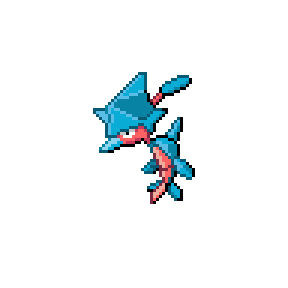
Porygalge consume data left behind by boats and submarines that fall into the dark depths of the sea. Divers often clash with Porygalge as the data is often vital to prevent future accidents.
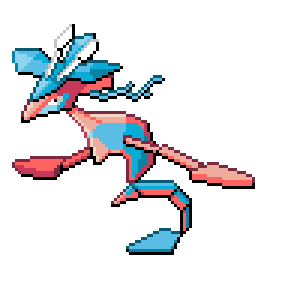
Poryler transforms rocks into data by engulfing the rock with its hands and compressing it. Once transformed into pieces of code, Poryler eats the compressed nugget of data to fuel its body.

Poryler is made out of abstract shapes that resemble a living creature. It throws chunks of code at its opponents, each exploding into pieces upon contact.

Each fragment around Porylem's body is a piece of code. Whenever it rolls, these fragments tuck close to its body to protect its core.
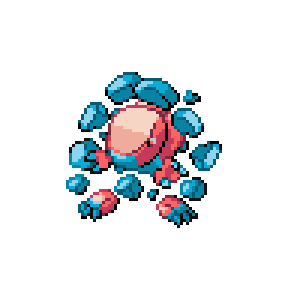
Porylem are creatures made of uncompressed code that look like basic shapes. The flat surfaces across their bodies make rolling difficult.

Poryta release embers from their manes that have data encoded into them. Scanning one of these embers reveals data markers that indicate how much stress Poryta is going through at the moment.

Porydash often has a static barrier around its body that comes from galloping quickly in its environment. This static barrier stops malicious software from corrupting its body, ensuring that Porydash remains healthy.

Porytortle swims across rivers to move berries from one side to another. It only moves in orthogonal directions and gets pushed back when it encounters logs in the river.
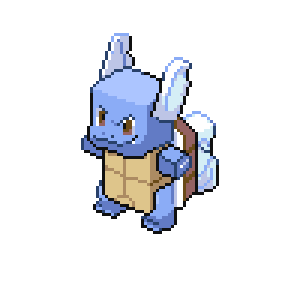
It carries a large leek-like baton that stores correspondence or data written on Morph Mail. Scientists typically send mail through it because its baton can store up to 200 Terabytes of information.
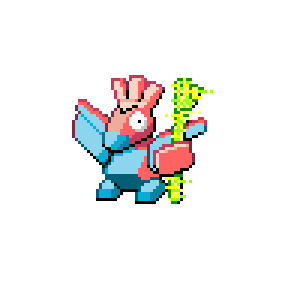
Poryduo love to peck at various objects in the world, especially in cyberspace. Their natural curiosity causes them to get into trouble when they open up files or programs that were meant to remain hidden.

Porydrio can rapidly peck an object with quick succession, up to twelve times a second. Many avid gamers rely on their help as an auto clicker to beat difficult games.
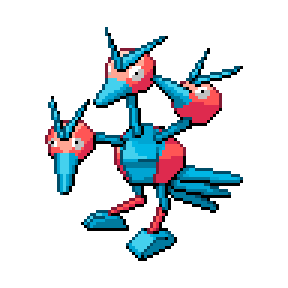
Omapom enjoy lurking near archeological sites where it observes fossils being excavated from a distance. On the rare occasion it joins a dig, it gently clears debris with the hand on its tail.
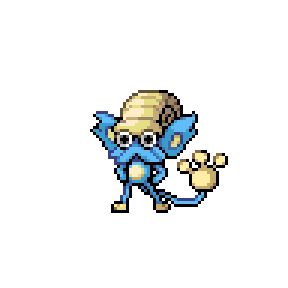
Omagle create carvings by chiseling into rocks. This talent is harnessed by museum curators to produce replicas that children can touch.
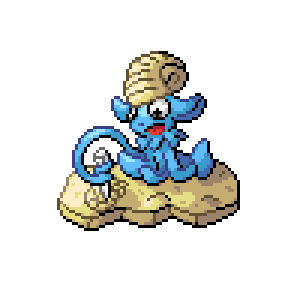
Omasly are often ignored by researchers because the fossils on their body are fake. This has led to the misconception that they are quite effective at camouflage, causing many Omasly to develop an inflated ego.
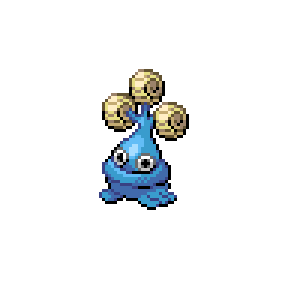
Omatik clings to other Pokémon to generate electricity, and the longer they remain attached the more electricity it generates. When it is full, it detaches from its host, leaving a spiral imprint where it latched on.

Omavanha zips past other aquatic Pokémon to slice through prey with its sharp, serrated fins. Once it has secured its meal, it pulls food into its mouth with its small tentacles.
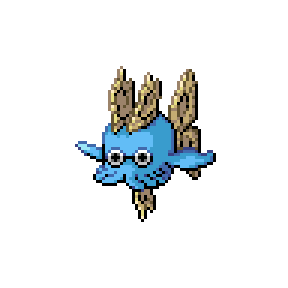
Even though Omaduck shells are the toughest part of their body, if they crack their shell they develop an aching headache. Many remain in marine caverns to avoid the risk of cracking their shell.

When repeatedly struck with rocks, it struggles to continue in battle without further assistance. In a pinch, a Charti Berry gives it enough of a push to resist one more blow before winning a Pokémon battle.
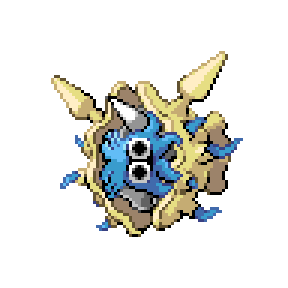
The shell on Omato's back is incredibly sturdy, capable of enduring bites from modern Pokémon. The first instance of Omato being found was in amber, a common fate for many prehistoric Pokémon.

Omatops carves patterns into rocks with its bladed claws, which paleontologists believe are pictograms. It is known to become hostile when other fossil Pokémon are nearby.

Omama are particularly suited for life in the jungle, as the tough shells around their head protect them from talons that try to snatch them out of the sky. They zip through the jungle searching for flowers and berries to consume.

Omasly lure Flying-type Pokémon towards them by wiggling their fossil-shaped bulbs. Once close enough, Omasly hurl rocks at Flying-type Pokémon to knock them down before going in for the kill.
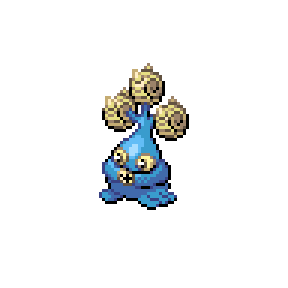
Omaduck are sensitive to pressure differences in the water, so whenever divers rapidly carry them to the surface, an aching headache occurs. Many divers are taught to slow their ascent to reduce the stress suffered by Omaduck.

Kakvee are protected by a tough cocoon that protects them from claws and scratches. They can quickly adapt to harsh environments through evolution, which is especially important because they cannot move on their own.
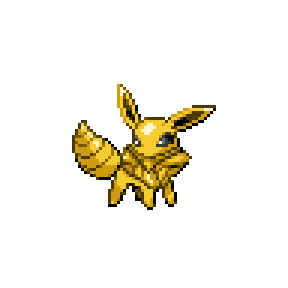
Kakvee hang from their tails inside a durable cocoon awaiting the day they evolve. Many evolve when presented with a dangerous predator and gain new powers as a result.

Kakvee have four vestigial limbs that are unable to move because of the thick cocoon that surrounds them. Many end up eaten by Flying-type Pokémon because they lack the means to defend themselves besides their tough cocoon.

Kakeon are unable to swim because of their tough cocoon, so they wobble at the bottom of lakes and rivers until they evolve. Their long tails make them appear larger than they are, which scares predators away.
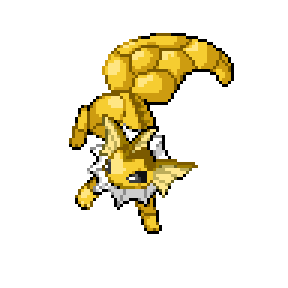
Kakeon have a static charge that zaps any predator that comes too close. This is especially important because the thick plates of their cocoon render them immobile.
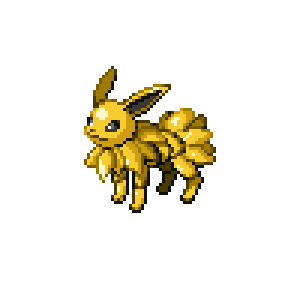
Kakreon are surrounded by a tough and bulky cocoon that limits their movement. If a predator punctures the cocoon, they are met with pressurized flames that escape from the wound.
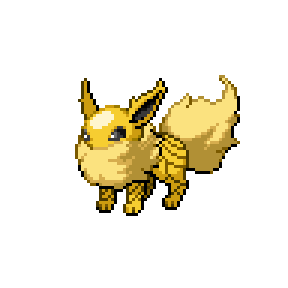
Kakfa sequester themselves away in hollowed out logs to avoid confrontation with predators. They only come out during the full moon to revel in the moonlight.

Kakgeot are too big for most predators to carry them away, so they sit atop branches undisturbed for hours at a time. They also release a putrid silk that secure them to branches.
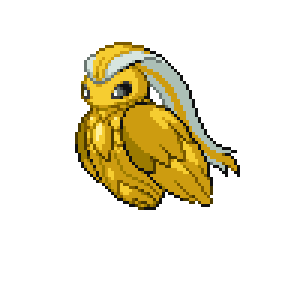
Kakpip have small, scaly wings that help them fly back up into branches after they are knocked down. On particularly windy days, they can spend hours trying to get back to their branch.
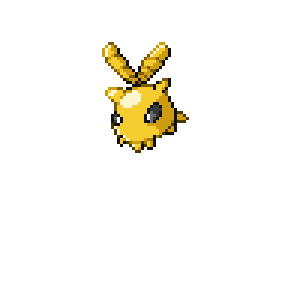
Kakeon have rigid shells that prevent them from escaping danger, so they emit psychic waves that cause headaches to deter predators. When they are not harassed by predators, they listen to the thoughts of other Pokémon with telepathy.

Kakreon have yellow bands across their tough cocoon that glow at night. The eerie glow keeps predators away and allows Kakreon to develop in peace.
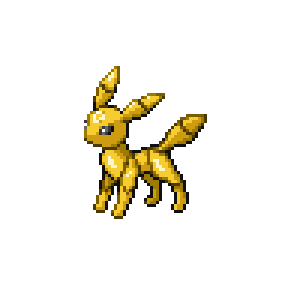
Kakrow have a chitinous shell around their body that limits their movement to short hops. They keep their wings outstretched to scare wild Pokémon away from their territory.
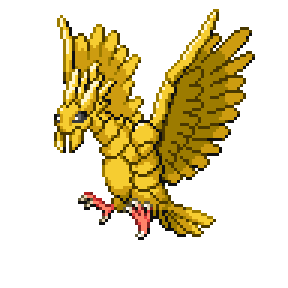
Kakfeon are rendered mostly immobilized thanks to their tough cocoon. They defend themselves from predators by growing venom-tipped leaves from their back and launching them at predators.
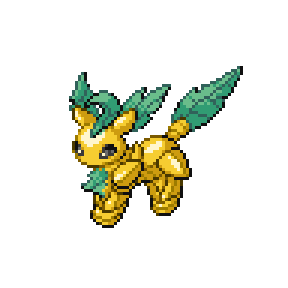
Kakble have limited movement because of the cocoon around their body. While some are capable of hunting small Bug-type Pokémon, most opt to wait until they evolve before finding their next meal.
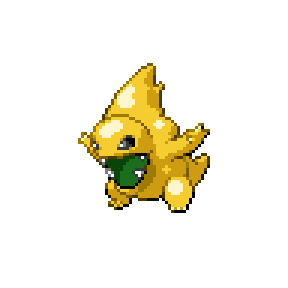
Kaksaur remains motionless and dormant until it is ready to evolve. It produces a foul-smelling scent when hurt, so other Pokémon leave it alone.
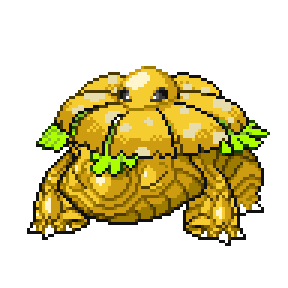
Kakran have venomous spines that produce a revolting crunch whenever they are bitten into, triggering the gag reflex of many predators. They are typically a meal of last resort, as many predators would prefer to eat nothing over a Kakran.

Kakrino have a uniquely revolting crunch to their shells that predators actively avoid. The spines on their back are filled with a toxic substance that is thick enough to trigger the gag reflex of many predators.

Kaking are typically not hunted because of their large size, but a few daring Flying-type Pokémon are willing to pry the plates of their cocoon open. The noxious scent released from the tiny spines underneath is said to trigger gag reflexes.

Kakrua have stiff joints and are only capable of small hops. Many disguise themselves as sleeping Ekans to scare away potential predators.
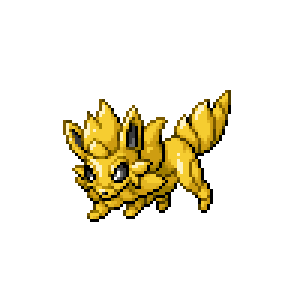
The fluid around Kaksis's body hardens when it is about to be struck, as Kaksis can detect the thoughts of Pokémon around them. This ability, along with their tough cocoon, prevent predators from eating Kaksis.

Kakcorio are passionate dancers that create flowing displays of feathers. When they finish dancing, their body grows stiff as they bow for applause.
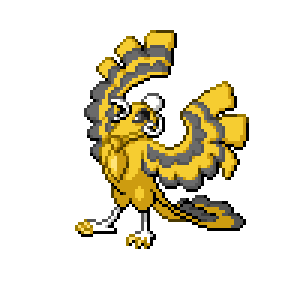
Kakbish have a thick plastic cocoon that protects them while they develop inside. They also have a potent stench that drives away curious Pokémon.
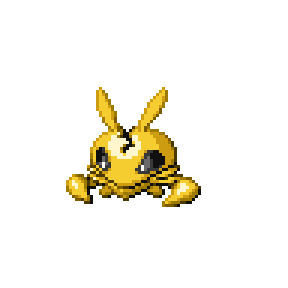
Kakbink are embedded inside a chunk of wax and honey that nourishes hives of Beedrill during cold winter months. They are pampered by these hives until they evolve.
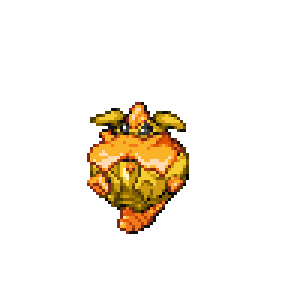
Kakaboo have a tough shell that protects them from most predators. Some crafty Flying-type Pokémon have figured out how to wedge their beaks into openings in the cocoon, bypassing the only defense Kakaboo have.
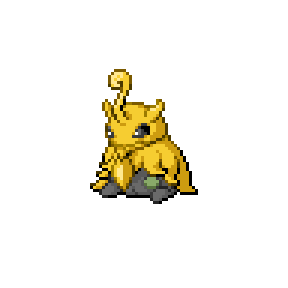
Kakmeleon has a thick carapace that prevents it from making sudden movements. Whenever it is cold, other Pokémon huddle for warmth next to it.
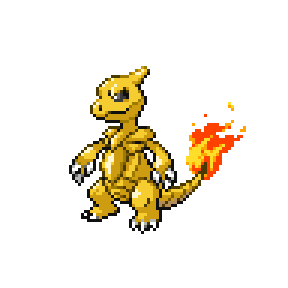
Kakduck release a thick ooze in the space between the plates of their cocoon to make them slippery. The stress they have from being unable to pick themselves back up after a fall causes them to get headaches.

Kakey has a tough carapace around its body that is difficult to move in. It gets frustrated with this limited movement and is incredibly prone to hurting itself.

Kakizard has a difficult time moving without damaging its cocoon. Its cocoon is hot to the touch, so some Pokémon huddle next to it during cold nights.

Kaktle retreats into its shell whenever danger is nearby. Its shell is made of the same material as its cocoon casing, which gives it ample protection against other Pokémon.

Kakcool harden their venom glands to protect their body against predators, turning their tentacles and bulbous sacs into a jet black color. They often hide in between rock crevices to avoid conflict.

Kaktortle does not need to hide in its shell because its cocoon is made of tough carapace. It can spray water from the crevices in the carapace, which makes its shell slippery.

Kaktoise has limited mobility because of its tough carapace, making turning around difficult. It takes up to 10 seconds to withdraw into its shell.

Kabudactyl share the skies with other Flying-type Pokémon and often follow them back to their nests, protected from pecks by a thick armored shell. Many Kabudactyl are perplexed by the feathers of other Flying-type Pokémon.
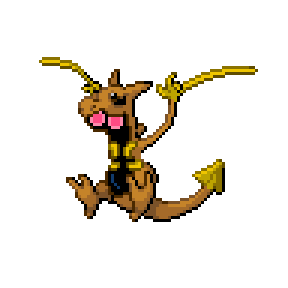
Kabuans have tough sepia scales that allow for lightweight mobility and protection against sharp claws. Their venom is harvested by scientists to compare with ancient, fossilized venom.

Kabubok get mistaken for logs because of their sienna scales that blend into the forest floor. Each claw underneath their hood has ancient venom that causes searing pain when injected into their prey.

They are able to live for thousands of years before developing into their final form, as they live off ginkgo seeds. Those seeds have helped Kaburith develop a hard shell around themselves that resists damage.

Kabuiard shells are hard but not durable, as while their shells are scratch resistant, they easily crack when bludgeoned with enough impact force. Their blades are made of a stronger material that easily slices through foes.
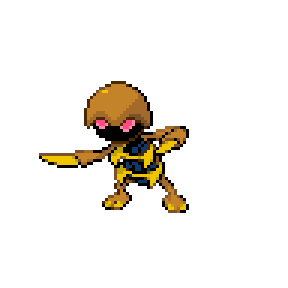
The material that makes up the claws of a Kabukey resembles nails. The brittle claws often break when Kabukey go on an angry rampage but grow back quickly as well.
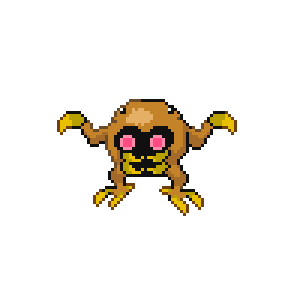
Kabupie only eats when it is able to pull the leaves from branches itself and refuses leaves plucked by other Pokémon. By scraping its claws against branches, it can quickly rip several leaves off in quick succession.

Kabusel are crafty creatures that scale cliffs with their sharp scythes. They target nests of Flying-type Pokémon to steal their eggs.

Kabuor zip through the night sky with their scythes close to their bodies. It is only during a Pokémon battle that they extend their scythes to rend their foes.
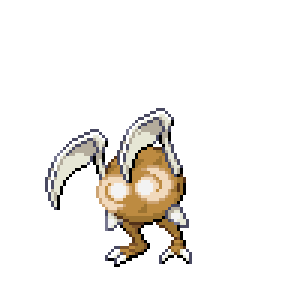
Kabutoise rely on their superb swimming ability to give them an edge in a Pokémon battle. One of their special techniques includes ramming into their opponent with their sharp claws.
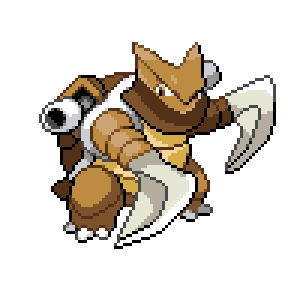
Aerofree are a target of many predators because they are easily spotted with their lavender insect wings. They screech with a high-pitched wail to momentarily daze predators before flying away.

Aeronoir perch atop old buildings to monitor the surrounding area for intruders, particularly ruffians and hooligans who seek to vandalize their home. Once they spot a troublemaker, a tail wraps around their torso to escort them out.

Aerojask fly faster than a bullet train and can perform aerial maneuvers with effortless ease. By giving them a Cheri Berry, they can avoid being slowed down by paralysis.
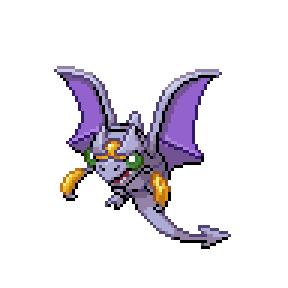
It lives in hot, dry places of the world because its body rapidly absorbs water. Without a Passho Berry to dry its skin, its wings become too waterlogged to fly.
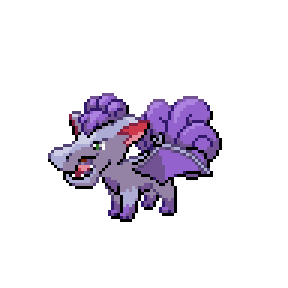
Aeromander can be found atop older municipal buildings where they watch people below them with a statue-like motionlessness. On the rare occasion they move, they enjoy tossing pebbles at those who pass by.
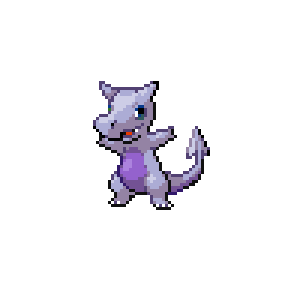
Scientists believe that Aerodisc have been on the planet long before people were around, as they are embedded into the fossil record throughout the world. They also speculate that Aerodisc were most active when other Pokémon enter courtship season.
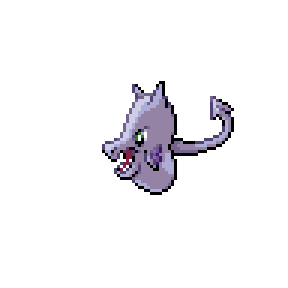
Aerobro soar through the sky with amber attached to their tails and harness the weight of the amber to whip other flying Pokémon. The amber color of the fossilized tree resin makes them easy to spot in the sky.
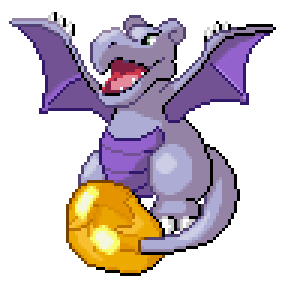
Snortung have sticky tongues that easily cling to berries from a long distance. This is particularly helpful when they feel lazy and do not want to move, as the tongue easily plucks berries from nearby bushes.

Snornx enjoys fancy, borderline prodigal cooking with lots of rare ingredients. Trainers often struggle to finance such tastes, so it begrudgingly eats plain meals that its Trainer provides.

Snordactyl satiate their voracious appetite by eating lots of fruits and vegetables. When an area is about to run out of berries, they chew food and fly at the same time.
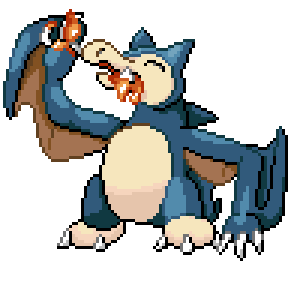
Snorgey are unable to fly because their wings cannot support their body weight. They resort to climbing trees to find a place to sleep, where they rest for up to 18 hours a day.
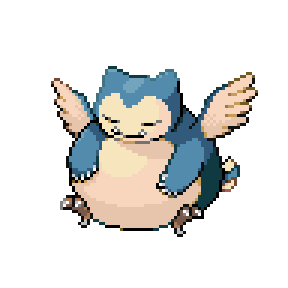
Snortata are slow yet fickle creatures that have a difficult time deciding what to eat. They usually end up eating a piece of cheese or a berry even when presented with more appetizing options.

It hangs from branches and sleeps for upwards of 18 hours a day. It searches for citrus fruits, like the lemon or pomelo, during the scant few hours it is awake.
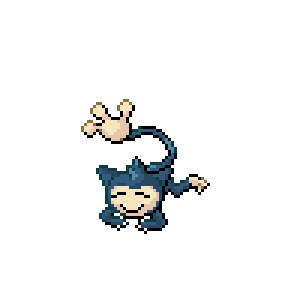
Snoricate are normally docile creatures but may exhibit food aggression whenever another Pokémon comes near their meal. As a result, Trainers are advised to feed Snoricate in separate spaces from other Pokémon.

Snorgon2 enjoy playing with office scanners but often overload the system with their large bulk. Many Snorgon2 have led to expensive replacements of essential office equipment.
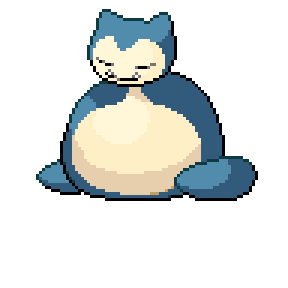
When autumn ends, it finds a nest to hibernate in. It is tolerated by the original residents because it blocks off tunnels leading out from the nest, which helps keep warmth inside until spring.

Snorduck are superb swimmers that can sleep while kicking their flippers. This adaptation allows them to avoid predators on land while also keeping their metabolism high.
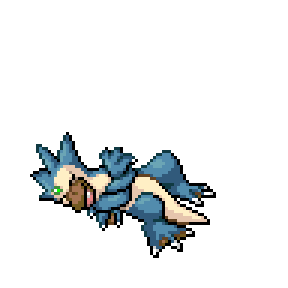
Artipod release flurries of snow to freeze over forests so that predators search elsewhere for meals. There is a rite of passage for children where they wander through the snowy landscape to pluck a sapphire feather from the head of an Artipod.

Artifree fly over forests releasing a coat of icy dust to create wintery wonderlands around them. They are a telltale sign that winter has begun in earnest, as they only come out of hiding during winter.

Artivee are capable of summoning hailstorms with a single breath but remain uncertain about how they want to evolve. While they strongly favor Ice Stones, they always hesitate before committing to evolution.
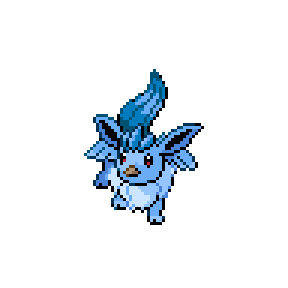
Artipix freeze over entire forests with a blanket of snow at the beginning of the winter season. When necessary, they melt ice with soft embers to thaw out other Pokémon.

Artiduck require an icy-cold environment to keep their head clear. Extended time outside of their natural environment gives them a headache, especially if they are somewhere hot and arid.

Artiduck can freeze entire bodies of water by conjuring a blizzard. Once the surface of a lake or river has been frozen, they swim under the ice to hunt for their prey.

Artizard conjure blizzards and snowstorms by flapping their azure feathers. Even though the world around them becomes a frosty environment, the flame at the center of the storm is always lit.

Articruel live underwater in icy caverns that connect to the ocean. They freeze their prey within a cage of ice before they inject their prey with virulent venom.
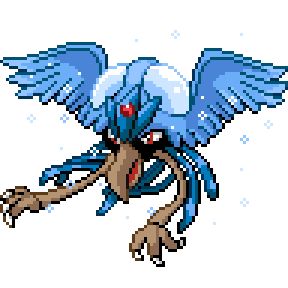
Artiduo have twin heads swap between releasing frigid zephyrs and pecking at their prey. This constant role swapping wears down prey because of how unpredictable they become.
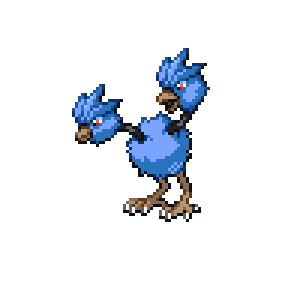
Zapie zap predators that harass them with bolts of lightning. Even though their bodies are frail, few Pokémon interrupt their leafy feeding sessions.
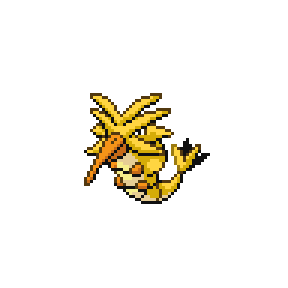
Zapod cause lightning storms in the nearby vicinity to convince predators to hunt elsewhere. Bold children who want to impress friends and family run through forests to pluck a feather from Zapod's head.
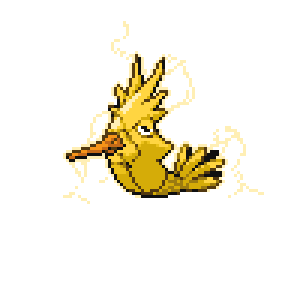
Zapvee can summon lightning storms with a deafening bark but often hesitate on what evolution path they want to take. Many want to evolve through Thunder Stones but hesitate before they carry out the evolution.

Zaplix live atop mountains where they summon storms to strike the ground with lightning. This forms fulgurite columns embedded into the ground, marking their territory.
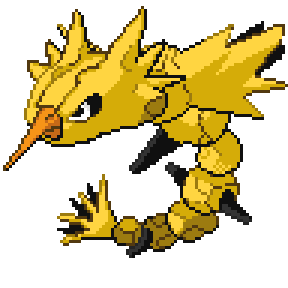
Zapcune are elusive creatures that conjure storms around them to avoid being seen by Trainers and Pokémon. While everyone is hiding away from lightning strikes, they glide across bodies of water to find nourishment.
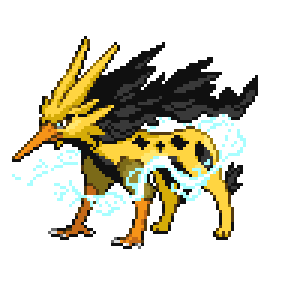
Zapgon-Z help meteorologists predict where lightning will strike, as their bodies are acutely attuned to the weather around them. With these predictions, scientists can redirect lightning into batteries to rapidly charge large machines.
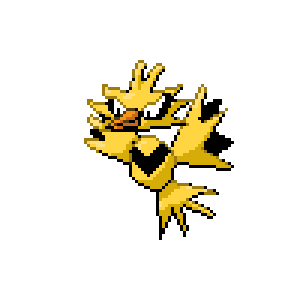
Zapduck prefer to live on islands with lots of storms. The lightning in the background helps them escape their own thoughts, which can cause headaches if they ruminate too much on them.

Zapduck can conjure thunderstorms to strike lakes and rivers. Once the thunderstorm passes, Zapduck swoop in to eat the electrocuted Pokémon that float on the surface.

Molpie will sear Flying-type Pokémon that try to eat them. They prefer their leaves lightly toasted and will start fires to achieve the right texture.
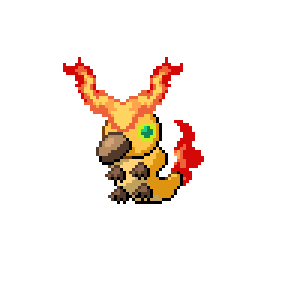
Molpod raise the temperature around them to create a thick muggy atmosphere and convince predators to eat elsewhere. Plucking a scarlet feather off of a Molpod is said to bring good luck.
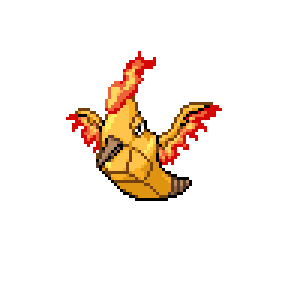
Molvee can call upon fiery storms to burn down entire forests but will not commit to evolution through a Fire Stone. They feel nervous about committing to evolution, so much so that they avoid the issue when they can.
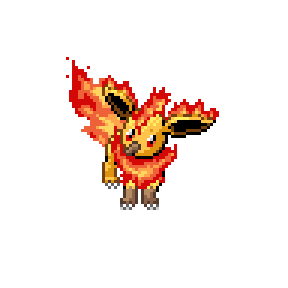
Molnaut take a lot of damage over the course of a Pokémon battle waiting for the right moment to launch a counterattack. Once they find an opportune moment, a fiery flurry of pecks pierce through an opponent's defenses.
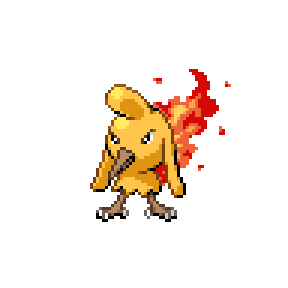
When its fiery heart is exposed to Red Nectar, its passionate intensity is seen in its feathers fluttering through the air. Its dance is complex and vexing, as is the irreducible complexity that comes with life.
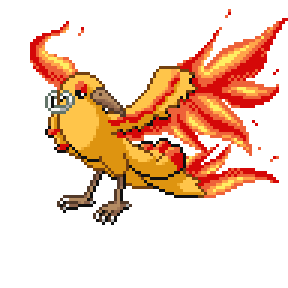
Molduck prefer hot and arid climates to make their nest. If they are brought somewhere cold, the cool air causes them to shiver. Sometimes they develop headaches from the air pressure differences as well.

Molduck conjure searing flames to roast aquatic Pokémon that are close to the surface of lakes and rivers. Molduck swim into the bodies of water to gather the fresh roasted Pokémon to eat.

Moltle are easily identified by the flame on their tail, as it does not extinguish itself when submerged underwater. This causes issues for natural wildlife, as the flames rapidly heat ponds and rivers when Moltle is swimming.
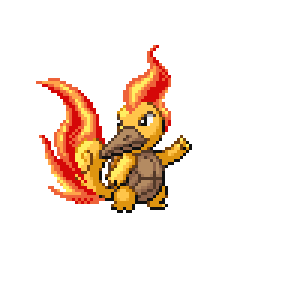
Drakarp enjoy residing in large bodies of water where they can swim freely. Their scales often come loose when sharply turning in the water, which enthusiasts collect with the hopes of finding the shiniest scales.
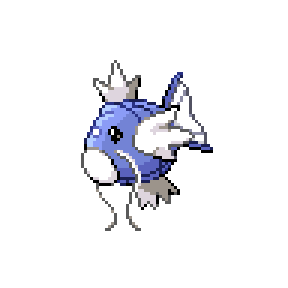
Drachou produce bright flashes of light as they swim to see in the deepest parts of the ocean. Whenever a predator bites onto them, they escape by shedding their outermost layer of scales.

Drafa were among the first Pokémon to test space suits, as their small size required fewer materials. Their affinity to the lunar cycle helps them maintain direction when navigating through space.
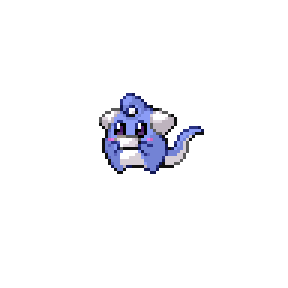
Drafairy was among the first Pokémon to fly alongside astronauts into space. They are helpful for making external repairs since they do not require space suits. However, their shedding tends to leave scales everywhere.

Dragofairy help astronauts remain safe while in space. Whenever an astronaut is in jeopardy of floating away, Dragofairy link arms with each other to grab onto the astronaut. After the rescue, they begin shedding to remove any sun-damaged scales.

Dragofable are handy to have in space stations because they require little maintenance. Whenever they return from an excursion from outer space, they shed scales that can cling to air ducts if not properly managed. Even so, they eat very little.

The bands on a Dragoret's saffron tail measure how old they are. They have the ability to fly but prefer to take their time walking from one place to another.

Writers often describe Dragogia as majestic creatures, but many who have met them describe a cozy creature who enjoys naps. Children describe playing with Dragogia all day only for them to disappear after a nap.

Beetung play a vital role as honey tasters in Beedrill hives. To ensure honey is made properly, Beetung periodically samples honey with their long tongues. Any defective honey is scooped out with their tongues and tossed out of the hive.

When grocery shopping, many mistake beetroot extract for Beehoot extract, leading to kitchen nightmares. Beehoot extract is a sweet powder that goes atop desserts, while beetroot extract is a bitter powder that doubles as a nutritional supplement.

In the middle of the night, Beefa communicate with each other through special dances to coordinate the collection of nectar before scattering into the wild. Every member of the hive returns by sunrise.
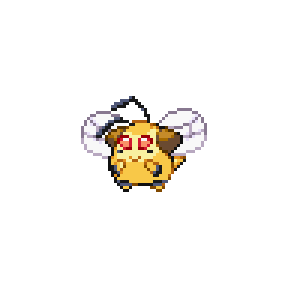
Beegeot grab onto small Pokémon with their venomous talons and whisk them away towards their nest. The stinger on their back is rarely used because it requires them to turn around.
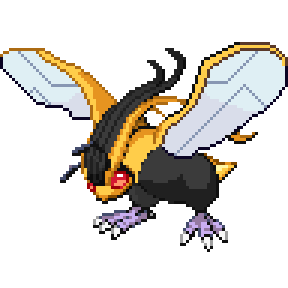
Beetata are known to have a strong sweet tooth and prefer a high-sugar diet. They rummage through garbage cans to look for half-eaten candy.

Beerow are territorial creatures that often pick fights they cannot win. This hyperaggressive behavior can be mellowed out if they are exposed to smoke, which masks the scent of any intruders in their territory.

Harvesting honey from a Beetank is a difficult task reserved for beekeepers. Beetank are easygoing Pokémon but can become violent due to the uncomfortable experience of honey harvesting.

With a mane made out of honey, Beetei helps local Beedrill colonies protect their stores of honey. Searing hot honey wards off the likes of Ursaring and Teddiursa, ensuring the hive has enough honey to last through winter.

Beechu charges their body with electricity by rubbing their stingers together. Once they have stored enough power, they shoot lightning from their stingers.

Whenever Beeran create honey, a few blobs of the honey often end up clinging to their wings, making it difficult to fly. They rely on their den mates to help lick their wings clean.

Beequeen offer sanctuary to baby Nidoran whenever it rains. Once the rain subsides, they give the Nidoran a blob of honey as a gesture of kindness.

Beerino produce a liter of venom daily that constantly oozes from their stingers. Despite their high levels of aggression, scientists have tapped into their high venom production to make mass quantities of Antidotes.
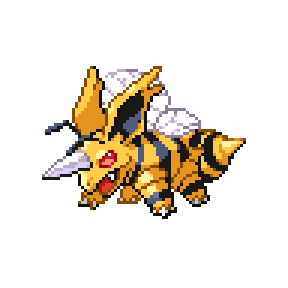
Beerino produce a liter of venom daily, and must use this venom or it will harden and cause pressure to build up. Many go berserk trying to find ways to release venom, and some resort to stinging their own kin for a release.
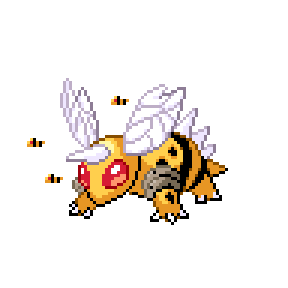
Beeogre releases sweet, sticky honey from every part of its body, creating blobs of suspended honey as it swims. It nourishes deep-sea Pokémon with this honey in exchange for subservience.
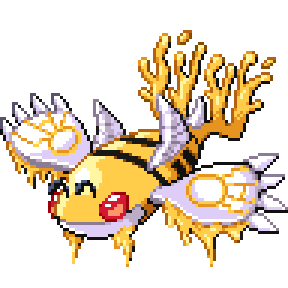
Beesis are surrounded in a bubble of honey and often stay in Beedrill nests to protect their reserves. If a hungry Pokémon approaches their nest, Beesis release psychic waves to scare off the intruder.

Beebish often get mistaken for a plastic bag by people who pick up garbage. They can be particularly dangerous to approach when they are eating, as they become aggressive and sting whoever approaches them.
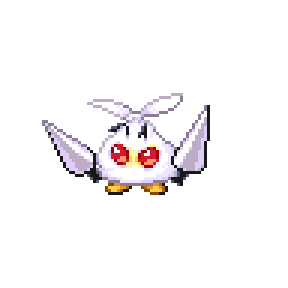
Fueled by honey, Beesteel guard nests of Beedrill with a mighty shell that is harder than diamond. The only way to deal with a nest with a Beesteel is to burn the nest with scorching flames.
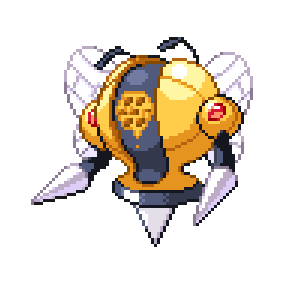
Beetta are superb dancers that are light on their feet. One of their signature performances involves dancing to a famous orchestral interlude called "Flight of the Beedrill".
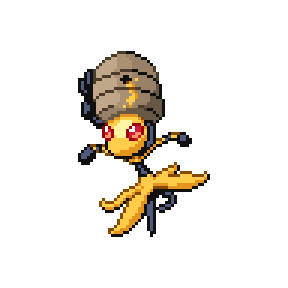
Beerupt can survive up to a year in the desert without food once it is full of honey. This is because of its slow metabolism, along with its ability to store ten liters' worth of honey inside its body.
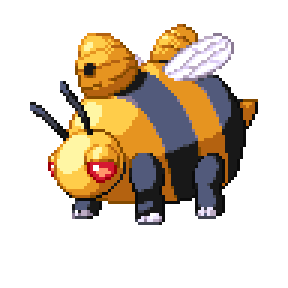
Beekey is a particularly dangerous Pokémon because of its aggressive nature. It frequently throws tantrums and will sting its Trainer until it receives what it wants.

Beetle typically stays near its nest where it eats honey and practices stabbing with its stingers. Whenever a predator arrives at the nest, it springs into action and attacks the threat.
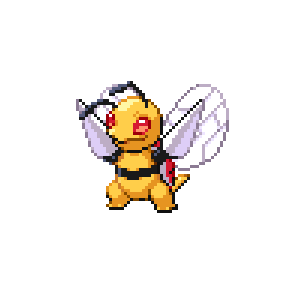
Beetoise fires bursts of water from its back cannons to knock foes off their feet. It also jabs its stingers into opponents when they are too close to fire its water cannons.

Mewsaur rely on psychic energy to detect the presence of people and Pokémon around them, as they do not have eyes. Their long tail delicately takes care of the bulb on their back.
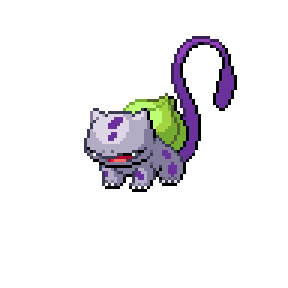
Mewpie have been so elusive because of their ability to turn invisible, a trait that is often associated with Ghost-type Pokémon. Over many years, Mewpie have adapted to become nearly undetectable, except when eating leaves.

Mewotto hunt for food by turning themselves invisible before swooping in to grab onto bug Pokémon. Their sharp talons make latching onto prey an easy task.

Even though Mewon are deeply affectionate Pokémon, they often hide from their Trainer. The most reliable way to locate Mewon is to wave a magnet around, since the magnet will stick to their shell even when they are invisible.
When the leaf on its snout becomes a bright lime, its body produces a mild, slightly musky scent that reminds people of cantaloupes. When its Trainer allows it to bask in the sunlight, it accelerates the growth of potential inside before it evolves.

Chikogela have a writhing mass of vines that are sensitive to touch. If a Trainer touches one of their vines, the sudden sensation causes it to curl up and recoil, producing a zesty scent in the process.

Chikokarp has an insipid taste and a gritty texture that makes it unappetizing to eat. As such, fishermen who catch it usually toss it back into the water.

Chikorita releases a sweet scent from its leaves, which can be harvested to produce tea. Its leaves only take a week to grow, so harvesting the tea leaves does not harm it.

Chikoleef basks in fields to absorb sunlight. It produces a scent that gets stronger on days it absorbs more sunlight. Trainers who enjoy this scent give it hugs so the scent rubs off on them.

Chikodile loves to gnaw on bones, especially since it relies on eating small shards of bone to give itself a boost of calcium. When it is not chewing on bones, it sprawls across a rock to sunbathe and nourish the leaf on its head.

Chikohoot walks through trails and scales up hills to find the best place to photosynthesize. Their sense of time ensures that they never miss a minute of daylight, even during rainy days.
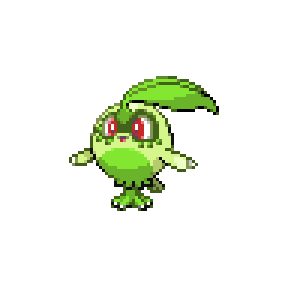
Chikotto fold vines into their nest to siphon nutrients from tree branches while they sleep. Perfume manufacturers capture the scent produced by the vines to create a floral perfume that lasts for hours.

Chikosaur have a leafy bulb on their back that can be harvested to make soups. These leafy greens have a sweet and refreshing taste.

Chikosaur hide thin vines around each of the leafy buds growing around their neck. The leaf atop their heads produces a pleasant scent that helps people calm down.

Chikoursa climb trees to knock down berries to eat. They are primarily herbivorous and have a disdain for hunting other Pokémon.

Chikopuff whistle out songs through the leaf on their head. The sharp sound of the whistle makes other Pokémon drowsy, some falling asleep during the performance.

Chikorunt eat Enigma Berries to help them survive in the wild because they are fragile creatures that get exposed to many threats. They sprout vines from their back to push predators away before sliding away on a sheet of ice.

Chikowag search for reservoirs of mineral water to quickly absorb the nutrients they need to nourish their body. Once they finish drinking the mineral water, they fall asleep in a sunny patch of grass to soak up the sun's rays.

Chikotle are patient creatures that wait until their opponent is staggered before striking. By tripping their opponent with vines and spraying water from their mouths, they can achieve victory over their peers in a few minutes.

Chikofetchd have a sweet succulent meat that makes them perfect for hearty stews. When combined with their leek baton and the large leaf on their head, Chikofetchd are a delicious meal in difficult times.
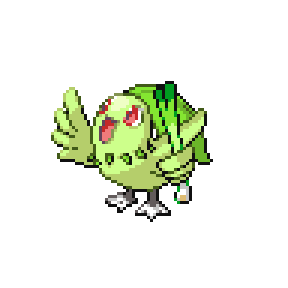
It sheds layers of its cocoon to ensure a smooth metamorphosis upon evolution. It then consumes the recently shed layer, which is said to taste like parsnips or carrots.

Its vines are a staple in the restaurant industry because it is a fast-growing substitute for lemongrass. Whether it gets paired with seafood like a Klawf Stick or a spoonful of Slowpoke stew, its vines will always be in demand.
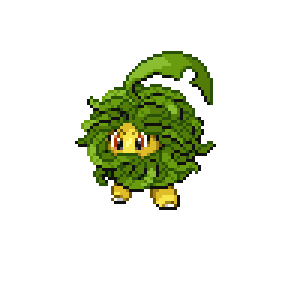
Trainers debate over how Bayleef produces its trademark scent, which offers a mixture of calm and excitement. Scientists claim that the scent is similar to coffee, but further study is required.

Bayxio rely on their natural camouflage to sneak up on other Pokémon. With a flurry of razor-sharp leaves and potent lightning strikes, they can quickly incapacitate their prey.

Its limbs can be safely severed with a clean cut due to its regenerative abilities. The limbs themselves have a mild and grassy okra flavor that helps bring herbal and spicy notes.
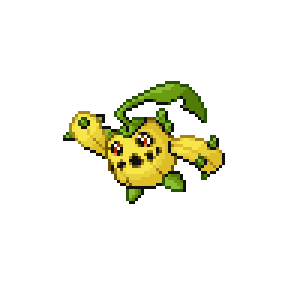
Baywhirl produce an antiseptic sap from the leaf on their head. Whenever they get their hands dirty, they squeeze the leaf and rub their hands together to get their hands clean.

During a Pokémon battle, Baychoke swing their leafy arm wildly with little tact or precision. By feeding them a Micle Berry, they develop the insight to land lacerations with great precision.

Megatoed live in mineral water reservoirs and infuse the water with their pollen to create a powerful disinfectant. They are always willing to help injured Pokémon that show up to their reservoirs by cleaning wounds with the mineral water.
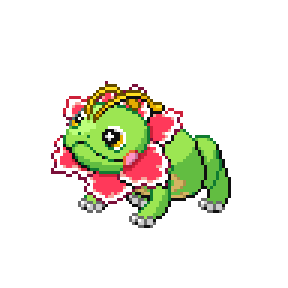
Each petal on Megasey's body can be pressed into an oil that heals scrapes and cuts. They enjoy taking care of other Pokémon in the wild and are often spotted with a Chikorita in their front pouch.
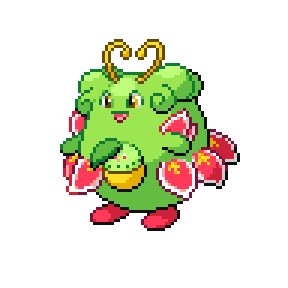
Megaphox tend to abandoned gardens in deserted castles by rejuvenating the soil and helping seedlings grow. They can see into the future by peering into balls of green fire that are fueled by pollen from their gardens.
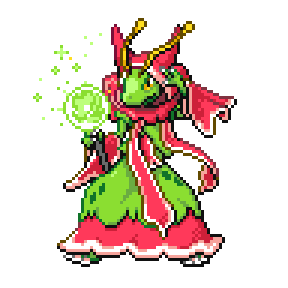
Cyndagar's wings are made out of flames that grow stronger as it matures. Its favorite activity revolves around flying incredibly close to people's heads, barely avoiding contact.
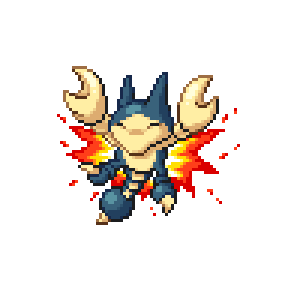
Cyndaran enjoy poking at their peers with their flaming snout but feel dejected when this playfulness is not reciprocated. Developing their sense of confidence is of utmost importance if a Trainer wants them to become a reliable partner.
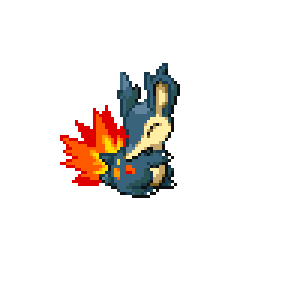
Cyndaran are playfully aggressive creatures that enjoy roughhousing with their peers. If they are excluded from games because they are too aggressive, they pout and remain upset until they find an alternate activity to partake in.

Cyndatales enjoy trips to the salon because they enjoy clean, spotless fur. After they are done with their grooming session, they enjoy sitting idle with their flaming tails curled around their body.

Cyndamander are curious creatures that love to explore the world around them. When they are particularly excited about something, the flame on their tails gets incredibly hot.
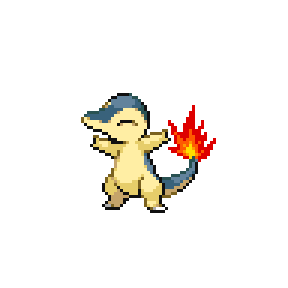
Quisire enjoy spending time near volcanoes, as the arid climate reduces the amount of moisture they come across. Frequent naps make people question how they find time for gathering food.

Quits has a lot of potential, but struggles with discipline. It requires plenty of love and attention, as it tends to call it quits during a training session due to a lack of confidence.

Quirorus are known to bury eggs in the ground near volcanoes, as geothermal heat keeps their eggs warm. This practice is thought to have originated from a time when the volcanic peaks were still covered in snow.
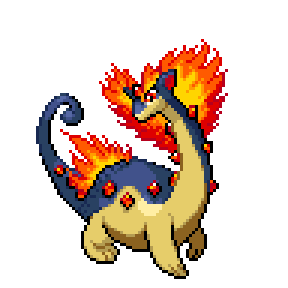
Quiroc attack with explosive ferociousness, as they have little regard for their own safety. The fiery flames on their back melt through their opponents without regard for anyone's safety, so their Trainer often needs to step in to calm them down.
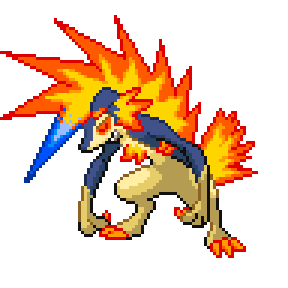
Quiape have an explosive temper that causes their body to erupt with scorching flames. Once they enter into this hostile state, the only way to cool them down is to burn through all their energy.
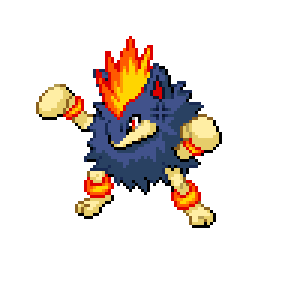
The mushrooms on Typhras's back are constantly blazing, the intensity growing when it senses damage to its mycelium network. It is fiercely territorial but only chases as far as the network of mycelium below it.
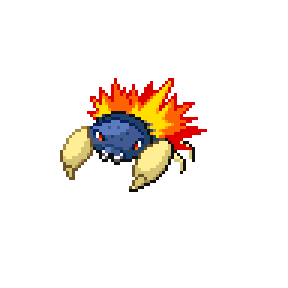
During a Pokémon battle, Typhroc shoots destructive plumes of lava from its back that explode into obsidian shrapnel. Trainers collect the obsidian shards after a battle ends to sell them.

Typhizard are characterized by their fire breathing and large wings. Their wings are closer to the wings of a Crobat than many Dragon-type Pokémon, which is one of many reasons why they are not Dragon-type.

Typhbell lure Bug-type Pokémon towards their fiery maw with a sickly-sweet scent that proliferates through the air. Once their prey is in close range, they roast their prey with a powerful burst of flames.

They use their hairlike tentacles to dig up sand while looking for prey, once they find them Totodactyl their prey before excreting acid. On nights of a new moon, it is said that Totodactyl's victims can be heard on shorelines.
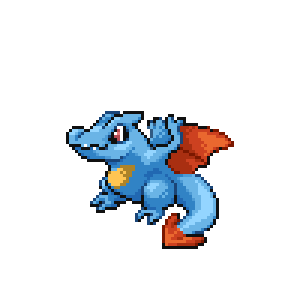
Totorita are mischievous creatures that enjoy chewing on things they are not supposed to. Treating them with respect is of utmost importance if a Trainer wants to avoid getting cut by their razor-sharp leaves.

Totokrow are said to bring bad luck to whoever they meet. This often means getting bitten by their sharp teeth.
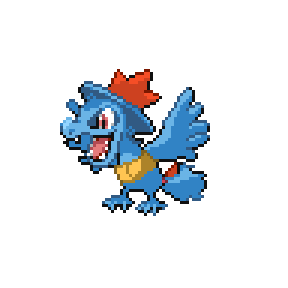
It can be given a Liechi Berry to improve its strength in a pinch, which makes its jaw stronger until the battle is over. It chomps down on opponents with enough force to break boulders.
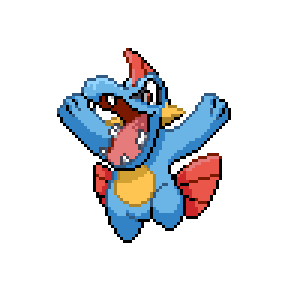
Totodoof bites with its sharp teeth to cut down trees. Its powerful jaws allow it to make quick work of logs, which get turned into natural dams.

Totoduck are deceptively powerful creatures that can break rocks with their jaws. When they inevitably break one of their teeth on a rock, the nerve damage goes right to their brain and gives them a searing headache.

It uses both the cannons on its back and its sharp maw to attack opponents in battle. After a hard fight, it enjoys eating a Precooked Burger, as do many Trainers.

Crocodactyl are cantankerous creatures that get easily irritated when they have indigestion. After a round of hunting, they swallow stones so that they can break down bones and other tough materials in their stomach.
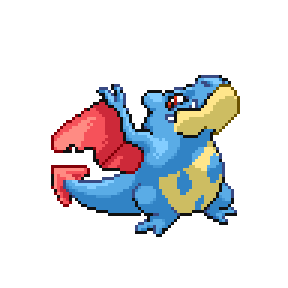
Crocotto dives into lakes to hunt for fish Pokémon and carries them back to its nest. Its hooked, serrated teeth ensure that prey cannot escape once trapped in its jaws.

Crocobull are affectionate creatures that bite the ears of those they adore. Whenever two Crocobull fall in love, they bite each other's ears to signal romantic interest.

Crocobok restrains and clamps down on its prey by biting down with its fangs. The longer the fangs remain latched onto its prey, the more venom is injected.
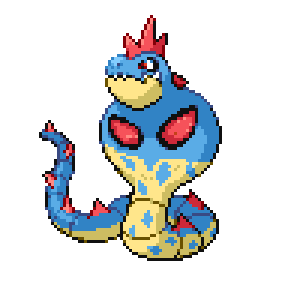
Crocolucha prefers a quiet solitude, making the rowdy and boisterous Primeape its natural enemy. While it prefers an honest fight, it happily relies on its sharp teeth when its opponent cheats.
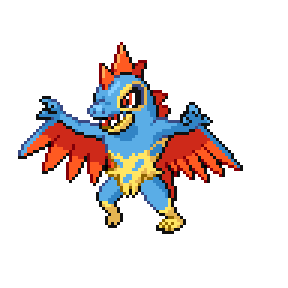
Crocoduck have many sharp teeth that grow back if a tooth is damaged. The growth of a new tooth presses against their brains, which can give them a headache if they need to regrow lots of teeth at the same time.
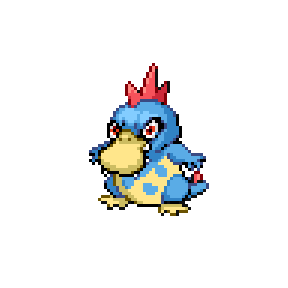
Pidsea love to glide through the sky on a gentle sea breeze. When they are not flying through the sky, they are swimming underneath the sea looking for seaweed.

Their sharp beak is coated with a venomous layer of saliva that dissolves shells and nuts over time. This allows them to obtain exclusive food sources unavailable to other forest Pokémon.

Pidrill coat their wings with dust to avoid parasites from latching onto them. They buzz around with their stingers and talons to search for small Pokémon to turn into prey.

These skittish Pokémon are known to observe campers go about their day. When spotted, they are nearly impossible to catch as their sleek wings and light bodies allow them to escape quite easily.

It lingers by its nest after gaining flight, which helps it develop deeper bonds with Pokémon and people nearby. People who give it a Genius Feather are said to have good luck for a week.
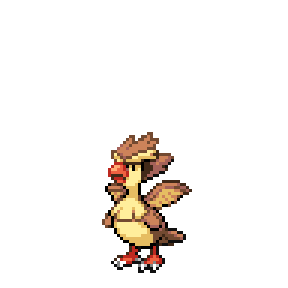
Pidpip soar through the sky alongside groups of Hoppip. Whenever a gust of wind scatters these groups, Pidpip help locate lost Hoppip to return them to the group.

Pidkrow make their nests near highways because the warm exhaust from vehicles keeps the general vicinity warm. When traffic comes to a halt, Pidkrow attempt to solicit treats from cars.
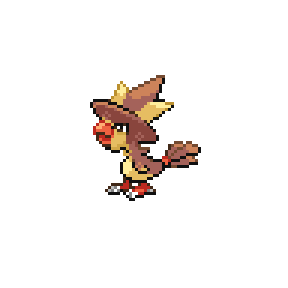
By creeping and hiding in tall grass, Pidgar close the distance between themselves and their prey without being detected. Once in position, they kick up blinding sand to confuse their prey before landing a lethal blow.

As majestic as Pidtler are, many are hurt by cars on roads that cut through their natural habitat. Campaigns from environmental groups urge drivers to slow down to protect Pidtler.
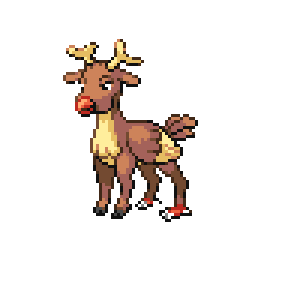
Whenever it gets cold, some people opt to give them a Health Feather before turning it back towards the wild. The feather helps it endure life's troubles by giving it a little extra heat to keep warm.
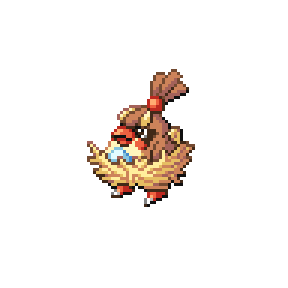
A Spicy Curry, when made with an herbal and pungent masala, gives it an adrenaline boost that helps it win Little Cup tournaments. After a round of battles, it enjoys a fresh mango lassi to help cool down.
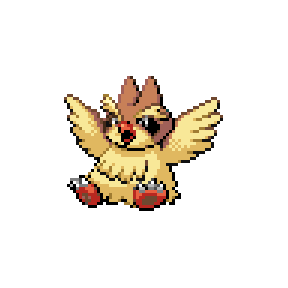
Pidts cry loudly from within their nest to get the attention of their caregivers. Whenever they are about to fall, they teleport back into the nest.

It lives life in subzero conditions and has limited flight mobility. People give it a Resist Feather as good luck, as it develops bonds and grudges that last a lifetime.

Pidiard are small yet clever creatures that make full use of their metallic blades daily. From cutting open nuts to chopping twigs for their nest, these blades are an essential part of everyday life.
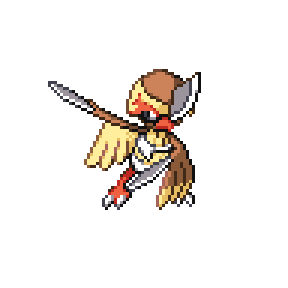
Pidtales has tails that can ignite and spin in rapid succession, enabling flight. When it is done flying, it needs to take a nap because of the amount of energy used.

Pidbas hides in kelp forests to avoid predators, pecking anyone that intrudes with its sharp beak. If Pidbas receives an offer to join a Trainer's team, it will swim in circles around the Trainer with gleeful delight.

Pidkaboo lurk in graveyards where they have easy access to food offerings from grieving families. It is considered a bad omen if Pidkaboo refuse to eat food offerings that are left behind.
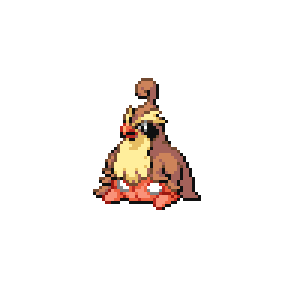
Flocks of Pidmoth often get lost because of how pervasive light pollution is in their environment. Scientists have engineered new lamp posts that minimize how much light faces upward, helping Pidmoth avoid getting lost.

Whenever Pidlett fly, they carry a clump of dirt with them that is incredibly difficult to remove. This piece of dirt resists being washed off by water, which makes seeing their undersides nearly impossible.
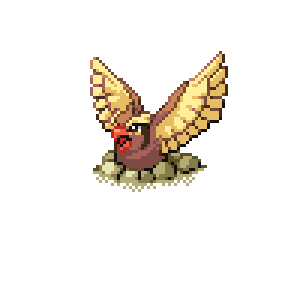
Pidtrio are a common nuisance for farmers because Pidtrio love to eat the roots of crops. Whenever they need to make an escape, they carry a clump of dirt that protects their underside while they fly away.
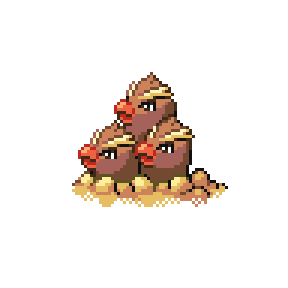
The chimeric body of Pidta makes them well suited for riding. They are particularly gentle with children, and reduce the heat of their flames to make sure their riders are comfortable.

Pidash love to help people realize the wonder of the sky above them. They are happy to give rides to children who want one and are always gentle when they have a child on their back.
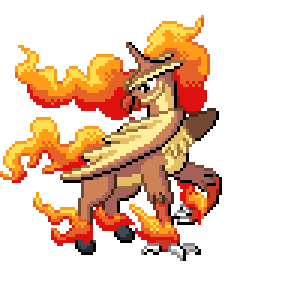
Pidtortle sweep sand into the eyes of large predators with their tail. This gives them enough time to tuck themselves into their shell, which can endure claws and talons from their predators.
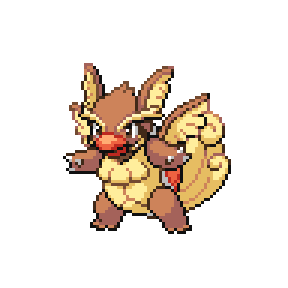
Piduo have two heads that often disagree with each other on which direction to travel. Their taloned feet never seem to trip on themselves despite the conflicting signals from the two heads.

Pidtoise rely on their massive cannons to hunt for food because their wings are too small to fly with. Fortunately, they are also too big for predators to take down without the risk of getting soaked in water.

It releases noxious fumes to scare away intruders to its home, which causes a coughing fit when inhaled. A traveler will make an offering of a Clever Feather to placate it before continuing on.

Feradon has a difficult time chasing after foes because of its short, bulky legs. Instead, Feradon lies in wait until its prey approaches; its massive forehead slams into the prey before clamping down with its bone-crushing jaws.
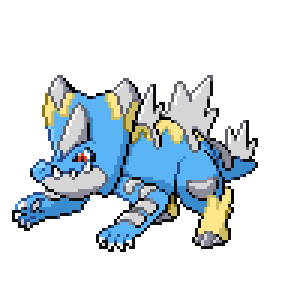
Feraduck are ferocious creatures that can leave painful scars with a single bite. They need to trim their teeth often to prevent pressure from building within their jaws, which can lead to a headache.

Sendle take turns guarding their burrows when it is time to sleep, as thieves are known to take berries from them. They attack thieves using their stinger, which oozes with a venomous gel.
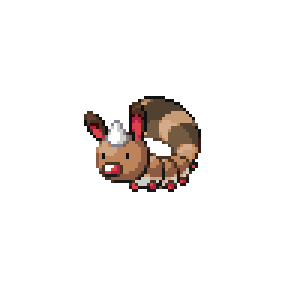
They stand guard outside their burrows, their keen eyes able to spot predators using camouflage in the forest. When spotted, Sengey will pretend to be sick and limp away, so that they lure the predator away before making a quick retreat back home.

Senba are a pedestrian sight at many parks in the Pokémon world. It scampers in small groups to solicit petting from parkgoers.
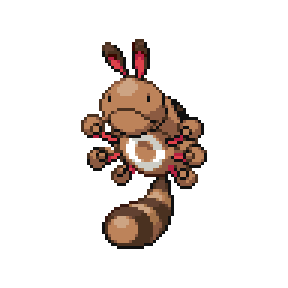
Senchu are still developing their ability to harness electricity and go to collect berries when they are not practicing. When they are foraging, they leave behind the Iapapa Berries because they are incredibly sour.

Senbuff love to forage for berries, but they are still learning which berries they might enjoy. When they bite into the bitter Aguav Berry, they get incredibly upset and cry.
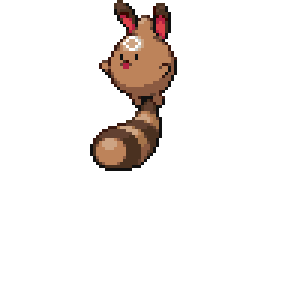
Senpi often end up in traps meant for Rattata, leaving them vulnerable to predators and unable to move. Scientists are developing mechanisms that let Senpi escape while still catching Rattata.
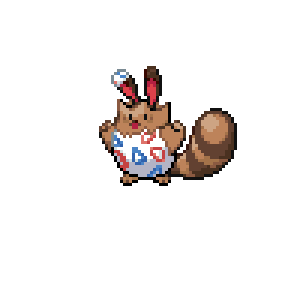
They wait until nighttime to dig around a camper's backpack, rummaging for berries and other snacks. When spotted, Sentata can run away before a camper has time to stand.
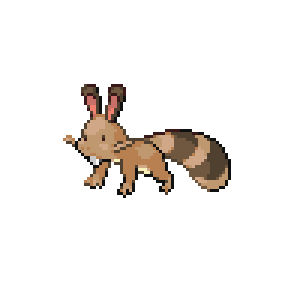
Senkrow swoop down city boulevards at night to eat various snacks that people drop. From ice cream to popcorn kernels, they keep themselves well fed by the scraps people drop until they rest at dawn.
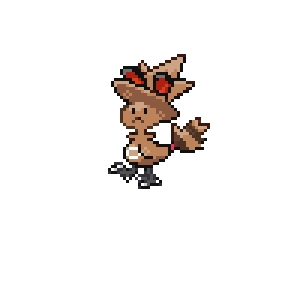
Sensaur produce earthy spores from the bulb on their back that can be brewed into an herbal tea that keeps people alert. Many Sensaur are kept as partners for guards because they can spot Pokémon that people cannot.

Sentress hang from branches and wave their auburn-colored tails to communicate with each other. They are able to coordinate explosions that scare predators from their nests.
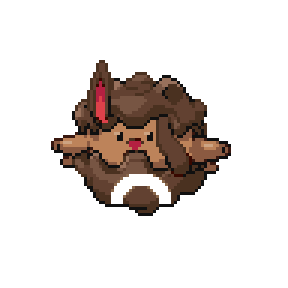
Senckle scuttle across the forest floor to gather berries, except for the excessively sweet Mago Berry. They ferment berries within their shell to bring out the complex flavors that the berries have.
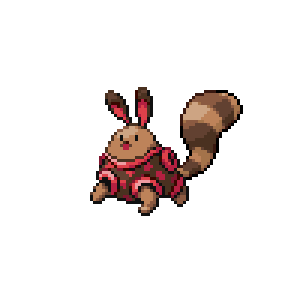
Sensel typically abandon the hidden berries they have whenever they are caught by Trainers. However, offering them a Pinap Berry convinces some to lead Trainers back to their stash.
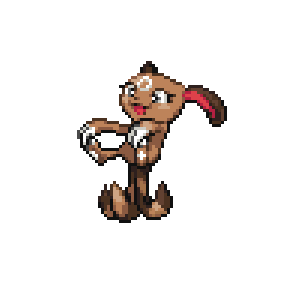
Senans stores massive amounts of Bluk Berries in their body by unhinging their jaws and swallowing entire piles of berries whole. The blobs of sludge they release from their mouths are stained a deep violet from the berries they eat.
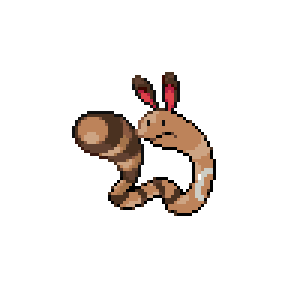
Senpy go rolling down hills after eating a meal of berries to burn off excess fat. Kids often race against them on bicycles as a means of entertainment.
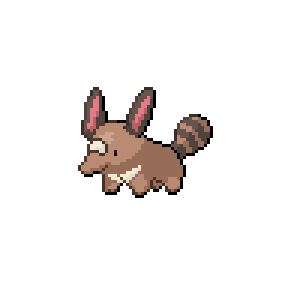
They practice producing sparks by tapping their hands together. When they are not developing their control over electricity, they search for a deliciously healthy Sitrus Berry to snack on.
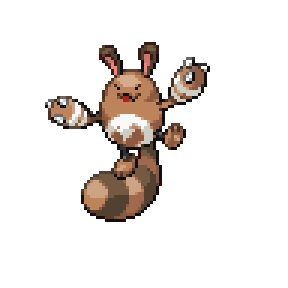
Senlax gain most of their bulk from eating large quantities of berries. They are often so heavy that they cannot balance on their tails. They are picky with the Berries they eat and refuse to eat sour ones like a Nomel Berry.
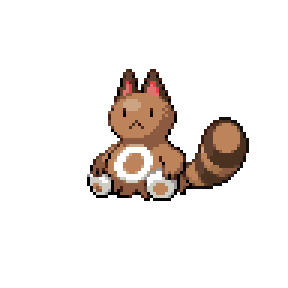
Senlia love spending time with their Trainer and enjoy sharing berries that they find while foraging. They particularly enjoy Qualot Berries because of their smooth texture, so sharing one with their Trainer is a sign of mutual affection.
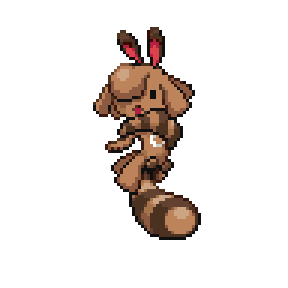
Senpunny have luxuriously plush fur that makes them desirable to rich socialites. They are fed Tamato Berries because the spice acts as a natural antiperspirant, which allows them to hold more perfume in their fur.

Senolu balance on their tails whenever they fight against other Pokémon because it gives them a greater range of movement. When they are losing a fight, they bite down on a Ganlon Berry to help them take a few more hits.
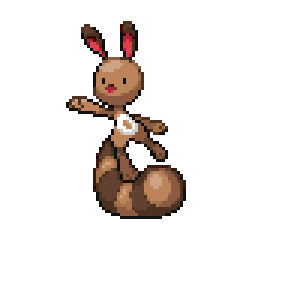
Senkoth sleep for 20 hours a day and keep watch for the other 4 hours. They often live in groups of 6 to ensure that they won't get eaten in their sleep.
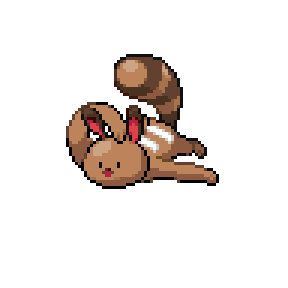
Sendew share nutrients with other plants around them by connecting their roots together. They are especially fond of Pomeg Berries and will propagate their seeds to grow more Pomeg Berries.
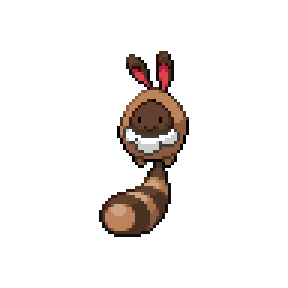
Seneary have plush, hypoallergenic fur that makes them desirable as pets. They are fed Cornn Berries because it is believed that the berries make Seneary shed less.
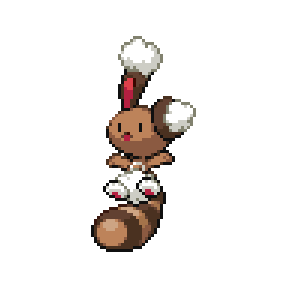
Sensian are flexible creatures that can fit in tight spaces. Their unique collarbone allows them to squeeze in places most Pokémon are unable to fit into, such as gaps between furniture or openings in fences.
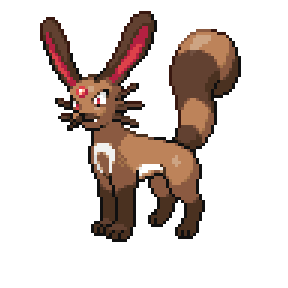
Sensian are naturally curious creatures and will always investigate new objects given to them. They also love to explore the world around them, as they climb trees and leap across rivers to find new places to adventure into.
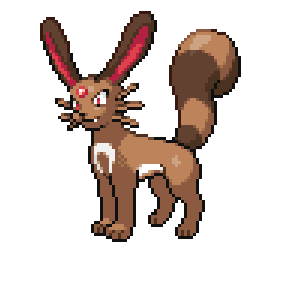
Senduck have tails that seem to act on their own and often rub against the back of their head. This often leads to an itch that cannot be scratched effectively and leads to them getting a headache.

Senwag are almost always swimming because they enjoy the sensation of moving water. One of the few times they stop swimming is when they eat Nanab Berries, which allows Trainers just enough time to catch them.
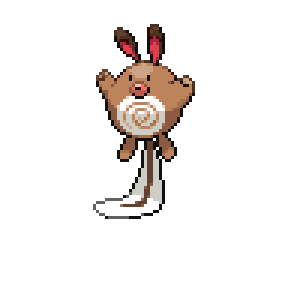
Senbra scavenge for berries of many types, but most do not like the taste of the Figy Berry because of the spicy flavor. They harness telekinesis to levitate berries across rivers to avoid getting wet.
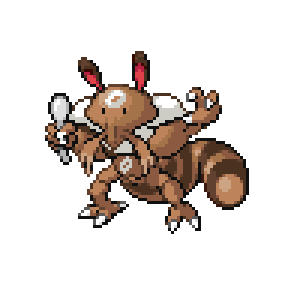
Senta take turns sleeping upright, making it nearly impossible for predators to determine who is awake. If one of their herd members spots a predator, a loud neigh awakens a stampede to trample the unlucky foe.
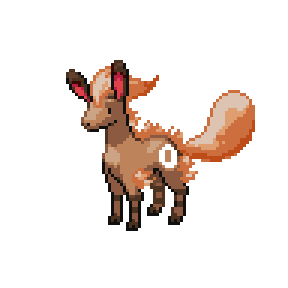
Seneel eat lots of Pamtre Berries because they can readily grow along beaches. They have a superb sense of balance and can juggle berries while standing on their stomach or tail.
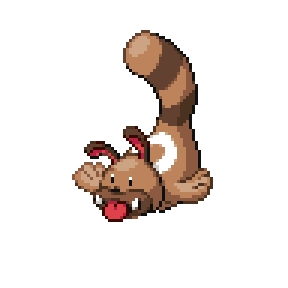
Furorb exhibit a peculiar behavior of rolling in tandem with one another in a straight line. If this chain of movement is interrupted, they may end up exploding from frustration.

Furmie is a sprawling mess of tentacles that converge into a central point. The gem glows brightly whenever it is hungry, and it stretches to grab nearby berries to eat.

Furgeot will present their children to their Trainer when the baby Pokémon hatch out of an egg. If the Trainer does not embrace the baby Pokémon, Furgeot will shun and refuse to feed their offspring.

Fursel hides in tall grass outside campsites and waits for the right opportunity to steal food. Its hooked claws allow it to latch onto picnic baskets without damaging the food inside.
