Page 4 / 6 of 5204 pokedex entries by quackquackattack.
Jigglyto sings the same ancient melodies that were present in prehistoric times. It sees no need to innovate or change the lullabies it sings, even when Pokémon no longer fall asleep listening to it.

Jigglyret are vigilant creatures and sing songs while they keep watch in front of their dens. If they build dens too close to each other, they put themselves at risk of falling asleep.

Jigglyowl sings with a prosaic voice that sounds closer to speech than music. People who listen to its song fall asleep out of boredom. Some Pokémon come to listen to its song at the same time every night to ensure they fall asleep.

Jigglyotto chirps out a lullaby every sunset that helps other Pokémon fall asleep. Once they are asleep, Jigglyotto swoops down from tree branches to pick off bug Pokémon that are not in their burrows.

Jigglybuff have weak muscles in their arms, so they rely on their musical talent to escape danger. Their adorable babbling beguiles many Trainers into keeping them.

As they enter Pokémon contests, Trainers may give them a Pink Scarf for good luck. They flaunt their shells to emphasize their rotund form, and the scarf helps give them a rounder, cuter look.

Jigglysel rely on their cute appearance to get themselves out of trouble. When they are not looking pitiful, they can be found causing havoc, tearing up furniture and making a mess.

Jigglyans are trained by musicians to perform short songs. They can be difficult to work with because they frequently get hungry during practice.
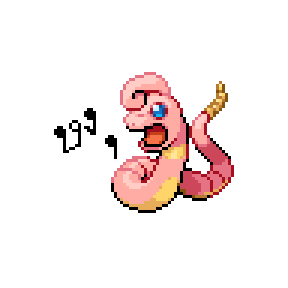
Jigglygon2 play music from their bodies by connecting to music streaming services. Many of the songs they choose to play are remixes or parodies of existing songs.

Jigglyran sing soft melodies to lull larger Pokémon into slumber before shuffling past. If the Pokémon wakes up before Jigglyran can sneak past, then they attack with their venomous horn.

Jigglyrino have a sharp, venomous horn that is capable of taking down a Rhyhorn. They prefer to lull larger Pokémon to sleep instead of tackling them head-on.
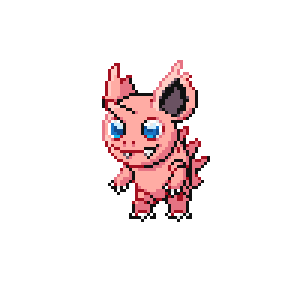
Jigglybat have a resonant voice that they rely on for echolocation. These lullabies they sing echo through caves and put other Pokémon to sleep.
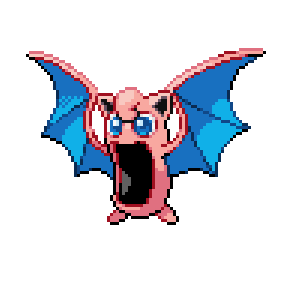
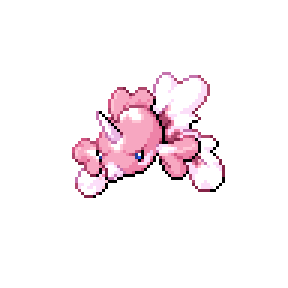
Jigglylu are tolerated in nests of other Pokémon because their soft bodies and fluffy wings make them comfy to sleep with. They also sing lullabies that make for a pleasant sleeping experience.

Jigglywear are soft, cuddly creatures that sing whenever someone presses the button on their stomach. Many aid caregivers at childcare facilities with putting children to sleep.

Jigglylow sings a soft lullaby to lull Pokémon to sleep. Once they are certain other Pokémon are asleep, they snack on berries without worrying about Electric-type Pokémon zapping them.
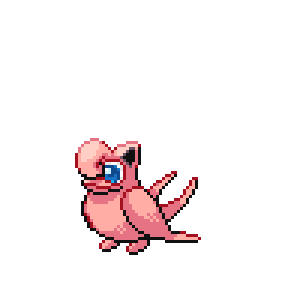
Jigglywellow lulls other Pokémon to sleep with their melodic singing. They make sure that other Pokémon are sleeping before eating to avoid the risk of getting hurt by a Rock-type Pokémon.
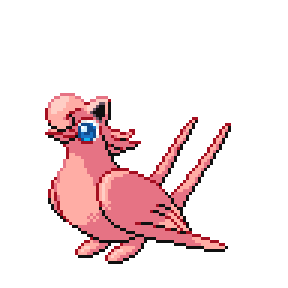
Jigglyduck love to sing but often forget their songs put other Pokémon to sleep. Once Jigglyduck realize their audience is asleep, they move on to another crowd.
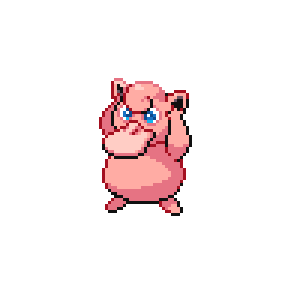
Jigglylithe keep their fur tidy by rubbing their fur against rocks, which leaves tufts of fur behind. They practice their musical howling when they are not grooming themselves.

Jigglywag inhale lots of air into their stomachs before a performance. Many audience members are mesmerized by the pattern on their bellies and the gentle song that Jigglywag sing, which causes most to fall asleep.

Once Jigglypoke enters a colony of its kind, it is rarely able to leave. This is because a single yawn can cascade into a cacophony that puts the entire colony to sleep.

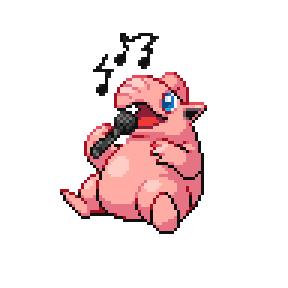
Jigglyfetchd sing soft lullabies into the microphone they carry with them, causing other Pokémon around them to fall into a deep sleep. Despite their general jovial mood, they become hostile if another Pokémon tries to use their microphone.

Jigglyfetchd love to sing with their microphone, even if their songs are too loud to function as lullabies. They can sing for hours at a time and only stop once their microphone needs a charge.

Jigglyzee are able to manipulate dreams with their lullabies. Many Jigglyzee are trained by scientists to help people enter into lucid dreams for research studies.
Arsaur store toxic spores within their body and release them through the holes in their body. These concentrated bursts of spores can knock out an angry Mankey.
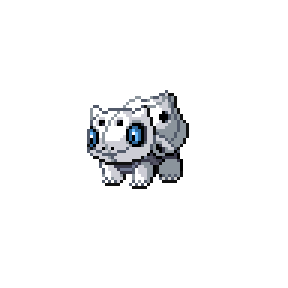
Arpie eats leaves from bushes near factories and are capable of consuming the ash-colored soot that ends up clinging to leaves. Their powerful stomachs neutralize the poisonous soot to convert it into nutrients.
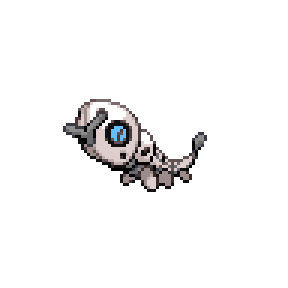
Arode were once trained by soldiers to explode after crossing a battlefield. The force of the explosion can create tremors in the nearby area.

Aros have a metallic shell around their body that protects them from large predators. Their sharp hooves are made of steel, which can cause deep cuts when they kick other Pokémon.
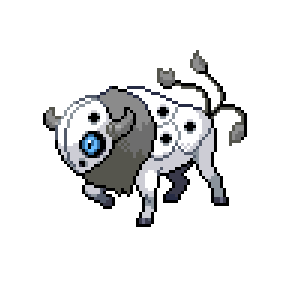
Arsaur were once trained to release spores through the holes in their body to pacify soldiers. The practice is now banned in many places, so they often find themselves in sanctuaries where they live peacefully.

Arsaur release pollen through the holes in their body to put foes to sleep. Their metallic bodies make them impervious to the effects of poison, so they can freely produce as much pollen as they want.
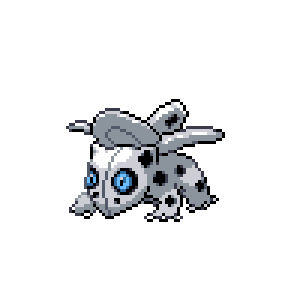
Arsaur store pollen in their bulbs, which is released in small bursts through the holes in their body. They release metallic vines from their body to defend themselves against dangerous Pokémon.
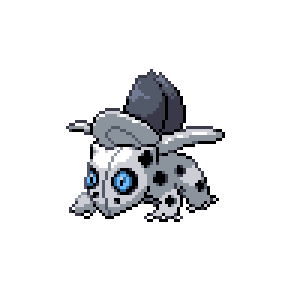
Arsaur were once part of the army as a specialized unit that released noxious pollen into the air through the holes in their body. The large cloud of pollen would force soldiers into a sleepy stupor.
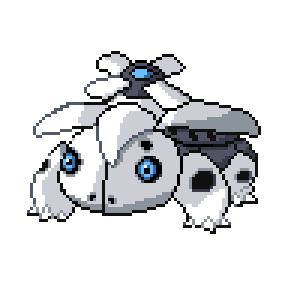
Archar often get into trouble because they feel empowered by the mask they wear. If they somehow manage to lose their mask, their insecurity turns into wrath as they violently scratch at anyone nearby.
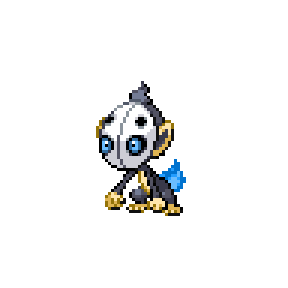
Aron crawl through caves in search of deposits of metal ore. The rounded metal plates on their body slowly grow more jagged as they continue to consume metal ore.
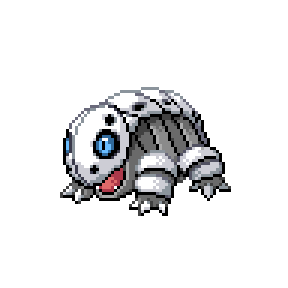
Arling has heavy wings made of steel that prevent it from taking flight. Instead, it burrows just below the ground and eats plant roots.
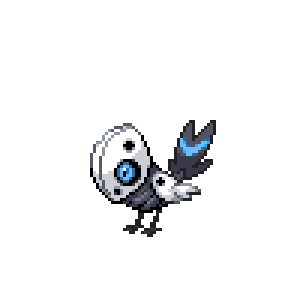
Arinder can deflect rocks thrown at it by rowdy kids. This is because its metallic wings cause the rocks to bounce off harmlessly.
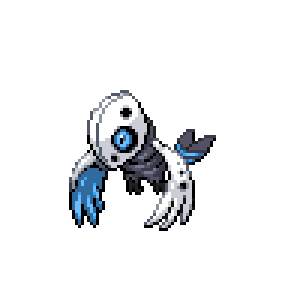
Armur are very shy when it comes their voice, so a kind Trainer needs to help them gain the confidence to release their echoing cries. Their voice echoes within their metallic body and can shatter glass when they hit the right frequency.
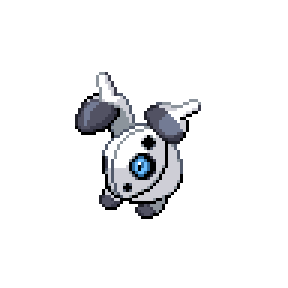
Ardred release echoing cries from their body by having the sound vibrate in their metallic shell. They cries can be heard across several football fields without much difficulty.
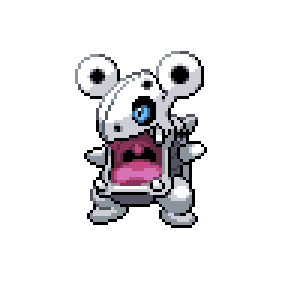
Artoise can easily endure the force of an Electrode explosion. These walking behemoths are difficult to take down because of their sheer size.
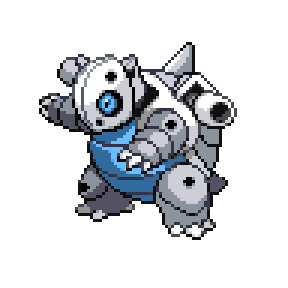
Lairos are covered with metallic plates that deflect attacks from claws and talons. The metallic plate on their head extends further than their vestigial horns, so some people shave their horns into ornate shapes.

Their tails resemble a morningstar or flail, which they use to slam into opponents in battle. Each tail is able to act independently to smash rocks or other obstacles in quick succession.

Lairflame are an apex predator that eat large rodent Pokémon such as Raticate. Their metallic wings cannot be pierced by a Raticate's teeth, so the rodent Pokémon have little to no defenses against this avian Pokémon.
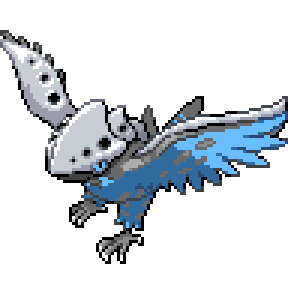
Lairon have tough exoskeletons that cling tightly to their bodies. They are ravenous creatures that need lots of iron to expand their exoskeletons.
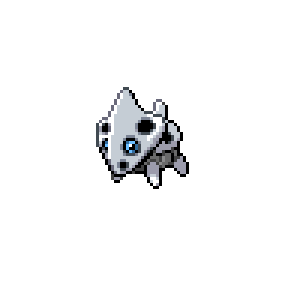
Lairnat are nocturnal creatures that search for exposed iron deposits deep within caves. They rely on glints of light from these deposits to determine if the ore is edible, leading them to consume other valuable metals as well.
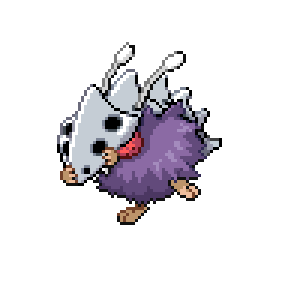
Traptoy have superb control over sandy climates and can harness their psychic powers to fling balls of sand at others. This only works while the sand is dry, as wet sand is too heavy for them to lift with telekinesis.
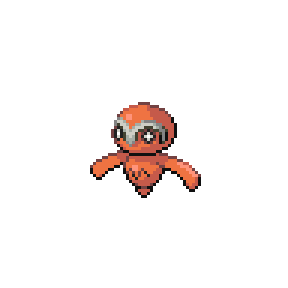
Vibramander needs to constantly keep sand swirling around its tail to survive. Any moisture in the air makes sand heavy, so it prefers arid climates where sand is light and abundant.
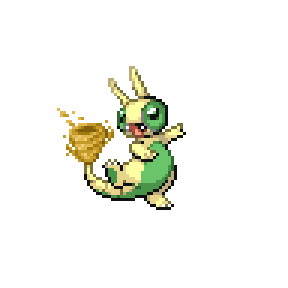
Feesaur have dull scales that make them unappetizing to predators. Being ignored by predators gives them ample time to cultivate seeds that grow underwater.

Feepod have dull scales on their cocoon that make them unappetizing to bird Pokémon. They hang from branches above the forest where they are ignored and left alone by most Trainers. They wobble with excitement whenever a Trainer notices them.

As meek and unassuming Pokémon, Feesea rarely call attention to themselves. To avoid predation, they squirt ink into a predator's eyes so that they can escape. Many are naturally shocked when Trainers want them to join their team.

Feesaur spend so much time ignored by Trainers that whenever one approaches them with genuine interest, they become flustered and confused. Once part of a team, Feesaur will show affection by hugging their Trainer with vines.
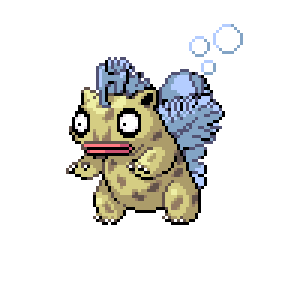
Feerow have a repulsive appearance that resembles a freshly hatched Flying-type Pokémon. Their fuzzy bodies make them unpopular for Trainers, especially since they have difficulty flying.

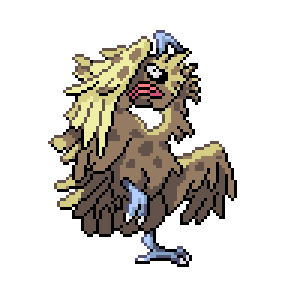
Feerow have speckled wings that make them seem like sickly Pokémon. Their default expression rests in a sad frown that scares baby Pokémon, so they try to cover their face when communicating with other Pokémon.
Feegon2 appear on PCs with a cooldown marker and a counter if there are more than one Feegon2. People can pick up Feegon2 with their cursor to move them and can shift them from one box to another.
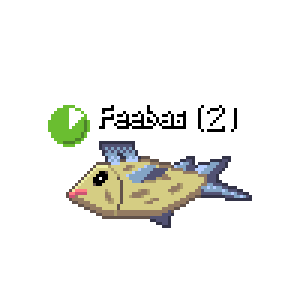
For people who can afford large water tanks, Feeleep are often chosen to purify the water. By feeding off specks of food and algae, they ensure that other Pokémon in a tank have clean, pure water to drink from.
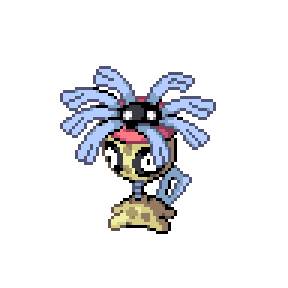
Feetle are covered in scales that are as tough as their shell. They are regarded as ugly Pokémon because their scales are a dull and unappealing color.
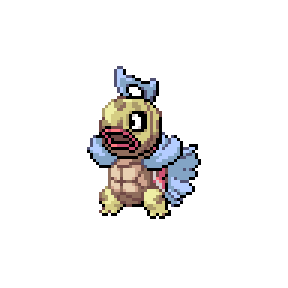
Bapardos attacks by headbutting its opponent, which is made possible with its reinforced head crest. Its large leg muscles also allow it to wind up power before unleashing a powerful slam.
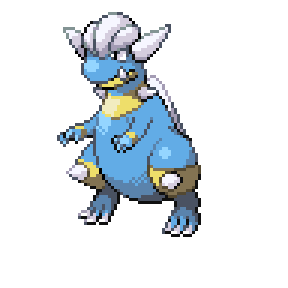
Babat love to fly in the sky and perform aerial maneuvers for the sheer thrill of the wind against their face. They release happy little high-pitched screeches whenever they perform a successful maneuver.
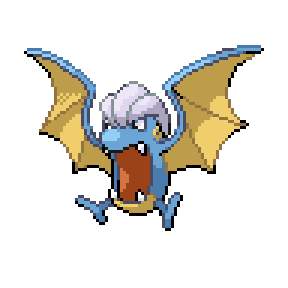
Barunt in the wild duel each other by ramming their heads together until one gives up. Whenever they achieve victory, they release a triumphant roar that can be heard from a mile away.
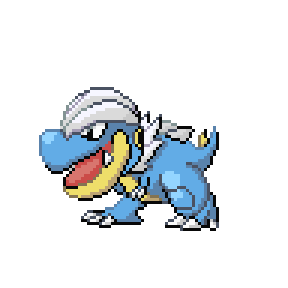
Shelbone often feel empowered to bully other Pokémon because they have thick, protective plates around their head. When they are inevitably humbled by another Pokémon, they often throw a tantrum to release their frustration.
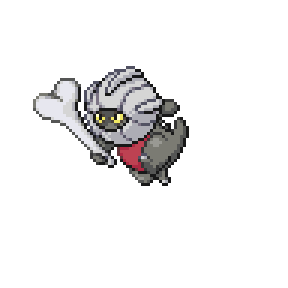
Klisea consist of a few basic parts, most notably the turnkey on their back. Young engineers are often tasked with maintaining Klisea as part of their studies, replacing worn components as necessary.

Klidile have a unique mechanism in their mouths that functions like a mousetrap. When pressure is applied to the tongue, they snap their mouths closed to ensnare food or limbs.
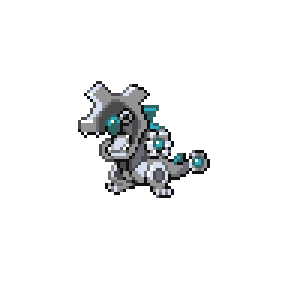
They are known to float using an Air Balloon, helping them avoid damage from sand, dirt, and grit. They work in factory facilities that are recovering from toxic spills, as they double as backup generators.

Kliffy generate electricity by rotating the gear around their neck. They work in factories where they power large machinery that produces car parts.
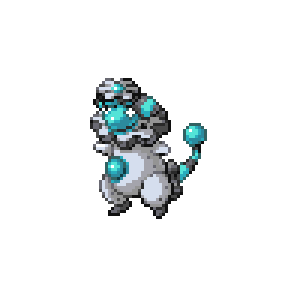
Kli Jr. work alongside toymakers to produce fun contraptions to capture the attention of children. On the rare occasion that there is no work, they juggle gears to pass the time.

Klicko works alongside people in factories and construction sites, where its small size allows it to reach into tight spaces. It enjoys the tactile sensation work provides, needing reminders from its Trainer to rest.

Klidum operates heavy machinery by using its psychic power, its advanced calculations allowing it to produce precise movements. It helps researchers working with corrosive acids to discover and produce new chemicals.

Kliloon floats above wild habitats to scan biometric information for scientists. Its metallic shell stabilizes its movement in tough weather conditions, which makes scanning easier.
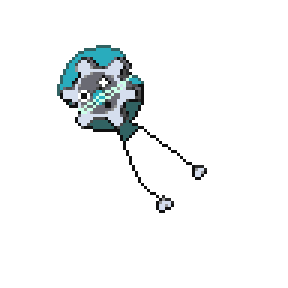
Klidisc have a special pattern on each tooth on its gears that can be pressed onto sheets of metal. Couples often press one of these patterns onto a coin to show their love for each other, a trend popularized by a scene from a television show.
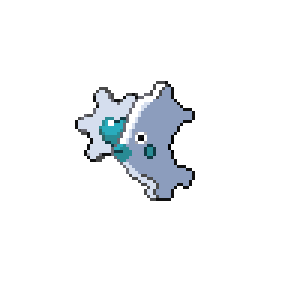
Klaraid has superb precision when shooting bursts of water because of the gears on its head. By rapidly making small adjustments to its aim, Klaraid can accurately land strikes from several kilometers away.

Klallery moves through tough terrain with the treads on its body. The gears on either side of its head make minute adjustments to its aim before firing with superb precision.
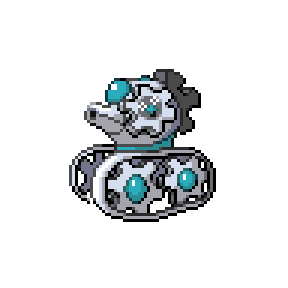
Klagon2 work inside computers to ensure that the time remains consistent and synchronized with other devices. Whenever their Trainer wants to backdate a document, Klagon2 rapidly spin their body to give access to the old date.
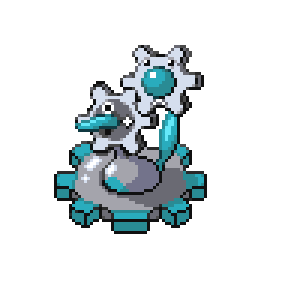
Klaizard source all of their fiery powers from the flame at their tail, which is caged to protect it from being extinguished. The gears on their back rapidly spin whenever they take flight to propel them into the sky.

Klatle rapidly spin the gears in their body to squirt water from their mouths. The amount of water produced is proportional to the speed at which the gears spin.

Zotto disguise themselves as the chicks of other Flying-type Pokémon to steal meals from their children. Once they have eaten and the parents fly away, Zotto flee before they are reprimanded.
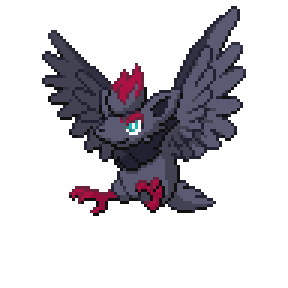
Zorow travel in flocks to protect themselves from bigger Pokémon and attack as a team when one is threatened. They are known to disguise themselves as Spearow to obtain breadcrumbs at parks.
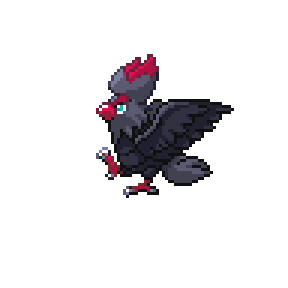
Zochu love to disguise themselves as the beloved Pikachu of other Trainers. Many fights have started when Zochu steal pets from a Trainer's Pikachu, often ending with a bitter shock.
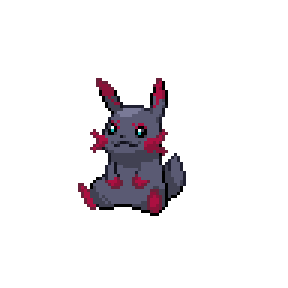
Zotad disguise themself as a friendly Pokémon to lure others onto their back. Once their target is secured on their back, they revert back to their true form and swim out to the middle of lakes, demanding juicy berries in exchange for safety.
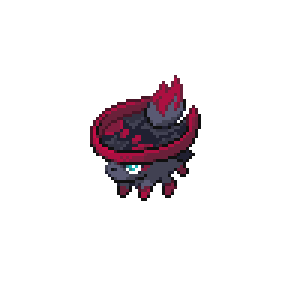
Charyu release so much body heat from their hot bodies that they draw the attention of cold-blooded Pokémon. Many cold-blooded Pokémon are too shy to hug Charyu, but the few that do find that they both enjoy the experience.
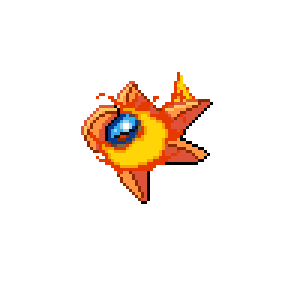
The age of a Charnair can be determined by measuring the length of the flame on their tail. The flame grows each time they shed their scales, which can be ground into a powder that is used in traditional medicine.
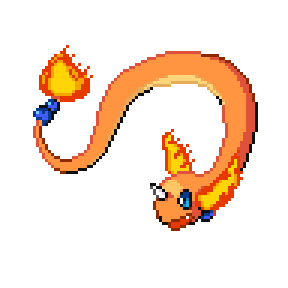
Chardile are energetic creatures that sprout flames from their back and love to chase other Pokémon. They also love to bite down on anything they are presented with, and training them to suppress this urge can be difficult.
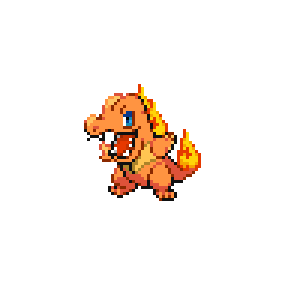
Chardile can be difficult to train because of their urge to bite down on anything in front of them. They often feel remorseful after biting another Pokémon or their Trainer.

Chardile can produce embers from their mouth to roast berries before they eat them. Their urge to bite whatever is in front of them can momentarily be suppressed by giving them berries to roast.

Charbuff sneeze out embers when they are sick. Each time they sneeze, so much air is expelled from their body that it causes their eyes to water.
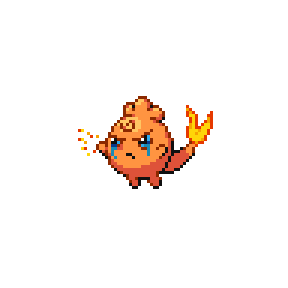
Charpip set small patches of grass on fire to produce smoke. They ride on these clouds of smoke to propel themselves into the sky.
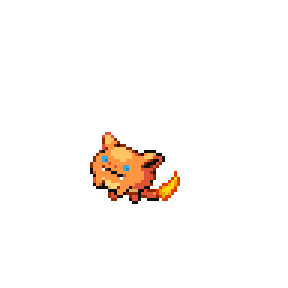
Charpip huddle into small groups to produce plumes of smoke. Once enough smoke has been made, they ride the rising smoke into the sky.

Charloom are most active during summer, as the hot temperatures and scorching hot sun make them excited. They enjoy playing during these periods of excitement and especially love to play tag with others.
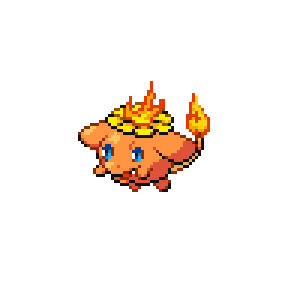
Chartress maintain a stable internal temperature by getting a constant supply of fresh air for their flames. Many campers bring Chartress along to keep themselves warm and comfortable during cold nights outside.
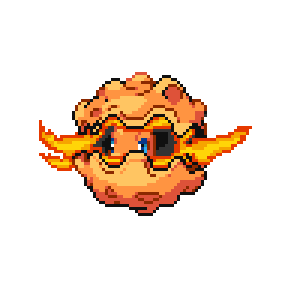
Charow often go out of their way to burn down other Pokémon's nests, especially if they appear tidier. The only thing that dampens their temper is the rain, which causes them to stay put to avoid extinguishing their tail flame.
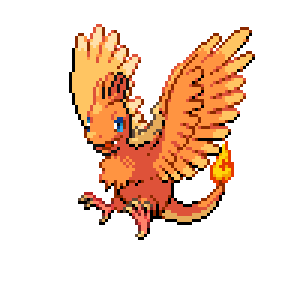
Charmory have fiery hot talons that can sear through cocoons of Bug-type Pokémon. Their wings burn through whatever they touch, which can result in wildfires if they light tree leaves on fire.
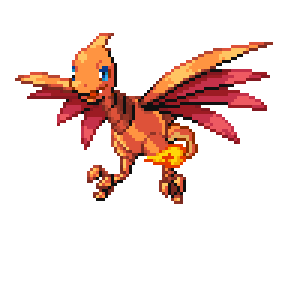
Charphan are energetic yet maladroit creatures that set fire to nearby bushes whenever they roll down hills. They are the source of many wildfires.
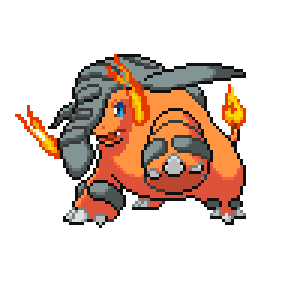
Charbok scares away other Pokémon from its territory with the pattern on its hood. It relies on this fear to protect its territory because its fire-breathing abilities are still developing.
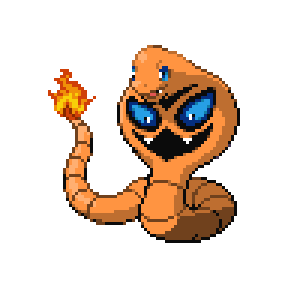
Chartar desiccates moisture from the air by kicking up sand to wick water from plants and small ponds. Its tail is extremely sensitive to humidity, so it creates sandstorms wherever it goes.
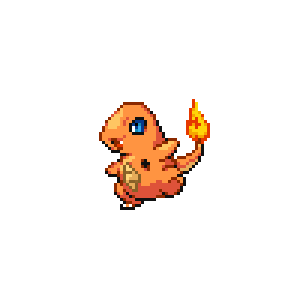
Chartar have shells that are hot to the touch that absorb moisture in the air. Excess moisture rapidly cools down their body, which can cause their cocoon to crack if submerged in water.
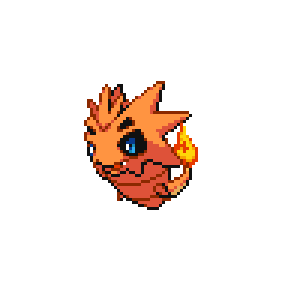
Charitar do their best to be gentle, but their raging temper often leads to scary tantrums. Many end up as loners because other Pokémon are scared of them.
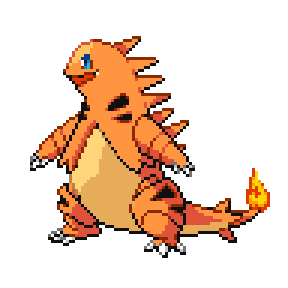
Charts have a difficult time managing their own emotions, especially when they are angry. If their Trainer is also angry with them, this creates a feedback loop of escalation until their Trainer calms down.
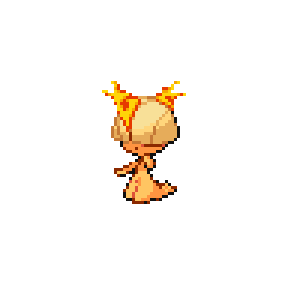
If their Trainer is angry, Charts burst into flames in an attempt to mimic how their Trainer feels. Learning how to manage one's emotions is vital to keeping both the Trainer and Charts safe.

Charlia rely on the energy of their Trainer to keep their flames moving. If their Trainer is full of eager excitement, their flames grow extra strong as they feed off the excitement.
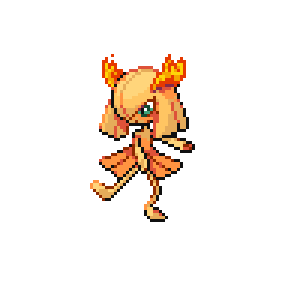
Charleep manifests flaming tentacles to roast prey and bring them to its mouth. Whatever is too charred to consume is spit back out to fertilize the area around it.
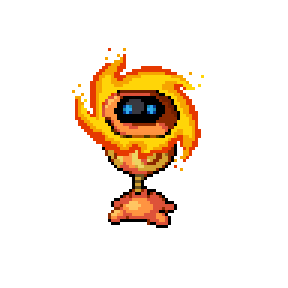
Chartom can bake cookies and other confectioneries like any other modern appliance, but will make wild adjustments to the temperature if they feel upset. Treating them with respect ensures that your baked goods come out looking delicious.
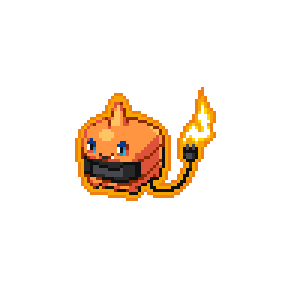
Charwick train alongside their kin to learn the discipline necessary to keep streets bright at night. In their current state, many lack the stamina to last more than four hours.
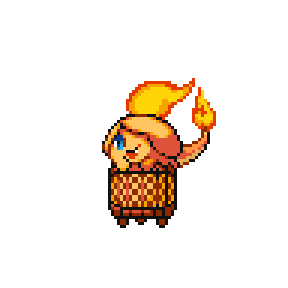
Charpix experiences pain whenever any of its tails are put out, so it avoids places where there is a lot of water. It spends a long time carefully grooming each of its tails that it rarely has time to play with other Pokémon.
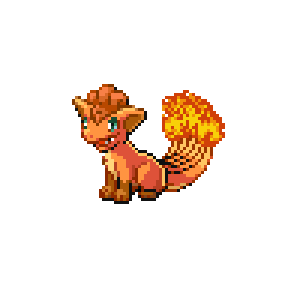
Charoth are incredibly active Pokémon but lose focus just as easily. Even training them to produce embers is difficult as their attention veers off to something unrelated.
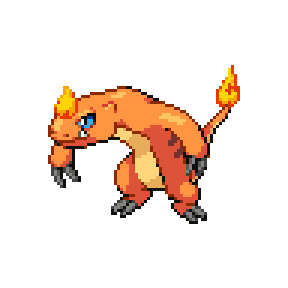
Charoth are quick to anger but get bored just as easily. Hiding from Charoth whenever they are upset allows many Trainers to escape their fiery wrath.

Charon live atop active volcanoes where they shuffle towards cooling lava. They crush and rip into volcanic rocks with their claws until they are edible shards.
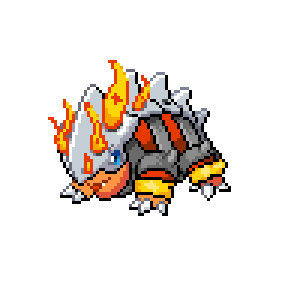
Charsis are made of a flammable gel that instantly ignites when separated from the main body. This high reactivity makes studying Charsis nearly impossible.
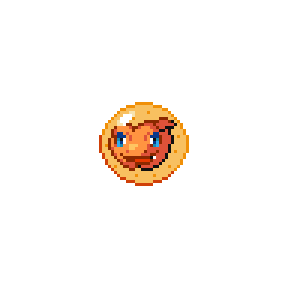
Charbat are incredible Bug-type hunters that sear their prey with flaming drool from their gaping maw. They help keep wild populations of Caterpie and Weedle under control.
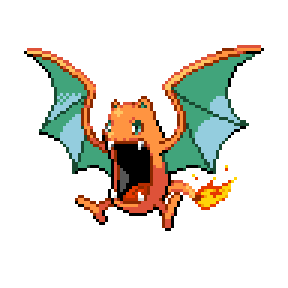
Charunt have a keen sense of smell due to the large nasal cavities in their skulls, allowing them to pick up scents from long distances. They hunt small Flying-type Pokémon by ambushing them with fire, roasting their feathers before they fly away.
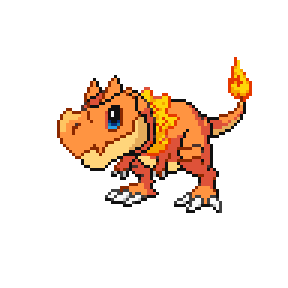
Charish relies on its brightly colored leaves to signal to predators that it is poisonous. It releases toxic spores that make it sneeze out embers, which in turn causes it to release more spores.
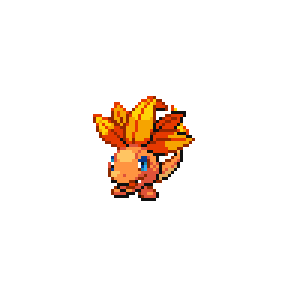
Charful are coated with a flame retardant that protects their body from their flaming tail. Unfortunately for many parents, cleaning Charful can be quite difficult because they cannot get wet without getting hurt.
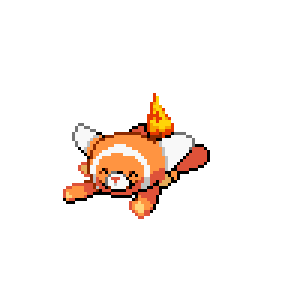
Charoc are naturally rebellious creatures that pull pranks on their Trainer whenever they are upset. They are particularly fond of setting fire to their Trainer's clothes, but they stop when their Trainer is in serious pain.

Charty wear flame resistant pants that can endure the fiery flames on their body. Their naivety is easy to exploit by a cunning opponent, who may snag them by the pants to pin them down.
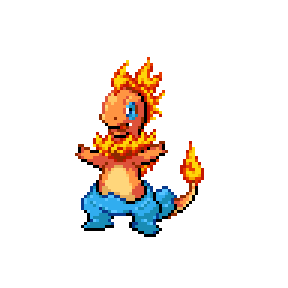
Poachers once hunted Charscoon for its spines, as they remain lit long after being cut from the body. These spines are made primarily of hardened silk and a condensed gel that serves as fuel to keep the flame lit.
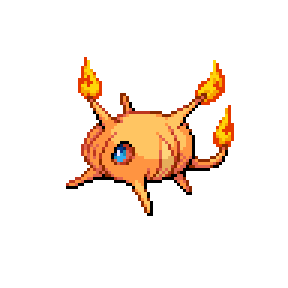
Charduck is in the paradoxical position of needing and fearing water. Its tail wicks moisture from the rest of its body, which causes headaches if dehydration is severe.
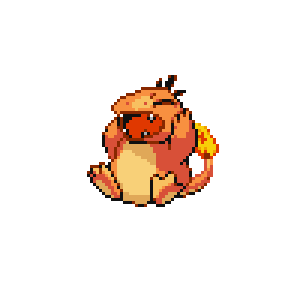
Chargoose have a certain hatefulness for long, scaly Pokémon and always have their flaming claws ready to strike. If their target escapes into water, they become incredibly irate and lash out at everything around them.
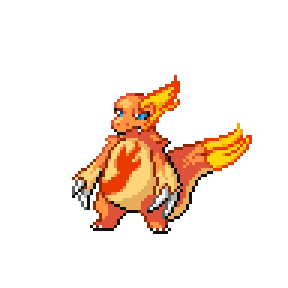
Charduck are terrified of water because they fear extinguishing their tail flame, yet become so dehydrated that they develop headaches. The pain can grow so severe that they can only scream.
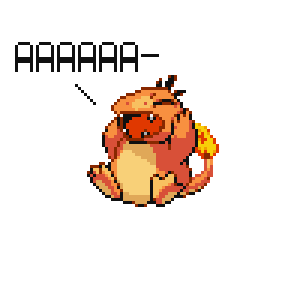
Despite having a flame that can remain lit underwater, Charduck have an instinctual desire to keep the flame from getting wet. This leads them to swim much slower than they are capable of.
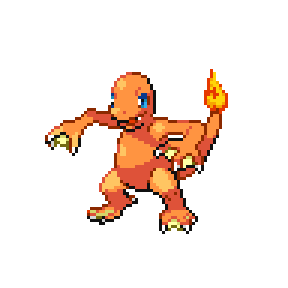
Charkey have a vehement hatred of water that borders on irrational. Whenever a person takes a sip of water or comes near them with it, they become enraged and lash out.
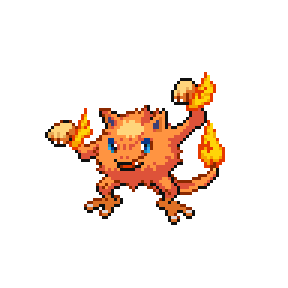
Charlithe are loyal Pokémon that will do anything its Trainer asks it to. This also makes them subject to neglect, as some Trainers forget to bring them inside when it is rainy or windy.
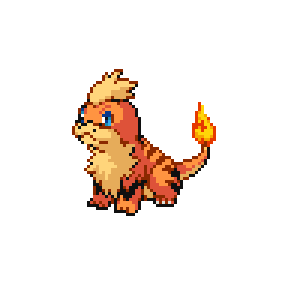
Charwag waddles near puddles, ponds, and lakes to find berries to eat. It loves to spew embers to char the berries before eating them.
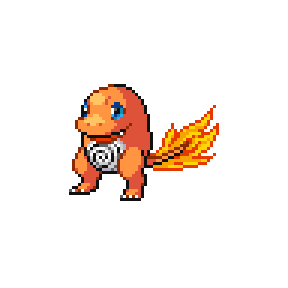
Chara are witty creatures that rely on their teleportation skills to avoid wet places. Whenever it rains, Chara teleport inside caves to avoid their flaming tail from being extinguished.
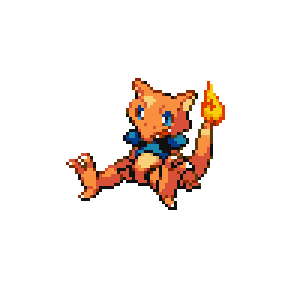
Even though Charchoke have small bodies, their fiery punches can blast holes into trees. The only thing holding them back is their lack of stamina, as it only takes a few punches before Charchoke get tired.
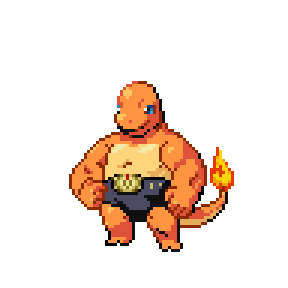
Many Chardude forge hammers alongside blacksmiths, as they heat and reheat steel to form the hammerhead. Their fists strike one side of the hammerhead to flatten the steel into shape.
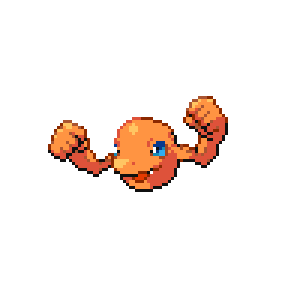
Many Charler assemble garden shears inside factories, heating blades before dousing them in oil. They then join the two blades together, creating a valuable tool for gardening.
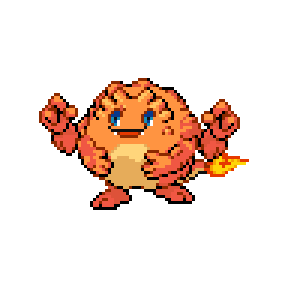
Charlem is a valuable asset for blacksmiths, as its control over fire allows it to mold steel into whatever shape is needed. Its large fists can also strike steel in lieu of a hammer.
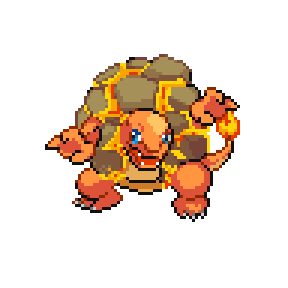
Charta trots in fields of grass alongside pack members. It sneezes out embers on occasion, which it stamps out to prevent wildfires.
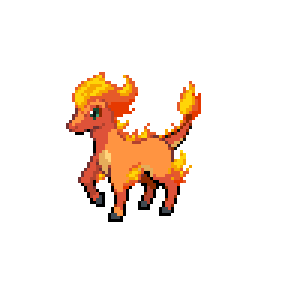
Chardash canters alongside its pack to stay safe. When confronted with a threat, it launches a kick with its flaming hooves.
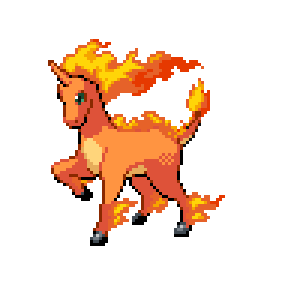
Charfetchd waves its fiery baton to appear menacing. It loses its composure when around water because it is scared of the fire being put out.
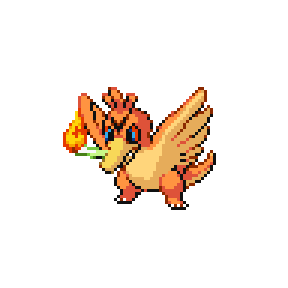
Charzee breathes out hypnotic flames that swirl in various patterns. People claim to have visions while staring at its flames, though concrete evidence for this is lacking.
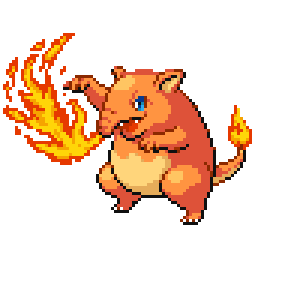
Wigglybone sing into their boney club to amplify their voice. Many Pokémon dream of their families after a soft, hushed lullaby from Wigglybone.
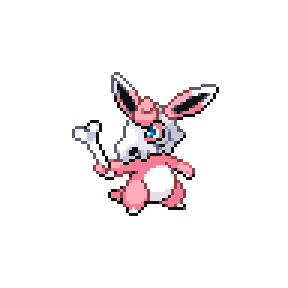
Wigglyrill can expand to twice their size to reach berries in trees nearby. By giving them a Pecha Berry, they can cure the poison they get whenever they bump into Beedrill stinger.

Wigglykern spend much of their time absorbing sunlight and moonlight. Once they are full of energy, they sing sweet lullabies that put Pokémon around them to sleep.
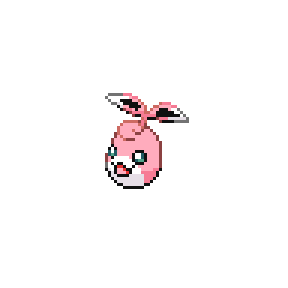
Wigglysel take great joy in singing in front of large audiences while performing tricks. One of the tricks they can perform while on stage revolves around popping glitter filled bubbles with their sharp claws.

Wigglypy can remove pollen and smoke from the air by sucking them in through their trunk, causing their stomachs to expand until they can release the air outside. Many people with asthma have a Wigglypy handy to help them breathe better.

Wigglyzone are capable of producing signals that turn off electronics around them. By modifying the strength of the signal, they can cause other Steel-type Pokémon to fall asleep too.
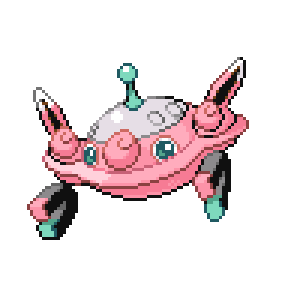
Wigglyslash spends most of the day plowing fields to make room for the next round of crops. It can be heard singing songs to help itself keep a steady rhythm when plowing fields.
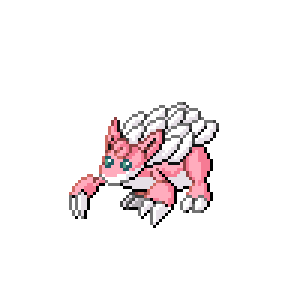
Wigglyking are generally peaceful Pokémon that sing lullabies to put other Pokémon to sleep. When they get angry, they lash out with their sharp claws and venomous horn, so Trainers try to avoid conflict around Wigglyking.

People enjoy having a Wigglypix around because of their soft, melon-colored fur and gentle voice. Wigglypix sing lullabies to their Trainers before curling up and falling asleep as well.

Wigglypede keep themselves inflated to ensure they have a good grip on whatever surface they roll on. Whenever they inhale too much air, they become overinflated and have a difficult time rolling with the low friction.
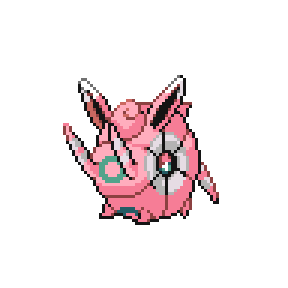
Wigglylass flutter through snowy landscapes searching for people to sing their lullaby to. As they sing, they release a frosty breath to keep a captive audience.
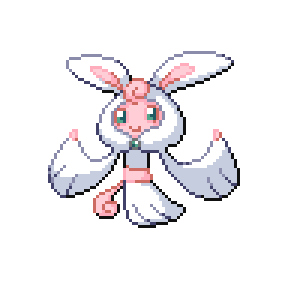
Wigglyful are made out of a special stretchy fabric that allows them to expand their bodies. Many can expand to the size of a sofa, making them the perfect size for Trainers to take an impromptu rest.
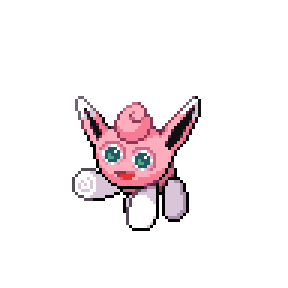
Wigglyaura have a large chest cavity that expands whenever they take a breath in. When they exhale, they release a flurry of snow that chills whatever it touches.
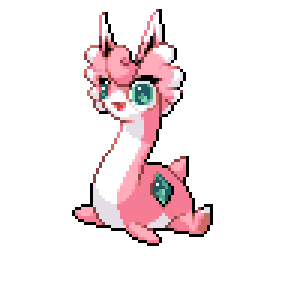
Wigglyduck suck in air into their stomach so that they can sing for long periods of time. When they inhale and hold their breath, sometimes they forget to release the air and give themselves headaches from the lack of fresh air.

One of the first things that Wigglytle learn is how to hold their breath. A newly hatched Wigglytle can hold their breath for three hours at a time, and this duration grows as they get older.

Wigglytortle can sing for hours at a time with a single breath. The majority of their shell is hollow to give them space to store air.
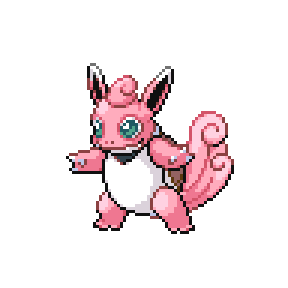
Bulow awakens every morning to the sun's rays on the bulb of its head. It is sensitive to changes in temperature and shivers when a cold breeze rushes by.
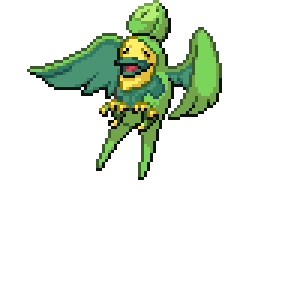
Buskit are self-sufficient creatures that nourish themselves with only lake water and sunlight. They siphon water through their legs, absorbing algae and minerals in the water to nourish the bulb on their head.

The arms of Buduck are wrapped around the bulb on their head, which makes scratching itches difficult. Since the bulb on their head has yet to bloom, they have few remedies for the headaches they experience.
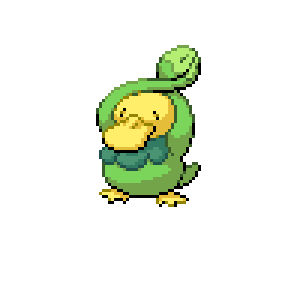
When they are submerged below the surface in the reeds, their tails stick up against bundles of lemongrass. This occasionally leads gatherers to sever their tail without meaning to do so.
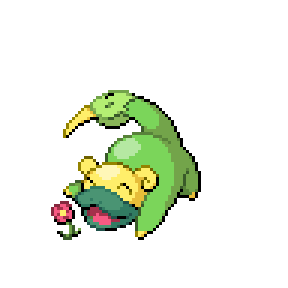
Various bouquets of flowers, from red roses to violet mallow, are collected together around the central core of a Rosecute. It avoids bug-infested areas of the forest, as they produce a naturally sweet scent.
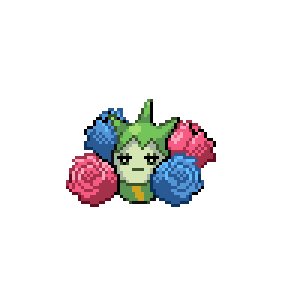
Rosenx are often chosen to cast in lead roles by theater directors to amaze audiences with their vibrant personality and colorful petals. Their only vice is their vanity, as they refuse to do work that they believe make them look boring.
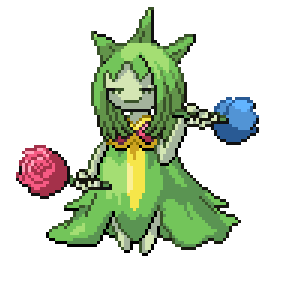
Rosefable are great friends of gardeners because they both nourish plants around them and ward off pests. During nights of the full moon, they spread a special pollen that accelerates the growth of plants around them.
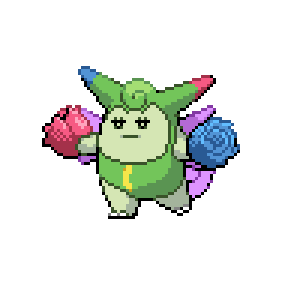
Lovers will opt to buy a Roseoom instead of a Small Bouquet for dates, as a Pokémon lasts much longer. Some people say that gardeners can tell how well a relationship is based on how healthy their Roseoom is.
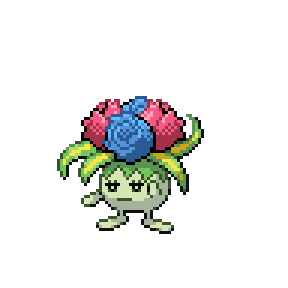
Roseduck constantly release petals from the flowers on their hands. Whenever they experience a headache, they put their face into their flowers to calm themselves down.
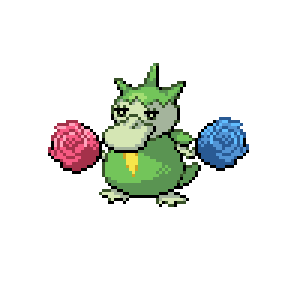
Driflnyte is frequently mistaken for trash and flees from people and Pokémon who want to pick it up. It releases quick bursts of air to make its escape.

Driflchum are fragile creatures that need the help of Colbur Berries to defend themselves against Dark-type Pokémon. When they are not searching for berries, they lure children into forests to kidnap them.
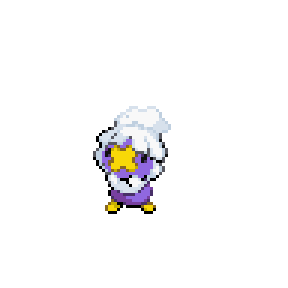
Drifldum wanders abandoned libraries and museums, tidying rooms and keeping them clean with its psychic power. It relaxes and falls asleep when an area is clean, as it no longer fears scolding from its former masters.

They are known to live in abandoned archery ranges, and their elastic skin cannot be penetrated by an arrow from a crossbow. They taunt people to shoot them, as they find the sensation pleasant.

Driflpin roam around graveyards and cemeteries, committed to protecting the people who rest there. They can be found in groups of three to five, as they take turns keeping vigil against hooligans or troublemakers.
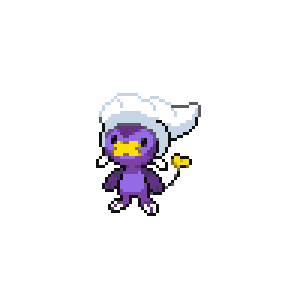
Driflgull regularly abduct children from beaches. Thankfully for many parents, their ugly, hastily-made nests lie in bushes close to those beaches, making finding lost children easy.
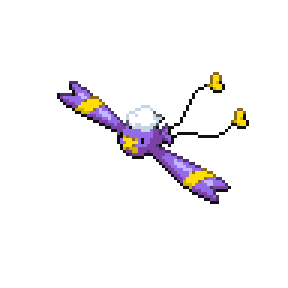
Whenever Driflskit fly, they stagger their movements to use all of their limbs, giving the illusion of climbing stairs in the middle of the air. Children who try to grab onto a Driflskit as they fly away may find themselves abducted.
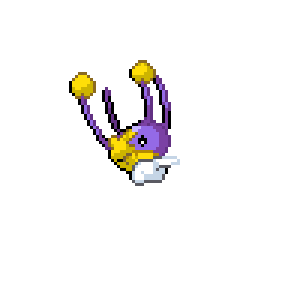
Driflin has a smooth, elastic, and glossy body that wrinkles when not fully inflated. To ensure its body is always taut, it traps the gas from meals to stretch its body.
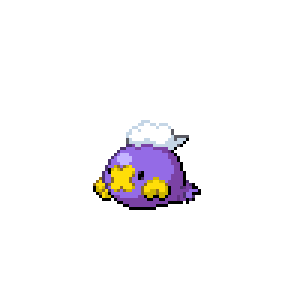
Driflviper's uniquely rubbery skin produces a high-pitched squeaking whenever it rubs against itself. In the presence of Zangoose, Driflviper wraps its body into the shape of a balloon Pokémon to set up an ambush, only uncurling to strike first.
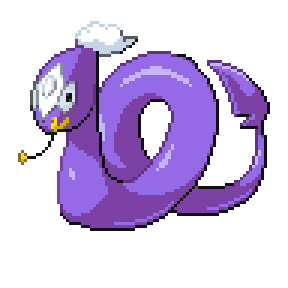
Driflphish rub their claws whenever they are upset, producing a grating rubbery squeak with each pass. Many aquatic Pokémon have few ways to defend themselves against the harsh noise, leading many to do whatever it takes to keep Driflphish appeased.
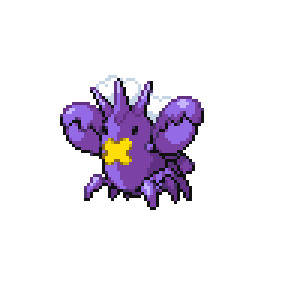
Bunkhan are kind and empathic creatures that are understanding of others, to a fault. Trainers often need to step in to help them act assertively.

Bunkhan kind and empathic creatures that are understanding of others, to a fault. Trainers often need to step in to help them act assertively.

Bunaw enjoy hugs and kisses but easily get excited. When they are overstimulated, they have a tendency to gnaw on whatever is available.

Bunrill has long ears that extend forward to strike opponents. Its tail stabilizes its footing, ensuring it does not get knocked over.

Bunrill jabs at its opponents with its ears, which have enough strength to break rocks. It also unnerves opponents with its cuteness, and grooms itself to ensure it always appears cute.
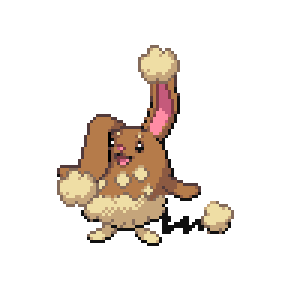
Bundreavus are said to drive people insane by producing hallucinations of cute, long-eared Pokémon. Once a person is out of range, the hallucinations fade away without a trace.

Bunrill lobs its heavy tail at opponents when it is in a fight. Its tail is deceptively heavy and can knock out small Pokémon with a hit or two.

Bunpix beguile Trainers into giving them treats by staring at them with their Baby-Doll Eyes. They stop Trainers from petting their fur if they refuse to give them a treat first.

While Bunat may not seem threatening at first, but their deleterious spores cause muscle weakness on contact. The swooning that occurs after a person hugs a Bunat is caused by the spores and not because of excitement.
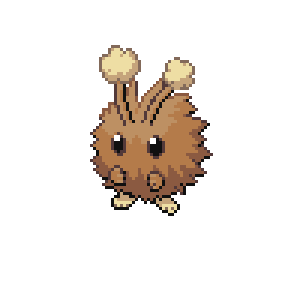
The soft bodies of Bunlix are as sweet and smooth as a Nutty Buneary Frappé. Not only are Bunlix sweet but also enjoy working in cafes because they get to pose with new and interesting Pokémon.
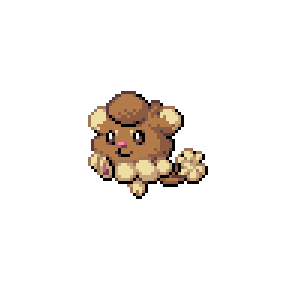
Shroomgon look like a blocky mushroom and produce cube-shaped spores wherever they go. If these spores reach a PC, they infect the machine with bloatware until the PC is full of pictures of mushrooms.
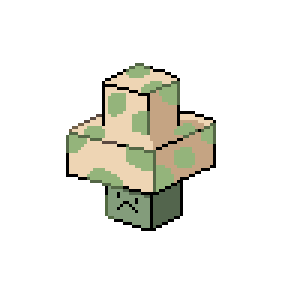
It has tiny, fuzzy, kiwi-like hairs atop its bulb, which is soft to the touch. Even in the darkest parts of a forest, it is able to determine the time by standing its tiny hairs.
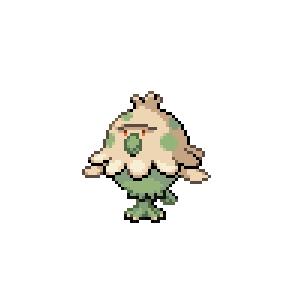
Shroomnx releases clouds of spores when they are upset. These spores are charged with electricity and pop whenever they make contact with other objects, scaring away predators.
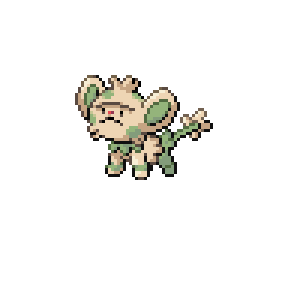
Shroomish have a large mushroom on their back that leeches nutrients from their body. Contact with it causes noxious spores to spread through the air.
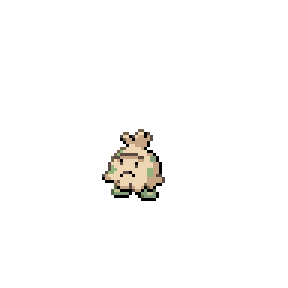
Shroomtite can be found in many gyms helping people calm their minds through meditation. The spores that they release into the air numb parts of the brain that activate anxiety, ensuring a tranquil experience.
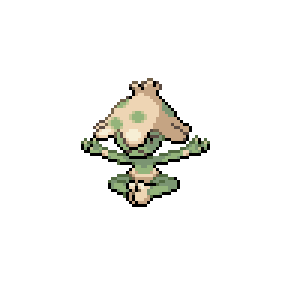
Shuptini roam around abandoned homes looking for children. They long for companionship and will jump in tall grass in the hopes of getting attention.

Shuptret can remain at vigil for up to 20 hours before it needs rest. Because of this, it is a popular choice among police officers who patrol city streets.
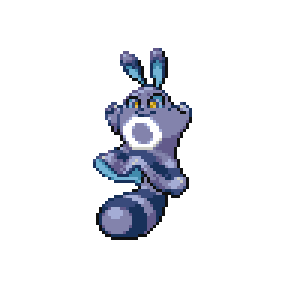
Shupret is a popular pet of police officers who patrol city streets for crime, as its nimble speed helps it chase down burglars. Its ability to remain awake at night gives officers an edge in spotting suspicious activity.

Shupish approach people who are going through a difficult time in their lives and release a soothing Sleep Powder. Once the person is asleep, they absorb negative feelings to help them feel better.
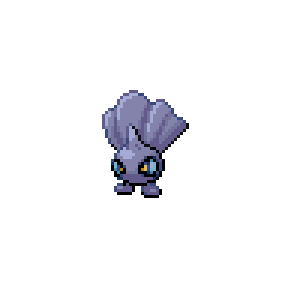
Shupoom have bulbs atop their head that are sensitive to people with malice in their hearts. They passively absorb feelings of negativity and spite to help people move on from the past.
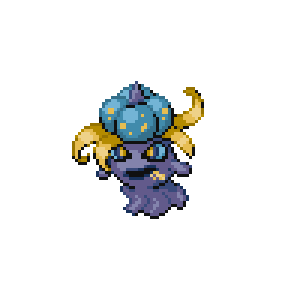
Shupyena often chase after people with bitter vindictiveness in their hearts in an attempt to siphon cursed energy. These chases can last hours at a time if the person they chase does not allow them to absorb the cursed energy.
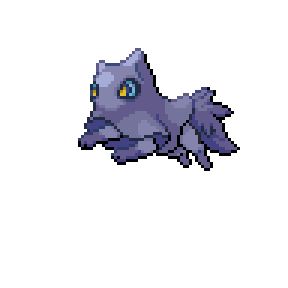
Shuptyena travel in packs to track down people with malice and hatred in their hearts. Despite their menacing appearance, they want to help remove some of the vindictiveness in the hearts of the people they stalk.
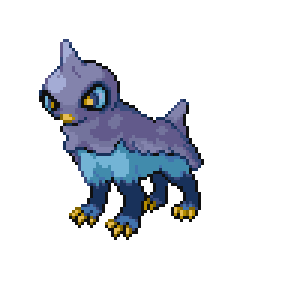
Shupzagoon stalk people who have malice in their hearts. When spotted, they run in a zigzag pattern and hide behind the nearest obstacle.
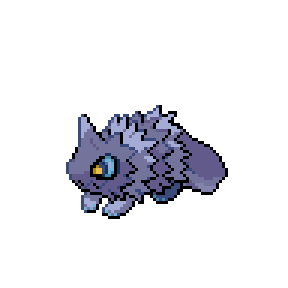
Shupnoone chase after people who have a lot of hatred in their hearts in an attempt to play with them. Their desire to instill some childish kindness makes them a beloved figure in some books for children.
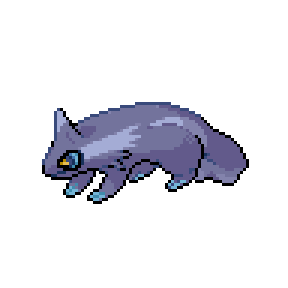
Shupecho have a special chime that is stronger for those who have malice in their hearts. They have the ability to siphon this cursed energy in exchange for escorting them around.
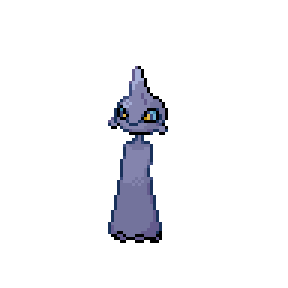
Solopie dissolves leaves in its amniotic fluid, rapidly breaking down the cellulose and chlorophyll from the leaves into nutrients. This fluid quickly transfers nutrients around the body, allowing it to gain lots of energy from a few leaves.

Soloyu have a core full of stem cells, each capable of specializing into one of many roles. Scientists are scrambling to find ways to replicate Soloyu's rapid cellular regeneration.
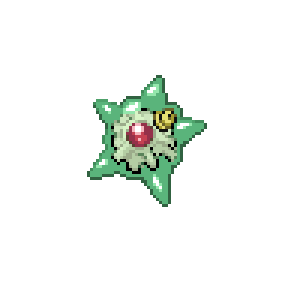
Sologon are docile creatures with a bouncy, gelatinous body. They create blobs of slime that can be combined to produce slime blocks, which can be put under trampolines to increase bounce height.
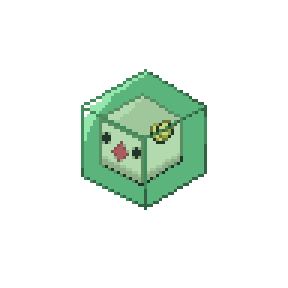
Solown are suspended in an impermeable gel that protects them from the outside world. They communicate telepathically from inside the bubble, as exposure to the external world causes them great pain.

Solomander wraps the flame on its tail with an amniotic fluid that shields the flame from moisture. This fluid also nourishes the flame by moving nutrients to the tail, ensuring the flame burns bright.

Soloadier shoot bubbles that divide into smaller bubbles when struck. These bubbles are difficult to counter once they split, making them a perfect choice to fight against impulsive Pokémon.

Solopuff is unaffected by heat or moisture and only decays when exposed to saliva. It is being studied by both scientists and confectioners as they scramble to figure out how to replicate the contents of its gelatinous body.

Solor are made out of a unique gel that changes viscosity when exposed to stress. This allows them to ram into solid objects without breaking the surface tension of the fluid around them.
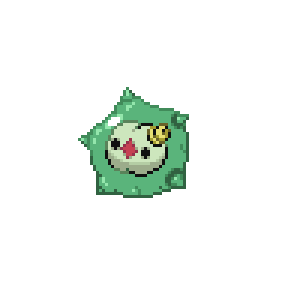
Sololer have a soft outer layer of gel that encases a crystallized shell. Whenever they make contact with another substance, the gel shrivels up into a powder, causing Sololer much pain.
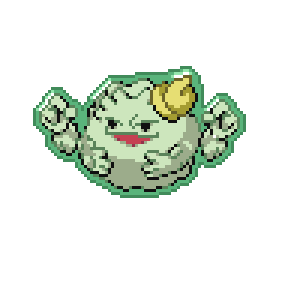
Duorak spins webs out of the gel that comprises its body. When prey get trapped in this gelatinous web, the web collapses around the prey to begin dissolving Duorak's next meal.
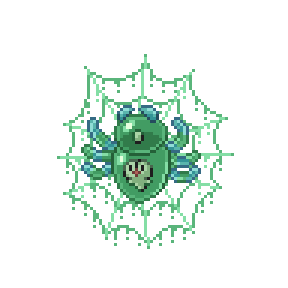
Duobok have tails that are made out of gel that makes struggling out of their grip incredibly difficult. The sticky, poisonous gel clings to their prey long after the initial encounter and should be washed off to avoid accidental ingestion.

The liquid gel around the bodies of Duochu act as a conductor for electricity and makes contact with them dangerous. When fully charged, they can transfer a heart-stopping amount of energy to flow from their bodies to whoever touched them.
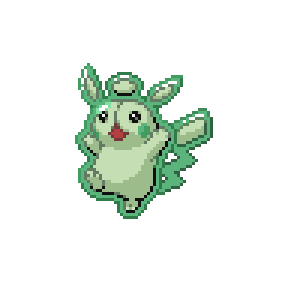
Duolia are attuned to the feelings of others, and their viscous bodies cling to people they enjoy spending time with. Their bodies are warm and soft and give damp yet comforting hugs.
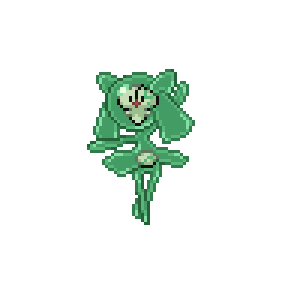
Duopuff produce a soft, viscous jelly that melts into a slurry of nutritious goo when eaten. Its body produces an excess volume of twice its body weight in jelly, most of which it sheds in large bulbous blobs that other Pokémon eat.
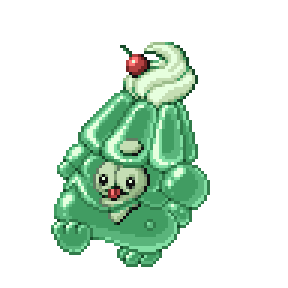
Duotoise have helped scientists understand how water shoots from the body of Blastoise thanks to their clear bodies. Many classrooms have a visit from Duotoise to show off how they fire their water cannons.

Cottonsaur release spores from the bulb on their back that smell like fresh laundry. Manufacturers take these spores and incorporate them into deodorant sticks to give people the same fresh, clean smell.

Cottonpie live in a habitat that has a lot of Fire-type predators around them, so they eat Occa Berries to help defend themselves against the predators. This is especially necessary because their cotton-like fur catches fire easily.
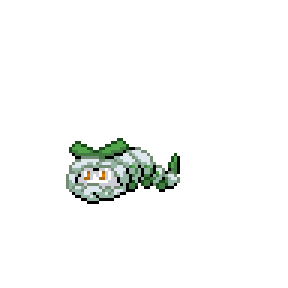
The cotton on the backs of Cottonquil is flammable, especially when the air is dry and conditions are hot. Trainers are advised to keep Cottonquil indoors during the summer to avoid accidental fires.

The mass of cotton on Cottonsaur's back is light and fluffy, making them a cozy spot for wild Pokémon to fall asleep on. Before they move from one location to another, they comb their cotton fluff to ensure sleeping Pokémon are not carried with them.
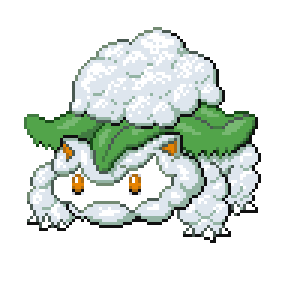
Their heavy green pigmentation comes from their diet of sassafras leaves, which are said to provide miraculous cures to many modern diseases. Additionally, this diet makes Cottonoom poisonous to other predators.

Cottontly are the epitome of fluffy, as their delicate wisps feel plush to the touch. Despite feeling physical, pulling a tuft of wisps causes them to disintegrate into smoke.

Sandinaw hunt by biting their prey while submerged underwater. Once they have a good grip, they roll and twist their body to severely damage the prey's leg and any chance of escape.

Sandigar spend most of the day resting beneath the desert sand to remain cool. They emerge from the sand to stretch their wings and glide through the sky. Their main source of food comes from leftovers after carnivorous Pokémon eat their fill.

Scampering through the desert, Sandidour pulls its prey out of burrows with its narrow maw. When the burrow is deeper than its snout, it sneezes out embers in frustration.
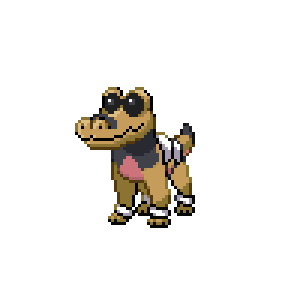
It slithers into backpacks or bags during dimly lit conditions to gain shelter from the cold. Trainers who attempt to use an Escape Rope may find a Sandians instead.
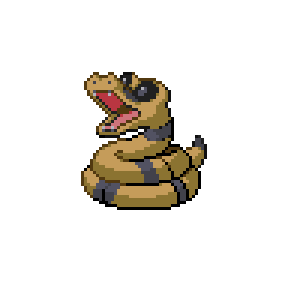
Sandibok stick their snouts into burrows to pull small rodent Pokémon out. This struggle often leaves their prey exhausted and allows them to secure a lethal bite on the nape of their neck.

Sandiran live in burrows underground with their nest mates to cooperate and gather food together. They often nibble on the ears of older members of the nest to beg for food.

Scientists believe that Sandirunt have changed very little from prehistoric times, as their mummies have been found in many deserts, untouched by moisture and time. Their favorite snacks are small rodent Pokémon.

Their bodies have a similar composition to various gelatins, so flavorless, odorless jellies are highly nutritious to them. They typically subsist on old bones, which take longer and more energy to digest.
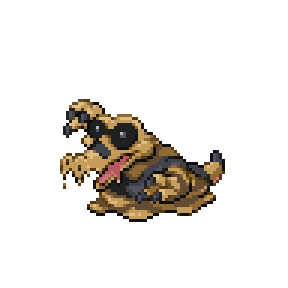
Zuode roll around caves to generate electricity, and their wings help them swerve around obstacles. If they experience a sudden stop, they are likely to explode.
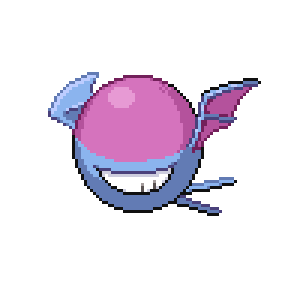
Zuzing expel virulent gas that is full of infectious particles and make other Pokémon incredibly sick. Their colonies share new diseases that they encounter, making members of their colony incredibly resilient to many types of illness.
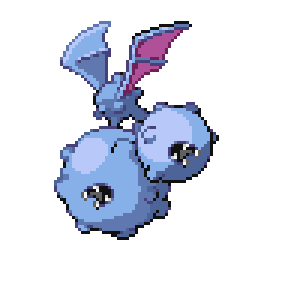
Zunx are blind and unable to maintain their appearance without the help of other Pokémon. They reward those who help them maintain their dress with kisses, which release a secretion that creates fond feelings for Zunx.
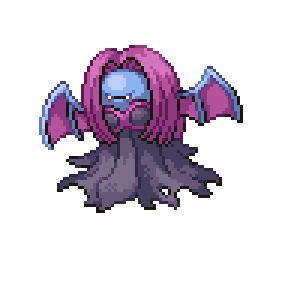
Some say there are 1,400 different subspecies of Zubat, and all of them can be copied by a Zuto. Each of the many different markings they can have represent the sheer diversity of the wild population. However, they cannot copy the color green.
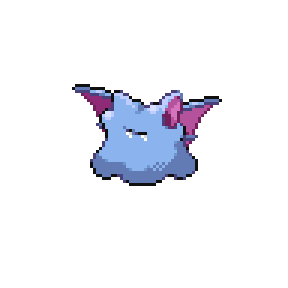
Zuchu produce sparks of electricity whenever they bite their prey. By giving them a Persim Berry, they gain the ability to resist a Zubat's Confuse Ray, which keeps them level-headed whenever they fight over food.
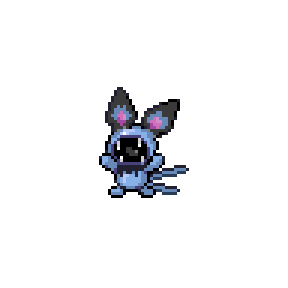
Zubuff lets out a shrill cry for echolocation. This cry also has the added effect of drawing out the parental instincts of nearby Pokémon, warding off many of Zubuff's natural predators.
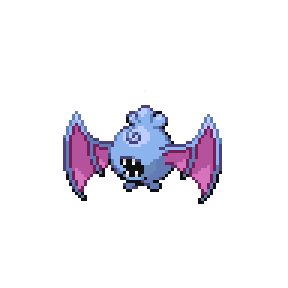
Zukern is completely blind and relies on echolocation and heat to maneuver through its environment. Whenever it goes to sleep, it wraps around a stalactite with vines.
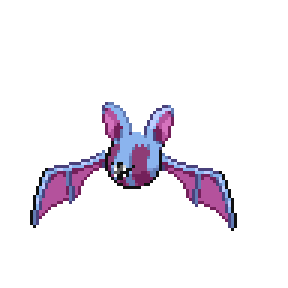
Zunub have small, vestigial wings that are too small to allow them to fly. Instead, older members of the colony bite these wings to signal affection, feeding them fruits and berries to keep their bodies rotund and plump.
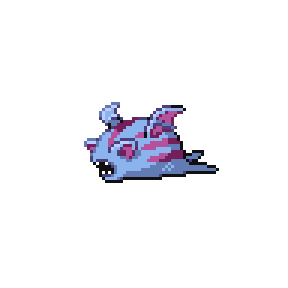
Whenever Zugon2 are eating, they absorb sound waves from the nearby area. Phones and other audio devices mysteriously stop working until they are finished eating.
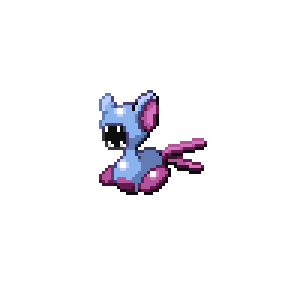
Zupiny practice raising eggs by carrying a stone with them wherever they go. To avoid bumping into cavern walls, they rely on loud screeches to echolocate in pitch-black darkness.
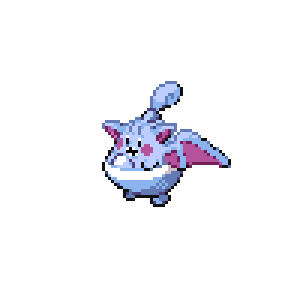
Zuts are pressured by evil organizations to commit crimes and are forced to work in servitude. Trainers who treat a Zuts with respect and love are likely to develop a lifelong friend.
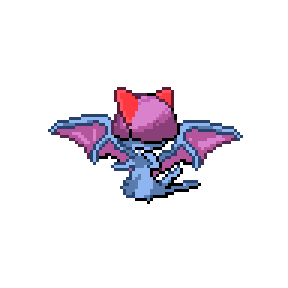
Many Zurina rely on the help of their kin to navigate and often remain close to their dens to avoid getting lost. While they are capable of helping defend against predators, they may accidentally attack their siblings when they turn the wrong way.
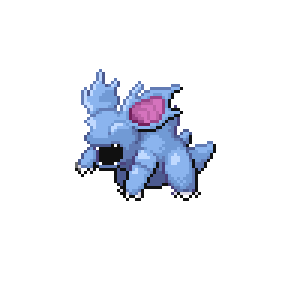
Zuwick release high-pitched screeches to navigate caves in the dark. They often travel in groups to scare predators with the cacophony of noise.
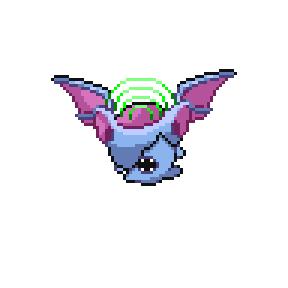
Zumeleon soar through caves with their violet wings and rely on echolocation to keep track of the walls around them. They become incredibly irate whenever they bump into something and release embers from their mouths to vent their frustration.
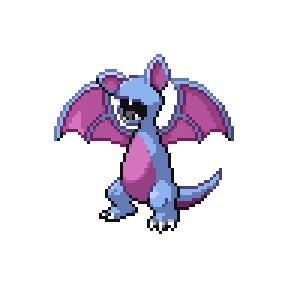
Zuzagoon relies on its heightened sense of smell to navigate dark caves. Its diet is made up of various cave mushrooms, as they are easy to locate because of their pungent smell.
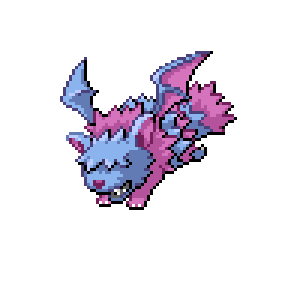
Zuyama rely on their keen sense of hearing to help them fight because they are blind. Their bulky build makes them difficult to take down, and it only takes a single successful punch for them to win fights.
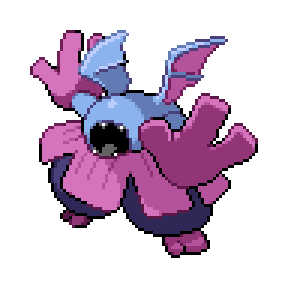
Zuin eat the leftovers of carnivorous Pokémon and digest it with their powerful stomach acid. Even though they cannot see, they can follow the cries of predators to find their next meal.
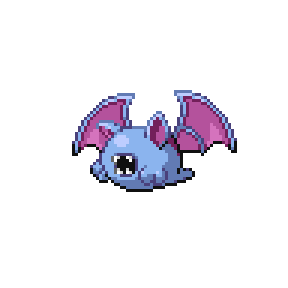
Zuin are blind and cannot hunt for themselves, so they follow the cries of predators to eat their leftovers. Their powerful stomach acid prevents them from getting sick from eating those leftovers.

Zubro are unable to fly or see, so they rely on their echolocation and psychic waves to navigate. Whenever the shell on their tail bites down, they experience a surge of energy that gives them new insights about the world around them.
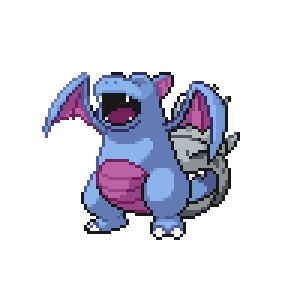
Zuduo have two heads that must work together to navigate caves. One head produces high pitch squeals that bounce off cave walls, while the other head listens and leads them in the direction of food.
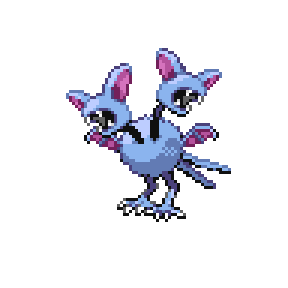
Krokoans slither into burrows of other Pokémon to hunt for their meals. They have to act quickly before the nest occupants return or risk getting hurt.

Krokoslash drills tunnels into the earth by twisting its long claws. It is known to assist miners with excavating gems in exchange for food and company.

Yasaur wears a golden ceremonial bulb on its back that releases ancient spores. The bulb was once part of a process for embalming people, as the spores wick moisture from skin.

Ancient societies once harnessed Yanyte fossils in rituals because of their metallic composition that gives them their bronze-gold color. Many who have tried to break off a piece from Yanyte shells find themselves cursed.

Yasaur siphon the vitality of nearby Pokémon to nourish the bulb on their back. Many Trainers describe feeling dizzy and tired after making contact with Yasaur.

Yasly emerges from tombs with masks made of leaves. It mimics other mask-wearing Pokémon like Cubone and Yamask, hoping to be less lonely.

Yaquaza are erratic creatures that soar through the sky bringing chaos wherever they go. The mask at the end of their tails stores cursed energy they accumulate from causing destruction.

Legends claim that Yamo-o retain loyalty to their masters and zealously protect old belongings. Striking their mask releases a deafening ring that is said to awaken the dead.
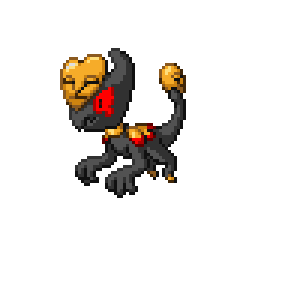
Jolsey are tiny creatures that can skillfully dodge attacks by using the move Minimize. Each time they shrink, they release a burst of electricity.

Joltret create a special webbing that helps them carry the many Berries they forage. They avoid picking up Rabuta Berries because of their bitterness.
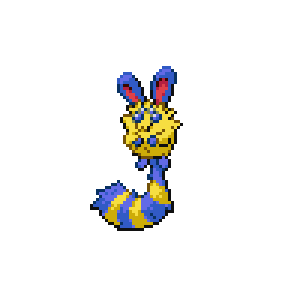
It is easy to raise because it enjoys eating bland or sour food that other Pokémon leave behind. A Salad Mix left behind during meals is what it enjoys the most.

Jolgon2 can store exactly one byte of information in their body. Colonies of Jolgon2 take data from a floppy disk and remove it byte by byte until nothing remains on the disk.
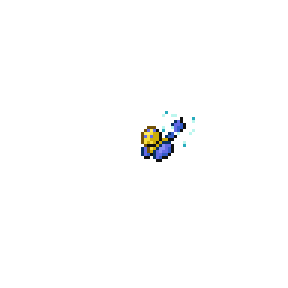
Joltuff are capable of inhaling air to quadruple their size. They mainly utilize this talent to scare away predators, though they have a unique niche among clowns where they blow air into balloons.

Ferrosaur fights foes by throwing seeds that leech vitality from its opponents and enduring attacks. Ferrosaur has a unique medicinal use where it sucks out toxic metals from sick people, absorbing and neutralizing the toxic materials.

Ferroking has a sharp crown that is covered with sharp thorns. These thorns dig into its skull, and the resulting pain enhances its psychic power.
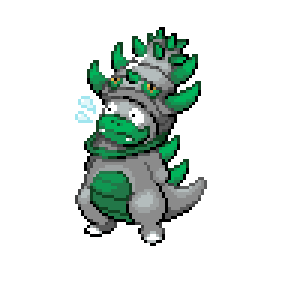
Ferrosaur have prickly metallic barbs that break off whenever they get lodged into another Pokémon. Once separated from their body, these barbs release venom that causes fevers and itchiness.
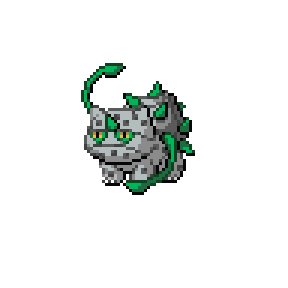
Ferrosis are surrounded by a mysterious gel that hardens into jade spikes whenever anything comes close. Whenever they want a hug, they will telepathically communicate with their Trainer to ensure that the gel does not accidentally harden.

Ferropede curls into a ball and rolls down hills to escape predators. Their brittle barbs snap off as they roll, leaving a sharp edge that oozes with venom.
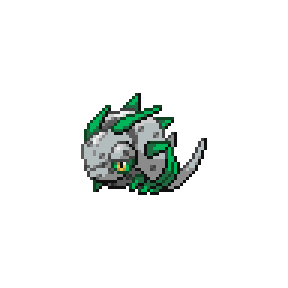
Axewak wield a mighty bone tusk that they rely on to defend themselves against other Pokémon. The sharpened end of their tusk slashes through their foes leaving behind deep cuts.
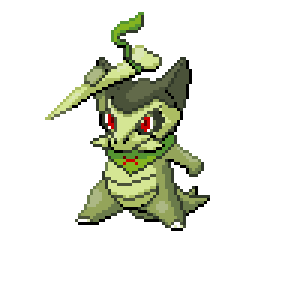
Axetini search for Haban Berries to protect themselves against other Dragon-type Pokémon. They have a strange ritual of crushing their scales after shedding them, which makes harvesting them difficult.
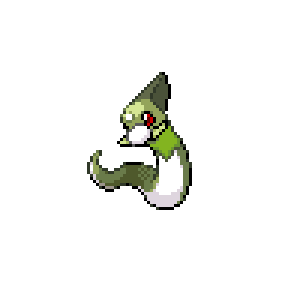
Axegey have olive-colored feathers that blend into trees around them. Whenever their prey rushes towards a burrow, Axegey dig at the entrances with their small tusks.
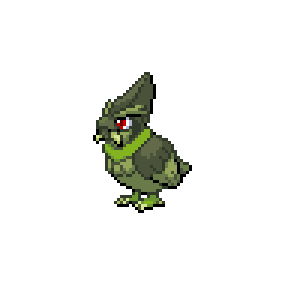
Fraxbone wield a special tusk like a sword and swing this weapon wildly whenever they face off in a Pokémon battle. They spend time outside of battles sharpening and polishing this hefty tusk.
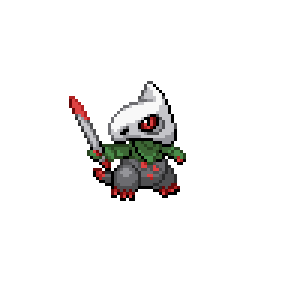
Golepod are surrounded by a tough turquoise cocoon and are found deep within ancient tombs. People who make clothing have gone spelunking to obtain their high-quality silk.

Goleby lives inside ancient sunken ships where it protects the ship from divers. It is said that Goleby protect sunken treasure, but this is not always the case.
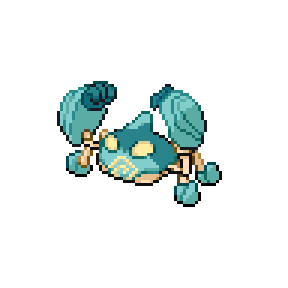
Goleler protects ancient shipwrecks from looters. Its massive claw can pinch through air tanks and other equipment, so divers stay away from places where it lives.
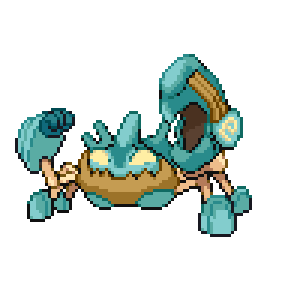
These social Pokémon send signals to one another with beautiful chirps and antennae movements. Their camouflage resembles a Poison-type species with similar markings and will travel alongside them for protection against predators.

Their camouflage enables these Fletchdle freedom in the forest, as other Pokémon assume they are poisonous. They communicate about where to find the best berries to consume, and travel in small groups to maintain a sense of direction.

Fletchbuff lack the wing feathers they need to fly so they bounce throughout the world instead. When they are not looking for food, they can be heard babbling songs.
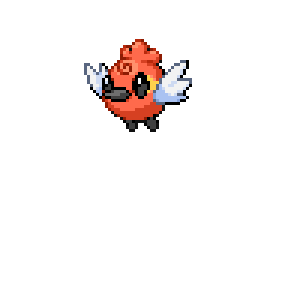
Fletchtyke make their homes along coastlines to pick off vulnerable aquatic Pokémon. Whenever there is a thunderstorm, they search for Wacan Berries to insulate themselves from the dangerous lightning.
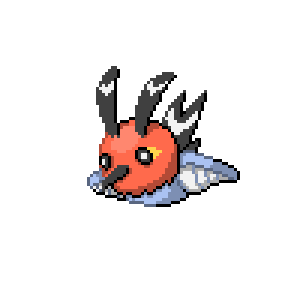
Fletchlia chirps out songs it hears on the radio and gracefully dances with elegance and style. Its desire to become the very best is exemplified by its perseverance during training, as it is prone to hurting itself from overexertion.
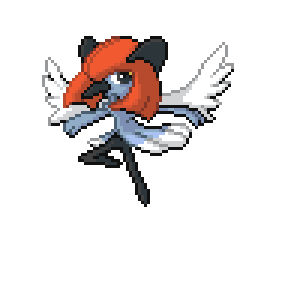
Fletchwile has an extra set of wings on the back of its head that can help it fly if its main wings are damaged. Even though there is a second beak in those wings, it only eats with its main beak because it is difficult to clean behind its head.

Fletchlett peck at underground roots to nourish themselves. The unexpected cry of a Fletchlett has awakened many Pokémon in the forest.
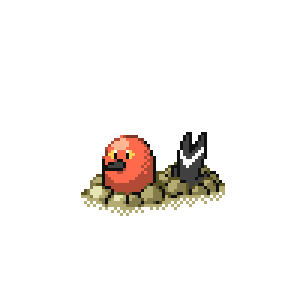
They fly low to the surface of lakes and ponds to drag their tails across the surface. They splash water onto bug Pokémon in branches above them in the hopes of knocking them down to secure a meal.

They dig up and break rocks with their muscular arms to expose roots underneath. Afterwards, they dive headfirst into the ground to peck and rip apart the roots for consumption.

Fletchlett shoot embers at prey through their beaks before dragging them underground. Their wings put out these fires before they get out of control.

Larvdeen have bright crimson fins that give them a distinct look that makes them popular among rich Trainers. They are warm to the touch and can produce small flames from their fins.

Larvtu are some of the first to detect when a volcano is about to erupt and form groups to escape the fiery wrath. Scientists study their flight patterns to help evacuate people near volcanoes.

Golfing are incredibly resilient to disease and absorb illnesses from other Pokémon to increase the potency of their noxious fumes. Golfing live in colonies where they create a shared space to inoculate themselves against a plethora of illnesses.
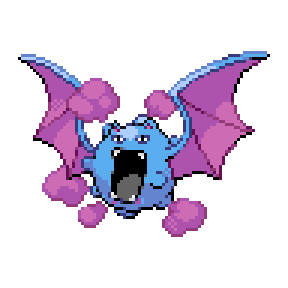
Golpi have sensitive eyes, so whenever they encounter bright lights, they close their eyes and tuck their head into their eggshell. Their leathery wings also help mitigate the glare of bright lights.
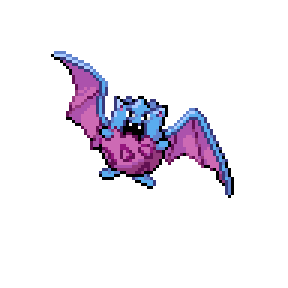
The wings of a Golsaur are too small to fly with and often chafe against the leaves sprouting on their back. Whenever they are attacked, vines sprout from the flower on their back to grapple the assailant.
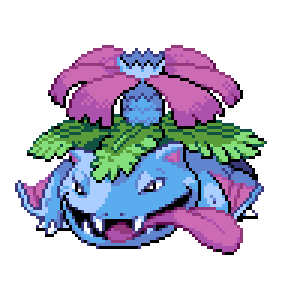
Golnette are difficult to detect because their soft, plush bodies give them the ability to mask their movements. They enjoy teasing Trainers by appearing in the corner of their view before flying out of sight.
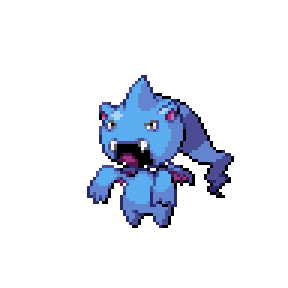
Golwick releases supersonic waves that serve as echolocation and protection from predators. Swarms of Golwick gather in places where mushrooms are likely to grow, such as old caves or abandoned manors.
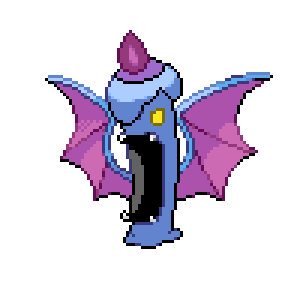
Golon have large mouths that allow them to bite big chunks of food. Their rocky bodies make it hard for their predators to do the same.
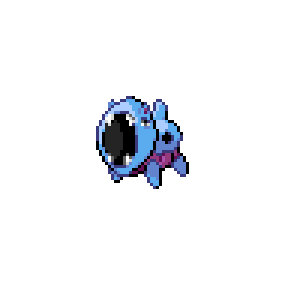
Golelgon are slow creatures that rely on their wings to carry them around. Their body is so heavy that they cause indents wherever they land.

Goltite focus on their meditation daily to improve their mental acuity. Their venom-tipped wings give them an edge in combat by giving them a way to wear down their opponents.
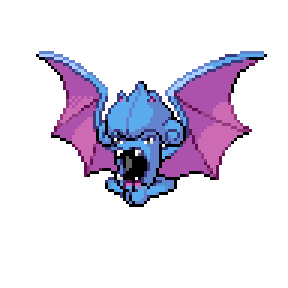
Golcham focus on improving their mental acuity through meditation. During a Pokémon battle, they focus on outlasting their opponent by delivering a precise and venomous cut early in the battle.
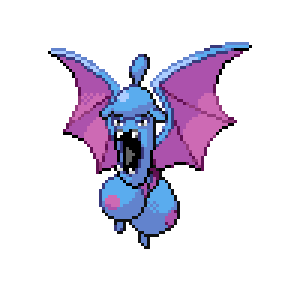
Goldol are capable of seeing in all directions but are just as easily blinded. They try to keep their eyes clear of debris by blinking rapidly.
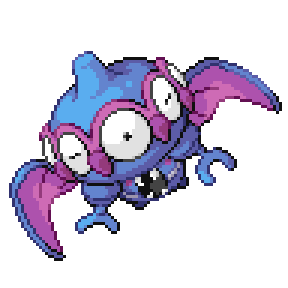
Golektrik latch onto the wings or fins of Pokémon much larger than themselves to suck nutrients. They are difficult to remove because of their powerful shocks, but a coat of mud stops them from getting a grip.
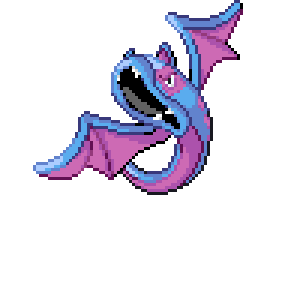
They digest shells and litter to grow and reside near poorly maintained tourist beaches. They have a pungent smell that resembles toothpaste and are tolerated as they clean beaches.
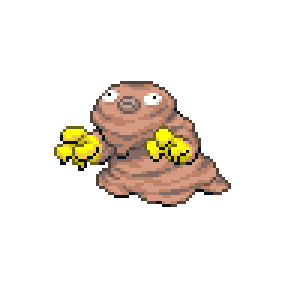
Stunuk can process anything found on a beach, though it only eats organic matter. Inorganic matter is melted and gathered into a paste that resembles white toothpaste.
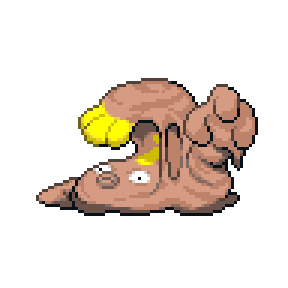
Whenever Sablyu loses one of its appendages during a battle, it eats gems to accelerate the regrowth process. What typically takes days or weeks is shortened to a matter of hours.

Sablnyte shells are often made out of ammolite, a gem that can be found during the process of fossilization. Despite having a shell made out of precious gems, Sableye do not seem interested in eating them.

Sablnyte shells are made of shiny gems. Scientists have observed that they produce small flashes of light to find each other, as the bright, shiny shells reflect lots of light.

Sabltret are curious Pokémon that may trail behind Trainers as they travel. When they are caught, they obscure the vision of everyone nearby with a bright flash before running away.
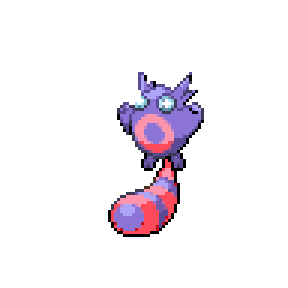
Sablrak silk is spun into clothing for rich patrons and sold at auctions around the world. Various villainous organizations have made surreptitious attempts at making a net that ensnare Pokémon, but none of the attempts have worked.

Large sums of money are spent on clothing produced by Sabldos because the high-quality silk allows for both freedom of movement and resistance to tearing. In the wild, they wrap bug Pokémon in small pockets of silk before consuming their prey.

Sablursa exploits its adorable appearance to steal gems and jewelry from Trainers. People are advised to secure their belongings and avoid Sablursa to ensure nothing important gets stolen.

Sablbite cultivate crystals that jut out from their body and spend most of their time sharpening and polishing these crystals. When they go out to hunt for gems, these crystals function like picks to chip away at cave walls.

Sablchar are pesky jewel thieves that often steal from miners who have worked hard to unearth the gems. When miners attempt to pursue Sablchar, a flash of fire stops the miners in their tracks.
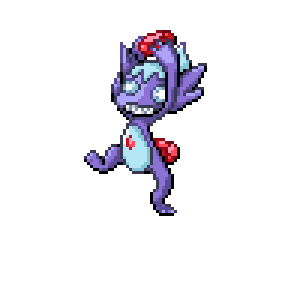
Sablnette are creative tricksters that love to play pranks on others. They particularly like to pull pranks on people with anger in their hearts, as they are drawn to the negative energy.

Sablron have rocky plates that sparkle with the many gems embedded within them. They get angry when they see another Pokémon break rocks and will charge at them given the opportunity.
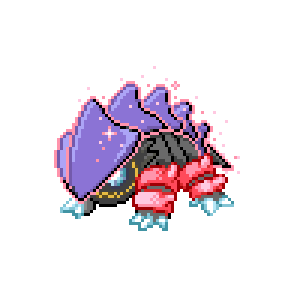
Sablgeist collects gems and stores it within its gourd-shaped body. Its wails can be heard inside abandoned mineshafts, where it searches for gems.
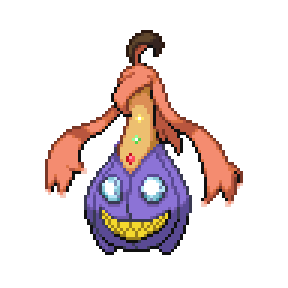
Sablcham meditate for long periods of time to ensure they are well-rested before roaming into caves to search for gems. By punching chunks of rocks out of cave walls, they unearth gems to eat.
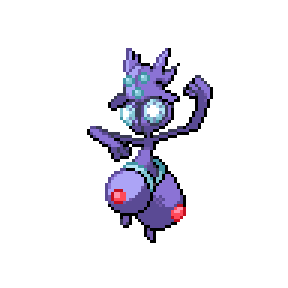
Sabldol emit a bright light from their many gems, each capable of hypnotizing others. It is rumored that they were trained to be guards by ancient civilizations.
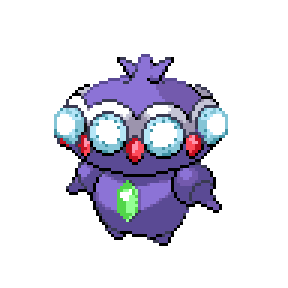
Sablbra offers dubious advice to lost travellers to keep them wandering for hours. It is easily placated with the gift of small gems or a shiny spoon.

The twin antennae on Veniuna's head double as stingers. Its fierce aggression is only limited by its lack of limbs, as it goes out of its way to sting anyone nearby.
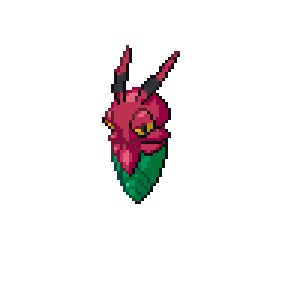
Venivanha detects scents in the water with the feelers on its head, allowing it to hone in on injured aquatic Pokémon. Once Venivanha is close enough to its prey, a flurry of gnashing serrated teeth quickly secures its next meal.

Whirlipie have a mixture of thistle and maroon markings on their bodies, which marks them as poisonous to potential predators. They enjoy rolling down hills because the physical sensation of rolling gives them an adrenaline rush.
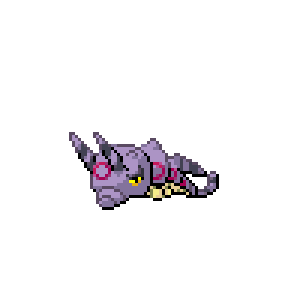
Whirlidle roll down hills to avoid predators before crawling back to the same spot to eat leaves. Their mauve bodies make them easy to spot, so they hide in bushes whenever they see a predator nearby.
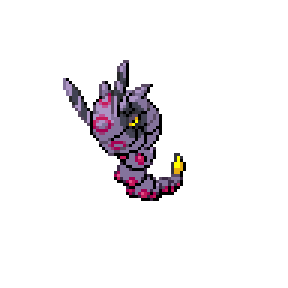
Whirlidash in peak physical condition chases after motorcycles to show its dominance over its packmates. These races often occur during sporting events, where people bet on the motorcycle or the Pokémon.
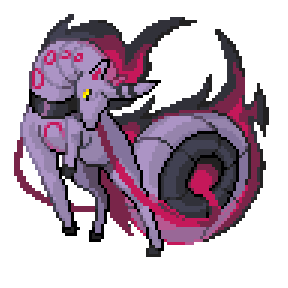
Scoliuna have two maroon horns that sting flying bird Pokémon that try to peck at their cocoon. The venom from a Scoliuna's stinger causes inflammation, which causes the faces of predators to puff up with swelling.

Tymander enjoys stomping around acting like an intimidating presence, but it is comically cowardly. This is especially true when it is near water, as Tymander will refuse treats or petting if there is a chance it gets wet.
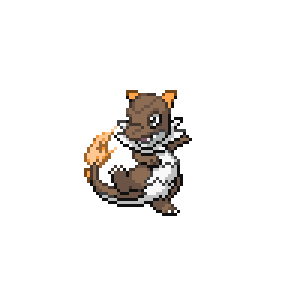
Wild Tyrandos is known to soar above mountain ranges, and regularly fights others of its kind. Its ferocious fighting causes changes to flight plans, as the Pokémon indiscriminately attacks anything that moves.

Researchers once misidentified Tyranidos fossil fragments as a previously unknown evolution of Cranidos, especially because of their dome skull. However, Tyranidos's spiky ruff allowed researchers to confirm they are an entirely separate species.
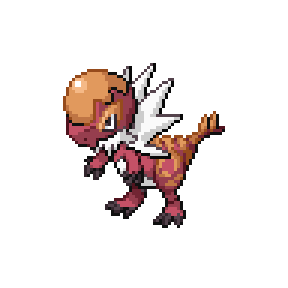
Tyrankoal are known to reside in old geysers, their sharp claws excavating the rocky surfaces beneath them. They consume the old silica coating left behind by old geyser activity, which strengthens their shell.
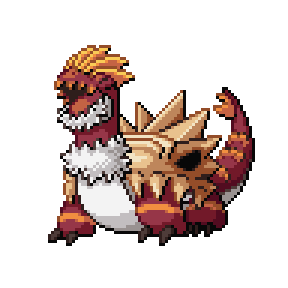
Snosel are both artistic and athletic. They enjoy skating on the ice, carving ice into statuettes, and they even try out new activities, so long as it is not too hot around them.

Snobird are known to serve food and drinks in a variety of settings, such as an airliner or cruise ship. Their cold hands cool drinks and frosty treats from their sack.

Snodoof chops down logs of valuable evergreen wood for lumberjacks in taiga forests. During the winter it is known to approach villages with firewood to keep people warm.

Glasaur carry shards of ice on their backs that never seem to melt. They are also known for creating long, slippery paths made out of ice that they rely on to slide through the world, as their stocky limbs are heavy and stiff.
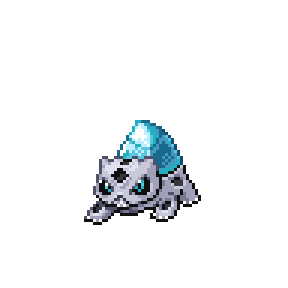
Glaew love hockey, so much so that they adorn themselves with masks and levitate hockey sticks around. Whenever a player miraculously scores a shot, some believe it is due to Glaew's blessing.
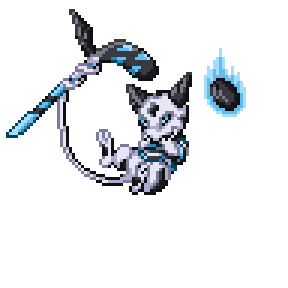
Glasaur have ice crystals on their back that power all of their frosty abilities. Glasaur rarely follow manmade paths, as they freeze trails that cut through existing roads. These paths are quite slippery and have caused many falls.
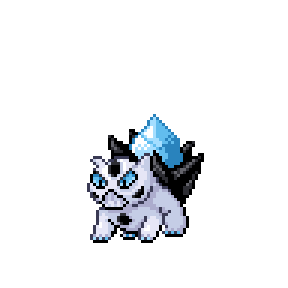
Glasel are masters of gliding on ice, their physical speed and dexterity are unrivaled. They will compete in athletic sports to prove themselves champion of the ice.

Glachu are popular players for fans of hockey. Their superb reach combined with powerful zaps can stun players who try to hit the puck, giving them the opportunity to score a goal.

Glavile have complete control over their immediate environment. They ensure that everyone around them knows it by chilling the air significantly when they enter an area.
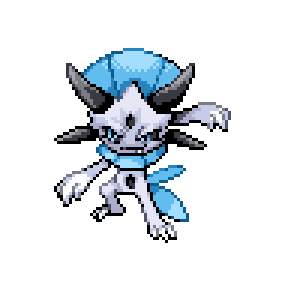
Many fans of hockey know that Glacor are popular players of the sport because of their superior speed and agility. Glacor fly low to the ground to maintain control of the puck before swinging their tail to score a goal.
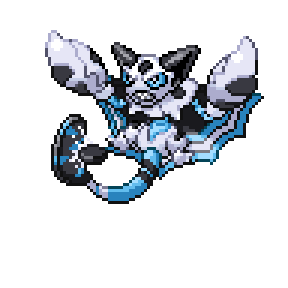
Their thick fur provides both resistance to the winter frost and camouflage against hunters. They lose up to half their body weight in fur between the transition from winter to spring to adapt to the adjustments in humidity and temperature.

Glasaur carry a large chunk of black ice on their backs that does not melt, even in scorching hot conditions. Glasaur have large, bulky legs that struggle to move quickly, so they freeze a path and slide whenever the situation calls for it.

Their spines are made of frozen sap and produce an antiseptic serum when melted and mixed with water. They offer these spines to indigenous communities in exchange for salt rocks, which they break down for nutrients.
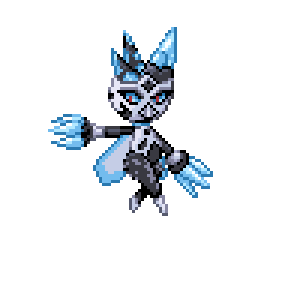
Glathorn play as goalies for hockey games because their many appendages can block shots from multiple angles. Despite their prickly appearance, Glathorn enjoy hugs from fans.
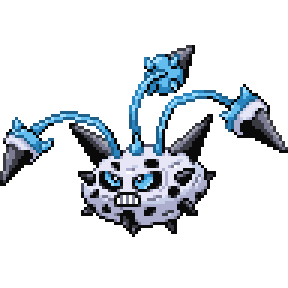
Gladuck love to play hockey with other Pokémon but often have a hard time handling a hockey stick. Their flippers are unable to firmly grasp the stick, leading to many accidents where the stick slams into their heads.

Glalithe charge through snowy tundras to pierce through prey with a Fire Fang. Their frosty bodies allow them to absorb snow around them, giving them a momentary boost to help them last longer in a fight.

Many Glafetchd join hockey teams because of their adeptness at controlling their hockey stick. Glafetchd's aerodynamic wings and frosty ice skates allow them to swiftly traverse across the ice to score points.
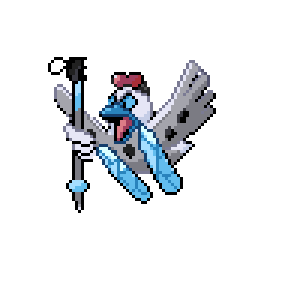
Frosel chisel ice alongside prestigious ice sculptors to carve grand displays of art. They work alongside their Trainers for several days or even weeks with little rest, as the passage of time risks melting their work.
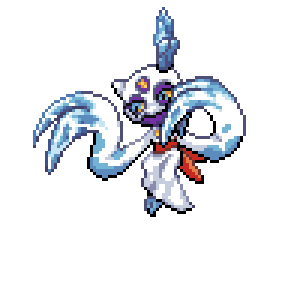
Frosvile have had lifetimes of experience creating grand sculptures, and their techniques are traditionally passed down from teacher to student. They educate students on complex techniques to carve out gorgeous works of art.
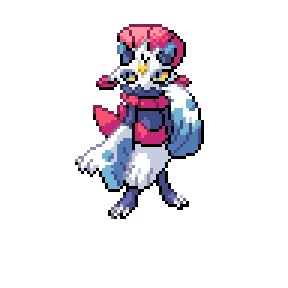
Frosvoir are subtle asocial creatures that rarely show any emotion. Behind the frosty blizzards and world-warping black holes is a Pokémon that craves affection from its Trainer but is too scared to ask.
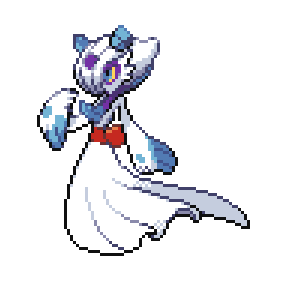
Froskoal sap warmth from the air using the crystals on their back. They are rented out to people during the summer to help keep homes cool.
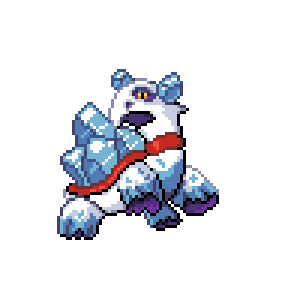
By working alongside bakers and confectioners, Froslix gets access to delicious treats before anyone else. After eating until it is satisfied, it will release a frosty breath of peppermint over the remaining treats.
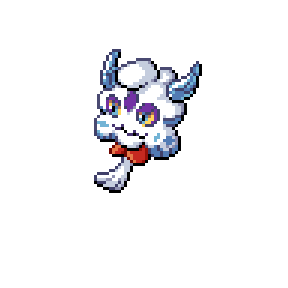
Froster releases a chilling frost from its hands that freezes anything it touches. It hides in the snow to swipe at the feet of Trainers and freezes those it touches.
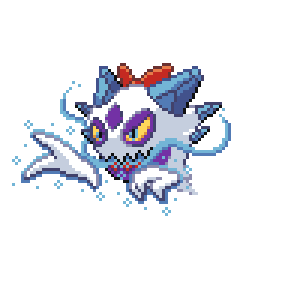
Despite being a darker shade, it leaves behind nuggets of buds that taste like an eggplant. It is said that a particularly large bud is made when it gets lots of sunlight, so Trainers keep it in bright parts of a garden.
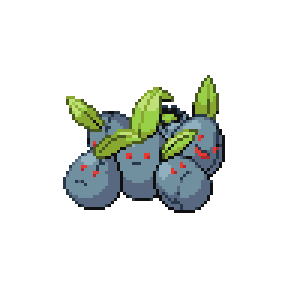
Oddgela soak up water through their tiny feet and absorb sunlight through the vines on their head. When one of the vines is damaged, they produce a red sap that acts as a binding agent to help them heal.
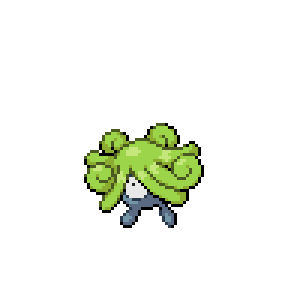
Oddkhan has a pouch full of Oddish that serves as a safe place to hide from predators. Whenever anyone tries to eat one of its Oddish, it lets out a scream before striking the hungry Pokémon.
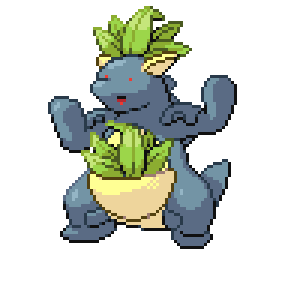
Oddnx gain energy by having sunlight hit their leafy hair. Whenever they absorb lots of sunlight, they get rid of the excess energy by doing a rhythmic dance.
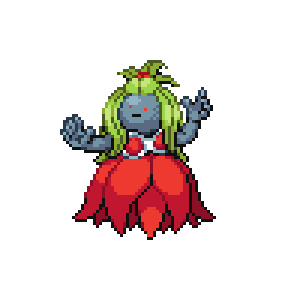
Oddsir pinch and grapple other Pokémon with their thorn-like pincers. Their limited reach makes them easy targets for Flying-type predators, who can tire them out until they can no longer resist.
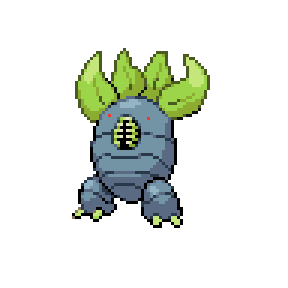
Oddrita release a sticky pollen that acts like an insecticide, which is why farmers raise them to protect berry bushes.
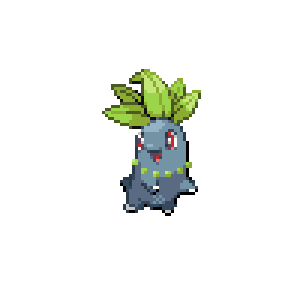
Oddleef produce a special sap from the growths on their neck and their leafy tail that can function as an antacid. Thanks to the help of Oddleef, people who suffer from heartburn can take a sap tablet to feel better.

Oddnium enjoy sunbathing in bright sunlight and often feel so comfortable that they fall asleep in the bright sun. They can get grouchy when awakened from their slumber.

Oddquil has leaves on its back that grow faster than the fire on its back. Its ashes are full of nutrients that it sheds when it roams around.
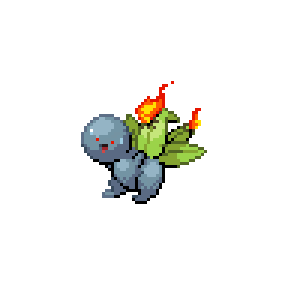
While Oddtu are capable of seeing into the future, the visions they have are blurry and only last for short periods of time. Despite this limitation, Oddtu leaves are a hot commodity for psychics and mediums.
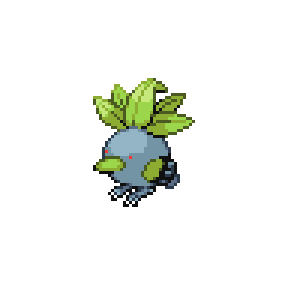
Oddpip spend most of their time gliding through the air and only come down to the ground for water and minerals from the mud. Most of their energy comes from sunlight that they get from being high above the clouds.
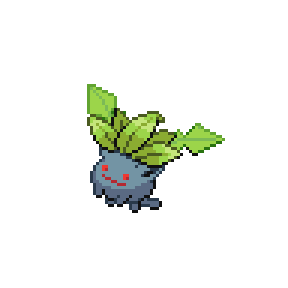
Oddpip flap the leafy wings on their head rapidly to elevate themselves into the air. Once they catch an air current, their leaves bend and catch the breeze to be whisked away.
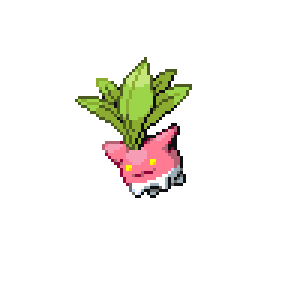
Oddpip are rarely seen on the ground, as they are constantly soaring through the sky on wind currents. On the rare occasion that they are on the ground, they can be seen half submerged in mud absorbing minerals.
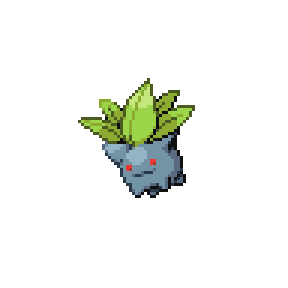
Oddloom ride through forests on a gentle breeze, capturing pollen and sunlight on their heads. They are almost always airborne so that they capture as much sunlight as possible.
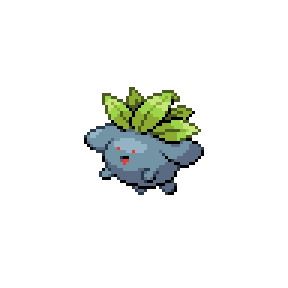
Whenever Oddbuffet are struck by another Pokémon they release a toxic pollen that clings to their assailant. The pollen saps moisture and nutrients away from their assailant until they find an opportunity to launch a counterattack.
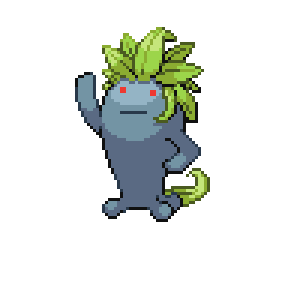
Oddfarig follow pungent scents in the air to investigate them while leaving behind a cloud of poisonous pollen. Once they find the source, they attack with powerful psychic energy to assert their dominance over their territory.
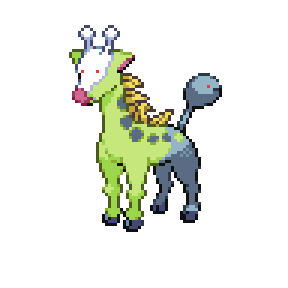
Oddcross take great care of the leaves on their horn to show off to other Oddcross. The longer the leaves on their horn, the more attractive they are to members of their species.
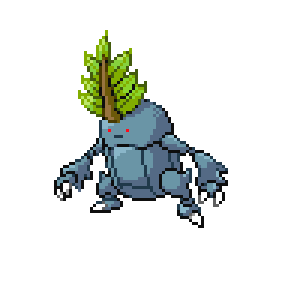
Oddmory mark their territory by dropping seeds from their leafy wings that grow into pungent flowers. They attack anyone who damages one of their seeds by swiping with their sharp talons.
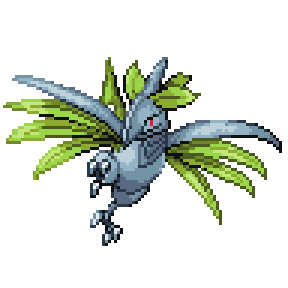
Oddans hide themselves in tall grass to blend in with the surrounding landscape. Once prey comes close enough, Oddans pounce and bite down with their venomous fangs.
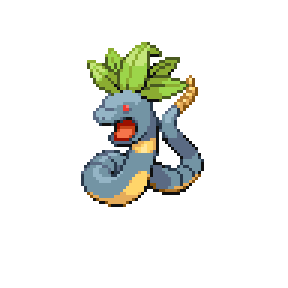
Oddgon2 camouflage themselves within a Trainer's bag as a Technical Machine so that they can be carried for long distances. When they are inevitably spotted by the Trainer, they scuttle out of the bag to find a safe place to hide.

One of their favorite games is hide and seek, where they find an image of tall grass and embed themselves in the image until their Trainer spots them. Their natural camouflage makes them difficult to spot when hidden.
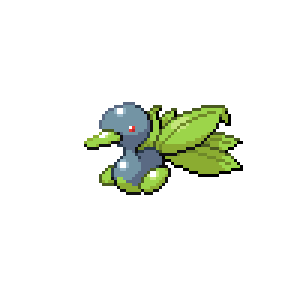
Oddgon2 hop into photos where there is tall grass to hide within the image. If their Trainer does not indulge in their games, they stay in these photos until their Trainer calls out to them.

Oddgon2 bury themselves in images of tall grass to hide from their Trainer, hoping to be found. Whenever their Trainer finds them, they let out a few small chirps of excitement.

Oddans have leafy tails that produce a loud rustling sound when shaken. They shake their tails when they are scared and give their foe ample time to escape before they bite.
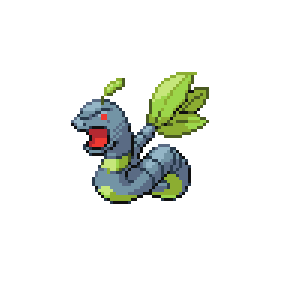
Whenever Oddsey pick up an egg, they impart their scent onto it by rubbing it against their leafy head, turning it green in the process. Oddsey and the egg spend long hours basking in sunlight to keep each other warm.

During the day, Oddran soak in the sun's rays with the leaves on their body. Their sensitive whiskers can detect moisture in the air, bringing them to places where they can drink water.
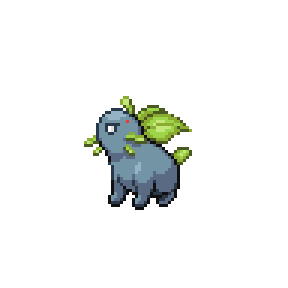
Oddeon are able to reliably camouflage most of their body except for the leaves on their head. They often hide near bushes where the leaves on their head have a chance of blending in.
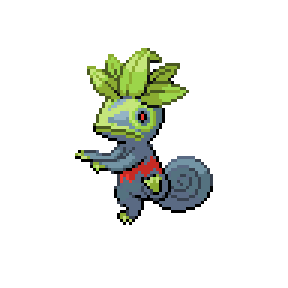
During the day, Oddran burrow beneath trees to eat thick plant roots but always leave their rears above ground to absorb sunlight. At night, Oddran return to a communal den to rest alongside their kin.
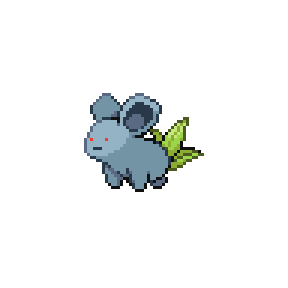
Oddrina get most of their nutrition from the sun, so whenever they go out into the wild, they gather berries for their kin. When they return home with lots of berries, their kin help clean their bodies as a sign of respect.
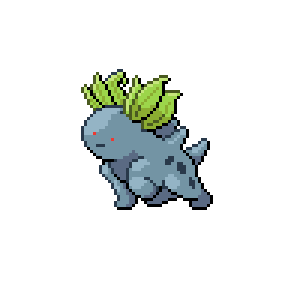
Oddily extend their leafy, kelp-like tentacles to wrap around aquatic Pokémon. Once properly restrained, Oddily release powerful acids to break down their prey.
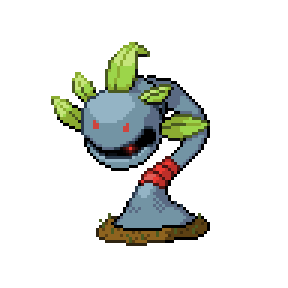
Oddceus cause vines and moss to grow wherever they travel. They often frequent the ruins of ancient Pokémon to adorn the walls with vegetation.
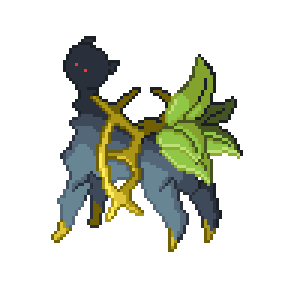
Oddran protects its siblings by spraying toxic spores at predators. Its leaves end up coated with these spores, so it can be found bathing in ponds or lakes.
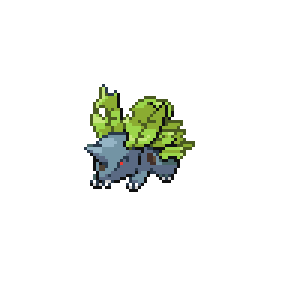
Oddrino has leafy ears that can pick up whispers from a long distance, making it difficult to sneak up on. It only sleeps two to three hours at night because it wants to vigilantly protect its nest.
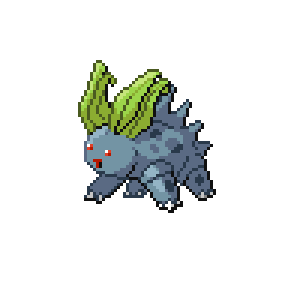
Oddthorn have long appendages with bulbs that resemble Oddish heads. Whenever they rest, they plunge their body and bulbs into the ground, so their leafy heads stick out while they absorb sunlight.
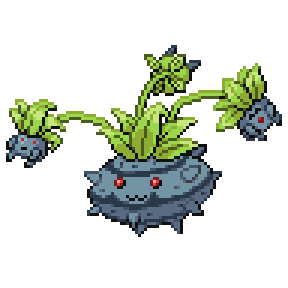
Even though Oddno can see, their myopic vision prevents them from seeing more than a couple meters away. They take their time to amble around the world, taking in lots of sunlight and exploring well-lit places.
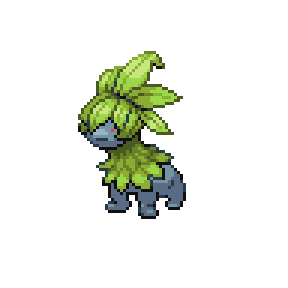
Whenever Oddagon attacks another Pokémon with a headbutt, a cloud of spores gets released from their body. They can saturate the air with spores if they headbutt rapidly.
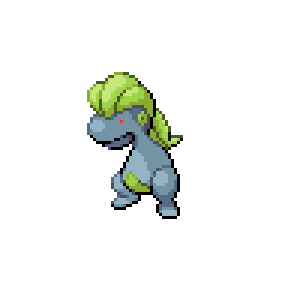
After it sheds its shell, chefs will wander to collect the shells to grind and pulverize into a thick paste. This thick paste is poured onto tropical desserts to serve a mildly sweet taste of dragon fruit.
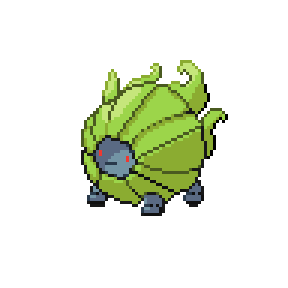
Oddang produce a consistent amount of pollen in pharmaceutical factories to produce supplements. Their pollen will spoil quickly if exposed to water, so Oddang produce pollen in a dry, sterilized chamber to keep the pollen stable.
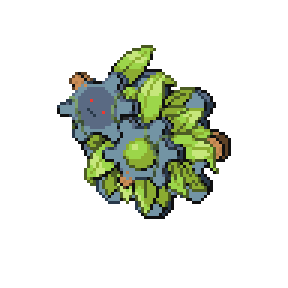
Oddew sprout vines from their bulbous body to clear debris in their path. This is especially important during fall, where piles of leaves can obscure sunlight if the pile is tall enough.
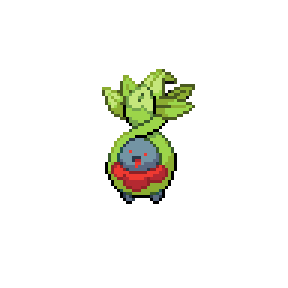
Oddpet seek out people with malice in their hearts to become their friend. It is said that the leaves of Oddpet produce a tea that attracts cursed energy, though this has yet to be proven.
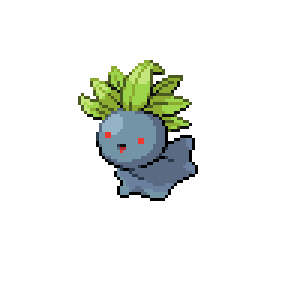
Oddsis produce a special pollen that dyes the fluid around their body a bright red. This pollen lulls nearby Pokémon into a drowsy state, creating a calm atmosphere for rest.

Oddsion are surrounded by a thick gel that is full of chlorophyll, turning the gel into a bright green color. These particles of chlorophyll are suspended in the gel, giving them a glittery appearance when exposed to direct sunlight.
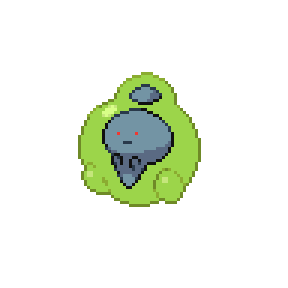
Oddseed burrow themselves underground while keeping their leafy heads exposed to absorb sunlight. Whenever a Pokémon tries to uproot their heavy bodies, they shoot thorns to defend themselves.
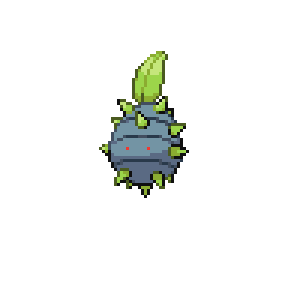
Oddnea is known to swell to twice its body mass when it rains, storing rainwater for future use. Trainers living in humid climates need to drain swollen Oddnea, as excessive swelling causes it pain.

Oddmeleon have flames at the end of their tails that glow brighter after spending lots of time in the sun. The green color comes from the chlorophyll and other minerals that their body produces.
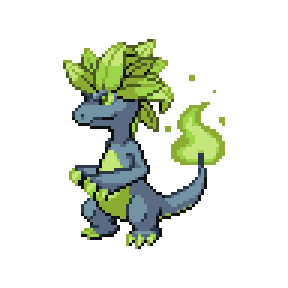
Oddzagoon have tasty leaves on the top of their head, which make them particularly appealing to Flying-type Pokémon. They run away in a zigzag pattern to escape the talons of predators.
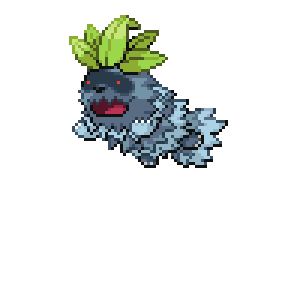
Oddnoone have tasty leaves on top of their head that taste like licorice. Their hypervigilance allows them to locate predators before they strike, which gives them time to escape.
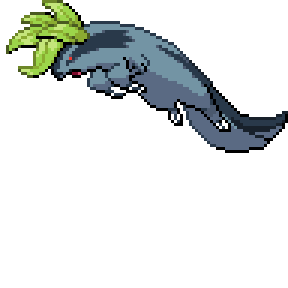
Oddle release positively charged spores that repel each other, which helps them disperse throughout an area. Other Pokémon that inhale these spores will fall asleep, giving an Oddle time to escape.
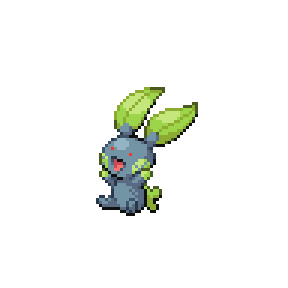
Oddun releases negatively charged spores that cling to fur and other biological materials. These spores create a numbing effect that prevents predators from chasing an Oddun.
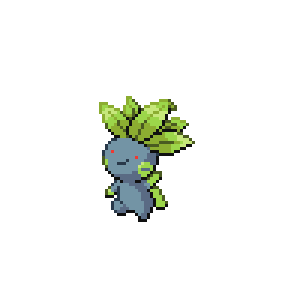
Oddbeat has a tail that glows with bioluminescent light. It releases a pollen that puts other people and Pokémon to sleep, making it rare to spot in the wild.
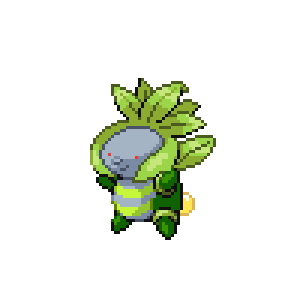
Oddmise has bioluminescent leaves that glow in the dark at night. Children who play outside at night frequently get lost when chasing down an Oddmise.
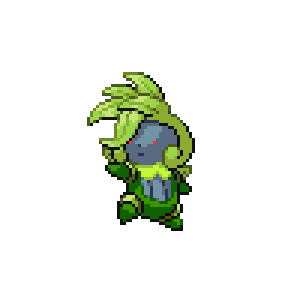
Whenever Oddling are pulled out of the ground, they jingle at high frequencies in an attempt to escape whoever pulled them out. Once free, the ringing stops and they scamper away.
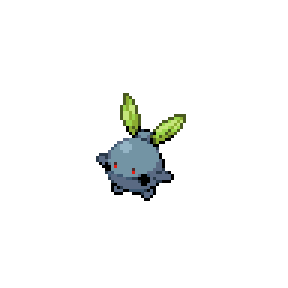
They have no natural predators in their environment, and as such they do not have a need to pack a punch. To help develop their offensive abilities in battle, Trainers may use small vials of Wave Incense to help perk them up.
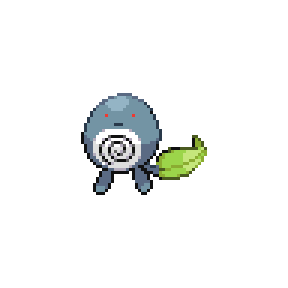
Oddtle can be found in marshes or swamps half submerged in the mud. It siphons nutrients from the mineral rich mud to grow leaves from its head.
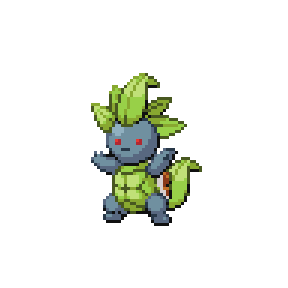
Oddcool hides on the sea floor disguised as seaweed. It digs its tentacles into the sea floor to dredge up food.
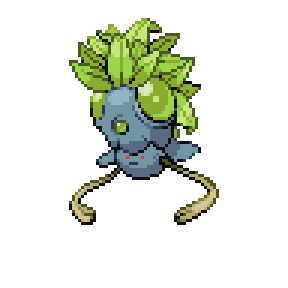
Oddtortle has shells that grow reeds and grasses that appear in marshes. It can be found buried in the mud, where it camouflages itself to hide from predators.
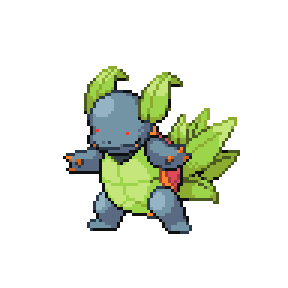
Odduo experience a jolt of energy whenever they absorb lots of sunlight and run around wildly to burn off some of the excess energy. During winter when there is little sunlight, they conserve their energy by limiting their movement.
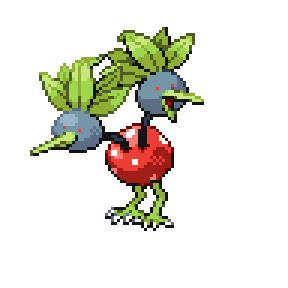
Oddeel travel along coastlines to find a viable spot to sunbathe undisturbed. Once they find a suitable location, they fall asleep and absorb sunlight through their leaves.
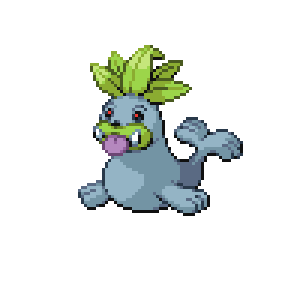
The idea of sleeping somewhere dry is completely anathema to Oddgong, as they require lots of water and sunlight to develop. They rest alongside coastlines to get those nutrients while sleeping.
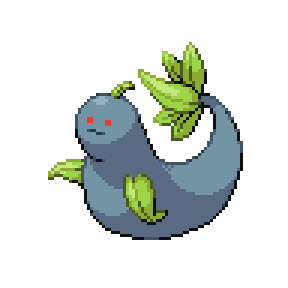
Oddnix maintains its rotund head and the leaves on its body by rubbing against sharp rocks. This smooths out its body, making it faster in battle.
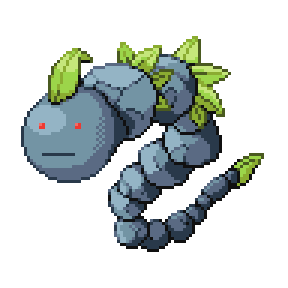
The bold, fiery dance of Orito combines elements from many dancers, each technique copied and memorized in its body. Even though Orito's dances lack originality, its superb skill rivals human dancers.
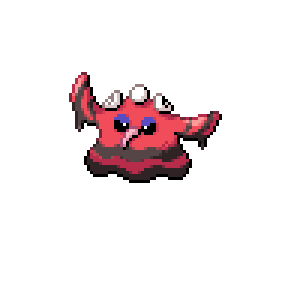
People used to hunt Orirow with a shortbow or lance, as their feathers were once collected for textiles. These weapons were banned on islands, creating a sanctuary for them to grow and prosper.
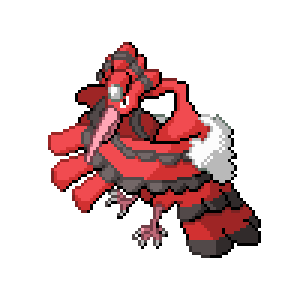
Oribok are passionate creatures that spend most of their time perfecting their dance. Their tail thuds against the ground to produce a clapping sound that they rely on to keep rhythm.
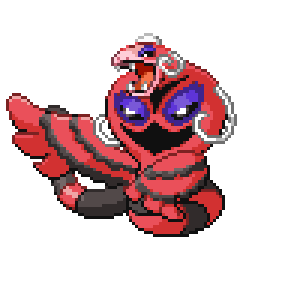
Oriadier can dance on water with their long amphibious legs, drawing many crowds to see them dance. While many people come to see this gimmick, many stay for their passionate and emotional dancing.
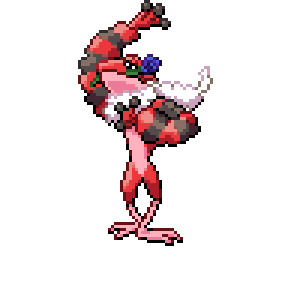
The Lone Earring attached to its ear picks up sound vibrations that help it move in synchronicity to certain moves. Its fire flickers with passion and vitality and grows in intensity whenever it needs a boost before the finale.
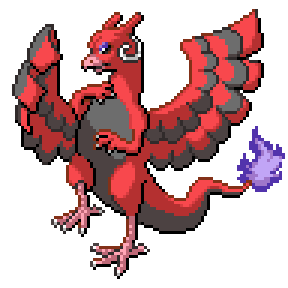
Orito molds its body into a copy of its Trainer to cheer on its teammates. Its electrifying performance revitalizes the spirit of its teammates to help push them to victory.
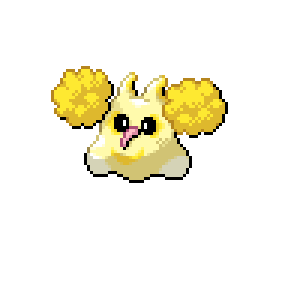
Oriossom barge into parties and bars to amaze people with their dancing skills. They wave their pom-poms to the music, and when a party ends, they sneak out to find another party to infiltrate.

Oribok are excitable creatures that cheer on their teammates by lifting their hood high. They often get complaints of blocking the view for other people watching Pokémon battles or sporting events.
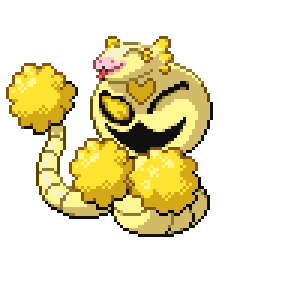
Whenever present for the start of a tournament, Orimence launch waves of confetti into the air by flapping their massive wings before cheering on allies.
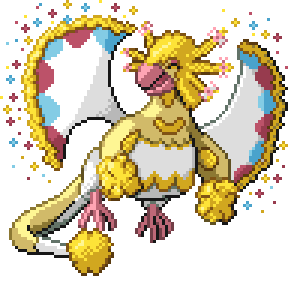
Oriadier energize players by performing stunts and shaking their pom-poms. With their powerful legs, they display their eagerness to inspire by jumping high into the air before landing with a flourish.
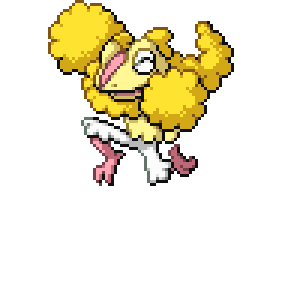
Orileaf are enthusiastic cheerleaders that love to get the crowd excited. Their trademark whistle comes from the leaf on their head, which shakes with excitement whenever a gust of wind blows by.
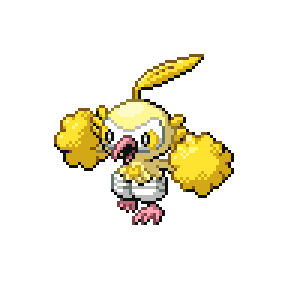
Oriduck love to cheer for their Trainer and teammates. Over the course of a Pokémon battle, they can forget who they are cheering for and simply cheer whoever is winning.

Orifetchd love to cheer on their teammates from the sidelines, tossing their baton into the air to show their excitement. Their enthusiasm and glee make their performances particularly motivating, as many Trainers attribute success to their cheers.

Equipped with confetti cannons and a set of pom-poms, Oritoise cheer on allies from the sidelines with an electrifying performance. Once a fight ends, Oritoise hose down the field to swiftly clean up their confetti.
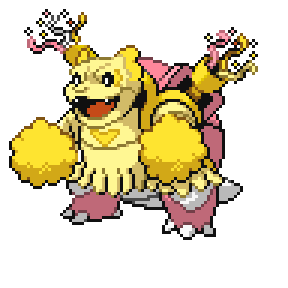
It produces a naturally sweet enzyme that is perfect for making a Big Malasada. To get some of that enzyme, bakers dance with it until the enzyme forms a sap that sticks to its feathers.
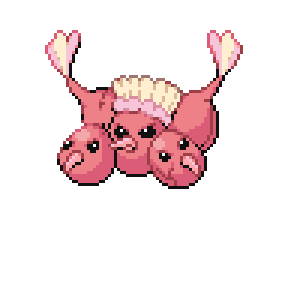
Oriflora perform soft, mellow dances near tropical beaches as they soak in the sun's rays. Sunlight gives them the energy to dance all night long.
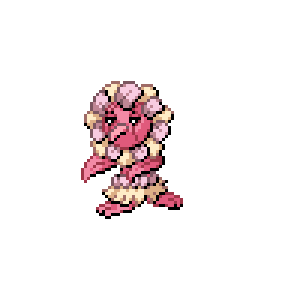
Oribok are mellow dancers that sway their body to a gentle tune. Even when they wrap their tail around another Pokémon, they always seem to be dancing.
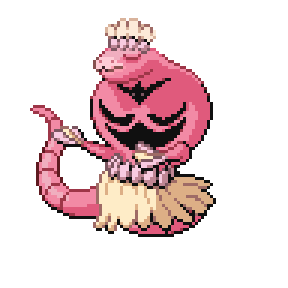
Oriwile often make mistakes during their hula performances. While most people clap out of sympathy for this Pokémon, others are intimidated into clapping by the set of jaws on the back of their head that are revealed when they bow.
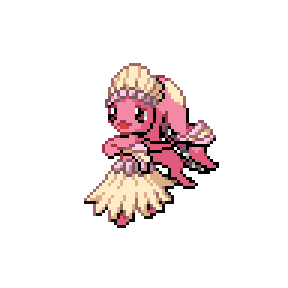
Orileep rhythmically sway their feathers to whatever music is nearby but prefer slow songs. Many remain planted in the sand at beaches, hoping for tourists to join them in a dance.
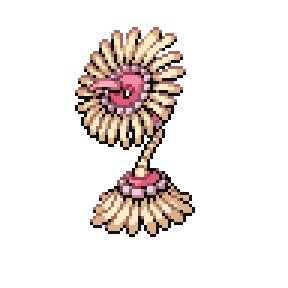
Their smooth rhythm made Oricorio a favored ballet teacher in medieval times, their grace and patience surpassing human instructors. Much like a zinnia, they cultivate their talents quickly and are beautiful in a light breeze.
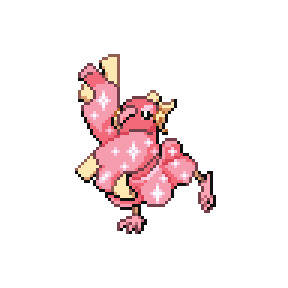
Oriadier perform a traditional dance originating from remote islands where their spirited dance inspires many people to learn about their heritage. They slap their chests with large, webbed palms as is customary with this type of dance.
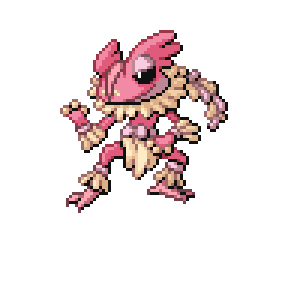
When the cold heart it has embraces Purple Nectar, its grief and suffering is dignified through the love it has for everyone, from its beak to the tips of its feathers. Its undying love for life born from pain is marked with each step forward.

Oriolu are elegant but timid dancers and are found near periwinkle patches, which remind them of their parents. It is said that a Trainer that catches an Oriolu develops an everlasting bond with them.

Orimander are excitable creatures that are still developing a sense of patience and grace. Despite these drawbacks, they pick up on rhythm quickly and enjoy incorporating their tail into dances.
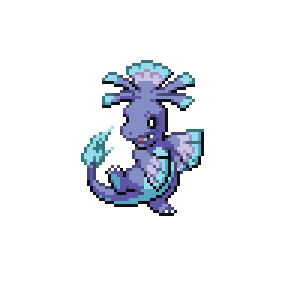
Their dance was once reserved for ancient royalty, as their elegance through the art of dance was unmatched. Rather than roses, people throw bundles of iris flowers to show appreciation after a performance.
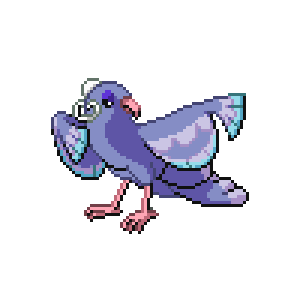
Oriadier remain poised and composed while performing so that their stress does not distract from the beauty of their dance. It is said that Oriadier trap spirits in the bubbles that form around them.
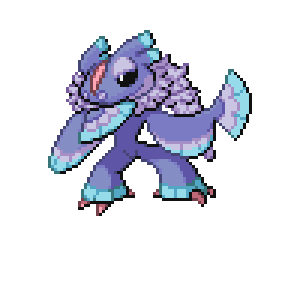
In the hot summer sun, Origong flap the fan on their tails to cool down. They rarely lose their temper and never seem to be bothered by events around them.
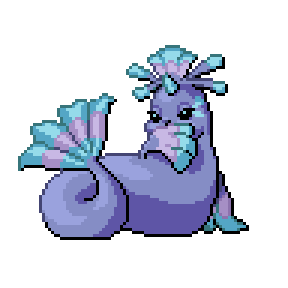
Oriby have two sets of fans that they wave around during performances. They most commonly perform as backup dancers to a main dancer, fluttering their fans in unison.
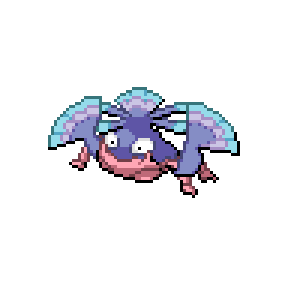
Trubode leaves trash wherever it rolls, making it a nightmare for janitors whenever they enter a building. Special sanitation workers are called to ensure that it does not explode.

Trubcute have a rancid and sulfurous stench that causes other Pokémon to avoid them. They live in landfills where they consume food scraps and plastic.
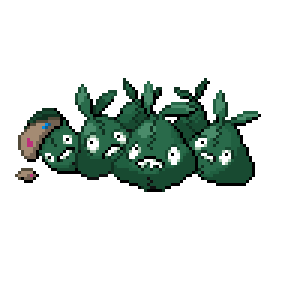
Trubfree flutter through the world with their paper wings. If the wings become damaged or wet, they are rendered unable to fly until they find another piece of paper.
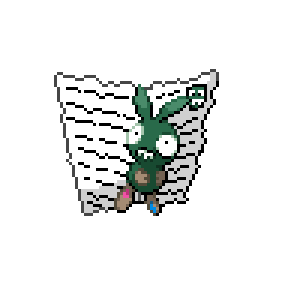
Trubfree have thin plastic wings that are made out of old wrappers. If their wings become damaged, they scramble to find wrappers. Once they have enough wrappers, they secrete a special binding agent that dissolves dyes and binds wrappers together.
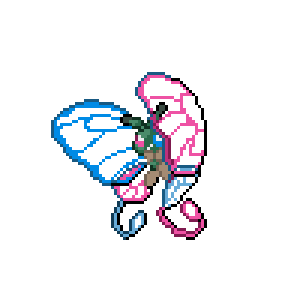
Trubto always has an immutable stench that carries over whenever it transforms. Most other Pokémon steer clear and avoid it because of that repulsive smell.
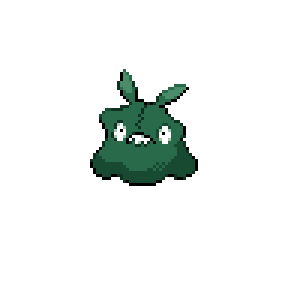
Trubfa often feel alienated because they are worried that their smell would scare away other Pokémon. Trainers that can put up with their stench will find that they are playful creatures that enjoy pranks.
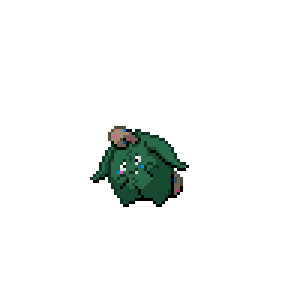
Many people discourage children from playing with Trubsaur because of the poisonous gases they produce. Their vines are also covered with a gel that eats through wool and cotton, as a single embrace can put holes in a Trainer's clothes.
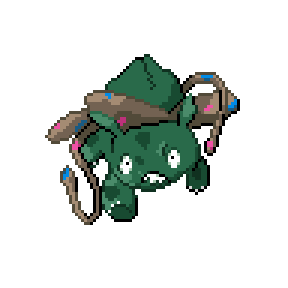
Trubfish is formed from an aquatic garbage patch that floats near factories, made of waste and sludge. Its spines are made of brittle plastic, which are sharpened because of the natural erosion of the material.

Many budding graffiti artists feel inspired by Trubgle because of the art that they produce. Themes of art produced by Trubgle include the value of unpopular Pokémon and universal love for all Pokémon.
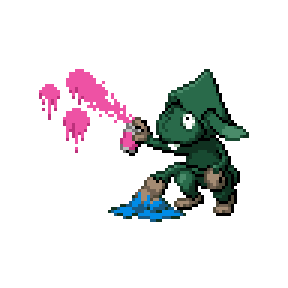
Trublure smell of burnt plastic wherever they go. They rummage through dumpsters to find plastic bags and wrappers to melt into their bodies.
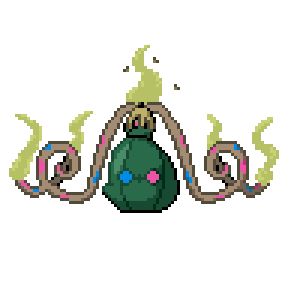
Trubpuff have a talent for singing but are not allowed into venues because of their stench. They resort to singing in alleyways where they have small audiences which mainly consist of Rattata.
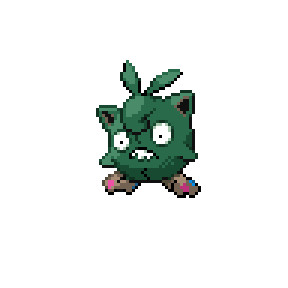
While many people loathe seeing Trubpede, they play a vital role in waste management. By converting inorganic material into organic fertilizer, they help minimize the amount of trash that ends up in a landfill.
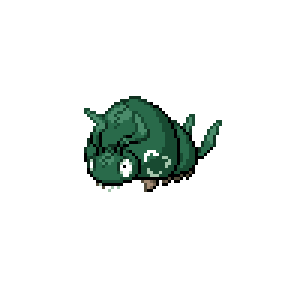
While Trubpede may seem pathetic at first glance, their surprising speed makes them stand out. Their rubbery bodies give them the friction needed to roll atop of muddy surfaces, giving them an advantage in the rain.
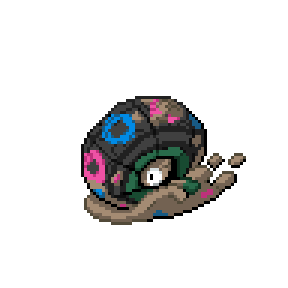
Trubdra constantly trail a contaminated leachate behind them, the foul-smelling liquid leaving behind a sticky residue. Most are only found in sewers and landfills, as they are seldom tolerated elsewhere.
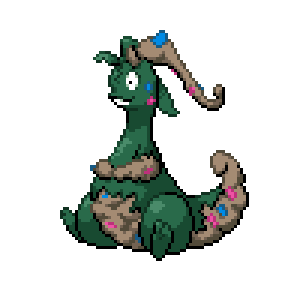
It is found floating atop sewage or resting atop circular holes such as cans or bowls. Some Trubtad are small enough to cover a Tin of Beans after eating the contents inside.
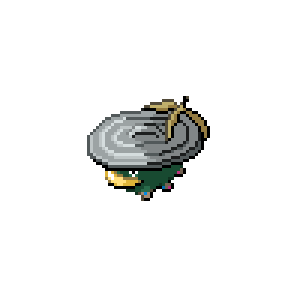
Trubsian enjoy playing with an assortment of broken toys that end up in landfills, such as a discolored ball of yarn or a broken laser pointer. After eating lots of garbage, they cough up a hairball before resuming their play.
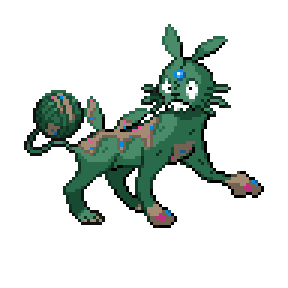
Trubphish claws are lined with the toughest grocery bags known to mankind. This layer of protective plastic mostly serves to prevent organic matter from growing on their sludge-like claws.
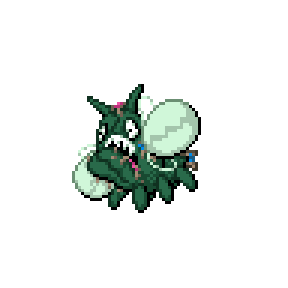
Trubwag can find itself lodged in pipes that connect to lakes and rivers. Plumbers are typically called in to help dislodge Trubwag from pipes before transferring it to a safer location.
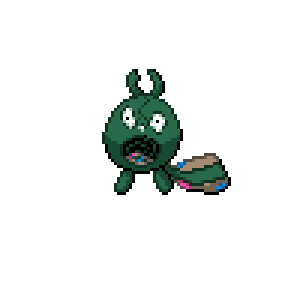
Even though Trubchoke reek of garbage, many children are inspired by their dedication to helping keep streets clean. There has been a recent wave of films where Trubchoke are featured to help normalize street cleaners as an honorable occupation.

Trubtle survive living in landfills by wading through the muck to find plastic to eat. To defend themselves from fellow scavengers, they spray dirty water at their competition.
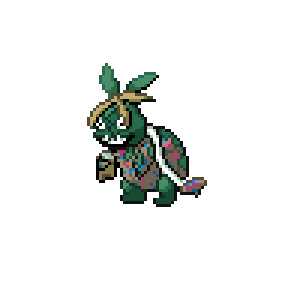
Trubcool are a nightmare for plumbers throughout the world because they often get stuck in drainage pipes. Not only do plumbers have to drain clogged water but they may also have to face against Trubcool's powerful stings.
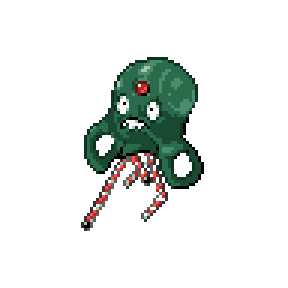
Trubtortle rummage through landfills to find plastic to consume. Their tough shells allow them to fall from great heights without hurting themselves.
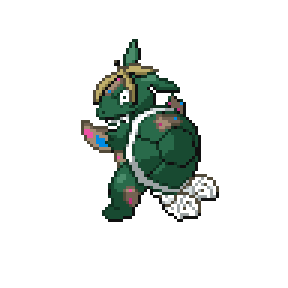
Trubmer drag trash into their thick sludge, from empty toothpaste tubes to used Potion bottles. They have a pungent smell and are chased away despite being helpful.
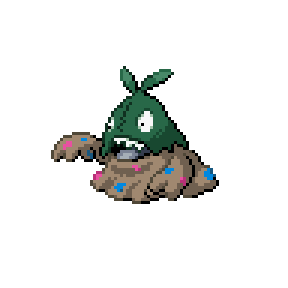
Trubtoise produce a thick sludge from their cannons that is created after they eat lots of plastic. This sludge can be melted down and converted into renewable materials, but few people want to harvest the putrid sludge.
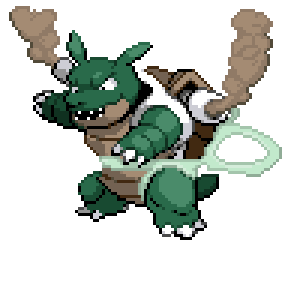
Trubtly produce a horrible stench that lingers on clothing for days. Many attempts at making their odor more tolerable through candles and incense have yielded no solution.
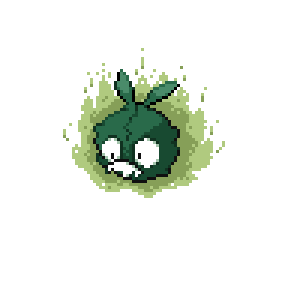
Garbtor release a foul stench that is repulsive to most Pokémon. Rattata and Raticate are among the few that tolerate the smell, feeding Garbtor trash in exchange for a place to sharpen their teeth.
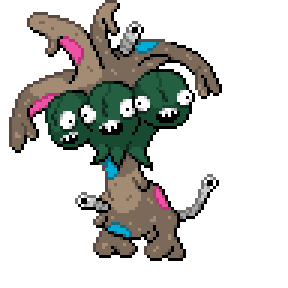
Garbfree often go dumpster diving to find paper for their wings and nests. Once they find a suitable sheet, they squirt a biodegradable glue onto the paper and stick it onto their back.
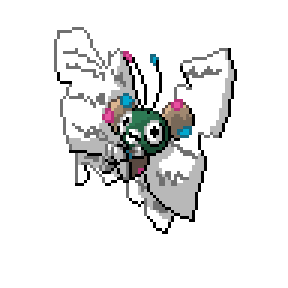
Garbgon are so condensed that any trash they expel shoots out with blinding speed. They shoot out shiny objects bent into the shape of amulets or trophies in an effort to become friends with strangers.
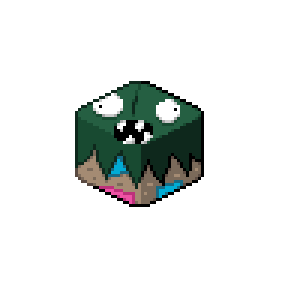
Garbgon2 force cursors to drag files into the trash, even if the user still needs the file. If left unsupervised, they eventually drag all non-vital files into the trash.
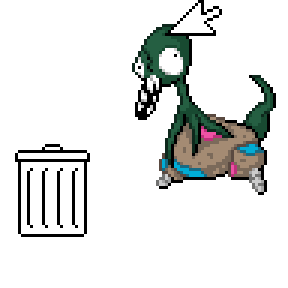
Garbsaur have a grotesque appearance that scares Trainers and Pokémon alike. Despite their gentle inclinations, many play up their ugly appearance to conform to social pressure.

Cargull flies above the sea waiting for the right opportunity to strike. Once it spots prey below the surface, it dives down and bites onto its prey before surfacing, quickly securing its next meal.
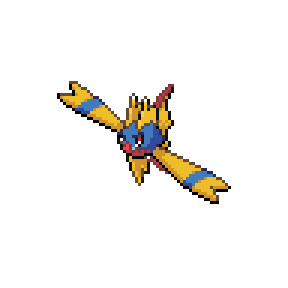
Cartrike does not enjoy captivity, as it enjoys running through tropical forests and swimming in jungle rivers. If it finds itself in an enclosed space, it becomes highly aggressive and bites down with Thunder Fangs until it can escape.
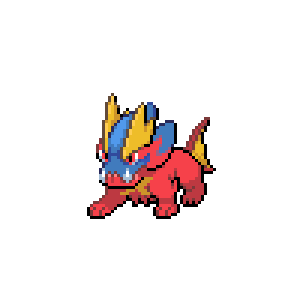
Carphish can snap their claws so quickly that they produce loud bubbles that generate lots of heat. They rely on these bubbles to stun prey or break open rocky burrows before sinking their fangs into another meal.
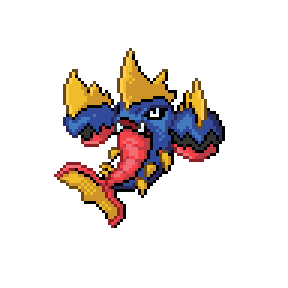
Carperl shells have a sharp edge that can cut through fins, making them incredibly dangerous for divers. There have been many incidents where divers lose a finger trying to pick up a Carperl.
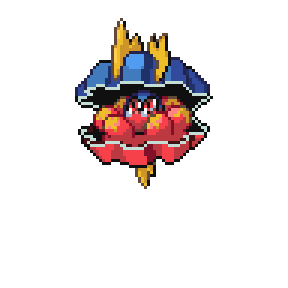
Sharpans zip through the sea with navy camouflage and search for prey to consume. Their jaw stretches over Pokémon larger than themselves to be digested by their stomach acids.
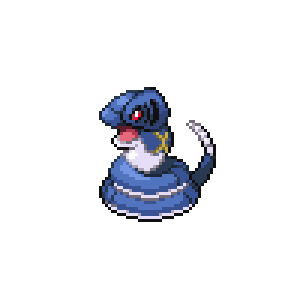
Sharpfisk lay at the bottom of the ocean floor where they ambush prey with a jolt of electricity. If two Sharpfisk meet during the courtship season, they exchange bites on each other's fins to signal interest in one another.

It loves the rain, especially when it is able to spend time outside to soak in the mud. Some Trainers give it a Damp Rock to ensure it spends more time happy in the rain.
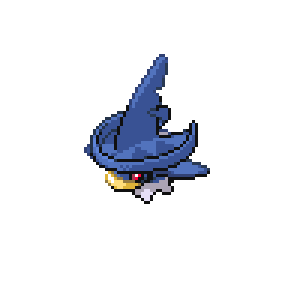
Sharperl have a sharp edge around their shell that allows them to cut through bones when they clamp down. This allows them to maintain a heavy diet of protein despite being primarily stationary.
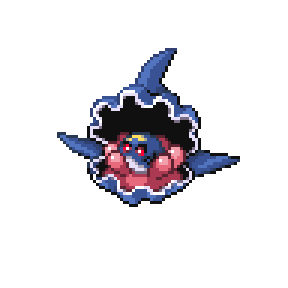
Phantmime resembles a wooden puppet, though its actions are entirely its own. It conjures brambles to guide foes into its invisible walls.
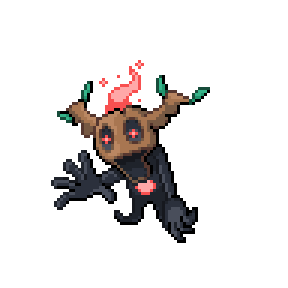
Phantnair have a sturdy wooden stump atop their head and often ferry other Pokémon across bodies of water. They often release a happy whistle whenever the Pokémon they help give them a reward for their help.

Phantans slither through forests with an oak mask on their head. They wrap themselves around prey before siphoning their life force.
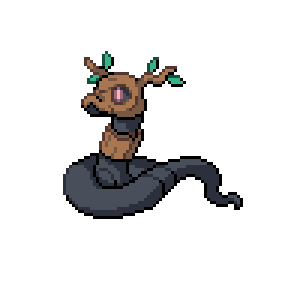
Phantsly have wooden bodies that resemble a small tree. They often stalk Trainers out of curiosity but are too shy to initiate a confrontation.
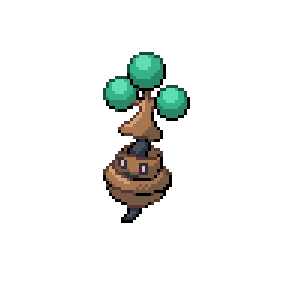
Phantile forage for Tanga Berries to protect themselves against the many Bug-type Pokémon in their natural habitat. They hunt rodent Pokémon by reaching into burrows with their long snout and let out a spooky cry whenever they are full.
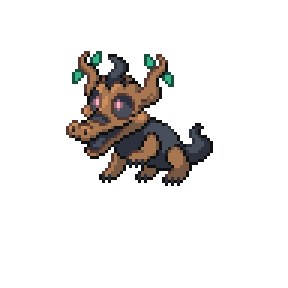
Plucking one of Phantlow's feathers and mixing it into tea is said to cure sore throats and coughing. It is difficult to find Phantlow during cold, windy seasons, which makes finding a Phantlow feather all the more rewarding.
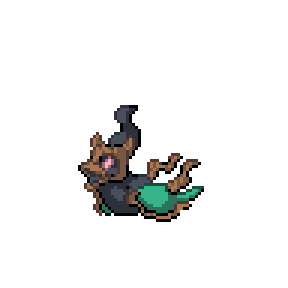
Phantskit creep up on people who travel through swamps, silently gliding through the murky water. When caught, they skittishly flee, only to repeat the process a moment later.
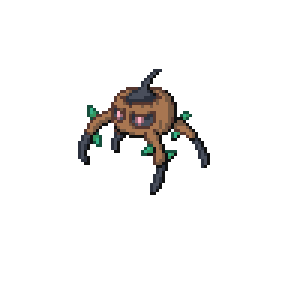
The branches of a Treth grow into long claws that they scrape against boulders to keep sharp. When they are not sharpening their claws, they wander haunted forests hoping to find the right Trainer to go home with.
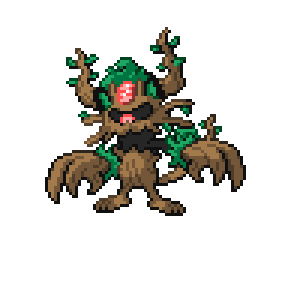
The tentacles of Gloogela are made of tiny filaments that stick to any surface they touch. The filaments are made of carotenoids that give Gloogela their distinct orange color.
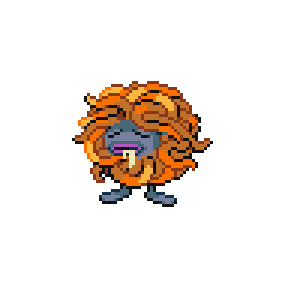
Gloochou ooze a smooth sap from their mouths that is applied onto wood as a varnish. With a few lights and bulbs, the highly conductive sap can turn a wooden sculpture into a beautiful display.

Glooturn sap is applied to wooden sculptures to create pieces of art that protects artwork from water damage and conducts electricity. Art exhibitions rely on this sap to illuminate spaces without wires interfering with the aesthetic of the displays.
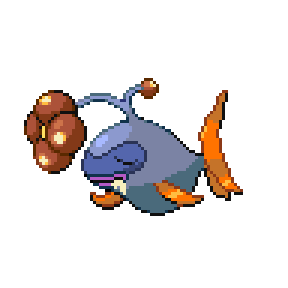
A popular rumor claims that eating the sap from Glootu heads allows people to share the glimpses of the future. These rumors fail to mention that their sap is incredibly bitter.

Drinking the syrupy drool of Glootu is said to help people see short glimpses into the future. The drool itself is extremely bitter and causes stomach aches, so most people avoid drinking the drool.
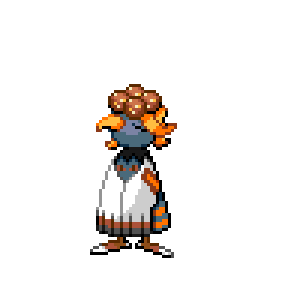
Gloopip coat their bodies with the sap they produce, as the sap lubricates their bodies and make themselves slippery. This is especially important for Gloopip as they flap their leafy wings rapidly to fly.

Glooloom rely on a slippery sap to lubricate their small leafy wings, as the leaves constantly make small adjustments to keep their bodies airborne. The sap is also bottled and sold as bicycle oil because of how slippery it is.
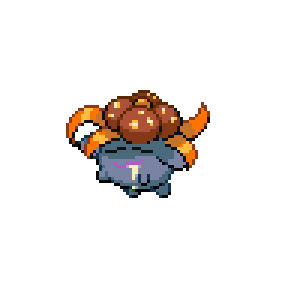
The three large puffs on Glooluff's body are full of sap, as each puff has tiny holes that expand and contract to keep Glooluff airborne. The sap ensures that their bodies stay moisturized, as Glooluff cannot fly when their puffs dry up.
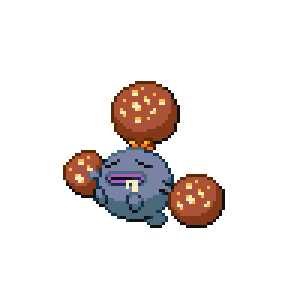
Gloosaur rests in sunny patches of grass to charge up on sunlight. The budding flower on its back crackles with energy as it slowly uncurls.

Gloobuffet are said to be sturdy creatures that can endure a lot of pain before needing to rest. Scientists claim that the thick sap that they drool is a part of how their body manages to remain unblemished after getting hurt.
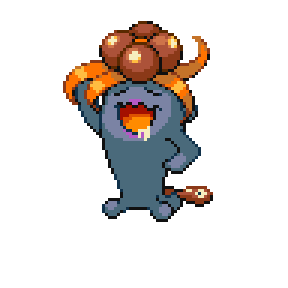
Gloocko climb trees to find the best branches to nap on. The drool from their mouths collects in puddles at the base of the tree, which provides bitter nourishment to some Pokémon.
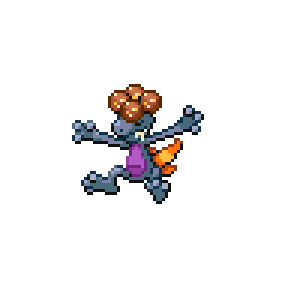
Glooran drool a poisonous sap that clings to fur and scales. This sap is incredibly difficult to remove, even with water or friction. Many Pokémon have gotten ill trying to remove this sap with their tongues.

Glooeon are capable of blending into their environment with their superb camouflage, but the plant bulbs on their head will always remain the same color. They cover the bulbs on their head with leaves to help make their camouflage more convincing.
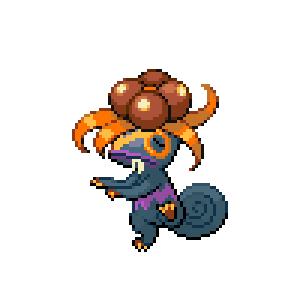
Gloosaur drool a nutritious sap that is made into anti-aging creams. The toxic pollen they produce is also taken and made into anesthetics that numb muscles during surgery.

The sappy drool of Glooskull is collected by herbalists to produce scented candles. It is said that candles made of Glooskull sap help people communicate with the dead, which is why finding them can be quite difficult.
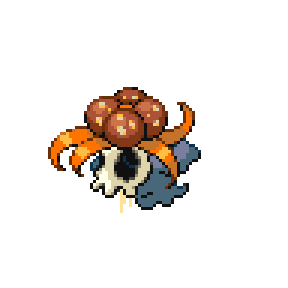
Gloofairy produce a special sap from their mouths that many woodworkers turn into lacquer. Under the light of the full moon, the lacquer made with this sap fluoresces with a soft glow.

Under the light of the full moon, Gloofable sap is applied to decorative wooden sculptures as a special lacquer to make the works of art glow. Monthly art exhibitions showcase the powerful glow of Gloofable sap to raise money for reforestation.

Their diet consists mostly of the Revival Herb, which they enjoy for its bitter flavor. The bitterness activates a certain part of their brain that helps keep them active.
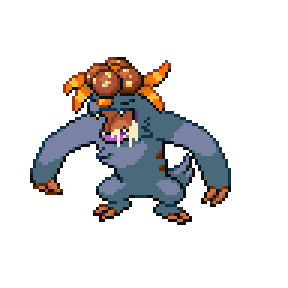
Glooang produce a thick sap that often gums up their gears, preventing them from rotating. Trainers who want to keep Glooang healthy need to clean their gears every few days to prevent sap buildup.

Gloosis have several flower buds across their body, each with their own unique scent. Perfume manufacturers harvest pollen from these flower buds to produce pungent aromas.

The flower buds on the heads of Glooseed have a strong metallic scent. When pulled out from the ground, their thorns produce a thick sap that produces a stinging sensation if held without protection.

Gloofisk constantly produce a sticky sap that clings to their bodies. This makes stepping on Gloofisk particularly dangerous, as the sap causes them to cling to whoever stepped on them.
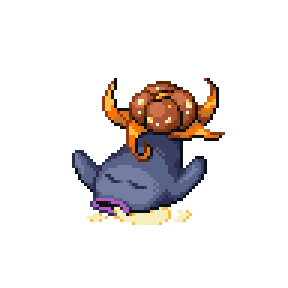
Gloomander produce a pungent scent whenever they are in danger that grows stronger if they are injured. This scent is said to be incredibly spicy and irritates the eyes.
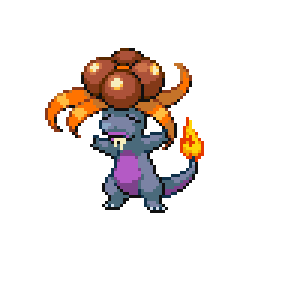
Gloogull drool a thick sap onto whatever is below them when they fly. The sap is high in nutrients that most Pokémon need, so wild Pokémon will happily lick the sap off each other.
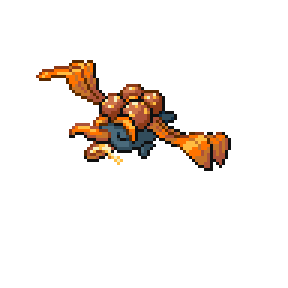
Glootrodon continuously drool sap from their mouths. This sap is incredibly nutritious, but it is also so sticky that it clings to clothing long after harvesting.
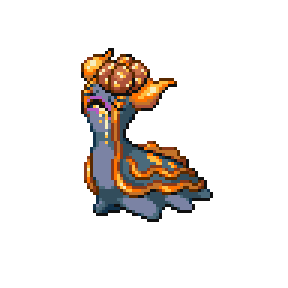
Gloocool releases a thick sap from its bell-shaped head that lures fish Pokémon towards it. It digs its tentacles into the sea floor to avoid getting swept away by water currents.
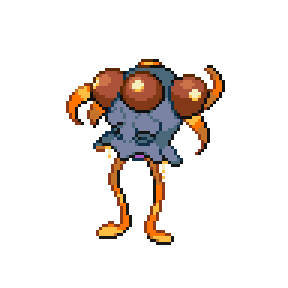
Noisea have a dulcet cry that is endearing to many people. They are a major attraction at zoos where they are trained to sing in unison.

Noidra have an ebullient cry that is pleasant to listen to. They are a featured attraction at aquariums where they sing short jingles in unison.
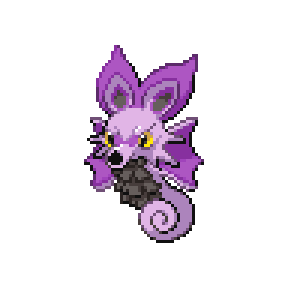
Noitom can release sound waves through its wings like speakers. Combined with its perfect mimicry, it can act like a speech jammer by capturing and reflecting a person's voice, causing them to fumble their words.
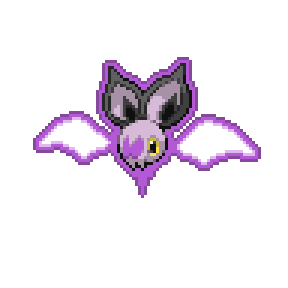
Noieal emerge from their caves at night to hunt for fresh fruit. From low-pitched grunts to ultrasonic barks, Noieal have many ways to communicate with those around them. Their constant noise keeps many Pokémon awake at night.
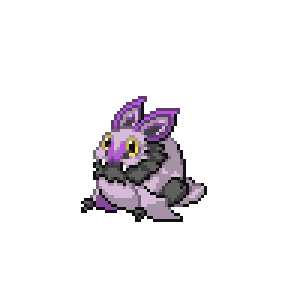
When Noiwag are close to their Trainer, the pattern on their stomach focuses soundwaves so that Trainers who are hard of hearing can hear better. They are small enough to fit in most backpacks and can even function underwater.
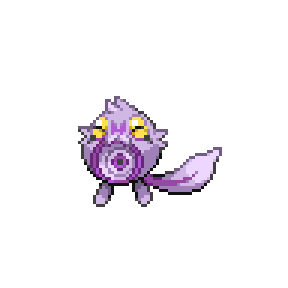
It flies through the air carrying Music Mail, which is used for correspondence between artists and musicians alike. If given sheet music, it sings the song with precision and vigor.
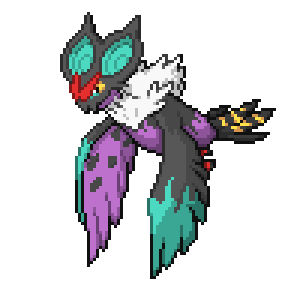
Swabotto are popular pets for children who enjoy music. Many singers and dancers have Swabotto accompany them, further inspiring many to become performers. Their movements are as light as their voice.

Swabpi create the cloudy shell around their body to hide the small wings that allow them to fly. This is thought to be a defense mechanism when from Swabpi once had many predators, many of which are now extinct.

They love eating various mousses, as they adore the light, fluffy texture that reminds them of themselves. They are also known to stare into mirrors, fascinated by their fluffy appearance.

Swabpuff are heavy sleepers because very few sounds are able to penetrate through their fluffy wings. Lumberjacks often need to shake them awake to ensure they do not get hurt.

Swabnat spend much of their time learning how to float through the sky and often get tired from doing so. They have a special layer of white cloudy fur that protects them whenever they fall to the ground.
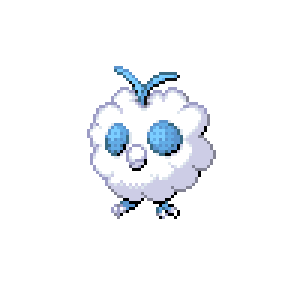
Swablix are as cold and sweet as a Swablu Shaved Ice. Their bodies flake off tiny ice crystals that make a delicious treat when paired with syrup. Many Swablix enjoy working alongside chefs where they get free access to delicious treats.

Swablow love to rest on people's heads because they enjoy the company that comes with it. They are prone to experiencing loneliness, so they try to keep themselves near people to cheer themselves up.
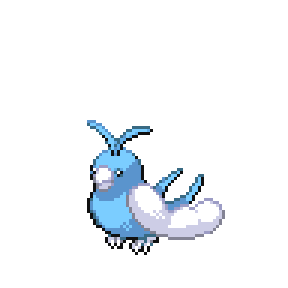
Swabwellow are too large to rest on people's heads but that does not stop them from trying. They crave affection and will seek out kind-hearted people to be friends with.
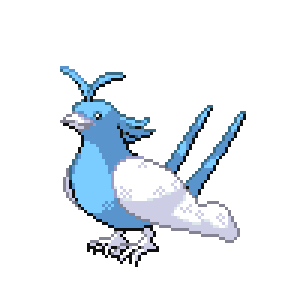
Swabskit float across ponds and lakes with soft pads attached to their legs. They chirp happily whenever they manage to find a berry in the water.
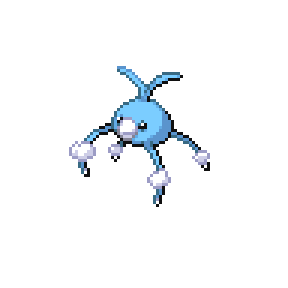
Swabduck nests on jagged beachside cliffs, as its predators cannot fly to reach its nests. Its singing brings tourists from around the world to visit.
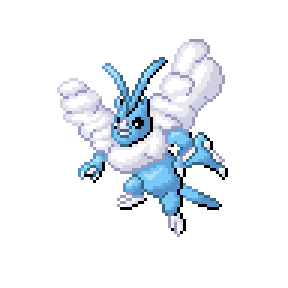
Altanette soar through the sky with rigid movements that make them seem like puppets. Their lack of grace causes them to bump into other Pokémon while airborne.
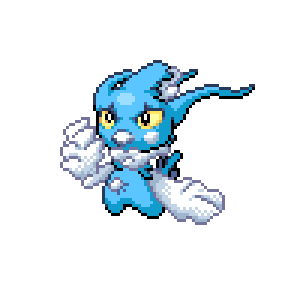
Altaeye have ethereal white crystals over their eyes that detect cursed energy in other Pokémon. They soothe cursed Pokémon with a soft lullaby while absorbing the cursed energy.
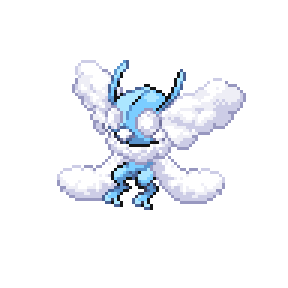
Known for its sticky grip, one of the few known instances where it loosens its slimy grip on an item is when it spots a Golden Pinap Berry to steal. It will stop whatever it is doing to get a closer look at the shiny berry.
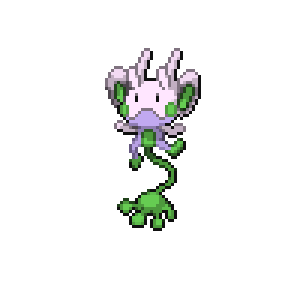
Googon2 warn PC users that a data leak is occurring and that data corruption is to come shortly thereafter. Many users choose to ignore Googon2, leading to many users losing precious documents and photos.
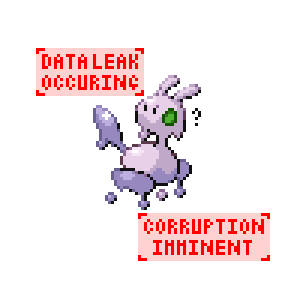
Googon2 warn PC users that a data leak is occurring and that data corruption is to come shortly thereafter. Many users choose to ignore Googon2, leading to many users losing precious documents and photos.
Googon2 protect PCs from overheating by releasing a thick gel that acts like a heat sink. This gel is easily wiped off if they end up using too much.
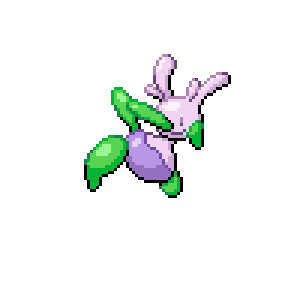
Slilett dig underground tunnels by secreting a slime that dissolves rocks and biological matter around them. Groups of Slilett can cause sinkholes when they dig below roads.

The gel Goomander produces causes any flames it produces to burn a light green color. It relies on its twin flames to constantly burn gel from its body, as the gel will build up and harden if not used.
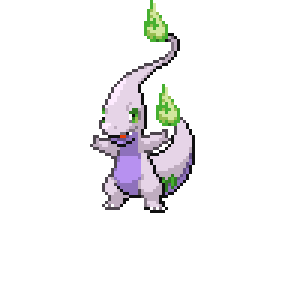
The stones that gut out from Regisaur's back are made of a toxic material similar to asbestos or lead. When disturbed from their slumber, they grind the stones on their back into a fine powder before unleashing toxic dust over foes.

Regigon2 that appear on PCs are often unassembled and require user input to put them together. The puzzle of figuring out which parts go where is part of the fun when dealing with Regigon2.
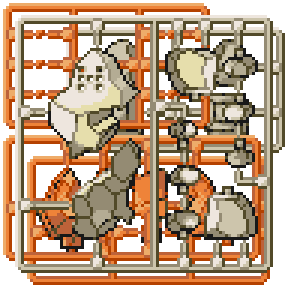
Its thickened skull resembles a Polished Mud Ball in smoothness and color. To maintain its smoothness, it rubs its head against rocks to polish its skull.

Regitite meditate in caves to improve their mental acumen. Their rocky bodies allow them to continue meditating even when they are approached by other Pokémon that try to distract them.
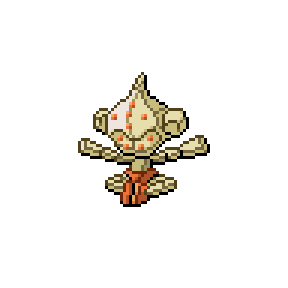
Regikarp is kept in specialized home aquariums, where the water is mixed with minerals to lower the freezing point. Its body temperature is below the freezing point of water, making it cold to the touch.
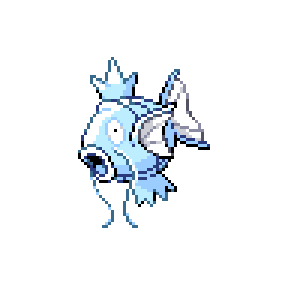
Regitle retreats into its frosty shell when threatened, leaving no opening for claws or talons to grab onto. When in this defensive state, it resembles a piece of Never-Melt Ice.
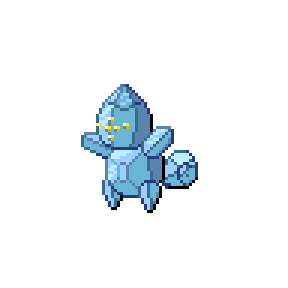
Regimander has a special metal plating that is difficult to scratch. Any blemishes to this metal armor are melted away by the flame at its tail to quickly fix injuries.
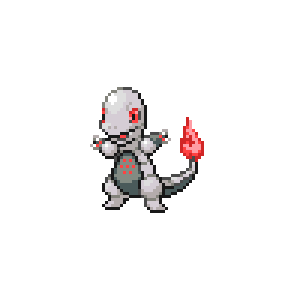
Regimy are friendly Pokémon and enjoy walks and slimy hugs with their Trainer, especially since they do not meet many of their kin often. The powerful lasers that can be shot from their eyes deter many potential friends from approaching.
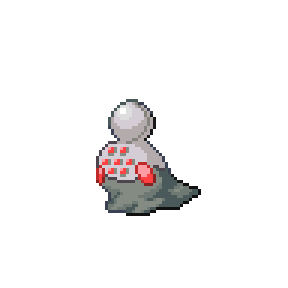
When threatened, Regitle bunkers down and curls into its shell. Its shell is tougher than diamonds, making penetrating through the shell nearly impossible.
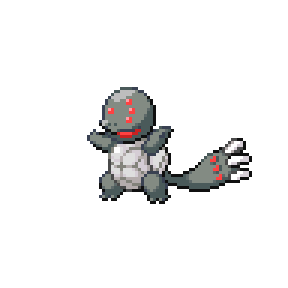
Vilenx may be beautiful to look at, but their foul-smelling flowers atop their heads makes others keep their distance. Vilenx chase other Pokémon to give them kisses, a prospect many find unappealing.
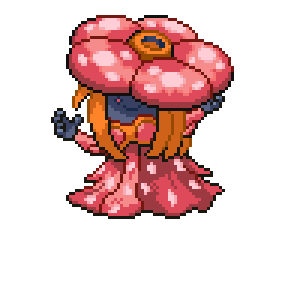
Vileto has a large flower that has taken over its shell. It scuttles in jungles where the flower makes for great camouflage.
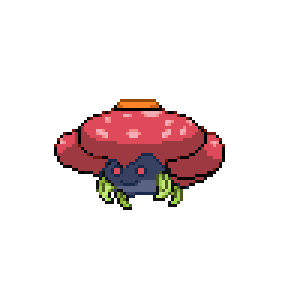
Vileossom assuages the pain of physical therapy by releasing pollen that numbs pain. It works alongside medical staff to ensure the pollen is given at the right dose to facilitate healing.
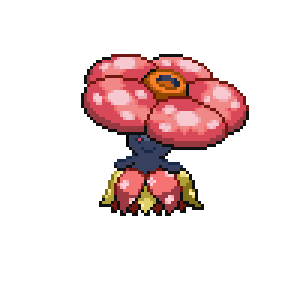
Vilesey are astute experts at healing Grass-type Pokémon and are always willing to help others. They are gentle with Pokémon they take care of and are known to chastise Trainers who try to interfere with their work.
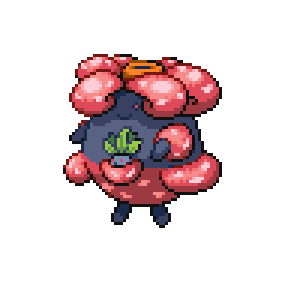
Vilegron are protective of flower fields, attacking anyone who tries to destroy the natural flora. If a section of the fields is torn up, Vilegron spread seeds to restore the damaged section.
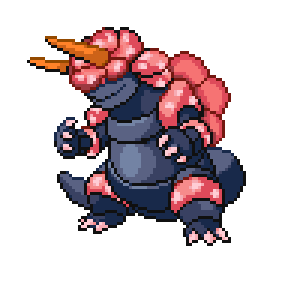
Vilesis floats around flower fields where it collects pollen from nearby flowers. The aroma produced by Vilesis is harnessed as a sleep aid, helping people with insomnia fall asleep.
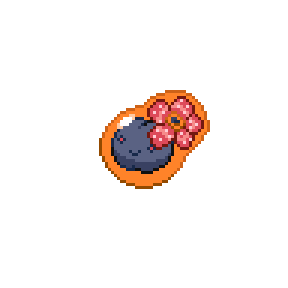
Vileseed burrow themselves underground so only the flower on their head is exposed. Whenever they are hurt, they release a thick, metallic scent that lures in Fire-type Pokémon into the area to roast whoever is bothering them.
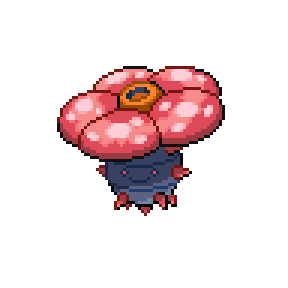
Vileduck are a nightmare for janitors and custodians everywhere because of the amount of pollen they release. They often violently sneeze with enough force to cause headaches.

Vilesprout sprout roots from their body and connect to each other to form an underground network. During spring, they coordinate to release the pollen from their flowers to maximize the chances of pollination.
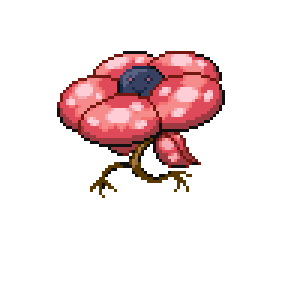
Vilecruel releases a viscous gel that sticks onto other fish Pokémon. The gel slowly eats away at scales and bones, turning other Pokémon into a soft meal for it to eat.
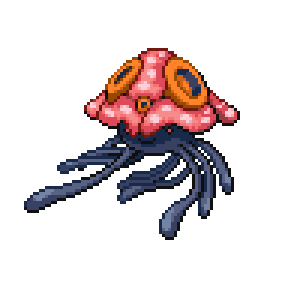
The bivalve Pokémon releases a viscous sap from where the shells meet together. This enables a Vileder to slam its shell shut without damaging the internal organs, making it hard to pierce through.
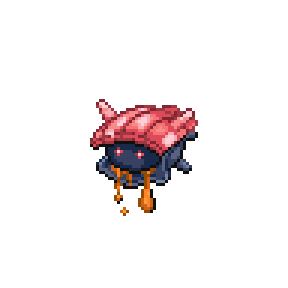
Necrouna is covered in a black, crystalline cocoon that serves as a sturdy barrier against claws and talons. It fires lasers at anyone who comes near, scaring many potential predators away.

While Necrobat's speed surpasses many airplanes, they are far from stealthy creatures. This is because they constantly shoot beams of light in their wake.

Stuffsaur enjoy being dried out in the sun after washing their bodies. This nourishes the plush bud on their backs, which is packed full of cotton fluff.

There is an implicit understanding between Stuffree and parents that it may live in the house if it babysits their children. As such, Stuffree takes care of chores and cleans up after them.

Stufftata are a menace for textile factories because they love to eat fabric. Their noses are sensitive to harsh smells, so they avoid scented materials.
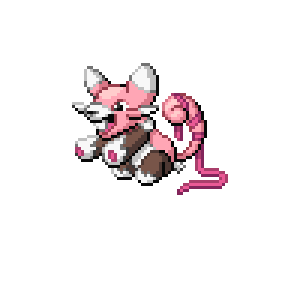
Stuffmander are energetic creatures that love to entertain their playmates. Parents are advised not to put Stuffmander in the washing machine because water causes the threads on their body to unwind.
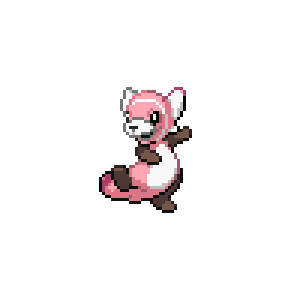
Stuffadier search for hay or cotton to stuff into their body as they constantly leave behind wet bundles of stuffing. Attempts to sew these openings closed have failed because the seams wear down the fabric around it until it rips back open.

Stuffdisc eat very little food and enjoy living in small, enclosed spaces, which make them perfect for prizes at carnivals. Many couples try to win them as prizes to bring home because of their soft, huggable bodies.
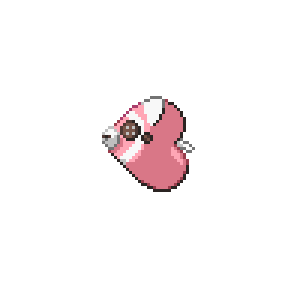
When the wings of Stuffizard get wet, these wings become incredibly heavy, so Stuffizard will try to breathe Flamethrower onto their wings to dry them. Many enjoy being tossed in a drying machine when they get wet.
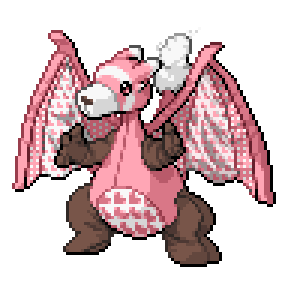
When Stufftle get dirty, they enjoy being tossed into a washing machine to get their bodies clean. If the spin is overstimulating, they can always tuck their legs into their shell.

Stuffetchd sews clothes alongside seamstresses to help repair clothes for Trainers and Pokémon. Its giant needle allows it to create clothes for large Pokémon for events and special occasions, but it also knows how to use a normal needle when needed.
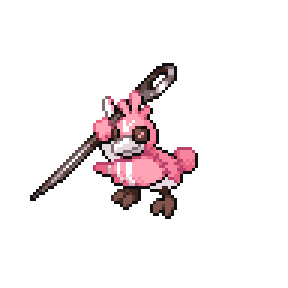
Bedile's frequent naps have given them a reputation for being lazy. Bubbles made out of water and cotton often emerge from their snout while they are asleep.
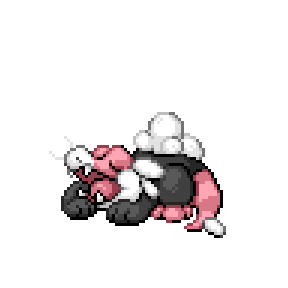
It has a stash of stuffed animals in its burrow, such as the Poké Toy. To receive one from a Beicate consensually means that you have gained its trust, especially if it has not been chewed on beforehand.
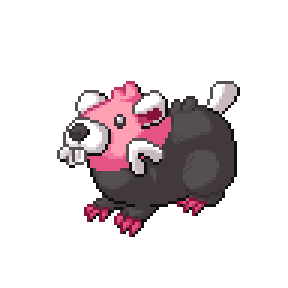
Beans lures other Pokémon towards itself using its demure appearance, hoping to land its next meal. Once another Pokémon is in range, it pounces and smothers that Pokémon until it is unconscious.
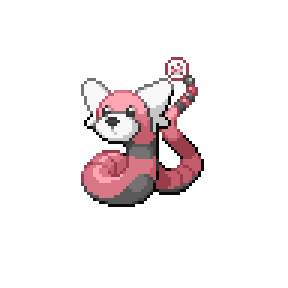
Armed with a cutlass and a flag, Dheldrill slash and sting sailors who wander too close to their nests. Many Dheldrill have eye injuries that they harness a special black wax to form eyepatches for.
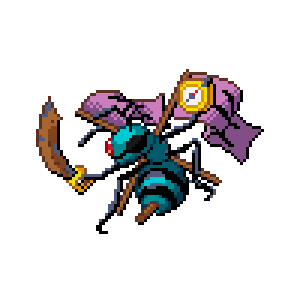
At night, Dhelotto locate slow-moving prey before flying above their target and dropping their anchor. Once their prey is firmly concussed, they retrieve their anchor and dig in.
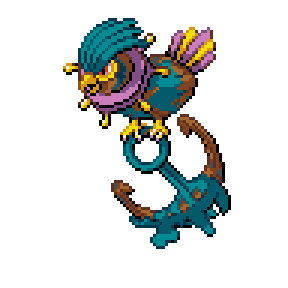
Dhelvire haunt old shipwrecks, protecting the treasure inside the ship from intruders. It wields an enormous axe and launches electric waves to stun would-be thieves.
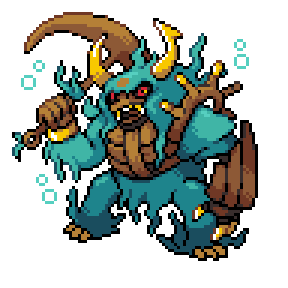
Dhelchar lurk below the ocean waves where they form small colonies to survive underwater. Scientists studying Dhelchar have observed them wearing old diving gear and making rusty spears to hunt aquatic Pokémon.
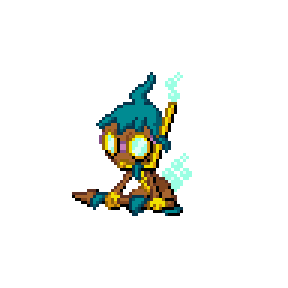
Legends tell of giant Dhelogre acting as a deep-sea vessel for ancient people. It is said that those who come across beached Dhelogre mysteriously die shortly thereafter, causing many people to ascribe their cries to ghosts.
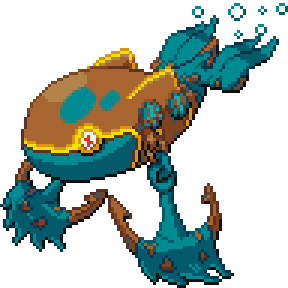
Dhelsprout live in the sea, where they attach themselves to the base of piers. They are left exposed at low tide, which makes them a quick snack for bird Pokémon.
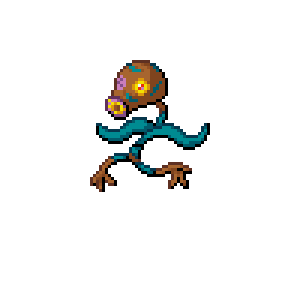
Marsect has long tentacles coiled around its body that spread fungal spores whenever they move. Each of these fungi-spreading tentacles can reach up to a meter in length when fully stretched out, making them perfect for blocking attacks.
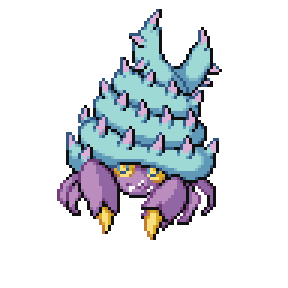
Toxsect keeps its tentacles curled against its body to retain body heat and releases fungal spores whenever it shivers. Its main diet consists of kelp found at low tide, but it also breaks coconuts with its sharp claws to eat the juicy flesh inside.
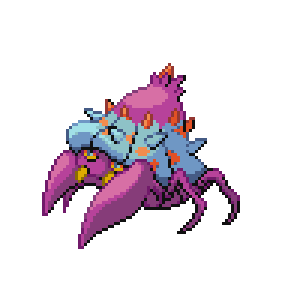
The battle prowess of Hawlrogue eclipses the fighting ability of their peers. Their flexible athleticism and theatrical fighting moves give them an edge in both strength and style.

Hawlferno love to wrestle with other Pokémon, especially when there is an audience. They harness the power of their flames to make their attacks look flashy but hold back to avoid hurting their opponent.

Leaders of their pack are identified with a trophy they wear, such as a Power Anklet. They spar each other for the right to wear the trophy, and stealing it is nearly impossible due to their reflexes.

Whenever they need an extra accessory to help them win Pokémon contests, they are given a Red Scarf to help them project a cool aura. Their daring personalities help them stand out, as they are willing to take calculated risks to amaze judges.

Cacgon are cubic and prickly creatures that nourish themselves off of scarce resources. Their bodies are made into green dyes that colors clothing and flags.
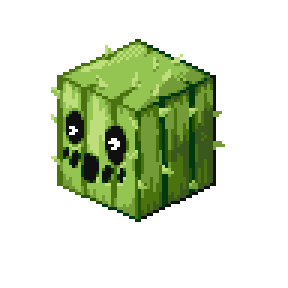
Cacgon are common in desert biomes where they remain stationary for much of their lives. They nourish themselves off of their small roots, which dig into the ground to prevent them from moving.
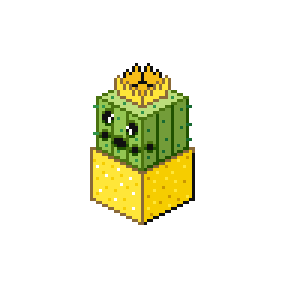
Cacrow survives in the desert where there is a paucity of food. It can be found eating bones of other Pokémon as the nutrient-rich bone marrow helps it stay strong.
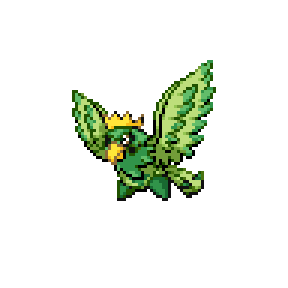
Cacgon2 store pins inside their snout to arm themselves against malware attacks. When malware begins to infect files in a PC, Cacgon2 throw pins at the malware to inject blank lines of code until it is neutralized.
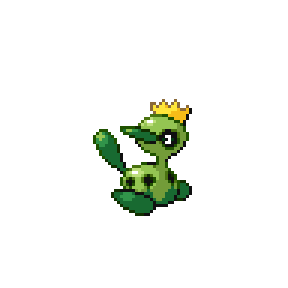
Cacshrew tunnel beneath arid deserts to eat cactus roots and drink from underwater reservoirs. They rarely come to the surface because everything they need to survive is underground, so many Cacshrew are startled by bright lights.

Cacwile eat Kebia Berries to reduce the risk of poisoning themselves after eating Poison-type Pokémon. In the harsh desert where food is scarce, being able to eat Poison-type Pokémon allows them to thrive.

Cactik is incredibly difficult to spot in the wild and will release jolts of electricity if stepped on. This fact makes it difficult to study, so most Trainers wear a set of heavy-duty boots to absorb the shock.

When half buried in the desert sand, Cacish look like any other budding cactus. Many desert enthusiasts can tell them apart by counting how many flowering buds are on their head.
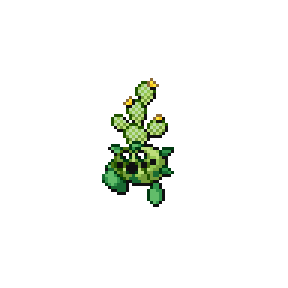
Cacladin are surrounded by a thick cactus shell that protects them as they ram into each other. Their shell swells with water after heavy rainfall and slowly shrinks as the water is depleted.
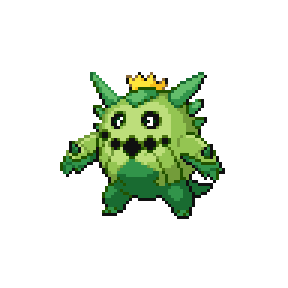
Cactad expands and absorbs rainwater during torrential downpours until it is full and replete. It slowly shrinks in size as it endures weeks or even months without water.
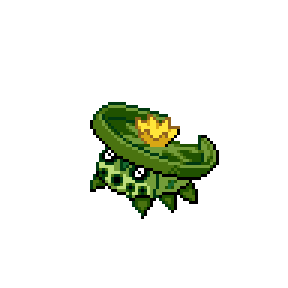
Cacdisc survives off of sunlight and positive emotions, particularly love. Many old couples living in the desert have large Cacdisc in their homes, a sign of enduring love and affection.
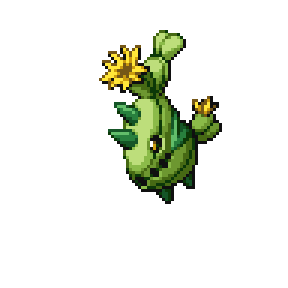
Cactoy are capable of rapidly absorbing water through their singular foot, which they balance on to keep themselves upright. This ensures that their bodies are well hydrated after a long drought.
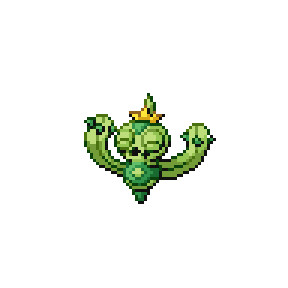
It is seen living in desert environments where the topsoil is no longer present. They mingle their roots underground so they can share nutrients and remain grounded.
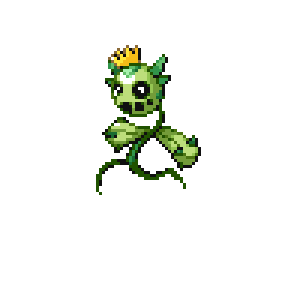
Cactgon are common in desert biomes and need very little water to function. Their long bodies can be broken down into smaller pieces that are sent to factories to extract green dye.
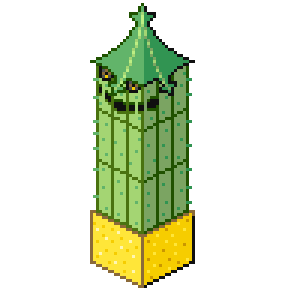
Sandypie are constructed out of a special sand that allows them to crawl on beaches. They eat lots of kelp before evolving and entering into their pupal state.

Sandypod are at the center of a contentious issue: some people believe that knocking over a Sandypod is acceptable because they can reform, while others believe that knocking them over is mean-spirited.

Sandyfree have wings that are made of umbrellas and often get swept away by gusts of wind. Their ability to remain grounded is contingent on having heavy parasol wings, which are usually adorned with charms to make them heavier.

Sandydle expand and contract in size depending on how much water is in their body. The shovel atop their head is solely decorative, as their stinger is found on their tail.

Sandyew are held together by dense psychic energy. Their form becomes more oblong as they use their powers and collapse into a pile of sand when overwhelmed.

Sandyrita are speckled with small pebbles all over their body, each pebble they gather amplifies their ability to control sand. They can be seen helping children build sandcastles at the beach, scooping sand with the shovel on their head.
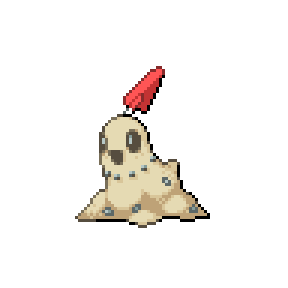
Sandymander need water to maintain their form but are viscerally scared of accidentally putting out the fire on their tail. This contradictory dilemma makes taking care of them difficult for most Trainers.
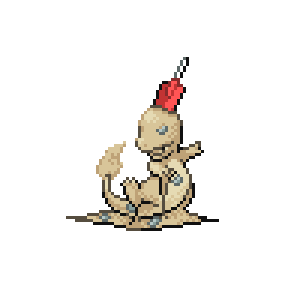
Sandyetta shade their bodies with the power of music, as their songs solidify sand using sound vibrations. Their mastery over vibrations allows them to bend sand to their will, often creating captive audiences stuck in quicksand.
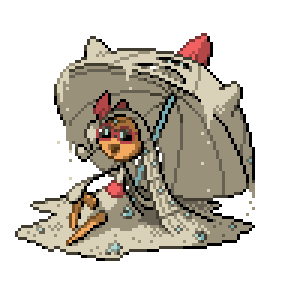
Sandyle cheers on its teammates by hurling bundles of swirling sand into the air before shocking them with electricity. This produces bright sparkles that shimmer in the light.
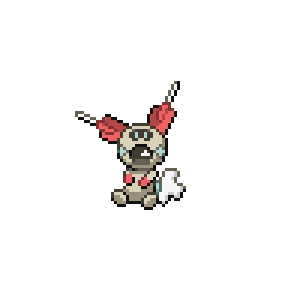
Sandychop can be found sculpting works of art out of sand, using their sandy muscles to lift sand into the right place. Their artistry is only as good as their strength, as lifting clumps of wet sand can be difficult for weaker Sandychop.

Sandycruel burrow along the ocean floor, hiding until the right moment to ensnare aquatic Pokémon with their tentacles. Their sandy heads and seaweed tentacles are well adapted for the ocean depths.
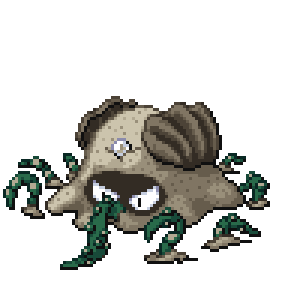
They are known to toss their shovel like a javelin whenever facing a predator, sometimes lodging it into scales or fur. If a predator attempts to escape with their shovel, Sandyfetchd are known to chase after them.

Palosion have mushrooms bursting from their back that constantly release spores. Their ravenous hunger causes them to bite at anything that comes near them and spread the fungal infection.

Papi try to infect eggs with their fungal spores but often fail when an egg's bloom is present. When feeding Papi, it is vital to remove this bloom so that their fungal tendrils can enter through the pores on the egg.

Paossom produces leaves and mushrooms that were once made into tea caudles for celebrations. With the advent of modern production of these ingredients, this practice has fallen out of popularity, with only a few villages still producing caudles.

Paloom have an elastic mushroom cap on their heads that fills up with air when they want to fly. To lower themselves, they release this air through their fungal gills, releasing spores nearby.
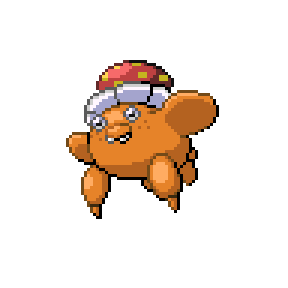
Pasire mostly lounge in swampy water, where they spread fungal roots to absorb nutrients from the mud. The mushrooms on their head can be harvested and mixed with a solvent to produce a soft orange dye.

Pareon have unique markings on their body that glow in the dark. When their spores are crushed and put into glass ampoules, the bioluminescent substance can be harnessed as glowsticks.
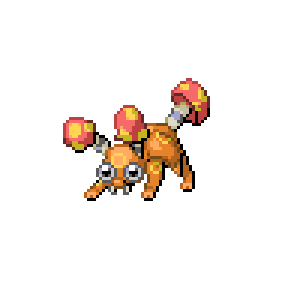
Paco releases sticky spores from its acorn shell which are valuable for pharmaceutical purposes. The spores help people in physical therapy, as they aid in healing over scar tissue when ingested.
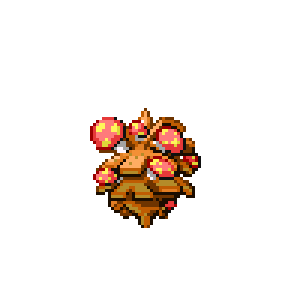
Pagma has heat resistant mushrooms growing from its body that release scorching spores. The burning sensation that results from touching the spores can only be removed with water.

Paraid can produce clean water after a single pass through their fungal gills. Many Paraid cling to other aquatic Pokémon in sewers to eat any leftovers that their host creates.

Pamagius may seem innocuous at first, but the extent of its powers is only revealed a few days after exposure. A hex from a Pamagius results in chronic fatigue and a craving for mushrooms that can only cured by drinking acidic drinks.
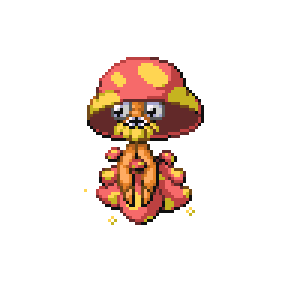
Pazone relies on mycelium networks to orient itself, and that ability dissipates the farther it is from fungi. If it strays too far from its fungal brethren, it becomes confused and unable to focus.

Pakip thrive in swamplands where the mud is dense with nutrients. They can crush rocks into a fine powder before absorbing them with their fungal tendrils.

Papardos always seem to be attacking something, whether it be rotten logs or large rocks in the area. They always strike with enough impact to break whatever they are attacking, resulting in a cloud of spores proliferating in the area nearby.
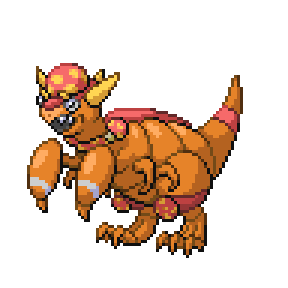
Patula live in harmony with the mushrooms on their abdomen, as the mushrooms coat their electric webs with sticky spores that make it difficult for prey to escape. In return for this added stickiness, Patula share nutrients with the mushrooms.

Paxio are playful creatures that enjoy giving out mushrooms to Pokémon and Trainers. These mushrooms burst to life when Paxio send shockwaves through the mycelium network, causing nearby mushrooms to produce an electrical charge.
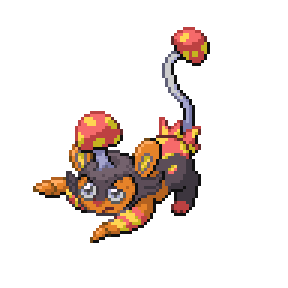
Pabat release ultrasonic waves that cause mushrooms in the area to vibrate. This results in a dense cloud of spores so thick that it obscures vision, allowing Pabat to easily capture prey.
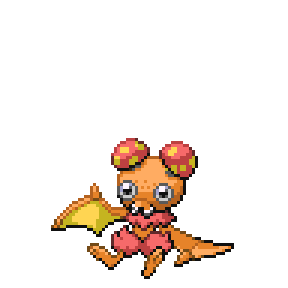
Paroc can be found meditating in caves in an effort to quell their aggression. When disturbed in this meditative state, they release a burst of spores and gravel before going on a rampage.
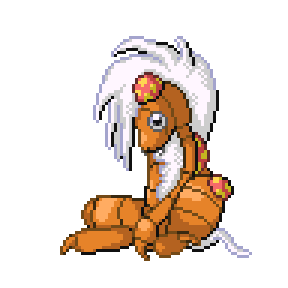
Payena rely on fungal pheromones to determine who is friend or foe. They often become aggressive when encountering a foreign scent.
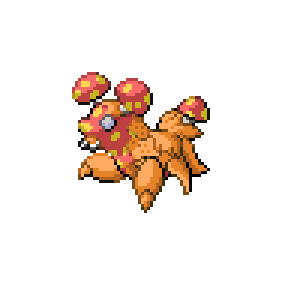
Paduck have a mushroom on their head that glows whenever they harness psychic powers. They enjoy swimming in shallow water because it hydrates and cools their dry skin.

Pamer rely on the mushrooms on their body to break down food and are unable to eat non-organic matter. Despite this change in diet, many can still be found in areas with other Grimer or Muk.
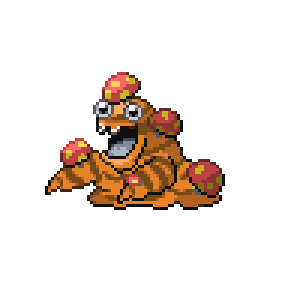
Patoise produces spores that infect the water it shoots. People and Pokémon alike have gotten ill from drinking the water it produces.

Palofree have dyed sand in their wings thanks to a contrived effort from filmmakers to enhance shots of Palofree. They are more likely to be spotted by predators because of their dyed wings, leading to a recent decrease in the population.

Palotic is made of a special type of sand that wicks moisture from the ground into its body. Excess water is solidified into reflective scales that shield it from attacking Pokémon.

Whenever Paloetta sing, the sand around them resonates with the sound waves they produce to form unique patterns. Each song produces a unique pattern that shifts as the song progresses.
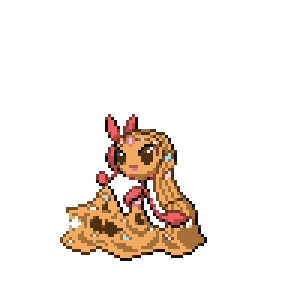
Hikers enjoy having Amasel as a hiking partner, as their restless spirit inspires people to continue on for an extra mile. They encourage people to follow them up to the summit of mountains, eager to help people achieve great feats.

Many scientists were shocked to find that Amaoh have colorful feathers, as there is nothing in the fossil record that indicates they would have such vibrant feathers. Nowadays, they soar through the endless sky as they once did ages ago.

Amashrew burrow into the ground with their icy claws to make a safe place to store food. When they are not gathering food, they wander the snowy forests they live in searching for playmates.

The frill atop its heads releases a chalky powder that cushions its falls. Without this powder, it is prone to scratch its body when landing on the ground.
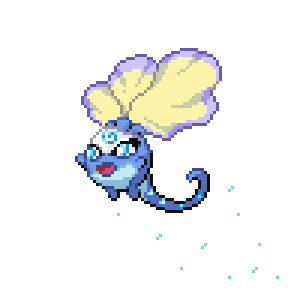
Rocksaur are brave little creatures that never run away from a fight. The bulb on their back produces numbing spores whenever the are scared, but they will always fight until they are exhausted.

Rockans are aggressive and territorial due to the influence of other pack Pokémon in the savannah and are not spared if they fail to defend their Eggs from them. Their fierce nature causes other Pokémon to leave them alone.
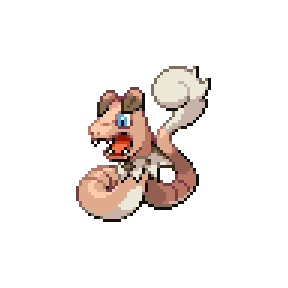
Rockgon2 resemble an executable file of a popular game found on PCs. When clicked, they produce barks and whines that resemble the cry of a Rockruff.
Rockble live in habitats where there is little moisture. Part of their diet consists of Passho Berries, which help keep their body dry.
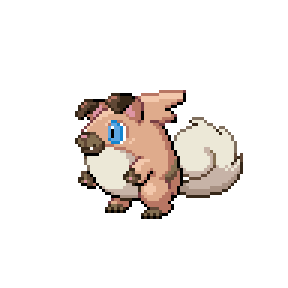
Rockrunt live in places with lots of Steel-type Pokémon around them, so they eat Babiri Berries to make Steel-type attacks hurt less. The barbs on their body are quite sharp and often accidentally hurt Trainers that slip on the ice they make.
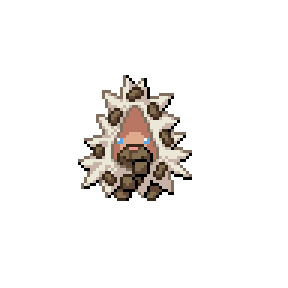
Rocknine loves participating in Pokémon Battles because they enjoy entertaining audiences. They particularly enjoy playing the role of underdog because they can eke out victory from almost certain defeat.

Lycankazam harnesses the power of its telekinesis to levitate and throw stones at its foes. It rarely gives up a fight, as it is willing to risk injury to secure victory.
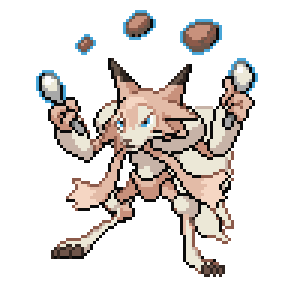
Lycantu howl into the night sky when the moon shines brightest. When dawn comes after a long night of howling, they hop back into their nests to rest during the day.
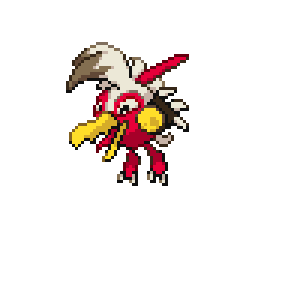
Lycanvoir are eager to do the bidding of their Trainer and rely on their telepathy to complete tasks before their Trainer can say a word. Their unyielding loyalty makes them popular among Trainers who need a reliable friend.

Melosaur love to sing, even if they are inexperienced. Their gentle vines pick up percussion instruments to add a steady beat to their singing.

Melonx have a voice dedicated to singing opera music. Their flamboyant and vain personalities are well-suited to sing in the spotlight of opera.

Meloras live exuberant lives at aquariums around the world performing in water shows. Their tricks and musical performances amaze audiences and leave a lasting impression.

Melochu are still developing their singing ability and rely on singers to help teach them ways to improve. They practice every day in the hopes of becoming the best singers in the world.

Melosaur are full of naive wonder and are in awe of their own ability to produce music. They release clouds of pollen that vibrate sheet music, helping audience members keep track of where Melosaur are in a musical piece.

Bursts of pollen fill the air whenever Melosaur are around, as they love to visualize the music they hear around them. Even though they are inexperienced, Melosaur are determined to improve their musical repertoire.

Melosaur release a cloud of pollen and leaves to form notes in the air, which float by and scatter into the wind. Many Melosaur work with musicians out of an appreciation for the art of music.
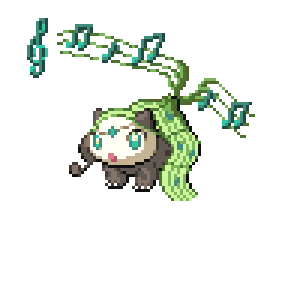
Melochum practice singing in choirs to develop their voice. They often struggle with the volume of their voice because they lack the confidence to be in the spotlight.
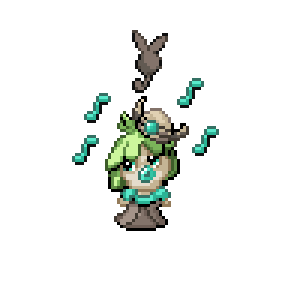
Melochu have a resonant voice that they rely on when singing for large audiences. Their performances often feature machines that they zap with electricity to unleash pyrotechnics.

Melots are shy creatures that have a hush, whispered voice that can only be heard by those nearby. Training them to develop their resonance is a difficult task because of their stage fright.
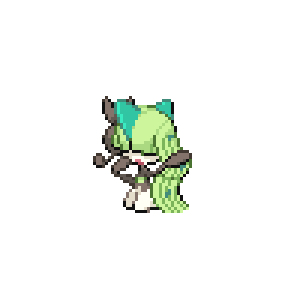
Melolia have a melodic voice that is pleasant to listen to. Melolia can read the minds of Trainers and will sing songs that their Trainer enjoys.
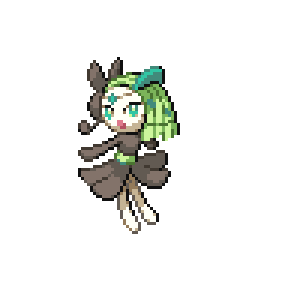
Each thud of the drum on the backs of Melosaur can be heard from a mile away. In a group of other musicians, Melosaur help keep a steady beat to allow others to shine.

The bright and crisp chimes of classical music melodies fill the air when Meloink's gears are turned. Special devices have been made to keep Meloink turning at a consistent speed.
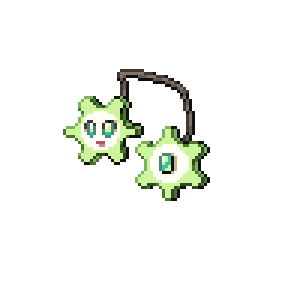
Melomander love to sing, so much so that the flame at the end of their tail glows bright when they get the opportunity. Their lack of experience is only surpassed by the strength of their passion.
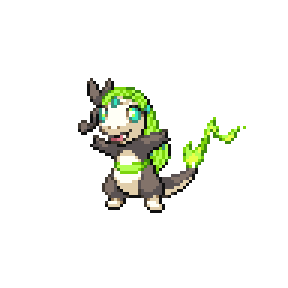
Meloler are best fit to perform punk music because of their boisterous personality. The chords they play on their guitar resonate with many teenagers.

The gravelly voice of Melolem makes them the perfect candidate for metal music, where their loud screams can inspire many rebellious youths. Their sheer passion makes up for the quality of their voice.

In an orchestral setting, Melotoise let the horns on their back trumpet alongside other musical Pokémon. They take care of the horns on their back by flushing them with water every so often.

When marching through the streets, Melotoise let the bright, piercing sound of their horns trumpet loudly. They take care of the horns on their back by flushing them with water to ensure the sound they produce is consistent and resonant.

Melotoise dedicate much of their time to practicing the piano, as they tend to be hard on themselves when they make mistakes. While they perform, sometimes they shoot a watery mist from their cannons to make themselves look photogenic.

Melolem are rented out to spin while disco music is playing. This retro music brings back nostalgic memories of fluffy hair and bell-bottom jeans for many people.
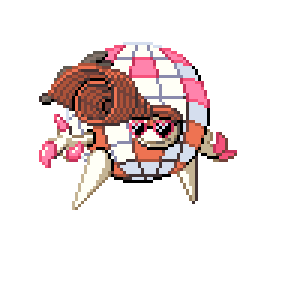
Melolem shimmer and sparkle as they spin to disco music. The groovy music brings nostalgia for many dancers throughout the world.
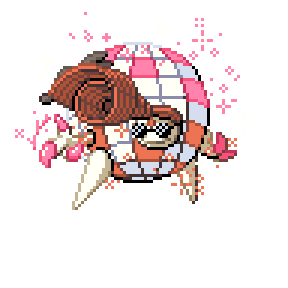
Cressrill are always seen carrying a hammer that resembles a mortar used to pound rice. Whenever they slam their mortar down, it releases a shockwave that spreads drowsiness across the nearby vicinity, putting friends and foes alike to sleep.

Cressel tears holes in reality to create a transient gateway into dreams. It relies on this gateway to manipulate subconscious thoughts, removing the source of nightmares for many plagued with phobias.
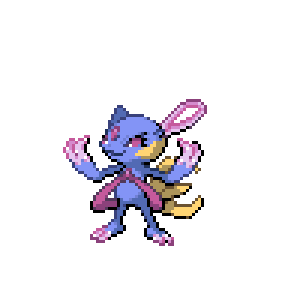
Cressgon2 are known to appear on the PCs of tired office workers who fall asleep from pulling all-nighters. They save all the data on the PC and play soothing music to ensure a peaceful rest.
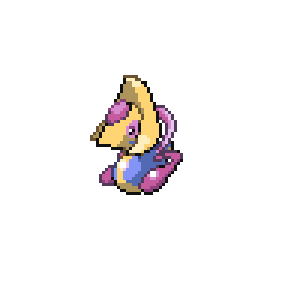
Cressgon2 are known to appear on the PCs of students pulling all-nighters for studying or completing homework. They save essays, bookmark textbook pages, and play peaceful music to ensure students get lots of rest.
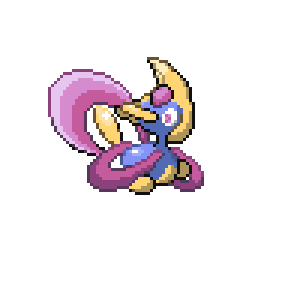
Cressdisc lull couples into a deep sleep to give them dreams about their future together. This moment of shared unity has been credited with saving many marriages, making Cressdisc quite popular.
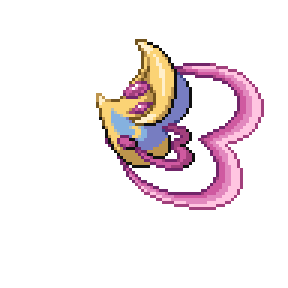
Cressduck rely on their psychic powers to help transform dreams into a pleasant experience. Their calling card is a special enchanted rubber duck that is left inside dreams.

Bruxfing can instantly apply cosmetics to people's faces with a cloud of smoke, leaving people with garishly bright colors on their face. Many clowns happily allow Bruxfing to help them apply makeup to create new and exciting patterns.

Bruxnx have an eccentric yet elegant dress that allows them to swim quickly in water. They are known to bite onto ships and sing eerie songs that instill a sense of dread in sailors.

It yanks roots or bugs from the ground before stuffing itself with the meal. If it is not strong enough to hunt on its own, some people give it a Muscle Feather to give it an extra boost.
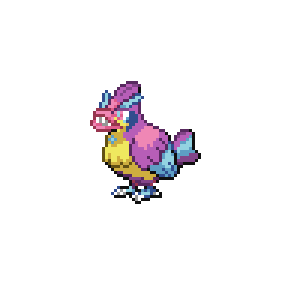
Even though Bruxrow are apex hunters with a powerful jaw, many Trainers decide not to capture them because of their lurid colors. Many develop a spitefulness for Trainers and attack when they are rejected.
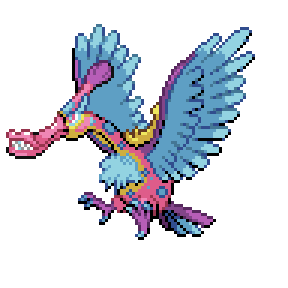
Bruxchu soar through the sky leaving rainbows behind them wherever they go. Their brightly colored feathers make them easy to spot, yet many Trainers opt not to chase after them because of their garish appearance.
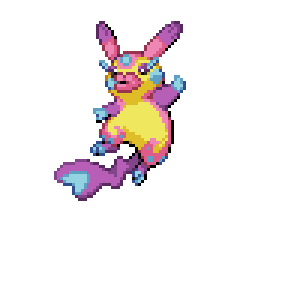
During a Pokémon battle, Bruxtic flourish their reflective scales to induce calmness in opponents. Once pacified, they lunge forward to bite with sharp, jagged teeth.

Bruxtic are benign creatures that roam the ocean for a nice place to sleep. Their reflective scales calm other Pokémon around them so that they can peacefully sleep on the ocean floor.

Bruxlass is known to stalk Trainers who compete in Pokémon Contests, hoping to get caught. Its large, garish teeth scare most Trainers away, which leads it to find another Trainer to stalk.
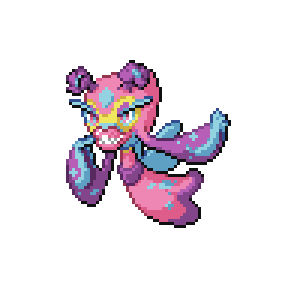
Bruxbish digs through garbage cans to use leftover cosmetics. It aspires to participate in Pokémon Contests despite its garish appearance.
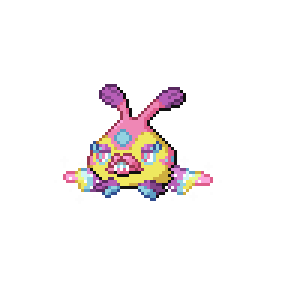
To maximize the reach of their mycelium, Parator connect fungal roots to trees and other nearby plants, creating a massive network of roots and tendrils. Farmers often try to scare off Parator to avoid crop damage.

Parafing proliferate spores by shooting out puffs of noxious air. People who inhale the sticky spores and noxious gas report experiencing coughing fits.

Its daily tasks include cultivating mushroom colonies, ensuring that they grow and prosper. A Balm Mushroom occasionally forms in a mushroom colony, which it prunes and tosses aside for gourmet maniacs to find.

Parayu take assiduous care of mushrooms around them by maintaining the optimal humidity for fungal growth. They also cull weeds with their claws and spray water at Pokémon that try to eat the mushrooms.
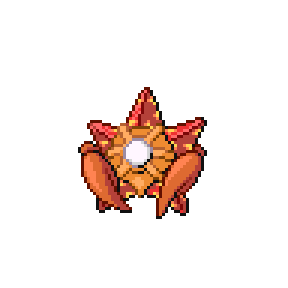
Paranx hosts dancing parties near mushroom circles, drawing in large crowds of both Trainers and Pokémon. Its hypnotic dance compels others to dance with it, often to the point of exhaustion.

Paradle scuttles across the forest floor in search of fallen leaves to eat. Its mushroom helmet releases toxic spores that taste bitter, which keeps predators away from it.
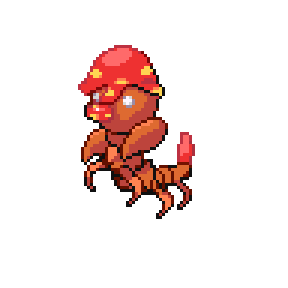
Paratoed lure their prey close by releasing pleasant smelling spores and gyrating the hypnotic pattern on their stomachs. This is particularly effective on Yanma and Yanmega, their favorite snacks.
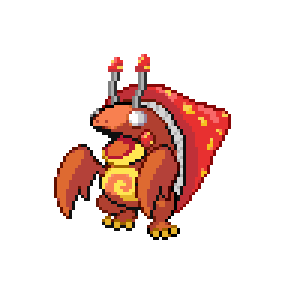
Pararaid shoot out ink infused with microscopic spores that cling to other aquatic life in the sea. This thick ink is also harvested to be used as calligraphy ink.

Parans wrap their long fungal bodies around trees whenever they rest, spreading spores up the tree as they sleep. If prey coincidentally comes close while they are at rest, they can spring into action by stretching their long, scaly bodies.

Parasly has a difficult time camouflaging into its habitat, so it collects and grows mushrooms to try to blend in. When it decides there are enough mushrooms, it will partially bury itself into the mushroom patch.
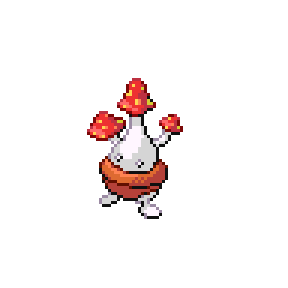
Paraswine's fungal hide is so thick that tanners can turn it into mushroom leather. While this leather is sturdy enough for everyday use, extreme climates can quickly degrade clothing made of this leather.

Paraziken typically have so much adrenaline coursing through their bodies that this excess energy is stored in their mushrooms. Companies are attempting to find ways to incorporate these mushrooms into energy drinks.

Its gentle temperament allows Pararina to make beloved friends with people or other Pokémon outside its territory. It gifts mushrooms to those it regards as friends but will become offended by anyone who refuses the gift and skitter away back home.

When confronted with strangers, Pararino will be the first to initiate hostile encounters, ramming into intruders with its front horn that oozes fungal venom. Pararino are particularly territorial, ensuring its younger siblings have space to develop.
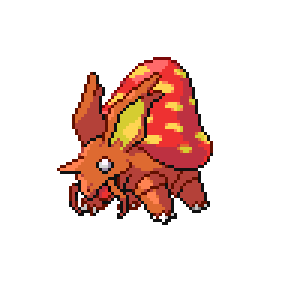
Paragigas are slow to react as any movement strains the mushroom colony that envelops their body. People exploring ancient ruins advise running past Paragigas as they often give up the chase if their target is too far away.
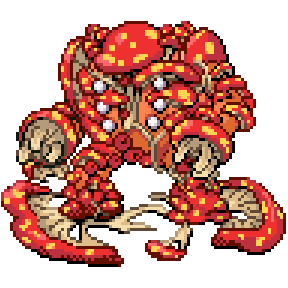
For scientists working with radioactive materials, Paratom have become vital to handling dangerous isotopes. Not only are their bodies capable of absorbing radiation, but they are also capable of operating machinery for important experiments.
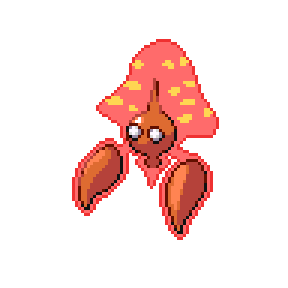
Parapix are omnivorous creatures that can eat nearly anything, including plastic. When conditions are dire, they melt these manmade products into a sludge before allowing fungal spores to break it down into an edible paste.

Paraxio is territorial and marks its territory using mushroom spores. It sends jolts of electricity through the mycelium network to shock intruders within its territory.
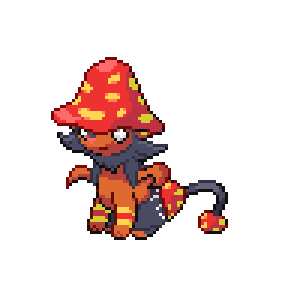
Paraesta is covered with fungal growths that increase its body temperature, making it warm to the touch. These growths allow Paraesta to venture into cold climates without worrying about maintaining a healthy body temperature.

Paramise have long mycelium roots that cling to a set of claws that resemble an anchor. If anything stops Paramise from proliferating their spores, they are bludgeoned with the full mass of the anchor head.
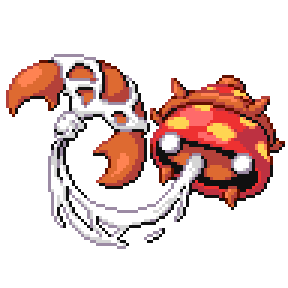
Paranea spores are so dense with nutrients that they are included in fertilizers in many arid regions of the world. These spores rapidly expand when hydrated, allowing them to be readily absorbed by thirsty plants.
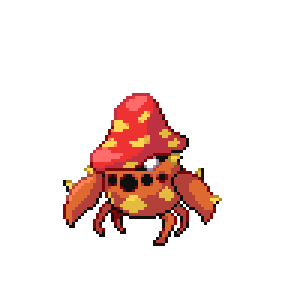
Paraduck's fungal bulb requires lots of water to maintain, so they wade in rivers and streams to ensure the bulb is well-hydrated. During their few trips out of the water, they proliferate spores to grow mushrooms.

Necrogon2 control the brightness of the PC by forcing websites and apps to use light mode. This blinding brightness forces many users to wear sunglasses when working with a PC controlled by Necrogon2.
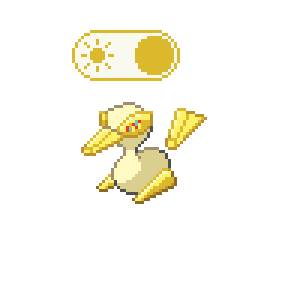
Necrogon2 control the brightness of the PC by forcing websites and apps to use light mode. This blinding brightness forces many users to wear sunglasses when working with a PC controlled by Necrogon2.

When its desire for light is in harmony with Pink Nectar, its mind clears and finds epiphany within itself and its feathers. It dances in synchronicity with all life as its burning desire for light fades, and it finds peace within itself.
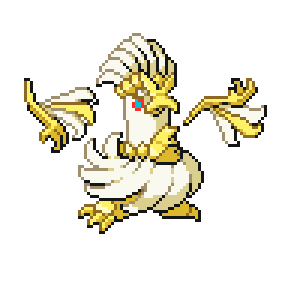
The only thing that rivals the brightness of Necronine's radiant glow is its loyalty. It was once depicted in ancient scrolls defending its friends from evil and darkness.
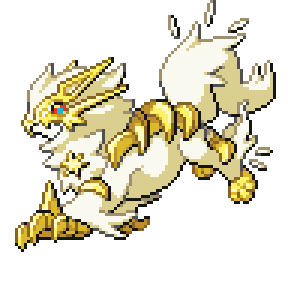
Jangsaur have loose scales inside the bulb on their back. They slam their tail into the bulb to produce a light jingling sound.
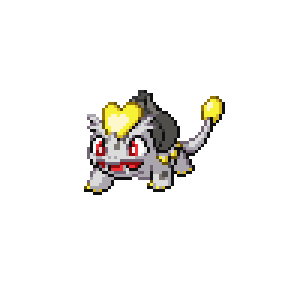
Jangagon have slow reaction times and cannot move very fast. However, with the help of a Quick Claw given to them by their parents or Trainer, they can find moments of opportunity to strike.
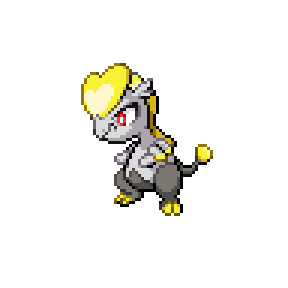
Hakasaur slam their tail against their scaly bulb to produce clanging noises. Even heavy sleepers awaken when Hakasaur creates this noise.
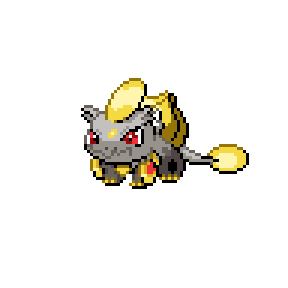
Komlett can be heard long before they arrive at a location, as their scales resonate as they dig underground. Despite being quite noisy themselves, they do not like the loud sounds that can be found in urban environments.
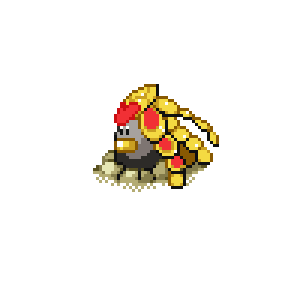
Wimrith is skittish and evasive, and will sprint to hide at the sight of danger. Its shell is still soft and developing, leaving it defenseless against a powerful blow.
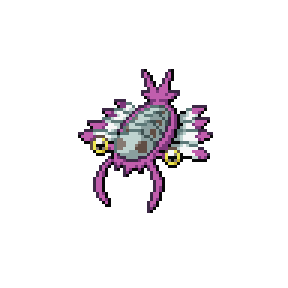
Golipie has a special reflex in each of its legs that helps it escape danger. This reflex activates whenever it gets hurt, prompting it to escape by curling into a ball and rolling away.
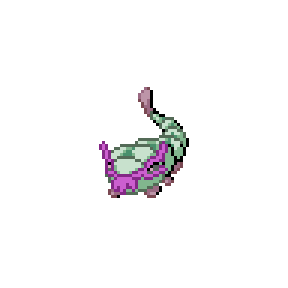
The leaves sprouting from its back are both tough and edible, so chefs harvest its leaves after a battle to cook with. A meal similar to cabbage soup is made out of its leaves, which it begrudgingly accepts if it also gets a treat.
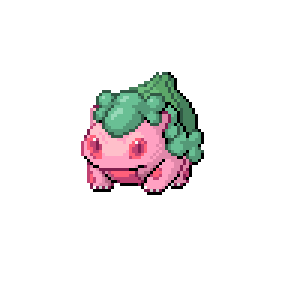
They shoot a smooth silk from their heads, which is adorned with a crown of clovers. They scuttle across the forest floor to look for clover leaves to add to their crown.
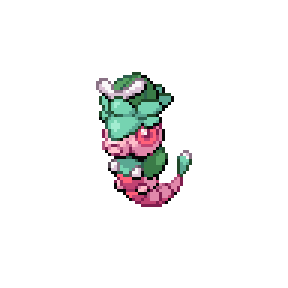
It leaves behind bulbs that harmlessly fall away from the main body, which taste like steamed broccoli. As such, herbivores follow it around wherever it goes to secure a bite to eat.
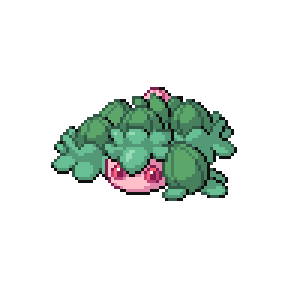
Fogar have small leafy wings that grow back whenever they get damaged. This is quite handy because Bug-type Pokémon love to chew on their wings. Hanging from tree branches prevents Bug-type Pokémon from reaching their wings while they rest.

It holds onto a stick and monitors the area around its dam during a nightly vigil. If a high-pitched wail is heard nearby, it either means an intruder is nearby, or one of its cohorts has lost its stick.
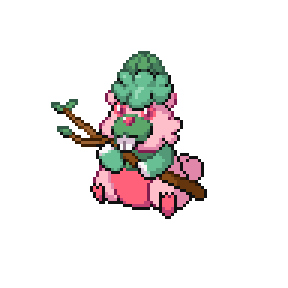
Luking charges solar energy into its horn by remaining at the surface of bodies of water. Once sufficient energy has been generated, it releases laser blades to cut down branches so that it can eat the leaves.
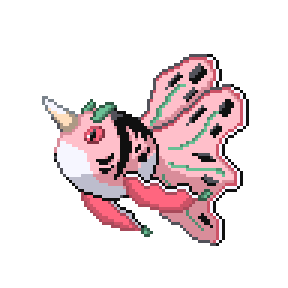
Luther work alongside stylists and tailors to create clothes for Trainers. They cut and weave fabric to create beautiful dresses that get featured in magazines.
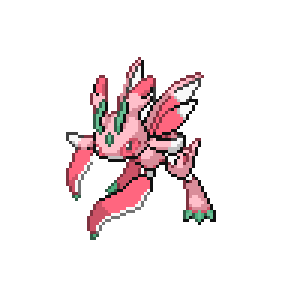
Once its male packmates leave to hunt, it is left in charge of monitoring the nest, especially the baby Pokémon in its care. If any of the babies try to leave the nest during this time, it guides the baby back using its soft petals.
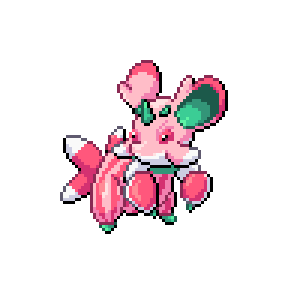
Carsaur are made of stone, with a single precious gem on their backs. Many miners deep inside caverns mistake them for naturally occurring geodes, and as such, Carsaur are an endangered species due to overhunting.
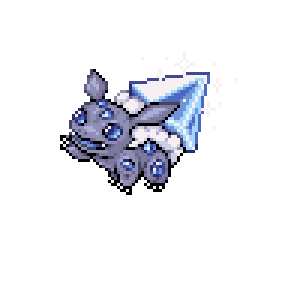
Carpod can control rocks near its crystalline chrysalis, which haphazardly bursts out from the ground when it is threatened. It wobbles inside its cocoon, eagerly waiting for its metamorphosis.
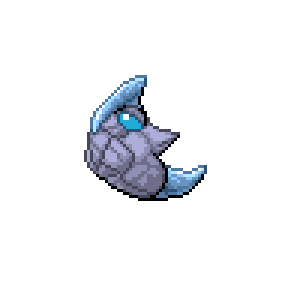
Carzing dust was once marveled at as a miracle insulator, but recent research has found that this dust causes respiratory diseases, as it clogs up people's lungs. Many people have since begun checking their homes to remove this dangerous dust.
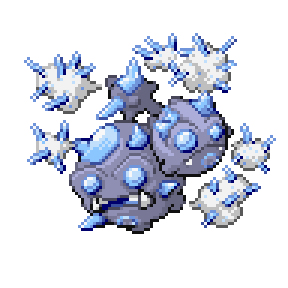
Carto help jewelers set precious gems into rings and necklaces. Their short yet precise legs allow them to handle delicate jewelry with ease.
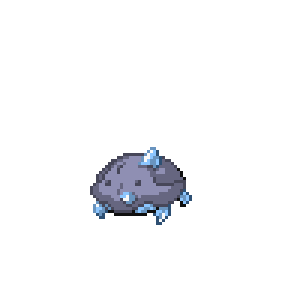
Cartops work alongside lapidaries to carve gems into works of art. By carefully wielding their sharp claw blades, every gemstone they touch becomes a beautiful piece of jewelry.
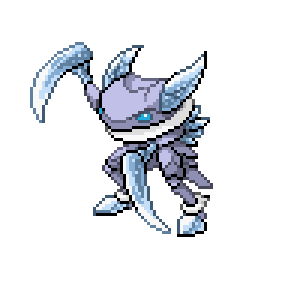
Cardactyl are apex predators that hunt flying Pokémon inside large caverns. The sharp crystals on their wings can harmlessly snap off and leave a sharp edge to slice their prey with.
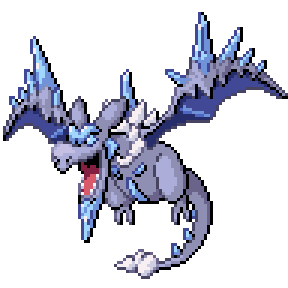
Carsaur are sturdy and protective, attacking people and Pokémon that wander too close to their burrows. Carsaur are known to ward off miners by momentarily blinding them by reflecting light with the gem on their backs.
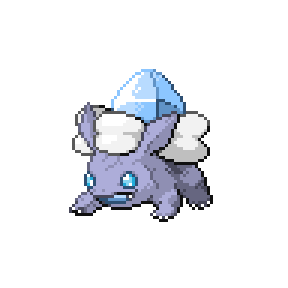
The Marble atop its head and the egg it holds are made of the same crystalline material. Whenever it loses track of either gem, it will stop at nothing to find it.
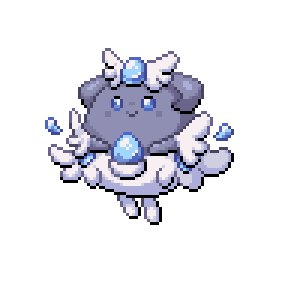
Carsaur are large and heavy, causing the rocks beneath them to tremble before their presence. Carsaur create burrows by using the gems on their backs to smash rocks into each other until they become a comfortable space to rest.
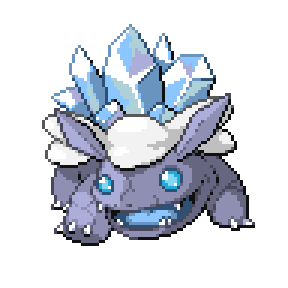
In jazz venues where music from a saxophone or piano fills the air, Cardon are known to dance to the music. Their dance reflects light from their shield-like faces, which illuminates a room with a soft glow.
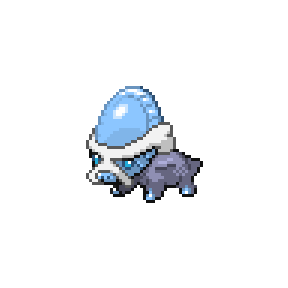
Caredge slashes through foes with its crystal body that never seems to get dull. It spends much of its time rubbing against rocks to polish its shiny surface.
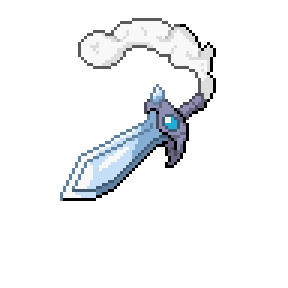
Whenever the moon shines brightest in the sky, the gems across Carfable's rocky body begin to glow. They seek out other Carfable to dance under the moonlight.
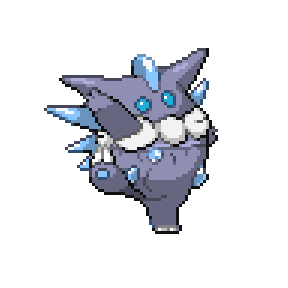
Jewelry outlets make Carki morph into rings that patrons desire so that there is a minimal risk of theft. Thieves who escape with a Carki need help from mall security before they lose a finger.

Cartias soar through the endless sky searching for Trainers who have shown exceptional love for their Pokémon. Their crystal wings vibrate and ring with joy whenever they locate a particularly kind Trainer.
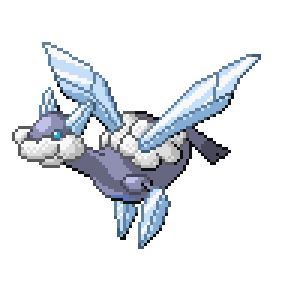
Carpuff charm many into becoming their audience with their diva-like personalities. The glowing gem atop their head draws the attention of many wild Pokémon, who stay to listen to their songs.
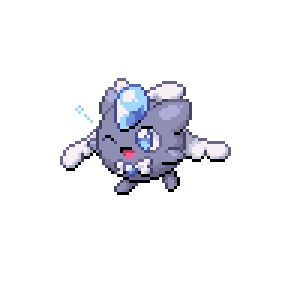
Cartuff are graceful singers who amaze audiences with their crystal-clear voices. Their songs are said to move legendary Pokémon to tears, though this is likely hyperbole.
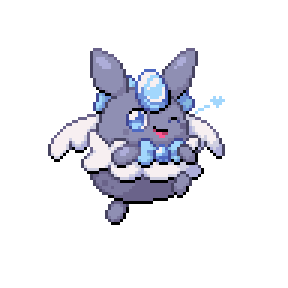
Carbat flock to abandoned mineshafts to eat shards of gems miners leave behind. The gem shards get absorbed into their bodies, which gives their wings a reflective shimmer.
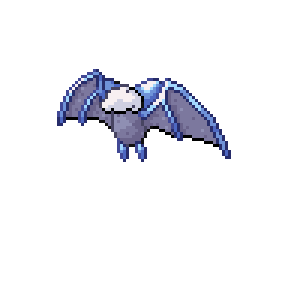
Its large wings sparkle in the light as though a sculptor wedged a thousand pieces of Beach Glass into them. The reality is not far off, as it takes pieces of glass or crystal and adds the pieces to its wings.

Carmo-o have smooth, crystalline scales that jingle whenever they move their body. The scale atop a Carmo-o's head produces a resonant ring when struck.
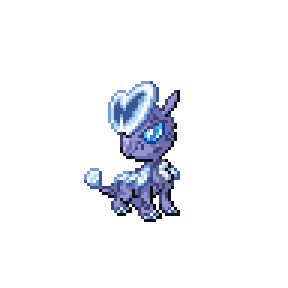
Carth can often be found working for jewelers as guards to protect merchandise. They slash at thieves with their gem-tipped claws to prevent crime.

Carsian can be seen wearing replicas of jewelry to convince people to enter the retail outlet. They take great pride in maintaining their appearance and act pompously around other Pokémon.
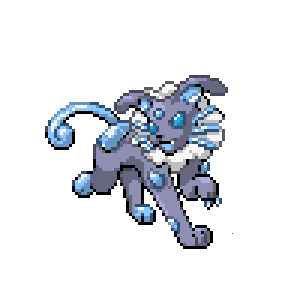
Carin stalk miners to vacuum the dust of precious minerals that they leave behind. Many mineshafts with a Carin living in them have fairly clean air, much to the fortune of miners working in them.
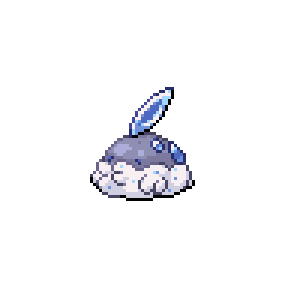
Carduck keeps their crystalline bill polished by submerging the bill in mineral water. They can be found wandering in caves or around lakes looking for berries to eat.
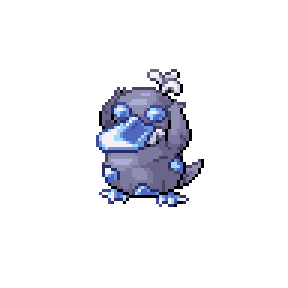
Whenever Cardude splits apart, the geode inside its body shimmers as light strikes the crystal formation. It remains in dark caves to avoid being kidnapped by Trainers and Pokémon looking for shiny objects.
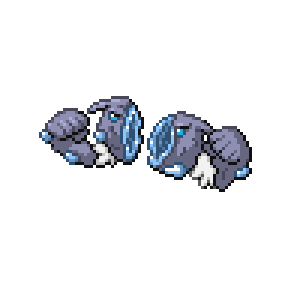
It hurls chunks of Chalky Stone at other Pokémon, for no particular reason other than the fact that they are there. On occasion, other Pokémon will return the tossed chunk, which turns the one-sided affair into a game.
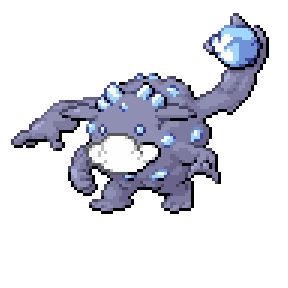
Whenever Carmite's crystals are struck, its body discharges an electrical pulse in response to mechanical pressure. The harder Carmite is struck, the more electricity the crystals produce.
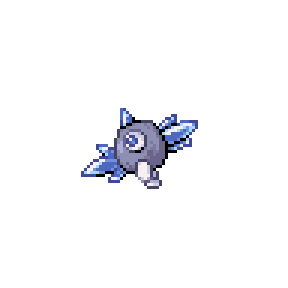
Chesdile tend to be bold, fearless creatures that love to explore the world around them. If they are caught in a dangerous situation, they rely on their sharp teeth to escape harm.
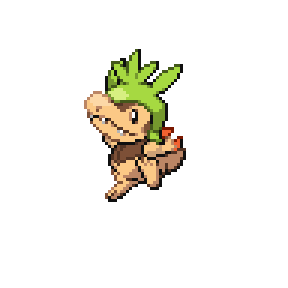
Chesgey love to help their Trainer hang lights on trees and homes whenever the winter season comes around. They can easily hang lights on houses with their quill-like feathers.
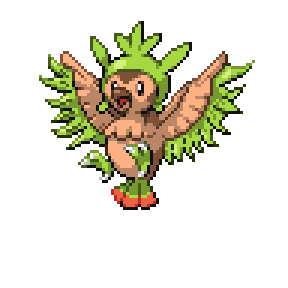
Cheschar enjoy causing mischief and pull pranks on other Pokémon daily. They are known for using their flaming tails to light vines on fire to prevent other Pokémon from chasing after them.
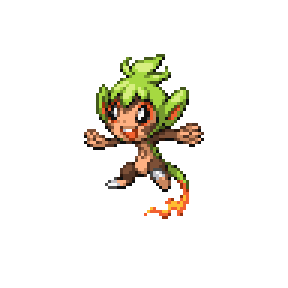
Domesticated very early in the world of Pokémon, they are trusting and loyal, which causes them to return kindness given to them from people. They often clash with other Pokémon at night to defend their Trainers from nocturnal threats.

Chesth are greedy little creatures that love collecting coins. They are known to slice open purses and coin bags with their sharp quills to steal coins if their Trainer neglects them.
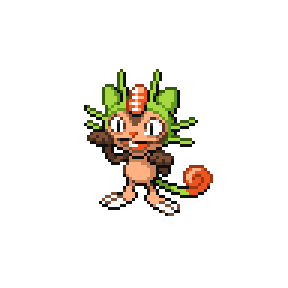
Chestle have sharp quills and heavy shells to protect themselves from danger. They often fall onto their backs because of the weight of their shells and need help to get back up.
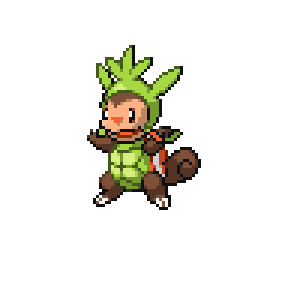
Venovee have compound eyes that are sensitive to light. They are capable of rapidly adapting to their surroundings through evolution.
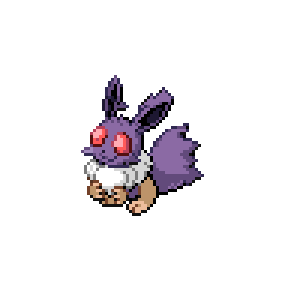
Venovee have compound eyes that are effective at seeing in the dark and often gain new powers when Venovee evolve. These new powers change depending on when and where Venovee evolve.
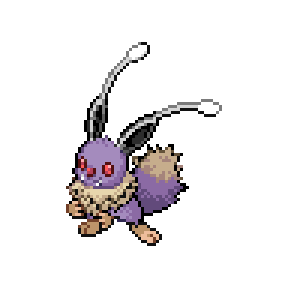
Venoeon have specialized compound eyes that keep their vision clear when they dive into the water. They are adept swimmers that chase after aquatic Pokémon for fun.
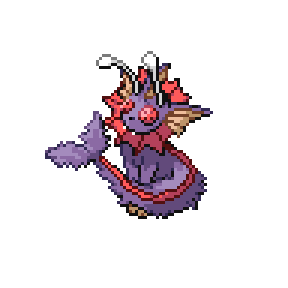
Venoreon rely on their superb vision to locate prey at night. Their compound eyes fire bursts of embers to set their prey aflame.
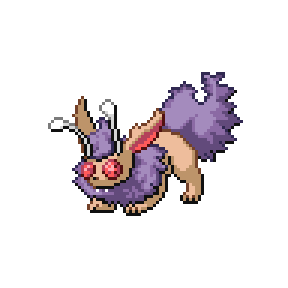
Venogon flock to bright lights at night and often find themselves staring through windows to observe computer screens. If a person allows them to access the device, they will try to be helpful by eating any viruses that are in the system.
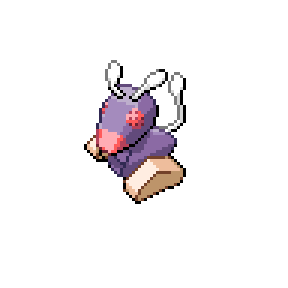
Venoba are easily distracted by bright lights at night from cars and lamp posts that often ends with them getting run over by motor vehicles. Many environmentalists have proposed putting scent traps to steer Venoba away from roads.
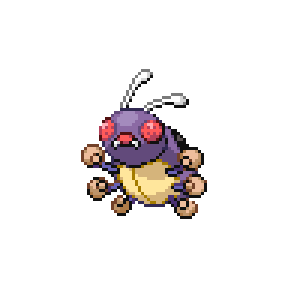
When Venodos hunt, they shoot out a silver thread that sticks to their prey, enabling them to stalk prey over long distances. At night, this thread shimmers in low light conditions, ensuring Venodos never lose their target.
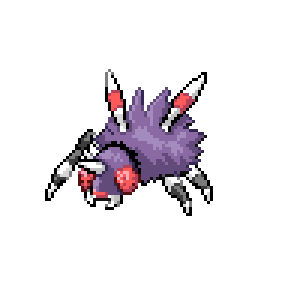
Venobat quietly sneak up on their prey before paralyzing them with secretions from their fur. If the prey is too big to carry back to their cave, they leave the Pokémon there to recover from the paralysis.
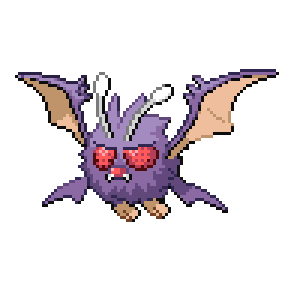
Venokern require lots of sunlight to grow, but often fall asleep at dawn because they are nocturnal creatures. Many rely on the light released from street lamps to nourish their body.
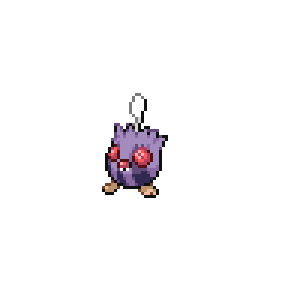
At night, Venoflora stare at street lamps or other sources of bright light for long periods of time. By the time the sun rises, they are already asleep.
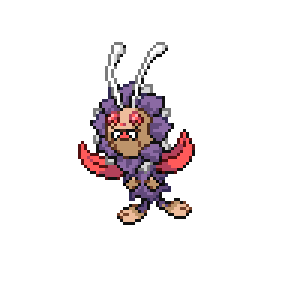
At night, Venoreon glow in the dark with the power of their yellow bands across their body. When two Venoreon meet, they stare at each other and admire the glow that they produce.
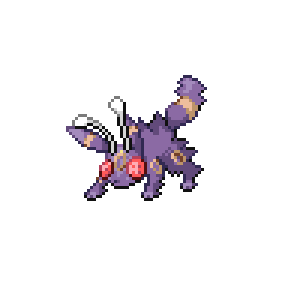
Venosaur have conflicting internal sleep schedules that cause them to fall asleep often. They are most active during the dawn and dusk where they can still absorb sunlight without being overwhelmed by their desire to rest.
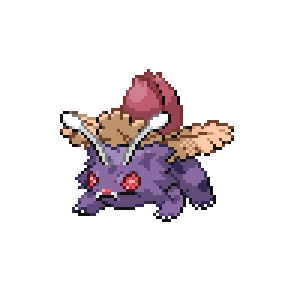
While Venonat are attracted to light, Venogon2 are attracted to advertisements on the internet. They congregate around ads to stare at the image or video for a few minutes before moving on to the next ad.
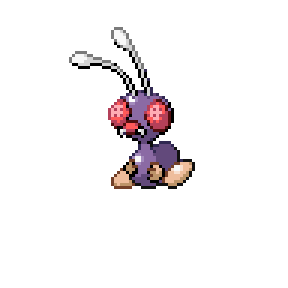
In a Pokémon battle, Venofeon rely on their compound eyes to pinpoint weak spots on their opponent. Once they find a suitable target, they release a flurry of leaves that overwhelm their opponent.
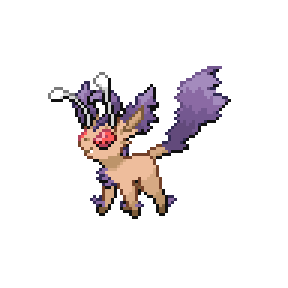
Venoceon live in boreal forests where there is plenty of snow to play in. When threatened, they release a chilling frost from their compound eyes.
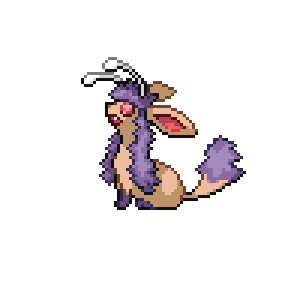
Venogon have a special cover over their eyes that protect them from sand particles in the air. This allows them to stare at bright lights at night in the middle of sandstorms without worrying about eye injuries.

Venomander burn dust from their body to produce a purple flame on their tail. This purple flame returns to normal on the rare occasion they run out of dust.
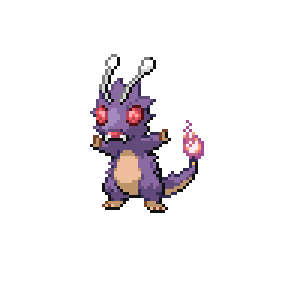
Venosis float to lampposts at night to stare at bright lights. Efforts to drag them away are met with an odd fluid that makes grabbing them difficult.
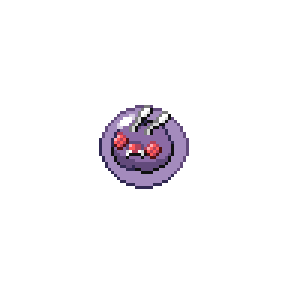
Venoling typically do not travel at night and only migrate during the day. However, with the installation of lamp posts, they can now migrate at night by following lights from city to city.
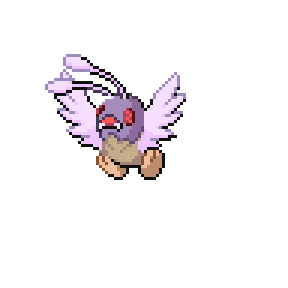
Venomeleon combine the dust shed from their body with their flaming tail to produce clouds of toxic smoke. Pokémon that inhale the smoke find themselves tired and unable to land attacks.
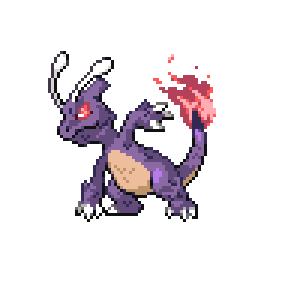
Venoth are cute, cuddly creatures that enjoy playing with toys that their Trainer provides. The only downside to owning a Venoth is dealing with the constant shedding of dust.
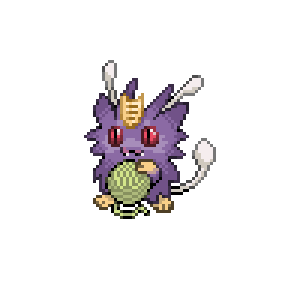
Venomel are found in resorts on remote tropical islands, releasing a calming smoke from the vent on their back. The magma in their bodies instantly warms up enclosed spaces, perfect for heating saunas while they idly stare at the lighting.
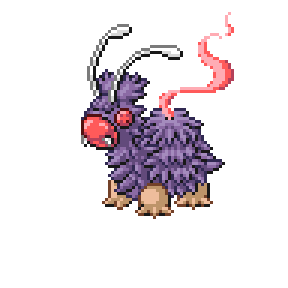
For people who want a warm room at a vacation resort, Venorupt are brought in to heat up the room to a guest's taste. The only room Venorupt refuse to enter are sauna rooms, as the lack of lighting and high humidity make Venorupt upset.
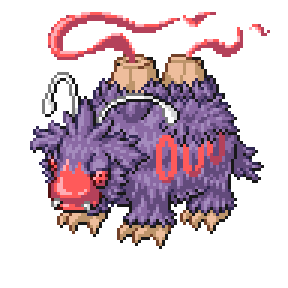
Venora can detect the slightest change of the wind with their sensitive fur. If they suspect a Trainer is nearby, they teleport away before they are spotted.
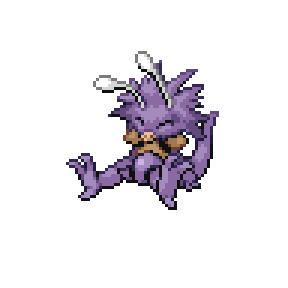
Venobra play in kids shows where they use supposed psychic powers to distinguish gold from counterfeits. In reality, many rely on their sensitive eyes to make this decision, as their psychic abilities play little role in their judgement.
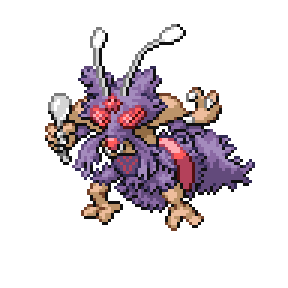
Venokazam were once brought to mining sites to dowse for ore. It is a common misconception that they harness psychic powers to find ore, as it turns out that they can spot glints of ore in the walls of the dark mines.
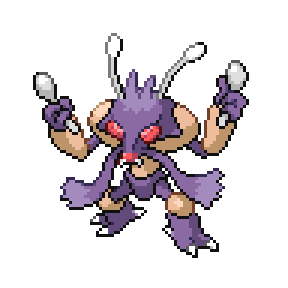
Venobell has a pernicious acid inside its bell that slowly digests bug Pokémon. Whenever one falls in, it releases spores to lull the prey to sleep.
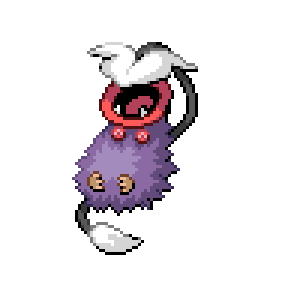
Quilnea live in desert climates where the need to conserve water causes their quills to turn red. Whenever threatened, they shoot a burst of barbed quills that are difficult to remove.
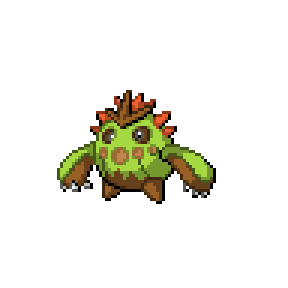
Chesvoir defend their Trainer from harm with their shield and lance. Their prickly personality slowly melts into affection as they bond with their Trainer.
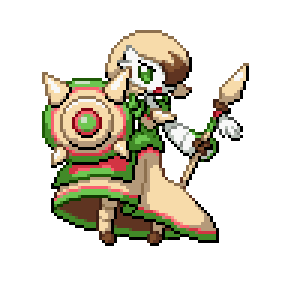
Chesras mushrooms are often harvested for their flammable properties, acting as tinder for hikers who camp out in forests. Their spores cling to nearby trees, so Pokémon Rangers routinely scrape off these mushrooms to avoid wildfires.
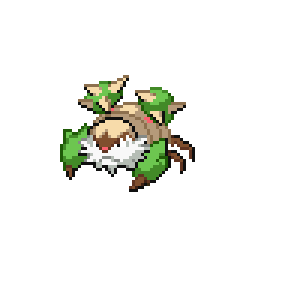
To cast fire upon their foes, Fennemime rely on hand gestures to shoot embers at their foes. People who rely on sign language to communicate are delighted when Fennemime understand their gestures.
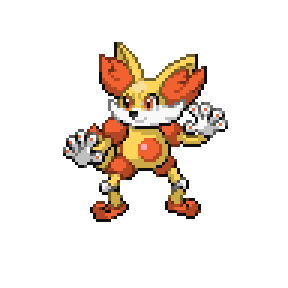
It is a high-maintenance creature because it needs to be sheared daily. Its wool was originally used in the process of creating a Fluffy Tail, but nowadays it is spun into yarn for elderly people.

It rests in one of the burrows sprawling through the desert, hopping between abandoned desert homes daily. Nomads travel alongside it as part of a mythological tradition, though of what origin and purpose has been lost to time.
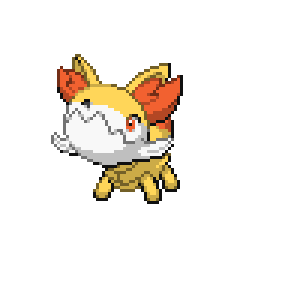
Fenneladin can set nearby objects alight with a flick of the arm with their dense bark-like armor. As they grow older, grooves form in their armor that resemble ridges of a tree.
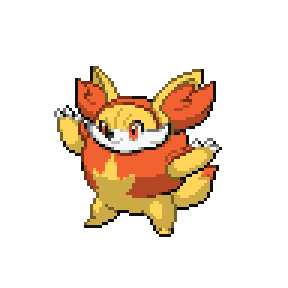
Brailava eat rodent Pokémon and rely on a clever ploy to coax them out of burrows. They shove sticks into burrows and set them on fire. As the fire burns, the burrow residents are drawn out to where Brailava are waiting.
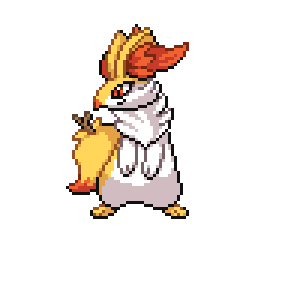
Braifable can be seen performing with street magicians to amaze audiences. They take breaks on nights of the full moon to bask in the moonlight and recharge their magical powers.

Brailadin carry a flaming stick with them wherever they go to illuminate the area around them. When confronted with a dangerous Pokémon, they can shoot flaming razor-sharp leaves to scare them away.
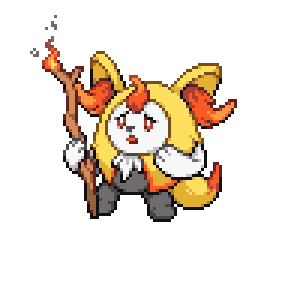
Delgeot live near volcanic mountains where they love the scent of ash. They often start wildfires if there is too much greenery on their mountains.
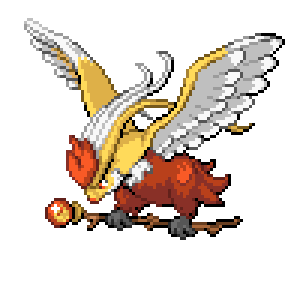
Deletta have doting fans that extol and sing praises for its music. The fiery dances it performs mesmerizes and amazes its loyal fans, who love both music and pyrotechnics.
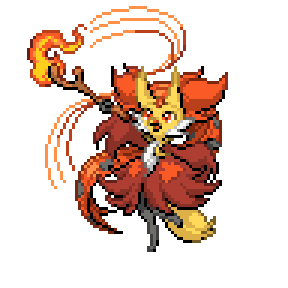
It spews out protective bubbles whenever it believes it is in danger. When a Trainer refuses to listen to its desires, it shoots a burst of bubbles to demonstrate its frustration.
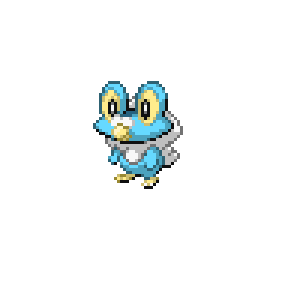
Froain release toxic bubbles from their mouths after digesting a meal, a byproduct of their digestive system. These bubbles have a putrid scent that drives away most Pokémon, allowing them to hoard berries for themselves.

Froata release bubbles in their wake as they roam through fields of grass. Sometimes, they chase each other in circles as they try to pop each other's bubbles, leading to the entire herd moving in a loop.
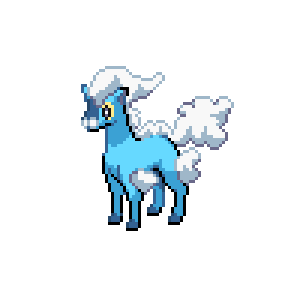
The large bones that Frogwak toss at foes are so big that they must throw them with both hands. Their slow yet hefty boomerangs break steel beams with a single pass.
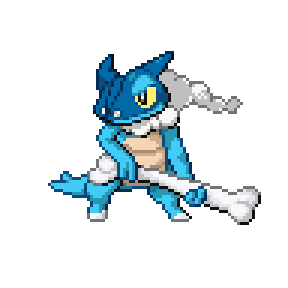
The only way to effectively attack a Frogfree is by attacking the main body, as they have wings made out of a bubbly foam that deform and warp around attacks when struck. Their barrage of bubbles makes landing a precise attack difficult.
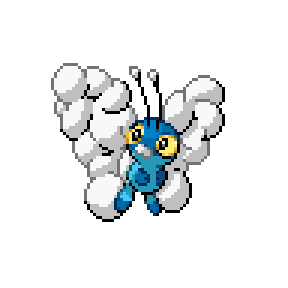
Frogtoed is a nimble Pokémon that can scale a 600 meter tower in a few seconds. It enjoys climbing to the top of tree canopies to croak songs into the sky.
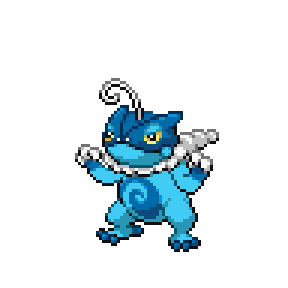
Frogpom are incredibly dexterous Pokémon that can conjure and throw water shuriken in a couple of seconds. They are also quite nimble, as they can dodge many attacks with split-second reaction speeds.

Frogrow have sharp vision that allows them to notice minute changes in the swampy water around them. Their precise pecks allow them to snatch up aquatic Pokémon from murky water, securing their next meal.
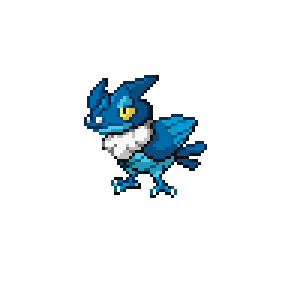
Even though Frogans fangs are full of venom, they are not sharp enough to pierce through scales or hide. They instead spray a caustic foam that clings to their prey to melt through their defenses.
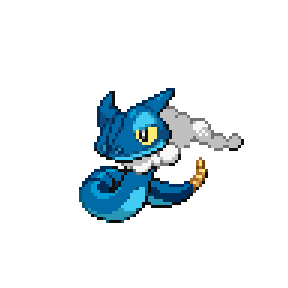
Frogcko practice throwing leafy shuriken at targets to improve their accuracy. They create small targets for themselves by encasing leaves in bubbles.
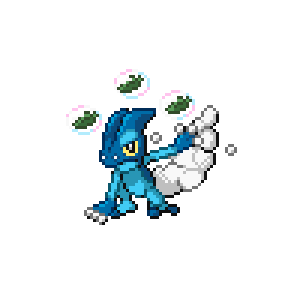
Frogtile are highly proficient with ranged combat, as they can knock down a can from across a football field. Their bubbles and razor-sharp leaves give them many options on how to take down foes.
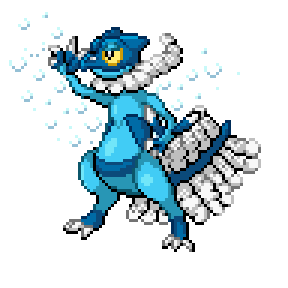
Frogcott surround themselves with a nearly transparent bubble that protects them while they play pranks on other Pokémon. Whenever they need a quick escape, Frogcott can float or swim away to avoid consequences.
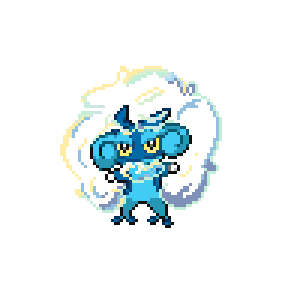
It surrounds its opponent with a flurry of bubbles, some of which stick to and slow down the opponent. Afterwards, it releases a shock towards the opponent, which ricochets from bubble to bubble in close proximity.
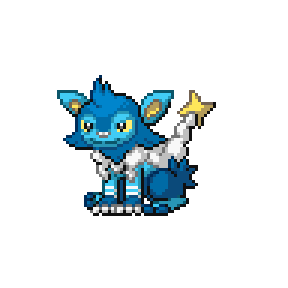
With the precision of a marksman, Frogladin can reliably shoot darts made out of bark to subdue foes from long range. These darts are less effective at close range, so their heavy, oaken armor soaks up the damage instead.
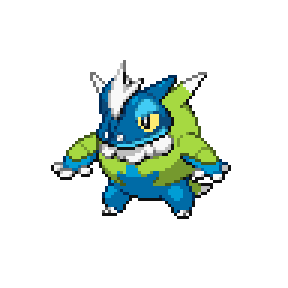
Frogdisc launches heart-shaped bubbles at foes filled with a special liquid that suppresses violent urges. Many foes are left confused after being pacified by the bubbles, giving Frogdisc an opportunity to strike.
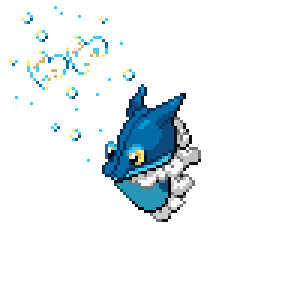
Frogperl defend themselves against predators by firing pearls with expert precision. They constantly produce pearls to replace the ones they fire, making them a popular choice for harvesting pearls from.

Frogizard release a sticky foam from their mouths that clings to feathers and fur. Whenever they are upset, they take to the sky to spew foam over their Trainer.
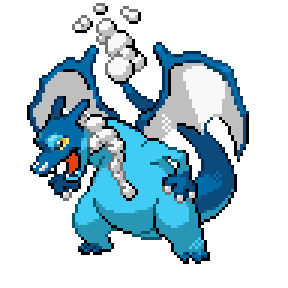
Frogchoke creates bladed daggers out of water to fight against its foes. These aquatic weapons are thrown with enough force to shatter stone.
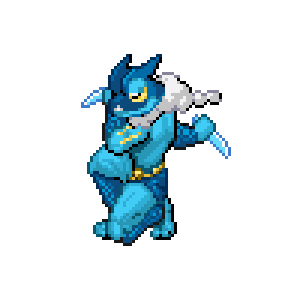
Frogdash relies on its lightweight bubbles to keep itself afloat as it gallops across water. Its bubbly mane can be set aflame to create photogenic shots.
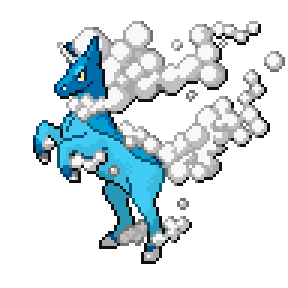
Frogeel are playful creatures that enjoy creating bubbles and playing with their Trainer. Whenever they are bored, they shoot bubbles at their Trainer with remarkable accuracy to get attention.
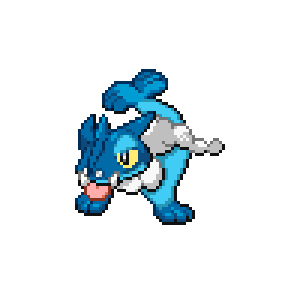
Grevyle conjure weapons made of water to cut through their opponents. For long range attacks, they rely on a mix of razor-sharp leaves and water shuriken to finish off a battle.

Gredisc suppresses a foe's violent urges by shooting heart-shaped bubbles at them, the liquid cooling their body and calming their mind. It is said that these bubbles can calm even the angriest of Pokémon.
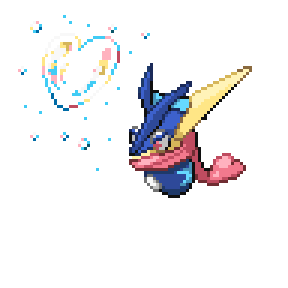
Grele can create dazzling displays of light to cheer on their friends by having electrified water shuriken ricochet around an arena. They have to be careful not to interfere with a match, as these shuriken can create stray sparks that linger.
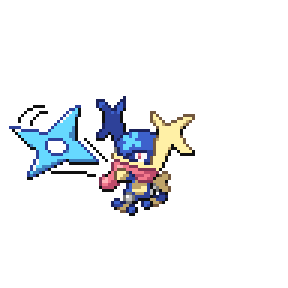
Torfing release a hot smoke that wicks moisture from the area around them. They are sensitive to moisture in the area, so by constantly releasing smoke they can adjust the humidity in the air.
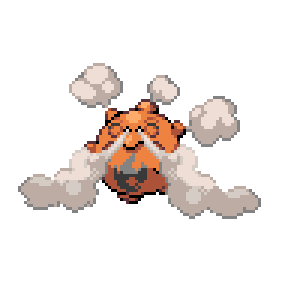
Torfree release clouds of smoke from the red-hot vents on their wings to scare away predators. At night, the vents on their back glow and create the illusion of a menacing monster.
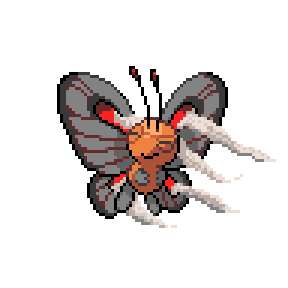
Domestication of this Pokémon is difficult, as it has a short temper and is prone to run amok over the slightest inconvenience. Once it calms down, it expresses deep remorse over its lost temper.
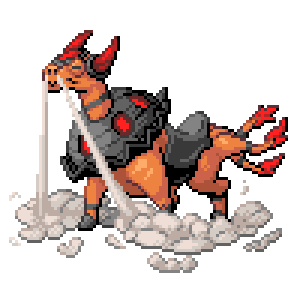
Torotto makes nests atop volcano cliffs because the high temperatures help incubate its eggs. After the eggs hatch, it feeds its chicks molten rocks until they are able to fly.

Torchu lives near volcanoes and eats molten rocks. Contact with water rapidly reduces its body temperature, so it will send out a pulse of electricity to vaporize and avoid contact with water.

Torper produces a white smoke that absorbs moisture, which effectively neutralizes water used against it. It is known to wander beaches and lakes where it absorbs the beauty of the natural world.
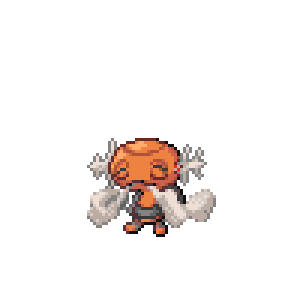
Torsire pumps out white smoke from its body, which absorbs moisture from anything it touches. It can be found near lakes where it admires the scenery for long hours at a time.
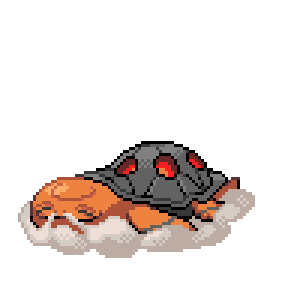
Torwile constantly billows out smoke from its massive jaws, which needs to be constantly vented to prevent toxic accumulation in its body. In Pokémon battles, its massive jaws can shoot out fiery plumes of lava, or bite onto its opponent.

Torterra houses molten rock in its shell and spews hot ash from its vents. It is found in hot, arid climates, as any moisture in the air causes it great pain.
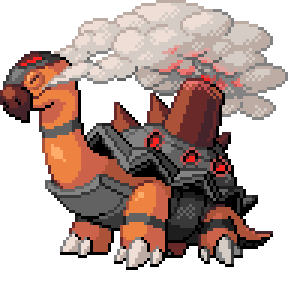
Torbat flocks to volcanoes to eat molten rocks, and releases smoke that builds up while digesting rocks. When threatened, it spits out balls of fire to scare away predators.
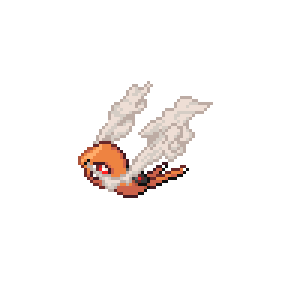
Torsand roasts nuts and treats on an open fire when frost nips at people's noses. People and Pokémon alike cozy up by its fire, helping everyone keep warm.
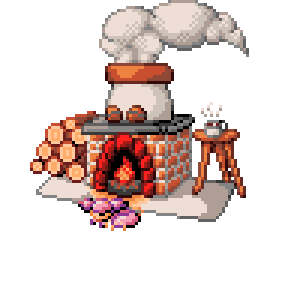
Tormel constantly release smoke from their bodies to ensure that they keep their bodies as hot as possible. If their bodies cool past a certain temperature, they experience a chill that causes them to shiver.
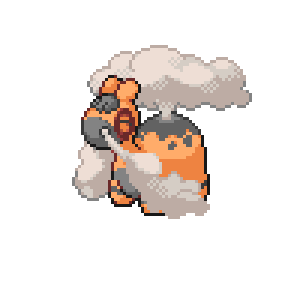
Tormer have pieces of shells and obsidian in their body, which constantly shift to keep their body hot. Whenever it rains, they push the shell pieces to the exterior of their body in an attempt to ward off moisture.
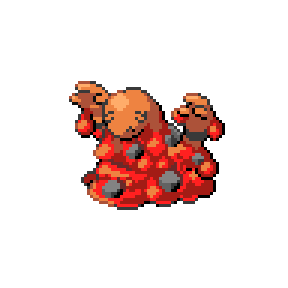
Pumpfa emerge during the full moon of an autumn festival and live quietly inside caves during the rest of the year. They happily dance and celebrate the occasion alongside others.

Its shell reminds people of Lychee, especially since its shell is the same color. When its shell is damaged, it also oozes out syrup that tastes like the fruit too.
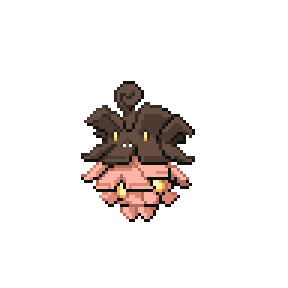
Pumpslash grow long spikes on their back that resemble candy corn. Many children have tried to bite off a delicious-looking spike, only to lose a tooth while biting down.
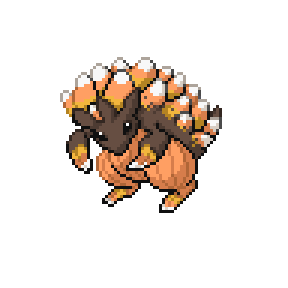
Pumpbat camouflage themselves among tree branches until they are ready to strike. By shining a bright light from within their bodies, they can surprise their prey and attack first.

Pumpxen light their sticks before every Pokémon battle and wave their sticks like a wand. They channel spirits of the dead to strengthen their scorching flames.

Venofree migrate to a different part of the forest every season to keep themselves warm. The journey is full of predators along the way, so they produce a large cloud of toxic pollen to deter predators.

Venovee are capable of rapidly adapting to their surroundings through evolution. Their obsession with bright lights remains ever present after they evolve.
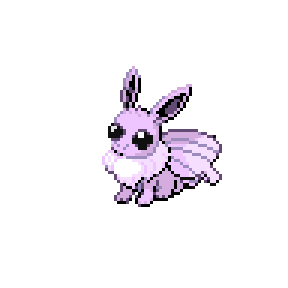
Venoeon are active swimmers at night and chase after other nocturnal Pokémon. They are rarely found outside of a body of water because their skin dries out when they are not submerged in water.
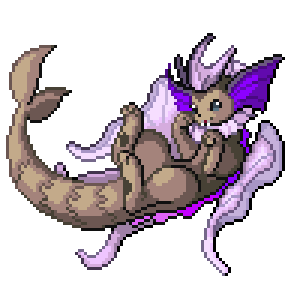
Venoreon are nocturnal creatures that love to stare at bright objects. Thankfully, they can light small flames to set small bushes ablaze and occupy their time.
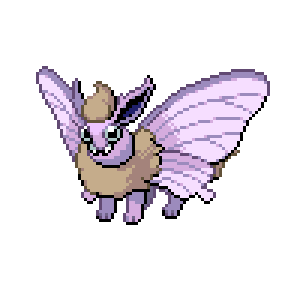
At night, Venogon flutter outside windows to stare at computer screens. They mysteriously vanish at dawn, leaving behind a silver dust where they were observing from.
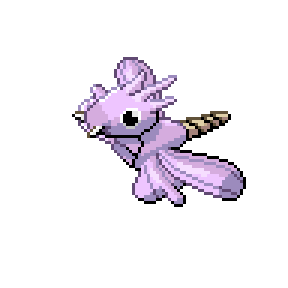
Daily skirmishes erupt over Silver Powder, as they rely on this substance to survive. The hunger suppressant has become a necessity as winters have become more volatile in their native environment.

Venogey make seasonal migrations to different parts of the world but often get lost when they are distracted by bright lights from cities. Many scientists are working on cutting back on light pollution by dimming lights when people are asleep.

Venossom release enervating spores that cause drowsiness when inhaled. Many lumberjacks have fallen asleep on the job because of the spores of a Venossom.

Venoeon release telepathic messages to anyone in the nearby vicinity. These thoughts often revolve around light and bright objects.
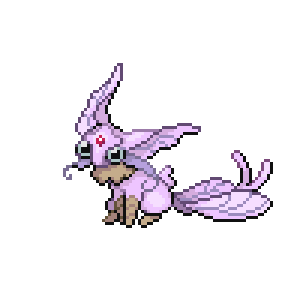
Venoeon are nocturnal creatures that love to chase after other Pokémon. When they feel particularly sly, they use their telekinesis to topple obstacles in front of their target.
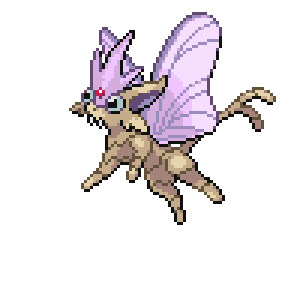
They grow as fast as the invasive bindweed, and both are poisonous to consume. Gardeners appreciate whenever a Venogrowth is around, since the Pokémon will do the weeding and watering instead.
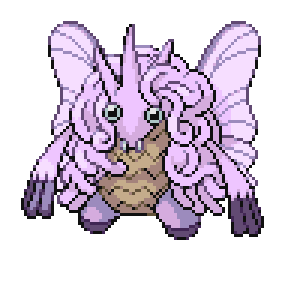
Venofeon are most active at night and wander forests while other Pokémon are asleep. They play with other nocturnal Pokémon by tossing elongated discs made of leaves.
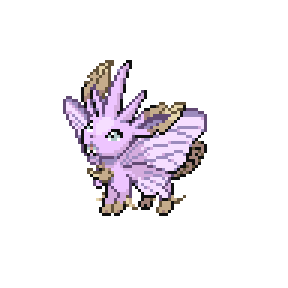
Venoceon release an icy frost to freeze predators that try to hunt them. They can also freeze the surface of a pond or lake and skate away from danger.
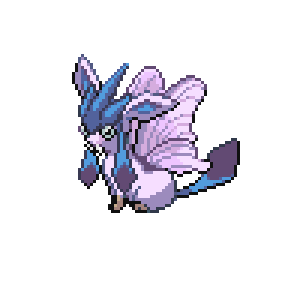
Venoark can reliably disguise themselves as other Pokémon but have a certain tell that reveals their true self. In the presence of bright lights, Venoark always stare the source and shed lavender scales.
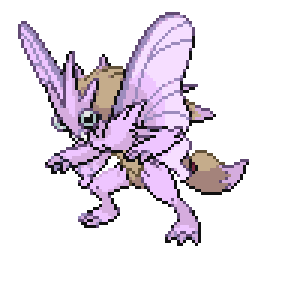
Whenever Venopuff are about to perform, they take a sharp breath in to prepare for their song. As they sing, they release a toxic dust that creates drowsiness upon inhalation.
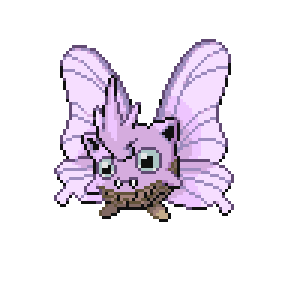
At night, Venosis float around lampposts to stare at the bright light. Through the course of the night, Venosis shed a bright dust that clings to the fluid around their body, dyeing themselves a bright lilac color.
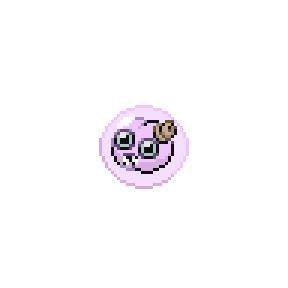
Venoling flock to cities at night because the artificial lighting activates a part of their brain associated with safety. Once dawn comes, they resume their migration to wherever they were headed.
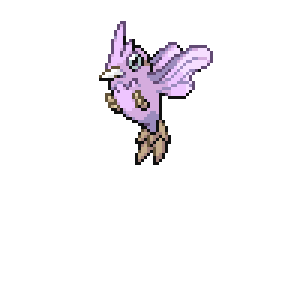
Venomeleon produce a bright, flammable gel that creates toxic clouds of smoke when burnt. Many people report prolonged sluggishness after they inhale the noxious smoke.
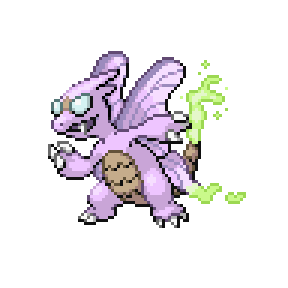
Venotox are nocturnal creatures that flutter around streetlamps at night. The shimmering dust from their wings is toxic to both Trainers and Pokémon, so many scientists recommend face masks for people walking around at night.
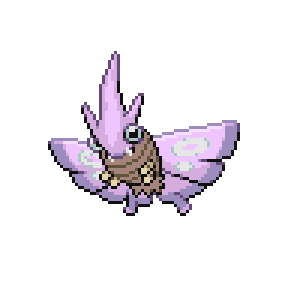
Whenever Venoape are angry, they produce a billow of dust that surrounds their body. This dust heightens an adrenaline response that tends to escalate situations.

Venota leave clouds of shimmering dust in their wake. They enjoy galloping through grass at night and are drawn to bright lights from nearby homes.

While Gourcute may seem scary because of their glowing bodies, they are rather friendly. Many Gourcute enjoy helping cafes sell food and even allow people to eat from their bodies in the form of Gratin a la Pumpkaboo.
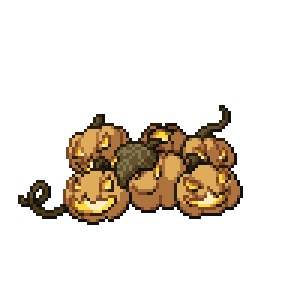
Gourwak wear a mask that grows constantly, so they carry a carving knife made out of bone to adjust the holes in their mask. Without the carving knife, the holes in their mask would close and render them unable to see.
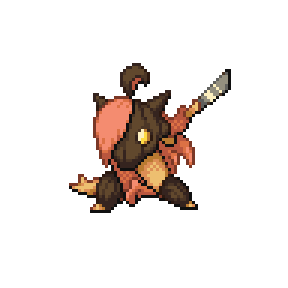
These creatures love berries and prefer the Tamato Berry above all else as it is the perfect balance of nutrition and sweetness. They are known to eat so much that they get slower after digesting all the berries.
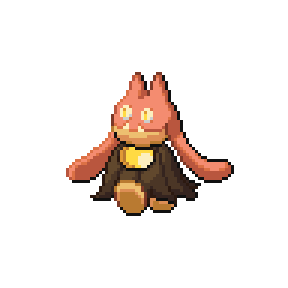
Goursaur maintain the pumpkin atop their backs to attract children during fall festivals. Once enough children have gathered, they play games and distribute berries from within the pumpkin.
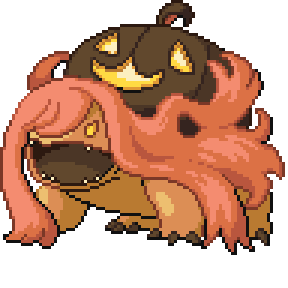
It is sought after by chefs around the world, as their leaves can be dried to produce a syrup that tastes like currants. Chefs are working with conservationists to keep the wild population high while still catering to the needs of customers.
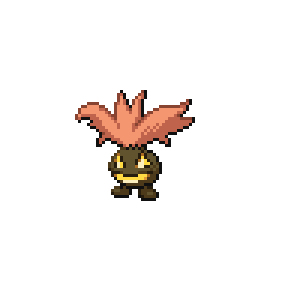
Their sap produces a yellow luminescent glow that illuminates cavities. Their body cavities act as a woodwind instrument close to the recorder, as wind passing through produces a high-pitched whine.
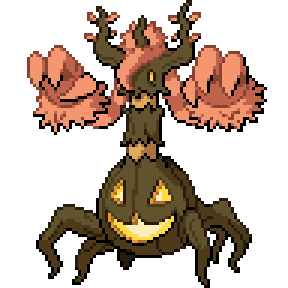
Gouretta comes out of hiding at night and chants with a euphonious voice that draws both people and Pokémon to listen to its music. People report feeling lethargic after hearing its song as though they were drained of their vitality.
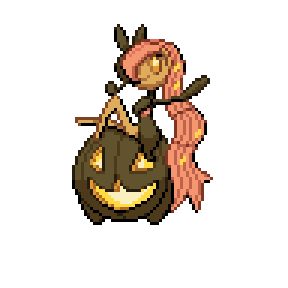
Swirdeen has a long piece of candy cane that it uses as a horn. It may invite Pokémon that like to eat sweets to suck on the horn until it is sharp.
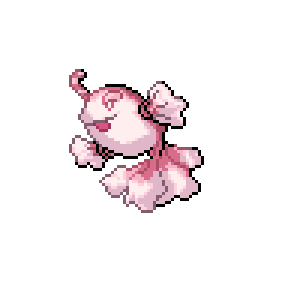
It slices through opponents using hardened scythes made of apricots and cream. On the rare occasion its scythes are eaten, it regenerates the scythes in one day.
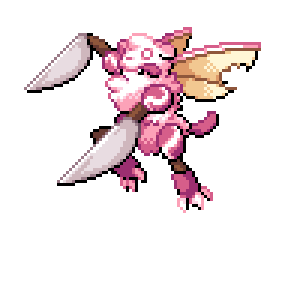
The candy-cane on the back of a Swirsaur is quite sharp, especially since bakers shave off pieces to add to baked goods. Pieces of their sweet and fluffy bodies are incorporated into desserts.
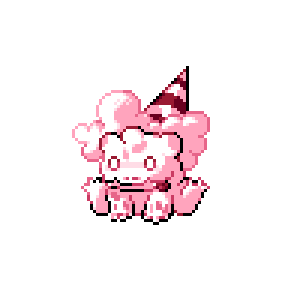
Swirdreavus produce a sweet meringue that bakers harvest for cupcakes. In exchange for this meringue, bakers offer the first batch of cupcakes to Swirdreavus to ensure they will not get cursed.
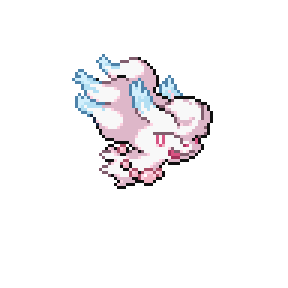
Swirbull struggle to find food they can eat because of their soft teeth made out of gummies. They rely on people to feed them soft food at parks and are particularly fond of sweets.
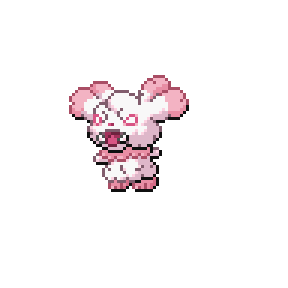
Swirceus are said to have the ability to create any sweet that is desired. Many gluttons have chased after them hoping to create the perfect snack.
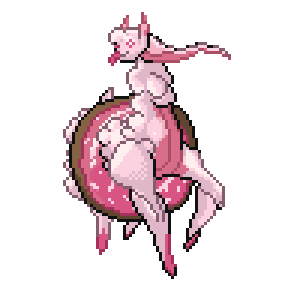
Once a year, Swirfable come out of hiding to help produce special desserts that get eaten on the turn of the lunar calendar. Their diligence in making these cakes is only rivaled by the amount of sugar they put into them.
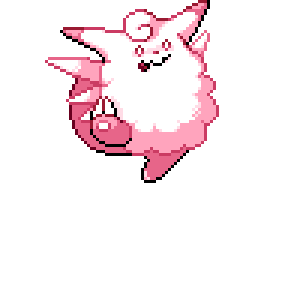
Swiror are made out of sweet yet hard rock candy that comes from outer space. They have several smaller pieces of candy orbit around their body, each with their own unique extraterrestrial flavor.

Swirduck may be made out of sweet treats but have the same teeth as any other Psyduck. They often have cavities because of their high sugar diet.
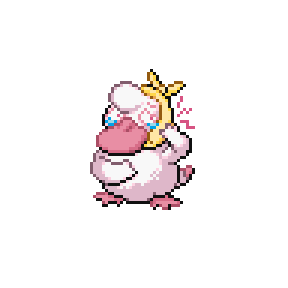
Swirduck can mix dough with their long bills to scrape up every bit of dough from the mixing bowl. Many bakeries employ the help of Swirduck for this very purpose.
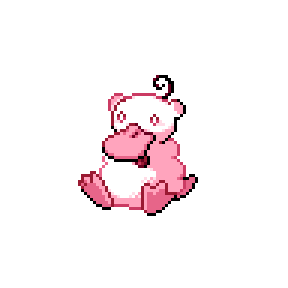
Swirperl pearls taste like ice cream, with each pearl melting into a milky, creamy texture. Most Swirperl happily give up their pearls so that they have room to produce more.
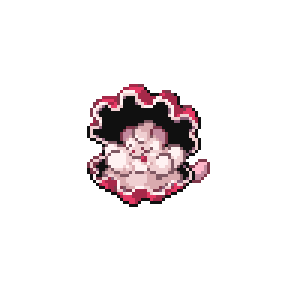
Many Swirwhirl end up as a tasty snack for hungry Pokémon because of their soft, sweet bodies. To avoid being eaten, Swirwhirl fills the stomachs of hungry Pokémon with sugary water until their hunger is gone.

Swirdude are made out of special rock candy that is incredibly hard. Children often break their teeth trying to bite down on Swirdude flakes.
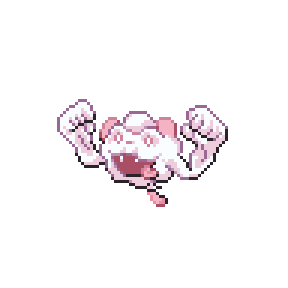
Its shell has valves that produce a Fresh Cream, which chefs collect to produce baked goods. When it is upset, it curls its shell down and stops producing cream until its needs are met.
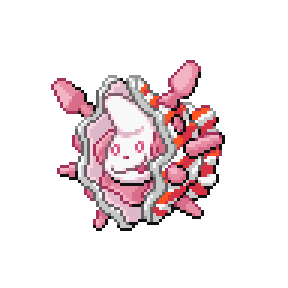
Slurpod are almost entirely made out of dense sugar, and as a result are unpalatable to other Pokémon. When eaten, they induce a sugary shock that subsides quickly, leaving the consumer drained of energy.
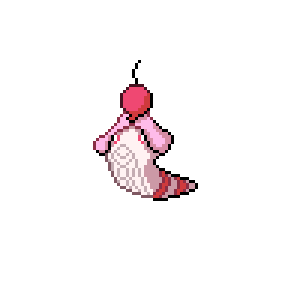
Slurkhan enjoy helping bakers create sweet, delicious masterpieces. The small companions in their pouches often helps out with more menial tasks, such as sifting sugar or piping frosting.

Slurgon taste incredibly sweet and should be eaten in parts. No matter how many times people slice Slurgon, they always end up being eaten in long strips until there is nothing left.

Slurllery have gumdrop suction cups on each of their tentacles that allow them to cling to ceilings without falling. They shoot out a pink, inky substance that can be piped onto cakes as icing or diluted to produce a glaze for baked goods.
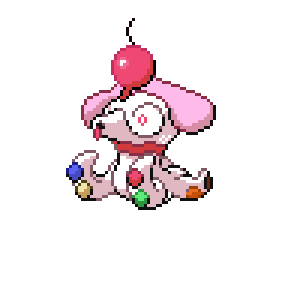
Slurmagius showers candy and sweets with a mysterious powder. The powder is sour at first but slowly becomes sweeter over time.
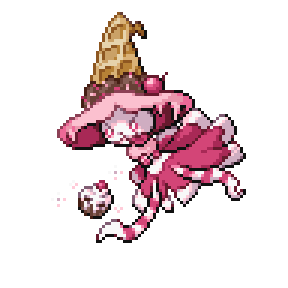
Slurceus are said to create the richest desserts in the world. Many chefs and bakers travel the world to obtain new techniques from Slurceus.

Slurade love to give out sweet chocolate treats to Trainers and Pokémon, as their bodies produce stunning edible arrangements on their hands. Many couples rent out a Slurade to enjoy sweet treats while on a date.
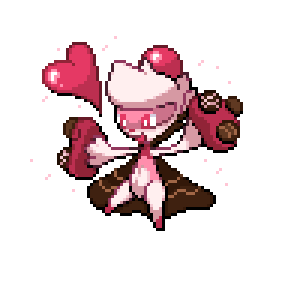
It produces beads of cream that are collected by bakers as a topping for baked goods. Its creamy beads are used in various sweet treats, such as the Jubilife Muffin.
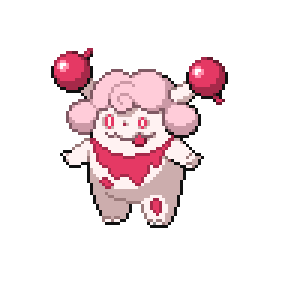
Slurbas may appear bland, but they are some of the sweetest Pokémon that exist. They earn this reputation through their sugary dough and their considerate personality.
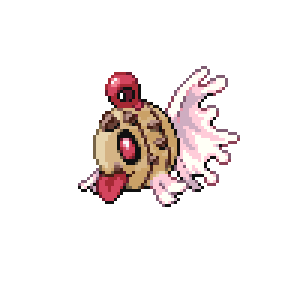
Slurmander release hot icing from their tails that melts into a sugary glaze. Many bakers rely on their help to finish off delicious pastries.
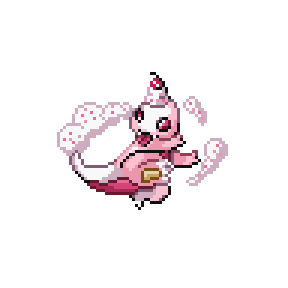
Slurduck are made out of a sugary cream that is incredibly sweet. Whenever they enter water, the sugary compounds on their body leech into the water and turn it into a thick sugary slurry.
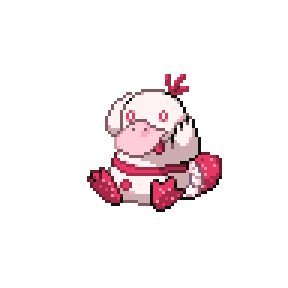
Slurduck often wake up from their rest to find that they have been buried deep within a pie. Their bodies become dyed with the violet color of blueberries, making their bodies incredibly sweet.
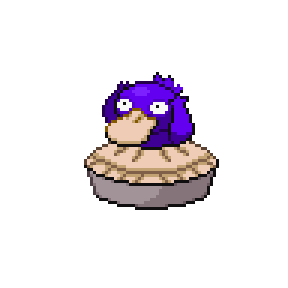
Slurleo love to balance large jawbreakers atop their head and refuse to go anywhere without one. If they need to remain still for a long period of time, they lodge the jawbreaker between their candy cane tusks to keep it still.
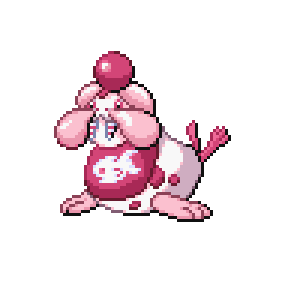
The pearls of Slurperl are edible and incredibly sweet, as each pearl is a different flavor of ice cream. Many bakeries harvest Slurperl pearls regularly to incorporate these pearls into their baking.
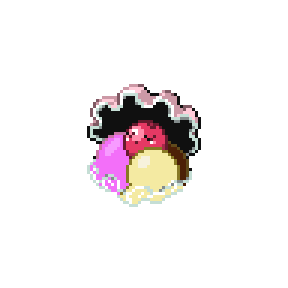
Slurlos produce a sticky, licorice-flavored substance from their back. This delicious gel-like substance is also incredibly sticky, making it perfect for connecting baked goods together for specialty cakes.
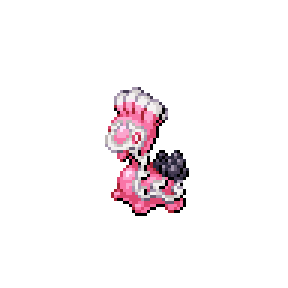
Slurizard works alongside bakers to make delicious treats with its flames. It operates ovens where it ensures cupcakes are baked to perfection.
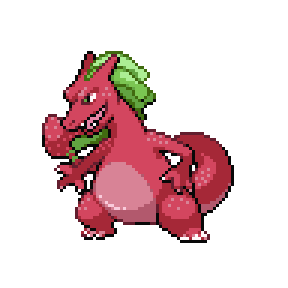
Slurzee lace their sweet treats with berries that cause drowsiness. They pass treats out to pedestrians, hoping to eat their nightmares.
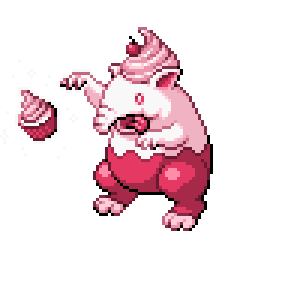
It has difficulty escaping from tough situations when its scales cling to its body. A properly equipped Eject Pack allows it to pull back once the fighting gets tough.
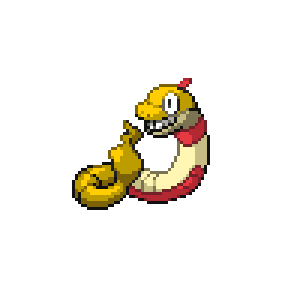
Scraduck struggle to keep their bill in front of their face and often lose it when fighting in a Pokémon battle. Like their baggy garments, they often need to pause to fasten their bill back onto their face.
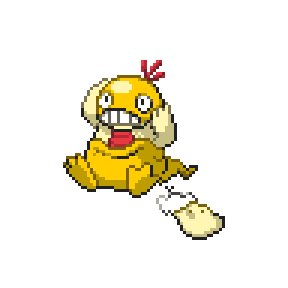
Scraduck often forget what they are doing because they have to constantly pull up their baggy pants. Forcing them to remember anything is difficult and causes them to develop a headache from the strain.
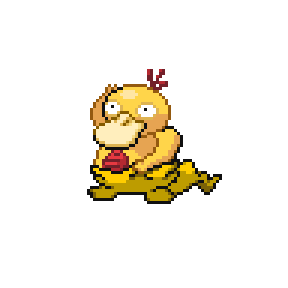
No matter how many times Scrafduck try to fix their appearance, they always struggle to properly wear their garments. Many develop headaches out of the countless hours they waste and eventually give up out of frustration.
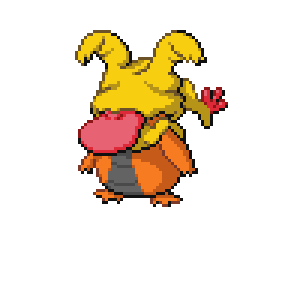
Many Lokarp strive to carry their Trainer on their back, developing their strength with bundles of rocks. It is said that if they are able to carry their Trainer on their back and cross a river, their overwhelming joy causes them to evolve.
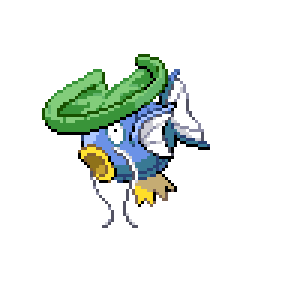
Losaur draw many Bug-type Pokémon to the water lily on their back to pollinate it. In exchange for pollination, many Bug-type Pokémon are given a moment of respite on the pad on their back.
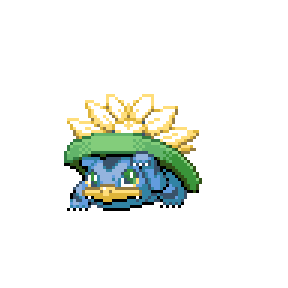
It wins battles with the expectation that it gets fed afterwards. As such, Trainers opt to feed it packets of Packaged Curry because it is cheap and easy to find.
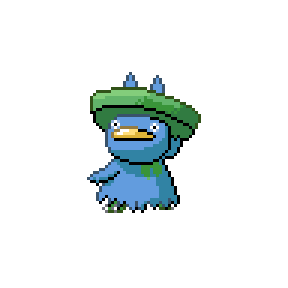
They swim on the surface of lakes and rivers, as they require clean water to wade in. They float to people who are having picnics or fishing by the water's edge, eager to join in on the fun.
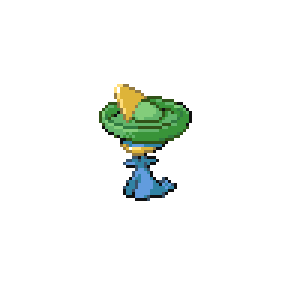
Losaur have a special flower atop their backs that releases a cloud of pollen when disturbed. This does not stop many Losaur from using their backs as a springboard, as many are too nimble for the cloud to cling to them.
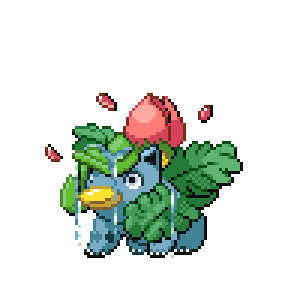
Loling take long pieces of reeds to weave intricate nests that resemble an orb. Many nests are close to water so that Loling can quickly find reeds for any impromptu repairs.
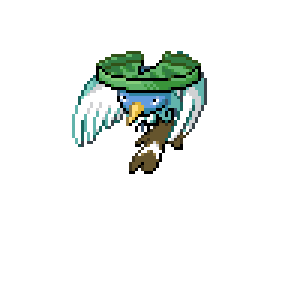
Bartenders work alongside Loish to serve delicious drinks. Its nectar is an important ingredient for many sweet beverages, and its head provides a flat surface for patrons to rest their glasses on.
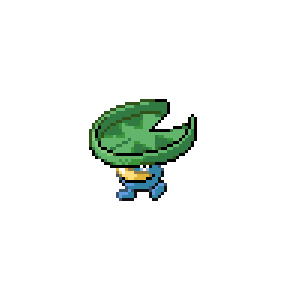
Loskit are capable of ferrying other Pokémon across bodies of water without breaking surface tension. They are offered berries in exchange for their service, but refuse the gifts since they are always willing to help others.
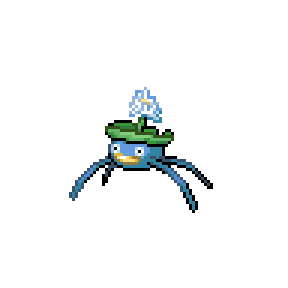
Loviper swim across the water by slithering in a unique wave-like pattern. This allows them to access aquatic prey and gives them a way to escape from local Zangoose that they may encounter.
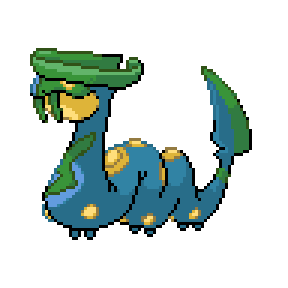
Lomfree wings are peppered with small red flowers that are native to swampy environments. They release an intoxicatingly pleasant aroma that attracts other Pokémon.
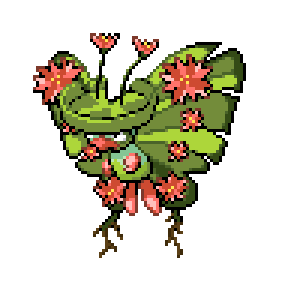
Lomcko is always eager to please because of its servile nature. It makes a great restaurant waiter because the pad on its head helps it carry dishes to customers.
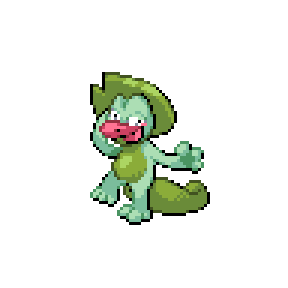
When they enter Pokémon contests, a Trainer may include a Green Scarf to help foster innovative displays of brilliance. They are known to excel at providing new ways of aquatic entertainment, utilizing the Green Scarf to amaze audiences.

It floats along the surface of the water to steal snacks and vegetables that fall into the water. It prefers bland and watery food, which is why it goes for cucumber slices first.
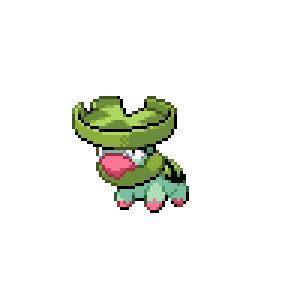
It wanders into schools or parks to seek out picky eaters to steal undesired food from. It loves bland and watery treats, so these picky eaters remove cucumbers and other vegetables from their salads for it to eat.
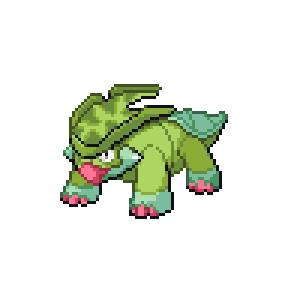
When nest building, Lomling steal nest parts from other Pokémon, as this is often easier than finding reeds and twigs themselves. Many nests are conveniently located near water, allowing Lomling to bathe as needed.
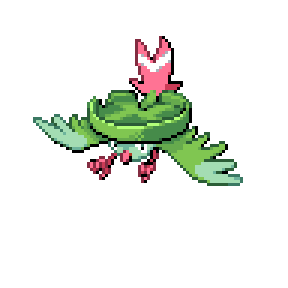
Lomplume are experts at camouflage, as the leafy pad on their head gets partially submerged when they hop into swampy water. The crimson flower in the middle of their lily pad is also poisonous, which limits the number of wild predators they have.
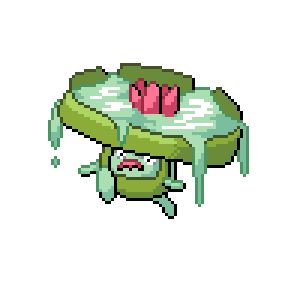
Lomsect cultivates patches of mushrooms to grow in nutrient-rich mud that can be found in swamps and marshes. Despite having a lily pad atop its head, it does not like the sensation of being stepped on.
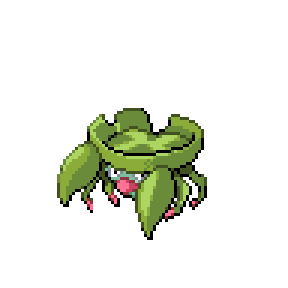
While Lomskit can travel across the surface of water without causing ripples, their lily pad is too small to carry other Pokémon. This does not stop other Pokémon from trying to hop on, which ends with both Pokémon getting wet.
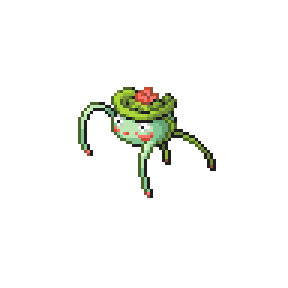
It is known to help gardeners sow and water many types of berries by carrying water on top of its head. However, it digs up spicy ones such as the Figy Berry and tosses them aside instead.
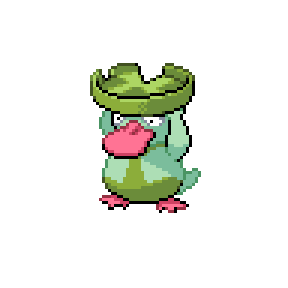
Lomviper make underwater nests to prevent local Zangoose from destroying their eggs. When it is raining, they can absorb fresh water to rejuvenate their bodies and keep their scales well-hydrated.
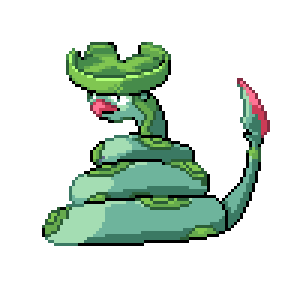
Lomra enjoy ferrying Pokémon around on their back but teleport away when a Trainer is spotted, bringing the rider with them. Once they sense that the Trainer has left the area they were in, Lomra teleport back to continue the ride.
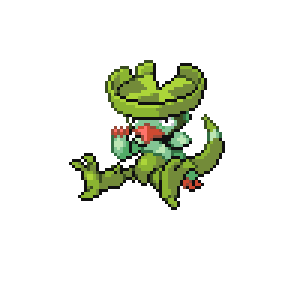
They become intoxicated on a Hopo Berry whenever they find one, which helps calm them down before they sleep. When they wake up, they may become confused and unable to recognize where they are for a moment.
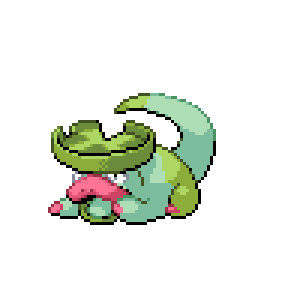
Ludiflora can ameliorate boring parties by bringing a lot of happy festive energy. It encourages others to sing and dance at parks, picnics, or wherever there is space outside.
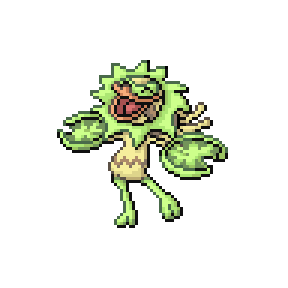
It will dance in front of people at parks or picnics in an effort to steal food. It especially goes after salads, which is its best chance at a few courgette or zucchini slices.
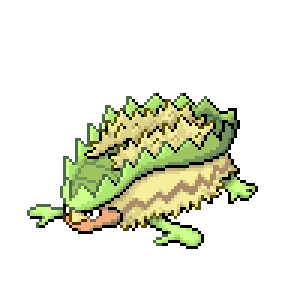
Ludirade deliver histrionic performances in front of audiences at theaters across the world. Their emboldened passion gives them the vigor to dazzle audiences with their dance and flurry of petals.
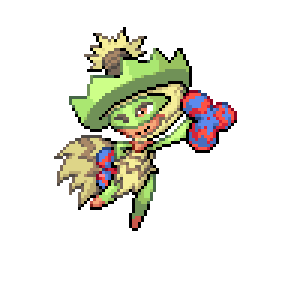
Luditad enjoy parties and happily float in pools to deliver drinks or party favors to guests. They seem particularly happy when energetic music is playing.
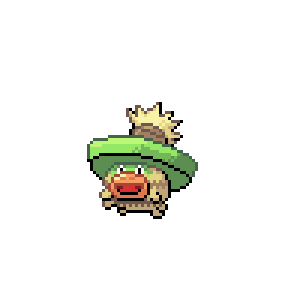
Ludiape are dynamic yet quick to anger, leading them to be quite unpredictable in all aspects of their lives. Their spontaneous joy inspires many people who struggle to deviate from routines.
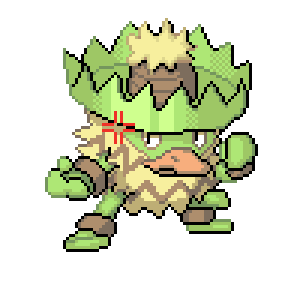
Ludikazam is a carefree Pokémon that performs silly dances regardless of the situation. It can even force others to dance by manipulating their muscles with its psychic powers.
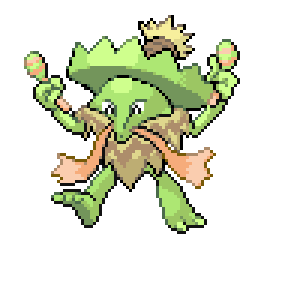
Miniper often get buried in mud when they crash into swamps. The stagnant waters prevent their rocky bodies from decaying so many Miniper remain in these swamps until awakened by a Trainer.
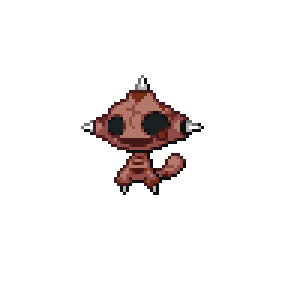
Minicate always bears a strong resemblance to a slice of cheese, baffling scientists. Despite its appearance, its rocky shell is inedible, though this has not stopped researchers from trying.
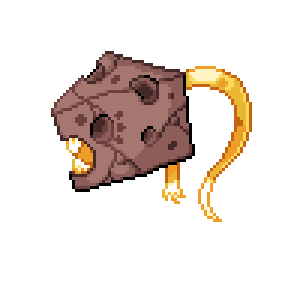
Minigross combines the might of its many brains to calculate the precise trajectory of incoming meteors. When paired with data from modern scientists, it can soundly predict the time and location of an impact crater multiple days in advance.
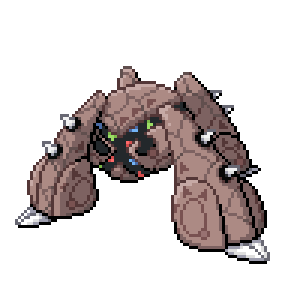
Fueled by an ancient instinct, Minirunt plunges into cliff faces to break sedimentary rock and unearth fossils. Once it excavates a relic of the past, it soars back to its nest to keep its primeval brethren safe.
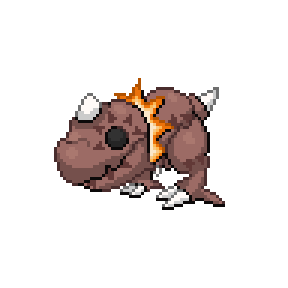
Miniduck often lie flat on their stomachs when dormant because it is the softest part of their body. When they are attacked, they release psychic waves that cause headaches.
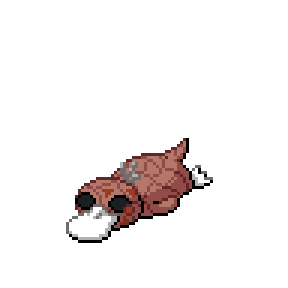
Miniduck are easily tricked into running in circles, and the dizziness can often lead them to get a headache. The best way for them to recover is by landing on their stomachs and resting.
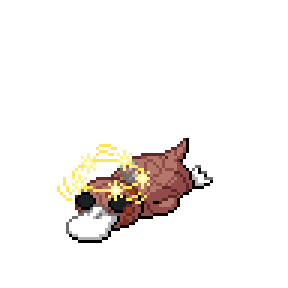
Miniduck are superb swimmers that zip through the water to avoid predators. Once they find a suitable spot to rest, they go dormant and tuck their limbs close to their bodies.
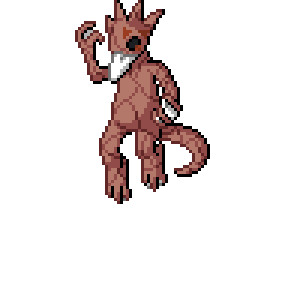
Miniduck release a trail of stardust wherever they swim. These trails are particularly mesmerizing underwater, where they create a beautiful glowing display of stardust.
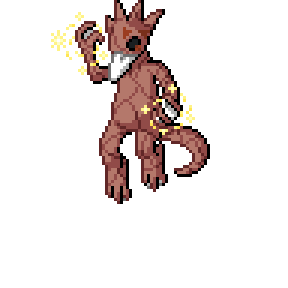
Miniperl can remain dormant for long periods of time, keeping their shell closed. It is difficult to see the inside of their bodies, as opening a Miniperl shell requires tremendous force that risks hurting the Miniperl.
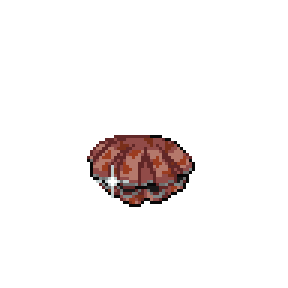
When another Pokémon runs away from Minilithe, their instincts urge them to chase after the escaping Pokémon. When they reach their max speed, they release a glittery stardust behind them.
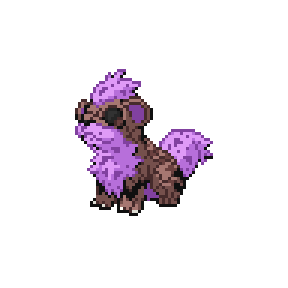
Mininine are surprisingly limber Pokémon that love to chase others. After a long chase, Mininine follow the trail of stardust they left behind to return to their Trainer.
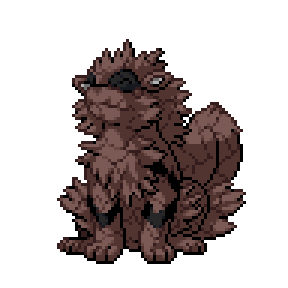
Minibone shine bright with a celestial, bone-colored glow. Their boney boomerang can be tossed high into the air, high enough to be mistaken for a shooting star.
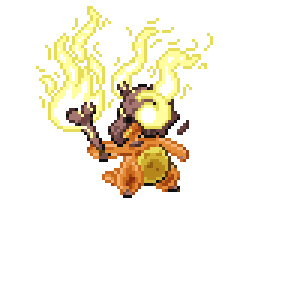
Minizing spew out clouds of stardust that shimmer at night. Though these clouds of stardust are beautiful, the stardust is known to cause coughing fits when inhaled.
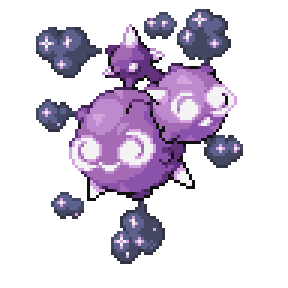
Minidos creates miniature tapestries of the night sky as constellations form in its webs. These delicate and intricate patterns often take a few days to a couple of months to produce, only to be torn apart once the webs catch prey.
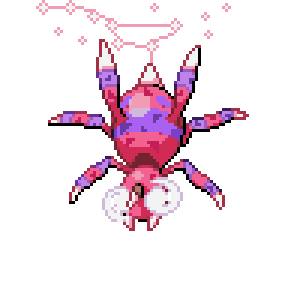
Miniduck love to relax at the edge of a body of water and stargaze for hours at a time. When disturbed, they release a cloud of stardust that causes headaches, which deters many Pokémon from interrupting them.
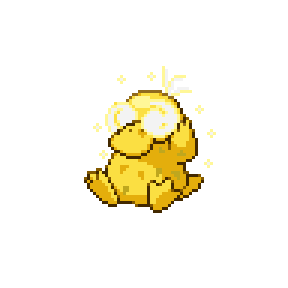
Miniduck create a trail of stardust wherever they swim and brighten bodies of water with a beautiful display of light. These transient displays last for a few seconds, as the light from the stardust dissipates quickly.
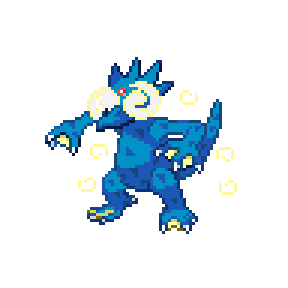
The inside of Miniperl shells is speckled with white dots that resemble the stars in the sky. The soft glow of a Miniperl's core gives them an extraterrestrial appearance.
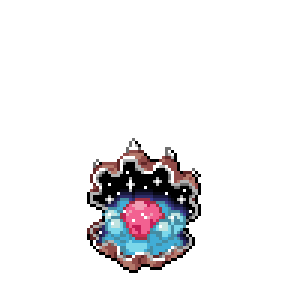
Miniperl have pieces of their shell orbit around the bright pearl that controls their body. Each piece of their shell can rapidly change position to deflect attacks, making any attacks on their pearl difficult to land.
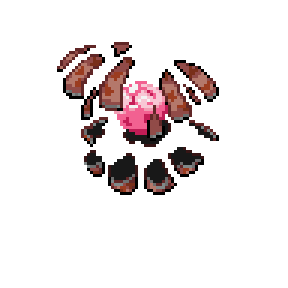
Minilithe soar through the night sky chasing anything that flies. These chases create a beautiful display of stardust that trails behind them.
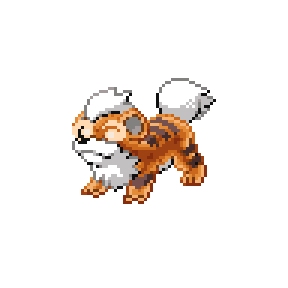
Mininine love to chase after Pokémon and leave glittery stardust in their wake. Whenever they catch up to their target, they like to press a paw on their head to confirm that everything is going to be okay.
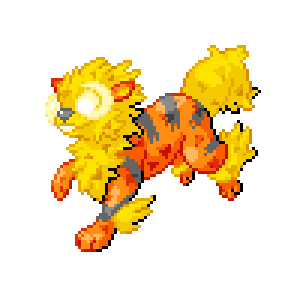
Minifetchd batons can shine as bright as a car's high beams, which makes them perfect for being seen at night. Some rural airports rely on Minifetchd to help guide planes safely on the runway.
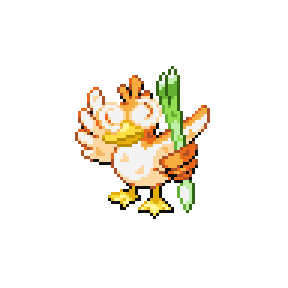
Charfing constantly vents a noxious and flammable gas from their bodies. They threaten other Pokémon by brandishing their tail, which can ignite the gases inside them and cause an explosion.
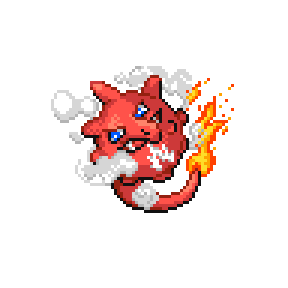
The only thing brighter than a Charhorn's cherry shell is the flames on their backs. Each spine on their back is capable of producing flames that can melt metal.

At low tide, Charyu melt the sand in front of them to create glass and help slide themselves back into the ocean. This process can take a couple of hours because the sand is saturated with water.

Charos are ferocious creatures that aggressively defend their herd with their sharp horns and fiery breath. In exchange for protection, Charos are given any berries that the herd finds.

Chardle burns tall grass using its fiery tail to create smoke. This smoke scares away predators, so it has plenty of space to graze on grass and leaves.

In a Pokémon battle, Charnaw release scorching hot flames from their toothy maw to secure victory. Many develop a certain haughtiness if they win often, so Trainers often give them challenging fights to teach them how to lose gracefully.
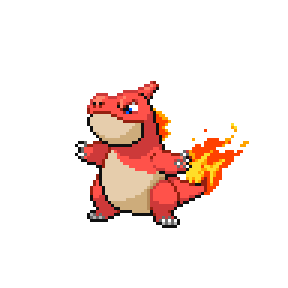
Charpom are often described as amusing to be around because they love to perform tricks for people. Their flaming tails can juggle and cook berries at the same time, but they have to be careful not to set anything else on fire.
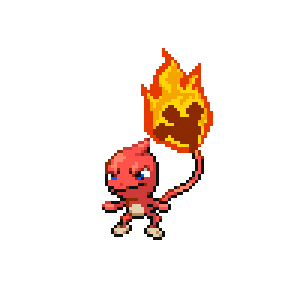
Charbull have a willful stubbornness when it comes to learning new skills. Many resist the thought of training but are easily swayed by the right snacks.

Charow terrorize other Pokémon by burning bushes and shrubs. The only thing they love more than scaring others is asserting dominance over each other, leading to a few Charow acting like tyrants.
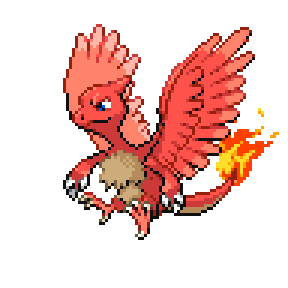
Charmory were once trained by the military to grab onto vehicles with their fiery talons. Many are now a part of nature reserves where they melt through cages as an enrichment activity.
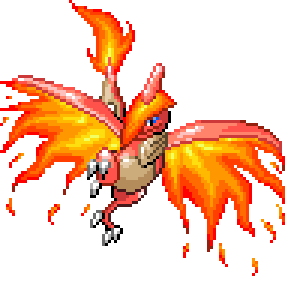
Chartank produce a warm milk that helps baby Pokémon fall asleep. The high demand for this milk means that Chartank rarely get a break from production.
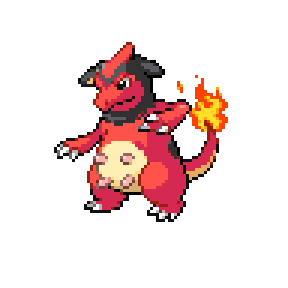
Chartar live in arid climates where their powerful flames are strongest. They hunt for food by setting burrows ablaze with embers.

Chartar remain in one place while their body develops until they evolve. Their sturdy shell can rock back and forth to kick up searing hot dust, which can burn Pokémon that attack them.

Chartar have hot shells that can kick up dust whenever they are attacked. This searing hot dust can set feathers or fur ablaze and cause their attacker to retreat.

Charitar release clouds of smoke to obscure their movements before they rush in to bite down on prey. Groups of Charitar can release enough smoke to block out the harsh desert sun in a small area.

Charchic scratch tree trunks to keep their talons sharp. Their flaming tail sheds embers wherever they go.

The flames of Charlia grow stronger over time as they bond with their Trainer. Many Trainers mentally prepare themselves to be excited to help Charlia improve in battle.

The strength of Charlia's flaming claws is contingent on their Trainer's temperament. The more excited their Trainer is, the stronger their flames.
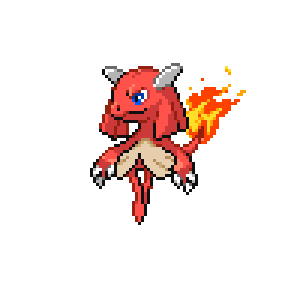
Charlia rely on the confidence of their Trainer to give them the motivation to do well. Without this confidence behind them, their flames become smoldering embers.

Charlia rely on their Trainer's energy to fuel their flames. If their Trainer is timid or scared, this weakens their flames and makes them sluggish.
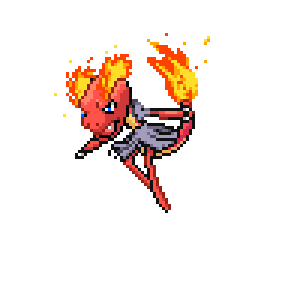
Charsol have a hard time communicating the urgency of an upcoming disaster, so they light small fires where people can see the incoming danger. They rarely receive credit for their efforts, but they are content if people end up safe.

Charino wanders from their nest in search of berries and other treats to bring back. They are quite aggressive and will attack Trainers with a flaming stinger.
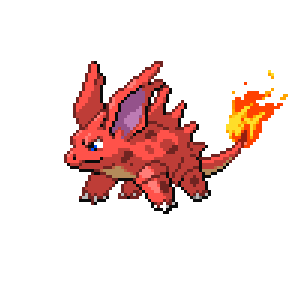
Charino have a special horn that produces both flames and venom and often surprise their prey when attacking with both. This horn, along with their aggressiveness, give them few friends who tolerate their presence.

Charwick prepare for their job as night guards by developing the stamina to remain lit for long periods of time. Many who fail are gifted to families who need warmth.
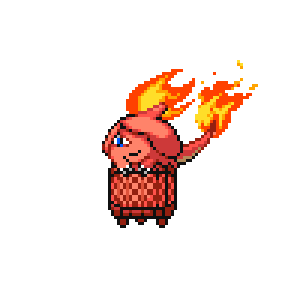
Charsis produce a thick, flammable gel that is highly reactive. If a blob of Charsis gel gets wet, the gel explodes and vaporizes the gel in a bright flash of light.

Charbat drool trails of vermillion flames from their gaping mouths wherever they fly. Many Pokémon rush to get out of the way of the flames, which can cause stampedes to occur inside caves.
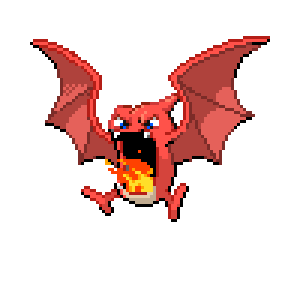
Fueled by light, Charzma have the ability to produce flames in a complete vacuum. This spontaneous combustion sears everything in their path, absorbing light from the burning flames they produce.
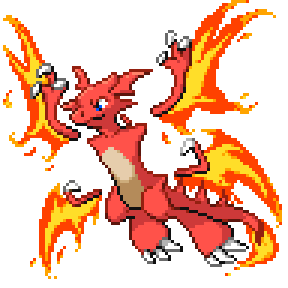
Charmo-o release a terrifying shout to vent anger before punching trees with their fiery fists. The scales covering their arms are shed after each tantrum, and are molded into pots and pans by avid craftsmen due to their high heat conductivity.
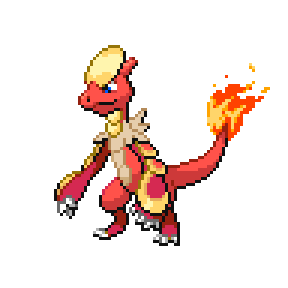
Charlett are capable of setting whole forests ablaze with root fires that burn underground. They are forced to keep moving to prevent the soil beneath them from getting too hot.
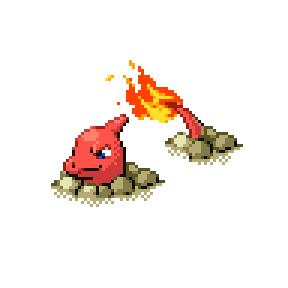
Charlett are constantly on the move to prevent root fires from occurring. They only rest when the flames on their body are cool enough not to light nearby plants on fire.

Chardot tuck their flaming tail close to their body whenever it rains. The shell atop their heads diverts water away from their tail and keeps it dry.
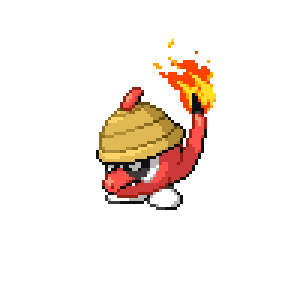
Charduck are quick to anger because of the frequent headaches they experience. They sneeze out embers in an attempt to ease the pressure in their head.

Chargoose has a genetic predisposition to develop an ire against Seviper that sends it into a rage whenever it spots one. It almost never stops a chase once it starts and is perfectly willing to hurt itself by diving into water to strike a Seviper.
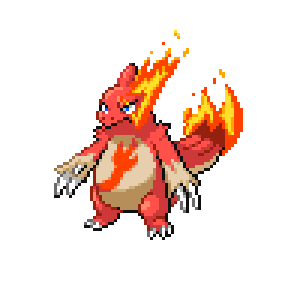
Charduck are adept swimmers that can zip through water without getting their tails wet. Their sleek bodies and webbed fins allow them to easily glide through the water.

Charduck gracefully glide through the water with their webbed claws that allow them to swim quickly without splashing water onto their tail. If the water gets too cold for them, they surface to breathe out a burst of flames that heats up the water.
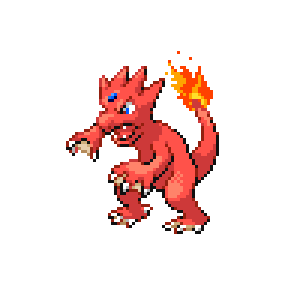
Charape are quick to anger and rarely let go of grudges. If they find someone who has slighted them, they unleash fiery punches to get even.

Charlithe typically live near volcanoes where their cinnabar-colored fur blends in with the environment. They are ferocious ambush hunters and pounce on prey with their sharp claws and flaming tail.

Charchop train by punching trees with their flaming claws until they get tired. When they are sore after a long day of training, they enjoy munching on a few berries to recover.

Chardude has a superb level of control over fire, which it uses to form steel into tool parts. It can also fuse joints of tools together, such as shears or pliers.

Charler can fold steel to whatever shape it needs to be. Its fire can heat treat metal, which is assembled into tools such as pliers or shears.
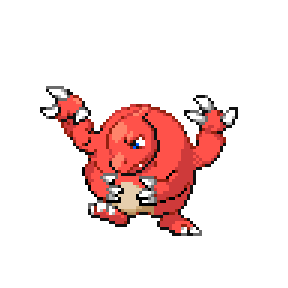
Charlem is an essential part of metalworking, as its heat resistance and strong build make manipulating metal easy. It fuels furnaces that provide heat treatment to metal and its arms can strike steel into hammer heads and other tool parts.

Charta gallop past each other as they run through fields of grass. They are protective of their pack and are known to shoot flames at threats.

Charfetchd twirls its batons during sporting events to cheer for its team. It will not perform when it is raining because the baton is sensitive to moisture.

The large nose of a Digtor is sensitive to the touch. If a Trainer touches their nose without permission, they will burrow underground and refuse to obey orders out of frustration.
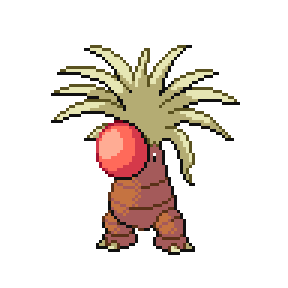
Digloom spend much of their time underground, where they dig up roots to eat. When they have a craving for something sweet, they emerge from the ground and fly around forests searching for sweet berries to consume.
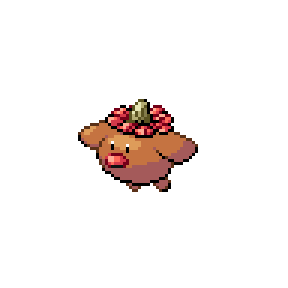
It is known to dig and meander for miles at a time in a straight line, leaving a trail of debris behind it. Construction workers have trained it to dig a ditch alongside roads to prevent flooding.

During the day, Digkrow raid the food stores of other wild Pokémon by collapsing nests into their burrows. At night, groups of Digkrow gather together to share their ill-gotten snacks.

Digroc love to dig and refuse to stop once they start digging with their sharp claws. Many play a vital role in tilling soil for farmers, working themselves until they are happily exhausted.

Digtyena lack the jaws necessary to hunt for prey, so they resort to digging up roots and seeds to eat. If they are not scavenging for food, then they rely on underhanded techniques to steal food from Trainers.
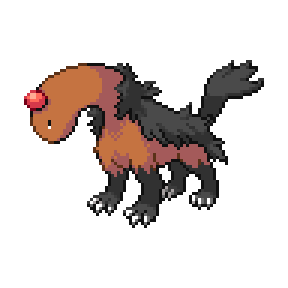
When Digrupt burrow underground and are covered in light debris, they are indistinguishable from other volcanic vents. When disturbed from their rest, they unleash plumes of lava that cause searing burns.
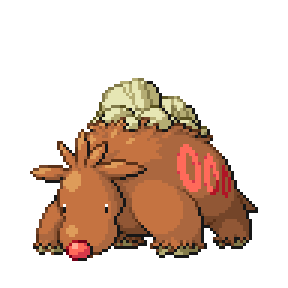
Digink combine dirt and mud to create a sphere. This sphere is then polished to create a smooth, glossy surface. Digink happily show off this sphere when they play with other Pokémon.
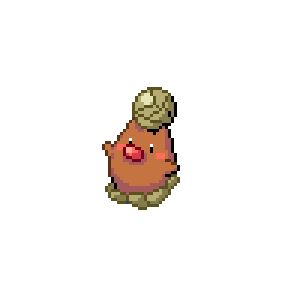
Digamo generate electricity while underground until their bodies can no longer handle the energy. When groups of Digamo emerge from the ground, they release bursts of electricity that zap everything nearby.
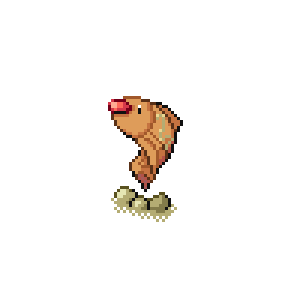
Digwag have been introduced to farms to till the soil and water plants. Many farmers greatly appreciate Digwag for their work to help farms produce healthy crops.

Diansaur has a precise gem on its back that flakes off toxic shards when damaged. By scraping its gem against rocks, it produces clouds of these shards to ward off miners.
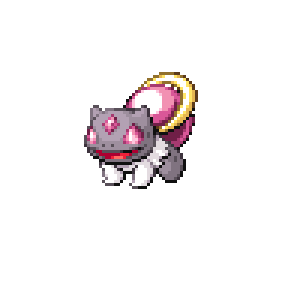
The soft glow from Diansea's tiara is said to help restore coral reefs, though it rarely stays in place long enough for the glow to take noticeable effect. Diansea cares deeply for its aquatic brethren, even if it often gets bullied.
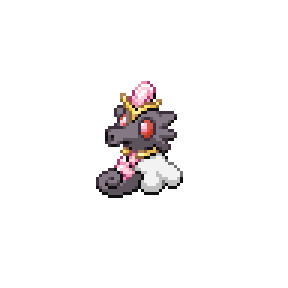
Dianfree have gleaming scales all over their wings that sparkle when the sunlight hits them. Dianfree are elegant protectors of the environment that help Pokémon back up when they fall from trees.
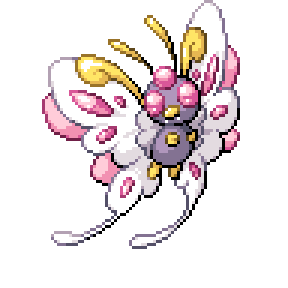
The glistening leaves that Dianleef produce create sparkles when exposed to light. Whenever they feel particularly generous, they give out these leaves to other Pokémon as gifts.
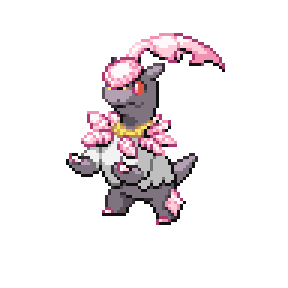
Dianbuff love to sing and use their small baton like a microphone to help them project their crystal-clear voice. They often throw tantrums when other Pokémon ignore their singing.
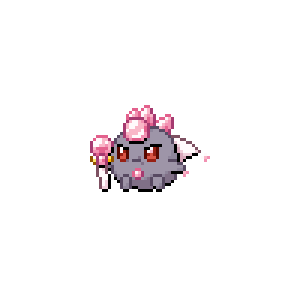
Diantic are full of joy and whimsy, soaring through the sky and playing games with Trainers and Pokémon. Their crystal shards are said to bring great fortune but are only available to those who play their games.
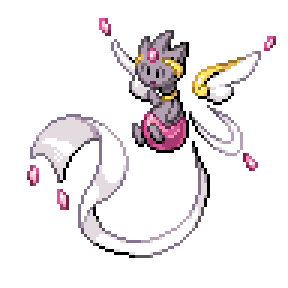
Diansaur scrape the gem on their back against rocks to produce clouds of toxic shards. If inhaled, these shards cause dizziness and nausea in both Trainers and Pokémon.
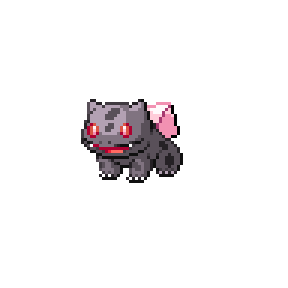
Diansaur creates vines to grab rocks around it, scraping shards off the gem on its back. When in danger, it flings these gem shards to cut through its foes.
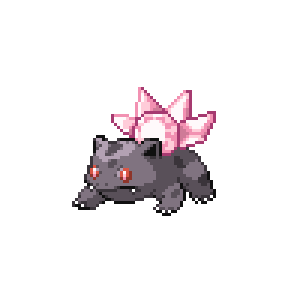
Diantyke hide within dark caves to protect themselves from predators and poachers alike. When a beam of light hits one of their crystals, the light refracts into a rainbow spectrum that illuminates the cave around them.
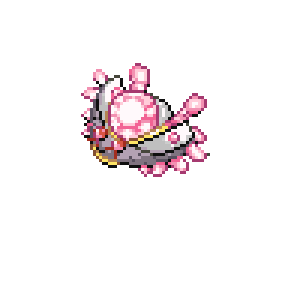
The gem on Diansaur's back naturally flakes off shards for them to use. These shards become high velocity projectiles when thrown from their vines and leech toxic chemicals into the bodies of their foes.
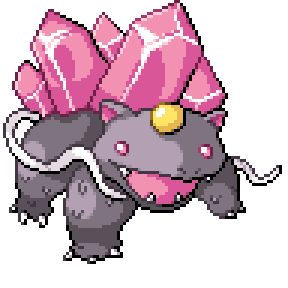
Dianquaza soar through the uppermost parts of the sky where their resplendent crystals shine bright. They are not visible from the ground, so many photographers and sightseers take planes into the sky for a once-in-a-lifetime opportunity to see them.
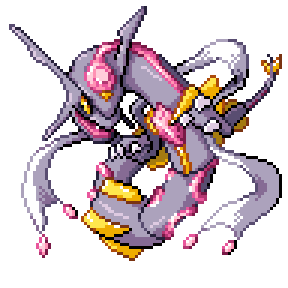
Dianki once kept jewelry safe for young noble ladies. Their collection of earrings, pendants and rings were everything a young maiden would have wanted to make themselves look pretty.
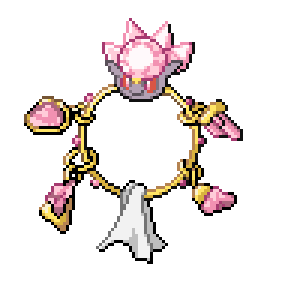
They drop molten shards, which when refined and processed can produce a Flame Orb. They abhor everything aquatic, as even a small amount of water rapidly lowers their internal temperature.
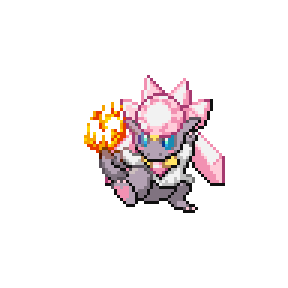
Dianria elegantly soar through the sky and sing with the grace of an opera singer. The crystals around their body resonate with their voice so that their song can be heard from miles away.
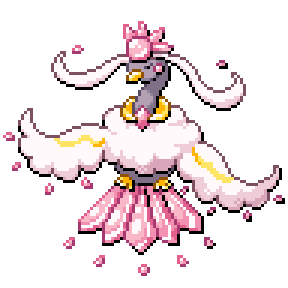
Dianduck are regarded as lucky Pokémon for couples to come across. Their veil and stony flowers make them look like they are a bride at a wedding while their bill and flippers give them a cute look that is hard to get angry at.
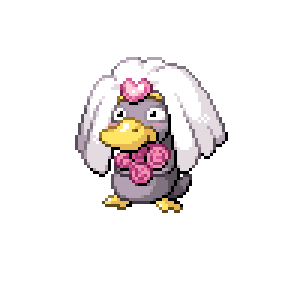
Dianfetchd carry a mighty crystal baton that they wield to protect themselves and their Trainer. As light hits the crystal, the reflected rays of light illuminate the space around them.
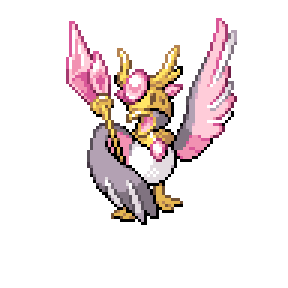
Dianter spend lots of time at salons, where they get manicures to make themselves look pretty. Trainers who take care of Dianter should be ready to spend lots of Pokédollars to keep them happy and looking fabulous.
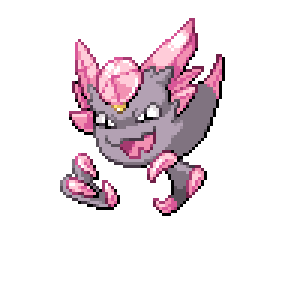
Luvkhan are doting creatures that show affection through hugs and snuggles. Many lonely Pokémon who do not have Trainers or friends throw themselves into a Luvkhan's arms to feel their kind embrace.
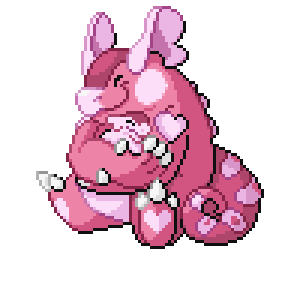
It is known to wrap its tail around another Luvsea when it feels lonely, which helps it feel safe in the seas. If it wraps its tail around a Trainer, it is said to be a gesture of true comfort and affection.
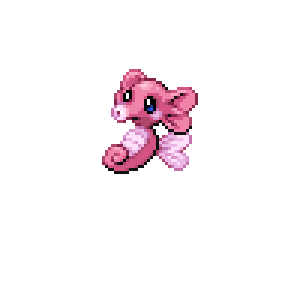
Luvdeen live in lakes near wedding venues, their pigmentation derived from the petals that are eventually swept into the water. When weddings occur, they float to the top of the surface and watch the event with keen interest.