Page 4 / 4 of 3395 pokedex entries by katieplaysgames.
Arcaleon use steady streams of fire to melt channels into their icy home, creating runways that they can toboggan along. The ice is smooth enough that they can reach speeds of up to ninety miles per hour.
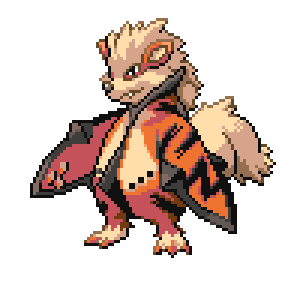
Arcarino roam their territory in small family packs of seven to eight individuals. They can cover many miles in a day, working together to keep rival families of Arcarino away with loud roars and blasts of fire.
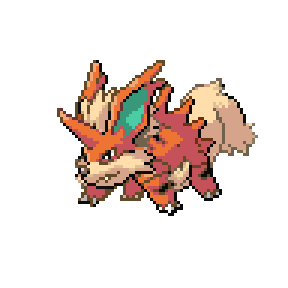
Luxury mansions commonly keep a pack of Arcaki on the grounds to serve as guards against thieves. Arcaki attach themselves to doors, allowing trusted people into the building they guard, whilst launching Flamethrowers at those they don't know.

Arcaflame are capable of covering vast distances within a single day, in some cases even being documented flying from one region to the neighbouring one. They were used by messengers to carry important missives before the advent of telephones.
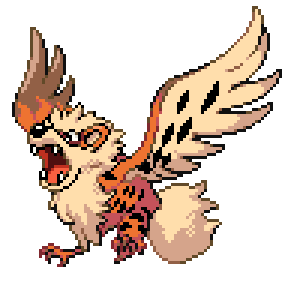
Arcaflame are capable of covering vast distances within a single day, in some cases even being documented flying from one region to the neighbouring one. Flocks of Arcaflame frequently leave a trail of fiery feathers burning in the sky in their wake.
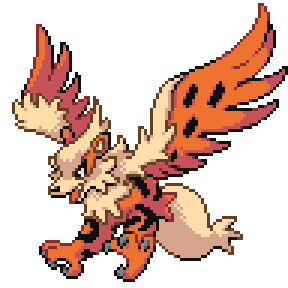
Arcarachi streak through the night sky, leaving a trail of fire in their wake. Legends persist that those who are able to chase after one and catch them before they hit the ground will be granted their heart's deepest desire.
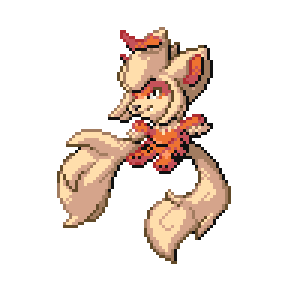
Arcabarel work together in packs to topple trees, taking turns ramming into the base of them with high-speed Headbutts. When the tree falls, they use their fiery breath to cook the wood to perfection before eating it.
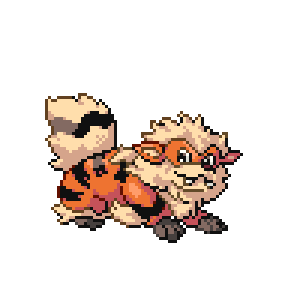
Arcasaur flowers release a steady stream of pollen into the air. The flames surrounding their flower create updrafts of hot air, helping to spread their pollen across great distances.
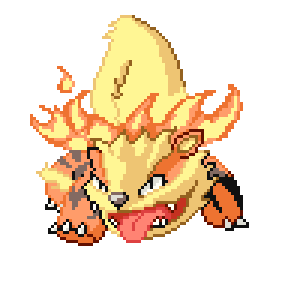
Arcadra are conflict-averse, preferring to resolve fights through peaceful hugs and de-escalation. Despite their aversion, they are fearsome when pushed into a fight and are capable of devastating Fire Blasts.

Despite their docile appearance, Arcawear are ferocious predators. They are able to run faster than most other Pokémon over short distances, using Extreme Speed to catch their prey in their powerful arms.

Despite their docile appearance, Arcawear are ferocious predators. They are able to run faster than most other Pokémon over short distances, using Extreme Speed to catch their prey in their powerful arms.

Arcawear are often unaware of their strength and the risks that they may pose to their trainer. They are easily trained to take passengers on rides, but they have to be taught that most people cannot handle their abrupt acceleration without fainting.

Arcaura herds seek out low hanging branches on trees, using the flames that sprout from their head to burn them away from the trunk. When the branches fall to the ground, they gather together to feed on the fruit on the fallen branches.

Arcarorus are dependable mounts, ferrying people from village to village through even the coldest environments. Their body constantly radiates heat, ensuring that those riding them are sheltered from the freezing air around them as they travel.
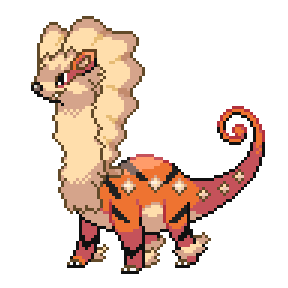
Arcaselia soar across the night sky, leaving a trail of glittering embers behind them as they fly. Those who watch the display often find themselves feeling drowsy, falling into a pleasant slumber within minutes of watching Arcaselia pass.

Arcalett rapidly dig through loose soil and dirt, creating large burrows that can extend for many miles. Researchers disagree with one another on what the reason is for these burrows, the leading theory being that they simply take joy in digging.

Arcacie incorporate various precious jewels into their bodies, having a preference for jaspers and rubies. They use these jewels to channel their elemental powers, storing heat within them to be projected out later.
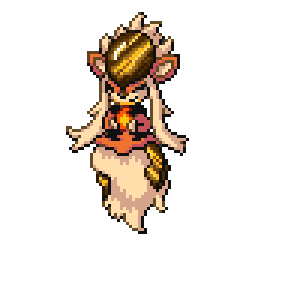
Arcalett rapidly dig through loose soil and dirt, creating large burrows that can extend for many miles. They enjoy sharing their tunnels with others, bursting from the ground to excitedly bark and bring other Pokémon underground with them.
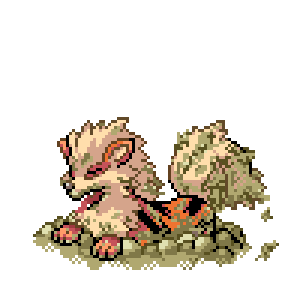
Arcalett rapidly dig through loose soil and dirt, creating large burrows that can extend for many miles. Archaeologists make use of Arcalett to find recent remains at dig sites, though care has to be taken to prevent them from gnawing on the bones.

Arcayama are able to move far faster than their bulk would suggest, grabbing onto their foes and grappling them to the ground. If they encounter a foe they're not strong enough to move, they switch tactics to use blasts of fire instead.
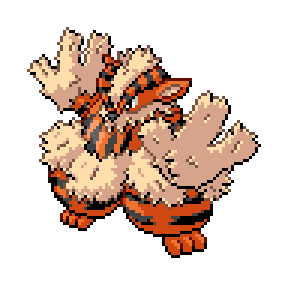
Arcale cheer along to those running marathons, running alongside the front runners and firing off excited showers of sparks as they do. They are able to run vast distances without tiring, keeping pace with the marathon from start to finish.
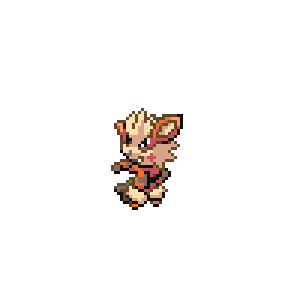
Arcalithe have a keen sense of smell that is sensitive enough to let them navigate the world even with their eyes closed. They freely indulge their curious side, racing from place to place to investigate new smells in their environment.
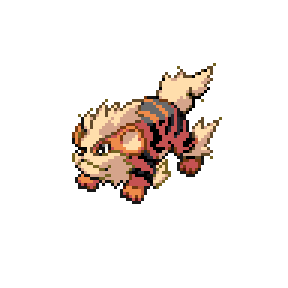
Arcalithe have a keen sense of smell that is sensitive enough to let them navigate the world even with their eyes closed. The fur on their head grows thick enough that it often blocks their eyesight, forcing them to rely on their nose to get around.
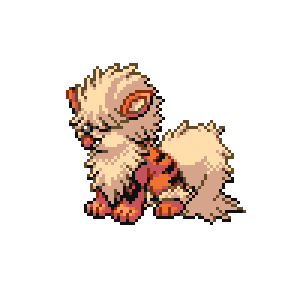
Arcanine prowl around farms, barking and chasing off predators that would attack the farmer's livestock. They are commonly rewarded with bones for their efforts, burying them in a hidden stash to keep them from others in their pack.
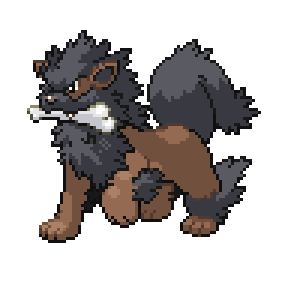
Arcanine's stormy appearance is of great interest to Sinnohan researchers. The similarity of the self-fusion's appearance to Hisuian Arcanine has led to a flurry of questions around genetics and the relationship of Arcanine to the regional variant.

Arcanine fur grows far thicker than that of unfused Arcanine, giving them a fearsome appearance. Trainers are advised to brush Arcanine twice daily to prevent their fur from becoming overly tangled and unruly.
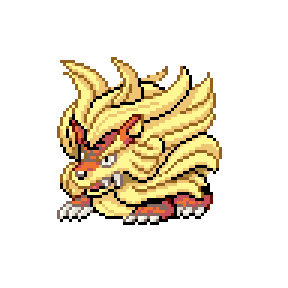
Arcanine's stormy appearance is of great interest to Sinnohan researchers. The similarity of the self-fusion's appearance to Hisuian Arcanine has led to a flurry of questions around genetics and the relationship of Arcanine to the regional variant.
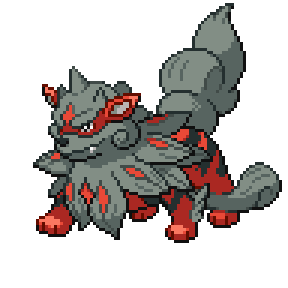
Arcanine have a higher internal temperature than unfused Arcanine, causing their bodies to constantly be wreathed in flames. They retain a playful nature, seemingly unaware of the increased risk of burns they pose to those around them.
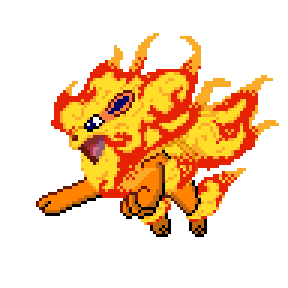
Arcanine are far prouder than unfused Arcanine, seeking to prove themselves through battles against powerful opponents. Their fur blazes as they prepare to fight, kept alight in constant readiness for them to unleash a powerful Flare Blitz.
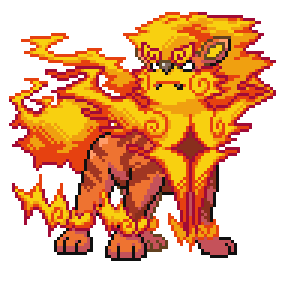
Arcano wield their fiery pendulum as a weapon in battle, swinging it at high speed into their foe. The flames have a numbing effect, inducing drowsiness in those burned by them and dulling reaction times.

The speeds at which Chargeot fly cause feathers to easily come loose from their body, drifting behind them in their wake. Their feathers burn brightly, which creates the illusion that Chargeot leave a burning trail behind them as they fly.

The speeds at which Chargeot fly cause feathers to easily come loose from their body, drifting behind them in their wake. Their feathers burn brightly, which creates the illusion that Chargeot leave a burning trail behind them as they fly.
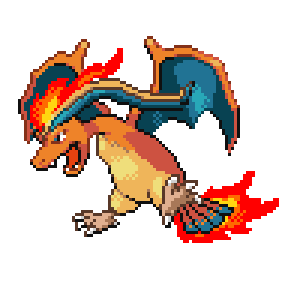
The speeds at which Chargeot fly cause feathers to easily come loose from their body, drifting behind them in their wake. Their feathers burn brightly, which creates the illusion that Chargeot leave a burning trail behind them as they fly.
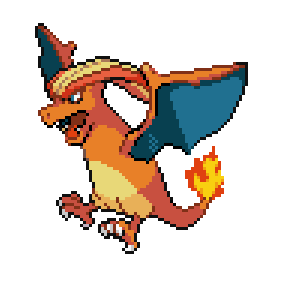
Charts are sensitive to the emotions and moods of others, often mirroring how those around them are feeling. The flames they conjure become more powerful in the presence of anger and quieten around positive and calm emotions.

Charnx rapidly flap their wings to make themselves seem bigger and scarier than they actually are. They are only able to produce small embers and sparks and so are reliant on these threat displays to scare off dangers.
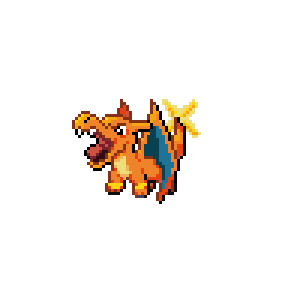
Charnx are surprisingly loud Pokémon, their roars carrying for up to a mile. They are much less dangerous than their roar would imply, only able to produce small embers and sparks to fight with.

Chartales beat their wings to bring in fresh oxygen whenever the flames at the tips of their many tails are starting to dim. The influx of fresh air causes the fires to flare to life, giving them a fresh burst of energy.

The many flames at the tips of Chartales's tails burn with the intense heat of a bonfire. In battle, Chartales flap their wings to fan the heat toward their foe, relying on heat exhaustion to help them win their fight.
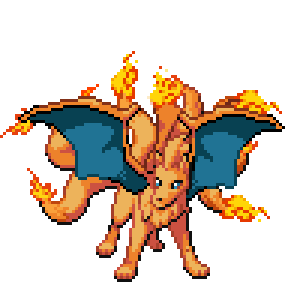
Found in high mountain passes, Charlass uses its body heat as a lure for lost travelers. The flames of its body can only be felt by the living and do not actually provide true warmth, allowing this malicious Pokémon to trick hikers to their doom.
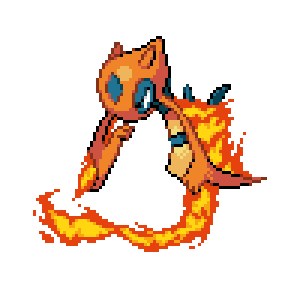
Charcorio perform elaborate dances to compete with one another for attention, tracing elegant patterns with their wings. They perform late into the night and can be seen from a great distance in the dark thanks to their flames.
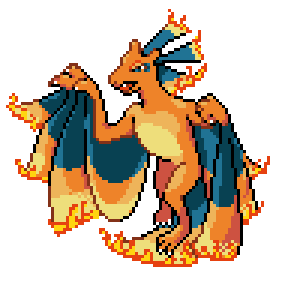
Charnine flap their powerful wings in battle, sending scorching Heat Waves toward their foes. Ace Trainers are particularly fond of using Charnine during tournament battles thanks to their speed and strength.
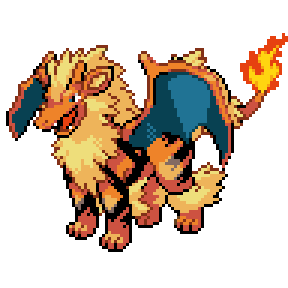
Charnine fur blazes with the heat of a wildfire. Packs of them race across the landscape, leaving a trail of fire in their wake. Pokémon Rangers carefully monitor their movements, warning nearby settlements to prepare for potential blazes.
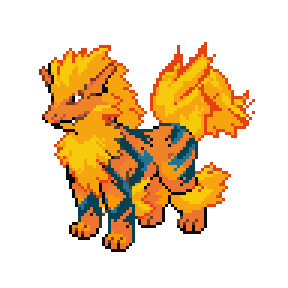
The spirals on Polidos's belly swirl at different speeds depending on their emotional state. When they're angry, the spirals spin rapidly and create a hypnotic pattern, distracting their foe from the powerful Twisters Polidos shoot.

Poliba forage for pondweed around the banks of lakes, trapping air within their wing cases while they remain underwater for extended periods of time. They are easily startled, rapidly swimming away if they think they're in danger.

Polipi secrete a calcium-rich mucus from their bodies. When they come into contact with air, the mucus hardens and forms a protective shell around their lower bodies.
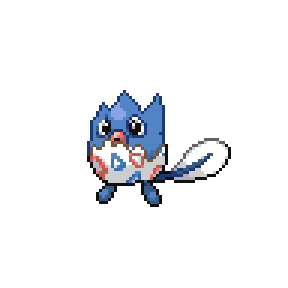
Polipi coat their bodies in a thin, spiral-patterned shell to try and protect themselves from harm. They spin around when swimming, creating a hypnotic spinning pattern with their spiral to put other Pokémon to sleep.

Polireep wool is extremely absorbent, able to hold many litres of water at a time. Large populations of them can cause environmental problems in local ponds, with herds of Polireep inadvertently soaking up all of the water.

Polireep wool is extremely absorbent, able to hold many litres of water at a time. Clothing spun from Polireep wool invariably has a damp, musty smell to it, no matter how many times it is cleaned.

Poliotto dive in and out of rivers in search of food, seeking out smaller Pokémon to snatch up with their talons. They are competent swimmers, using their tail and wings to splash through the river with surprising speed.
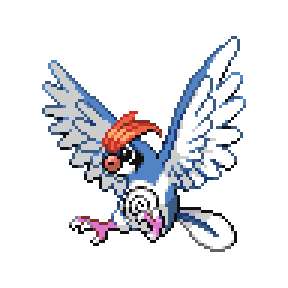
Poliffy are coated in a thin film of mucus produced from specialised glands under their fur. The mucus is an excellent conductor, allowing them to shock anything that touches them unexpectedly.

Poliros's stomach spiral crackles with electricity when they prepare to attack. Their electrical sparks are bright enough to be seen from miles away, with some Poliros being used for navigation on large lakes.
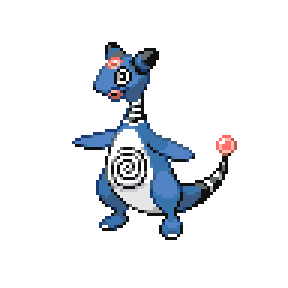
Polirill bodies are coated in a special water-repellent mucus that helps them dry off rapidly when they exit the water. The mucus seeps out of their tail, and they periodically rub it across themselves to ensure they have an even coating.

Polirill tails are reinforced with a zig-zag of toughened cartilage. This structure strengthens their tail, enabling them to strike out at threats with powerful Double Slaps.
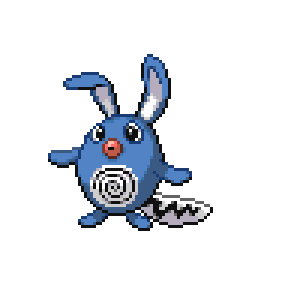
Polipip use the twin tails sprouting from their head to propel themselves through the water. They are capable of remarkable bursts of speed when swimming, sometimes leaping clear of the water and gliding for many meters to escape predators.

Poliloom spin their flower around when being threatened, using the spiral to hypnotise their aggressor and put them to sleep. They skip across the water to escape after doing so, fleeing from the danger.

Poliluff float through the sky by attaching bubbles to themselves and catching the breeze. Their bubbles sometimes pop in mid-air, sending them tumbling to the ground.
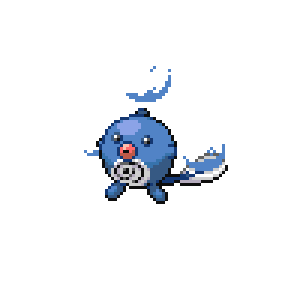
Polirow are frequent visitors to urban fountains, flocks of them splashing around in the water features to keep their feathers moist. Large flocks can grow protective of their home, squirting Water Gun attacks at tourists that get too close.

Polirow skin dries out very quickly, forcing them to stay close to lakes and ponds. Their feathers are absorbent, letting them carry some water with them as they fly around.
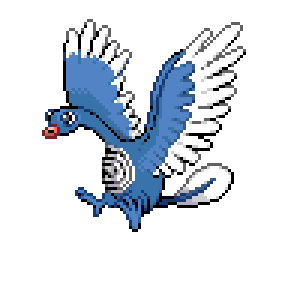
Polits's empathic powers allow them to sense the emotions of other Pokémon that are within the same body of water as them. They are easily overwhelmed when schools of Pokémon swim by, having to clutch their head as their eyes swirl.
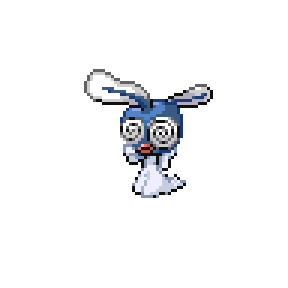
Polilia emerge from ponds during heavy rain, sitting together and happily sharing in meals with one another. They use their broad, flat tail to shelter themselves from the rainfall while they sit.

Polipix sit beside ponds, idly swishing their many tails through the water. They use their control over water to levitate orbs of liquid, splashing them into those who try to disturb their relaxation.

Though capable of sudden bursts of speed, Polilous are typically slow swimmers. Their twin heads rarely agree on which direction to swim, resulting in them drifting in the water whilst struggling to go in two different directions.

Politales swish their many tails through the water to create whirling vortexes, entrapping smaller Pokémon and drawing them into the depths of the lakes they live in. They have been seen using Will-O-Wisps to lure Pokémon closer to their traps.
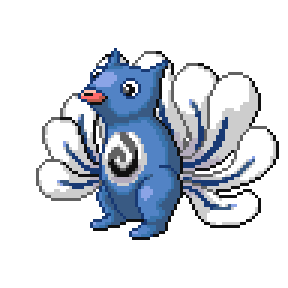
Polinch dig pits along muddy river banks, spitting water at those who walk past them in an attempt to make Pokémon fall in. They lunge at anything that gets too close, relying on their muddy trap to keep their prey from escaping.

Polisis gel dries out quickly when exposed to the open air. To keep themselves from getting dehydrated, Polisis regularly dip themselves into ponds and rivers, never straying far from their home.

Polionee blow bubbles with a slightly sticky membrane, sticking them to their head and gradually creating a foam. Their bubbles help to camouflage them as they swim, making it harder for larger Pokémon to spot them from above.

Polipede are commonly kept in aquariums due to their habit of feeding on detritus that has sunk to the bottom of the tank. They protect themselves from being eaten by larger Pokémon with the two venomous spines growing from their head.

Polipede waddle across river beds in search of food, relying on their tough bodies to protect themselves from harm. When panicked, Polipede are capable of bursts of speed, rapidly fluttering their tail to swim away from danger.
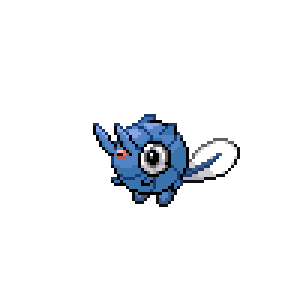
Polioom have a complex network of internal organs that allow them to break down toxins in the food they eat. Their toxins are stored in specialised sacs atop their head.
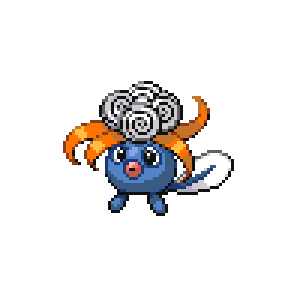
Poliplume squirt water from the centre of their flower when they're surprised, dousing whatever startled them with foul-smelling water. They're a popular Pokémon with some clowns, being used in comedy routines within the circus.
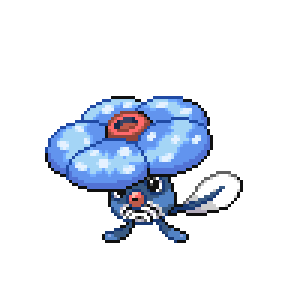
Packs of Poliyena frolic together along the banks of rivers, splashing one another using their broad tails. The largest Poliyena leads the play, sometimes directing the pack to start messing with other nearby Pokémon.
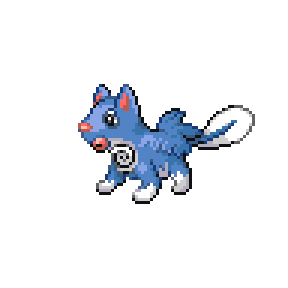
Poligull feathers are coated in a thin film of mucus that maintains their aerodynamic shape even when wet. Their beaks contain special glands that produce the mucus and they have to periodically land to preen their wings to maintain their coating.
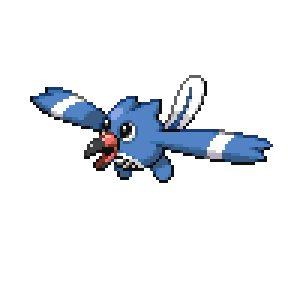
Polihita rapidly beat the spiral on their stomach before preparing to battle, psyching themselves up to fight. They grapple onto their opponents, relying on their slimy skin to prevent themselves from being grabbed in return.
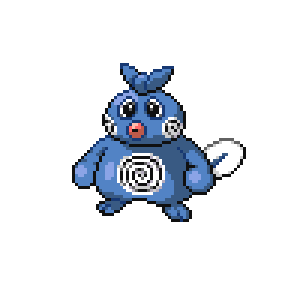
Poliform are surrounded by a constant film of bubbling water. When they feel threatened, they fire a scalding hot Bubble Beam at their aggressor.
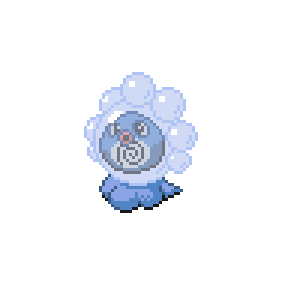
Poliecho hover above lakes, frolicking in the rain. Their long tail sways in the wind, causing their bodies to ring with an echoey chime that sounds like the splash of rain into a pond.

Polinix keep young Poliwag safe within the bubbles in their body, providing them shelter from predators. They rear up and use powerful Slams to knock away other large Pokémon if they feel they're a threat to their young charges.
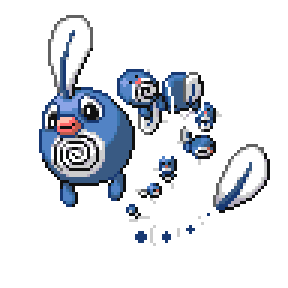
Polinix hide amongst boulders in glacial ponds, coiling themselves into a spiral around large rocks as they rest. They cause powerful tremors when disturbed, shaking themselves free before swimming to a new resting place.

Poliorb roll around together in small family groups. When startled, they are prone to Self-Destructing and showering the surrounding area in a wave of sticky mucus.

Poliwak scavenge around in lake beds for the bones of long-dead Pokémon, wielding them as weapons. They make happy croaking noises when they find a particularly sturdy bone, swinging it happily as they patrol the lake shore.

Polipod excrete a sticky mucus from the spiral on their chrysalis, using the mucus to attach to tree branches. Their mucus is water-soluble, and when they want to detach from the tree, they simply spray a Water Gun at themselves and fall.

Polideen schools swim in a slow, spiralling formation when kept in ponds. When food is thrown in, a frenzy breaks out amongst the school as each Polideen fights its way to the middle of the spiral.

Polikarp have proven to be popular as mascots for fishing companies, their impressive whiskers lending them an air of elegance and refinement. To help encourage this perception, it is common for marketing teams to put hats on them.

The chitin on the underside of the body segments of Polidle are very thin, revealing their internal organs. The black spirals within the segments contain the venom that they secrete from their sting.

Polihoot colonies loudly croak in synchrony once per hour, creating a brief cacophony of noise. Communities that live near Polihoot populations used to use the noise as a means of timekeeping before clocks became more popular.

The spiral on Poliowl's belly slowly rotates throughout the day and completes a full rotation once every 24 hours. An old legend claims that they wind the time into their spiral, saving it to use later.

Polirow make loud croaking calls to one another during the night, keeping the flock aware of where its members are in the dark. If they identify a threat to the flock, they will swing their massive fists at it to keep them away.

Policko use their sticky mucus to climb trees, leaping between branches high above the forest floor. Policko cause problems in cities as their instinct to climb drives them to scale large buildings, leaving a trail of slime on windows as they do.

Polivyle make their home in mangrove swamps, collecting floating fruit and bringing it back to their nest to feed on later. They are very protective of their nest, swinging Leaf Blades at those that try to steal food from them.

Politang are used during search and rescue operations around large bodies of water. With their large, soft hands and their ability to hover over the surface of lakes, they are invaluable at saving struggling swimmers from danger.

Polirina's skin constantly oozes a thick gel that coats their toxic spines to protect others from being stung. Their gel thins when they get into fights, allowing them to inflict their venom on others more easily.

Poliqueen live in extensive wetlands, each of them claiming a large pond for themselves. They call to one another with croaking bellows, the sound echoing up to a mile as they guard their home from rivals.

Polichar produce a flammable slime from their skin, flinging it at foes before following it up with an Ember. Polichar have been used in some rural villages to help with starting fires when wood is scarce.

Poliqueen live in extensive wetlands, each of them claiming a large pond for themselves. They call to one another with croaking bellows, using bubbles to amplify their voices and help them carry further.

Polifable keep long black ribbons wrapped around their body in tight spirals, wielding them with enough finesse to be able to pluck small rocks from the ground many meters away.

Poliseed crawl across the bottom of river beds using their powerful arms, keeping their soft under-belly safely turned to the floor. They grip tightly onto larger rocks when they come under attack, relying on their spiny hide to protect them.
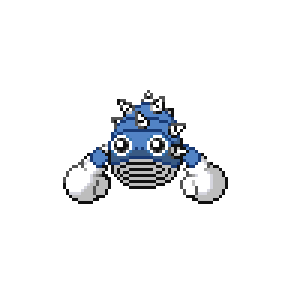
Polinder nest in the trees that line fast-running streams. They can sometimes be seen diving into the water to catch fish Pokémon, a thin covering of water-repellent mucus on their wings allowing them to dive in and out without issue.
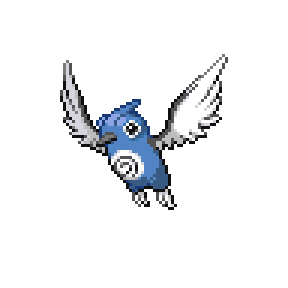
Polivanha live deep in the ocean within the twilight zone, where very little light can reach. Their eyes are protected by a transparent layer of mucus and constantly face toward the surface, capturing what little light there is to allow them to hunt.
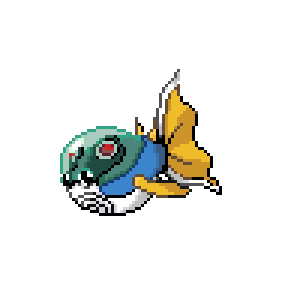
Polichop periodically challenge other aquatic Pokémon to tests of strength, trying to prove themselves to be the strongest Pokémon present. They are prone to overestimating themselves and have been seen being wrestled into submission by Poliwrath.

Poliduo's twin heads move independently of one another, bobbing around to help them see with proper depth perception. They tuck their heads close to their body when they run to minimise jostling as they race across the landscape.

Polinix dig long, spiralling tunnels beneath lakes in search of food. Polinix appear happy to share their burrows, and many aquatic Pokémon use their tunnels as shelter to hide from larger Pokémon.
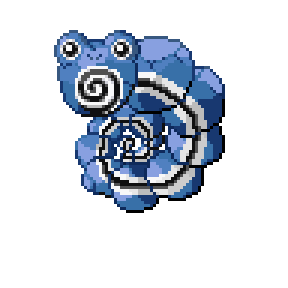
Polinix's spirals extract oxygen from the water surrounding them, releasing waste gas back into the water as bubbles. They can blast these bubbles out forcefully from any part of their long, serpentine body.
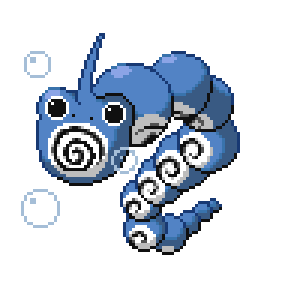
Polidle venom induces a restless energy in those afflicted by it. People stung by Polidle often find themselves running to exhaustion, believing that they have the same boundless energy as Polidle itself.

Polinyte shells grow continuously throughout their lives, putting steadily greater strain on their muscles. Older Polinyte are capable of delivering an incredibly powerful Submission to their foes thanks to the constant weight training.

Polistar shells allow them to withstand the crushing depths of the deep ocean. They battle one another in the pitch-black ocean depths, launching their spikes at one another in an effort to establish which Polistar is strongest.

Poliuna use their stubby arms to move around in trees, clambering into a safe place to hide until they evolve. When forced into a battle, they swing their arms with enough strength to toss most foes off of their tree.

Polidrill swarms tirelessly work together to construct elaborate hives in lakes, building their home with multiple exits. When their hive is disturbed, Polidrill violently defend their home with a flurry of punches.

Most Polibat spend their time waddling around the edges of lakes. They have poor eyesight, instead relying on loud croaks to echolocate their way through their home.

Though capable of high speed flight, most Polibat prefer to spend their time waddling along the ground. They have a fondness for splashing around the shallows of ponds, gleefully flapping their wings to create ripples in the water.
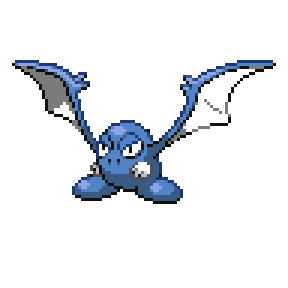
Polibat swoop past their foes at high speeds during Pokémon battles, relying on their bulk to land powerful Submission attacks on their foes. When battling near lakes, they are prone to carrying their foe over the water's surface to drop them in.

Polibat swoop past their foes at high speed during Pokémon battles, relying on their disembodied fists to land powerful strikes. They repeat their fly-by attacks tirelessly until they're successful in knocking out their opponent.
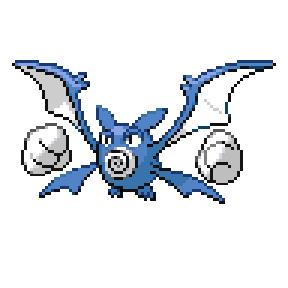
Polirill throw punches that pack far more strength than might be expected for a Pokémon their size, able to fell foes more than twice their size. They coil their tail and use it as a spring, letting them spring forward with a powerful Submission.
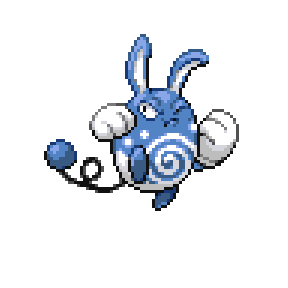
Polibull relies on its brutish appearance and powerful muscles to intimidate much larger Pokémon, scaring them away from its preferred feeding grounds. Its fearsome behaviour is an act, and Polibull enjoys simply splashing in ponds with friends.
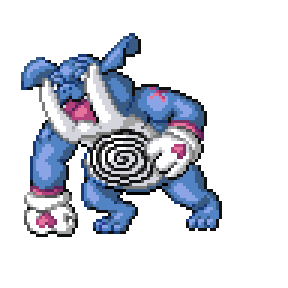
Individual Politank constantly work their muscles to build their strength and compete with one another in contests of strength. Politank herds can be difficult for ranchers to contain due to their habit of ripping fencing from the ground to exercise.
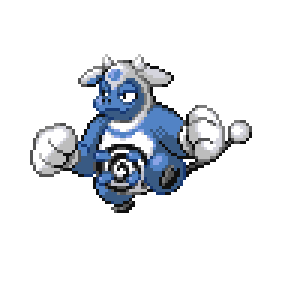
Politar pummel their way through solid rock, striking bedrock repeatedly to break their way through the roots of mountains. Miners need to remain aware of local Politar populations, as the tremors from the Pokémon's digging can cause cave-ins.

Polishrew spend lots of time digging complex burrow networks for their family, and their tunnels are often found around riverbanks. Their bellies are softer than the rest of their hide, forcing them to curl up to protect themselves when attacked.

Polivyle are hyper-active Pokémon, racing one another up and down trees in mangrove swamps. They band together when they feel their nests are threatened, working together to drive intruders away with co-ordinated Bubble Beam attacks.

Politile lay claim to individual trees within swamps, bellowing out loud croaks to challenge any other Pokémon that dare come close. Pokémon that try to challenge them for their territory are struck with a powerful Leaf Blade.

Polishrew spend lots of time digging complex burrow networks for their family, and their tunnels are often found around riverbanks. They reinforce their hide with a layer of mucus, letting it harden into thick protective scutes.
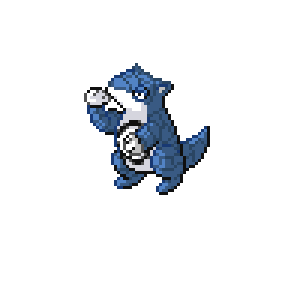
Policario channel aura through their muscles, enhancing both their strength and stamina. They are able to achieve incredible feats of endurance for as long as they maintain their focus.
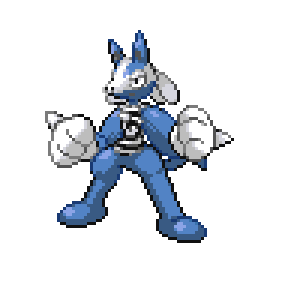
Polimence create powerful blasts of air by clapping the gigantic hands on their back together. They use these blasts to defend their mountain homes, sending intruders tumbling down the cliffside.
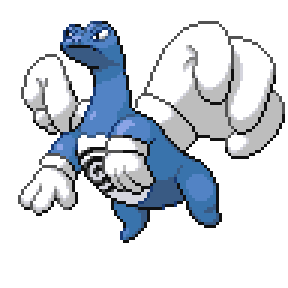
Poliark fur is slick with a fine layer of mucus laced with hallucinogenic compounds. They shake their fur rapidly when they engage in a fight, coating their opponent in the mucus and causing them to believe Poliark is a different Pokémon entirely.

Polikia are able to compress and stretch their bodies using their control over spatial dimensions. They use this power to improve their combat prowess, making themselves challenging targets to strike in battle.
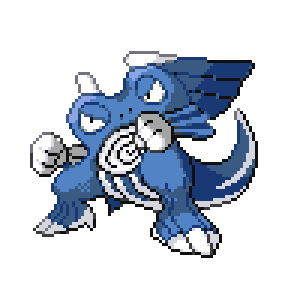
Poliseed barbs can spin fast enough to act as miniature drills, allowing Poliseed to anchor themselves into nearly any surface. They are stubborn Pokémon and swat away anyone who attempts to remove them with their powerful fists.

Polibat use the hypnotic spirals on their wings to disorient and confuse their prey, providing just enough distraction to allow them to swoop in and feed.
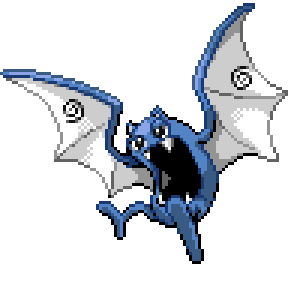
Polibish search for trash floating in rivers, scooping it together and using a thick layer of mucus to bind it into a single solid mass. They manipulate the discarded trash, creating thick arms to battle with.

Poliodor live in heavily polluted lakes, gathering human waste to build nests along the shore. They are protective of their homes, often attacking those who try to clean them up with streams of toxic water.

Poliape troops lay claim to large lakes, watching while submerged for anyone who dares to swim in their waters. They swim at those who rouse their anger, chasing their target to the point of exhaustion before tossing them out of the lake.

Poliape troops lay claim to large lakes, watching while submerged for anyone who dares to swim in their waters. They swim at those who rouse their anger, chasing their target to the point of exhaustion before tossing them out of the lake.
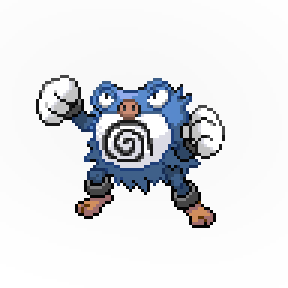
Polibra craft small pots from river mud, carefully filling the pots with water from their home river. During battle, they wield the water from their pot as a weapon, controlling the liquid with their psionic powers.

Polikazam wield powerful hydrokinetic powers, battling with water cleansed of all impurities. They prefer to fight from a distance, relying on their tireless mind to manipulate water and blast their foes with a powerful Hydro Pump.

The prominent black spiral on Poligong's chest contains a liquid that functions as antifreeze, allowing Poligong to live in freezing waters without risk of their blood congealing.

Abrino spend most of their day sleeping, relying on their psychic powers to passively sense any threats approaching their territory. If disturbed, they teleport behind the intruder and jab at them with their venomous horns.
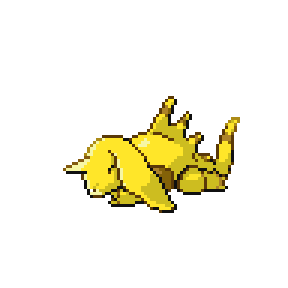
Abxew mark out their territory by leaving cuts in the bark of trees. Each Abxew consistently marks their trees at the same height, and they can sometimes be seen teleporting from tree to tree in their territory to check for marks from rivals.
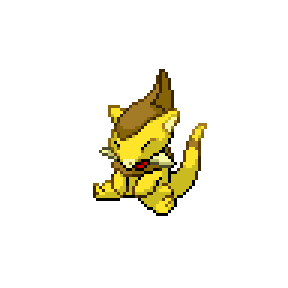
The spoons Kadanair wield are rumoured to be some of the most powerful focus items a Psychic could possess. This rumour has led to many Psychics scaling mountains in search of Kadanair lairs, but the Pokémon's elusiveness leaves most empty-handed.

Kadanair's gemstones sparkle with psychic potential and glow brightly when Kadanair uses their powers. Their gems glitter more brightly as greater feats of psychic power are performed, with bright flashes accompanying the strongest displays.

Kadareep generate a constant static charge around their bodies, shocking anything that gets too close. While first thought to be a property of their wool, researchers have found the electricity is created as a byproduct of intense psychic activity.
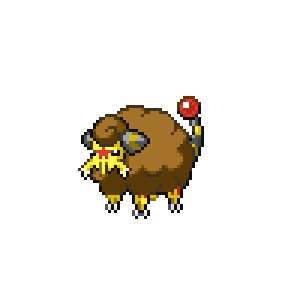
Kadareep generate a constant static charge around their bodies, shocking anything that gets too close. The static charge is powerful enough to attract metallic objects and can even bend them out of shape as they become stuck to Kadareep.
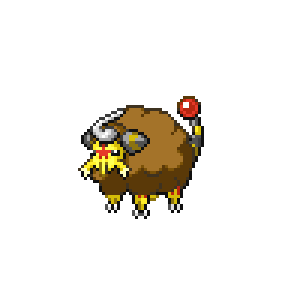
Kadaffy imbue their spoon with a magnetic charge, spinning it rapidly in place to generate an electrical current. They store the electricity they generate in the wool around their chest and head, discharging it whenever they feel threatened.

Kadatoed are traditionally associated with clean waterways and healthy rivers. They regularly use their psychic powers to clean impurities out of the water they live in, returning the purified water to the river afterwards.

Though usually slow and graceful in the air, Kadarow are capable of sudden bursts of speed when under threat. They achieve these speed bursts by using their psychic powers to flatten their feathers into a more aerodynamic shape.

Kadarith's metallic claws can sense the mental activity of other Pokémon, allowing Kadarith to hunt down even hidden prey. They swim above their prey's hiding spots, blasting pulses of psychic energy at their food once they locate it.

Kadaterra are commonly employed in restaurants to transport desserts to tables. They use their psychic powers to dole out exact portion sizes, ensuring each dessert portion is perfectly sized for the diner.

Kadapunny have highly tuned telepathic senses and are able to detect the approach of others from hundreds of meters away. They're skittish Pokémon and frequently flee from all but the most placid of minds.

Kadapunny have highly tuned telepathic senses and are able to detect the approach of others from hundreds of meters away. Though they dislike conflict, they use their telepathic senses to their advantage in combat to land powerful kicks.

Kadapunny have highly tuned telepathic senses and are able to detect the approach of others from hundreds of meters away. They use their telepathy to anticipate the opponent's moves during battle, bounding out of the way of attacks with great leaps.

Kadapunny have highly tuned telepathic senses and are able to detect the approach of others from hundreds of meters away. They're shy Pokémon and typically hide themselves away from approaching minds.

Kadaflame are able to detect the thoughts of others from hundreds of metres away. They use this sensitivity to hunt, feeling out the thoughts of their prey and swooping down at high speed to catch their prey off-guard.

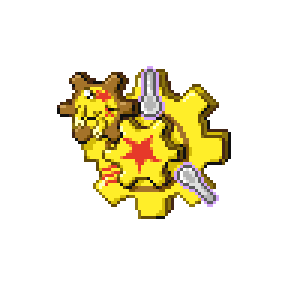
Kadaink are able to generate psychic energy as they rotate. The speed of their rotation correlates to their power output, with high-speed spinning resulting in powerful psychic blasts.
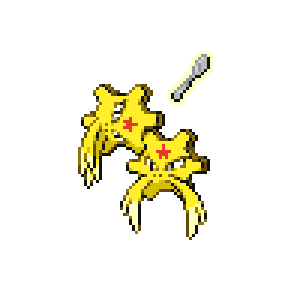
The rotation speed of Kadang's gears varies depending on their level of psychic output. The faster Kadang's gears spin, the more powerful the blast of psychic energy they output is.
Kadaeary periodically use their psychic powers to fluff up their fur, making themselves appear cute and appealing. This habit makes them popular amongst Trainers who struggle to remember to groom their Pokémon.

Kadaeary are able to leap many meters into the air by making their body lighter with their psychic powers. Though a useful trick for escaping predators, they lack finesse with their powers and often struggle to land gracefully.
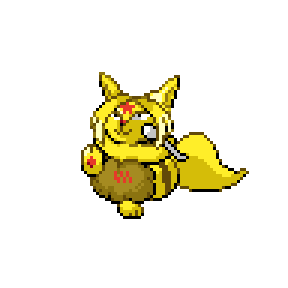
Kadaeary are fascinated with metallic objects, drawing such objects closer to themselves with their psychic powers. They have a particular affinity for cutlery and have been known to leap through the windows of people's kitchens in search of spoons.
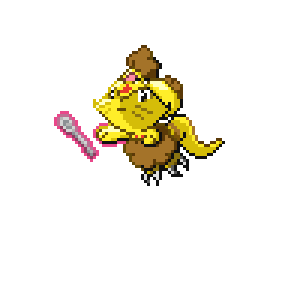
Kadainder flocks communicate with one another telepathically as they fly, coordinating their movements to avoid mid-air collisions. Their telepathic communication doubles as an early warning system, letting the flock evade predators with ease.
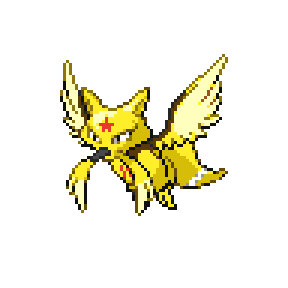
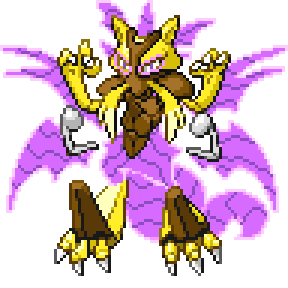
Kadazma use their immense psychic powers to animate the disparate pieces of their bodies. Their powers are drawn from Ultra Space and are difficult for other Pokémon to defend against due to their unearthly nature.
Kadaxen keep their spoon tucked into their tail fur to charge it with psychic energy. The longer they can leave it stored in their fur, the more powerful the blasts of power they're able to unleash when they finally use it.

Kadamur use their burgeoning psychic powers to manipulate the air in front of them, increasing the density of it to help transmit sound waves more easily. This ability allows them to hear the faintest sounds even within a busy room.
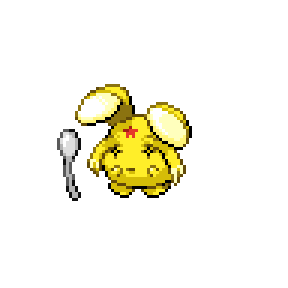
Kadahita train by deliberately enduring physical blows, allowing themselves to be struck whilst maintaining their mental focus. Their training allows them to use powerful psychic techniques even whilst under immense pressure in battle.
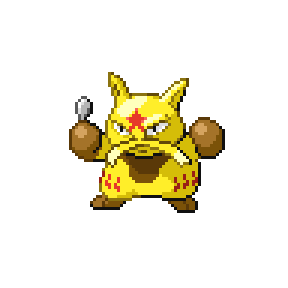
Kadayama fire blasts of psychic energy in time with the movement of their arms, launching their opponents through the air with each thrust of their arms. Their mix of mental and physical prowess makes them popular with both Psychics and Black Belts.
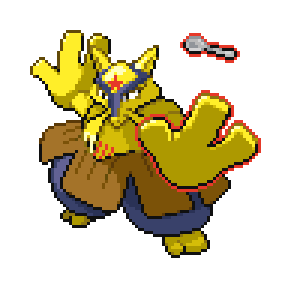
Kadayama use their powerful telepathy to anticipate incoming attacks. They wait for their opponent to be committed to an attack, then catch them off-guard with a throw to the ground.
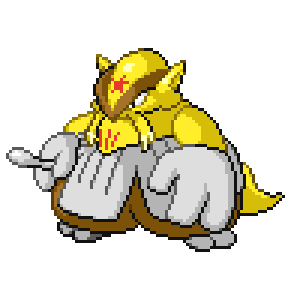
Kadawag use their psychic powers to create whirlpools in ponds, riding the resultant water currents for fun. They're prone to making themselves dizzy whilst doing so and can sometimes be seen sitting on the shore trying to recover.

Kadawag use their psychic powers to create whirlpools in ponds, riding the resultant water currents for fun. They dive into the whirlpools they create when they want to hide, rapidly sinking out of sight before teleporting elsewhere in the pond.

The spiral on Kadawhirl's belly glitters with light whenever they use their telepathic abilities. The swamps they live in glow at night with the silent light of their communications with one another.

Kadawhirl channel their psychic powers through the large star on their belly. The blasts of energy they fire are inaccurate, leading them to use their oversized spoon to try to direct their power as though using a staff to cast a spell.

Alachar levitate tools to knock fruit out of the high branches of trees for their family. They are often considered pests in urban environments, using their psychic powers to steal food from stores before fleeing to safety.
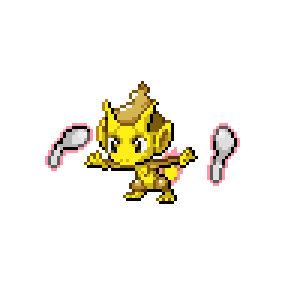
Alaferno put on displays of psychic might when they feel threatened, rising into the air and igniting their tassels, spoons, and tail. The display turns aggressive if they fail in their intimidation efforts, blasting their foe with gouts of fire.

Alazma use their incredible psychic power to tear holes through reality into Ultra Space to wield the extra-terrestrial energies found there. They can only maintain their power for short times through the possession of special Alolan crystals.
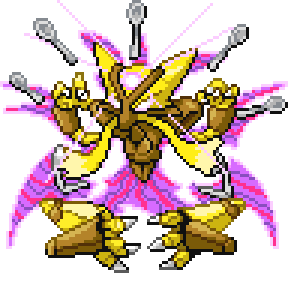
Maicate are destructive Pokémon that use their powerful arms to pull apart wood and stones so that they have something solid to gnaw on. Their presence around human habitation causes huge issues for the structural stability of the buildings.

Macargo enjoy participating in martial arts training, despite their lack of limbs. They freely offer their shells as a target for Black Belts to test their strength against, letting their trainers repeatedly strike the tough rock to build power.

Matop remains constantly in motion during battle, switching fluidly between multiple different styles of martial arts. Its preferred fighting styles are usually those focused on kicks, Taekwondo is a particular favorite.

Territorial disputes between Maqueen are resolved through contests of strength, the competing Pokémon lifting heavier and heavier objects until only one Maqueen is able to continue. Black Belts will seek wild Maqueen to train alongside.

Mabra imbue the large spoons they carry with an abundance of psychic energy, dramatically increasing the weight of the implement. They use the spoon as a means to train their own strength, pushing their muscles to their limits just to carry it.

Maicate use their powerful forelimbs to pry apart dense foliage and rocks to get to tubers and roots. They feed on the nutrient-rich parts of the plants with their sharp teeth, biting clean through the bark.
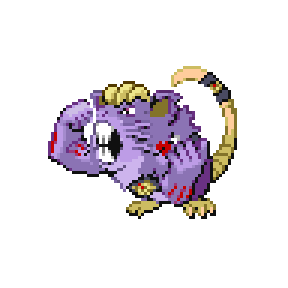
Maqueen commonly are put to work within exercise gyms and serve as spotters for people looking to do heavy lifts. Their competitive nature means that they encourage their assigned humans to greater heights whilst carefully monitoring their training.

Mapom wield their long tails as whips during battles with other Pokémon, lashing out with them at high speed. Their tails are reinforced internally with dense bones to help them survive the impacts.

Belltor stems tangle around one another to create a structure that is more rigid and supportive than could be achieved if each head had its own stalk. It shakes its leaves menacingly at those who try to uproot it, trying to scare away the threat.

First thought to be a regional variant of Skrelp, Bellsea has recently been proven to be its own distinct species of Pokémon. They use their root-like tails to attach to kelp and hide amongst the plants, keeping safe from larger Pokémon.

Bellpip spend their youth buried in shallow soil, gradually growing strong yet light leaves above the ground that will one day lift them into the air. On windy days, entire fields of Bellpip are plucked out of the ground and spread upon the breeze.

Bellpip spend their youth buried in shallow soil, gradually growing strong yet light leaves above the ground that will one day lift them into the air. On windy days, entire fields of Bellpip are plucked out of the ground and spread upon the breeze.

Bellpip spend their youth buried in shallow soil, gradually growing strong yet light leaves above the ground that will one day lift them into the air. On windy days, entire fields of Bellpip are plucked out of the ground and spread upon the breeze.
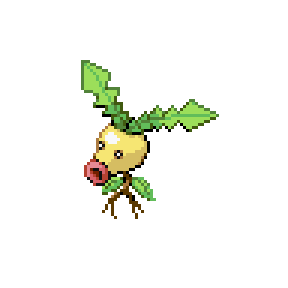
Belloom use the flowers on their heads to draw in Bug-type Pokémon with their sickly sweet scent in the hopes of catching them as food. Bug Catchers will lurk around fields of Belloom hoping to catch rare Bug-types drawn to them.
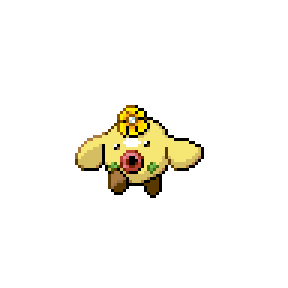
Bellrow buries the bottom half of its body in the ground, sunning itself with its chlorophyll-rich wings. When disturbed it releases a puff of poisonous pollen, using the puff as cover to uproot itself and fly to safety.

Bellrow buries the bottom half of its body in the ground, sunning itself with its chlorophyll-rich wings. When disturbed it releases a puff of poisonous pollen, using the puff as cover to uproot itself and fly to safety.
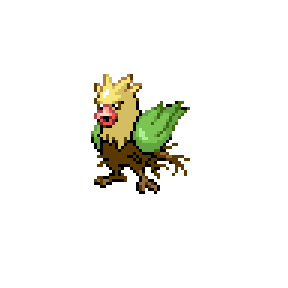
Bellrow roosts on branches upside down, spreading its wings to photosynthesise and craning its head upward to mimic a fruit. Its mouth secretes a honey-like substance that draws Bug-type Pokémon to it, enabling it to easily find food.
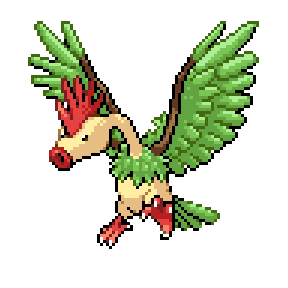
Bellran partially bury themselves in the ground during the day, leaving only their large photo-synthetic ears poking out of the dirt. At night they will dig themselves free and search for more nutritious soil.

Bellrino are highly defensive of their territory, finding a spot with great sunlight and water access and fiercely battling competitors away from it. Their roots help to anchor them in their fights, keeping them from being dislodged.
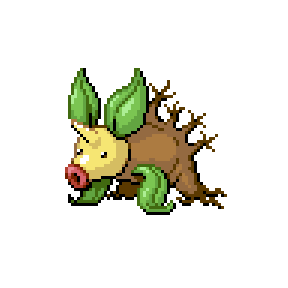
Bellbas live amongst mangrove roots, using the complex tangled maze of the tree roots as hiding places. They have a single large leaf that they bask with at the water's surface, flailing it rapidly to propel themselves to escape in emergencies.

Bellplume leaves are packed with chlorophyll, enabling them to generate huge amounts of energy from sunlight. They use this energy to spit acid from their central mouth, launching the acid several meters.
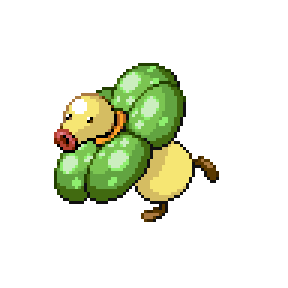
Bellpod is a popular Pokémon to keep in ponds and aquatic tanks. Though shy and rarely seen within the displays themselves, they perform the important role of cleaning up after other Pokémon and maintaining high water quality.
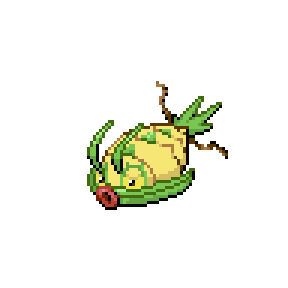
Belltrio flowers bloom in a trio of colours in an effort to appeal to different Bug-Type Pokémon. The nectar their three flowers produce have different flavours; one being savoury, one spicy, and one with a mild numbing effect.

Squirtpod have thick plates forming parts of their cocoon, the shell covering their most vital areas. They retain their limbs whilst pupating and can waddle away from danger, albeit at a slow pace.
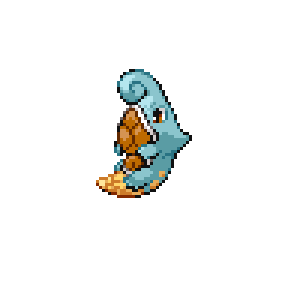
Squirteon are used by some swimming coaches to help teach children how to safely swim in large bodies of water. They have a docile demeanour that makes them ideal for working with children, and their psychic powers can help if an emergency arises.
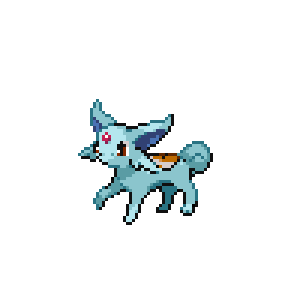
Squirteon are used by some swimming coaches to help teach children how to safely swim in large bodies of water. They have a docile demeanour that makes them ideal for working with children, and their psychic powers can help if an emergency arises.
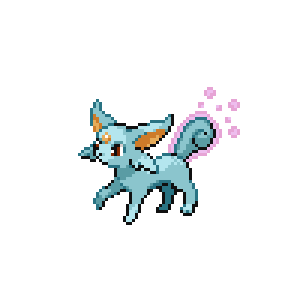
Squirtbird love to store anything small that catches their interest in the large hollow shell they carry around with them. When they meet a person for the first time, they will pull out a random item and offer it to them by way of greeting.
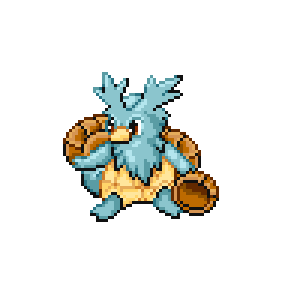
Squirtsly amble along riverbeds in search of food, relying on thick stony shells for protection. When they must move quickly, they create buoyant bubbles to lift themselves and drift with the current.

Squirtchu spray high pressure water at their opponents, dousing them and the area. Once everything is soaked, they indiscriminately shock the area around them, the water they've laid down amplifying the effect of their attack.

Squirtking are territorial Pokémon, battling with one another to maintain prime basking spots at the water's edge. Losers in these scuffles get tossed into the water and are forced to seek other resting places.

Squirtish move slowly through forest undergrowth, their protective shells limiting their speed. When migrating, they enter rivers and bob along the surface until reaching fertile ground.

There is only space in a Squirtduo's shell for one head at a time. When startled, both heads may retract at once, causing them to collide.
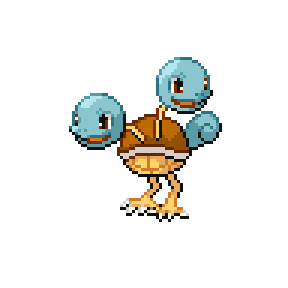
Weepinloom move very slowly through high tree branches and use their wide leaves to glide between trees. Their flowers have an overpoweringly sweet scent and their nectar is sometimes used to flavour tea.
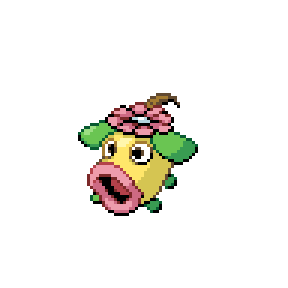
Weepinicate's saliva has a sickly sweet scent that is reminiscent of a flower's nectar. Dairy farmers will sometimes use it in the production of cheeses, the enzymes allowing for a unique texture and flavour to develop.
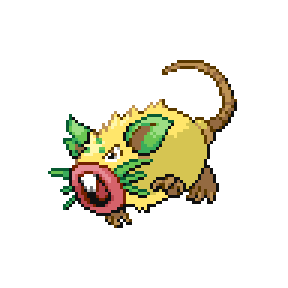
Weepinrow lives in tropical jungles, typically roosting high up in the trees while sunning its chlorophyll-rich wings. Its bell-shaped mouth produces a honey-like substance to lure in Bug-type Pokémon, drawing its food to it instead of having to hunt.
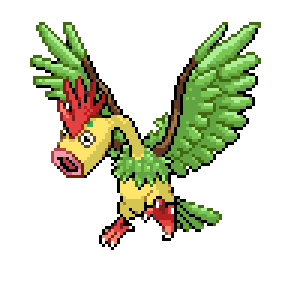
Weepinrow lives in tropical jungles, typically roosting high up in the trees while sunning its chlorophyll-rich wings. Its bell-shaped mouth produces a honey-like substance to lure in Bug-type Pokémon, drawing its food to it instead of having to hunt.

Weepingon-Z love getting attention from people, deliberately travelling into electronic display screens to observe whatever's displayed. They are often amazed at what they see, though their presence is considered a nuisance to those watching television.

Weepinrino produce a powerful acid that can burn through organic matter. They use this acid in territorial disputes to melt away the roots of their rivals. Battles for the best positions in a field between two Weepinrino can get very dangerous.
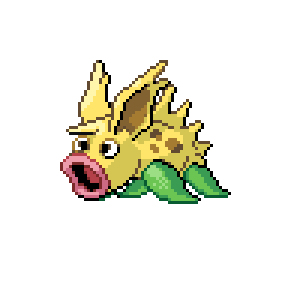
Weepinloom have long fronds extending from their head and tail that trail behind them as they swim. They move in languid coiling motions, weaving in and out of the mangrove roots in their environment.
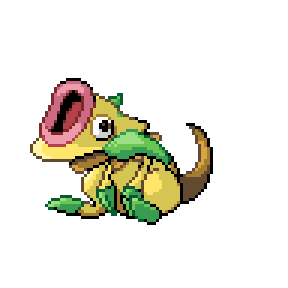
Weepinbas float at the surface of the water on their sides, their long tail lying flat to resemble a fallen leaf. When disturbed, they will abruptly burst into motion and swim away in fright.
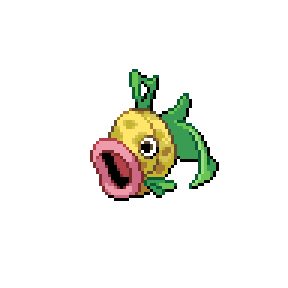
Weepintrio face directly upwards whenever it begins to rain, gathering rainwater within their open mouths. They hold the water as a lure for bird Pokémon, snapping shut and dragging them underground when they come to wash themselves.
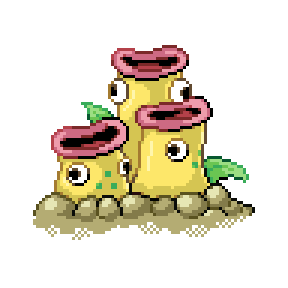
Weepinape sap grows sweeter as they get angrier. Wild Weepinape are sometimes goaded intentionally with the goal of harvesting their sap after each time they calm down.
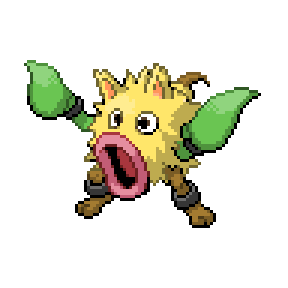
Pokémon Breeders seek to raise Weepinlithe with larger eyes and wider mouths, exaggerating their already unique features. Weepinlithe admirers often talk fondly of the way their leaves waggle as they run, or how cute their barks are.

Weepinine's fur is photosynthetic, allowing them to gain energy simply by taking a nap in the sunlight. They are protective of their resting places, breathing out powerful Flamethrowers if they find themselves being disturbed.

Victreedos roost in the canopy of jungles and rainforests, commanding a huge territory for themselves. They usually only take flight during the rains, becoming most active during thunderstorms.
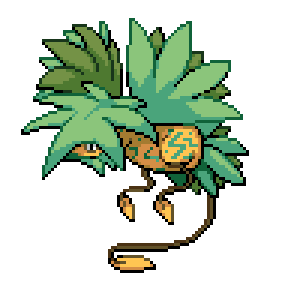
Victreerill is found in dense jungles, its natural camouflage and habit of only moving through the undergrowth mean it is often overlooked. It is shy and avoids people, preferring to flee rather than fight anything larger than itself.

Victreeicate's saliva is a prized ingredient in many perfumes thanks to its high sugar content. While the sweet smell is loved by many, the collection methods run the risk of the harvester being bitten by the viciously sharp incisors of Victreeicate.

Victreeicate's saliva is a prized ingredient in many perfumes thanks to its high sugar content. While the sweet smell is loved by many, the collection methods run the risk of the harvester being bitten by the viciously sharp incisors of Victreeicate.
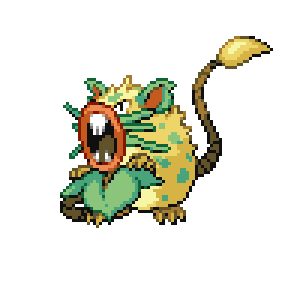
Victreecargo belch magma from their upturned mouth at their foes, launching the fiery projectiles dozens of meters through the air. Their attacks are often linked to forest fires, large areas burning away and leaving fertile ash for new plant growth.

Victreerow perch on the lower branches of jungle trees, keeping their wings outstretched and head leaf raised to catch as much sunlight as they can. A sweet scent emanates from their mouth, drawing smaller Pokémon to them which they trap to eat.
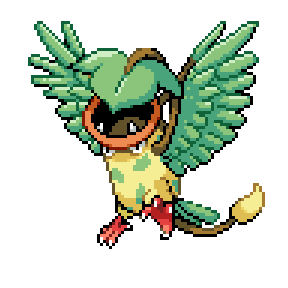
Victreetic produce a powerful acid from their mouths that they use when searching for food. Their acid has a sickly sweet scent and draws other Pokémon to them, acting as a lure.
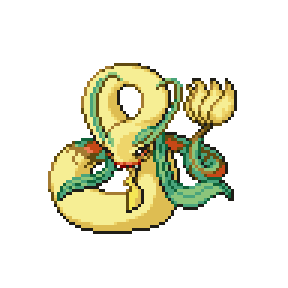
Victreeras are popular with garden centres for their habit of hunting down pests that would otherwise eat the plants for sale. They crawl around plant stems with their mouth open, emitting a smell similar enough to tree sap to entice bug Pokémon in.
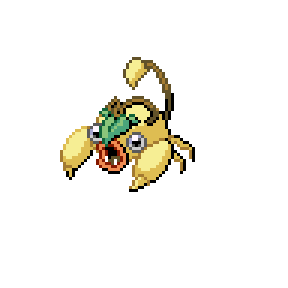
Victreemoth hide amongst tree branches during the day, spreading their leafy wings wide to absorb as much sunlight as they can. At dusk they take flight, seeking smaller Bug-type Pokémon to feed on.

When they're resting, Victreetrio pretend to be leaf litter on the jungle floor, remaining buried with only their head leaves visible. They become active during rainy periods, hunting for fallen fruit to snack on.
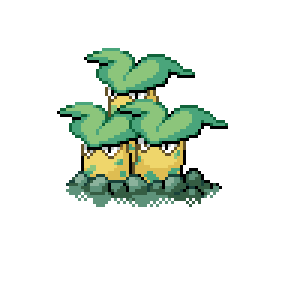
Victreeape lie in wait in jungle bushes, attempting to lure prey into their open mouth. They lack patience and often try to spring their trap too early, forcing them to chase after their meal, their leaves flapping with every step.

Victreenine live in dense jungles, roaming through the forest for food. When a Victreenine loses sight of their pack, they launch a Flamethrower from their upturned mouth, creating a pillar of fire to act as a beacon for their family to find them.

Victreetortle sit out in the rain with their mouth open watching the sky, catching as much water in their mouth as they can. They use the water they gather to hunt, pretending to be a safe place for smaller Pokémon to come and take a drink.
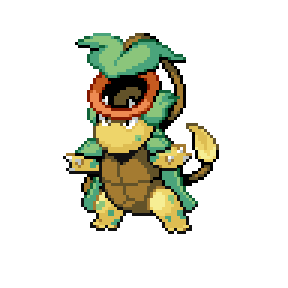
Tentabuff have gelatinous bodies that can compress to be remarkably small without harming the Pokémon. They use their tentacles to propel themselves through the water, avoiding danger by squeezing into crevices.

Tentarill tentacles are a delicacy in some parts of Hoenn, their stingers adding a unique spicy flavour to any dish. Fishermen trying to catch them need to be wary, as they are deceptively strong, more than able to drag the Fishermen into the water.

Tentapip drift on the ocean waves, using their tentacles to catch currents and steer themselves. Large swarms of Tentapip sometimes grab onto passing boats with their tentacles in the hopes of being taken to new parts of the ocean.

A somewhat clumsy aquatic Pokémon, Tentarow stays near the sea's surface and performs shallow dives for its prey. Its bulbous head acts as a float and can expand to rapidly surface or intimidate threats.

Tentacargo rely on their sturdy rocky shells to protect their gelatinous bodies, withdrawing into them at the first hint of danger. They communicate with one another through pulsing flashes of red, lighting up the sea floor in strobing lights at night.

Tentarill fill their tail with seawater to use as a reservoir of water when exploring the land. In an emergency they can expel all of the water at once, jetting back to the surface to escape underwater.

Tentadew rest upside down on the sea floor with their tentacles stretched into the water above them. They snag food out of the water above them, catching small fish Pokémon with their stingers to feed on.

Tentaish waddle through the surf on beaches in search of food buried in the sand. Their bodies are soft to the touch and, if accidentally stepped on, they release a noxious ink that can cause debilitating effects on those covered in it.

Tentalow skim low over the surface of the ocean in search of food, trailing their tentacles through the waves. Their tentacles are coated with sticky mucus and catch onto anything unfortunate enough to be swimming too close to the surface.

Swarms of Tentapip drift together on the surface of the ocean, using their leaves to steer themselves in the breeze. Their sharp beaks are sometimes used to latch onto passing Wailmer, relying on the larger Pokémon to carry them through the water.

Tentaicate dangle their long tentacles beneath them in the hopes of catching passing Pokémon. Anything caught by them is brought to their mouth and given a vicious bite.

Tentacargo keep their body hidden within their shell, interacting with the world using their long tentacles. Their tentacles are covered in microscopic stingers, used to poison their prey before dragging it to their shell to be cooked and consumed.

Tentaliper braid their tentacles into large, flat surfaces that serve as fins. They propel themselves through the water with their makeshift fins, lunging forward to gulp down anything small enough to fit in their mouth.

Gotop is an expert at excavating and digging through hard ground, making it highly prized by construction workers. It digs by using its head as a drill, its rock-hard body widening the holes it digs out.
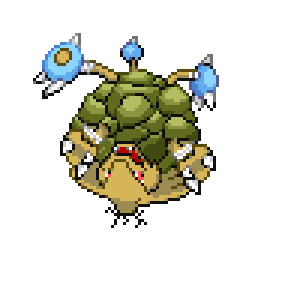
Goqueen carry a heavy cape of rubble upon their back, using it both as protection and a status symbol. They turn their backs to any incoming threat, allowing attacks to clatter against their cape before retaliating with a brutal Rock Slide.

Rapiew canter through the sky in search of distractions, stopping when they spy something that stokes their curiosity. They are enamoured with the ways humans use fire, teleporting within furnaces to watch people curiously from inside the flames.

Rapiew canter through the sky in search of distractions, stopping when they spy something that stokes their curiosity. They startle when they sense people watching them, galloping away in a streak of flame to escape observation.
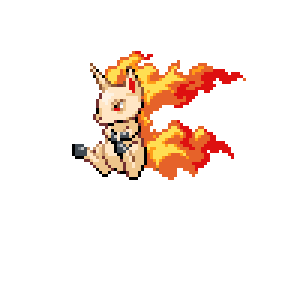
Slowgar climb up cave walls to gain enough height to take off into the air. Their reactions are slow, however, and it is not uncommon for them to launch off one wall and crash into the other before it occurs to them to flap their wings.
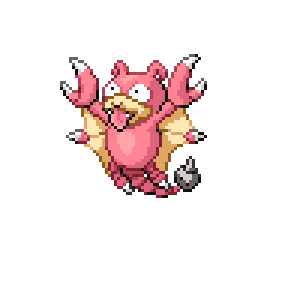
Slowcargo shells are hot enough to be used as grills. They are used for many traditional means of cooking, and are particularly popular in Johto for the preparation of Slowpoke tails.
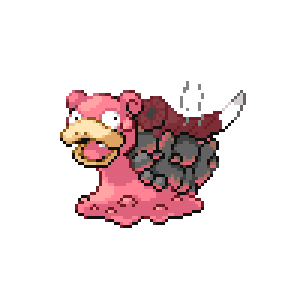
Warorb are drawn to make their homes in hydroelectric power plants. Their presence is problematic for the engineers working there as they are prone to exploding when disturbed, risking damage to the sensitive equipment.

Warorb are drawn to make their homes in hydroelectric power plants. Their presence is problematic for the engineers working there as they are prone to exploding when disturbed, risking damage to the sensitive equipment.
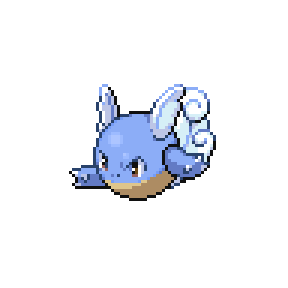
Warorb swim after other aquatic Pokémon at surprising speed using the wings poking out of their shell, exploding once they catch them. Some game developers have observed this behaviour and taken inspiration from them for enemies in their games.
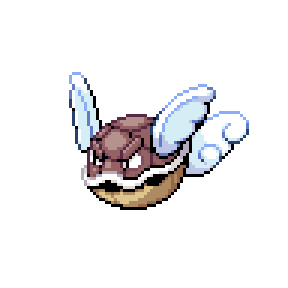
Ancient legends surrounding Warmie suggest that they fell from the stars, landing in the ocean and making their new home there. The winged gem at their core was used as evidence of this, suggested as their means of flight.

Wartops fossils are found on mountaintops, as the strata that they are found in date back over 500 million years. Modern instances of the fusion have barely changed from these fossils, living in oceans and relying on their shells to keep them safe.

Warcargo can be found in the waters surrounding volcanic islands, clustering around magma vents. Their populations are monitored by vulcanologists; a sudden increase in their presence is an early warning sign for volcanic eruptions.

Warelia create elaborate and delicate bubble structures reminiscent of flowers surrounding their hands. Pokémon researchers believe that these structures are used as a means to woo potential mates.
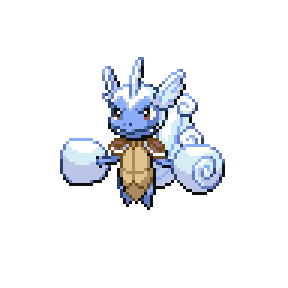
Warmantis hide in amongst aquatic plants, keeping themselves concealed from predators whilst watching for any prey that might come close. They use the thick fur of their tails to trap air bubbles, helping them stay submerged for longer periods.
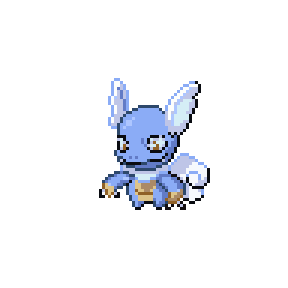
Warmantis hide in amongst aquatic plants, keeping themselves concealed from predators whilst watching for any prey that might come close. They use the thick fur of their tails to trap air bubbles, helping them stay submerged for longer periods.
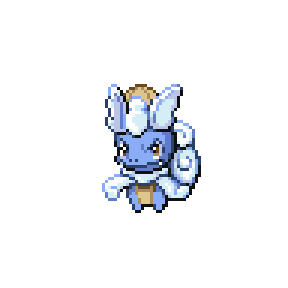
Wareel build up layers of insulating fat within their shell to help protect them from the cold of their arctic homes. Their shells are smooth on their stomachs, allowing them to slide freely across ice at surprisingly high speeds.
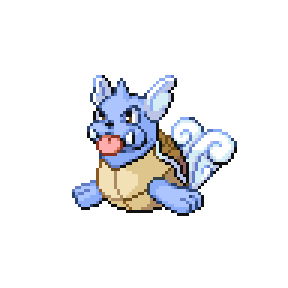
Slowcargo flames have a numbing property, making them dangerous to handle since trainers often aren't aware they're being burned until it's too late. They are sometimes used during medical procedures when cauterisation is required.
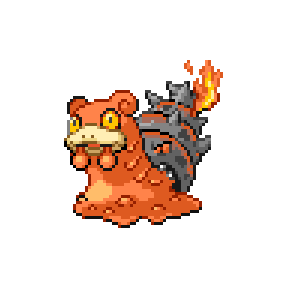
Slowcargo flames have a numbing property, making them dangerous to handle since trainers often aren't aware they're being burned until it's too late. They are sometimes used during medical procedures when cauterisation is required.
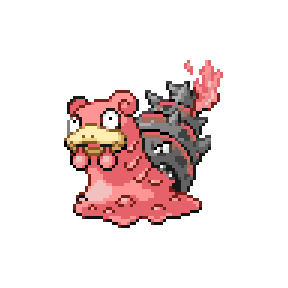
Slowking are exceptionally lazy Pokémon that will sleep for weeks on end before waking to gorge themselves, then going back to sleep. Despite their laziness they have an immense temper if disturbed and are incredibly strong.

Slowking are exceptionally lazy Pokémon that will sleep for weeks on end before waking to gorge themselves, then going back to sleep. Despite their laziness they have an immense temper if disturbed and are incredibly strong.
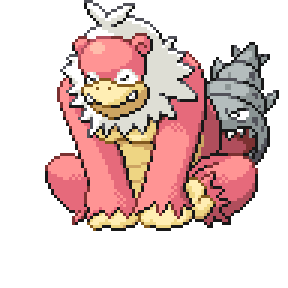
Slownine race across the landscape in packs, travelling at speeds in excess of eighty miles per hour. Unfortunately for those in their path, they have very poor reaction times and are prone to crashing into whatever happens to be in their way.

Magnegey are too heavy to fly without magnetic powers. Sometimes, young Magnegey that haven't mastered magnetism are found fallen from their nests and should be carefully returned to safety.

Magneotto are drawn to urban areas, often nesting along powerlines. Large populations can cause blackouts in cities as the concentrated magnetic fields disrupt the flow of electricity.

Magnesaur lumber around power plants, drawn to them by the strong electrical field. The magnets atop their back spin in the presence of electricity, spinning faster the stronger the field.
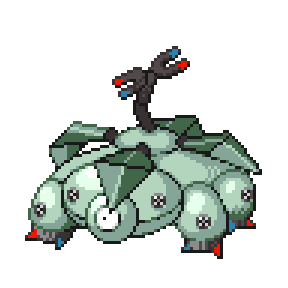
Magnesian can sense electromagnetic waves with their twin magnets, allowing them to feel the presence of machinery and electronics. Specific electronic frequencies appear to annoy them, prompting them to swipe at phones left unattended on counters.

Magnekey's magnetic feet allow them to run upside down along metallic ceilings. They are invaluable to engineers working within power plants, able to search out electrical faults in hard to reach places.

Magneizard fly through a combination of electromagnetic manipulation and huge wings. They periodically roost on top of power generators to recharge their magnetic fields, large flights of them sometimes causing a noticeable dip in energy production.

Magneizard fly through a combination of electromagnetic manipulation and huge wings. They periodically roost on top of power generators to recharge their magnetic fields, large flights of them sometimes causing a noticeable dip in energy production.
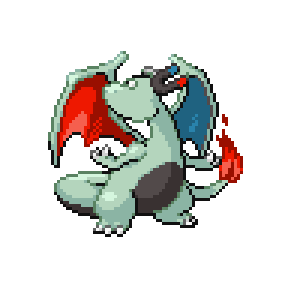
Magnepie infest power plants, draining electricity from generators and chewing at electrical casing and cables. They're a pest that require constant management to properly handle.

With three heads, Magneotto are efficient at constructing dwellings and can devote more time to raising their young. Unfortunately, their preferred building material is electrical wire, causing major issues in cities where they are abundant.

Magnefarig's magnets are charged so that each head has the opposite polarity to the other. They have to take great care not to let their heads get too close to one another, as they risk getting stuck if they do.
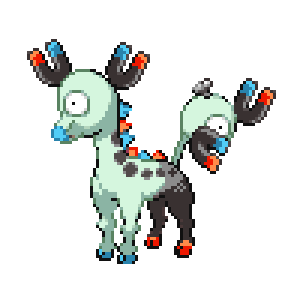
The magnets floating around the central pylon on the backs of Magnesaur are held in place by the powerful magnetic field the Pokémon generates. When they generate power to attack, the magnets spin around their pylon at high speed.
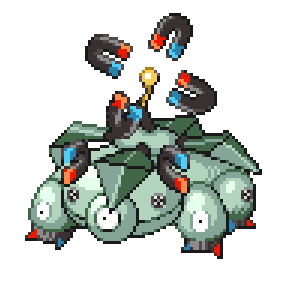
Magnexys create a body out of a malleable ferrofluid, using their magnetic powers to manipulate the tendrils. Their presence warps and disrupts electrical fields and can cause city-wide blackouts.

Magnesian magnets are uniquely sensitive to electromagnetic frequencies, allowing them to sense radio and television broadcasts. They enjoy the sensation of radio waves passing over them, making themselves at home in broadcast studios.

Farsian feathers are sensitive to even the slightest change in wind direction, letting them sense the approach of other Pokémon before they ever see them. They are ambush predators, pouncing on prey and pecking at it with their beak.

Fartortle often make their homes in city ponds, swimming together in small family units. They have a love for fresh vegetables and will beg for food from anyone who relaxes by the water.
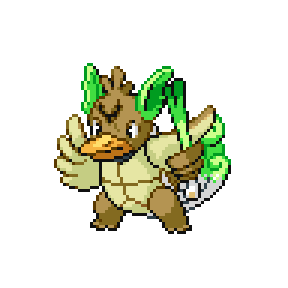
Seesaur live in cold water environments and have a specialised growth on their back that causes ice to crystalise on it. They use this growth as a buoyancy aid, the ice helping to keep them near the water's surface when they swim.

Seequeen sun themselves in family groups along the beaches of the Seafoam Islands, lazing beside one another on the frigid sands. They are capable swimmers and can quickly escape danger if needed, but will normally stand their ground when threatened.

Seeinch lurks in the shallows of the ocean, keeping just its eyes above the sand. When prey swims close enough, they launch upward with their powerful jaws and attempt to drag it into their burrows.
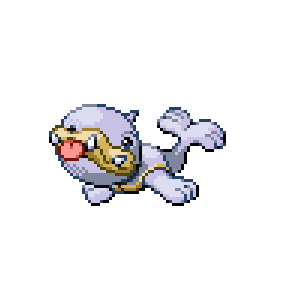
Seemeleon have a thick layer of insulating fat that keeps them warm even in the coldest arctic waters. During lean months where their fat reserves run thin they can supplement their body heat by creating fires to huddle around on the beach.

Despite spending almost all of their lives underwater, Dewsaur need air to breathe. The leaves on their back are able to produce oxygen bubbles from the seawater surrounding them, providing a portable air source.

Dewtile live in alpine lakes, spending most of their time beneath the icy surface of the water. The cold causes ice crystals to form on their skin. When the growths become too cumbersome, they scrape them off on nearby trees.

Dewqueen conjure javelins of water with which to battle, hurling them up to fifty meters to attack from a distance. Professional athletes will seek out Dewqueen to train alongside, working to hone their own throws.

Dewquaza live high above the poles, circling the skies in the upper stratosphere. Their dorsal fins glow with the light of the aurora, illuminating the night sky with their dances.

Dewquaza live high above the poles, circling the skies in the upper stratosphere. Their dorsal fins are formed from ice condensed from the atmosphere around them, glinting in the sunlight and letting them see one another from miles away.

Kept as symbols of status by aristocrats, Dewinch is a charming Pokémon that is relatively low maintenance. They're native to colder climates and can produce beautiful auroras from their single horn.

Dewva skims over the icy waters of the polar oceans, flying low to the surface to help it blend in with the ice floes. Its wings match the colors of icebergs to help it camouflage when resting.

Grifing forms in highly polluted areas, commonly arising in areas of heavy chemical runoff and fossil fuel emissions. Their internal gasses spread this pollution to the local area, environmentalists view large Grifing populations as a danger.

Grifing forms in highly polluted areas, commonly arising in areas of heavy chemical runoff and fossil fuel emissions. Their internal gasses spread this pollution to the local area, environmentalists view large Grifing populations as a danger.

Grifing forms in highly polluted areas, commonly arising in areas of heavy chemical runoff and fossil fuel emissions. Their internal gasses spread this pollution to the local area, environmentalists view large Grifing populations as a danger.

Griking can be found living in highly polluted areas, moving into an ecosystem that has suffered an oil spill or similar disaster. They are hostile to efforts to clean up the ecosystem, attacking clean up crews and trying to maintain their home.

Griking can be found living in highly polluted areas, moving into an ecosystem that has suffered an oil spill or similar disaster. They are hostile to efforts to clean up the ecosystem, attacking clean up crews and trying to maintain their home.

Gripuff form where industrial sewage is pumped into formerly revered natural sites. They gather into groups and eventually follow the sewage back to its source, often resulting in blockages and problems with sewer pipes.

Grimur have very sensitive hearing, their liquid bodies able to pick up even the faintest of vibrations. They are easily startled by loud noises, melting into a pool of goo to hide until whatever is making the noise has passed.

Grisian fur is coated in a toxic slime that can cause severe chemical burns if touched. Unfortunately for their trainers, Grisian enjoy curling up in the laps of the people they care about. Protective clothing is advised when handling them.

Griduck are commonly found in the aftermath of an industrial spill, bathing in the toxic aftermath. They are often hazardous to clean-up crews, lunging at them and trying to pull them into the sludge.

Born of toxic sludge and industrial discharge, Grikey are aggressive and hostile toward humans. Researchers have observed that the more poisonous the sludge they arise from, the quicker they are to attack.

Mutres are viewed as heralds of environmental collapse, their presence resulting in oppressive smogs and acidic rains. When Mutres linger in an area for too long, they cause extensive damage to the natural environment.

Mucargo can be found following industrial waste spills, feeding on the toxic sludge that is left behind. Investigative work to determine which company is responsible often involves taking pieces of Mucargo shells to the lab for forensic analysis.

Mucargo can be found following industrial waste spills, feeding on the toxic sludge that is left behind. Investigative work to determine which company is responsible often involves taking pieces of Mucargo shells to the lab for forensic analysis.

Muchu sludge carries a potent electrical charge that makes it sticky and difficult to get off. The sludge is caustic to the touch and can cause serious chemical burns if not quickly treated.

Muking have a viscous fluid body that struggles to hold form, the toxicity of their sludge melting through most materials they use for structure. They use the skeletons of long-dead Pokémon as scaffolding, manipulating the bones to move around.

Muking have a viscous fluid body that struggles to hold form, the toxicity of their sludge melting through most materials they use for structure. They use the skeletons of long-dead Pokémon as scaffolding, manipulating the bones to move around.

Muking populations emerge at the sites of toxic spills, competing to consume the toxins from the industrial waste and incorporating them into their body. They aggressively resist attempts to clean up the environment, attacking cleanup crews.

Muking populations emerge at the sites of toxic spills, competing to consume the toxins from the industrial waste. Beach spills melt sand and cause the bodies of Muking to take on multiple vivid colours.

Musian lie patiently in wait within toxic spills and industrial waste, waiting for prey to pass by so they can pounce on it. Clean-up crews are advised to be aware of the possibility of a Musian attack during their operations.

Muwrath enjoy wrestling with other Pokémon, gleefully flinging themselves at their opponents. Their fluid bodies make it difficult for them to actually perform a throw, and they more frequently splash themselves against the other Pokémon.

Blastorb have a limited ability to move thanks to their lack of limbs. They rely on firing high pressure jets of water at precise intervals to jet themselves around.

Blastorb have a limited ability to move thanks to their lack of limbs. They rely on firing high pressure jets of water at precise intervals to jet themselves around.

Blastorb have a limited ability to move thanks to their lack of limbs. They rely on firing high pressure jets of water at precise intervals to jet themselves around.

Blastode lie on riverbanks and deliberately mimic the shells of sleeping Blastoise. They take great pleasure in unexpectedly exploding when curious Pokémon Rangers come by to check on the shell and make sure the Pokémon is alright.

Blastwak wield long metal clubs as weapons, storing them inside special hollows in their shells. They're able to swing these clubs with enough force to crack concrete, and caution is advised when nearby an angry Blastwak.

Blastsea can shoot water from their mouths with a force of 30,000 PSI. They cannot maintain this output for long and use it to get a burst of speed to escape from larger Pokémon when endangered.

Blastking have a dense shell protecting their blind spots, keeping them safe from larger Pokémon as they swim. If they are attacked, they turn to face their aggressor and fire a powerful jet of water at them.

Some Blastfree do not properly develop wings and instead have to rely on jet propulsion from their cannons to remain airborne. They typically live around rivers and ponds so that they can easily replenish their water supply.

Blastgeot spend most of their lives out at sea, only returning to land to nest. They compete for mates through displays of power; whichever Blastgeot can launch water from their cannon the furthest is almost always the winner of these contests.

Blastgeot spend most of their lives out at sea, only returning to land to nest. They compete for mates through displays of power; whichever Blastgeot can launch water from their cannon the furthest is almost always the winner of these contests.

Though friendly, Blastsire are slow-witted and prone to underestimating their own strength. It is common to find Pokémon that have inadvertently been trapped in a hug in muddy river banks by them.

Though friendly, Blastsire are slow-witted and prone to underestimating their own strength. It is common to find Pokémon that have inadvertently been trapped in a hug in muddy river banks by them.

Though friendly, Blastsire are slow-witted and prone to underestimating their own strength. It is common to find Pokémon that have inadvertently been trapped in a hug in muddy river banks by them.

Blastbull are slow swimmers, but love to jump into large bodies of water to play around in. They use the tiny cannons on their backs to squirt water at their friends.

Blastbull are typically gruff and standoffish with Pokémon they are unfamiliar with, making big displays of aggression and anger. They are friendly once they start to get to know others, enjoying having their shell stroked and patted.

Blastrow spend most of their time swimming at the surface of ponds and lakes, begging for food from those passing by. When they get riled up they take a gulp of water then fire it at high velocity from the cannons in their shell.

Blastgle secrete fluids containing pigments that they load into their cannons. They build up pressure inside the cannons and fire the pigments all at once, painting a vista in a single blast.

Blastvire house long cables within their shell that they can move at will, generating powerful electrical charges from them. They hunt within wetlands, using their electricity to stun their prey.

Blastvire carry reserves of water within their shell that they can fire at high pressure from their cannons. The scales forming their shell have a coating that generates a powerful electric charge as they move that they send through the water streams.

Blastvire carry reserves of water within their shell that they can fire at high pressure from their cannons. The scales forming their shell have a coating that generates a powerful electric charge as they move that they send through the water streams.

Blasts regularly get swept up in the emotion of whatever those around them are feeling and are always enthusiastic. During battle this works against them as the cannon on their head is too powerful, when they shoot water they go tumbling backward.

Blastvoir are able to manipulate water, keeping a store to weaponise within their shell. They can launch the water at high speed through the cannons jutting from their shell.

Blastloom are common companions for aspiring ace Trainers, the cannons mounted on their heads offering the Pokémon great range in Pokémon battles. Their shells offer moderate protection but cannot deflect heavier attacks.

Blasteye pry gigantic gemstones from deep underground and bring them to subterranean waterways to use as transport. During battle they keep their distance from their opponent, using blasts of water to fight from a distance.

Blasteye pry gigantic gemstones from deep underground and bring them to subterranean waterways to use as transport. During battle they keep their distance from their opponent, using blasts of water to fight from a distance.

Blastbat emit powerful infrasonic blasts from the cannons protruding from their heads. They can use these blasts both as an offensive weapon and also as a navigation tool, listening for echoes to make up for their poor eyesight.

Blastvern are capable of blasting water at supersonic speeds from their cannons, though they cannot maintain the pressure needed for the attacks long. They use this attack as a last resort, their bodies frail and unable to easily handle the recoil.

Blastvern are capable of blasting water at supersonic speeds from their cannons, though they cannot maintain the pressure needed for the attacks long. They lower their body to the ground before firing in order to protect themselves from the recoil.

Blastsopod are cowardly bullies, using their powerful water cannons to attack weaker Pokémon but tucking into their shell and crawling away at the first signs of a stronger Pokémon.

Blastwag have a protective shell that keeps them safe while they wait to evolve. The weight of the shell keeps them from being able to easily swim, so they use the twin cannons on their shell to blast themselves backward if they need to move fast.

Pokémon researchers in Kanto have observed Blastwhirl competing with Poliwrath within river environments for dominance. Though smaller, they theorise that Blastwhirl have an advantage thanks to the twin cannons they sport.

Despite looking like a mass of undifferentiated sludge, the components making up the bodies of Blastmer have varying chemical compositions. The parts forming their chest and back are denser than the rest of their bodies, protecting them.

Blastuk form from industrial runoff into aquifers and rivers. Their bodies are oily and float on the surface of the water; the oil produced from them provides buoyancy but also pollutes the water they live in.

Blastuk form from industrial runoff into aquifers and rivers. Their bodies are oily and float on the surface of the water; the oil produced from them provides buoyancy but also pollutes the water they live in.

Shellsaur protect themselves with tough shells discarded by other Pokémon, attaching them to their back with a sticky sap. The sap they use contains a mild paralytic toxin that causes a numbness in anything that touches them.

Shellcargo use their mucus to create a thick layer of bubbles beneath their shell. They use the bubble layer as a lubricant, dragging themselves along it across the sea floor using their tongue.
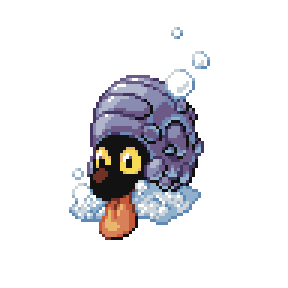
Shellplume shells grow into elaborate structures reminiscent of flowers, hard calcite forming into petal-like growths. Their shells allow them to camouflage themselves within coral reefs, blending into the reef almost seamlessly.

Shellnine are playful and love to play catch with their trainer, racing after thrown balls or sticks at incredible speeds. They clamp their head shell down on the thrown object, using their tongue to hold it in place before returning to their trainer.

Shellnine are playful and love to play catch with their trainer, racing after thrown balls or sticks at incredible speeds. They clamp tightly onto the thrown object once they catch it and can be reluctant to release it.

Cloyplume grow dense shells from their heads, the two halves growing downward to either side of their body. They rely on their shells to protect them from harm as they walk along the ocean floor.

Cloynine launch volleys of spikes from their shell at their foes, using their immense speed to race around and find weak spots to target. They turn their head toward any return blows, relying on their thick shell to protect them from harm.

Gasfree form gaseous wings that they use to fly around with. These wings are only weakly controlled by the Pokémon and can be dispersed by strong winds, leading them to hide in trees during storms.

Gasgma can be found around active lava flows, forming from the gasses that are released from the molten rock. Their presence is noxious to living creatures, but they do not travel far from the flows that birth them.

Drifting high in the atmosphere, the wings of Gaslu are composed of a very thin mist. As light as their bodies are, Gaslu are often dispersed by the jet stream and can be found all over the world.
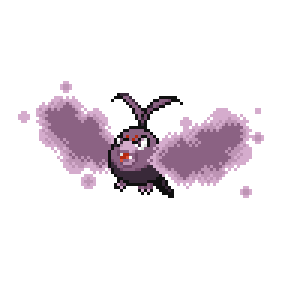
Gasteel possess ancient steel effigies, their gaseous bodies animating and filling the statues as a means of protecting themselves. They roam through these old ruins deep in the night, the clanking of their movements filling the night air.

Gaskey grow intensely angry when they sense the vitality of people or Pokémon approaching their home. They race through walls to charge directly at the interloper, lashing out with ethereal paws to bully the intruder away.

Gaskey grow intensely angry when they sense the vitality of people or Pokémon approaching their home. They wait invisibly to ambush interlopers, appearing at eye level before launching a flurry of strikes at the intruder.

Gasape are commonly found haunting the graves of those who have died in combat. They project their anger outward, afflicting those close to them with a supernatural rage that can take hours to pass.

Gasape are commonly found haunting the graves of those who have died in combat. They goad grieving people into fights, cackling maniacally when brawls break out in the cemeteries they call home.

Gasnine take pleasure in playing malicious tricks on people. Acting benevolent, they allow people to clamber onto their back and take them for rides across the sky before abruptly turning intangible, allowing their passenger to fall to the ground.

Hauntor haunt logging sites, attempting to scare off lumberjacks that are trying to work the area. Their favourite method of doing so involves luring workers in front of heavy machinery before abruptly turning the engines on.

Haunfree float through the air as though unaffected by gravity, their wings eerily staying stationary above their backs. They have a toxic coating of scales along their wings, contact with which can result in painful curses.

Hauncargo find detritus and rubble left over from lava flows and possess them, reanimating the rocks and creating a simulacrum of the molten rock that once carried them. Their bodies glow with an eerie purple light from the gases they produce.

Haunsteel are spirits that are bound to metal statues, using the artificial bodies as a way to interact with the physical world. They are dangerous to unwary people and Pokémon, their inexperience with a body making them underestimate their strength.

Haunape swing their fists with eerie accuracy, their Shadow Punches landing no matter how evasive their foe is. They take great joy in pursuing their foes, gleefully tasting the fear in the air from their victims.

Haunape swing their fists with eerie accuracy, their Shadow Punches landing no matter how evasive their foe is. Should their blows knock their foe out, they drain a portion of their life energy for an unknown purpose before seeking a new target.

Haunape swing their fists with eerie accuracy, their Shadow Punches landing no matter how evasive their foe is. Should their blows knock their foe out, they drain a portion of their life energy for an unknown purpose before seeking a new target.

Haunine are constantly wreathed in spectral flames. Though the fire is cool to the touch and does not inflict burns, rumours persist that making contact with them will leave a person with a lingering curse.

Haunine are constantly shrouded in an eerie gas that clings to their body, creating the illusion of purple fur. The gas is toxic to people, and it's advised to limit direct exposure to it where possible.

Genfeon form in areas being urbanised and are believed to be the spirits of the plants that have been killed. They haunt construction crews, doing what they can to disrupt machinery and stall progress.

Genfeon form in areas being urbanised and are believed to be the spirits of the plants that have been killed. They haunt construction crews, doing what they can to disrupt machinery and stall progress.

Gensteel possess the statues found in ruins, using them as makeshift bodies to move around. Their spiritual power is corrosive and causes the metal in the statues to break down and decay, leading them to roam in search of new statues to possess.

Gensteel possess the statues found in ruins, using them as makeshift bodies to move around. The power of some Gensteel is so great that they completely envelop their new bodies, warping and twisting them beyond recognition.

Gentox flutter through the night, avoiding bright lights where they can. They are able to conceal themselves within the shadows of others, using the borrowed shadow to avoid sudden flashes of bright light.

Genape move with eerie, unnatural motions, their limbs jerking forward seemingly at random speeds. They take joy in the fear they inspire by moving in this manner, abruptly leaping in a flurry of fists when their target screams.

Genape bodies overflow with cursed energy, driving them to try and inflict misfortune on those around them. They rush their foes with powerful blows, an eerie grin fixed to their face the entire time.

Genape bodies overflow with cursed energy, driving them to try and inflict misfortune on those around them. Their eagerness to dispel their energy leads them to pick fights with any Pokémon that crosses their path, no matter how tough.

Genine are able to turn their bodies almost completely invisible, their form dispersing into gas and leaving just their glowing red eyes visible. They delight in abruptly appearing in front of people to scare them before racing away at high speed.

Genine bites are said to inflict terrible curses that persist throughout a person's life. Whilst these rumours are unsubstantiated, Genine bites are still powerful enough to break bones and require emergency treatment.

Onking bodies blend into the mountainous terrain that they make their home in. They will rest curled against cliff faces, only taking action when they hear a similarly sized Pokémon approach, and they lumber into battle.

Onice form from the permafrost in high mountain ranges, the rocks that make up their body being bound together by living ice. They aimlessly roam across glaciers for years on end, their surroundings kept frozen by their mere presence.

Onice form from the permafrost in high mountain ranges, the rocks that make up their body being bound together by living ice. They aimlessly roam across glaciers for years on end, their surroundings kept frozen by their mere presence.

Drowag waddle along the shores of lakes at night, searching for Pokémon sleeping in their nests. When they find a sleeping Pokémon, they use their short trunk to siphon away the Pokémon's dream, croaking happily to themselves as they do.

Drowtortle swim with most of their body below the water, only their diminutive trunk poking above so that they can breathe. They are drawn toward sleeping Pokémon, crowding around them to feast on their dreams.

Hypking roam their territories late at night, keeping a watchful eye out for any intruders. If they find someone encroaching on their borders, they swing their pendulum and put them to sleep before tossing them out beyond the bounds of their home.

Many superstitions surround Hyponee. One of the most persistent is the belief that using one as a cushion will result in prophetic dreams. Hyponee are willing to be close to their Trainers this way, but will inflict nightmares on strangers.

Hyprok swing their tails back and forth in a hypnotic, distracting motion. They lull people and Pokémon into a false sense of security, using their hypnosis to allow them to steal away food without being interrupted.

Hypwag waddle through the night, sniffing the air, searching for the scent of dreams. They seem to simply enjoy being near dreaming Pokémon, with groups of Hypwag having been observed standing around the heads of sleeping Pokémon.

Hyptortle can sense how tired other Pokémon are using their wing-like ears. They will walk toward Pokémon on the verge of sleep, projecting a field of exhaustion toward them as they swing their pendulum back and forth.

Krabdrill nest in and around tidal pools, moving in swarms to hunt together at low tide. They are aggressive Pokémon and large enough populations can cause beach goers to abandon the area until Pokémon Rangers can be called in.

Krabcargo search for empty seashells to make their homes in, hiding their soft bodies away within them. They battle one another for prize shells, snapping their claws and trying to pull their rival out of their home to claim it as their own.

Beaches with large Krabrino populations typically have a lower diversity of Pokémon than other beaches due to the aggressive nature of Krabrino. They scuttle at any Pokémon they perceive as competition and aggressively snap their claws at them.

Krabking grow continuously through their lifetime, shedding their exoskeleton with each growth cycle. They battle with one another for dominance of the beaches they call home, grabbing at one another with their powerful claws.

Krabfairy scuttle out onto the beach from the sea once a month, waiting until the night of the full moon. They click their claws in unison, performing a strange dance where they move sideways in a broad circle around one another.

Krabgull make a pest of themselves on popular tourist beaches, scuttling at beachgoers and stealing their food with their powerful claws. Regular feeding by tourists emboldens this behaviour; environmental boards advise against eating near them.

Kingligatr lurks in murky riverways, remaining stationary for days on end on the river bed while it waits for passing prey. When it senses something it can eat, it bursts into motion using its powerful pincers.

Kingcargo carve shells out of basalt to hide their bodies within, using their powerful claws to hollow out the rocks. Once they have their new shell, they decorate it with sea plants, trying to make it look pretty.

Kingrino has a large, unwieldy claw that it uses exclusively for battling Pokémon that encroach on its territory. It uses its other, smaller claw for mundane tasks such as feeding itself or digging a burrow to live in.

Kingking battle one another for dominance in coral reefs, using their powerful claws to tear off chunks of coral to fling at one another. Their battles result in widespread ecological destruction, so Pokémon Rangers try to ensure they never meet.

The bodies of Kingsect play host to an aggressive fungus that hijacks their nervous system, making them move against their will. The spores of the fungus thrive in water and will infect freshly laid Kingsect eggs.

The bodies of Kingsect play host to an aggressive fungus that hijacks their nervous system, making them move against their will. The spores of the fungus thrive in water and will infect freshly laid Kingsect eggs.

Kingliper beaks have a bite force that can split boulders, making a loud clacking noise when they snap shut. When two Kingliper fight, they posture opposite one another, scuttling side to side and making loud snapping noises to intimidate their rival.
