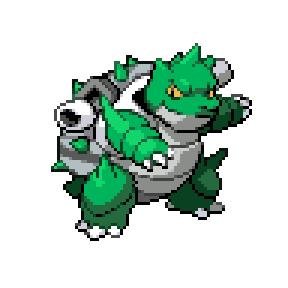
Page 2 / 4 of 3114 pokedex entries by katieplaysgames.
Wylithe have a keen sense of smell, tracking down sweet treats and hungrily scarfing them down. Confectioners have to keep an eye out for wandering Wylithe packs, closing their doors and calling in Pokémon Rangers to keep their products safe.
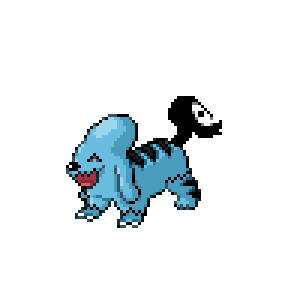
Wywag can be found in tropical mangroves, hiding amongst the roots of trees underwater. They feed on fruit that falls from the trees, small shoals of Wywag swimming up to the surface to feed on the floating fruit.

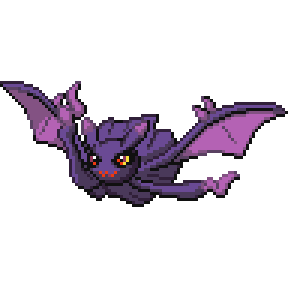
On midnight purple wings, Misbat swoops across the nighttime sky. They can sense the emotions of those on the ground below them and will seek out people and Pokémon suffering from bad dreams, perching nearby and feasting upon them.
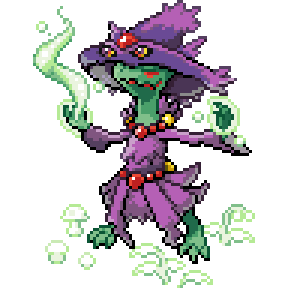
Mistile can be found deep in old-growth forests. They have been observed drawing energy from fallen trees, returning that energy to the soil, and causing new life to sprout from the ground.
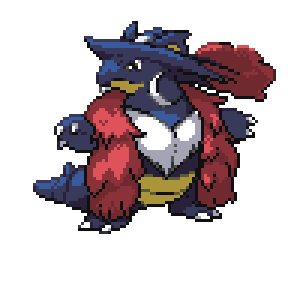
Honchqueen forms gangs of disparate Pokémon to help claim territory for itself, enforcing the boundaries of the territory with displays of strength. When forced to fight for itself, Honchqueen is wily and formidable, using underhanded strategies to win.
Bonlett hide amongst fields of freshly planted crops, sheltering from larger Pokémon and relying on their plant-like appearance to camouflage them. They grow upset when their hiding place is harvested, crying uncontrollably for a full day.
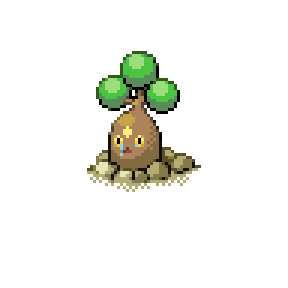
Bonlett hide amongst fields of freshly planted crops, sheltering from larger Pokémon and relying on their plant-like appearance to camouflage them. Their colours change to a bright red when the crops around them bear fruit.

Bonlett hide amongst fields of freshly planted crops, sheltering from larger Pokémon and relying on their plant-like appearance to camouflage them. The tunnels they dig through fields help to mix nutrients into the soil, improving harvest yields.
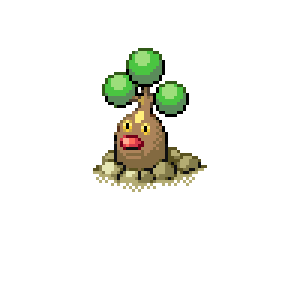
Though it looks soft and fluffy, Bonine fur consists of dense rock that is smooth to the touch. They rely on their rocky bodies to protect them when they charge headlong into battle.
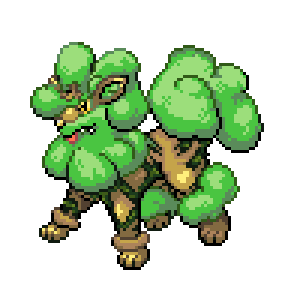
Mimepie are popular companions for Jugglers who regularly perform at children's parties. Mimepie are soft and make a fun squeaking noise when hugged, helping calm upset children whilst the Juggler entertains the rest of the party.

Mimerachi are able to manifest inside the dreams of sleeping people and Pokémon. They delight in playing pranks and making jokes within those dreams, blessing those who meet their humour in kind with good fortune.
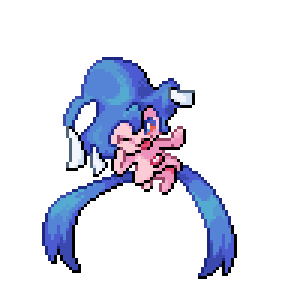
Mimebat are commonly used Pokémon during circus performances, their sonar allowing them to constantly sense what's happening around them. A troupe of Mimebat create elaborate mid-air performances to the delight of children.
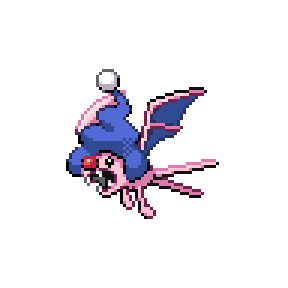
Mimemoth are drawn to the sound of laughter, and are a common sight at children's birthday parties. Swarms of them can be drawn in from up to a mile away by particularly exuberant parties, though their arrival often kills the mood.

Mimelett make their burrows around circus grounds, drawn to the sounds of cheer and lively performances. They can sometimes be seen popping up from the ground within the big top to watch the clown performances.

Mimenine love to play with children, allowing children to climb onto their back for rides. Even though they are not malicious, parents are advised to be wary of letting Mimenine take their children for rides since Mimenine run extremely fast.

Mimeby perform elaborate dances to attract the attention of other Mimeby on the beach. They are popular Pokémon for beachside attractions, their performances being particularly entertaining to children.
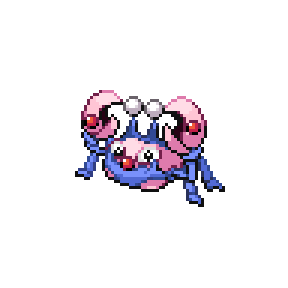
Mimeby perform elaborate dances to attract the attention of other Mimeby on the beach. They are popular Pokémon for beachside attractions, their performances being particularly entertaining to children.

Happideen are often found amongst other species of Water-type Pokémon. They school around the nurseries of other species, taking care of the eggs left behind and carrying them to safety in case of predator attacks.

Happikarp have a parental instinct so strong that they will claim any unattended egg as their own, using their specialised tail to carry and care for it. They have no natural defences, making their speed their only means of protecting their charge.
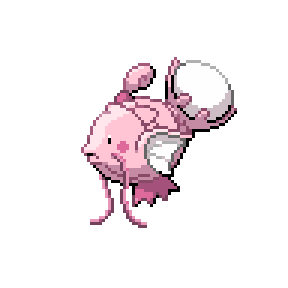
Happidos have powerful parental instincts and will take over any nest where the eggs have been left alone for more than a few hours. They collect the eggs and carry them in a specialised pouch, using their giant bodies to protect them.

Happiotto have special, stiffened feathers across their back that enable them to carry large eggs. They work in flocks to relocate abandoned Pokémon nests so that they can take care of them.

Happinub live in mountain ranges, making their homes at the moraines of glaciers. They spend their time hunting for abandoned nesting sites of other Pokémon, adopting any lost eggs as their own.

Happichu have a pouch in their stomach that enables them to hold small objects. They are drawn to holding magnetic and elemental stones, the energies contained in them bringing them joy to carry.
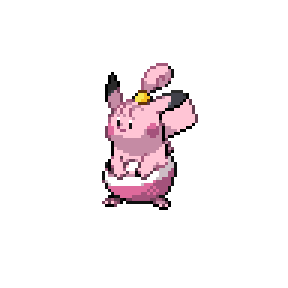
Happichu have a pouch in their stomach that enables them to hold small objects. They are drawn to holding magnetic and elemental stones, the energies contained in them bringing them joy to carry.

Happichu have a pouch in their stomach that enables them to hold small objects. They are drawn to holding magnetic and elemental stones, the energies contained in them bringing them joy to carry.

Happichu have a fascination with Pokémon eggs, hanging around the nests of other Pokémon and watching over the eggs in the absence of their parents. They stand protectively over the eggs, shocking anyone other than the parents that try to come close.
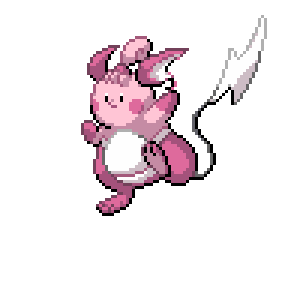
Happinat hold the eggs of other Pokémon close to their chest, using their thick fuzz to keep them warm. Populations of Happinat will work together to seek out nests and crowd together to take an egg each.

Happinat hold the eggs of other Pokémon close to their chest, using their thick fuzz to keep them warm. Populations of Happinat will work together to seek out nests and crowd together to take an egg each.
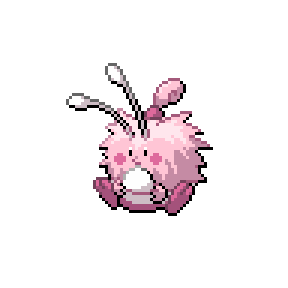
Happiwhirl wander around lake shores with a blank, aimless expression as they search for other Pokémon. They are very affectionate, pulling young Pokémon into a tender embrace and holding them against their belly to show their care.

Happiwhirl wander around lake shores with a blank, aimless expression as they search for Pokémon nests. They have a strong nurturing instinct, frequently taking unattended eggs and carrying them around in an effort to protect them from harm.

Happitortle clutch Pokémon eggs to their front when they feel a nest is threatened, nurturing instincts compelling them to protect the young. They will turn their backs to anything they feel is dangerous, relying on their thick shell to protect them.

Happitortle have a special hollow in their shell that is the right size and shape to hold Pokémon eggs. They practice for the responsibility of carrying an egg by picking stones from river beds and carrying them until they go a week without losing them.
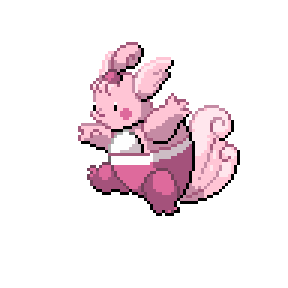
Happitortle have a special hollow in their shell that is the right size and shape to hold Pokémon eggs. They practice for the responsibility of carrying an egg by picking stones from river beds and carrying them until they go a week without losing them.

Happitortle have a special hollow in their shell that is the right size and shape to hold Pokémon eggs. They practice for the responsibility of carrying an egg by picking stones from river beds and carrying them until they go a week without losing it.
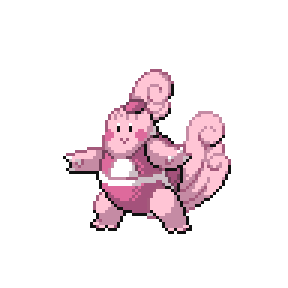
Despite their cumbersome size, Happitoise are delicate Pokémon that take great care to not damage anything when moving around. They love to watch over the nests of other Pokémon, protecting the eggs in the nests they guard.

Despite their cumbersome size, Happitoise are delicate Pokémon that take great care to not damage anything when moving around. They love to watch over the nests of other Pokémon, protecting the eggs in the nests they guard.
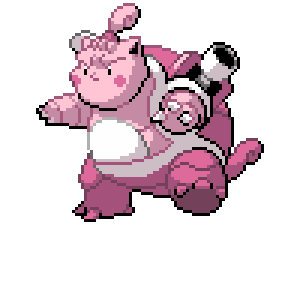
Raifree use a latent static charge to keep their wing scales attached. They can disperse this charge at a moment's notice, releasing a shower of irritating scales at whatever is aggravating them.

Raifree use a latent static charge to keep their wing scales attached. They can disperse this charge at a moment's notice, releasing a shower of irritating scales at whatever is aggravating them.
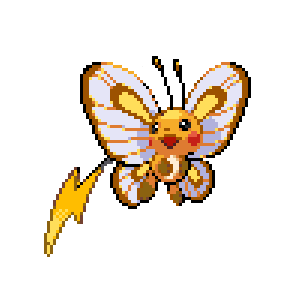
Raiowl are rarely seen outside of thunderstorms, spending most of their days sheltering within tree hollows. When a storm starts, they take to the air, their tail trailing behind them as they try to catch the lightning.

Raipi use the broken remnants of egg shells to protect their bodies, trying to keep themselves safe from harm. They have poor control of their electrical powers and the shell they use often ends up charred and blackened by their shocks.

Raitic are a popular companion of power line engineers, their ability to sense electrical fluctuations making them invaluable in finding faults in lines. They take great pride in helping fix up broken down infrastructure.

Railoom can be found outside power plants, ambling around the fields and playing with one another near the generator buildings. They are drawn to the electrical output and will migrate elsewhere if the power plant ever shuts down.
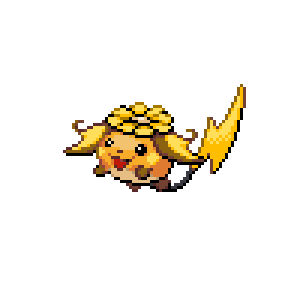
Railoom can be found outside power plants, ambling around the fields and playing with one another near the generator buildings. They are drawn to the electrical output and will migrate elsewhere if the power plant ever shuts down.

Rairaid are fast swimming Pokémon that use electrical pulses to stun other Pokémon in the water. Their long, trailing tail acts to signify their success to other Rairaid, with longer tails indicating a more desirable partner.
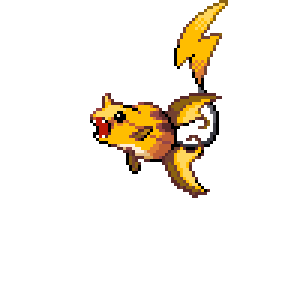
Raidoof channel their electrical powers through their teeth, giving their bites a painful shock. They use this ability to help them chew down trees, biting into the trunk and shocking the sap to make it explode, toppling the tree quickly.

Raidoof channel their electrical powers through their teeth, giving their bites a painful shock. They use this ability to help them chew down trees, biting into the trunk and shocking the sap to make it explode, toppling the tree quickly.
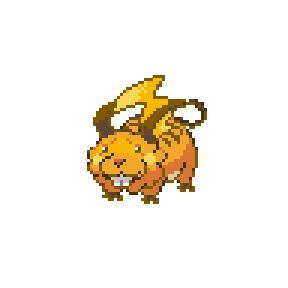
Railup walk together in groups, following their leader in single file. When the group feel threatened, they will huddle together and pool their electric powers, launching a single gigantic thunderbolt as a team.
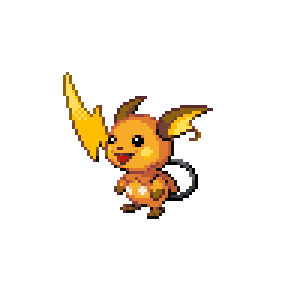
Raiplup squabble with one another for prime nesting locations, regularly stealing stones and sticks from each other to build better nests. When disputes turn aggressive, they will flap their wings and fire shocks at one another.

Raileon strut around constantly displaying their electrical powers as a way to display their superiority to others. The constant show of power is draining and they have to periodically hide themselves away to recharge.

Raiard have a strategic mind and battle in a very methodical manner. This works as a double-edged sword as their preparedness can let them take down those less prepared, but they are inflexible and can be vulnerable to chaotic conditions.
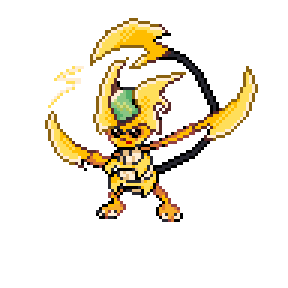
Rainette will lie around in abandoned places like old schools or houses waiting for someone to come by and pick them up. They wait until they have been carried for a while and then give a vicious shock to the person that found them.

Raision use their conductive gel to communicate with one another, sending complex electrical impulses that are amplified by their bodies. Pokémon Researchers are studying this communication method and attempting to apply it to engineering.

With their soft, plush bodies, Raiful are popular Pokémon with young Trainers. They enjoy being carried around and being squeezed, the yellow patches on their cheeks giving small sparks of joy when they're played with.

Raiwear build static as they move, their fur and fluffy bodies generating electrical potential whilst they fight. They deliver this electrical energy as punches, shocking their foes with powerful strikes.

The parasitic fungi growing within the body of Rairas force the Pokémon to constantly feed so that they have enough energy for themselves and their parasites. The fungi discharge excess energy as electricity, using the shocks to protect their host.

The mushroom growing on the backs of Raisect require a lot of electrical energy to grow. This energy requirement pushes Raisect to dig out electrical cables, biting into them to feed on the power running through them.

Rainine are most active during thunderstorms, racing beneath the clouds whilst watching the sky above them, waiting for lightning to strike. They raise their tail high when they anticipate a bolt of lightning, attempting to catch it with their tail.

Raimite produce a powerful electrical field that allows them to float along the planet's magnetic lines. They move slowly and will always align their magnets along the polarity of the field, sometimes getting caught near powerful generators.

Despite their laidback attitude and willingness to listen to instructions, Munchchu are not advised as good companions for first time Trainers. They have an insatiable appetite and will quickly eat through the savings of the unprepared.

Munchdude is rarely seen at the surface, its voracious appetite leading it to eat its way through the ground in search of minerals. The tunnels left behind in its wake are often used by hopeful prospectors hunting for rare metals.
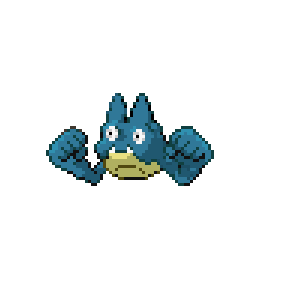
Mancargo school together on the sea floor, releasing streams of bubbles from the shells and fanning them toward each other. They play in this manner for hours on end, taking simple joy in the shapes they can create.

Manras feed on detritus that has fallen to the sea floor, using their two large claws to sift through sand and mud to find edible particles. The twin red antennae growing from their back distract predators and pull attention away from their bodies.

Manwag coat their tails with a thick bubble, using the captured air as a fin to swim with. When threatened, they sweep their tail at their aggressor to unleash a Bubble Beam before escaping.

Lickifish has an exceptional sense of taste, navigating the oceans by sensing the differences in water chemistry that tell it if there's food or a predator around. Their saliva has a toxic element, letting them defend themselves with their tongues.

When two Lickixorus fight, they use their immensely long tongues as whips, moving the tips at supersonic speeds. Their formidable-looking tusks are used to cut down trees rather than for fighting, letting them access food high in the branches.

Lickixew uses its tusks to dig into Bug-type Pokémon colonies, feeding on the honey within with its long sticky tongue. It usually can't stay long at any colony as its hide is soft, leaving it vulnerable to retaliation from the angry bugs.
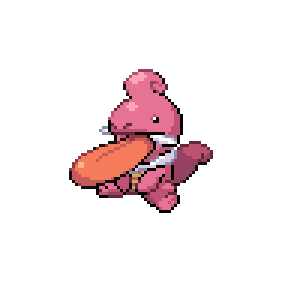
Lickixure uses its powerful tusks to fight with rivals, its long tongue used to try and grapple the tusks of its opponents and prevent a counter-attack. Fights between the Pokémon are often messy as a result.

Lickipoke feeds by using its extraordinarily long tongue as a lure at the water's edge, waiting for unsuspecting Pokémon to bite it so it can reel the food in. Unfortunately, it has incredibly slow reaction times and often lets its food get away.

Rhydon bore gigantic tunnels into the sides of volcanoes, drilling out elaborate labyrinths. The sound of them pummelling their way through the bedrock is loud enough that they regularly trigger false alarms of a volcanic eruption.

Rhydon bore gigantic tunnels into the sides of volcanoes, drilling out elaborate labyrinths. They are protective of their home, swinging their powerful tail at intruders with enough force to split the ground open.

Tanrock are formed of a loose connection of vines and roots that burrow into and hollow out boulders. They bind these boulders together to form a basic frame with which to move and to protect their vulnerable vines.

Electiwear build up a powerful electric charge within their bodies as they fight, absorbing impacts with their thick fur and converting it into charge. They can unleash this energy in lightning-fast movements or devastating punches.

Togecargo carry a brightly glowing gem upon their back, shining through both day and night. Rumours persist that being bathed in their gem's light will bring good fortune.

Togeswine drift through the air with surprising grace, catching warm thermals to glide several miles at a time. They have a generous nature, happily toppling tall trees for Pokémon struggling to reach the fruit in the canopy with their immense power.

Togegon are gentle and friendly, having a fondness for helping celebrate special occasions in their communities. Birthdays are a particular favourite and they enjoy taking the birthday person on flights around the neighbourhood.

Togegon are gentle and friendly, having a fondness for helping celebrate special occasions in their communities. Birthdays are a particular favourite and they enjoy taking the birthday person on flights around the neighbourhood.

Togegon are gentle and friendly, having a fondness for helping celebrate special occasions in their communities. Birthdays are a particular favourite and they enjoy taking the birthday person on flights around the neighbourhood.

Togesect are drawn to celebratory feelings, seeking out large gatherings of people that are in jubilant moods. They have been known to show up at weddings unexpectedly, firing confetti from their cannon to join in the celebrations.
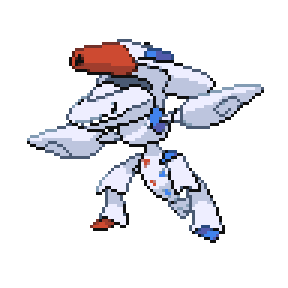
Togesect are drawn to celebratory feelings, seeking out large gatherings of people that are in jubilant moods. They can sometimes be seen flying high over parties, leaving a trail of confetti behind them that drifts to the ground.

Togeplume have soft, squashy bodies that have a texture similar to marshmallows. They release puffs of pollen when hugged, giving off a scent that engenders feelings of affection and calm in those that breathe it in.
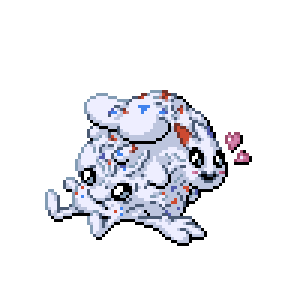
The vivid colours of Togeplume flowers make them popular Pokémon with Aroma Ladies. They take care to raise their Togeplume in serene environments as excessive negative emotion can cause the petals to wilt and lose their colour.
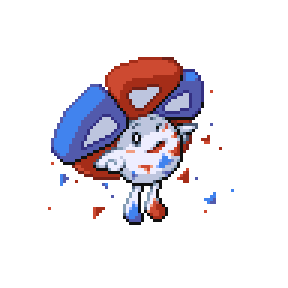
Togeplume skip lightly through meadows, using their broad petals to catch the breeze and drift dozens of meters at a time. They can often be seen befriending Skiploom, playing with them whenever the wind picks up.
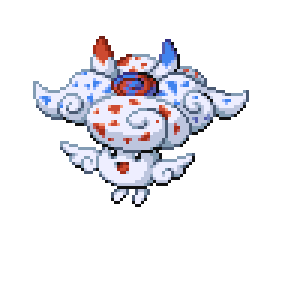
Togeplume are able to twirl their petals at high speed, generating enough lift to enable them to fly short distances. When they sense hostility, they blast the source with powerful Air Slashes.
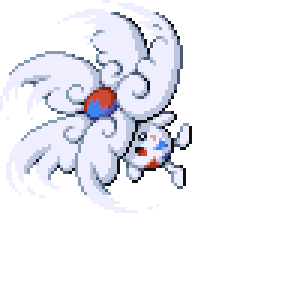
Togeplume pollen has cathartic properties, helping those that breathe it in to process difficult emotions. They are a common companion of therapists, using their powers to reassure and support those struggling with depression.

Togeplume flowers grow rapidly in the presence of strong emotion. The scent of their flower changes depending upon which emotion helped it to bloom. Flowers grown from joy smell sweet, whilst those grown from anger have a rancid scent.
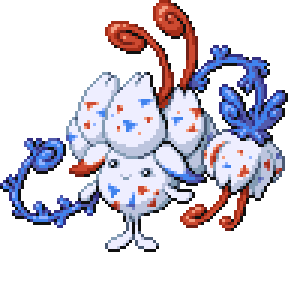
Togeplume seek out elemental stones, carrying them on its head and drawing energy from them. It seems particularly fond of Shiny Stones, its flowers growing especially well when exposed to them.
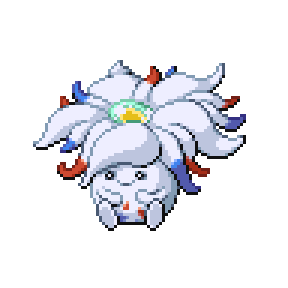
Togeplume's petals are flexible and mobile enough to allow them to be used as wings. Each petal can be flapped independently of the other, granting Togeplume exceptional mobility in the air.
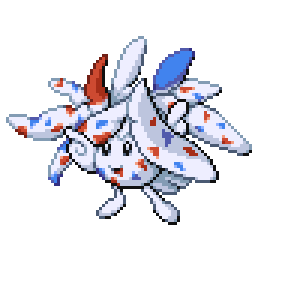
Togeplume rely on the spongy petals around their necks to protect their body from harm while in flight should they ever experience a mid-air collision. Engineers have taken inspiration from their petals to revolutionise the designs of airbags in cars.
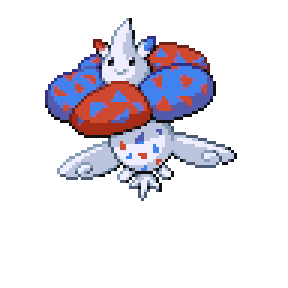
The lily blooming atop Togeplume's head releases a soothing fragrance, calming heightened emotions in those who smell it. It watches for people struggling with their feelings, heading toward them and encouraging the person to smell its fragrance.
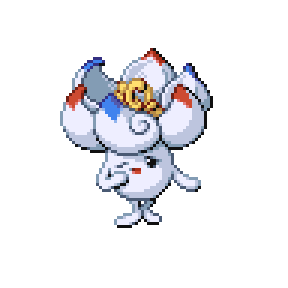
Togeplume enjoy being in the presence of joyous emotions. They gravitate toward carnivals and festivals, dancing happily amongst the people who are partying. Their pollen enhances the joyous feelings when inhaled, encouraging the party to continue.

Togeplume petals have a thin membrane that connects to create a broad canopy above their head. They use this canopy to shelter smaller Pokémon when it's raining, enjoying the feelings of gratitude that radiate from their charges.
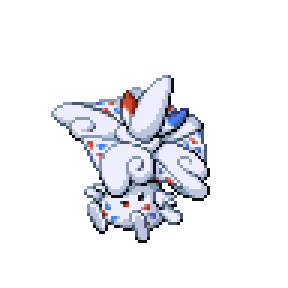
Togeplume absorb negative emotions from those around them, using the energy from the feelings to encourage their flower to grow. While their absorption of the feelings leaves people feeling better, it often causes Togeplume's mood to drop.
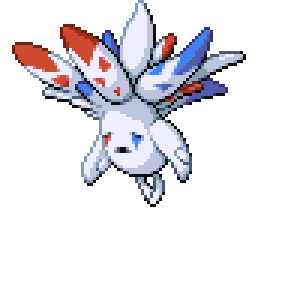
The swirls in Togeplume petals trap moisture from rainfall, allowing them to have easy access to water even during droughts. They enjoy sharing their personal water store with others, basking in the gratitude they receive for their act of kindness.
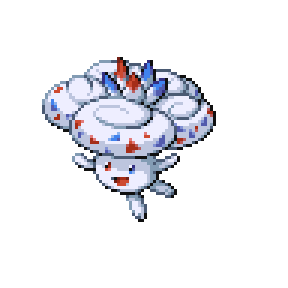
Togeplume petals trail behind them as they run, leaving glittering traces of pollen drifting through the air. Those who breathe in this pollen are filled with an urge to indulge their impulses and to seek out small pleasures in life.
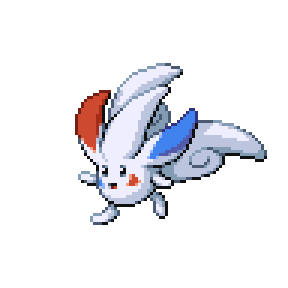
Togeplume float on the breeze using the broad wings that sprout from their head, showing an innocent curiosity in the landscape below them. They seem particularly drawn to upset children, drifting down to them and attempting to befriend them.
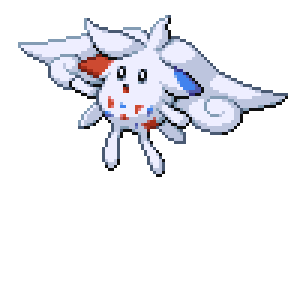
Togeplume petals are light and airy, providing plenty of lift to allow them to easily take to the air with languid flaps of their wings. They take a simple joy in flight, twirling and dancing on the breeze.
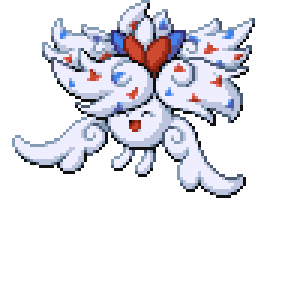
Tea brewed from Togeplume petals has a soothing fragrance that calms those who breathe it in. Though the taste is bitter, it leaves the drinker feeling mellow and relaxed for the rest of the day.

Togeplume's fragrance helps to calm aggressive emotions. It seeks out people who are locked in arguments, deliberately wafting its flower toward them in the hopes that a peaceful resolution will be reached with its help.
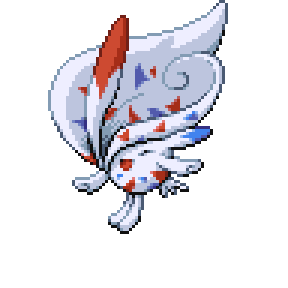
Togeplume petals light up according to the prevailing mood surrounding them. When the mood is generally positive, a soft red glow emanates from them. When the mood is predominantly negative, they give off a cool blue glow.
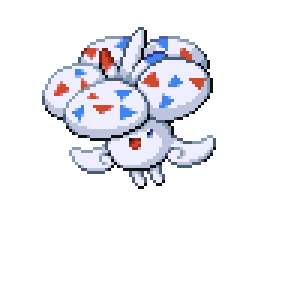
Togeplume petals wilt when they aren't exposed to sufficient positive emotion. Togeplume that are experiencing this wilting struggle to motivate themselves to seek out joyful feelings and are at risk of being caught in depressive spirals.
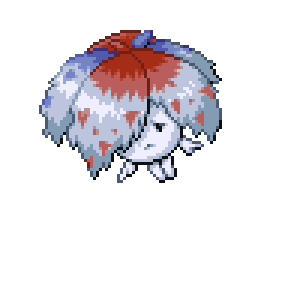
Togeplume take great pride in their flower, happily marching around to show it off to as many people as possible. They bask in the adoration that they receive, using the positive emotion to grow their flower even larger.
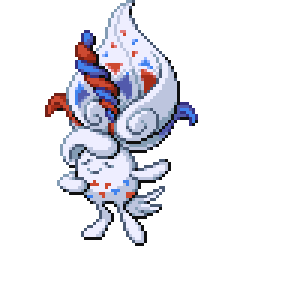
Togeplume rapidly shake their flower when people get close, shedding pollen everywhere. They have become a popular Pokémon during wedding celebrations, their confetti-like pollen scattering into the air when the married couple passes by.

Togeplume's confetti-like pollen makes them popular Pokémon to have at celebrations. They wave their stubby arms excitedly when they're instructed to shed their pollen, greatly enjoying their moment as the centre of attention.

Togeplume petals are rigid and tough at their edges, the blue and yellow tips breaking away easily under pressure. Togeplume scatter these petal fragments like confetti, leaving a colourful trail behind themselves as they walk.
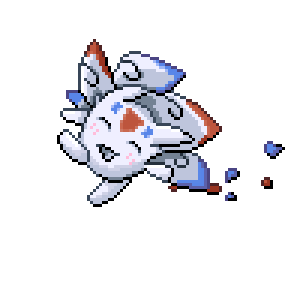
Togeplume petals are far lighter than they appear, with their structure being spongy and filled with air. When strong winds blow through, Togeplume jump into the air and catch the breeze, allowing themselves to be carried to new feeding grounds.
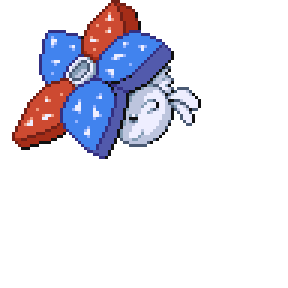
Togeplume can be used within nurseries to care for young children because of their gentle nature, making them well-suited to the work. The scent of their flower has a soporific effect, lulling the children who smell it to sleep when it's naptime.

Togeplume pollen is used to colour fireworks. Fireworks that are launched containing their spores inspire powerful feelings of joy in those who see them.
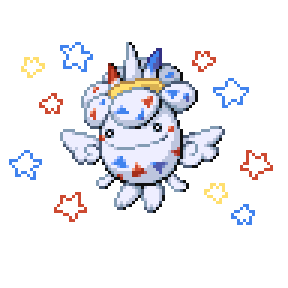
Togeplume flap their petals in time with their dance moves, putting on shows for the entertainment of other Pokémon. They enjoy the attention their performances draw to them, putting all their effort into being as fun as possible to watch.
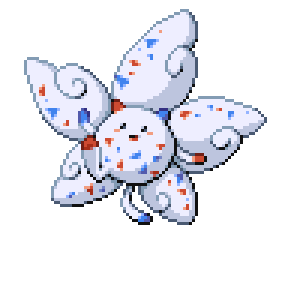
Trainers are advised to make use of eye protection whilst training Togeplume due to the Pokémon's habit of launching colourful bursts of pollen into the air. They launch these pollen bursts when they receive praise, celebrating the positive attention.

Togeplume petals are a popular ingredient at high-end restaurants. Their petals induce feelings of joy and positivity when ingested, their effects making themselves known even in the most unappetising meals.
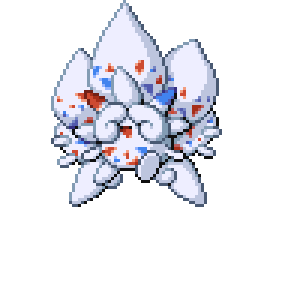
Togeplume use the broad structure growing from their head as a hang glider, leaping from high cliffs and drifting for miles. They will sometimes offer smaller Pokémon a ride, enjoying getting to share the experience of flight with others.

Togetta perform dazzling dance performances, their spins and twirls being accompanied by a soulful song. Those who watch a Togetta perform find themselves feeling calmed and full of goodwill toward others for days afterwards.

Sandeen live in lakes that regularly dry out over the summer months. They are able to endure these dry periods by curling their fins in on themselves and letting their scaly skin face the elements, preserving their moisture until the rain returns.

Sandotto soar through deserts in search of food, catching warm updrafts to travel great distances. They have a special second eyelid that protects them from airborne sand, allowing them to fly through sandstorms without ill effect.

Sandpede's bodies are formed of several interlocking segments protected by thick keratinous plates. The tips of their body segments secrete a potent poison that affects anything that touches them.
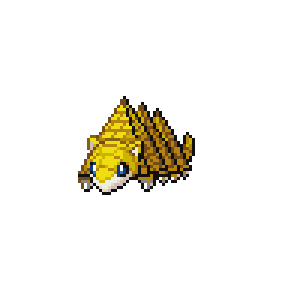
Sandpede's bodies are formed of several interlocking segments protected by thick keratinous plates. The tips of their body segments secrete a potent poison that affects anything that touches them.

Sandoom can be found in the desert around oases, spending the day soaking up the sun. The strong smell of a field of Sandoom was historically used to help desert travellers find water from great distances away.

Sandtrio curl around one another when they find themselves under attack, protecting their bellies and presenting their tougher, scaled backs. They can roll together while balled up, using their three tails to help direct their Rollout.

Sandnine's scaly skin helps to protect them from sandstorms, allowing them to race through the desert without needing to shelter from poor weather. They sometimes serve as mounts for Pokémon Rangers patrolling the desert for poachers.

Yancargo creep through open plains in search of food, making tiny snapping noises with their tendrils as they move. They are capable of sudden bursts of speed by tensing their body, releasing the energy in an abrupt leap at their food.
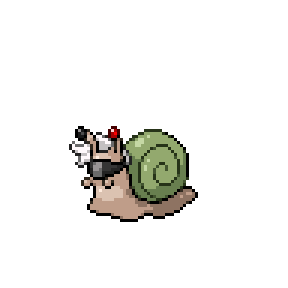
Yanras feed on tree sap, using their sharp mandibles to pierce through bark to get to the sap inside. Swarms communicate with one another by loudly whirring their wings on their abdomen, filling the forest with a low droning buzz.

Leafcargo appear to hold a grudge against horse Pokémon, going out of their way to attack Ponyta and Rapidash on sight. Their shells slow them down, however, preventing them from being able to keep up with the speedy Pokémon.
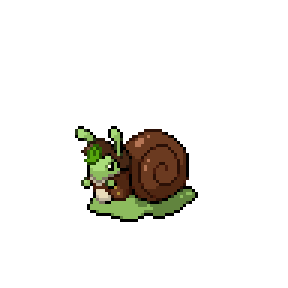
Glacetu use their psychic powers to produce beautiful auroras. They are said to be able to read the future in the dancing lights their powers create.
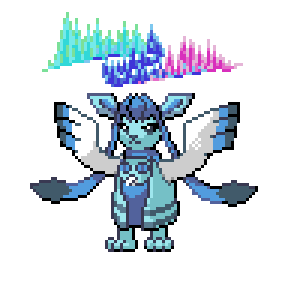
Glacequaza live high up in the atmosphere and make their homes amongst storm clouds. Their bodies are so cold that they cause the clouds they live in to drop in temperature, creating harsh blizzards.
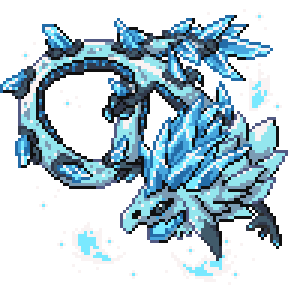
Glacequaza live high up in the atmosphere and make their homes amongst storm clouds. Their bodies are so cold that they cause the clouds they live in to drop in temperature, creating harsh blizzards.
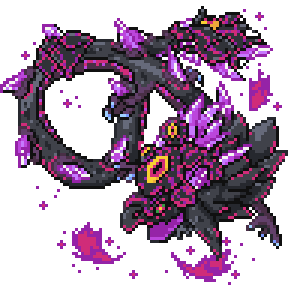
Mamochu live in harsh arctic environments, relying on their bulk and layers of fat to protect them from the cold. During clear weather they shoot bolts of electricity into the sky to communicate across long distances.

The flames streaming from the bodies of Mamota are cold to the touch, sapping heat from anything they come into contact with. Though they're strong and reliable, the risk of hypothermia means it's not advisable to ride them.

Poryeon are technopaths, capable of using their psychic powers to interface with machines and code. Their powers are highly disruptive to electronics though and can result in widespread coding bugs.
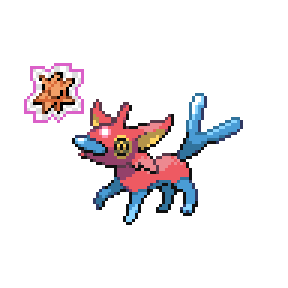
Poryeon are technopaths, capable of using their psychic powers to interface with machines and code. Their powers are highly disruptive to electronics though and can result in widespread coding bugs.

Poryeon are technopaths, capable of using their psychic powers to interface with machines and code. Their powers are highly disruptive to electronics though and can result in widespread coding bugs.
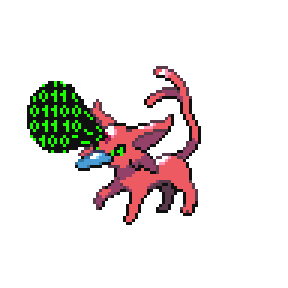
Poryrow exist in digital spaces, soaring across the world through computer code and manifesting in the internet. They are territorial and will fight with one another, causing glitches and crashes in computers, much to the frustration of programmers.
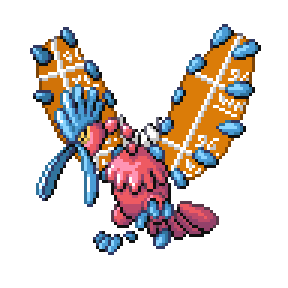
Porytias fly through cyberspace in small herds, travelling from computer to computer at high speed. Their presence is disruptive to software, and they leave a wake of corrupted files behind them as they travel.
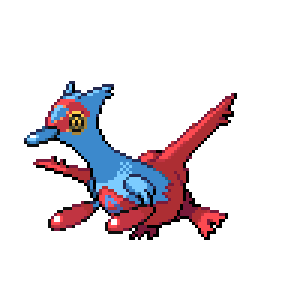
Porytias fly through cyberspace in small herds, travelling from computer to computer at high speed. They sometimes take programmers by surprise when they abruptly emerge from their monitors, returning to real space with a happy cry.

Treepod camouflage themselves amongst the fruits of tropical trees, hanging amongst the fruit until they are ready to evolve. They have very limited ability to defend themselves and will simply drop out of trees to try and escape danger.
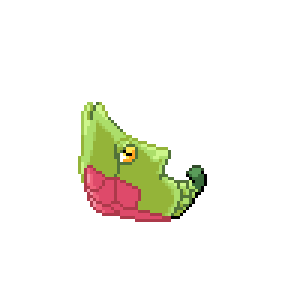
Clusters of Treecargo make their home high in the treetops, avoiding the forest floor in order to keep themselves safe from predators. They can be seen by the light of their shells at night, creating the illusion that the trees bear glowing fruit.

Families of Treerina claim entire groves of trees as their territory, violently defending them from other Pokémon. Their sharp claws allow them to scurry up and down tree trunks without issue, letting them chase away rivals with ease.

Treewhirl attach vines to their body using sticky mucus, carrying them back to their home to weave into a sturdy nest. Treewhirl kept in cities enjoy engaging in similar behaviour, and Trainers are advised to keep power cables out of their sight.

Grocargo shells ooze a thick amber-like substance that, when dried out and purified, is a popular ingredient in many cosmetic products. Beauties in Hoenn are particularly fond of Grocargo infused bath salts.

Grorow are popular amongst arborists thanks to their habit of keeping trees clear of dead growth and parasitic fungi, whilst also roosting within them. The bright red tips of their wings add a nice accent to compliment the green of the tree.
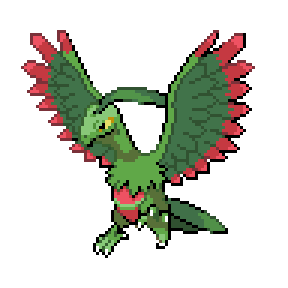
Grorina live in dense jungles, blending into foliage thanks to their chlorophyll-rich hide. They are territorial and will ambush rival Pokémon that get too close, trying to strike at them with toxic spurs.

Sceprow roost at the tops of trees, sleeping with their tail feathers raised and wings splayed out around them. The leafy texture of their feathers help to disguise them amongst the trees as they sleep, making them hard to spot.
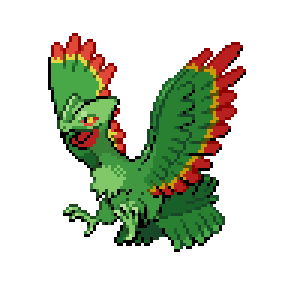
Torchdle have a fiery venom that is caustic to the touch. They prefer not to weaponise it except when genuinely threatened, instead hiding themselves away in tree canopies and within hollows in the trunk.

Torchrak only have a weak poison and rely primarily on mimicry to protect themselves from predators. Their abdomen mimics the appearance of Torchic, relying on the resemblance to the fiery Pokémon to ward away danger.
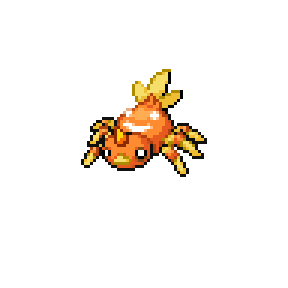
Torchran are affectionate and curious, their warm personalities making them ideal companions in cold climates. The heat radiating from their small bodies helps ward off the chill, bringing comfort to those around them.

Torchiard hatch in clutches and will imprint on the first Pokémon they see. They follow and protect their supposed parent with great enthusiasm.
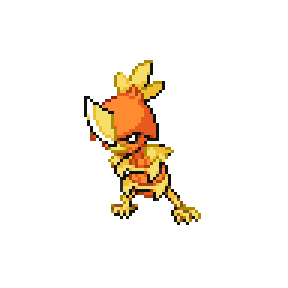
Hoenn Pokémon Professors initially considered Torchkoth to be an appropriate starter Pokémon for new Trainers thanks to its docility and quick evolution. Unfortunately it is also very difficult to motivate and will sleep entire days away.

Torchoom pollen has incendiary properties, catching fire very easily. Those suffering from hayfever are advised to keep their distance from Torchoom.
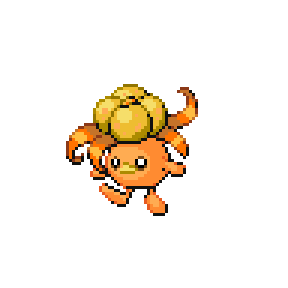
Sandoof use their quills to carry mud to and from the dams they construct in streams. Their quills help to trap moisture, keeping the mud damp and easily shapable so they can reinforce the structures without fear of them drying out prematurely.

A Pokémon that loves to dig through loose soil and sand, Sandroc are often used by construction crews to clear building sites prior to work starting. They enjoy the work but have to be watched closely in case they dig too much ground out.

Sandsian fur is coarse and spiky, making it difficult to pull them backwards out of their burrows when they hide away from predators. If caught in the open, they hiss loudly at their aggressor and swipe with their long, sharp claws.

Sandsian fur is coarse and spiky, making it difficult to pull them backwards out of their burrows when they hide away from predators. Despite their prickly demeanour, some trainers enjoy grooming them and painting their claws vivid colours.

Comrak use their mimicry aggressively, arching their abdomen up high and pretending to be an angry Combusken to spook larger Pokémon. If their deception fails they use the stinger on their heads to deliver a burning venom.
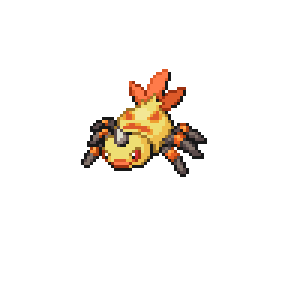
Comiard are obedient combatants, following instructions without hesitation or fear. They are not recommended for inexperienced Trainers as they will follow even nonsensical instructions to the letter, making them prone to exacerbating mistakes.

Comkoth are hard to rouse to take action, preferring to brood over their nests for days on end instead. When they are finally forced to act they use their vicious claws and fight aggressively, trying to end the fight as fast as possible.
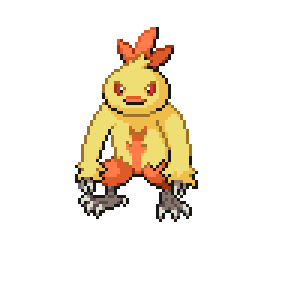
Comroth are aggressive and wilful Pokémon, often racing into battles before their Trainers have even had a chance to issue them instructions. They focus entirely on offense and are not recommended for newer Trainers.
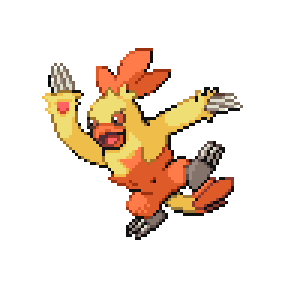
Comoom pollen is incendiary, catching on fire as soon as it makes contact with the air. They spout these jets of flame regularly, the heat sending granules of pollen travelling hundreds of meters through the air.
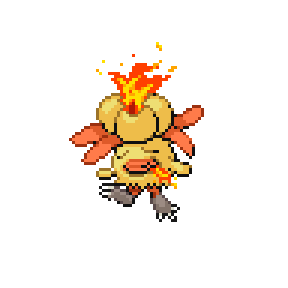
Blados weave webs coated in a poisonous compound that quickly incapacitates any who touch it. Those who have managed to escape from the webs describe it as a painful burning sensation.

Bladile believe themselves to be unequivocally the strongest Pokémon in any competition, and they will fight as though there is no chance of them losing. This can make them obstinate and difficult to control, willing to fight anything.

Bladile believe themselves to be unequivocally the strongest Pokémon in any competition, and they will fight as though there is no chance of them losing. This can make them obstinate and difficult to control, willing to fight anything.
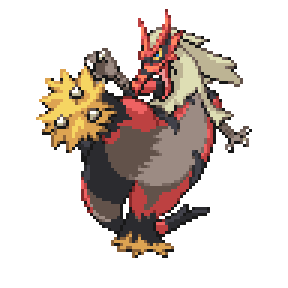
Blatoise superheat water within their shell, keeping a store of steam constantly ready. They can shoot jets of scalding steam out of their cannons when fighting, using the pressure both offensively and to create smokescreens.

Mudcargo dig burrows at the bottom of river beds, hiding the entrance amongst the pebbles and rocks that line the bottom. They use their shells to disguise themselves when entering and exiting their burrow, pretending to simply be stones.
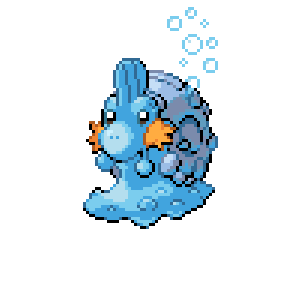
Mudnub dig through river mud in search of worms and bugs to feed on, their whiskers picking up even the faintest scent of food. Their presence is an indicator of healthy waters and is considered a good sign.

Mudpix have seven fins sprouting from their tail that help them swim through the water at high speed. During battles, they can spray a concentrated blast of scalding steam at their opponents.
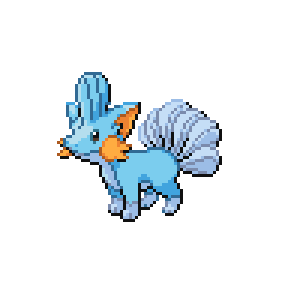
Mudroth use their powerful forelimbs to dig burrows into the muddy banks of rivers, raising their young in the safety of their nests. They are quick to grow agitated as even passing a curious glance into their burrow provokes them into a rage.

First found in sunken ruins off the Hoenn coast, Mudolett congregate in long-lost cities drowned by the ocean. Researchers debate if they served in these cities during their prime or arrived after their destruction.

Mudras kept by Trainers are prone to fungal infections if not allowed to periodically wash themselves with river water. They are friendly Pokémon and enjoy being groomed, attempting to return the favour and splashing at their Trainers playfully.

Mudape become filled with energy when they grow angry, their fins constantly trembling as they restrain themselves. The constant agitated movements keep them ready to swim at a moment's notice, bursts of energy propelling them through the water.

Marshew hide within mangroves, swimming through the muddy waters with languid swishes of their long tail. They are playful Pokémon and enjoy levitating balls of water, throwing them at confused onlookers before darting out of sight.

Marshnub feed along the bottom of lakes and rivers, eating detritus that has fallen out of the water. They are generally slow moving, but are capable of bursts of speed by rapidly fluttering their tail fins.
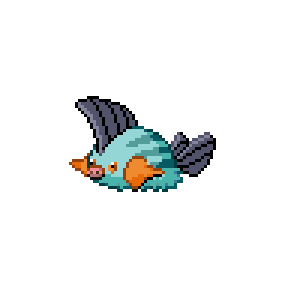
Swampicate dig out extensive burrow networks in the banks of lakes and large rivers, entire family units living within a single burrow. They are adept swimmers and will travel great distances through the water in search of food.
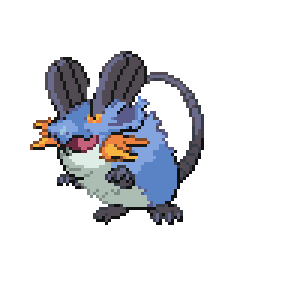
Swampcargo trawl through the mud in deep lakes, stirring up sediment in their search for food. Their presence helps prevent the lake from stagnating, and the bubbles that escape from their shell re-oxygenate the water above them.
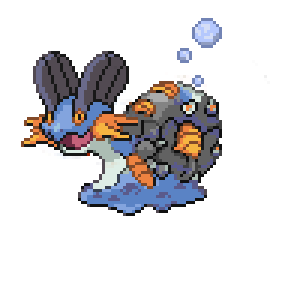
Swampape train themselves by battling one another on tidal flats, fighting to keep their footing on the treacherous muddy sands. They seemingly enjoy being exposed to the elements and angrily tear down any flood barriers that people try to put up.
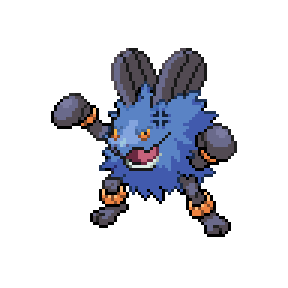
Ralee have poor eyesight and rely on their empathic powers to sense where their opponents are. They lash out from a distance with their long, stretchy legs.
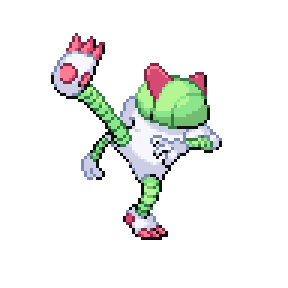
Ralrogue enjoy spending time watching professional fighting matches of all kinds, from Pokémon battles to boxing to wrestling. They get easily swept up in the emotion of such fights and will try to mimic the moves they see.

Ralrogue enjoy spending time watching professional fighting matches of all kinds, from Pokémon battles to boxing to wrestling. They get easily swept up in the emotion of such fights and will try to mimic the moves they see.
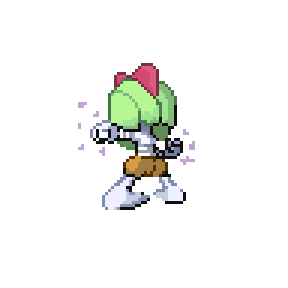
Ralbat navigates by projecting out psychic waves into its environment. It senses the returning signals with a trio of sensitive structures on its head. It can differentiate between living things by feeling their thoughts, letting it avoid danger.
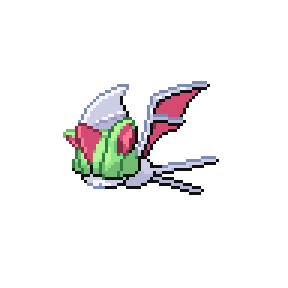
Kirlia are a favourite for Pokémon contests, their dancing being well co-ordinated and aesthetically pleasing to behold. They sense one another's emotions and can dance in synchrony with one another.
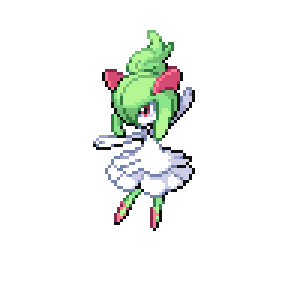
Kireanie lure prey by projecting images of safety and warmth with their psychic powers, tricking targets into approaching. Once close enough, they strike with toxic stingers, revealing the ruse too late for their victims.
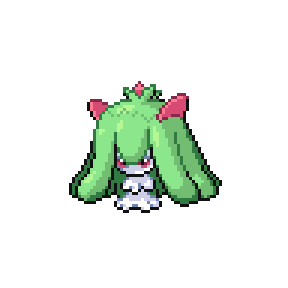
Kirmoth flutter through the night in swarms, finding themselves drawn to strong emotions. Those suffering from nightmares find themselves waking to the sound of Kirmoth wingbeats at their window.
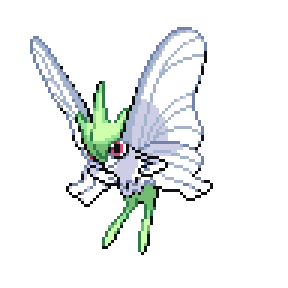
Gardelia move with unearthly grace and poise, their dances bringing even the harshest critics to tears. Gardelia are a common feature on winning Pokémon Contest teams.
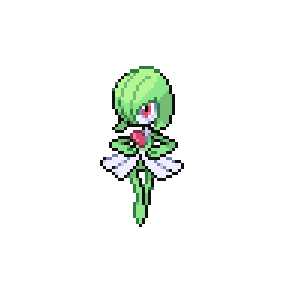
Shedpod will sometimes form from the chrysalis left behind when a Butterfree emerges from its cocoon. Researchers have had a hard time determining how Shedpod become animated with some travelling to Hoenn to study Ninjask evolution for comparison.

Shedpod will sometimes form from the chrysalis left behind when a Butterfree emerges from its cocoon. Researchers have had a hard time determining how Shedpod become animated with some travelling to Hoenn to study Ninjask evolution for comparison.

Shedle live a sedentary lifestyle, barely moving from their positions on their home tree. Researchers argue over how such a small Pokémon can be in the open without hiding from predators, the leading theory being that they are simply unpalatable.

Shedotto are found in and around abandoned Pokémon nests, brooding over the empty structures as though protecting something that's no longer there. They show little reaction to outside stimuli and appear to need no food or water.

Shedcargo can be seen eerily sitting atop lava bombs in the wake of an eruption. Entire fields of Shedcargo are found on the flanks of particularly active volcanoes.

Shedrow roost at the tops of trees, sleeping with their tail feathers raised and wings splayed out around them. The leafy texture of their feathers helps to disguise them amongst the trees as they sleep, making them hard to spot.
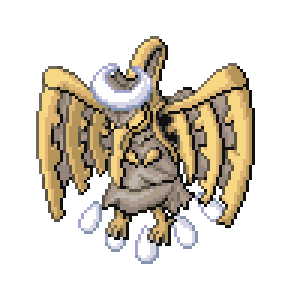
Shedchu appear during thunderstorms, their bodies attracting repeated lightning strikes. Despite their conductivity, they never appear to show damage from the bolts that strike them; instead they remain motionless within the storm until it passes.

Shedking float ominously at the boundaries between one thing and another, such as the shores of a lake, in doorways between rooms, or at the thresholds of buildings. Though they remain motionless, they engender enough unease that few dare pass them.
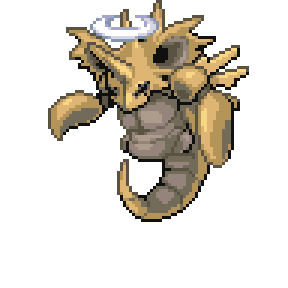
Shedjask have failed to fully pull free of their chrysalises as they become adults. The animated spirits that would normally produce a Shedinja instead bond with Shedjask, trapping it in increasing layers of failed sheds.

Shedlett seem to appear overnight in fields, remaining eerily still as they sit half-emerged in their burrows. Their appearance usually coincides with the arrival of bug Pokémon swarms, a coincidence Pokémon researchers are investigating.
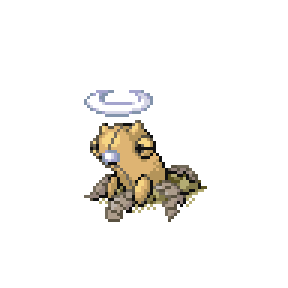
Shedlett seem to appear overnight in fields, remaining eerily still as they sit half-emerged in their burrows. Their appearance usually coincides with the arrival of bug Pokémon swarms, a coincidence Pokémon researchers are investigating.
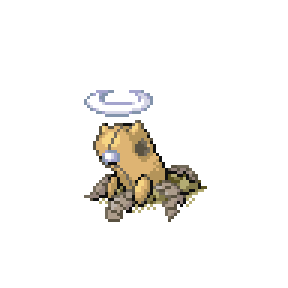
Shedlett seem to appear overnight in fields, remaining eerily still as they sit half-emerged in their burrows. Their appearance usually coincides with the arrival of bug Pokémon swarms, a coincidence Pokémon researchers are investigating.

Wild Shedape are often found floating in the centre of destroyed trees and boulders. They are only ever seen in the aftermath of the destruction, leading to a theory amongst some researchers that they are drawn to the residual rage in the area.
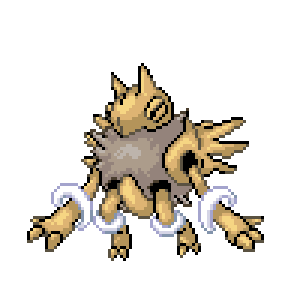
Nidoba use their sharp incisors to bite through the bark of a tree's trunk and feed on the sap within. They prefer to feed on toxic species, incorporating the poisons into their own bodies to deter predators.

Nidotoise have a small number of spines coating their head to deter people from touching their body. The spines are coated with an aggravating toxin and are the only part of their head that stays sticking out of their shell when they withdraw.

Kectom is able to adapt itself to different electronic signatures, altering its own frequencies to allow it to exist within electrical equipment without disrupting it. Some Trainers don't even realize their Pokédex is playing host to a Kectom.

Belursa are artificial Pokémon that were created with the hopes that they could be used to safely study the behaviours of more dangerous wild Pokémon. They have a strong desire to be loved and use discarded fabrics to try and look like real Pokémon.

Belplume flowers absorb sunlight to convert it into energy to fuel their constant wanderlust. The eye at the centre of their flower can detach and float on its own should they absorb enough energy, allowing them to seek out new places to explore.
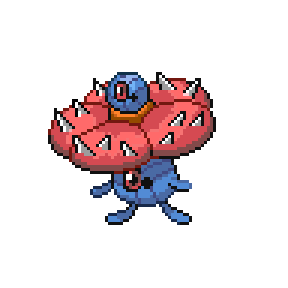
Belsian whiskers are attuned to specific radio frequencies. They emit a constant hum of infrasonic that is only detectable by radio receivers, allowing them to coordinate together without needing to see one another.

Belnine packs move in perfect synchrony with one another as they hunt, even when there is no obvious way for them to know where the other members of their pack are. Researchers have found they emit radio waves at a specific frequency to coordinate.

Metgar uses its gigantic claws to cling to the roofs of caves, 'walking' across the ceiling to traverse in the dark. When it needs to, it can clumsily fly through manipulation of magnetic fields.

Metfairy use their sharp claws to dig through cliff faces in search of Moon Stones, relying on their tough, steely body to protect themselves from any rock falls. Miners commonly use them to help them in their operations.

Metplume petals are made of thick metal plates. When they feel endangered, they lower their head to protect their body, directing their sharp spike at whatever is attacking them.
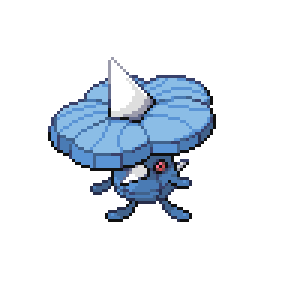
Metsian claws are sharp enough to tear through stone, their swipes leaving nasty scratches on their foes. They're able to use their claws to climb almost any surface, though they are not always able to get themselves back down again.

Metamortar have an iron-clad body that contains a furnace that burns as hot as the surface of the sun. They can launch controlled blasts of this intense heat from their arms.
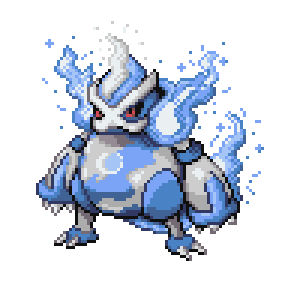
Metamortar have an iron-clad body that contains a furnace that burns as hot as the surface of the sun. They can launch controlled blasts of this intense heat from their arms.
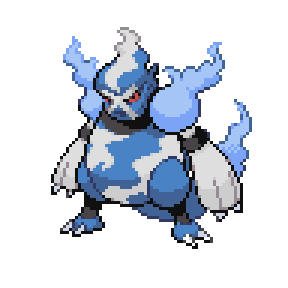
Though cumbersome in flight due to its weight, Metacor is a surprisingly adept glider. It lives near cliffsides and high peaks, using those to launch itself and use its bulk to barrel into other Pokémon or Trainers.

Metanine race around their opponents at incredible speed, waiting for the perfect moment to strike. When they spot an opening, they charge forward with a powerful Take Down, using the full weight of their metallic bodies to try and secure victory.

Bifing can be found around abandoned natural dams, feeding off the rotted wood. The gases it produces are highly flammable, leading some enterprising Trainers to try and harvest the gas as fuel to sell.

With teeth that are constantly growing, Bishrew will gnaw at trees to wear their teeth down. The falling trees will sometimes land on top of them, Bishrew curling up into a ball to endure the collapsing trunk.

Bidoof have incisors that grow at a prodigious rate. They try to gnaw through wood as quickly as possible in order to keep them under control. Unfused Bidoof will try and help Bidoof, bringing them plenty of logs to chew on.

Forests with large populations of Bidos have large open glades within them, the trees that would have grown in the glade having been rammed down by them. The fallen trees are pulled together to make shelters from the weather.

Biwig live in densely forested regions, gnawing through the bark of fallen trees for sustenance. Their fur is often coated in dense layers of mud, with small sprouts of plant life growing from it.

The fungus growing on the body of Biras is remarkably high in lignin. This gives it a very wooden texture. In order to fuel the growth of these fungi, Biras will seek out tree bark as its primary food source.

Bisect feed on dead wood and other plant matter, incorporating the lignin into their body to create a protective skin that doubles as camouflage. Their preference for dead wood leaves them vulnerable to fungal infection.

Bimantis work tirelessly to replant tree groves that have been over-harvested. They gather the nuts and seeds of nearby tree species and plant them haphazardly in open spaces in the hopes of reforesting the area.
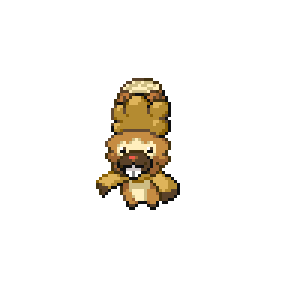
Biape grow irrationally angry at the sound of running water, seeking to stem the flow of streams and rivers in whatever way they can. This often results in them tearing down trees and creating impromptu dams.

Biwrath are popular amongst lumberjacks for their tireless work ethic. They use their powerful arms to strike tree trunks, toppling the trees to be used for lumber.

Bifetchd gnaw at the plants in their environment to create sticks that they can carry with them. They don't use the sticks for fighting, instead waving them about in competition with others to see who has the largest stick.
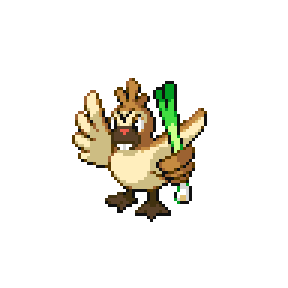
Bifetchd gnaw at the plants in their environment to create sticks that they can carry with them. They don't use the sticks for fighting, instead waving them about in competition with others to see who has the largest stick.
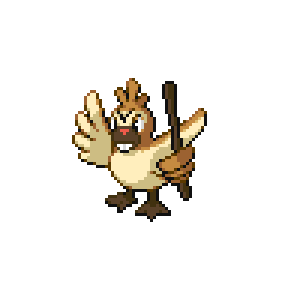
Spirifa can sometimes be found in the aftermath of a meteor shower, lying motionless in the craters left by the impacts. The gas that rises from their bodies shimmers with over one hundred lights, glittering like the night sky.
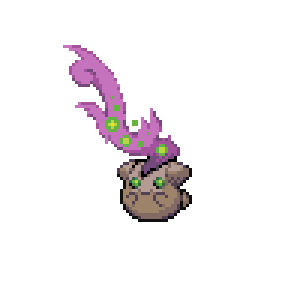
Spiriesect inhabit stone discs, manifesting around the disc and launching blasts of spiritual energy at those they take a dislike to. Researchers have found that the discs can be placed on other objects, allowing Spiriesect to possess those as well.

Spiriwhirl possess old statues of Pokémon, using them as though they were their own body. The spiralling vortex of spiritual energy at the centre of the statue gradually consumes the surrounding stone, forcing Spiriwhirl to periodically seek new hosts.

Lucadrill can sense the aura of other Pokémon and will seek out the strongest aura within their territories, flying toward them to battle. Their eagerness to fight makes them popular companions for Black Belts.
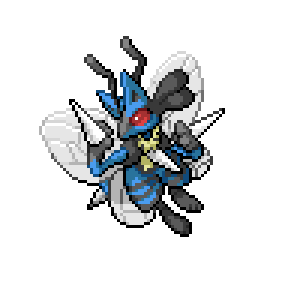
Lucadrill can sense the aura of other Pokémon and will seek out the strongest aura within their territories, flying toward them to battle. Some Lucadrill interact strangely with rogue Mega energy, their speed and aggression dramatically increasing.
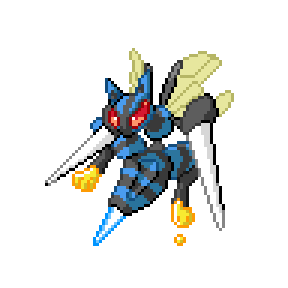
Lucatata are sensitive to the aura of others, their whiskers twitching when they sense particularly strong emotions. They use this sense to evade danger, darting for cover whenever they feel strong anger or aggression.
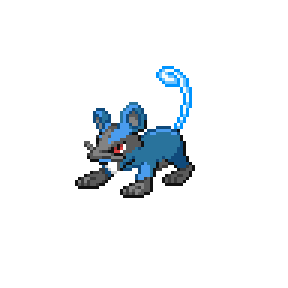
Lucarino have the ability to sense the auras of other Pokémon, reading their intent through the intensity and texture of the aura. Their own aura spikes with hostility and can be manifested to attack if they sense other Pokémon of similar strength.
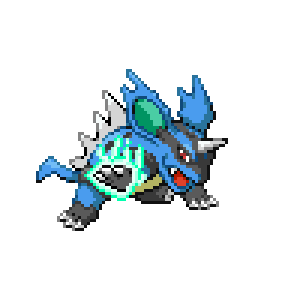
Lucarino have the ability to sense the auras of other Pokémon, reading their intent through the intensity and texture of the aura. They are peaceful when approached by Pokémon or people whom they read to be weaker than they are.
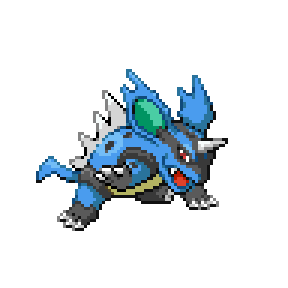
Lucaki are a popular status symbol in Kalos, with many aspiring Ace Trainers accessorising their outfits by attaching them to their bag. Lucaki enjoy helping their Trainer carry important objects, taking care to hold precious stones tightly.

Lucaki are popular in Kalos, with many aspiring Ace Trainers accessorising their bags by attaching Lucaki to them. Lucaki enjoy assisting their Trainers in battle, bringing them important items and saving precious seconds of rifling in bags.
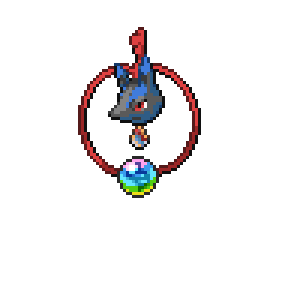
Lucaki are a popular status symbol in Kalos, with many aspiring Ace Trainers accessorising their outfits by attaching them to their bag. They are often entrusted with valuable gem stones in the safe knowledge that they will guard them fiercely.

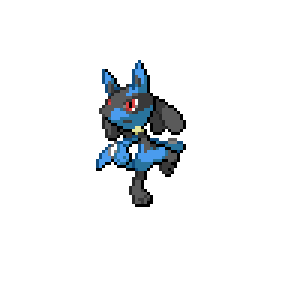
Lucaolu are combatants that are eager to learn, spending most of their time training and shadowing other Fighting-Type Pokémon to mimic their techniques. They lack the reach of larger Pokémon, meaning they struggle to copy every technique.
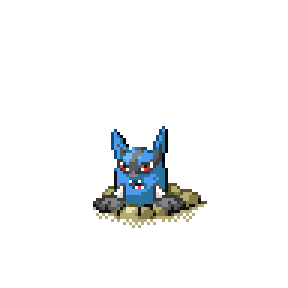
Lucalett are drawn to strong Trainers, able to sense their aura from great distances away. They tunnel toward anyone that catches their interest, popping up in front of them and insisting on a battle.
Lucanine are fascinated by people with strong auras, seeking them out to watch them curiously. They can sense aura from a great distance and, when they sense another interesting aura, will race many miles to find the new subject of their fascination.

Gibnub dig through loose soil and debris at the foot of glaciers in search of the remains of Pokémon that have perished in the harsh weather. They have an acute sense of smell and Rangers use them to help find lost Hikers.

Gibnub dig through loose soil and debris at the foot of glaciers in search of the remains of Pokémon that have perished in the harsh weather. They have an acute sense of smell and Rangers use them to help find lost Hikers.
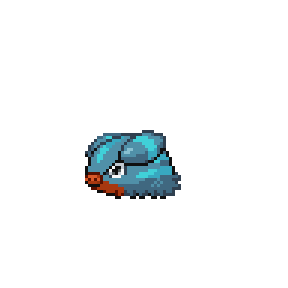
Gibizard nest in small family groups in craggy terrain, choosing isolated locations to lay their eggs. Though voracious hunters, they are clumsy in the air and easy to evade if spotted early.

Gabnub aggressively hunt through shallow soil and scree around cliff faces, using their acute sense of smell to hone in on food. When they find something they think they can eat, they bite at their prey and try to wrestle it underground.

Gabnub aggressively hunt through shallow soil and scree around cliff faces, using their acute sense of smell to hone in on food. Some Gabnub sport a large fin on their backs, letting them move faster at the expense of being more visible.
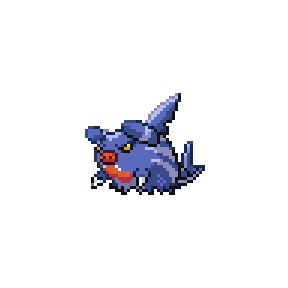
Despite their comparatively stubby limbs and blunt claws, Gabrino are adept at burrowing rapidly through topsoil. Their pyramid-shaped head and powerful tail let them swim through the ground, just their spines visible above the surface.
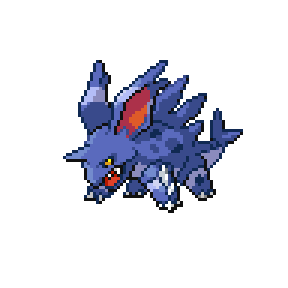
From a distance, Gabizard are easily mistaken for Gabite. They are larger and more aggressive than Gabite, spouting blue flames from their heads when angry.

Garmence make their homes high in the mountains, digging out a cave to make their lair in with their powerful front claws. They are incredibly dangerous Pokémon when provoked, prone to triggering rockslides when enraged.

Venulee have photosynthetic cells laced throughout their skin that enable them to gain energy directly from the sun. They use this energy to fuel lightning fast kicks, maintaining a speed that is hard to match by their opponents.
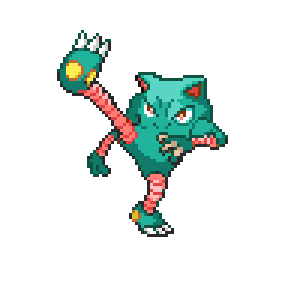
Venuhorn gather soil in the crags and crevices between their armour plates. The plants that grow in amongst these crags are tended to by Venuhorn. They take their time finding both sun and rain to keep them healthy.
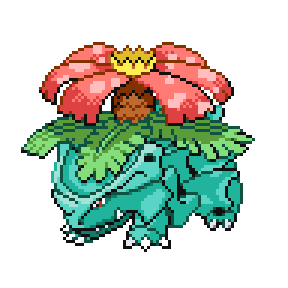
Venudra live in tropical estuaries, their brightly coloured fins helping them blend in with leaves and petals floating at the surface of the river. They are aggressive when disturbed, shooting concentrated streams of water at their aggressor.
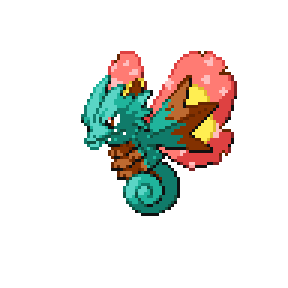
A Pokémon typically found in tropical regions, Venudos is known as the herald of the monsoon season. They are normally sighted ahead of or during torrential downpours and floods, and as a result, they have a reputation for violence and destruction.

A Pokémon typically found in tropical regions, Venudos is known as the herald of the monsoon season. They are normally sighted ahead of or during torrential downpours and floods, and as a result, they have a reputation for violence and destruction.
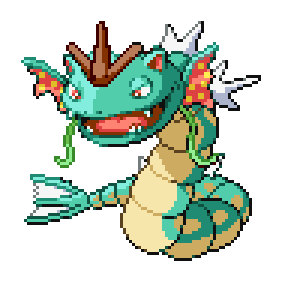
Venuquil produce highly flammable pollen from the plants growing along their body. Their body temperatures are high enough that they will sometimes inadvertently cause the pollen to spontaneously combust.

Venuquil make their homes around the fertile soil at the base of volcanoes. They make use of the nutrients in the soil to grow a vivid petal crown to display to one another.
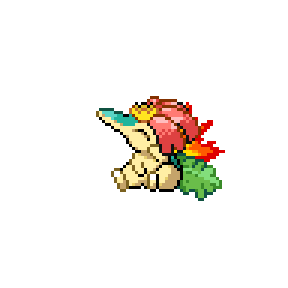
Venulava have a coating of bark across their stomach to help protect them when they dig underground. When they sleep they do so with their head resting outside of their burrows, letting their petals drape around them and absorb sunlight.
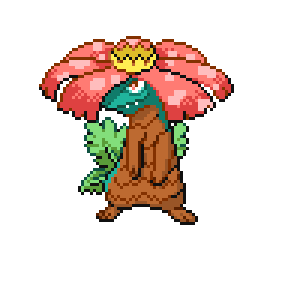
Even in the depths of winter, the plants surrounding the nape of Venulosion are able to keep growing thanks to their high internal body temperature. They flash their petals to signal at one another and resolve territorial disputes without fighting.

Even in the depths of winter, the plants surrounding the nape of Venulosion are able to keep growing thanks to their high internal body temperature. The colouration of the fronds they grow is a good indicator of the Pokémon's health.

Venulosion emit a constant cloud of nearly invisible pollen from their backs. When they are preparing to fight, they light a small spark from their fur that ignites this pollen cloud and creates an intimidating, fiery display.

Venulosion emit a constant cloud of nearly invisible pollen from their backs. When they are preparing to fight, they light a small spark from their fur that ignites this pollen cloud and creates an intimidating, fiery display.

When at rest, Venubat can be easily mistaken for Venusaur. They use this similarity to safely hide from Pokémon that wouldn't attack the large Grass-Type but would be dangerous to them, the deception only being revealed when they take off.

The pollen that comes from the flowers sprouting out of Venuturn is both hydrophobic and luminescent. Venuturn leave a glowing trail in their wake as they swim thanks to this pollen, creating the illusion that they are swimming through a night sky.

Venuturn live in low visibility rivers that are thick with mud and silt. Their flowers typically trail at the surface to absorb sunlight, but they can react with water to create a potent electrical charge.

Venuwoodo are popular Pokémon for stage performances as their vividly coloured flowers and long draping leaves make very eye catching. It takes a lot of coaching for them to perform for larger crowds as they tend to freeze up with too much attention.
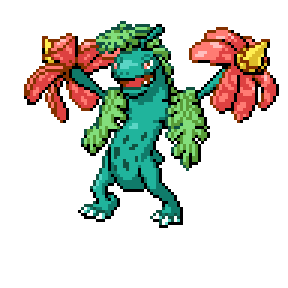
Venubull are popular Pokémon amongst some Pokémon Contest Trainers, often dressed up in all sorts of unique outfits. They are patient with their Trainers during this, happy for the attention.

Venubull fluff up their petals and leaves to make themselves look larger and more intimidating than they are. They are good at scaring off smaller Pokémon, but they struggle to convince larger Pokémon that they're a real threat.
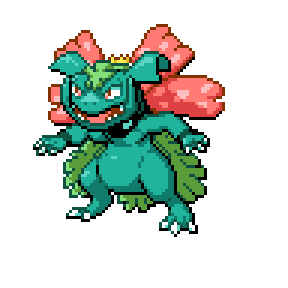
Venubull fluff up their petals and leaves to make themselves look larger and more intimidating than they are. Venubull with less developed petals end up being more aggressive as compensation for their less threatening appearance.
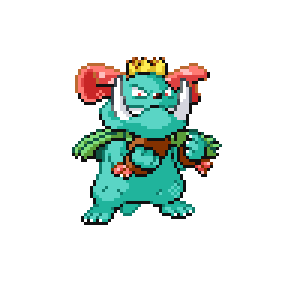
Venucargo live on tropical islands that have high levels of volcanic activity. They travel out onto cooling lava flows, a special enzyme from their bodies dissolving the basalt and letting them absorb the rich nutrients to fuel their flower's growth.

Venunub slowly shuffle through leaf litter in search of fungi, using their acute sense of smell to do so. They are so slow moving that plants take root in their back, sprouting into full flowers and helping them stay safe through camouflage.

Venuswine keep themselves warm during the colder months by growing a dense coating of leaves from the symbiotic flower growing on their back. These leaves provide a food source in the summer months, but have a habit of obstructing their vision.
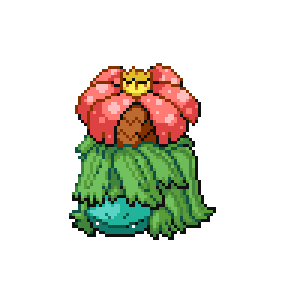
Venullery are able to leave the water for prolonged periods of time, their symbiotic plants letting them breathe despite being in the air. They'll use this ability to escape larger Pokémon, pulling themselves into bushes to hide until they feel safe.

Venullery are able to leave the water for prolonged periods of time, their symbiotic plants letting them breathe despite being in the air. They'll use this ability to escape larger Pokémon, pulling themselves into bushes to hide until they feel safe.
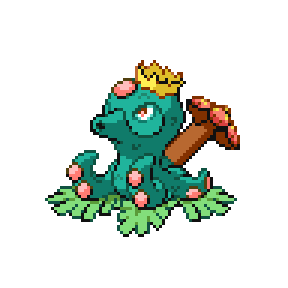
Venuphan will find a bush to sleep in and are well disguised by their flowers and leaves when resting. When awake, they have a habit of using their incredible strength to topple trees to get to the fruit that would otherwise be out of their reach.

The pollen is a powerful irritant and can cause paralytic, soporific, or even poisonous effects when inhaled.
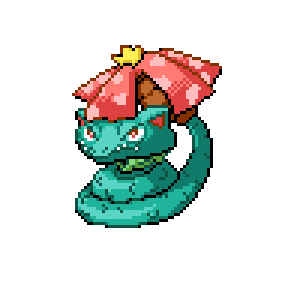
Adventurous Trainers are advised to take care when traversing jungles that are home to Venubok. Their colouration and flowers make them blend in to the undergrowth and it is easy to accidentally step on one, which will always cause them to strike.
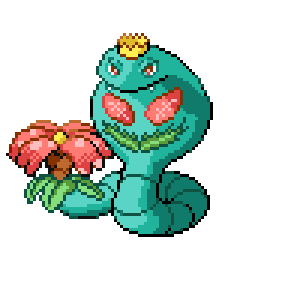
Venubok usually keep their petals flush to their neck to make it easier for them to slither around. When they want to scare off a rival they will flash their petals into a full flower, making themselves abruptly look larger.
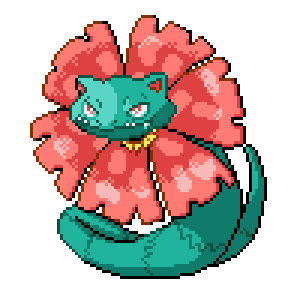
Adventurous Trainers are advised to take care when traversing jungles that are home to Venubok. Their colouration and flowers make them blend in to the undergrowth and it is easy to accidentally step on one, which will always cause them to strike.

Venuswine have symbiotic algae living in their skin ensuring that they have a source of food even in the winter. During the summer, they produce an impressive leafy facial display along with growing gigantic flowers on their back.
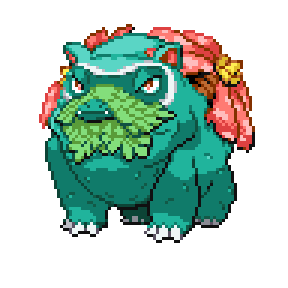
Venuswine have symbiotic algae living in their skin ensuring that they have a source of food even in the winter. They grow a fine shaggy coat of moss in the winter, and some grow thick woody tusks.

Venulia are a common companion for Beauties intent on winning Pokémon talent contests. They have an innate sense of timing that makes them excellent performers, their petals and leaves flaring out as they pirouette across the stage.

Venuvoir have a love of gardening and will spend hours working alongside their Trainer to cultivate beautiful fields of flowers. Their empathic powers enable them to sense when a given flower needs extra care and attention.

Venuvoir have an empathic link to flowering plants and are drawn to areas that are in full bloom. They use their powers to aid them in battle, wielding whirls of petal blossoms as dangerous attacks.

Venusaur are Pokémon that have gathered enough energy from sunlight to trigger a partial evolution, most commonly encountered during the winter due to the weaker sunlight. They maintain the confidence and posture of a fully evolved Pokémon.

Venuwig blend in nearly perfectly with jungle foliage, making them extremely difficult to find in the wild. If a Trainer succeeds in capturing one they will find that they make for exceptionally amiable companions.

Venutle can become hyperactive after spending long enough in the sun, rushing with a surprising speed through the forest. They are not mindful of their bulk when doing so and often leave a trail of smashed branches and bushes in their wake.
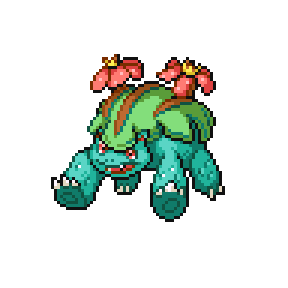
Venuterra support a wide variety of plants on their backs and are sought after by field researchers to get a good sense of the local flora. In tropical regions, Venuterra carry giant, vibrant flowers that draw a variety of Bug-Type Pokémon.

Venuterra support a wide variety of plants on their backs and are sought after by field researchers to get a good sense of the local flora. On small islands they have very low floral diversity, often carrying just a single flowering cycad.

Venuterra support a wide variety of plants on their backs and are sought after by field researchers to get a good sense of the local flora. In dense jungles they carry a variety of shrubs and bushes that make them especially hard to find.

Venuterra support a wide variety of plants on their backs and are sought after by field researchers to get a good sense of the local flora. In temperate regions they carry a variety of flowers protected by trees and are important for pollinators.

Venuterra support a wide variety of plants on their backs and are sought after by field researchers to get a good sense of the local flora. In some rural settlements they are trained and kept as a reliable source of fruit for the community.
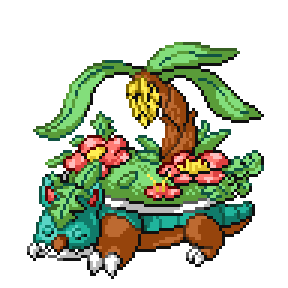
Venuterra support a wide variety of plants on their backs and are sought after by field researchers to get a good sense of the local flora. In warmer regions they will host flowering trees, searching for well lit areas to help them grow.
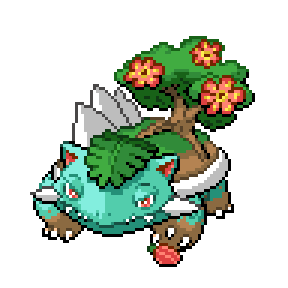
Venujask whir their petals rapidly to enable them to fly. The vines growing from their body act in a similar way to sensory hairs, alerting them to nearby obstacles to be avoided.

Venucada have bodies that play host to a large variety of parasitic flowering plants. They are constantly forced to seek out tubers and plant roots to provide their bodies with enough nutrition to grow.

The flower on the back of Venuinch grows extremely quickly and requires very little water. When there is rain in the desert, Venuinch colonies bloom and fill the desert with colour.

Venuva travel great distances through the desert in search of oases to drink from. When they find one, they will stay nearby for as long as it remains full of water, sunning their petal-like wings to regain energy for their next flight.
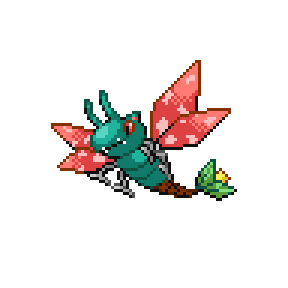
Though at first glance they appear healthy, Venusect carry an aggressive fungus that parasitises their flowers. The fungus leeches the nutrients that would otherwise go to the Pokémon, forcing them to eat more than usual to make up the shortfall.

Venulett are easily mistaken for cycads when they're at rest as only their flower is constantly above ground. It becomes far clearer that they're actually Pokémon once the presumed flower begins moving around through the dirt.
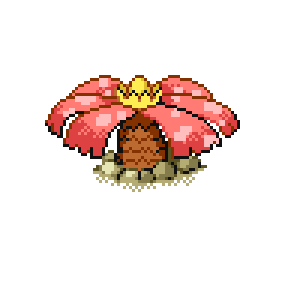
When Venulett want to get an idea of where to find water, they will poke their heads out of the ground and unfold the leaves they usually keep safe. Their leaves are sensitive to moisture in the air, letting them figure out where to get a drink.

Venulithe need regular maintenance of their petals to ensure they don't grow too long and block their vision. Wild Venulithe may run away because of their obscured vision, having to rely on the sound of their packmates' barks to guide them.

Venueel lounge on tropical beaches, raising their tails high in the air to catch as much sunlight as possible. They are cumbersome on land but graceful in the water, their fronds billowing behind them as they swim.
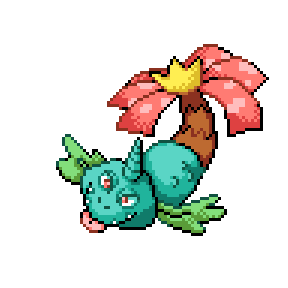
Venugong can be found lounging on tropical beaches, enjoying the sunlight and warmth to be found there. They are clumsy whilst moving on land but can use their petals as fins to dart gracefully through the water when they return to it.

Venugong can be found lounging on tropical beaches, enjoying the sunlight and warmth to be found there. They are clumsy whilst moving on land but can use their petals as fins to dart gracefully through the water when they return to it.

Venutoise develop metallic sheaths that protect their vines from harm whilst they are retracted within their shells. They can extend their vines and control their movement as will, using them to attack from a safe distance.

Venutoise develop metallic sheaths that protect their vines from harm whilst they are retracted within their shells. They can extend their vines and control their movement as will, using them to attack from a safe distance.

Nidorb violently explode when they feel provoked, showering their victims with venomous spines as they do. They are belligerent and territorial and view any approaching person as a threat.

Nidoba refine the toxins from the plants they consume within their bodies, incorporating them into their skin and carapace. Direct skin contact is not recommended as it can result in a nasty rash.

The spikes on the elytra of Nidoian drip a noxious toxin that can cause days of sickness if touched. They are standoffish and will jealously guard their territory and food sources against interlopers.

Nidowoodo love to line sports grounds, hiding amongst the shrubs lining the fields. They spring to life when games begin, cheering and waving their limbs in support of their favourites, growing especially active when their team's rivals are playing.

Nidorow maintain large territories around the foothills of Mt. Moon. They are aggressive toward other Nidorow, squawking loudly and making large threat displays with their wings to try and scare their rivals away from their homes.
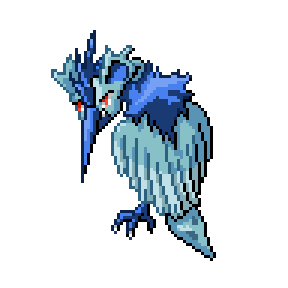
Nidorogue are quick to pick fights with other Pokémon, lashing out with punches and powerful kicks. They are enthusiastic but unskilled, their attacks lacking the finesse that comes with practice.

Nidoinch dig deep pits along mountain trails, waiting for other Pokémon to fall into them so that they can feed. The pit edges are lined with loose leaf litter and gravel to make it harder for their prey to get away from their venomous jaws.

Though affectionate toward their Trainers, Nidoruff are fiercely protective and will snap at other Nidoruff that come too close. It is advised that any Trainer wishing to keep them should take the time to plan walks around other Nidoruff owners.

Nidoeel use their spines to anchor themselves on ice floes, allowing them to rest out of the water even in stormy weather. Their spines are poisonous and are used when fighting for space on the ice with other Pokémon.

Nidozee are nocturnal Pokémon, using their sensitive noses to sniff out the dreams of sleeping Pokémon within their territory. If they come across a sleeping Pokémon that they think is a rival, they will exude a poisonous gas that causes nightmares.

Nidono are drawn to the scent of dreams, searching the night to find sleeping Pokémon and people. When they find their way into cities, they are known to break into apartments and stand at the foot of people's beds breathing in their dreams.

Mawturn lurks deep in the ocean and makes its home in dark crevices where its lure produces the only light around. Prey Pokémon often mistake its lure for young Chinchou; Mawturn takes advantage of this and strikes at its unsuspecting target.

Maweal have heavy, iron-rich fur that makes it difficult for them to swim. They travel through the shallows by rolling along the seabed, using their flippers and tail to steer themselves.
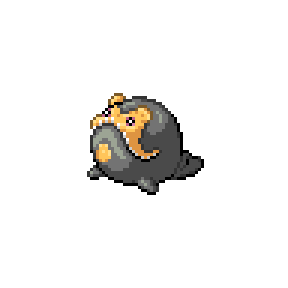
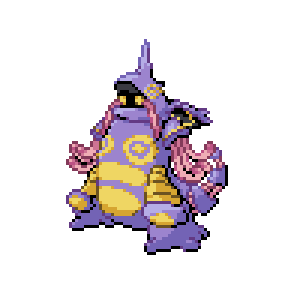
Lilking remain motionless on the sea floor, creating a shell in the shape of intimidating Pokémon to scare off rivals. They feed by filtering food out of the seawater around them, waving their tentacles from the gaps in their outer shell.
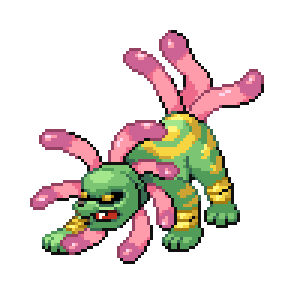
Cradnine race across the ocean floor with their tendrils outstretched, using the sticky appendages to catch potential prey as they run. When they come to a stop, they bring their tendrils to their mouth and settle down to enjoy their food.
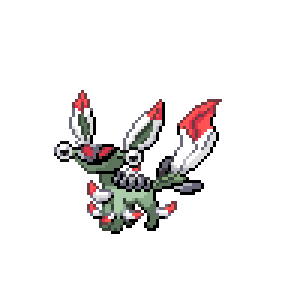
Anofeon bask in the sun to gain energy, the large armoured plates on their back suffusing their bodies with warmth. They remain alert for danger as they rest, their long ears periodically twitching as they listen to the world around them.
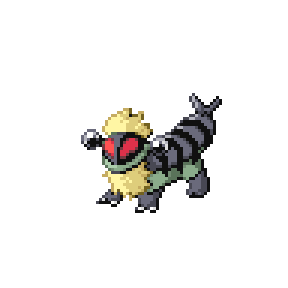
Anolithe are pleasantly warm to the touch and enjoy being close to both people and other Pokémon. They make excellent companions at Pokémon Daycares and will happily look after any eggs that may turn up within them.
Anonine are hot to the touch, their bodies containing an intense fire. They periodically discharge this heat by exhaling great gouts of flame.
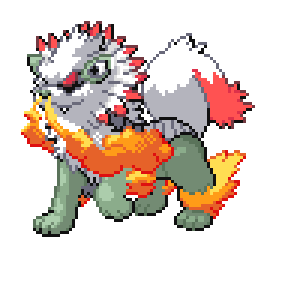
Anonine are hot to the touch, their bodies containing an intense fire. They periodically discharge this heat by exhaling great gouts of flame.
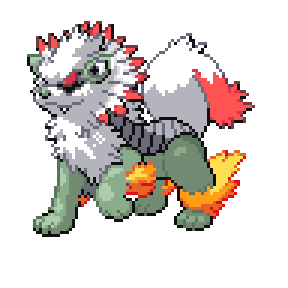
Fossils of Armdily are found in Galar, fossil researchers there resurrecting the fossil Pokémon from fragmentary remains. In life, Armdily anchor themselves to the sea floor and lash out at passing Pokémon to try and catch them as food.

Fossils of Armdily are found in Galar, fossil researchers there resurrecting the fossil Pokémon from fragmentary remains. In life, Armdily anchor themselves to the sea floor and lash out at passing Pokémon to try and catch them as food.

Cranslash dig trenches through the ground at high speed, keeping their heads just above the soil so that they can see where they are going. If they spot another Cranslash whilst digging, they will veer toward them and deliver a powerful Headbutt.

Ramnite are capable of flying at supersonic speeds, racing across the skies. They have extremely hard heads and use these to battle with one another, a collision between two Ramnite sounds like a thunderclap.

Ramnite are capable of flying at supersonic speeds, racing across the skies. They have extremely hard heads and use these to battle with one another, a collision between two Ramnite sounds like a thunderclap.

Ramcargo battle one another in contests of strength, seeking to ram into one another and send the loser tumbling down the mountainside. They are incredibly slow Pokémon, and the impacts between them rarely result in any real harm.

Shielsaur are prehistoric Pokémon that had been thought to be extinct until a live population was found in Eterna Forest in Sinnoh. They have a sturdy seed sprouting from their back, the husk of which is several inches thick and difficult to crack.

Bastiosaur are slow moving Pokémon that trudge through mountain passes in small family groups as they follow the movement of the sun. They are hardy and rugged, their skin rich in minerals that toughen against physical impacts.
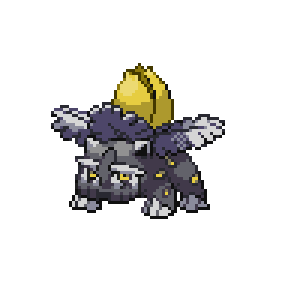
Slasect mushrooms cause wild mood swings when consumed, with the consumer swinging from frenetic, angry energy to slothful lethargy. Slasect themselves exhibit these same mood swings and are best avoided.

Slape spend the majority of their time slumbering, fidgeting and twitching in agitated sleep. When roused, they fly into a rage that can last for hours, racing around and tearing apart anything they can get their hands on.

Nidonair have thick scales coating their serpentine bodies, protecting them from the rocky terrain they live in. Their scales protect them from one another when battling for territory, allowing them to slam one another with powerful blows safely.
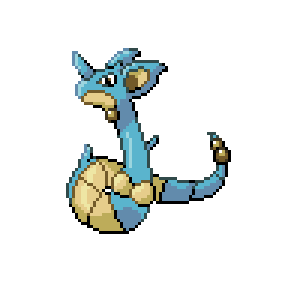
Nidoian have toughened skin and carapaces. Their stiff coatings mean they are not particularly mobile Pokémon, but anything that does manage to take a bite out of them finds them to be foul tasting and unappetising.

Nidotress are never seen outside their shells, constantly sheltering inside them. They move around using their powerful arms, lumbering from one feeding site to the next.

Nidotar burrow through mineral veins, gorging themselves on rare earth elements to prepare themselves for evolution. They are jealously protective of their feeding ground, as battles between Nidotar over food can sometimes cause minor earthquakes.

Nidodoof colonies are able to clear large swathes of woodland, working together to chew down trees and pile them together into elaborate dams. These dams are put at the boundaries of their territory, controlling the water flow in and out.

Nidodon use their bulk to knock down trees and create large clearings in forests. They patrol these clearings and use them as display grounds, shaking their large frills and stomping the ground to scare off competition.

Nidoark hunt through the use of illusions, masking their appearance and pretending to be small and unassuming Pokémon. Their illusions are elaborate enough to even fool other Nidoark, which results in fierce battles when the deception is revealed.

Nidonat listen intently for approaching Pokémon, staying on guard against rivals for their food. They violently shake their bodies and loose a cloud of poisonous dust when they get into fights.
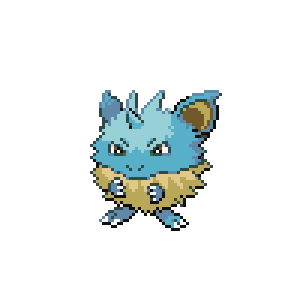
Nidonat antennae can sense even the slightest air movements, alerting them to approaching Pokémon long before they see them. They violently shake their bodies and loose a cloud of poisonous dust when they get into fights.
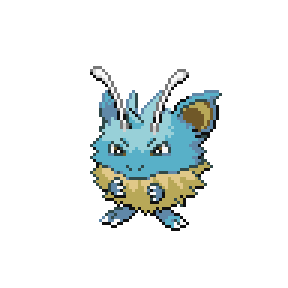
Nidomoth are typically found at night, using the light of the moon to navigate. When two Nidomoth pass by one another, they will angrily flutter around and try to knock the other off their flight path with gusts from their wings.
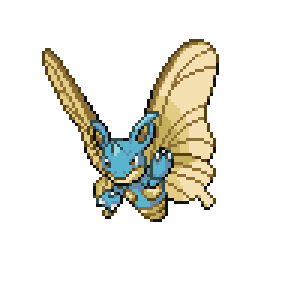
Nidoape secrete a potent venom in their fur that poisons any Pokémon that touches them. They will consume some of their own venom before getting into fights, letting it drive them into a frenzy.

Nidoape secrete a potent venom in their fur that poisons any Pokémon that touches them. They will consume some of their own venom before getting into fights, letting it drive them into a frenzy.

Nidosprout flail their leaves wildly around when battling against other Nidosprout in the wild, trying to intimidate their rivals into submission without having to actually fight. If forced to battle properly, they will try to bite at their foe's stem.

Nidobell waddle from tree to tree in search of a place to spend their day. The ideal tree has excellent access to light from the sky as well as fertile soil for them to root through; they will battle with one another over these locations.

Nidobell hang from the lower branches of trees, trailing their thorned vine down toward the ground. Should anything walk into the trailing vine, they lash out, aiming to catch the unfortunate passerby with their venomous stinger.

Nidotoise fight using their impressive bulk, slamming their tough shells into one another with body slams that can shatter tree trunks. They are prone to aggression and will readily battle other Nidotoise on sight.

Abetta have a fondness for performing tragic ballads, their songs inspiring a sense of melancholy in the listener. They are commonly found in the wake of disaster where they perform in an effort to offer solace to those listening.
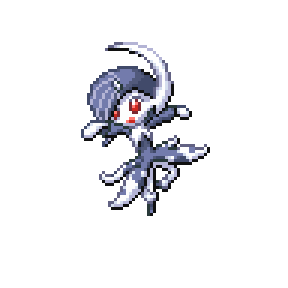
The scythe Abetta wields produces eerie music as it cuts through the air. Abetta are adept at wielding it, forming mournful dirges in battle that instill a sense of foreboding in the listener.

Abty lurks in dark alleys within cities, where they watch for fights and other street violence before jumping in. Despite their mean appearance, they always side with the underdog and will try their best to protect them.
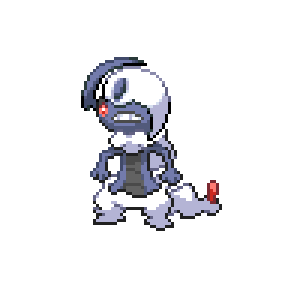
Abat are highly sensitive to subtle ecological shifts, taking to the sky and shrieking loudly to warn others of coming danger. Their cries trigger deep feelings of unease and have been known to accidentally cause panic attacks.
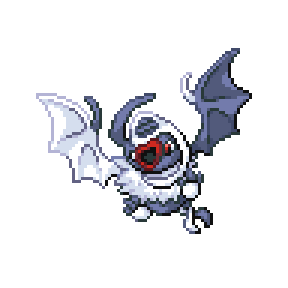
Abat are highly sensitive to subtle ecological shifts, taking to the sky and shrieking loudly to warn others of coming danger. This behaviour has led to them gaining a reputation as harbingers of calamity, making them an unwelcome sight for many.
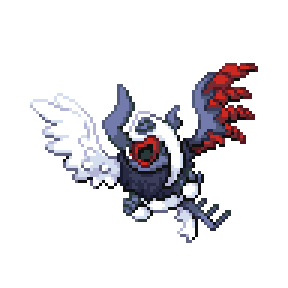
Abat are highly sensitive to subtle ecological shifts, taking flight when they sense danger. Their populations are monitored by researchers, with flights of Abat triggering frantic work to try to predict what danger the Pokémon is sensing.

Dusaur arise within Pokémon graveyards, haunting the grounds in the dead of night. Their bulbs and leaves are completely dead, devoid of the chlorophyll that would otherwise give them colour and leaving them unable to enjoy the warmth of the sun.
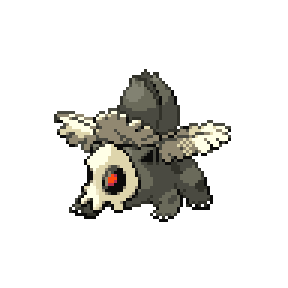
Dusicate are only ever seen in full at night, their shadowy bodies forming around the bleached skull that forms their head. During the day, Dusicate are indistinguishable from an ordinary Raticate skull.
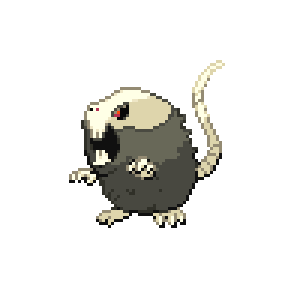
Dusaur are mostly encountered in the autumn, haunting farmer's fields and hiding amongst pumpkin patches. Their presence is detrimental to growth as they draw lifeforce away from the plants they hide amongst to sustain themselves.
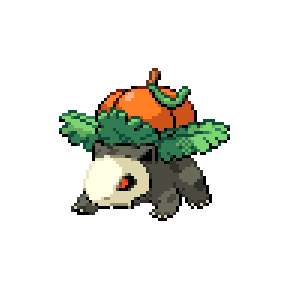
Dusaur arise within Pokémon graveyards, haunting the grounds in the dead of night. Some Dusaur have lingering traces of life in their bulbs and they try to catch as much of the sunset as they can to try to encourage some returning growth.

Dustales drifts mournfully through the burned-down ashes after a forest fire. The colour of its tails indicates what caused the fire. Bone-white tails show that the fire was caused by dry undergrowth catching on a hot summer's day.

Dustales drifts mournfully through the burned-down ashes after a forest fire. The colour of its tails indicates what caused the fire; ash grey tails show the fire was caused by an over-excited Pokémon using its abilities carelessly.

Dustales drifts mournfully through the burned-down ashes after a forest fire. The colour of its tails indicates what caused the fire; blood red tails show the fire was caused deliberately by a human in an act of malice.
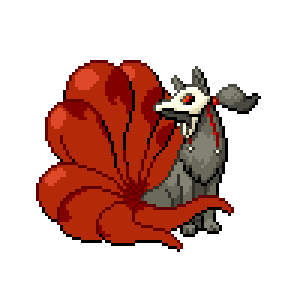
Dusbat are only ever seen in the dead of night, swooping down silently on unsuspecting travellers. They give a bone-chilling shriek when they're within just a few meters, feasting on their target's fear before disappearing again.

Dusplume drift through graveyards at night, drawn to the scent of loss and regret. They seek out mourners and offer them a sniff of the flower atop their heads, waves of nostalgia rushing through whoever takes a smell.
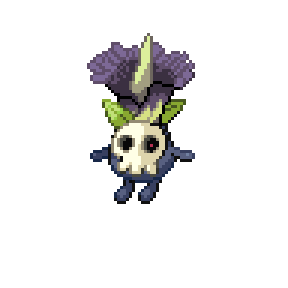
Dustrio emerge from the ground at night in abandoned graveyards, moving between grave sites and scaring any passers-by. They are surrounded by a feeling of mourning for what was; those not immediately scared away often are overcome by melancholy.
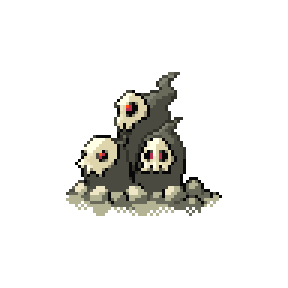
Dustrio drift through graveyards at night, diving in and out of graves seemingly at random. Looking into their eyes causes a person to be struck by one of three emotions, depending on which head they look at: regret, depression, or grief.

Duswrath appear late at night, searching for those who are awake late. They open their mouths wide when they find someone, an eerie, hypnotic spiral lulling their victim to sleep and leaving them with unpleasant dreams.

On nights where the moon isn't visible, Dustoise manifest in long dried-up riverbeds and lakes. They can be seen floating through the air as though swimming in the long-gone waterways.

The orb at the centre of the leaves on the backs of Duscsaur is completely white when they are asleep, only taking on their characteristic eerie red glow when the Pokémon are awake. Researchers theorise they use this orb as a means to see.

Duscicate haunt sites where a lot of Pokémon are buried, drawn to the melancholic mood surrounding these places. They hide from mourners, drifting into walls to keep out of sight; they remain audible with an eerie chattering noise from their teeth.

Duscno drift through the depths of night in search of lost people and Pokémon. They have malice deep in their hearts, leading those they find further and further from safety until they find somewhere secluded to attack them.
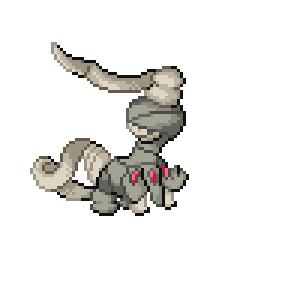
The red glow surrounding Dusctales is unnaturally alluring, drawing people and Pokémon alike to try and get close to them. Should something get too close, Dusctales lash their tails and lay a curse upon their victim before disappearing into the night.

Dusctrio burrow through graveyards, remaining underground throughout the day to avoid the sunlight. They emerge at night, their eerie red eyes glowing in the dark as they watch for any trespassers.

Duscth lie dormant during the day, only their ruby-red coin visible. At night, their coin glows as their body becomes visible. They drift through the night in search of any dropped coinage, combining it with their own coin.

Duscth lie dormant during the day, only their ruby-red coin visible. At night, their coin opens into a glowing red eye as their body becomes visible. They drift toward items of value to claim them as their own, their glowing eye lighting the way.
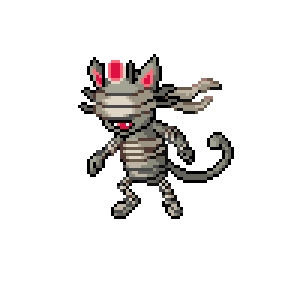
Duscth lie dormant during the day, only their ruby-red coin visible. At night, their coin opens into a glowing red eye as their body becomes visible. They drift toward items of value to claim them as their own, their glowing eye lighting the way.
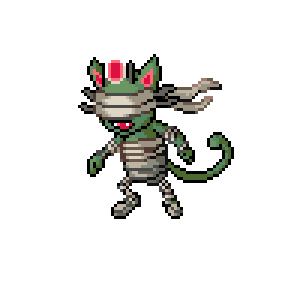
Dusctoise can be seen moving through desert wadis at night, prowling through the dried-out remains of the riverways as though in search of water. They disappear at the start of the rainy season and are not seen again until the water stops flowing.

Duskuna can sense the life force of other living beings through the golden antennae on its head. It uses this sensitivity as an early warning system, making themselves intangible when potential danger approaches.
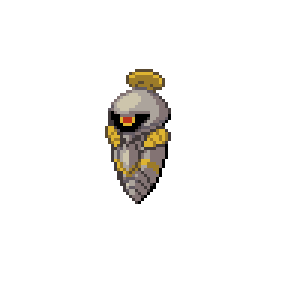
Wailcargo shells constantly vent mineral-rich gases into the surrounding water. Small communities of Pokémon can often be found on their shells, riding atop migrating Wailcargo and feeding on their output.
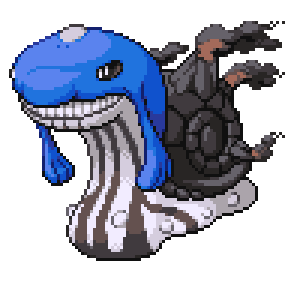
Waildon lumber across the sea floor on continental shelves, patrolling vast territories in search of food. When two Waildon meet they are prone to clashing over control of their territory, battles between them capable of triggering tsunamis.

Wailmuku make their homes in shallow reefs, swimming in pods for safety. They communicate with one another by extruding special organs along their back, raising and lowering spines to warn one another of danger.

Wailmuku make their homes in shallow reefs, swimming in pods for safety. They rely on their soft spines to protect them from harm, puffing them up by breathing in water and making themselves look large and unappetising.
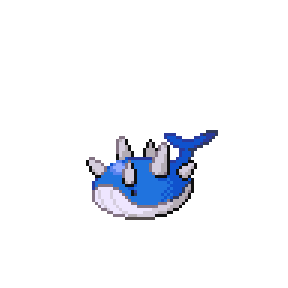
Wailras regularly release excess gas from their body, large bubbles of it floating up to the ocean surface and giving away where they are. If they need a quick escape, Wailras release an especially large bubble, clinging to it to float to safety.
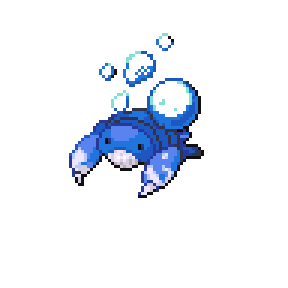
The solid metal that forms the anchor point for Arctomb is thought to have formed from the very first stars. Staring deep within the incorporeal body of an Arctomb is rumoured to let you see back in time to the Big Bang.

Turcargo shells are made of mineral-rich rock, making them fertile ground for new plant growth. They are a common sight in vineyards, farmers using them to till soil during the winter months in preparation for the growing season.
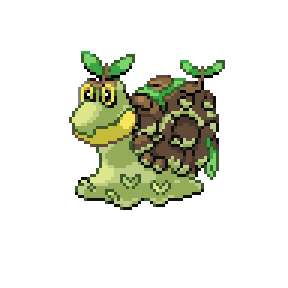
Turbok live in forests with extremely fertile soil, making nests and burrows within the loam. Soil gets caught in between their scales as they slither around; this allows plants to take root and begin to grow along their body.
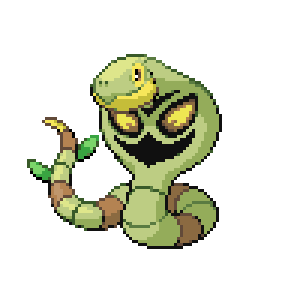
Tursaur are slow moving Pokémon that lumber through jungles individually or in pairs. They feed on young plant growth, using their beaks to bite through the tender stems.
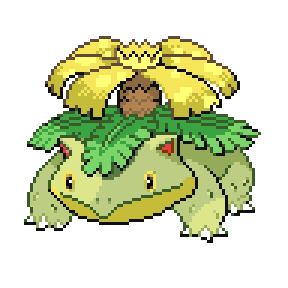
Turwrath pack soil into their fists and belly, using the material as padding to help them land strikes and defend against counterattacks. They seek out soil rich in nutrients, cultivating reeds and rushes to help enrich the soil around their homes.
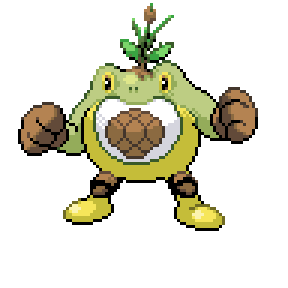
Grochu give off an ambient electrical field that is beneficial to the growth of plant life. They are popular Pokémon at arboretums thanks to this, their presence helping to ensure healthy growth for the trees under the gardener's care.
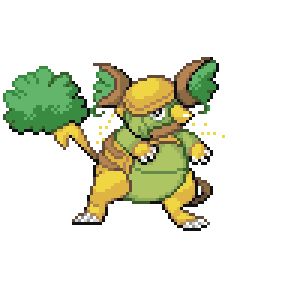
Grosaur support a miniature ecosystem on their backs, various bush species growing alongside the large flower sprouting from them. Their presence is regarded as a good sign that a region has a thriving environment.
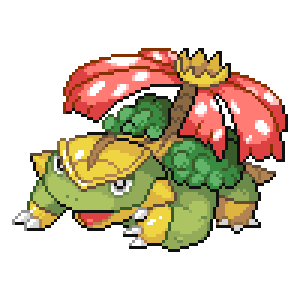
Torgeot trail tree pollen as they fly, dispersing it throughout the jet stream. Their migratory routes are verdant and lush, full of forests grown from generations of Torgeot flights.

Torgeot trail tree pollen as they fly, dispersing it throughout the jet stream. Their migratory routes are verdant and lush, full of forests grown from generations of Torgeot flights.
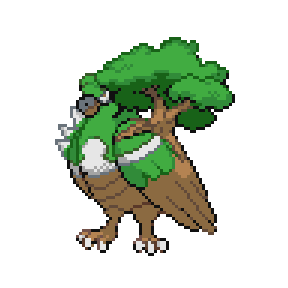
Torcargo travel through forests in the wake of wildfires, eating the charred and burned vegetation left by the fires. They leave a trail of nutrient-rich lava behind them that, when cooled, becomes exceptionally fertile soil.

Torcargo feed on dried lava fields, crunching through the volcanic rock and using the rich minerals inside to encourage the growth of the tree growing from their shell. The leaves from their tree are full of nutrients and make an excellent tea.
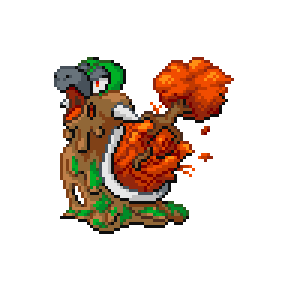
Torchu spend their days lounging in the sun, passively absorbing sunlight to help grow their symbiotic plants. The plants provide them with enough nutrients to allow them to generate electrical shocks from their cheek spikes.

Herds of Torsaur play an important role in forest ecosystems, their grazing grounds being areas kept clear of large trees allowing shrubs space to grow. The plants growing on their backs provide an alternative source of nectar for smaller Pokémon.

Herds of Torsaur play an important role in forest ecosystems, their grazing grounds being areas kept clear of large trees allowing shrubs space to grow. The plants growing on their shells provide an alternative source of nectar for smaller Pokémon.
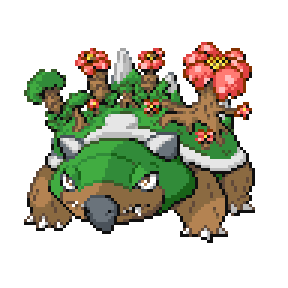
Chimgey live in the canopy of jungles, hooting loudly at one another to communicate through the dense foliage. At night their flames can be seen in the treetops from a great distance.
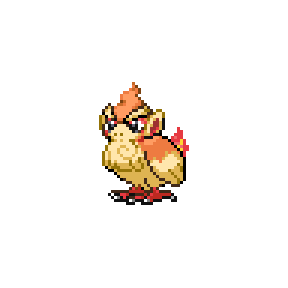
Nidogey develop strong rivalries with one another, often squabbling over scraps of food or nesting spots. Their combative nature and ease to train make them popular amongst aspiring Ace Trainers.

Nidoskull can sense the life force of other Pokémon using their single glowing eye. They flock to any living Pokémon that strays into their territory, attempting to scare them away with eerie noises.
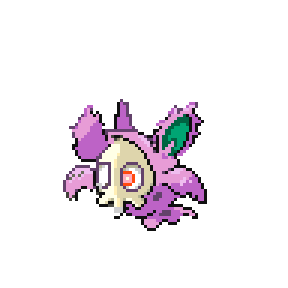
Nidoran are highly territorial and aggressively defend their territories from rivals. Researchers speculate that this behaviour stems from combining the latent combative instincts of their unfused counterparts into one body.

Nidobat are completely blind and navigate through the air entirely through powerful sonar. Each Nidobat sings out a completely unique song when they're flying which lets them listen for their own calls no matter how many are flying together.
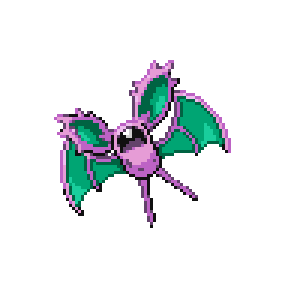
Nidobat are completely blind and navigate through the air entirely through powerful sonar. Each Nidobat sings out a completely unique song when they're flying which lets them listen for their own calls no matter how many are flying together.

Nidobat are completely blind and navigate through the air entirely through powerful sonar. Each Nidobat sings out a completely unique song when they're flying which lets them listen for their own calls no matter how many are flying together.

Nidowag play an important role in pond ecosystems, feeding on toxic algae that would otherwise build up in the stagnant water. They incorporate the toxins into their body, coating themselves in a slimy, poisonous film to deter predators.

Monicate form colonies in rainforests, gnawing out burrows within the trunks of giant trees. If a colony grows too large they become a danger to the health of their host tree, creating hollows within the trunk that can eventually cause a collapse.
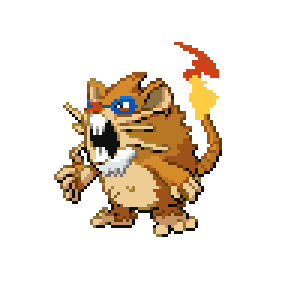
Moncargo use the flames jetting from their shell to communicate with one another over long distances. Long jets of flame indicate danger, encouraging other Moncargo to slowly crawl to their aid.
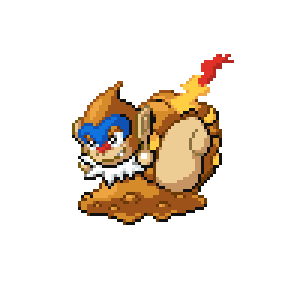
Infericate teeth are extremely sharp and constantly growing, they have a bite force that enables them to chew through stone and some metals. If they encounter something too tough to gnaw, they use their flames to soften it first before trying again.
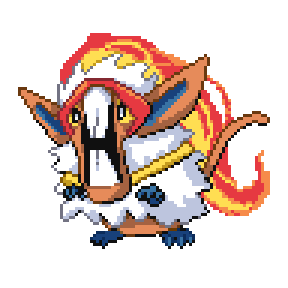
Inferock stand guard at holy sites in Hoenn and are stationed as statues at the entrances to temples. When roused to guard against attacks, they produce intense flames from their body.
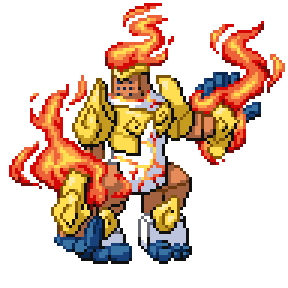
Inferock stand guard at holy sites in Hoenn and are stationed as statues at the entrances to temples. When roused to guard against attacks, they produce intense flames from their body.
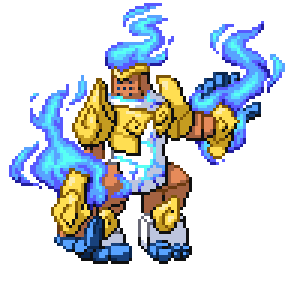
Inferock stand guard at holy sites in Hoenn and are stationed as statues at the entrances to temples. When roused to guard against attacks, they produce intense flames from their body.
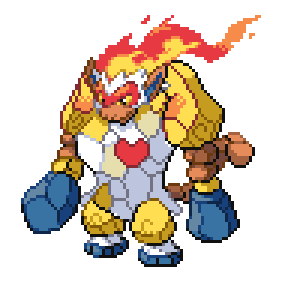
Infernine packs make their home in high mountain ranges, relying on their flaming manes to keep themselves warm in the thin air. Packs of Infernine can be seen from great distances thanks to their flames, racing around mountain peaks in search of food.

Infernine posture and pound at the ground when they get into territorial disputes, attempting to intimidate their rivals into backing down. Their fiery mane flares brightly just before they attack, often the only warning before a Mach Punch is thrown.

Pipod spray a coating of water around themselves, allowing it to freeze in the harsh cold of their polar home to form a protective icy cocoon. They do this to keep themselves safe during winter months, thawing out as summer arrives.
Pipod are coated in stiff, waterproof feathers that help shield them from physical harm. They migrate by attaching themselves to icebergs, drifting out to sea in search of new homes.
Pipass float across ice sheets in search of impurities in the ice, using their magnetic nose to extract any debris they find. They are fastidious in taking care of their home, taking great pride in having pristine ice beneath them.

Pipnine breathe embers onto the glaciers they make their home on, melting the surface of the ice and creating a smooth and glassy floor. They race one another across the ice, slipping and sliding whilst chirping happily.
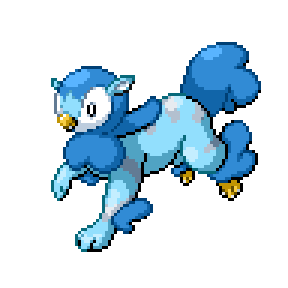
Prinble live solitary lives, digging holes into the sides of glaciers, angrily squawking at anything that tries to get close to them. They burrow deep into the ice in search of food, digging pitfalls for Pokémon walking above the glacier to fall in.

Prinduck form colonies within city parks, swimming around through the large ponds that can be found within them. They are fiercely individualistic, racing one another to be the first to any food that is thrown into the water by visitors.
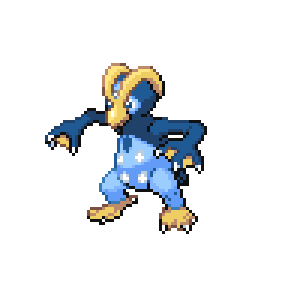
Printoise are prideful and overconfident in their own abilities. They have a habit of picking fights with stronger Pokémon if they feel they've been slighted, relying on their cannons to equal out any discrepancies in strength.
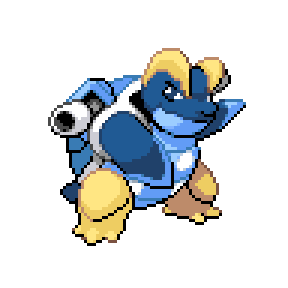
Empolax form large colonies in polar regions, socialising with one another using a small range of unique cries. Small cliques have been observed to form within the colony over time, with some Empolax preferring to keep others out of their club.

Empolax waddle around their domain protectively, jabbing at those that would impose on their chosen glacier with their trident. When they're satisfied that they are not facing any challengers, they retreat to their den and fall into a deep slumber.

Empotales fan their tails in a display of imperial dominance whenever they feel the need to exert their superiority. They are proud and wilful Pokémon; Trainers are advised to take a firm hand when working with them.

Empoduck's trident-shaped beak creates a hydrodynamic wedge in front of it when swimming, helping it move swiftly through the water. It is common to see two Empoduck racing one another in order to establish which is the superior Pokémon.
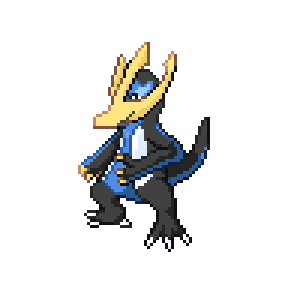
Empoform are prideful Pokémon that take offence over the smallest perceived slight. They vent their anger by showering their foe with sleet and hail.

Empoduck lay claim to large swathes of glacier as their territory, typically making their home within a meltwater lake. They fling orbs of icy water at those that would challenge them, relying on the freezing temperature to sap their foes' strength.
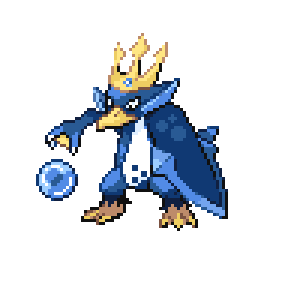
Empotoise strut around with a regal bearing, confident in their superiority to all other Pokémon around them. Their haughty attitude makes them unpopular with others, but their bulk and tough shell make challenging their superiority complex difficult.

The sharp stinger on the tail of Honpie acts more as a deterrent than a real weapon. They are not strong enough to swing it with any force but will raise it menacingly when they feel endangered.

Hongeot wield a metallic beak as their primary weapon, pecking viciously at those who get too close. They were popular Pokémon to depict on heraldic banners in medieval times, the Pokémon being romanticised as a chivalric symbol.

Honfable have an affinity for sharp objects, preferring to use small knives and daggers. They sharpen their blades under the light of the moon, using lunar energy to hone them to perfection, then play at being medieval knights.

A Pokémon first discovered in the middle ages, Honolett were rumored to be found on ancient battlefields. Ancient texts speak of them being used in wars and battles, serving as squires to knights.

A Pokémon first discovered in the middle ages, Honolett were rumored to be found on ancient battlefields. Ancient texts speak of them being used in wars and battles, serving as squires to knights.
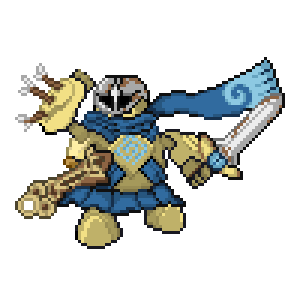
A Pokémon first discovered in the middle ages, Honolett were rumored to be found on ancient battlefields. Ancient texts speak of them being used in wars and battles, serving as squires to knights.

A Pokémon first discovered in the middle ages, Honolett were rumored to be found on ancient battlefields. Ancient texts speak of them being used in wars and battles, serving as squires to knights.
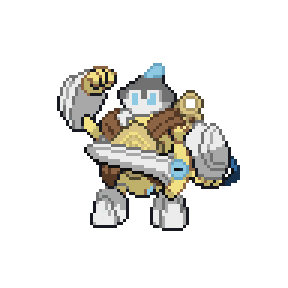
Honmoth were a common companion to ninjas during feudal times, their light bodies and bladed heads making them perfect companions for stealth missions at night. In modern times, they retain popularity with practitioners of historical martial arts.

The blades wielded by Honape grow sharper the angrier they get. At their most furious, Honape can cleave through boulders with a single slash.
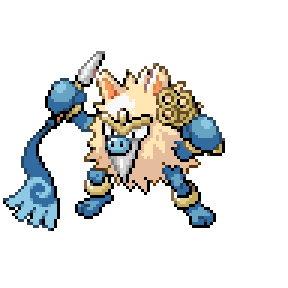
Honler are coated in thick metallic armour letting them get in close and fight with their powerful claw safely. They wield their shield to ward against any particularly powerful attacks, taking trophies from their aggressors.

Doubtops creep along the sea floor, keeping their bodies flat against the sand. They launch ambushes at any Pokémon that swims above them, catching them in their bladed arms before using the blade on the back of their head to end the fight.
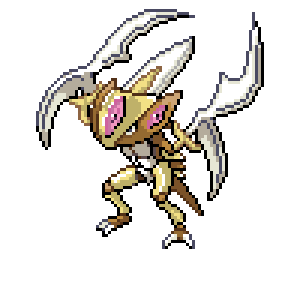
The crests of Doubdon are formed of their blade's sheaths. They are almost impervious to physical damage from head-on and will always face toward danger to protect their more vulnerable back half.
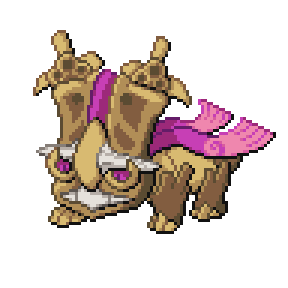
Normally found standing guard at the gates of ruined fortresses, Doublurk are passive guardians provided no hostile act is performed in their presence. Their stoic demeanor belies their fierceness, leaping to action at the first hint of violence.

Normally found standing guard at the gates of ruined fortresses, Doublurk are passive guardians provided no hostile act is performed in their presence. Their stoic demeanor belies their fierceness, leaping to action at the first hint of violence.
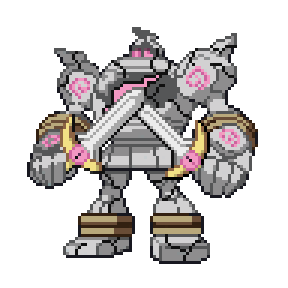
A Pokémon often found in the ruins of castles and other medieval fortifications, Doubolett is thought to have served as a guardian against attacks by rival fiefdoms. Though small in stature, its proficiency with its blades makes it dangerous.

A Pokémon often found in the ruins of castles and other medieval fortifications, Doubolett is thought to have served as a guardian against attacks by rival fiefdoms. Though small in stature, its proficiency with its blades makes it dangerous.
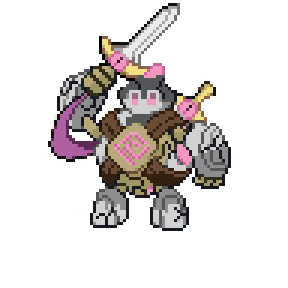
Doubmoth's striking appearance led to them being used in heraldic crests during medieval times. Whilst their use was mostly as inspiration, they were occasionally used literally, with Doubmoth encouraged to rest upon a heraldic shield during the day.

Doubape are sometimes employed within kitchens to help with food preparation. They chop through food rapidly with their twin blades, but are prone to angrily charging at customers who are dissatisfied with their meal.
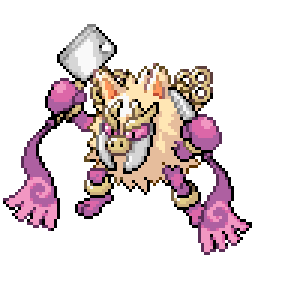
Doubape wield their twin blades with more fury than grace, whirling their arms rapidly in an effort to slash their foes. They can swing their blades fast enough to create shockwaves, extending the range of their cuts.
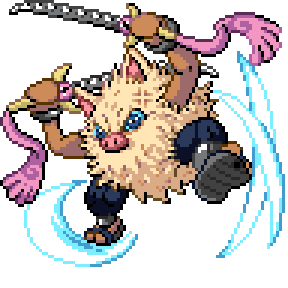
Doubape wield their twin blades with more fury than grace, whirling their arms rapidly in an effort to slash their foes. They lack the patience to train with their weapons; attempts to do so invariably end in Doubape slashing at their teacher.
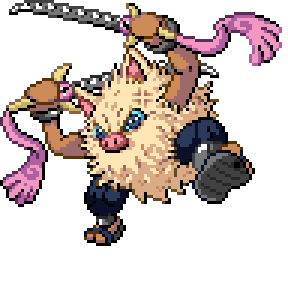
Doubler collect weapons from underwater ruins, using their claws to scrape them clean and maintain them. They scuttle sideways into battle, one sword used for offense and the other for defence.
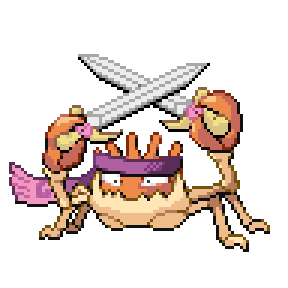
Aeginoir haunt ancient castles and fortifications, acting as custodians and guardians of the ruined structures. They will happily challenge would-be explorers and archaeologists, doing what they can to deny access to their homes.
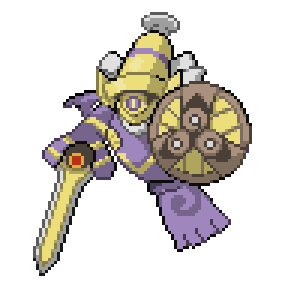
Aegimoth snap their wings closed over their body when they find themselves under attack, relying on the metallic wings to protect them from harm. Once they've weathered the blows, they fly abdomen-first at their aggressor, aiming to stab at them.
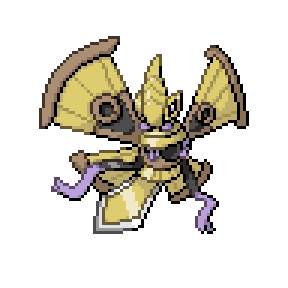
Nidorina display a heightened aggression in the wild toward anyone that gets too close. The poison their spines are coated in becomes more virulent as their stress levels increase, making stings from them progressively more dangerous over time.

The fabric-like body of Nidopet is covered in microscopic barbs that scratch the skin of anyone who touches it. These barbs are coated in an unpleasant toxin, something Nidopet weaponise by wafting their bodies against their foes.
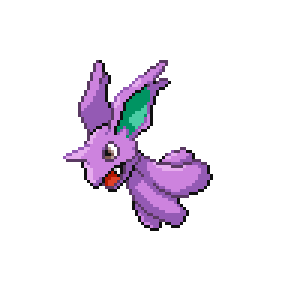
Nidobat are incredibly loud and use the echoes of their roars and growls to navigate through the air despite their poor eyesight. They can get very territorial and will roar exceptionally loudly at their rivals to disorientate them.
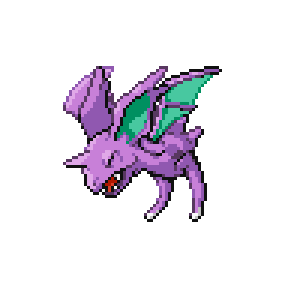
Nidobat are diurnal hunters despite their poor vision. They hunt by shouting out powerful bursts of sonic energy and listening for the return calls. The calls of Nidobat can be heard over a mile away.
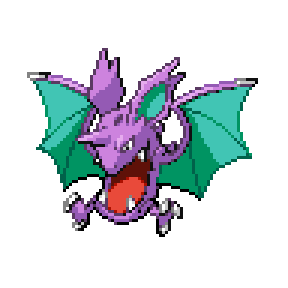
Nidokey toxins induce intense feelings of anger in those unfortunate enough to be afflicted with it. Clinicians have taken an interest in this toxin, attempting to use a dilute version of it as a confidence-boosting drug.

Nidowag are coated in a thin layer of toxic mucus that is water-soluble, washing off into the ponds they live in. The toxins make it difficult for other Pokémon to share the water with them, allowing them to ward off rivals.
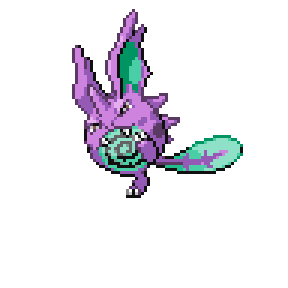
Visible as a dark spiral in their stomach, the intestines of Nidowhirl produce a toxin that oozes out through their skin, making them dangerous to touch. They aggressively patrol the shore of their ponds, trying to inflict their poison on trespassers.
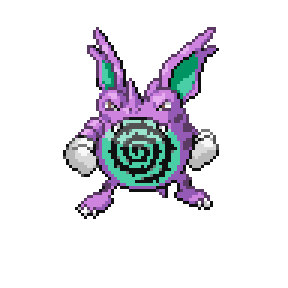
The shells of Nidotle are covered in spines that are coated in a painful toxin. They will rush at their foes backward when threatened, using their shell to both protect themselves and harm others.
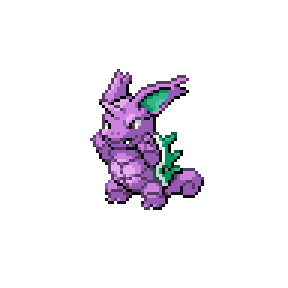
Nidodude feed on mineral-rich veins of rock, tearing out chunks from the mountainside with their powerful hands. The minerals they consume contain toxic heavy metals, which they metabolise and concentrate into a poison within their spines.
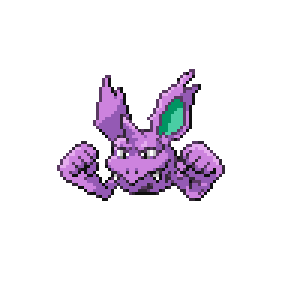
Nidoler diets are rich in silica, the mineral being a key component in the growth and formation of their toxic spines. Pokémon Trainers are advised to keep either sand or quartz crystals to hand so that they get enough of the mineral in their diet.
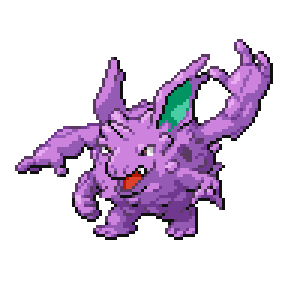
Bilord is adept at carrying passengers across rough waters. Its large size allows it to carry dozens of people at once, and the blade atop its head aids it in cutting through rough swells that would cause smaller Pokémon trouble.

Luxrow's feathers carry a constant electrical charge, helping them to fly through riding the planet's magnetic field. They can be seen clashing with one another in the sky, sparking as they battle for territory.
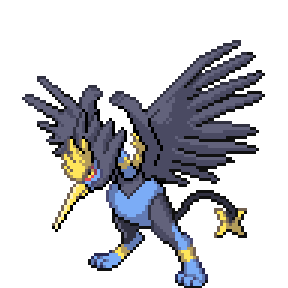
Luxqueen are coated in very fine fur that Pokémon Researchers have been able to determine is made of graphene. Their fur is highly conductive and they can deliver powerful electric shocks by landing heavy punches on their foes.

Luxqueen are coated in very fine fur that Pokémon Researchers have been able to determine is made of graphene. When they spy a rival, their fur becomes wreathed in electricity in readiness for battle.

Luxrino spines crackle with electricity whenever they spy a Pokémon they believe could challenge them for their position in their territory. They charge headfirst at threats, aiming to spear them with their sharp horn.
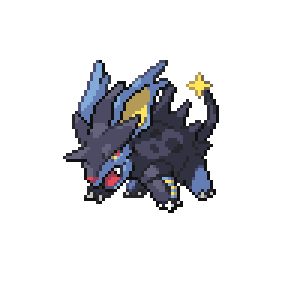
Luxking roars can carry for several miles, their fur rippling with electricity whenever they bellow. They put on these displays to signal to other similarly sized Pokémon to stay away from their territory.

Luxblim helped Unovan scientists in past centuries understand how electricity functions. They float high in the sky, enjoying thunderstorms - their bodies create a negative charge that draws lightning toward them.

Aggceon are extremely cold to the touch, their metal hide sapping away heat near instantly. Trainers are advised to use gloves and full body clothing when handling them to avoid frostbite.
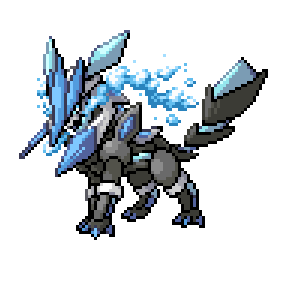
Aggduck make their homes in disused quarries, feeding on the exposed rocks and ores left behind by human activity. They swim in the quarry lakes to relax, their tough steel body protecting them from the toxic chemicals filling the water.
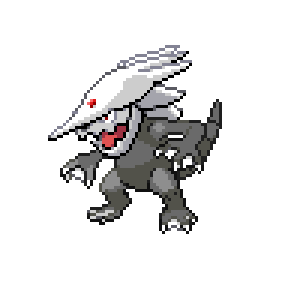
Miloicate make their burrows along the shores of lagoons, partially flooding the entrance to make them harder for other Pokémon to access. They are adept swimmers, feeding deep underwater in long dives.
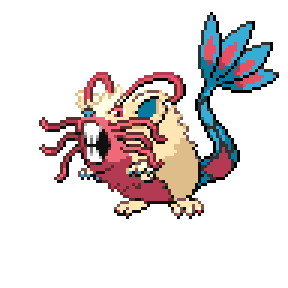
Miloicate make their burrows along the shores of lagoons, partially flooding the entrance to make them harder for other Pokémon to access. They are adept swimmers, feeding deep underwater in long dives.
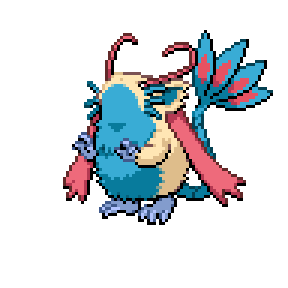
Milocargo are the prize Pokémon of many aquariums, the beauty of their patterned shells drawing many admirers. They are fastidious cleaners, spending most of their day seeking out algal growth within their enclosure and clearing it away.

Despite their spindly appearance, Salaesect have the strength to shatter boulders with a single swipe of their claws. They are vicious predators, carrying prey high into the sky before simply dropping them onto the mountain crags below.
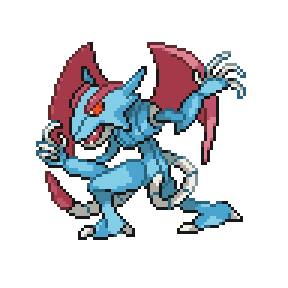
Klinkria emit constant puffs of smoke as they fly, their internal engine producing a constant stream of pollutants. Their songs have a constant undertone of clicks layered within them, the gears in their throat whirring as they chirp.
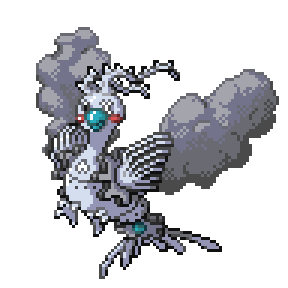
Zororita tend to natural groves, monitoring the area to ensure that the temperature and humidity are suitable for growth. If a new arrival threatens the safety of their home, they create an illusion of a fearsome apex Pokémon to scare them off.

Zorotic has fine control over water, using it to refract and reflect light through mists to create visual illusions. These illusions are usually used in an effort to entertain and amuse sailors and other Pokémon.

Zorogeist are found in farmers' fields after a full moon. They delight in using their illusion powers to disguise themselves as crops and wait for people to come close. They then leap out to surprise their unfortunate target when they get too close.
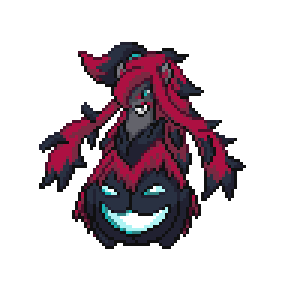
Zorofly are rarely seen in the wild thanks to their mastery of illusions. Swarms of Zorofly safely feed in flower meadows without worrying about predators, their wings glittering as they make the field appear to be filled with dangerous Pokémon.
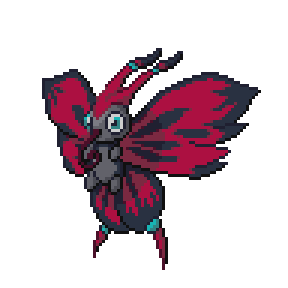
Sylklang uses the ribbons that make up their bodies as snares, wrapping and enveloping their opponent to disable them. Once a foe is trapped, Sylklang patiently waits until their foe simply gives up.
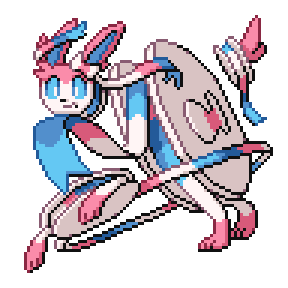
Nidogey puff up their chest as large as they can before they attack, trying to intimidate their opponents into giving up. If the display fails, they will fly horn-first at their foes, trying to inflict their poison to win the fight.
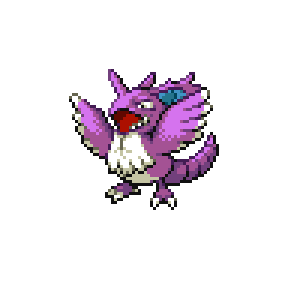
Nidotto flocks will aggressively chase away rival flocks from prime nesting sites. They have become a problem Pokémon for urban environments and are known to harass office workers simply trying to go to work.

Nidogeot soar through the skies, keeping an eye out for similarly sized bird Pokémon. They will try to bully out any Pokémon that are in the same skies as them, swiping at them with their tail and pecking at them.

Nidosaur absorb toxins from the soil in their environment, incorporating those toxins into their skin and leaves. They are ill-tempered Pokémon and aggressively defend their territory, their poisons seeping from their skin when angry.

Nidogma live within the calderas of active volcanoes, competing with one another for the warmest spots. The fumes they release when they are riled up are noxious, and it is advised to avoid breathing them in at all costs.

The rocks that form Nidocargo shells are very porous and regularly emit toxic gases that build up within their body. When threatened, they retreat within their shell and rely on their venomous spines to ward off harm.

Nidonub fur stiffens and bristles when they run into another one of their species. They posture and kick up snow to try and scare off their rival, only coming to blows if neither Nidonub backs down.
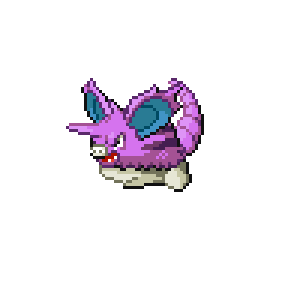
Nidopy are strong enough to topple trees by ramming into them. They use these fallen trees to mark out the boundaries of their territory, marking them with their tusks and periodically checking if any other Nidopy have done the same.

Nidophan tusks are hollow and can deliver a nasty venom when they puncture skin. Nidophan will roll into a tight curl and aim to scratch their foes with the tip of their tusks as they roll by to inflict this poison on them.

Nidolax tails are prehensile and are used to grab onto anything edible that is within reach. They are insatiable Pokémon and will gorge themselves on any food available, fighting one another to be the first to get to a meal.
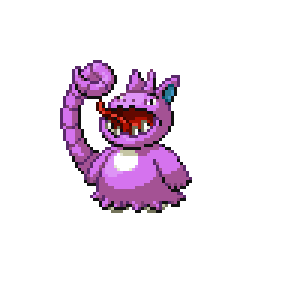
Nidoswine are strong enough to be used to haul heavy equipment across ice fields, their bulk and armour making them well-suited to the environment. Their venomous spines mean care needs to be taken to avoid accidentally being poisoned.

Nidocario uses its sharp senses to anticipate incoming attacks and counter them with swift and precise strikes. Any attack that does slip through its guard is met by a remarkably tough hide studded with poisonous spikes.
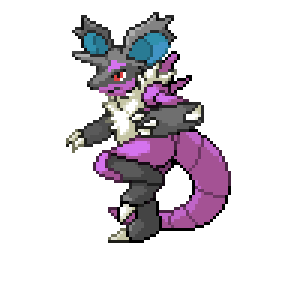
Nidocario uses its sharp senses to anticipate incoming attacks and counter them with swift and precise strikes. Any attack that does slip through its guard is met by a remarkably tough hide studded with poisonous spikes.
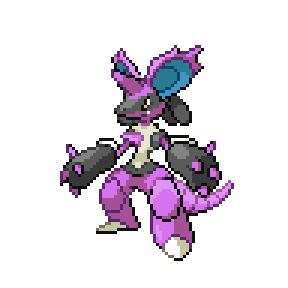
Nidosaur battle using thorny vines, whipping them around with great force. The thorns carry a painful toxin meaning that even a scratch from the vines allows them to win fights against much larger Pokémon.

Nidorina poison grows more virulent and aggressive the higher the levels of cortisol is in their body, this makes their toxins more dangerous the longer a battle goes on. They are highly combative and will seek out any intruder in their territory.

Nidorina poison grows more virulent and aggressive the higher the levels of cortisol is in their body, this makes their toxins more dangerous the longer a battle goes on. They are highly combative and will seek out any intruder in their territory.

Nidorina poison grows more virulent and aggressive the higher the levels of cortisol is in their body, this makes their toxins more dangerous the longer a battle goes on. They are highly combative and will seek out any intruder in their territory.

Nidopass stand motionless along the boundaries of their territory in family groups, lining the bounds for days on end. They are easily mistaken for statues when they stand guard, the façade only dropping when they abruptly attack trespassers.
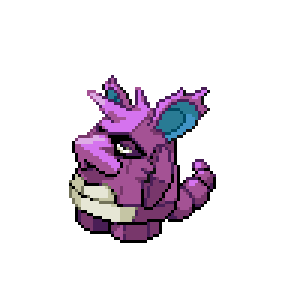
Nidoiard are suited to being trained by Ace Trainers thanks to their propensity to follow direction from those who are stronger. If they lose a fight, they grow sullen, encouraging their Trainer to rematch the Pokémon they lost to so they can win.

Nidodor roam city streets in a constant search for trash to consume, eating even the smallest morsels. Nidodor that have claimed city dumps as their homes jealously guard it and will fight any challenger trying to wrest it from them.
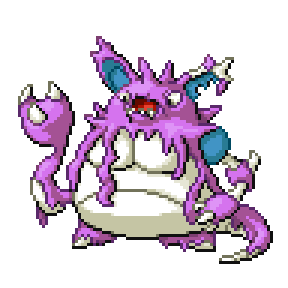
Nidobat scream out infrasonic shrieks that are too high-pitched for the human ear to hear. They use these shrieks to navigate and locate other Pokémon, listening for echoes and then diving at Pokémon with their venomous horns.
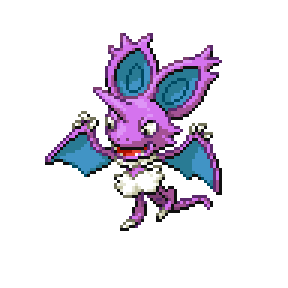
Nidophox are able to draw out the latent elemental energies found within Moon Stones, wielding the cosmic power within them as both a weapon and a defence. Their sense of where to find the elemental stones makes them popular companions of hikers.
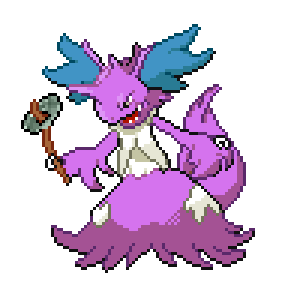
Nidokey troops claim large swathes of forest as their own, hooting and chasing out other Pokémon that try to take fruit from the tree tops. They attack interlopers with a mix of frenzied scratches and powerful tail swipes.

Nidokey troops claim large swathes of forest as their own, hooting and chasing out other Pokémon that try to take fruit from the tree tops. They swing rapidly through the trees with their long limbs, chasing interlopers for miles.

Nidokey troops claim large swathes of forest as their own, hooting and chasing out other Pokémon that try to take fruit from the tree tops. They grapple Pokémon that refuse to run, stabbing with their venomous horn to deter future trespassing.
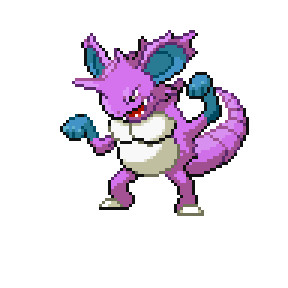
Nidowag battle with one another for the prime nesting grounds along river banks, attempting to ram each other with their venomous horns. They have toughened belly scales to help protect them from their rivals.
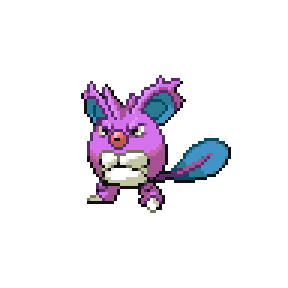
Nidochoke are competitive body builders, comparing themselves against other Pokémon in contests of strength. These contests can sometimes be entirely one sided, Nidochoke simply copying whatever activity they see and trying to outdo their 'competitor'.

Kyogia live in the deep ocean and can only be discovered by the most determined of Trainers. Though rare, they have been seen above the waves and always are accompanied by powerful storms.
There is evidence that Groublade were a common companion to medieval nobles in Hoenn, the Pokémon being used to create chasms in battle. Legendary accounts of Groublade point to their true power being unlocked alongside a mysterious ruby gemstone.

Grouslash were a prized Pokémon in medieval times, often battling alongside highborn knights. They are adept with both offense and defence, their shield and sword each housing an eye and allowing them to react to any attack or opening near instantly.
Grouslash are powered by fiery rubies found in remote locations. Their blades radiate an intense heat, enabling them to combat Water-Type Pokémon by evaporating their attacks with a single swing.

Raygon-Z carefully monitor weather broadcasts for irregularities in the day's forecast. If they predict particularly dangerous weather, they soar through the sky, projecting a warning message for those below to give them time to seek shelter.
Though rare in the present day, Dialras are commonly depicted in pictographs within ruins in Sinnoh. Research into Hisuian culture shows that they played an important role in ferrying travellers.
Though rare in the present day, Dialras are commonly depicted in pictographs within ruins in Sinnoh. Research into Hisuian culture shows that they played an important role in ferrying travellers.

Though rare in the present day, Dialras are commonly depicted in pictographs within ruins in Sinnoh. Research into Hisuian culture shows that they played an important role in ferrying travellers.

Palkcargo can be found within the craters of super volcanoes, feeding on the ash deposits within. Their bodies metabolise the minerals from the rocks and produce a strange gas that, when inhaled, distorts the affected person's perception of space.

Palkrom generate immense power within their bodies by manipulating space to create an engine that functions like perpetual motion. This allows them to produce incredibly devastating bolts of electrical power.
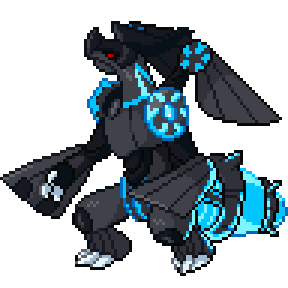
Palkrom generate immense power within their bodies by manipulating space to create an engine that functions like perpetual motion. This allows them to produce incredibly devastating bolts of electrical power.
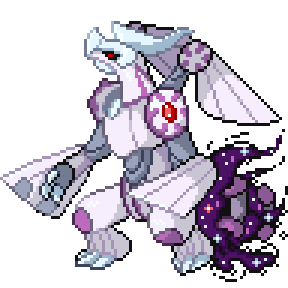
Palkoal produce a super-dense gas from vents in their shells that swirl and coalesce into a miniature nebula. Their control over space allows them to condense the gas and control its spread, their starscapes remaining centred above their shells.
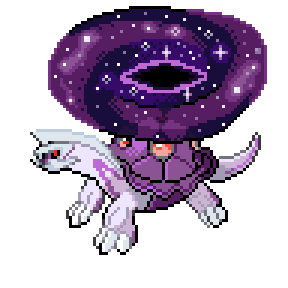
Girarow are found around the peak of Mount Coronet, emerging from small rifts that lead to the Distortion World. They are unable to remain in the world for long under their own power, individuals only remaining for a few days before vanishing again.
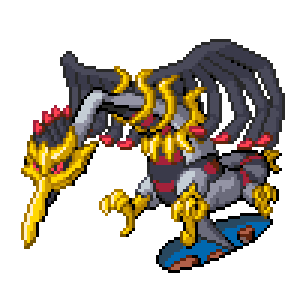
Girarow are found around the peak of Mount Coronet, their bodies eerie and ephemeral. Pokémon researchers theorise that these Pokémon are an extradimensional shadow cast on our world by a Pokémon living in a different dimension.
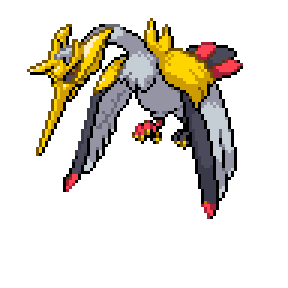
Girachoke were revered in ancient civilisations for their power to break holes between dimensions. They take joy in being praised and are happy to demonstrate their strength to those around them.

Regicargo can be found within the ruins of ancient civilisations that were wiped out by volcanic eruptions. They are largely inactive Pokémon, only stirring when they sense the rumbling of tectonic activity deep beneath the earth.
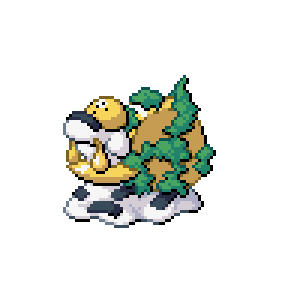
Darkarp can only be found during pitch black nights, their eyes glowing an eerie blue in the dark. They are physically unimpressive but they exude an unsettling aura, creating nightmares of great destruction to come.
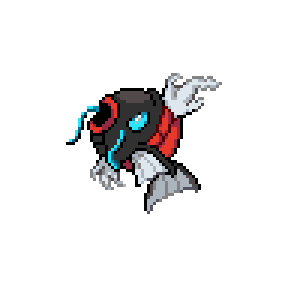
Darkdos draw power from the fears and nightmares of those that have seen them. They go on terrible rampages, actively seeking to destroy ships and attack anyone that comes across them in an effort to instil terror.
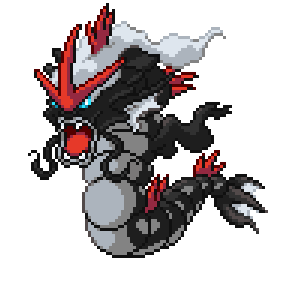
Darkzor swarm together late at night, darkening the sky as they fly overhead. They are drawn to negative emotion and subconscious fears and will flock toward those suffering from nightmares.
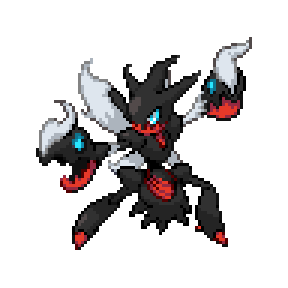
Darkzor swarm together late at night, darkening the sky as they fly overhead. They are drawn to negative emotion and subconscious fears and will flock toward those suffering from nightmares.

Traveling Pokémon Trainers speak in hushed whispers of Darktias, a legendary Pokémon that visits unending nightmares on those far from the comforts of civilization. Tomes say that only the light of the full moon can wake those trapped by its malice.
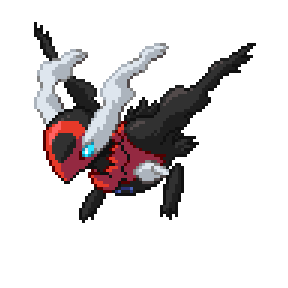
Darkder burrow their way into the hulls of large ships, seeming to prefer to cluster around the sleeping quarters. Passengers who sleep on Darkder infested ships often find themselves caught within night terrors that are difficult to wake from.
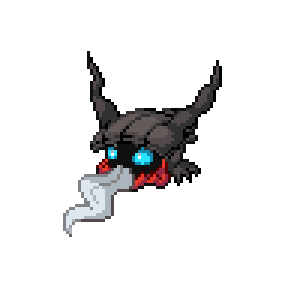
Genedily are fossil Pokémon reconstructed from fragmentary remains and subsequently augmented with modern technology. Pokémon palaeontologists remain sceptical that Genedily are accurately resurrected.

Geneki are entrusted with security key cards within high-security facilities. They are trained to recognise who has clearance for a given area, blasting anyone without clearance with a powerful Techno Blast.
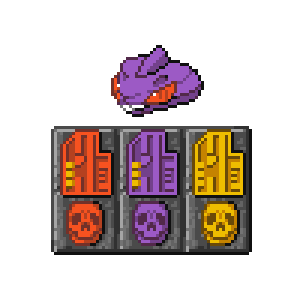
Reshieon have an intense dislike of toy replicas of Pokémon, using their sticky tongues to grab onto toys and break them apart. The leading theory is that they view the replicas as distortions of the true forms of the Pokémon they depict.

Reshieon turn invisible when they are confronted with falsehoods, refusing to offer help unless the one asking is honest with them. They have no concept of morality, and happily aid in any task provided the one making the request is honest in asking.

Reshieon turn invisible when they suspect someone has dishonest intent, watching the person carefully to try and determine their motivations. If they feel their suspicions have been proven correct, they attack with a powerful Fusion Flare.
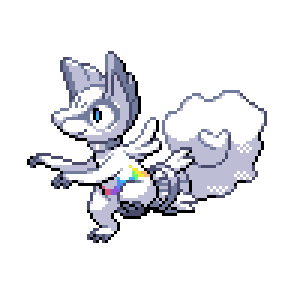
Reshiking contain an intense draconic energy within their bodies, their fiery temper a manifestation of this energy. They are dangerous Pokémon to encounter in the wild, their territories scarred and damaged from their rage.

Reshicie jet across the sky at high speed, leaving a fiery trail in their wake that burns away clouds and can turn even the stormiest of skies clear. Their passage draws crowds of onlookers, eager to watch the spectacle from afar.

Clefpie silk is used in the textile industry to create clothes that are light and airy. The silk has the strange property of glittering like silver under the light of the moon.

Clefwak wield shards of meteorite as a weapon, swinging them with great force. They use additional pieces of meteorite as armour, protecting their heads and enabling them to fight for longer periods of time.

Clefpie silk is used in the textile industry to create clothes that are light and airy. The silk has the strange property of glittering like silver under the light of the moon.

Local legends speak of Clefpod falling as shooting stars into the forests surrounding Mt Moon. Though there's no evidence of it, Clefpod appear to have an affinity for the full moon and are most visible in their trees in bright moonlight.

Clefree's wings glitter under the light of the moon, their wing scales reacting to the cool lunar rays. Flights of them look like shooting stars at night and are a popular sight for tourists to seek out.

Clefkarp hide deep underwater during the day but will perform great leaps out of it toward the sky on clear nights when the moon is visible. A common rumour is that they are trying to return to their home.
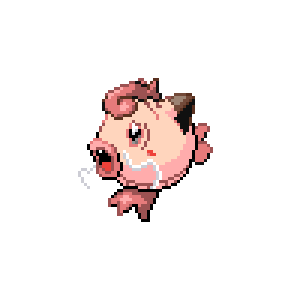
Clefnyte shelter their bodies inside stone shells, protecting themselves from harm. They incorporate parts of Moon Stones into their shell, using their tentacles to attach them to themselves.

Clefnyte shelter their bodies inside stone shells, protecting themselves from harm. They incorporate parts of Moon Stones into their shell, using their tentacles to attach them to themselves.
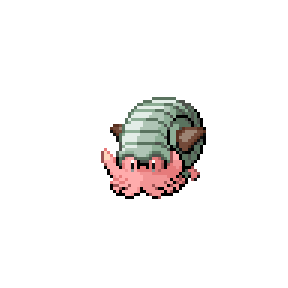
Cleftini are only ever seen in the high mountains under the light of a full moon. They hide themselves away for the rest of the lunar month, and seeing one in the wild is considered a sign of good fortune.

Clefgeot have feathers that sparkle under moonlight, creating a glittering effect as they move. Flights of them in the night sky are easily mistaken for meteor showers.

Clefma flit rapidly around mountain slopes in search of meteor fragments to add to their nests. They have a preference for fragments that include shards of Moon Stones, their glint sending them into an excited frenzy.

Clefsire are most active at night, remaining underwater until they can feel the touch of moonlight on their skin. They waddle out of the water and splash about happily in the muddy banks when a full moon is overhead.

Clefsaur flowers bloom at night, their leaves unfurling under the moonlight. Their flowers give a mellow fragrance that is said to help people get a good night's sleep.
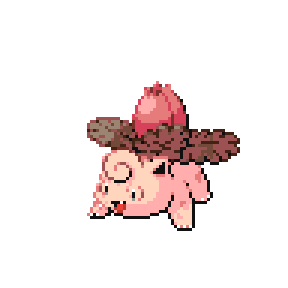
Cleflax's appetites wax and wane with the phases of the moon. Their appetite is most easily satiated during a full moon, but they find themselves ravenously consuming anything they can find during a new moon.

Clefchic root around forests in search of broken pieces of meteorite, rolling them back to their nesting sites. They will perform happy chirps whilst using the pieces as a stage, trying to draw fellow Clefchic to themselves.
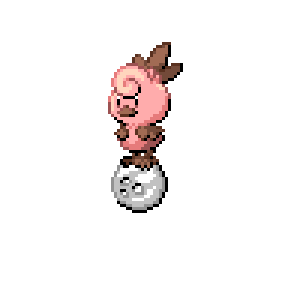
Clefslash are native to Pinkan Island, making their homes in the caves of the island. They roam around in the caves for food, only emerging outside when the moon emerges, as they prefer the dim light.

Clefbusken are prone to growing excitable and overeager when getting into Pokémon battles, swinging with unfocused but rapid scratches and kicks. They seek their Trainer's approval straight after a fight, dancing happily in a circle if they do well.
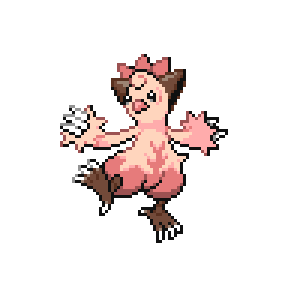
The playful nature of Clefziken make them popular companions for Trainers seeking to compete in Pokémon contests. They dance on stage with a mix of high kicks and rapid flourishes, preferring to put on evening performances.

Cleflia are commonly used in productions of TV shows centred around battles for justice and hope against overwhelming odds. Their ability to conjure glittering starscapes with their psychic powers creates dazzling visuals for the shows.
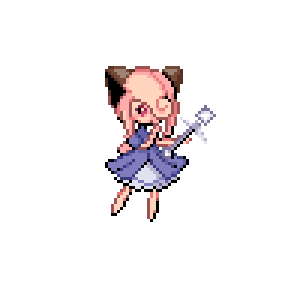
Clefslash are native to Pinkan Island, making their homes in the caves of the island. They roam around in the caves for food, only emerging outside when the moon emerges, as they prefer the dim light.

Clefsaur carry a large seed on their back that mimics the appearance of the moon. The seed changes phase and appearance as the moon does, its surface growing lighter and darker throughout the month.
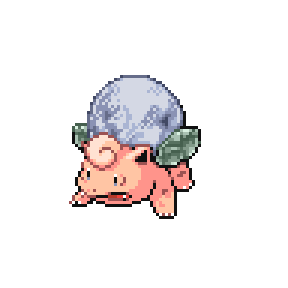
Clefrina spines produce a toxin that has different properties depending on the phase of the moon. This shifting property of their poison makes it difficult to treat Clefrina poisoning in the wild, but it is being studied by pharmaceutical companies.

Clefqueen are most active at midnight, roaming their large territories under the light of the stars. When the moon is full they perform elaborate dances for one another that Pokémon Researchers believe reinforces where their territory boundaries lie.
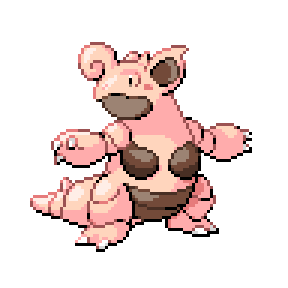
Clefran build warrens near the base of mountains. When they sense moonlight, they will emerge from their homes and frolic together in family groups, though their play turns violent if outsiders attempt to join them.

Clefrino journey from across several miles to gather in specific glades in time to watch the full moon together. Under the moon's light, they playfully scrap with one another, the winning Clefrino expanding their territory by taking from the loser.
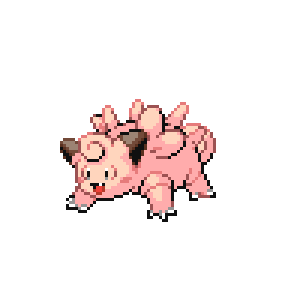
Clefking battle with one another over sites where Moon Stones can be found, seeking to control the largest number of the precious stones. Trainers are advised to be wary of them when searching for Moon Stones, as they may be unexpectedly attacked.
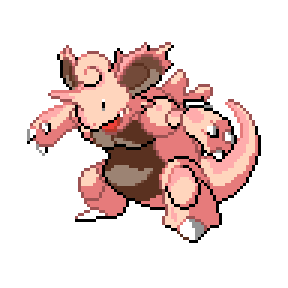
The affinity that Clefairy have for fallen meteors and Moon Stones have led to some Pokémon Researchers to theorise that they would be a Pokémon well suited to space exploration. Trial programmes have begun in Sinnoh to make them space suits.

Clefeary fluff sparkles with the colours of the night sky, glittering and shifting as the months change. They are excited to take their Trainers on walks at night, gesturing to the stars above with joy and chattering happily.
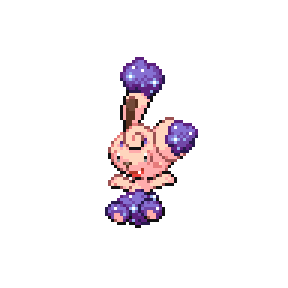
Clefedo live in the deep ocean, swimming at high speed through the inky depths. They are drawn to anything that glitters in the deep and have a special affinity for fallen meteors, finding themselves drawn to the lunar energies contained in them.
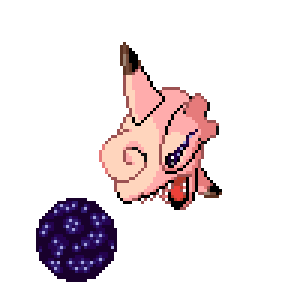
Clefedo live in the deep ocean, swimming at high speed through the inky depths. They are drawn to anything that glitters in the deep and have a special affinity for fallen meteors, finding themselves drawn to the lunar energies contained in them.
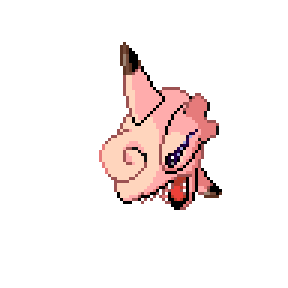
The flower blooming on the heads of Clefplume has gorgeous midnight blue petals that reflect the light of the stars. They search for mountain meadows in remote areas, standing under the night sky and basking in the light of the moon.
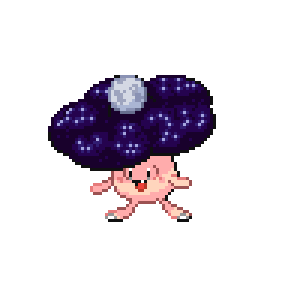
The mushrooms growing on the backs of Clefras are extremely sensitive to light, only able to tolerate dim light levels. As a result, they shelter underground until night time, emerging under the light of the moon to forage.

The mushroom sprouting on the back of Clefsect hijacks their nervous system, compelling them to seek out dimly lit areas to release their spores. They are mostly seen by people on the night of the full moon, their mushroom glowing in the night.

Clefkaboo fall from the sky on starry nights in the Autumn. They have an affinity for the harvest and will aim to land in fields ripe for harvest, much to the annoyance of the farmers.
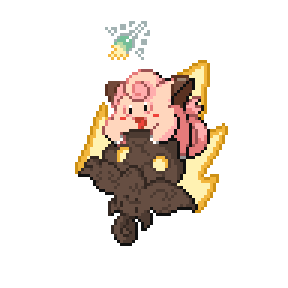
Clefkaboo fall from the sky on starry nights in the Autumn. They have an affinity for the harvest and will aim to land in fields ripe for harvest, much to the annoyance of the farmers.
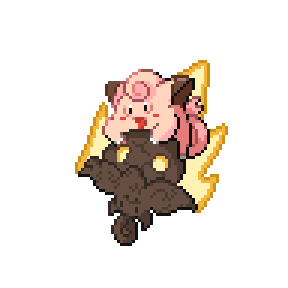
Clefduck sense the relative position of astral bodies, a psychic aura manifesting around them while allowing others to see what they can sense. Their projected aura is difficult to maintain, causing severe headaches over long periods of projection.
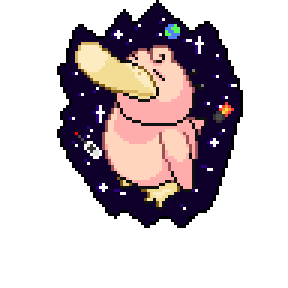
Clefkey cavort with one another under the light of the moon. They are secretive and don't like to be disturbed. Should their dance be interrupted, they grow hostile, working together to mob whoever dared to disturb them.
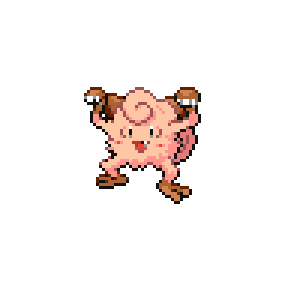
Clefnine midnight-blue fur glitters with constellations of light. Their fur is coarse and takes many days to weave into a workable material for clothing, meaning garments woven from their fur command high prices.

Clefnine are nocturnal Pokémon, spending the majority of the day resting and waiting for the moon to rise. They are playful under the light of the moon and enjoy racing one another across the landscape for many miles.
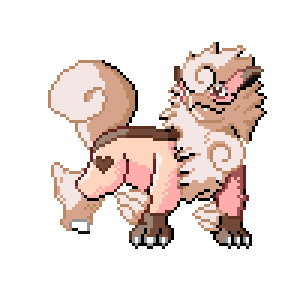
Clefwhirl can be found in the lakes left from meteorite impacts, often nesting around the remnants of the meteorite. They are protective of their lakes, spraying Water Guns at people who try to collect samples from their home.

Clefetchd hunt for freshly grown sprigs of plants that sprout at night. They carry these sprigs proudly, tapping them against the sprigs of other Clefetchd as they perform elaborate dances under the moonlight.

Clefetchd hunt for freshly grown sprigs of plants that sprout at night. They carry these sprigs proudly, tapping them against the sprigs of other Clefetchd as they perform elaborate dances under the moonlight.

Zekans can generate significant amounts of power, their bodies constantly radiating the energy into their environment around them. They will form an ouroboros in an effort to contain their own power whilst not in battle.
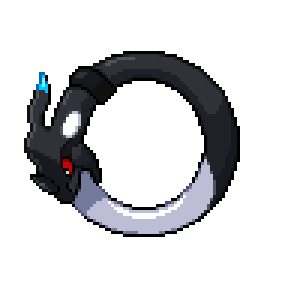
Zekbok flare their wings when they feel threatened, using them to make themselves appear larger and more dangerous than they are. Their bodies glow an electric blue when they charge up to attack, able to belch forth a caustic breath.

Zekviper move in sinuous motions across the ground, a trail of scales along their neck glowing a brilliant blue as they build up electrical charge. They can discharge their power all at once, unleashing a violent Fusion Bolt in the blink of an eye.
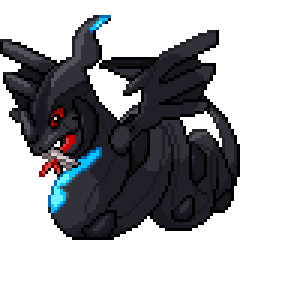
Kyutina has a very unstable form and struggles to manifest itself into our dimension. Pokémon researchers believe that Kyutina is only ever able to appear in an incomplete form, unable to truly leave its home dimension.

Kyutina has a very unstable form and struggles to manifest itself into our dimension. Pokémon researchers believe that Kyutina is only ever able to appear in an incomplete form, unable to truly leave its home dimension.
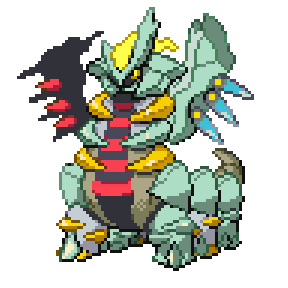
Kyudisc leave a wake of ice crystals behind themselves as they swim, creating a sparkling trail in the water. They are rare and elusive even in their home waters and are a prized catch for fishermen.
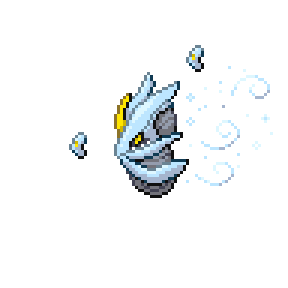
Rosecargo blooms have a pleasant, earthy aroma that varies in intensity depending on how high the mineral content of their water is. High mineral content results in their flowers having a smell reminiscent of petrichor.
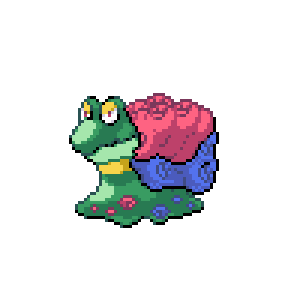
Rosesect can sometimes be found assisting florists with their flower arrangements. Though they have a keen interest in flowers, they seem to be very uninterested in customer service, often simply throwing bouquets at people.
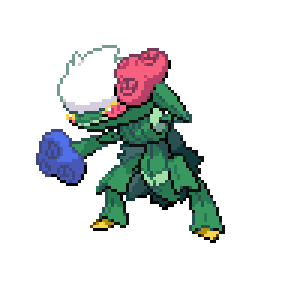
Rosesect can sometimes be found assisting florists with their flower arrangements. Though they have a keen interest in flowers, they seem to be very uninterested in customer service, often simply throwing bouquets at people.
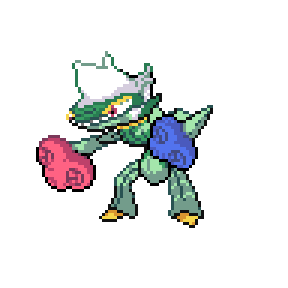
Rosesect can sometimes be found assisting florists with their flower arrangements. Though they have a keen interest in flowers, they seem to be very uninterested in customer service, often simply firing bouquets at them from their cannon.
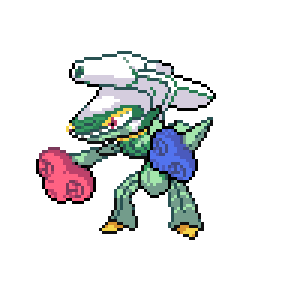
Rosenine nectar is a common ingredient in many perfumes, adding smoky floral notes that lend an elegant edge to the perfume. Rosenine are popular with Aroma Ladies, who take great care to cultivate their flowers to be distilled later.
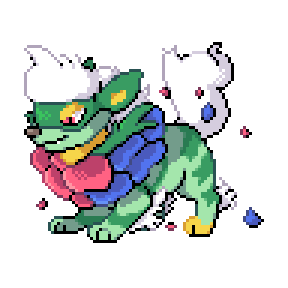
Drifbtales inflate the balloon on their tail by using their body heat to pump hot air within it. They can drift through the air if they inflate their tail enough, paddling across the sky to get to their destination.
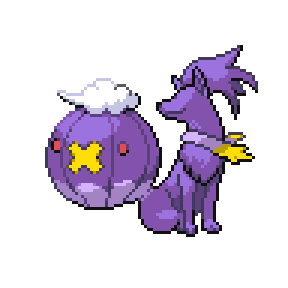
Drifbtrio feed on natural gas, rapidly expanding and floating through their caves when they find a pocket. Miners keep an eye on Drifbtrio populations, using their behaviour as a guide to determine when they've struck a dangerous gas pocket.
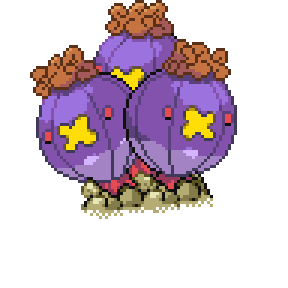
Drifbtrio drift above many fairgrounds, their three heads constantly looking around for balloons that have been accidentally released. When they find one, they drift over and grab it, returning to the ground and returning it to the child who lost it.
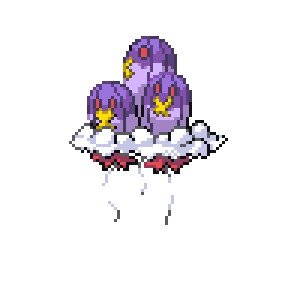
Ninrow rapidly vibrate their wings to communicate with one another over vast distances, loud chirps and buzzes filling the air, often to the annoyance of nearby residents. They are aggressive when interrupted, pecking at people who come close.
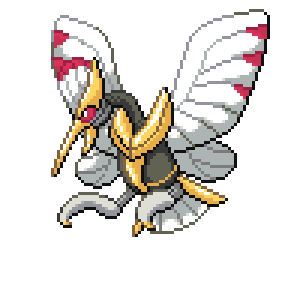
Ninchu surround their body with an electrical charge that reacts to the fields of other living creatures. When they sense movement, their muscles move without needing conscious input, granting them incredible reaction times.

The carapace of an adult Ninterra is fertile and able to support plant growth. Ninterra will use these plants to blend into their surroundings when stationary, and often end up playing host to much smaller Bug-type Pokémon.
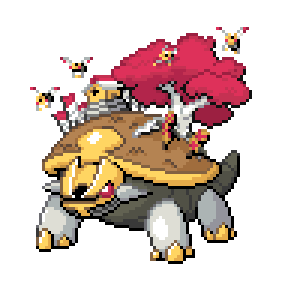
Using their wings, Niniard can move at extremely high speed and use their viciously sharp blades to cut through their opposition. They are popular Pokémon with aspiring Ace Trainers due to their highly adaptable battle style.
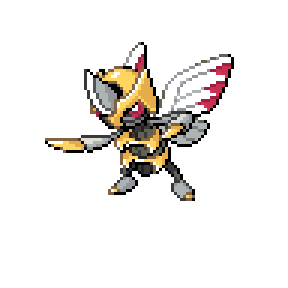
An exceptionally fast Pokémon, Ninroc was commonly used as a mount by messengers prior to the industrial revolution. In modern times, it is still popular at racetracks or simply as a domestic Pokémon.

Banqueen haunt abandoned mansions and abodes, drifting through empty corridors with their head held high. If anyone dares set foot inside, Banqueen will abruptly appear and try to scare them away, aiming to protect their home from intruders.
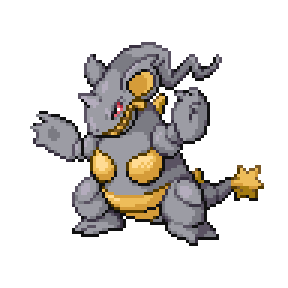
Banette are suffused with malevolent energy that they weaponise to inflict curses and misfortune on those unfortunate enough to cross their path. They wield an oversized needle that lets them focus this curse energy and project it further.
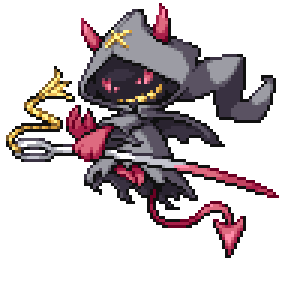
Bantales feed on negative emotions and incorporate the fears and misgivings of those around them into curse energy. The curse energy can be released by splitting open the seams of their many tails, bringing grave misfortune to those afflicted.

Bantales feed on negative emotions and incorporate the fears and misgivings of those around them into curse energy. They store this curse energy in each of their many tails, waiting for an opportunity to unleash it.
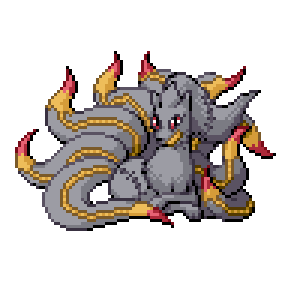
Banpet possess abandoned children's toys, puppeteering them and using them to scare anyone who tries to reclaim the toys. Their true bodies are only visible through a Silph Scope.

Banpet possess abandoned children's toys, puppeteering them and using them to scare anyone who tries to reclaim the toys. Their true bodies are only visible through a Silph Scope.

Banine lurk in abandoned shopping malls, prowling between toy stores in search of trespassers. Those who come across them are advised to exercise caution, as they act friendly to draw people close, then bite down with a powerful Fire Fang.

Banwag are parasitic Pokémon that can be found infesting stagnant waters. They latch onto larger Pokémon with their circular mouth, draining away their host's emotional energy and leaving them lethargic and disinterested in the world around them.

Roesect's body constantly crackles with electrical energy, disrupting most electronic devices that are used near them. Engineers typically advise using additional insulation on electrical wires in settlements near Roesect populations.
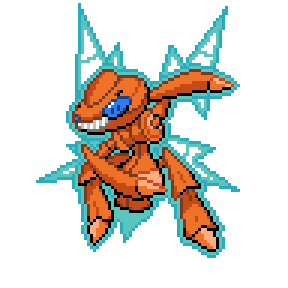
With a nearly transparent and gelatinous body, Reuniturn lures Pokémon toward itself using its light in the deep sea. Its eyesight is poor, so it relies on its immense Psychic powers to sense the approach of its prey.

With a nearly transparent and gelatinous body, Reuniturn lures Pokémon toward itself using its light in the deep sea. Its eyesight is poor, so it relies on its immense psychic powers to sense the approach of its prey.

Reunirow manipulate their cytoplasm to form wing-like structures, enabling them to fly and search for food. The thick gel is resistant to harm and can be rapidly withdrawn into the core of the body if a threat is presented to them.
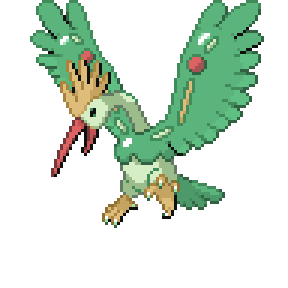
Reunirow manipulate their cytoplasm to form wing-like structures, enabling them to fly and search for food. The thick gel is resistant to harm and can be rapidly withdrawn into the core of the body if a threat is presented to them.
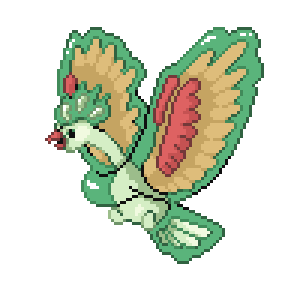
Reunister gather up the discarded shells and spines of long dead shelled Pokémon, using them as structure and protection for their gelatinous core. Using their psychic powers, they propel the spines they gather up as projectile weapons.

After bathing in enough moonlight and witnessing enough full moons, Clefdos take to the skies and fly out to be amongst the stars. They will rarely return to the pools they lived in as Clefkarp, but can sometimes be seen during a new moon.

After bathing in enough moonlight and witnessing enough full moons, Clefdos take to the skies and fly out to be amongst the stars. They will rarely return to the pools they lived in as Clefkarp, but can sometimes be seen during a new moon.

Cleftret are nocturnal Pokémon that frolic together in the moonlight. They have acute hearing and will scatter if approached by Pokémon or people.
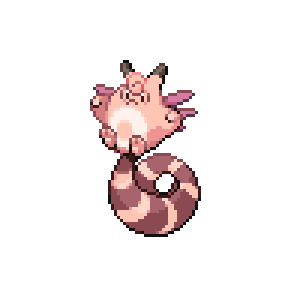
Clefret are drawn to meteor craters and will make burrows inside the fallen rocks. They can be seen on a full moon chasing one another around the meteors, cavorting together in the moonlight.

Clefa have a strange affinity for the stellar energies contained within Moon Stones. They will seek out even the smallest fragments of the strange stones, the energies within them empowering their bodies.

Clefgeot chase meteor showers across the night sky, barely visible against the light of the moon. Ancient legends surrounding Clefgeot say that they came to our world on a meteor and that they are searching for more of their kind.

Clefchu make excellent companions for young children who are scared of the night. Their tails light up with a soft pink glow thanks to their electrical power, an ability they make a habit of using when they see the moon rise at night.
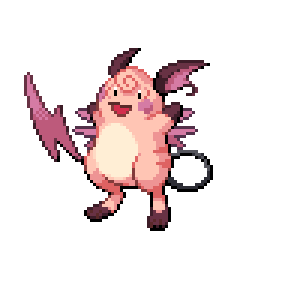
Cleftic are only ever seen during the night, drawn to the surface of the ocean during moonlit nights. The movements of their tails leave sparkling trails in the water reminiscent of shooting stars in the night sky.
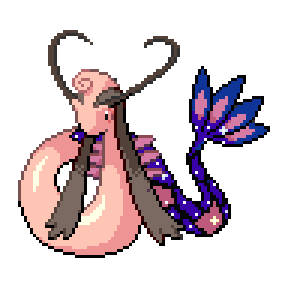
When two Clefable fuse into Clefable, they become innately attuned to the movement of celestial bodies. They can manifest this energy and summon miniature planets and moons, using them to defend themselves.

Clefkoth are immensely lazy Pokémon, spending multiple entire weeks in a row sleeping in one place. The only thing that seems to rouse them is the light of a full moon, which pushes them to eat, drink, and search out a new resting spot.

Clefbas school together under the light of the moon, with the size of the school increasing proportionate to the intensity of the moonlight. They are popular with aquariums due to their vibrant pink colouring.

Clefkey's ears are sensitive enough to sense people's mood, listening for changes in heart rate and breathing. Attempts to train them to help sufferers of anxiety backfired as they frequently attacked the perceived cause of the sufferer's worries.

Clefnine are reclusive Pokémon that typically shun human contact. Their hearing is exceptionally sensitive and, if they hear a person approaching, they are prone to fleeing vast distances to get somewhere more isolated.
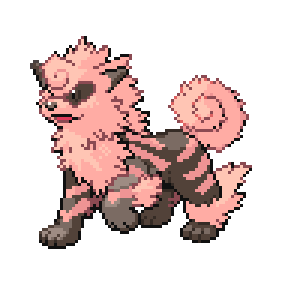
Clefnine are reclusive Pokémon that typically shun human contact. If forced into a fight, Clefnine will use powerful Flamethrowers that shimmer with eerie pale moonlight.
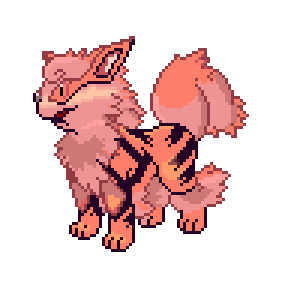
Clefnine are reclusive Pokémon that typically shun human contact. Researchers theorise that they prefer to live in wilderness with low levels of light pollution, allowing them to more easily chase after falling meteorites.
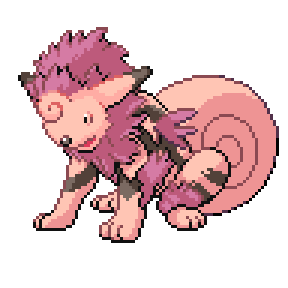
Clefnine are reclusive Pokémon that typically shun human contact. Poachers attempt to catch Clefnine in order to harvest their fur, which is said to grant good fortune to those who wear clothing made of it.
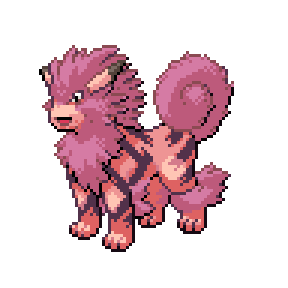
The spiral on Clefwhirl's stomach gradually spins, glittering in the dark as it does so. A common legend holds that the pattern can be found in the cosmos, though astronomers have been unable to confirm the story.

Cleftle have tiny wings sprouting from their shell. Pokémon researchers have held long debates about the purpose of these structures, the leading theory is that they help improve Cleftle's ability to swim through water.

Whimsidle have plush fluff covering each of their body segments. The fluff can be spun into garments, but is coated in a caustic venom that needs multiple washes to be cleaned away.

Whimsidle have plush fluff covering each of their body segments. The fluff can be spun into garments, but is coated in a caustic venom that needs multiple washes to be cleaned away.
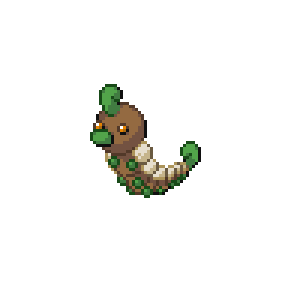
Whimsicargo cotton is a popular material to crochet with, the fine threads able to be spun into a luxurious yarn. Clothing made from their cotton keeps the wearer warm even on the coldest days, giving the feeling of being under the light of the sun.

Whimsicor coats itself in light fluff and fine leaves to help it catch the wind. It uses its claws to climb up high before releasing itself, gliding rather than flying across large distances.
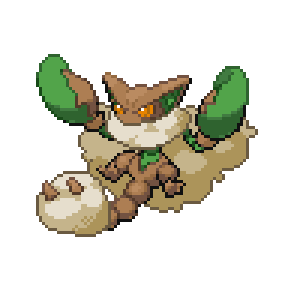
Whimsitales are a common sight at Pokémon contests, their many fluffy tails being a point of pride for both the Pokémon and their Trainer when properly groomed. They are playful on stage, prancing around and eager to impress the crowd.

Whimsiplume's fluff has a floral scent that makes it a popular material for clothing and fabrics. They often play a role in the textile industry, happily offering their services to help make new clothes.
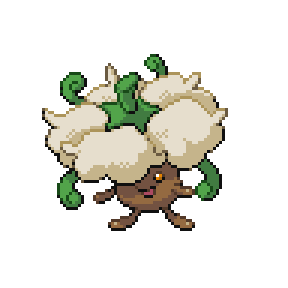
Whimsiras live on exposed mountain grasslands, digging through the thin soil in search of food. When strong winds blow through, they clutch tightly to boulders with their claws to keep themselves from being blown away.

Whimsiras live on exposed mountain grasslands, digging through the thin soil in search of food. When strong winds blow through, they clutch tightly to boulders and shake their body, releasing their seeds into the breeze.

Whimsiras live on exposed mountain grasslands, digging through the thin soil in search of food. Their fluffy mushrooms are a popular ingredient in many stews, the absorbent surface allowing it to soak in the flavour of the liquid around it.

Whimsiduck cotton is used to make cushions for people who struggle with headaches. Their cotton has psychically absorbent properties, leeching away mental pain when close to a person's head.

Whimsiduck cotton is used to make cushions for people who struggle with headaches. Their cotton has psychically absorbent properties, leeching away mental pain when close to a person's head.
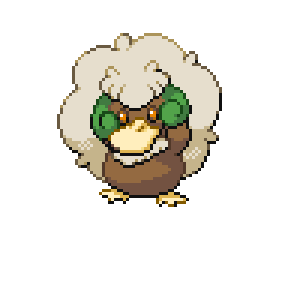
Whimsitoise use their light and fluffy cotton to gather water, soaking up as much as they're able to carry. They take the water to dry fields, using their cannons to spray as much of the land as possible and keep the area lush and growing.

Krookots rove in gangs through cities, each striving to look like the coolest Pokémon in their group. They use their empathic sense to find people likely to be impressed by their attitude, attempting to get food in exchange for impressing the person.
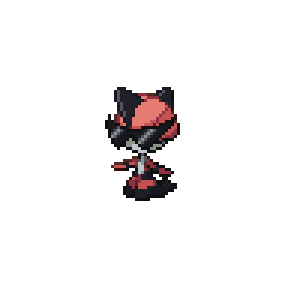
Cofados are secretive Pokémon that can only be found in the tombs of long lost civilisations. They grow aggressive in anything other than pitch blackness and will attack explorers and archaeologists that try to explore their homes.

Cofaring possess the golden funerary statues of a long-gone civilisation and can animate them, bending them to their will. The statues were originally intended as guardians of the dead, but now Cofaring will attack anyone who comes near.

Cofatales pace around within sealed tombs of ancient civilisations, patiently guarding the forgotten relics of the past. Should they be disturbed, their eyes glow a baleful red and they summon shadowy hands from their many tails to defend their crypt.

Cofatales played an important role in ancient cultures, Archaeologists believing they were revered as the judges of life and death. They can still be found haunting ancient tombs, watching silently from the shadows lit only by their conjured embers.
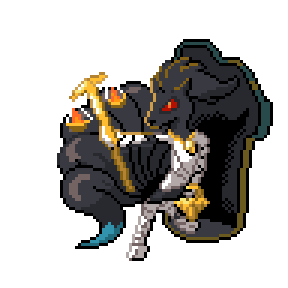
Cofatrio are found within ancient tombs that have been disturbed by archaeologists. They are possessive Pokémon that jealously guard the relics of the past and have been known to burrow into local museums to retrieve artifacts.
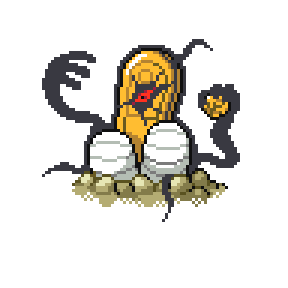
Cofatrio are found within ancient tombs that have been disturbed by archaeologists. They are possessive Pokémon that jealously guard the relics of the past and have been known to burrow into local museums to retrieve artifacts.

When at rest, Cofape appear to be simple headbands from long-gone civilisations. Should their headband be handled, they manifest their ethereal body and fly into a rage, inflicting dreadful curses on whoever touches their headpiece.
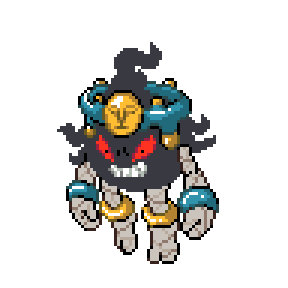
Galvanqueen craft webbed shelters to weather storms in their mountain homes. Their ability to construct these shelters anywhere at any time allow them to live in more inhospitable environments than most other Pokémon.

Galvansian spin complex webs, charging each of the strands with a constant pulse of electricity. They curl up with their whiskers resting against the web, waiting until they feel something get trapped before pouncing on it.

Galvanape weave webs rapidly with their many arms, using the sticky threads to bind their opponents and limit their movement. Once their foe is immobilised, they pummel them relentlessly.

Ferrokoal possess a steel shell that leaves them nearly impervious to harm. The weight of the shell makes their movements cumbersome, but tendrils that sprout from their back help them to navigate even the roughest terrain.
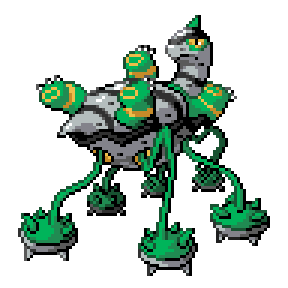
Ferrotoise are found in aquifers deep underground, using their thorny tail and cannons to cling to the ceiling above the water. Though they can breathe underwater, their bodies are too dense to swim and they have to climb out if they fall in.

Litpie give off a scent as they burn that attracts Bug-Type Pokémon from a wide area. It's recommended that Trainers keeping a Litpie indoors do so with the windows closed to prevent an infestation.
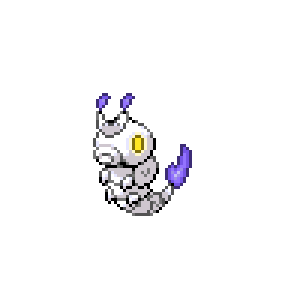
Litdrill wield ghostly flames that flare brighter when they're angry or upset. When a swarm of them are aggravated they can inadvertently start forest fires.

Liticate can be found in historic castles and palaces, living within nooks and crannies that are hard to reach. They emerge at night to feed on candles, gnawing through the wax to add to their own bodies so that their flame doesn't fully melt them.
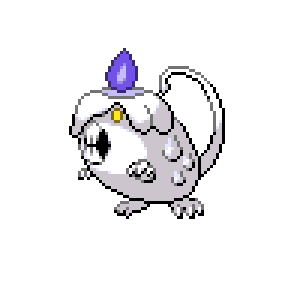
Litchu form within long-abandoned power plants, drawing energy from derelict machines and engines. Engineers decommissioning these facilities often report eerie blue lights deep in the dark corridors and halls.

Litkip capture swamp gas in their waxy bodies, protecting the precious fuel from the water as they dive beneath the surface. The gas burns an eerie blue, making them glow. When they surface, Litkip emit a ghostly flame.
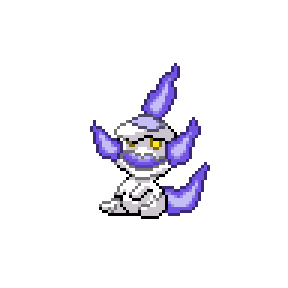
Litkip capture swamp gas in their waxy bodies, protecting the precious fuel from the water as they dive beneath the surface. The gas burns an eerie blue, making them glow. When they surface, Litkip emit a ghostly flame.
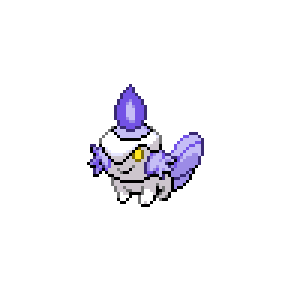
Litomp lurk along the edges of swamps and quagmires, their bodies burning an unearthly purple in the gloom. They use their lights to lure travellers off the safe paths through their homes, getting the hapless people stuck.

The flames of wild Litpert burn without heat, creating an eerie purple inferno in the swamps. Their flames burn higher and stronger when they can feed on confusion and fear, and they aim to terrify travellers passing by.
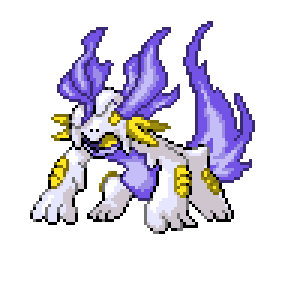
Litrino vigorously shake their head to splatter their wax onto everyone around them. The wax has a numbing property, making it hard to notice its presence, wicking away the life force of those unfortunate enough to be struck as it cools.
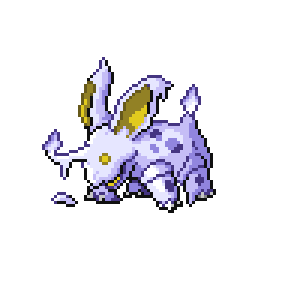
Litwick burn with a far more intense flame than their unfused counterparts. The ghostly flame is difficult for them to control and forces them to drain energy from the surrounding area to sustain it.

Litile spend their days buried just under the surface of the sand, their flames creating a heat shimmer in the desert that fools travellers into thinking there is an oasis around them. They strike out at anyone that falls for their ruse.
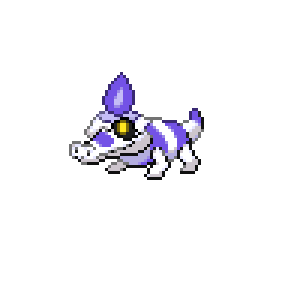
Litrok have waxy bodies that are pliable and unpleasant to the touch. Their bodies are cold, a result of their eerie ability to siphon the life energies of Pokémon and people around them.
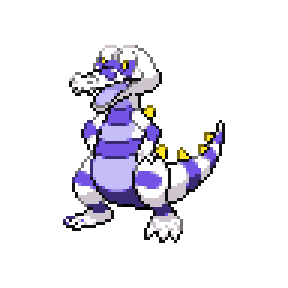
Litplume's petals are formed of a lilac wax that gives off a floral scent as it melts. The colour of the wax deepens and becomes more purple as it drips away, with drops often being collected to make floral candles.
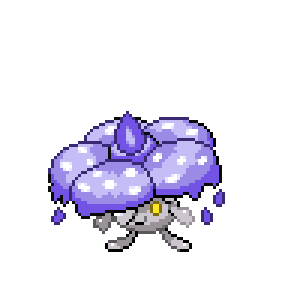
Litplume's petals are dished to help retain wax as their flame burns. If they get too excited, their flame burns hotter and melts their petals faster, making them droop down and cover their eyes.

The wax-like texture of the fungus growing from Litsect protects them from fiery attacks. A steady blue flame burns at the top of their mushroom, their life force gradually being sapped and drained by their parasite.
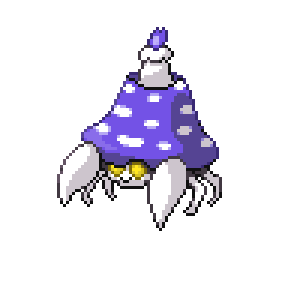
The wax-like texture of the fungus growing from Litsect protects them from fiery attacks. A steady blue flame burns at the top of their mushroom, their life force gradually being sapped and drained by their parasite.
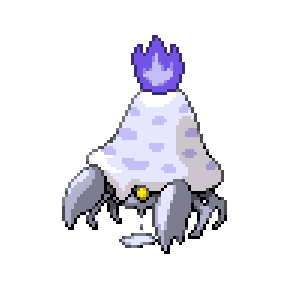
The wax-like texture of the fungus growing from Litsect protects them from fiery attacks. A steady blue flame burns at the top of their mushroom, their life force gradually being sapped and drained by their parasite.
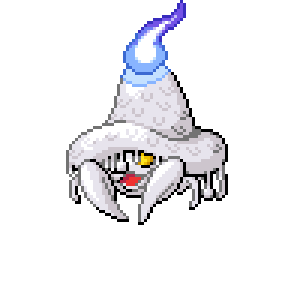
The parasitic mushroom on the backs of Litsect gradually burns out over their life, eventually leaving them with a solid waxy mass atop their back. The remnants of the mushroom protect them from both heat and moisture, but encumber them.
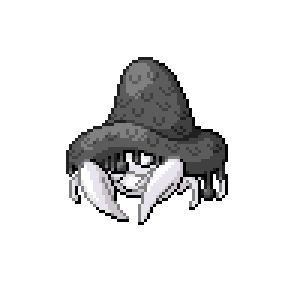
Litduck wax allows them to achieve high speeds while swimming, streamlining their body and reducing drag. They keep their tail above the water while swimming, creating an eerie illusion of a flame racing across the surface.

Litape flames burn brighter the more agitated they are. When they are angry, their flames become a fierce blaze, melting their waxy bodies and letting them move swiftly into the fight.
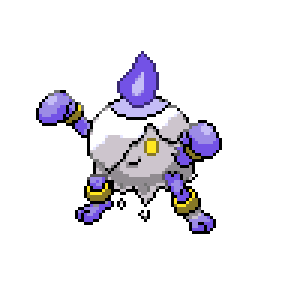
Lampicate form colonies within abandoned mansions and castles, drifting through the air in chittering groups in search of warmth. They are drawn to exploring Trainers, the eerie purple light illuminating the corridors the first sign of their approach.
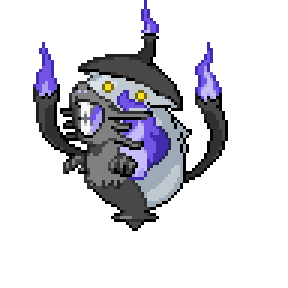
Lampmoth flames produce a compulsion in those who see the flames to follow them. This effect is magnified at night when their flames are the only light around, a single Lampmoth sometimes drawing entire crowds of fascinated people towards them.

Prolonged exposure to the light from Lampduck's flame causes uncomfortable eye strain and exhaustion, usually resulting in painful headaches. They actively seek out large crowds, attempting to expose as many people as possible to their fire's light.

Lampape lower their head in battle, using their metallic cap to protect their glass body from harm. Repeated strikes to their cap make them progressively angrier, eventually provoking them to forgo defence and launch into all-out attacks.
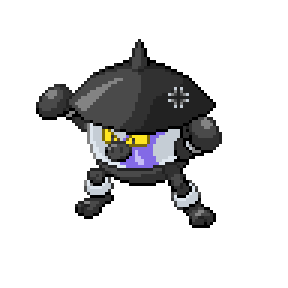
Chandelsly form in the ruins of homes that have been abandoned due to fire damage. They harbour a deep resentment and anger at humans, blaming them all for the destruction of what had once been their homes.
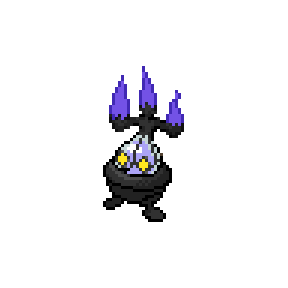
Chandelnette form in the ruins of homes that have been abandoned due to fire damage. They harbour a deep resentment and anger at humans, blaming them all for the destruction of what had once been their homes.

Chandelmoth are traditional companions of glass blowers, providing both a source of heat and a source of inspiration. Their delicate glass wings flicker constantly with the light of their inner fire.
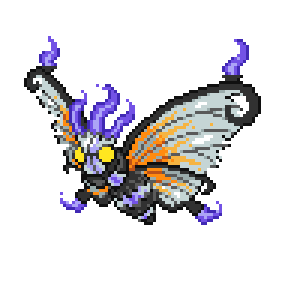
Chandelnine can be seen from great distances late at night, their eerie purple flames illuminating the landscape as they race across it. Ancient myths claim that they chase after the spirits of those not yet ready to pass on.
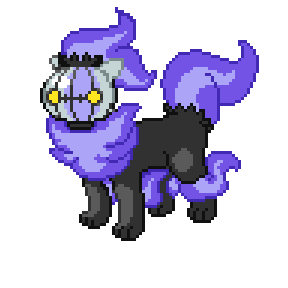
Chandelnine can be seen from great distances late at night, their eerie purple flames illuminating the landscape as they race across it. Their bodies consist of delicate glass, and they prefer to fight at range with scorching Flamethrowers.

Haxgeot hack down trees using the sharp crests on either side of their face. They search the fallen trees for the most choice branches for their nests, leaving most of the plant in place.
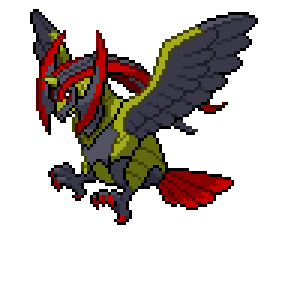
Haxossom dances with swift twirls and rapid darting movements, moving with surprising speed for its size. The blades around its neck are used as a defence mechanism, cutting through almost anything they come into contact with.

Haxrua conceal their tusks when they wish to make a good impression, projecting an illusion of a different, harmless species. This gives an advantage should a fight break out, as they can swing their mighty blades before their opponent is ready.

Haxrua conceal their tusks when they wish to make a good impression, projecting an illusion of a different, harmless species. This gives an advantage should a fight break out, as they can swing their mighty blades before their opponent is ready.
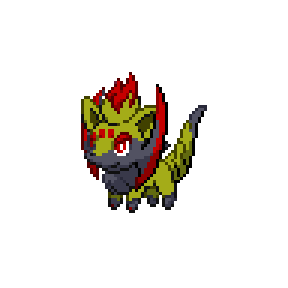
Golumoth remain dormant in the ruins of great castles, hiding themselves in the walls. They appear to come to life when they sense movement, creating ghostly wings of sand to flutter down and confront the intruder in their home.
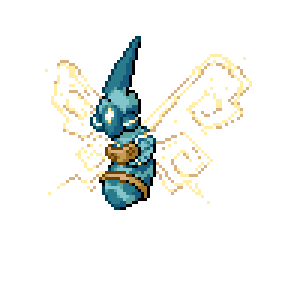
Golulos crawl across dead coral reefs, feebly raising their head and attempting to scare off divers by attacking with Shadow Balls. Researchers theorise they are protecting the reefs from human interference, albeit too late to save them from death.
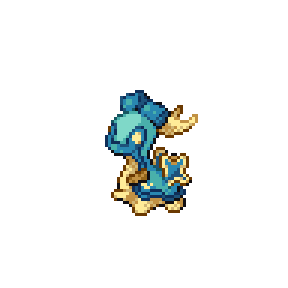
Murals in Hisuian ruins depict Golunine serving as loyal mounts to the ancient clans of the land. They can still be found lingering around the ancient ruins in modern Sinnoh, offering travellers rides from one part of the region to another.
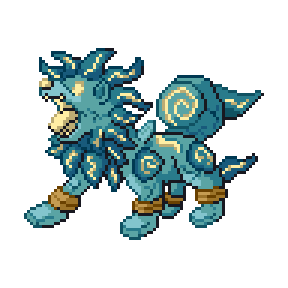
Murals in Hisuian ruins depict Golunine serving as loyal mounts to the ancient clans of the land. They can still be found guarding the ruins in modern Sinnoh, lashing out with powerful Bites at those who get too close.
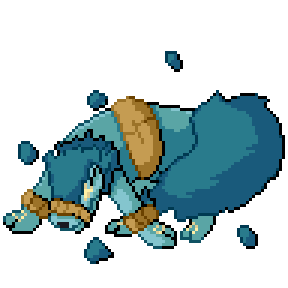
In pre-industrial times, Vulsaur were a common companion thanks to the heat their bulb produces. They can control the temperature they output, from enough heat to warm a room to a fire that allows a person to cook a meal.

Vulgon-Z are able to travel across cyberspace, inserting themselves into old television and computer monitors. They enjoy putting on performances for nearby people, projecting eerie will-o'-the-wisps to draw people in before frolicking on screen.

In pre industrial times, Vulsaur were a common companion thanks to the heat their bulb produces. They can control the temperature they output, from enough heat to warm a room to a fire that allows a person to cook a meal.
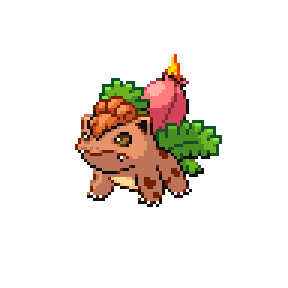
Vulqueen fur is coated in an inflammatory toxin that causes a painful burning sensation if touched without proper protection. They seem unaware of this trait of their fur and seek affection and fuss from their Trainers.

Despite their appearance, Vulseed spines are soft and fluffy to the touch. Their bodies maintain a high internal temperature, and they are popular companions in the winter months, being easy to hug and hold to help keep a person warm.

Greenhouses try to ensure they always have a population of Vulras through the winter, giving them bowls of sap to encourage them to stay. In exchange, Vulras release orbs of fire into the air, keeping the space warm for the plants growing inside.

Vulsect mushrooms contain a spicy compound that leaves a lingering heat in the mouth for hours after consumption. High-end restaurants include these mushrooms on their menu as an appetiser before a cold dish, creating a unique dining experience.
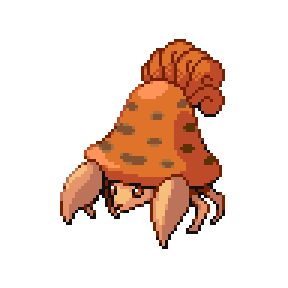
Vulwhirl are coated in a thin layer of flammable mucus. They can ignite the mucus at a moment's notice, flinging it at their opponents in battle to strike their foes with a quick Flame Burst.
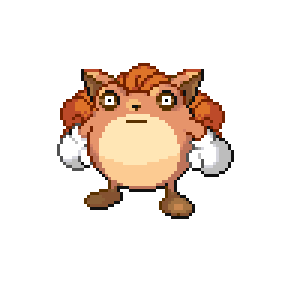
Pyukucargo are passive Pokémon, preferring to avoid conflict when necessary. If they are struck, they rapidly release their innards from within their shell for a powerful Counter.

What appears to be a shell is actually Pyukucargo's body, their tough rubbery exterior intended to deter predators. They extrude their innards to move around, and can withdraw them back in at a moment's notice should danger arise.

A belligerent Pokémon prone to picking fights, Pyukukey move too slowly to chase down opponents that disengage. When struck, they rebound blows with their surprisingly pliable bodies.

Talontales heat the air directly beneath their wings, allowing them to bound great distances with just a couple of flaps. They are too heavy to attain true long distance flight, but can still cover great distances by gliding.

Mimifree hide their bodies inside discarded children's dolls, tearing through the backs of them and hollowing them out to make space. They spread out eerie wings to move themselves around, using the bright eye spots to see.

Jealous of the affection shown to Persians and other feline Pokémon, Mimisian has formed a disguise for itself to try and achieve that same love. The materials it chooses for its disguise tend to be flimsy, scaring people away when it breaks.
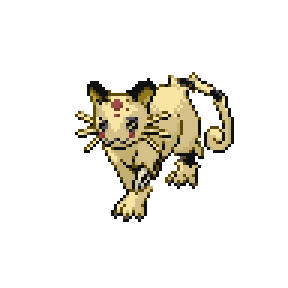
Volcacargo use their feathery wings to fan flames across their shells, keeping them from fully hardening and enabling them to move more freely. They are a popular Pokémon within retirement homes, wafting heat throughout the building for the elderly.

Deisaur rustle their leaves when they feel threatened, attempting to intimidate anything that gets close to them. If their warning fails they snap at the subject of their ire, darting forward to give a nasty bite.
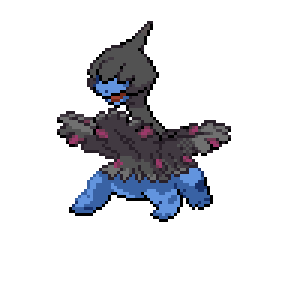
The leaves of Deisaur are coated in an oil that causes an unpleasant contact rash and direct skin contact is inadvisable. They are aware of this property of their body and, when angry, will charge at people so that they can be left alone.

Even though they're blind, Deirunt are able to find their way around using their fantastic sense of smell. When they're close enough to something that smells like food they will start biting down with enough force to pierce steel.

Completely blind, Deibat relies upon echolocation to find its way around the world. Despite its lack of eyesight, Deibat is good at evading attacks from other Pokémon thanks to its sensitive hearing.
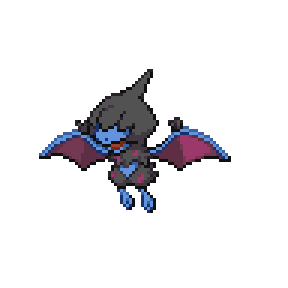
Zweiesect are able to launch the two heads sprouting from their back like missiles. Each head competes with the other to be the first to make impact with their target.
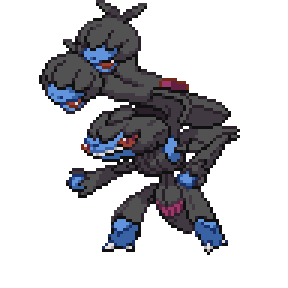
Hycargo are traditionally seen as harbingers of destruction, populations arriving in an area just before a volcanic eruption. Researchers have found they are simply sensitive to tectonic activity, preferring to feed on fresh lava when possible.
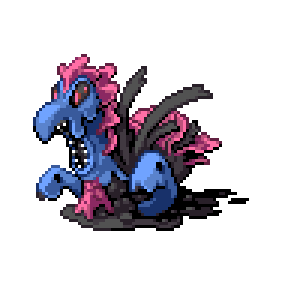
Latyena race across the sky in small packs, following the lead of the largest member of the pack. They rarely stay in one place for long, typically hunting for a meal before flying several miles away in search of their next meal.
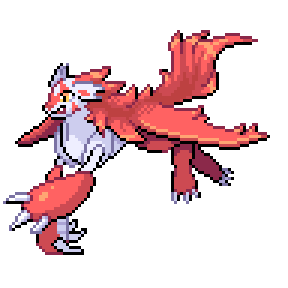
Latyena race across the sky in small packs, following the lead of the largest member of the pack. They rarely stay in one place for long, typically hunting for a meal before flying several miles away in search of their next meal.
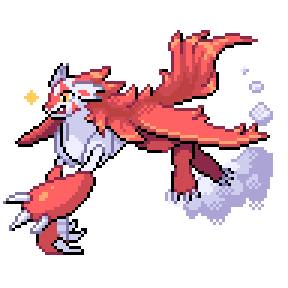
Lath spend most of their days lazing around in the sun, enjoying taking long naps in the warmth of the sunlight. They will sometimes become filled with a manic energy, racing around at speeds in excess of Mach 2.
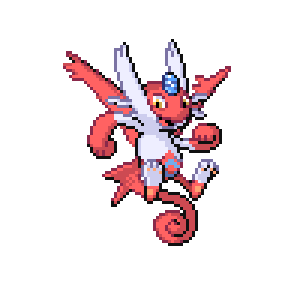
Lasian are playful Pokémon that enjoy playing chase with people and other Pokémon. They are extraordinarily fast, capable of catching most of their play partners within seconds.

Laish roam great distances at night, travelling for many miles beneath the moon and stars. They will plant themselves near rural communities in the morning, their leaves picking up on the presence of people, helping them find well-tended gardens.
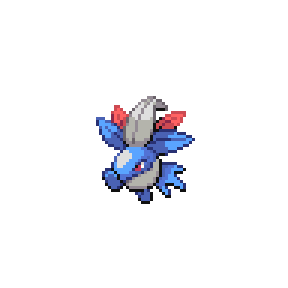
Laoom spend the daytime hunkered down in one place, staying hidden within flower patches and meadows. At nighttime they travel vast distances in search of more fertile grounds, using their empathic powers to seek out prolific gardeners.

Laplume bloom at night, releasing their pollen when they can sense other Laplume nearby with their empathic powers. They disperse at the first light of day, travelling many miles to find new meadows and new groves to make their home.
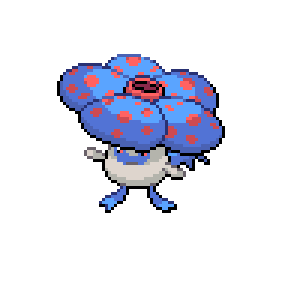
Lanine are able to break the speed of sound as they sprint across the ground, creating shock waves as they sprint. They use their psychic powers to protect themselves and anyone they're carrying from the intense acceleration.

Ninebone can sometimes take on strange, pale appearances when they are fused in an area rich with Z-Crystal shards. This pale variant of Ninebone is particularly common on the Alolan islands.

Ninewak wield the skulls of deceased Fire-Type Pokémon as maces, channelling the fire that they once used in life. This morbid habit has led to them being viewed as a guardian spirit of the dead and makes them a popular Pokémon amongst Mediums.
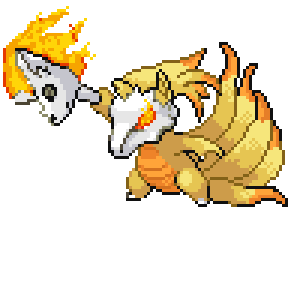
Ninewak gather a collection of bones within their dens, using large, sturdy bones for combat and thinner bones to groom their many tails. This habit has led to some myths suggesting that the spirits of the dead become entwined within its tails.

Ninewak gather a collection of bones within their dens, using large, sturdy bones for combat and thinner bones to groom their many tails. In tropical regions, their fur is an unearthly white colour, reflective of the snowy mountains they prefer.

Ninemie are revered for their mystical powers, commanding both fire and minds with equal skill. It is said that the fires they produce burn without any heat and are used to lure the unwary toward them.

Ninegon have holographic hard-light bodies that they can freely use to transition between physical and digital space. Their projections are blocky and low resolution, but rendering the tails specifically can cause computers to overheat.

Ninegon have holographic hard-light bodies that they can freely use to transition between physical and digital space. Their projections are smooth and low resolution, but rendering the tails specifically can cause computers to overheat.
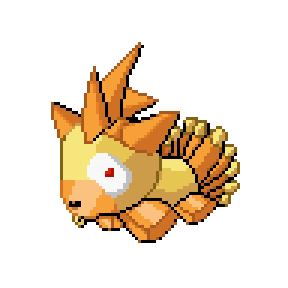
Ninegon have holographic hard-light bodies that they can freely use to transition between physical and digital space. Their projections are smooth and low resolution, but rendering the tails specifically can cause computers to overheat.

Ninequil have soft, luxurious fur that makes them the prized Pokémon of both Beauties and Breeders. They require specialists to groom as their fur is hot enough to melt plastic combs, whilst metal combs can react with their tails and cause sparks.

For a time, Pokémon Researchers mistook Ninelava for a dwarf variant of Ninetales. Ecological studies have revealed them to be their own species with researchers observing them hunting Pokémon many times their size.

For a time, Pokémon Researchers mistook Ninelava for a dwarf variant of Ninetales. Ecological studies have revealed them to be their own species with researchers observing them hunting Pokémon many times their size.

Ninetu tails twitch and sway whenever they stare off into the distance. They are thought to be looking into nine different futures whenever they do this, with whatever tail twitches last indicating the future they have chosen to head toward.

Touching one of the tails of Ninetu is said to bring about a vision of a potential future. The vision changes depending on which tail is touched and shows many different paths the future could take, making acting on the visions difficult.

Ninerow have been the inspiration for many classical poets, their elegant form and multiple wings drawing artists to them in droves. They can be temperamental when interacted with, poor handling resulting in being burned or pecked.

Ninetomp dig out dens to live in along the banks of rivers, tunnelling through the soft mud and then using their flames to harden them into permanent homes. The result is a natural terracotta that some believe is enchanted to bring good fortune.
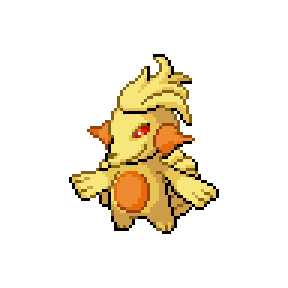
Ninepert use their powerful forelimbs to dig out burrows within swampy ground to make their homes in. They guard their homes with fiery barks, spitting embers at those who stray too close.
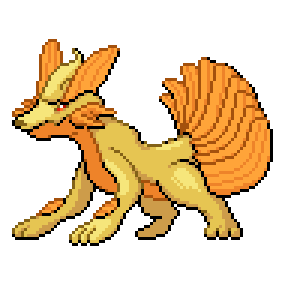
Ninevoir have empathic abilities that are particularly tuned toward sensing malice and spitefulness. They can channel these emotions into flames, burning away the negative emotion and leaving behind a purity of feeling.

Ninevoir tails are said to each attune to a different emotion, allowing them to sense those around them even if they cannot be seen. Medieval courts regularly employed Ninevoir as a means for nobles to gain an edge in politics.

Some Ninevoir have a far chillier demeanour than others of their species. Their flames burn a brilliant blue and, despite the heat they are able to output in their attacks, their tails and body are cold to the touch.

The energy writhing atop the backs of Ninesaur is mystical curse energy, said to bring misfortune to those who cross them. They use their tails to veil the energy when around people they enjoy the company of, not wishing to curse them.

Ninequeen were popular Pokémon amongst medieval nobles, their regal bearing said to lend an air of mystic grandeur to a court. In the modern day, they are haughty and wilful Pokémon; they need a strong-willed Trainer to get the most out of them.

Nineskull conjure eerie floating lights to draw travellers off their path, using the mystical energy stored in their tails to do so. When someone comes close to investigate, they abruptly startle the traveller, feasting on their sudden fear.
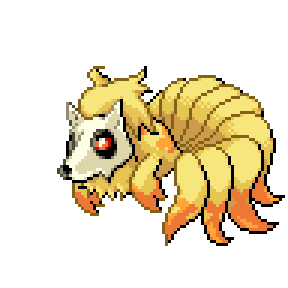
Ninenape are able to fight using a mix of nine different combat styles, each with their own strengths and weaknesses. They can switch between these fighting styles almost immediately, switching between punches, kicks, and tail lashes.
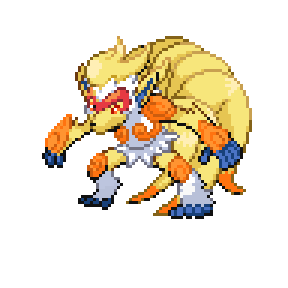
Ninenape meditate for days on end to refine their control over their flames. They have a ruff of nine fiery tendrils around their neck that are kept at a low smoulder outside of fights, flaring into an inferno when they launch into battle.

Nineron are a common sight at rural foundries and forges, providing their flames for smithies to make use of. Their tough, mineral-rich plating enables them to endure the heat of the forge and, in a pinch, allows them to serve as an anvil.

Nineron are a common sight at rural foundries and forges, providing their flames for smithies to make use of. Their tough, mineral-rich plating enables them to endure the heat of the forge and, in a pinch, allows them to serve as an anvil.

Cinders constantly burn within the ruff of fur around the necks of Ninevern, making them visible even at night. When angered, they swipe at the subject of their ire with their powerful forearms, shaking loose embers and starting fires as they do.

Nineggy periodically shed and regrow their many tails, each time growing them back longer and with more luxurious fur. The shed tails from Nineggy are highly prized, with legends abounding that wearing one around your neck brings good fortune.
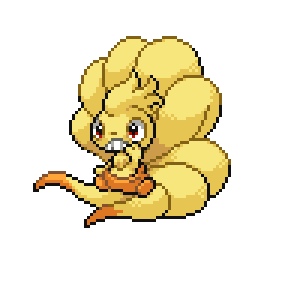
Ninety use their tails as scarves, wrapping them around their neck to help them withstand poor weather. Their casual attitude makes them popular with aspiring fashionistas who will seek to replicate their style.
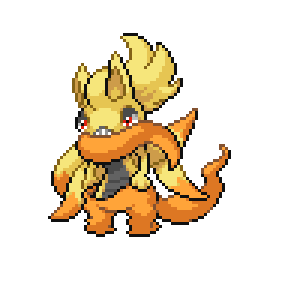
Fields of Ninesprout will sometimes uproot and run to a new location, their tails trailing behind them in the breeze. They defend their new home with coordinated blasts of fire, sometimes even starting forest fires.
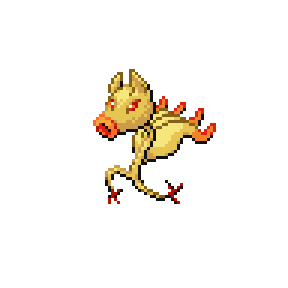
Fields of Ninesprout will sometimes uproot and run to a new location, their tails trailing behind them in the breeze. They defend their new home with coordinated blasts of fire, sometimes even starting forest fires.
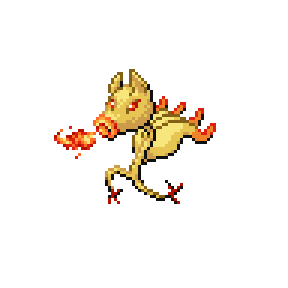
Deolosion burn with an unearthly flame that can produce strange effects in Pokémon. They can replicate the effects of elemental stones and force evolution in some Pokémon, and serve as a replacement for DNA splicers in others, creating wild fusions.
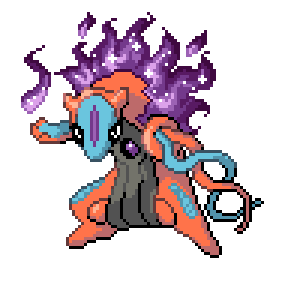
Deoesect are artificial Pokémon created through a combination of biological and technological engineering. Release trial programs have determined that they are far too aggressive and dangerous to allow into the wild.
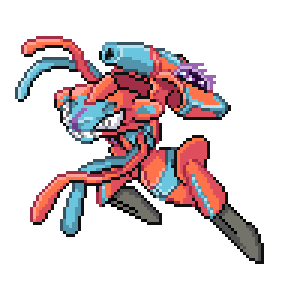
Jidactyl are ancient Pokémon that were thought to be extinct by palaeontologists, theorised to have been fierce predators. Once resurrected from fossils, they were discovered to be generous, doing their best to fulfil the desires of their friends.

Jior are found deep in the solar system, occasionally flying past the planet and leaving a trail in the night sky. Seeing one is said to bring great fortune to the observer, making their deepest desire come true.

Nindle use their stiff antennae to probe tree bark for weak points, biting through to feed on sap when they find a soft patch. They metabolise the toxins within the plants they feed on, using them to make themselves unpalatable to predators.

Ninans can sense healthy plant roots through soil with their twin antennae. They probe the ground in front of them to hone in on these plants whilst burrowing, leaving a long, sinuous tunnel behind them as they search for food.

Ninwig siphon nutrients from the ground with their front claws, tiny roots extending from them once in the soil. They use the energy they gain to feed the symbiotic plant growing from their heads.
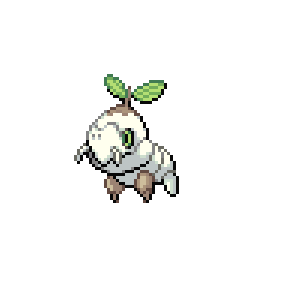
Ninbat have a sharp edge to their wings, using them as cutting tools rather than for flight. They swarm together while feeding, taking turns to eat plant sap whilst listening out for danger.
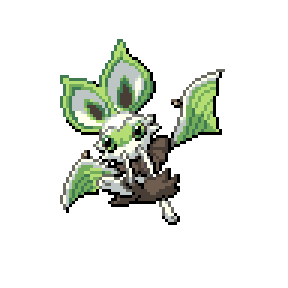
Ninsian use their stiff whiskers to root through dirt in search for tubers and roots. Their wings buzz loudly with excitement when they find food, alerting nearby Ninsian that there's an available meal.
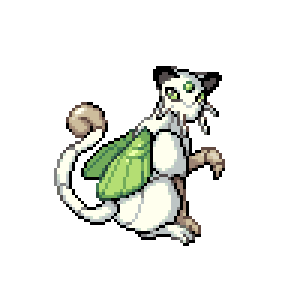
Areas with Bichu populations have to construct their power poles out of metal. Wooden power poles are often chewed down by Bichu as they try to get to the electrical wires.
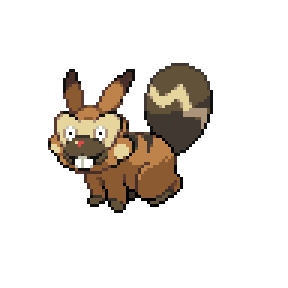
Binoir have various plants that grow upon their backs as adults, rooting themselves in the fertile soil matted into their fur. They groom one another constantly, gnawing at these plants and preventing them from growing fully.
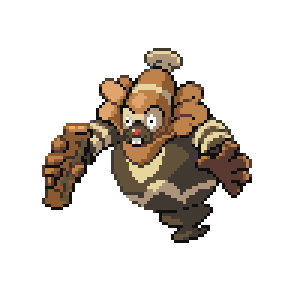
Biwig work together in large families to create clearings in forests, chewing down trees and using the fallen branches to make shelters for themselves. They are friendly and willing to share their shelters with other Pokémon during poor weather.
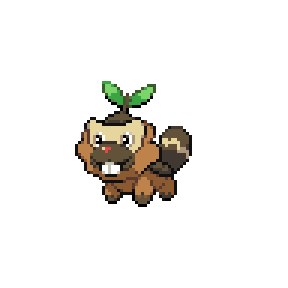
Bibarel create vast inland lakes with their dams, insatiably gnawing through trees to build their homes. They build far more dams than they need, and the abandoned older dams form homes for other Pokémon.

Biras has a voracious appetite for wood, often resulting in large colonies creating clearings and glades in forests due to their diet. The hardy fungi on their back absorbs the lignin from the food Biras eats and uses it to grow.

Bisect is infested with a fungus that has completely overtaken its body, reforming it into a wood-like structure from which it can comfortably grow new fruiting bodies. This parasitism drives Bisect to feed on as much wood as it can.

Biwrath create dams by tearing down trees with their powerful arms. They seem to enjoy racing one another in swimming contests in the resulting lakes.

Biwrath create dams by tearing down trees with their powerful arms. They seem to enjoy racing one another in swimming contests in the resulting lakes.
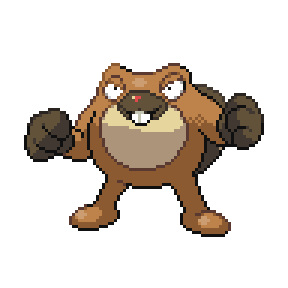
Riouna are largely immobile and seclude themselves in high trees in order to keep themselves safe until they're ready to evolve. They spend their days observing other Pokémon fighting, memorising their moves in preparation to fight.
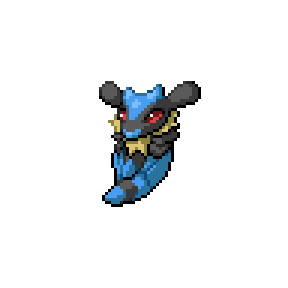
Riocario refine their aura sensing abilities by sparring with their eyes closed and ears flattened against their head, removing all other sensory input. This lets them gradually master the ability to sense and react to even trace amounts of aura.
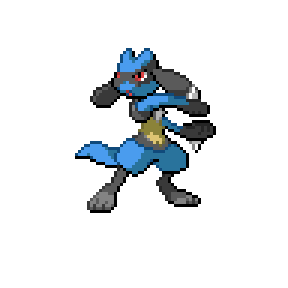
Riolu contain unstable rogue mega energy, theorised to only be manageable thanks to being a fusion of two Riolu. They burn this energy off by constantly training and sparring with one another.

Riolu contain unstable rogue mega energy, theorised to only be manageable thanks to being a fusion of two Riolu. They burn this energy off by constantly training and sparring with one another.
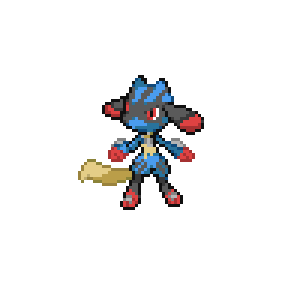
Riolett navigate by sensing the aura of other Pokémon whilst they dig, tunnelling around one another and evading larger underground Pokémon entirely. They are curious of groups of people and will seek out the auras of particularly strong Trainers.

Rionine enjoy serving as mounts to those who have a strong aura surrounding them. Their fur turns deep black when they carry people who are full of determination and have a powerful drive to succeed.
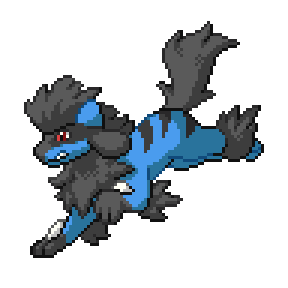
Rionine enjoy serving as mounts to those who have a strong aura surrounding them. Their fur turns snowy white when they carry someone who has a deep commitment to uncovering the truth.

Rionine enjoy serving as mounts to those who have a strong aura surrounding them. Their fur turns golden yellow when they carry someone with an indomitable battling spirit.

Slarino spend the majority of their day sleeping within the undergrowth of their forest homes. They feed primarily on plants that have high levels of toxins in their leaves; they metabolise and concentrate them into the spines on their back.
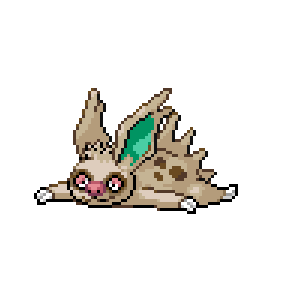
Slath are the star of a popular line of sleep medication, adverts featuring them showing just how quickly Slath fall asleep on the medicine. In truth, they need little motivation to sleep and often sneak away to quiet places for a quick catnap.
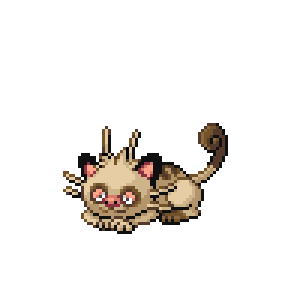
Vigopie are constantly awake and eating, chewing through tree trunks and branches at every hour of the day. They eat faster when other Vigopie are nearby, trying to gorge before their food gets eaten by others.

Vigocargo move with a frenetic urgency, seemingly unable to stay still. Their constant movement keeps their liquid bodies from ever fully setting, and even when they rest, they fidget and move in their sleep.
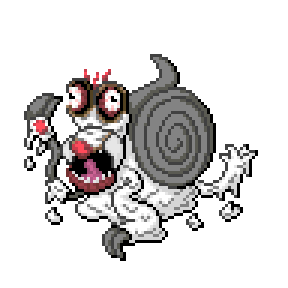
Vigogon-Z scour online images for pictures of other Pokémon, pulling the graphics apart for their components. They synthesise body parts for themselves from these destroyed graphics, showing a preference for clawed limbs and sharp teeth.

Vigogon-Z scour online images for pictures of other Pokémon, pulling the graphics apart for their components. They synthesise body parts for themselves from these destroyed graphics, showing a preference for clawed limbs and sharp teeth.

Vigopuff are impatient and impulsive, often running headlong into dangerous situations. Their aggressive shouts have a mildly soporific effect, leading Researchers to theorise they could send people to sleep if they made longer calls.

Vigoras mushrooms are high in cortisol, continuously secreting the stress hormone into the body of their host. This pushes Vigoras to be constantly active, rushing from tree to tree and leaving a trail of spores behind it.

Vigotrio are constantly active, burrowing without pausing to rest and seemingly never needing to sleep. Their claws make digging through even tough rocks trivial, making them popular with miners.

Vigoth are sometimes abruptly seized with a mad energy, racing around at high speed and clawing at those unfortunate enough to be in their path. They can only be calmed from this state by an offering of a plate of fish Pokémon.

Vigoape regularly work themselves up into a frenzy, breathing rapidly and charging at others for even the smallest perceived aggression. They rapidly swipe at the subject of their ire, brutally wielding powerful muscles and sharp claws.
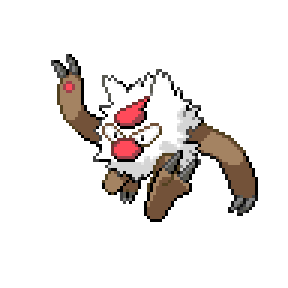
Vigowhirl secrete a potent stimulant from the spiral on their belly, the chemical mixing with the slimy film that coats their body. They are filled with a seemingly endless supply of energy, imparting that same restlessness in those who touch them.

Wailcargo shells were prized by mariners in antiquity, with many expeditions setting out with the goal to hunt them and sell their shells as beautiful ornaments. Wailcargo pods are now only found deep in the ocean, migrating along underwater mountains.

Waildon are typically found stalking along the flooded shoreline in the aftermath of tsunamis. Pokémon Researchers actively debate why they do this, the leading theory is that they are brought ashore by the powerful currents creating the tidal wave.
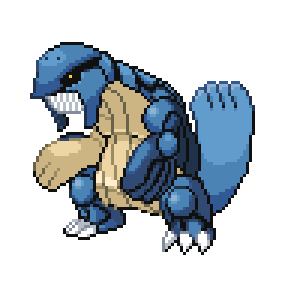
Wailtrio make their burrows within coral reefs, nestling within them for safety. They extend their trio of heads into water currents to filter feed, gradually cleaning water of pollutants as they do.
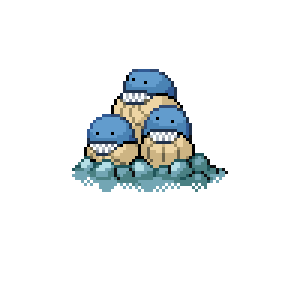
Despite the poor camouflage of Shipod, they are rarely attacked by larger Pokémon. When researching why this was, it was discovered that their chrysalis carries a static charge that causes painful shocks when touched.
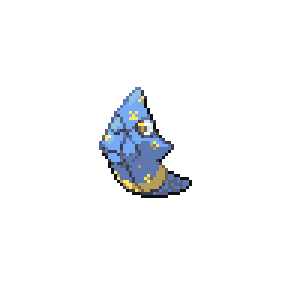
Shifree have wing scales that each carry a slight electrical charge. When they feel threatened, Shifree can send an electrical pulse through their wings that causes them to abruptly light up, blinding their assailants.

Shiursa travel in groups of three to four for safety when moving about in the woods. If one of them becomes separated from the others at night, they light up with a flare of electricity to make themselves more visible and reunite with their friends.

Shiran spines contain a painful paralytic poison; the sensation of being stung is described as similar to receiving a sharp shock. They are irritable and will charge at anyone they dislike, making them difficult first-time Pokémon for new Trainers.
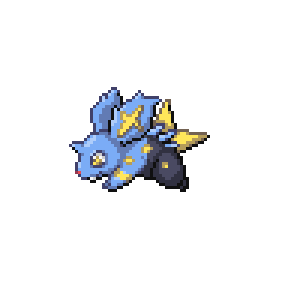
Shiran spines contain a painful paralytic poison; the sensation of being stung is described as similar to receiving a sharp shock. They are irritable and will charge at anyone they dislike, making them difficult first-time Pokémon for new Trainers.
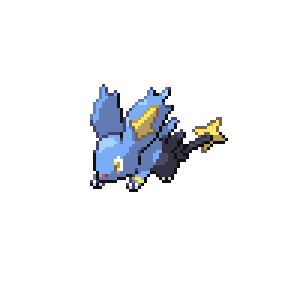
Shisis are formed of a dense and sticky gel that carries a potent electrical charge. Trainers are advised to avoid handling them for too long as Shisis tend to release powerful shocks if they become too agitated.

Lufree emerge from their nests as thunderstorms approach, sparks dancing across their wings as electrical potential builds in the air. They are sometimes drawn to power plants, mistaking the generators for incoming thunder clouds.
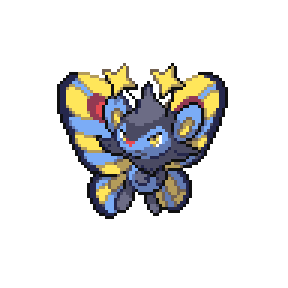
Lusaur use solar energy collected by their leaves to create an electrical charge within their body. Their bulb carries the bulk of this charge, and touching the petals can deliver a painful shock to the unwary.
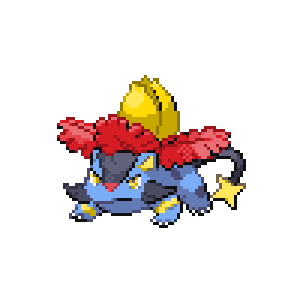
Lurino spark and snap angrily at Pokémon that encroach on their territory. They are commonly used by security guards to help with patrols, their paralytic shocks and debilitating poisons helping to slow intruders for arrest.
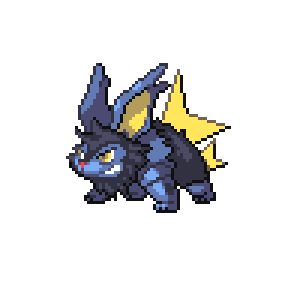
Lusis surround themselves in an electrically charged gel, protecting their small and vulnerable bodies. They defend themselves with their electrokinetic powers, enabling them to fight without physical altercation.
Lubat are completely blind and navigate through the air using the electrical fields of the Pokémon around them. Their twin tails generate a constant electrical charge that they use to zap at anything that gets too close to them.
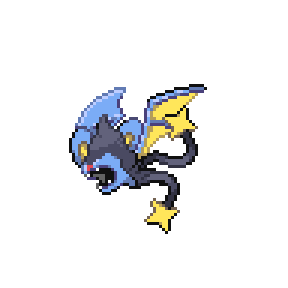
Hikers often run into Jigglytini during high-altitude expeditions, the snake-like Pokémon being highly curious and unafraid of humans. When hungry, Jigglytini will actively seek out people and sing them to sleep, stealing food from their backpacks.

Jigglynub can puff their bodies up to twice their size, sucking in air to scare off predators. When they exhale, they do so slowly, making surprisingly soothing songs that can carry across vast distances.

Jigglybird enjoy giving surprise gifts to people, but dislike being observed doing so. They sing outside windows to put people to sleep, then break into homes to leave gifts. Unfortunately, they arrive at random times, causing issues for home workers.

Jigglyshrew makes its burrows amongst tree roots, using the extra structure of the roots to reinforce its underground home. At night, they often come to the mouth of their burrows and sing out to one another to communicate.

Jigglylia have beautiful singing voices that capture the attention of everyone listening, putting them into a trance. They use their emotional sensitivity to tailor their songs for their audience, making every performance unique.

Jigglylia have beautiful singing voices that capture the attention of everyone listening, putting them into a trance. They use their emotional sensitivity to tailor their songs for their audience, making every performance unique.

Jigglylia have beautiful singing voices that capture the attention of everyone listening, putting them into a trance. They use their emotional sensitivity to tailor their songs for their audience, making every performance unique.
Colonies of Jigglyran communicate with others across their mountain homes by singing in harmony. Each colony has a unique chorus, and experienced hikers can use these songs to navigate when lost.

With a rubbery body and naturally playful attitude, Jigglyble often puts itself into dangerous situations trying to befriend much more powerful Pokémon. Even those it does get close to don't often stick around as it's prone to biting.

Jigglybite wards away rivals from its caves with loud songs that can be heard for several miles. Their songs are unpleasant and atonal, meaning many other Pokémon also keep away from them.

The harmonies produced when Jigglyrina sing have a mesmerizing quality. Unwary Trainers may find themselves waking up in the wilderness with their backpacks raided for berries.
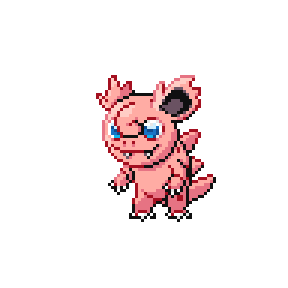
Jigglykoth sing sorrowful songs in search of companionship from others of their species, crooning from high in the treetops. Unfortunately their songs send other Jigglykoth to sleep, lulling them into inactivity.
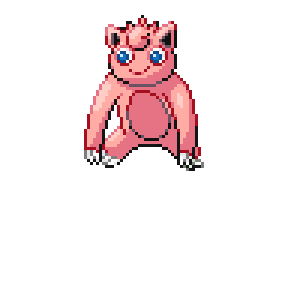
Jigglypuff love to perform and seek out large gatherings of other Pokémon to sing to. The effects of their voice are even more soporific than those of unfused Jigglypuff. Very few Pokémon have the willpower to stay awake through the whole performance.

Jigglypede race around open clearings at high speed, trying to see who can go the fastest. Pokémon Researchers observing these races to determine if they are a true fusion struggle to complete their research, as Jigglypede often put them to sleep.
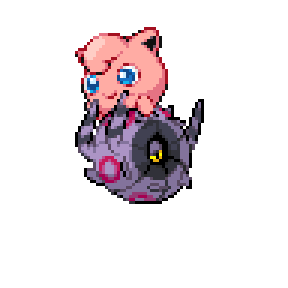
Jigglymy can puff up to more than twice their starting body size thanks to having an extremely elastic skin. They use this stored air to sing to one another across vast distances, their yodels being audible from miles away.

Jigglyras spores have a soporific effect, sending anyone who breathes them into a deep sleep. Pharmaceutical industries keep large populations of them so that they can use the spores to produce sleeping medication for sufferers of insomnia.
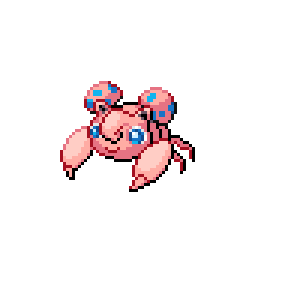
Some Jigglyras have discovered that the parasitic mushroom growth that plagues them can be slowed by using Moon Stones on infected areas. They carry Moon Stone shards atop their back in an effort to prevent the mushrooms from continuing to grow.
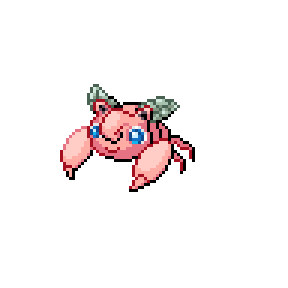
Jigglymoth are drawn to the light of the moon, swarms of them taking to the skies at night to follow its path through the sky. They sing to one another as they gather, their harmony drifting through the dark and lulling those who hear it to sleep.

Jigglymoth are drawn to the light of the moon, swarms of them taking to the skies at night to follow its path through the sky. They sing to one another as they gather, their harmony drifting through the dark and lulling those who hear it to sleep.

Jigglytrio harmonise with one another when they sing, their lullabies forming a beautiful three-part melody. When their audience falls apart, they grow disgruntled and dig away in search of a more appreciative audience.
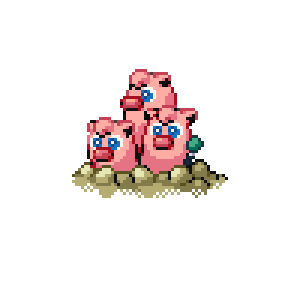
Jigglytrio harmonise with one another when they sing, their lullabies forming a beautiful three-part melody. When their audience falls apart, they grow disgruntled and dig away in search of a more appreciative audience.

Argey love to roost in high places, gathering together to find areas with views across large distances. They are heavy enough that a roosting flock poses a risk to more fragile structures; many powerlines have collapsed under their weight.
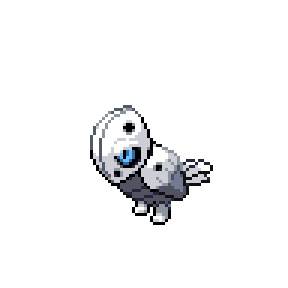
Arak are coated with a metallic exoskeleton that protects them from almost all danger. They consume any exposed metal they can find to fuel their growth, making them an unwanted pest at construction sites.

Ardos have metallic plating growing throughout their exoskeletons, providing vital protection against their predators. These metallic plates are segmented, allowing greater freedom of movement than more solid plating would provide.

Arkid are artificial Pokémon that are capable of self-replication. They assemble one another with great care, aware of the relative fragility of their bodies compared to larger Pokémon.
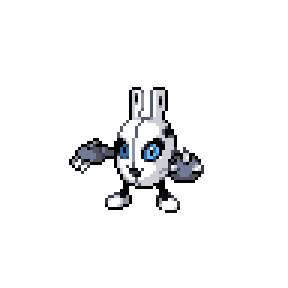
Arking have skin that is laced with high levels of iron alloys, giving them a metallic sheen and making it difficult to break their skin. They rely on this increased resilience to keep them safe when they get into brutal battles with one another.
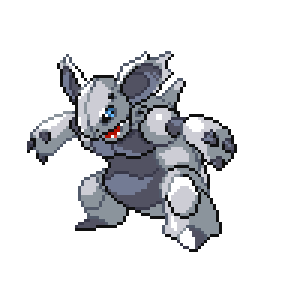
Arter are malevolent Pokémon that possess discarded scrap metal, animating and using these scraps to haunt the sites they form at. They love to pull apart vehicles and metal structures, incorporating the shreds into their own bodies.
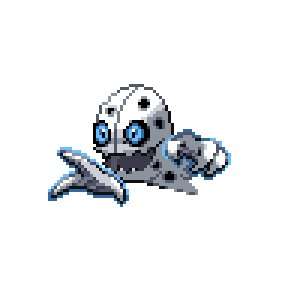
Arter are malevolent Pokémon that possess discarded scrap metal, animating and using these scraps to haunt the sites they form at. They love to pull apart vehicles and metal structures, incorporating the shreds into their own bodies.

The metal spines of Lairino have hollow tips that contain a toxic liquid metal compound, primarily composed of mercury. They are belligerent Pokémon and inexperienced Trainers are advised to avoid their territories.

Lairking make their homes within mountain caves, digging deep into the rock in search of metal ores to consume. They jealously guard their home from hungry rivals, swiping at anyone who disturbs them with their powerful tail.

Lairter cover themselves with discarded plates of sheet metal, protecting their otherwise gaseous and vulnerable bodies. The plates they use are manipulated using ferrokinetic powers, letting them curl into defensive balls if needed.

Trapcargo create a lure shaped like Slugma out of sand, using it to lure in Pokémon that would normally prey on Slugma. They lunge forward when they successfully lure in a Pokémon, snapping their powerful jaws closed around their prey.

Fusions between Trapinch result in Trapinch, which are Pokémon that create gigantic sand traps in the desert. They have a bite that can penetrate or break steel, making them a major hazard for desert travel.

Trapmoth bury themselves within sand dunes during the day and wait for other Pokémon to pass by so they can ambush them. At night, they shake themselves free with their large wings, flying through the dark to find a new hiding spot for the morning.

Trapmoth bury themselves within sand dunes during the day and wait for other Pokémon to pass by so they can ambush them. At night, they shake themselves free with their large wings, flying through the dark to find a new hiding spot for the morning.

Trapsian stalk through deserts in search of prey, prowling across sand dunes and feeling minute vibrations in the sand through their whiskers. When they sense prey approaching, they pounce mouth-first, delivering a nasty Bite.

Trapape teeth are strong enough to bite through steel. They grab onto anything they can within reach, biting on whatever fits into their mouth.

Trapwag live in muddy pond waters, hiding away from predators in the soft silt near the banks of the pond. They are easily startled, biting hard into anything that steps near them.

Trapwag live in muddy pond waters, hiding away from predators in the soft silt near the banks of the pond. They are easily startled, biting hard into anything that steps near them.

Vibrava have wings that take on aspects of the dominant local geology. They have a beautiful crystal sheen. Pokémon Rangers have to remain vigilant to ensure their populations are not poached.
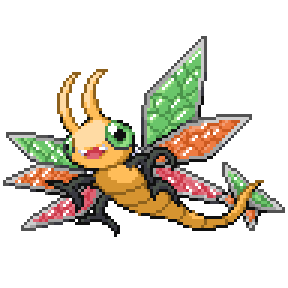
Vibramoth shelter from the desert sun by burying themselves under the sands during the day. Entire swarms emerge at once at sunset, the buzzing of their wings filling the night air as they take off in search of food.
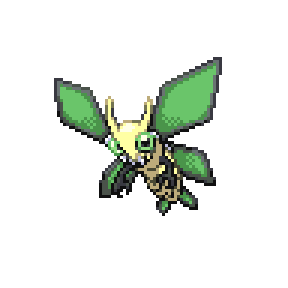
Vibrasian whir their wings when they're feeling content, creating a low, droning purr. The noise attracts other Vibrasian in the area, as they hope to also find that same inner peace.
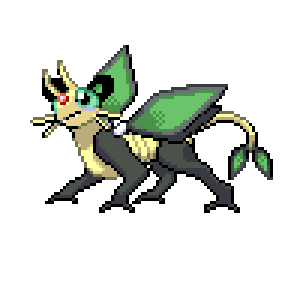
Feefree have very dull wing scales that flake off easily, leading many Trainers to simply dismiss them out of hand. Those Trainers who do care for them find that these Pokémon respond well to affection and are happiest when praised.

Feeicate have poor grooming habits, often allowing their fur to get matted and ugly when not taken care of by their Trainer. This leads them to hide themselves away, preferring to not be seen lest they be judged.
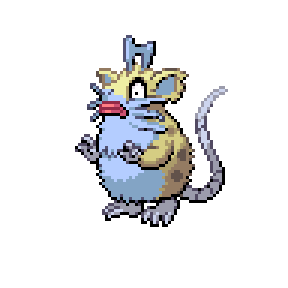
Feepix mournfully watch Pokémon Trainers from the long grass, too self-conscious of their unkempt appearance to approach. They create dancing lights in the air to try and draw Trainers to them, the lights disappearing just before they're found.

Feekyu struggle to make disguises to hide in, finding only poor quality materials with a shabby appearance. They dislike their natural appearance and this is preferable, allowing them to search for higher quality materials without being observed.
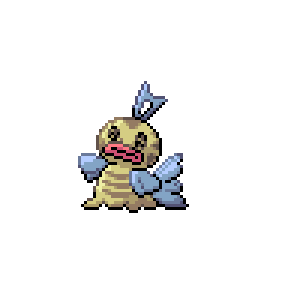
Feeturne stand mournfully in the rain, lamenting that their presence drives away bird Pokémon. They long to be beautiful and try anything they can to stand out and draw attention to themselves.
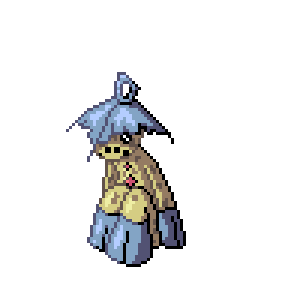
Feedude lie amongst the pebbles and stones at the bottom of riverbeds, their drab stony hides helping them to blend in. Given the opportunity, they gather precious stones and jewels, covering their bodies with them to try and look pretty.
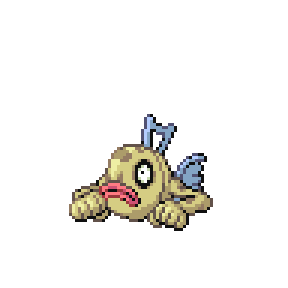
Feedude lie amongst the pebbles and stones at the bottom of riverbeds, their drab stony hides helping them to blend in. Given the opportunity, they gather precious stones and jewels, covering their bodies with them to try and look pretty.
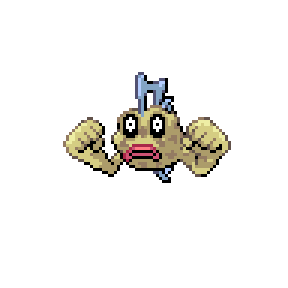
Babone scavenge around the graveyards of Dragon-type Pokémon, using the bones of long dead Pokémon to protect themselves and use as weapons. They are protective of their chosen weapons and armour, wearing them constantly.
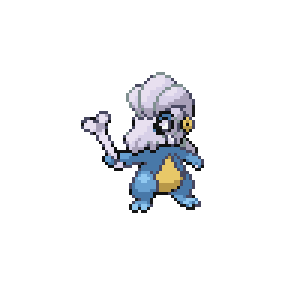
Bawak scavenge through the remains of larger Pokémon that have died in the mountains for suitable bones to use as weapons. They prize the bones of Dragon-type Pokémon the most and can swing them with enough force to shatter boulders.
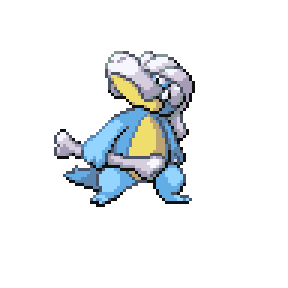
Bafree have hardened skulls that they use to spar with one another, butting heads to establish dominance. They will try and fly into other Pokémon head first to attack, but their top flight speed is too low to cause much harm.
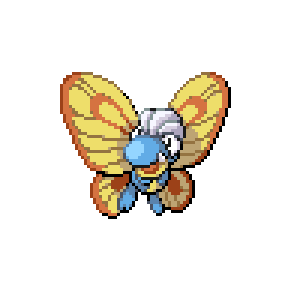
Bagey swoop at one another headfirst, using their hardened skulls to bash into their rivals at high speed. The sound of the clash between them is loud enough to be heard from hundreds of meters away.
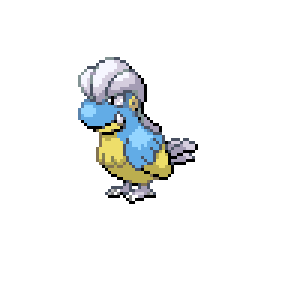
Bapede are slow, but have powerful hind legs that can allow them to leap great distances. They are hardy Pokémon and will ram into obstacles with enough strength to shatter boulders.
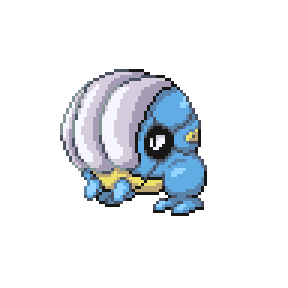
Batoise are slow moving Pokémon that lumber through mountain ravines in the certainty that very few things can truly threaten them. Their shells are nearly five inches thick, protecting them from most physical threats.

Shelpede has a heavily armoured back that protects it from larger Pokémon. When threatened, it curls into a ball to shield its softer underbelly from harm.

Shelsect mushrooms have thick, chitinous layers that protect their soft body from harm. They can pull themselves totally inside the bell of their mushroom, hiding away until the danger's passed.
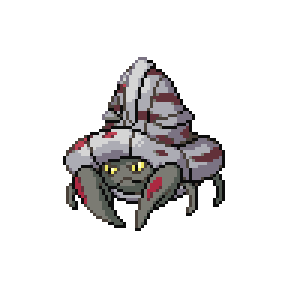
Sheltoise have never been observed outside of their shells, the true structure of their head remaining unknown to researchers. Their shells are several inches thick and are reinforced with crystalline growths, forming an incredibly tough defence.

Klisaur are Pokémon powered by clockwork, the speed at which their gears turn varying depending on how much sunlight they receive. Under the midday sun they are warm enough that their gears can run at peak efficiency, letting them move at speed.

Kliking trundle forward on reinforced wheels, racing forward at high speed when they spy another Pokémon encroaching on their home territory. They fight by whirling their arms at high speed and slamming their tails into their foes.
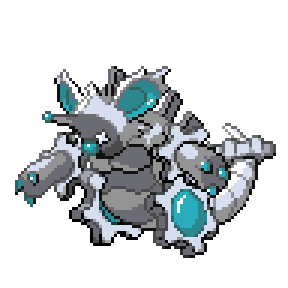
Klile are mechanical, artificial Pokémon that are used to search hostile environments during search and rescue missions. Despite their small size, they are strong enough to carry travellers to safety from the depths of the desert.

Klaking have historically been used during warfare, their durable bodies and ability to traverse any terrain with their tracks helping them cross difficult terrain. Their naturally territorial instincts make them effective companions for soldiers.
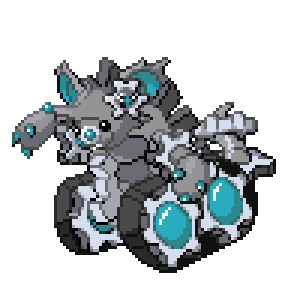
Zople live on the lower branches of trees, feeding on leaves that other bug Pokémon avoid. They spray a special silk that refracts light strangely when threatened, creating the illusion of a much larger Pokémon in the tree.
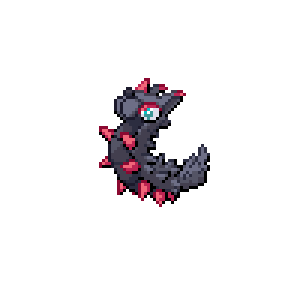
Zofly wing scales have unique reflective properties, allowing the creation of complex illusions when light is shone through them at the correct angle. Researchers are very interested in the potential uses of these scales in holographic technology.
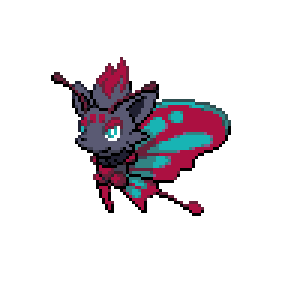
Zowrath use their illusory powers to alter the face on their stomach into different expressions for the entertainment of young Pokémon. They mime performances to go along with their show, often recounting events that happened earlier in the day.
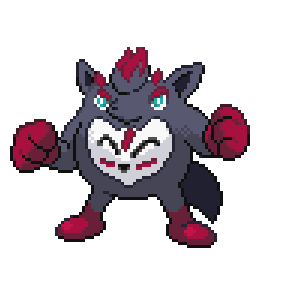
Chargey have feathers that are constantly smouldering. They inadvertently start forest fires in the summer, so Pokémon Rangers pay close attention to where flocks roost to make sure they can warn residents if they need to evacuate.

Charsly are partially composed of coal and other organic rich rocks meaning that they are flammable. They can sustain this flame for extended periods of time without ill effect, but are hazardous to surrounding plants.
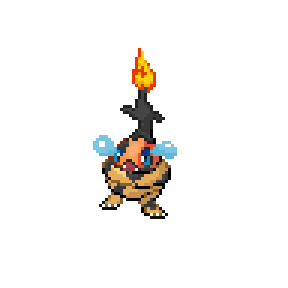
Charsly are partially composed of coal and other organic rich rocks meaning that they are flammable. Charsly that burn too hot will sometimes abruptly collapse due to heat stroke after using all their fuel, necessitating a trip to a Pokémon Centre.

Charan make their home on the slopes of active volcanoes, feeding on the shoots of plants that sprout in the nutrient-rich lava fields. When they feel their territory is being threatened, they will band together and spit fiery embers at the threat.

Rarely, Chartales fusions result in the Pokémon having just a single burning tail. Tests by Pokémon researchers have determined that they have a more intense inner flame than other Chartales, but cannot cover as large an area with their fire.

The many tails of Chartales each burn with a single flame at their tip. Chartales can wave these tails independently of one another, creating complex and eerie light shows in the dark that some think could be the origin of legends around will'o'wisps.

The many tails of Chartales each burn with a single flame at their tip. Chartales can wave these tails independently of one another, creating complex and eerie light shows in the dark that some think could be the origin of legends around will'o'wisps.
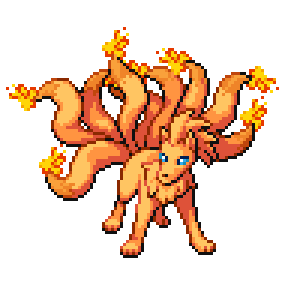
Pokémon researchers have observed Charunt moving across their glacial homes in huddled groups of four or more. The current theory is that they do so to protect their flames from abrupt gusts of wind or blizzards, letting them stay warm as a group.
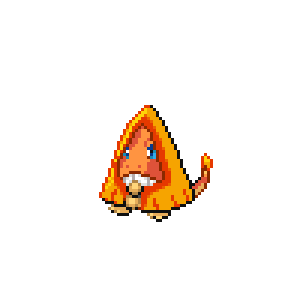
Charnine packs leave trails of fire in their wake as they sprint across the landscape. During dry seasons, Pokémon Rangers attempt to direct the packs away from areas with heavy underbrush in an attempt to reduce the risk of wildfires.
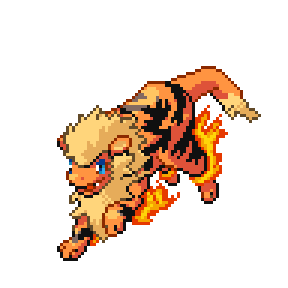
Wigglyfing's gas functions as a mild sedative, causing those who breathe it to become drowsy and unresponsive. Hospitals make use of Wigglyfing's gas to synthesise powerful anaesthetics for surgeries.

Wigglygma bubble and puff up when they get too hot, as their internal anatomy constantly produces superhot gas. They can be trained to release this hot air slowly and are popular companions in colder regions.

Wigglycargo's tourmaline gems are prized for their deep green colour, with many collectors seeking to polish them further to enhance their lustre. The gem grows throughout their life, requiring Wigglycargo to be fed a steady diet of silica-rich foods.

Wigglydoof work together in small family groups to gnaw down trees with which to make family dams. They have rubbery bodies that help to protect them from harm should one of the falling trees accidentally fall on top of them.
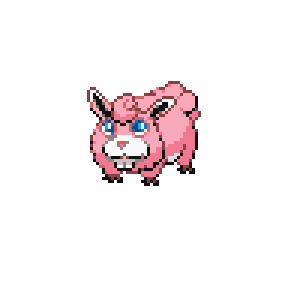
Wigglyking spend their days lazing around and casually eating fruit from bushes and trees. When roused to fight they are terrifyingly strong, inflating their chest and bellowing loud enough to be heard from miles away.

Wigglyqueen typically dwell high in the mountains, maintaining large territories across the peaks of their homes. They signal to Wigglyking and rival Wigglyqueen with loud, echoing songs.

Wigglybat sing to help themselves navigate, listening for echoes off their environment as they fly. Each Wigglybat sings at a different pitch so that they can differentiate their own noises, with flocks of Wigglybat creating a harmony.
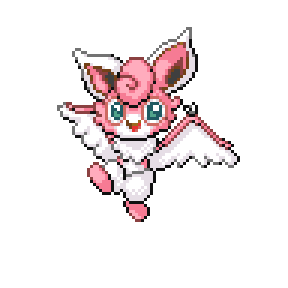
Wigglymy have very elastic bodies and enjoy puffing up and bouncing off of one another. They are an unlikely companion for some Hikers, as their ability to rapidly inflate can be a lifesaver if a Hiker slips and falls down a mountainside.

Wigglytrio are sometimes entered into Pokémon contests, their Trainers opting to dye the hair of their three heads in complementary colours. If their performance goes poorly, they sulk underground, hiding until they feel more confident in themselves.

Wigglysian whiskers can pick up the faint vibrations of other Wigglysian songs on the wind. They look skyward intently at night as they wait for these songs, replying with a loud yowling tune of their own.
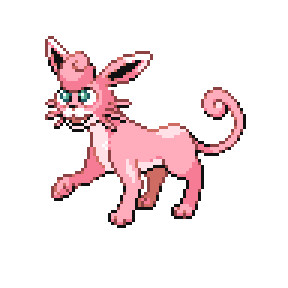
Pokémon researchers initially believed Busaur to be a regional variant of Ivysaur native to Sinnoh. A detailed analysis of their pollen and the enzymes in their flower's nectar revealed them to be their own distinct species.

Buans lie low in meadows, keeping their tails raised above the top of the grass to receive sunlight. The bud at the tip of their tail has loose seeds within, and they shake it rapidly to warn those close to stepping on them.

Budew grow and develop far faster than unfused Budew, a quirk of the fusion process causing them to grow extra flower buds as they age. They have an earthy scent to them from all the nutrients they absorb from the soil.

Budew grow and develop far faster than unfused Budew, a quirk of the fusion process causing them to grow extra flower buds as they age. They have an earthy scent to them from all the nutrients they absorb from the soil.

Budew grow and develop far faster than unfused Budew, a quirk of the fusion process causing them to grow extra flower buds as they age. They have an earthy scent to them from all the nutrients they absorb from the soil.
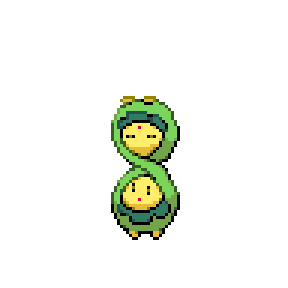
Busect parasitise plant roots, drinking their sap to fuel the growth of their flower buds. Large populations of Busect can cause issues for local plant populations and their presence is monitored by environmental agencies.

Busian lounge in the sunlight during the summer, able to spend entire days in one place as they absorb sunlight through their leafy fur. They are sensitive to cold and seek shelter as the weather cools, often trying to get into people's houses.
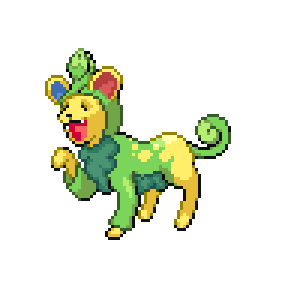
Bunine constantly seek out sunny meadows to bask in. When the seasons turn cold and winter starts drawing in, packs of them race across the landscape to head to warmer climates.
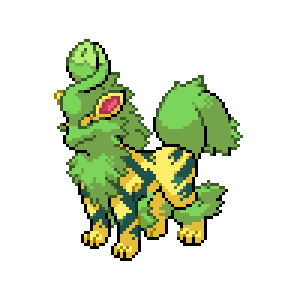
Rosesaur grow elaborately petaled flowers on their backs that give off a complex fragrance dependent on their flower's colouration. Pink flowered Rosesaur produce a sickly sweet smell that draw Pokémon with a sweet tooth.
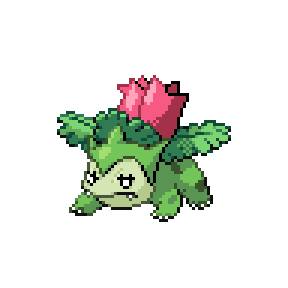
Rosecargo shells grow studded with rubies and sapphires, drawing many admirers. Their shells are sometimes used as vases, the mineral content of their shells leaching into the water and promoting plant growth for the flowers placed inside them.
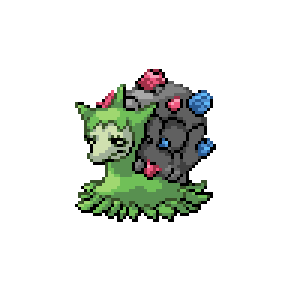
Rosesaur grow elaborately petaled flowers on their backs that give off a complex fragrance dependent on their flower's colouration. Blue flowered Rosesaur produce a subtle earthy smell that is reminiscent of petrichor.

Rosesaur grow elaborately petaled flowers on their backs that give off a complex fragrance dependent on their flower's colouration. Rarely, Rosesaur sprout multiple of these flowers, their scent that of an entire bouquet.

Roserino nectar is used in the production of perfumes with a bold, challenging scent to them. The scent of the perfumes can cause those wearing it to become more standoffish and stubborn, and less likely to give ground when challenged on their ideas.
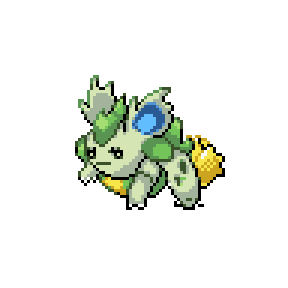
The fruiting bodies of the fungus growing from Rosesect have a floral fragrance. They give a unique flavour to meals when sauteed and are popular amongst many chefs.
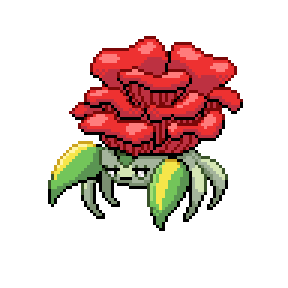
Rosesian are often kept within high-end botanic gardens, prowling through flowerbeds in search of Pokémon trying to feed on the expensive plants. If they find a plant being eaten, they swipe at the offending Pokémon with their thorny paws.
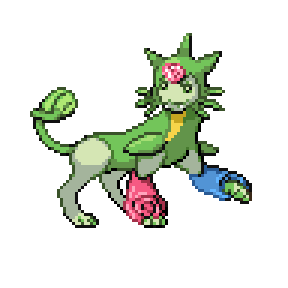
Rosesian are often kept within high-end botanic gardens, greeting guests at the entrance with an affectionate cheek rub. Their scent lingers on those they mark, their ruff of flowers imparting a pleasant floral fragrance.
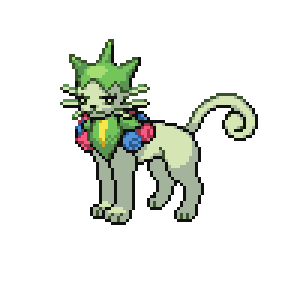
Rosenine leave a scattered trail of petals behind them as they run. Wedding planners have begun to make use of them during celebrations, encouraging the betrothed to follow Rosenine's lead as it creates a floral trail to the altar.
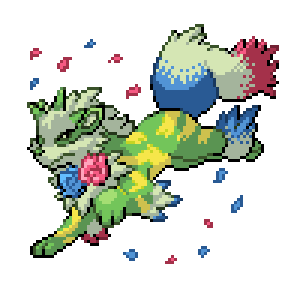
Drifltales love to roam around theme parks and circuses, searching out excited children to offer them a balloon. The balloons their tails rapidly regrow when taken, allowing them to always have a ready supply.

Driflsect appear to drift on the breeze attached to a cloud. Analysis of the cloud reveals that it's formed of a loose web of mycelium that captures ambient moisture in the air, creating a cloud-like structure.

Driflsect puff up the balloon on their back through a passive gas exchange between the air and an internal, symbiotic fungus. The fungus releases hydrogen gas as it processes water and encourages Driflsect to drink clouds to sustain it.
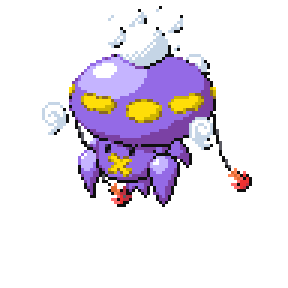
Driflsect's bodies are pale and devoid of pigment, a marked contrast to the brightly coloured, gas-filled mushroom growing on their back. Researchers speculate that this draws predators to attack the mushroom, releasing puffs of spores as they do.

Drifltrio live within clouds, spending their days creating tunnels through them as they consume water vapour. They can sometimes be seen popping out of the edges of clouds, their three heads looking for other nearby clouds to travel to.
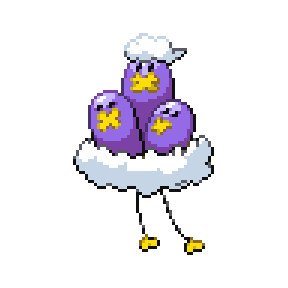
Drifltrio feed on gas pockets that can be found deep underground, preferring to seek out helium pockets where they can. They periodically have to surface to release waste gas, making high-pitched squeaks as they do.

Driflsian love to rub up close against their trainers, showing affection through close physical contact. They generate a persistent static charge when doing so, often resulting in them getting stuck to their trainer's clothing and meowing for help.

Bunfairy's fur changes coarseness depending on the phase of the moon. Their fur is at its softest during a full moon, during which time they are commonly gifted to loved ones as a sign of goodwill.

Bunruff makes for an excellent companion; it has a playful nature and is extremely loyal. Its soft fur is actually made of very thin rock crystals that are spun out into fibres.

Shroompi use the discarded shells of other Pokémon eggs as a way to shield their soft bodies. They use the calcium-rich shells as a source of minerals as they grow older, helping to fuel their growth.

Shroomskit are coated in a thin layer of hydrophobic spores, allowing them to skate across the surface of bodies of water. When threatened they release a puff of spores, using them as cover to dart away.
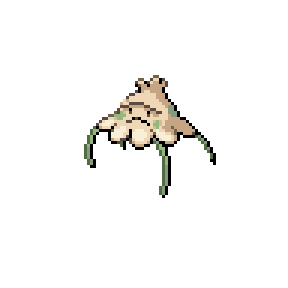
Shupdle flutter as they float, caught in ethereal winds. They can whip their tail segments around quickly when they get close to another Pokémon, delivering a painful sting.

Shupcargo can be found in the aftermath of a volcanic eruption, crawling through the ruins of homes destroyed in the lava flows. They feed off the resentment and loss of those who have lost their homes, their shell bursting with the negative feelings.
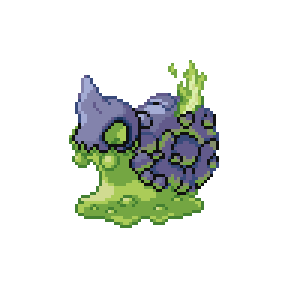
Shuptales are light enough to flutter in the breeze, prancing in the air and floating in place. They show a great amount of interest in people who enter their domain, seeking out those who are afraid of them, their great tail billowing behind them.
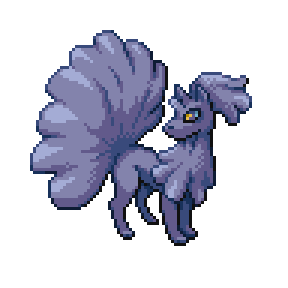
Shupet are held together by loose stitches of thin thread and easily pull apart under pressure. Seeing the internal fabrics of Shupet causes the observer to suffer nightmares, and they are used by Hex Maniacs to curse their foes.
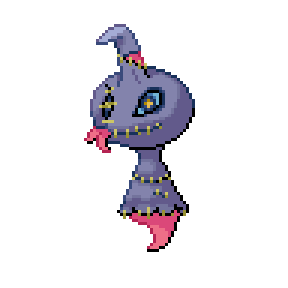
Shupnine linger around the Pokémon grave sites, patrolling the headstones of particularly well-loved companions. They tend to manifest in front of those with particularly strong feelings of grief, nuzzling close and offering an ephemeral warmth.
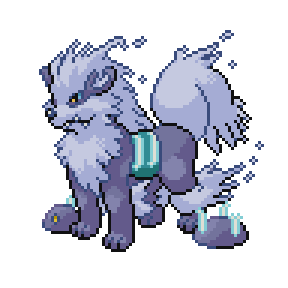
Solofree have a very small body from which they exude a thick gel that they can manipulate with their psychic powers. They form this gel into great wings, allowing them to fly through the air.

Solodle have a toxic stinger on both their head and their tail. The stingers are safely concealed within their gel coating and are only dangerous if pressure is applied to their surface.

Solodle rely on their thick gel coating to keep their bodies safe. The gel is only strong enough to resist attacks from Pokémon of a similar size, they hide themselves away in trees against larger Pokémon, though a trail of slime gives them away.
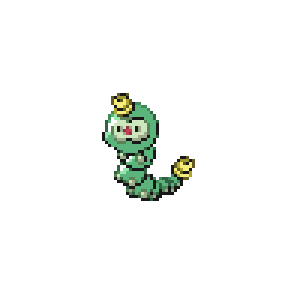
Solochou has a body covered in a protective gel, secreted from its pale skin. The gel dissuades predators from attacking it as it has an unpleasant taste and texture.

Living in the deep sea, Soloturn have lost all pigmentation in their skin. The lights on their heads lure prey by fooling them into thinking they are bioluminescent jellyfish.

Solochu use their electrical powers to manipulate their gel coating, generating a constant positive charge throughout their body. When they want to fling their gel at their foes, they abruptly invert their charge.

Solochu use their electrical powers to manipulate their gel coating, generating a constant positive charge throughout their body. When they want to fling their gel at their foes, they abruptly invert their charge.

Solodon gel hardens when struck, momentarily becoming solid. They use their gel as a shield against physical blows, turning to face threats and reshaping their gel so that it catches incoming blows.
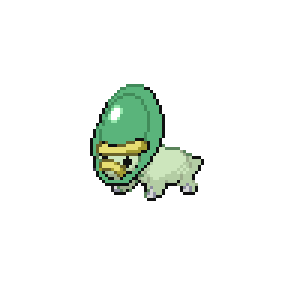
Solorino's bodies are made of a toxic gel that can cause nausea when absorbed through the skin. They shape their bodies with their psychic powers, manipulating the gel entirely through their willpower.
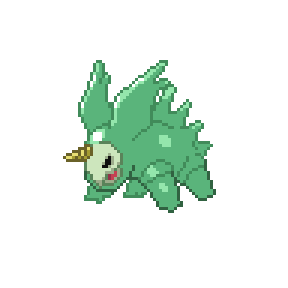
Soloking bodies consist of a small number of disparate nuclei suspended in a toxic gel. The nuclei each control a different part of the body, allowing Soloking to reshape and reform at will.
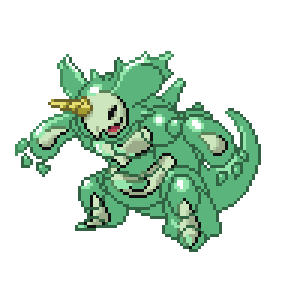
Solotales use a Fire Stone as the nucleus for their gel-like body, drawing out its elemental power to produce powerful, psychically charged flames. Their Fire Stones are coveted by unscrupulous hunters due to presumed mystical powers.
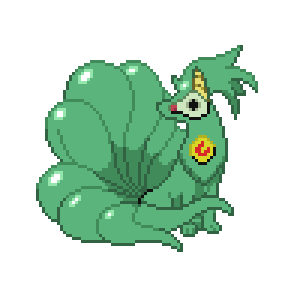
Solosect surround themselves with a thick layer of psychically charged gel. They form the gel into a hump over their back to protect their vulnerable nucleus, keeping themselves safe from harm.
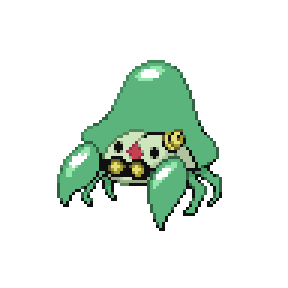
Sololithe fur constantly produces a thick, psychically conductive gel. Their gel is commonly used by medical professionals in place of hot water bottles, the heat of the gel easing muscle stress and leeching away pain.

Solotoise keep the soft gel that forms their body safe within their great shells, retreating within it if they ever feel endangered. They can fire the gel at high pressure out of their cannons, recalling it with their psychic powers.

The soft and gelatinous bodies of Soloder leave them vulnerable to predators. They scavenge sea shells using their sticky bodies, keeping themselves safe from danger.

Duogon-Z use their psychic abilities to travel through cyberspace, moving through computers in search of programs with a high file size. They have a preference for artistic programs, sometimes spending days absorbing data from individual image files.
Duogon-Z use their psychic abilities to travel through cyberspace, moving through computers in search of programs with a high file size. They have a preference for artistic programs, sometimes spending days absorbing data from individual image files.
Duorino have multiple nuclei floating within their body, providing scaffolding for their toxic gel to adhere to. These nuclei glow when they use their psychic powers, attacking one another with blasts of noxious energy.
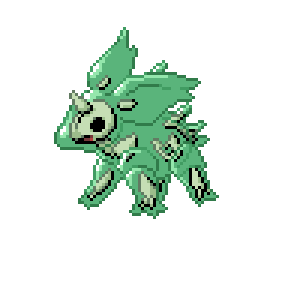
Duoking horns light up with a pulse of energy whenever they use their psychic powers. They are potent psychics, flinging energy blasts in battle and able to telekinetically move several tonnes of material at will.
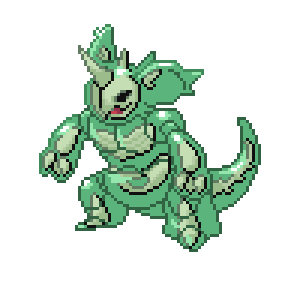
Duosect protect their core nucleus within a bell-shaped bubble of gel. More durable parts of their body protrude from the bottom of their gel, moving them along with scuttling motions.

Duoth gel has natural sound-dampening qualities, allowing them to move almost silently. Sound engineers employ them to help ensure studios are effectively sound-proofed, letting Duoth apply a layer of gel across the walls.
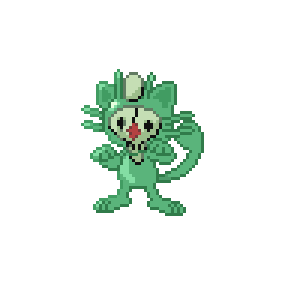
Duolithe gel is a common ingredient in heat packs, helping people stay warm during the winter. Their gel is reactive to a person's needs, only becoming warm to the touch when the person holding it starts feeling cold.

Duotortle coat their bodies in a watery gel that allows them to swim at speed, the gel letting them cut through water easily. When they feel threatened their gel can be withdrawn into their shell, keeping themselves safe from harm.

Families of Cottontales race across the landscape at high speed, their long leaf-like tails trailing behind them. They are able to intensify the sunlight above them whilst using their tails to turn the same light into an abundance of energy to run with.

Cottononee have far fluffier and lighter cotton than unfused Cottonee. This makes them far lighter and easier for the breeze to pick up. They are a popular Pokémon for younger Trainers as they are squishy and enjoy being hugged.
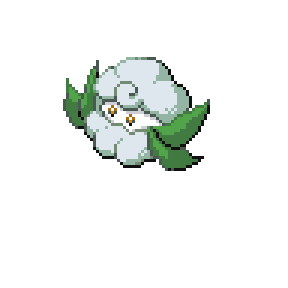
Cottonplume fluff is light enough that they can be swept up into the air with a strong enough gust of wind. They seek out windy places so that they can float through the air, twirling in place and stretching their leaves out to catch the sun.
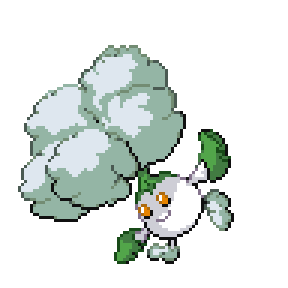
Cottontoise protect their fluffy, soft bodies with a tough grassy shell. They are lighter than their bulky appearance would suggest and can bob along the water's surface without sinking.
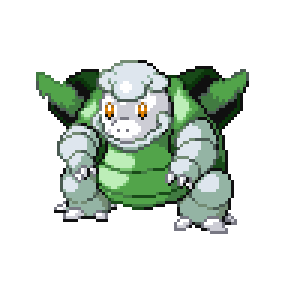
Sandirow flocks gather around popular picnic sites, watching park-goers from the tops of trees. When they spy a meal that is not being paid enough attention, they will swarm in, stealing as much food as they can to the dismay of the picnickers.
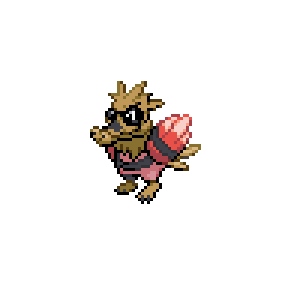
Sandicargo make their homes in the lava tubes of long-extinct volcanoes. They lie in wait near the entrance to these tunnels, pressing themselves against the basalt walls and ambushing unwary cavers.
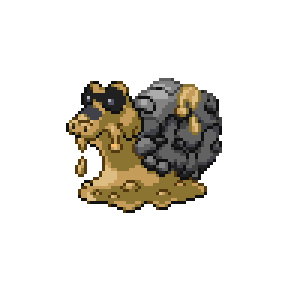
Sandiesect lurk beneath desert dunes, keeping only their eyes and cannons exposed. They have excellent eyesight and blast approaching Pokémon with beams of energy from hundreds of meters away.
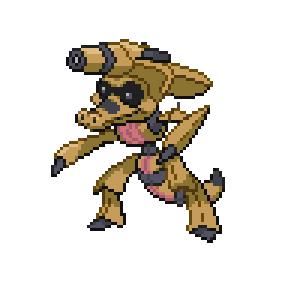
Sandikoth sleep for weeks on end, content to remain comfortable in out-of-the-way places where they won't be disturbed. They are grumpy when roused and will lazily lash out at whoever woke them, though their attacks are easy to avoid.

Sandiroth aggressively chase after interlopers in their territory, using their sharp teeth and claws to attack anyone that gets too close. Their aggression makes them popular with villainous Trainers.

Sandile use their back spines to break through the sand, making their movements through the desert more fluid and rapid than unfused Sandile. The increased speed is counterbalanced by their increased visibility, making them easier to spot.
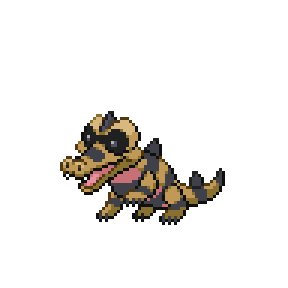
Sandirok linger at the edges of deserts in small gangs as they look for Pokémon and Trainers leaving the sands. They will try to gang up on these tired travellers, seeing them as easy pickings.
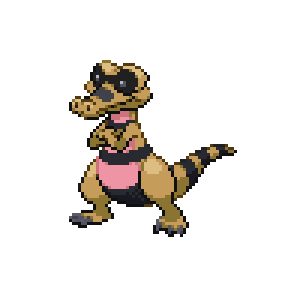
Sandiwag live around desert oases, splashing around happily under the fierce desert sun. They bury themselves in the mud when their pool starts to dry up, hiding underground until the next rainfall.

Zuorb emit sonic blasts powerful enough to shatter glass and cause temporary deafness. They are a particular danger for inexperienced Pokémon Trainers, and caution is advised while battling them.

Zuorb emit sonic blasts powerful enough to shatter glass and cause temporary deafness. They flap their wings against the ground to push their way toward their opponents, getting close to deliver their sonic bursts.

Zuorb emit sonic blasts powerful enough to shatter glass and cause temporary deafness. They flap their wings against the ground to push their way toward their opponents, getting close to deliver their sonic bursts.
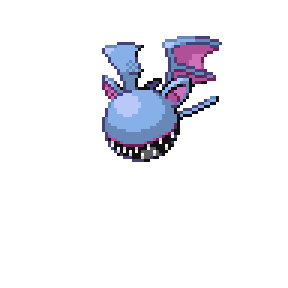
Zupod bite at anything that comes close, using their sharp teeth to try and leech the energy from curious passers-by. They store as much of this energy as they can to try to hasten the evolution process.
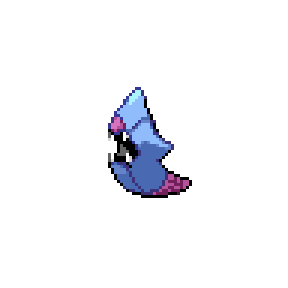
Zupod bite at anything that comes close, using their sharp teeth to try and leech the energy from curious passers-by. When they feel endangered, they wrap their wings tightly around themselves and rely on their tough skin to protect them.

Zurino have no eyes and are totally reliant on their acute hearing for navigation. They will sometimes use their little wings to knock small pebbles around, listening out for the echoes to get a good sense of their surroundings.
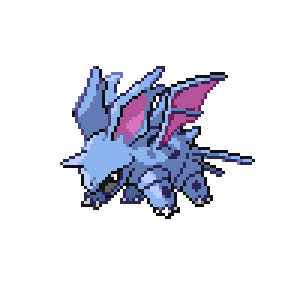
Zulous's heads are completely blind, forcing them to rely upon echolocation to navigate. The two heads emit competing frequencies, forcing them to alternate shrieks to navigate lest they have confusing echoes return to them.
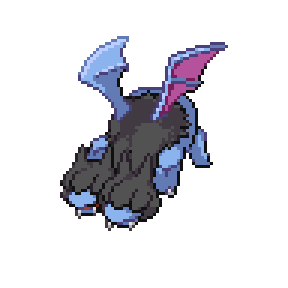
Fusions of two Zubat can result in this fusion expressing traits of a more evolved form, developing rudimentary eyes, and even feet. They struggle to process these new sensory developments and can sometimes crash mid-flight.

This fusion will sometimes develop eyes when they form from two unfused Zubat. When these eyes take the place of their ears, they can struggle to navigate due to the loss of their echolocative abilities.
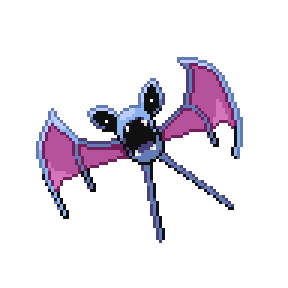
Zupin run around completely blind, enjoying the feel of the wind across their skin. The wings atop their heads are not strong enough to provide them with lift, but they flap happily whenever Zupin are in a good mood.
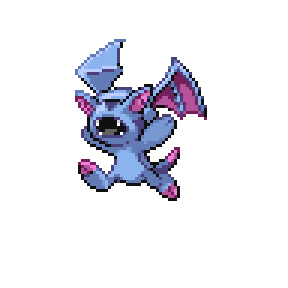
Zuladin flap their wings to help focus their hypersonic shrieks, channelling them forward in a cone. They rely on the echoes of these shrieks to navigate, rushing forward to perform full body tackles if they sense another Pokémon.
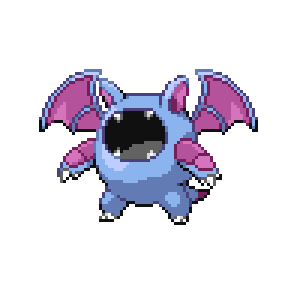
Zulithe are completely blind, relying on their enhanced sense of smell and hearing to navigate around the world. They are agile Pokémon, battling with an evasive fighting style that makes them difficult to pin down.

Zucool live deep in the ocean, swimming at a depth where very little light reaches. Their red colouration absorbs what little light there is, making them nearly invisible. They swim by using their long wing-like fins.

Zutle row themselves through the water with their broad, flat wings. They are totally blind and rely on their shell to protect them from harm, withdrawing into it if they feel something impact against them.

Krokoroth patrol their territory with frenetic movements, racing along the border in search of intruders to scare off. They are usually content to simply intimidate their rivals away with loud noises and frightening gestures.

Krokorok are cruel bullies, using their acute sense of smell to find rare desert oases and then forcing other Pokémon away from them. They delight in wielding their strength against smaller Pokémon, but are cowards when confronted by stronger foes.
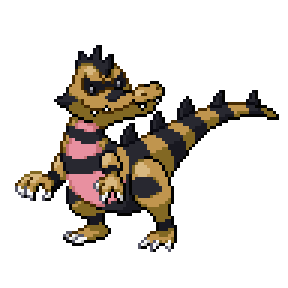
Yabone wander through ancient tombs in search of companionship, pawing over abandoned and discarded relics of lost civilisations. Pokémon researchers theorise that Yabone were once an integral part of these ancient societies.
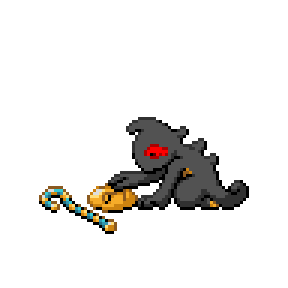
Driven by a sense of isolation, Yawak band together in the ruined catacombs of lost civilisations. They gather up relics of a time long past and attempt to reconstruct the societies they once knew.

Yarak are found in long-abandoned tombs. They are the lost spirits of ages long past that cling to relics of their time. When disturbed by archaeologists they instinctively scuttle away from the light, hiding in shadowy recesses.

Yarak are found in long-abandoned tombs. They are the lost spirits of ages long past that cling to relics of their time. When disturbed by archaeologists they instinctively scuttle away from the light, hiding in shadowy recesses.

Yados possess the treasures of civilisations long passed and can be found in ancient tombs and catacombs. They are shy and will stick to shadowed areas, but they will lash out if their home gets too bright.

Yaring form from ceremonial gold masks that were crafted centuries ago. They manifest the fears of those that see them to form their body. They are most active during the winter, stalking through the night.

Each of the tails of Yatales are imbued with a different curse that is transferred to anyone who makes contact with them. They stalk through the night in search of anyone who can take the curse off of them, inadvertently spreading misery as they do.

Each of the tails of Yatales are imbued with a different curse that is transferred to anyone who makes contact with them. They stalk through the night in search of anyone who can take the curse off of them, inadvertently spreading misery as they do.

Each of the tails of Yatales are imbued with a different curse that is transferred to anyone who makes contact with them. They stalk through the night in search of anyone who can take the curse off of them, inadvertently spreading misery as they do.

Yaduck lurk in marshes and swamps, hiding themselves within the murky waters. When they see a traveller pass by, they use the golden glint of the coin on their forehead to draw them close, then leap out to attempt to drown them.

Yape linger in ancient tombs, watching over relics from long dead civilisations. They fly into a frenzy when their home is disturbed, striking at whoever dared enter with golden fists.
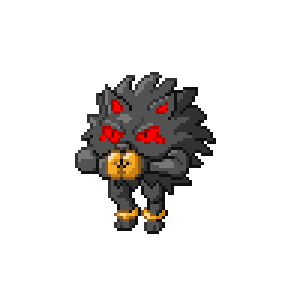
Jolpip float using ambient static charge, preferring to travel to areas with high electrical potential. They generate static as they fly and will end up clumping together as they fly.

Joloom feed on electrical currents and naturally gravitate to regions with a high frequency of thunderstorms. They have become a pest in modern times as they will bite into and feed on power lines, sometimes even causing blackouts.
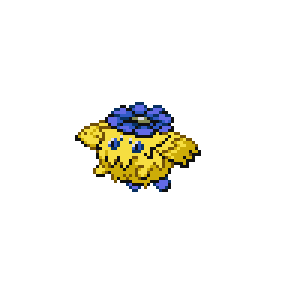
Jolbok are drawn to electrical currents and can be found coiling around the base of generators and electrical pylons. Engineers are advised to account for their presence, making sure no wires are exposed to prevent Jolbok from biting them.

Jolinja attach themselves to small seeds and use static electricity to attract fluff and fur to the seeds, catching the breeze and floating on their makeshift platforms. If left undisturbed, the charge builds up to a dangerous degree.

Jolinja attach themselves to small seeds and use static electricity to attract fluff and fur to the seeds, catching the breeze and floating on their makeshift platforms. If left undisturbed, the charge builds up to a dangerous degree.
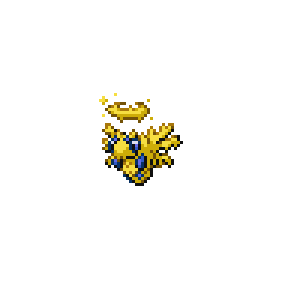
Despite their small size, Jolking maintain a large territory that can be multiple miles in size. They challenge intruders with high-pitched roars, swinging at them with their tiny arms to scare them away.

Jolpuff cluster together around electrical wires and appliances, feeding off the currents running through them. Their presence is destructive, but removing them can prove difficult, as they will sing people to sleep should they try to disturb them.

Jolsian fur carries a constant static charge, making their fur stand on end at all times. Their fur is very sensitive to air movements, making them difficult to catch off-guard.

Jolape feed on electrical cables and can often be seen feeding atop large pylons. Large populations of Jolape can cause blackouts, often leading them to fly into a rage and start destroying the pylon they're feeding on.

Ferrots can sense the emotions of people and Pokémon near them. They use this power to keep themselves safe. If they are caught with nowhere to hide against someone with hostile intent, they will curl up tightly and use their spikes defensively.

Ferrots can sense the emotions of people and Pokémon near them. They use this power to keep themselves safe. If they are caught with nowhere to hide against someone with hostile intent, they will curl up tightly and use their spikes defensively.
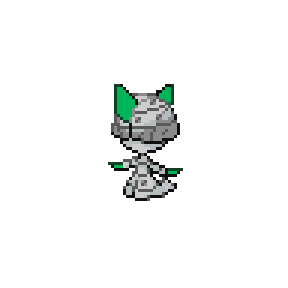
Ferrots can sense the emotions of people and Pokémon near them. They use this power to keep themselves safe. If they are caught with nowhere to hide against someone with hostile intent, they will curl up tightly and use their spikes defensively.
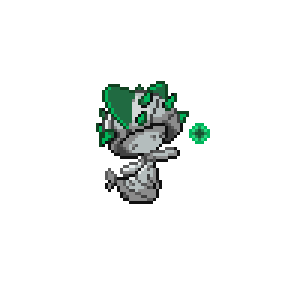
Ferrots can sense the emotions of people and Pokémon near them. They use this power to keep themselves safe. If they are caught with nowhere to hide against someone with hostile intent, they will curl up tightly and use their spikes defensively.

Ferrolia use their empathic powers to pinpoint the locations of their opponents during Pokémon battles. They fight by spinning in a pirouette, relying on their metallic skin to protect them from harm whilst their spines cut into their foes.

Ferrolia use their empathic powers to pinpoint the locations of their opponents during Pokémon battles. They fight by spinning in a pirouette, relying on their metallic skin to protect them from harm whilst their spines cut into their foes.

Ferrovoir drift into Pokémon battles in the certainty that their steel skin and empathic powers will enable them to avoid harm. When they sense a hostile attack, they flare up their armoured skirt, using the thorny metal to block.
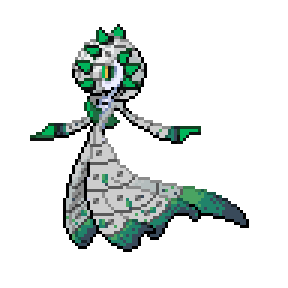
Ferrovoir drift into Pokémon battles in the certainty that their steel skin and empathic powers will enable them to avoid harm. When they sense a hostile attack, they flare up their armoured skirt, using the thorny metal to block.

Ferrovoir drift into Pokémon battles in the certainty that their steel skin and empathic powers will enable them to avoid harm. When they sense a hostile attack, they flare up their armoured skirt, using the thorny metal to block.

Ferroran live in harsh environments, typically found in arid deserts. They live in tight-knit groups and are highly territorial, their spiky and iron-rich hides letting them fend off rivals without much fear of reprisal.

Ferroking are covered in vicious barbs that catch and cut deep into the bodies of whatever they strike. The spines and skin of Ferroking are rich in metallic compounds; they feed on iron-rich rocks to help maintain their armoured body.
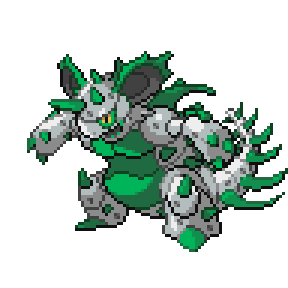
Ferroking are covered in vicious barbs that catch and cut deep into the bodies of whatever they strike. The spines and skin of Ferroking are rich in metallic compounds; they feed on iron-rich rocks to help maintain their armoured body.
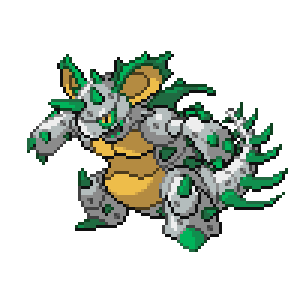
Ferrosect dig through caves for iron-rich nodules to feed on, incorporating the metal into their symbiotic mushroom. The mushroom has a metallic surface studded with chitinous thorns to help protect its host.
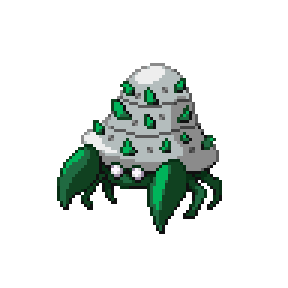
Ferrodisc live in highly turbulent waters where storms regularly blow through, sweeping up anything light enough. With their heavy iron bodies and sharp spikes, they can cluster together to keep from being washed away.
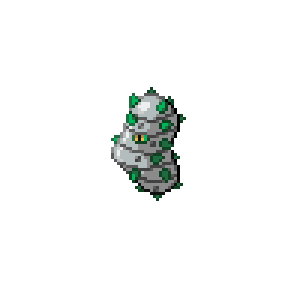
Ferrowag live in turbulent rivers, relying on their heavy metal body to keep them weighed down against the current. They use their spikes to scrape pebbles in the riverbed, feeding on the minerals within them.

Ferrotoise rely on their thorny shell to protect themselves from harm, being too slow moving to properly evade danger. If forced into a fight, they use their cannons to launch metallic thorns at their foes.

Ferrotoise rely on their thorny shell to protect themselves from harm, being too slow moving to properly evade danger. If forced into a fight, they use their cannons to launch metallic thorns at their foes.