Page 2 / 2 of 1072 pokedex entries by pjporwoll.
Tentaeanie crawls through tidal pools and reefs, where its red disc reflects light to warn away larger creatures from stepping on it. The disc is shed throughout life, so people collect them as decorations.
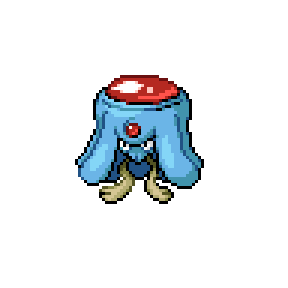
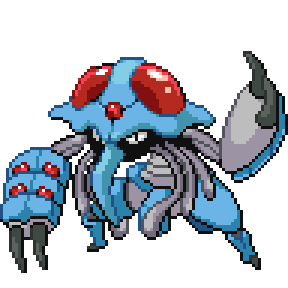
Tentasopod fights primarily with its powerful claws, but resorts to jabs from the shorter tentacles to deliver paralytic venom if the battle is turning against it. When it molts its armor, the shedding slowly turns to an edible jelly.

Tentacool's large gems frighten away predators which mistake them for the eyes of a larger creature. Despite its potent venom, Tentacool is considered a good sign in many regions as it will only live in clean sea water.
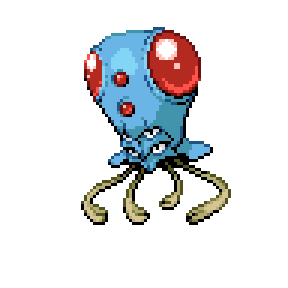
Tentacruel's tentacles are still growing, so it is common to see one with a mismatched variety of tentacle sizes. The beak is too large for its body, but looks fierce enough to ward off predators.

In the wild, Tentadra lay huge clutches of eggs, with the male vigilantly protecting the nest while the female hunts for the pair until the young hatch. Its fins and tentacles produce deadly toxins, but these are diluted to create anesthetics.

In the wild, Tentadra lay huge clutches of eggs, with the male vigilantly protecting the nest while the female hunts for the pair until the young hatch. Its fins and tentacles produce deadly toxins, but these are diluted to create anesthetics.

Tentadeen is often mistaken for a Sharpedo fusion due to its venomous fang protruding from a blood-red patch of light. Its meat is hard to filet due to the slick consistency, but if the many venom sacks are avoided, makes for a unique, briny meal.

Tentados will seek vengeance for even the smallest slight and has been known to chase ships across regions. Its stinging tentacles ward off attackers when it constricts its serpentine body around a target.

Tentasola anchors to a reef and snags prey lured in by its red growths. If its reef becomes polluted, Tentasola detaches and uses its tentacles to swiftly relocate.

When Tentasola lives in polluted water too long, its tentacles shrivel and its shell becomes brittle. Dead husks of Tentasola are used to teach youngsters about the need for conservation.

Tentaraid fills the red sack with water which it can expel to stun opponents. It uses the hook to latch onto fast Pokémon like Sharpedo so it can blast more challenging targets.

Tentaelgon's tentacles and bell are covered in an adhesive film which allows it to manipulate the placement of its armored plates. The plates can withstand devastating attacks, so Tentaelgon generally survives to evolve.
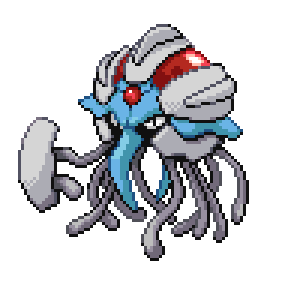
In combat, Tentaetta whips its hair-like tentacles in circular arcs to ward off foes and spread its toxins. It moves in flowing twirls with its tentacles billowing, which has influenced Johtonian fashion design and Kantonian ballet.

Tentasopod uses the tentacles inside its carapace as a last resort in combat, preferring to protect them inside its shell. When it reaches a deep meditative state, its orbs glow in rhythmic pulses.
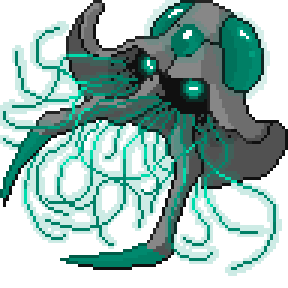
Tentasopod uses the tentacles inside its carapace as a last resort in combat, preferring to protect them inside its shell. When it reaches a deep meditative state, its orbs glow in rhythmic pulses.
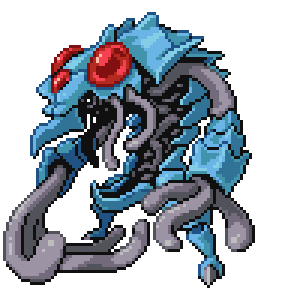
Tentadisc flashes its orbs to attract other Pokémon, then latches on with its beak to feed. Its predatory mimicry is feared by even experienced divers.
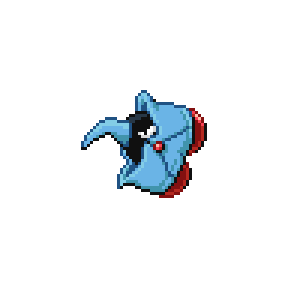
Tentacruel resides in the deep ocean, where it feeds on larger predators. It lures them in by flashing its green gel orbs, then latches on with its venomous jaws and stings with its tentacles.
While Tentagong is competitive for dominance within its pod, it will become despondent if it becomes lost from its companions. It will flash its jewels to coordinate with members of its pod when hunting for food.

Tentauk drags its body along the seafloor with its tentacles in search of litter to consume. It will migrate to a new feeding ground once it struggles to find trash in its current one, so populations fluctuate frequently.

The shell of Tentader can repel almost any attack. It will expose its vulnerable body only to ensnare and immobilize prey with its venomous tentacles before reeling in the prey to feed.

Tentaster can use its tentacles to pursue prey onto land, but this is dangerous for it if the climate is not cold or humid. As grains of sand get into the shell, they polish and shine its pearl-like head and sharp beak.

Ponyrunt struggles with balance due to its large head, often falling over while running. Its legs are incredibly powerful and its hooves are harder than diamonds, letting it shatter boulders with a single kick.
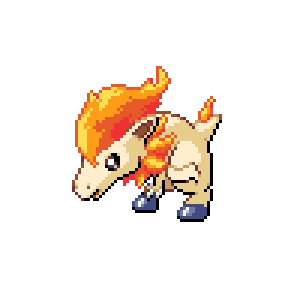
The stony growths on Ponytrum act as shock absorbers for when it crashes into obstacles during a run. The flames on its body grow in intensity as it accelerates.

Ponybro has the physique of an incredible runner, but the Shellder biting its tail secretes a numbing venom that tires it out. The fiery tail slowly cooks the Shellder to fainting, neutralizing the toxin and inspiring Ponybro to train.
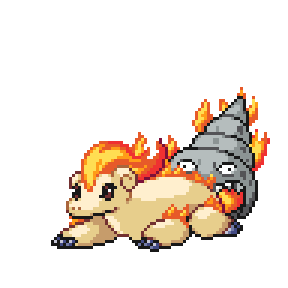
Rapilix tunnels deep below volcanos, the heat and pressure hardening its spikes into diamonds. It is coveted as a partner by Pokémon Rangers as it can dig trenches around disasters to mitigate danger while being safe from blunt damage and fire.

One of the most unaware Pokémon discovered, Slowkarp is often witnessed swimming in a straight line, bumping into an obstacle, shifting its course barely, and restarting the cycle. It is easy to care for as it uses little mental or physical energy.
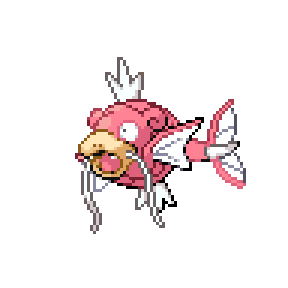
An overly trusting Pokémon, Slowras has long been the victim of poachers harvesting its large tail, leaving the confused Pokémon struggling to swim. Trainers have taken to watching over and protecting herds of Slowras with the aid of Dewgong packs.

Slowret spends the majority of the day stretched out sunbathing by the water. When it does move, Slowret strolls at a steady pace with a peaceful smile.

Slowdos makes its home in damp caves, spinning its webs near waterways to catch a variety of prey. It often does not react to Pokémon caught in its web, instead just watching as the captive struggles and eventually breaks free.

Slowking's lower brainwave measurements support the claim that the venom from the Shellder crown aids in Slowking's intelligence boost. It often looks around and scratches its head as if it can tell it is missing something, but then proceeds to nap.

Whenever something tries to cut off any of its tails, Slowsel springs from its slumber and mercilessly claws the offender. As soon as it is finished attacking, it curls up in the coldest spot and sleeps.

Slowdour is very loving and makes a great housepet for families with children, but it struggles with learning commands and is tricked easily when playing. In the wild, Slowdour relies on luck, scraps, and charity to survive as it rarely catches prey.

Slowdour is very loving and makes a great housepet for families with children, but it struggles with learning commands and is tricked easily when playing. In the wild, Slowdour relies on luck, scraps, and charity to survive as it rarely catches prey.

Sloweon's ability to change its color to match its environment is poorly executed, changing colors long after it has left the associated location. Many predators leave it alone, fearing the poor camouflage is due to it being highly toxic to eat.

Warlee blows bubbles and then kicks them at foes to create hazardous projectiles around the battlefield. When not fighting or training, it takes meticulous care of its flowing mane of hair, which is a mark of prestige among the species.

Warchan trains by launching a beam of robust bubbles to bounce off of surrounding surfaces, then dodging, blocking, or punching the bubbles. Its tough shell has covered it in fights, allowing it to safely punch opponents made of hazardous materials.

Wartop variably retracts its head and limbs into its shell as it continues to spin, making it difficult for opponents to judge where the next attack will come from. Trainers should buff and shine its shell as a form of bonding.

Slowras's tender tail has been eaten by the Shellder that is now latched onto its back as armor, forming this symbiotic relationship. It can often be witnessed vocalizing to the Shellder, even though it never receives a response.
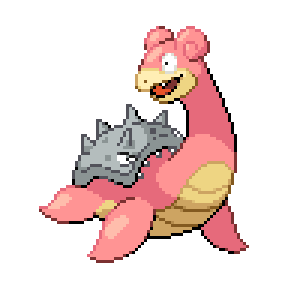
Slowfarig is a symbiotic relationship where the mammal provides sustenance while the shellfish provides protection. Slowfarig numbs the excruciating pain of the shellfish's teeth with its psychic powers.

Magnebish is a common sight in metropolitan centers, where it scrounges in trash for electronics to consume. It is also a well-liked inhabitant of construction sites and work zones since it will scour the ground for metal debris.
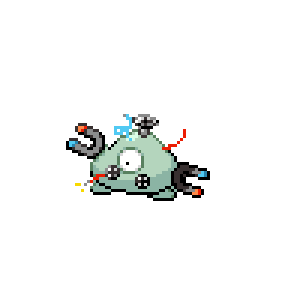
Magnelett sweeps over rocky terrain in search of metallic detritus to consume. Beachcombing Trainers will often partner with one to scavenge lost items during their journey.

Magnetrio blasts sonic waves at the ground to uncover ore to consume. Since three entities make up the unified Pokémon, its ability to blast through solid rock is stronger than its previous form.
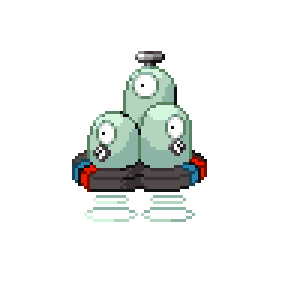
Magnemega inhabit urban areas where they are attracted to lofty energy sources they can feed on without being disturbed. They are utilized in work sites as rapid transportation by magnetizing heavy objects to their underside and flying between levels.
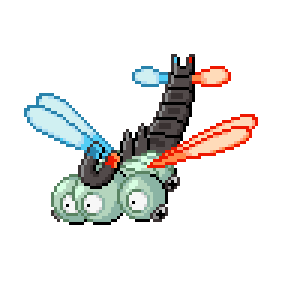
Magnelett's ability to levitate by manipulating magnetic fields is powerful enough for it to fly through the sky. It searches for new areas to excavate minerals that will empower its digging strength.

Magnetrio's three brains cooperate in unison to uncover rare minerals to absorb. An unverified report claims that it is able to ascend into the atmosphere after consuming enough minerals, but researchers have not been able to replicate this event.

Farsey harvests vegetables like scallions to help craft meals for hungry people and Pokémon, making it a popular kitchen assistant. It was endangered for a while due to its trusting nature and rich flavor, until hunting it was recently banned.

Doans is mischievous and will sneak into camps, steal an interesting item, and slither away extremely quickly. The two heads may bicker often, but they coil their necks around each other as a comforting method.

Doggy fully sheds its skin frequently during this evolutionary stage. It wears its most recent shedding to appear as multiple Doggy, deterring predators.
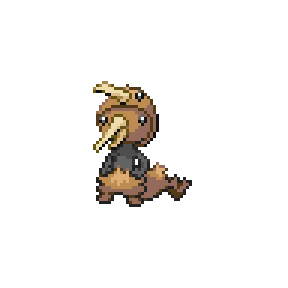
Seelee swims with high speed and maneuverability thanks to its long, springy legs. It loves to play games where it can use its kicking prowess to its fullest potential.

A playful and friendly Pokémon, Seedos enjoys lazily swimming alongside ships and performing for the passengers. Sailors adopt it because its intimidating size and appearance scares away trouble.

Seeapex regulates a warm temperature under its flippers. Arctic explorers have been surprised when a snow pile has risen, revealed to be the flippers of a friendly Seeapex.
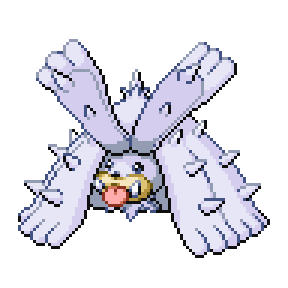
Seekey is a mischievous nuisance in port cities because it hangs out near docks and gets in the way while begging for food and attention. If it is ignored, it flies into a tantrum where it seeks to cause destruction until its demands are met.

Seecool mimics the head of a Seel to keep that evolutionary line from predating it. The tongue-like organ is actually an exposed stomach which it uses to easily and efficiently feed on plankton.
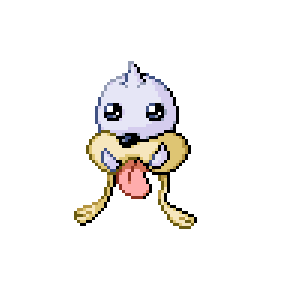
Seecruel's large eyes allow it to hunt even in the darkest arctic waters. It uses its horn to carve a hole in an iceberg so it can sleep, blocking the entrance with its camouflaged bell.

The fiery collar is hot enough to remain lit when Dewlosion swims and frolics in arctic oceans. Once it burns a hole through frozen sea water, it curls up for a nap in hopes that someone will share their fishing catches with it.

Dewape inhabits frigid bays, proving to be a danger to shipping vessels if they get too close and anger it. It is much more graceful when swimming, so it often launches itself from the water in a flurry of blows before diving below again.

A new Mubat struggles maintaining a consistent form, so it creates mindless flying drones to deliver anything nearby into its waiting maws. The drones use their ears to return to the gurgling mouths, where they reabsorb into the main body.
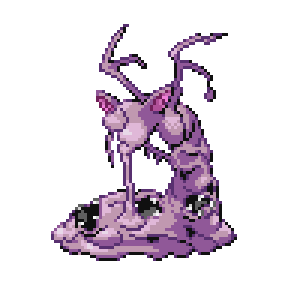
Despite smelling horrible, the leaves growing from Muish are exceptionally useful in medicines. Some people even keep them in composting bins, feeding Muish scraps while trimming its leaves.
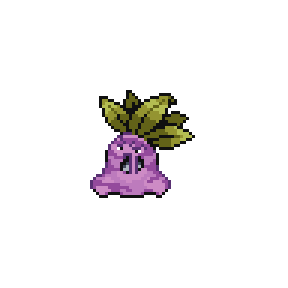
Muninja stealthily infiltrates the nests of rivals by slinking along as a puddle of sludge before revealing its true form for combat. Its unpleasant odor inhibits some of its stealth, but debilitates foes.
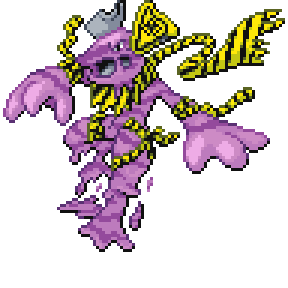
Muninja stealthily infiltrates the nests of rivals by slinking along as a puddle of sludge before revealing its true form for combat. The crystallized poison shards embedded in its body are used as paralytic or disorienting weapons.
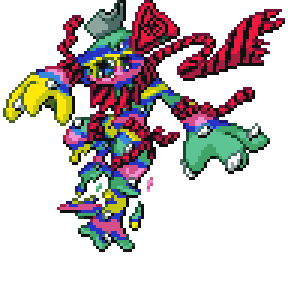
As Muloud inhales air with its tubes to generate intense bass sounds, its gelatinous body reverberates. It scavenges junkyards for discarded pipes to incorporate into its body with the goal of creating more intense sounds.
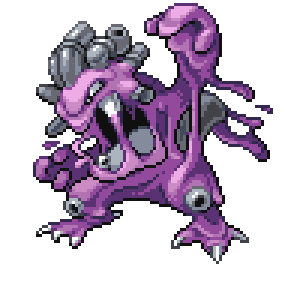
Blastchan has waterspouts on the back of its hands which it uses to add extra power to its punches and attack opponents that have flanked behind it. Much of its shell has softened to increase its agility in combat.

A mischievous and impish Pokémon by nature, Shellsel attacks other mollusks to steal their pearls, which it sees as trophies. As it ages, the shell protecting its head grows at an increased rate in comparison with the rest of its body.

Shelledo's shell resembles a Sharpedo, scaring off potential predators. Grit caught within the shell becomes polished into a pearl, which it blasts out of the star-shaped hole in the shell top, shattering the pearl into the shape of sharp teeth.

Shellapex crawls along coral reefs and licks up meals of detritus from the safety of its venomous dome. Even though it is dangerous to harvest, its core body is sweet and tender, but very finicky to cook as it will burn and turn rubbery quickly.

Shellcool is incredibly meek and hides within its bell, which is actually a lightweight but durable shell. It positions itself in a sunny location so the light reflecting off the shell's gems lures in prey.

Shellcruel has outgrown its protective shell, leading to cracks and its soft body becoming exposed. The tentacles transfer a powerful toxin, which scientists have been studying for medical use in small doses.

Gasdreavus is frequently seen in abandoned areas where it seeks to pull pranks on youths snooping around the location. Its impish demeanor makes it a common trickster character in stories.

Haunpom seeks out buildings with new inhabitants and then pulls pranks, such as tapping people on the shoulder while invisible or throwing items around rooms. It is easily chased off by pets like Houndour, leading it to find a new place to torment.
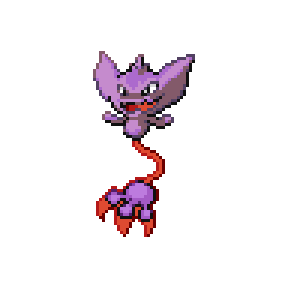
Haundreavus feeds on fear, so it maliciously haunts urban areas with dangerous tricks. The red orb necklace glows brighter as it absorbs more fear, making it harder to hide until it consumes the stored fear.

Gendreavus no longer is content with scaring only in the physical world, so it invades dreams and turns them into nightmares to devour. It has a soft spot for the elderly, so it instead makes their dreams more pleasant and scares off other Pokémon.

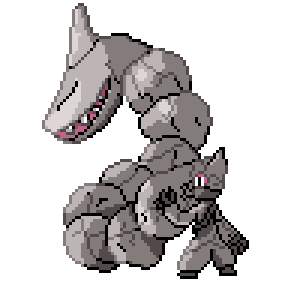
Onwile's large horn mimics Onix, scaring away Pokémon that would normally predate the smaller core body. It lures in prey by acting injured and having the horn act like inanimate rocks, before lunging and devouring the target with the large maw.