299 pokedex entries by oreee0230
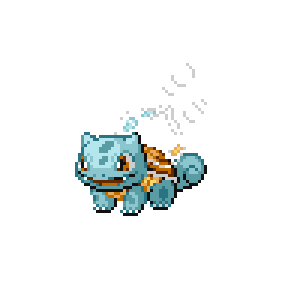
Bulbamar's tail sprays spores that look like flames, constantly shrouding its surroundings in green smoke. These spores absorb sunlight in the air and divide. Bulbamar relies on reabsorbing these spores to supplement its nutrition.

By transforming into simple geometric shapes, Bulbagon is able to operate in older devices. It can store lots of data in its body, so it can accumulate a large amount of nutrients without changing its weight.

When curled up, Bulbanyte looks like a fallen flower bud. Bulbanyte often floats on the water surface to absorb sunlight, letting the current carry it to distant, unfamiliar places.
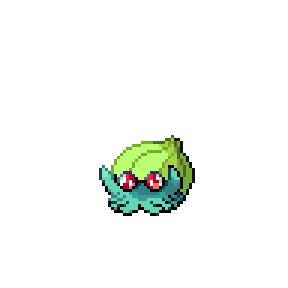
The leafy flower buds along Bulbatres's wings do not sustain flight, but help to gather energy from sunlight that it expels along its tail to soar. When Bulbatres is fully charged with sunlight, it can swiftly recover from any injury.
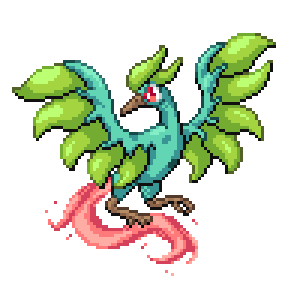
Bulbarak's silk is mixed with cellulose, making it more adaptable than a those made with protein fibers. Because this silk is less sticky, Bulbarak work together to weave large webs to throw at prey and entangle them.

Bulbachou's buds hide bulbs of light. Thanks to its insulated plant tissues, Bulbachou can use electricity more frequently without worrying about electrocuting itself.

Bulbatic only appears before people who are kind to plants and bestows good luck upon them. It is said that groups of Bulbatic regularly migrate to the same forest to gossip about those they give blessings to.
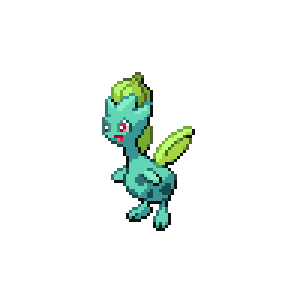
Bulbaffy store large amounts of electrical energy in their fur and the bulb on their back. In areas lacking reliable transportation, Trainers periodically bring Bulbaffy to sell electricity.
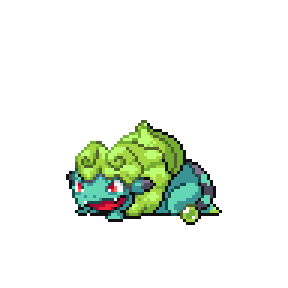
Most of Bulbasaur's nutrients are supplied to its green leaves. This large green structure allows it to use sunlight with remarkable efficiency.

Bulbaown takes the shape of the letter B and appears at various ruins. Its flower buds can be flattened to the same thickness as its body and can immediately puff up when needed.

Bulbabuffet's body is covered with tiny buds that accumulate energy from impacts. It enjoys basking in the sun and typically remains docile so long as its tail is not attacked.

Bulbafarig's tail has limited cognitive abilities and relies on its head to give commands. Although its neural pathways stretch several meters, when the main head gives the order to strike, the tail can instantly unleash powerful Grass-type moves.

Although Bulbazor's claws look like a single bud when pressed together, the claws are actually made up of three buds. Although they are soft, the claws can grip with lots of pressure once they absorb sunlight.
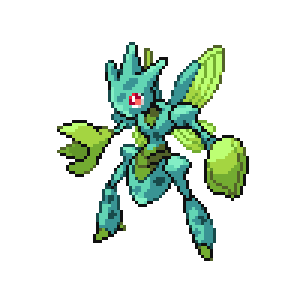
Bulbackle collects a large amount of withered plants inside its shell, and then hangs itself in a cool and ventilated place using vines. Although the fermented liquid has a fragrant scent, its most suitable use is as a fertilizer.

Bulbagma secretes a dense, corrosive liquid that burns organic matter it touches. Debris such as fallen leaves or tree branches burns without sinking into the liquid, leaving behind ash and smoke.

Because Bulbagon2 do not need to eat, many are selected to help astronauts in outer space. Their vines both provide maneuverability and a source of oxygen for space stations.
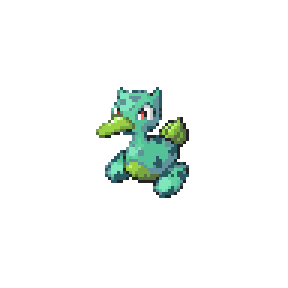
Bulbatop spin in sunny clearings, exercising or conserving energy depending on how they spin. When attacking foes, Bulbatop extend their vines to strike multiple times while spinning.

Even though the bud in the flower pot has not yet bloomed, Bulbasey can still release a fragrance with healing effects. Bulbasey wanders around the forest, always ready to offer help.

Bulbacune infuses water around them with nutrients that help plants germinate. Once it masters this power, it evolves.
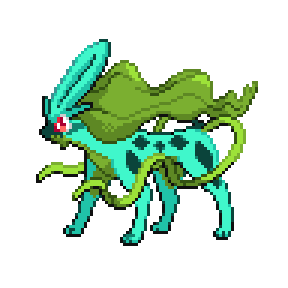
Bulbatar is found rooted atop high mountains. Its plant tissue contains high amounts of calcium, strengthening its body to resist harsh sandstorms.

Bulbagia often appears in tropical cyclones, bathing in the sun's rays in the cloudless eye of the storm. It bends sunlight using the ocean's natural refraction to focus light onto its body, rapidly absorbing solar energy.
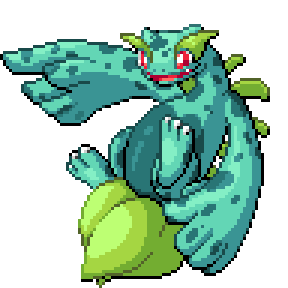
No matter how much sun Bulbainja takes in, its body does not warm up; the energy of the light is completely absorbed. Besides sunbathing, Bulbainja has no other needs and sometimes sneaks out of Poké Balls to fly towards sunlight.

Bulbatomb resembles a flower bud in a flowerpot. In battle, Bulbatomb releases spores that, when inhaled, interfere with its opponent's abilities.

Bulbawile wanders around, using its cute appearance to lure prey close. Bulbawile's big, colorful mouth can hide in its hair when not chewing.
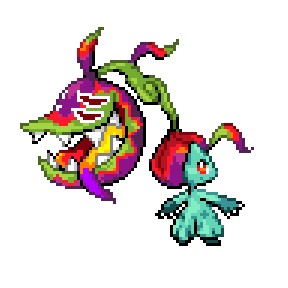
The body beneath Bulbanoir's flower bud is incorporeal, allowing it to hide in tall grass. It is said that when it encounters lost ghosts, Bulbanoir uses the large mouth on its abdomen to swallow them and send them to the afterlife.
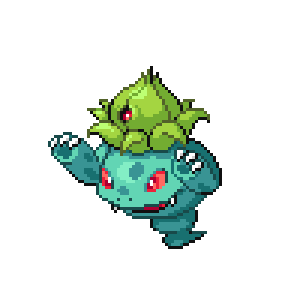
Bulbaslash is particular about which Trainers it allows close, as it often chases Trainers out of the forests they live in. It is said that those who lose to a Bulbaslash meet an unfortunate end.
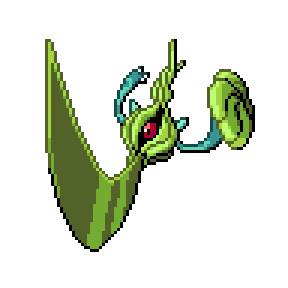
Bulbaogre can be found living in deep rivers in tropical rainforests, spraying water into the air to water the plants around them. Once the entire rainforest is soaked with their water, they create channels to spread their domain.
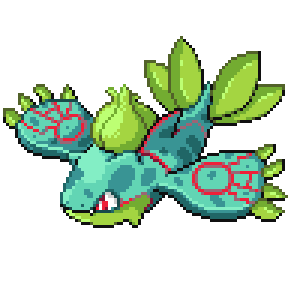
Soaring at high altitudes, Bulbaquaza absorbs sunlight without being affected by greenhouse gases. It always stays in the sun's rays and is drawn to meteors.

The bud behind Bulbaking keeps oozing venom, but most of it seeps into its shell before dripping onto the ground. During battle, the venom is squeezed out onto enemies with force.
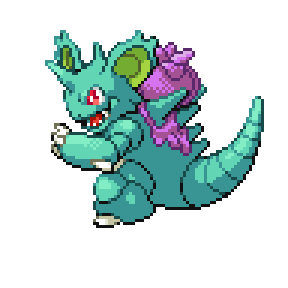
Whenever Bulbanette gets excited, cursed energy seeps out from the bulb on its head. Trainers who abandon Grass-type Pokémon may find Bulbanette stalking them.

Bulbatom are surrounded by ethereal plasma that bends to allow them to slip through narrow gaps. They rescue children and small Pokémon stuck in crevices by extending tentacles made of this plasma.
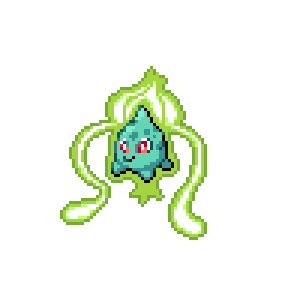
Bulbatula relies on its electrified webs for hunting, as its legs are fragile. Its webs are mixed with photoreceptors, allowing them to remain charged with electricity for long periods of time without maintenance.

The bulb atop Bulbalurk's head is said to hold ancient secrets that were thought to be lost to time. While it is capable of wandering dark ruins, it prefers to soak in the sun's rays.

Bulbaki injects vitality into plants to unlock newfound growth, allowing these plants to mature early. Once these plants fully ripen, Bulbaki sucks chlorophyll from the plants to nourish its own body.

Bulbakyu disguises itself as a Bulbasaur and usually operates in places where wild Bulbasaur are scarce. The bud on Bulbakyu's back may feel like other parts of its fabric body, but this part can also absorb nutrients and grow as well.

The heads on each of Bulbadreigon's vines are not as strong as the one on its body, but can extend to grab objects and feed themselves. Bulbadreigon can use the leaves on its back to fly when needed.
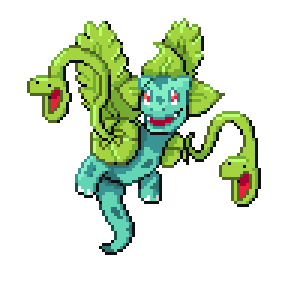
As long as Bulbamer receive sunlight, they do not need to breathe. On sunny days out in the open ocean, they can be found upside-down to nourish the bulb with the sun's rays. Many bird Pokémon perch on their stomachs to rest.

Bulbaon actively consumes minerals, making the bud on its back as tough as metal. When it evolves, the outer layer of its bud is shed and can be used as a special high-strength material.
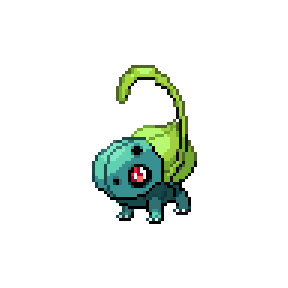
The cactus on Bulbainch's back can store a large amount of water during the rainy season. Bulbainch buries its body in the sand and uses the water-filled cactus to lure small Pokémon.

Bulbasaur prioritizes developing a mature appearance, even though its body size remains unchanged from fusion. Because the surface area of its leaves is small, it needs to spend almost the entire day basking in the sun to continue growing.

Bulbaelia's flower buds emit a pleasant fragrance, but are also full of venom. Once it senses a threat, Bulbaelia will squeeze out the venom to shoot at foes while retreating to a safe distance.
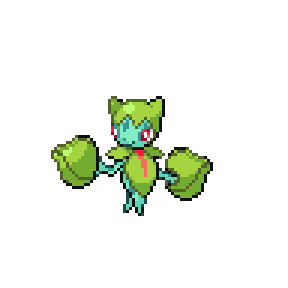
Although it has no discernible sensory organs, Bulbasis can perceive its surroundings through its psychic abilities. While it can adapt to various harsh environments, it will go into hibernation if it does not get sunlight for a long time.

Bulbatuff expands its body size by inhaling. Its belly can stretch 20 times its original size, increasing the available surface area it has to absorb sunlight.

Bulbarunt hides in hollow flower buds and eats snow to hydrate. When rolling in the snow, it picks up so much snow that it finds itself embedded in a giant snowball.

Bulbadra smears mucus on flower buds to mix toxins from poisonous flowers, integrating the chemicals into its own body. It only drinks from small puddles to avoid contaminating larger sources of water.

Bulbasteel is wrapped in a leafy bulb that leaves only one eye exposed. This leafy bulb is made out of an incredibly tough material, giving its vines the capacity to uproot trees.
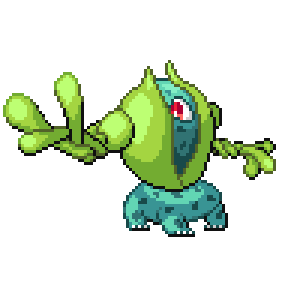
The bud on Bulbaful's back releases chemical signals to warn nearby Grass-type Pokémon about any present danger. It dislikes physical contact, even with other plants.

Bulbapex are encased with thick tentacles that allow it to bunker down when in danger. Bulbapex rarely moves and only does so with the changing tide, ensuring a delicate balance of sunlight and water.
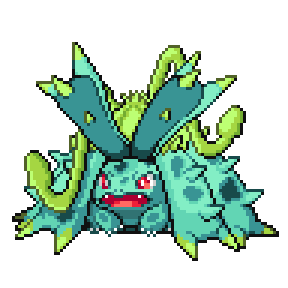
Vines hanging from Bulbalucha's arms entangle foes during battle. While it is a solitary creature, it tolerates the presence of other Pokémon while it is sunbathing.
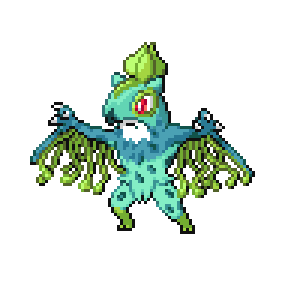
Bulbaturne sets traps made out of sand that look like flower buds. This trap absorbs moisture from nearby creatures, making prey too tired to escape.

Each green granule that makes up Bulbagast's body is wrapped in plant tissue. Those who are pricked by the cactus on its head feel numb, as though Bulbagast is trying to control them.

Bulbasand catches small prey like Krabby or Corpish by quickly snagging them with its vines. The scent that comes from its bulb smells like cooked fish, drawing the attention of Trainers and Pokémon alike.
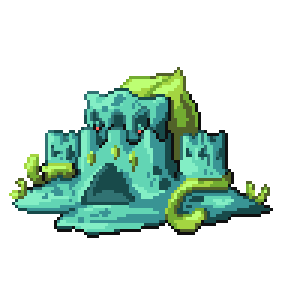
Bulbaura live in cold regions away from the many predators in warmer climates. As sunlight is weaker in these regions, Bulbaura can absorb faint light found at dawn and dusk.

Bulbarorus accumulates nutrients during a single polar day to last an entire year, storing that energy in its flower bud. Its green sail absorbs energy in low light conditions as long as the sun is shining; excess energy is crystallized as dust.
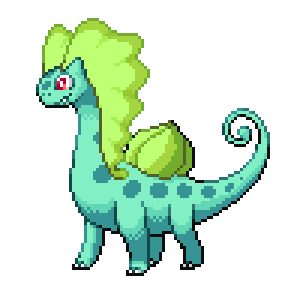
Wild Bulbaroc often live alone, focusing on gathering nutrients for its buds. The tips of its vines grow woody spikes, which can flex and are used in battle.
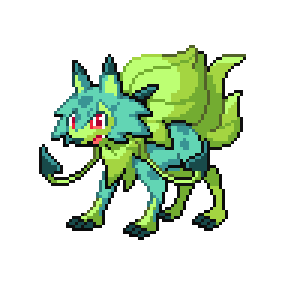
Bulbadier move swiftly through the forest, hopping between branches with great agility. When encountering enemies, Bulbadier wrap pebbles in bitter foam and throws them to disrupt their enemies' concentration.
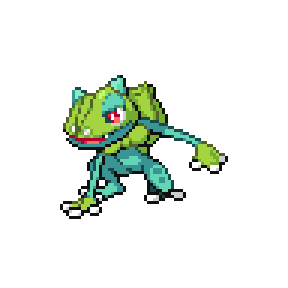
Bulbakoal absorbs sunlight through its green shell to maintain an internal smolder. When needed, Bulbakoal can increase humidity to release smoke or ignite renewable vines to launch an attack.
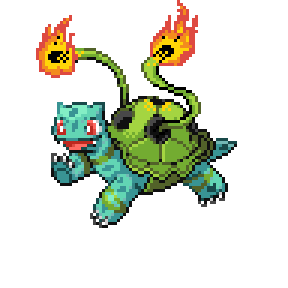
Bulbakaboo's flower bud absorbs the grudges of forest creatures that have succumbed to deforestation. Bulbakaboo remains vigilant toward anything foreign, including humans, and will attack if they come too close.
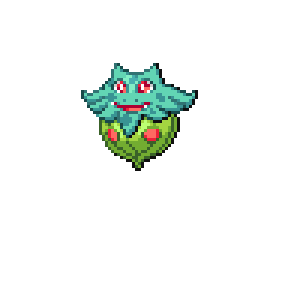
Bulbaggy have elastic pants made out of leaves. By stretching these pants, they increase the surface area that can absorb sunlight to gain more energy. Those who can stretch the pants over their head are most likely to become leaders of a group.
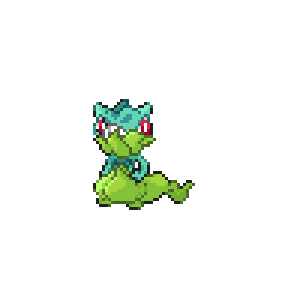
Bulbatad can barely move on land because of the weight of its flower bud and its short, stubby legs. Its swimming ability is much better by comparison, so it prefers to stay in the water.
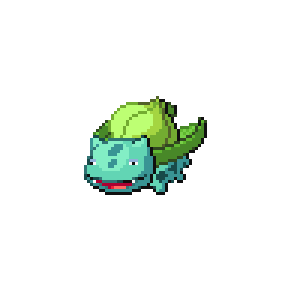
Bulbaor will continuously absorb sunlight to thicken the cell walls of its body, even if it becomes too heavy to fly. If it encounters danger that its body cannot endure, its bulbous body peels apart to change form.
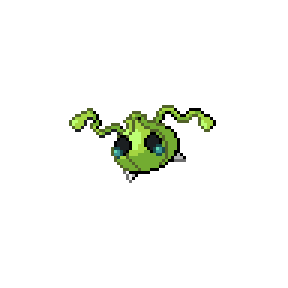
Grass-type Pokémon feel a certain subservience when encountering Bulbacie's beauty. Bulbacie can revive plants from the brink of death, restoring vitality to plants caught in disasters.
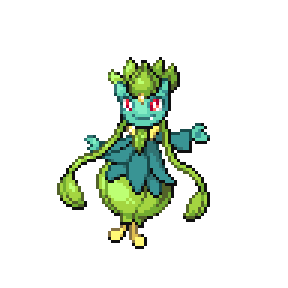
Bulbalett spreads tiny vines into the surrounding soil, turning it green. Bulbalett spends most of its time underground, only surfacing to check its surroundings while laying down vines.
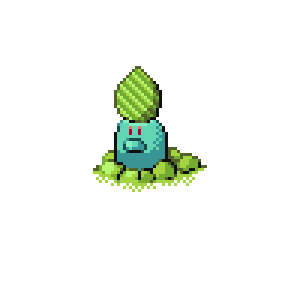
Bulbatrio have three heads; the one with a bud on its head is responsible for spreading vines, while the other two heads are responsible for keeping watch. If any of the heads detect a threat, the tiny vines sprout and strike with sand and stones.
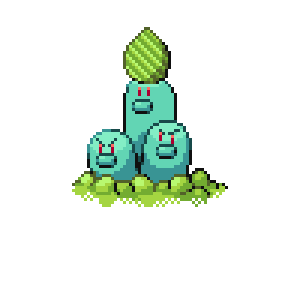
Bulbale emits electrical currents that accelerate the development of nearby plants. It leaks electricity from its ears when excited.
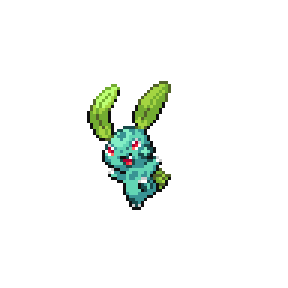
Bulbaun generates electricity that accelerates plant growth when discharged. It leaks electricity from its bulbous head when it is depressed.
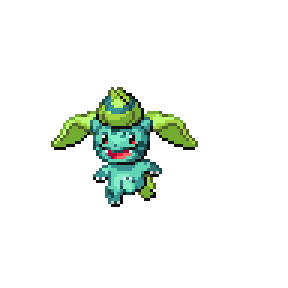
Bulbamise has nutritious nectar oozing out of its shining buds. Those tasked with raising children often help Bulbamise in exchange for this nectar, feeding it to their young.
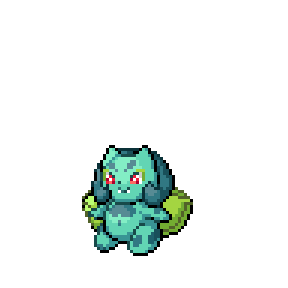
On sunny days, Bulbasian remains motionless under the sun to conserve energy. If the sunlight disappears, its natural predator instincts activate until sunlight returns.

Bulbaform's appearance changes with the weather. The bud under its body can not only absorb moisture from the air but also predict the weather.

Bulbaform cleanses its body through the absorption and expulsion of rainwater. Once this rainwater is flushed through its body, it can be harnessed as liquid fertilizer.

Bulbaform enlarges its body by forming parts of itself out of snow, allowing it to enjoy the scarce sunlight filtering through the snow clouds. Its green wisps are a mixture of ice crystals and pollen.

Although it can absorb sunlight to sustain itself, Bulbapius often searches for fruits to supplement its nutrition. The size of the bud on its back directly reflects Bulbapius's recent physical condition.
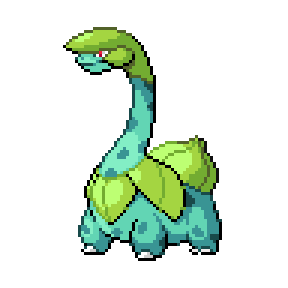
Bulbaleo's leaf-shaped whiskers have sensitive tactile and light-sensing abilities. Through the guidance of older members of its herd, Bulbaleo can develop an accurate sense of direction by measuring sunlight with its whiskers.
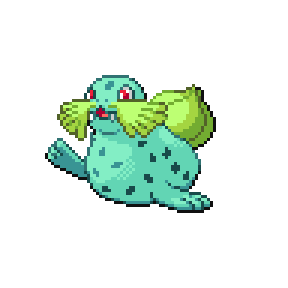
Bulbakey's green fur perfectly hides the large bud behind its head. It often attacks other Grass-type Pokémon who try to take their usual sunbathing spot.

Bulbarelp likes to float on the surface of the sea, pretending to be a rootless aquatic plant. Once other creatures come close, Bulbarelp will spray venom and escape to another location.
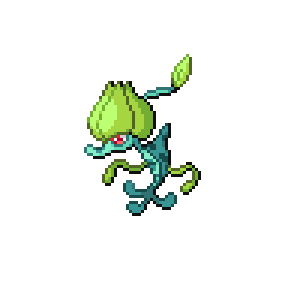
Bulbaler chooses to plant the flowers on its head, as they are not a part of its body. By sharing these flowers, it not only locates minerals to supplement its diet but also finds sunny spaces for sunbathing, all without engaging in battle.

Bulbaduo cannot absorb sunlight because their feathers do not have chlorophyll. The red bulb on their back has turned red after absorbing pigments from their feathers, and allows them to lure and trap insects.
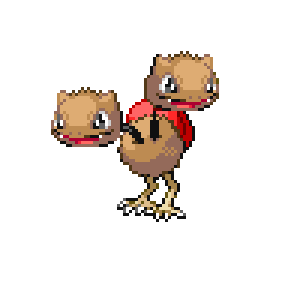
Bulbaby supplements its nutrients by filtering soil. If its pincers accidentally break, they can fully regenerate after being exposed to sunlight for half a day.

The leafy structure on Ivyode's head zaps others when they are too close. During thunderstorms, these leaves absorb electricity to protect the forest from lightning strikes.

Ivyzing strengthens its own toxicity by absorbing poisonous substances released by other Pokémon. It happily absorbs these toxins, making its buds become more vibrant as its toxicity increases.
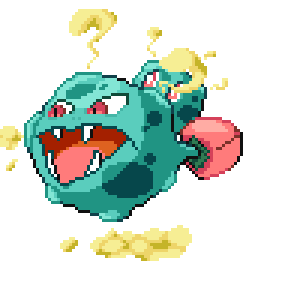
The buds carried by Ivysey are full of nutrients ready to bloom. It is quite alert and will quickly flee at the slightest disturbance.
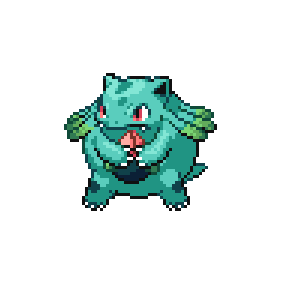
The baby Pokémon in Ivykhan's pouch resembles an Ivysaur. The two mutually work together to help each other survive.

Ivysea uses its flower bud to attract prey, then shoots water to stun them. If it accidentally attracts a large Pokémon, it will use a cloud of ink to cover itself and escape.

Although the leaf on Ivysir's head is not hard, it is very sharp. During the day, Ivysir uses the vine in its mouth to eat fruits and tender leaves, and at night, it digs underground to avoid the cold.
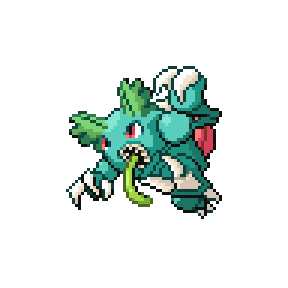
Ivyros initiates duels to compete for leadership of its herd. Its mane becomes more vivid with each battle it goes through, so leaders of its herd often have bright red manes.

Ivyto disguises itself as a part of nearby plants. If small Pokémon come close, it may try to nibble on them.

Ivyeon gathers energy from lightning storms; its leaves crackle with excess electricity. It can also absorb sunlight to ensure it is always full of energy.

Ivyreon's leaves contain fire-resistant chemicals. When it eats too much and creates too much heat, it goes to a cool, ventilated place to spread its leaves and dissipate heat.
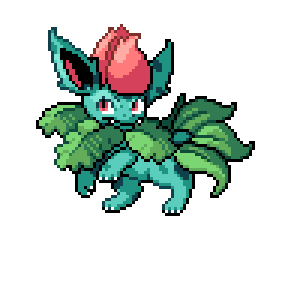
Ivynyte's buds are hard, and its leaves are tough. By wrapping its body with leaves, Ivynyte can protect itself from danger.

When hunting, Ivystar tightens its bud and lunges forward to bite with its sharp teeth. Its flower bud is made out of lightweight petals, making it faster than a heavily armored Omastar.

Ivytini's scaly skin sheds with a petal attached that can purify poison. These petals are valuable, but lose their power if removed from the shed skin, quickly withering away.

Ivyuna uses vines to secure itself to a tree. Each part of Ivyuna's body has a venomous sting and is especially potent in its leaves and vines.
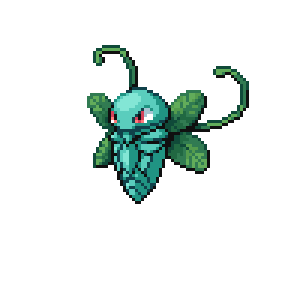
The antennae on Ivydrill's head can accurately separate plants from prey. The flower bud on its abdomen sprays a toxic gas when it cannot attack fast enough with its stinger.
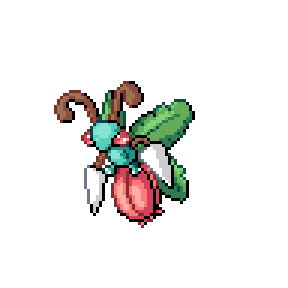
Ivytret gather together into groups with their backs to the sun to sunbathe, using their tails to support themselves. As they sunbathe, they each take turns keeping guard.

Ivyrak's prominent flower bud is quite conspicuous, so it ambushes prey from a nearby tree. If the prey caught in its web resists its poison, they may be released so it can find prey that is easier to capture.
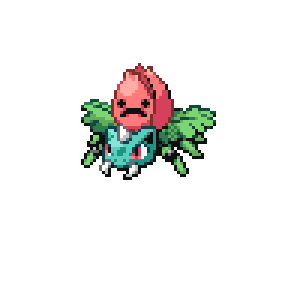
Ivydos builds nests using silk threads, branches, and leaves. When it goes hunting, it spins silk from its abdomen to cling to tree branches, waiting for the right moment to ambush prey.
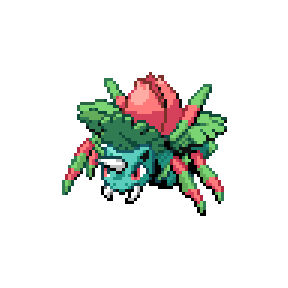
Ivyfa can be found sulking when it cannot stargaze. If taken for a trip to see the starry night sky by its Trainer, it bestows good luck onto them.
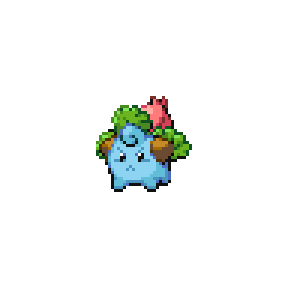
Ivyfa will happily dance together under the starry sky. If a shooting star passes, they will try to chase it together.
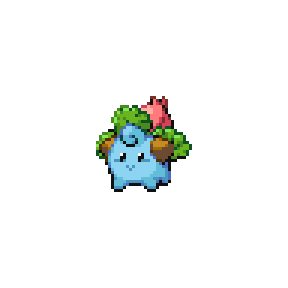
Ivypom is worshiped in remote areas and is repaid by taking care of the fields. Although crops can still grow without Ivypom, this relationship is beneficial to both sides in villages without Trainers.

Ivyeon can simultaneously restore health and accumulate psychic energy with sunlight. If necessary, Ivyeon can convert energy stored in its buds into psychic energy, but this will lead to prolonged weakness.
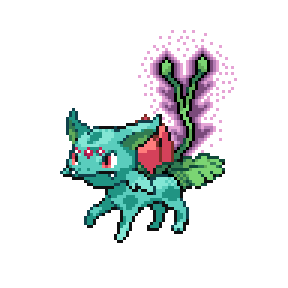
Ivybuffet spends most of its life either basking in the sun or protecting its flower bud. The rest of its body soaks up any attacks made against it. Sometimes, simply staring at its bulb the wrong way can scare it away.

Ivyckle collects a large number of flowers in its shell and then uses vines to tie itself to a tree to camouflage itself. The flower tea fermented inside its shell is very fragrant, but most bug Pokémon dislike it.
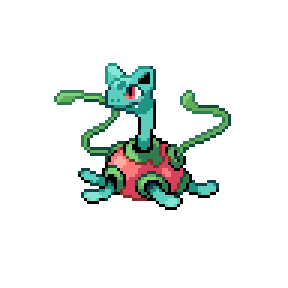
Ivycargo uses corrosive liquids to dissolve rocks to supplement nutrients. Its buds gradually warm up as activity increases.

The branches on Ivysola's head are loved by many Pokémon and are also an excellent spice. When there is a supply of pure water, the branches of Ivysola regenerate very quickly, which is why many Trainers raise Ivysola for profit.

Ivybird has a bag-like tail filled with soil. When it basks in the sun, this soil gains more nutrients, which it uses to fertilize plants waiting to bloom.
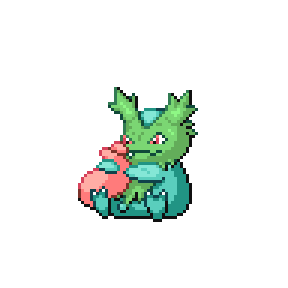
Ivydoom lives in packs that are hostile to outsiders. The flames in its mouth have a unique ability to strip the life from its enemies while preserving nutrients in the ashes.
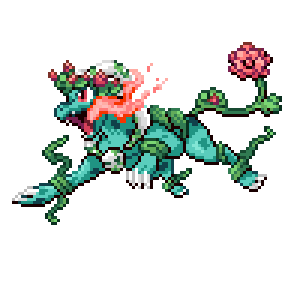
The buds carried by Ivysey have the power to numb pain, as simply being nearby can soothe inflammation. The weight of the flowerpot is negligible, but the size of the flower obscures its vision.

The pot that Ivykou carries on its back is filled with a liquid that turns into incense as soon as it flows out. While there is a legend that Ivykou can bring wealth, approaching it is difficult as the plants around it produce sparks.

Ivytar flies to areas with lots of sunlight by propelling itself forward with a burst of air. Although the gas released carries a floral fragrance, the sand particles in it may cause lung disease.

Ivysly's head looks like a flower bud, but it is made out of a stony shell. The real flower bud lies within the gap on its head and releases a viscous, bitter brine that flows like honey.

Ivyzone is a territorial creature and will clear plants growing within its domain. Its slender flower buds can sense plants that sprout.

Ivyshrew rarely exposes its head and limbs above ground, tunneling just below the surface. The flower on its back has a bitter taste and a foul scent, ensuring it never needs to worry about predation.

Ivyvoir has strong psychic abilities and needs deep concentration while in the sun to focus its powers. It can predict when flowers will bloom, and will bring its Trainer over to enjoy the flowers together.

Ivyslash absorb water through their skin and the cacti on their back. When mature, the cacti fall onto the ground behind them, creating a source of nutrition for desert scavengers.

Ivytomb resembles a flower bud in a planter. When it releases spores, it steals the life of plants within its range.
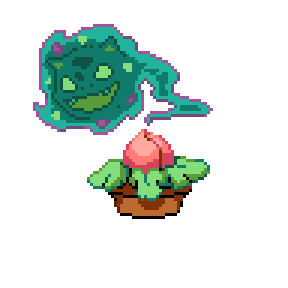
Although the back of Ivywile's head is actually a big mouth disguised as a flower bud, the liquid that flows out is real nectar. Because the bud-shaped mouth cannot open very wide, Ivywile tends to prefer capturing smaller prey.

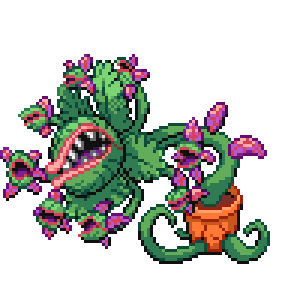
The mouths on its vines chew and digest food before giving it to the main mouth to absorb nutrients. Although the main body crawls slowly, the vines can detach, move quickly, and remain active for several weeks.
The bud on Ivytle's back oozes a pigment that changes the color of its shell. This pigment is also a widely used agricultural fertilizer.

Ivytle's shell is covered with grass, which relies on the sunlight that passes through Ivytle's leaves to survive. The grass provides perfect camouflage, both in color and in smell.

Although the buds on the tree on Ivyterra's back look like peaches, they are not suitable for consumption. These buds, which never bloom, lock in a charming scent and are often picked to be used as fragrance.
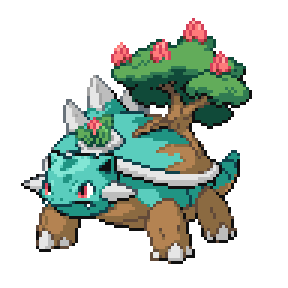
Ivydon's body has a complex array of plants sprawling across its body. When it releases its power, plants grow uncontrollably over a wide area, causing a burst of greenery to emerge from the soil.
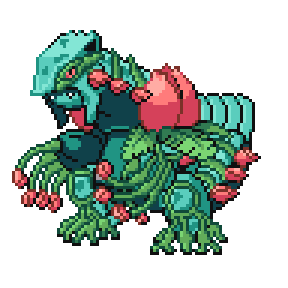
Ivyfairy can absorb moonlight as readily as it can absorb sunlight. It rests in open fields during the day and awakens at night to play.

The leaves on the arms of Ivyrade have a unique fragrance, while the flower bud on its head is actually odorless. Relying on the highly toxic trichomes on its leaves, Ivyrade can effectively hunt prey like Rattata.

Ivytom's plasma mimics the shape of a flower bud and allows it to stabilize electric charges. Ivytom is often trained to use its plasma vines to temporarily maintain power supply during blackouts.
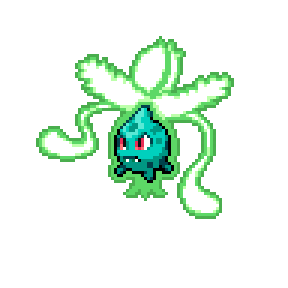
The bud on Ivyfable's back emits a strong fragrance under the moonlight. Once it hears Trainers nearby, wild Ivyfable will stop moon-gazing and hide.

Ivylurk actively hunt for empty jungle ruins to settle in. The plants sprawling across their body fill in cracks and wounds that may have accumulated over the years. These plants rely on the core's energy to continue growing.

The bud on Ivypuff's back contains a specially shaped cavity that can amplify its singing. Since its leaves can also be used for breathing, Ivypuff's singing can continue without needing to take a breath.
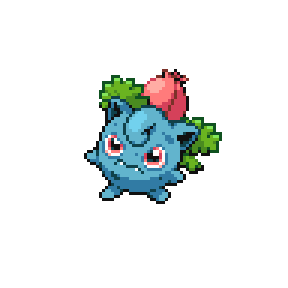
Ivyodor has a body that is covered with various plants. Its body can support the growth of these plants by allowing them to feed off its sludge, but then they become toxic to Trainers and Pokémon.
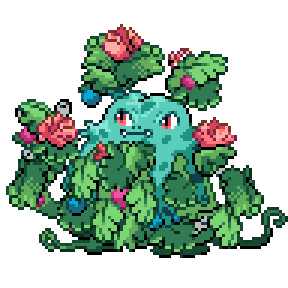
A sweet-smelling yet highly poisonous nectar flows from the top of Ivyplume's head, which it uses to lure prey. Because of its underwhelming and clumsy movement, many of its prey are not afraid even when they realize Ivyplume is nearby.
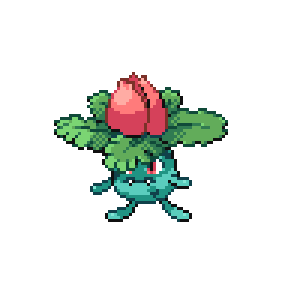
Ivygast prefers to live in bright deserts surrounded by the sun, absorbing the glowing rays. To protect the cactus on its head, it abstains from hunting to minimize its risk of injury.

Ivysand expends a small amount of nutrients to produce a small decoy that looks like a Bulbasaur. Its bud can reach four meters high and envelops foes in a sandy tomb when it hunts.
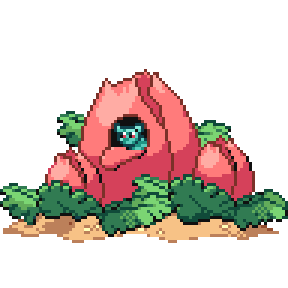
In many ancient settlements, failing to show gratitude upon seeing Ivyetta was regarded as a provocation to the settlement. Many people were willing to give everything just to hear Ivyetta's singing.

Ivypod consumes large amounts of debris it encounters to supplement its nutrition. Ivypod concentrates the waste from the debris on its outermost petals and periodically sheds them.
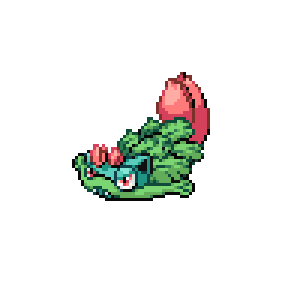
Ivynaught's wooden shell is hard and restores itself quickly. The bud on Ivynaught's head may look like a vulnerable weak point, but it is extremely tough because of its high cellulose content.
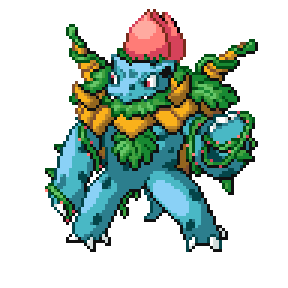
In order to accumulate nutrients for its buds, Ivylett's endless appetite causes it to eat all nearby plants. In the forests that Ivylett are native to, people report seeing plants being dragged underground to be eaten by an Ivylett.
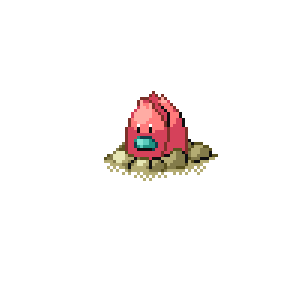
The bud on Ivyskit's head can secrete a thick sap, which contains chemicals that most predators find repulsive. This sap can be processed to extract various spices and seasonings.
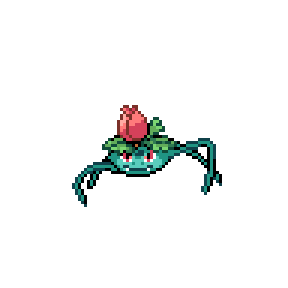
Plant-based food is not nutritious enough for the three buds, so Ivytrio often prey on other Grass-type Pokémon. The scent of the buds makes prey docile, allowing Ivytrio to drag them into the ground the moment they relax.
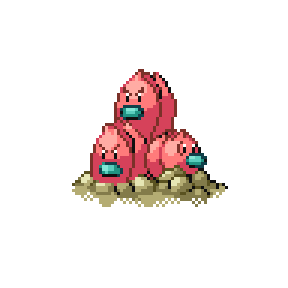
When Ivydol opens its mouth, the upper part of its head completely hovers in the air under the influence of psychic power. It only moves while in sunlight and falls asleep when it is dark.

Ivypius leaves a fragrance behind when it flies. The bud under its neck produces honey, which is often used for brewing.
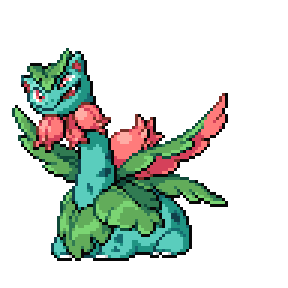
Ivywhirl rubs nectar onto its belly to lure bug Pokémon close. Once they have gathered close enough, they are lulled into a slumber with its hypnotic spiral.

Although Ivyra spends twice as many sleeping hours compared to the time it spends awake, it seems to recover faster while napping in sunlight. Wild Ivyra only appear on sunny days, teleporting away to distant places as soon as it is cloudy.
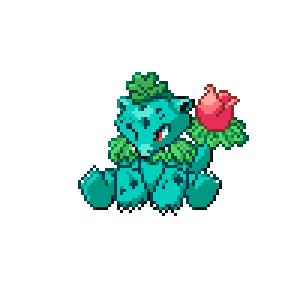
Ivykazam's buds release powerful psychic energy to supports its weight and levitate in the air. Its spoon seems to be able to fertilize the soil, but only Trainers it trusts are allowed to use this powerful tool.

Although the leaves on Ivychamp's head can also absorb sunlight, it still needs to eat to support its high level of physical activity. As it exercises, its flower buds become more vibrant.
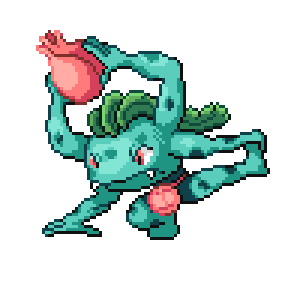
When Ivybell hangs on a tree, it uses flower buds as a counterweight. If it eats too much at once, it may be forced to spend the night on the ground because the weight of its body and flower buds becomes too great for its muscular tentacles.
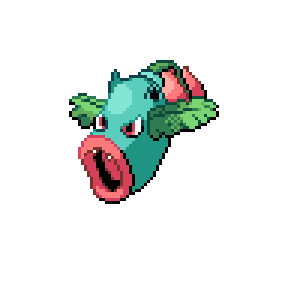
Ivycool absorbs sunlight through the crystals on its head to focus its energy into laser beams. A stranded Ivycool will try to use vines to grab rocks to pull itself back into the sea, but on a flat beach, it can only wait for the tide to rise.
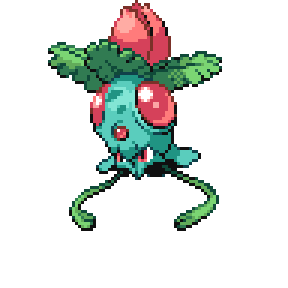
The bud on Ivycruel's head can release powerful ultrasonic energy. Ivycruel can grow new vines at will and absorb water through them to multiply their length dozens of times.

The casing around an Ivyta's bulb is constantly heated and cools as it runs, protecting the budding flower inside as if it were made of diamond. Its leaves generate heat after absorbing sunlight, which can last until the next sunrise.

The buds and leaves at the end of Ivydash's tail are resistant to flames. When it runs quickly, the flame on its back leaves a trail.

The plant at Ivybro's tail acts like a symbiote. The plant nourishes Ivybro with a continuous supply of energy while Ivybro constantly replenishes the water and minerals used.

Ivytly's poisonous body has a strong floral fragrance. The areas it inhabits are filled with plants that resist its toxins.

Ivyby can absorb nutrients from the soil by filtering it through its mouth, only spitting out dry dust and gravel. If its claws are damaged, it can swiftly regenerate them in just half an hour, as long as it has enough energy and sunlight.
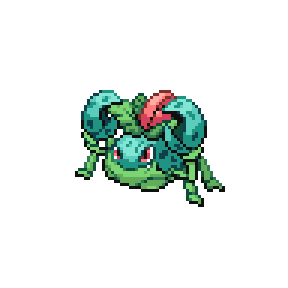
Venuode's short legs cannot be used for walking or standing, only for adjusting the rolling direction. Its stamens can spill uncontrollable electric currents at any time, making protective measures essential before approaching one.
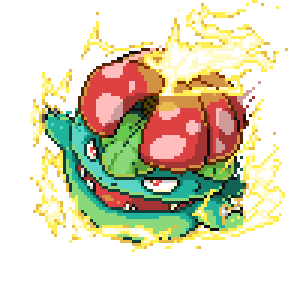
Venutor becomes active at night by efficiently absorbing and storing sunlight. Although it hardly sleeps, the three heads seem to do nothing at night except meditate individually.

Venuchan gains strength from sunlight and can throw punches continuously. Once away from sunlight, it needs to rest after fighting continuously for 3 minutes.

The seed carried by Venusey can grow into the form most needed by the surrounding Pokémon. After the seed is planted, Venusey can use sunlight to nurture new seeds.
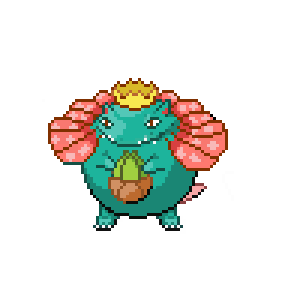
Venusir frequently fights with various Pokémon, including its own kind, to steal food and territory. Venusir's wooden horns grow very quickly to compensate for wear.

Some heavily injured Venusir use fungi to repair their wounds. These fungi are tougher than the original shell, but the nutrients required to nourish them often force Venusir to eat around the clock.

Venuros will grow rapidly in size as long as it has sunlight and water. In spring, it is often possible to see Venuros over ten meters long fighting for the position of leader.

Venunyte submerges its soft body beneath the mud, leaving its hard tree trunk exposed. It only moves when looking for a suitably wet spot that has not dried up and does not cover the leaves.

Flower petals swirl around Venunair, making its figure difficult to detect. It bestows the blessing to bear fruit upon flowers, therefore it is regarded as an omen of good fortune.

Venuligatr provides shelter for bird Pokémon in exchange for their help in luring prey. Normally, Venuligatr can breathe using only its leaves, but after hunting, it needs to quickly take in oxygen through its nose.

Venutoed can command other sound-sensitive Pokémon through its voice. Usually, it only needs to beat its belly to produce enough sound, but once it roars from its mouth, it cannot control the duration of the echo in its wooden jaw.

Venubuffet will retaliate equally against all threats. Making eye contact with the hidden eyes under Venubuffet's flowers will anger it, but in such a case, its revenge is merely staring at the enemy.
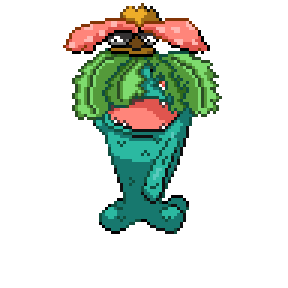
Venuckle survives by cooperating with bug Pokémon. The bug Pokémon collect organic matter for Venuckle, which absorbs nutrients through fermentation and produces a large amount of nectar in return.

Venurow's exterior feathers are red petals that grow more vivid as Venurow become stronger. They live in groups in the forest, using their bright colors to intimidate enemies.
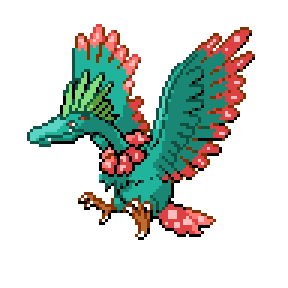
Venukou disperse clouds of pollen to store their electricity, resembling rolling storm clouds. When they roar, the pollen discharges the stored energy as powerful bolts.
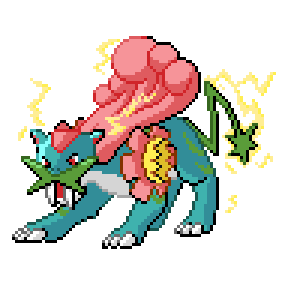
Venuchu wears a special cap that connects to its brain, allowing it to gain new and shocking insights into how to harness its powers. This burst of insight is followed by a period of sluggishness that is only resolved by lying in the sun.

Venumortar's right arm is specialized into an extended barrel, equipped with a scope made of petals. Although it can fire continuously, the scope will be damaged by the impact of the first shot and cannot aim accurately until repaired.

The ends of Venumortar's arms are covered with a wooden shell to reduce moisture loss when firing. Venumortar usually lives near water sources to replenish losses in its water cooling system at any time.
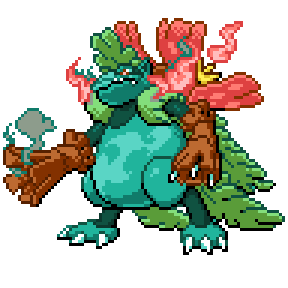
Venuchu's tail can attract lightning due to its height. It can survive just by occasionally receiving lightning, yet it still actively collects berries.

Venuvoir constantly emits energy that regulates plant growth. Venuvoir is quite friendly with humans, and wild Venuvoir will frequently challenge Trainers in order to find worthwhile partners.

The way Venuinja's leaf-like wings grow while withering is often misunderstood. This is a normal phenomenon of its body, and Trainers should not intervene in Venuinja's activities because of it.
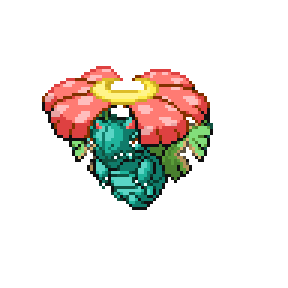
Venuslash's body is fully adapted to desert life. The flowers on its back mimic various cacti and only bloom after rain, allowing it to perfectly blend into the desert environment.
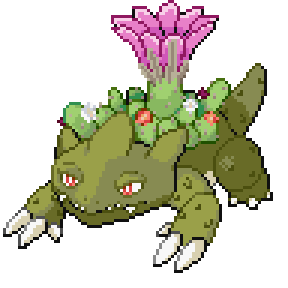
Venugross spreads its four limbs and vertical petals to absorb sunlight while resting. It can use its developed brains to accurately calculate how to move along the shortest path to stay completely under the sunlight.

Venutomb's small flowerpot cannot accumulate much nutrients, so it needs to eat frequently. It will create a pollen storm, using it to absorb everything from surrounding plants and Pokémon.

Venurith swims quickly using its leaves, but it tires easily when not in sunlight. Venurith disguises the tough shell on its back as a bug perched on a plant, which discourages predators that it can't outrun.
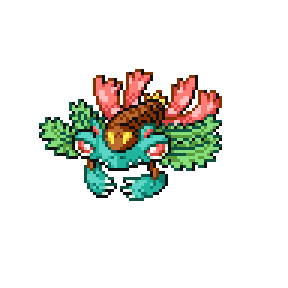
The petals on Venuleon's neck can not only absorb sunlight but also serve as soft armor due to their toughness. Although Venuleon usually lives alone, it will gladly help to other Pokémon in need.

Venupass takes root in locations suitable for growth and collects nutrients through the development of individual offshoots. It has a very robust physique and nothing can force it to flee except fire.
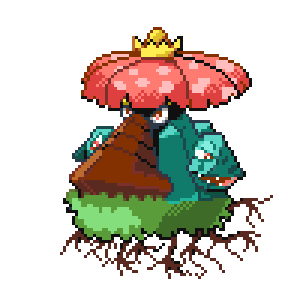
Venuogre scatters seeds of various amphibious plants in the water. These seeds are modified by it to accelerate terrestrial weathering with their roots as they grow, in order to expand the ocean.
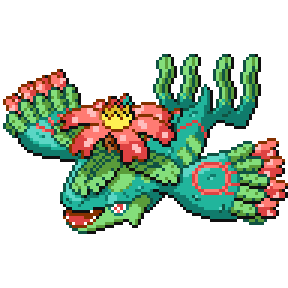
Venugigas uses vines to secure the ground loosened by geological activity. It protects cherished plant populations from severe loss by stabilizing the ground.

The plant behind Venuxorus helps it store a large amount of water and nutrients. Venuxorus grows in size throughout its life, with the smallest recorded height being 5 meters.

The flowers on Venurachi's head bloom once every thousand years. After the three flowers bloom, the people who pick them can each have one wish granted.

Venusaur are more active than its unfused counterparts and prefers to hunt for prey rather than absorb sunlight. Its flowers release an alluring fragrance, attracting Bug-type Pokémon.

Venucorio spends most of its time dancing ecstatically in the sunlight and accumulating energy. When there is no sunlight, it uses its energy to create fake sunlight to continue dancing, resting only when it can no longer sustain it.
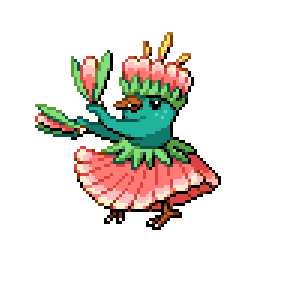
The large flower on Venubat's head serves both as an organ for emitting and receiving ultrasonic waves. Through echolocation, Venubat is better adapted to darkness than other Grass-type Pokémon.
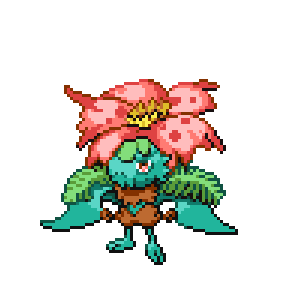
Venugast uses the flowers on its cactus body to attract bug Pokémon. It is said that when it becomes large enough, it can reproduce by splitting.
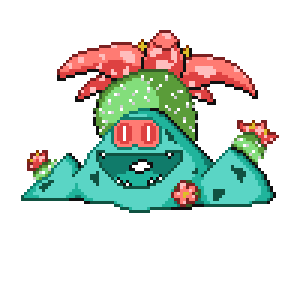
The jungle where Venuetta makes its home has many Pokémon waiting for its song. These different Pokémon come together to protect Venuetta they find, putting aside their differences as they no longer fight each other.

Venupuff's nectar is extremely sweet and easily fills stomachs. Honey made by Beedrill using its nectar is a delicious dessert.
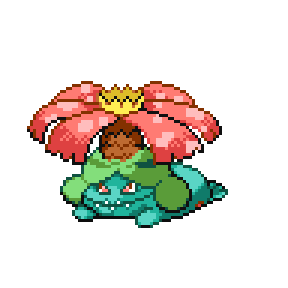
Venuty's tough leaves can protect it from various threats, and they can quickly fall off to buy time when it is met with flames. The leaves that Venuty sheds become food for many small Pokémon in the wild.
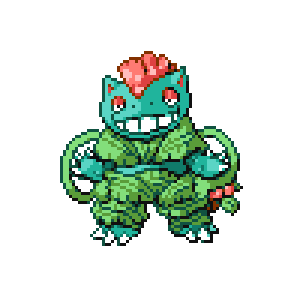
Venutox's love of bright lights seems to be its only motivation for action. When faced with a threat, Venutox scatters various toxic powders from its wings and takes the opportunity to escape.
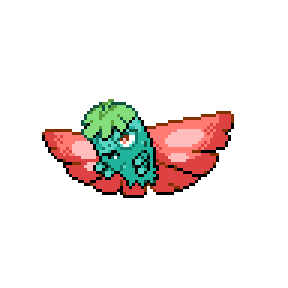
Venutry lives in high-altitude forests and only occasionally comes down the mountain at night. It can summon winds in the forest that are not blocked by trees, using debris lifted by the wind to cut its enemies.
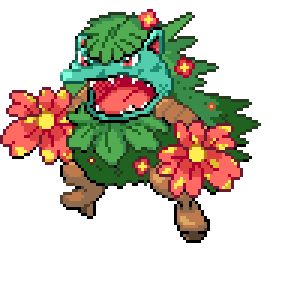
Venuloud can spray a gas that accelerates the ripening of fruits. When it guards its favorite fruit trees from thieving bug Pokémon, it adjusts the frequency of its sound waves to break shells.
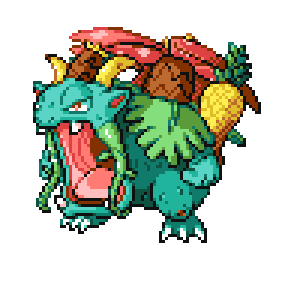
Venuape's fur is covered in plants. Whenever it pulls a muscle, the tear is replaced with plant matter for added strength. This is particularly common among older Venuape.

Venuwag uses its suction cups to anchor itself down in shallow water currents, with its leaf-shaped tail floating on the surface. Its skin is tough and elastic that relaxes when struck to propel itself away from danger.

When Venuwrath swims, the leaves on its back can be opened as needed for precise swimming or folded to reduce resistance. Its wooden fists can break rocks and other projectiles, allowing it to punch through danger.

Venura converts sunlight into psychic power to fuel its body. Because it no longer needs to sleep, it teleports around to trim plants in gardens and release psychic energy.
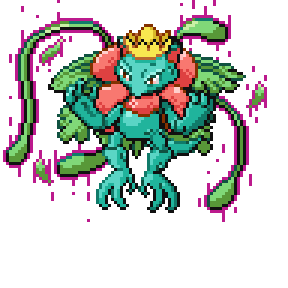
Venukazam's umbrella-shaped tree is grown with utmost care and rarely leaves its side. Venukazam enjoys basking in the sunlight to chat with people or other highly intelligent Pokémon.

Venuchamp actively seeks out sparring partners to battle. It only uses its wooden arms when facing well-known opponents or when countering a surprise attack from behind.

Venubro provides water and shelter to the wooden shell on its tail in exchange for nutrients. When they encounter danger, the shell clamps down to give a burst of toxins and psychic energy.

Venumite changes and shields its magnetism by adjusting the orientation of its leaf cells. It actively competes for electricity and sunlight, making it one of the strongest in its ecological niche.

The sphere above Venuton has sacrificed visual and magnetic abilities in exchange for efficient light absorption. Its two sighted spheres are very active to ensure the surrounding safety.

Although the tree-like structure on Venumer's back sometimes loses its shape, its light-absorbing ability remains effective. Venumer's foul-smelling odor is only temporarily alleviated in sunlight.

Venuder uses vines to anchor itself in the light-seeking currents. Sometimes, Venuder absorbs so much sunlight that the sand in its mouth melts, producing a nested structure of crystals and pearls.
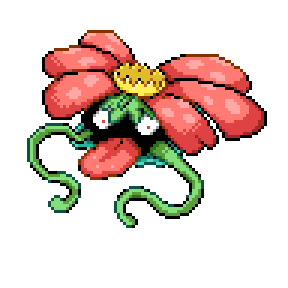
The stamens of Venutoise form a large-caliber cannon barrel. Venutoise can shoot solar energy or water jets from the cannon.

By shooting flames from behind its shell, Charhorn can run at high speed. In cold weather, Charhorn's armour becomes fragile due to the temperature difference, so its habitat is limited to warm places.

Chardra's swollen belly is full of flammable gas. When it heats up and jets from behind, the oxygen in the water is enough to make it ignite.
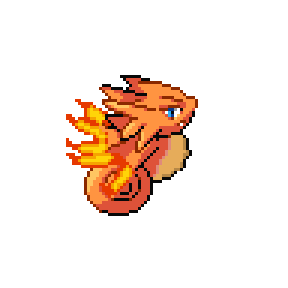
Charther's wings cannot be used for flying, but they can still help with boosting speed. When encountering objects that are hard to cut, Charther will try to melt them with fire first.
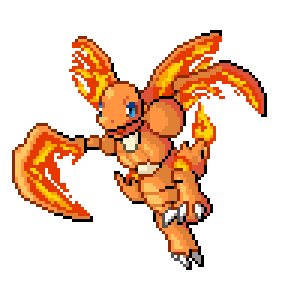
Charkarp uses powerful leaps to soar above volcanic cliffs to keep its flames going without cooking itself in the hot springs. Charkarp that believes it is about to evolve will leap toward the center of a volcano.
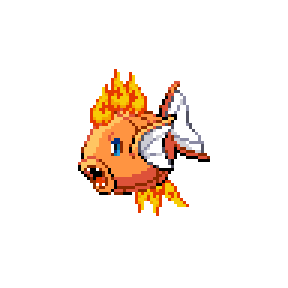
Chardos usually crawls and plays on the surface of the lava. Once it rains or the temperature drops, Chardos will swim in the lava and become as aggressive as a Gyarados.
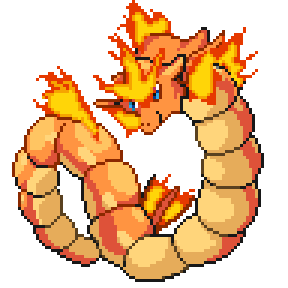
Charas helps Pokémon babies who are afraid of the cold get through the winter. Those Pokémon that are strong enough but still need Charas's flames to warm the babies will keep watch nearby.

This Chareon is more active than other close relatives, and its higher body temperature speeds up its metabolism, making it stronger. To maintain its energy expenditure, it hunts, grills, and eats day and night.
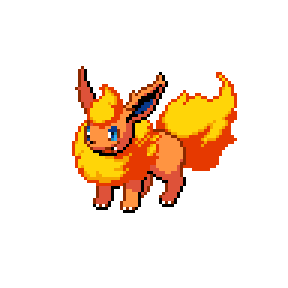
Chareep accumulates heat by rubbing its body hair. This hair is easy to process when warm and becomes a hard-to-deform elastic material once cooled.

Charffy's fire-resistant fur releases heat when exposed to high temperatures. Carefully removing the blazing fur is a precise and ancient skill, and these furs sell for a very high price.

Charflora turns its head following the sun out of admiration rather than necessity. On cloudy days, they gather together, one using the light of their flames to pretend they are the sun, the rest turning their heads as they normally would.
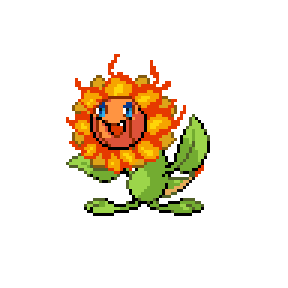
Charsire needs a large amount of water to stay active, but its flames will dry up nearby small water sources. Charsire only appears on land near large rivers or the ocean.

Charking's intelligence depends on the temperature of its brain. Once it loses its flaming heat, its intelligence diminishes to the level of a Slowpoke.

The bud-shaped flame on Charsaur's back is an external manifestation of its vitality. Charsaur can not only eat regular food, but also sustain itself by absorbing heat energy.

The outer layer of Charsaur's bud is made of charcoal, and it secretes oil to create a strong flame when needed. Charsaur has a large appetite to supply nutrients for oil consumption.

The head on Charfarig's tail can concentrate flames through psychic powers. Since this head is often sluggish, the flames flicker erratically.

Although it has a gentle nature, Charlix is considered dangerous by many Pokémon. The flame on its tail rapidly consumes the limited oxygen that exists underground, forcing other Pokémon to go to the surface to breathe.
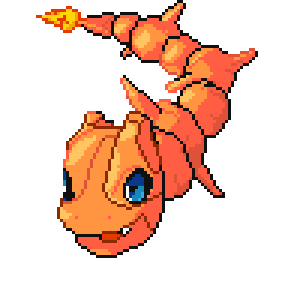
Charaid shoots superheated water at prey, relying on its flames to raise the heat. When needed, Charaid can fire spurts of flames at anything above the water.
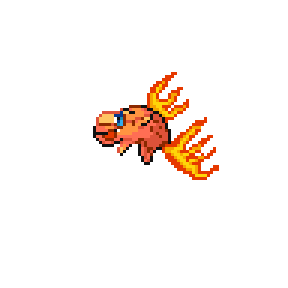
Charllery uses flexible tentacles to move underwater and on land, and protects itself with irritating secretions. These substances form ink underwater and turn into black smoke when heated by fire on land.

The flame behind Charoh is the core of its life. It can use the flame to heal itself or other living beings.
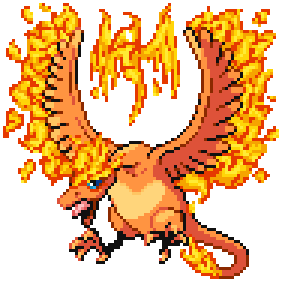
As long as the flame on its head isn't affected, Charinja won't get hurt. When it rains in open areas, Charinja flies upside down in the air, using its body to shield itself from the rain.

Chardum uses fire to control its own magnetism and uses magnetic force to control the flammable gases in its body. Normally, it moves using magnetic force and only heats up to breathe fire when hunting Steel-type Pokémon.
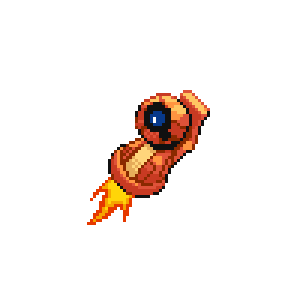
Chartomb looks like the charred skeleton of a Charmander. It actively causes fires and is said to absorb the souls of victims.

The cactus on Charsaur's back can inject toxins that catalyze oxidation. Although the toxin is abundant, it is generally only used for defense because it may cause prey to spontaneously combust.

Charterra absorbs heat from the ground to survive. Pokémon that need heat gather on its back and warm themselves around the fire tree.
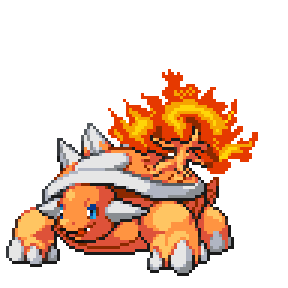
Charterra absorbs heat from the ground to survive. Pokémon that need heat gather on its back and warm themselves around fire stumps.
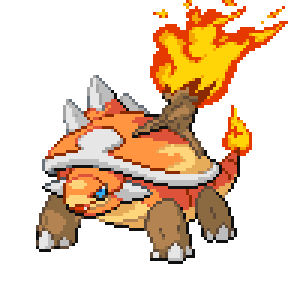
High temperatures can make Chartic's scales more vibrant. The body temperature of wild Chartic is likely to be very high due to bathing in lava, so one should keep a distance from it.

Charquaza sunlight affects those on the ground and can be summoned at will. It can use high temperatures to prevent clouds from forming, or use smoke to block the sun like clouds.
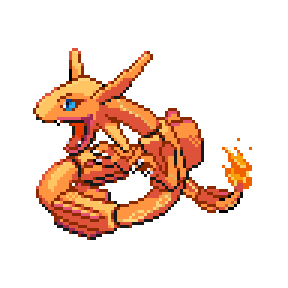
Although Charblim's flames appear on its head, it is actually just placing its flaming tail on top of its head. Charblim flies for several months at a time by heating itself from the flames underneath its body.
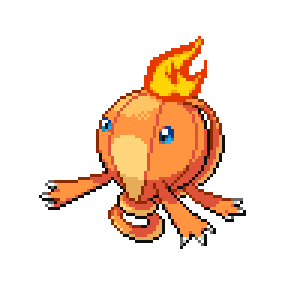
Chartom has difficulty separating its lightning and fire. Although it generates a large amount of power, the high temperatures melt the wires, making it difficult for Chartom to work in the electricity industry.

Charki that have been captured usually carry their Trainer's personal belongings. Wild Charki are keen on collecting red and blue beads, hoping to find precious gems.
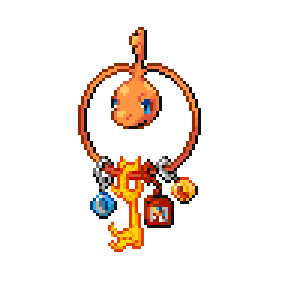
Charkyu cleverly disguises itself as a Charmander. The disguise's biggest flaw is that the continuously burning flame on its tail comes from a lit stick, which must be replaced regularly.
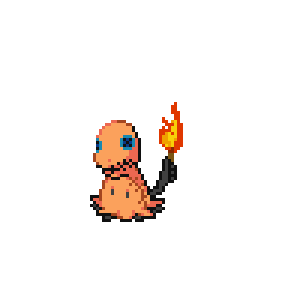
Charpix's tail always emits a faint light due to high temperatures. When it gets excited, its entire tail is covered in flames.

Charish regulates its body temperature through the flame on its head. If there is no extra nutrition to maintain its flame for extended periods of time, Charish is likely to fall ill.
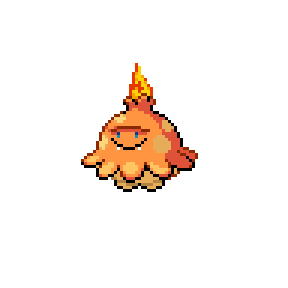
Chartuff can heat gas within its flexible body. When faced with a threat, it can blow out dozens of liters of gas at over 200°C in one breath to burn its enemies.

Chartik lurk atop larger Pokémon, surviving on their body heat and skin flakes. It prefers Fire-type Pokémon because other Pokémon tend to notice its fire.
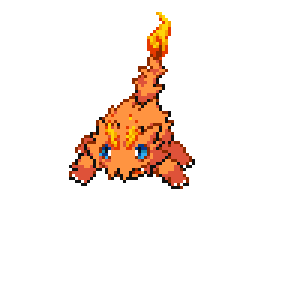
Chartik lurk atop larger Pokémon, surviving on their body heat and skin flakes. It prefers Fire-type Pokémon because other Pokémon tend to notice its fire.
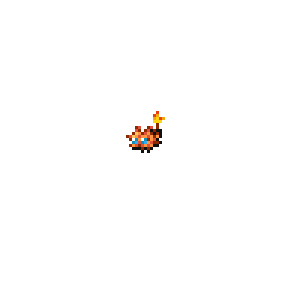
Charfisk moves through the cracks in rocks in dry areas. It is very light, and relies on fire to hunt prey that is almost the same size as it.

Chargast actively collects wood to maintain its body temperature and produce charcoal. It can manipulate charcoal powder to hunt.
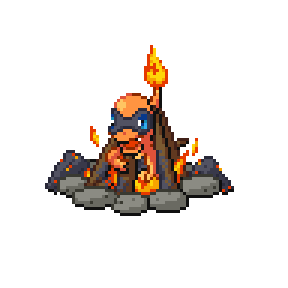
The flames of Charplume actually purify the air, because most of the foul-smelling gases are burned up. If the flame goes out and is not relit in time, the odor emitted by Charplume will erupt into flames instead.
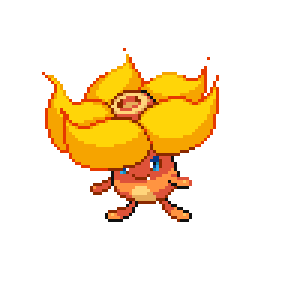
Charsect lives in the harshest environments to reduce competition. The fungi that coexist with Charsect help improve its digestion, while its flames repel competing species.
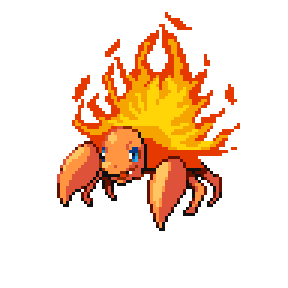
Charpod's skin is smooth, which helps it slip through narrow gaps. Charpod uses high temperatures to help digest the garbage it eats.

The scales on Charmoth's wings contain heat-resistant toxins. When the scales are scattered over an enemy, the high temperature first burns the skin, allowing the toxin to enter the body more easily.
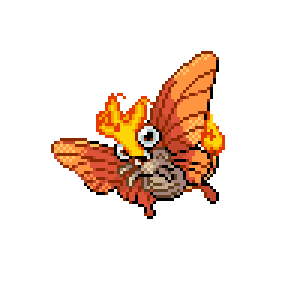
Benefiting from its lightweight hollow body, Charor can shoot flames to move and turn quickly. It can convert airborne dust into combustible gas and feed on it.

When Charzagoon makes high-speed turns, its tail leaves a unique scorch mark on the ground. It is interested in all kinds of hot objects, so it runs around large mechanical structures in towns to absorb heat.
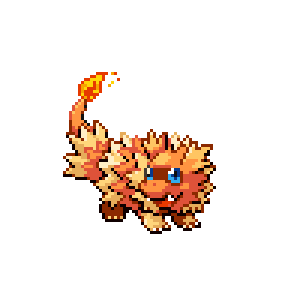
Charple uses the flame on its tail to burn tree bark and then drinks the sap from the cracks in the bark. The Pokémon tends to live in humid areas to avoid causing forest fires while scavenging for its food.
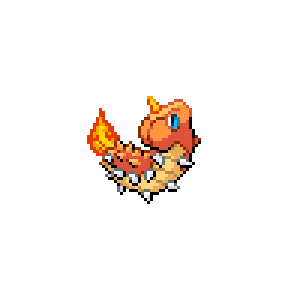
Chartle cannot stay in water like most Water-type Pokémon; it needs to actively supply oxygen to its tail to maintain the flame underwater. Chartle can blow bubbles containing flammable gas, which explode when they burst.
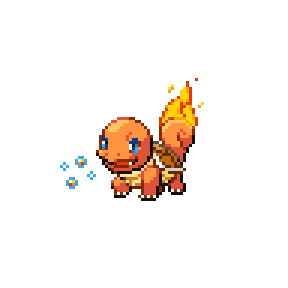
Charmer's body is made of non-flammable sludge. It collects fuel from garbage bins to maintain the flames needed for survival, while using non-combustible materials to increase its size.
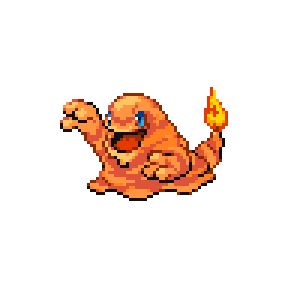
When Charmer consumes too many combustible materials, its flames become hot enough to melt its body. Until the temperature returns to normal, Charmer can only move slowly.

Charder spreads oil on its tongue and ignites it when hunting. Because it hunts with fire, Charder almost exclusively eats cooked food.

Charno lures Charmanders who desire the power of dragons and steals their dreams. The affected Charmanders become overly calm in personality.

Charno lures Charmanders who desire self-breakthrough and steals their dreams. The affected Charmanders' personalities become overly impish.

Although Chargela looks like a Charmeleon wrapped in vines, its limbs and neck are much longer than they appear. Because of its great flexibility, Chargela tends to use its claws rather than fire in battles.

Charnyte's shell retains a lot of heat inside its body. Although it has a strong ability to spit fire, its best way to hunt in water is still with its claws.
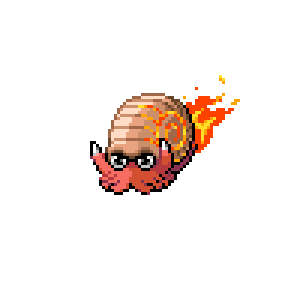
Charvoir's psychic power gradually strengthens with its fighting spirit. Although it usually uses psychic power to control flames in battle, it can just as easily attack with its claws if needed.
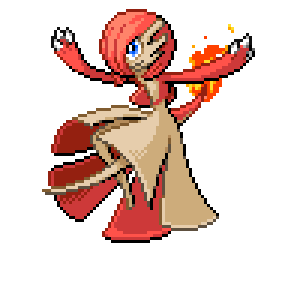
Charsaur actively fights for territory and food, using its strong tail as an effective weapon. The blue bud on its back reaches temperatures of over 1,000 ℃; trainers are advised to be cautious when handling it.
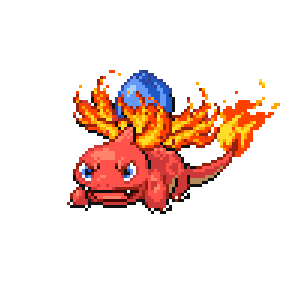
Charsaur's chili peppers release their spiciness under the sun. They often face off against bird Pokémon because they want to eat the peppers, while Charsaur wants to hunt them.
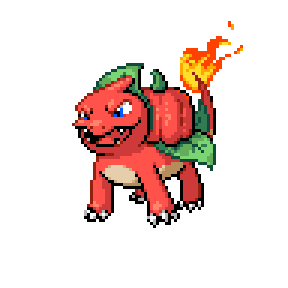
Charblade's fork can efficiently take down small prey. If a fight is necessary, Charblade will try to use its tongs to restrain the opponent's movements and then attack with the fork.
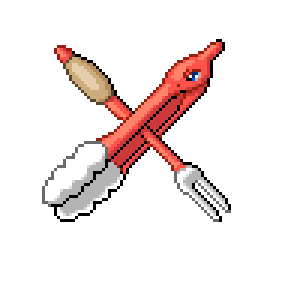
Charark's fur can spray thick smoke. It can create terrifying illusions in the smoke and flames to drive away intruders.

Charock's body temperature gradually rises with age, and its rocky parts also become more heat-resistant. In battle, it splashes lava everywhere, and when it's injured, it can use its lava to heal itself.

Charnea's whole body contains a high concentration of capsaicin, and most predators will give it up because of the spicy taste. During a fight, once an enemy is scratched by its spikes, the capsaicin will cause unbearable pain.
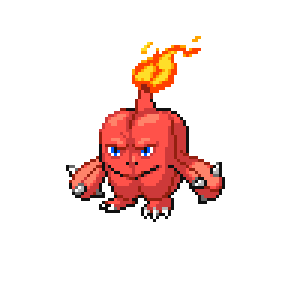
When Charas weakens the flames on its back, the fungal bulbs release complex toxic spores. To prevent the fungi from growing and threatening its organs, Charas suppresses them with fire.

The fungal part of Charsect dominates its body, providing nutrition and mobility. When it faces a threat, its host body can produce flames, using flammable spores to fend off enemies.

When Charduck has a headache, it temporarily clears its mind to release destructive psychic energy. Its unpredictable destructiveness causes most Pokémon to try to get away from it, even its own kind.

Charmeleon has a longer, stronger tail than unfused Charmeleon. To keep its balance while moving fast, it tends to run on all fours.
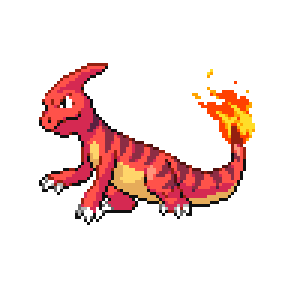
Although the temperature is similar, the liquid in Charbell's mouth is still digestive juice, not lava. This Charbell uses its body heat to lure prey and then takes off with flames to hunt when they get close.
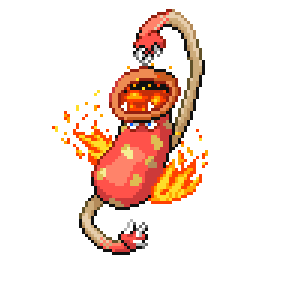
Charcool controls its body temperature through flames and speeds up its metabolism to launch attacks. Although its clawed tentacles are strong, its main weapon is still its toxins.
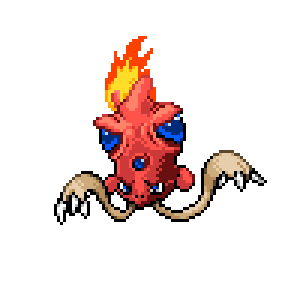
The gem on Charcruel's head has an eye-like structure, so it can watch for threats from above. When needed, Charcruel can fly with flames and catch prey in the air.
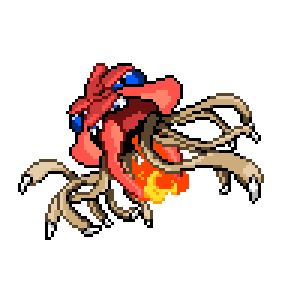
Charpoke's tail secretes a sweet, sticky liquid, and the flames help spread the scent, attracting small prey. Even though it has sharp claws, its slow reactions make Charpoke's hunting extremely inefficient.

The flame on Charbro's tail shoots out from the end of its shell to avoid roasting itself. Although Charbro can use fire-type moves to hunt, it hardly ever aims and rarely hits.

When Charbone's wing bones grow enough to catch the wind, it means it's ready to fly. These tiny creatures are tough fighters and live a solitary life.

Although its wings aren't big, Charther's flying speed is impressively fast. It flies over large areas, looking for opponents worth battling.

It wasn't until high-speed cameras became common that wild individuals of Charew were confirmed to exist. Before that, because of how fast it was, there were no reliable records of it.
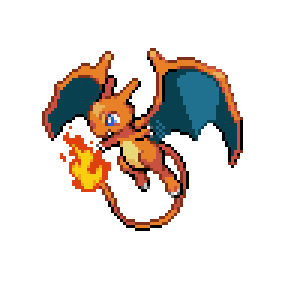
Charlosion's wings can be easily folded so they don't get in the way when not needed. Its speed and flames are its biggest assets for surviving in the wild.

Chareon will fly to a safe place after anticipating possible danger, so seeing Chareon is considered a good omen. It actively seeks out a suitable Trainer and will attempt to make contact with them as soon as it can.
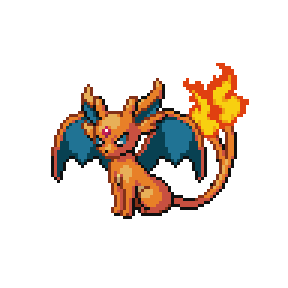
Charcune's fur collects flammable particles from the air and burns them. Because of this ability, it can purify the air, which makes it pretty popular.

Chartar's wings are strong, but their range of motion is restricted by their shell. They rely on shooting out flames to fly, using this to avoid any battles as much as possible before they evolve.

Charchu's wings are too light for long-distance flights, but its flames are stronger than Charizard's because they contain electricity. It's said that Charchu is quite popular in Kalos.

Charvile is an active battle fanatic, always eager to fight with its own kind and other Pokémon. It often switches between Fire-type and Ice-type moves to keep opponents struggling with the changing temperatures.
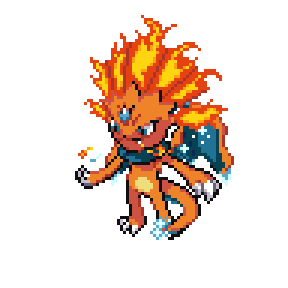
Charperior's high-temperature horns can help it easily break through rock walls. Sometimes, what it shoots from its arms isn't rocks, but balls of lava.
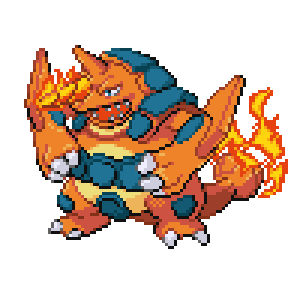
Charvoir is a proud warrior, and earning its recognition is a tough challenge. Wild Charvoir is always ready to fight, and the flames around it will only calm down around trainers it acknowledges.

This Chargon variant specializes in Dragon-type moves. It's super fast and often finishes its hunt before its prey even realizes it's there.
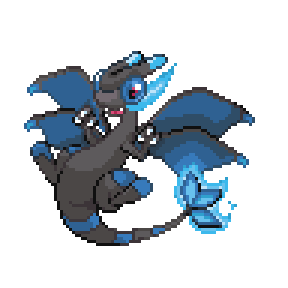
Charjask can exceed the speed of sound in seconds. Its wings, along with its flames, provide thrust, leaving behind heat and scorch marks while flying.

Charki is obsessed with fire-related items. When it wants something that belongs to a trainer, it will actively challenge them for it.
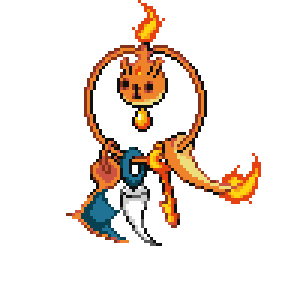
Charinch ambushes prey buried in the sand and can also chase its prey while flying. It can't fly for too long, though, because its huge head puts too much strain on its neck at high speeds.

Charsaur's nectar is a highly efficient fuel, but wild individuals are too aggressive, so it can only be collected from those that have been tamed. When they fly, they always unintentionally cause spicy pollen to scatter everywhere.

Charth loves grabbing valuables and dives at its victims from the air with flames. In areas where Charth is active, public places usually have water guns or Water-type Pokémon as security measures.
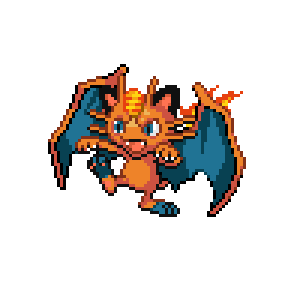
This Charth is smarter than other variants but not very suited for life in the wild. Its keen mind, powerful wings, and sharp claws make Charth popular among trainers.
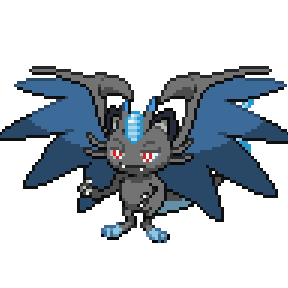
Charphish's claws are shaped like its head, which can confuse opponents attacking from a distance. Because it has a habit of roasting its food before eating, Charphish doesn't have high demands on the quality of the food itself.
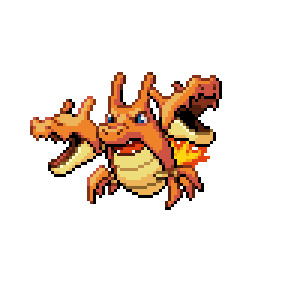
Charizard's metal claws require a copious amount of metal to account for wear and damage. Charizard melts ores with fire and then eats them.

Charbell can fly at high speeds and spray digestive fluids at its prey. In battles that aren't meant for hunting, it uses fire to ignite the flammable digestive fluids.

Charbro's nerves are affected by the high temperature of its shell, making it very irritable. The shell affects its center of gravity, slowing down its flight, but it also becomes a weapon for Charbro to secrete lava.

Charmite can use magnetic force to offset some of its weight, allowing its wings to focus on boosting flight speed. Groups of Charmite often absorb electricity right before a thunderstorm forms and flee before the rain starts falling.

Chargar manipulates burning gases with ghostly threads to form the shape of Charizard. It uses this method to trick opponents and make sure it stays safe in battle.
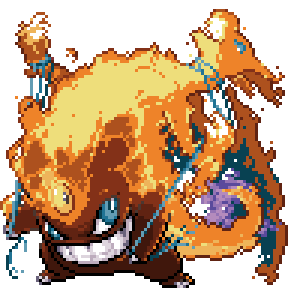
Chargar uses ghostly threads to manipulate burning gas, summoning powerful draconic energy that forms the shape of a Charizard. It uses this method to scare opponents and crush their fighting spirit.
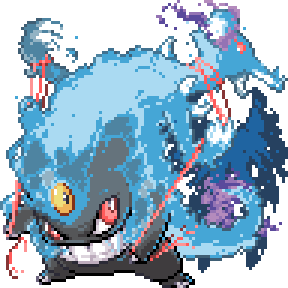
The bubble on Squirtsaur's back is a water storage container. When the weather is dry, it can stay active for a long time by relying on the stored water.