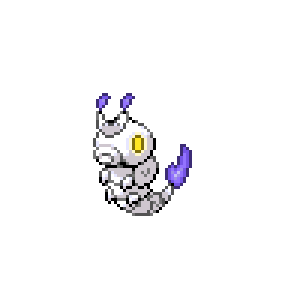
Page 1 / 2 of 1498 pokedex entries by katieplaysgames.
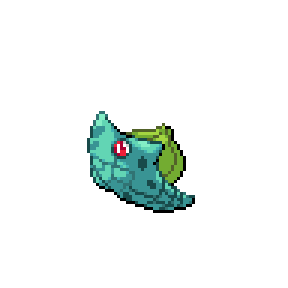
Bulbapod hide amongst tree branches that are growing new leaves, their colouration and bulb helping them blend in with the leaf buds. Their eyesight is poor and they sometimes cluster together on bare branches, believing themselves to be disguised.
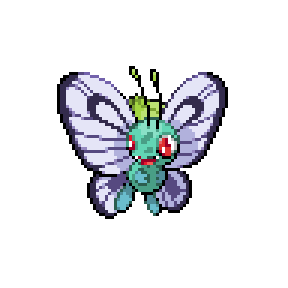
Bulbafree feed on flowers and can be seen swarming from meadow to meadow in the spring. They use the bulb on their back alongside their patterned wings to mimic the flowers they land on, disguising their presence and helping to keep themselves safe.
Bulbahoot are very active at night, flying between tree tops in competition for the highest point in the canopy. During the day they cling tight to their perch and sun themselves, letting the warm daylight lull them to sleep.

The bulb on the heads of Bulbaowl produces a nectar that is highly prized by both people and Bug-Type Pokémon. The flavour of the nectar varies through the day and is sweetest in the middle of the night.

Bulbawoodo are a rare sight not due to their scarcity, but due to their skill at mimicking young saplings. They are adept at blending in with new growth trees, discernible only by their habit of waving their bulbs around even if there's no wind.

Bulbaraid swim in tropical waters and love to stay in the shallows, sunning the bulb on their back. Their bulb builds up and stores oxygen, which Bulbaraid can shoot out as a concentrated bubble stream.

The bulb on the tails of Bulbans has dry leaves and loose seeds, enabling it to make a rattling noise when they shake their tail. They use this as a warning and can fling the seeds at high velocity at their foes if threatened.
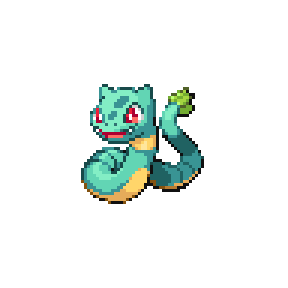
Bulbasly have a mineral rich body, dense with a crystal lattice predominantly formed of emeralds that give them their green hue. Their rock-hard bodies protect the delicate bulbs growing from their head.

The plant growing on the back of Bulbasaur is slow-growing, requiring a lot of sunlight and nutrients to blossom. They spend their days curled up in the sun warming the flower bulb, waiting for it to bloom.

The plant growing on the back of Bulbasaur is slow-growing, requiring a lot of sunlight and nutrients to blossom. They spend their days curled up in the sun warming the flower bulb, waiting for it to bloom.

The flower blooming on the back of Bulbasaur is immature and still fragile. They keep their leaves furled around the fragile petals, keeping the flower safe until it's fully ready to bloom.
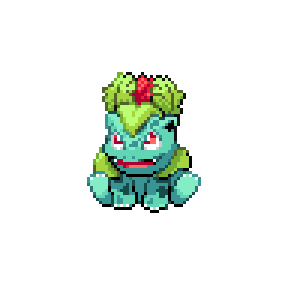
The long fronds sprouting from the heads of Bulbaeanie contain large colonies of symbiotic algae, allowing them to subsist on photosynthetic energy. Their fronds are tipped with toxic spikes to ward off predators.
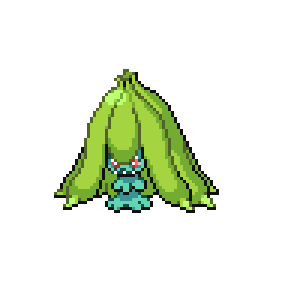
Bulbaeanie have long thorny leaves that sprout from their back, trailing behind them as they run around. The leaves are adapted to be able to retain moisture, keeping their bodies damp for days after leaving the water.
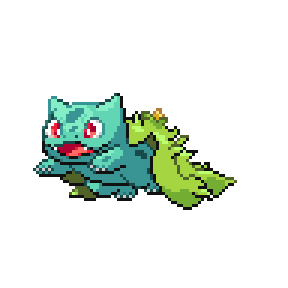
Caterpie have far more elaborate head crests than unfused Caterpie. Pokémon researchers have found these crests to be covered with acute sensory hairs that Caterpie use to detect the pheromones of other Caterpie.
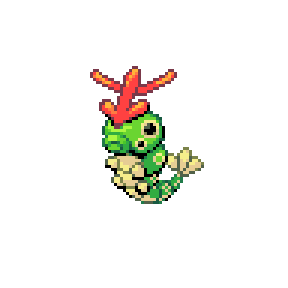
Caterdle are a popular fusion for young Trainers around Viridian Forest to use when they are just beginning their journey. Caterdle are easy to raise and has a relatively mild poison that makes them safe to handle whilst still being useful in battle.
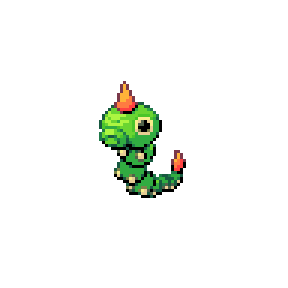
Caterowl antennae are attuned to pick up pheromones that drift through the night air. They can navigate to one another through pitch darkness thanks to this sharp sense of smell.
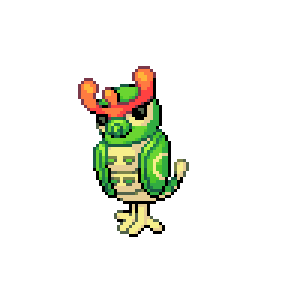
Caternub live amongst the leaf litter in forests, rooting around under it for fallen fruits or fresh mushrooms. Their antennae are highly sensitive to the scent of decay and they gravitate toward fallen trees.
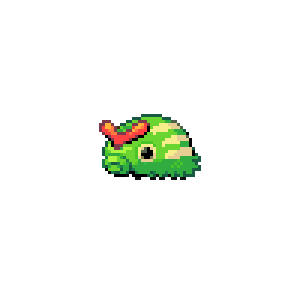
Catersly has a surprisingly thick exoskeleton for such a small Bug-type. Testing reveals that it incorporates hard silicates into its body from the rocks on which it feeds.
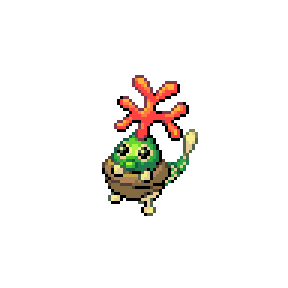
Caterdon have metallic crystals laced within their chitin, making them surprisingly tough for their diminutive size. They prefer to avoid conflict where they can, curling into a ball to protect their soft underbelly when threatened.
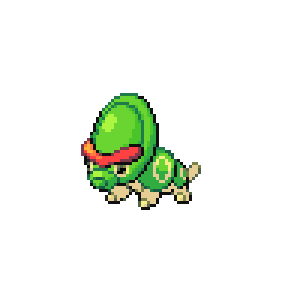
Caterwig have a beak edged with sharp chitin that allows them to bite through even the toughest of plant stems. They are a nuisance to gardening communities due to their habit of chewing through orderly gardens.
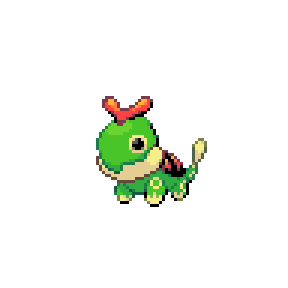
Voltown are found in the ruins of ancient civilisations, adorning the walls in corridors leading to treasure rooms. They are harmless if ignored, but will self-destruct when read aloud.

Voltown are found in the ruins of ancient civilisations, adorning the walls in corridors leading to treasure rooms. Some Voltown lie in wait alongside Unown with their eyes closed to fool the unwary, detonating when the reader gets too close.

Voltown are found in the ruins of ancient civilisations, adorning the walls in corridors leading to treasure rooms. They are harmless if ignored, but will self-destruct when read aloud.

Voltloom are very light on their feet, moving swiftly across battlegrounds and darting in and out of combat. Their claws carry an electrical charge that causes muscles to seize up, helping Voltloom stay ahead of its foes.
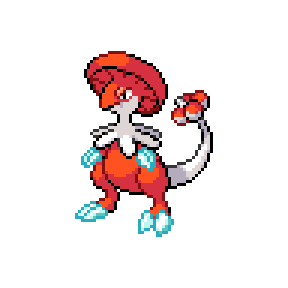
Voltish love to hide in tall grass, hunkering down and soaking in sunlight. Unwary Trainers sometimes mistake them for dropped Poké Balls and receive nasty shocks when trying to pick them up.

Electrduck are temperamental and chase both Pokémon and people away from their nests with loud yelps and frantic gestures. They are prone to exploding if they grow too agitated.

Electrduck are temperamental and chase both Pokémon and people away from their nests with loud yelps and frantic gestures. They are prone to exploding if they grow too agitated.

Cupod conceal themselves within the bones of long dead Pokémon to protect themselves while they wait to evolve. They have very limited movement whilst hiding, almost entirely reliant on choosing a sturdy bone cocoon to stay safe.

Cupod use thin silk threads to attach bones to their cocoon to reinforce their bodies, protecting themselves from physical harm. They have to be careful to avoid hiding in groups in case they attract scavengers looking for food.
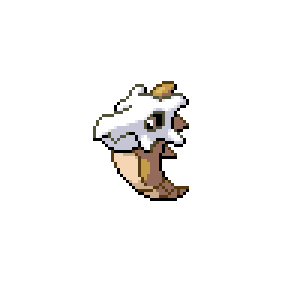
Cuna use a sticky silk to attach bones to their bodies in an effort to protect themselves from danger. Some Cuna take the camouflage a step further, their cocoon taking on a bleached white hue.

An ancient Pokémon thought extinct for some time, Cuwig has been discovered living deep in deserts with few other Grass-types around. Cuwig has a hardy shell and skull to protect itself from the harsh weather of its environment.

Cupede are desert scavengers, living lonely existences in harsh environments. They gather the sun-bleached bones of long passed Pokémon to use as protective armour for themselves.

Cupede keep their tough outer exoskeleton turned outward to protect themselves from the harsh heat of their desert home. Bony spurs jut from their bodies to give them extra grip as they roll around.
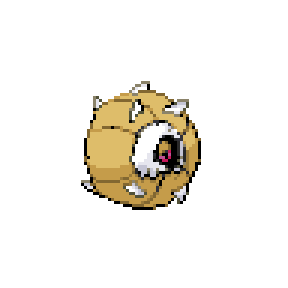
Cumy have sticky liquid bodies that are vulnerable to harm from larger Pokémon. To protect themselves they gather up bones to stick to themselves as armour.
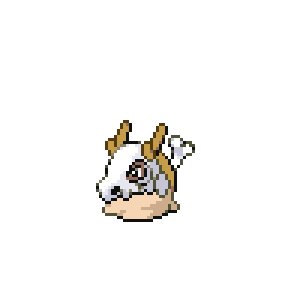
The shell of Maroterra is covered in a surprisingly fertile soil. Though rare, following desert rains its shell can bloom with short-lived plant life and desert flowers.

The shell of Maroterra is covered in a surprisingly fertile soil. Though rare, following desert rains its shell can bloom with short-lived plant life and desert flowers.
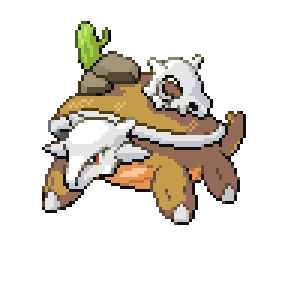
Maropede can travel long distances through the desert without needing to stop for water. Their tough hides slow water loss from their bodies. They are hardy Pokémon and can resist most dangers thanks to their bony plates.
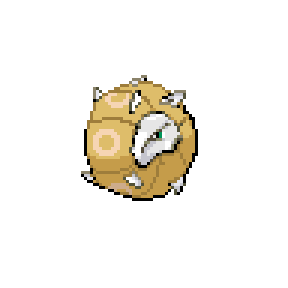
Hitmonsaur are ornery Pokémon, prone to picking fights in an effort to prove their own strength. They launch themselves at other Pokémon using the dense flower on their back as though it were a fist.
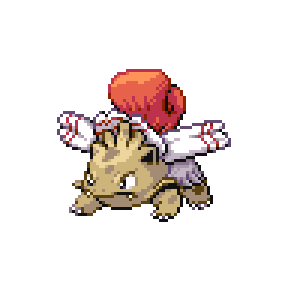
Hitmonrogue are adept in most forms of martial arts, but specialise in boxing. Their punches leave something to be desired in terms of sheer strength, though their skills improve rapidly with practice.

Hitmonsaur are ornery Pokémon, prone to picking fights in an effort to prove their own strength. They wield multiple fist-like flowers at the end of flexible vines, using them to lash out at anyone getting too close.
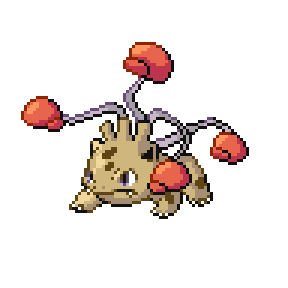
Lickidle live inside tree bark, creating large hollows to hide in while they wait to evolve. They have very few natural defences, their fat pink bodies making them prime targets for predators.
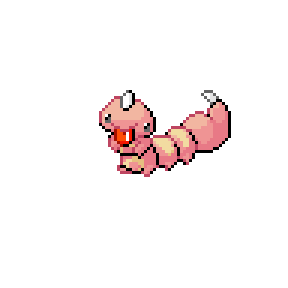
The gasses within Koffing rupture through the vents that would harmlessly disperse them from an unfused Koffing. Trainers are advised to make use of gas masks when training with Koffing to protect themselves.

Kofftler are found in highly polluted areas, most often in areas with high levels of industrial waste runoff. Their bodies metabolise the toxins in their environment and expel them as foul gases.

Koffxio move together in small prides, working together to take on threats larger than themselves. They use the gases they produce to create cover for themselves, blinding other Pokémon as they surround them.

Metahorn have a tough outer armour that is several centimetres thick, letting them endure significant physical punishment. Their bodies are in a state of metamorphosis beneath their armour and they are very careful if they suffer major injury.
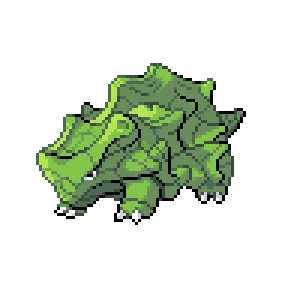
The wings of Metarow are encased in hard chitin, making it hard for them to fly. There are soft downy feathers hidden within the hard shell ready to emerge when they moult into adults.

Metarill have a thick chitinous club on their tail, but lack the strength to properly wield it as a weapon. Instead, they use it as a decoy for their body, luring predators to attack the club rather than themselves.

The gases contained within Weezing are made highly unstable through the fusion process. The combination of two Weezing results in a dangerous mixture, and they are prone to exploding at the slightest agitation.

The gases contained within Weezing are made highly unstable through the fusion process. The combination of two Weezing results in a dangerous mixture, and they are prone to exploding at the slightest agitation.
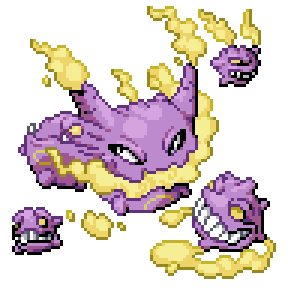
The gases contained within Weezing are made highly unstable through the fusion process. The combination of two Weezing results in a dangerous mixture, and they are prone to exploding at the slightest agitation.
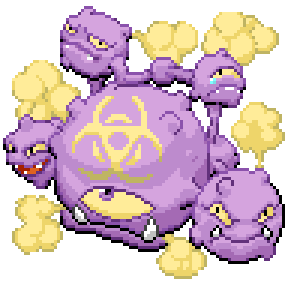
Weetler are laden with toxins, absorbing them from their environment due to industrial pollutants. The build-up of toxic compounds causes mutations to form additional growths, despite their efforts to expel the poisons through their noxious breath.

The gases emitted by Weeray generate static electricity that they can control and use to fight other Pokémon. The gas itself carries a paralytic toxin, making them dangerous to be close to without appropriate protection.
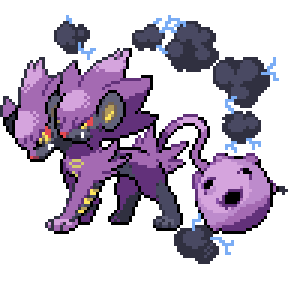
The gases emitted by Weeray generate static electricity that they can control and use to fight other Pokémon. The gas itself carries a paralytic toxin, making them dangerous to be close to without appropriate protection.
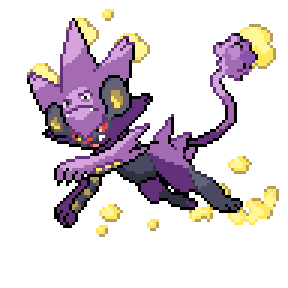
The gases emitted by Weeray generate static electricity that they can control and use to fight other Pokémon. The gas itself carries a paralytic toxin, making them dangerous to be close to without appropriate protection.
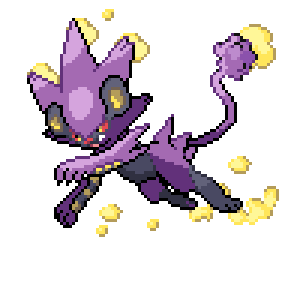
Long exposure to toxic gases and fumes warps the bodies of Weetula and results in them taking on nightmarish appearances. Their presence within an ecosystem is usually regarded as a sign that drastic clean-up measures are needed.
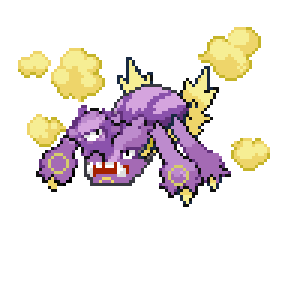
Long exposure to toxic gases and fumes warps the bodies of Weetula and results in them taking on nightmarish appearances. Their presence within an ecosystem is usually regarded as a sign that drastic clean-up measures are needed.

Rhytata will sometimes be seized with manic energy, racing in a straight line as they feel compelled to outpace one another. The density of their bodies means they can crash straight through walls, making them challenging to keep indoors.

Chandeen perform elaborate dances and flourishes underwater to attract the attention of mates across the reefs they call their home. Other Pokémon have been observed enjoying the shows that Chandeen perform, leading to moments of peace on the reef.

A highly empathic Pokémon, Chanbra overflows with positive emotion and the desire to look after others. The sheer strength of this feeling manifests as immense psychic power, primarily used to defend others.

Chankazam possesses incredible intellect and empathic power; the bond it forms with its Trainer is one of intense loyalty. The energy expenditure of its psychic powers is huge; it fuels its powers with highly nutritious eggs.

Chankazam possesses incredible intellect and empathic power; the bond it forms with its Trainer is one of intense loyalty. The energy expenditure of its psychic powers is huge; it fuels its powers with highly nutritious eggs.

Tantle has a hard shell used to protect its fragile vines, keeping them safe from tears and scratches. Its vines are highly sensitive and are used to feel through muddy waters.

Tantle has a hard shell used to protect its fragile vines, keeping them safe from tears and scratches. Its vines are highly sensitive and are used to feel through muddy waters.
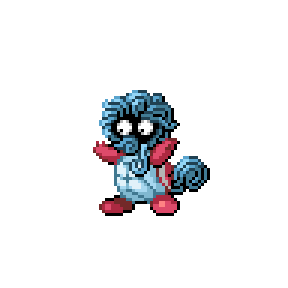
The vines Tantortle uses to sense the world are strong enough to serve as a source of propulsion, braiding together to form a powerful tail. Its preferred environment is muddy lakes and rivers with low visibility.

Agile and spry, Kangaslee live near cliff faces and bound up and down freely with their long and springy limbs. Young Kangaslee play with one another near the base of the cliffs under the watchful eyes of adults.
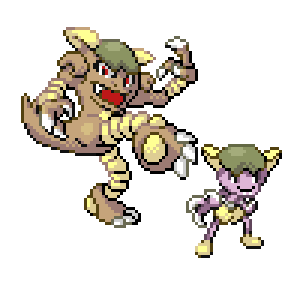
Agile and spry, Kangaslee live near cliff faces and bound up and down freely with their long and springy limbs. Young Kangaslee play with one another near the base of the cliffs under the watchful eyes of adults.
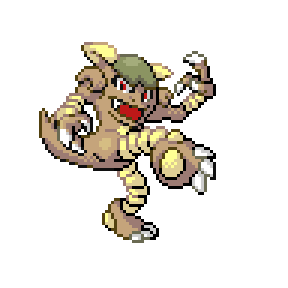
Horsea fusions sometimes produce oddities such as duplicated heads and tails. Their twin tails give them greater grip strength on the kelp they make their home in, but their decision making suffers from having two distinct minds.
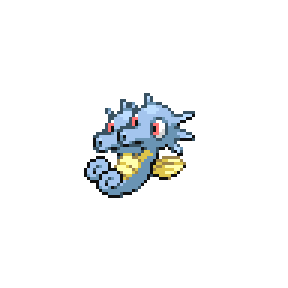
Horsea fusions develop wing-like fins that help them move more swiftly through the water. Their unusual appearance is theorised to be a result of their latent Dragon-Type potential being expressed early in their evolution line.

Hordle live in dense kelp forests, crawling through the vegetation both to hide within and as a feeding ground. They are slow swimmers, but using the fin on their back they perform elaborate mating dances with one another.
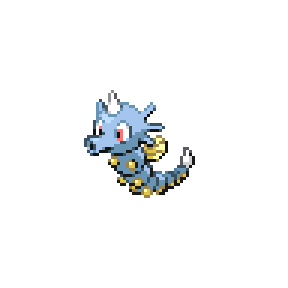
The whisker-like spines on either side of the heads of Horchu can sense electrical charges through water. Horchu use this sense to avoid larger Pokémon, swimming away to the safety of the shallows when endangered.
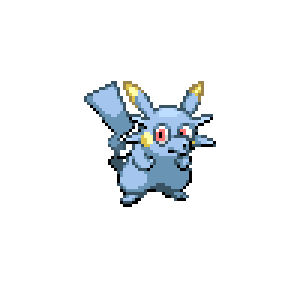
Hordum are capable of great bursts of speed through the ocean, but have very poor manoeuvrability. They typically move together in large schools for protection, jetting quickly away if they're threatened.
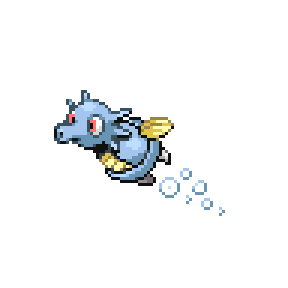
Hortang are common companions for divers, able to move underwater whilst pulling a large amount of weight. They are often vital for search and rescue missions around capsized ships.
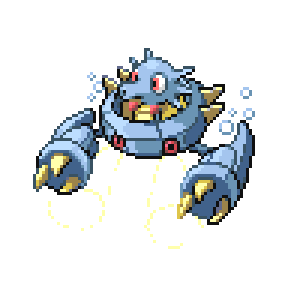
A fusion of two Seadra produces Seadra, a Pokémon that swims at over 40 knots. They can shoot out a jet of water from their mouths that has enough force to cut through steel.

Golrantis sway in place within coral reefs, waving their patterned arms and fins to mimic the movements of small Water-type Pokémon. These movements lure would-be predators into striking range, providing Golrantis with plenty of food.
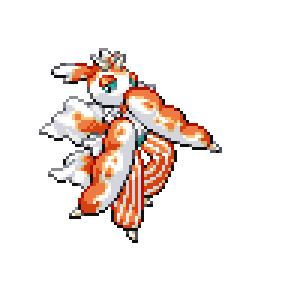
Searantis are prized for their luxurious, patterned fins. Their popularity makes them a common sight at exotic aquariums as they preen along the floor of the tanks.
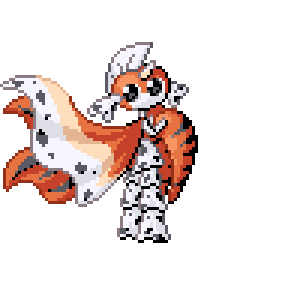
Searantis are prized for their luxurious, patterned fins. Their popularity makes them a common sight at exotic aquariums as they preen along the floor of the tanks.
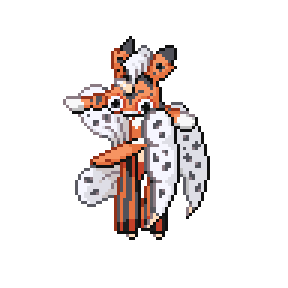
Searantis are prized for their luxurious, patterned fins. Their popularity makes them a common sight at exotic aquariums as they preen along the floor of the tanks.
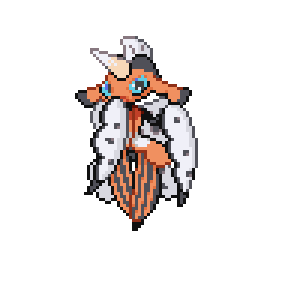
Butternx are common cast members in opera productions, flying across the stage and leaving a trail of glittering scales as they do so. They have an innate ability to harmonise with any sound they hear, using this to match the primadonna during songs.

Butterquil sprout fiery wings from their back as a way to display to one another. They produce patterns within the flames that can only be seen by compound eyes, researchers speculate that Butterquil can see a broader spectrum of colour than people.
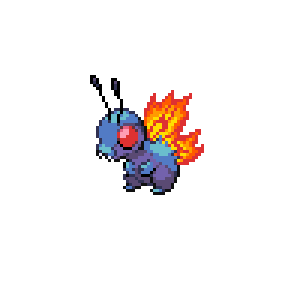
Butterquil sprout fiery wings from their back as a way to display to one another. They produce patterns within the flames that can only be seen by compound eyes, researchers speculate that Butterquil can see a broader spectrum of colour than people.
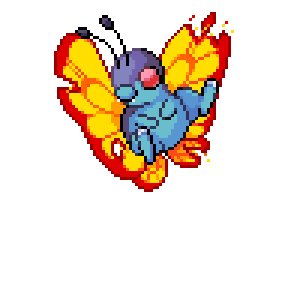
Butterquil keep their body temperature higher than most Bug-Type Pokémon enabling them to survive in cold environments. Large populations are able to keep trees free of snow even in the depths of winter with their body heat.
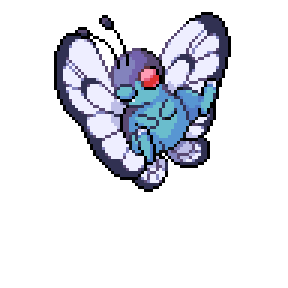
Butterlava are hyperactive and will race around the forest floor chasing one another for hours. When they're excited, their backs erupt into flames in the shape of beautiful wings. They have been known to accidentally start fires in their enthusiasm.
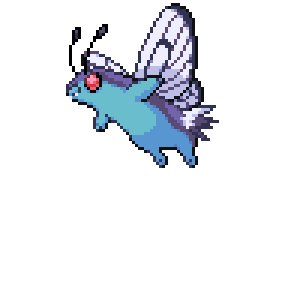
Butterill have intricately patterned wings that they use to communicate with one another. Though large, their wings aren't strong enough to allow them to fly, and they instead amble peacefully across the forest floor.

Butterwoodo feeds on tree sap and tree bark, usually standing in place at the trunk of a tree for hours on end. The wings on their back mimic those of other Bug-type Pokémon, warding them away by making them think there's already a Bug-type on the tree.

Buttergeot have patterned wings that are covered in a coating of tiny, specialised feathers. These feathers easily come loose and can cause paralytic effects when ingested.

Buttericate have a fine coating of dust in their fur that causes deleterious effects on those who breathe it in. Though flightless, they flap their wings to shake the dust loose and blow it toward whoever they're fighting.

Butterow swarm together in their brief breeding seasons, forming great clouds over their forest homes. When disturbed by other Pokémon they will turn aggressive and use their wing scales to coat the interloper with toxins.

Butterow have powerful wings that allow them to stay airborne for days at a time. Their wing scales shed easily and can be hazardous if breathed in, causing all manner of ailments.
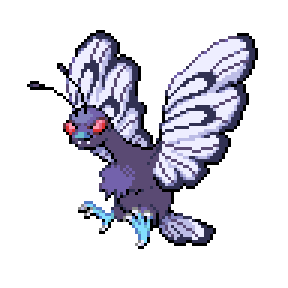
Buttergle have wing scales that reflect light in different ways depending on the angle they lie at, making for an iridescent effect. They mix these scales with a pigment produced by their tail to create unique shimmering paints.

Butterchum flutter their wings to summon cool breezes, using their psychic powers to lower air temperatures as they do. They are affectionate Pokémon, happy to help out during hot summers to keep their Trainers cool.

Butterill feed on tree sap and can often be seen clinging onto the trunks of trees with their sharp teeth. They use their tails as a distraction, mimicking the movement of a Caterpie to keep attention away from their main body.

Buttersly roots through the undergrowth of forests in search of its food, using its large wings to blow away leaf litter and dirt. Its body is too heavy for it to be able to fly, but with some effort it can manage short hops.

Researchers are divided on if Butterinja are a failed shed of Buttercada into Butterjask, or if they are a Pokémon species in their own right. The leading theory is that their ability to fly without moving their wings means they are their own species.
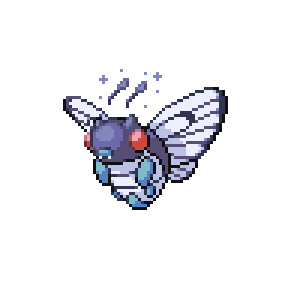
Butterdon have crests formed of thick and durable chitin that are used to protect them during battles. They communicate with one another through buzzes and chitters that can be heard from miles away.
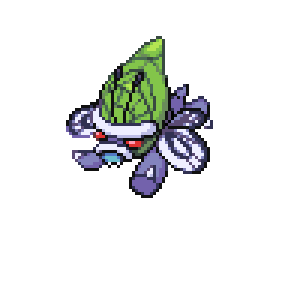
Butterdon have crests formed of thick and durable chitin that are used to protect them during battles. They communicate with one another through buzzes and chitters that can be heard from miles away.
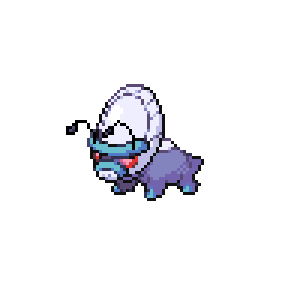
Butterjask are capable of flying at great speed thanks to their six wings. Their rapid movements create a cloud of wing scales that are shaken loose as they move, these scales get into the eyes and lungs, disrupting attempts to track them.
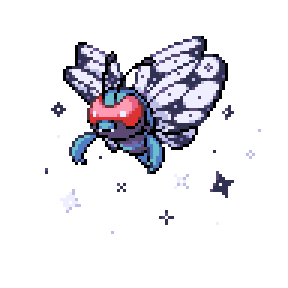
Buttercada use their twin proboscis to pierce into tree trunks and drink the sap within them. Large swarms can cover the trunk of a tree and cause problems for the health of the plant if left unchecked.

Often overlooked due to their shabby and tattered fins, Butterbas are typically one of the last Pokémon to be considered for aquarium displays. Despite this, they form a vital part of pond ecosystems, feeding on pond weed and keeping the water clean.

Butteruff flutter their wings happily when they're given attention by their Trainer. They will try and settle into the laps of those they recognise in the hopes of getting hugs.
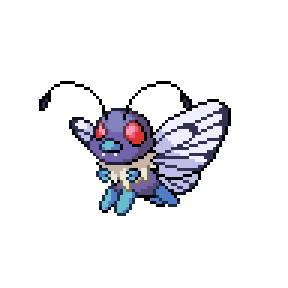
Butteroc hunt through forests in small swarms, communicating with one another through chittering howls. Though individually they are not the most powerful Pokémon, they are threatening when working together with others.
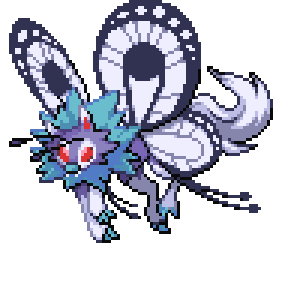
Butterdisc has large wing-like fins protruding from its back, which it uses to rapidly swim and glide short distances through the air. Its antennae help it sense danger and escape before being harmed.
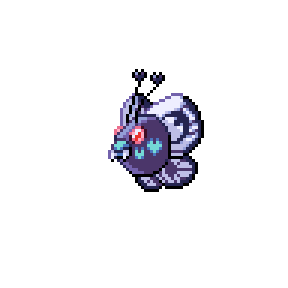
Butterchop use their wings to gain a height advantage when doing battle with rival Pokémon. They swoop down to land hard tackles, trying to use momentum to improve the amount of damage their impact causes.

Butterchoke are able to rapidly build their muscle mass, even comparatively light exercise allowing them to bulk up quickly. Researchers theorise this ability is thanks to the rapid evolution cycle of Bug-Type Pokémon.

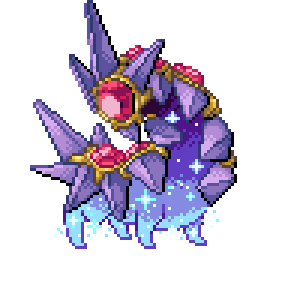
Starpede have bulky exoskeletons that leave them well-suited to life in coral reefs. Even if a piece breaks off, with enough time it will regenerate into a brand new Starpede.
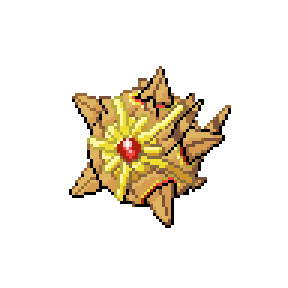
Found within coral reefs, Starpede scuttle across the coral and hunt through the reef for prey. They use the many gems studded along their backs to absorb sunlight and release energy pulses to stun their prey.
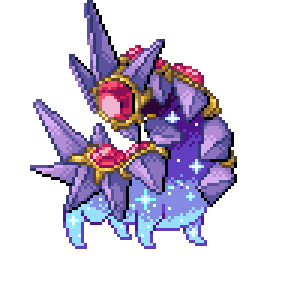
Found within coral reefs, Starpede scuttle across the coral and hunt through the reef for prey. They use the many gems studded along their backs to absorb sunlight and release energy pulses to stun their prey.
Mr. pie create invisible walls using their feet. They can crawl up these invisible surfaces, creating the illusion that they are floating in midair.
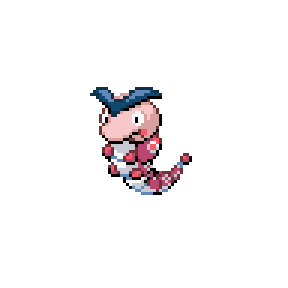
Mr. rachi are able to use their psychic powers to travel the boundary between the waking and dreaming worlds. They watch their audience with the eye in their stomach, granting a single wish to anyone who realises where they're being watched from.
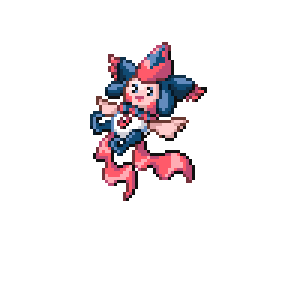
Mr. by construct invisible psychic barriers along the beach, scuttling sideways whilst constantly creating a longer and longer wall. Beachgoers are advised to remain aware of Mr. by populations as they can be a trip hazard.
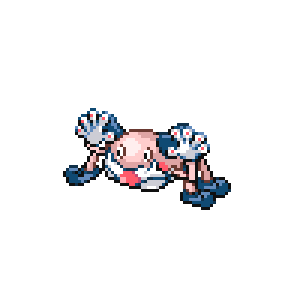
Mr. ler are adept combatants, conjuring invisible barriers in front of themselves whilst scuttling around them to launch psychic blasts. They keep their distance whilst battling, their constitutions too frail to risk direct combat.
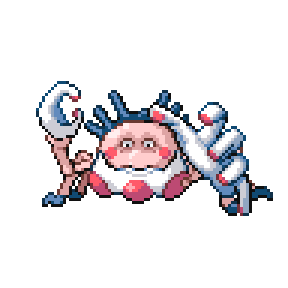
Mr. ler are adept combatants, conjuring invisible barriers in front of themselves whilst scuttling around them to launch psychic blasts. They keep their distance whilst battling, their constitutions too frail to risk direct combat.
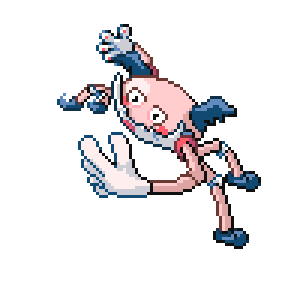
Champion-level wrestlers, Jynwrath are popular with black belts and martial artists both as sparring partners and as a first choice for Pokémon battles. Their low body temperatures help them stay physically active by rapidly dissipating muscle heat.

Jyntoise are popular with Beauties; their appearance is dazzling and something that their Trainers strive to emulate. They can create glittering displays with their elemental powers, ice crystals tracing through the air.

Electasaur are popular Pokémon amongst electrical engineers working around generators thanks to their innate ability to create electricity. The bulb on their back lights up as they create electricity and they are invaluable Pokémon for power plants.

Magrow swim along the surface of active lava flows, their bodies capable of withstanding the intense temperature of the molten rock. They shape cooling lava into elaborate nests in an effort to attract potential partners.
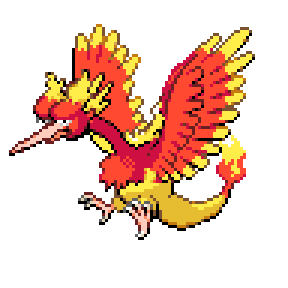
Magsol is incredibly sensitive to the shifting of magma deep beneath the world's crust. They seek out locations where volcanic eruptions are likely to happen, earning them a reputation for imminent disaster.

Pinsaur feed on plant sap, using their viciously sharp teeth to bite through even the thickest wood to get to their food. They have powerful pincers on their back that they use to deter predators from attacking them whilst they're feeding.

Pinsaur feed on tree sap, using their viciously sharp teeth to pierce through even the thickest of tree bark to get to their food. They use the horns on their head to spar with one another, prying other Pinsaur off the best feeding spots.

Pinsaur feed on tree sap, using their viciously sharp teeth to pierce through even the thickest of tree bark to get to their food. They use the horns on their head to spar with one another, prying other Pinsaur off the best feeding spots.

Combative and stubborn, Taucross patrol their large territories to make sure no rivals are making their home nearby. When they do encounter a rival, they use their massive horn and powerful club-like fists to battle for the territory.

Magidle live on aquatic plants and spend their days underwater hiding amongst the plant fronds. They have poisonous barbs along their back to discourage predators.
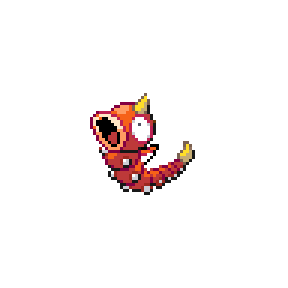
Magigey flock together along the water's edge and will squabble with one another for the best drinking spots. They're fast but weak, their fights rarely causing any lasting damage despite how frenetic they can get.
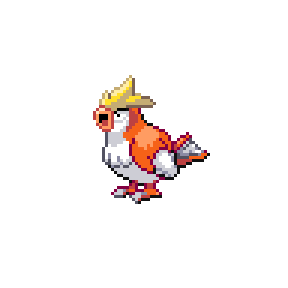
Magirow swim together at the surface of placid lakes, honking at one another to communicate. They feed by diving beneath the water and searching for plants, though they are poor swimmers and cannot dive deep.
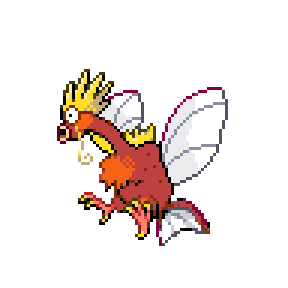
Despite being physically frail, Magikey are remarkably aggressive and territorial. They will put on fierce displays, mock charging at Pokémon and Trainers alike to try and scare them off before a fight has a chance to happen.
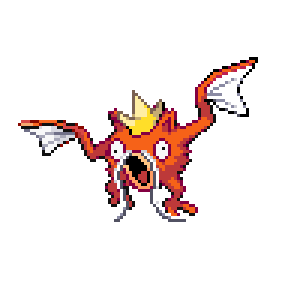
Weebone have a habit of grabbing smaller Bug-Type Pokémon and wielding them as weapons. They are avoided by small Pokémon for fear of being the next one to be picked up.
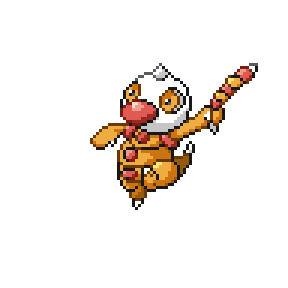
Slow-moving and defended only by mildly toxic stingers, Weesea live in dense kelp growths. They rely heavily on their drab camouflage and lack of sudden movements to avoid drawing attention from predators.

The fusion process that produces Weedle creates genetic instabilities that cause them to become unusually long. They sometimes mistake their own tail segments as the heads of other Weedle and attack them.

Weebull are popular with many Trainers thanks to their chubby, plush features. It is advisable to be careful when handling them as their stinger can cause nasty injuries if improperly touched.
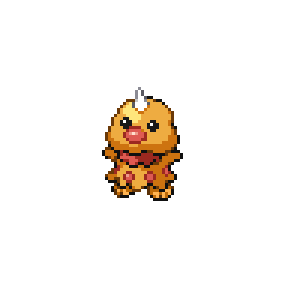
Weebull aggressively posture before entering a battle, wielding their spines and stinger to try and intimidate their foe into backing down. They are not nearly as brave during battle, scared of taking hits.

Weedoof live high in the branches of tall trees to keep themselves safe from larger Pokémon. They feed on the softer bark of the high branches, gnawing out hollows that they can use for shelter when they start to evolve.

Weeinch has powerful jaws that it uses to trap prey that are careless enough to wander within striking range of its burrows. Trainers travelling through areas known to be home to Weeinch are advised to make liberal use of Repel.

Working together to form colonies in the forest, Weechop are highly social and co-operative. When threatened by flying Pokémon, most of the colony defends their home while a small group tries to draw the threat away.

Weefetchd march together in small flocks, hoisting sharpened sticks up with one wing. They jab at other Pokémon with these sticks to get what they want, working together to bully them away from food.

Weeduo strut through forest clearings in small flocks with their heads held high, acting confident to ward off predators. When disputes arise within the flock, the two competing Weeduo will square off and rear up as tall as possible.

Flocks of Gyararow live around large lakes and chase off any other Pokémon that try to stake their claim on their feeding grounds. They are aggressive and will attack anyone that gets too close to them.
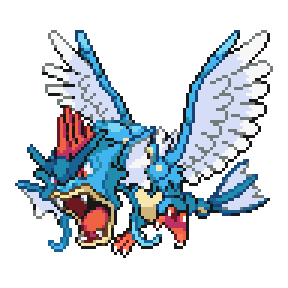
Gyaraizard are dangerous apex predators that are equally comfortable in both the water and the air, moving at speed through both. Pokémon Rangers are often stationed near known Gyaraizard hunting grounds to protect people from them.
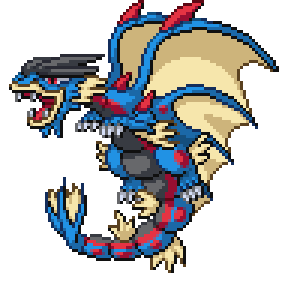
The vents covering Ditzing spout a mutagenic sludge that can destabilise and alter organic matter on a molecular level. Prolonged exposure can cause those who have made contact to begin transforming into whatever they see.

Ditursa take the shape of other young Pokémon as a defence, relying on the maternal instincts of their assumed family for protection. They enjoy having their mimicry observed and have a habit of trying to find people to show off their disguise to.
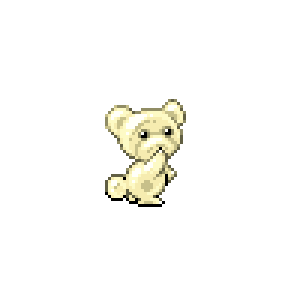
Ditursa take the shape of other young Pokémon as a defence, relying on the maternal instincts of their assumed family for protection. They enjoy having their mimicry observed and have a habit of trying to find people to show off their disguise to.
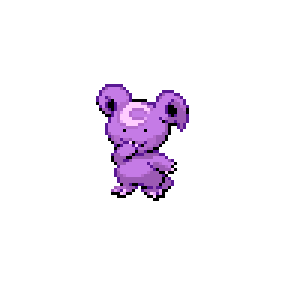
Ditans warn away other Pokémon by rapidly shaking the rattle on their tail. They are consummate mimics and, should their rattle fail, they will transform themselves into more threatening Pokémon to scare off aggressors.
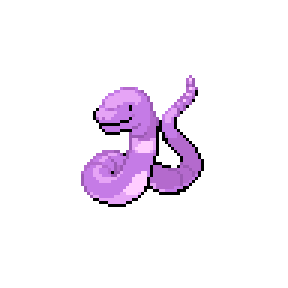
Ditbok have a mostly fluid body, their coils melting into one another whenever they curl up. When threatened they flatten their body out, trying to appear bigger than they actually are to scare off attackers.

Ditmuku has innards that are highly malleable and can transform into any shape. It uses these both to defend and to disguise itself. When it rests at night, Ditmuku wraps itself in its own innards and uses Transform to look like a rock.
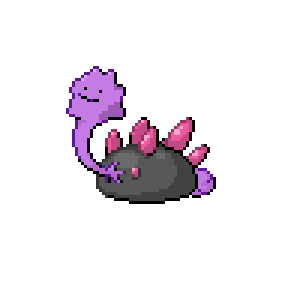
Ditsaur transform their bodies to mimic various jungle plants that they pass, down to the odour those plants produce. They do this to hunt food. Any Pokémon seeking to feed on them gets stuck to their gooey surface and gradually absorbed.
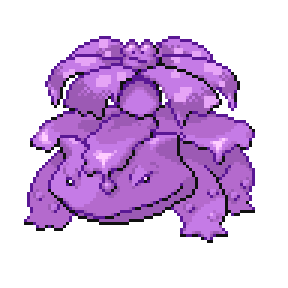
Ditsaur transform their bodies to mimic various jungle plants that they pass, down to the odour those plants produce. They do this to hunt food. Any Pokémon seeking to feed on them gets stuck to their gooey surface and gradually absorbed.

Ditduck experience regular migraines that cause them to lose control of the integrity of their bodies. Whenever they reform after recovering they never quite look the same. These changes can add up over time, leaving them looking totally different.
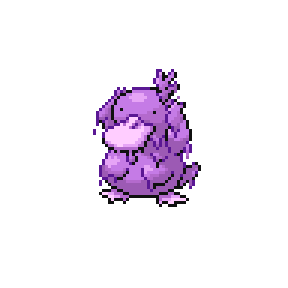
Ditduck experience regular migraines that cause them to lose control of the integrity of their bodies. Whenever they reform after recovering they never quite look the same. These changes can add up over time, leaving them looking totally different.

Pokémon historians theorise that Ditduck is responsible for the origin of legends surrounding the Kappa, the transformative properties of the Pokémon letting it appear monstrous at will. Despite their appearance, they are quite amiable.
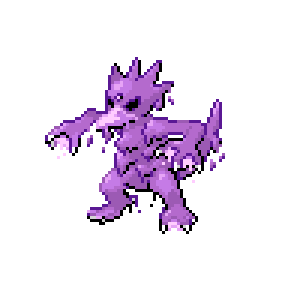
Eeuna are coated in thick, plush fur that protects their bodies whilst they prepare to evolve. They congregate near areas full of elemental energy, using the ambient energy to help them evolve faster.
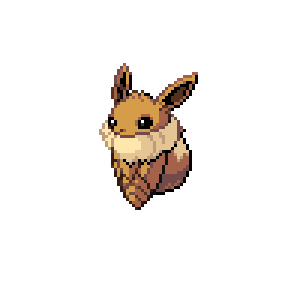
Eetu are able to glean glimpses of the future with their psychic powers. They spend hours trying to predict what is to come. Their own evolutionary potential frequently changes the visions they see.

Eeicate have luxuriously soft fur that makes them prized Pokémon within the fashion industry. Their fur has a sheen that changes colour when exposed to elemental stones, hinting at the unstable genetics of Eeicate and their evolutionary potential.
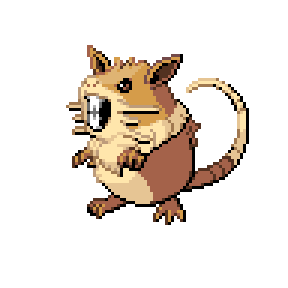
Eequaza are very rarely encountered by Trainers as they live in the stratosphere, winding through clouds far out of view of the ground. They have an unstable genetic makeup, their genetic structure heavily influenced by the weather.
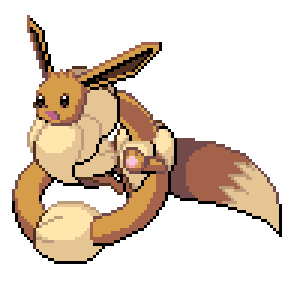
Joltfeon loves to lounge outdoors, sleeping in the sunshine and photosynthesizing as they rest. They are popular in rural areas where, after a blackout, they can provide temporary power with their stored energy.
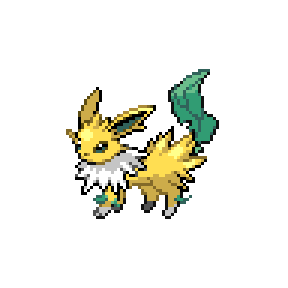
Joltfeon loves to lounge outdoors, sleeping in the sunshine and photosynthesizing as they rest. They are popular in rural areas where, after a blackout, they can provide temporary power with their stored energy.
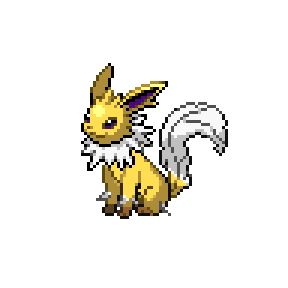
Omaew are ancient Pokémon that have existed for millions of years. They have a uniquely adaptable genetic code that is theorised to be responsible for their longevity as a species, enabling them to rapidly adapt to any environment.

Omaew are ancient Pokémon that have existed for millions of years. They have a uniquely adaptable genetic code that is theorised to be responsible for their longevity as a species, enabling them to rapidly adapt to any environment.

Omafetchd gather ancient shells to use as head armour to protect themselves, wielding fossil bones as weapons. Nobody has seen the true head of a Omafetchd and they will flee anybody that tries to look inside their shell.

Fossils of Omafarig are common in ocean strata, their skeletons mystifying paleontologists as it's unclear which side is the head. When revived, researchers were surprised to find both the head and tail hold brains.
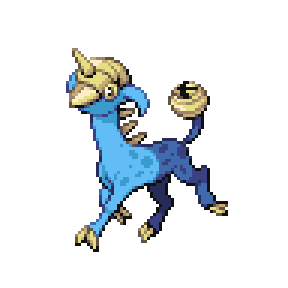
Omarow primarily live within the open ocean, propelling themselves through the water with powerful flaps of their wings. When threatened by larger Pokémon, they swim urgently to the surface to fly away to a safe distance.
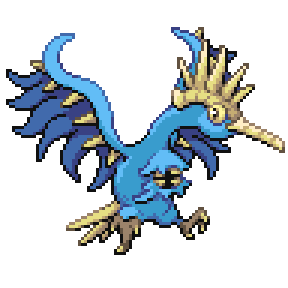
Kaktret have stiff and waxy fur surrounding their bodies that helps protect them as they grow. This protective fur limits the range of movement Kaktret are capable of, so they try to stay hidden during the day.

Kakrow have chitin rich feathers that fold together to form a dense protective layer over their body. While this makes them clumsy in the air, it allows them to roost safe from predators whilst they gather the energy needed to evolve.

Kaknub have thick, matted hair that forms a dense coat around their bodies. They rely on this fur to protect them, remaining in one place for long stretches of time as they gather the energy to evolve.
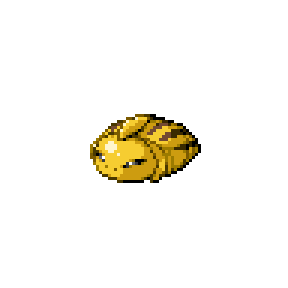
Kakdoof are almost immobile and can only move a few centimetres a day by carefully shuffling. To stay safe while they wait to evolve they make small burrows in tree trunks, gnawing at the wood for sustenance.

Kakidos use their hardened chrysalises both to protect themselves and as weapons. The shells of their chrysalises are especially thick at the tops of their skulls, leading them to prefer ramming head-first as an attack.

Kakcada are barely able to move, using their large front claws to slowly drag themselves around. They bury themselves underground during daylight hours to hide from predators.

Kakcada are barely able to move, using their large front claws to slowly drag themselves around. They bury themselves underground during daylight hours to hide from predators.

Kakon have a tough exoskeleton that can withstand tremendous physical pressure. They bury themselves within scree that has fallen from cliffs whilst they wait to evolve, safe deep beneath the heavy boulders.
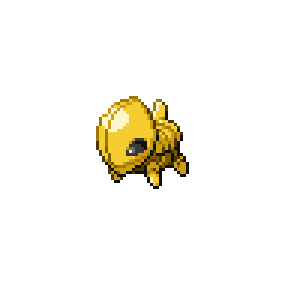
Kakon have a tough exoskeleton that can withstand tremendous physical pressure. They bury themselves within scree that has fallen from cliffs whilst they wait to evolve, safe deep beneath the heavy boulders.

Kakinch is completely immobile, lying buried in the ground with its mouth facing directly to the surface. Though it does not require much food while waiting to pupate, it will snap at anything that steps on it.

Despite their aggressive appearance, Kakpod are cowardly and will run at the slightest hint of danger. They prefer to hide in muddy river banks, burying themselves to get out of sight as fast as possible.
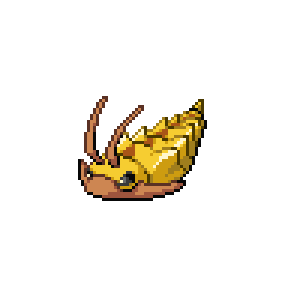
Kakdude cling to the ceilings of caves while they wait to pupate. If they're disturbed, Kakdude will cluster together and form an impenetrable wall, protecting one another from harm.

Kakdude cling to the ceilings of caves while they wait to pupate. If they're disturbed, Kakdude will cluster together and form an impenetrable wall, protecting one another from harm.

Kabudra live amongst dense kelp forests, their rocky hide and naturalistic shape letting them blend in with rocks along the sea floor. Despite their fearsome appearance, they use their scythes to harvest kelp to feed on.

A powerful apex Pokémon from Kanto's distant history, scientists on Cinnabar Island have managed to resurrect them and reintroduce them into the environment. They now make their home within the Cinnabar Volcano, nesting within basalt columns.
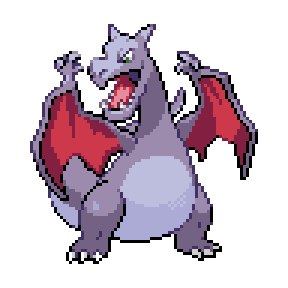
A powerful apex Pokémon from Kanto's distant history, scientists on Cinnabar Island have managed to resurrect them and reintroduce them into the environment. They now make their home within the Cinnabar Volcano, nesting within basalt columns.

A powerful apex Pokémon from Kanto's distant history, scientists on Cinnabar Island have managed to resurrect them and reintroduce them into the environment. They now make their home within the Cinnabar Volcano, nesting within basalt columns.

A powerful apex Pokémon from Kanto's distant history, scientists on Cinnabar Island have managed to resurrect them and reintroduce them into the environment. They now make their home within the Cinnabar Volcano, nesting within basalt columns.

Snorbok are extremely lethargic and will spend months sleeping between meals. Their appetite is tremendous when they're hungry, gorging themselves for an entire day on anything that crosses their path.

Snortei spend upwards of twenty hours per day sleeping, lazing in mountain passes and valleys. They never sleep in the same place twice and will travel for miles during their few waking hours in search of a new resting place.

Snorchu spend upward of 20 hours per day sleeping and are reluctant to move for anything other than food. They are only truly active during thunderstorms, being roused and searching for other Snorchu during the storm.
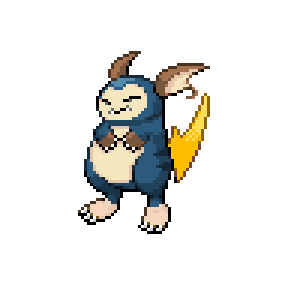
Flocks of Artigey travel together through harsh blizzards and sleet storms in search of high mountains to nest in. Meteorologists use the migration of Artigey as an indicator of incoming poor weather.

Artiotto nest high in the mountains within glaciers, their thick downy feathers insulating them against the cold. When flocks of Artiotto descend from the mountains, they bring sleet storms with them.

Artiler are found on the beaches of the Seafoam Islands, fluttering in short distances across the beachfronts at one another. Their body temperatures are abnormally low compared to most Pokémon, adapted to survive the cold weather.

Zapmence never touches the ground, living its entire life high in the sky. Thunderstorms form around them as they fly, and they weaponise the bolts of lightning by using them to strike at other Pokémon and aircraft flying across their path.

Zapmence never touches the ground, living its entire life high in the sky. Thunderstorms form around them as they fly, and they weaponise the bolts of lightning by using them to strike at other Pokémon and aircraft flying across their path.

Zapmence never touches the ground, living its entire life high in the sky. Thunderstorms form around them as they fly, and they weaponise the bolts of lightning by using them to strike at other Pokémon and aircraft flying across their path.
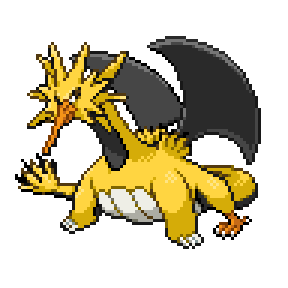
Trainers climbing Mt. Ember are warned to stay aware of colonies of Moldreigon. Moldreigon are temperamental and prone to aggression, commanding the magma within their volcano homes as a fiery weapon.

Drauna coat themselves with hardened skin and hide away in caves whilst they wait for their bodies to mature. If disturbed, they make a plaintive cry and call to their parents to defend them.
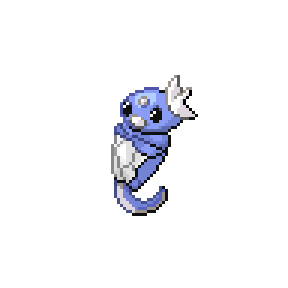
Dradrill form colonies high in the mountains, working together to protect themselves from larger Pokémon and any Trainers that happen to come close. They prefer to make shows of aggression rather than actually fighting.
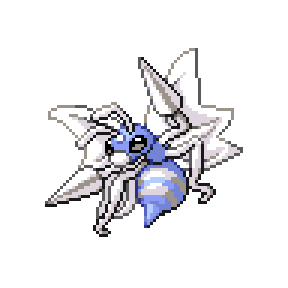
With its long and narrow body, Dratata is well suited to hunting through the burrows of other Pokémon. It is popular with younger Trainers for its cute appearance and social nature.

Drarow are rare Pokémon that can only be found high in the mountains. They are protective of their nests and will swoop down and peck at any hikers that spy them, making first sightings unpleasant.
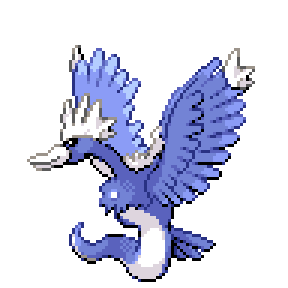
Draonee grows a soft, downy fluff that helps it to survive in the colder months. Trainers of Draonee describe it as incredibly calming to pet, with the Pokémon making soothing noises when touched.

Dratoise continuously grow new layers of shell underneath the old, moulting into a larger and larger shell as they age. This constant renewal keeps them from suffering infections or parasites.
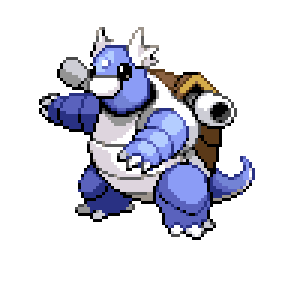
Children are often encouraged to make paper models of Dragorow to celebrate the lunar new year. They are associated with good fortune, and sighting a flock of them from a distance is considered a positive omen.
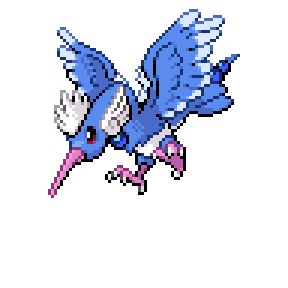
Rumored to live in caves high in the mountains, Dragoxew is very rarely seen by Trainers. Those lucky few that have seen it are blessed with good fortune for many years to come.
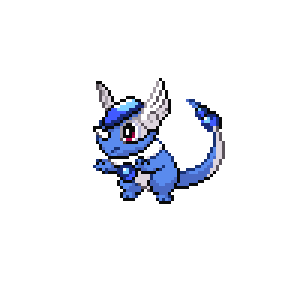
Rumored to live in caves high in the mountains, Dragoxew is very rarely seen by Trainers. Those lucky few that have seen it are blessed with good fortune for many years to come.
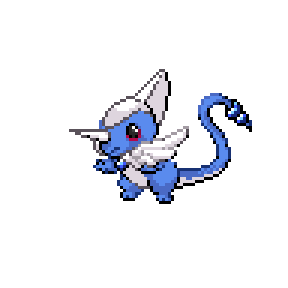
The large wings on either side of the heads of Dragotoise make them sensitive to the moods and energies of other Pokémon. They use this sensitivity in battle to tell them when to attack and when to withdraw to the safety of their shell.

Beetret use their wings to make threatening buzzing noises, warding away rivals and other Pokémon. Should their warnings fail, they aggressively use their tail stinger to scare off threats.
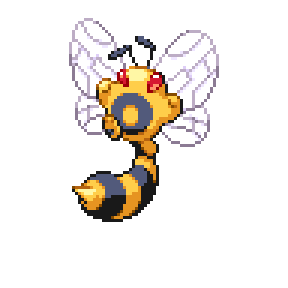
Beeret are agile and wend their way around the high branches of trees in search of food. They buzz their wings loudly when threatened, preferring to avoid using their stinger unless absolutely necessary.

Beebok spread out their hood when they feel threatened, buzzing the attached wings to scare off their aggressors. If the threat display fails, they lash out with the venomous stinger on their tail.

Beebok spread out their hood when they feel threatened, buzzing the attached wings to scare off their aggressors. If the threat display fails, they lash out with the venomous stinger on their tail.

Beechu form social colonies to mutually protect one another, buzzing angrily at anyone that gets too close and delivering sharp shocks with their stingers. They are drawn to electrical stations, to the annoyance of engineers just wanting to work.
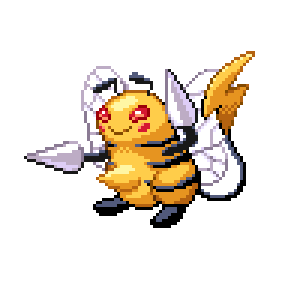
Beedoof live in communal swarms around tall trees. They use their sharp incisors to cut through bark and branches and reshape the trees into elaborate hives for the entire swarm to live in.

Beedoof live in communal swarms around tall trees. They use their sharp incisors to cut through bark and branches and reshape the trees into elaborate hives for the entire swarm to live in.
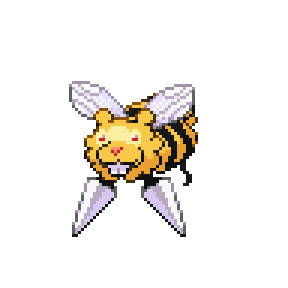
A very agile and social Bug-type Pokémon, Beejask is a popular Pokémon amongst thieves. Its high speed and agility make it very capable of getting in and out of buildings, while its social nature makes it very easy to train.

After spending many months underground, adult Beecada emerge simultaneously in a swarm. These emergences occur regularly at specific times of year, requiring rural communities to prepare in advance.

Beeon feed on meadow flowers, living in colonies of around twenty individuals. They metabolise the nectar they feed on into honey, carrying the sticky liquid around in the hollows of their bodies.

Despite its wings, Beeinch is not a very mobile Pokémon. It creates traps to lure prey, secreting honey to draw other Pokémon before ambushing them with its powerful jaws and stingers.

Despite its wings, Beeinch is not a very mobile Pokémon. It creates traps to lure prey, secreting honey to draw other Pokémon before ambushing them with its powerful jaws and stingers.

Despite its wings, Beeinch is not a very mobile Pokémon. It creates traps to lure prey, secreting honey to draw other Pokémon before ambushing them with its powerful jaws and stingers.

Beedisc are popular Pokémon in aquariums and large fish tanks. They have a striking colouration, but their venomous stinger means they require specialist handling.
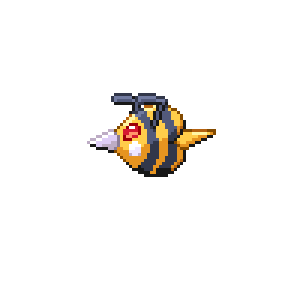
Beeth are popular with thieves as they have an aggressive nature and are drawn to valuable objects. Large swarms can be uncontrollable, however, resulting in thieves being driven out of their own hideouts.

Beesian produce a low buzzing purr when they are contented and enjoy curling up in the laps of their Trainers. When their personal space is threatened, however, they can be aggressive and use their poisonous stingers without hesitation.
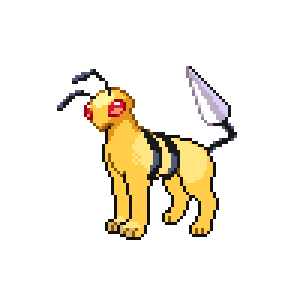
Beesian produce a low buzzing purr when they are contented and enjoy curling up in the laps of their Trainers. When their personal space is threatened, however, they can be aggressive and use their poisonous stingers without hesitation.
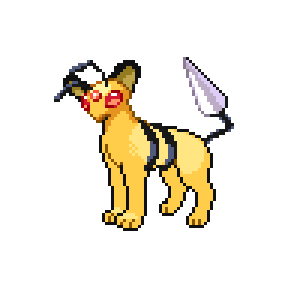
Beesian produce a low buzzing purr when they are contented and enjoy curling up in the laps of their Trainers. When their personal space is threatened, however, they can be aggressive and use their poisonous stingers without hesitation.
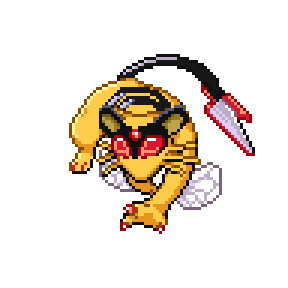
Beesian produce a low buzzing purr when they are contented and enjoy curling up in the laps of their Trainers. When their personal space is threatened, however, they can be aggressive and use their poisonous stingers without hesitation.
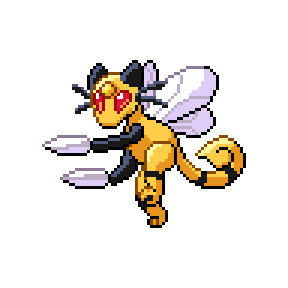
Beesprout mimic jungle flowers, entire hives sitting together in the grass and drooling sweet honey. They aggressively attack anything attracted to their trap, working together to try and bring down whatever disturbs them.

Beetortle can flap their ears rapidly enough to create a loud buzzing noise that they use to signal their rising anger. Lacking any real restraint, Beetortle doesn't give the target of their ire long before they attack once they start buzzing.
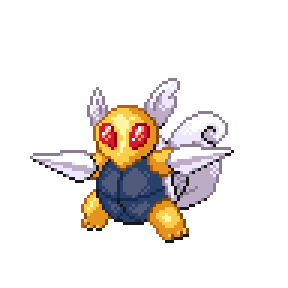
Mewrona are immensely powerful psychics, capable of manipulating anything they can see. Specialist rangers need to be brought in to deal with Mewrona colonies as soon as they're discovered in case of danger to locals.
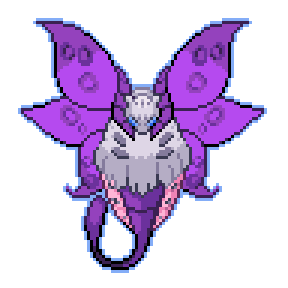
Mewquaza are extraordinarily elusive Pokémon, typically only found high up in the atmosphere and very rarely returning to the ground. Their genetic structure is remarkably adaptable, allowing them to mimic any other Pokémon.

Chikolia are often found around rural communities. Their empathic powers lead them to tend to farmland and wilderness alike with equal care.

Bayrow feathers exude a tasty, savoury scent thanks to the compounds they absorb from their food. Their aromatic odour makes them popular companions of chefs, their feathers being used to help bring flavour to broths.
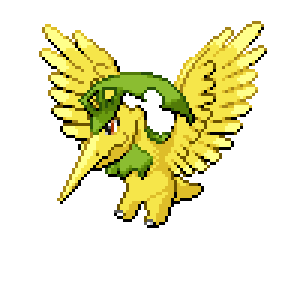
Most commonly encountered at the height of Summer, plants flourish and flowers bloom in the path left behind as Baylia dances through the warm evenings. Seeing a Baylia pass by is said to be a portent of good fortune.
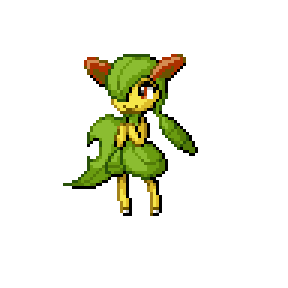
Bayvoir are often viewed as heralds of summer, their invigorating auras breathing life into plants and Pokémon alike. They are also highly prized by aristocratic Trainers, their elegant appearances lending a dignified air to summer balls.
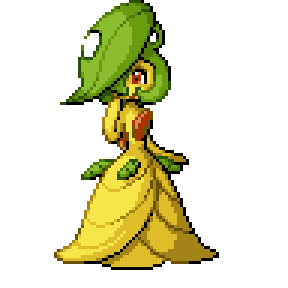
Megarow can be seen soaring over the skies of Johto in the summer, their vibrant petals visible even from the ground. Their flowers give off a unique scent based on the time of year, with the most floral smell coming during warmer months.
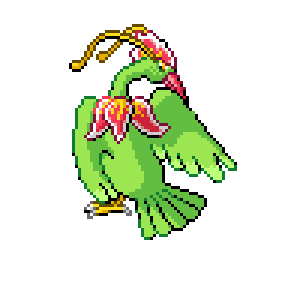
Guardians of nature, Megavoir use their powers to regenerate deforested land and repair damaged ecosystems. They are most commonly seen during the summer solstice and are at their least active in the depths of winter.
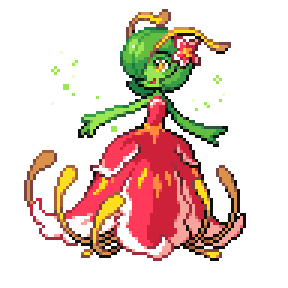
Guardians of nature, Megavoir use their powers to regenerate deforested land and repair damaged ecosystems. They are most commonly seen during the summer solstice and are at their least active in the depths of winter.

Guardians of nature, Megavoir use their powers to regenerate deforested land and repair damaged ecosystems. They are most commonly seen during the summer solstice and are at their least active in the depths of winter.

Guardians of nature, Megavoir use their powers to regenerate deforested land and repair damaged ecosystems. They are most commonly seen during the summer solstice and are at their least active in the depths of winter.

Cyndafing feeds on the methane released from geothermal vents and can often be found clustered around newly-forming volcanoes. Their flames burn a bright blue, using the methane they consume as a means of propulsion.
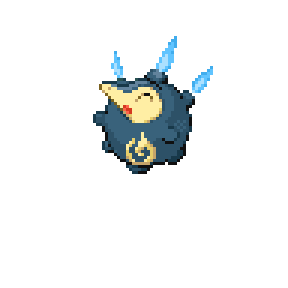
Cyndaicate constantly sniff at the air to find food, their sense of smell being keen enough to find anything edible even if it's buried underground. They use their paws to dig toward their meals and their flames to cook it to perfection.

Quideen are popular aquarium Pokémon thanks to the beauty of the flames they produce. They need to be kept in specialised tanks, however, as very few other Water-Type Pokémon can tolerate the same tank as Quideen.
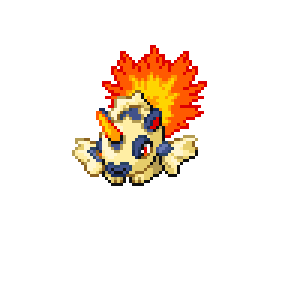
Typhking can be found in the waters around the Alolan islands, enjoying the heat of the volcanic islands. Large schools of Typhking can be dangerous to divers due to the heat they give off boiling the water around them.
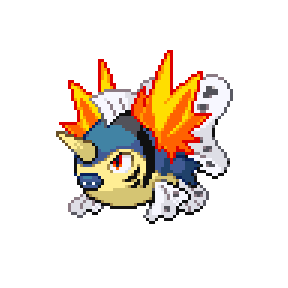
Typhicate have fur that is coated with an oil that is highly flammable. Their fangs create sparks when struck together at a specific angle, allowing them to ignite themselves at a moment's notice to scare off aggressors.

Typhrow are capable of bursts of speed when flying by abruptly erupting with flame. They can only maintain these speed bursts for a few minutes at a time, the flames taking a lot of energy to use.
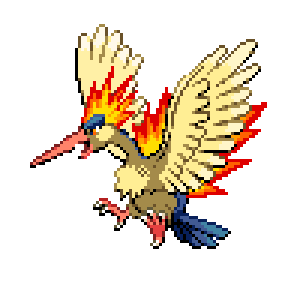
Totowig lurk in murky water, preferring swamps and slow moving rivers. They carry symbiotic plants on their back to help disguise them in the mud, waiting patiently for their food to come to them.

Tototle lurk near the surface of the water, using the plant growths on their back to disguise themselves amongst the reeds. It is advised to assume that there is always a Tototle present, regardless of if you can see one.

Crocotle lurk out of sight in swampy water, blending into the native plant life thanks to their symbiotic growths. They have powerful jaws and it is near impossible to break free of them if they bite onto you.

Pidans have loose, dry feathers lining their tail and wings. When they feel threatened they shake them vigorously, creating a dry rattling sound to warn away danger.

Pidbok fluff their wings up to make themselves appear bigger than they actually are. They do this whenever they want to scare off another Pokémon, whether that's a rival or a predator.

Pidslash have stiffened feathers sprouting from its back. While difficult to use for flight, these feathers are strong defensive structures and function as protective spines.

Pidrade have plush and beautiful plumage that make them very popular with Pokémon Breeders. The feathers on their head are fast growing and well-suited to being styled in multiple different ways.
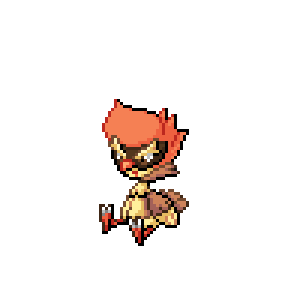
Pidrade have plush and beautiful plumage that make them very popular with Pokémon Breeders. The feathers on their head are fast growing and well-suited to being styled in multiple different ways.
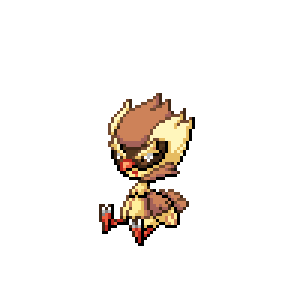
Pidlett nest on the ground, gathering up fallen twigs and mixing them with mud to form a protective ring around their young. Young Pidlett burrow down through the middle of their childhood nest as soon as they're old enough to move.
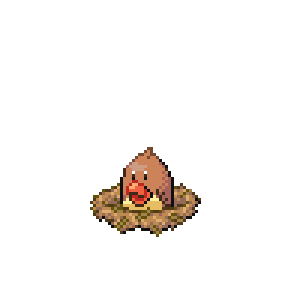
Ferarow are adept ambush predators, stalking through reeds and bullrushes along river banks whilst they wait for prey to get close. When their target is close enough they leap out in a frenzy of flapping wings and thrashing tail.
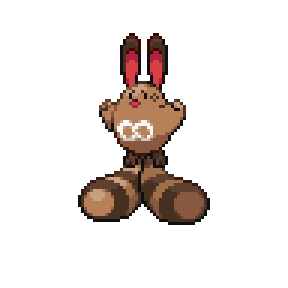
Sentret prop themselves up with their twin tails so that they can constantly stay on watch for their group without getting tired. They are anxious Pokémon and often believe themselves to be in danger.
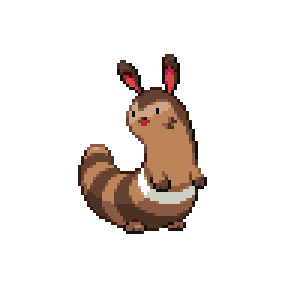
Senret move in family groups of ten to twenty members, staying low to the ground to keep out of sight. Senret with the longest tails act as sentries for the group, towering up above the tall grass they live in to look out for danger.
Senret move in family groups of ten to twenty members, staying low to the ground to keep out of sight. Rarely, Senret will have short and stubby tails that make it difficult for them to keep watch, making them rely on their family to stay safe.
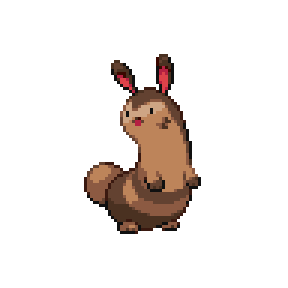
With their thick bushy tail, Senret make for luxurious Pokémon partners that are popular with Beauties. They love to drape themselves around the necks or over the shoulders of their Trainers.
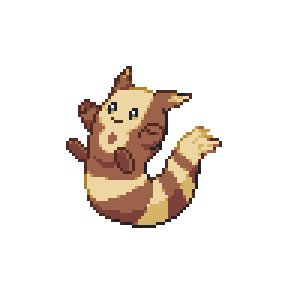
Senco cluster on tree branches together in groups of six or seven individuals. Their tails are used as a means of communicating with one another, both through touch and as visual signals.
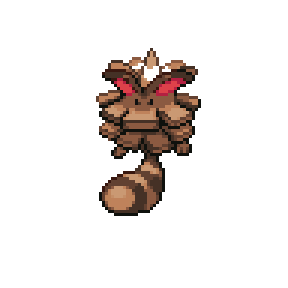
Senkip make their homes along riverbanks, hunting smaller fully aquatic Pokémon while avoiding the dangers of deeper water. Their burrows have multiple entrances, making it hard to determine where they've gone when they retreat.
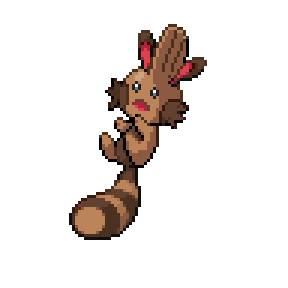
Furtret stand high up on their tails, taking turns watching out for danger whilst their family feeds on fallen nuts and fruits. They make a high pitched chirping noise when they spot danger, and the noise can be heard from hundreds of meters away.

Furet have much coarser fur than unfused Furret, using the fur as a means to protect themselves from brambles and thorns in the forest. They are nimble Pokémon, able to disappear into bushes and warrens in an instant.
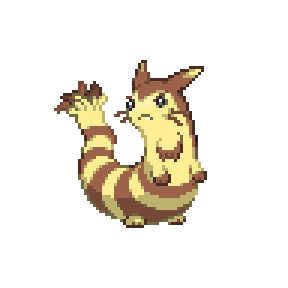
Furtress move around the forest completely without fear, confident in their tough outer shells to protect them from harm. Their confidence allows them to indulge in their natural curiosity, approaching dangerous situations without fear.

The fur of Furkip gradually loses its waterproof qualities as they age. While they still live in and hunt within river environments, their burrow systems tend to be built in more swampy areas.
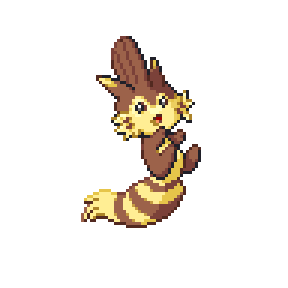
It no longer contains the oils produced in earlier stages of their evolution that are needed to make it waterproof. Though they live in swampy environments, Furtomp prefer to make burrows among tree roots rather than along riverbanks.

Fursect has a symbiotic relationship with the fungus it carries upon its back. It provides the fungus with some of the food it gathers to keep it healthy, and the fungus provides camouflage on the forest floor in return.

Hootuna has a coat of sturdy feathers that protect its body as it develops into its adult form. It hides in trees during the day, only becoming active at night to help it avoid danger.

Hootuna has a coat of sturdy feathers that protect its body as it develops into its adult form. It hides in trees during the day, only becoming active at night to help it avoid danger.
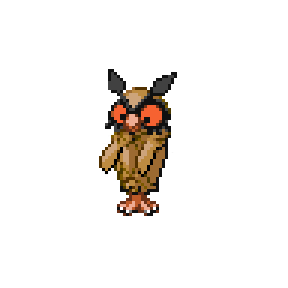
Hoototto sleep during sunrise and sunset and prefer to be active during the middle of the day and the middle of the night. They have specialised eyes that let them see both in the dark and the day but cannot handle the transition between the two.

Hootgeot have fantastic night vision and are able to see across vast distances as they soar under the stars. Their long trailing head feathers are sensitive to light, allowing them to track the passage of time, landing at their nest just before dawn.

Hooticate spend the daytime high in the treetops, only becoming active as the sun begins to set. They aren't particularly strong but make up for it with aggression. Newer Trainers are advised to be cautious around them.

The head plumage of Hootrow twitch and move depending upon the time of day, becoming most active and mobile once the sun has set. Pokémon researchers are uncertain what the function of this is; the leading theory is it lets them know when to hunt.
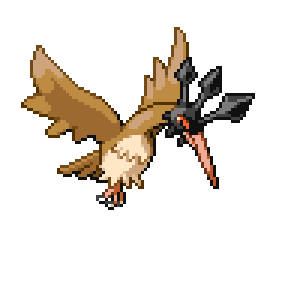
A trio of rocky growths resembling leaves sprout from the top of the heads of Hootsly, each able to be moved independently of the other. They rotate these at different rates that correspond to hours, minutes, and seconds respectively.
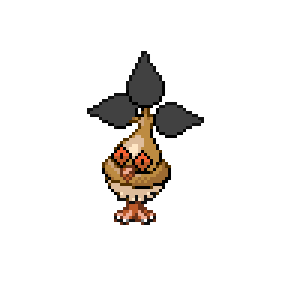
Loyal and playful, Hootruff have a great love of nighttime walks. They make great companions for those who suffer from insomnia.
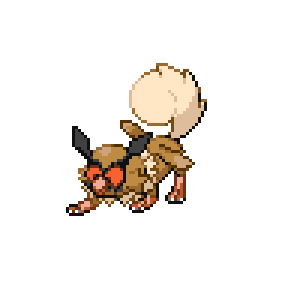
Hootruff loves to go on late night walks with its Trainer, dragging them eagerly forward along moonlit paths. They have a particular fondness for going out at the full moon.
Noctgey become active at sunset, the dimming light triggering an internal sense of time and encouraging them to begin their day. Their night vision is poor and they rely on their sensitive feathers to feel air currents to navigate in the dark.
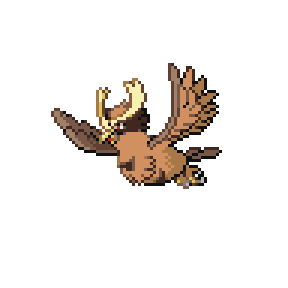
Nocticate use their sharp beak and claws to burrow out nests inside of tree trunks, sheltering within them during the day. At night they call out to one another with incredibly loud screeches.
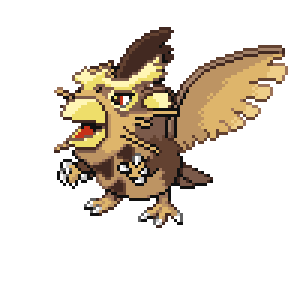
Nocticate use their sharp beak and claws to burrow out nests inside of tree trunks, sheltering within them during the day. At night they call out to one another with incredibly loud screeches.
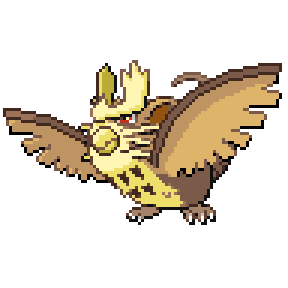
Nocticate use their sharp beak and claws to burrow out nests inside of tree trunks, sheltering within them during the day. At night they call out to one another with incredibly loud screeches.
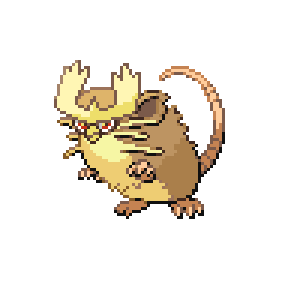
Nocticate use their sharp beak and claws to burrow out nests inside of tree trunks, sheltering within them during the day. At night they call out to one another with incredibly loud screeches.

Noctpiny will pick up and incubate the eggs of other Pokémon and nurture them until they're ready to hatch. Most Pokémon will allow them to hang around their nesting sites to look after their young.
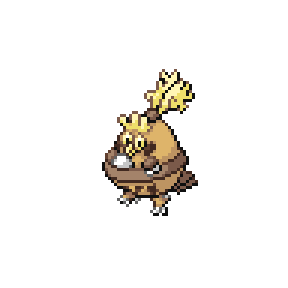
Ancient legends speak of Noctroc as bad omens, harbingers of misfortune and malice on moonlit nights. In truth, Noctroc have little interest in people and are often aloof and disinterested, even toward their Trainers.

Errors during the fusion process that produces Ledyba result in them having significantly more limbs than their unfused counterparts. They use these extra arms to scuttle quickly, but they struggle to properly control them for combat.
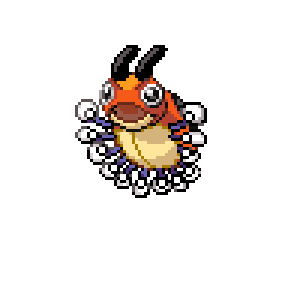
Ledytler can sometimes be seen on the outskirts of settlements, feeding in fields and farmland. It is skittish and prone to fleeing at the first sight of Trainers or hostile Pokémon.

Ledybok hunt through jungles for smaller Bug-Type Pokémon that they can swallow whole. When confronted with a threat that's larger than them, they flash the eyes on their hood and puff up to try and scare the danger away.

Ledytle feed on pond weed, using their shells to capture air so that they can breathe underwater. Their shells are patterned with black spots, the number and position of the spots enabling Pokémon researchers to identify where they're from.

Ledytle feed on pond weed, using their shells to capture air so that they can breathe underwater. Their shells are patterned with black spots, the number and position of the spots enabling Pokémon researchers to identify where they're from.

Ledpie whir their wings to communicate with one another, making loud buzzing noises within different parts of the forest. They are not aerodynamic enough to be able to fly, but can glide short distances.

Ledba have very keen eyesight, able to see for miles on clear days. They fly up high when the weather is clear and will swarm toward meadows with fresh flowers.

Ledian do not develop any extra strength over unfused Ledian, but they are capable of landing punches at a much higher rate. They use their speed offensively, chasing away threats to the swarm before problems can develop.

Ledian do not develop any extra strength over unfused Ledian, but they are capable of landing punches at a much higher rate. They use their speed offensively, chasing away threats to the swarm before problems can develop.

Ledian do not develop any extra strength over unfused Ledian, but they are capable of landing punches at a much higher rate. They use their speed offensively, chasing away threats to the swarm before problems can develop.

Ledicate has huge eyes, perfect for taking in light in the early morning or late evening when they are most active. They keep their distance from larger Pokémon, baring their large fangs when threatened but preferring to run.

Ledsaur are large, flightless Bug-Type Pokémon that will swarm together in forests to feed, creating large clearings as they do. Their wings are soft and flexible, fluttered as a means of display rather than being used as a means to fly.

Ledsaur are large, flightless Bug-Type Pokémon that will swarm together in forests to feed, creating large clearings as they do. Their wings are soft and flexible, fluttered as a means of display rather than being used as a means to fly.
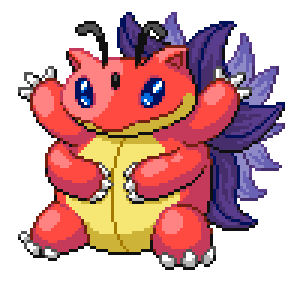
Ledtle swarm together to river banks during the morning, sunning themselves to warm up their bodies. Once they are sufficiently warmed up, they spend the day diving in and out of rivers searching for weeds to feed on.
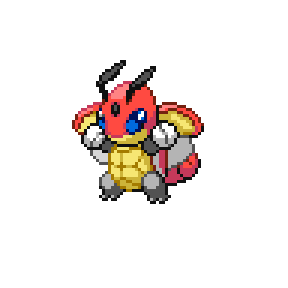
Spinafree weave wings for themselves out of a sticky silk produced from their mandibles. These wings damage easily and regularly need repair, Spinafree typically sheltering with tree canopies to fix them during the day.

Spinaicate fastidiously groom themselves with their mandibles, sometimes spending multiple hours cleaning through their fur. Their mandibles produce webbing, resulting in their fur having an unpleasant rough and sticky texture.

Spinafish are slow moving Pokémon that will puff up and bristle their spikes when they feel threatened. They move inside people's houses over winter when searching out warm shelters. They're dangerous housemates as their spikes drip with poison.

Spinasaur carry their eggs on their back until they hatch, using their physical bulk to protect their delicate passengers from harm. The multiple legs sprouting from its spine are tipped with spinnerets, which they use to weave a nest around the eggs.

Spinatoise can retract their limbs and head completely within their shell when they sleep, leaving the impression of a long-dead husk and keeping them safe. Their emergence when they wake often scares any arachnophobe that happens to be nearby.

Ariafree live in caves, using their long spindly legs to feel around in the darkness whilst keeping their body safe. They emerge in swarms to find food, nearby residents are advised to avoid breathing in the paralytic wing scales they leave behind.

Ariaotto are mostly active at night, crawling through tree branches and constructed webs. When they are dirty, they use their many legs to groom their wings, pulling out twigs, leaves, and parasites that get caught in their feathers.

Ariaicate colonies create a vast network of funnel webs deep within forests. The areas they call home are difficult for people to traverse and require specialist gear to avoid getting stuck in the undergrowth.

Ariarow weaves webs to span between outstretched limbs, weaving them into a tight and light enough structure that they can function as wings. It is clumsy in flight, but can travel long distances between forests.
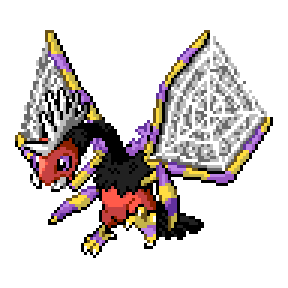
Ariarow weaves webs to span between outstretched limbs, weaving them into a tight and light enough structure that they can function as wings. It is clumsy in flight, but can travel long distances between forests.

Ariasaur weave an egg sack on their back that they carry with them at all times until the eggs are ready to hatch. Their young are far smaller than an adult Ariasaur but they grow rapidly.

Ariatoise weave simple webs that they use to capture air bubbles, taking these air bubbles with them underwater so that they can breathe. They are slow-moving in the water, their shell making their movements cumbersome.

Crogre are agile swimmers, their front and hind limbs both used to propel them through the water. Myths surround them as the heralds of storms, speaking of their speed coming from hurricane-whipped oceans.
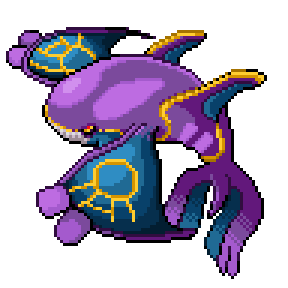
Crotoise use their wings to row through the water, filling their shell with bubbles to aid in their buoyancy. They are not very fast swimmers, their shell too bulky to be streamlined.
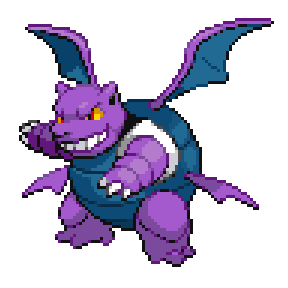
Crotoise use their wings to row through the water, filling their shell with bubbles to aid in their buoyancy. They are not very fast swimmers, their shell too bulky to be streamlined, but they can use their cannons to provide a brief burst of speed.

Pidgeans have venomous saliva that they can deliver with a quick peck. They are cowardly Pokémon and flutter backward rapidly whilst they wait for their venom to do its work.

Pidgebok soar through the skies above dense jungles, their bodies trailing behind them as they fly. Flocks of Pidgebok feature heavily in classical mythology for the cultures around their environment.

Pidgebok live in rough mountainous terrain that is difficult to traverse on the ground. They cross crags and ravines by coiling up then leaping, spreading their hood and wings wide to glide across the gaps.
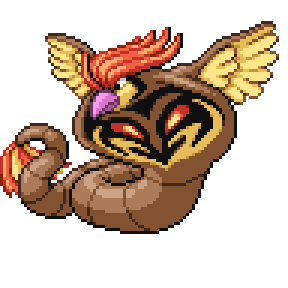
Pidgecario are adept combatants, using their wings to dart around their opponents and attack from unexpected angles. They strike through a combination of pecks and back swings with the spikes on their paws.
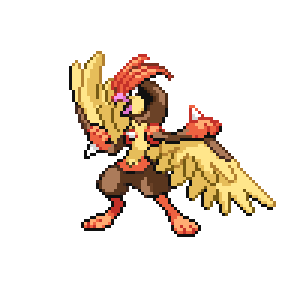
Pidgepuff can be heard across alpine mountains for many miles, their distinctive and complex songs carrying far through the air. The volume of their songs increases when people draw close to their nests as they love to perform for an audience.

Pidgetuff cling to tree branches and loudly sing to one another. When a flock of them groups together, they will harmonise with one another in a beautiful lullaby, often sending listeners to sleep.

Pidgetuff have an uncanny ability to mimic any sound they hear, using the ability to fit into communities of other Pokémon. Their ability to do this led to a brief craze where toy companies attempted to create replicas of them.
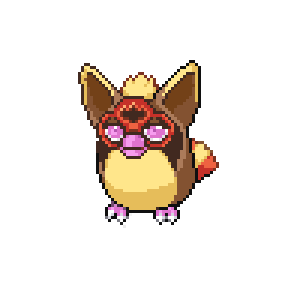
Chintortle were popular Pokémon amongst artists prior to the advent of electrical lighting, the glow of their tails bright enough to illuminate an entire room at night. Some artists still take them as companions, using their smooth shells as a canvas.
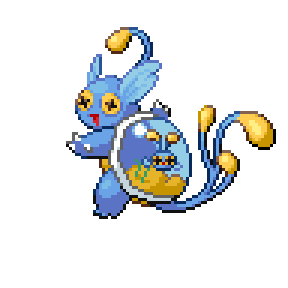
Pidoof use small electric shocks to stimulate plant growth in their local environment, using the resulting shrubs as building material for dams. Where large populations are present the soil has a slight negative charge and can cause static shocks.

Clefkarp school together under the full moon and will jump out of the water to try and bathe themselves in moonlight. Why they do this is unclear, but legends say that if a Clefkarp can jump to the moon it will undergo an incredible transformation.
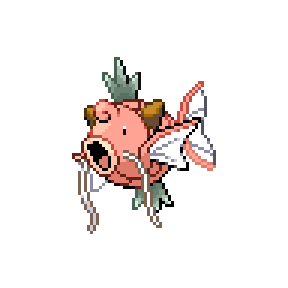
A Pokémon with a highly pliable body, Igglytini lives in very rugged terrain and makes its home amongst tight cracks that are inaccessible to other Pokémon. At night they sing to one another, creating an eerie illusion that the ground is singing.

Igglybuff have far more rubbery and buoyant bodies than unfused Igglybuff. They can fall any distance without harm. They enjoy bouncing around and can be seen bounding high over buildings.

Igglygma maintain an uncomfortably high body temperature and are far too hot to handle with bare hands. They have the consistency of molten rubber and are sticky to the touch; researchers speculate this increases the likelihood of burns when touched.

A playful burrowing Pokémon native to Pinkan Island, Igglyshrew digs shallow burrows and can be found chasing one another through the grass and along beaches. Its hide is surprisingly springy to the touch.

Igglypuff have a youthful innocence to their expression that keeps other Pokémon from wanting to attack them. They sing simple lullabies to one another to pass the night, filling the early evening air with their songs.

Igglymy have very pliable bodies, able to compress and stretch to an impressive degree. They are popular Pokémon for young children as they enjoy being held, making them popular to cuddle up with for bed.
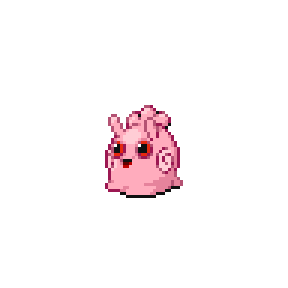
Igglymeleon have an elastic body that absorbs impacts and turns them into kinetic energy, making them surprisingly durable. They convert the stored energy into heat, enabling them to breath and produce fire.
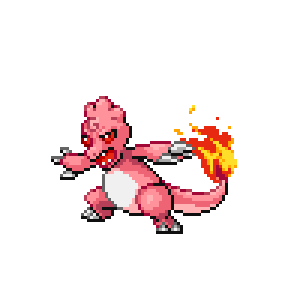
Swimming in large shoals, Igglydisc coordinate their shoals with chirps and songs. Divers have found that the songs each shoal makes are unique, allowing them to differentiate between their own shoal and those of other Igglydisc.
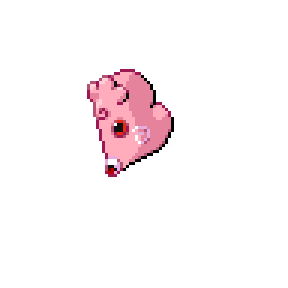
Igglykey lives high in the canopy of forests, swinging between branches with its elongated arms. If it does miss a branch, its soft and rubbery body prevents it from injuring itself.
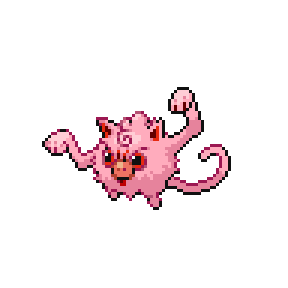
This marine Pokémon is widely considered to be the modern descendant of an ancient fossil Pokémon. It retains many primordial traits, most notably it lacks a proper swim bladder which leaves it with a poor sense of balance in the water.

This marine Pokémon is widely considered to be the modern descendant of an ancient fossil Pokémon. It retains many primordial traits, most notably it lacks a proper swim bladder which leaves it with a poor sense of balance in the water.
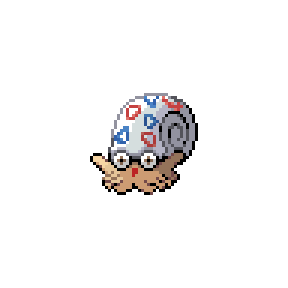
Togetini are active and independent as soon as they hatch, though they have very soft and vulnerable bodies. To help protect themselves, they carry the remains of their eggshell with them.

Togetini are active and independent as soon as they hatch, though they have very soft and vulnerable bodies. To help protect themselves, they carry the remains of their eggshell with them.

Togetini are active and independent as soon as they hatch, though they have very soft and vulnerable bodies. To help protect themselves, they carry the remains of their eggshell with them.
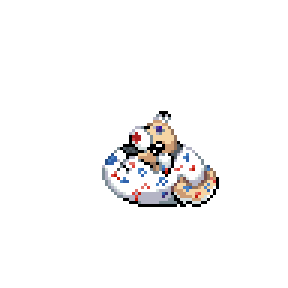
Togehoot are clumsy fliers, their stubby wings only barely able to keep them aloft. They are largely dependent on their parents to protect and nurture them, using empathic powers to encourage this behaviour.

As soon as they hatch, Togeraid are swift predators capable of shooting jets of water up to fifteen meters away. Their bodies are soft and they have no scales for protection, as they use their old egg shells to help protect themselves.

Togerogue are enthusiastic practitioners of many different kinds of martial arts. In their youthful exuberance, they often overreach and try to fight foes that are far beyond their skill levels.

Togedoof hatch from eggs laid in dams, hatching in hidden chambers within the structures. They keep their eggshell around their bodies to help protect them against danger whilst they grow up.

Togesaur produce a scent from the giant flower on their back that induces feelings of generalised positivity and friendliness in those that smell it. They are peaceful Pokémon and tend to enjoy the company of others.
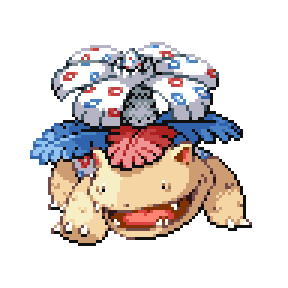
A baby Pokémon freshly hatched from its egg, Togeta has not yet shed its egg fully and uses the remaining shell to protect its body. Its hind legs are far more well-developed than the rest of its body and are used for escape.

Togechan are light on their feet, their footwork immaculate as they dance in and out of a fight with their boxing. Watching a match between two Togechan invariably thrills those watching as the joy of the fight radiates off of them.
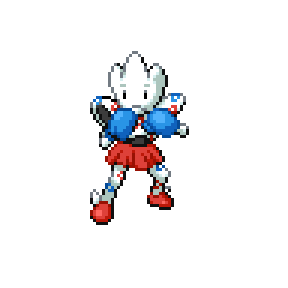
Togetini are rare Pokémon that make their nests far from human civilization. They are drawn to strong positive emotions and are most commonly seen by Hikers that are enjoying their travels.

Togetini are rare Pokémon that make their nests far from human civilization. They are drawn to strong positive emotions and are most commonly seen by Hikers that are enjoying their travels.
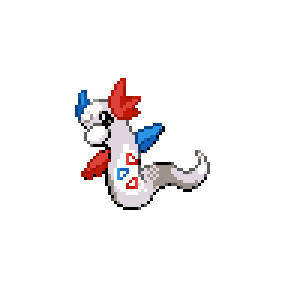
Togenair wend their way around mountainous terrain, their serpentine bodies perfect for moving around the treacherous environment. When they encounter people they will flap their tiny wings in delight and try to protect the person from the elements.

The songs of Togehoot have been shown to bring listeners pleasant dreams and restful sleep. They delight in the feelings of a good dream and can often be found around campsites.

Togegeot are able to fly in perfect formation with other members of their flock even without being able to see them. They do this by sensing the emotions of other Togegeot, adjusting their flight patterns based on whether they still sense the flock.

Togenub can sniff out people's emotions and will gravitate toward those feeling sad or lonely. They will snuggle up to these people and make soothing noises, staying with them to offer comfort in their low moments.

Togenub can sniff out people's emotions and will gravitate toward those feeling sad or lonely. They will snuggle up to these people and make soothing noises, staying with them to offer comfort in their low moments.
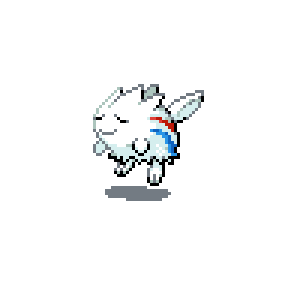
Togenub can sniff out people's emotions and will gravitate toward those feeling sad or lonely. They will snuggle up to these people and make soothing noises, staying with them to offer comfort in their low moments.

Togeraid use their wing-like fins to propel themselves rapidly through the water, darting about faster than the Pokémon that would try to catch it. Successfully catching one while fishing is said to be a true test of skill.

Togellery make collections of items on the sea floor, creating a small hoard of items that bring them joy. They give these items away to visitors if they bring a gift in turn, the value of the object mattering far less than the emotional significance.

Some Togellery have better developed wings and snouts than others of their species. They use the better mobility granted to them by these differences to cover great distances in search of objects to collect that bring them joy.
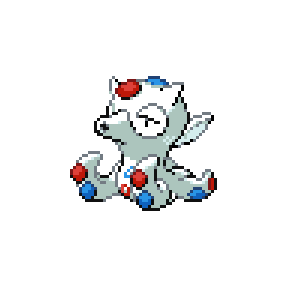
Even though they can't truly fly, Togerogue use their small wings to improve their agility while fighting. They take great joy from combat and will seek out any opponent willing to face them, regardless of how strong they are.
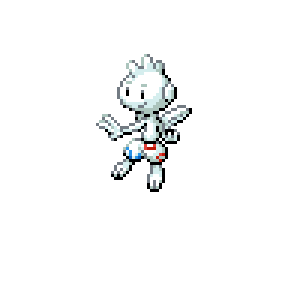
Watching a Togesaur's flower blossom is said to bring good fortune to the observers due to the rarity of the event, their flowers opening just once in their lifetime. Their flowers remain in full bloom at all times of day, the sight inspiring joy.

Nans sway their heads from side to side and taste the air, seemingly at random , before they make any significant movement. Pokémon Researchers believe they are sensing different probabilities and determining what the future may hold.

Xazee are able to put themselves into a hypnotic and suggestible state. Whilst in this mental state they receive visions of the future, committing the coming events to memory.
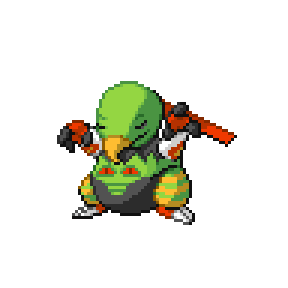
Xano approach sleeping Pokémon and people to feed on their dreams. They replace the stolen dreams with visions of the future, often causing discomfort and nightmares to follow.

Shoals of Machou live in the deep ocean, their lights reminiscent of constellations in the night sky. They can adjust the flashing of their lights to communicate with one another across the darkness of their abyssal home.

Mageot are unusually light for their size, the majority of what appears to be their body actually being a light downy fluff. They can take off with even just a light breeze, drifting for miles on the air currents.
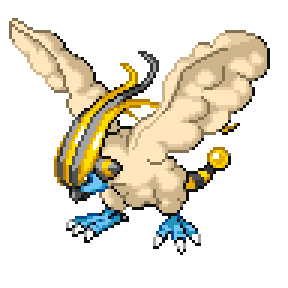
Machu periodically discharges the static that builds up in its fur via its tail, tapping the conductive tip against the ground. Its wool is soft, but clothes made from it will quickly generate their own static charge.

Malup lives in arctic environments and is usually found huddled together to use its body heat and thick wool to ward off the cold. When large numbers of them gather, their combined electrical field disrupts compasses, making navigation difficult.

Pidwoodo take great joy in sneaking in to join flocks of Pidgeot, trying to camouflage themselves amongst them. When their deception is uncovered, they will give a chirping laugh and fly away to find a new flock to join.
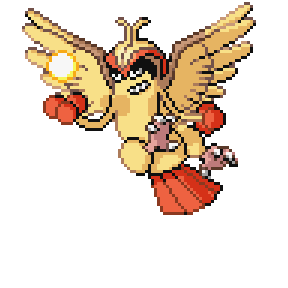
Pidqueen are territorial and will battle any rival Pidqueen that stray into the area they call home. Battles between the two can last for hours with loud squawks echoing through the mountains as they flap powerful blasts of air at one another.

Pidqueen are territorial and will battle any rival Pidqueen that stray into the area they call home. Battles between the two can last for hours with loud squawks echoing through the mountains as they flap powerful blasts of air at one another.
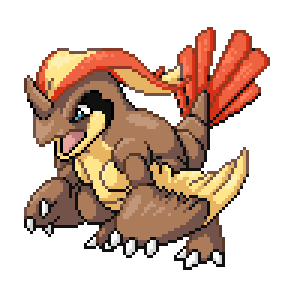
Pidloom aggressively defends its territory with its sharp claws and beak, darting through the sky to land quick blows on its aggressors. It has a frail body, however, and needs to constantly balance its aggression with keeping a safe distance.
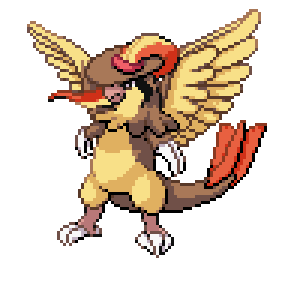
Flocks of Pidjask emerge as if from nowhere once every seven years, clambering free of their underground nests. Their emergence is invariably a noisy affair, loud chirping filling the forests for months.

Pidplume use their broad petals to glide from place to place, catching updrafts and spinning gently in the wind. They use their feathered tail to guide and stabilise themselves when they want to travel large distances.
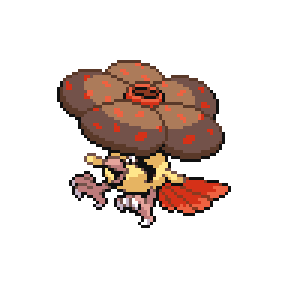
Pidchoke have an innate urge to train constantly, working on their muscles so that they can be the strongest Pokémon around. Despite not being at all aerodynamic, the strongest Pidchoke are still able to fly by flapping their arms.

Flaapod produce a strong static charge that they use to attach themselves to trees. If they do not discharge regularly they can end up attaching to one another in clumps, or even get drawn to and stick to clothing of people passing by.

Flaapod produce a strong static charge that they use to attach themselves to trees. If they do not discharge regularly they can end up attaching to one another in clumps, or even get drawn to and stick to clothing of people passing by.

With antennae coated in waterproof fluff, Flaachou produce very diffuse lighting with their electrical powers. They are popular Pokémon for deep sea exhibits in aquariums as they light up the tanks without being overwhelmingly bright.

When excited, Flaachu generate sparks from the tip of their tail and their cheeks. They enjoy working alongside rural communities and were historically kept indoors at night to provide light.

Large colonies of Flaalup can cause problems with nautical and polar navigation; its combined electrical fields play havoc with navigation equipment. Its tail gives off soft light; in antiquity, it was used similarly to lighthouses.

The wool of Flaaplup is waterproof and very cold-resistant, allowing it to swim in arctic waters without feeling the cold. The lights on its tail create dazzling underwater displays, drawing tourists from miles around.

The gems studded on the bodies of Amphageot glow brightly and are visible from a great distance. They were commonly put to work to help aircraft land in low visibility conditions and at night before the invention of GPS.
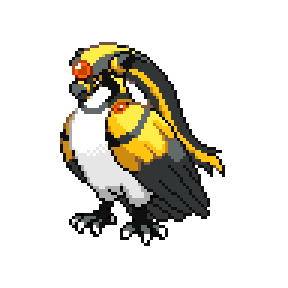
The gems studded on the bodies of Amphageot glow brightly and are visible from a great distance. They were commonly put to work to help aircraft land in low visibility conditions and at night before the invention of GPS.

The gems studded on the bodies of Amphageot glow brightly and are visible from a great distance. They were commonly put to work to help aircraft land in low visibility conditions and at night before the invention of GPS.

Amphaicate's fur constantly stands on end due to their innate static charge. They have a habit of gnawing on electrical wires to replenish their internal electrical field, making them a nuisance for urban areas.

Ampharow wings carry an electrical charge that gradually grows stronger as they fly. They channel this electrical potential into their tail, causing it to light up brightly when in flight.
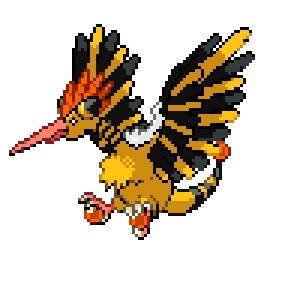
Amphamega produce powerful flashes of light at night, their tails blinking in rapid repeating patterns to communicate with one another in the dark. Large swarms of Amphamega can cause problems for human settlements due to light pollution.

Bellgey will pick flowers from meadows and adorn their heads with them, tucking the stems in between their feathers. They perform elaborate dances for one another, prominently displaying their flowers as they do so.
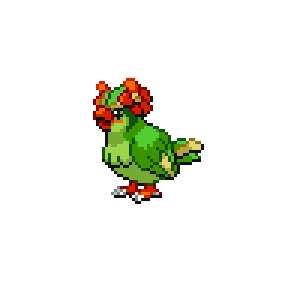
Bellchu attach fallen leaves to their body using static electricity. They have a great love of music and will join in celebrations and festivities, dancing with great excitement alongside people and Pokémon alike.
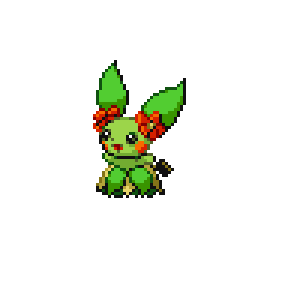
Bellchu only blossom once a year, and always on the same night each year. When their flowers blossom they will offer them to their favourite individual. When two flowers are exchanged between Bellchu this way they pair for life.
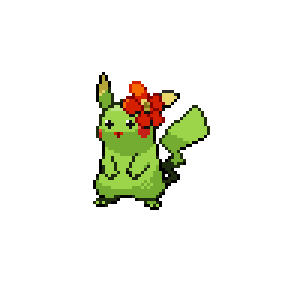
Bellchu only blossom once a year, and always on the same night each year. When their flowers blossom they will offer them to their favourite individual. When two flowers are exchanged between Bellchu this way they pair for life.

Bellchu only blossom once a year, and always on the same night each year. When their flowers blossom they will offer them to their favourite individual. When two flowers are exchanged between Bellchu this way they pair for life.
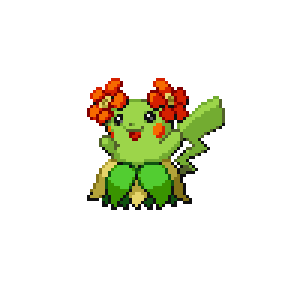
Bellsaur grow multiple beautiful flowers across their body and take great pride in showing them off to other Pokémon. They love to take part in Pokémon beauty contests, strutting across the stage with complete confidence.
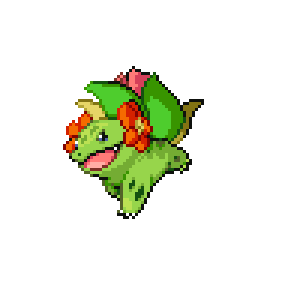
Bellsaur produce different aromas depending on the time of day, their various flowers active depending on the light level. They are popular Pokémon for aromatherapists thanks to their variety of scents.

Bellth are popular Pokémon with gardeners as they will happily dig out soil to make space for flower bulbs to be planted. They have an uncanny knack for finding rare antique coins in the process.

Mafree gather together in flocks of about a dozen individuals, their large ears allowing them to hear other flocks across great distances. Interactions between flocks are joyful, with individuals sharing berries and playing.

Manx love to perform on stage and are popular companions for aspiring celebrity musicians. They have an innate understanding of dance numbers for songs and will happily take part in concerts.

Madle live on underwater weeds, feeding on algae and small parasites. When they need to escape from a predator they rapidly inflate the float on their tails, rising to the surface to safety.

Mavee love to frolic in ponds and streams, playing with one another's tails and chasing each other through the shallows. They have a very unstable genetic makeup and are highly adaptable, changing form depending on their environment.
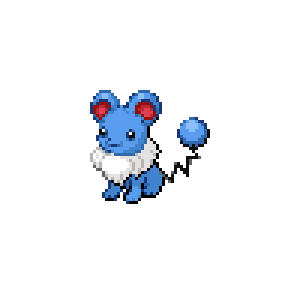
Madle live on underwater weeds, feeding on algae and small parasites. When they need to escape from a predator they rapidly inflate the float on their tails, rising to the surface to safety.

Marak lives underwater but needs air to breathe, using a finely meshed web to capture air bubbles that it can take with it. In emergencies, it inflates its tail floats with gas and rises to the surface.

Marill are far more buoyant than unfused Marill, and are able to trap air within their oily fur. They are so buoyant that they can sit happily on the surface of rivers if they want to, watching the world drift by.

Mawoodo cheerfully dance amongst one another around forest streams, performing complex moves to communicate with one another. Their gatherings are meant to be secret and, in an effort to hide, they will freeze up if someone happens to see them.

Mapip float peacefully atop the surface of rivers and lakes, clustering together in large groups. When a storm blows through they will lift their leaves high and are plucked from the water, being blown to new homes in large clouds.

With its waterproof fur and buoyant tail, Maicate is well suited to its river home. They can often be found playing with one another near rapids, swimming down the fast-flowing water and scampering back up the banks to swim down again.

Machum love to perform and be the centre of attention, making them popular for Trainers taking part in Pokémon contests. They are unpractised in their movements but have great potential that can be brought out with dedicated training.
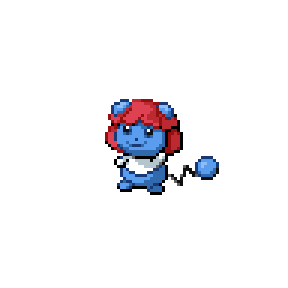
Mabok make their nests along river banks, raising their young amongst the reeds. When they swim out to hunt, they rely on their broad hood and buoyant tail to keep themselves at the water's surface.

Masaur root around for food along river beds, controlling their buoyancy through the plant growing on their back. The flower of the plant can rapidly photosynthesise, filling with bubbles of oxygen.

Maolu are remarkably agile in fights, using their springy tails as launching platforms to leap around and confound their opponents. Their small statures are the main thing preventing them from posing serious threats to more Pokémon.

Filled with a sense of adventure, Maturne loves to explore new lands with its Trainer. They will often run ahead in search of wild Pokémon to battle or befriend, based entirely on their mood.
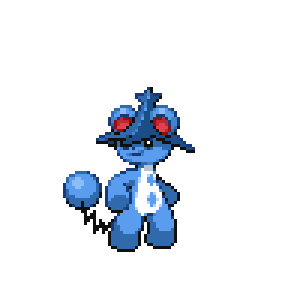
Azumafree are friendly and very curious Pokémon, often taking an interest in passing Trainers. They delight in showing Trainers their favourite places to eat and rest, leading them to seemingly random areas in the forests they live in.

Azumamime perform at circuses as comedy firefighters, bouncing around the circus ring and getting in one another's way in humorous ways. Their popularity has been waning in recent years with many people finding them unnerving rather than funny.
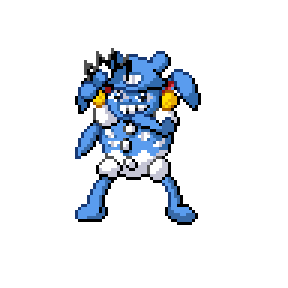
Azumamime perform at circuses as comedy firefighters, bouncing around the circus ring and getting in one another's way in humorous ways. Their popularity has been waning in recent years with many people finding them unnerving rather than funny.

Azumanx are a common sight in the theatre industry thanks to their love of performing. They can memorise entire scripts and routines on their very first read through, making them the perfect stage performers.

Azumadle are able to breath underwater, drawing oxygen from the surrounding water. They excrete carbon dioxide in bubbles through their stinger, releasing a steady stream of bubbles.

Azumavee have very fluffy and water repellent fur. When submerged in water, it captures air bubbles that are brought underwater with it. They use these bubbles to aid in buoyancy when swimming.
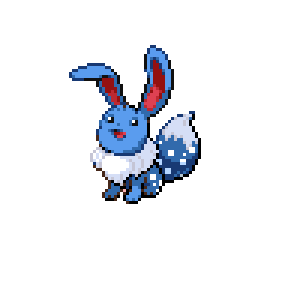
Azumavee have very fluffy and water repellent fur. When submerged in water, it captures air bubbles that are brought underwater with it. They use these bubbles to aid in buoyancy when swimming.
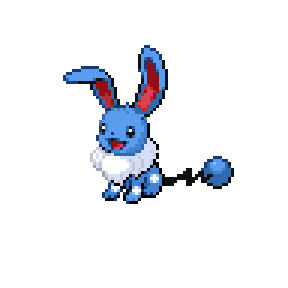
Azumadle have floats at both their head and tail that they wave around to distract from their body. Researchers theorise that they do this to confuse predators about which end of their body is their head.
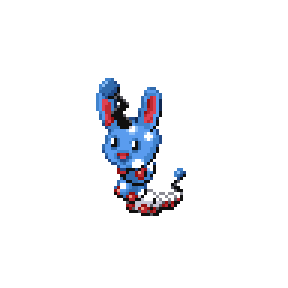
Azumados live beside waterfalls, climbing the rockfaces behind the falls and using the rushing water to mask their movements. They have powerful legs that can spring them through the air, letting them traverse cliff faces with ease.

Azumarill have floats attached to their tails that they can control the buoyancy of, enabling them to return to the surface of the water in seconds if they need to. They are a popular companion of lifeguards and are trained to rescue drowning people.

Azumawoodo cluster in mountain streams and will entertain one another by imitating other forest Pokémon. They will freeze up and pretend to be trees should a person walk by, but their bright blue colour makes their disguise obvious.

Azumaluff love to watch other Pokémon battle, floating above Trainer schools they make high-pitched cheering squeaks. When they see a particularly exciting battle they wave their fluffy hands quickly to signal their joy.
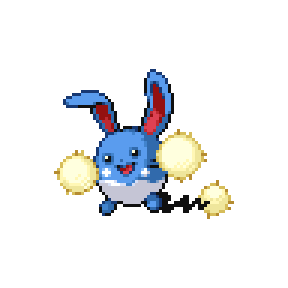
Azumaluff love to watch other Pokémon battle, floating above Trainer schools they make high-pitched cheering squeaks. When they see a particularly exciting battle they wave their fluffy hands quickly to signal their joy.
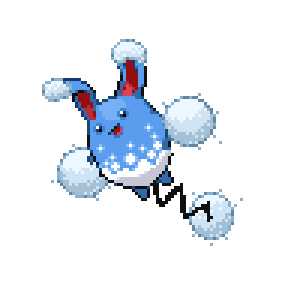
Azumabok bob upright in the water, popping their head and hood above the surface and swaying back and forth to get a good view of what's happening on the shore. When threatened, they attack by swinging the buoy on their tail at their foe.
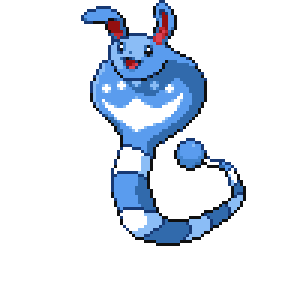
Azumachu use the charge in their tail float to split oxygen from the water surrounding them whenever they want to surface quickly. The abundance of bubbles that result from the process provide them a burst of buoyancy.

Azumachu use the charge in their tail float to split oxygen from the water surrounding them whenever they want to surface quickly. The abundance of bubbles that result from the process provide them a burst of buoyancy.
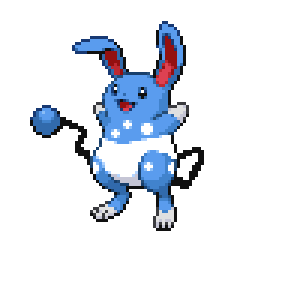
An electrical charge runs through the tail of Azumachu, which allows them to turn their tail tip into an anode and use their body as a cathode. This alternating charge allows them to turn water around them into gas bubbles, letting them move swiftly.

An electrical charge runs through the tail of Azumachu, which allows them to turn their tail tip into an anode and use their body as a cathode. This alternating charge allows them to turn water around them into gas bubbles, letting them move swiftly.

Azumafeon live in and amongst water lilies, using their leaves as platforms on which to play with one another on. Flowers bloom on their bodies, the colour of the petals depending on the plants they eat.
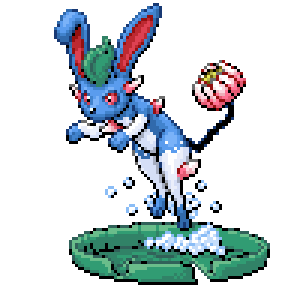
In the wild, Azumacario are highly motivated by self-improvement and can often be found in sparring pairs. When training alone, Azumacario will spend large stretches of time in meditation and self-reflection.
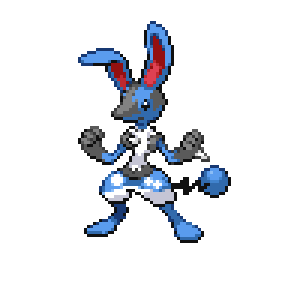
In the wild, Azumacario are highly motivated by self-improvement and can often be found in sparring pairs. When training alone, Azumacario will spend large stretches of time in meditation and self-reflection.

In the wild, Azumacario are highly motivated by self-improvement and can often be found in sparring pairs. When training alone, Azumacario will spend large stretches of time in meditation and self-reflection.
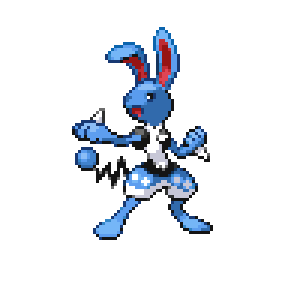
Azumasaur swim by creating a raft of bubbles around the base of their flower, lifting themselves up and floating with the current. Smaller Pokémon will sometimes hitch a ride on a passing Azumasaur, relaxing on their back.

Azumaturne are bold Pokémon that show a complete lack of fear in the wilderness. They make for excellent traveling companions, warding off dangerous Pokémon while also foraging for food and water for their Trainers.

Azumatortle store bubbles within their shell, using them to float and make themselves lighter in the water. They can expel the air rapidly when they retract inside their shell, sinking to the bottom to hide amongst the stones.

Sinnoh researchers managed to resurrect fossils of their native Hisuian Electrodes after the regional form went extinct, resulting in Sudode. The petrification process has altered them to be physically hardier than their extinct counterparts.

Poligey are frequent visitors to garden ponds, washing themselves and playing in the water. They make croaking chirps to call to one another in the early morning light, often loud enough to wake nearby residents.

Polirow use their long, sticky tongue to snatch up fast moving food from under the water. When they are startled, they use their powerful hind legs to leap into the air before flapping awkwardly away.

Poligle produce a highly soluble pigment from the fur on their tails. They use this pigment to paint landscapes on rocks and stones around the ponds they live in. Their artwork is ephemeral, washing away whenever the rains come.

Polisaur live in large lakes, floating near the surface and soaking in the sunlight. When they need to leave the water they will do so by carrying gigantic lily pads with them to shade themselves from the sun and help keep them from drying out.

Polisaur live in large lakes, floating near the surface and soaking in the sunlight. When they need to leave the water they will do so by carrying gigantic lily pads with them to shade themselves from the sun and help keep them from drying out.

Hopfa drift through the night, following the path the moon takes in the sky. They love to settle at high altitudes where the skies are clearest, watching for the next full moon.

Hopchic race through fields, challenging one another to go as fast as possible. On sunny days they will race to the highest hills they can reach to be the first to catch the midday sun.

Hopno turn to face into the breeze and greatly enjoy the feel of the wind on their leaves. They love to play with electric fans and will sit in front of them for hours on end.

Hopno turn to face into the breeze and greatly enjoy the feel of the wind on their leaves. They love to play with electric fans and will sit in front of them for hours on end.
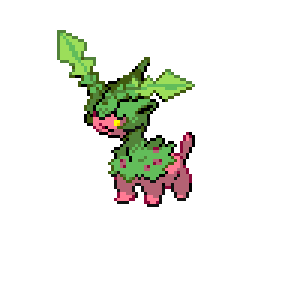
Hopnx are sensitive to changes in the weather and are used by some rural communities as a way of preparing for storms. When Hopnx gather out in a field it's a warning that a thunderstorm is imminent.

Hopnx are sensitive to changes in the weather and are used by some rural communities as a way of preparing for storms. When Hopnx gather out in a field it's a warning that a thunderstorm is imminent.

Hopxio prefer to play with one another during stormy weather, greatly enjoying the rain and high winds. Their leaves collect static charge and, when it's dark enough, sparks can be seen leaping between them.

Hopede have a pair of leaves growing from their heads that are covered in tiny sensory hairs. These hairs are sensitive to chemicals and pheromones in the air, letting them sense other Pokémon even without seeing them.

Popular amongst Trainers who have gained a little bit of experience, Skiprow has a mildly confrontational nature that takes some skill to tame but is also a fast-growing Pokémon. When their trust is earned, they become fiercely loyal.
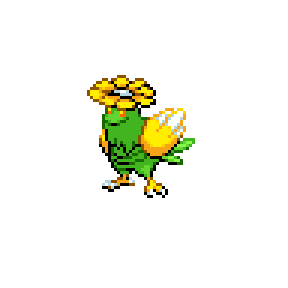
Skipede exude a sweet scent from their flowers that can carry for long distances on the wind. Their sense of smell is particularly sensitive to the smell of these flowers and they use it to seek one another out in dense forests.

Skipmantis love to chase one another through meadows on sunny days, their brightly coloured petals trailing behind them in the wind. When they're happy, their flowers release a wonderful fragrance.
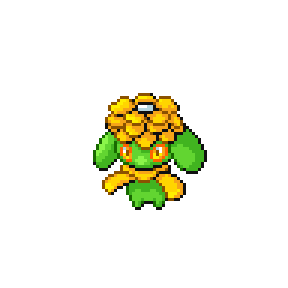
Jumpgeot grow wings formed of a light and fluffy cotton. Their wing composition makes them unsuitable for powerful flapping; instead, they use them to glide on air currents.
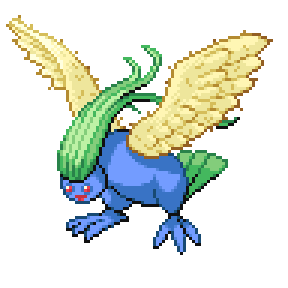
Jumpede raise their antennae up when there's a strong wind, using it to catch the breeze and send themselves rolling across the landscape. Their fluff helps them travel across even the roughest terrain without difficulty.
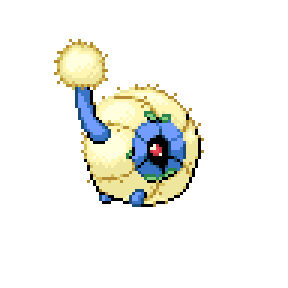
Ratsea use their sharp teeth to gnaw through coral, feeding on the animals hiding within the rocky growths of the reef. They gnaw burrows into the reef to have a quick escape route when threatened, never straying far from their holes.
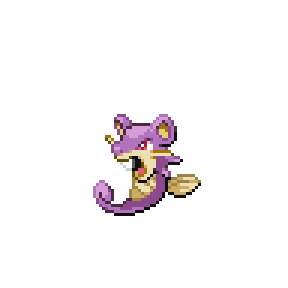
Ratini are active predators, using their long bodies to worm into the burrows of other Pokémon when hunting. Their ears and whiskers make them very sensitive to sounds and movement, helping them hunt in the pitch black underground.

Ratini are active predators, using their long bodies to worm into the burrows of other Pokémon when hunting. Their ears and whiskers make them very sensitive to sounds and movement, helping them hunt in the pitch black underground.

Ratdos infest old buildings, gnawing their way into the walls and building dense webbed nests within them. They are difficult to fully expunge from a house; their incessant scratching and squeaking make it unpleasant to live with their presence.
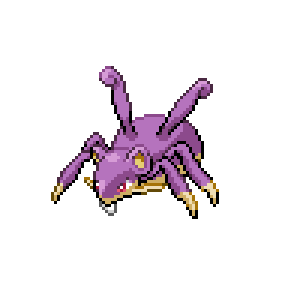
Ratata are the result of a fusion of two Rattata that carry recessive genes from the islands of Alola. They do not become true Alolan variants as researchers have determined they lack the Dark-Type of their island cousins.
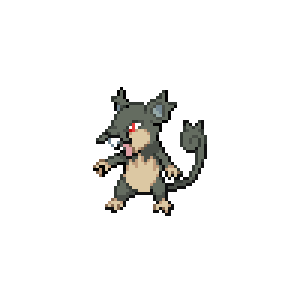
Ratcune are found only within cities that take good care of their public spaces, especially their waterways. Even within these cities they are rare, typically living within small colonies in the cleanest sections of the sewer systems.

Ratwig make their homes amongst the roots of trees, creating intricate burrow networks within forests. They use their sharp teeth to feast on roots and tubers in safety underground, nourishing the plant growing from their head.

Ratruff are obsessive with keeping their coats clean, spending hours every day grooming their fur. Their fur is made up of a rocky fibre and wears down their teeth rapidly.

Sungeot are found globally and are always observed to be flying westward. Researchers have observed that they spend the morning sunning themselves and, as the sun begins to set, they will take off and fly toward it.
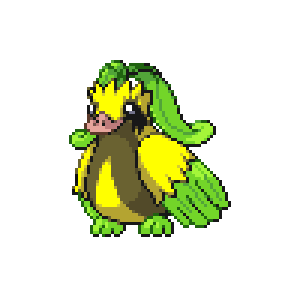
Sunco cluster in trees on the branches facing toward the sun. They will move around the tree throughout the day, jostling for the highest position to catch the most sunlight.
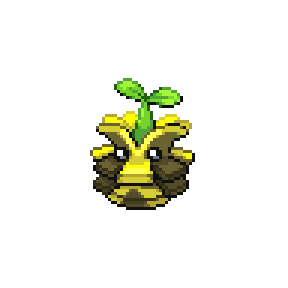
Sunrow love to roost in fertile soil, resting their feet within the nutritious loam whilst fanning their wings out to absorb sunlight. They take to the sky and search for shelter if it ever starts to rain.
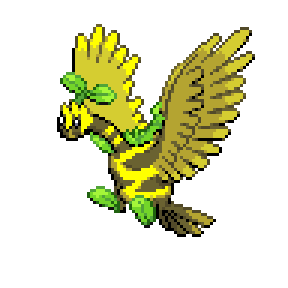
Sunsly wander from field to field in search of the most fertile soil they can find, settling down and planting their feet in the ground when they find a suitable location. Farmers can find their crops ruined by an arriving group of Sunsly.

The wispy wings of Sunlu gather moisture from the air as they fly from field to field. In drier months, the water collected in their wings is showered out as soft rain, helping the seeds of other Grass-types grow to adulthood.
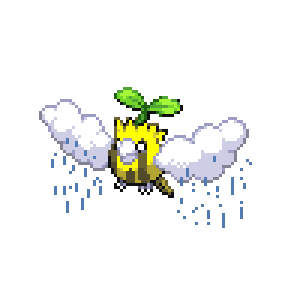
Sunpass always faces toward the sun, using its innate magnetic powers to track the direction of the sun even at night. It makes for an excellent garden companion as it will carry plants with it as it follows the sunlight.

Suntoise gather soil in the pipes extending from their shell, growing vines in the safety of their body. When two Suntoise meet, they exchange seeds to share plant species and try growing new plants.

Despite their wings, Yansaur are flightless Pokémon. They use their wings to communicate with one another through dense forests, the trees filled with loud buzzing through the summer months.
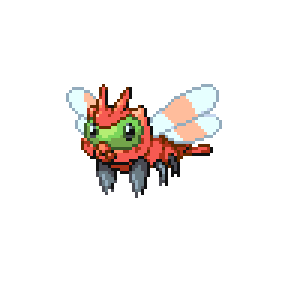
Yansaur whir their wings to pump air inside of their bulbs, keeping the opening closed as they build up the internal pressure. When they are ready to release seeds they launch them using the stored pressure, able to fling their seeds many metres.

Wooduck are typically found around brackish water, where they live sedentary lives feeding on aquatic plants. They are often slow to react to danger but have latent psychic powers that activate when threatened.

Quagrow love to splash in large ponds and puddles, flapping their wings to coat them in water. They are clumsy in flight and will frequently fly into any person unwary enough to be sat at the water's edge when they take off.

Quagrow spend most of their time swimming at the surface of rivers, occasionally diving under the water using their broad wings to propel themselves. Whilst they can fly, they are very clumsy and inelegant in the air.
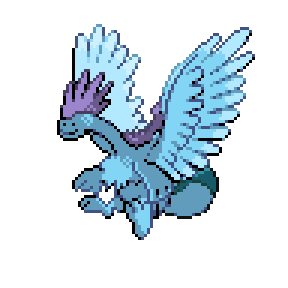
Quagki are very protective of young Wooper and will often hover around marshes with large populations of Wooper. They will lift the young Pokémon to safety if they sense danger.

Quagmeleon are coated in a thin mucus layer that keeps their skin moist even when they leave the water. The mucus is highly flammable and Quagmeleon will use it as kindling when they want to cook food for themselves.

Espicate use their psychic powers to groom one another, sensing dirt and grime in their companion's fur and lifting it free. Despite their scruffy appearance, they are fastidious in their grooming habits and are very clean Pokémon.
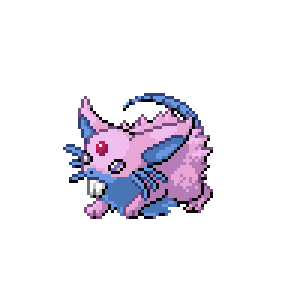
Espicate use their psychic powers to groom one another, sensing dirt and grime in their companion's fur and lifting it free. Despite their scruffy appearance, they are fastidious in their grooming habits and are very clean Pokémon.
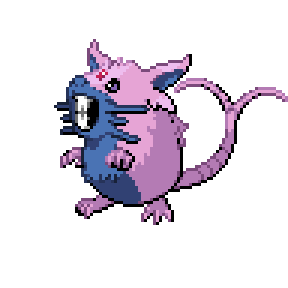
Umbshrew emerge only at night from their burrows and are most active under the light of the full moon. The golden rings on their body give a faint glow, allowing them to see even in the pitch black.

Umbcruel drifts on the ocean surface, communicating with one another over long distances at night with bright yellow bioluminescent flashes. The frequency and brightness of the flashes hold specific meanings that researchers are trying to determine.

Murgey have sleek black feathers that are prized for their beauty, with their down used in a variety of high fashion products. They are easy Pokémon to keep, but their loud crows make them a headache for the Pokémon Breeders keeping them.
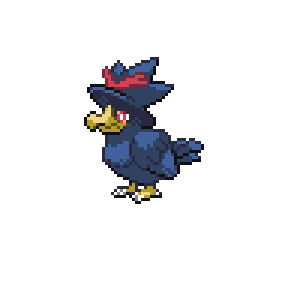
What appears to be a regal bearing and aloofness in the attitude of Slownine is actually a slow wittedness and reluctance to react too quickly. When roused to act, Slownine can move quickly but nothing short of life-threatening danger can move them.

Ivydeen are often found in mangrove swamps, living amongst the submerged roots of the trees. They spend most of the time at the surface of the water, photosynthesizing and allowing their flowers to be pollinated by Bug-type Pokémon.

Ivyking are popular Pokémon to keep in ornamental ponds thanks to the elaborate flowers that they use as a tail. They typically linger near the surface of the water, hanging upside down with their flower exposed to the air.
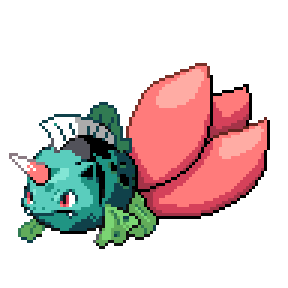
Ivydile can be found in the rivers of tropical rainforests, only their bulb and eyes poking above the water line. They are playful Pokémon, but have a poor sense of the threat they can pose and can give a nasty bite to the unwary.

Ivydile can be found in the rivers of tropical rainforests, only their bulb and eyes poking above the water line. They use the vines on their back to grab interesting looking things on the shoreline and bring them close to bite on.

Ivynaw lounge on river banks sunning themselves and keeping their flower pointing toward the sun. They are grumpy if woken up, snapping at whoever disturbs their sunbathing time.

Ivyligatr will hang motionless in the water for days on end, only their bulb visible above the water. When they do move, it's to hunt for food, and they are capable of a surprising burst of speed.

Ivyllery live in the shallows of lagoons and are usually seen with just their flowers above the surface. They use their sucker-covered tentacles to anchor themselves to the floor, letting them resist tidal flow.

Ivycko are arboreal Pokémon that form tight-knit communities, looking after one another when sick or injured. They use the flowers on their tails to communicate, using the unique scents of their tails to identify one another.

Ivytile traverse the forest floor and use the dense undergrowth to hide in when they anticipate predators. They peer out of the bushes with their long neck while they wait for danger to pass.

Ivykip splash around and play in jungle rivers, communicating with loud cries to one another through the dense undergrowth. They leave the water during the hottest parts of the day, cuddling together to snooze in the sun.
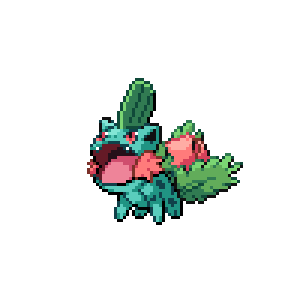
Ivytomp live on the banks of mangrove swamps, making burrows in the rich mud that lines the swamp. They draw all their nutrients from the mud and, the healthier the ecosystem around them, the more vibrant their flowers grow.
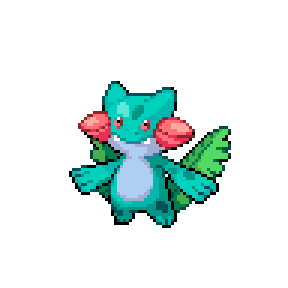
Ivypert spend most of their time partially submerged in the mud of swamps, passively absorbing nutrients from around them and from sunlight. They are capable of a surprising turn of speed when disturbed, but prefer to flee rather than fight.
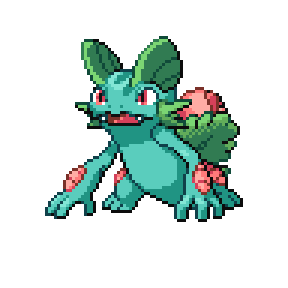
Ivyinja hover high up amongst the crown of trees, staying close to the flowers in the canopy. They are strangely unaffected by the weather, remaining entirely stationary even as the trees around them sway in the breeze.

Ivyeon are able to change their colouration by concentrating or dispersing the chlorophyll in their skin. They use this ability to hide amongst foliage and ambush Bug-Type Pokémon with their long, sticky tongue.

Ivyrith are ancient Pokémon that predate land plants. Revived fossils show that they lived at the water's surface photosynthesising, leading Palaeontologists to theorise they were key to filling the early atmosphere with oxygen.
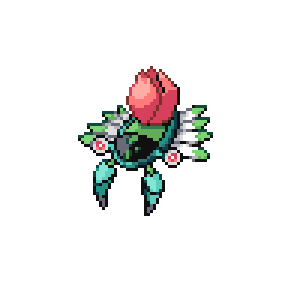
Ivyrith live in shallow waters in tropical regions, floating near the surface of the water whilst hiding amongst water plants. They get most of their energy from sunlight but will hunt smaller Pokémon if the opportunity presents itself.
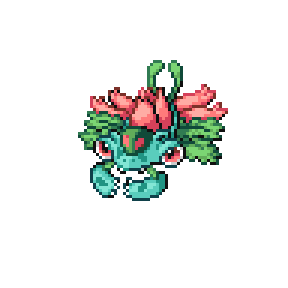
Ivyaldo use the flower on their tail as a lure, drawing attention away from their body with its bright petals. They use this distraction both to ward away larger Pokémon and to help them lay ambushes on their own prey.
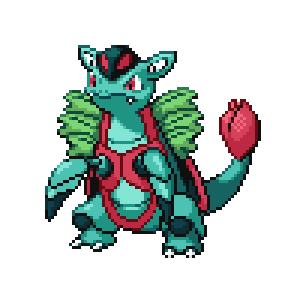
Ivydon use their armoured head to help protect the delicate flower growing upon their backs. They always face their foes head on, refusing to expose their vulnerable backs.

Ivydon use their armoured head to help protect the delicate flower growing upon their backs. They always face their foes head on, refusing to expose their vulnerable backs.
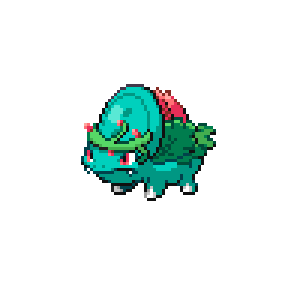
Ivychar live in tropical jungles, staying high in the canopy and never coming down to the ground. They swing across vast distances in search of fruit, scattering pollen from their flowers in their wake.
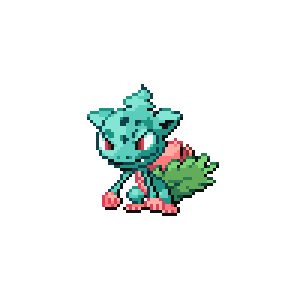
Ivyferno form tight knit family groups that contain multiple generations. The adults take turns watching over the young and elderly whilst their peers search for fruit, navigating home by the unique combination of scents from their flowers.

Ivynape fight with a nimble combat style that makes them popular with Black Belts, using every part of their body to rain down blows. What appears to be a tail is actually a flexible vine that can extend or retract, granting incredible mobility.

Ivyloom have an elaborate head flower that covers their eyes, leaving them to rely on their other senses to navigate the world. These flowers enable them to establish societal hierarchies, larger and more elaborate flowers denoting higher status.
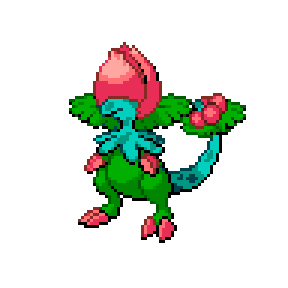
Ivyno have their eyes covered by the petals growing down from the crown of their heads, obscuring their vision. They overcompensate for their poor vision by being particularly aggressive, pre-emptively attacking anything they think is a threat.

Ivyon feed on mineral rich rocks and mud to provide nutrients for the flower blooming on their back. Their flowers have a uniquely rich, earthy smell to them.
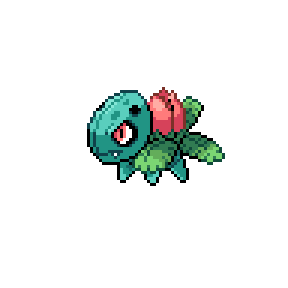
Ivyron are able to blend into dense undergrowth easily, the flowers and leaves lining their spine easily camouflaging them. They spend their days lazing out of sight, confident that should they be found their thick body armour will protect them.

Ivyish have tiny flowers sprouting from the top of their heads, a sweet scent emanating from them. The nectar from these flowers makes a wonderful perfume and Ivyish are very sought after by aromatherapists.

Ivytik are parasitic Pokémon, using their sharp incisors to bite through tree bark and feed on the sap within their branches. Large infestations can leave an afflicted tree looking as though it's in full bloom despite being very unhealthy.

The bodies of Ivyesta are mostly made up of their flower, fine downy leaves surrounding their face as petals trail out from behind their bodies. They hang upside down from tree branches when they sleep and can be easily mistaken for tree flowers.
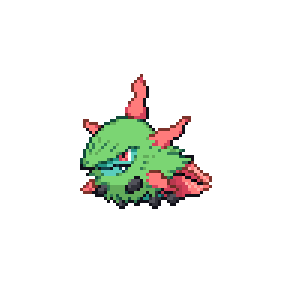
Ivypede keep low in the undergrowth when they're feeding, using the leaves and flowers covering their bodies to camouflage themselves. When they're feeling endangered, they rear up and rustle their leaves in a threat display.

Ivylass drift silently through the air, twirling in the sunlight and revelling in attention. They are jealous Pokémon and will puff out a Sleep Powder at anyone they view as a rival for attention.
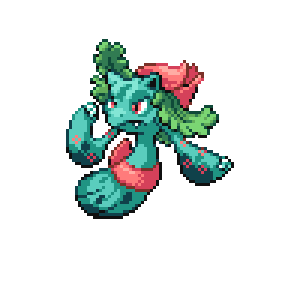
Ivyruff will come up and rest their head on their Trainer's lap whenever their Trainer sits down. Their leaves fan out and form a blanket across their Trainer, passively absorbing energy from sunlight while Ivyruff snoozes.

Ivyroc fluff out their petal mane when they engage in territorial disputes. The Ivyroc with the healthiest and most vibrant mane is usually the one to make the other back down.

Ivyroc fluff out their leaf mane when they engage in territorial disputes. The Ivyroc with the healthiest and most vibrantly green mane is usually the one to make the other back down.

Ivychoke use their own vines to weight train, straining their arms against their vines in order to strengthen them both. They are powerful enough to hoist over 500 kilograms in a single hand.

Ratbone live in caves and tunnel networks that have very few sources of food. They will gnaw on bones to extract marrow from them, going so far as to carry bones with them to feed off when they get hungry.

Ratwak wield their long tails as whips during battles with other Pokémon, lashing out with them at high speed. Their tails are reinforced internally with dense bones to help them survive the impacts.
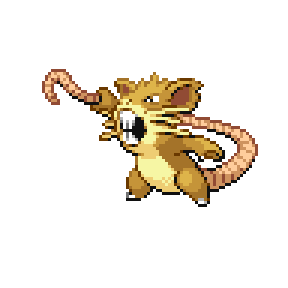
Ratwak wield their long tails as whips during battles with other Pokémon, lashing out with them at high speed. Their tails are reinforced internally with dense bones to help them survive the impacts.
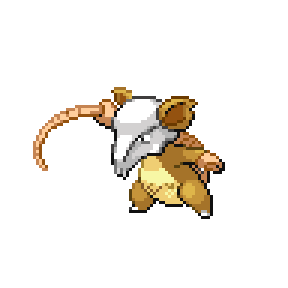
Ratini are very active Pokémon that are difficult to pin down thanks to their sinuous bodies. Their fur grows quickly and comes away from their body easily, letting them pull free from even the tightest grip.

Ratnair have rough, coarse fur that helps to protect them from the worst impacts of status effects. Their tails have no fur at all and can be moved rapidly, letting Ratnair use it as a whip to attack with.

Ratu have rows of dentine lining the edges of their wings; these tooth-like structures rattle against one another seemingly randomly. Researchers have determined that this happens a few minutes before Ratu receive visions of the future.
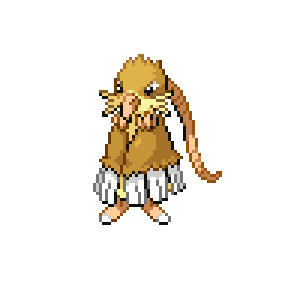
When fused, Raticate bear a strong resemblance to Alolan Raticate. Researchers are divided on why this similarity exists, some arguing for a genetic basis whilst others point to lifestyle similarities.
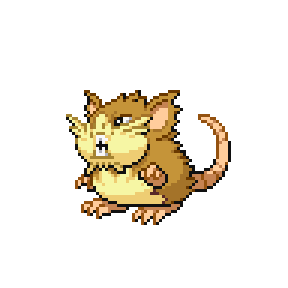
Ratcune are fastidious in their cleaning habits, seeking out pure water sources to clean themselves. They have become a rare sight since industrialisation has become more common.

Ratile have thick, bristly hairs on their tail that they use like a brush to keep their burrows clean. When challenging one another for food, they will make short, sharp sweeps, with the loudest sweeper usually being the winner.

The scourge of food warehouses everywhere, Ratble use their sharp teeth and claws to dig through nearly anything in search of food. A population of Ratble rarely goes undetected for long due to the loud noise they make while feasting.

Ratrith have flexible growths along their flanks that propel them through the water, letting them swim quickly despite their ungainly appearance. They hunt by racing toward their prey and biting at them with their sharp incisors.
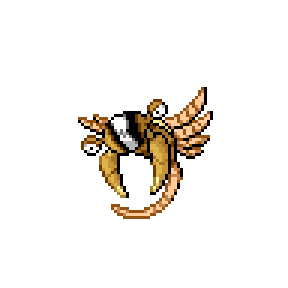
Rataldo are insular and rarely seen in the wild, forming colonies far from people. Until recently, they were thought to be an extinct Pokémon species, with only fossils of them being found.
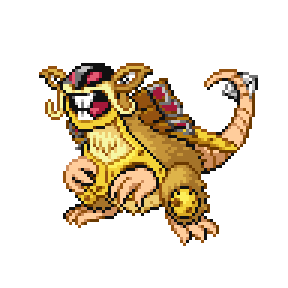
Ratula colonies are drawn to live in places with a constant electric current. Urban Ratula can often be found around fast food shops and appear to have a preference for stealing pizza.

Large populations of Ratruff can be a danger to housing and building projects if left unchecked. They are social and form large packs, and will gnaw through both concrete and steel if left to their own devices.
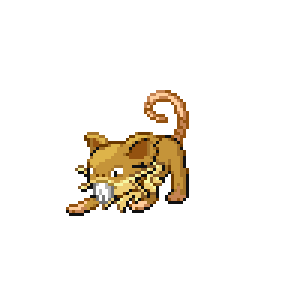
Ratroc form small packs that roam around towns and cities, they prefer to stick to abandoned areas where they don't get disturbed by too many humans. Trainers that manage to tame one find them to be surprisingly loyal companions.

The loose skin around the bodies of Raty help protect them from serious injury when they scrap with one another. They have a tendency to scratch at one another and bite with their sharp teeth when fighting for food.
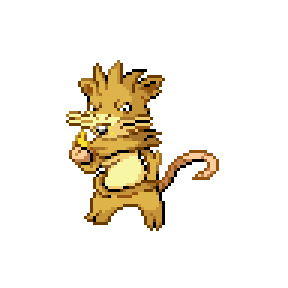
Ratsian instinctively chase any smaller Pokémon that run from them and are attracted to sudden movements. Trainers that play with them are advised to use sturdy toys, or cheap toys, as they will gnaw on anything that they manage to catch.
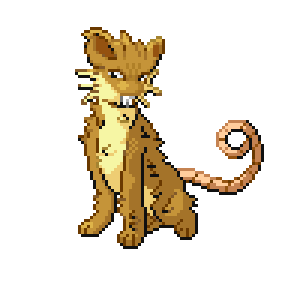
Ratnine lead large colonies of Ratlithe, using their bulk and power to take charge. Leadership competitions between two Ratnine involve a lot of posturing and comparing the strength of their own flames.

A Ghost-type Pokémon found deep in ancient forests, Mislass has a cruel sense of humor. They delight in misleading Trainers with the sounds of other people, leaving them lost and confused with little hope of getting home.
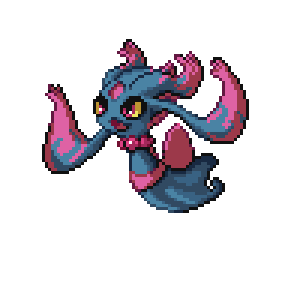
Unlass drift through abandoned cities in search of travellers, their many eyes constantly on watch for the life force of humans and Pokémon alike. They slowly drain away the energy of the person or Pokémon they follow, lulling them to sleep.

Wobtrio are adept at keeping track of their opponents during battle, making escape nearly impossible. Their habit of simply getting in front of an opponent and waiting for their move makes them challenging to use, however.

Wobtrio are adept at keeping track of their opponents during battle, making escape nearly impossible. Their habit of simply getting in front of an opponent and waiting for their move makes them challenging to use, however.

Wobtrio are adept at keeping track of their opponents during battle, making escape nearly impossible. Their habit of simply getting in front of an opponent and waiting for their move makes them challenging to use, however.

Wobtrio are adept at keeping track of their opponents during battle, making escape nearly impossible. Their habit of simply getting in front of an opponent and waiting for their move makes them challenging to use, however.

Fusing a pair of Pineco together results in Pineco developing an extra-dense coating of bristles, making them even more durable. They are also more prone to detonate than their unfused siblings, creating dangerous situations in the Johto wilds.
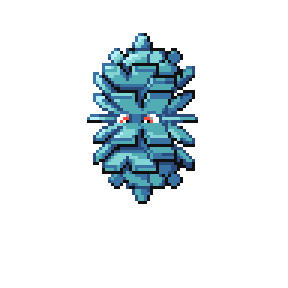
Fusing a pair of Pineco together results in Pineco developing an extra-dense coating of bristles, making them even more durable. They are also more prone to detonate than their unfused siblings, creating dangerous situations in the Johto wilds.

Forresaur build up pressure within their thickly plated body and use this pressure to shoot out seeds from cannons from their back. These projectiles can be fired up to a hundred meters away, though they are not especially accurate.

Dundle burrow through the undergrowth in forests and are rarely seen above ground. They can dig both forward and backward thanks to their twin drills and they play an important role in mixing nutrients in the soil with their tunnels.

Duntoed burrows underground using its drill tail to wait out droughts and cold weather. When the first rains start to fall, they emerge from their burrows and will sing loudly to one another across great distances.

Steeice are rarely seen on the surface as they burrow deep through the permafrost. Their bodies are comprised of beautiful blue ice that is harder than steel.
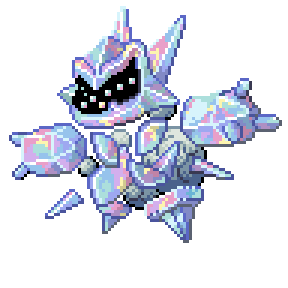
Speardos pounce on their prey from high branches, flapping above it and using their spindly legs to bundle their target up with sticky webs. Once they have it bound, they haul their prey back into the safety of the trees.
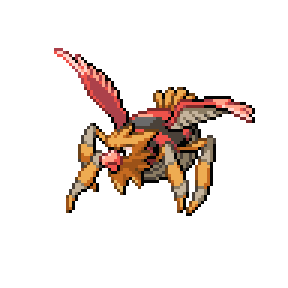
Spearco hang around high in tree branches chattering to one another in rapid high pitched chirps. They aggressively defend their trees, dropping from high branches and pecking at anybody passing underneath.
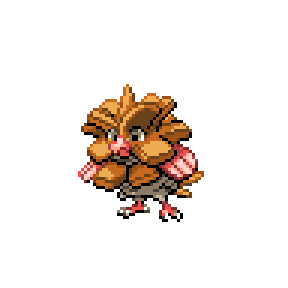
Speareanie propel themselves through the water using the long tentacles that sprout from their head. These tentacles are covered in fine water-proof feathers, helping to make them more hydrodynamic.
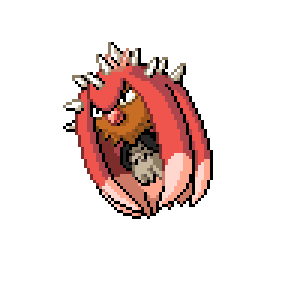
Qwilmantis live in tropical reefs, making their home in and amongst corals. They are covered in spines; their leaves in particular carry a nasty toxin that can cause pain for several days.

Shupom hangs from tree branches using its long, spindly tails. Its limbs produce a sticky secretion that helps it to maintain its grip while also rapidly hardening when exposed directly to air, providing it both mobility and defense.

Shuchu rely heavily on their thick shell for protection, angling their bodies so that their midsection is always the first to take a blow in a fight. They can charge up the kinetic energy of attacks and convert it into electricity.
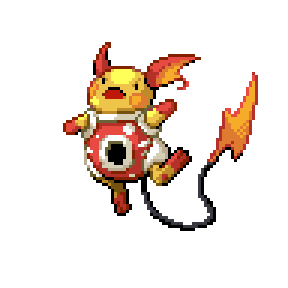
Heraicate fight one another using their long nose horn, attempting to flip one another onto their backs. With their stubby legs, it is difficult for Heraicate to right themselves when knocked over.
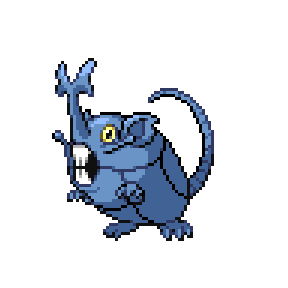
Teddiursa are most active during the full moon. They watch the sky mournfully as though waiting for a change in the phase of the moon. Sinnoh researchers think this difference to unfused Teddiursa hints at latent Ursaluna gene expression emerging.

Teddiursa are most active during the full moon. They watch the sky mournfully as though waiting for a change in the phase of the moon. Sinnoh researchers think this difference to unfused Teddiursa hints at latent Ursaluna gene expression emerging.

Teddipy lives high in the mountains amongst alpine forests. Using its keen sense of smell it tracks down hives filled with Honey and will ram into the trees until the hive drops to the forest floor.

Preferring to navigate at night when the Bug types that produce Honey are asleep, Teddiphan will travel great distances in search of its favourite food. When it finds a tree housing a nest, it uses its immense strength to topple it.

Teddishrew don't stray far from their childhood den when they're young, waiting patiently for their parent to return. If they feel they're in danger, they make a plaintive cry before curling up, relying on their plated skin to protect them.

Ursarow live in alpine regions, soaring over forests in search of hives to gather honey from. They use their talons to snatch hives before they can be attacked, flying off with them and then dropping them at a safe distance to smash them open.
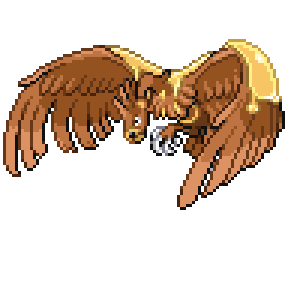
The landscape carried on the backs of Ursaterra reflects that of their home. During blood moons they undergo an eerie transformation, their landscapes taking on a haunted appearance.

The landscape carried on the backs of Ursaterra reflects that of their home. During blood moons they undergo an eerie transformation, their landscapes taking on a haunted appearance.

A Slugpi egg only hatches once the baby within has reached a sufficient temperature to melt through its shell. It loves to cuddle up to other Fire-types, sharing its warmth with its fellow Pokémon.

Slugkrow live in and around volcanoes, regularly replenishing their molten bodies from the lava. They're able to fly by using volcanic gas buildup within their bodies, the excess belching out of them in black billowing clouds.
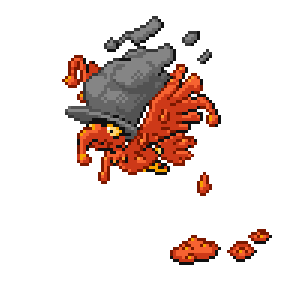
Slugma have trouble maintaining a cohesive body shape due to the intense heat of their bodies. Their bodies have a very low silica content, enabling them to flow rapidly across the ground.
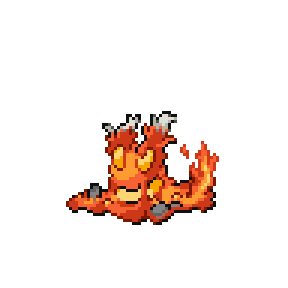
Slugroc frolic within active lava flows, happily swimming through molten rock before bounding out and shaking their bodies to dry off. Seismologists are able to detect abnormalities in magma flows that are thought to be Slugroc deep underground.
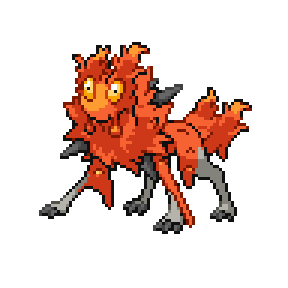
Magring are generally slow-moving Pokémon that can be found high up in alpine forests. Their territories are notably clear of snow and ice, their high body temperatures melting any ice that comes near them.

Magring are generally slow-moving Pokémon that can be found high up in alpine forests. Their territories are notably clear of snow and ice, their high body temperatures melting any ice that comes near them.
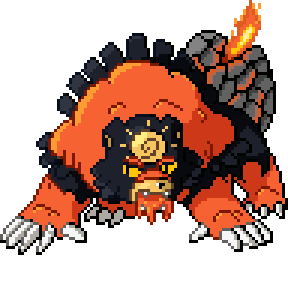
Magring are generally slow-moving Pokémon that can be found high up in alpine forests. Their territories are notably clear of snow and ice, their high body temperatures melting any ice that comes near them.
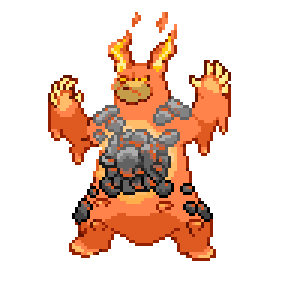
Magterra live in volcanically active areas, following lava flows to fuel their bodies. The sheer heat from their body burns away most of the vegetation around them, but the high nutrient content of the magma makes the soil they leave very fertile.

Magterra live in volcanically active areas, following lava flows to fuel their bodies. The sheer heat from their body burns away most of the vegetation around them, but the high nutrient content of the magma makes the soil they leave very fertile.

Magterra live in volcanically active areas, following lava flows to fuel their bodies. The sheer heat from their body burns away most of the vegetation around them, but the high nutrient content of the magma makes the soil they leave very fertile.
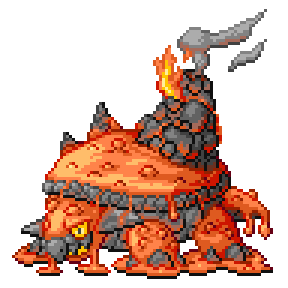
Fearmime have the ability to perfectly mimic the sounds that any other Pokémon makes. They do this whilst entertaining freshly hatched Pokémon, flourishes of their feathered wings adding to their performance.
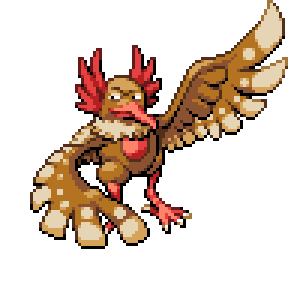
Unwary Trainers may mistake Fearhoot for Hoothoot when encountering them for the first time. Unlike Hoothoot, Fearhoot will aggressively defend their nest and the surrounding territory with a combination of hypnotic powers and their sharp beaks.
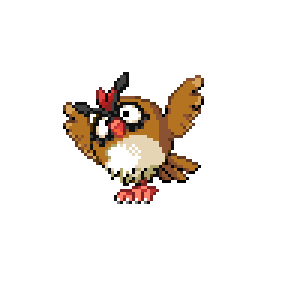
Fearowl grow impressively large head plumage in a vivid red, using the feathers as a warning to other Pokémon to keep their distance. Should their warning be ignored, they will strike with their long beak and agile neck.
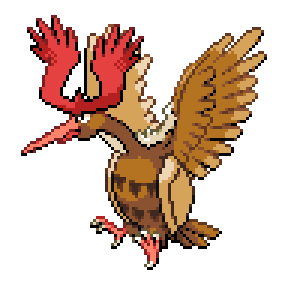
Feargeot are popular with Kanto Bird Keepers, their intelligence making them easy to train whilst their build allows them to fly at high speeds and over great distances. During battle they use their long beak to peck at their foes during a dive.
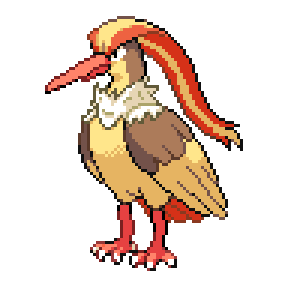
Fearfish can rapidly puff up their bodies, expanding to two or three times their normal body size. When they do this, they become buoyant in air, able to swim around through the sky.
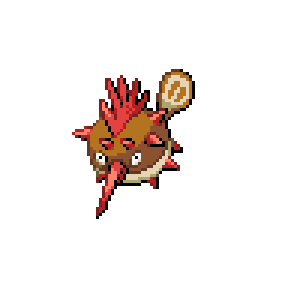
Fearlade are highly agile combatants, using their wings to outmanoeuvre their foes before landing a slash with their arm blades. Their agility and finesse make them popular Pokémon with Black Belt Trainers, who often aim to learn their style.
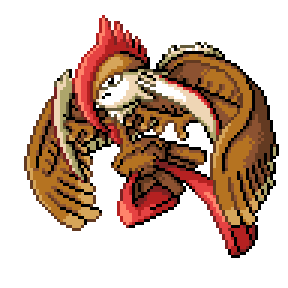
Fearpass were a popular subject of statues amongst many medieval societies, their likeness lining many castle pathways. Anthropologists theorise that this was to allow nobles to station Fearpass as concealed guards to surprise invaders.
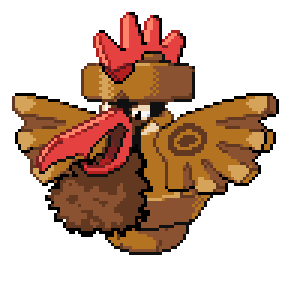
Feartula line their nests with a thick silk that they produce from their abdomen. The silk has a static charge that attracts loose feathers, making for a plush and comfortable environment for them to lay their eggs in.
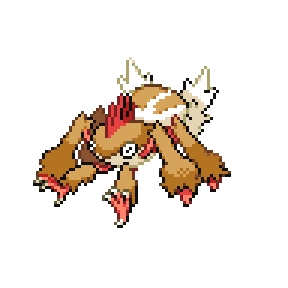
Feartik generate a static field around themselves that they use to sense the movement of other Pokémon close by. They creep slowly toward strong electric fields and have been observed attacking power lines in a flapping frenzy.
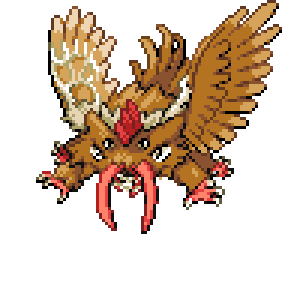
Feartik generate a static field around themselves that they use to sense the movement of other Pokémon close by. They creep slowly toward strong electric fields and have been observed attacking power lines in a flapping frenzy.
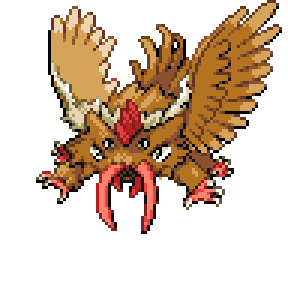
Fearcruel mimic a Fearow in distress at the water's surface, flapping their wings and crowing frantically to get attention. When a Pokémon comes to investigate, they reveal their hidden underbelly and trap the unfortunate victim in venomous tentacles.
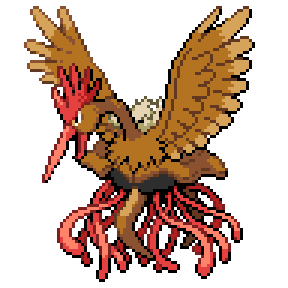
Swichu keep their body temperature low to aid in keeping their fur conductive to electricity. They deliver nasty jolts by lashing out with their scythe-like tail, discharging electricity when it makes contact.
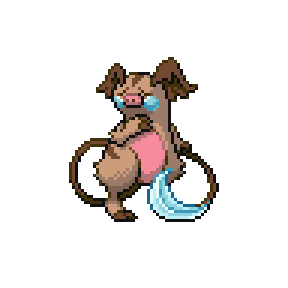
Swiruff prefer to live in cold climates and are usually found roaming in packs in tundras or above the snow line on mountains. They make excellent companions as they have a keen sense of direction, even during blizzards.
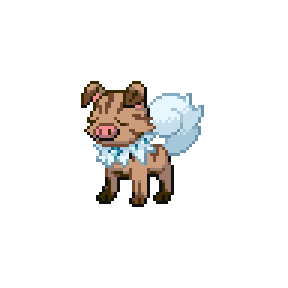
Swiruff prefer to live in cold climates and are usually found roaming in packs in tundras or above the snow line on mountains. They make excellent companions as they have a keen sense of direction, even during blizzards.

The ice crystals that form along the backs of Swita are a by-product of their ability to store ambient heat within their bodies. The temperature difference this creates between their bodies and the surrounding air has an extreme chilling effect.
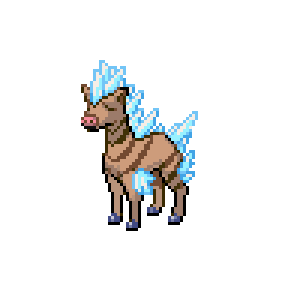
The thick fur and layers of fat coating the bodies of Pilochu allow them to survive in harsh arctic environments. They can charge their tails with electricity to create a bright burst of light, helping them to see in the middle of blizzards.
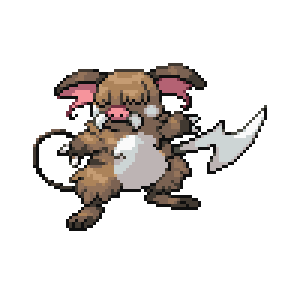
Pilota have dense fur coats that help them survive the cold environments that they call home. Their fur is highly prized for its insulating properties and some Pokémon Breeders will maintain large herds of them for this.

Corgeot periodically dip into water to hydrate their wings, keeping the kelp-like growths from drying out. They are rare in polluted waters and Pokémon ecologists are growing concerned about their declining populations.

Corshrew make burrows within coral reefs, carving through the reef structure to form an intricate network of escape tunnels. They are poor swimmers and instead walk along the sea floor, relying on their natural camouflage to protect them.

Corcie make their home at the highest point of a coral reef, their rocky growths a combination of living coral and shimmering pearl. Reefs with a healthy Corcie are said to be among the most beautiful natural wonders in the world.

Remoicate live in the deep ocean, moving slowly with languid sweeps of their long tail to conserve energy. They gulp down anything that will fit in their mouth in the hopes that it's food, gnawing at it if it's too big to swallow.
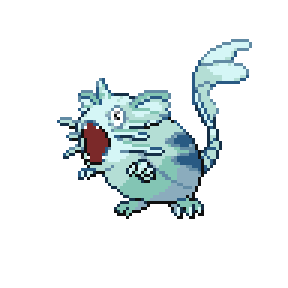
Remorow live far from land, hunting for food in the middle of the ocean. Fishermen will follow flocks of Remorow, waiting for them to dive into the water to know where to cast their nets.
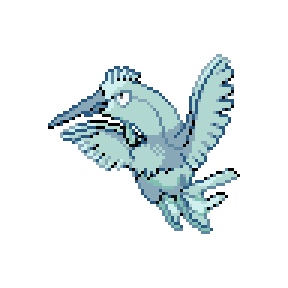
The bulbous growth on the backs of Octisaur are filled with salt water. When Octisaur leave the water to feed, they use this supply to keep themselves hydrated.

The plants growing on the backs of Octisaur are able to sense the world around them. When threatened, they spit volleys of high-velocity seeds at their aggressors.

Octitoise inhabit the discarded shells of larger Pokémon and use them for protection. They form a symbiotic relationship with Remoraid and will use high-pressure water to launch the smaller Pokémon at their foes.

Delillery are often closely entwined in human communities and show great pleasure in joining in festivities. End-of-year celebrations are a special favourite, and they will give gifts to young children that approach the water's edge.
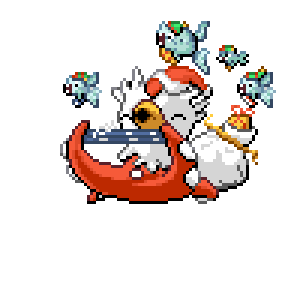
Deliduo are most commonly encountered by people during festive celebrations, showing up with gifts in their beaks to give to celebrants. One head loves to give food and money, the other has a tendency to give coal and other stones.
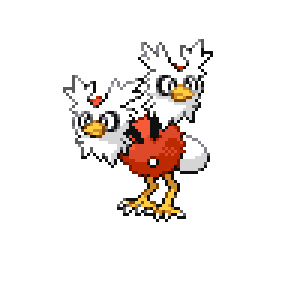
Skartoise lurks in the depths of freshwater lakes, hunting for prey using the powerful harpoon cannons within its shell. It has little to fear from predators, its steely hide making it highly resistant to attacks.
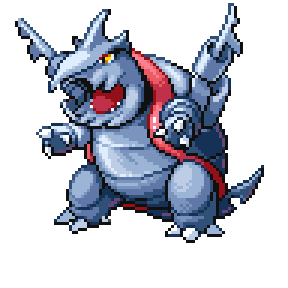
Hounlade are a favourite Pokémon of army veterans and are often on the frontlines of war, their vicious blades giving them the edge over other Pokémon. They have trouble adapting to life away from constant battling.

Ekie rapidly stick their tongue out to taste the air, picking up the scent of other Pokémon in the area. They leap into the water and swim as deep as they can if they taste the approach of a larger Pokémon.
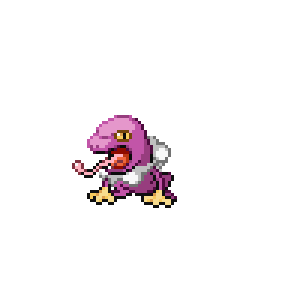
Phanuna make quiet trumpeting noises as they rest in place, conserving their energy until they evolve. They keep their body tucked inward, their hide tough and difficult for other Pokémon to harm.

Staneon collects ambient static with its large horns, gradually collecting charge and storing it in its body. They race outside and are very active during thunderstorms, trying to harvest the electrical potential in the air.

Stangeot are prized for their magnificent antlers, drawing admirers from across the world to Johto. They are skittish and dislike being watched, running quickly away from crowds and using the lift from their antlers to fly away.

When Smearbone suffer loss or tragedy they express their emotions through artistic expression. Their most common canvas is their own skull mask, marking it once for each loss they've experienced.

Smearicate produce a natural oil from their bodies that, when mixed with water, creates colourful pigments. They use these pigments to communicate with one another, leaving markings on rocks and trees for other Smearicate to see.
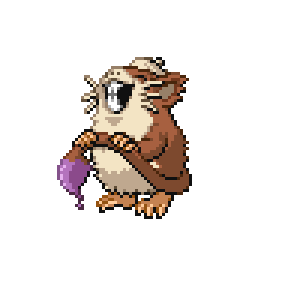
The bodies of Smeargma are made up of a viscous, liquid pigment. They leave a trail of colour behind themselves as they move and each Smeargma has its own unique colour it leaves behind it.
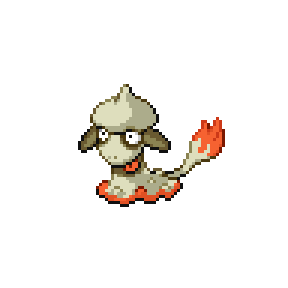
The bodies of Smeargma are made up of a viscous, liquid pigment. They leave a trail of colour behind themselves as they move and, rarely, they will produce multiple colours from their bodies.
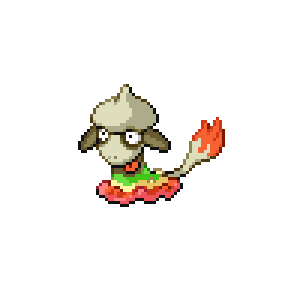
The bodies of Smeargma are made up of a viscous, liquid pigment. They leave a trail of colour behind themselves as they move though, rarely, some produce no natural colouring of their own, instead seeking out minerals to make pigment to paint with.
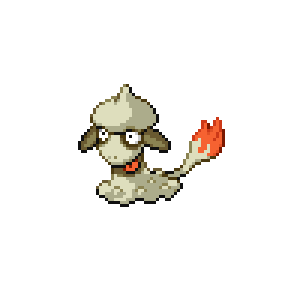
When two Tyrogue are fused into a Tyrogue they gain the combined combat prowess and techniques of the two Pokémon that form the fusion. They have unbounded potential in this form and are quick studies in all martial arts.

When two Tyrogue are fused into a Tyrogue they gain the combined combat prowess and techniques of the two Pokémon that form the fusion. They have unbounded potential in this form and are quick studies in all martial arts.

When two Tyrogue are fused into a Tyrogue they gain the combined combat prowess and techniques of the two Pokémon that form the fusion. They have unbounded potential in this form and are quick studies in all martial arts.
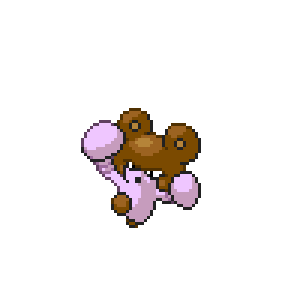
Rich families will often provide their children with Smoochu as a companion instead of sending them to socialise at school. Smoochu are patient when being played with but will give out a shock if their companion is too rough with them.
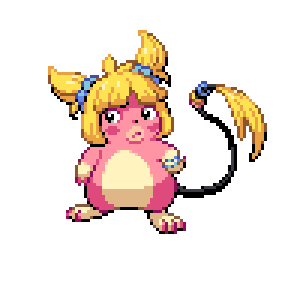
Arto have a semi-fluid body composed of toxic acids. They can reshape their body at will and create angry markings and wave them around to dissuade aggressors.

The songs Arpuff sing to one another have a hissing, sibilant quality to them that are unnerving to other Pokémon. These noises are enough to drive away most listeners, much to the dismay of Arpuff.

Artuff puff up their bodies to appear larger and scarier than they actually are, the patterning on their chest scaring off weaker Pokémon. They have a painfully high pitched screech that they use as their opening attack in battles.

Magidos live within volcanic mountain ranges and can be found within lava tubes. They enjoy the intense heat within their homes and battle with one another to have the right to nest in the warmest spots.

Blistoise are able to control how permeable their shells are, letting them reduce the density of the shell surface enough to carry eggs within them. They maintain a perfect environment for incubation within their shell.

Rainaw are full of energy and love to race around with their Trainers, dragging them from town to town. Their footprints carry an electrical charge and can spark for hours after they've passed by, making wild Rainaw easy to track.
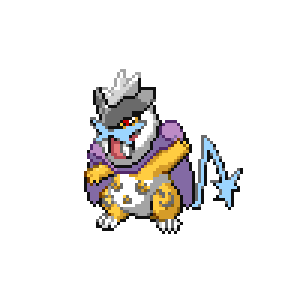
Raicune are the result of the machinations of Eusine, a legendary Pokémon fanatic who had been chasing the legendary beast Suicune. After first being sighted in Azalea Town, there have since been sightings across Johto and Kanto.

Raicune are the result of the machinations of Eusine, a legendary Pokémon fanatic who had been chasing the legendary beast Suicune. After first being sighted in Azalea Town, there have since been sightings across Johto and Kanto.
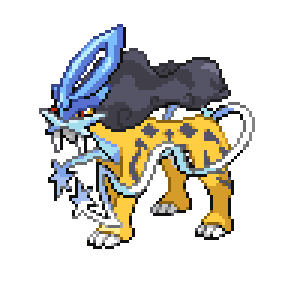
Raicune are the result of the machinations of Eusine, a legendary Pokémon fanatic who had been chasing the legendary beast Suicune. After first being sighted in Azalea Town, there have since been sightings across Johto and Kanto.

Raitrum are rumored to be born when powerful thunderstorms strike ancient fossils, revitalizing the long-extinct Pokémon and re-energizing them. Their roars are accompanied by claps of thunder and bolts of lightning.

Raitrum are rumored to be born when powerful thunderstorms strike ancient fossils, revitalizing the long-extinct Pokémon and re-energizing them. Their roars are accompanied by claps of thunder and bolts of lightning.

Raitrum are rumored to be born when powerful thunderstorms strike ancient fossils, revitalizing the long-extinct Pokémon and re-energizing them. Their roars are accompanied by claps of thunder and bolts of lightning.

Raitrum are rumored to be born when powerful thunderstorms strike ancient fossils, revitalizing the long-extinct Pokémon and re-energizing them. Their roars are accompanied by claps of thunder and bolts of lightning.

Rarely seen, Eninch is rumored to be the larval form of a mighty legendary Dragon. They burrow through volcanic rocks, leaving a honeycomb of glassy-sided tunnels from their extremely high-temperature bodies.

A recently sighted Pokémon that has come through time rifts in Paldea, Enrorus are thought to be from the distant past. Their bodies produce constant plumes of superheated smoke and steam that cling to them like clouds.
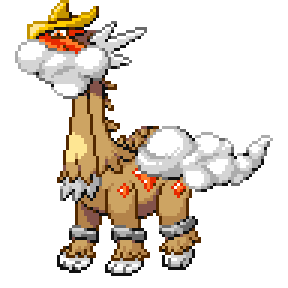
Suidle live in only the cleanest waters and are typically found in and around mountain springs. They have a purifying effect on the bodies of water they live in, making them a popular addition to aquariums.
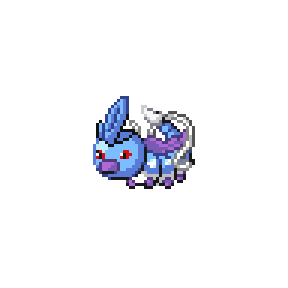
Suidle live in only the cleanest waters and are typically found in and around mountain springs. They have a purifying effect on the bodies of water they live in, making them a popular addition to aquariums.
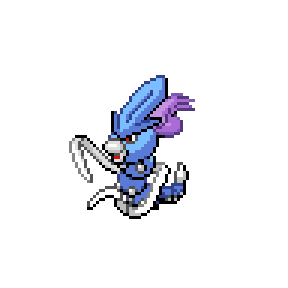
Larvipip are too heavy to be carried long distances by any but the strongest of storms, limiting their 'flights' to short glides from the top of dunes. Their arrival in a region is treated as an ill-omen as heralds of sandstorms.

An ambush predator in desert environments, Larvile spends almost all of its time buried in sand and burrowing through rock. It can usually only be spotted by its back spines, often leading to unwary Trainers being attacked for stepping on them.

A nomadic hunter, Larvirok lives a solitary life in arid environments. To help them find prey and to guard their territory, they move about on their hind legs, granting a better view of their surroundings than if they were quadrupedal.

Covered in hard stone spines, Pupidile uses these spines solely to defend itself in territorial conflicts with other members of its own species. Their roar can travel for miles through the wastelands in which they live.
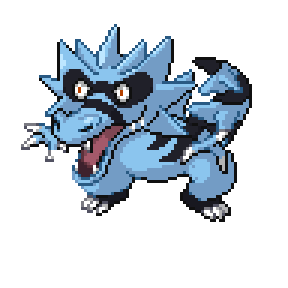
The head of Pupirok is reinforced with alternating layers of bone and rock. When clashing with other Pokémon, they will use their head both as a shield and as a bludgeon.
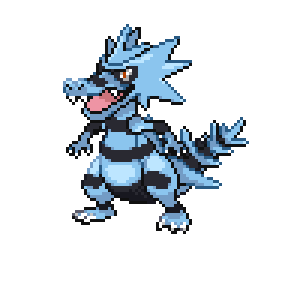
The head of Pupirok is reinforced with alternating layers of bone and rock. When clashing with other Pokémon, they will use their head both as a shield and as a bludgeon.

An apex Pokémon, Tyrandile stalks its wasteland home in the certainty that there is nothing that can challenge it. Pokémon researchers trying to learn its behaviors need to remain wary as it aggressively chases down anything in its territory.

Luqueen have great destructive potential, the movement of their wings creating avalanches in the mountains if they're not careful. They use this power to defend their homes when pushed, but prefer to isolate themselves.
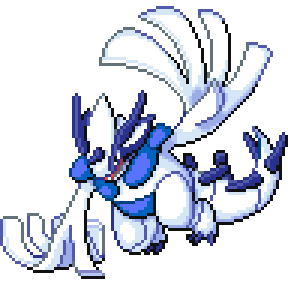
Pikapie produce a sticky silk that they use to make nests and protect their eggs. The stickiness of the egg comes from the mild electrical charge it carries, the static attaching it to anything that gets close.
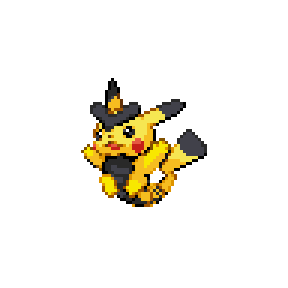
Pikachu have an uneven control over their electrical powers. They are able to produce shocks powerful enough to power a generator for several hours, but they have trouble regulating the strength of their shocks.
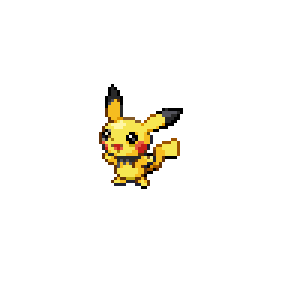
Pikabuff have rubbery bodies that can absorb large amounts of kinetic energy, bouncing around with carefree abandon. The energy they absorb is converted into static electricity and can cause painful shocks if they're touched.

Pikachu are constantly discharging electricity, blue sparks rippling off of their bodies and causing their fur to spike up from static. It is advised to wear insulating clothing when handling these Pokémon.
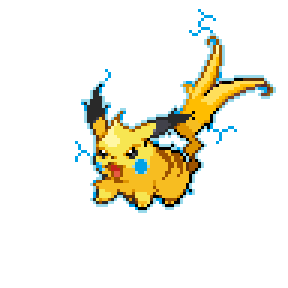
Pikainja hang suspended in mid air through a constant static charge around their empty chrysalis. If their body is touched, they will drop to the ground totally motionless as their charge disperses.

Pikadoof are a popular Pokémon for aspiring Trainers to start out with, being obedient and relatively easy to train. Their enjoyment of wooden toys to gnaw on makes it easy to reward the behaviour the Trainer wants to see.

Pikadoof are a popular Pokémon for aspiring Trainers to start out with, being obedient and relatively easy to train. Their enjoyment of wooden toys to gnaw on makes it easy to reward the behaviour the Trainer wants to see.

Pikadoof are a popular Pokémon for aspiring Trainers to start out with, being obedient and relatively easy to train. Their enjoyment of wooden toys to gnaw on makes it easy to reward the behaviour the Trainer wants to see.
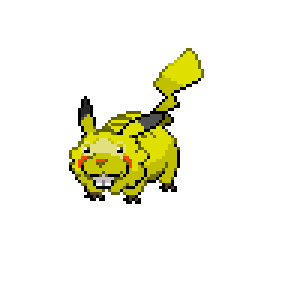
Pikajask wings whirr so quickly that they generate a lot of static electricity within their bodies. Their tails discharge the electricity periodically, Pikajask dipping quickly to the ground to touch their tails to the soil to do so.

Burrows around electrical pylons are often the result of Pikacada populations. They are drawn to the electrical field generated by grounding wires and, if left unattended, will try to feed on them.

Pikabarel are drawn to hydroelectric power plants, often setting up their dams close to the turbines. Their presence was once thought of as a nuisance until engineers began taming them and using them to help provide power.
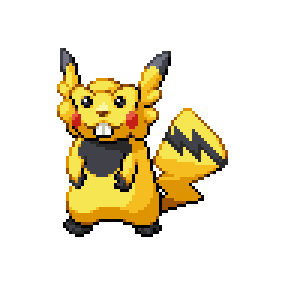
Pikabarel are drawn to hydroelectric power plants, often setting up their dams close to the turbines. Their presence was once thought of as a nuisance until engineers began taming them and using them to help provide power.

Pikaink generate electrical energy as they spin, requiring just food and water to provide power. They are popular Pokémon to use in power plants as a result, multiple Pikaink able to provide enough power for a small village.

Pikaile generate a static charge around their body when they want to hide. The charge attracts sand, enabling them to rapidly bury themselves in the desert with just their ears and tail poking out above the ground.

Pikacorio perform languid, sorrowful dances as a way to communicate with one another. Their wing movements leave sparkling arcs of electricity tracing through the air in their wake.

Pikaetta have a love for performing and enjoy being the centre of attention on stage as they sing and dance. They use their electrical powers to project their performances across TV screens throughout the town they're in.

Pikaetta have a love for performing and enjoy being the centre of attention on stage as they sing and dance. They use their electrical powers to project their performances across TV screens throughout the town they're in.
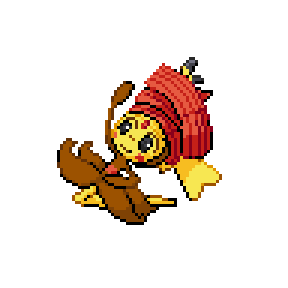
Most commonly encountered in the summer, Pikarantis lurk in amongst fields of sunflowers. They gradually build up an electrical charge within their leaves as they absorb the sun's energy.

Pikath are often used by criminal gangs thanks to their ability to short-circuit electronics and for their sense of what is and isn't valuable. The Pokémon itself sees these heists as a game and enjoys travelling to new places with its Trainers.

Pikath are often used by criminal gangs thanks to their ability to short-circuit electronics and for their sense of what is and isn't valuable. The Pokémon itself sees these heists as a game and enjoys travelling to new places with its Trainers.

Seeing a Ho-gia is regarded as a good omen throughout Johto. They are said to bless those setting out on a journey and bring good fortune to those returning.
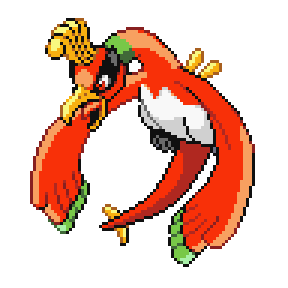
Seeing a Ho-gia is regarded as a good omen throughout Johto. They are said to bless those setting out on a journey and bring good fortune to those returning.

Seeing a Ho-gia is regarded as a good omen throughout Johto. They are said to bless those setting out on a journey and bring good fortune to those returning.

Seeing a Ho-gia is regarded as a good omen throughout Johto. They are said to bless those setting out on a journey and bring good fortune to those returning.

Seeing a Ho-gia is regarded as a good omen throughout Johto. They are said to bless those setting out on a journey and bring good fortune to those returning.
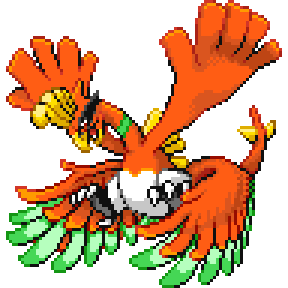
The large orbs on either side of the head of Ho-cool reflect light in a broad spectrum of colour, creating beautiful rainbow patterns as light scatters through them. Seeing the display is said to bring good fortune on the start of a voyage.

Ho-cruel can be found drifting out in the open sea, their jewelled head refracting light into a beautiful rainbow. Their beauty is deceptive as their many tentacles are tipped with feathers coated with a paralytic poison.

Ho-cruel can be found drifting out in the open sea, their feathery head refracting light into a beautiful rainbow. Their beauty is deceptive as their many tentacles are tipped with sharp claws, snatching at passing Pokémon in the water.

Celeba swarm in the morning sunlight, gathering together to enjoy the sunrise. They possess strange temporal powers and can buzz their wings at a frequency that allows them to fly through timestreams to the next morning.

Celeian can sense the flow of time using their antennae, swarming together to places where the timestream is most accessible. Working together as a swarm, they can enter the timestream and fly together to springtime.

The tails of Azupod have amazing kinetic potential, and Azupod sit on top of these rubbery pads on the forest floor. When they're startled, their tails straighten out rapidly, catapulting them into the forest canopy.
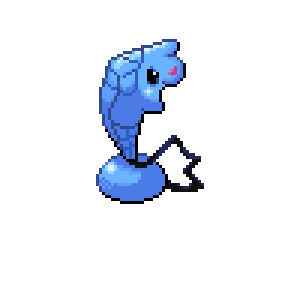
Azufree are clumsy fliers and have trouble taking to the air. They use their tails as a springboard, bending it tightly and then rapidly releasing it to launch themselves straight upward.

Azuwoodo are shy and easily scared by passing people, attempting to imitate trees to hide in their forest homes. Their blue skin colouring means they are ineffectual at hiding in this way, though they believe they're doing a good job.

Azusly uses the cluster of spherical growths on its body to mimic the shape of small plants. The growths are buoyant, enabling it to remain upright whilst travelling through the water.

Azusly uses the cluster of spherical growths on its body to mimic the shape of small plants. The growths are buoyant, enabling it to remain upright whilst travelling through the water.
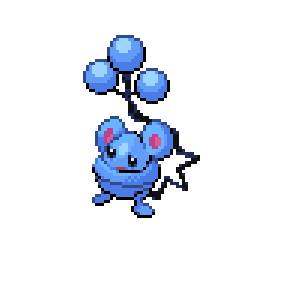
Despite being a buoyant floatation aid, the gigantic ball at the end of the tails of Azusaur are extremely bulky and cumbersome. Azusaur carry the ball on their back in an effort to avoid getting caught on roots and vines.

Azubat are completely blind and roost in underground caves, using their echolocation to navigate. They often struggle to differentiate water from cave floors, so they have large tail floats to prevent sinking if they crash.
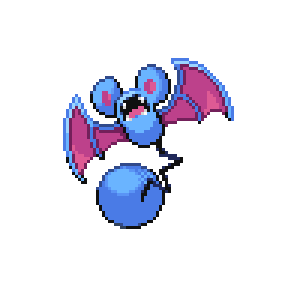
Azuturne enjoy following groups of Trainers on their adventures, following along and crying out warnings when they believe there's danger. Their usefulness as a lookout is questionable as any unexpected noise or shadow is enough to spook them.
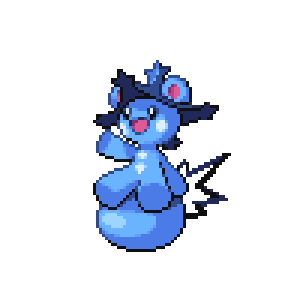
Wygey are clumsy in their flight patterns, having to use their latent psychic powers to help support themselves in the air. When they crash into something, they rebound some of the energy. They're a pest in built-up areas when they hit windows.

Wygey are clumsy in their flight patterns, having to use their latent psychic powers to help support themselves in the air. When they crash into something, they rebound some of the energy. They're a pest in built-up areas when they hit windows.
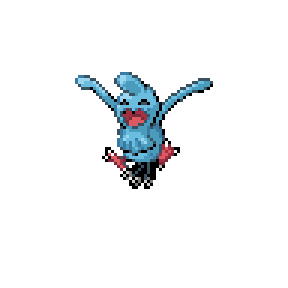
Wygeot have eye spots on their jet black feathers that help to confuse aggressive Pokémon as to where they're looking. They use this confusion to draw attacks away from their body before landing powerful counterattacks.
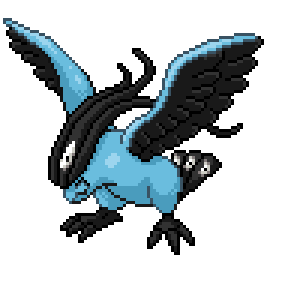
Wyrow are curious Pokémon that will follow along behind anybody that catches their interest. Despite their curiosity, they dislike direct attention and have a habit of pecking at anyone that stops to watch them.

The body of Wyrill is exceptionally rubbery. When struck they bounce randomly and chaotically around their environment, sometimes even striking back into whatever hit them.
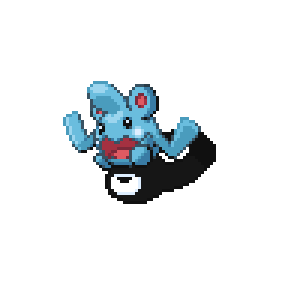
The body of Wyrill is exceptionally rubbery. When struck they bounce randomly and chaotically around their environment, sometimes even striking back into whatever hit them.
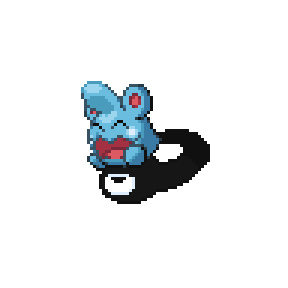
On midnight purple wings, Misbat swoops across the nighttime sky. They can sense the emotions of those on the ground below them and will seek out people and Pokémon suffering from bad dreams, perching nearby and feasting upon them.
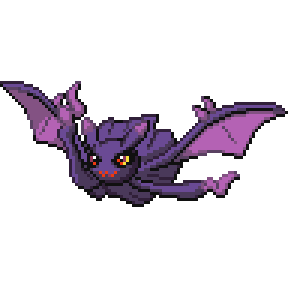
Honchqueen forms gangs of disparate Pokémon to help claim territory for itself, enforcing the boundaries of the territory with displays of strength. When forced to fight for itself, Honchqueen is wily and formidable, using underhanded strategies to win.
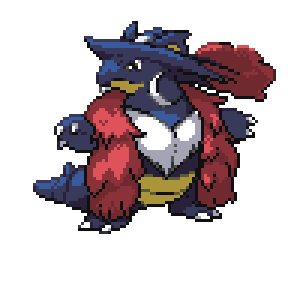
Mimepie are popular companions for Jugglers who regularly perform at children's parties. Mimepie are soft and make a fun squeaking noise when hugged, helping calm upset children whilst the Juggler entertains the rest of the party.

Mimerachi are able to manifest inside the dreams of sleeping people and Pokémon. They delight in playing pranks and making jokes within those dreams, blessing those who meet their humour in kind with good fortune.
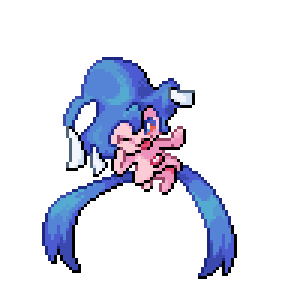
Mimeby perform elaborate dances to attract the attention of other Mimeby on the beach. They are popular Pokémon for beachside attractions, their performances being particularly entertaining to children.
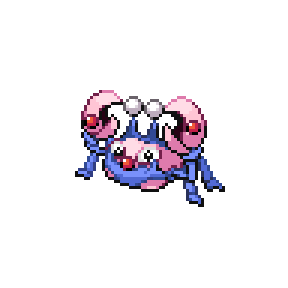
Mimeby perform elaborate dances to attract the attention of other Mimeby on the beach. They are popular Pokémon for beachside attractions, their performances being particularly entertaining to children.

Happideen are often found amongst other species of Water-type Pokémon. They school around the nurseries of other species, taking care of the eggs left behind and carrying them to safety in case of predator attacks.

Happikarp have a parental instinct so strong that they will claim any unattended egg as their own, using their specialised tail to carry and care for it. They have no natural defences, making their speed their only means of protecting their charge.
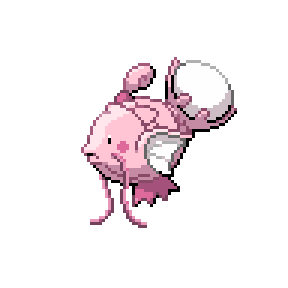
Happidos have powerful parental instincts and will take over any nest where the eggs have been left alone for more than a few hours. They collect the eggs and carry them in a specialised pouch, using their giant bodies to protect them.

Happiotto have special, stiffened feathers across their back that enable them to carry large eggs. They work in flocks to relocate abandoned Pokémon nests so that they can take care of them.

Happinub live in mountain ranges, making their homes at the moraines of glaciers. They spend their time hunting for abandoned nesting sites of other Pokémon, adopting any lost eggs as their own.

Happichu have a pouch in their stomach that enables them to hold small objects. They are drawn to holding magnetic and elemental stones, the energies contained in them bringing them joy to carry.
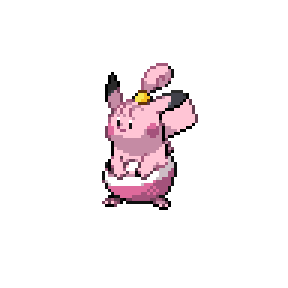
Happichu have a pouch in their stomach that enables them to hold small objects. They are drawn to holding magnetic and elemental stones, the energies contained in them bringing them joy to carry.

Happichu have a pouch in their stomach that enables them to hold small objects. They are drawn to holding magnetic and elemental stones, the energies contained in them bringing them joy to carry.
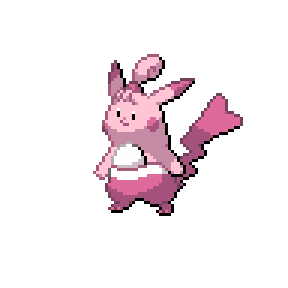
Happichu have a fascination with Pokémon eggs, hanging around the nests of other Pokémon and watching over the eggs in the absence of their parents. They stand protectively over the eggs, shocking anyone other than the parents that try to come close.
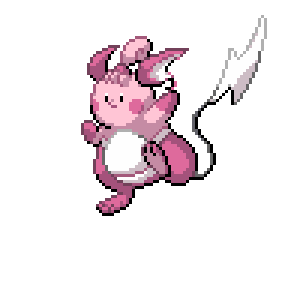
Happitortle clutch Pokémon eggs to their front when they feel a nest is threatened, nurturing instincts compelling them to protect the young. They will turn their backs to anything they feel is dangerous, relying on their thick shell to protect them.

Happitortle have a special hollow in their shell that is the right size and shape to hold Pokémon eggs. They practice for the responsibility of carrying an egg by picking stones from river beds and carrying them until they go a week without losing them.
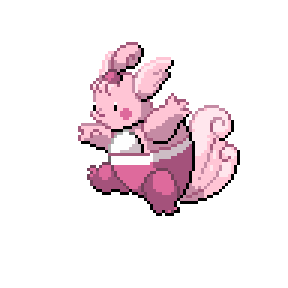
Happitortle have a special hollow in their shell that is the right size and shape to hold Pokémon eggs. They practice for the responsibility of carrying an egg by picking stones from river beds and carrying them until they go a week without losing them.

Happitortle have a special hollow in their shell that is the right size and shape to hold Pokémon eggs. They practice for the responsibility of carrying an egg by picking stones from river beds and carrying them until they go a week without losing it.
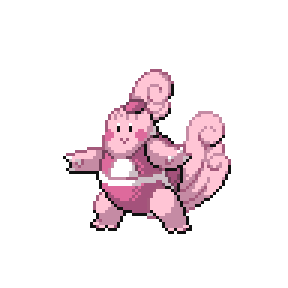
Despite their cumbersome size, Happitoise are delicate Pokémon that take great care to not damage anything when moving around. They love to watch over the nests of other Pokémon, protecting the eggs in the nests they guard.

Despite their cumbersome size, Happitoise are delicate Pokémon that take great care to not damage anything when moving around. They love to watch over the nests of other Pokémon, protecting the eggs in the nests they guard.
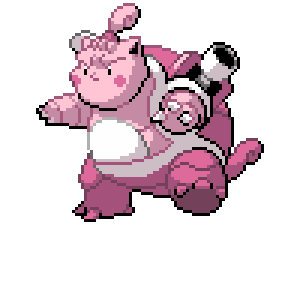
Raifree use a latent static charge to keep their wing scales attached. They can disperse this charge at a moment's notice, releasing a shower of irritating scales at whatever is aggravating them.

Raifree use a latent static charge to keep their wing scales attached. They can disperse this charge at a moment's notice, releasing a shower of irritating scales at whatever is aggravating them.
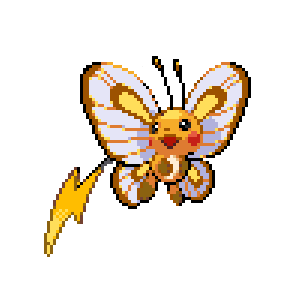
Raiowl are rarely seen outside of thunderstorms, spending most of their days sheltering within tree hollows. When a storm starts, they take to the air, their tail trailing behind them as they try to catch the lightning.

Raipi use the broken remnants of egg shells to protect their bodies, trying to keep themselves safe from harm. They have poor control of their electrical powers and the shell they use often ends up charred and blackened by their shocks.

Raitic are a popular companion of power line engineers, their ability to sense electrical fluctuations making them invaluable in finding faults in lines. They take great pride in helping fix up broken down infrastructure.

Railoom can be found outside power plants, ambling around the fields and playing with one another near the generator buildings. They are drawn to the electrical output and will migrate elsewhere if the power plant ever shuts down.
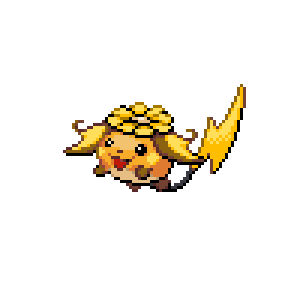
Railoom can be found outside power plants, ambling around the fields and playing with one another near the generator buildings. They are drawn to the electrical output and will migrate elsewhere if the power plant ever shuts down.

Rairaid are fast swimming Pokémon that use electrical pulses to stun other Pokémon in the water. Their long, trailing tail acts to signify their success to other Rairaid, with longer tails indicating a more desirable partner.
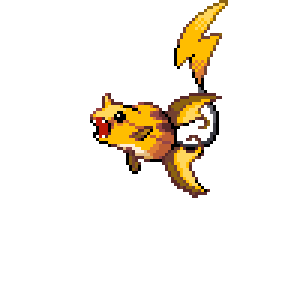
Raidoof channel their electrical powers through their teeth, giving their bites a painful shock. They use this ability to help them chew down trees, biting into the trunk and shocking the sap to make it explode, toppling the tree quickly.

Raidoof channel their electrical powers through their teeth, giving their bites a painful shock. They use this ability to help them chew down trees, biting into the trunk and shocking the sap to make it explode, toppling the tree quickly.
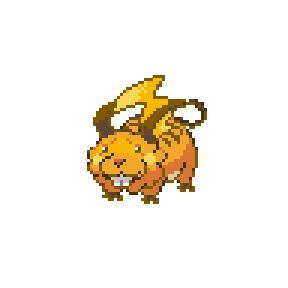
Railup walk together in groups, following their leader in single file. When the group feel threatened, they will huddle together and pool their electric powers, launching a single gigantic thunderbolt as a team.
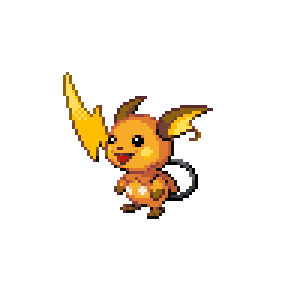
Raiplup squabble with one another for prime nesting locations, regularly stealing stones and sticks from each other to build better nests. When disputes turn aggressive, they will flap their wings and fire shocks at one another.

Raileon strut around constantly displaying their electrical powers as a way to display their superiority to others. The constant show of power is draining and they have to periodically hide themselves away to recharge.

Raiard have a strategic mind and battle in a very methodical manner. This works as a double-edged sword as their preparedness can let them take down those less prepared, but they are inflexible and can be vulnerable to chaotic conditions.
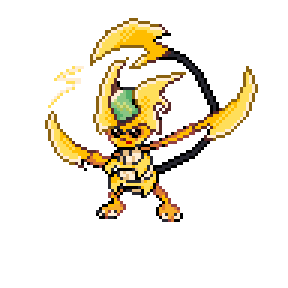
Rainette will lie around in abandoned places like old schools or houses waiting for someone to come by and pick them up. They wait until they have been carried for a while and then give a vicious shock to the person that found them.

Raibarel fur carries a strong electrical charge that can cause painful shocks for other Pokémon sharing the water with them. To control the strength of their electricity they will roll in mud, patting it into their fur to insulate themselves.
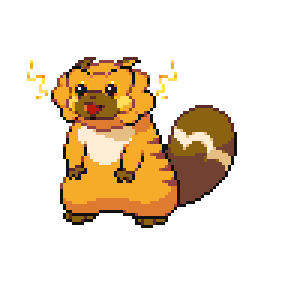
Raision use their conductive gel to communicate with one another, sending complex electrical impulses that are amplified by their bodies. Pokémon Researchers are studying this communication method and attempting to apply it to engineering.

With their soft, plush bodies, Raiful are popular Pokémon with young Trainers. They enjoy being carried around and being squeezed, the yellow patches on their cheeks giving small sparks of joy when they're played with.

Raiwear build static as they move, their fur and fluffy bodies generating electrical potential whilst they fight. They deliver this electrical energy as punches, shocking their foes with powerful strikes.

The parasitic fungi growing within the body of Rairas force the Pokémon to constantly feed so that they have enough energy for themselves and their parasites. The fungi discharge excess energy as electricity, using the shocks to protect their host.

The mushroom growing on the backs of Raisect require a lot of electrical energy to grow. This energy requirement pushes Raisect to dig out electrical cables, biting into them to feed on the power running through them.

Raimite produce a powerful electrical field that allows them to float along the planet's magnetic lines. They move slowly and will always align their magnets along the polarity of the field, sometimes getting caught near powerful generators.

Despite their laidback attitude and willingness to listen to instructions, Munchchu are not advised as good companions for first time Trainers. They have an insatiable appetite and will quickly eat through the savings of the unprepared.

Munchdude is rarely seen at the surface, its voracious appetite leading it to eat its way through the ground in search of minerals. The tunnels left behind in its wake are often used by hopeful prospectors hunting for rare metals.
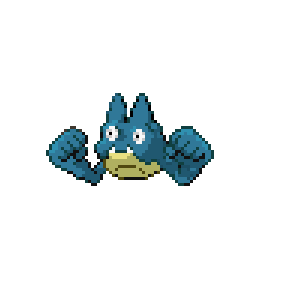
Lickifish has an exceptional sense of taste, navigating the oceans by sensing the differences in water chemistry that tell it if there's food or a predator around. Their saliva has a toxic element, letting them defend themselves with their tongues.

When two Lickixorus fight, they use their immensely long tongues as whips, moving the tips at supersonic speeds. Their formidable-looking tusks are used to cut down trees rather than for fighting, letting them access food high in the branches.

Lickixew uses its tusks to dig into Bug-type Pokémon colonies, feeding on the honey within with its long sticky tongue. It usually can't stay long at any colony as its hide is soft, leaving it vulnerable to retaliation from the angry bugs.
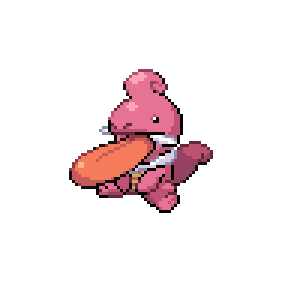
Lickixure uses its powerful tusks to fight with rivals, its long tongue used to try and grapple the tusks of its opponents and prevent a counter-attack. Fights between the Pokémon are often messy as a result.

Lickipoke feeds by using its extraordinarily long tongue as a lure at the water's edge, waiting for unsuspecting Pokémon to bite it so it can reel the food in. Unfortunately, it has incredibly slow reaction times and often lets its food get away.

Tanrock are formed of a loose connection of vines and roots that burrow into and hollow out boulders. They bind these boulders together to form a basic frame with which to move and to protect their vulnerable vines.

Electiwear build up a powerful electric charge within their bodies as they fight, absorbing impacts with their thick fur and converting it into charge. They can unleash this energy in lightning-fast movements or devastating punches.

Togegon are gentle and friendly, having a fondness for helping celebrate special occasions in their communities. Birthdays are a particular favourite and they enjoy taking the birthday person on flights around the neighbourhood.

Togegon are gentle and friendly, having a fondness for helping celebrate special occasions in their communities. Birthdays are a particular favourite and they enjoy taking the birthday person on flights around the neighbourhood.

Togegon are gentle and friendly, having a fondness for helping celebrate special occasions in their communities. Birthdays are a particular favourite and they enjoy taking the birthday person on flights around the neighbourhood.

Sandeen live in lakes that regularly dry out over the summer months. They are able to endure these dry periods by curling their fins in on themselves and letting their scaly skin face the elements, preserving their moisture until the rain returns.

Sandotto soar through deserts in search of food, catching warm updrafts to travel great distances. They have a special second eyelid that protects them from airborne sand, allowing them to fly through sandstorms without ill effect.

Sandpede's bodies are formed of several interlocking segments protected by thick keratinous plates. The tips of their body segments secrete a potent poison that affects anything that touches them.
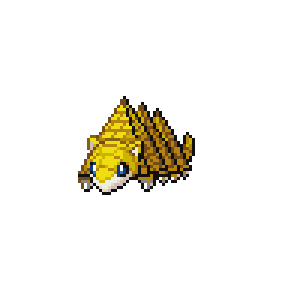
Sandpede's bodies are formed of several interlocking segments protected by thick keratinous plates. The tips of their body segments secrete a potent poison that affects anything that touches them.

Glacetu use their psychic powers to produce beautiful auroras. They are said to be able to read the future in the dancing lights their powers create.
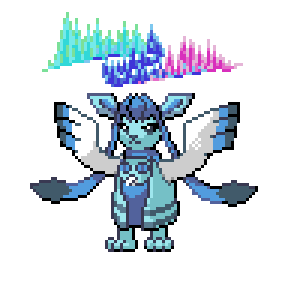
Glacequaza live high up in the atmosphere and make their homes amongst storm clouds. Their bodies are so cold that they cause the clouds they live in to drop in temperature, creating harsh blizzards.
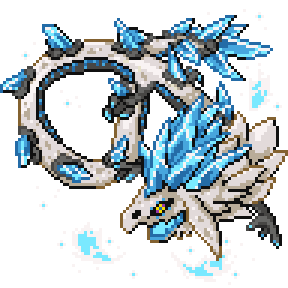
Glacequaza live high up in the atmosphere and make their homes amongst storm clouds. Their bodies are so cold that they cause the clouds they live in to drop in temperature, creating harsh blizzards.
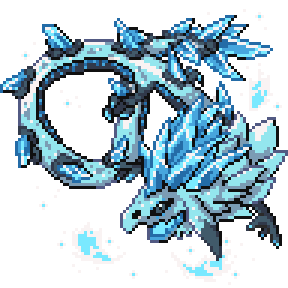
Mamochu live in harsh arctic environments, relying on their bulk and layers of fat to protect them from the cold. During clear weather they shoot bolts of electricity into the sky to communicate across long distances.

The flames streaming from the bodies of Mamota are cold to the touch, sapping heat from anything they come into contact with. Though they're strong and reliable, the risk of hypothermia means it's not advisable to ride them.

Poryeon are technopaths, capable of using their psychic powers to interface with machines and code. Their powers are highly disruptive to electronics though and can result in widespread coding bugs.
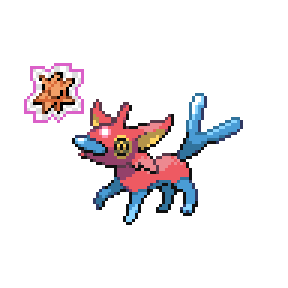
Poryeon are technopaths, capable of using their psychic powers to interface with machines and code. Their powers are highly disruptive to electronics though and can result in widespread coding bugs.

Poryeon are technopaths, capable of using their psychic powers to interface with machines and code. Their powers are highly disruptive to electronics though and can result in widespread coding bugs.
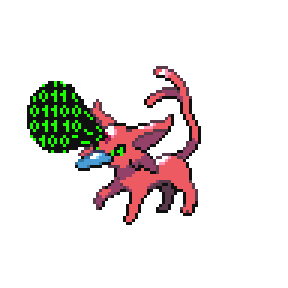
Poryrow exist in digital spaces, soaring across the world through computer code and manifesting in the internet. They are territorial and will fight with one another, causing glitches and crashes in computers, much to the frustration of programmers.
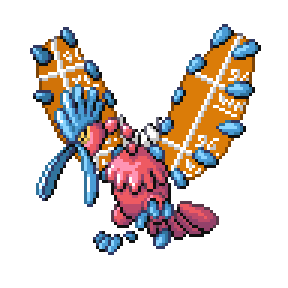
Treepod camouflage themselves amongst the fruits of tropical trees, hanging amongst the fruit until they are ready to evolve. They have very limited ability to defend themselves and will simply drop out of trees to try and escape danger.
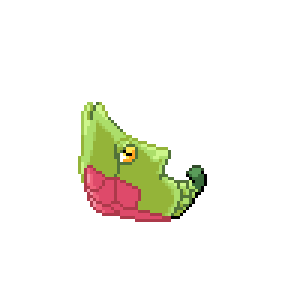
Grorow are popular amongst arborists thanks to their habit of keeping trees clear of dead growth and parasitic fungi, whilst also roosting within them. The bright red tips of their wings add a nice accent to compliment the green of the tree.
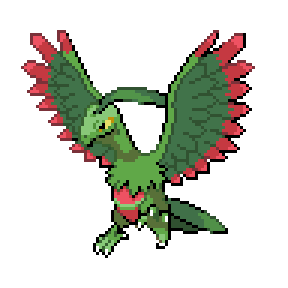
Sceprow roost at the tops of trees, sleeping with their tail feathers raised and wings splayed out around them. The leafy texture of their feathers help to disguise them amongst the trees as they sleep, making them hard to spot.
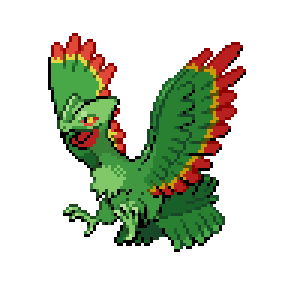
Torchdle have a fiery venom that is caustic to the touch. They prefer not to weaponise it except when genuinely threatened, instead hiding themselves away in tree canopies and within hollows in the trunk.

Torchrak only have a weak poison and rely primarily on mimicry to protect themselves from predators. Their abdomen mimics the appearance of Torchic, relying on the resemblance to the fiery Pokémon to ward away danger.

Torchran are affectionate and curious, their warm personalities making them ideal companions in cold climates. The heat radiating from their small bodies helps ward off the chill, bringing comfort to those around them.

Torchiard hatch in clutches and will imprint on the first Pokémon they see. They follow and protect their supposed parent with great enthusiasm.
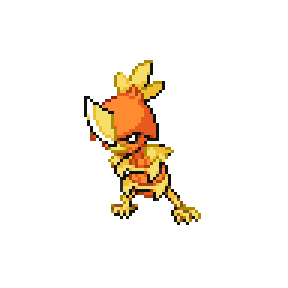
Hoenn Pokémon Professors initially considered Torchkoth to be an appropriate starter Pokémon for new Trainers thanks to its docility and quick evolution. Unfortunately it is also very difficult to motivate and will sleep entire days away.

A Pokémon that loves to dig through loose soil and sand, Sandroc are often used by construction crews to clear building sites prior to work starting. They enjoy the work but have to be watched closely in case they dig too much ground out.

Comrak use their mimicry aggressively, arching their abdomen up high and pretending to be an angry Combusken to spook larger Pokémon. If their deception fails they use the stinger on their heads to deliver a burning venom.

Comiard are obedient combatants, following instructions without hesitation or fear. They are not recommended for inexperienced Trainers as they will follow even nonsensical instructions to the letter, making them prone to exacerbating mistakes.

Comkoth are hard to rouse to take action, preferring to brood over their nests for days on end instead. When they are finally forced to act they use their vicious claws and fight aggressively, trying to end the fight as fast as possible.
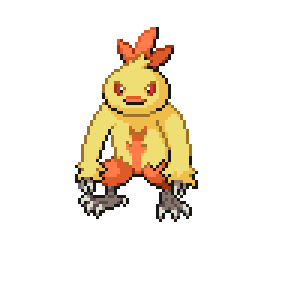
Comroth are aggressive and wilful Pokémon, often racing into battles before their Trainers have even had a chance to issue them instructions. They focus entirely on offense and are not recommended for newer Trainers.
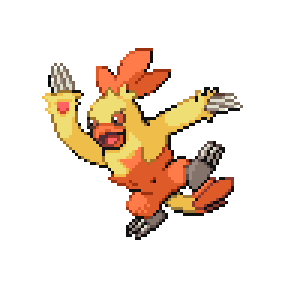
Blados weave webs coated in a poisonous compound that quickly incapacitates any who touch it. Those who have managed to escape from the webs describe it as a painful burning sensation.

Bladile believe themselves to be unequivocally the strongest Pokémon in any competition, and they will fight as though there is no chance of them losing. This can make them obstinate and difficult to control, willing to fight anything.

Bladile believe themselves to be unequivocally the strongest Pokémon in any competition, and they will fight as though there is no chance of them losing. This can make them obstinate and difficult to control, willing to fight anything.
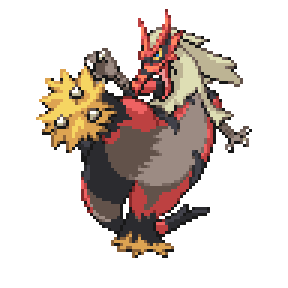
Blatoise superheat water within their shell, keeping a store of steam constantly ready. They can shoot jets of scalding steam out of their cannons when fighting, using the pressure both offensively and to create smokescreens.

Mudnub dig through river mud in search of worms and bugs to feed on, their whiskers picking up even the faintest scent of food. Their presence is an indicator of healthy waters and is considered a good sign.

First found in sunken ruins off the Hoenn coast, Mudolett congregate in long-lost cities drowned by the ocean. Researchers debate if they served in these cities during their prime or arrived after their destruction.

Marshnub feed along the bottom of lakes and rivers, eating detritus that has fallen out of the water. They are generally slow moving, but are capable of bursts of speed by rapidly fluttering their tail fins.
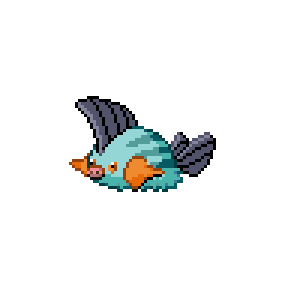
Swampicate dig out extensive burrow networks in the banks of lakes and large rivers, entire family units living within a single burrow. They are adept swimmers and will travel great distances through the water in search of food.
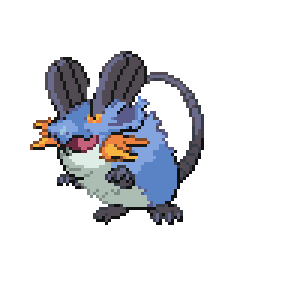
Ralee have poor eyesight and rely on their empathic powers to sense where their opponents are. They lash out from a distance with their long, stretchy legs.
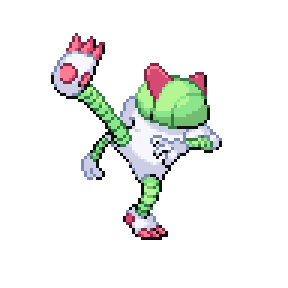
Ralrogue enjoy spending time watching professional fighting matches of all kinds, from Pokémon battles to boxing to wrestling. They get easily swept up in the emotion of such fights and will try to mimic the moves they see.

Ralrogue enjoy spending time watching professional fighting matches of all kinds, from Pokémon battles to boxing to wrestling. They get easily swept up in the emotion of such fights and will try to mimic the moves they see.
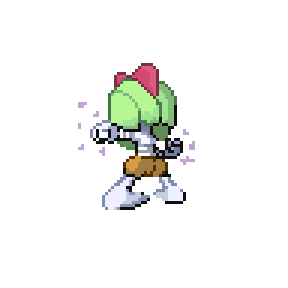
Ralbat navigates by projecting out psychic waves into its environment. It senses the returning signals with a trio of sensitive structures on its head. It can differentiate between living things by feeling their thoughts, letting it avoid danger.
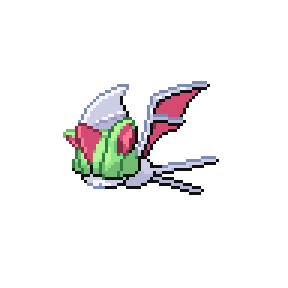
Kirlia are a favourite for Pokémon contests, their dancing being well co-ordinated and aesthetically pleasing to behold. They sense one another's emotions and can dance in synchrony with one another.
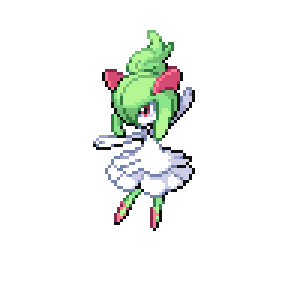
Kireanie lure prey by projecting images of safety and warmth with their psychic powers, tricking targets into approaching. Once close enough, they strike with toxic stingers, revealing the ruse too late for their victims.
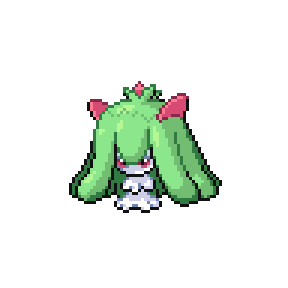
Gardelia move with unearthly grace and poise, their dances bringing even the harshest critics to tears. Gardelia are a common feature on winning Pokémon Contest teams.
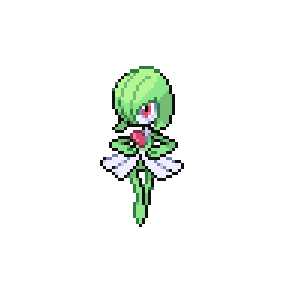
Shedpod will sometimes form from the chrysalis left behind when a Butterfree emerges from its cocoon. Researchers have had a hard time determining how Shedpod become animated with some travelling to Hoenn to study Ninjask evolution for comparison.

Shedpod will sometimes form from the chrysalis left behind when a Butterfree emerges from its cocoon. Researchers have had a hard time determining how Shedpod become animated with some travelling to Hoenn to study Ninjask evolution for comparison.

Shedle live a sedentary lifestyle, barely moving from their positions on their home tree. Researchers argue over how such a small Pokémon can be in the open without hiding from predators, the leading theory being that they are simply unpalatable.

Shedotto are found in and around abandoned Pokémon nests, brooding over the empty structures as though protecting something that's no longer there. They show little reaction to outside stimuli and appear to need no food or water.

Shedrow roost at the tops of trees, sleeping with their tail feathers raised and wings splayed out around them. The leafy texture of their feathers helps to disguise them amongst the trees as they sleep, making them hard to spot.
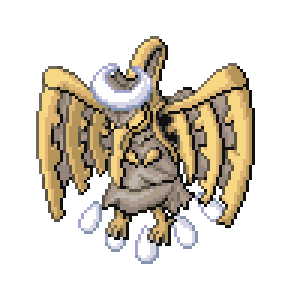
Shedchu appear during thunderstorms, their bodies attracting repeated lightning strikes. Despite their conductivity, they never appear to show damage from the bolts that strike them; instead they remain motionless within the storm until it passes.

Shedjask have failed to fully pull free of their chrysalises as they become adults. The animated spirits that would normally produce a Shedinja instead bond with Shedjask, trapping it in increasing layers of failed sheds.

Nidoba use their sharp incisors to bite through the bark of a tree's trunk and feed on the sap within. They prefer to feed on toxic species, incorporating the poisons into their own bodies to deter predators.

Nidotoise have a small number of spines coating their head to deter people from touching their body. The spines are coated with an aggravating toxin and are the only part of their head that stays sticking out of their shell when they withdraw.

Kectom is able to adapt itself to different electronic signatures, altering its own frequencies to allow it to exist within electrical equipment without disrupting it. Some Trainers don't even realize their Pokédex is playing host to a Kectom.

Belursa are artificial Pokémon that were created with the hopes that they could be used to safely study the behaviours of more dangerous wild Pokémon. They have a strong desire to be loved and use discarded fabrics to try and look like real Pokémon.

Metgar uses its gigantic claws to cling to the roofs of caves, 'walking' across the ceiling to traverse in the dark. When it needs to, it can clumsily fly through manipulation of magnetic fields.

Metamortar have an iron-clad body that contains a furnace that burns as hot as the surface of the sun. They can launch controlled blasts of this intense heat from their arms.
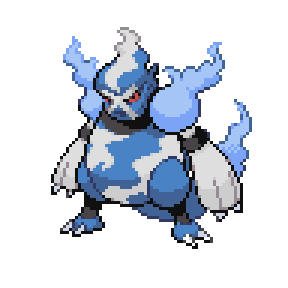
Though cumbersome in flight due to its weight, Metacor is a surprisingly adept glider. It lives near cliffsides and high peaks, using those to launch itself and use its bulk to barrel into other Pokémon or Trainers.

Bifing can be found around abandoned natural dams, feeding off the rotted wood. The gases it produces are highly flammable, leading some enterprising Trainers to try and harvest the gas as fuel to sell.

With teeth that are constantly growing, Bishrew will gnaw at trees to wear their teeth down. The falling trees will sometimes land on top of them, Bishrew curling up into a ball to endure the collapsing trunk.

Bidoof have incisors that grow at a prodigious rate. They try to gnaw through wood as quickly as possible in order to keep them under control. Unfused Bidoof will try and help Bidoof, bringing them plenty of logs to chew on.

Forests with large populations of Bidos have large open glades within them, the trees that would have grown in the glade having been rammed down by them. The fallen trees are pulled together to make shelters from the weather.

Biwig live in densely forested regions, gnawing through the bark of fallen trees for sustenance. Their fur is often coated in dense layers of mud, with small sprouts of plant life growing from it.

The fungus growing on the body of Biras is remarkably high in lignin. This gives it a very wooden texture. In order to fuel the growth of these fungi, Biras will seek out tree bark as its primary food source.

Bimantis work tirelessly to replant tree groves that have been over-harvested. They gather the nuts and seeds of nearby tree species and plant them haphazardly in open spaces in the hopes of reforesting the area.
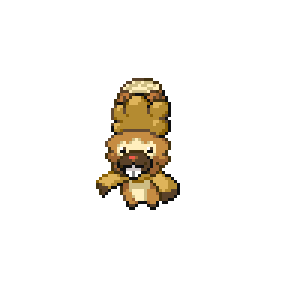
Bifetchd gnaw at the plants in their environment to create sticks that they can carry with them. They don't use the sticks for fighting, instead waving them about in competition with others to see who has the largest stick.
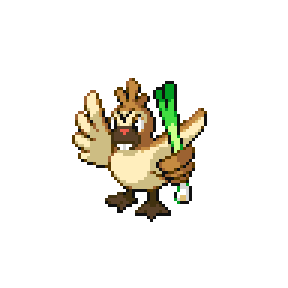
Bifetchd gnaw at the plants in their environment to create sticks that they can carry with them. They don't use the sticks for fighting, instead waving them about in competition with others to see who has the largest stick.
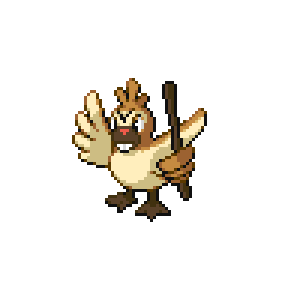
Lucadrill can sense the aura of other Pokémon and will seek out the strongest aura within their territories, flying toward them to battle. Their eagerness to fight makes them popular companions for Black Belts.
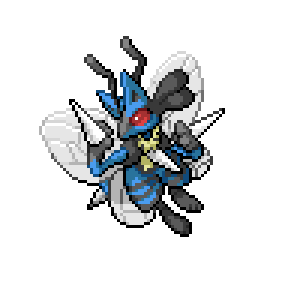
Lucadrill can sense the aura of other Pokémon and will seek out the strongest aura within their territories, flying toward them to battle. Some Lucadrill interact strangely with rogue Mega energy, their speed and aggression dramatically increasing.
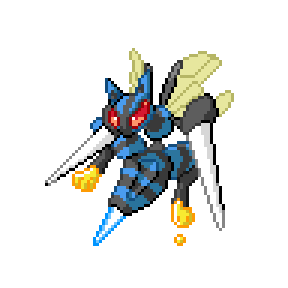
Lucaolu are combatants that are eager to learn, spending most of their time training and shadowing other Fighting-Type Pokémon to mimic their techniques. They lack the reach of larger Pokémon, meaning they struggle to copy every technique.
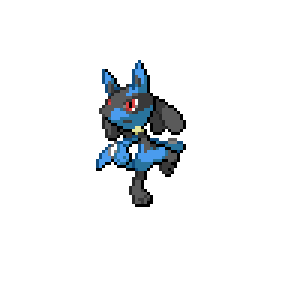
Gibnub dig through loose soil and debris at the foot of glaciers in search of the remains of Pokémon that have perished in the harsh weather. They have an acute sense of smell and Rangers use them to help find lost Hikers.

Gibnub dig through loose soil and debris at the foot of glaciers in search of the remains of Pokémon that have perished in the harsh weather. They have an acute sense of smell and Rangers use them to help find lost Hikers.
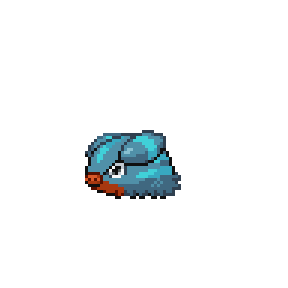
Gibizard nest in small family groups in craggy terrain, choosing isolated locations to lay their eggs. Though voracious hunters, they are clumsy in the air and easy to evade if spotted early.

Gabnub aggressively hunt through shallow soil and scree around cliff faces, using their acute sense of smell to hone in on food. When they find something they think they can eat, they bite at their prey and try to wrestle it underground.

Gabnub aggressively hunt through shallow soil and scree around cliff faces, using their acute sense of smell to hone in on food. Some Gabnub sport a large fin on their backs, letting them move faster at the expense of being more visible.
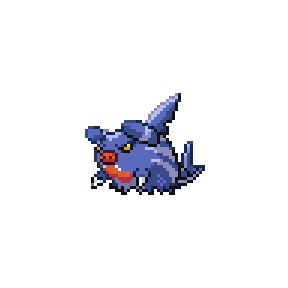
From a distance, Gabizard are easily mistaken for Gabite. They are larger and more aggressive than Gabite, spouting blue flames from their heads when angry.

Venulee have photosynthetic cells laced throughout their skin that enable them to gain energy directly from the sun. They use this energy to fuel lightning fast kicks, maintaining a speed that is hard to match by their opponents.
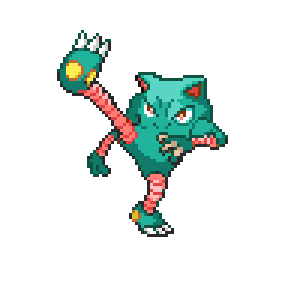
Venuhorn gather soil in the crags and crevices between their armour plates. The plants that grow in amongst these crags are tended to by Venuhorn. They take their time finding both sun and rain to keep them healthy.
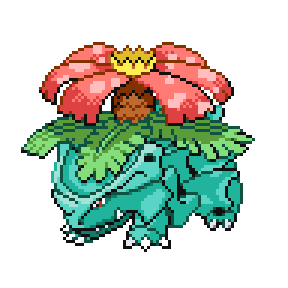
Venudra live in tropical estuaries, their brightly coloured fins helping them blend in with leaves and petals floating at the surface of the river. They are aggressive when disturbed, shooting concentrated streams of water at their aggressor.
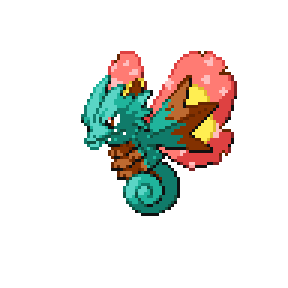
A Pokémon typically found in tropical regions, Venudos is known as the herald of the monsoon season. They are normally sighted ahead of or during torrential downpours and floods, and as a result, they have a reputation for violence and destruction.

A Pokémon typically found in tropical regions, Venudos is known as the herald of the monsoon season. They are normally sighted ahead of or during torrential downpours and floods, and as a result, they have a reputation for violence and destruction.
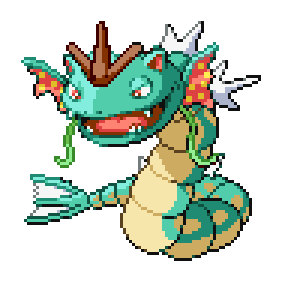
Venuquil produce highly flammable pollen from the plants growing along their body. Their body temperatures are high enough that they will sometimes inadvertently cause the pollen to spontaneously combust.

Venuquil make their homes around the fertile soil at the base of volcanoes. They make use of the nutrients in the soil to grow a vivid petal crown to display to one another.
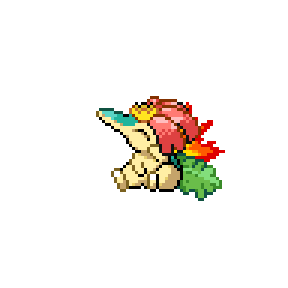
Venulava have a coating of bark across their stomach to help protect them when they dig underground. When they sleep they do so with their head resting outside of their burrows, letting their petals drape around them and absorb sunlight.
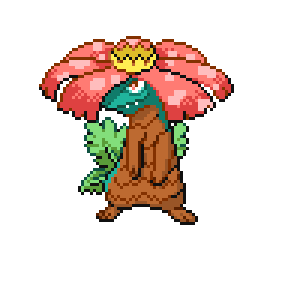
Even in the depths of winter, the plants surrounding the nape of Venulosion are able to keep growing thanks to their high internal body temperature. They flash their petals to signal at one another and resolve territorial disputes without fighting.

Even in the depths of winter, the plants surrounding the nape of Venulosion are able to keep growing thanks to their high internal body temperature. The colouration of the fronds they grow is a good indicator of the Pokémon's health.

Venulosion emit a constant cloud of nearly invisible pollen from their backs. When they are preparing to fight, they light a small spark from their fur that ignites this pollen cloud and creates an intimidating, fiery display.

Venulosion emit a constant cloud of nearly invisible pollen from their backs. When they are preparing to fight, they light a small spark from their fur that ignites this pollen cloud and creates an intimidating, fiery display.

When at rest, Venubat can be easily mistaken for Venusaur. They use this similarity to safely hide from Pokémon that wouldn't attack the large Grass-Type but would be dangerous to them, the deception only being revealed when they take off.

The pollen that comes from the flowers sprouting out of Venuturn is both hydrophobic and luminescent. Venuturn leave a glowing trail in their wake as they swim thanks to this pollen, creating the illusion that they are swimming through a night sky.

Venuturn live in low visibility rivers that are thick with mud and silt. Their flowers typically trail at the surface to absorb sunlight, but they can react with water to create a potent electrical charge.

Venuwoodo are popular Pokémon for stage performances as their vividly coloured flowers and long draping leaves make very eye catching. It takes a lot of coaching for them to perform for larger crowds as they tend to freeze up with too much attention.
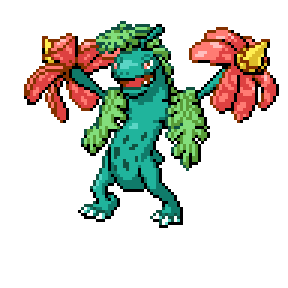
Venubull are popular Pokémon amongst some Pokémon Contest Trainers, often dressed up in all sorts of unique outfits. They are patient with their Trainers during this, happy for the attention.

Venubull fluff up their petals and leaves to make themselves look larger and more intimidating than they are. They are good at scaring off smaller Pokémon, but they struggle to convince larger Pokémon that they're a real threat.
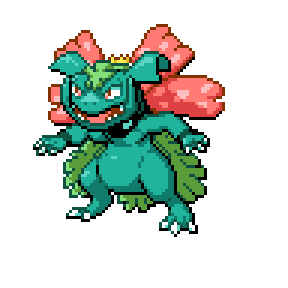
Venubull fluff up their petals and leaves to make themselves look larger and more intimidating than they are. Venubull with less developed petals end up being more aggressive as compensation for their less threatening appearance.
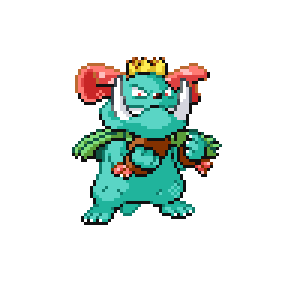
Venucargo live on tropical islands that have high levels of volcanic activity. They travel out onto cooling lava flows, a special enzyme from their bodies dissolving the basalt and letting them absorb the rich nutrients to fuel their flower's growth.

Venunub slowly shuffle through leaf litter in search of fungi, using their acute sense of smell to do so. They are so slow moving that plants take root in their back, sprouting into full flowers and helping them stay safe through camouflage.

Venuswine keep themselves warm during the colder months by growing a dense coating of leaves from the symbiotic flower growing on their back. These leaves provide a food source in the summer months, but have a habit of obstructing their vision.
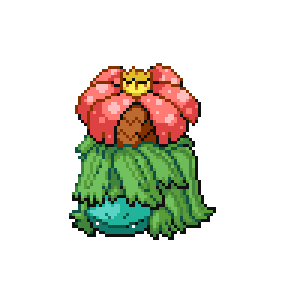
Venullery are able to leave the water for prolonged periods of time, their symbiotic plants letting them breathe despite being in the air. They'll use this ability to escape larger Pokémon, pulling themselves into bushes to hide until they feel safe.

Venullery are able to leave the water for prolonged periods of time, their symbiotic plants letting them breathe despite being in the air. They'll use this ability to escape larger Pokémon, pulling themselves into bushes to hide until they feel safe.
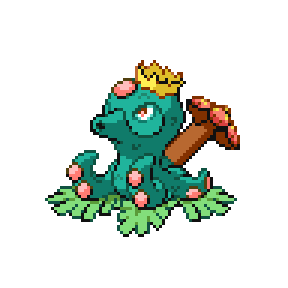
Venuphan will find a bush to sleep in and are well disguised by their flowers and leaves when resting. When awake, they have a habit of using their incredible strength to topple trees to get to the fruit that would otherwise be out of their reach.

The pollen is a powerful irritant and can cause paralytic, soporific, or even poisonous effects when inhaled.
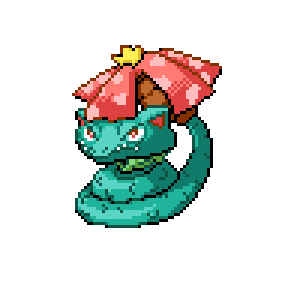
Adventurous Trainers are advised to take care when traversing jungles that are home to Venubok. Their colouration and flowers make them blend in to the undergrowth and it is easy to accidentally step on one, which will always cause them to strike.
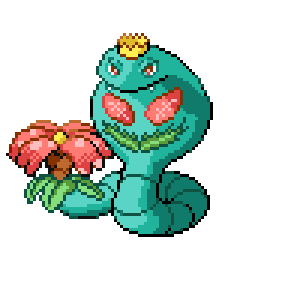
Venubok usually keep their petals flush to their neck to make it easier for them to slither around. When they want to scare off a rival they will flash their petals into a full flower, making themselves abruptly look larger.
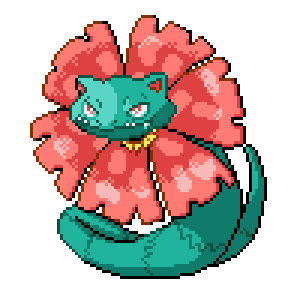
Adventurous Trainers are advised to take care when traversing jungles that are home to Venubok. Their colouration and flowers make them blend in to the undergrowth and it is easy to accidentally step on one, which will always cause them to strike.

Venuswine have symbiotic algae living in their skin ensuring that they have a source of food even in the winter. During the summer, they produce an impressive leafy facial display along with growing gigantic flowers on their back.
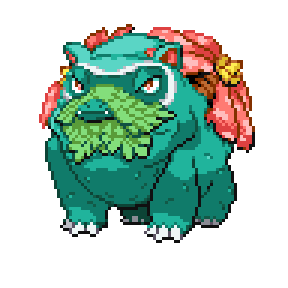
Venuswine have symbiotic algae living in their skin ensuring that they have a source of food even in the winter. They grow a fine shaggy coat of moss in the winter, and some grow thick woody tusks.

Venulia are a common companion for Beauties intent on winning Pokémon talent contests. They have an innate sense of timing that makes them excellent performers, their petals and leaves flaring out as they pirouette across the stage.

Venuvoir have a love of gardening and will spend hours working alongside their Trainer to cultivate beautiful fields of flowers. Their empathic powers enable them to sense when a given flower needs extra care and attention.

Venuvoir have an empathic link to flowering plants and are drawn to areas that are in full bloom. They use their powers to aid them in battle, wielding whirls of petal blossoms as dangerous attacks.

Venusaur are Pokémon that have gathered enough energy from sunlight to trigger a partial evolution, most commonly encountered during the winter due to the weaker sunlight. They maintain the confidence and posture of a fully evolved Pokémon.

Venuwig blend in nearly perfectly with jungle foliage, making them extremely difficult to find in the wild. If a Trainer succeeds in capturing one they will find that they make for exceptionally amiable companions.

Venutle can become hyperactive after spending long enough in the sun, rushing with a surprising speed through the forest. They are not mindful of their bulk when doing so and often leave a trail of smashed branches and bushes in their wake.
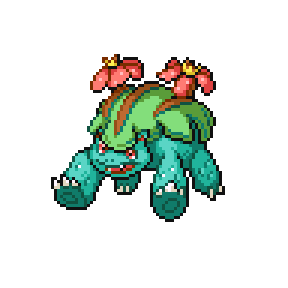
Venuterra support a wide variety of plants on their backs and are sought after by field researchers to get a good sense of the local flora. In tropical regions, Venuterra carry giant, vibrant flowers that draw a variety of Bug-Type Pokémon.

Venuterra support a wide variety of plants on their backs and are sought after by field researchers to get a good sense of the local flora. On small islands they have very low floral diversity, often carrying just a single flowering cycad.

Venuterra support a wide variety of plants on their backs and are sought after by field researchers to get a good sense of the local flora. In dense jungles they carry a variety of shrubs and bushes that make them especially hard to find.

Venuterra support a wide variety of plants on their backs and are sought after by field researchers to get a good sense of the local flora. In temperate regions they carry a variety of flowers protected by trees and are important for pollinators.

Venuterra support a wide variety of plants on their backs and are sought after by field researchers to get a good sense of the local flora. In some rural settlements they are trained and kept as a reliable source of fruit for the community.
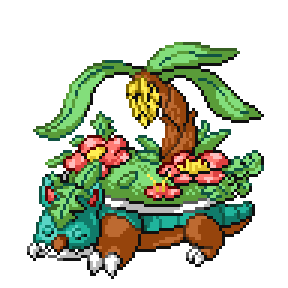
Venuterra support a wide variety of plants on their backs and are sought after by field researchers to get a good sense of the local flora. In warmer regions they will host flowering trees, searching for well lit areas to help them grow.
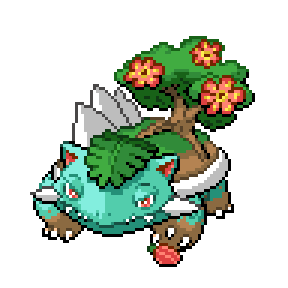
Venujask whir their petals rapidly to enable them to fly. The vines growing from their body act in a similar way to sensory hairs, alerting them to nearby obstacles to be avoided.

Venucada have bodies that play host to a large variety of parasitic flowering plants. They are constantly forced to seek out tubers and plant roots to provide their bodies with enough nutrition to grow.

The flower on the back of Venuinch grows extremely quickly and requires very little water. When there is rain in the desert, Venuinch colonies bloom and fill the desert with colour.

Venuva travel great distances through the desert in search of oases to drink from. When they find one, they will stay nearby for as long as it remains full of water, sunning their petal-like wings to regain energy for their next flight.
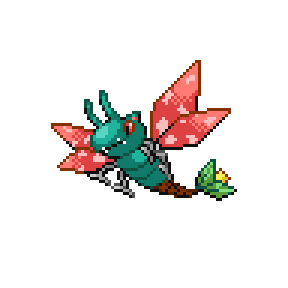
Though at first glance they appear healthy, Venusect carry an aggressive fungus that parasitises their flowers. The fungus leeches the nutrients that would otherwise go to the Pokémon, forcing them to eat more than usual to make up the shortfall.

Venulett are easily mistaken for cycads when they're at rest as only their flower is constantly above ground. It becomes far clearer that they're actually Pokémon once the presumed flower begins moving around through the dirt.
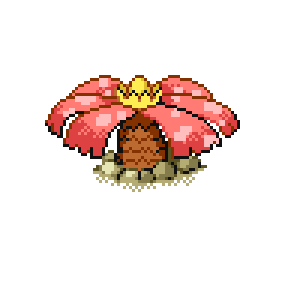
When Venulett want to get an idea of where to find water, they will poke their heads out of the ground and unfold the leaves they usually keep safe. Their leaves are sensitive to moisture in the air, letting them figure out where to get a drink.

Venueel lounge on tropical beaches, raising their tails high in the air to catch as much sunlight as possible. They are cumbersome on land but graceful in the water, their fronds billowing behind them as they swim.
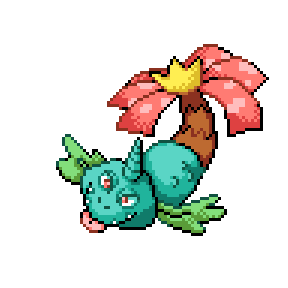
Venugong can be found lounging on tropical beaches, enjoying the sunlight and warmth to be found there. They are clumsy whilst moving on land but can use their petals as fins to dart gracefully through the water when they return to it.

Venugong can be found lounging on tropical beaches, enjoying the sunlight and warmth to be found there. They are clumsy whilst moving on land but can use their petals as fins to dart gracefully through the water when they return to it.

Venutoise develop metallic sheaths that protect their vines from harm whilst they are retracted within their shells. They can extend their vines and control their movement as will, using them to attack from a safe distance.

Venutoise develop metallic sheaths that protect their vines from harm whilst they are retracted within their shells. They can extend their vines and control their movement as will, using them to attack from a safe distance.

Nidoba refine the toxins from the plants they consume within their bodies, incorporating them into their skin and carapace. Direct skin contact is not recommended as it can result in a nasty rash.

The spikes on the elytra of Nidoian drip a noxious toxin that can cause days of sickness if touched. They are standoffish and will jealously guard their territory and food sources against interlopers.

Nidorow maintain large territories around the foothills of Mt. Moon. They are aggressive toward other Nidorow, squawking loudly and making large threat displays with their wings to try and scare their rivals away from their homes.
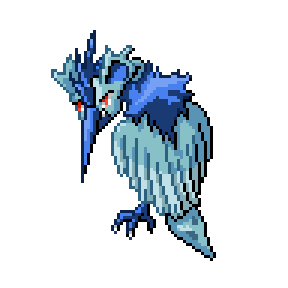
Mawturn lurks deep in the ocean and makes its home in dark crevices where its lure produces the only light around. Prey Pokémon often mistake its lure for young Chinchou; Mawturn takes advantage of this and strikes at its unsuspecting target.

Mawturn lurks deep in the ocean and makes its home in dark crevices where its lure produces the only light around. Prey Pokémon often mistake its lure for young Chinchou; Mawturn takes advantage of this and strikes at its unsuspecting target.

Anolithe are pleasantly warm to the touch and enjoy being close to both people and other Pokémon. They make excellent companions at Pokémon Daycares and will happily look after any eggs that may turn up within them.
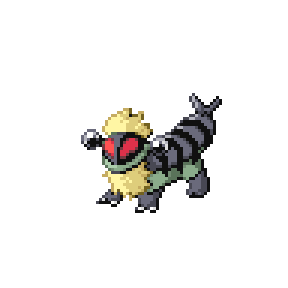
Anonine are hot to the touch, their bodies containing an intense fire. They periodically discharge this heat by exhaling great gouts of flame.
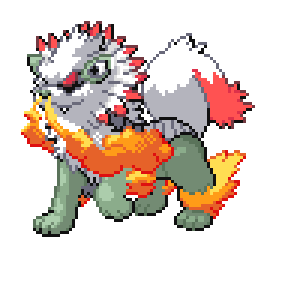
Anonine are hot to the touch, their bodies containing an intense fire. They periodically discharge this heat by exhaling great gouts of flame.
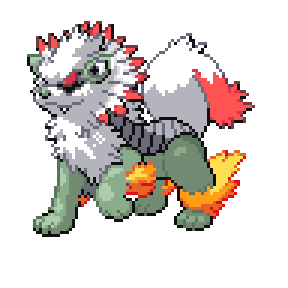
Fossils of Armdily are found in Galar, fossil researchers there resurrecting the fossil Pokémon from fragmentary remains. In life, Armdily anchor themselves to the sea floor and lash out at passing Pokémon to try and catch them as food.

Fossils of Armdily are found in Galar, fossil researchers there resurrecting the fossil Pokémon from fragmentary remains. In life, Armdily anchor themselves to the sea floor and lash out at passing Pokémon to try and catch them as food.

Ramnite are capable of flying at supersonic speeds, racing across the skies. They have extremely hard heads and use these to battle with one another, a collision between two Ramnite sounds like a thunderclap.

Ramnite are capable of flying at supersonic speeds, racing across the skies. They have extremely hard heads and use these to battle with one another, a collision between two Ramnite sounds like a thunderclap.

Shielsaur are prehistoric Pokémon that had been thought to be extinct until a live population was found in Eterna Forest in Sinnoh. They have a sturdy seed sprouting from their back, the husk of which is several inches thick and difficult to crack.

Bastiosaur are slow moving Pokémon that trudge through mountain passes in small family groups as they follow the movement of the sun. They are hardy and rugged, their skin rich in minerals that toughen against physical impacts.
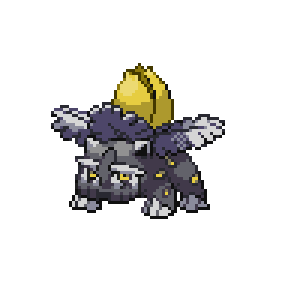
Nidoian have toughened skin and carapaces. Their stiff coatings mean they are not particularly mobile Pokémon, but anything that does manage to take a bite out of them finds them to be foul tasting and unappetising.

Nidotress are never seen outside their shells, constantly sheltering inside them. They move around using their powerful arms, lumbering from one feeding site to the next.

Nidoape secrete a potent venom in their fur that poisons any Pokémon that touches them. They will consume some of their own venom before getting into fights, letting it drive them into a frenzy.

Nidoape secrete a potent venom in their fur that poisons any Pokémon that touches them. They will consume some of their own venom before getting into fights, letting it drive them into a frenzy.

Nidotoise fight using their impressive bulk, slamming their tough shells into one another with body slams that can shatter tree trunks. They are prone to aggression and will readily battle other Nidotoise on sight.

Abetta have a fondness for performing tragic ballads, their songs inspiring a sense of melancholy in the listener. They are commonly found in the wake of disaster where they perform in an effort to offer solace to those listening.
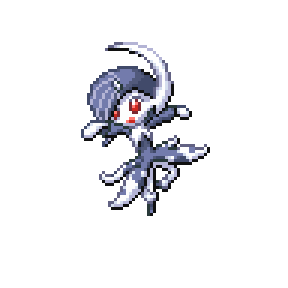
The scythe Abetta wields produces eerie music as it cuts through the air. Abetta are adept at wielding it, forming mournful dirges in battle that instill a sense of foreboding in the listener.

Abty lurks in dark alleys within cities, where they watch for fights and other street violence before jumping in. Despite their mean appearance, they always side with the underdog and will try their best to protect them.
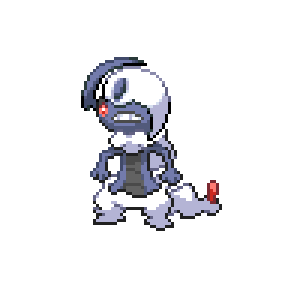
Dusaur arise within Pokémon graveyards, haunting the grounds in the dead of night. Their bulbs and leaves are completely dead, devoid of the chlorophyll that would otherwise give them colour and leaving them unable to enjoy the warmth of the sun.
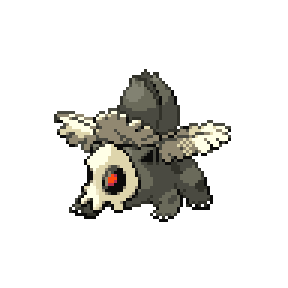
Dusicate are only ever seen in full at night, their shadowy bodies forming around the bleached skull that forms their head. During the day, Dusicate are indistinguishable from an ordinary Raticate skull.
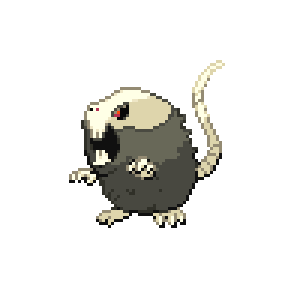
Dusaur are mostly encountered in the autumn, haunting farmer's fields and hiding amongst pumpkin patches. Their presence is detrimental to growth as they draw lifeforce away from the plants they hide amongst to sustain themselves.
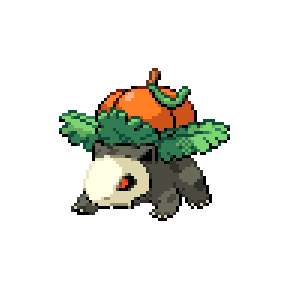
Dusaur arise within Pokémon graveyards, haunting the grounds in the dead of night. Some Dusaur have lingering traces of life in their bulbs and they try to catch as much of the sunset as they can to try to encourage some returning growth.

On nights where the moon isn't visible, Dustoise manifest in long dried-up riverbeds and lakes. They can be seen floating through the air as though swimming in the long-gone waterways.

The orb at the centre of the leaves on the backs of Duscsaur is completely white when they are asleep, only taking on their characteristic eerie red glow when the Pokémon are awake. Researchers theorise they use this orb as a means to see.

Duscicate haunt sites where a lot of Pokémon are buried, drawn to the melancholic mood surrounding these places. They hide from mourners, drifting into walls to keep out of sight; they remain audible with an eerie chattering noise from their teeth.

Duscno drift through the depths of night in search of lost people and Pokémon. They have malice deep in their hearts, leading those they find further and further from safety until they find somewhere secluded to attack them.
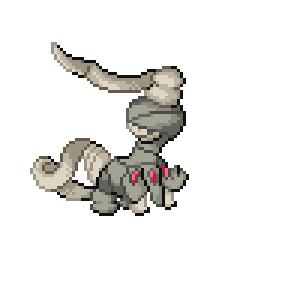
Dusctoise can be seen moving through desert wadis at night, prowling through the dried-out remains of the riverways as though in search of water. They disappear at the start of the rainy season and are not seen again until the water stops flowing.

Duskuna can sense the life force of other living beings through the golden antennae on its head. It uses this sensitivity as an early warning system, making themselves intangible when potential danger approaches.
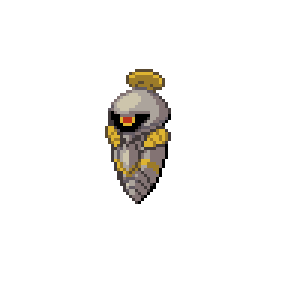
Waildon lumber across the sea floor on continental shelves, patrolling vast territories in search of food. When two Waildon meet they are prone to clashing over control of their territory, battles between them capable of triggering tsunamis.

The solid metal that forms the anchor point for Arctomb is thought to have formed from the very first stars. Staring deep within the incorporeal body of an Arctomb is rumoured to let you see back in time to the Big Bang.

Turbok live in forests with extremely fertile soil, making nests and burrows within the loam. Soil gets caught in between their scales as they slither around; this allows plants to take root and begin to grow along their body.
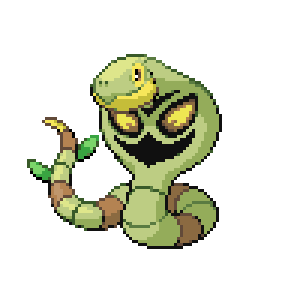
Tursaur are slow moving Pokémon that lumber through jungles individually or in pairs. They feed on young plant growth, using their beaks to bite through the tender stems.
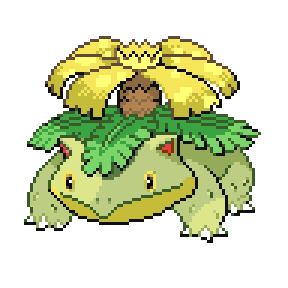
Grochu give off an ambient electrical field that is beneficial to the growth of plant life. They are popular Pokémon at arboretums thanks to this, their presence helping to ensure healthy growth for the trees under the gardener's care.
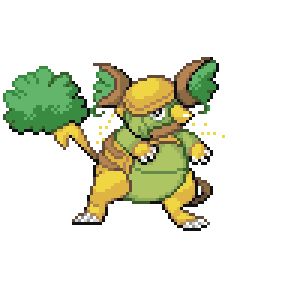
Grosaur support a miniature ecosystem on their backs, various bush species growing alongside the large flower sprouting from them. Their presence is regarded as a good sign that a region has a thriving environment.
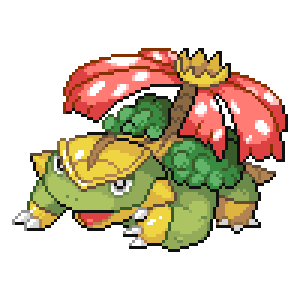
Torgeot trail tree pollen as they fly, dispersing it throughout the jet stream. Their migratory routes are verdant and lush, full of forests grown from generations of Torgeot flights.

Torgeot trail tree pollen as they fly, dispersing it throughout the jet stream. Their migratory routes are verdant and lush, full of forests grown from generations of Torgeot flights.
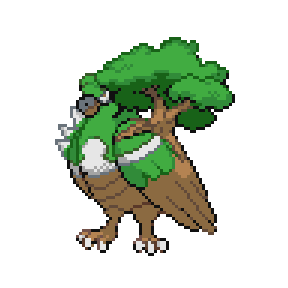
Torchu spend their days lounging in the sun, passively absorbing sunlight to help grow their symbiotic plants. The plants provide them with enough nutrients to allow them to generate electrical shocks from their cheek spikes.

Herds of Torsaur play an important role in forest ecosystems, their grazing grounds being areas kept clear of large trees allowing shrubs space to grow. The plants growing on their backs provide an alternative source of nectar for smaller Pokémon.

Herds of Torsaur play an important role in forest ecosystems, their grazing grounds being areas kept clear of large trees allowing shrubs space to grow. The plants growing on their shells provide an alternative source of nectar for smaller Pokémon.
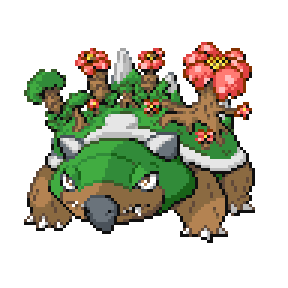
Chimgey live in the canopy of jungles, hooting loudly at one another to communicate through the dense foliage. At night their flames can be seen in the treetops from a great distance.
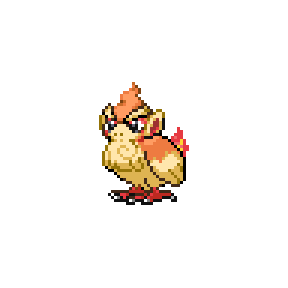
Nidogey develop strong rivalries with one another, often squabbling over scraps of food or nesting spots. Their combative nature and ease to train make them popular amongst aspiring Ace Trainers.

Nidoran are highly territorial and aggressively defend their territories from rivals. Researchers speculate that this behaviour stems from combining the latent combative instincts of their unfused counterparts into one body.

Nidobat are completely blind and navigate through the air entirely through powerful sonar. Each Nidobat sings out a completely unique song when they're flying which lets them listen for their own calls no matter how many are flying together.
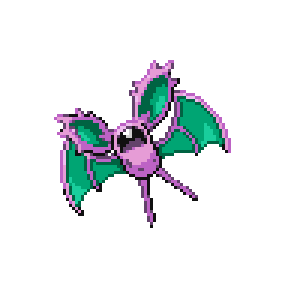
Nidobat are completely blind and navigate through the air entirely through powerful sonar. Each Nidobat sings out a completely unique song when they're flying which lets them listen for their own calls no matter how many are flying together.

Nidobat are completely blind and navigate through the air entirely through powerful sonar. Each Nidobat sings out a completely unique song when they're flying which lets them listen for their own calls no matter how many are flying together.

Monicate form colonies in rainforests, gnawing out burrows within the trunks of giant trees. If a colony grows too large they become a danger to the health of their host tree, creating hollows within the trunk that can eventually cause a collapse.
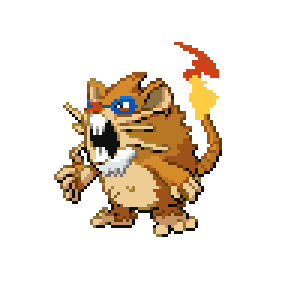
Infericate teeth are extremely sharp and constantly growing, they have a bite force that enables them to chew through stone and some metals. If they encounter something too tough to gnaw, they use their flames to soften it first before trying again.
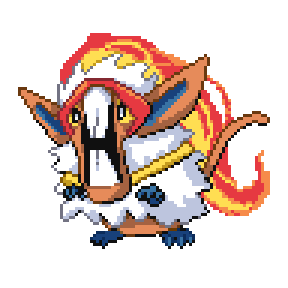
Inferock stand guard at holy sites in Hoenn and are stationed as statues at the entrances to temples. When roused to guard against attacks, they produce intense flames from their body.
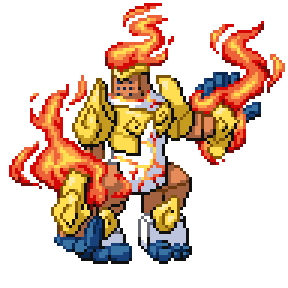
Inferock stand guard at holy sites in Hoenn and are stationed as statues at the entrances to temples. When roused to guard against attacks, they produce intense flames from their body.
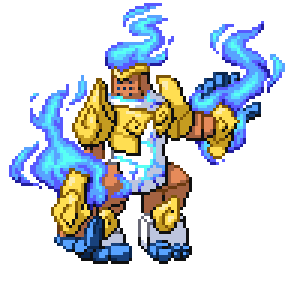
Inferock stand guard at holy sites in Hoenn and are stationed as statues at the entrances to temples. When roused to guard against attacks, they produce intense flames from their body.
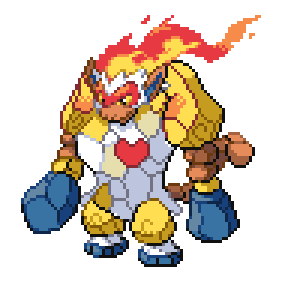
Pipod spray a coating of water around themselves, allowing it to freeze in the harsh cold of their polar home to form a protective icy cocoon. They do this to keep themselves safe during winter months, thawing out as summer arrives.
Pipod are coated in stiff, waterproof feathers that help shield them from physical harm. They migrate by attaching themselves to icebergs, drifting out to sea in search of new homes.
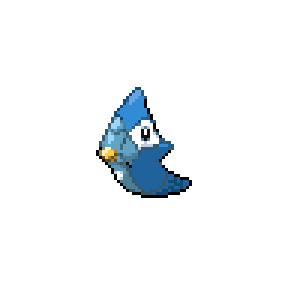
Printoise are prideful and overconfident in their own abilities. They have a habit of picking fights with stronger Pokémon if they feel they've been slighted, relying on their cannons to equal out any discrepancies in strength.
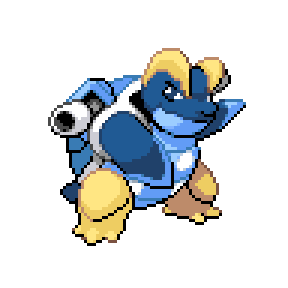
Empotoise strut around with a regal bearing, confident in their superiority to all other Pokémon around them. Their haughty attitude makes them unpopular with others, but their bulk and tough shell make challenging their superiority complex difficult.

The sharp stinger on the tail of Honpie acts more as a deterrent than a real weapon. They are not strong enough to swing it with any force but will raise it menacingly when they feel endangered.

Hongeot wield a metallic beak as their primary weapon, pecking viciously at those who get too close. They were popular Pokémon to depict on heraldic banners in medieval times, the Pokémon being romanticised as a chivalric symbol.

A Pokémon first discovered in the middle ages, Honolett were rumored to be found on ancient battlefields. Ancient texts speak of them being used in wars and battles, serving as squires to knights.

A Pokémon first discovered in the middle ages, Honolett were rumored to be found on ancient battlefields. Ancient texts speak of them being used in wars and battles, serving as squires to knights.
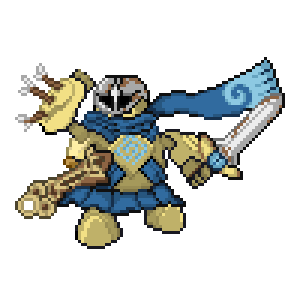
A Pokémon first discovered in the middle ages, Honolett were rumored to be found on ancient battlefields. Ancient texts speak of them being used in wars and battles, serving as squires to knights.

A Pokémon first discovered in the middle ages, Honolett were rumored to be found on ancient battlefields. Ancient texts speak of them being used in wars and battles, serving as squires to knights.
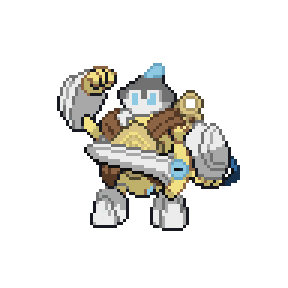
Honler are coated in thick metallic armour letting them get in close and fight with their powerful claw safely. They wield their shield to ward against any particularly powerful attacks, taking trophies from their aggressors.

The crests of Doubdon are formed of their blade's sheaths. They are almost impervious to physical damage from head-on and will always face toward danger to protect their more vulnerable back half.
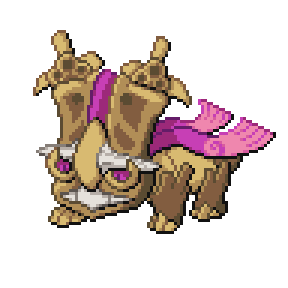
Normally found standing guard at the gates of ruined fortresses, Doublurk are passive guardians provided no hostile act is performed in their presence. Their stoic demeanor belies their fierceness, leaping to action at the first hint of violence.

Normally found standing guard at the gates of ruined fortresses, Doublurk are passive guardians provided no hostile act is performed in their presence. Their stoic demeanor belies their fierceness, leaping to action at the first hint of violence.
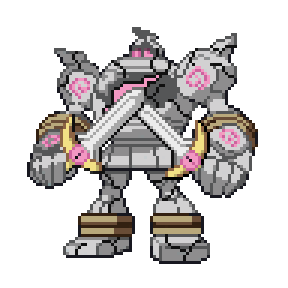
A Pokémon often found in the ruins of castles and other medieval fortifications, Doubolett is thought to have served as a guardian against attacks by rival fiefdoms. Though small in stature, its proficiency with its blades makes it dangerous.

A Pokémon often found in the ruins of castles and other medieval fortifications, Doubolett is thought to have served as a guardian against attacks by rival fiefdoms. Though small in stature, its proficiency with its blades makes it dangerous.
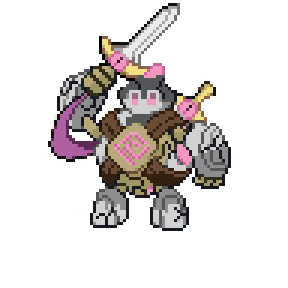
Doubler collect weapons from underwater ruins, using their claws to scrape them clean and maintain them. They scuttle sideways into battle, one sword used for offense and the other for defence.
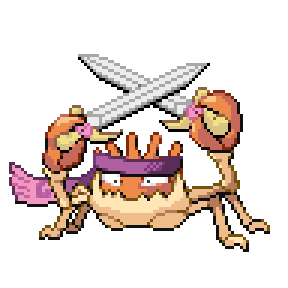
Aeginoir haunt ancient castles and fortifications, acting as custodians and guardians of the ruined structures. They will happily challenge would-be explorers and archaeologists, doing what they can to deny access to their homes.
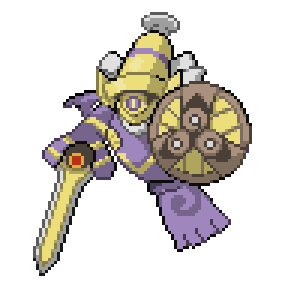
Nidobat are incredibly loud and use the echoes of their roars and growls to navigate through the air despite their poor eyesight. They can get very territorial and will roar exceptionally loudly at their rivals to disorientate them.
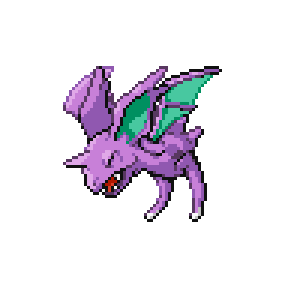
Nidobat are diurnal hunters despite their poor vision. They hunt by shouting out powerful bursts of sonic energy and listening for the return calls. The calls of Nidobat can be heard over a mile away.
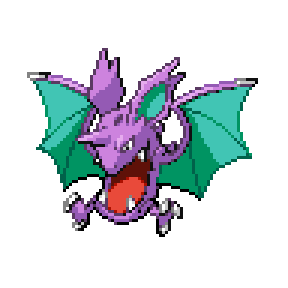
The shells of Nidotle are covered in spines that are coated in a painful toxin. They will rush at their foes backward when threatened, using their shell to both protect themselves and harm others.
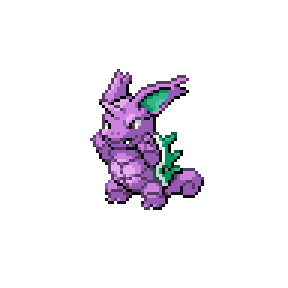
Bilord is adept at carrying passengers across rough waters. Its large size allows it to carry dozens of people at once, and the blade atop its head aids it in cutting through rough swells that would cause smaller Pokémon trouble.

Luxrow's feathers carry a constant electrical charge, helping them to fly through riding the planet's magnetic field. They can be seen clashing with one another in the sky, sparking as they battle for territory.
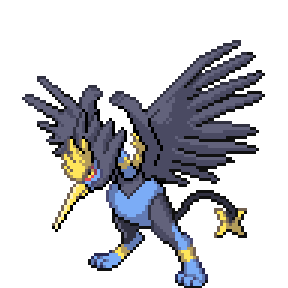
Luxblim helped Unovan scientists in past centuries understand how electricity functions. They float high in the sky, enjoying thunderstorms - their bodies create a negative charge that draws lightning toward them.

Aggceon are extremely cold to the touch, their metal hide sapping away heat near instantly. Trainers are advised to use gloves and full body clothing when handling them to avoid frostbite.
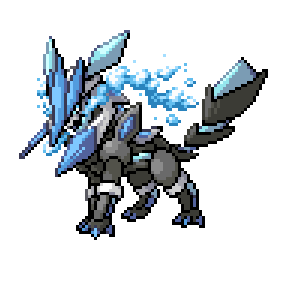
Miloicate make their burrows along the shores of lagoons, partially flooding the entrance to make them harder for other Pokémon to access. They are adept swimmers, feeding deep underwater in long dives.
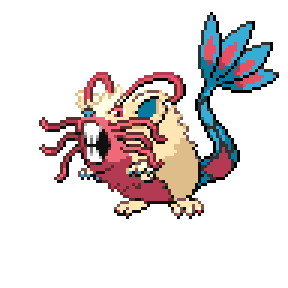
Miloicate make their burrows along the shores of lagoons, partially flooding the entrance to make them harder for other Pokémon to access. They are adept swimmers, feeding deep underwater in long dives.
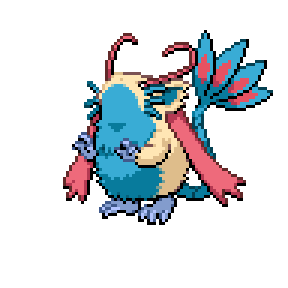
Zorotic has fine control over water, using it to refract and reflect light through mists to create visual illusions. These illusions are usually used in an effort to entertain and amuse sailors and other Pokémon.

Zorogeist are found in farmers' fields after a full moon. They delight in using their illusion powers to disguise themselves as crops and wait for people to come close. They then leap out to surprise their unfortunate target when they get too close.
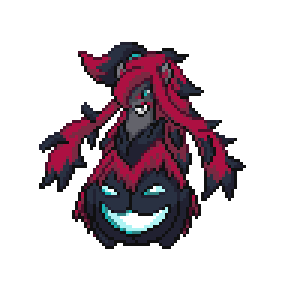
Sylklang uses the ribbons that make up their bodies as snares, wrapping and enveloping their opponent to disable them. Once a foe is trapped, Sylklang patiently waits until their foe simply gives up.
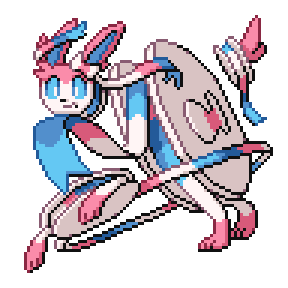
Nidogey puff up their chest as large as they can before they attack, trying to intimidate their opponents into giving up. If the display fails, they will fly horn-first at their foes, trying to inflict their poison to win the fight.
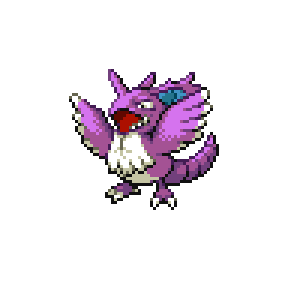
Nidosaur absorb toxins from the soil in their environment, incorporating those toxins into their skin and leaves. They are ill-tempered Pokémon and aggressively defend their territory, their poisons seeping from their skin when angry.

Nidocario uses its sharp senses to anticipate incoming attacks and counter them with swift and precise strikes. Any attack that does slip through its guard is met by a remarkably tough hide studded with poisonous spikes.
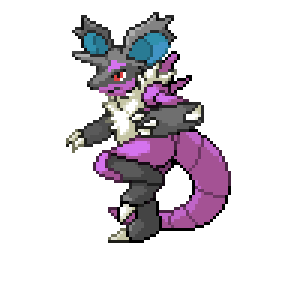
Nidocario uses its sharp senses to anticipate incoming attacks and counter them with swift and precise strikes. Any attack that does slip through its guard is met by a remarkably tough hide studded with poisonous spikes.
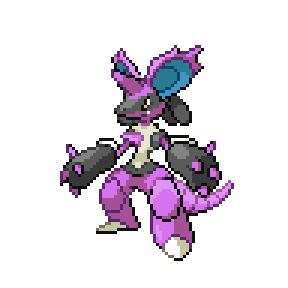
Nidosaur battle using thorny vines, whipping them around with great force. The thorns carry a painful toxin meaning that even a scratch from the vines allows them to win fights against much larger Pokémon.

Kyogia live in the deep ocean and can only be discovered by the most determined of Trainers. Though rare, they have been seen above the waves and always are accompanied by powerful storms.
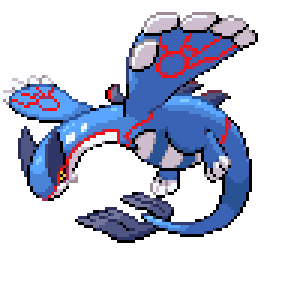
There is evidence that Groublade were a common companion to medieval nobles in Hoenn, the Pokémon being used to create chasms in battle. Legendary accounts of Groublade point to their true power being unlocked alongside a mysterious ruby gemstone.

Grouslash were a prized Pokémon in medieval times, often battling alongside highborn knights. They are adept with both offense and defence, their shield and sword each housing an eye and allowing them to react to any attack or opening near instantly.
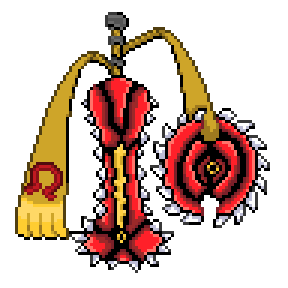
Grouslash are powered by fiery rubies found in remote locations. Their blades radiate an intense heat, enabling them to combat Water-Type Pokémon by evaporating their attacks with a single swing.

Though rare in the present day, Dialras are commonly depicted in pictographs within ruins in Sinnoh. Research into Hisuian culture shows that they played an important role in ferrying travellers.
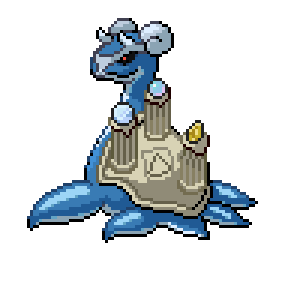
Though rare in the present day, Dialras are commonly depicted in pictographs within ruins in Sinnoh. Research into Hisuian culture shows that they played an important role in ferrying travellers.

Though rare in the present day, Dialras are commonly depicted in pictographs within ruins in Sinnoh. Research into Hisuian culture shows that they played an important role in ferrying travellers.

Palkrom generate immense power within their bodies by manipulating space to create an engine that functions like perpetual motion. This allows them to produce incredibly devastating bolts of electrical power.
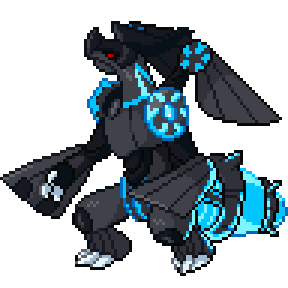
Palkrom generate immense power within their bodies by manipulating space to create an engine that functions like perpetual motion. This allows them to produce incredibly devastating bolts of electrical power.
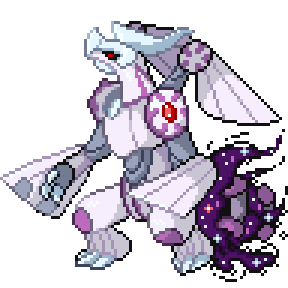
Palkoal produce a super-dense gas from vents in their shells that swirl and coalesce into a miniature nebula. Their control over space allows them to condense the gas and control its spread, their starscapes remaining centred above their shells.
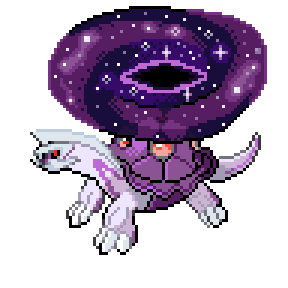
Girarow are found around the peak of Mount Coronet, emerging from small rifts that lead to the Distortion World. They are unable to remain in the world for long under their own power, individuals only remaining for a few days before vanishing again.
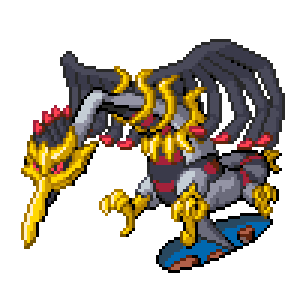
Girarow are found around the peak of Mount Coronet, their bodies eerie and ephemeral. Pokémon researchers theorise that these Pokémon are an extradimensional shadow cast on our world by a Pokémon living in a different dimension.
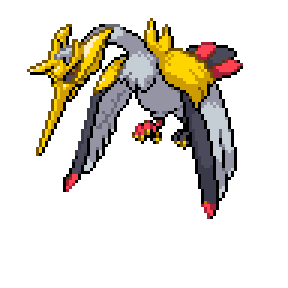
Darkarp can only be found during pitch black nights, their eyes glowing an eerie blue in the dark. They are physically unimpressive but they exude an unsettling aura, creating nightmares of great destruction to come.
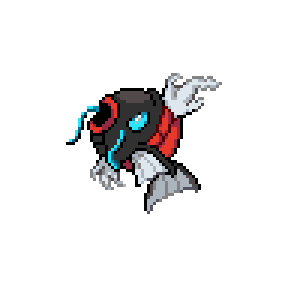
Darkdos draw power from the fears and nightmares of those that have seen them. They go on terrible rampages, actively seeking to destroy ships and attack anyone that comes across them in an effort to instil terror.
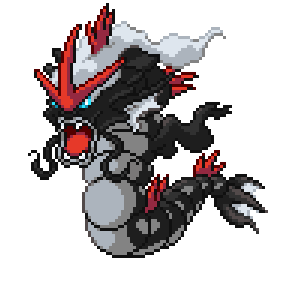
Darkzor swarm together late at night, darkening the sky as they fly overhead. They are drawn to negative emotion and subconscious fears and will flock toward those suffering from nightmares.
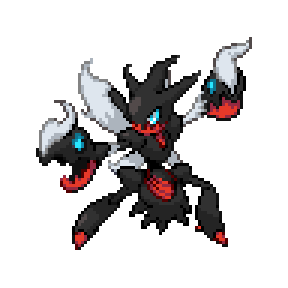
Darkzor swarm together late at night, darkening the sky as they fly overhead. They are drawn to negative emotion and subconscious fears and will flock toward those suffering from nightmares.

Traveling Pokémon Trainers speak in hushed whispers of Darktias, a legendary Pokémon that visits unending nightmares on those far from the comforts of civilization. Tomes say that only the light of the full moon can wake those trapped by its malice.
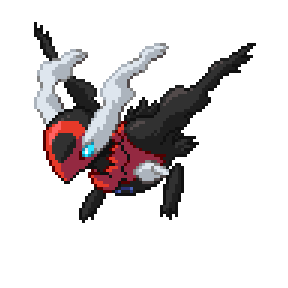
Genedily are fossil Pokémon reconstructed from fragmentary remains and subsequently augmented with modern technology. Pokémon palaeontologists remain sceptical that Genedily are accurately resurrected.
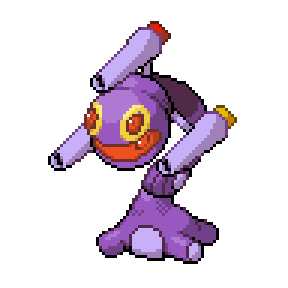
Reshiking contain an intense draconic energy within their bodies, their fiery temper a manifestation of this energy. They are dangerous Pokémon to encounter in the wild, their territories scarred and damaged from their rage.

Local legends speak of Clefpod falling as shooting stars into the forests surrounding Mt Moon. Though there's no evidence of it, Clefpod appear to have an affinity for the full moon and are most visible in their trees in bright moonlight.

Clefkarp hide deep underwater during the day but will perform great leaps out of it toward the sky on clear nights when the moon is visible. A common rumour is that they are trying to return to their home.
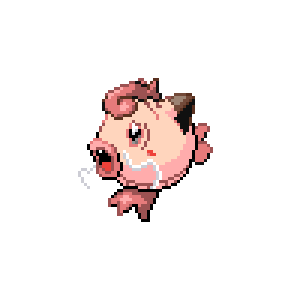
Clefgeot have feathers that sparkle under moonlight, creating a glittering effect as they move. Flights of them in the night sky are easily mistaken for meteor showers.

Clefkaboo fall from the sky on starry nights in the Autumn. They have an affinity for the harvest and will aim to land in fields ripe for harvest, much to the annoyance of the farmers.
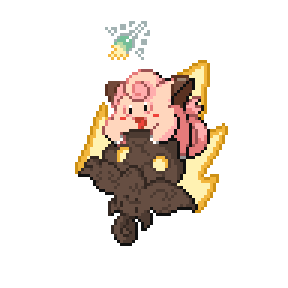
Clefkaboo fall from the sky on starry nights in the Autumn. They have an affinity for the harvest and will aim to land in fields ripe for harvest, much to the annoyance of the farmers.
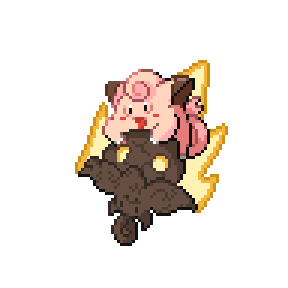
Zekans can generate significant amounts of power, their bodies constantly radiating the energy into their environment around them. They will form an ouroboros in an effort to contain their own power whilst not in battle.
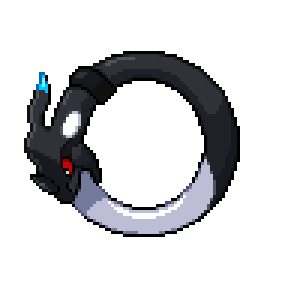
Zekbok flare their wings when they feel threatened, using them to make themselves appear larger and more dangerous than they are. Their bodies glow an electric blue when they charge up to attack, able to belch forth a caustic breath.

Kyutina has a very unstable form and struggles to manifest itself into our dimension. Pokémon researchers believe that Kyutina is only ever able to appear in an incomplete form, unable to truly leave its home dimension.

Kyutina has a very unstable form and struggles to manifest itself into our dimension. Pokémon researchers believe that Kyutina is only ever able to appear in an incomplete form, unable to truly leave its home dimension.
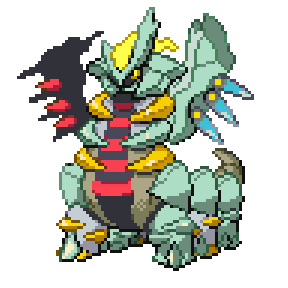
Kyudisc leave a wake of ice crystals behind themselves as they swim, creating a sparkling trail in the water. They are rare and elusive even in their home waters and are a prized catch for fishermen.
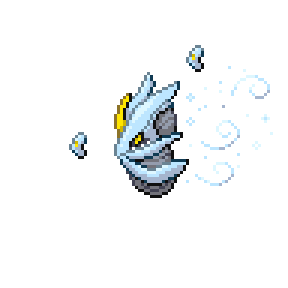
Ninrow rapidly vibrate their wings to communicate with one another over vast distances, loud chirps and buzzes filling the air, often to the annoyance of nearby residents. They are aggressive when interrupted, pecking at people who come close.
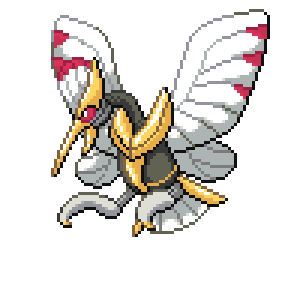
Ninchu surround their body with an electrical charge that reacts to the fields of other living creatures. When they sense movement, their muscles move without needing conscious input, granting them incredible reaction times.

The carapace of an adult Ninterra is fertile and able to support plant growth. Ninterra will use these plants to blend into their surroundings when stationary, and often end up playing host to much smaller Bug-type Pokémon.
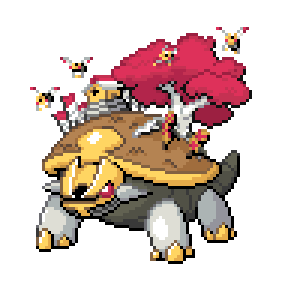
Using their wings, Niniard can move at extremely high speed and use their viciously sharp blades to cut through their opposition. They are popular Pokémon with aspiring Ace Trainers due to their highly adaptable battle style.
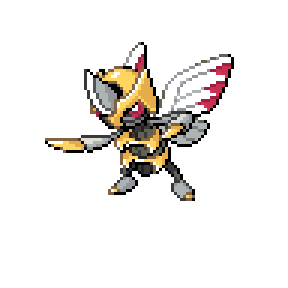
An exceptionally fast Pokémon, Ninroc was commonly used as a mount by messengers prior to the industrial revolution. In modern times, it is still popular at racetracks or simply as a domestic Pokémon.

Banette are suffused with malevolent energy that they weaponise to inflict curses and misfortune on those unfortunate enough to cross their path. They wield an oversized needle that lets them focus this curse energy and project it further.
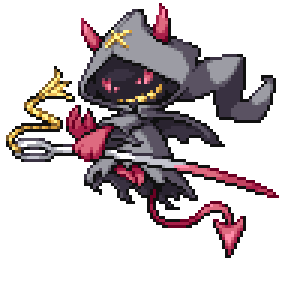
Banpet possess abandoned children's toys, puppeteering them and using them to scare anyone who tries to reclaim the toys. Their true bodies are only visible through a Silph Scope.

Banpet possess abandoned children's toys, puppeteering them and using them to scare anyone who tries to reclaim the toys. Their true bodies are only visible through a Silph Scope.

With a nearly transparent and gelatinous body, Reuniturn lures Pokémon toward itself using its light in the deep sea. Its eyesight is poor, so it relies on its immense Psychic powers to sense the approach of its prey.

With a nearly transparent and gelatinous body, Reuniturn lures Pokémon toward itself using its light in the deep sea. Its eyesight is poor, so it relies on its immense psychic powers to sense the approach of its prey.

Reunirow manipulate their cytoplasm to form wing-like structures, enabling them to fly and search for food. The thick gel is resistant to harm and can be rapidly withdrawn into the core of the body if a threat is presented to them.
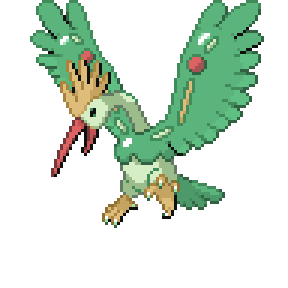
Reunirow manipulate their cytoplasm to form wing-like structures, enabling them to fly and search for food. The thick gel is resistant to harm and can be rapidly withdrawn into the core of the body if a threat is presented to them.
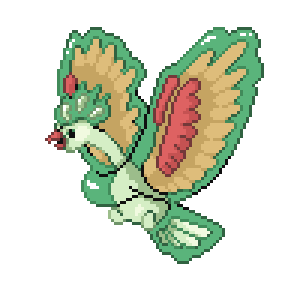
Reunister gather up the discarded shells and spines of long dead shelled Pokémon, using them as structure and protection for their gelatinous core. Using their psychic powers, they propel the spines they gather up as projectile weapons.

After bathing in enough moonlight and witnessing enough full moons, Clefdos take to the skies and fly out to be amongst the stars. They will rarely return to the pools they lived in as Clefkarp, but can sometimes be seen during a new moon.

After bathing in enough moonlight and witnessing enough full moons, Clefdos take to the skies and fly out to be amongst the stars. They will rarely return to the pools they lived in as Clefkarp, but can sometimes be seen during a new moon.

Cleftret are nocturnal Pokémon that frolic together in the moonlight. They have acute hearing and will scatter if approached by Pokémon or people.
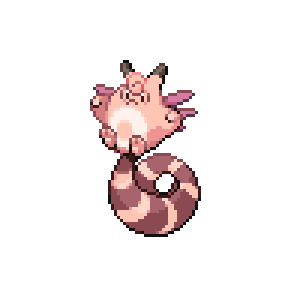
Clefret are drawn to meteor craters and will make burrows inside the fallen rocks. They can be seen on a full moon chasing one another around the meteors, cavorting together in the moonlight.

Clefa have a strange affinity for the stellar energies contained within Moon Stones. They will seek out even the smallest fragments of the strange stones, the energies within them empowering their bodies.

Clefgeot chase meteor showers across the night sky, barely visible against the light of the moon. Ancient legends surrounding Clefgeot say that they came to our world on a meteor and that they are searching for more of their kind.

Clefchu make excellent companions for young children who are scared of the night. Their tails light up with a soft pink glow thanks to their electrical power, an ability they make a habit of using when they see the moon rise at night.
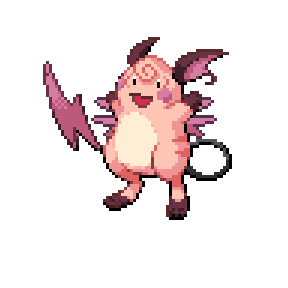
Cleftic are only ever seen during the night, drawn to the surface of the ocean during moonlit nights. The movements of their tails leave sparkling trails in the water reminiscent of shooting stars in the night sky.
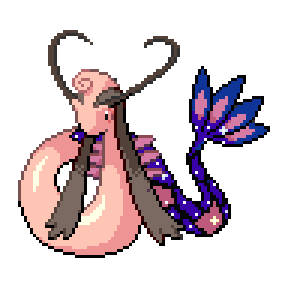
When two Clefable fuse into Clefable, they become innately attuned to the movement of celestial bodies. They can manifest this energy and summon miniature planets and moons, using them to defend themselves.

Clefbas school together under the light of the moon, with the size of the school increasing proportionate to the intensity of the moonlight. They are popular with aquariums due to their vibrant pink colouring.

Whimsidle have plush fluff covering each of their body segments. The fluff can be spun into garments, but is coated in a caustic venom that needs multiple washes to be cleaned away.

Whimsidle have plush fluff covering each of their body segments. The fluff can be spun into garments, but is coated in a caustic venom that needs multiple washes to be cleaned away.
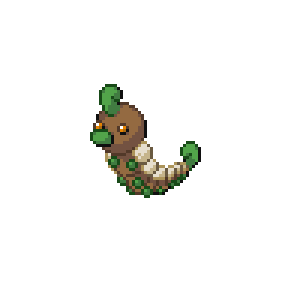
Whimsicor coats itself in light fluff and fine leaves to help it catch the wind. It uses its claws to climb up high before releasing itself, gliding rather than flying across large distances.
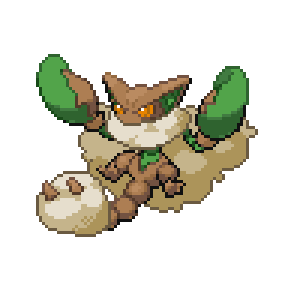
Whimsitoise use their light and fluffy cotton to gather water, soaking up as much as they're able to carry. They take the water to dry fields, using their cannons to spray as much of the land as possible and keep the area lush and growing.

Cofados are secretive Pokémon that can only be found in the tombs of long lost civilisations. They grow aggressive in anything other than pitch blackness and will attack explorers and archaeologists that try to explore their homes.

Cofaring possess the golden funerary statues of a long-gone civilisation and can animate them, bending them to their will. The statues were originally intended as guardians of the dead, but now Cofaring will attack anyone who comes near.

Ferrokoal possess a steel shell that leaves them nearly impervious to harm. The weight of the shell makes their movements cumbersome, but tendrils that sprout from their back help them to navigate even the roughest terrain.
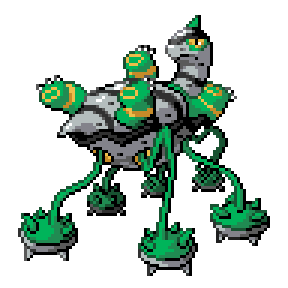
Ferrotoise are found in aquifers deep underground, using their thorny tail and cannons to cling to the ceiling above the water. Though they can breathe underwater, their bodies are too dense to swim and they have to climb out if they fall in.

Litpie give off a scent as they burn that attracts Bug-Type Pokémon from a wide area. It's recommended that Trainers keeping a Litpie indoors do so with the windows closed to prevent an infestation.