Page 1 / 4 of 3061 pokedex entries by infinex21.
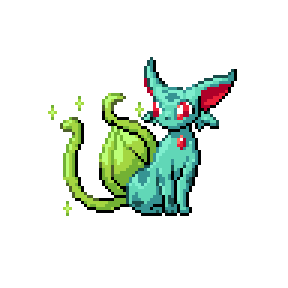
Bulbaeon love to laze in bright sunlight, their joy emphasized by the glow of their chest gem. They only wrap their tail-like vines around a Trainer they trust in, aside from using them in battle as well.
Bulbanub nest within thick shrubs and bushes with their bulbs exposed to collect sunlight and rainwater. Bulbanub will search and root for underground water with their noses, though they often end up disturbing gardens in the process.

Bulbagle love to collect different-colored flowers and arrange them around their territories in various formations. They will often leave a signature, which varies between each individual, upon their floral arrangements using their paint-like fluids.

Bulbatar love to eat mossy rocks, though they can settle for rocks mixed with moss as well. The bulb upon a Bulbatar's head grows steadily as it naps in bright sunlight.

Bulbalax are herbivorous creatures that have shown to be knowledgeable enough to raise their own crops. They do, however, have a bad habit of forgetting their stockpiled seeds in their long fur.

It uses its sharp fangs to bite into fruit and suck out all of the juices, though it can also do this with hard nuts. A fragrant aroma wafts from its plant bulbs, though the specific scent is influenced by what it has eaten.
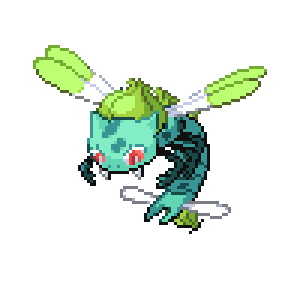
Bulbachic often trip and stumble due to the bulb upon their heads, though they always get back up. They use vines to hold their foes before blasting them with fireballs.

It is a poor walker, possibly due mostly to the growing plant bulb on its back. Sometimes it lies still after falling, which usually happens if it has overexerted itself. It will lie still and bathe in sunlight until it has regained its strength.

It is very energetic and playful, despite how it fervently rejects any help from others. One of its favorite pastimes seems to be sliding on its belly atop mud, even if it has to make the mud itself.
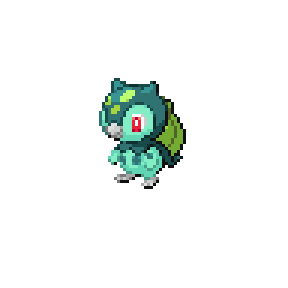
Bulbapass store water within their heavy bodies to keep their hardy bulb from drying out and wilting. If they ever have an excess of water, such as from absorbing rain, the excess will drain from their noses.
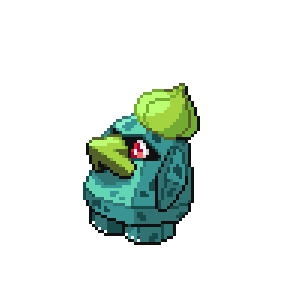
Wild Bulbagon are drawn to tall areas, such as mountains, so they can be closer to the sun. They will flee to protect their plant bulbs, even though their bodies are quite strong.
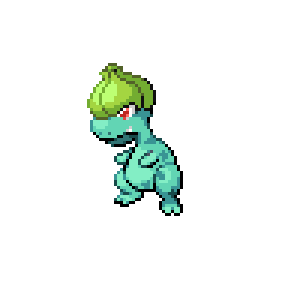
The plates of its shell function like leaves. These plates peel and shed every few days to give way to more vibrant and tougher plates. Each shed plate holds many nutrients and can be ground up and used in various ways.

Bulbaxew tusks are hard as stone yet have a composition akin to leaves. They crush up berries to eat, and get their other nutrients via the sunlight absorbed through their bulbs.
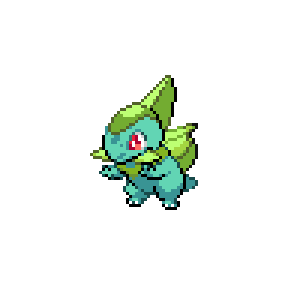
Bulbatump are known for being docile, normally, but fierce when provoked; to them, provocation can be wrought by harming plant life. They secrete a substance similar to resin from their vines, which they apply to trees to mend any damages.

Using its hooked claws, it scales trees to find large leaves to feed on. It will spew sticky threads to entangle predators while it makes its escape.
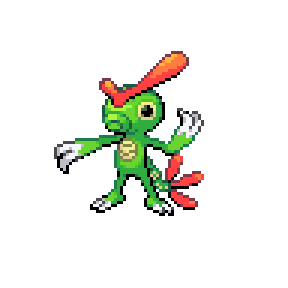
It perches on branches within vibrant and lush trees, gorging itself on many leaves each day. It can flap its wings so quick that the mere vibrations cause every leaf on a tree to be knocked loose.
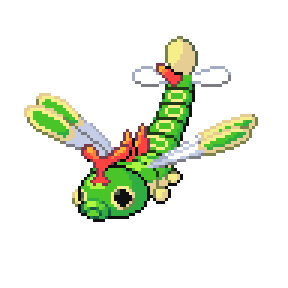
Caterlup defend themselves by spewing sticky threads at threats. These threads will expand and become stickier when exposed to water. Although they are quite weak, Caterlup refuse to accept handouts, even from their Trainers.

One of their heads will always be on the lookout for threats as the other head eats. Though they can defend themselves with sticky threads loosed by their mouths, they may sometimes get tangled in their own threads.
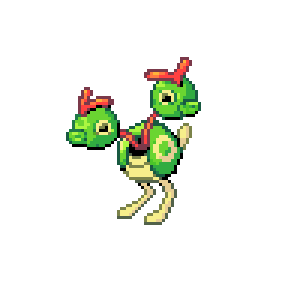
Caterter are nocturnal Pokémon that lick leaves and Grass-type Pokémon to siphon their energy and nutrients; their dens are riddled with wilted leaves as a result. They will try to scare away others but quickly flee if their efforts fail.

Voltdrill smack together their spherical forelimbs to discharge electricity and intimidate Pokémon and people alike. They live in large swarms, with each one being willing to throw themselves at their foes and explode to protect their territory.

Its vines function like cables, allowing it to channel electricity or absorb electricity through them. An agitated Voltsaur will violently lash out with its vines, which will glow with the excess electricity flowing through and around them.
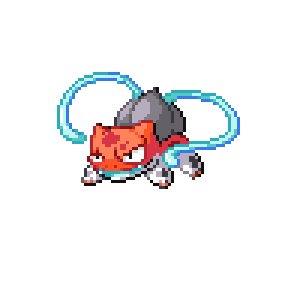
Its blunt horn serves as a conduit for electricity. Its barbs contain a paralytic venom, which is concentrated enough to serve well in the production of some remedies.

Voltsaur lie perfectly still and wait for prey to be drawn to them, though some will further conceal themselves using their large leaves. When prey draws near, they will violently discharge electricity with the aim of instantly knocking them out.

Voltsaur can store a great deal of electricity, which is generated as their bodies and flowers metabolize sunlight. They use their large bodies to pin down their foes before explosively releasing their power.

Its fur bristles with static electricity and its venomous barbs stand on-end when it is agitated. If its tail is ever grabbed, it will explosively release all of its electricity.

It moves by rolling around on its sides or by launching itself with bursts of heat. It launches itself like a rocket to defend itself, clad in either flames, electricity, or both.

Voltpede discharge electricity between their feelers when they are agitated. Their feelers secrete a numbing toxin, which has been used in the development of anesthetics.
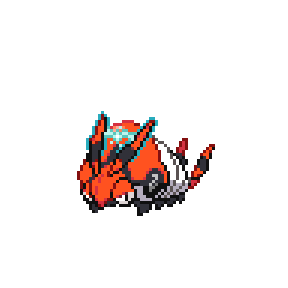
Voltpede move by rolling like wheels, generating more electricity as they move and moving quicker the more electricity they store. When they crash into others, or into objects, they discharge all of their electricity.
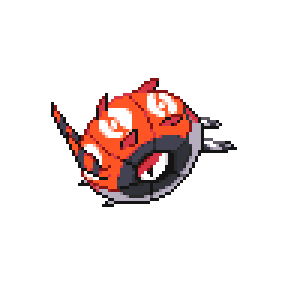
Its passionate dancing is an inspiration for many, as is the sight of the many electrical sparks that fly around it as it dances. If its dance is ever interrupted, it wildly discharges its electricity.

While the swaying of Voltcorio is said to be calming for many people and Pokémon, the Voltcorio themselves are always quick to be angered. Swaying helps them to focus their psychic powers and to stabilize the electricity stored in their heads.

Voltodor feed on waste, though they favor batteries and electronics the most. Parts of their bodies function as batteries, helping them to regulate and store electricity. They often try to store too much, causing them to be easily agitated.

Voltvanha are always moving when they are not attached to ships to feed on their ambient electricity. Though not innately malicious, these Pokémon are quick to anger and will explosively release energy whenever they collide with something or someone.

Voltedo rapidly propel themselves with explosive bursts of electricity, which will often cause them to crash and injure themselves. Their fins are sturdy and sharp, allowing them to cut through metal and rock due to their high speeds.

Although Voltroc fight by goading others into attacking them and then unleashing counterattacks, they have short tempers. When their patience and/or tolerance runs out, they will explode with anger and strike until they use up all their energy.

Voltetta are very picky about the music they will sing along to, as they are picky with who they will perform with. If their performances are ever interrupted, they will wildly discharge their stored electricity.

Voltetta love to dance while discharging electricity to create rhythmic sounds. If anything or anyone interrupts their dancing, they will become enraged and explosively release all their stored energy.

Its coat of bubbles protects it from harsh blows, which also helps prevent it from exploding over a strong impact. Although it will sometimes stay still, it is always aware of all around it and watches others closely.
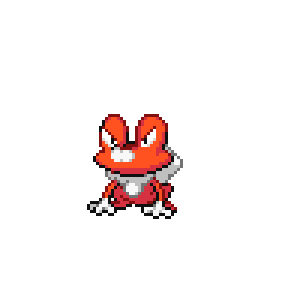
They are remarkably accurate, enough so that they can strike down an apple from a tree over 100 feet away with their electrically charged bubbles. These bubbles can store so much electricity that they will explode upon impact after being thrown.
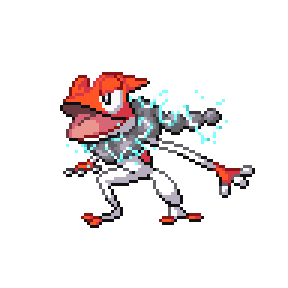
Their sparking tails resemble bombs, which so far seems to only be so that they can rest without being disturbed. Their fur is rife with static electricity and they are known for their brief tantrums.
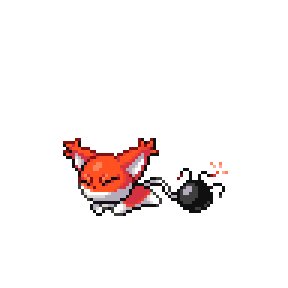
The Poké Ball-like growths at the ends of some of its vines generate and store the electricity that flows throughout every other vine of its body. It knows well how to use these growths to trick Pokémon in order to electrocute or scare them.

As its wings flutter, it generates electricity; the more electricity it stores, the quicker it moves and attacks. It rapidly jabs at its foe with its two stingers that deliver a weak, paralytic venom with every hit.

Electrcross create powerful explosions with the strikes of their horns. When cornered, they will use their strong arms to grab onto their opponent and explosively release their electricity.

Electrgross have explosive temperaments and even more explosive power. Their finishing move is often to propel themselves with their four large limbs at an enemy and then explode.

Electredo are vicious and cruel fighters that will not show mercy to any foe or prey, no matter how small or weak they may be. It is rare to ever see a scarless one, for they will throw their all into every battle no matter the self-harm endured.

It goads any of its foes into attacking it, willingly enduring even the harshest of strikes. Every strike absorbed helps it to generate more electricity until it can counterattack with an explosively powerful headbutt.

Within its shell broils electricity and flame in equal measure. Electrkoal are extremely easy to agitate, and they will release their energy from their shells like an explosive eruption to scare off would-be threats.
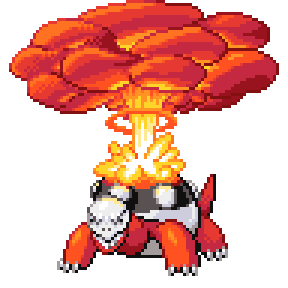
Electrape are prone to literal explosive fits of rage that last until they tire themselves out or completely knock themselves out. Keeping them fed with electricity seems to keep them calm more than anything else.

The liquid seeping from its mouth is a viscous poison that contains many nutrients. This liquid can be boiled to remove the toxins and has a taste reminiscent of eggs. As it ages, the poison becomes deadlier and the toxins become harder to remove.
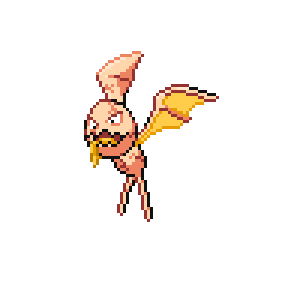
The fluid that seeps from their mouths is a viscous poison that can become acidic as they grow nearer to their evolution. Exeggbat tend to live in flocks of six and care for each other greatly.
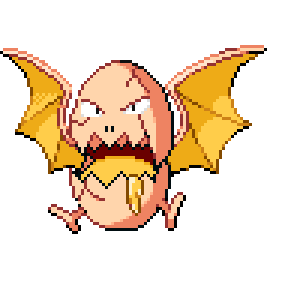
Exeggusir have strong, albeit short, legs that help hold up their hard, spiky leaves which they often flail about to batter foes. Their mouths appear small at first but can frighteningly open wider to allow them to spit Seed Bombs and Bullet Seeds.

The center-most head is the one in control of its movements. The leaves on its arms can expand to become vast wings to carry its heavy body.
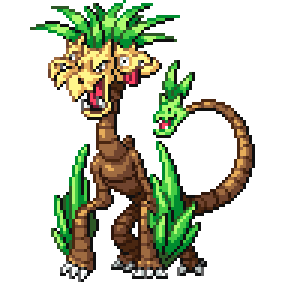
One head is always awake and eating while the other two heads are asleep. Though they will eat berries and fruits, they can live off sunlight and water alone but simply choose not to.

They spit explosively-flammable seeds at their opponents and will sometimes even throw their side-heads as well. Their side-heads have no brains and regrow quickly.

They stomp around with enough force to cause localized tremors while hurling around Egg Bombs. Their stomps often turn even hard rock into fertile dirt, so most learn to live with their tantrums.
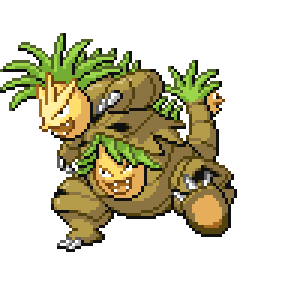
Its three heads share a complex mental network that allows it to quickly calculate its actions before doing them. It stomps most smaller foes with its massive, heavy feet and deflects most attacks with its hard, coconut-like shell.
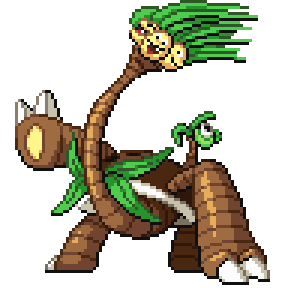
An Exeggutula's stretchy legs allow it to avoid most predators within the jungles they live in. They feed on the various fruits that grow in the tops of the tropical trees they walk and hide amongst.
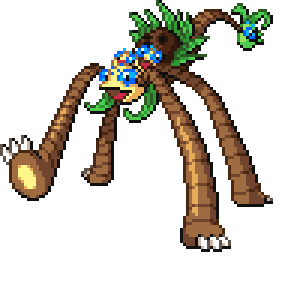
Exeggubat can grow so large, if exposed to sunlight, that their wings struggle to carry them. They have become nocturnal as a result.
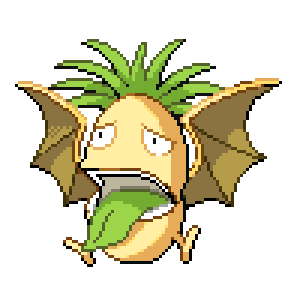
An Exeggudrio's three long necks often become entangled, leading them to fall over until they untangle themselves. Their tails appear to have a fourth head upon them to trick others while they sleep, blending in with the jungle trees they live among.

The "bones" that are oft seen sticking out from their bulbs are actually closer to twigs that are incredibly rich with calcium. The more well-nourished they, and their bulbs, are, the more of these "bones" they can produce in a day.

Cupod are clad in a calcium-rich shell as hard as dense bone. They tend to hide within or near piles of bones left behind by predators.

Wild Cugela disguise themselves as patches of desert grass to lure other Pokémon near them. They often wear the skulls of their prey when they have fed well enough and use other bones to strike their opponents.
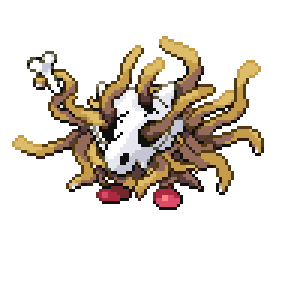
Its skull is stained with tears due to how easily swayed its emotions are; it notably cries when it accidentally discharges its electricity. When happy, it will use its small bone to drum upon its own skull.

Despite initial appearance, Culax are skilled hunters who use the bones of their prey as weapons, tools, and for protection. They are often seen holding bone-skewered meat that they will feed on throughout the day.
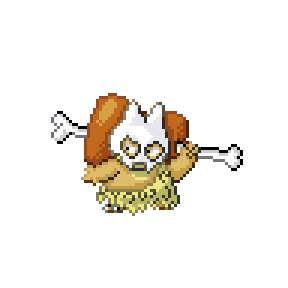
The many bones of its prey are entangled within its overgrown vines, offering protection and myriad makeshift weapons. Its vines are rich with calcium, making them popular with some people as a supplemental ingredient.

Curan's forehead and back are clad in a skeletal armor meant to protect them from physical attacks. The skull-like armor on their heads reinforce their Headbutt attacks.

A Curan's white horn often grows to cover some of the rest of its head like a second skull. They often fight among themselves using these long horns to see which of them is stronger.

The horn of a Curino is harder than solid rock and holds a potent toxin within. Curino will challenge others with all their might and mark their territories with the bones of their prey.
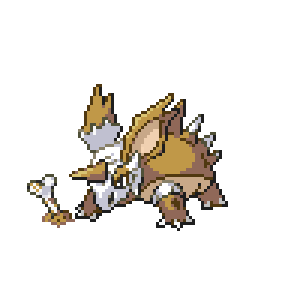
Cuolu are highly attuned to auras, including their own. They express themselves using their auras and by imbuing their bone clubs with their auras, they can ensure they strike their targets.
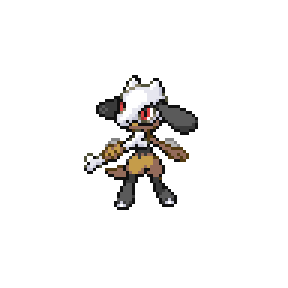
Cuinch are desert scavengers that sustain themselves on the remains left by predators or the remains of unfortunate travelers. Their large mouths allow them to store bones for later, which they may also spit out at foes.

Their tears act as a natural flame accelerant, which they have learned to use in crafty ways with their own flames. If their flame attacks ever seem to be ineffective, they will resort to swinging their bone club instead.
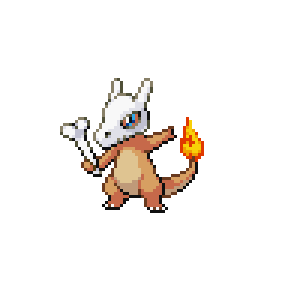
Cukie secrete foam-like bubbles that offer protection and that serve well to keep their skulls clean. These bubbles can be eaten by others and are surprisingly good sources of calcium as well.
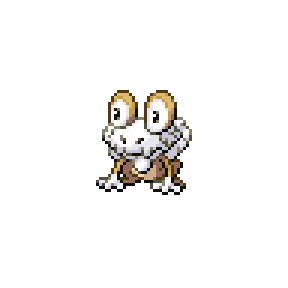
It uses its foamy bubbles to clean its skull and its bone club; during summer, these bubbles also help it to stay hydrated. Because it will often throw stones and its own club at foes, it has remarkable accuracy.
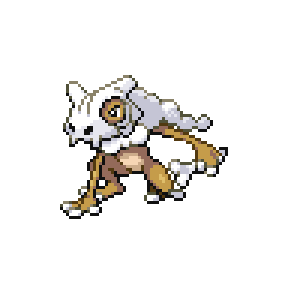
Its shell has taken the form of a skull to better defend itself by intimidating others. It feeds on coal to keep its internal flames strong, though the vapors and smoke it releases have stained the skull with traces of coal.
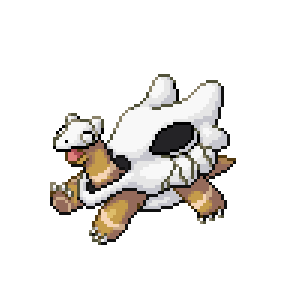
Their saliva and sweat act as accelerants that allow them to easily ignite their own bone clubs. Their flames become increasingly more intense when faced with a foe stronger than they are.

Cuzagoon are desert Pokémon that use the noses of their skulls to search for buried remains within the sand. They search for the densest bones to crack open so they may feed on the rich marrow within.

A herd of Cunoone running through the desert is often mistaken for a small sandstorm due to how fast they move. Their skulls are stained with tears wrought by the sand they kick up into their own eyes.
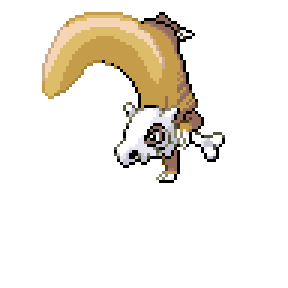
Their slender, yet strong, tails are clad in a bone-like armor, allowing it to serve as a strong weapon. The bone clubs they wield are always changing based on the prey they last hunted. They always seek greater challenges.

Cuwrath appear to be crying, though the tears are merely a reflex to keep their own skin from drying out. This serves to make other Pokémon see them as meek, so they must always keep their bodies well-trained for battle.

They can withdraw most of their bodies into their shells and use jets of water to launch themselves at foes. Some Cutle love to smack their own shells like drums using their bone clubs.

Cufetchd use their bone clubs as weapons and to ground up berries and plants; some will mix these ingredients together to make a meal. Each bone club has a different flavor and scent that clings to them.

The skulls upon both of its heads are stained with tears, wrought by one head stealing food from the other every so often; both heads are equally at fault. It communicates with others of its species by knocking its skulls together.
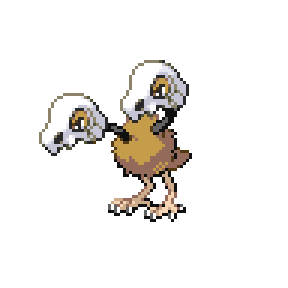
Cuk have bodies of shifting sand held together by a sticky, albeit toxic, material within. This same material serves as their digestive fluid, allowing them to quickly dissolve any prey they swallow whole.

Maroros have long been prone to rampaging so much that they developed extra hard exoskeletons. Their exoskeletal heads are harder than diamond, though their horns are remarkably brittle.

These maternal Pokémon will protect young Pokémon of any species. They are almost always willing to carry those they care for upon their backs and can do so for long periods of time without needing to rest.
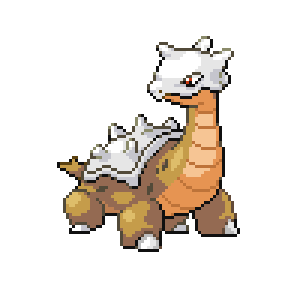
They have grown large with muscle and fat, to the point they can never fully remove their skull "helmets" without breaking them. They are adept hunters who can use the bones and meat of their prey for sustenance and as weapons.

Marorow are desert scavengers that leave nothing of their prey behind. Their beaks and talons are sharp enough to break through the tough shells of other Pokémon.

Its many vines have subsumed countless prey and would-be predators, with their many bones entangled within. Marogrowth use these bones to strike their opponents and their long arms to claw at them with smaller bones held together with vines.

It wields a large, refined bone of a foe as a giant blade to fight with. Marogrowth can use its vine-like cape to make long leaps and strike from above with cleaving chops.

The skulls and tusks of these Pokémon are colder than solid ice, yet tougher than diamond. Many tundra explorers and Rangers ride upon these Pokémon, as they can endure harsh cold and harbor enough strength to shatter most obstacles.

Wild Marovoir often care for young, lost Pokémon even if they are other species. The bone-shaped protrusion that appears to run through its chest is a medium through which it can call upon otherworldly powers to defend others.

Its bone club serves as a conduit for its aura, allowing it to channel its aura and form weapons from it or to release it as condensed blasts. By imbuing the bone club with aura, it can ensure its Bonemerang attack strikes true.
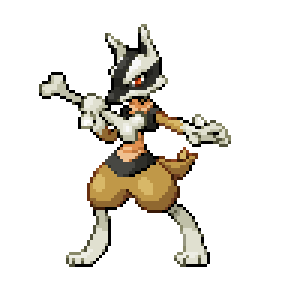
Considered one of the most sapient Pokémon known, Maronape mark their territories with various paints that they also apply to their skull-clad heads. They live in small groups, and the one with the most decorated bone club is the leader.

Its saliva is a highly-concentrated, toxic substance that can corrode many things, including bones and some metals as well. They only use this on others if cornered, otherwise they will fight with just their pure, brute strength.

White fur grows and clings to its head like a skull with a flowing mane. Its claws are harder than bone and secrete a dark energy that chills victims to their own bones.
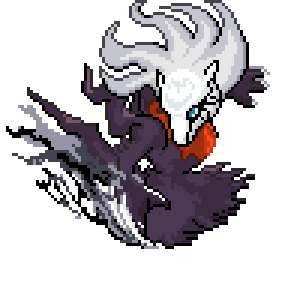
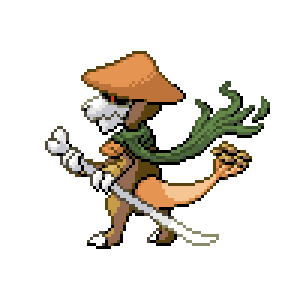
It wields the bone of a foe bested long ago, which it has refined into a blade so it may continue to challenge others and grow. The mushrooms at the tip of its tail release invigorating spores that it shares with its opponents after fair fights.
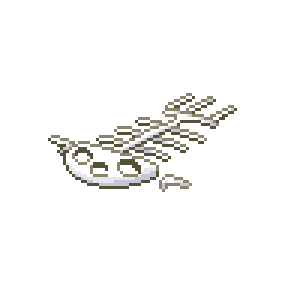
Marofisk are frail and utilize their skeleton-like figures to camouflage themselves within various hazardous terrains. Their bodies are brimming with electricity that they release against anyone who touches them, frying them within seconds.
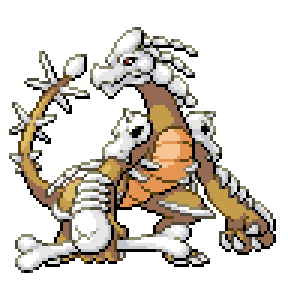
Marovenant are believed to be born from desecrated remains inhabited by malicious spirits. Their bodies are clad in many bones, some growing from within, and they wield a long, unbreakable bone club.

Maromo-o love to thwack new objects with their large bone club until they find objects that create a pleasant noise when they're struck. Wild Maromo-o will hoard such objects and use them to produce music, but also to communicate with each other.
Maroninja have an innate paternal instinct that causes them to watch over young Pokémon, no matter their species. They protect them from the shadows and dispatch threats with throwing stars made of compressed water.
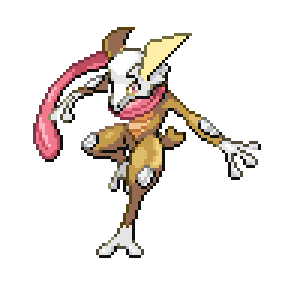
Blue flames roar within and without its skull-shaped shell as it moves, veiling it in a haze of heat and smoke. The flames it breathes are focused enough to melt solid bone within minutes, so there is often little left of its prey.
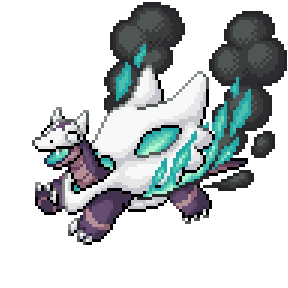
Exposure to rain and its own tears have eroded its skull cap, giving it sharper edges that help intimidate others. It oft forgets its own strength and breaks the bones it wields as clubs.
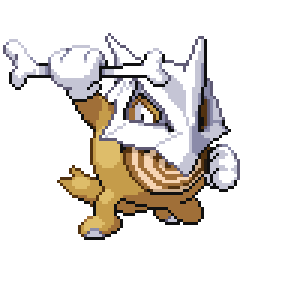
Maroizard are always flying in search of greater challenges and prey alike. They can throw their bone clubs with enough force to crack a tree, though then must rely on their bodies or their flames until they can acquire a new club.
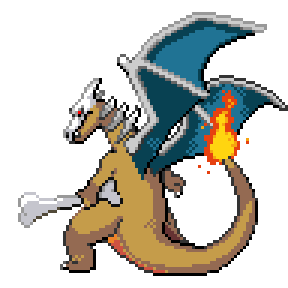
Despite their terrifying appearance, these Pokémon are incredibly friendly. Their form is meant for intimidation. Their flames will only harm those they wish them to, making them popular steeds of the past and the present.
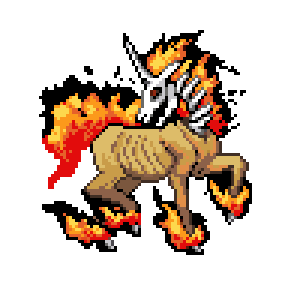
Its bone is worn with use from battle and from being used to make its meals. If it ever loses this tool, such as when throwing it at a foe, it will not rest until it finds the bone again.

Wild Lickixorus use their tusks to mark which trees contain their favorite or least favorite nuts and fruits. Their tongues are slathered in a sticky fluid that makes it easy to retrieve any food they may desire.

Lickixure do not care for battling, despite what others assume due to their sharp tusks. They use their long tongues to grab hard nuts and hard fruits from trees, then break them open with their tusks.

Kofflax eat large quantities of food, resulting in their bodies producing plenty of gas. They have begun to learn to propel themselves by releasing this gas, which tends to smell so horrible it can knock down even an Onix with a single whiff.
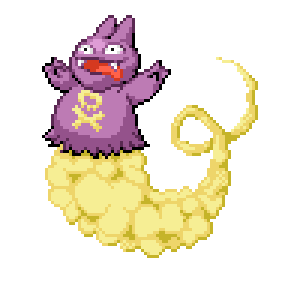
Koffwag are small Pokémon that often thrive within dirty freshwater. They seem to absorb and metabolize the pollutants in the water as their means of survival.

Some of the sticky threads used to form its shell hang between its shell-clad wings, allowing it to glide through the air. As it grows closer to its evolution, its wings churn within the shell to gradually break it apart.
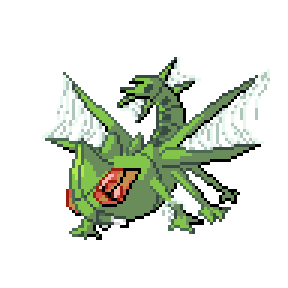
Metalup use their facial shells like beaks to break open nuts and to crush up foods so they can easily consume them. If they fall over, they will sooner stay down and struggle to climb up than accept help from another.
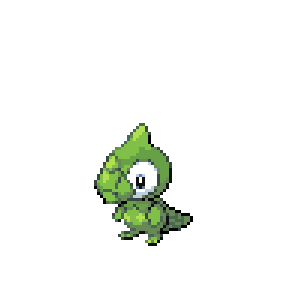
The body of a Metaon is harder than iron. It moves slowly as it conserves energy for its evolution, so it also eats very little per day.
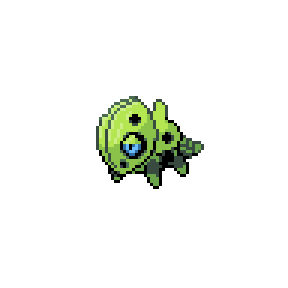
Metaron's body is so heavy that every slow step it takes leaves an imprint, even upon solid rock. When two of this species of Pokémon meet, they will stare down each other and butt heads over the course of a week until one leaves.

Metater are often found scattered across forest floors and rarely ever move. They can drain the energy of those who touch them; mere seconds of contact will leave most people weak.

It devours vast quantities of food, even if some is rotten or moldy. The gases it releases across its body are the result of all the food it eats, with a stench potent enough to knock out a Steelix in seconds.

Rhyshrew have very durable bodies, despite their small sizes. It is believed this is because they tend to run into objects underground while digging, so their bodies developed to better endure such impacts.

Rhydash tend to work themselves up so much that heat builds up within their bodies until it becomes like fire. They can quickly defeat opponents by charging into them with their spinning horn drills.

Chanbone are tuned to emotions quite well, to the extent that they will cry when others near them are sad or are in pain. Their bone clubs exude a gentle warmth that many claim feels soothing, even if struck by them.

These Pokémon regularly gather nuts and berries together in bundles of silk that they will later feed to their young. The antennae atop their abdomens seem to sense emotional distress and they will often offer similar bundles to whoever they find.

Chanchu lay eggs that grow larger than themselves over the course of a week. They move by running atop these eggs to make them roll; running quickly causes these Pokémon to generate electricity.

The rattle-like tip of its tail is actually a part of its real body that is mostly concealed by its many vines. It will often play dead to trick other Pokémon into eating from its vines, which contain a potent poison.

They use their trunk-like vines to gorge themselves on water. Their many vines can store water that will last them for days before they need to drink again.
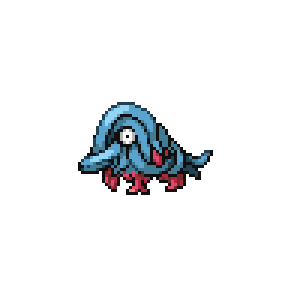
Its many vines continuously grow despite the toxin that flows through them like veins. It can constrict foes with its vine-laden body or with the individual vines themselves.

These Pokémon are often called "Jungle Phantoms" because of how they will effortlessly float above the ground despite being clad in such thick vines. Their cries are like eerie, shrill chanting that unnerves most foes.
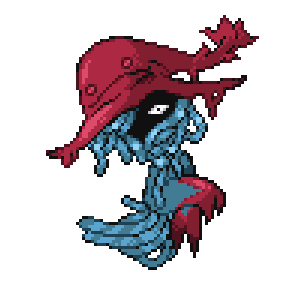
Tanshrew curl up into balls and lash at threats with Vine Whips to further protect themselves. They are often found near desert oases, their vines being used to absorb water and keep them clean of grains of sand.
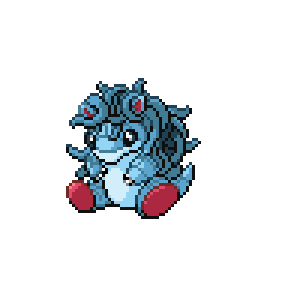
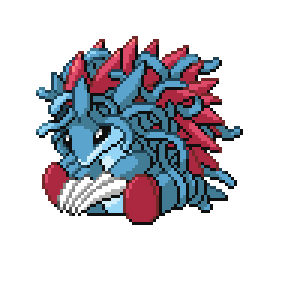
The sharp quills upon their backs help to prevent their vines from growing too much as much as they help to protect them from opponents. It can burrow into the ground using its strong claws, which can easily break rocks as well.
Tanqueen appear much stronger than they truly are thanks to their many vines. This said, they can easily crush some types of rock by constricting them with multiple vines at the same time.

An invasive species of algae is always growing upon its body, no matter how much it tries to scrape it off by running into undersea rocks. The algae seems to help it breathe underwater, so it will eventually learn to live in harmony with it.

The flower atop its head can puff out and release numbing spores, which often allows it to run away. Its feet can quickly absorb water and other nutrients from soil, which helps them to grow faster.

Tanape are quick to anger and will pummel opponents into submission with many quick, yet strong, punches. However, their vines will grow quicker as they rampage until they are forced to stop because they get tangled within them.
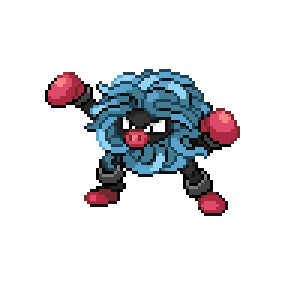
A Tanchamp's many vines act as muscles for its four arms, growing and thickening as they train their bodies. Their vines are so nutrient-rich that many bodybuilders will blend shed vines into shakes before and after a workout.
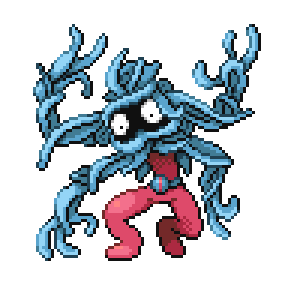
These Pokémon rest at alternating times to allow their vines to absorb and store either sunlight or moonlight. When they awaken, they often snap at their own vines due to mistaking them for small Bug-type Pokémon wriggling around.
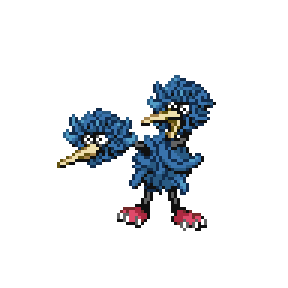
Its legs appear frail but are rather strong, helping to support its body clad in ever-growing vines. Its three heads can think separately and often argue over which gets to eat any food they find.

Its writhing vines help it to churn rock into loose dirt as it burrows within the upper layers of the world's crust. The red masses within its vines contain nutrients so it can remain underground for days without having to surface.
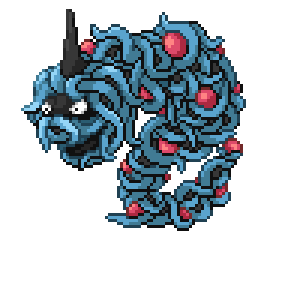
A Kangasgross will keep its youngest child within the port atop its head. It uses its powerful arms to crush all threats to its child. The child will often pretend as if they are giving commands to their parent as the parent fights.

Horbone prey mostly on bird Pokémon, be it by spewing a thick ink or by shooting jets of water to bring them down. They often weep tears, though this appears to mostly be to help regulate their own water levels.
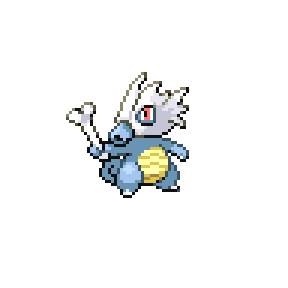
Horwak spit ink at swimming Magikarp to stun them and then pull them out by their tails. Though some Horwak have been recorded as having preyed upon Magikarp at times, they typically wield them as weapons.
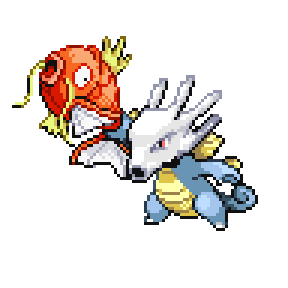
Baby Horpy love to spout bubbles from their trunks as a form of greeting. They often play with their own bubbles and some learn to juggle their bubbles by the time they've fully matured.

Horchar mark their territories by spitting ink from their tubular mouths. They produce a gas in their bodies that keeps their flames strong, even if struck with water.
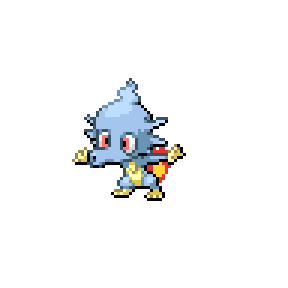
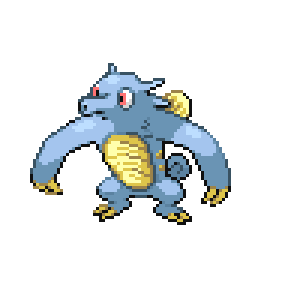
Bubbles spring forth from their long snouts when they drum their hands against their tough bellies. Their claws are sharp enough to let them easily cling to trees or walls as they shoot jets of water at opponents.
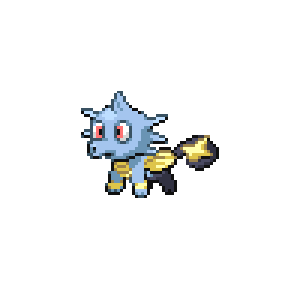
The star within a Hornx's tail glows faintly with electricity whenever they shoot bubbles or jets of water from their mouths. They struggle to discharge their electricity, so sometimes they startle themselves with small jolts.
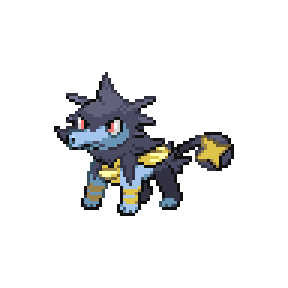
When its tail's star shines bright, it is most likely channeling electricity into its water attacks loosed by its long mouth. It is able to keep its focus trained on enemies even while moving, allowing it incredible precision.
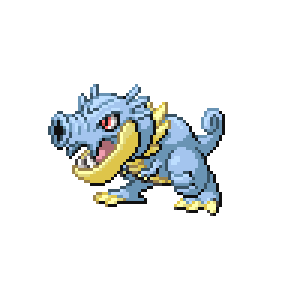
Horunt will shoot sticky bubble bullets at their prey before finishing them off with a powerful Crunch attack. They curl their tails to shoot, so if one were to fully unfurl its tail then you can be sure it will fire a large bubble bullet your way.
Its outer skull is marred with scars acquired during battles and marks drawn using its own ink. Its back fins contain a poison that causes exorbitant crying, which can lead to dehydration if not treated.

Sealosion fight by firing compressed fireballs with extreme precision via their barrel-like mouths or by unleashing jets of steaming hot water. They are quite agile in water and can easily outmaneuver many underwater opponents.

The seaweed atop its back filters various nutrients out of seawater and absorbs said nutrients to help it grow. It will use its large front fins to help counteract the force from when it fires streams of water from its mouth.

Wild Seabat will often hang from whatever they can wrap their tails around to watch for prey below. They will bombard any prey with jets of water and bubble-bullets alike.

Searoc dash around their foes, shooting bubble bullets and rocks at them from various directions and at various speeds. They can attain speeds so great they can leap clear across ponds and sometimes even across lakes.

The bubbles released from its shell oft contain scalding-hot steam. The tips of its fins are poisonous barbs that make it easy for it to subdue large prey.
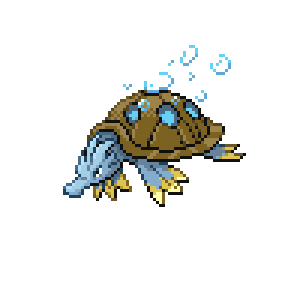
Wild Seatyena hunt in packs, coordinating their ranged attacks with deadly precision. Some few will fight at the front, using the poisonous barbs along their bodies to repel would-be assailants.
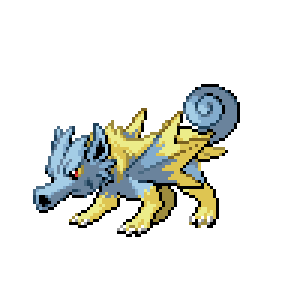
Golshrew defend themselves by curling up and expelling jets of water to accelerate themselves and collide into others. Their hides are remarkably tougher when they are rolled up, likely due to the added tension of their muscles.

This Pokémon tends to sleep in freshwater and rises into the skies at the break of dawn. Though many say this is a beautiful sight, it will attack anyone who strays too close to its nest.

Wild Searay often lounge near ponds and rivers, watching for any prey within the waters. Once they spot their target, they will never lose sight of them and will quickly take them down with electrified jets of water.

Butterbat have an incredible sense for honey and sap, which is what they prefer to consume. They fly so fast that they tend to scatter the pollen and the petals of flowers as they fly over them.

Buttereon have keen senses that allow them to easily find rich sap and fresh honey. The scales scattered by their wings faintly glow in the dark and emit a weak, sweet scent.

Buttersel have extremely keen senses of smell for honey, sap, and eggs. They scour forests, climbing trees with their hooked claws, in search of the freshest of these foods to consume.

They get most of their nutrients from sap and honey, though they love to snack on flowers. Their long fur is typically rife with pollen that gets spread as they fly.
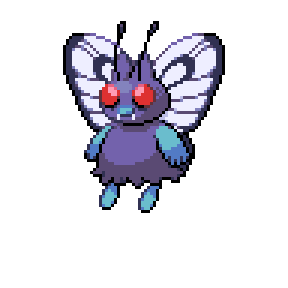
It can patrol an entire forest in half a day by leaping across tree branches, its wings allowing it to glide far with each leap. It scatters frigid cold scales from its wings to impair its foes before viciously slashing them.
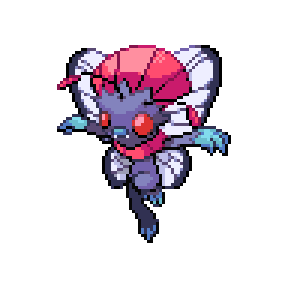
Buttermega can scatter over 100 toxic scales in less than a minute due to how quickly their wings flutter. They can easily find sap and honey, which fuel their rapid metabolism.

Its wings are made of condensed plasma, though it is always shedding small pieces of plasma while flying. It is always searching for pollen and sap to feed on to fuel its body's production of plasma.

Butterinder will spit embers to ignite patches of grass so they may ride the resulting updraft. Their wings are covered in a toxic powder that protects them from direct flames. If handled right, this powder is effective in fireproofing materials.

They communicate using supersonic waves, though these same waves can be used to disorient foes and prey. Buttervern use their large wings to scatter their toxic scales and to create strong winds.
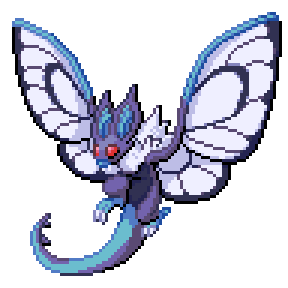
With their long, strong legs and large wings, Butterdrio can move far with every leap they take. They run through flower fields in search of pollen, nectar, and honey, leaving their fur rife with petals and pollen that scatter as they leap.

It appears when it is dark out and gathers large quantities of flowers in its hands. Once it seems satisfied with the flowers it has picked, it will lick them clean of all their pollen and nectar, and then it will discard them.

These small, aquatic Pokémon have shells harder than some metals. The inner core of a Starperl is incredibly vulnerable and, thus, they rarely will open their shells.
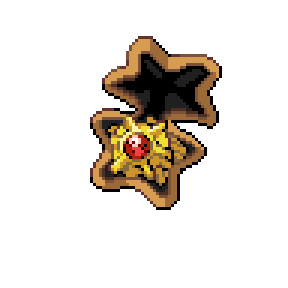
Known to many sailors as nature's guide upon the open seas, Staras have a shell made of solid gemstone that can emit various color lights. They use these lights to communicate as well as to lure prey.

Stardreavus treasure the large pearl they are so often seen with, which serves as a spiritual conduit for them. If one attempts to steal this pearl, they will be afflicted with myriad curses.

The markings along its body flicker with light as a means of communicating with others. It feeds on sunlight and moonlight through its gem-like parts, which can also emit painfully bright light to disorient predators.

The crystals that grow along Stargia's body are often shed before they grow too heavy. It will use its psychic powers to wield some of these crystals as weapons to defend itself, which implies that this Pokémon is rather intelligent.

These Pokémon drift across night skies, kept aloft by their latent telekinetic powers. When the star-like part of their backs rotates, the core of their bodies will glow brightly and generate a powerful gravitational field.
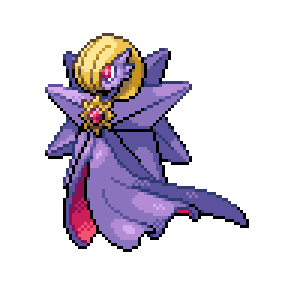
This colossal Pokémon lives at the bottom of the largest ocean. The gems along its body provide a faint light that attracts many other aquatic Pokémon.

The body of a Starxys appears completely solid at first, but it is actually extremely malleable and amorphous. It is often attacked by other underwater Pokémon out of fear of its looks, but will simply regenerate as if nothing had happened.
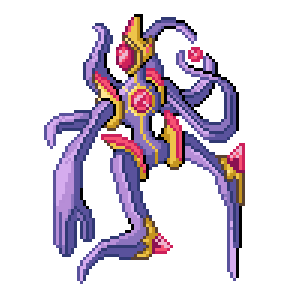
The gem-like tip of a Staredo's nose can often be sighted by its bright glow, even within the dark ocean depths. It spins its rear-most fin at incredible speeds, which propel it through water at frightening speeds.

A Starapex's shell is nigh-impervious to most physical attacks and is lined with poisonous bars that usually deter the very thought of such attacks. It will create blinding flashes with its inner gem-like core to catch its foes off-guard.
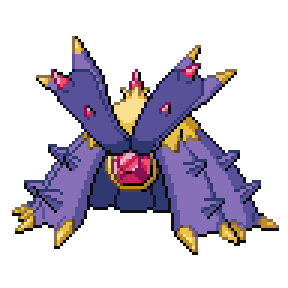
The colorful wings of a Starfly sparkle with star-like patterns as they flutter about. Some believe that the scales that shed and scatter from their wings are the Stardust that is so often favored by collectors.
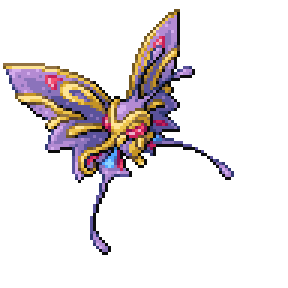
What at first appears to be a red pearl within the hard, spiky shells of these Pokémon is, in fact, their sensitive core. They have learned to use their own core to lure in prey and then clamp down on them until they stop struggling.
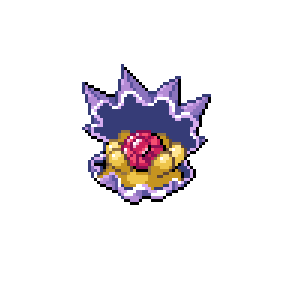
The tails of a Mr. tales are prehensile and move with remarkable precision. The orbs at the end of their tails allow them to create psychic barriers and grant them better control over their flames.
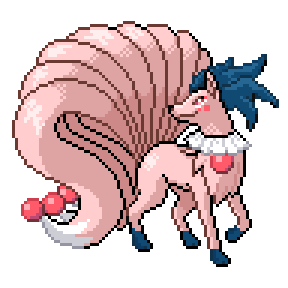
Although some people say they find these Pokémon to be disturbing, they are often found within cities or towns performing for audiences. They love to juggle multiple objects with their four hands.

This Pokémon's wings are attached to its forearm scythes, granting it considerable flexibility in how it moves in the air. Each blade along its wings is as sharp as its scythes, allowing it to slice most foes to shreds with ease.
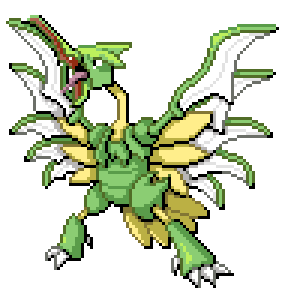
Their muscular bodies allow them to swing their scythes with enough force to cleave through metal. They fight to their last breath to defend their packs and families.

Scykey quickly track down any prey, even if said prey tries to flee. They are quick to anger and will lash out with slashes from their forearm scythes, so their territories are easy to find by the myriad scars left on the surrounding terrain.
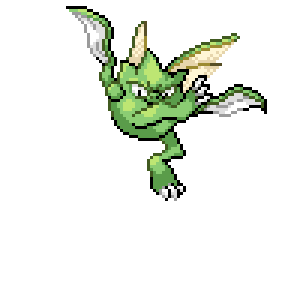
It polishes its ice-clad tail until it can see its own reflection in the ice. It is at its happiest when it finishes this task and ensures its golden locks are still in order. When happy, it sways about as if dancing.

Jynetta are a common feature with certain musical performance groups due to their delightful singing abilities and their elegant dancing. They are, however, very diva-like and will also refuse to perform until their golden hair is neatly groomed.

It raises its bone-like clubs high during storms to catch and absorb lightning. When it strikes these clubs together, it can release bolts of electricity.

Their long horns serve as natural lightning rods and are often clad in electrical currents. A Thunder Punch from an Electacross is often strong enough to punch through solid rock and char the edges around its fist.

Electashrew will dig through terrain to reach higher spots during storms in hopes of being struck by lightning. They curl up for defense and when they spin in place, they release electrical bolts around them.

Magshrew release flames across their bodies during battle and to fortify their desert burrows. Their flames can reach high enough temperatures to melt sand and allow it to crystallize into solid formations.

Its claws are hard and very hot, so it can cut through rock while softening it with each strong slash as well. The flames it releases can be so hot as to help make glass, so some glassblowers will have tamed a Magslash to help them with their work.

Pincargo only expose their horrific mouths before they consume prey or to scare away others. Their shells are harder than solid rock.

Pinceus use their large, long maws to scare their opponents. Their tails are strong enough to send a boulder flying.

Pintula use their large pincers to capture and constrict their opponents before blasting them with a beam of pure electricity loosed from their mouths. Due to how their bodies are structured, they are able to gallop swifter than a Ponyta.

Their pincers are strong enough to crack open the shells of some Pokémon. Pinbat clatter their fangs together to perform echolocation due to their lack of eyes.
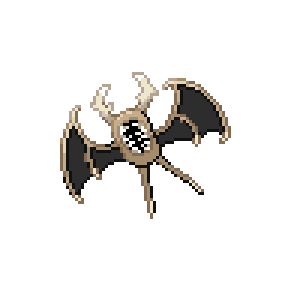
These bug Pokémon are incredibly territorial. They live within cold caves and can breathe a frigid mist that will freeze any prey solid before swallowing them whole.
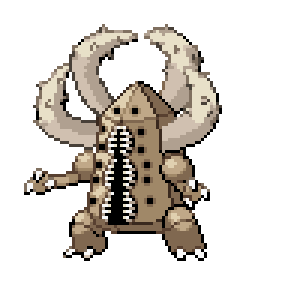
Its powerful sense of smell allows it to easily find food within even the densest forests. If any of its hoarded food is stolen, it will fly into a destructive rage.
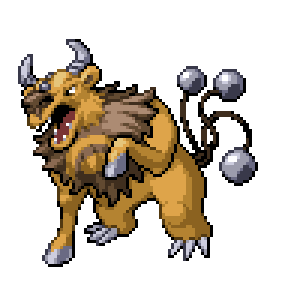
It calls down bolts of lightning when it stomps its powerful hooves against the ground. Anything caught upon or between its horns will be quickly met with powerful jolts of electricity before being thrown aside.
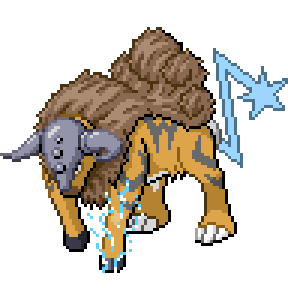
Its three heads are always arguing, thus it is always angry and ready to rampage over the smallest of things. Its rampage tends to end when its three heads ram one another, thus dazing, or knocking out, themselves.
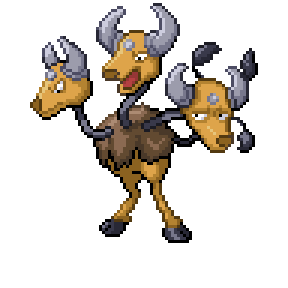
Weetini navigate using their sense of smell, able to differentiate between at least six smells at the same time. Every week since being born, they shed their skin and the poison in their horns becomes more potent.

Weenair scurry quickly along the grounds of forests, jabbing at anything in their way using their poisonous horns. They are always searching for food, a task made easy due to their strong sense of smell.

Its claws and horns are venomous, though the venom is only strong enough to cause acute pain. It can track prey and find food with ease thanks to its strong sense of smell.

Weemega can track the slightest hint of a scent thanks to their acute sense of smell. They are common partners for Rangers because they can track poachers or lost travelers and quickly find them.
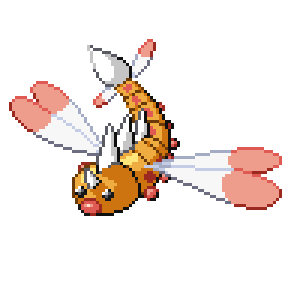
Weelup are energetic and run around forests searching for the best leaves and berries to feast upon; they accept nothing but the best. Only when they have eaten their fill do they become less energetic.

They are too prideful to live together, despite being rather weak. If two Weeplup ever cross paths, they will clash with their venomous horns until one of them surrenders or has their horn broken.

When a Gyaralosion roars, the flames along its neck flare with enough heat to instantly evaporate any water they touch. Its tail strikes are strong enough to create small tidal waves.
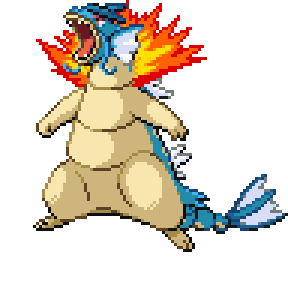
This Pokémon can move frighteningly fast and strike with brutal ferocity. When a wild Gyarachomp is spotted, there is oft a bounty set for its capture before it can go into a destructive rage.
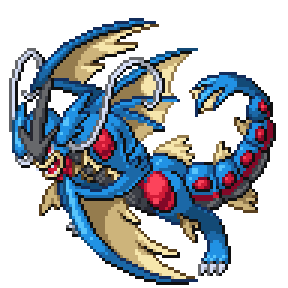
These burly Pokémon can travel great distances on either land and can barrel through most natural obstacles with ease. The shell-clad hump on their back contains a storage of excess water they drink that can keep them hydrated for at least a week.

Lapceus are elusive, nearly-extinct, Pokémon that prance atop the surface of bodies of water with a graceful demeanor. The reason they were driven to near-extinction is that many hunted them for their glowing, magnificent horns.

This ancient Pokémon has appeared in many cave drawings, despite also being sighted in modern times. According to the old depictions, Lapogre had the power to quell raging seas and the strength to ferry entire tribes across the ocean.
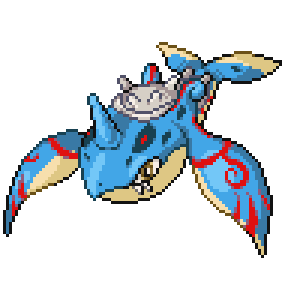
Within their bodies lies potent energy that is dormant until the moment of their evolution. When they near evolution, the crystal upon their necks will glow with a specific color indicative of their evolution.

Eew are known for being adaptable to their environments, so it is not uncommon to see them in many different locales. They are quick to make friends and love to play with round objects and toys.

Within each of its feathers is said to lie the potential power of each of its many possible evolutions. Remarkably, its feathers all have different cellular structures as well and respectively glow in response to specific evolutionary stones.
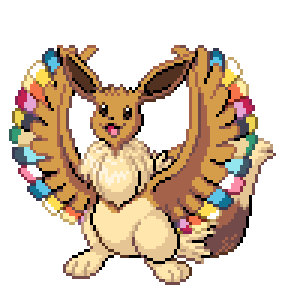
A curled-up Eeshrew is often so soft and warm that young children and young Pokémon alike love to cuddle up to one. They display an innate ability to adapt well to environments, which also influence their evolutions.
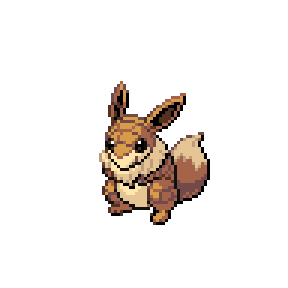
Eeta are rather frail Pokémon that happily trot around open fields. They all react differently to various evolutionary stones, though the most noticeable reaction is to a Fire Stone as their flames will grow larger the closer they are to one.
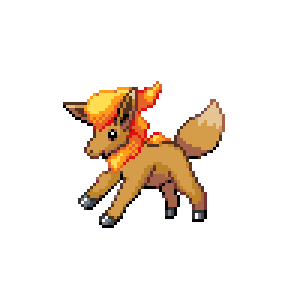
Its thick, soft fur grows so long and flows so freely as it trots that many mistake the hair for flames. Certain evolutionary stones cause its fur to change as it draws nearer to them, be it in color, texture, or both.
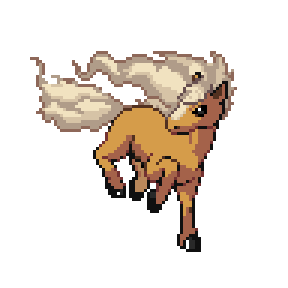
Although Vaporew can hide in water by seemingly "melting away," they are too curious to not try and approach others. They will happily approach children and create bubbles to play with them, however.

It is common to see wild Vaporgey splashing about in puddles after fresh rain. These bird Pokémon dry out if they fly too high, so they typically fly only high enough to pass over trees.
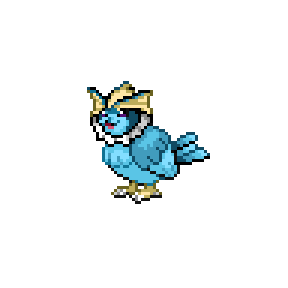
It builds its nest closest to a source of fresh water and preys on the aquatic Pokémon denizen of that source. It can swim using its wings and tail, so no prey is ever too deep for it to reach.
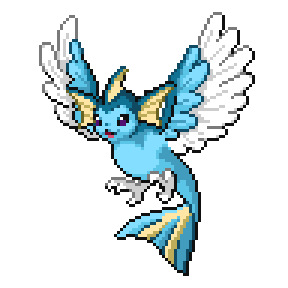
Unlike most wools, Vaporeep wool is not absorbent. Their wool makes them rather buoyant in water. A happy Vaporeep will release light from its tail crystal by channeling its electricity.

By channeling its static charge, Vaporffy can expand its neck frill, which lets it float in water with its head above the surface. It can swim quite well, mind you, and will use its electricity to hunt aquatic Pokémon.
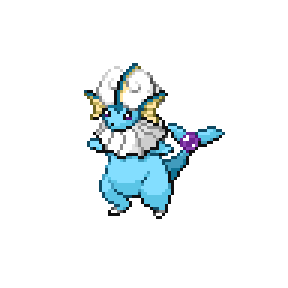
Vaporos use their electricity to emit light from their crystals so they can navigate deep waters and dark caves. They are common partners for Swimmers and ocean explorers alike.

There is ongoing debate if Vaporgeot are bird or fish Pokémon. This debate was born from the fact that Vaporgeot nest and rest within lakes, yet will fly high in the sky throughout the day. Their feathers and scales glisten beautifully when wet.
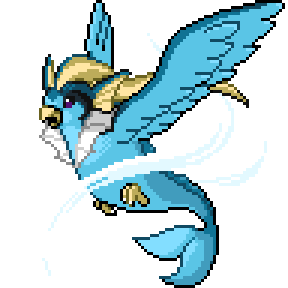
Vaporkrow are an underwater treasure hunter's best friend, for these Pokémon will dive to the deepest depths in search of anything that sparkles. Despite their small size, they can swim fast even with adult humans holding onto their tails.
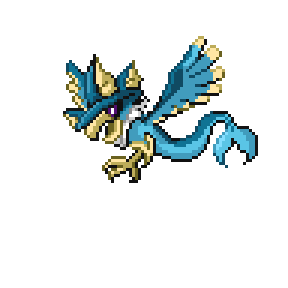
Vaporbok are dangerous Pokémon that live within lakes and ponds. They can effectively melt away and become invisible in water, thus allowing them to catch any prey or foe off guard if they draw too near to the water's edge.

It took years to document this Pokémon due to its ability to turn invisible within water. It revealed itself when waste was thrown into its lake, to which it lashed out at those responsible and proceeded to purify the water.
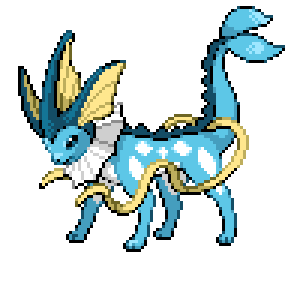
It can turn absorbed sunlight into powerful energy blades that form around the fins upon its arms and head. It stores water in its large tail, which makes its tail heavier and harder-hitting.

Its impressive fins have been honed by the crushing depths of the ocean, which allow it to "cut" through water while swimming. It has a horrifying ability to turn nigh invisible in water so long as it moves slowly, so it can ambush nearly any target.
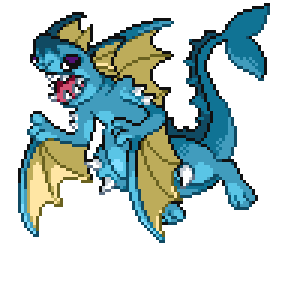
These Pokémon often dwell in caves near lakes and ponds, especially if those caves are damp. They can breathe underwater, allowing them to lie in wait for prey for however long it takes.

Its fur is rigid enough that moving through the air causes enough friction to generate a static charge. Though they love to playfully zap others, they are remorseful if they cause harm, even in battle.

Many of its feathers are rather rigid and sharp, seemingly due to the static electricity coursing through them. It is a common sight just before, during, and immediately after thunderstorms.

The friction of their feathers with every flap of their wings causes them to almost always carry a static charge. Their shed feathers retain their electricity, making them hazardous but also useful in the right hands.

The wool of these Pokémon is so thick that every move they make generates static electricity. Their tail orbs glow when they build up a strong charge. Joltreep wool is naturally warm, so it is a popular material for winter clothing.
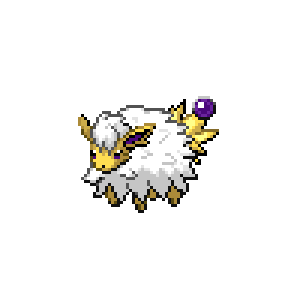
There are some tales claiming that when a Joltgeot releases all of its stored electricity, a thunderstorm will form. They can turn their feathers rigid with electricity and fling them at their opponents. Their feathers, even shed, retain electricity.
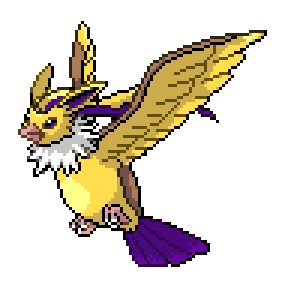
By channeling the electricity stored within its purple crystal, it can make its wool stand on end like needles that it can tear off and chuck at foes. Joltffy crystals are prized as electrical conductors. Some people use them as batteries, too.

Joltros can store and release so much electricity that their crystals emit bright light. Up close, these light flashes can be blinding. These Pokémon have been utilized in power plants and in lighthouses recently.

Their cells generate weak electricity that courses through their manes of spiky fur. A group of Joltoed crying in unison can imitate a crack of thunder to scare off potential threats.
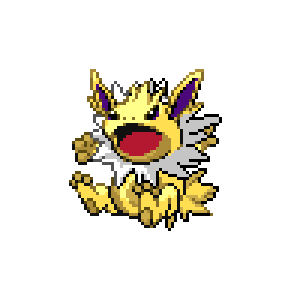
Wild Joltler are incredibly docile forest dwellers that were once hunted for their antlers. Their antlers are extremely conductive of electricity, which made them a well sought material until they were nearly driven to extinction.
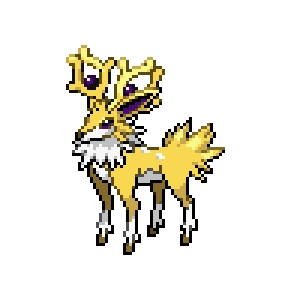
Joltop repel foes with rapid physical blows by spinning upon their own heads. By spinning like this, they also generate a lot of static electricity that makes their hair stand sharply on end.

By rattling its spiky tail, it can generate great quantities of electricity that will then course through its entire body. It can make the pattern on its chest glow to distract its foe before quickly constricting it and shocking it.
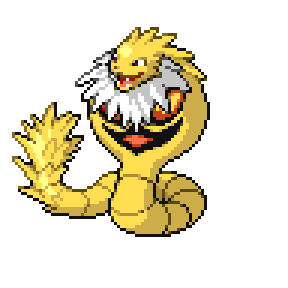
Their quick movements give way to a potent static charge that builds up within their jagged furs, which they can channel through their claws. Joltvile hunt in groups and will arc electricity between each other's claws as they chase down their prey.
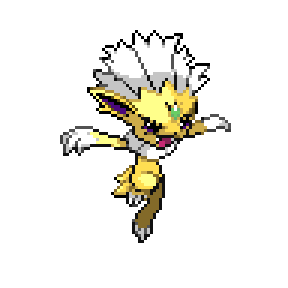
Joltlup slide around on ice, even if just for their amusement, almost all the time. The friction of them sliding builds a static charge in their bristly fur. If they crash or fall into water, they inadvertently discharge their stored electricity.

Joltark have massive manes of bristly fur that stand on end during storms and during battle, crackling with static electricity. They wield the ability to create illusions to create false storms that often intimidate would-be enemies.
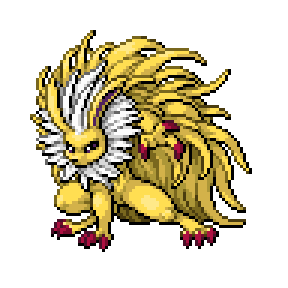
Around its neck are crystals reminiscent of Thunder Stones that are almost always sparking and crackling with electricity. It can move at blinding speeds and loose electrical attacks in tandem with attacks using its rock-solid claws.
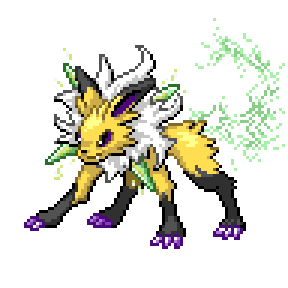
Every action it takes causes its rigid fur to generate a static charge that will build up until the electricity bursts out. While charged with electricity, it becomes increasingly agitated until it flies into a rampage.

When they clap their paws together, they generate static electricity that clings to their sharp, bristly fur to protect them from aquatic predators. When they slap their bellies with their paws, they release bolts of electricity from their horns.
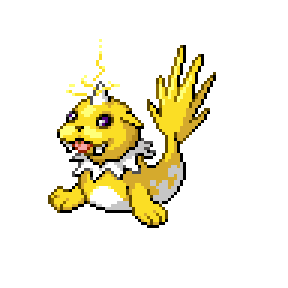
By sliding around on slick surfaces, such as ice, they generate static electricity within their bristly fur. By freezing their own fur, they can better store this electricity to better fight, or defend, others.
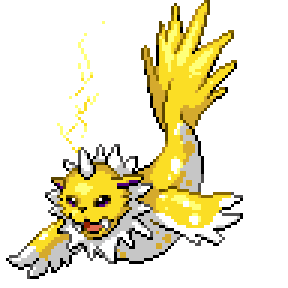
Flatini shed their fur at least thrice a week as their internal flames grow stronger. They are a favorite among young Trainers due to how soft and warm they are.

Their crystals glow with flames inside of them, which causes their furs to always be warm. Their flames tend to be so strong that, when loosed, they will be blue.

Perhaps due to its hot body, it prefers to reside in cooler environments. A Flanite will not hesitate to help another.

Flaew are slippery tricksters with some of the softest fur known to exist. They love to play pranks on others with fire, though they never try to do harm. They commonly will appear and ignite candles, then disappear without a trace.

It struggles to retain its own heat, so it always exudes a hot aura that can set dry grass on fire. It has a habit of nuzzling against others and against objects, which causes it to accumulate a lot of static electricity.
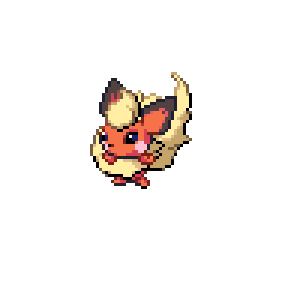
Flatu generate heat within their fur as they hop about or leap with their wings. When they build up enough heat, they can breathe fire. They are prone to staring into fire, which some believe helps them to focus their minds.

The wool of these Pokémon is so thick that every move they make generates static electricity; their tail orbs glow when they build up a strong charge. Flareep wool is naturally warm, so it is a popular material for winter clothing.
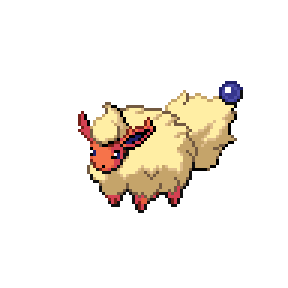
Flaffy store electricity and excess heat in their fur, both of which must be routinely released. They will tear off patches of their own fur and rub them together to ignite them and build up a static charge before chucking them at their foes.

Its blue crystals are scorching hot and are brimming with electricity within, making them dangerous to handle. Its fur arcs with electricity during battle and can release enough heat to distort the air surrounding it.

Flatler are forest-dwelling Pokémon that often appear during colder weather, using their warm bodies to shelter others. When startled or threatened, they will exhale puffs of hot flames from their noses.

A curled-up Flaslash is so soft and warm that many others, human or Pokémon, love to lay against it. Flaslash spin in place to build up their heat via friction and clad themselves in fire to enhance their attacks.

Flachamp quickly build up heat as they repeatedly strike with their four arms, to the point that the surrounding air begins to distort. Their own sweat will sizzle and evaporate when they reach their peak heat.

A Flata's fluffy fur exudes heat equivalent to open flames. The more that this Pokémon runs, the hotter its body and fur becomes.

Porydle are sensitive to the presence of EM waves, so they are drawn to radio towers and human-made antennae as well. They seem to feed on EM waves, though only a swarm of at least fifty Porydle will cause noticeable interference.

Porygey are capable of adapting their bodies to their environment, although only to some degree. The main constant among their kind is that they maintain aerodynamic forms so they can fly with little issue.

Its rigid and sharp wings allow it to achieve great speeds and to better defend itself. Different radio waves seem to have varying effects on this Pokémon, such as calming it or driving it into a frenzy.
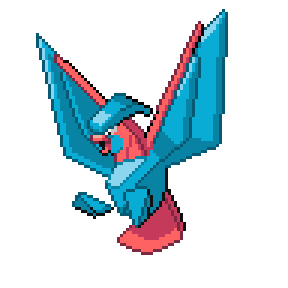
Their bodies are capable of rapid adaptation, even during battle. What often changes the least are their long beaks that, at most, only get sharper to better attack foes.

This Pokémon was created from mineral data and is capable of altering its body to mimic the properties of some minerals. For example, it can make its body as tough as diamond, though it must rest between uses of this ability.
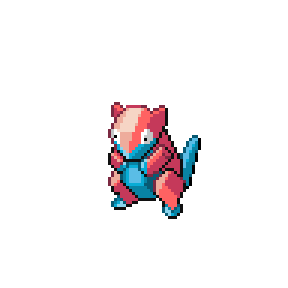
Poryslash were each created from the data of various minerals, so each one is slightly different from one another in some way. The main commonality is that their claws and quills are always the toughest parts of their bodies.
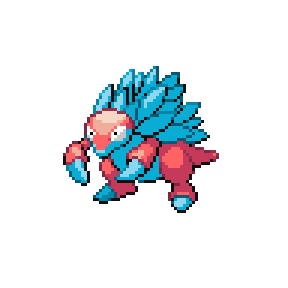
Porydum prefer to ram their bodies into foes even though they have some telekinetic abilities. They have a remarkable ability to sharpen their already-jagged bodies to make themselves even more threatening and dangerous.

Porydum will often attach themselves to computers to feed upon the data they contain. They sometimes have to rotate their bodies around multiple times before they can finally attach and stay attached.

The body of this species of Pokémon resembles a popular digital creature, which they learn of through the data they consume. They release bursts of energy from the "X" on their faces to defend themselves.

Poryran were created from the data of poisons and venoms as a means to experiment with their effects in ways otherwise impossible. Each of the spikes on their backs contains different sets of data that vary between individuals.

A Pokémon created from data with the intent of helping to monitor unbearably cold environments, such as near ice caps. They stand still when transmitting information from their hair-like antennae, which often leads to ice forming around their heads.

A Pokémon created from data with the intent of helping to monitor unbearably cold environments, such as near ice caps. Their movements are rather rigid and limited, though this inadvertently helps them conserve energy in their cold environs.

A Pokémon created from the recorded data of Piplup and its evolutions. The intent behind this Pokémon's creation was for it to blend in among Piplup and monitor the well-being of them and other arctic Pokémon. So far, it is performing as intended.
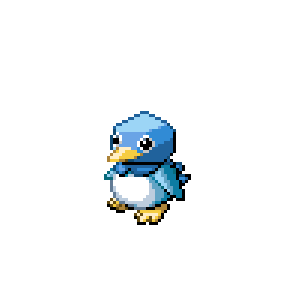
Poryfly attach themselves to power poles and transmission towers to feed on the ambient energies of either, though their presence interferes with their functions. They become aggressive when attacked, so repelling them is risky.
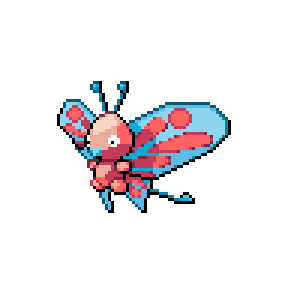
It is drawn only to artificial light sources and ambiently feeds on the electricity powering such light sources. It seems that it may be nocturnal, as that is when the artificial lights of devices such as streetlights are most visible.
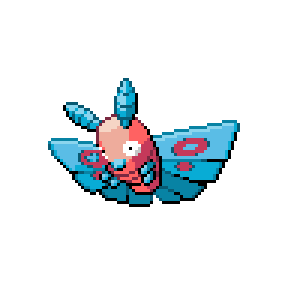
Porydot were created from data on various plants so they may be able to thrive within any forest or jungle. They monitor the life around them and transmit their observational data from their antennae at a specific frequency.

Poryleaf communicate by transmitting EM waves from their long noses; efforts to receive and interpret these EM waves are underway. If their noses are grabbed, they grow weak yet also aggressive, though all they can do is flail about.

Poryitty were supposedly made to be the perfect companions for any humans, though many believe they lack rudimentary functions. They have a particular fondness for curling up atop devices, such as laptops or cellphones.

Poryizard have no discernible heartbeats, with only their tail flames serving as a measure of their health and life. They are a very combative species that can quickly adapt in the midst of battle, making them dangerous foes.

Omavee mostly hide within their hard shells along shores and beaches. They will emerge from their shells when they smell food or someone new.

Though much of its head is covered, albeit also protected, by a hard shell, it uses its two small feelers to sense its surroundings as it flies. Its tail is prehensile and can strike with enough force to split a rock.

Its skull is harder than diamond due to having lived within ocean depths for much of its life, the sheer pressure refining much of its body. It feeds by filtering nutrients out of water and other fluids through its many small, blue feelers.

Many believed that Omayu are actually aliens, though eventually they were discovered in the deepest depths of the ocean that humans could actually reach. They blend into their environment save for the bioluminescent blue skin that attracts prey.

Omamie are supposedly abundant in ocean depths due to the fact that a new one can grow from a piece of a different Omamie. They use their bioluminescent skin to lure prey and capture them with their long tentacles when they draw near.

Parts of its own body have overgrown due to the awakening of its dormant power. Tentacles, water, or energy can be loosed from the openings in its hands to dispatch foes and prey alike.

An Omaros's tail-shell is able to emit a faint glow that often attracts other Pokémon. Any weaker Pokémon that are lured in will be ensnared by its tentacles and electrocuted into submission for it to prey upon.
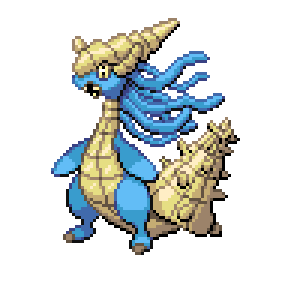
Their tentacles can stretch to grab hold of prey or foes, holding them still before they strike them with headbutt attacks. Their tentacles are how they feed, as they can filter and siphon nutrients through each of their tentacle tips.

Kakmega hang from tree branches using their long tails or they drive their tail spike into a tree and hang directly on the tree itself. As they grow closer to evolving, their shell-clad wings begin to stir.
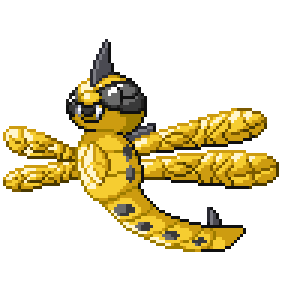
It moves very little to conserve its energy for its evolution and hides within a pile of leaves that it rebuilds as necessary. Its thick hide protects it from cold weather, so it rarely needs to seek shelter.

Paired with its shell-hard hide, this Pokémon can snap trees in two with the swing of either of its wings. It has venomous stingers concealed within its wings, but it is rare for anything to cause Kakplup to use them.
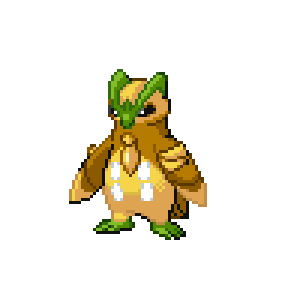
Kakling remain immobile atop tree branches; even their wings are stuck in the position they had before evolving. As they grow closer to their next evolution, their shells become hotter.

Their arms are strong enough to punch through metal, as seen by them breaking into generators and grabbing cables to siphon electricity from. They release explosive blasts of electricity if disturbed in their sleep.

These large bug Pokémon will eat entire shrubs, bushes, and even the leaves of a whole tree. Though they are oft few in number, many still insist upon catching them to keep forests safe.

Its body is incredibly thick with fat and muscle, allowing it to comfortably swim through water in nearly any climate. It will ferry nearly anyone that gives it food.

Snordos sleep hanging upside down from branches or cave ceilings, their dripping drool often being mistaken for water. When they awaken, they immediately set out to find and gorge upon more food before resting again.

Snorbat use their four wings to achieve great speeds, all for the sake of securing food. Trainers are oft advised to be wary of these Pokémon, for they are more than happy to steal any and all food they can sink their teeth into.

Snoros generate electricity within their orbs and release it as bolts to defend themselves or to knock free hanging fruit. They have a habit of using their electricity to partly char food before eating it.
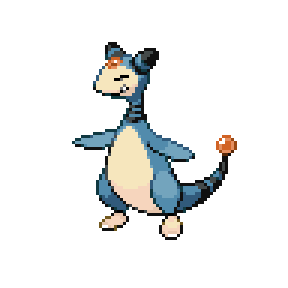
Even when sleeping, their tail orbs glow at least a little. Their fur crackles with electricity, which sometimes flies outward when they snore.
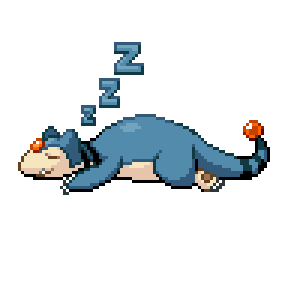
Snornub use their snouts to search for food and can dig deep with their small claws. They will often fall asleep in the burrows dug in search of food, especially after a meal.

Snorswine sleep in caves or burrows dug out with their tusks. When awake, they forage for food to gorge upon before returning to their nest for more rest.
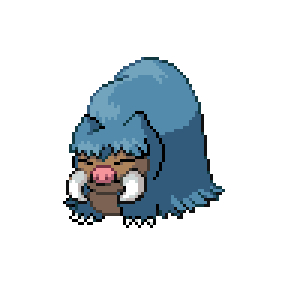
Using mystical powers, Snormagius gather berries and plants that they may either eat or mix together into concoctions. Tales from the past speak of these Pokémon serving as common assistants to apothecaries and chefs.

Its arms are partly hollow and connected to the holes in its palms, which it will store hard nuts inside of to either eat or shoot out in battle. Using its drill horn for prolonged times seems to exhaust it until it either rests or stuffs itself.

It spends its time eating and sleeping, using its tusks to clear paths for itself, though these paths often help others as well. If disturbed during a nap, it rages and stomps about fiercely.
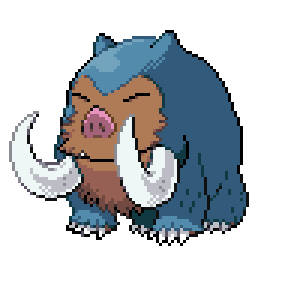
It forages and hoards berries to eat before it sleeps and when it wakes up, then repeats the cycle the next day. It will release a powerful Hyper Beam at the nearest person or Pokémon if it is disturbed from its rest.
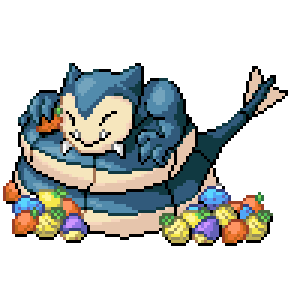
Snorlurk always gather hoards of berries in their hollow bellies, though they need only to rest to recover their energy. Their berry stashes are for sharing with others in need of food.

Snorsaur feed only on vegetation and sleep for long periods of time, as is their typical daily schedule. The berries that grow from their trees are always larger than average berries and tend to be richer in nutrients as well.

It is strong enough to break a tree in half with a single strike of its tough claws. It seems to be slightly intelligent, as it will put food onto sticks to evenly roast them with its tail flames.

When it sleeps, the flames on its tail go out and it releases a sleep-inducing smog instead. Though this serves to ward off most others, those who still try to ambush it will be met with its brute strength and intense flames.

It is said that the belt it wears helps to contain its rotund belly so only its dense muscles are seen. If it is not sleeping, it is either gorging itself with food or indulging itself with battles.
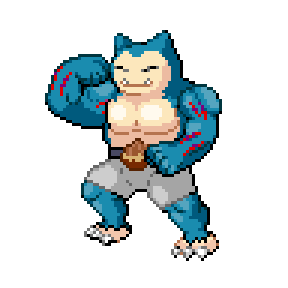
It is almost always shoveling food into its mouth using its four arms and hands, all to sate its rapid metabolism. Each punch it throws has enough force to dent a block of solid metal.

Most food is eaten through its mouth, though it envelops and subsumes prey with its semi-fluid body. It prefers rotten or moldy food, so some are kept to help with garbage disposal.

Most foods it eats through its mouth, though any prey it simply envelops with its semi-fluid body and subsumes. It has an odd preference for rotten foods and moldy foods, so some are often kept to help with garbage disposal.

Snorgar love to play with others, especially those who offer them any food. They are quite strong and can leap high, so they are capable of surprising acrobatic maneuvers.

Artibone wear the skulls of the bird Pokémon they prey upon and forever carve better bone boomerangs from the bones of their prey. Their many frozen feathers are monikers of how many bird Pokémon they have hunted.

The skulls of their prey have become fused to their heads together with the many feathers they collected as trophies. Their weapons are made of the strongest bones of their prey and have been sharpened enough to cleave through solid ice.

Artiown are often depicted in ancient ruins located in arctic areas rife with blizzards and flurries alike. Based on these depictions, it has been theorized that people once thought these Pokémon would be the harbingers of a new ice age.

It can loose balls of fire and snow from within its arm cannons, both elements somehow working in tandem to create deadly projectiles. Their flames burn so hot that they numb the body, and their ice chills so quickly that it burns.

Artivoir build their nests along snowy mountain tops within the most secure crags of rock and ice. Every flap of their wings sends out many glittering snowflakes that are a welcome sight to many travelers.
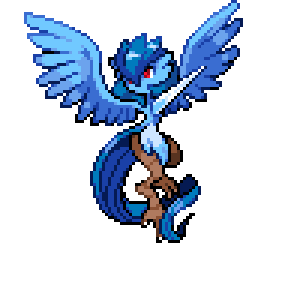
The very air around an Artivoir will quickly freeze when its friends or family are put in danger. With a single flap of their wings, they can create blizzards in a matter of seconds.
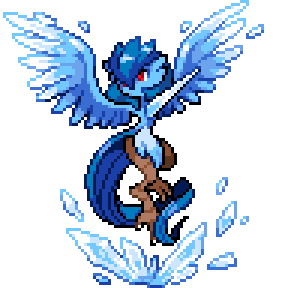
They spread their wings to their full mast when they call upon their full powers in battle. They wield psychic abilities in tandem with the power to control ice in order to freeze and overwhelm foes.
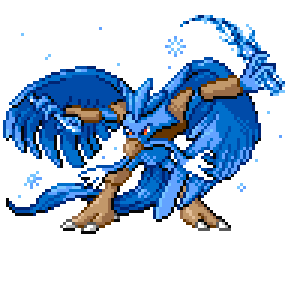
Zapshrew use their sturdy beaks to break through dirt as they burrow underground, yet they must avoid rocks. They curl up into balls and veil themselves with electricity to protect themselves.

Zapslash use their beaks to break apart rocks while digging. During battle, their quills become rigid and electricity arcs between each quill.

Zapvoir have the power to call forth storms and rain lightning down upon their foes. Although their bodies usually arc with electricity, they will be much more calm near their Trainers.
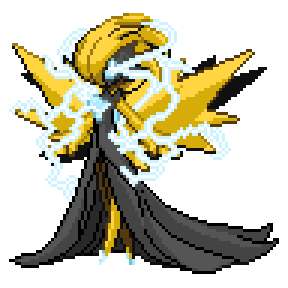
A Zapflame will scatter electrified embers from its wings during battle to help overwhelm its opponent. Zapflame use their long beaks to impale their prey and finish them with a powerful jolt of electricity.
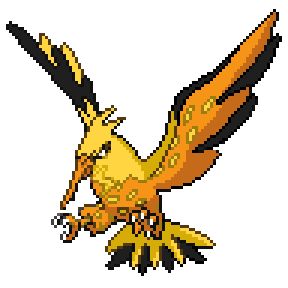
Zapvern often fly through storm clouds to absorb the electricity within. The sonic booms loosed from a Zapvern's ears are as deafening as thunder.

It builds up electricity across its body and can directly absorb lightning bolts that strike it as it flies. Zapvern is a clever Pokémon whose horns have evolved to let it concentrate bolts of lightning into a railgun-like blast.
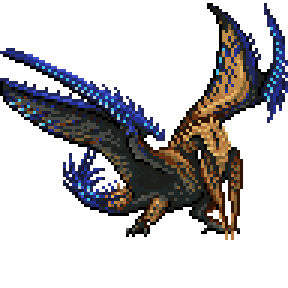
Its body is made of an unknown material that conducts electricity better than any known material. It can use electricity to keep itself afloat and it will loose lightning bolts from the open ports of its palms to down its foes.
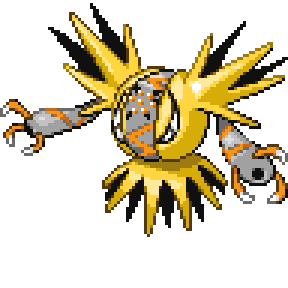
They rub the beaks of their two heads together to release their electricity. Their feathers are rife with static electricity and remain charged for weeks after being shed.
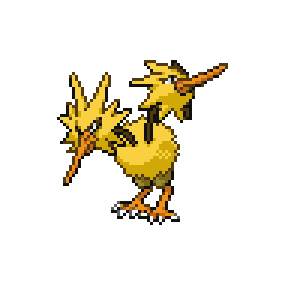
When all three of its heads cry in unison, it can call forth lightning to strike its foe. Its feathers and fur crackle with electricity generated by its rapid running.
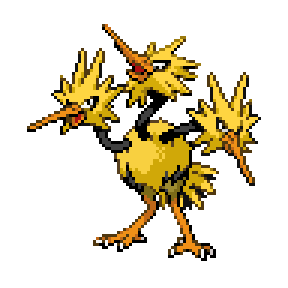
The light of a Molmie's spinning flames is often claimed to rival the light of the sun itself. Its gem-like core is so hot that water will instantly evaporate upon touching it.

Its body produces potent flames which it often releases from its wings and from its rear to launch itself through the sky. Its body is said to be as hard as steel as a means to protect itself should it crash.
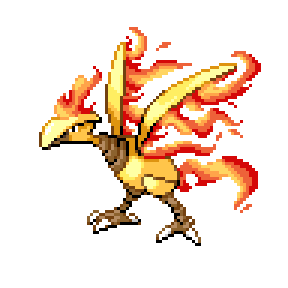
The flames of Moloh shine as bright and as hot as the sun itself. Legends claim that if Moloh were ever to perish, then its egg will open and it will rise anew from it clad in flames with a brand-new egg already in its clutches.

Molvoir's feathers each emit a soothingly warm aura and are said to have the power to heal any wound, but will wither away after healing said wound. They will protect their Trainers with flames so hot that they look as if they warp reality itself.
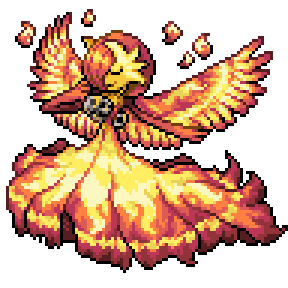
Molran use their long beaks to break into hard fruits or nuts and consume the contents within. They burn the remains of their food to ash and these ashes serve well as fertilizer wherever they are scattered.
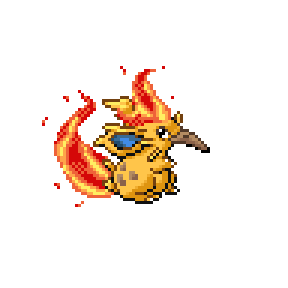
To protect its friends or young, it releases intense flames across its body. Its Tackle attacks have enough force to send a truck tumbling. It roasts fruits and nuts from within using its beak to feed its young.
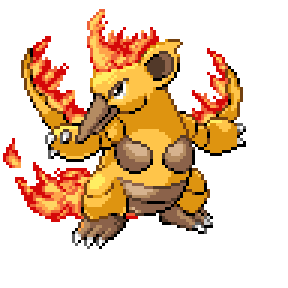
The special lens covering the eyes of Molgon protect them from their own flames and from the extreme heat of the volcanos they nest within. It summons pillars of fire to obscure itself during battle while also overwhelming their foes.
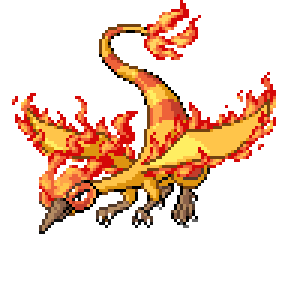
The special lens covering the eyes of Moltic protect them from their own flames and from the extreme heat of the volcanoes they nest within. It summons pillars of fire to obscure itself during battle while also overwhelming their foes.

Packs of wild Moltyena encircle their foes and prey, creating a swirling wall of flame to scare and entrap them. The leader of the pack will be the first to engage the enemy, bearing claws and raging flames at full force.
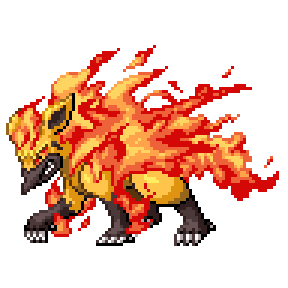
Draros tend to rampage regularly, though they are almost always short-lived. They do so due to the swelling power within themselves.

Dradile constantly shed older skin and fangs as they grow, with each new set tougher than the last. They love to chew on anything that can withstand their strong jaws.
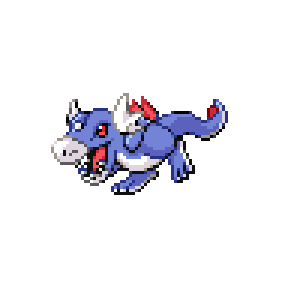
Their teeth are forked back like hooks, so they are difficult to remove once they bite down on something. Their red fins grow stronger and longer as they are shed every week.

Dragar prefer to avoid others, gliding silently and swiftly above them. The only trace of them left behind are the scraps of their shed skins that they peel off using their claws.

Although small, these Pokémon can easily swim against strong currents. They are tend to swim close to the surface, sometimes leaping out and diving back in, but will quickly dive deep if they see even a single human.

Dracune have bodies that are so light they can prance upon water, which has oft helped them to evade others. Every month they shed their skin to accommodate their growing bodies, which also appear glossier with every shedding.

It can roll into a perfect ball for defense and offense. By spinning rapidly while curled up, it quickly sheds and discards its old skin and scales.

It must shed its sharp quills every week due to how quickly they grow. Each quill is thick and sharp, so there are many who use them in place of some tools.

Although they are rarely ever active, their prehensile tails still move and collect food for them. When they are active, it is only to move elsewhere or to shed excess fur and scales.

Twice a month, these Pokémon shed and shake free their fluffy plumage in the wake of a new coat. They are typically very cheerful and hum a serene tune as they fly about.

Draura live in herds of up to twenty, trotting along the tundra under a veil of cold mist. When they are to shed their old skin, they will freeze it and shatter it to more cleanly remove it.
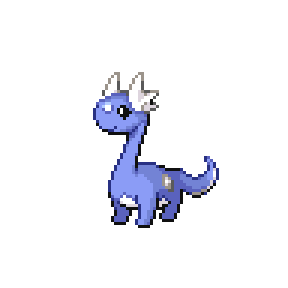
They float listlessly in the orbit of our planet, seeming to feed on cosmic radiation alone. Within them is a growing energy that drags them down the more they develop.
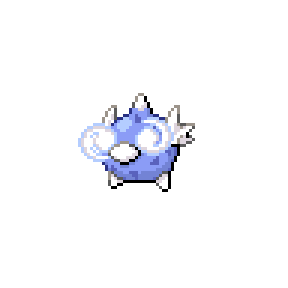
Some tales persist that when a Dragoros rampages, a storm will brew. While these tales have yet to be confirmed, Dragoros do let loose excess energy from their crystals when they rampage.

These playful yet elusive Pokémon use their psychic powers to play with their environment, though they seem to favor water the most. If they know they have been spotted by anyone else, they will teleport away and leave no trace.

Dragoquil are timid and prefer to avoid others, sometimes even their own kind. They release their excess energy as blue flames from their backs.

They move nimbly and quick to avoid others and to deliver quick, precise attacks to scare off would-be predators. They release blue flames from their backs to further intimidate others, though it's also a way to release excess energy.

Their crystals glow brighter when they release flames from their backs or maws. If they let their energy expand too much, they will release it like a violent explosion that scars their rocky territories.

It is known for appearing during storms, catching much of the rain within its strong jaws. Its crystalline orbs glow with an otherwise-dormant power, so some have assumed it summons the storms with that energy.

Its body is rife with powerful energy, causing it to have a strong metabolism and to have powerful muscles. It uses it strength to best large foes in search of ways to sate its appetite.
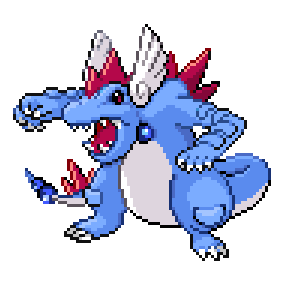
It quietly glides through forests without crashing, using its claws to snatch and eat fruits, berries, and nuts while moving. Its tail crystals are alluring to many, though the tip of its tail can deliver a venomous sting.
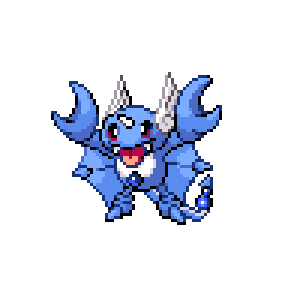
The crystalline orb beneath its chin emits a strong enough light that it can easily see within ocean depths. It can swim against strong water currents and can even ride upon wind currents without needing to re-enter the water for quite some time.
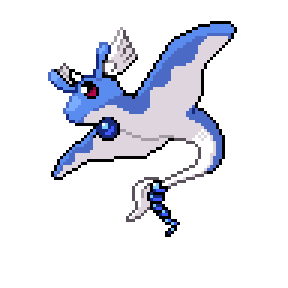
These elegant Pokémon favor clean, fresh water sources as their nests. They shed their horns every year, which grow back with greater strength, sharpness, and a brighter sheen.

Dragoshrew curl up to defend themselves, with their bodies being tough enough to make many attacks bounce off. Despite this, they still prefer to evade others by burrowing or concealing themselves within sandstorms.

Dragocor glide effortlessly upon winds, no matter how turbulent they may be. Their crystals glow with their immense internal energy, which has oft helped guide others as they shine during storms.

Dragoslash are usually burrowing beneath the deserts they live in, but emerge during sandstorms. Their tough claws can easily dig through solid rock, which is how they form their nests.

A Dragoceus's many orbs glow vividly with the potent energy stored within them. They constantly produce this energy that is stored within these orbs for their evolution.
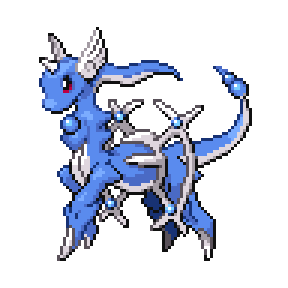
It protects its den using powerful illusions, especially those of raging storms. It is said to contain vast energy within itself, which might be true given how it can maintain its illusions for most of its life.

Their claws are made of the same material as their crystalline orbs, so they are tough enough to cut into metal without chipping. They are so full of energy that they rarely ever rest.

Each of the crystal orbs upon its tails are said to hold immense power. The flames it breathes are blue, but whether this is due to the heat or due to the energy of its orbs is still unverified.

Its crystal orbs flicker and shimmer as it hums a tranquil melody, oft done while it rests after a flight. If one ever grabs its long tail, it emits a shrill shriek and spews draconic flames at the perpetrator.

Dragoeanie often hide under their own dangling limbs that are as hard as solid rock. The crystalline orbs atop their heads emit light as they store more energy, which unfortunately tends to draw the ire of other Pokémon.
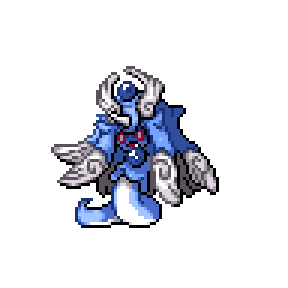
When it rears, it rapidly flaps the wings on its head to create a chilling gale. Some still hunt Dragoaura for crystal orbs that shimmer with aurora-like light.

It looses a freezing air from its crystals and uses its veils of many small wings to send said air toward any would-be threats. It will loose its vast, subzero energy at any who dare threaten its young.
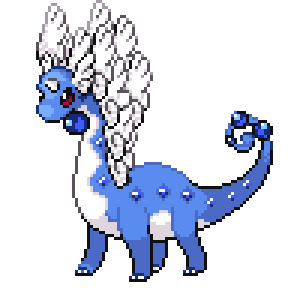
The songs sung by these elusive Pokémon are treasured by the few who have ever heard them. Their crystal orbs were once a cause for them to be hunted, and only recently have their numbers started to recover.

Its crystalline orbs shimmer with light as if they contain miniature stars. It unleashes its internal energy in earnest to defend itself.

Dragofree shed and scatter many scales during their yearly migrations, each greatly valued by collectors. Unfortunately, the scales contain a potent neurotoxin, making them far too dangerous to handle.

Wild Dragoros are prone to charge at others that enter their territory. With their wings, they can easily change course and continue to charge at intruders.
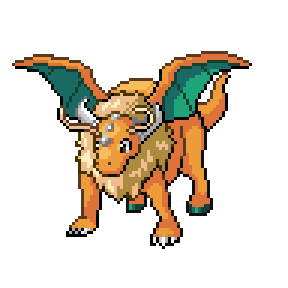
Dragodos are often witnessed dashing across open fields, occasionally leaping and gliding for even greater distances. They attack with rapid flurries of pecks and kicks before finishing their foes off with a lash from their strong tails.
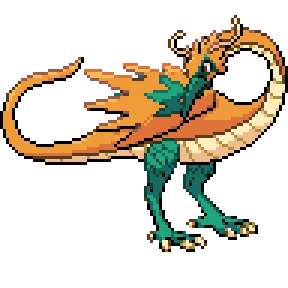
Despite their size, they do not shy away from larger foes or prey. Their wings are strong enough that, together in a flock of at least ten, they can whip up fierce gales.

Its wings are too weak to fly for long yet, paired with its strong muscles, it can leap far. This Pokémon is quick to resort to violence if its large jaws do not scare its foe away.
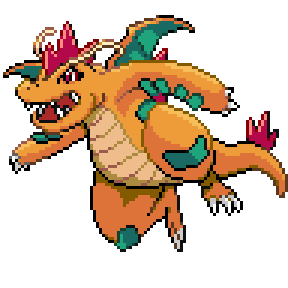
Dragogeot are famous for their stamina and friendliness, commonly used by many Trainers to fly across regions. The feathers atop their heads are beautiful to many and they grow more vibrant as they age.

Dragorill are found within and around lakes, typically guarding weaker Pokémon but also they use the orb on their tail to guide lost travelers and Pokémon alike. Although docile, their tail is strong enough to shatter trees if threatened.

Dragotine rest by using their strong tails to hang from trees or rocks near open waters. When awake, they dive quickly into the water and swim across large distances both below the surface and with their topsides cutting across it.

Their large horns hold immense power and can cleanse water, which led many to hunt them in the past. As was learned with those efforts, it can channel that power through its whole body and unleash it destructively.

The patterns on its wings flash in varying sequences during battle. It uses electrical forces to levitate and move.

Dragolicky appear to be overweight, but most of their weight has been proven to be muscle. Their long tongue is not only able to strike with the force of a Mach Punch, but it is also coated in a sticky substance perfect for collecting food.

Dragoshrew curl up to defend themselves, but also to attack by flying and dropping themselves onto foes. Their wings may be small, but they can still whip up localized sandstorms by flapping them quickly.

They fly quietly, seeming to be gliding more than not, and swoop upon prey the moment they can. Dragocor can crush rocks with ease by swinging their large claws or their bulky tails.

They use their wings and strong legs to launch high and dive at foes with their sharp, tough claws. Many travelers have been saved by marks left by their claws that helped guide them.

Their scales turn golden-orange as they age. They dwell in marshes and other places plentiful with mud and water. Dragopert spread their bulky wings to intimidate others and can create strong waves with a flap of said wings.
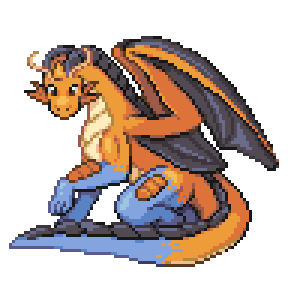
Their wings remain still and yet they float in the air and can fly rather swiftly. Despite their size, they strike foes with devastatingly powerful Dragon Rush attacks.
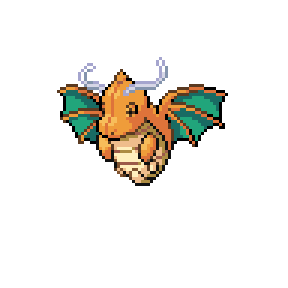
An alert and active Dragoking unleashes its full might upon anything actively opposing it or obstructing it. Its Dragon Claw attacks can cleave through solid metal.
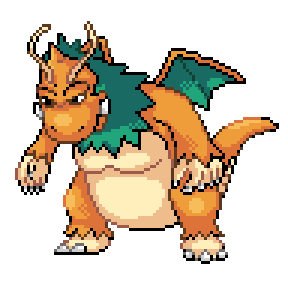
Though Dragoking laze around most of their lives, their bodies always retain dense muscles and their claws remain razor-sharp. When active, they are best to be avoided for they will destroy anything between them and their next meal.
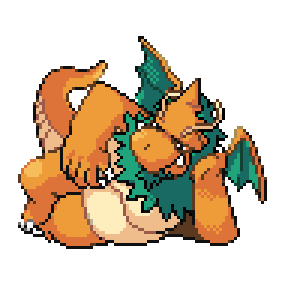
It is almost always flying high above the clouds, supposedly circling the globe more than twice a day. When it descends, even storm clouds will part.

Dragoxys reside in the outer reaches of the atmosphere, circling the globe at least thrice a day. They wield terrifying power and use that power to prey upon some of the strongest Dragon-type Pokémon.

They spread their slim wings to try and intimidate others. Though they may look weak, their flames can melt steel and the horns upon their heads are tough, and sharp, enough to penetrate solid rock.
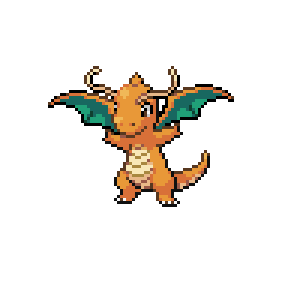
They can inhale a great deal and expand without issue, which makes most attacks bounce off of them. This also serves to make them lighter and thus able to fly better.
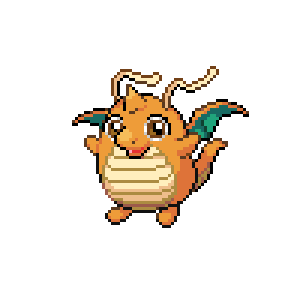
Dragoria sing a serene melody as they fly, small pieces of their cotton-like plumage gently fluttering below them. They can fly quickly across long distances and have been known to carry others, even if they have not yet been tamed.
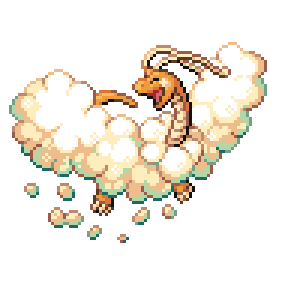
Their many limbs function as wings as well, allowing them to take off rather quickly with forceful gale forces as all are swung at once. When Dragoapex rest, they conceal their heads under their solid limbs that repel most attacks.
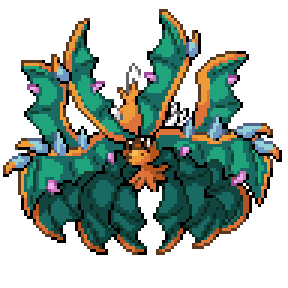
Dragoninja move with stunning speed and agility, deftly dispatching foes with myriad attacks from many angles. Their long tongues are oft used to quickly collect large amounts of food, but can be swung with great force if needed.
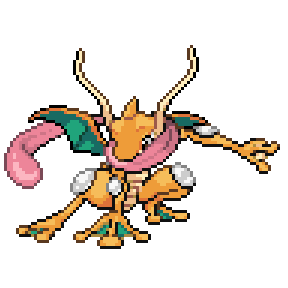
Dragor circle the globe many times over within a single day. They are brimming with energy gained from metabolizing myriad cosmic radiations.
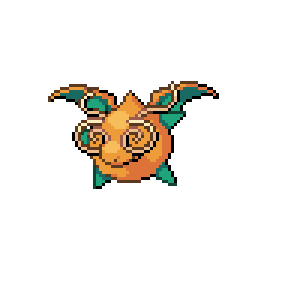
It ravages foes with its sharp claws until they either surrender or cease to move. Its wings are still developing, yet aid it in making large leaps that could cross a canyon.

Their tail furs grow more vibrant and pronounced with age, as do their whiskers grow longer and more curled. They have commonly been seen ferrying younger, and smaller, Pokémon atop their shells.

These clever Pokémon can use the waterspouts on their arms to launch themselves through the air. The streams of water or energy loosed from the waterspouts atop their backs are precise and devastating.

As its wings churn, the friction generates static electricity that arcs across its fur. It defends its territory with a flurry of Pin Needle attacks unleashed from its collar of spiky fur.

Its hind legs turned into a pair of deadly stingers over the course of its evolution. It flies fast enough to patrol its entire territory at least twice a day and will use its stingers to fell any who dare intrude.

Beepi thrive off the emotions of others. The kinds of emotions they have been most exposed to influence the honey they help make; negative emotions result in a bitter honey while positive emotions result in a sweet honey.

It rapidly jabs at foes with its twin stingers while agilely moving all around them. It moves through its forest territory by leaping across tree branches and attacks any invaders.

The bubbling-hot bodies of Beecargo are made of sweet honey that oozes from hive-like structures on their backs. Anything that survives the burning honey often falls to their thrusting stingers.

Beenub have a keen sense of smell, which they utilize to find particular tree saps to use to make honey. Though small, their stingers contain a venom that causes numbing, which will spread if untreated.

Wild Beedour communicate with one another with various cries, coordinating both offense and defense with ease. They do not tolerate intruders, but will not chase them down if they leave their territory.
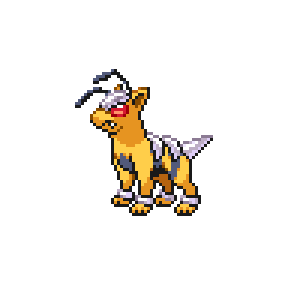
It injects a burning venom using its tail stinger, which can cause permanent damage if left untreated. Its long and curled horns identify it as the leader of its pack.

Beegia can put enough power into every jab of their stingers that they can decimate an entire tree trunk in one stab. Due to how territorially aggressive they are, the honey they make is heavily desired yet rarely ever acquired.

It uses its large stingers to skewer food and foes alike. The honey made by its species is extremely nutritious compared to most others.
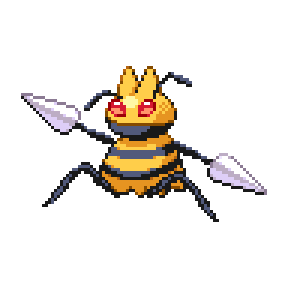
These territorial Pokémon live in groups of ten, with half patrolling their territory at alternating times. Any foe they encounter will be met with many quick jabs of their venomous stingers.
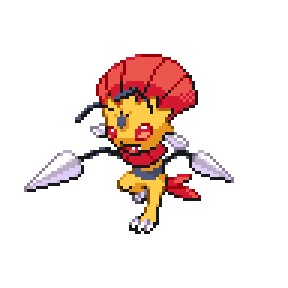
Its eyes are covered in a special film that protects them as it digs through sand, dirt, or rock. It can curl up to defend itself, its tensed hide being tough enough to repel some attacks, and uses its tail stinger to strongly jab at foes.

These Pokémon are the bane of many woodland explorers due to how quickly they can patrol an entire forest in a single day. Beemega's frontal stingers are often held at the ready as they fly around, ready to impale any threats at a moment's notice.

Beeslash have two pairs of claws that function like stingers as well, delivering a potent venom with every jab or cut. Their claws are strong enough to dig through solid rock.

Although it will swing around its stingers to threaten others, it is too weak to do anything other than flail them around. Its stingers do contain and secrete a potent venom, should they ever manage to cut into one's flesh.

Beeplup are strong enough that even just swinging their wings is enough to break a tree in two, yet there are also venomous stingers at the tips of their wings. They are territorial to all, even others of their species.

Beeleon secrete deadly venom along the silver edges of their wings, which can fell any foe that survives the initial slash. Those with the longest horns command others of their swarms.

They use their wings to make agile movements during battle. Their twin stingers are as hard as iron and contain traces of a poison that will oft ensure their foes inevitably fall.

It is the oft-seen leader of Beeiards, effortlessly giving them commands while fighting the strongest foe present. Its twin stingers are as strong as steel and can cleanly punch holes through solid rock.

Older depictions refer to it by a codename of "Tiger," supposedly due to its large sharp blades and how skilled it is in combat. They are often seen serving as silent defenders of the hives of certain bug Pokémon.
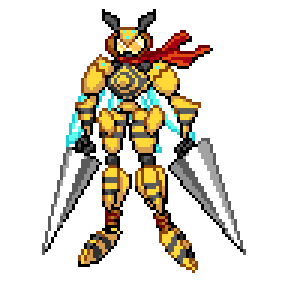
Beegron secrete a viscous honey in place of normal saliva. The caverns in which they have made their homes are covered with traces of honey from them feeding on the minerals and ores around them.

Beeklang are the surveyors of hives of Beeink and Beeang, using their red cores to signal orders to them. The spikes along their central ring are actually homing stingers that track intruders until they have been defeated.
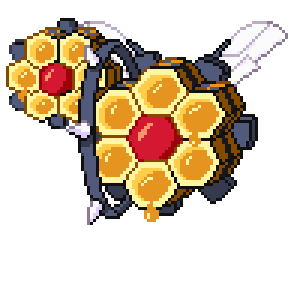
Beexorus wield poisonous stingers for arms that they can thrust almost as rapidly as their wings can flutter. But their real weapons are the axe-like tusks that can cleave through steel like they were mere trees.
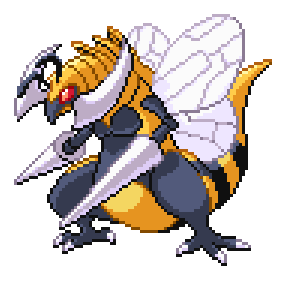
Beeon feed on berries and minerals, which allow them to produce a rich honey inside their bodies. They are happy to share this honey with others, but those who try to take it by force are met with their steel stingers.

The honey it secretes from openings in its body is incredibly rich, yet laced with traces of the metals it feeds on. Chefs and metalworkers are still discovering ways to use this honey in their respective works.

Beeink communicate with each other by flashing signals from their red cores. Many Beeink will gather together and connect to form hives.
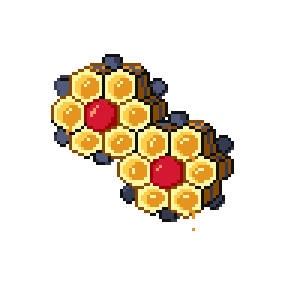
Beeang are the workers of a hive made of Beeink, communicating by flashing their red cores. When they spin their bodies, they produce a a very sweet and sticky honey from the spots surrounding their red cores.
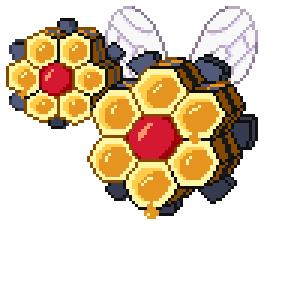
Beevanha fly about forests at surprising speeds given how small their wings are. These highly territorial Pokémon will jab at prey and intruders alike with their Twineedle attacks until they succumb from the physical injuries or from their poison.

The fin-like wings of a Beedo and their dorsal fins allow them to quickly soar through the air, bobbing and weaving through the trees. They will fire their poison-laced stingers from their wings like missiles at any territorial intruders.

Wild Beemo-o are the worker Pokémon of their local hives, capable of carrying almost three times their bodyweight atop their backs. They will use their tail stinger to defend themselves, but the poison within is the only real threat.
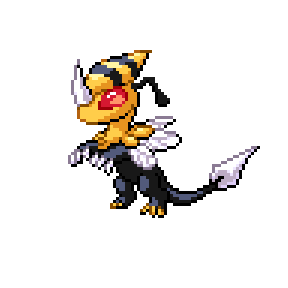
Wild Beemo-o are the frontline fighters and defenders of their hives. They attack with combinations of thrusting attacks using the stinger upon their tails and forceful punches.
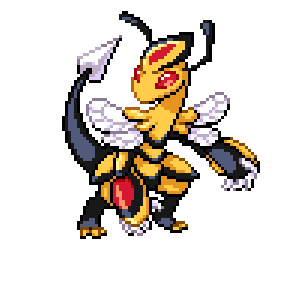
Wild Beemo-o will clash their scales together to signal to the other members of their hive when an intruder is present. The massive stinger upon its tail is capable of cleanly penetrating steel.
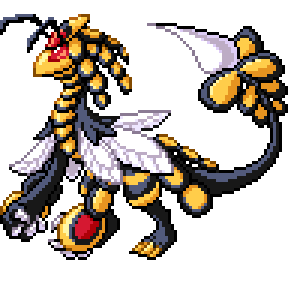
Beecool use their strong stingers to carve ocean rocks into their nests. They will emit bright lights from the red parts of their bodies to disorient and mesmerize those who draw too near before attacking them with flurries of stinging attacks.

The tentacles of a Beecruel can reach further than they first appear, often being used to constrict and restrain foes. Once they are certain of their victory, they will jab at their foe with stingers until exhausted.

It fashions a spear using its own shed stinger and a sturdy stick. The stinger still retains enough venom to fell a foe if the wounds do not fell the foe first.

Beeduo do not tolerate others entering their territory and will strike them down using their stinger-like proboscises. They communicate with their own kind by striking their proboscises together in varying patterns.
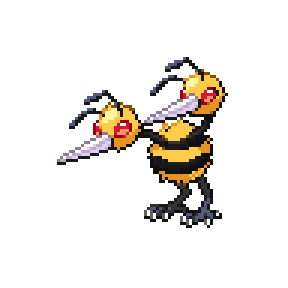
It swiftly chases after prey and invaders of its territory. With its three heads, it can deliver a barrage of venomous strikes with its stinger-like proboscises.

It secretes a harmless liquid from its furry tail, which it uses to playfully paint on anything around it. This liquid can change color due to many reasons, the most surprising being that emotions and evolutionary stones affect its color.
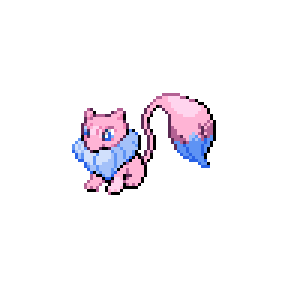
Mewkern have an extraordinary genetic structure that allows the stem atop their heads to grow into many kinds of plants. Their tails are used for playful pranks or to cling tightly to others.

These elusive Pokémon move with such speed that they are oft compared to lightning itself. Those few who have ever witnessed them have said they can disappear at will, though this has yet to be confirmed.

Mewlax are always seen with at least some kind of snack in their grasp or suspended nearby with psychic power. They are partial to sweet treats and some have been seen sharing pieces with friends.

The fusion between a Darkrai and a Mew caused the unstable DNA within the Mew to go rampant with dark energies and form an outer shell in the shape of a Darkrai. It now wields psychic energy and nightmarish power to manifest nightmares.
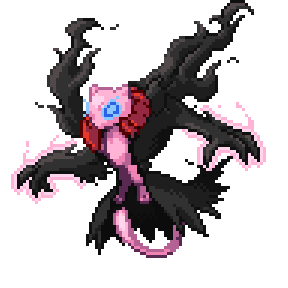
Mewtom dart about in lightning-bolt patterns, though they move quicker than lightning if spotted. This has led some to believe they can teleport, though they have only been observed moving extraordinarily quickly.
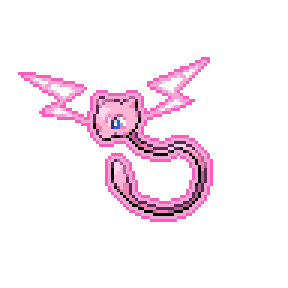
This odd Pokémon resembles a Pokédex and, supposedly, it contains records of every Pokémon, even those that may not have been discovered yet. None have been able to access this information, even if they have ever been lucky enough to get near it.

The many bubbles loosed from the shells of these Pokémon are either warm or hot depending on their mood. Tamed Mewkoal are common at carnivals because they can use their psychic powers to manipulate these bubbles.
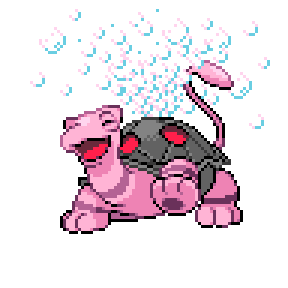
Its leaf exudes a spicy aroma akin to a Tamato Berry. It scales tall trees to find and eat nuts, then throws the nut shells at those below.

It uses Bubble Beam and Razor Leaf attacks to knock down fruits and berries that are too high for it to reach. It is too proud to ask for or accept help and will turn down perfectly good food if offered to it.

It uses its tough claws to till soil and to break open hard nuts. The flame upon its tail flicks wildly when it feels threatened. To keep foes at bay, it waves about its leaf that exudes a sharp, yet rich, scent.

Wild Chikosian hoard berries that they love the taste of. They swing the leaves upon their heads to knock berries free, though this also casts about a pleasant aroma that oft attracts other Pokémon.

Although the berries they collect are those they love to eat, Baysian will not hesitate to share them with others. Each of the curled-up leaves around their neck exudes a different scent.

The scent of their petals changes based on their diets. Supposedly the hue of their petals may change based on their environment. The most consistent factor between their species is that their presence seems to be calming for most individuals.
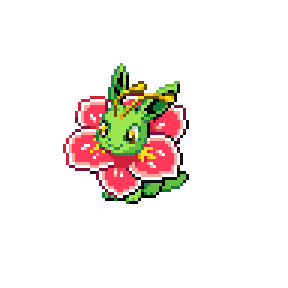
Megaeon will sleep beside any source of water with the tips of their tails dipped in the water so they may passively absorb it. They can safely absorb any type of water, though oddly their petals always exude a sea breeze scent.

The aroma of its flower can soothe most others so much that they may fall asleep. The Oran Berries growing upon its body are richer and larger than average Oran Berries, which it happily shares with its friends.

Megareon absorb and metabolize moonlight through their petals, which glow softly during the process. Though they may appear during daylight, they will become much more sluggish if they don't rest to conserve their energy.

Their songs have a calming effect and seem to promote plant growth. The forests and plains they live in and near are verdant and rife with life.
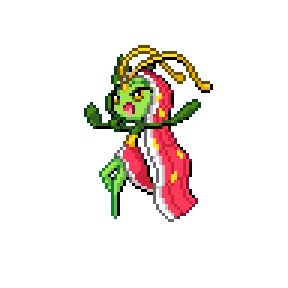
They sing as they dance within verdant areas, favoring flower fields to spread pollen and seeds through movement. They fiercely defend these fields, even if only a few flowers are trampled.

Megarein are very gentle and docile Pokémon that live near water sources within verdant areas. They dunk their bushy manes into water at least twice a day to keep their bodies nourished and their floral aspects vibrant.
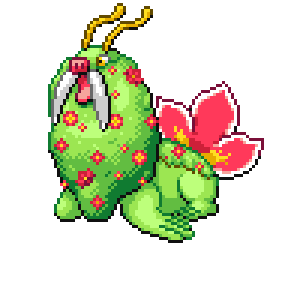
When happy, Cyndabone flare up their flames and drum their bone clubs against either their own skulls or nearby objects. If their drumming breaks something, they will immediately cry.

Cyndawak wave around large bones to scare off would-be threats while their flames burn bright. They are very meek, however, and will cry and run away if their intimidation fails.

Some stories claim that a Cyndatomb is born from the joining of souls of children lost to flames and infernos. This spectral Cyndatomb is bound to a volcanic rock with an oddly-familiar shape.

It is veiled in superheated plasma that can instantly incinerate grass and flowers on contact. It is very timid and shy, darting away to avoid others after startling them with flames.
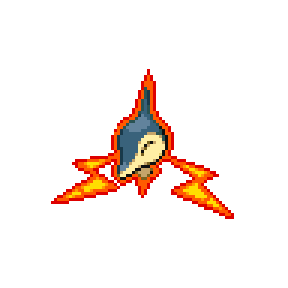
Quibone spits fireballs and throws its club during battle. If it ever loses its club, it will cry without end, and its flames will uncontrollably flare up.

Quiwak's hide is as tough as rock, supposedly because it lives deep within volcanic areas for most of its life. Its bone has been treated with clay and a yet-unknown means that have made it both flame resistant and incredibly tough.

Wild Typhbone collect clay so that they may treat their bones and make them more flame resistant. Their innate knowledge to use clay like this is widely studied. It appears to be because their own flames burn with dangerous potency.
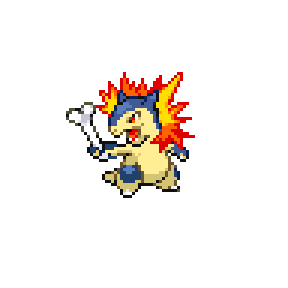
During battle, Typhwak obscures itself with a haze of intense heat and pelts its opponent with fireballs and Bonemerang attacks. It displays enough intelligence to be able to use its bone to season and stir foods while cooking them with its flames.
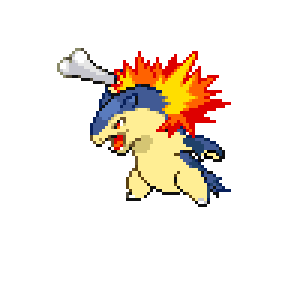
Typhligatr wreathe themselves in flames when they fight with other Pokémon, especially focusing their flames around their strong jaws. Their flame-clad fangs can bite and melt through most metals with ease.
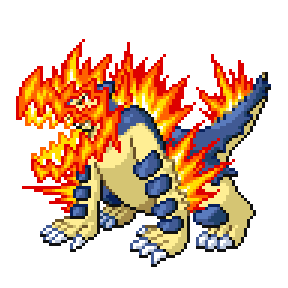
Typhking is always meditating to keep its emotions in check. If it is ever disturbed, powerful flames will erupt from the volcano-like crown upon its head.

Typhzor's steel-like body is hard to damage and painfully hot to the touch. Its pincers can act as flamethrowers, or it can wield blades of pure flame capable of slicing through metal.
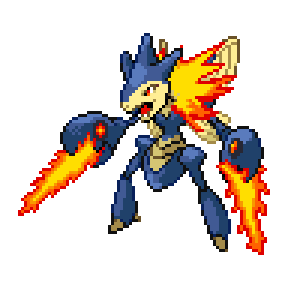
What at first appears to be an active volcano upon its back is actually a petrified tree leaking a magma-hot sap. When enraged, these Pokémon stomp about and release flaming Seed Bombs from the petrified trees upon their backs.

Within their tails is a boiling, corrosive liquid similar to napalm. They will spit streams of this liquid during battle and follow-up with a rock-shattering strike from their tails.

Typhrupt are so heavy that their every step leaves a deep imprint, even on solid rock. Flames erupt from their humps when they are angered or during battle.
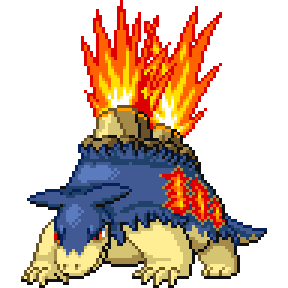
A Pokémon's body secretes a flammable sweat that often intensifies their flames when they run. They are clever enough to create small explosions with their own sweat by stomping their flaming hooves upon the ground or directly against opponents.

Totobone's skull helmet keeps its upper jaw from being able to move. It cannot be removed, as its head has developed to fit the skull to a tee. Its unending tears and fierce aggression indicate this causes it pain, but that has yet to be fully confirmed.

Toton's fangs are made of steel due to its diet of metals and ores. Its jaws are strong enough to break off pieces of solid metal and chunks of ore.
Their horns and shells are as hard as steel, yet have the composition of iron. Crocon have strong jaws and they can struggle to let go of something once they have bitten down.

Crocoron bash their own bodies against one another to settle territory disputes. Their jaws and fangs can bite through solid rock, so their clashes often leave one another clad in scars.

Crocovanha have further-developed jaws capable of quickly shredding through the hulls of many ships. Though they often live and hunt amongst their own kind, Crocovanha will insist upon fighting amongst themselves until an alpha of the pack is decided.

The feathers on its back are pointed and can tense enough to cut tough hides. It burrows using its strong claws and glides through the air when it leaps out of the ground.

Pididos take to the air by running and leaping, then they glide on the wind. They will dive with the tops of their heads aimed forward toward any foe or prey and strike with devastating force.

Pidxew use their tough and sharp tusks to mark their way so they never get lost. These markings are a boon to many, even other Pokémon.
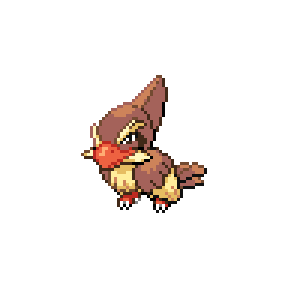
It uses its elongated jaw, and steel-hard teeth, to saw through rock and metal alike, all so it can feed on the pieces it cuts away. Feragron's body is strong enough to endure the force of a dump truck and even be able to lift it above itself.

These Pokémon resemble depictions of an ancient Pokémon so closely that most have concluded they live very long lives. They often swim through schools of smaller Pokémon and capture many within their large maws.
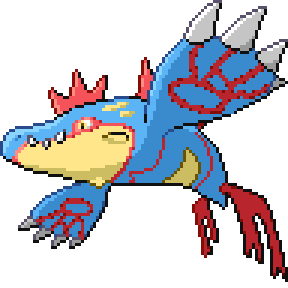
Feraon can swim upstream, even against rapids, with little-to-no difficulty. They use their strong jaws to crush up chunks of minerals and ores, or to intimidate would-be foes.

Feraron live along rivers, especially near those with furious rapids. They can swim against the current with ease, yet use these fierce currents to help keep their hard bodies honed. Their dorsal fins are especially sharp.
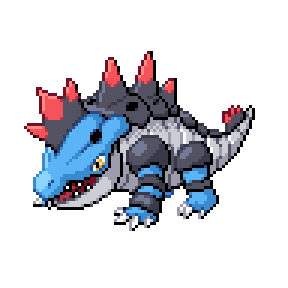
Feravanha are usually either seen leading a pack of Crocovanha or as solitary hunters, the latter occurring if they were rejected by their pack. Either way, Feravanha have intimidatingly powerful jaws and fangs capable of ripping apart ships.

Feraedo evolve from Feravanha that were brutally driven away by Crocovanha that they once led. They live and hunt alone, often getting into battles over territory that refine them into terrifying hunters of the sea that are clad in various scars.

Senchar produce and expel flammable gas, which they may ignite by striking two stones together. They balance themselves on their bushy tails to better see their surroundings.
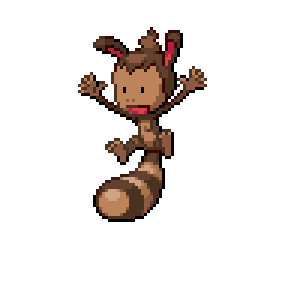
Furodor hoard small pieces of trash, favoring gumballs and the machines used to dispense them. If threatened, they gather the gumballs in their mouths and spit them at foes.

Hootbone prey on other bird Pokémon and use their remains to strengthen themselves. They are keenly aware of when night approaches and emit cries to alert the others of their flock when the time to hunt anew approaches.

These bird Pokémon hunt in flocks and communicate by striking their horns with their bone clubs. Noctbone never waste any part of their prey and use the bones both as tools and as markers for their territories.
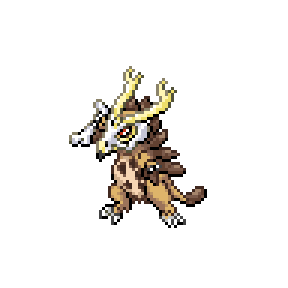
Noctwak are nocturnal hunters that live mostly in deserts. These clever Pokémon use the remains of their prey as weapons and tools, even though their claws are strong enough to gouge rock.
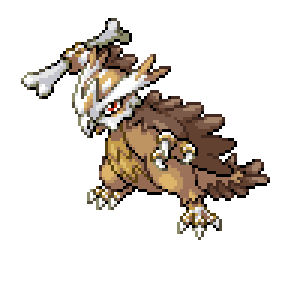
Noctbat hunts solely at night and is rarely seen due to the speeds it can achieve thanks to its four wings. Its eyesight is so sharp that it can navigate even the thickest of forests and easily spot any foes or food no matter how dark it may be.

Noctvern are nocturnal Pokémon who are most active on moonless nights, where their night vision allows them to find any prey. They neutralize their targets with ultrasonic waves before descending upon them.
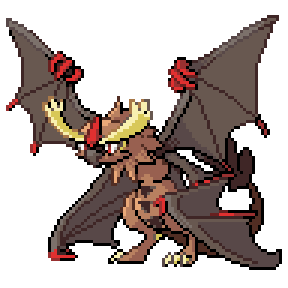
A Spinazor's four pincers can each spew a sticky thread to entangle their opponents. They will pummel their enemies with rapid Bullet Punches, using their threads to pull them back into their strikes if they try to flee.
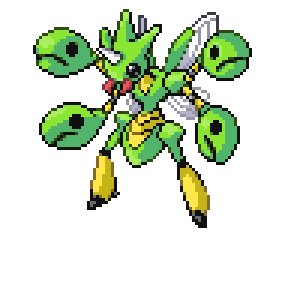
Despite the many rumors people spread about Spina Jr., they are merely friendly Pokémon that weave replicas of other Pokémon out of silk to give to others as gifts. Alas, most Spina Jr. are left to wallow in solitude.

Spinashrew roll themselves in their own silk webbing like a protective cocoon when they rest within their burrows. They weave their webbing using their multiple arms to entrap foes before biting with their venomous fangs.

Spinaiard are rather meek Pokémon despite their sharp claws and poisonous mandibles. They use their silk webbings to create webs to hide upon and to create tripwires to alert them to anything that approaches.

They can move as fast as electrical bolts. They weave expansive, complex webs by darting about while spitting out their sticky threads.

The silk webbing between each of their feathers allows them to catch the air when they spread their wings. Their signature move is a Flying Press that pins their foes down as they bite them with their mandibles and inject their poison into them.

The tips of their fingers allow them to touch their own silk without it getting stuck to them, which allows them to weave their strands into many different shapes. They often love to create portraits of others made purely of their own silk.
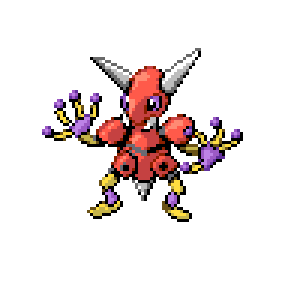
A Ariareon's fur is actually a fine silk that it has woven around its own body for protection. Due to its natural warmth, many weaker Pokémon are easily tempted to embrace this silk and will become trapped to later serve as a meal for an Ariareon.
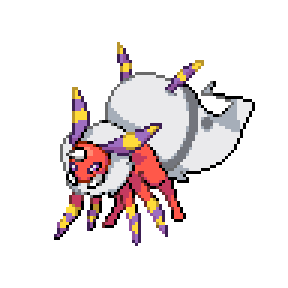
Ariatini are elusive and rarely leave the caves they live in. These same caves are lined with many webs that ensnare plenty of prey.
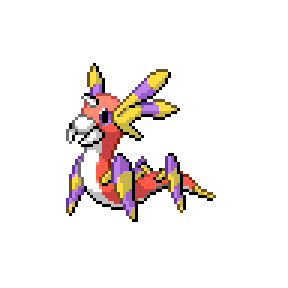
Arianair use the glow of their purple crystals to lure prey into their strong webs. They will finish them quickly with their venomous Bite attacks.

Webs spun in the shape of magic circles are a clear sign that an Ariamagius is near. Depending on the shapes spun with these webs, they will be imbued with the powers of different curses that ensure none can pose a threat to this Pokémon.
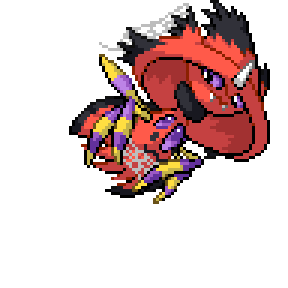
Aria Jr. nest within caves or the canopies of trees, quietly observing all that cross nearby. They are too fearful of being treated poorly due to their looks to ever show themselves, but they will leave sculptures made of silk for others as gifts.
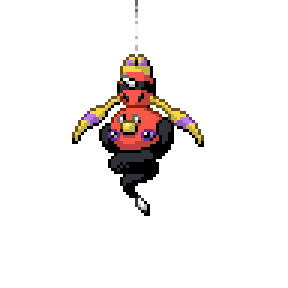
Despite how large they appear, Ariagrowth can effortlessly cling to cave ceilings. They will let many of their vines drape to entice and ensnare prey before pulling them within.

Ariaslash use their tough claws to tunnel through cave walls and to weave their silk webbing into webs. They will lurk upon the ceilings of caves and drop, with their sharp quills aimed down, upon prey.

Ariavoir are often horribly judged for their appearance. Its said that those who treat them with kindness will be blessed with the most luxurious silk outfits and a loyal companion whose webs will keep all foes at bay.
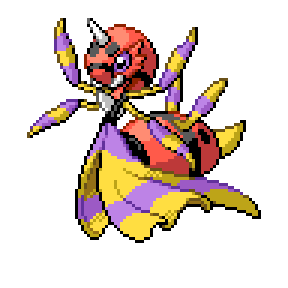
Wild Ariaiard spend their time creating intricate webs and traps using their silk webbing when they are not hunting or battling. The horn upon an Ariaiard's head is iron-hard and contains a toxin oft used to make potent remedies.

The retractable claws of their uppermost arms secrete a potent poison that can impair a foe from a deep-enough cut. The silk webbing they spit and weave is as tough as some metals, making it prized by many artisans.

Ariagon's wings are used to emit sonic waves that stun prey or that scare away predators. Their silk webs are rather keenly attuned to sounds, and many guitarists prefer to use this silk webbing for their strings.
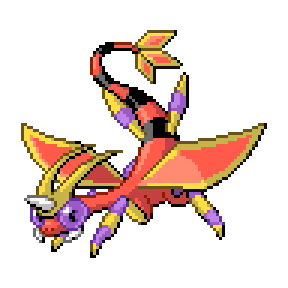
Ariatom expand their own plasma like a large web to intimidate others and to catch, and subsequently fry, small prey. They produce and spit sticky threads that can conduct strong electrical currents without being damaged.
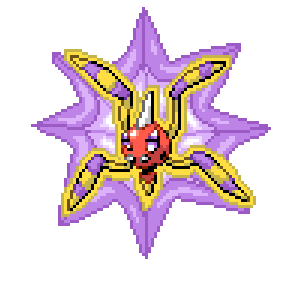
These Pokémon struggle to stand on their thin legs, often having to use their own webs to give them a perch. Despite this, their multiple legs make for effective weapons that they will rapidly jab their foes with until they submit.
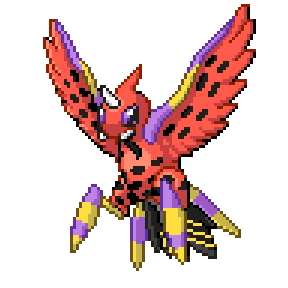
Often found only in large caves, these bug Pokémon use their wing-like limbs to grapple and cling to the ceilings and carefully watch all who pass below. They will spew webbing from their three heads to ensnare and drag away their prey.

Ariatias are skittish and evasive bug Pokémon that typically lurk within the depths of forests, jungles, or caves. They only emerge at night to forage for berries and nuts, before seemingly disappearing into thin air.
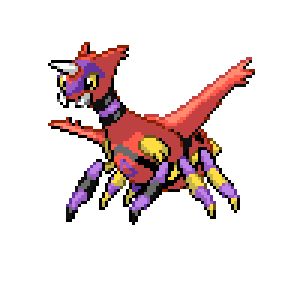
These highly-intelligent bug Pokémon are able to understand the thoughts of others within a mile radius and can even feel their emotions as well. They are often found in cities and towns watching people and Pokémon alike with ample curiosity.

Some researchers believe that the thick hide of Ariaon is actually just shells that contain their true forms. They eat rocks and minerals and will entrap their cavernous homes to protect themselves from intruders.

These Pokémon typically dwell within the sandy depths of deserts, waiting to churn the sand beneath their prey and drag them into their awaiting maws. They lay tripwires of silk webbing about to alert them when something is approaching them.

Ariava flutter their wings both for flight and to loose sonic waves to help them navigate through their desert territories. Their legs are so strong they can latch onto their foes and constrict them until their venom knocks them out.
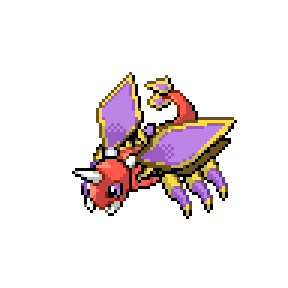
Its honey-like gelatinous body emits a sickly sweet scent that lures most Bug Pokémon into its durable webs. Its body throbs and glows with a honey-gold light in tandem with the beating of its two hearts.
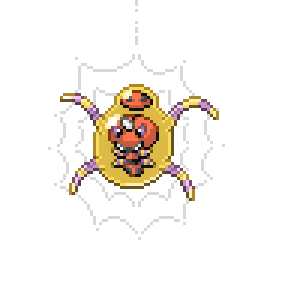
The webbing of an Ariavern's wings helps them to ride upon wind currents that flow throughout the canyons they make their nests within. They spit and weave more silk webbing to focus or disperse their powerful sonic waves.
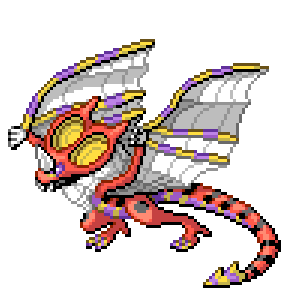
The silk webbing of Ariaselia is often used to make dream catchers that prevent most nightmares. Strangely, their silk webbing glows at night and eventually turns black when it has been used for too long.

It tracks prey while flying rapidly using its four wings, the lower wings helping it to rapidly adjust its path. When the time is right, it swoops down to grab its prey with its pincers and proceeds to crush them.

Their giant jaws open four ways and are dripping with a viscous, toxic saliva. The tongues of these jaws can lash out with enough force to break a rock and secrete a numbing venom from their tips.
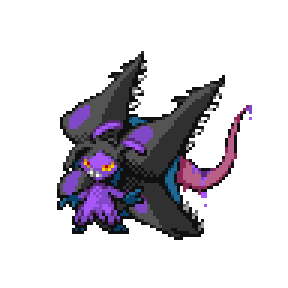
Pidgechu rapidly flap their head wings when excited or agitated. They are very young, so they are inept at retaining energy. The moment they perch atop anything metal, they release all of their stored electricity.
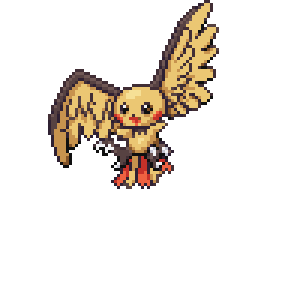
Their wings are strong and fold up tightly as they burrow through the ground, using the momentum to leap and glide. Pidgeslash have many sharp and rigid feathers along their backs that they can shed and launch at foes or prey.

Pidgeidos can only "fly" by gliding on wind currents with the help of their feathered arms. They can run fast enough that their Headbutt attacks can split a tree in one strike, though the impact of these attacks will typically leave them dazed.

Wild Pidgexew will patrol their territory daily, their tusks making it all the easier for them to fly swiftly through the air. Anything that dares invade their territories had best beware their deadly Aerial Ace attacks.
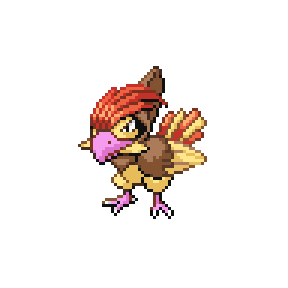
Chinbone communicate with each other by touching their glowing electrical bulbs together; when these bulbs touch, they produce bright flashes. Their golden clubs conduct electricity better than most other materials.

Chinwak prefers to avoid fighting and emits bright flashes of light from its two yellow organs to momentarily blind foes while it flees. Using its golden club, it catches lightning bolts to replenish its energy.

Chinros stomp their hooves to produce flashes of light from their luminous bulbs before charging at an enemy. Their horns channel electricity to help ensure they finish off their foes.
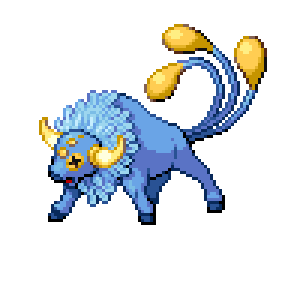
Chinchu are often too underdeveloped to properly retain, or discharge, electricity. Their tails have a bulbous organ that helps them store some of their electrical charge, however.
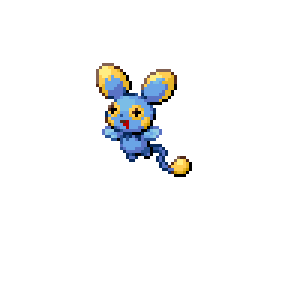
Chintic are friendly Pokémon who often provide a guiding light for lost Pokémon and lost Trainers. Those who often traverse dark areas tend to have a Chintic handy.

Chintoed often clap their fins together when happy, the yellows of their bodies faintly glowing as well. The eldest Chintoed is the one with the longest antenna and is often well-respected among its own kind.

These aquatic Pokémon often use the luminous bulbs at the end of their tails to play tricks on others. Their most typical trick is to use their lights to misguide others, though they will also temporarily blind them with bright flashes.

The bulb on a Chinans's tail glows brighter the more it is shaken. They typically live within small bodies of water and defend themselves with a numbing poison.

Chinchu are often found in bodies of freshwater, their tail bulbs emitting at least a faint glow. They will flee to land to avoid predators and may even discharge their electricity into the water.
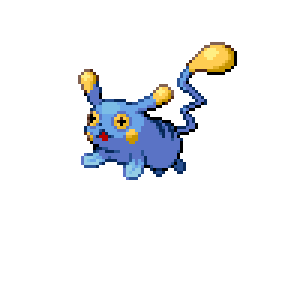
Their twin tails respectively discharge negative electricity and positive electricity at any threats that have drawn too near. They can tap the tips of their tails together to produce bright flashes of light.

With their luminous tail-bulbs, they will misguide lost Pokémon and electrify them to better prey upon them. They will blind strong foes with bright flashes of light and swim away without a trace.
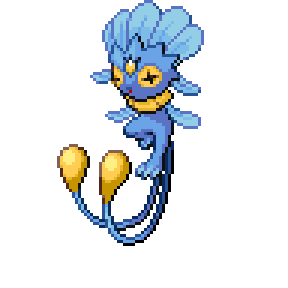
Wild Chinshrew are often found closer to beaches, where they often make little caves within the sand to rest within. They can curl up into a ball with their luminous bulb perfectly centered.

Chinran communicate with each other using flashing lights emitted from their ears. They generate, store, and release electricity through their singular horn, which also contains a paralytic agent.

They emit bright flashes of light from their ears when startled and may either release an electrical bolt from their horn or attempt to charge forward and stab with their horn. When their tail bulbs are full of electricity, they glow rather brightly.
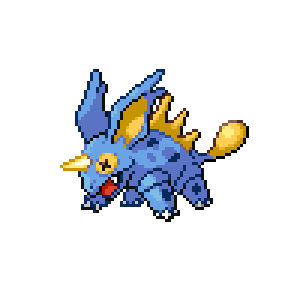
Wild Chinking have a tendency to be drawn toward bright lights, thinking they are the luminous tail bulbs of their own kind. Their yellow spines glow as they prepare to loose a bolt of electricity from their horn.

Slapping their tails seems to help them build up electricity, which sets their bellies aglow. This is often how they often scare away threats, because when their bellies glow bright it reveals many of their internal organs.
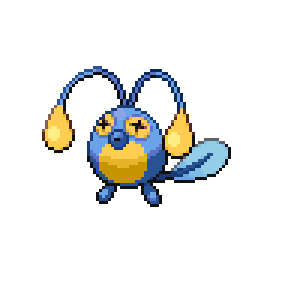
Its four bulbs store electricity and glow the more they have stored. The bulbs on a Lanchu's cheeks are how it will primarily release electricity, which it will often do when it has generated too much.

Bright, yellow lights dancing within ocean depths are often these Pokémon who love to dance in groups at night. Although rare, they may come to the surface and dance together atop rocks jutting out amidst the water.

The quicker its tail fin moves, the brighter the bulb on its head will glow. Lanchu will rub their cheeks to direct their internal electricity to their cheek pouches before discharging said electricity.

Lanchu discharge electricity mainly through the bulbs upon their tails, often swinging them around to deter threats. When they cry out, their cheek pouches often emit bright lights.

Lanceus are intelligent underwater Pokémon that drape themselves in the parts of wrecked ships. This has had the effect of strengthening their physiques, especially due to underwater pressure. The bulbs along their bodies can emit blinding lights.

Lanvenant ingrain their lower halves along the seabed near other plants and lure prey with patterns of lights using their yellow, bulbous organs. When prey comes near, they will grab them with their claws and electrocute them.

The tiny bones these Pokémon wield are believed to have come from another Electric-type Pokémon, though this has yet to be verified. Without this bone, Pibone struggle to control their own electricity and become despondent.

On nights where the moon shines bright, many Pifa will dance around in a ring near clear lakes. Their erratic electrical discharges become calm during this time, as they will form a circuit by joining hands.
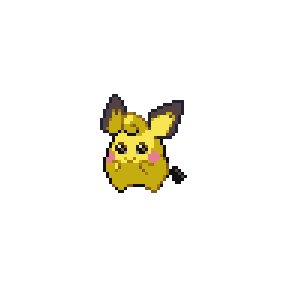
They will often discharge small electrical sparks while they stand still to absorb sunlight. They love to roll around in water, the marks on their cheeks glowing as they do so.

Once it begins to release electricity, it cannot stop. To reaccumulate electricity, it uses its strong body to tightly coil around transformers or power cables.

It wields a plant stalk to help pulverize berries and crack open nuts, though it can also use it as a weapon. Its stalk is charred because it often releases electricity accidentally.
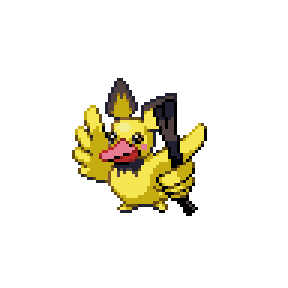
Its two heads habitually argue over food and over which will remain awake for the night. If the beaks of its two heads touch, electricity discharges and zaps them both.

Igglyling have incredibly soft bodies, which dampen the impact whenever they might crash. Their feathers are softer than silk, so many craftsmen and collectors treasure them.

Their horns and mandibles contain a potent neurotoxin that causes chaotic mood swings. As a surprising counter to their own neurotoxin, the silk webbings they create bring calm to any who touch them.
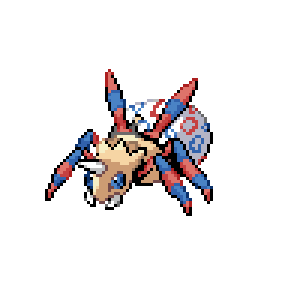
Togelax are friendly and cheerful Pokémon who love to gather and share food with others. If given food, they will not rest until they can gift food in return. If one denies their offering of food, they will loudly cry.
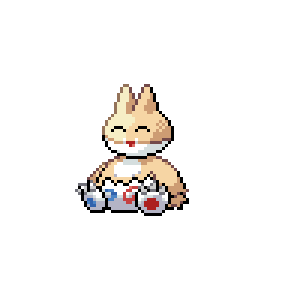
Togeshrew are born curled up in a ball, a posture they assume to defend themselves and when they feel anxious. They thrive when exposed to the feelings of compassion and joy from others.

Although many stories claim these Pokémon are born from the spirits of unhatched Pokémon, Togetump are extraordinarily joyful and outgoing. They go wherever they feel positive emotions, basking in them and passively feeding on them.
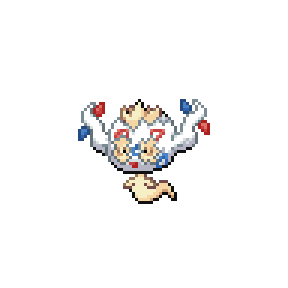
Togemy are either too weak to fully break free of their eggs after having hatched or they keep part of their eggs to defend themselves with. They will, quite literally, attach themselves to those they grow fond of.

Its wings remain too weak to stay in the air for long for a good portion of its life. Instead, it mostly digs underground to better train its body.
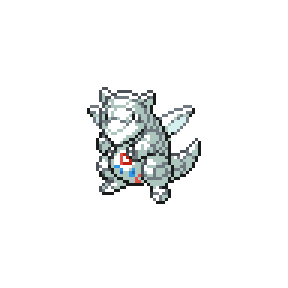
Its sharp quills rise when it is exposed to negative emotions and lay flat when it is exposed to positive emotions. It uses its strong claws to dig up rocks and carve them into gifts for friends.

Nachic are naturally curious Pokémon, which many attribute to their well-developed brains and potent psychic energies. Though still quick to startle, they will resort to spewing flames if they feel threatened.

Xachic are capable of briefly seeing into the future due to their highly-developed brains. Though they can defend themselves with strong flames, Xachic prefer to simply avoid conflict and use their foresight to do so.

Xabusken are capable of rapid physical strikes that are each calculated with precision thanks to their powerful minds. If their speed somehow fails them, they can then hold their opponent with psychic power and unleash a barrage of physical strikes.
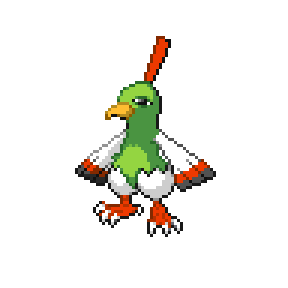
Xaziken is adept in martial arts and it has powerful psychic powers as well. Its psychic powers are strong enough that it can see into the future, which allows it to predict the moves of its opponents.

Xaceus are quiet Pokémon that typically live atop mountains of any climate. They often stand near cliffs and observe the world below them, snatching bird Pokémon from the air with their psychic powers.

Depictions left over by tribes of the past often claim that the smoke of a Xalure allows one to see into the future, or perhaps into the world of spirits. No proof supports this, as this smoke only seems to cause varying hallucinations.

Xaxorus often stare into the distance unblinkingly for hours, which some claim to be because they are peering into the future. Their wings are like large axe blades that allow them to glide through the sky at great speeds.

Gifted with mild foresight and a fine physique fit for battle, Xalucha are deceptively tricky combatants to face. Their signature move is a Flying Press guided by their foresight, and thus is feared by many.

These Pokémon have the mysterious power of being able to see into the future. They sing and dance with frivolous joy when they foresee bright and sunny days and they dance with ominous glee when they foresee stormy weather.

These Pokémon are so keenly aware of their surroundings, even while running, that some believe them to have foresight. They will rear up and open their weak wings to intimidate foes.
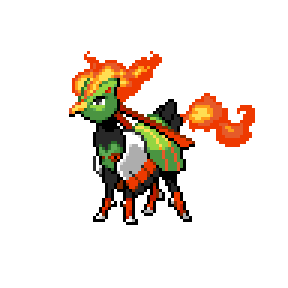
Their innate, keen awareness of their surroundings makes them popular in races even though they are picky about who may ride them. Their flames flare up when they feel threatened and they will rear up to stomp away threats using their hooves.
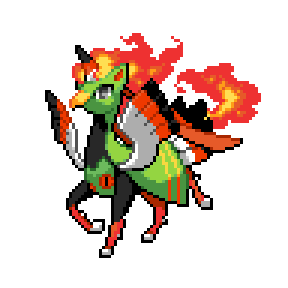
Upon its back is a strange seed, from which an electrically conductive cotton has grown. This cotton grows with water and sunlight and can be sheared like wool, though caution is advised due to how much static electricity can accumulate.

These skittish Pokémon move with such speed that their wool quickly builds up potent static charges. A herd of Matata can produce enough electricity to power a large building for about half a week.
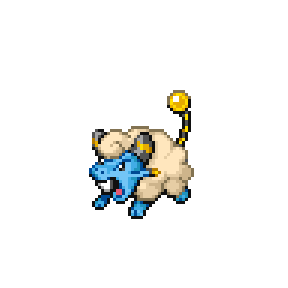
The wool of a Maceus can grow so large that many children think of them as walking clouds. The electricity that surges within their wool can grow so intense that their wool can look like it is a thundercloud.

Machar communicate with their fellow pack members using lights emitted from their tail orbs. Because these Pokémon climb high into trees, their lights tend to help guide travelers as well.
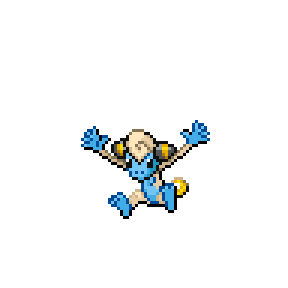
Mamander communicate with others via tail movements and by flashing light from their tail orbs. Their flame-resistant wool grows enough to cover their entire bodies, so they must be trimmed on a monthly basis.
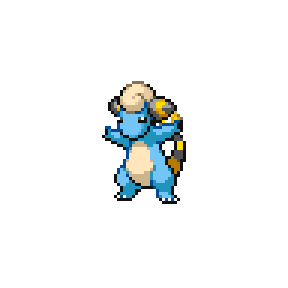
Its tail bulb is an organ that generates and stores electricity, which causes it to light up similar to a lightbulb. When a Mamoth shakes its lower body, it scatters statically charged scales.
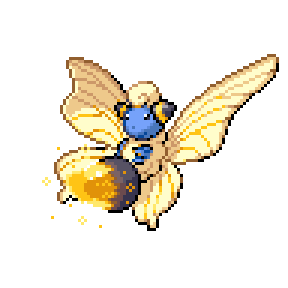
It generates electricity by rubbing together the patches of wool on its forearms. It stops when its tail orb glows with electricity. Its claws are sharp enough to trim away its own wool before it grows too dense.

Maizard use the friction of flight to generate electricity within their wool fleeces, which is then stored in the orbs on their tail tips. They grow more excitable the more power they have stored and seek battles to let loose their excess power.
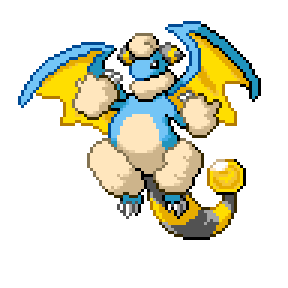
Pidhorn has trouble stopping after they begin running, often leading them to run off cliffs throughout the mountain ranges they inhabit. Thankfully, their wings allow them to glide to safety and avoid crashing into the ground below.

Pideon's many feathers crackle with electricity, which they will often scatter during battle to shock their opponent. Wild Pideon have been seen flying through active storm clouds to recharge and refresh themselves.

Pidmory work hard to keep their metal bodies and feathers polished and clean. They churn fierce winds and fling shed feathers at any who sully any part of their bodies.
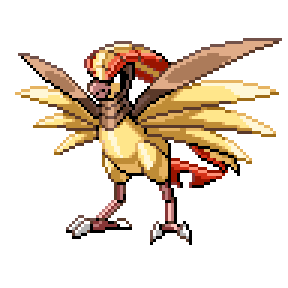
Pidxorus fight with forceful gales loosed by their strong wings and with slashing attacks that utilize their razor-sharp tusks. They are strong enough to pick up large foes with their talons and lift them into the air before throwing them downward.
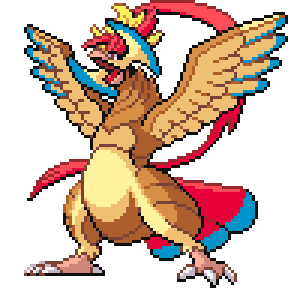
Pidflame vent more and more heat from between their feathers as a battle draws on and as their agitation builds. They use their strong, scalding talons to pin down prey and quickly finish them off.
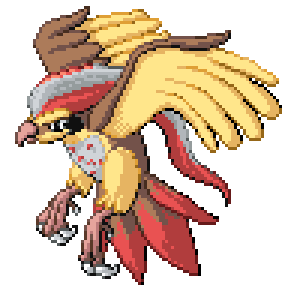
Despite its small size, this Pokémon's wings can create cutting gales that scar trees. Its tusks are always being shed and regrown; the shed tusks are widely sought by collectors due to how beautiful they are.
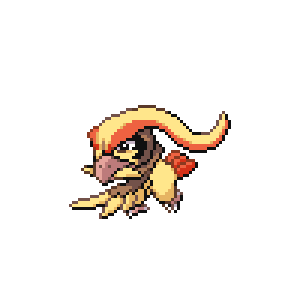
Its wings are strong enough to physically shatter rocks and its tusks can cleave through a tree in a single slash. It is relatively docile and, thus, favored by starting Trainers.

Many tales about majestic, flying steeds were inspired by this Pokémon. It has such control over its flames that they will never hurt anyone other than its foes.

Flaamander are common companions for young children due to how docile they are and how warm their wool fleeces are. Their wool fleeces can become so thick that the smallest amount will generate enough static electricity to power a lightbulb for hours.
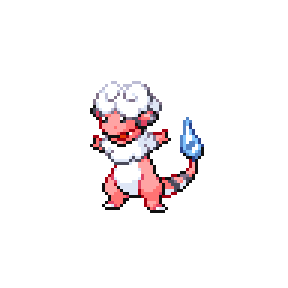
An Amphawak's three orbs each play an important role in the flow of electricity throughout its body. The orb on its tail charges electricity, the orb on its head stores and distributes electricity, and the orb upon its club discharges electricity.

The fur of an Amphareon is always warm to the touch, though it is also always crackling with static electricity. Still, many Trainers choose to endure this static for the sake of experiencing their soft, warm fur for themselves.
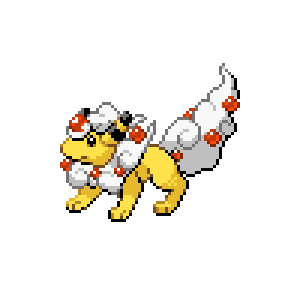
Its luxurious white fur crackles with lightning when it is agitated. DAmphanite have been spotted flying near and within storm clouds and they quickly disappear when the storm clouds have cleared.
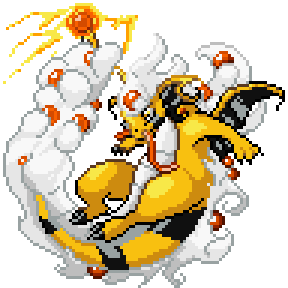
The orb upon Amphatwo's head glows and its hair crackles with electricity whenever this Pokémon thinks. Although it mostly fights with psychic attacks and lightning bolts, it is plenty capable of delivering devastating Thunder Punches as well.
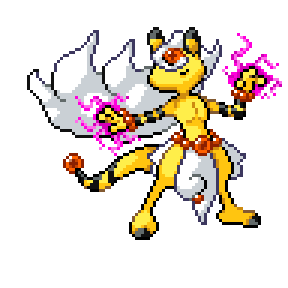
Amphaicate gnaw on hard objects to keep their fangs from growing too much. Their whiskers spark with electricity when they are agitated. They release flashes of light from their red crystals before they strike.

The different segments of Amphalix's body can rotate individually. This seems to be how it generates the electricity that fuels it as it burrows deeper and deeper underground.
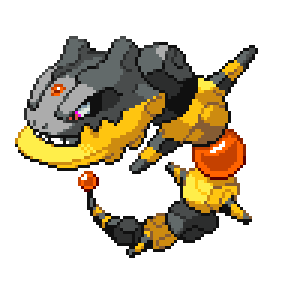
Its many crystalline orbs are as cold as solid ice and serve as conduits for the electricity stored within its tail fur. Some use its shed orbs to cool foods. It can freeze its fur to make it stand on end to better defend itself.
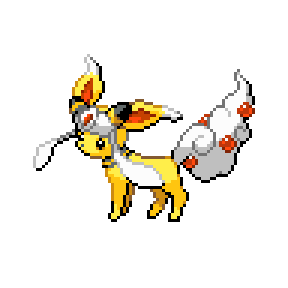
Wild Amphacor will conceal themselves within storm clouds as they search for prey. Each strike from their pincers is not only strong enough to break rocks, but also charged with enough electricity to even stun Grass-type Pokémon.

Amphatile make their homes within the tallest trees so they can use their tails to draw and capture lightning that they then store within their bodies. Each orb along its back will light up as it prepares to fire lightning from the tip of its tail.

Its muscles expand and tense the more electricity it has stored within itself. The long, white hair of an Amphapert turns as dark as a storm cloud when it exerts itself, which often occurs when it prepares to protect its nest.
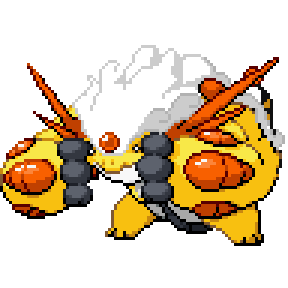
The fluffy mane of an Amphacario will crackle with electricity during battle. They imbue their Aura Sphere attacks with enough electricity to stun foes thrice their size.
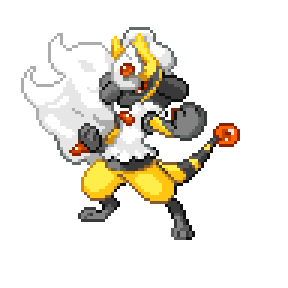
Its red jewels ignite with fire while its white mane crackles with electricity during battle. When it is not fighting, it is training to stay in peak physical condition.

The orbs at the ends of this Pokémon's nine tails can shine in up to nine different colors. It will bedazzle its foes with its many lights before finishing them off with lightning-clad flames. It never seeks out fights.
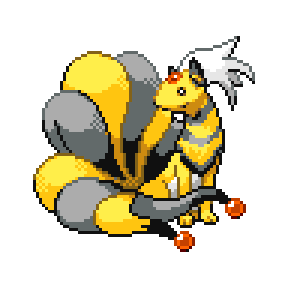
The orbs lining an Ampharorus's body shimmer with the lights of an aurora when it is active. They discharge electricity from these orbs whenever they feel threatened.
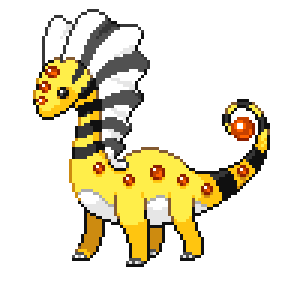
When these Pokémon are happy, they hop from foot to foot while flashing lights from their red crystals. The orbs on their tails are hot to the touch, to the point that rain will instantly evaporate on contact.

Electrical sparks fly from their tail orbs when they are agitated. Their claws are tough enough to break through rock without chipping and are hot to the touch.

Wild Amphanine dash across the lands at extreme speeds, the many orbs along its body aglow and casting it as a streak of red and yellow to the eyes of most. When it barks, embers spill from its mouth and sparks of lightning fly from its orbs.
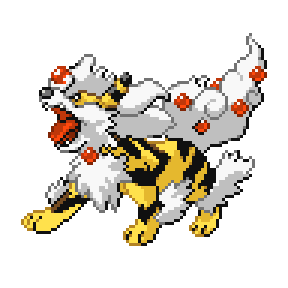
This Pokémon flies in search of stronger foes. Not even a fierce thunderstorm will bar its path. When it releases all of its electricity, the orb on its tail can glow bright enough to be seen miles away.
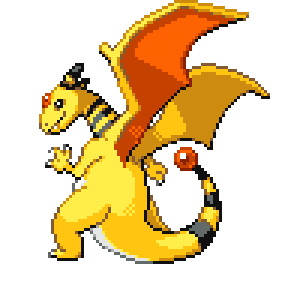
The mane of an Amphadash is some of the softest and most flame-resistant wool ever known. Strict laws had to be established to prevent poachers from hunting them into extinction.

These majestic Pokémon can call forth lightning around themselves and will "catch" lightning with their marvelous horns. An enraged Amphadash's trampling will scorch the very ground they walk upon and call down bolts of lightning to split the earth.
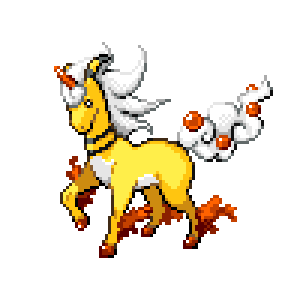
Bellslash lay flat on their bellies amidst fields of flowers to disguise themselves and absorb sunlight or moonlight. When happy, the flowers on the tips of their tails spin like small propellers and scatter a soft, harmless pollen.

The blue core of a Bellklang absorbs and metabolizes sunlight, which ensures its many leaves may continue to spin. These leaves will glow brightly when this Pokémon charges a Solar Beam to be fired from its core at its opponents.

Wild Sudoans will wrap themselves around tree branches and use their branch-reminiscent tails as bait for bird Pokémon. When a Pokémon lands upon their tail, they will lunge and swallow it whole.
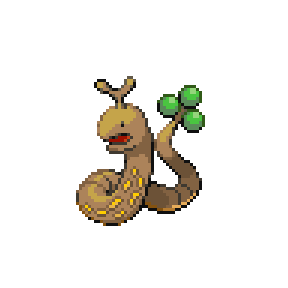
Its sharp, green feathers swell as it is exposed to water from any source. It will shed these feathers in battle and launch them at its foe with bursts of steam, but new feathers will regrow as it sleeps.
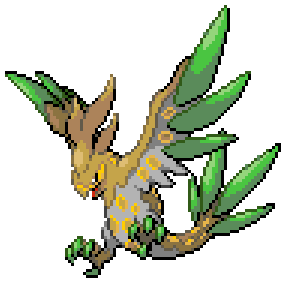
Sudoxys produce green, rock-hard fruits from the hole in their chest after they've eaten their fill for an entire week. They use their left tendrils to throw these fruits at threats, or break them with their right hands for other Pokémon.

Poliwak have incredibly dense skulls that are harder than diamond. When it is raining around them, they will use their bone clubs upon their own heads like they are beating on drums.

Wild Polidactyl will lay claim to an entire pond and stack up rocks to form a "throne" that they can lay upon to survey their new domain. The longer the curled hair upon a Polidactyl's head, the more prideful and haughty it is.

Polilax have a long, heavy tongue capable of holding and reeling in a small forest's entire haul of fruits and berries. They must use both of their arms to smack their own bodies to shoot out their own tongue.

It is inept at swimming and at storing electricity. When happy, a Polichu will clap its forelimbs together or against its belly, which sends small jolts flying about.

Polisire lie in or near still waters, and they rarely move. When it rains, they become more active and more vocal as well; in fact, groups of Polisire effectively "sing" in unison during rain.

Polishrew move by hopping and by burrowing through the ground. The older they grow, the more curled their singular hairs become.

Polislash live in marshes and anywhere else that is rife with mud and humidity. With their claws, they can dig through any rocks buried in the mud.

The hair atop a Poliduck's head curls and uncurls while it uses psychic powers. These adept swimmers are often seen performing backstrokes in ponds and lakes even with their eyes shut.

Jumpvee are light enough to glide on strong winds with every leap and bounce they make. They are known for adapting to any environment, no matter how harsh, so even if they are carried away by the wind, they will be able to thrive.

Jumpreon cotton is incredibly hot, yet also one of the most fire-resistant materials known. Their cotton can catch on fire but will not burn away. They fight by scattering cotton spores and setting them aflame.
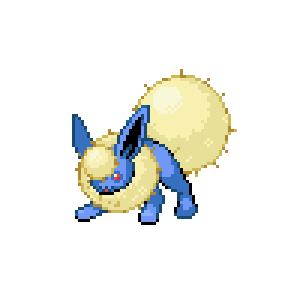
The Cotton Spores produced by this Pokémon's dancing are statically-charged, which helps them to scatter due to their incoherent polarities. They loathe rain and will often huddle in caves or under thick trees to avoid it.

It shoots explosive cotton balls to protect itself. Its body is surprisingly light and can be lifted from the ground by a strong enough gust.

Ratpede have remarkable scent detection capable of detecting when something about a food changes, such as during fermentation. Their teeth allow them to easily break open nuts, too, so they are popular with chefs.
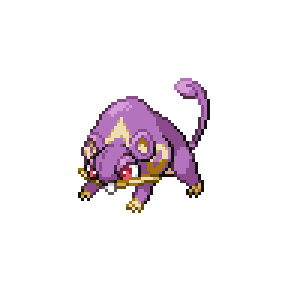
Sunbone mold tools and weapons out of mud and rock to better defend themselves; the stems sprouting from their helmets are part of their actual bodies, however. To keep themselves from being overfilled with water, they weep the excess.

It has a commensal relationship with the large sprout it wields; the sprout turns sunlight into nutrients that are absorbed by it. There is some debate if the relationship is symbiotic, since this Pokémon makes sure to protect the sprout from harm.

Sunhorn are so hyper that they struggle to stop running once they begin. They tend to scatter Seed Bombs from their back as they run around.
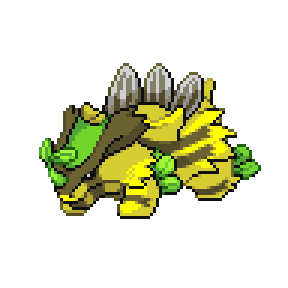
Sunvee love to play in rich mud and dirt, which provides them with many nutrients to absorb as well. Exposure to evolutionary stones causes their leaves to change, with the changes being more noticeable the longer their exposure.

The seeds within their wings are filled with electricity that is generated when their bodies metabolize sunlight. They love stormy weather and will happily fly through thundering clouds.

Sunchou are aquatic Pokémon who use their glowing, bulb-like antennae to guide themselves through dark waters. As they mature, the tips of their antennae begin to unravel.
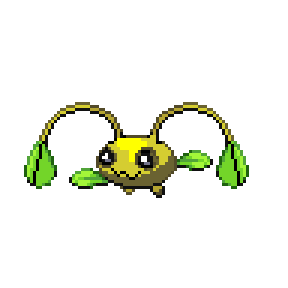
Sunchu bury their bodies, with their arms aboveground, to better feed on nutrients and water in the ground. If anything grabs their stems, they discharge all of their energy and black out.
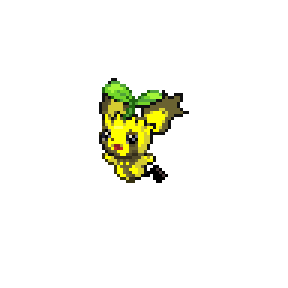
Suntata are small Pokémon that scurry across grassy plains and fields of flowers. They enjoy nibbling on leaves and petals, even though they metabolize sunlight absorbed through their leafy tails.

Sunicate are often bloated due to the nutrients they have stored within their bodies for the sake of their evolution. Their tails are like stretchy vines that they use to reach hard nuts to chew on, which help to keep their fangs sharp.

Sunpy drink and store water with their trunks, often spraying themselves or others of their kind to keep the stems on their heads nourished. Their trunks are strong enough to lift rocks as big as they are.

Wild Sunslash curl up or lay flat to disguise themselves as grass shrubs. Their claws are strong enough to dig holes big enough for them to sleep in and their grassy quills can harden for a short time to defend themselves.

Wild Suntic absorb, filter, and disperse the very water they live and swim in. If they ever run low on nutrients, the vivid colors of their leafy bodies begin to dull.

The head of a Sundon is actually its main body. Its lower body is mostly dirt and rock held together, and controlled, by their many vast and tough roots.

Sunpunny love to eat other plants, especially carrots, and take great care to keep their own leafy bodies clean. They will scatter thick plumes of their soft leaves to conceal themselves and flee when attacked.

Their many tails glow with the sunlight absorbed through their leafy manes. They can harness the power and heat of this sunlight to produce warm flames.

Sunling soar through the skies with their leafy wings, absorbing sunlight to keep themselves from tiring. Their cheerful cries at the break of dawn have long served as nature's alarm clocks for many living near forests.
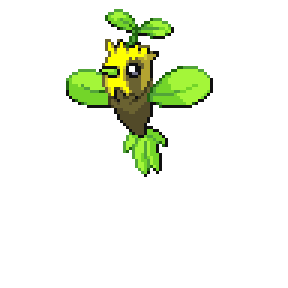
The overgrown flower upon its head absorbs sunlight to fuel their metabolisms. This flower also obscures their sight, causing them to run about without stopping until they collide with something.

Wild Sundon often cause small tremors as they happily stomp about. They can fire their seed-like horns at opponents with powerful force.

These Pokémon live within lush forests or jungles, coiled around themselves with grass flowers growing all around them. When the sun is covered by clouds, they fly into a thrashing rage.
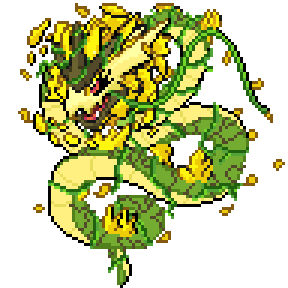
Their tail leaves change when they are exposed to specific evolutionary stones. Wild Sunvee are a common sight in open fields, gardens, and farmlands. They will go wherever they can find rich nutrients and bathe in bright sunlight.
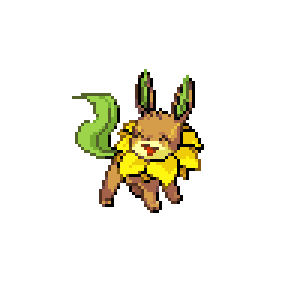
Water is absorbed and stored with the large leaves at the tips of their tails. Their green hides glisten with the stored water that they secrete like sweat. Suneon love to float in water when the sun is shining bright.

They metabolize sunlight to acquire nutrients and to generate electricity, which is stored in their vibrantly yellow petals. Suneon petals are used in many anti-paralytic remedies and in some medicinal stimulants.

Sunreon have leafy bodies that are soft, warm, and lined with myriad seeds. When their tail-like buds open, they scatter seeds and reveal a gentle flame within.
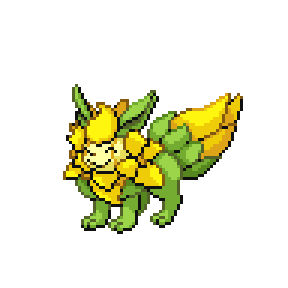
Sunchou walk along the seabed, their flower-like antennae shining brightly even in deep waters. Although their light looks to be sunlight at first, they are actually produced by the strong electricity flowing within their bodies.

Sunchu live in open fields amidst flowers, with their own faces and petals always aimed toward the sun. They are considered very aloof and discharge their own energy when startled.

The many grass-like feathers of a Sungeot are renowned for their curative properties due to the rich nutrients they contain. However, if one is picked before it is shed, it will nearly instantly wilt.

Although wild Suntata can easily blend in with flowers, they are so skittish that they will quickly flee if anything gets close to them. The petals around their heads glow faintly during the day.

Sunicate favor hard nuts and tree bark as food. They burrow their tails into the ground to absorb water and nutrients while also absorbing sunlight through their petals.

Suncune drink water through their leafy vines, capable of filtering out any pollutants. Their grassy manes are often shimmering from how well-nourished and watered they are.
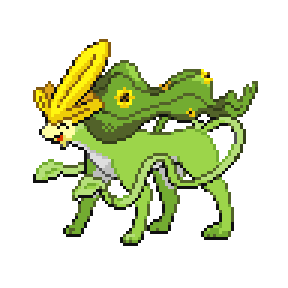
Sunsly have rocky lower halves reminiscent of a Bonsly. Their lower halves are like pots that store water to keep their grassy upper halves from drying out.
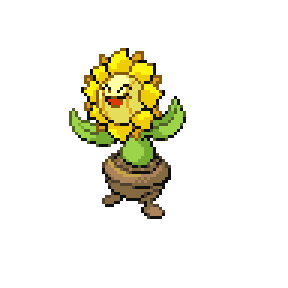
Its bright, yellow petals contain its electricity and are shed when it stores too much. Although it becomes more aggressive while waiting for its petals to regrow, these petals are valuable for many people.

Wild Sunvoir tend to vast gardens of flowers and other plants, their expansive flower-like skirts capable of scattering nutrient-rich pollen whenever they unfurl. They can condense stored solar energy into powerful attacks to protect their gardens.
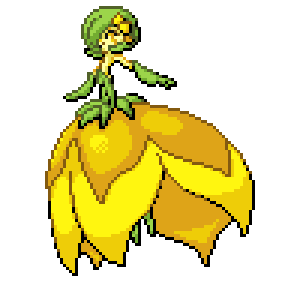
Suntic often sleep during the day, their heads bobbing on the surface of their lake homes as they absorb sunlight. Their bouquet-like tails sprout new flowers the older they become and are often trimmed and used as presents between human lovers.

The long, sharp-looking leaves at its side conceal rock-hard claws. Its petals absorb sunlight that its body turns into energy, which is often stored within its two horns. It can release precise, albeit weaker, Solar Beams from its horns.

Sunpix are very friendly Pokémon that love to bathe in sunlight as the petals around their heads drink it in. They can create weak balls of bright, yellow flames and play with them often.

These Pokémon lay in great, open fields for most of their lives as they bask in the sunlight cast upon them. When they get up to dance away their excess energy, they also scatter around countless seeds that become fields of beautiful flowers.
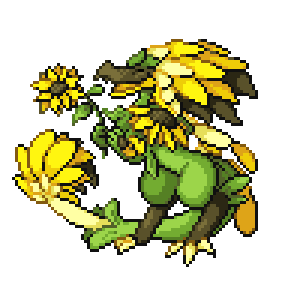
A Sunine absorbs large amounts of sunlight even as it dashes quickly through grassy fields, often seen as a mere blur of yellow and green due to the speeds it can reach. Its grassy fur is extremely warm to the touch.

Sungong love to laze on cold surfaces due to how warm their bodies get as they absorb sunlight. When they clap their leaves together or their tail against the ground, they scatter small leaves and petals from their bodies.

Yanros fly so quickly that most only see streaks of the light produced by the orb on their tail. They flutter their wings at increasing speeds to generate electricity within themselves before they take off in search of food.
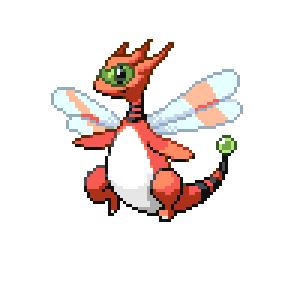
Yanrow can adjust their trajectory in an instant, so they not only rarely crash but they also rarely lose a foe they are tracking. A flock of Yanrow will use their cries to warn one another of danger and to coordinate their quick attacks.
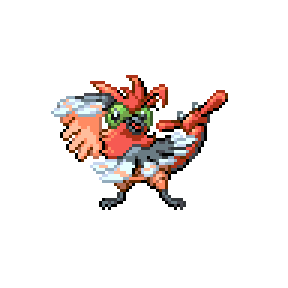
Yanxew have wings that allow them to glide for short, but quick, bursts. These quick moves also allow them to avoid fights while cutting into trees with their tusks so they can suck at the sap directly.
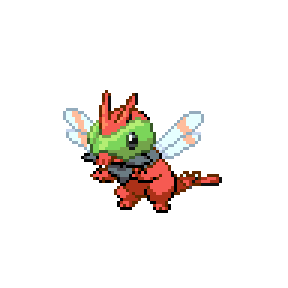
Quagorb may be able to waddle around, but they seem to prefer rolling and jumping most of all. Either a mere byproduct of their rolling or the reason they prefer to roll, rolling helps them generate more electricity than they otherwise would have.

Quagon love to lay on their backs in water and drift about, their wings loosely guiding them. Their tails are thick and strong, with a single good Slam being able to create a decently-sized wave.

Its skin is coated in a thin film of a water-repellant yet moisturizing oil, which has become popular in the making of sunscreens. This oil seems to aid it in swiftly withdrawing into its own shell and allows it to relax even in intense heat.

Quagtoise have remarkable control over the pressure of the water they release from their waterspouts. They are docile, however, and only tend to use their waterspouts to shoot down fruits, with their mouths agape to swallow the fruit whole.

These Pokémon mostly move by swinging their tails against the terrain to propel themselves, even if deep underwater. This is also how they acquire prey, waiting for prey to draw near, launching themselves, and then latching on tight.
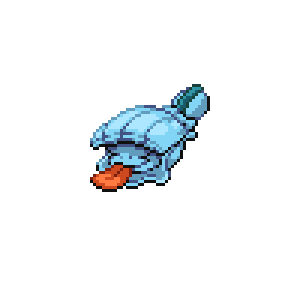
It has an unassuming appearance, which serves to lure prey. It nests within a cave and keeps its strong shell obscured by the shadows, clamping shut upon prey that comes near and swiftly ends their struggle.
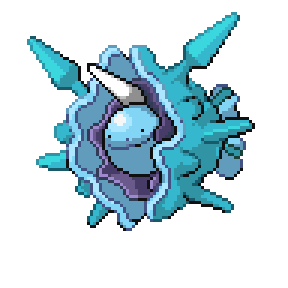
Espfree possess such great psychic power that they can fully veil their wings with energy and make them appear twice as large as they truly are. Their every scale is believed to amplify one's mental abilities, making them popular as charms.
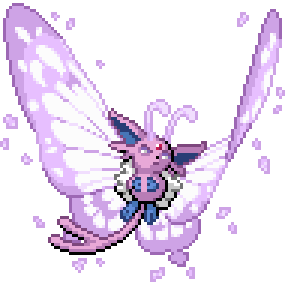
Espew can supposedly bend reality with their psychic powers to make themselves invisible. While this has yet to be proven, what is known is that they are very selective about who they will appear before.
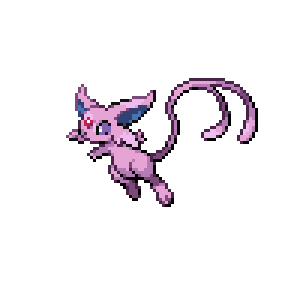
A bite from an Espdos is capable of injecting a potent, mind-numbing neurotoxin into its victim. It is mysteriously able to weave psychic energies into physical webs, which it uses to drag its victims back to its lair.
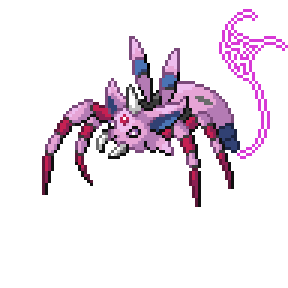
When its gem glows, its cries affect the minds of other Pokémon and make them feel compelled to obey it. If its tail is grabbed, it cannot muster any of its psychic power.
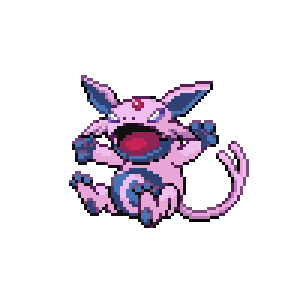
Esptar love to eat rocks and crystals, though the shinier they are, the happier they are to eat them. They only appear to Trainers they believe they can trust; they are notoriously picky.
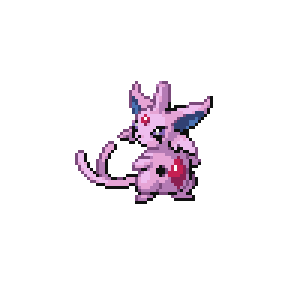
It rarely moves, at least physically; it will move itself by using its telekinetic powers to conserve its strength. Its red crystal glows as it harnesses its psychic abilities and is known to be harder than diamond itself.
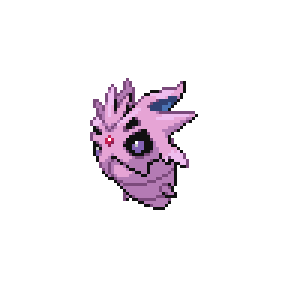
Its gems glow as it unleashes its psychic energies. Even as it rampages, it can still release psychic waves all around it. The best-known way to calm a rampaging Espitar is with the touch and/or voice of someone it trusts.
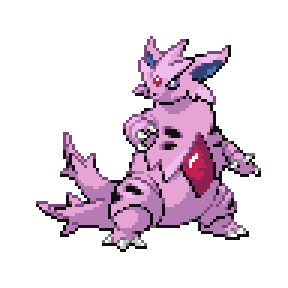
Packs of Espvile communicate and coordinate with one another using psychic waves across distances up to around half a mile. They have exhibited the ability to teleport short distances as they harass and attack any trespassers of their territories.
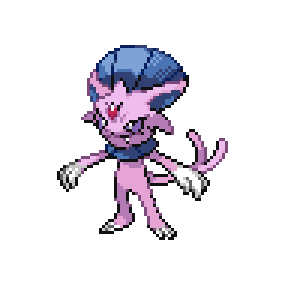
The protuberances on their heads expand the range they can emit their psychic waves to communicate with one another. They will lay down their lives to defend their Trainers that they have deemed to be worthy.
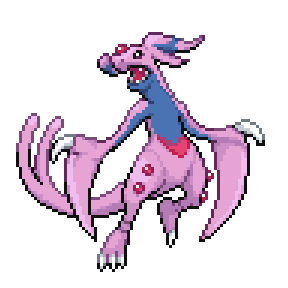
Its nine, split-tipped tails are viewed with great respect and admiration for the powers oft claimed to be within them. An Esptales will treat worthy Trainers with equal respect and unyielding loyalty.
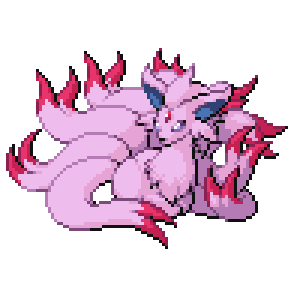
Their latent psychic powers have awakened and melded together with the powers of their flames as well. Those who stare at their flames tend to feel like they are being drawn into a hypnotic state.
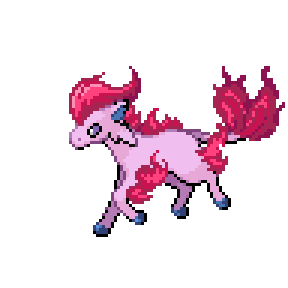
These Pokémon are well-known among many sailors due to the markings upon their bodies that shine bright at night. To many, Umbras are seen as a blessing to encounter at sea.

The symbols on their bodies glow on moonlit nights, which is when they typically come out from their dens. The sight of Umbew lights dancing in the sky is very popular, especially with tourists. They are too skittish to get near to, though.

Umbgey feathers glow faintly in the dark with a pale, yellow light. These nocturnal bird Pokémon can navigate through darkness with ease, and their glowing feathers often guide others as well.

The markings along an Umbdos's body glow only when the moon is exposed, even if it is not within the moonlight itself. As such, it is a diurnal hunter that pounces upon prey with nets of silk and subdues them with its venomous bites.

It nests within caves and emerges at night, the yellow parts of its body glowing softly when the moon is out. It secretes a non-lethal poison like sweat, which it can scatter quite far with a flap of its wings.

Despite its size, this Pokémon stalks its prey from the dark and pounces swiftly. Its talons can break open the hard shells of certain Bug-type Pokémon. The glow of its feathers in moonlight is beloved by many, making it quite popular.

At night, these Pokémon emerge from their dens near lakes or ponds and dance in the moonlight. Their bodies are covered in a thin veil of poisonous oil. This oil is used in some antidotes.
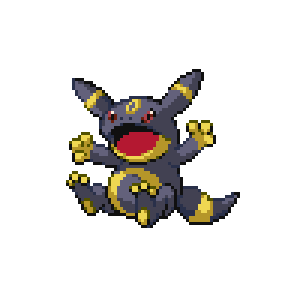
These odd Pokémon will embed their lower spikes into the terrain of a location often exposed to moonlight so they may bask in it aplenty. The more moonlight they absorb, the more of a hidden potential they begin to display.

Those who trespass upon the domains of these nocturnal Pokémon will swiftly be met with lightning bolts crashing down. The sight of an Umbkou bearing its fangs as it growls is infamous; thus, some people don masks resembling them to terrify others.

The patterns along its body glow with an eerie light as it skulks in the darkness. It encircles its prey, using the glowing symbols on its back to distract its target as it wraps around them and crushes them.

Parts of its body resemble the moon itself, perhaps due to how it absorbs moonlight to empower its every action. When the yellow parts of its body are dimly lit, it is full of moonlight and ready to fight.

These nocturnal Pokémon use their claws and their flames to create nests within cave walls and the sides of mountains. When the moon is full, they brim with energy and become much more aggressive.

The patterns upon their wings and bodies glow on a moonlit night, which also seems to be their only active time. Umbfly seem to help maintain a balance between nighttime flowers and other plants, carrying pollen and seeds alike after feeding.
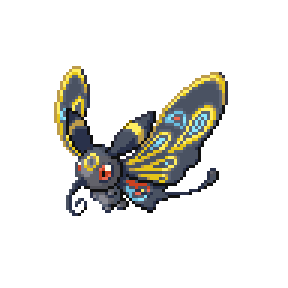
The tail flames, symbols, and wings of these Pokémon shine bright on nights where the moon is visible. Moonlight seems to fill it with great power as well, as its flames can melt through nearly any material on moonlit nights.

Its flames burn blue due to its poisonous sweat. Its flames cannot be extinguished with water as a result. It is always seeking fights, though it will never attack a weaker foe or the injured. When it roars at night, its golden symbols shine bright.
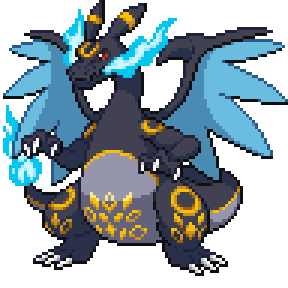
An Umbta's flames are rather dark but will light up at night when the moon is visible. Their body markings glow at night as well, making them slightly visible when they trot through open fields at night.

Many records exist of these Pokémon collecting valuables and treasures and adorning themselves with their collections. However, they have never stolen from anyone and have always been willing to return lost valuables to their rightful owners.
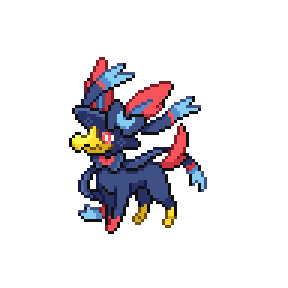
The fluid secreted from their tails is poisonous to most things and is flung to defend themselves. They sometimes use it to leave markings on their own flowers and leaves.

The flower bud atop its head continuously grows as its leaves absorb sunlight. It will often lie in fields of grass and flowers, sometimes blending in so well that others accidentally step on it.

It is a rather rotund Pokémon, yet it does have strong muscles to support the growing plant atop its head. It will shake trees to loose the nuts and fruits within them, but sometimes damages the tree in the process.

Ivymega rest atop tall trees with their leafy wings spread apart. To knock free fruits, or to open nuts, they loose shockwaves with beats of their wings. They tend to leave trails of rich pollen behind them as they fly.
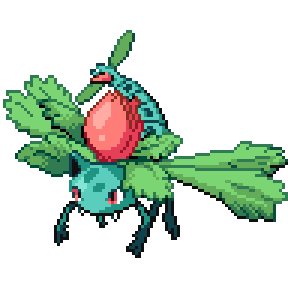
It will often scatter leaves and seeds at foes and then use its flames to set it all ablaze. Its strong legs let it jump around, and its vines help it better navigate forest homes.

Ivylup, even if wild, are very diligent about keeping themselves and their leaves clean, so they are often seen near, or in, streams and rivers. The longer their leaves are, the more prideful and uppity Ivylup will be.

Ivylup will lie on their bellies in patches of nutrient-rich mud, their plant bulbs facing toward the sun. This seems to keep them cool and further nourished as they let their bulbs absorb and process sunlight.

The bulbs on their heads grow heavier with every day, so their bodies are always dense with muscle. They long for the day that their bulbs will bloom into flowers and will flee to keep to their bulbs safe.

The plates of their shells have the composition of roots and help carry nutrients and water from their flower buds to their actual bodies. Though their legs are small, they are dense with muscle.

These forest Pokémon are often seen hanging from branches, their leafy bodies swaying in the wind. Ivypet are said to feed on negative emotions, which might explain why they drop nuts and berries on passersby.
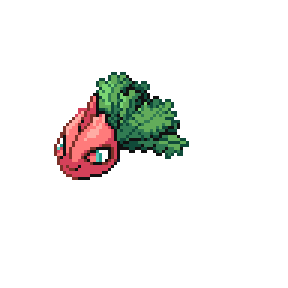
It uses its gaping maw to snatch large fruits and nuts, which it will then drain dry of all their juices using its sharp fangs. Though it will also eat the drained fruit, it will spit out the nuts without a care for where they land.
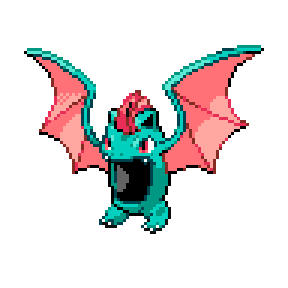
This Pokémon never seems to rest, though it does appear to move slower when exposed to sunlight; moonlight, however, fills it with energy. An Ivytump's bulb-like head will release a pungent aroma as it grows nearer to opening when it evolves.

These Pokémon are always quick to anger, most likely due to the overgrowth of leaves and vines that have overtaken most of their bodies. When an Ivykey starts exhaling spores out from its nose, it is about to fly into a rage.

Its flower bud opens halfway and the leaves along its body stand on end when it flies into a fit of rage. These fits of rage seem to boost its circulation, which results in the leaves growing even more robust.

Its three heads help it to maintain balance with its heavy bulb and not fall over. Its long legs are extremely strong as a further result, so it can run for long periods without rest.

Mishorn will charge at others purely to instill fright within their targets and will stop just before colliding. Through their gem-like horns, they can absorb the fear and misery of others and convert it into energy.
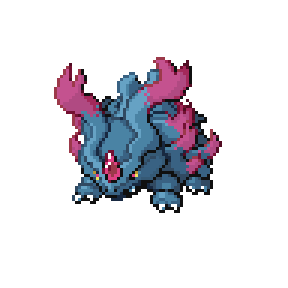
It charges at others with all its might, though typically stops just in front of them. It absorbs the fear caused by its charging within its red orbs, which somehow convert that fear into nutrition.
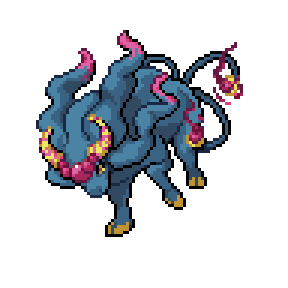
Emotions serve as their main source of energy and nutrition, though each different emotion seems to have a specific influence on their mannerisms. Their long, flowing fur is sought after by many, but especially those of the upper class.

The large, open eye upon the back of an Undos's abdomen is not a mere marking as many once believed. This discovery has led some researchers to wonder if this part of its body is the actual head, rather than the abdomen.
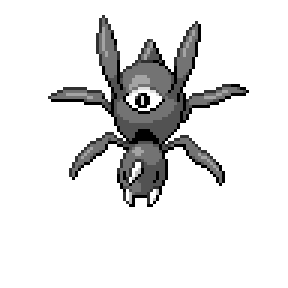
The eyes at the ends of their antennae are decoys to intimidate others by staring at them without blinking. Their actual eye has yet to be witnessed blinking, even when exposed to a bright flash of light.

Uncko can track other beings at far distances thanks to its powerful eye. It can harness sunlight and its internal energy around its tail like thin blades that can deeply gouge thick trees.

The blades on its forearms resemble certain ancient text characters a bit. It will often stare down prey and predators with its singular eye to try and intimidate them.
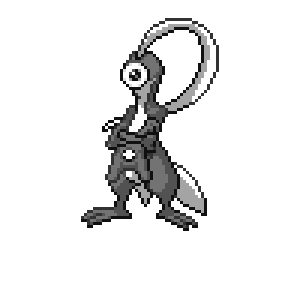
An Untile's many eyes can absorb sunlight or release energy as concentrated beams when faced with many enemies. It can release its hidden power as vibrant blades of pure, condensed energy along its arms.
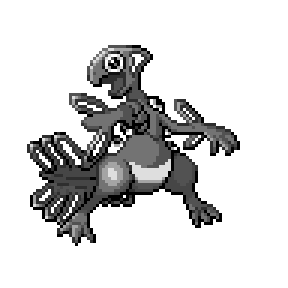
Wild Undum are often found around ruins, standing upright like pitch-black obelisks as they watch others with their singular, large eyes resting at the tops of their bodies. They can direct their internal energy into beams loosed from their eyes.

It stares unblinking at any potential threats to deter them or to at least unnerve them. In battle, it wreathes the sides of its head with psychic energy to form sharp blades that can cut through solid stone.

Its multiple eyes are always focused on different things. When all of them focus on a single target, that target will instantly combust.

Unxys's core is said to contain a hidden power that may not even be known to it. Its limbs sometime writhe into the shapes of ancient text characters found within ruins.

It fishes for small aquatic Pokémon and underwater plants using its tails, which will react to movement by lunging and biting. Its cell structure is so similar to water molecules that it can effectively meld into water and become invisible within it.
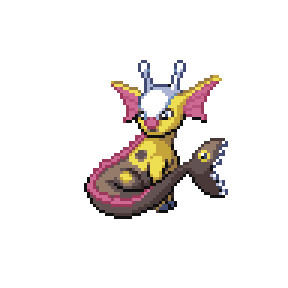
The eyes upon its bow-like organs are always watching different things than its main eyes. The sharp edges of its feelers help it to grind up fruits and grass before eating them.

This Pokémon wields a shed part of itself, which emits a rattling sound when shaken. Even after being shed, this part still accumulates energy within; it must be regularly discarded at some point, as the energy will cause it to one day explode.
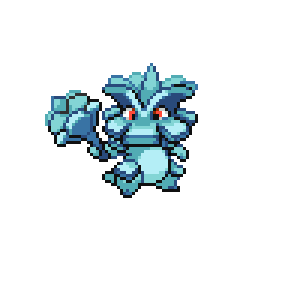
Pinedot often hang from branches even when sleeping, leeching nutrients from the tree. They will drop upon Grass-type Pokémon, spiked-heads first, and attach to them to leech nutrients from them as well.
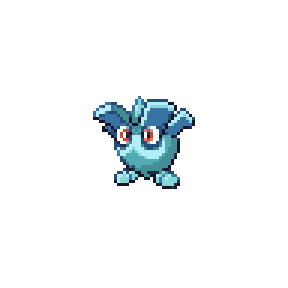
The cannon it wields is an extension of its own body, which allows it to channel and release its own energy at its targets. This cannon can overheat if it is not careful; supposedly, it may explode if overused without cooling off.
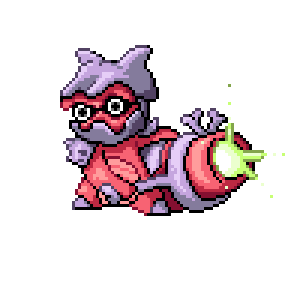
Forretrum are clad in a metal shell with little to no openings. Because of this, their bodies are often at risk of overheating, so they regularly vent steam from the red ports around their necks.
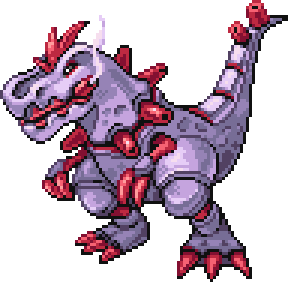
It hides under its own steel shell when it rests. The ports along this shell can loose a variety of noxious pollens if this Pokémon feels threatened.
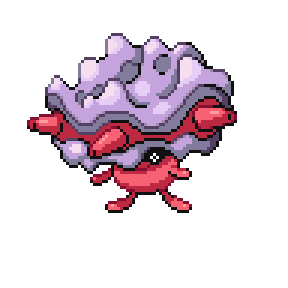
With their drill-tipped tails, Dunpie are able to burrow underground at a moment's notice. The nests of these tiny Pokémon are rather complex and many can be found in the ground beneath forests.

Dunpod use their drill-like tails to secure themselves into rocks and trees, where they remain without moving as they await evolution. Their bodies are harder than iron so they are rarely ever disturbed.

Perhaps due to their lives as Dunpods, Dunfree have a tendency to sleep hanging upside down, their drill-like tails burrowed into trees or rocks to hang from. They also use their tails to tap into sap within trees, to the benefit of many.

Wild Duntula use their drill-tipped tails to create burrows for their young to safely hatch within. Although they will craft elaborate electric webs to try and protect their young, they are easily startled and quick to flee.

Due to spending most of their lives in dark caves and underground, their eyes are horribly underdeveloped. This has also led them to be rather violent, as they will thrash about if they come across something they don't recognize through scent.

Its two heads often fight with each other, especially when it comes to food. They develop quickly because of their frequent overindulgence of food, as shown by their impressive wings.

Its large wings can carry it with little need for rest and its three heads each loose remarkable power. Yet its three heads rarely work together, which some theorize is a blessing in disguise for many people.

Duntik are incredibly small Pokémon with drill-like bodies that they use to tunnel through caves in search of special magnetic minerals to feast upon. When startled, they will spew electric webs at the threat before digging underground.

Although many assume that Dunsopod are combat-prone, given the large drill arms they have, they are actually very docile Pokémon. They typically only use their drills to dig new homes or to break open extremely tough nuts.
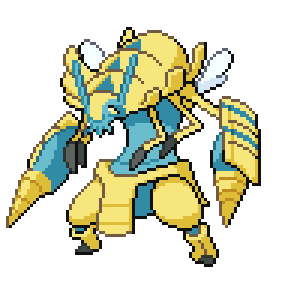
They move silently in and atop sand thanks to their well-developed bodies after many seasons of shedding. When they find prey, they wrap tight around them and jab them with their venomous barbs.

Their metal bodies are said to be unbreakable against most attacks used upon them. The many cracks visible are said to be due to a Steedos' own violent and powerful thrashing.
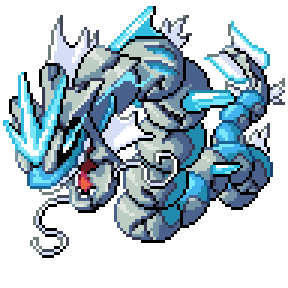
Its tail is divided into multiple parts that each rotate separately to generate electricity, which is stored in its crystalline mane. When its mane glows bright, it becomes aggressive until it has found a metaphorical outlet for its power.

The friction of their rotating tail segments generates heat and keeps their head flames strong. In battle, their segments spin fast enough that their flames become concentrated enough to melt solid rock.
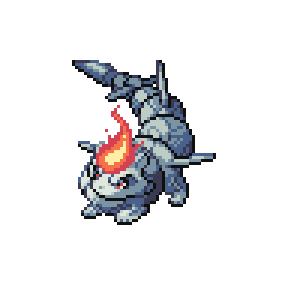
Steegia isolates itself in the ground beneath the ocean due to the destructive potential contained within its body. When it senses other Pokémon in danger, however, it will not hesitate to unleash itself to protect them.
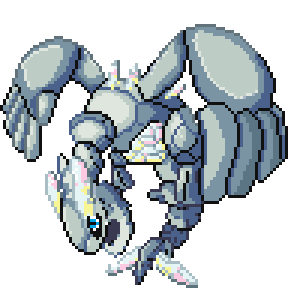
Despite the fact that this Pokémon's body is made of metal, it is still able to fly for long periods of time without exhausting itself. Its crystalline feathers are said to each shine with the colors of rainbows.
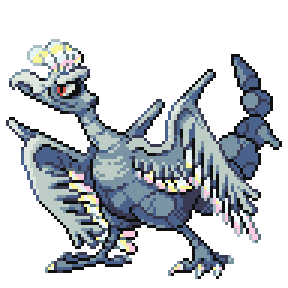
A Steeperior's diet consists mostly of raw ores and various minerals, which in turn allow for its body to grow ever tougher. They fire Iron Balls from the holes in their hands to finish off their opponents and then eat the Iron Balls afterwards.

Steetile have bodies of very durable, yet very hollow, metal that accrue layers of moss due to them nesting within jungles. The crystals jutting out along their bodies are sharp enough to slice through a dense tree with ease.
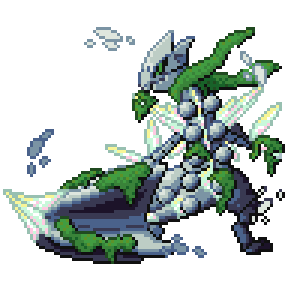
This colossal Pokémon makes its home around an equally-large crystal said to contain the hopes and dreams of Pokémon and humans alike. Its entire body is harder than any known metal and parts of it are shaped into weapons that deter any threats.

Its mirror of polished steel is said to show a reflection of one's true self, or soul. If a Steemask's mirror is ever somehow damaged, it will not rest until it creates a new one.
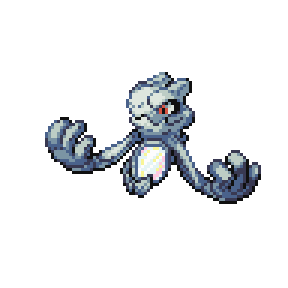
The crystals along their bodies are stronger than most metals and more precious than diamonds. A Steetrum's jaw is strong enough to crush and shred a large block of pure tungsten.

Although their cries are considered melodic to many, they are also very loud. They can adjust the pitch of their cries to a degree that, up close, the noise can be disorienting.

The flame sac in its belly grows hotter as it grows more agitated or more excited, to the point that it will start to breathe fire. Its already-loud cry is amplified by the excess heat it will inevitably vent from its beak.
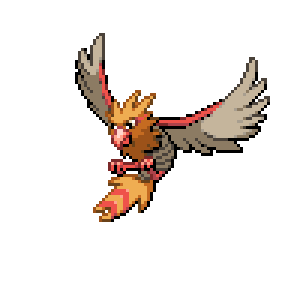
Its jaws are so strong that it can easily crack open hard nuts and roast them using its flames. It tends to race with other Pokémon, its legs' muscles becoming well-developed in a year's time.

It sleeps facedown atop water, its belly swollen with air and water both. It releases air and, or, water to propel itself and can shoot precise jets of water to defend itself.
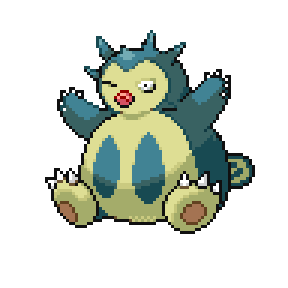
The quills along its body contain a poison so potent they can knock out a Mamoswine within seconds upon striking them. The flames along its body are purple due to the toxic chemicals its body produces and can corrode most metals with ease.

It swallows and stores large amounts of water to help it bulk out its own body and make its poisonous quills stand on end. Its arms can shatter solid rock with relative ease.
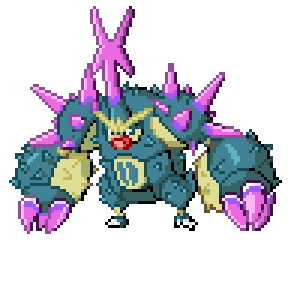
It can bloat its own body to a near-spherical shape to deflect heavy impacts and to better stab foes with its poisonous quills. It can spew precise and powerful jets of water from its small mouth.

To defend itself, it inhales enough water to expand like a balloon and veils itself in electricity. It remains rather light when expanded, so it plants its tail into the ground and swings itself around at its foe.

Qwilax often dunk their entire heads into water and suck it up until their bellies slightly expand. They can shoot this water as precise jets to defend themselves or to shoot down prey and hanging fruits or berries.

A Scichu will capture foes with the pincer at the end of its tail before releasing a powerful discharge of electricity into them. If this is not enough to defeat them, it will headbutt them with the tough horn atop its head.
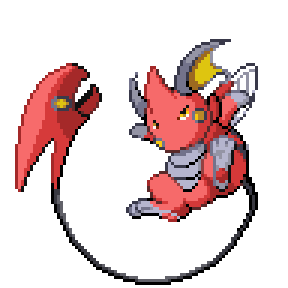
It has a body akin to steel, yet is incredibly light and moves with unexpected swiftness. The blade upon its head grows with age. If a Scisharp's head-blade is marred with nicks and scratches, it has likely endured many battles.
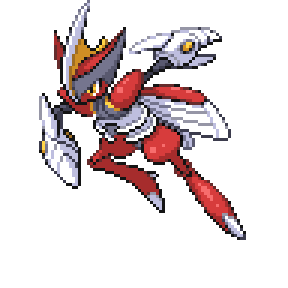
Its exoskeleton is as hard as steel, allowing this Pokémon to endure heavy blows during battle. It moves swiftly and releases fierce Fairy Wind attacks from within its sharp claws to overwhelm its target.
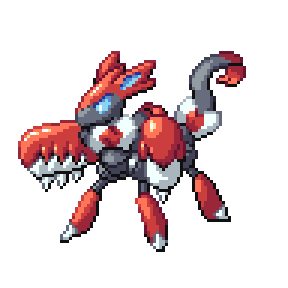
These quick Pokémon feed on electricity by clamping their pincers onto devices and machines. They can release torrents of electricity when they open their pincers, though this quickly uses up their energy.

The body of a Scidash is as hard as steel and resistant to heat, yet is often hot or warm. Its flames will never harm those it trusts, and its steel-hard body will feel cool to the touch for them as well.
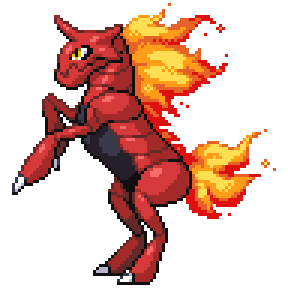
It stores berries in its large, hollow body. It can churn these berries into a fine pulp and release the juices for others, or to distract foes while it flees.
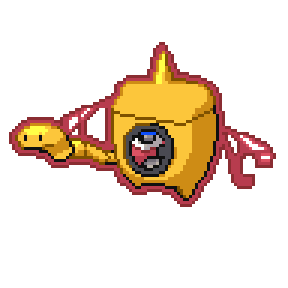
The hard shell on its back can split apart like wings to help control its explosive flames and propel itself through the air. It fights with its powerful horn that it will often veil in its own flames.
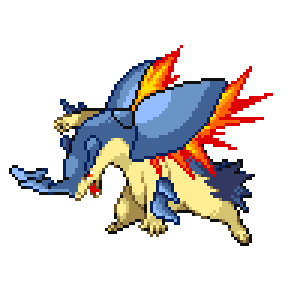
Heratoed's long tongue is as sticky as the tree sap their species so often gorge upon. Their muscular limbs and wings help them to leap large distances.

The hue of its exoskeleton changes depending on the tree sap it has consumed throughout the week. It secures itself with its strong forelimbs before lifting anything with its impressive horn; it can lift three times its own body weight as a result.

Heraceus use their powerful, pointed feet to strike at foes and to puncture trees so they may drink of their sap. Their hind legs can launch them further off the ground than their wings can carry them.

Their large horns took the shape of a Salamence head during the course of their evolution so as to intimidate others. They swing their bulky and muscular tails to deliver devastating blows.
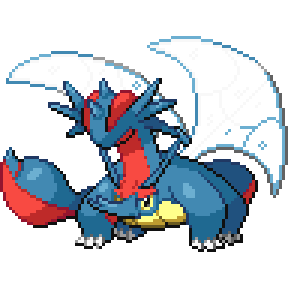
Herata are rather weak for the first year they are born and spend their time strengthening their legs and their horns. They use their flames to make themselves look more intimidating than they really are.

Wild Heradash use their strong horns to throw boulders and some Pokémon out of their way as they run. They use their foreclaws to dig into trees to draw forth the sap within and lap it up.
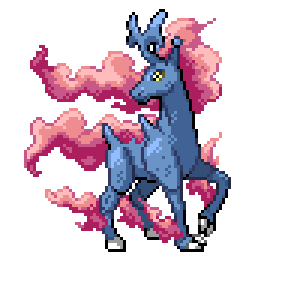
Sneapie have many small, hooked claws that make it easy for them to climb trees or scale rocks. They wait for opportunities to steal eggs to eat, favoring the eggs of bird Sneapie.

Teddilax will shake or even break trees to get a hold of their fruits to mix with Beedrill pollen to make their own honey. Though they will consume their own honey aplenty, they also love to share some of it with others.

Teddilax have robust bodies with plenty of antibodies for Beedrill venom, due to how often they pillage their hives for honey. Their furs carry a sweet scent and are typically very sticky from all the honey they consume.
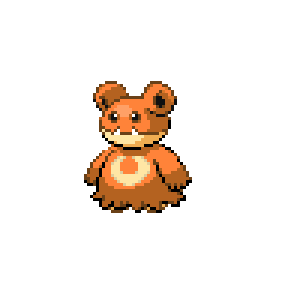
Sluguna live by subsuming various rocks, though they seem to prefer sulfur. Their frequent consumption of sulfur has led them to produce a poisonous chemical within themselves that also keeps their bodies partly-solid.

Due to how often they must rest, Sluglax sleep in flowing magma or lava to keep their bodies from cooling and hardening. When awake, they gorge upon flammable material and drink magma or lava.

Their wings and arm-stingers are made of solid magma that has yet to fully turn to stone thanks to the chemical produced within themselves. This chemical is poisonous to most others, even some Poison-type Pokémon.

Their bodies are made of magma that often drips from them as they fly about. Slugey dive into magma and lava to "fish" for prey but also to help keep their own bodies from cooling and hardening.

Their wings have developed enough to easily create strong gales that scatter their magmatic drippings at foes. Their talons are hot enough to melt some metals, as shown by how often Slugotto prey upon some Steel-type Pokémon.

Slugeot nest within volcanic pits or pools of lava, so their bodies are always hot and dripping with lava. They are mostly docile, though when agitated will fight fiercely using their rock-hard talons and by spitting balls of magma at foes.

Slugans are always on the move, burrowing through volcanic rock so that their semiliquid bodies don't cool and turn to rock. The tips of their tails have partly hardened and are now used to communicate with each other by the rattle noises they make.

Even when these Pokémon sleep, their bodies are constantly moving so that they do not cool and harden. They eyes of the face-like pattern on their torsos can partly ignite in purple fire to intimidate their opponents and their prey.
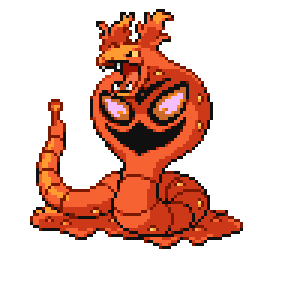
Their magma-like bodies are incredibly hot, though nowhere near as hot as magma. Many Trainers use their bodies to help cook foods, on the condition that they share the food with them.

Their shells are so dense that they often struggle to move, instead churning their bodies of magma inside to keep it from fully hardening. They defend themselves by releasing Lava Plumes from the many cracks along their shells.

Within its shell is a special water-like liquid that is always boiling but can never evaporate, which helps produce steam to keep the rest of its body hot. It can shoot globs of magma and strong fireballs at others with extreme precision.

Magking resemble some aquatic Pokémon. They swim within rivers of magma or lava and leap out to skewer bird Pokémon with their horns.

Magyu are found stuck to the insides of active volcanoes, for that is the only heat enough to keep their bodies from completely hardening. If a volcano begins to go dormant, they will propel themselves with bursts of steam to find a new home.

Magdle shells are pieces of volcanic rock they've used their magmatic bodies to shape and then wear. They use their acute sense of smell to navigate the tunnels they form in volcanic areas in search of food and to avoid predators.

Wild Magdos often thrash about within the pools of lava they swim within, casting globs of the superhot material all around. The angrier they are, the more flames that erupt across their shells of volcanic rock.

Wild Mageon live near the oceanic coastlines of volcanic areas. The fin-like ends of their tails are actually an ever-flowing stream of fire that only dulls a little when they sleep.

Wild Magtops mostly live in underground lakes of magma, feeding on either minerals or on weaker Pokémon. By crossing their blades together, they can ignite them both to better fight off foes.

Their shells are hollow and large, so they can fully withdraw into them if they need to. Maglax can defend themselves with intense streams of fire and by flinging globs of molten rock.

The shell of a Maguna has a composition similar to sulfur and volcanic rock. Their shells are remarkably hard to the touch and they can release some of their internal heat to further protect themselves as needed.

Maglosion rapidly expel their own heat with explosive force. Many other wild Pokémon are often agitated by these Pokémon and will attempt to battle them if only to cease their noise.
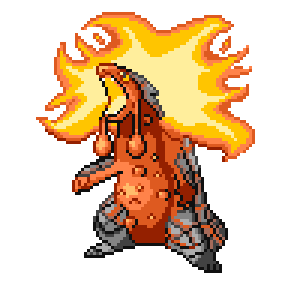
Wild Magligatr conceal themselves alongside rivers of magma and lava, their dorsal rocks helping them to blend in. When prey draws near enough, they will pounce upon them and bite into them with their scalding maws.

A Magtret moves by withdrawing into its round shell and rolling around. These Pokémon always live in groups, where at least one remains awake while the others sleep.
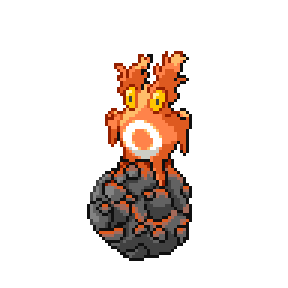
These small Pokémon roll about like eggs with their lower halves made of solid rock. They can vent flames from their lower half to help them roll even faster.

Their magmatic bodies are always bubbling as they move. They wear caps made of volcanic rock to protect their otherwise-exposed brains.
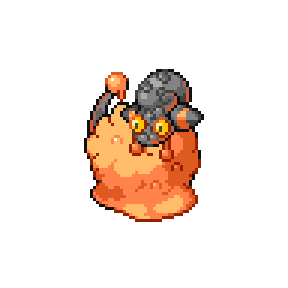
Within their bodies are ever-roaring flames and heat intense enough to melt some metals. Parts of their own bodies have solidified to protect themselves, though they have shown to be able to shed pieces of these cooled parts and fling them at others.

Magffy have internal magma that bubbles around their necks and pools at their feet. They carry a heat-resistant gem within their rolled-up tail that occasionally crackles with electricity.

Magros have flowing manes of magma that can tear free and be hurled at opponents. The orb atop their heads is highly heat-resistant and electrically conductive.

Magreon are oddly enthralled with the moon, causing them to stay so still that their lava-like bodies cool and harden by the next morning. They rapidly expel their internal heat to break their own shells until they repeat the process the next night.

These small Pokémon are common near volcanic areas, ash-clad plains, and even some mines. They expel flames from their rear to propel themselves at greater speeds as they search for coal and other flammable materials to feed on.

Magco often float upside-down within pools of lava, watching for any prey to walk by. When they spot prey, they launch themselves with flames from the top of their heads and crash down on them with explosive power.
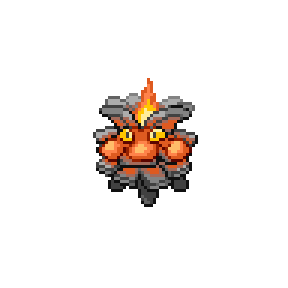
Magtress hide within large shells made of solid, volcanic rock with ports of cooled, molten ores extending along their sides. They let loose streams of flames or globs of magma from these ports at opponents.

Magtress fill in the lower shells of Forretresses that they often prey upon. They must release excess heat from their side ports and from their upper shells to avoid melting their lower, metal shells.

Magfish propel themselves forward by releasing extremely hot flames from their rears. They puff out their magmatic bodies and use hard quills to overpower larger opponents.

The ever-dripping bodies of Magzor are formed from molten metal derived from ore-rich rocks they consume. They release streams of intense heat from their pincers to fend off aggressors.
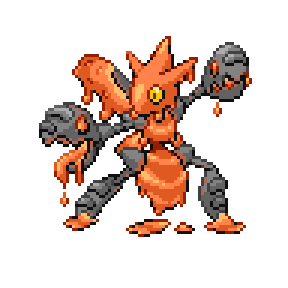
Magans are serpentine Pokémon that burrow through volcanic rock, their bodies kept molten hot by the magma they so often come near. The bubbling liquid of their bodies is a corrosive substance that easily melts through obsidian.

Magkid typically hold their arms up like torches as flames pour out from the openings at the ends. When they spin their arms, they generate electricity from their two horns.
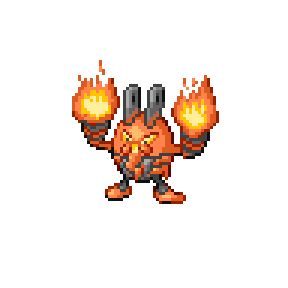
These bestial Pokémon trot through volcanic fields with plumes of thick, black smoke bellowing from the ports of volcanic rock atop their backs. Their black smoke crackles with red, "dirty" lightning that often scares away most would-be foes.

Magcune veil themselves and others with a black smoke that is surprisingly pure of pollutants. Their horns of volcanic rock help them to channel their internal heat and flames.
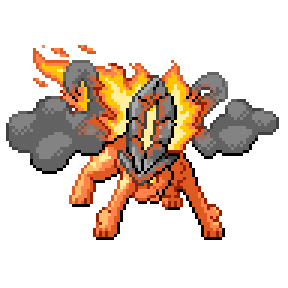
Wild Magitar live within volcanoes to keep most of their magmatic bodies from ever cooling and hardening. Their internal heat can grow so intense that their mouths will erupt with flames that rival the heat of raw magma.

The face-like patterns on the hardened part of their bodies will burst into flames to startle prey and predator alike. The mouths of these faces can spew the bubbling, corrosive material of their bodies to quickly melt their prey and drink them up.

The fused parts of Magzone's bodies provide a rich supply of molten, magnetic rock. They generate balls of fire that they launch from their small arms at opponents.

Magrowth are giant blobs of moving magma lined with volcanic rock. They live in lava pits and use their stretchable arms to ensnare any prey that wanders too close.

Magon-Z are kept afloat by a weak magnetic force. They dance erratically through volcanic fields, flicking droplets of their molten bodies about.

Magvoir have expansive bodies made of magma within the mound-like shell they lug around. They rarely emerge from their shells for long, unless around their Trainer or their friends.

Their magmatic bodies inhabit shells of volcanic rock that resemble the discarded shell of certain Bug-type Pokémon. It is not entirely known how they float, but most assume they exude such raw heat that it keeps them in the air.
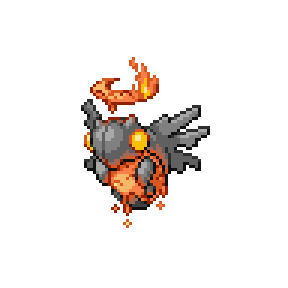
Magran flash signals to others of their kind with their glowing-hot ears. They will defend themselves by spitting globs of a hot, corrosive material at threats.

The flames that Magrina release from the ports along their backs emit a sickening scent that makes them less desirable to predators. The tips of their claws carry a poison that causes intense burning sensations.

Magaldo are always clad in flames due to how hot their magmatic bodies are. They live on land, but dive into magma and lava in search of prey.

These large Pokémon dwell under volcanic areas, where the constant heat is enough to keep their bodies from completely hardening. They have to rest often due to how much heat they produce internally.
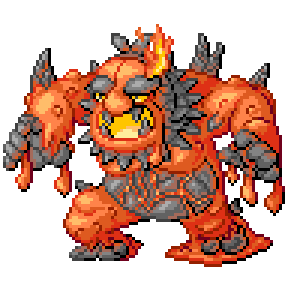
Magqueen are the common protectors of many Pokémon that live within volcanic areas. They use the rocky shells of their bodies to guard against attacks and counterattack with Fire Punches.

The insides of the ears of these Pokémon are the hottest parts of their bodies, often glowing bright. The hardened casing along their backs is difficult to break but will reform within a day's time if somehow broken.

Magrino have remarkably hot bodies that are always in a cycle of hardening and melting. They vent excess heat through open-tipped spikes along their backs, which may also propel them forward to jab opponents with their horns.
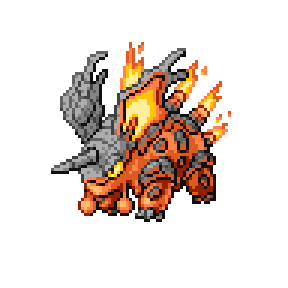
Magon's lenses protect their eyes from the extreme heat of magma pits they inhabit. They expand the flames on their backs to intimidate enemies.

Magogre are rather large Pokémon that live near underwater volcanoes and other hotspots within the ocean depths. Their bodies are too hot to be touched, which helps to ward off physical attacks of other underwater Pokémon.

There are legends that speak of this Pokémon, claiming that its movements cause volcanoes to become active. Its six eyes can each watch different things at the same time.

Magrom's tail is made of molten, conductive rock that can generate electricity within it by spinning rapidly. It often fights by hurling globs of magma and fireballs at its opponents.

Magrom's magmatic body and flames turn blue when it is fully charged with electricity. In this state, the balls of flame and magma that it tosses become rather explosive.
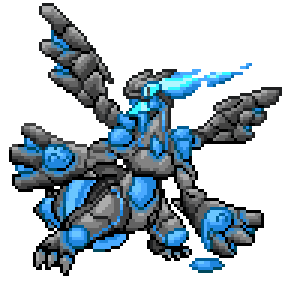
Magdreigon use their burning-hot wings to soar through the air with ease. The two smaller "heads" of a Magdreigon lack brains and seem to only serve to help channel and spew fire and magma.

Magrachi often slumber within magma inside volcanoes. When expelled by eruptions, they are mistaken for shooting stars as they streak across the sky.

Magmer have extremely buoyant bodies that allow them to avoid completely melding with the volcanic lakes they live in. Their lower halves made of cooled magma help to defend them, but also allow them to fight back with strong Body Slams.

Wild Maginch hide beneath volcanic rock and wait for prey to pass overhead. They snap their maws shut and cook prey alive within.

Magelgon lug large shells made of cooled magma around to protect their softer tops from aerial Pokémon. Sometimes, Pokémon that try to attack them from above will bounce off and they will crawl over them, often cooking them alive.

Maglie are like living fireballs that have a paradoxical ability to rapidly cool and freeze moisture around them. Their own ability causes the outer layer of their bodies to always be cooled and hardened into a durable shell of rock.

These Pokémon have magmatic bodies clad in dense, volcanic rock that are otherwise very hollow. Although they can eat anything flammable, they seem to prefer to consume waste, which causes them to expel toxic fumes as the waste burns away within.

The feathers of a Magria are like a big cloud of black smoke. Their tails of bubbling magma often drag below them as they fly at low altitudes.
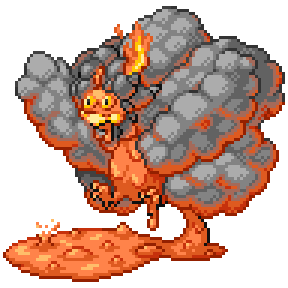
Some old murals depict Pokémon reminiscent of Magdra. Magdra are docile dwellers of magma pools, and their volcanic rock shells are even hotter than their bodies due to the heat flowing within them.

Flames pour from the rock-like ears of Magdra when they face a powerful opponent. If they believe themselves to be outmatched, they will withdraw inside of their shells and vent all of their stored heat until their opponent leaves them alone.

Wild Magplume are often submerged in magma or lava, acting as floes of solid rock for others to walk upon. If they feel threatened, they can release a thick, paralytic gas from their shells.
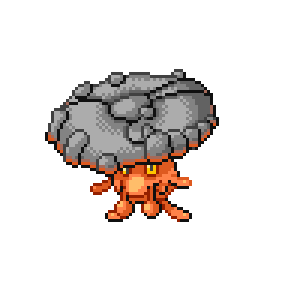
The mushroom-shaped shells upon their backs are actually how they vent excess internal heat. They have learned how to move just quick enough to not fully cool and harden but slow enough to not be fully melting.

Their large, cone-shaped shells serve as shields for their softer bodies and as a means to store and vent excess heat. Their pincers are the hottest parts of their bodies, capable of softening most materials with their heat as they slice through.

Many of the fireballs launched during volcanic eruptions are actually Magor. Despite the explosive force that sends them flying, they often land fully intact.
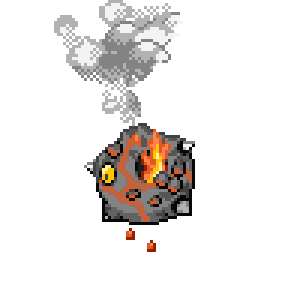
The crystals along a Magcie's body are crystallized magma. These crystals do not melt and never seem to cool off, leading many to use them to help them stay warm in colder environments.
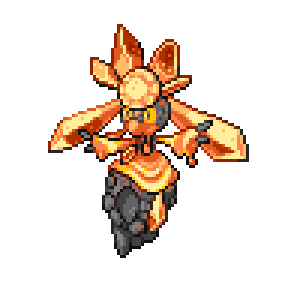
Their leaf-like covers prevent them from leaking the bubbling-hot, poisonous liquid inside of them all over themselves. Unfortunately, this practice causes the excess heat inside to vent out from their sides almost constantly.

Magmite are like floating balls of magma mostly encased in a protective layer of molten rock. Their molten rock shells are composed of a magnetic material that gives them a slight electric charge and is thought to be what allows them to float.
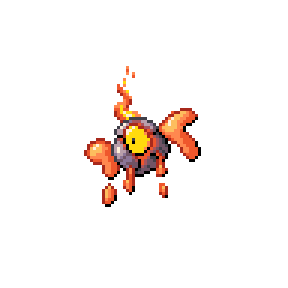
The molten rock of their bodies are lined with magnetic materials that keep their three heads connected together. Due to them always being stuck together, their rock shells have begun to melt into their bodies due to the heat.

These Pokémon made mostly of magma dig so deep under volcanic regions that they have begun to form shells made of obsidian. They occasionally surface directly within pools of lava to keep the rest of their bodies from cooling off too much.

The lower halves of their bodies are made of volcanic rock with some amounts of boiling water to keep them from getting too hot. When the rock of their large pincer cracks, steam pours out from within.
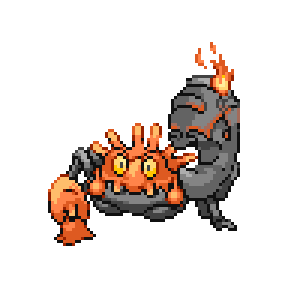
Their wings can be used almost like hands, at least enough to grab hold of foods and the remains of their prey. Even while holding something, they can still fly and attack by throwing objects or by pecking with their long beaks.
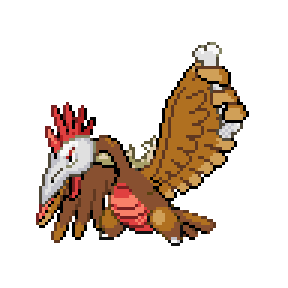
A rare plant seed has taken root upon Swisaur's back; the seed is remarkably resilient within cold climes and environs. Its nose is almost always to the ground as it searches and roots for berries and mushrooms buried in the snow or dirt.

It is covered in a shell of solid ice, so it resides in a frozen cave to further slow the melting of its shell. Swiuna breathes out cold air to keep its shell cold and only stops doing this as it nears its evolution.

Swilax can find any food, even during the harshest winters and storms. They sleep for such long periods of time that they often become buried under snow until they wake up.

The salves made by grinding up Swisaur leaves are effective at reducing fevers, no matter how high. They forage for mushrooms and favor the taste of poisonous mushrooms the most.
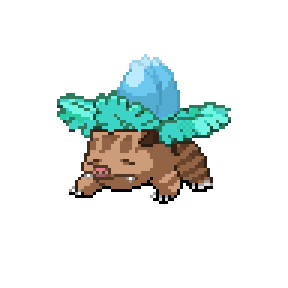
Their furs are thick enough to withstand intense cold. They can smell foods from far away and will track them down until they either grow tired or until a new scent catches their attention.

Swisaur rely on their sense of smell to navigate, so their eyes are partly underdeveloped. They have learned to distinguish many scents, starting with the sweet scents of their large flowers.

Swipardos fur is notably dense because they live strictly within frigid environments. Rangers favor these Pokémon for their ability to shatter solid ice with their hard skulls.

Swimander secrete a flammable oil in place of normal sweat, which is why their tail flames burn blue despite being warm at best. Swimander are easily drawn to strong scents they find pleasant; they can even smell berries with weak scents.
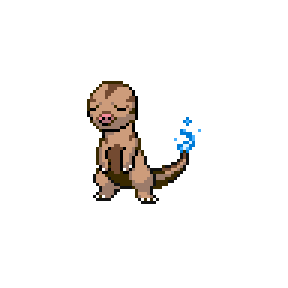
Using their claws, Swimeleon dig for food and water they catch the scent of. The more they exert themselves, the more they sweat a flammable oil that causes their flames to burn blue; the friction of their teeth or claws can ignite this oil.
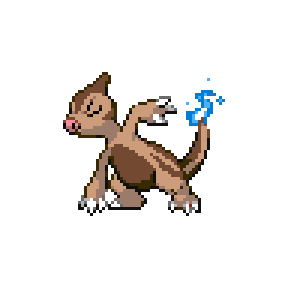
These warm-furred Pokémon are often found atop snowy mountains, trudging through thick snow and atop ice without ever slipping. When they sneeze, they release a bellow of frigid air and a sonic blast that often risks causing a small avalanche.
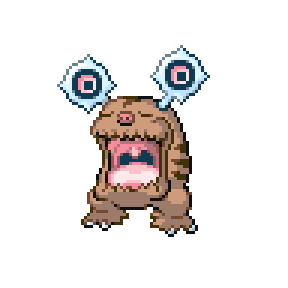
These Pokémon move by rolling around, although they do typically move rather slowly. They tend to move with a monotonous rhythm, blowing puffs of air from their noses to keep themselves rolling.
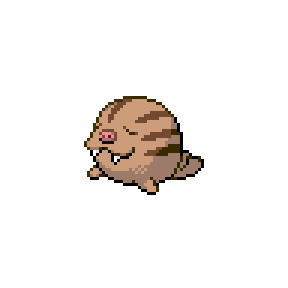
Piloidos have thick coats of fur to safeguard them against the harsh and frigid climates of their habitats. To break through ice formations that may bar their paths, their skulls evolved to become quite hard.

Although small, its tusks aid it in breaking through thick ice whilst searching for food. It will protect younger Pokémon from threats using tree-shattering headbutt attacks and use its warm coat of fur to keep them warm.

Young Cordile often teethe on chunks of coral to help their jaws and fangs develop. They often will bite their own kind due to the coral that grows on their bodies.

Cornaw are often seen gnawing on a piece of coral, almost like a toothpick. They tend to rest near formations of coral and will bite at those who draw near.

Wild Cordrill make hives within formations of coral, which become rife with beautiful seaweed and algae. Their large stingers contain a thick toxin from the pollutants their bodies filter and absorb to keep their coral hives clean and healthy.

Wild Corligatr disguise themselves in clusters of coral and fiercely bite down upon any prey that may draw near. Every year, a Corligatr must shed the coral upon its back before it grows too much. This coral is nutrient-rich and grows back quick.

They weave nests of webbing and coral that easily entrap small, aquatic Pokémon. They can loose bubbles that contain poison to deter larger Pokémon and humans.

Corlade don capes of vast seaweed and use their arm blades to protect coral reefs and Corsola. Their bodies contain antibodies for the poisons of Mareanie and Toxapex after so long of being at arms with them.

Wild Corsaur wander along the seabed, the coral atop their backs filtering nutrients from the water to keep them and their host nourished. They can release powerful streams of water from various parts of their bodies to repel enemies.
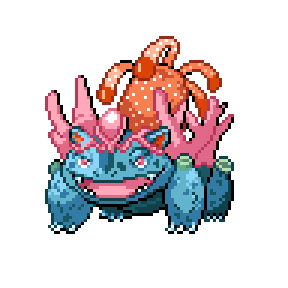
Corodor disguise themselves as large masses of coral to lure lesser underwater Pokémon. They seem particularly fond of Mareanie and feast upon them so often that their own bodies have begun to develop toxic elements.

Corlem are often always rolling along the seabed, even if they crash into formations of coral or underwater rocks. Anything they roll over, or into, often ends up stuck to their bodies.

Remoeon swallow water and use their abdominal muscles to expel said water to defend themselves. They will use their long tongues to stick to, or hang onto, rocks to avoid being swept away by strong currents.

Octitres live within ocean waters, but they will spend most of their lives flying in the ocean sky. They will shoot down foes with ink-filled bubble bullets and use their tentacles to snatch prey, which they will drag into water to finish them off.
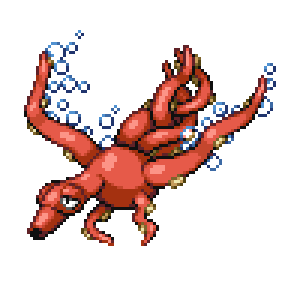
It uses the suction cups along its tail and back to cling to beach cave ceilings and can change its colors to further hide itself. Octieon uses its tentacles to ensnare its target before shooting bubble bullets at it until it submits.
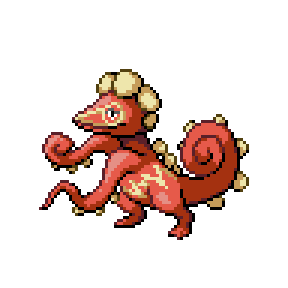
Wild Octitula make their nests within beachside caves. Their tentacles allow them to easily cling to walls and ceilings as they fire electrified bubble-bullets at their prey.
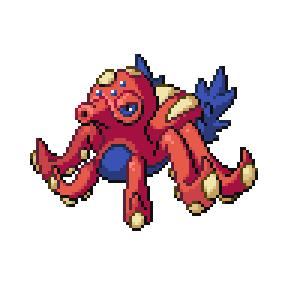
Wild Octilure use their top tentacle to cling to cave ceilings as they watch for prey. When prey draws near, they will shoot at them with burning-hot bubble bullets and then pull their bodies up to them using their other tentacles.
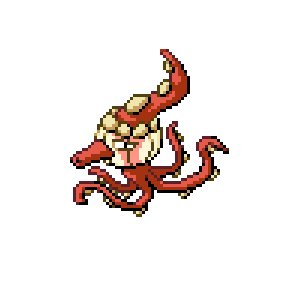
Manite can swim quick through water or soar high in the sky with their large wings. They are unfazed by smaller Pokémon that attach to them or that simply ride atop them, which is a common occurrence and sight.

By spinning their three tails, Mansel can quickly propel themselves through water. The claws of their limbs can easily hold onto most prey and allow them to walk along sheets of ice.

Manmega dive long enough to snatch up aquatic Pokémon, though they favor Remoraid the most. Sometimes these Remoraid will be used to aid them in battle and then be cast aside.

Skarkrow have bodies of pure metal that are as light as feathers, keeping them safe as they dive for berries and nuts at rapid speeds. They are often drawn to shiny objects, including the shed feathers of their own kind.

The metal feathers of these Pokémon shimmer iridescently as light strikes them. Their steel bodies are incredibly warm.

Its sharp, red feathers are actually special leaves packed with nutrients and sharper than knives. It will often leap from tree to tree, flinging these leaves at their opponents.
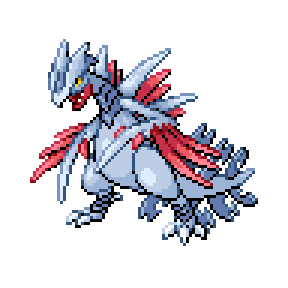
A Skarceus's metal body is incredibly hollow despite how sturdy it is, allowing this Pokémon to float through the air with every leap. Their small wings are mostly used by them to emit Screeches that immobilize prey.

Skartic live only in the cleanest, purest waters so as to keep their metallic bodies as clean as possible. They regularly churn fierce torrents to forcefully polish their metal bodies, otherwise they can easily rust.

Skarflame can achieve such great speeds in such a short time that some claim they create a sonic boom when they take off. Their bodies grow hot enough to distort the air around them as battles involving them draw on.
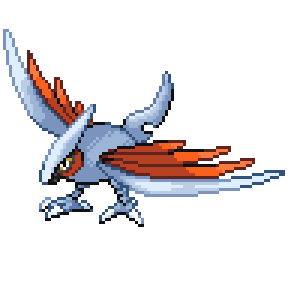
Most of its body is clad in steel armor that makes it vastly more aerodynamic than the average bird Pokémon. However, the more it strains itself, the hotter its body and armor become.

The more riled up these Pokémon become, the hotter their bodies and steel armors become. They periodically expel flames to vent their excess heat while resting after a long flight.

The sleek, sturdy steel of a Skardash's body is always hot due to its flames. Even though its body is made of steel, it can achieve remarkable speeds and even use its wings to leap across some canyons.
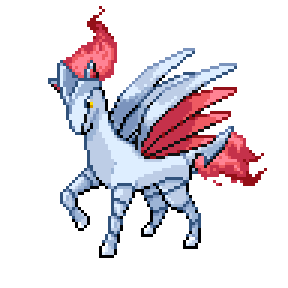
Wild Hounta are aggressively territorial and clad their bodies in flame to intimidate foes. Even after being caught and tamed by a Trainer, these Pokémon will oft be aggressively protective of them.
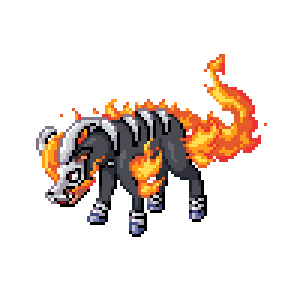
Most of an Ekdeen's body is hollow, allowing it to quickly swallow smaller aquatic Pokémon whole. Their horns are effective weapons for deterring predators, especially bird Pokémon.
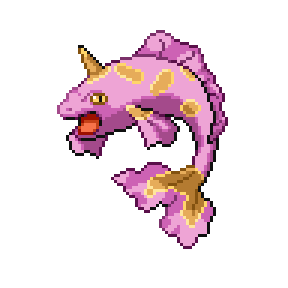
Trace amounts of venom secrete from its upper claws. It ambushes prey from underground, constricting them with its tail as it jabs and slashes until they submit.
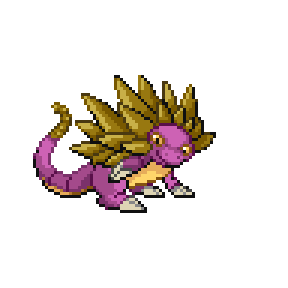
It can dislocate its own jaw to try to swallow larger foods whole, though sometimes the food will still get stuck. It shows a much more ferocious side during battle, its body growing hotter as it fights.
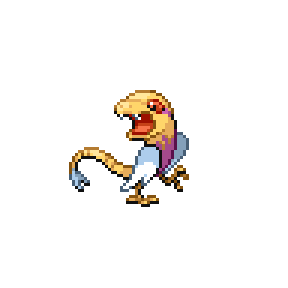
Their long tails have enough constricting power to crush rocks as large as their bellies. Ekinder spit flames at their enemies; these flames are laced with toxins that make them difficult to snuff out.
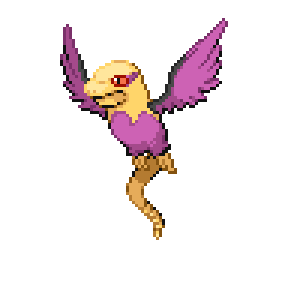
Some claim that the look of an Eklass is enough to make anything become frozen in place. Though many who have actually faced one have said they frozen in fear of the many moving strands of Ekans-like hair upon their heads.
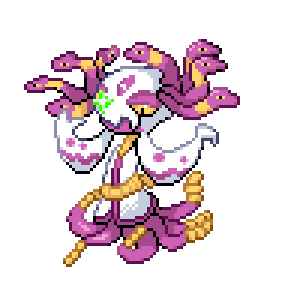
The bodies of these underwater Pokémon have been tempered by the depths to have the strength of steel. They can fire jets of water from their pincers or from their snouts.
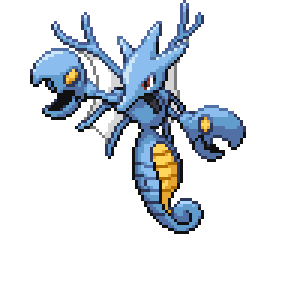
It propels itself through water using its telekinetic abilities, which also help it find prey. It uses its four large arms to hold tight onto prey and shoots them with powerful water streams from its mouth.
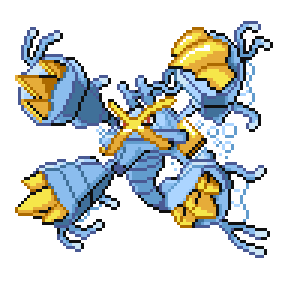
Wild Kingterra often bury their entire bodies within the sandy depths of the ocean, which is why their shells have become like those depths. Their bellies contract a bit when they shoot jets of water from their mouths.

The markings along its body light up as it charges its energy in preparation to release it through its barrel-like snout. This large Pokémon will often coil around underwater boulders when it rests, to better deter others from attacking.

Kingvern are underwater apex Pokémon capable of condensing sound waves into sonic booms loosed by their ears, even while deep underwater. They will spew powerful jets of water and ink bullets to further overwhelm foes.

By combining its power to generate freezing gas, it can freeze the water it would spew from its snout and fire sharp icicles instead. Cold air can be released from the gems along their bodies, often serving to form a mist that obscures them.
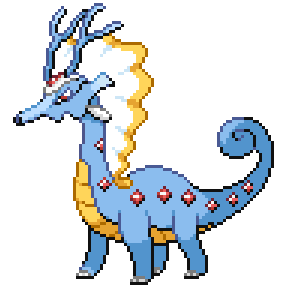
When this Pokémon slams down its tail, it will also release a strong jet of water from its snout. Kingmo-o's scales are as cool as water to the touch and glisten as if wet, often emitting hollow noises when they clack together.
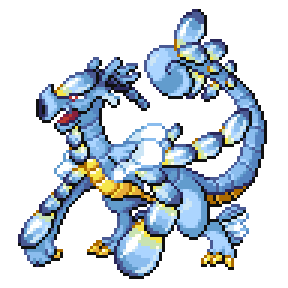
Its arms and trunk are as hard as rock and protect it from most attacks. It can curl up into the form of a wheel and ram into opponents with great force.

Dongong prefer to live in the coldest waters due to how thick their bodies are with fat and muscle alike. They can form glaciers more than twice their size to serve as a den and can move them as effortlessly as they can shatter them.

The data used to create this Pokémon has been updated and made capable of updating as it comes across minerals it once knew not of. Its claws and quills become hard during battle or when it feels threatened.
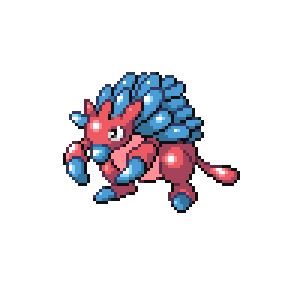
Poryizard have been upgraded with the intent to traverse space, though they ultimately lack the power to breach the atmosphere. Due to original designs, however, Poryizard are highly adaptable to many situations, especially combat.
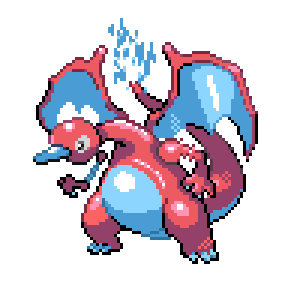
The tips of its hooves are fairly sharp, which allows them to climb rocky surfaces or trees. It is so elusive that most of the only signs of it are its hoofprints and a few shed scales.

They communicate with one another by emitting psychic waves from their crystals. Despite how tough their horns are, they will typically use their psychic waves to hypnotize and deter others rather than confront them.

Although they can run on all fours rather well, Stanite tend to walk on their hind legs the most. The orbs upon their tails emit weak psychic waves which, paired with their swinging tails, tend to be hypnotic to most.

Stanceus antlers oddly grow from their bodies more than the ones upon their heads. The orbs lining their antlers are often said to feel hypnotic to look at it, which many assume is how they defend themselves.
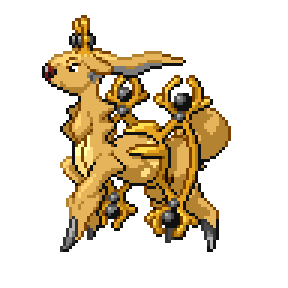
The many orbs of a Stanphox's antlers emit faint psychic energies that can easily lull others into hypnotic trances. Its real psychic power, however, comes from the wand that was formed from a shed antler, which seems to burn bright with pure energy.

The lower gears of a Hitmonklang spin quickly like a top as it moves around. When in battle, these gears spin at their quickest and the ring around them will spin as well to batter foes with physical strikes.
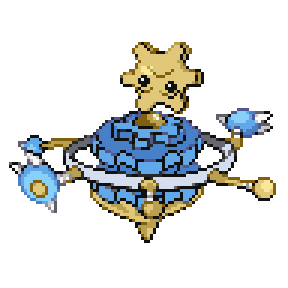
Smoochu are hyperactive Pokémon that love to run around and show off their looks. When they trip and get muck or mere dirt on their faces, they cry and discharge electricity until they grow tired.

Smoochu spend much of their mornings looking at their own reflections to ensure their faces are clean and their yellow locks are kempt. They love to dance to express their joy and will release harmless jolts from their cheeks as they dance.

Eleshrew generate electricity as they dig through terrain, specifically because of their moving limbs. When they curl into balls, they can better release their electricity.
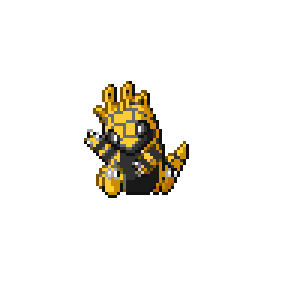
It catches lightning with its prong-like horns and stores the electricity within a sac. Its quills arc with static electricity as it spins its arms to generate or release electricity.
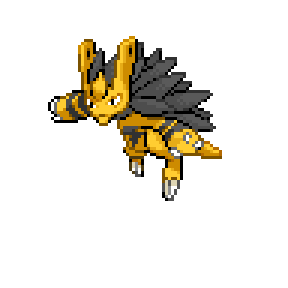
Elequeen swing their arms to build momentum and deliver stone-shattering punches to form their dens. Spinning their arms also generates electricity within them, which can oft be seen sparking between their horns.
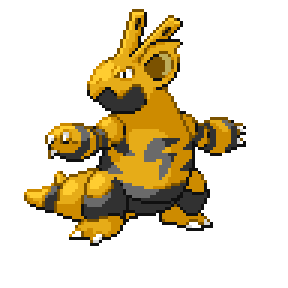
Arking use their long bodies to constrict and crush obstacles and foes with relative ease. Their horns function like stingers, though they are shed after stinging once and take a full day to regrow.
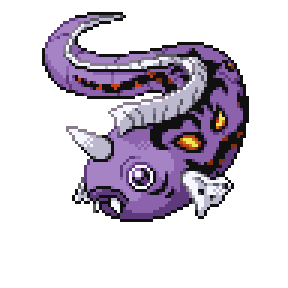
Arther move swiftly and cut at their opponents with their poison-laced forearm scythes repeatedly with every pass. Their tails have enough constrictive power to crush a small car.
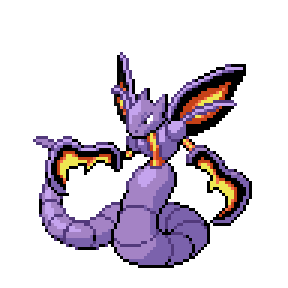
Their semiliquid bodies take the shape of an Arbok to ward off predators, even though their bodies are pure poison. Their shells are made of obsidian, for that is the only material that does not corrode upon contact with their poisonous bodies.
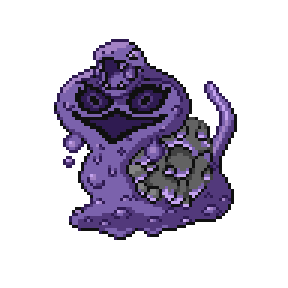
An Archu's fangs deliver a paralytic toxin in tandem with a direct electric jolt to take down prey. The eye-like patterns on its frills can emit bright light thanks to their internal electricity.

It uses its long, strong tail to ensnare and constrict prey before swallowing them whole. Arswine's tusks contain a deadly venom that some researchers theorize allowed it to fight on par with larger, ancient Pokémon.

Wild Arcko leap from branch to branch within their forest homes, gliding with their bee-patterned arm webbings. They glide down and latch their poisonous fangs into prey to neutralize them.
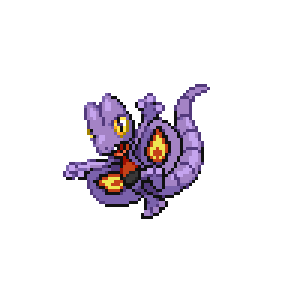
The patterns upon the glider-webbings of these Pokémon are an often sight within jungles and forests as they swoop down to their prey. They can balance upon their thick tails and spread their gliders to make themselves look larger.

Its prehensile tail makes up for how small and underdeveloped its forelimbs are. It headbutts prey to startle them and uses its neck patterns to intimidate opponents during battle.

Arnape use their strong tails to hang from tree branches to avoid foes and to scout for food or prey. They can balance perfectly on their tails at any moment, allowing them to mix up their physical strikes in unpredictable ways.
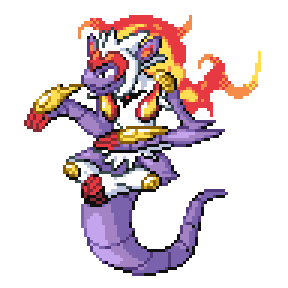
Wild Arxorus run quickly along grassy plains in pursuit of their prey before leaping upon them and sinking their poisonous fangs into them. Their frills can expand to intimidate most foes and give them the upper-hand during battle.

The markings on its wings glow brighter as its internal flame sac grows hotter. It uses its tail to abduct small prey to carry back to its nest. Arinder has a penchant for roasting its food before swallowing it whole.

The frills of these Pokémon bear intimidating markings that they seemingly use to startle predators and prey alike. While their foe is stunned, they will sink their fangs into them and deliver a potent poison into their bodies.
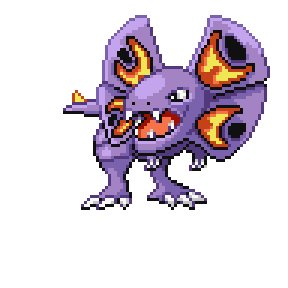
Artrum no longer use the patterns on their frills to intimidate, instead using them to entrance prey. They can extend their necks to catch foes off guard as they latch their jaws onto them.
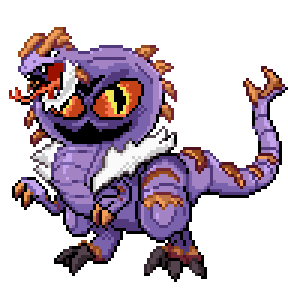
Its expansive frills shimmer like a vast aurora whose colors change depending on how light strikes them. The poison produced within its body has a chilling and numbing effect on its victims.
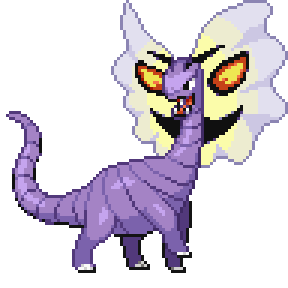
Magchu spit out flames and/or electricity when they get excited or when they feel threatened. If they do this for too long, however, they will only be able to spit out black smoke and weak electrical sparks.
Magshrew prefer to live in hot sands until their own internal flames grow strong enough. Once they begin to spit out yellow fire, they have grown strong enough to keep their dens warm by themselves.

Magslash spend most of their days digging to expand their dens. When they become tired, black smoke becomes mixed with the flames they spew.

Wild Miltula allow their tiny offspring to drink plentifully of the milk they secrete from the udder atop their abdomen. Any who try to forcefully drink of this milk will be met with a tongue-numbing electrical shock.
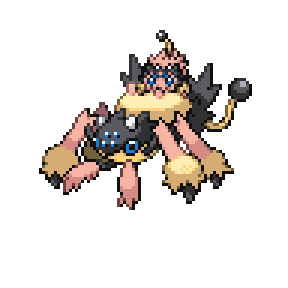
To humans, these Pokémon have disturbingly long udders that often drip with milk. But, to young wild Pokémon, these long udders are a welcome sight when they have grown hungry.

Bliswak can alleviate pain and negative emotions with strikes using their clubs, a fact still being studied. They are very attuned to the pain and sadness of others and will travel however far they must to alleviate either.
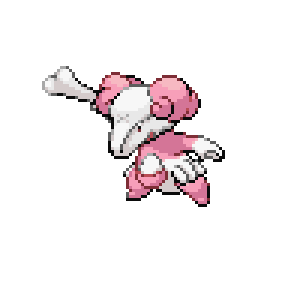
It carries its own egg within its pouch, even as it flies at high speeds. It is known to help the young, be they human or Pokémon, and will shelter the weak with its sturdy body.

These Pokémon scuttle about with egg-shaped bundles of silk containing nuts and berries. Surprisingly, Blisdos can launch these bundles from their pouches at considerable distances to those in desperate need of food.

They use their springy legs to perform quick maneuvers and to deliver quick kicks that overwhelm their foes. The more they move on their legs, the more electricity they generate.

Raichan strive to be champions in physical combat with their lightning-quick boxing techniques. Their signature move is a Thunder Punch that booms like thunder even if it doesn't strike a foe.

Rairos mark their territories using their tough, front claws which also help to slow themselves during a charging attack. Wild Rairos regularly fight over territory and pack leadership, the sounds of their clashing horns reminiscent of thunder.
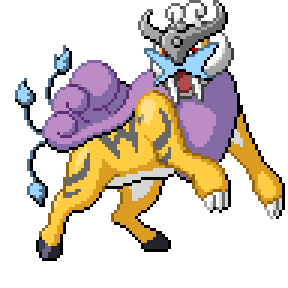
The purple furs of Raieon are notoriously water-repellant, despite how much time these Pokémon spend within water each day. Their fur is where they store electricity, which they can release through their claws and their fangs.

Their tusks and manes grow longer and larger with age and crackle with electricity when they are agitated. Even now, some humans still seek their tusks for how grand they are and, or, because they conduct electricity so well.

Its large fangs secrete a paralytic agent that could down a Mamoswine in less than an hour. To intimidate others, it can shake its lower body to produce a thunder-like sound.

Despite their size, Raishrew can create tremors that some have compared to the rumbling of thunder. During battle, when aboveground, Raishrew are wreathed in arcs of electricity as they dash about and slash at their foes.
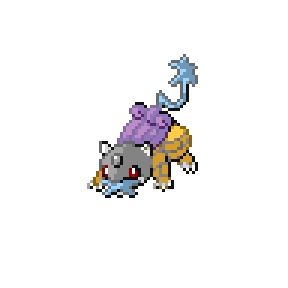
Raifeon channel and release electricity through their leafy tails when they raise them toward the sky. This stance allows them to seemingly call down lightning bolts. The tips of their purple leaves are green when they are healthiest.
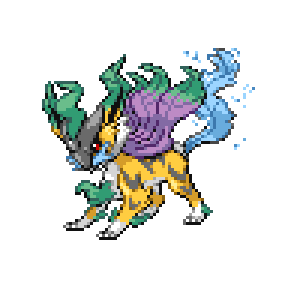
When it cries out, it releases sparks of electricity and flakes of its freezing energy. By freezing parts of its own fur, it can better defend itself and better regulate its own power.
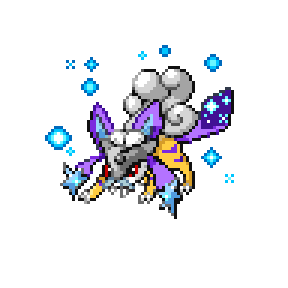
Raicor wait for sandstorms before they go on the hunt for prey within the deserts they live in. They ride the winds with their strong wings, pouncing quickly upon prey and finishing them with an electric shock delivered through their fangs.

Rairay live within thunderstorm-ridden badlands, with caves serving as their dens. Their eyesight is strong enough to see far across their badland homes, so they always know when the time to hunt is ripe.

These Pokémon are said to be born of the spirits of trees that were struck down by bolts of lightning, be they split or set aflame. Now they wield lightning itself in the defense of their forest homes.
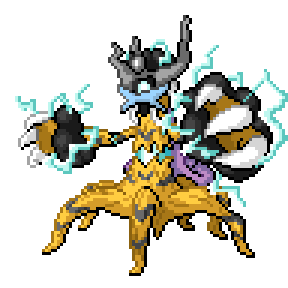
The older a Raisect grows, the taller its mushroom becomes. They are prone to being struck by lightning during storms, which they have grown to absorb with increasing ease.
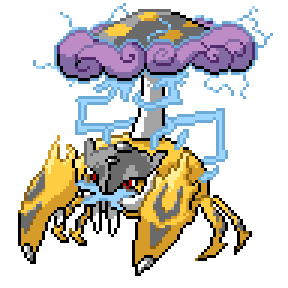
This Pokémon is said to embody the speed and ferocity of lightning and flame, respectively. The den of a Rainine is easy to spot due to the charred terrain and large gashes that litter the area around.
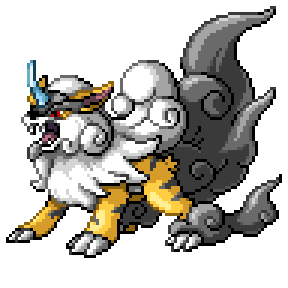
The cloudy fur upon its back is always quite hot, though it becomes even hotter when they are running. Its fur crackles with electricity that it can channel and release from its singular horn.
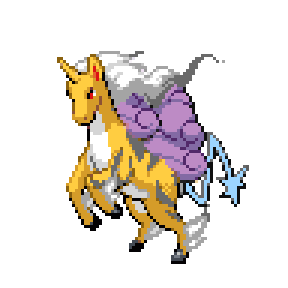
Enwak use tufts of their own white fur to pad their bone clubs, which they ignite with their breathed flames. These tufts of fur take almost half a day to fully burn away, which is why they have replaced firewood for some people.

Its small horn is cool to the touch and seems to be what allows it to regulate any of its energy. It throws a fit if it cannot find fresh water for over a day and will discharge electricity from its horn during its fit.

Suichu absorb nutrients from water through their ribbon-like feelers, or they metabolize electricity if there is no freshwater nearby. They display immense compassion for the lost or the injured, be they human or Pokémon.
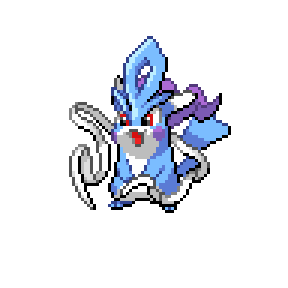
Suichu have been proven to be able to use their own electric currents to remove pollutants from water. Many Suichu are still being used in myriad studies to find more effective and clean ways to counter water pollution.

The bulbs on its back regenerate so quickly that it will often fling them at foes, which will release a burst of frigid air on impact. It can launch its tail with a stream of water and spin it like a drill using frigid gusts.

The wraps upon its arms allow it to sense the auras of others for at least one mile away. One Force Palm from this Pokémon is said to cleanse the aura and soul of whoever it strikes.
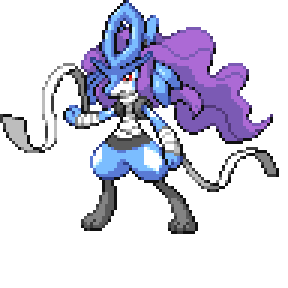
The fur of a Suiruff is incredibly soft and always cool to the touch. They have a keen awareness of the feelings of their Trainers and will cuddle up to them while wrapping their feelers around them to offer comfort when they feel down.
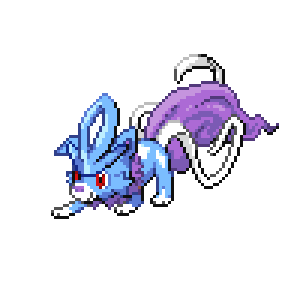
Suietta are able to skip across the surface of water, and are often found dancing atop lakes and ponds. Their songs resonate with water itself, causing it to ripple and sway as if the water were dancing to their tune.

Larvieon feed on soil and rock, though they are particularly partial to Sun Stones. The tips of their tails quiver as they focus their thoughts to muster their innate, albeit weak, powers.
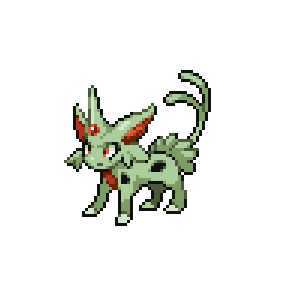
Larvish are born deep under thick dirt and must find their own way to reach the surface to reach their parent, or parents. It is, however, still very rare for them to ever not surface before their family moves on.
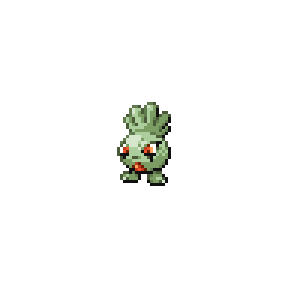
Pupieon communicate by touching the split tips of their tails against the crystals on their heads. Their bodies are hard and heavy, so they hone and focus their minds for hours each day. They use their psychic powers to help them move.
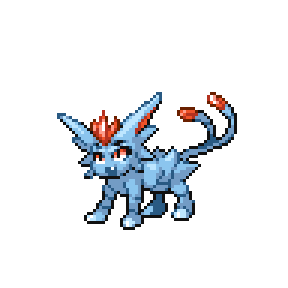
Tyrantor use their incredibly long necks to flail their three heads into opponents and send them flying. A rock-hard fruit grows upon their tail, which is said to be one of the finest delicacies by the few who have ever survived efforts to obtain it.

Tyraneon have hides harder than rock and are clad in sharp fragments of fulgurite. They hunt during sandstorms, concealing themselves before striking with quick blows and precise lightning bolts that often leave fulgurite in their wake.
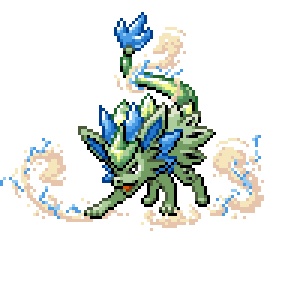
Their crystals are harder than diamond and serve as conduits for their psychic energies. When focused, they can use their minds to move boulders thrice their size. They are, however, easy to provoke, and so they struggle to stay focused and calm.
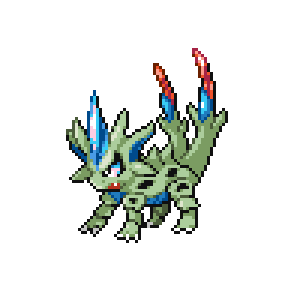
Tyranmortar are desert apexes that blast their enemies with burning-hot sand loosed from their cannon-like arms. The heat of their sand-blasts can be so intense as to turn desert sand into glass upon impact.

When agitated, their leaves turn rigid and sharper than any crafted blade. By swinging its tail at full strength, with its leaves rigid and sharp, a Tyranfeon can cleave through solid steel in a single motion.
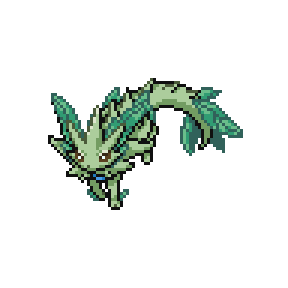
This giant Pokémon carries a small mountain atop its back which is often encircled by smaller, aerial Pokémon. The fruits that grow upon this small mountain are incredibly tough and contain a poison that must be cooked out.

These serpentine Dragon-type Pokémon build their nests atop tall mountains. Anything that interrupts their rest will be met with devastating Hyper Beams and continuous rock slides until silenced.

A Tyranking's body is incredibly strong to support the weight of the large rocks upon its back. The mountains in which they rest are often marred by the scars of their battles that they almost-always win through sheer strength.

Tyrantula will swing their tails about to send their opponents flying or crush them with their strong pincers. They charge and store electricity within their tails, which they can then release as powerful lightning bolts from the tip.
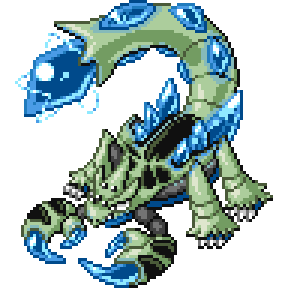
Tyrandash have bodies as hard and heavy as solid rock, yet their legs are strong enough to carry them for hours before they need to rest. They can release flames from the openings along their bodies to further overpower and intimidate opponents.

Lushrew are common near beaches and coastlines, burrowing into the terrain to travel and to create their nests. Some consider them to be pests, but Pokémon Rangers consider them allies because they will assail those who throw waste into the ocean.

Luslash's forelimbs function as wings yet also as arms and hands, which pack enough power to pulverize solid rock into sand. Its mane of blue fur hardens and becomes razor-sharp when it is agitated, offering it a hazardous defense.

Lumander live reclusive lives, potentially due to the immense power that some stories claim to be lying dormant within them. Despite being innately reclusive, Lumander are notably very expressive around those they develop bonds with.

Its tail flame, whose vibrancy and intensity reflect the health of the Pokémon, burns hot enough that it can melt most metals within close proximity. Supposedly, Lumeleon harbors immense potential, which may be why it is so eager to battle others.

Luizard commands remarkable power, which seems to manifest as raw strength and as intensely hot and vibrant flames. It relishes in taking on any challenge, as if to show off its power; some speculate it does this to work off excess energy.

Although some few stories claim that Lupoke contain vast, dormant power, these Pokémon display no such power at all. They are unfazed by anything, even if they are attacked or caught in a hurricane.
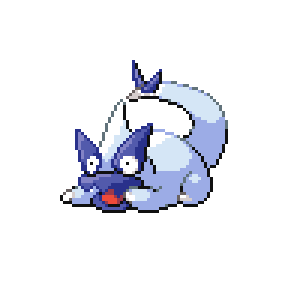
Ludrio are infamous for their powerful Tri Attacks and for the resemblance their three heads bear to the three Legendary Bird Pokémon. Even when tamed, a Ludrio's three heads rarely ever get along outside of battle.
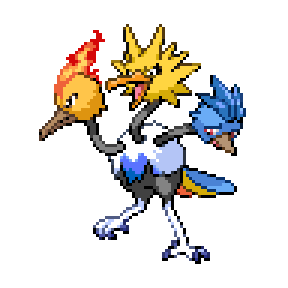
Lutoise wield psychic powers to reinforce their hardy shells, making their defenses all the greater. Remarkably, their waterspouts can loose jets of water with such power that they can punch a hole through a sheet of tungsten in seconds.
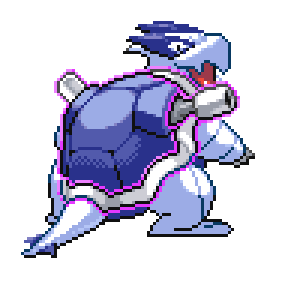
Evolution has caused its helmet carved from Thunder Stone to become fused to its body, empowering them further. Their Thunder Stone clubs are excellent electrical conduits.

Pikaquil release electricity or flames from their backs when excited or when trying to protect themselves. Their red cheek pouches are hot to the touch.

They let loose Thunder Bolts and Flamethrowers to threaten opponents or to ward off attackers. They can move very quick, often clad in flames and electricity to protect themselves.
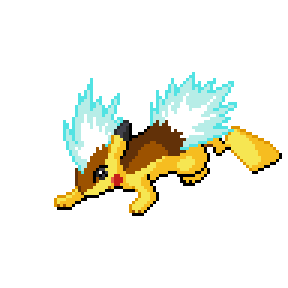
Pikakern absorb sunlight through their upright ears, which becomes the electricity stored in their cheek pouches. They communicate with others of their species by touching tails.

Pikagia mostly appear during electrical storms at sea and along coasts. Pikagia fly low enough to best catch and absorb lightning, which they can metabolize.
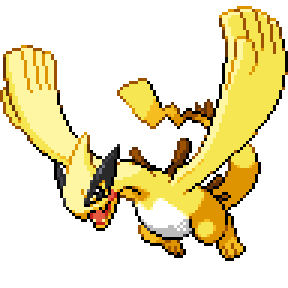
This Pokémon treasures the Light Ball resting upon its head as it bounces about to generate electricity. Its kind use their Light Balls to focus both their electrical energy and their psychic powers.

By rubbing its pincers together, it can generate electricity that is then stored within the red pouches upon its cheeks. It will never let go of prey grabbed by its pincers until they are shocked into submission.