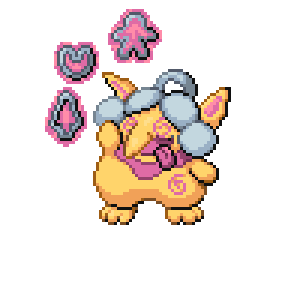
83 pokedex entries by icelevelincarnate
The child has grown somewhat and seeks some independence from their parent. Although hesitant, the parent has seen their child grow stronger, wiser, and kinder, and feels a bit more at ease about letting them go some day.
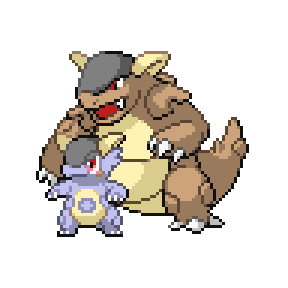
With their child, Kangastwo is stoic, yet incredibly loving and wants to provide the best future possible for them. But without them, Kangastwo loses all empathy and shall destroy anyone in their path without a moment of hesitation.
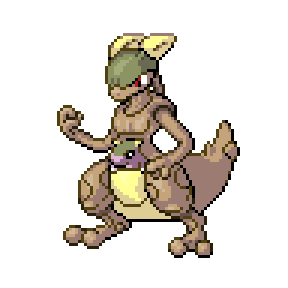
Using their sturdy fangs, Kangasicate will carve out the best material it can find to make a nest within attics or basements. Some Kangasicate infestations will resolve themselves if Kangasicate believes the people there are a bad influence on its child.

Kangasel and their child work together when raiding the nests of bird Pokémon. While Kangasel fends off the parent, the child grabs as many eggs as it can, before Kangasel scoops them back into their pouch for a swift escape.

Kangasts are very rarely seen alone, gravitating towards anyone able to take care of them. If threatened, their guardian, human or Pokémon, will feel a surge of protective rage until the threat is dealt with.

After evolving, Kangaslia will leave their Trainer for days, only returning once they've found a member of their species without a parent. Kangaslia will act like a big sibling, keeping them safe while also teaching them how to fight.

Trainers may find their home filled with young Pokémon impulsively taken in by Kangaslia. In tune with the emotions of their foster children, Kangaslia loves the admiration, but can become incredibly stressed without assistance from their Trainer.

Unlike Banette, Kangasnette hold no grudges thanks to the affection from their own child. Even when the child grows up and moves on, Kangasnette will always hold those memories close to their heart and be able to live on peacefully.

In far-away regions, wild Drampa and Kangasdra will often raise families together and live on snowy mountaintops. This is for the best, as their combined parental rage could level a perceived bully's entire neighborhood.

Kangastle's shell is softer than the average Squirtle's, feeling like a warm hug on the inside. Younger Kangastle will stay in their shell more often, shooting water from safety to interact with the world around them before gaining courage.
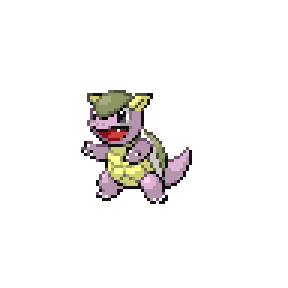
Kangaspoke lazes about and seems to barely put any effort into anything. However, if their child is at any risk, Kangaspoke's brain goes into overtime, and they can move, think, and attack at alarming speeds.
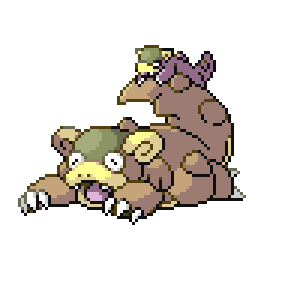
Kangastortle act as swimming instructors for younger Squirtle. Once ready, the Squirtle will leave Kangastortle's pouch and swim right by their side, filling Kangastortle with pride every time.

While playing or during combat, Kangastoise will sometimes fire their child out of one of their cannons with a blast of water. They always catch their child before they hit the ground, or brutally blast anyone that tries to catch them first.
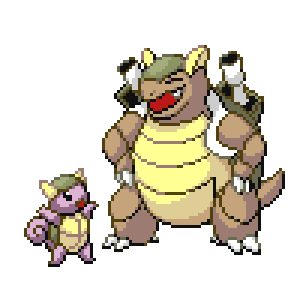
An eerie shadow puppeteers the discarded shell of a Nincada. Despite their sinister appearance, Mr. inja is anything but, performing shadow puppet shows for anyone who will watch. They apparently have a dark sense of humor, though.
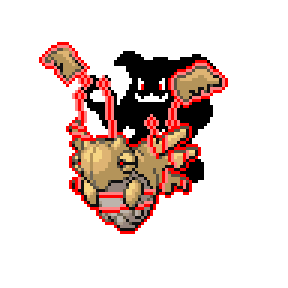
Electalix often burrow deep beneath power plants, attracted to their constant energy. They sometimes sever important cables, but Electalix's own residual charge is so strong, the power plants can remain running long enough to make repairs.
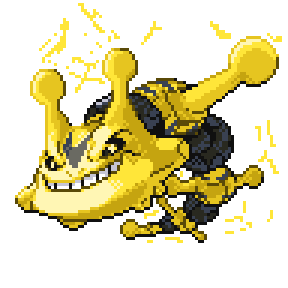
Wild Taugrigus have only been naturally found in desolate badlands west of the Unova region. For a trusted Trainer, they can carry many people, Pokémon, and supplies. To anyone else, they'll drive after them at full speed.

Lapleef's neck is ringed with material similar to modern flotation devices and was the target of poachers before it was recreated artificially. They are kind but naturally wary of humans, and freeze their leaf into a sharp weapon if threatened.

Disguised as an ordinary fountain, whoever drinks from Vaportomb is possessed. Bird Pokémon are their most frequent victims, using them to amass a large flock under Vaportomb's collective control.
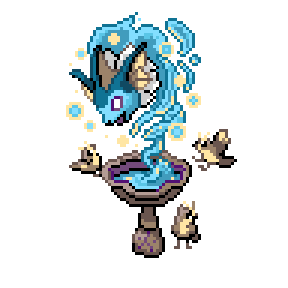
It is said that every time Snorceus sleeps, their dreams become new universes. Some ancient civilizations even believed that our own universe was created this way, and fed Snorceus plentiful harvests to earn their favor.

When chasing prey, Bayray's fur releases a sour aroma that acts as a stimulant for them and their prey. Both are filled with adrenaline and run faster, but Bayray's prey will likely run out of stamina much sooner.
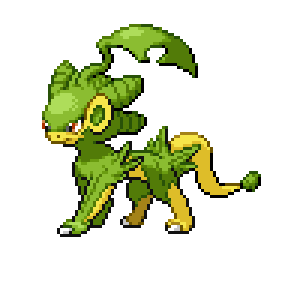
They aggressively snort small flames out of their nose, burning away dead grass and shrubbery while hunting. Truffles found and lightly roasted by Quinub have a unique taste and texture, making them a delicacy in many parts of the world.

Ferakyu will savagely bite into their prey, shredding them as easily as fabric. Despite this, they know their own strength and are very protective, making them great playtime companions for rowdier kids.

Senpent cast light from the ring on their body and patrol their territory during the night. If they spot danger, they cry out warnings for others of their kind. They gather and keep their light trained on the threat so it can't slip away undetected.
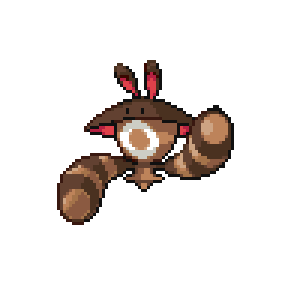
Lurking on the ocean floor, Lanx's lure gives the illusion of a woman drowning or being pulled under. Despite many superstitions, it turns out Lanx just prefers to stay in the deep dark, and uses their lure to interact peacefully with others.

Each head can focus on entirely different objectives, and then work together flawlessly to accomplish each. It is never a good sign if all three heads stare at you at once.

Pidtrum's bite force is strong and much more painful due to their hooked beak. Recent discoveries suggest Pidtrum may be closer to what Tyrantrum originally looked like than what modern science has recreated, but many still debate about this.

Hopxys will let the wind carry them until they land for a brief moment, then follow the breeze once more. They leave behind seeds of a highly invasive plant not of this world that kills off any other plants in its ecosystem if not weeded out.

They resemble a ghostly creature called Flutter Mane, whose existence is debated to this day. They seem to mostly appear in areas with people that are hard to scare, making primal screeches in an attempt to cause mass panic.

This fusion was once believed to be an undiscovered Electric-type evolution of Qwilfish. The confusion came from the potency of the combined Qwilfish toxins being so strong that they can inflict full-body paralysis.

Qwilbok inhales water and stores it in their neck, both to intimidate and mix it with their potent venom. In battle, they launch a painful combo of oil-like grime and thick spikes at their opponent to guarantee they'll be poisoned and weak.

Shukhan spends most of their time foraging for berries and putting them in their pouch. Until the baby Shuckle's shell fully grows, Shukhan's pouch provides an environment to teach the baby how to ferment berries into a fine, nutritious pulp.
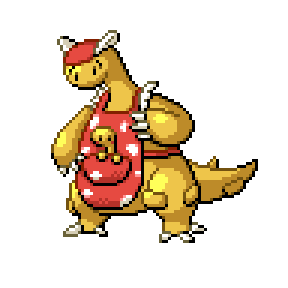
Most assume Shuninja's shell is an elaborate, yet immobile mimicry to fool predators into thinking they're looking at a Greninja. Instead, Shuninja disorient foes with a misty bomb of fermented juice before fleeing with ninja-like grace.
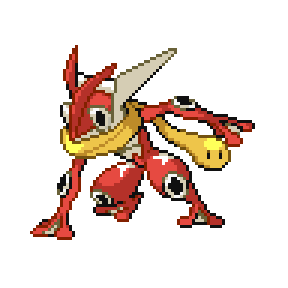
Delicate are foragers with a sweet tooth, sneaking into homes undetected to steal as many baked goods as they can. They have a selfish yet noble spirit, stealing gifts from others for those they have wronged and starting a vicious cycle.

On dire winter nights, a Delisol may appear right before a miracle happens. Believing Delisol to be a savior, people will shower them with gifts, but Delisol gives all their gifts to less fortunate and unfairly treated Pokémon like Absol instead.

Parents tell stories of Delitina stealing away naughty children at night, trapping them in a world of merciless cold. In reality, Delitina is rather amicable, but will play along to help scare misbehaving children straight.

Part of Manvoir's body flows like water and can even sustain small aquatic life. Some wildlife reserves have Manvoir take care of Pokémon like Remoraid before they're ready for rehabilitation back into the wild.

Squadrons of Manesect will either travel above or below the waves with schools of Remoraid in tow. Their Remoraid-shaped blasters seem to fool other Remoraid into thinking the weapon is one of their own, so they'll join in with suppressive fire.
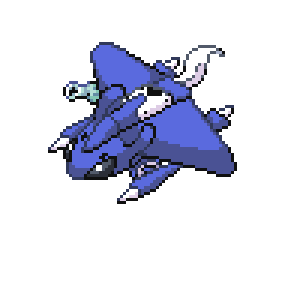
Packs of Hountoy patrol the halls of ancient ruins, spewing flames while they spin to deter intruders. It is believed Hountoy that belonged to these ancient people were loyal guardians that, once their masters passed, would cremate their bodies.
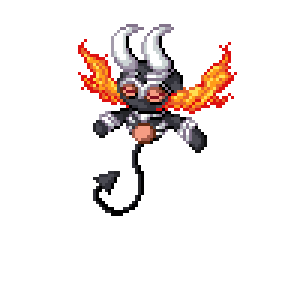
Each head fights with a different technique, erratically throwing lightning-fast punches, kicks, and spins with no rhyme or reason. It disorients both Tyton and their opponent significantly.
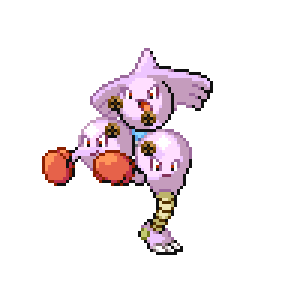
When smoke billows from the top of an active volcano, Ently emerge in droves. Their bodies are made of volcanic smoke, which eventually dissolves into pure ash if Ently does not evolve.

This Pokémon races across the night sky, creating the illusion of the sky itself rippling like water. It can instantly purify an area of air pollution, and is believed to gain more power the more stars that can be clearly seen.

Ho-bird tend to fly in short bursts, creating vibrant rainbows in their wake. If a Trainer is determined enough to follow one, they may find a Ho-bird's nest at the end, where Ho-bird hoards their many gold coins.

Their radiant feathers turn different colors depending on their mood. Pale-colored Ho-ts are upset or scared, defensively incinerating threats, but vibrant-colored Ho-ts feel safe and content, rejuvenating anything and anyone nearby.

It is eerily similar to some scientific drawings that speculate how Flutter Mane would've adapted. They act and screech almost like a dinosaur, but Mismagius will sometimes let their mask slip and mutter curses instead of snarls.
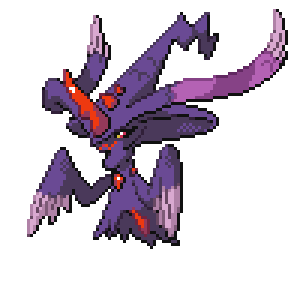
Electricity builds in Raipass's nose, eventually forming a mustache of unstable static. Once it can be safely discharged, Raipass sneezes as violently as a lightning strike, creating booming thunder.

Mankip are adorable, friendly with people, and can live on land just as comfortably as in the sea, making for great pets in theory. However, they require a body of water to rest in, so one must sacrifice their bathtub or pool to keep a Mankip.

Although they look more like a mech than a Pokémon, Magnekhan and their desire to protect their Magnemite pilot are both entirely organic. If the two are ever separated, the body's antenna can detect their other half from entire regions away.
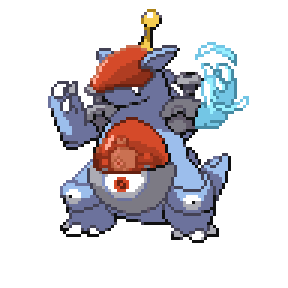
Although they lack jaw strength, Lickitrum's lethality is not to be underestimated. They can wrap their tongue around an oil tanker and effortlessly crush it into a ball of scrap metal with only a few drops of their corrosive saliva.
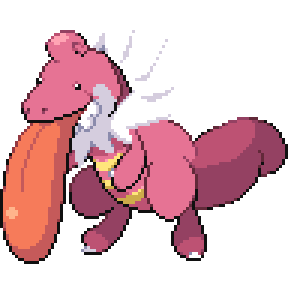
Spiridol were first discovered in the undisturbed tombs of an ancient civilization, leading archeologists to believe Spiridol are created from their souls. However, other findings show Spiridol has existed even during said civilization's prime.
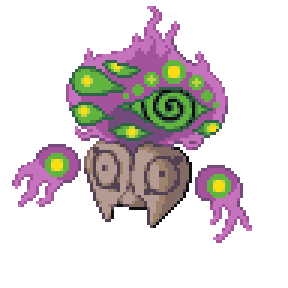
The sensitive leaf on their head guides them to places where natural disasters are bound to happen. The grey skies before a storm provide just the right level of light for Abrita to sunbathe in; otherwise they either starve or fall ill.

Instead of being eusocial, hives of Aegidrill operate similar to a human monarchy. Because of this, some hives have kings, queens, or both working together to defend their hive with their dying breath.
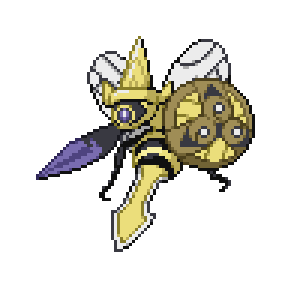
This species is an incredibly popular pet in the Kalos region, due to their fashionable looks and the emotionally soothing warmth they give off. Lately, they're apparently becoming a much more popular choice for new Trainers than regular Fennekin.
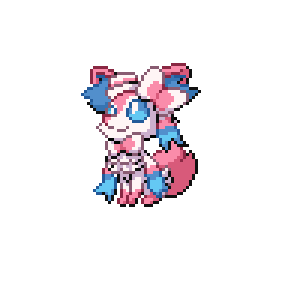
Giragast slumbers deep beneath the sand, only rarely emerging and lurking in the shadows of beach-goers. Supposedly, any hole dug by its shovels will become a portal to the Distortion World.

Rosepass are picky and will only appear in places where many flowers bloom to support the abundant growth of their own roses. Gifting a Rosepass to a lover used to be common, but Rosepass will abandon their recipient at the slightest odor.

The internal organs of a Ninemuku are made entirely of flames, believed by some to be their very soul. Some cultures believe being burnt by Ninemuku's flames ensures you will be reborn as one in the next life.
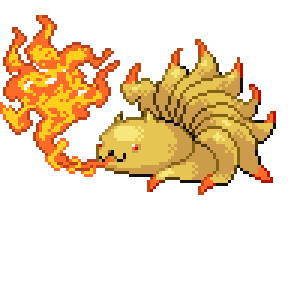
They make their hunting grounds near oases, preying on thirsty or tired Pokémon. Trapadier then leap out of hiding and strike with a bite, but if this fails, they'll vanish in a cloud of sand like a mirage and patiently wait to try again.
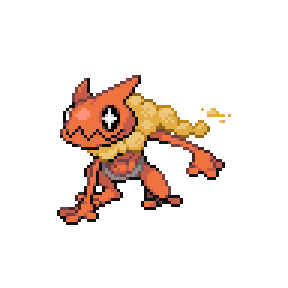
The main head enthusiastically cheers on its allies, not realizing how terrifying its roars are. The heads on its arms simply repeat after the main head, giving off energetic bursts of electricity in time with Oridreigon's movements.

Each Trubrem is attracted to a particular type of trash and feels empty without it. They will make their home outside the residence of whoever provides them with their ideal trash, for better or for worse.
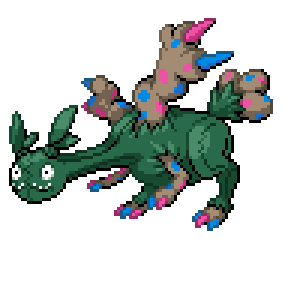
During battles, Garbreon can end up literally smelling like hot garbage. In spite of their unpleasant smell, many can't resist Garbreon's dopey charm, even when they cuddle up and rub their soft coat of trash all over someone.
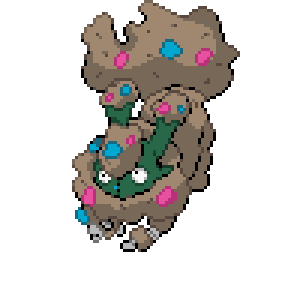
When a forest fire claims the lives of people or Pokémon, Trelure mysteriously appear in large groups to mourn. They remain until the forest grows back and can sustain life again, then vanish without a trace.
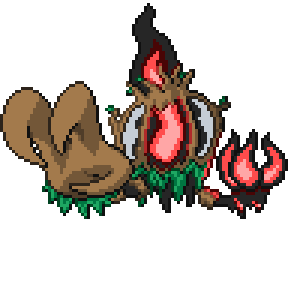
Regicuno are most commonly seen when migrating between the North Pole and South Pole. Any other areas where Regicuno stay for an extended period of time tend to experience their lowest recorded temperatures.
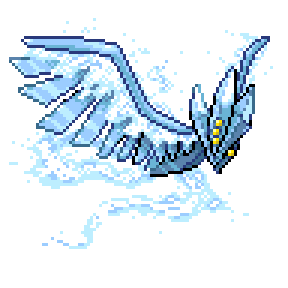
Deep in the jungle, dozens upon dozens of interlocking Vileklang will work together like an organic factory and produce smothering clouds of pollen. Once an area is overrun by their flowers, they break apart and move elsewhere.
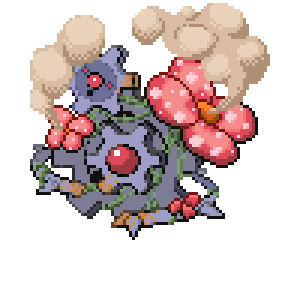
Young Hawling develop their fighting and flying skills simultaneously. They perform a Flying Press from their nest, then fly as high as they can for another, until they're able to dive from the highest branch.

Even during the day, Pawick's mushroom glows abnormally bright to attract attention. Whoever eats it will feel an immense burning sensation in their stomach, attracting swarms of Pawick that wait until the victim can't move any more.
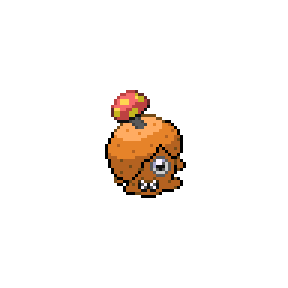
This Pokémon's upper half is an elaborate decoy, an extension of their throat. They use it to sing with a voice as smooth as honey, then emit a similarly sweet scent to lure prey close enough to be devoured.

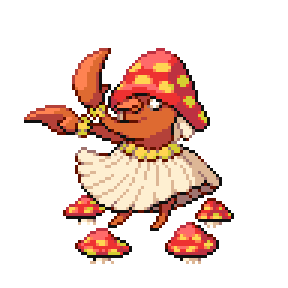
Paracorio aimlessly dance in damp, dark places, shedding spores wherever they go. In response to music, Paracorio tend to sway to the rhythm uncontrollably, and any mushrooms nearby grow much faster.
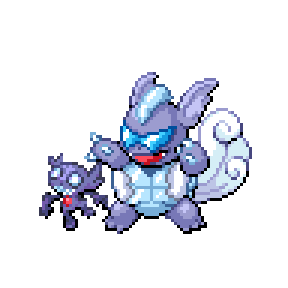
Cartortle are said to live for many years. During that time, many hard gemstones grow from their shell, attracting the attention of wild Sableye. Cartortle take advantage of this to form packs that'll provide food in exchange for gems.
Fenneor launch themselves from the ground to snap twigs off of trees. Bigger, nutrient-rich branches help their bodies burn brighter and for longer.

The fires they stoke sparkle like stars. At night, they lob magnificent fireballs into the sky to communicate with allies. Meteorologists often mistake these fireballs for meteorites when they rain back down.

A Delor's flames can burn as brightly as a star. For reasons yet to be explained, they tend to frantically wave their stick around only hours before intense meteor showers are predicted.
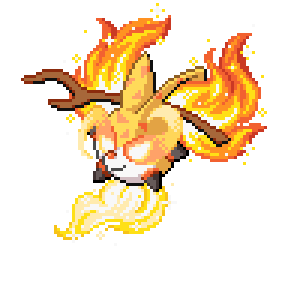
When curious Bug-type Pokémon draw near them, Venotom unleashes a brilliant flash and zap their prey. More tiny Venomoth appear around them after they do this, so some believe each of their Venomoth are souls that Venotom have stolen.
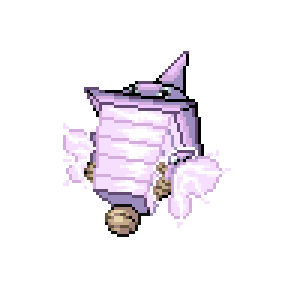
Appearing in empty lots or dark forest clearings, Goursand will attempt to lure others inside of them. They create hallucinations and feed off of their victim's fear, but will harmlessly spit them out once satisfied before vanishing into the night.
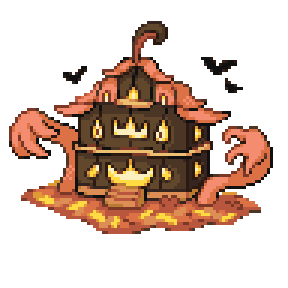
A Scrafcute will sometimes claim a small forest clearing or a city block as their territory. Anyone who disrespects their authority is met with a brutal Beat Up by each of Scrafcute's equally cruel heads.
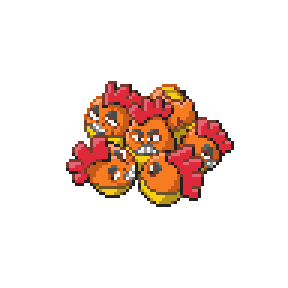
To calm their young, Ludiqueen will place them in the brim of their hat and joyfully dance around. Although silly and not a very strict parent, Ludiqueen becomes dead serious at the sound of its young in distress.
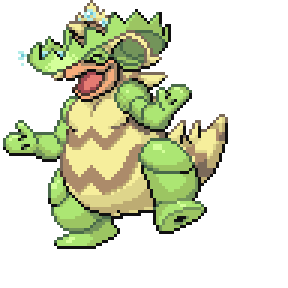
Diandra's strength, beauty, and gentle nature made it a species that many royalty sought to own in the medieval age. Diandra also refused to obey those with a greedy, impure heart, and allegedly brought ruin to kingdoms that took advantage of them.
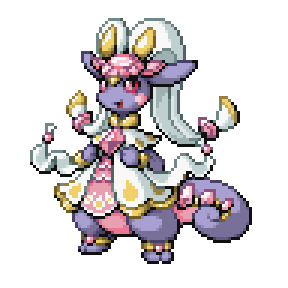
Luvtwo are feeble and affectionate creatures, but when competing for a mate, they are known to be absolutely merciless in the pursuit of victory. These displays of courtship are apparently so horrendous, Luvtwo have no natural predators.

Believed to have been used as foot soldiers by tacticians of a long gone age, Baliard seem to have been used to simulate battle scenarios. Baliard are loyal to a fault to whoever they deem their "commander", a role usually filled by a Claysharp.
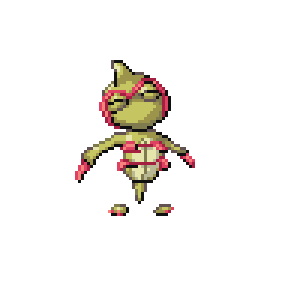
With deadly precision, Alaninja can launch one of their silver kunai at a target's vitals effortlessly. Every single movement they make is calculated to be silent and efficient.
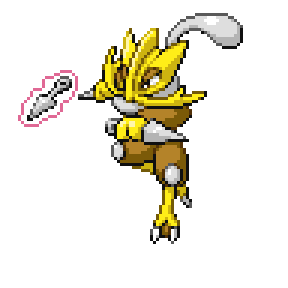
Although the body of this fusion lacks arms, it can create digital constructs resembling arms instantly. The impressive displays Magon-Z can create are often abused by scammers preying on an individual's low self-image of their body.

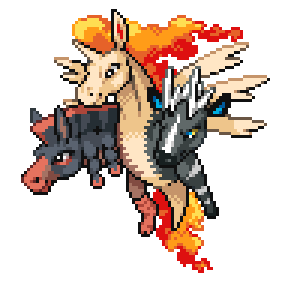
Despite appearances, Rapidreigon has no Mudsdale or Zebstrika DNA. Because of this, many theorize that Rapidash shares a close common ancestor with these Pokémon. All three of Rapidreigon's head seem to behave closer to a Rapidash than anything else.
Slownaught's bulkier body has somehow caused a reaction with Shellder akin to Mega Evolution. The Shellder valiantly protects their host, biting certain pressure points along Slownaught's back to make them throw big punches purely out of reflex.

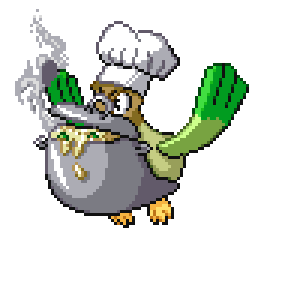
This Pokémon's diet consists of mostly human food, creating a savory blend of flavors that waft from their mouth after using Water-type attacks. Farliper's presence makes people hungry, so fancy restaurants keep one around and feed them scraps.
Hypuff's strange tools impart some of their power into any cookie they help make, putting whoever eats them to sleep. They're popular with young kids that have trouble sleeping, and pair well with a warm glass of milk.